12 Seashell Vase Filler Ideas for Coastal Homes
A simple vase can completely change the feel of a room, but what you put inside it matters just as much as the vase itself. Seashells are a beautiful way to fill vases because they bring in natural texture, soft coastal tones, and a relaxed beach-inspired vibe without needing much effort.
The beauty of seashell fillers is that they can be styled in many different ways—from clean and minimal to more layered and decorative. With the right approach, they can make your space feel airy, fresh, and thoughtfully styled.
Why Seashells Work as Vase Fillers
Seashells naturally reflect light and come in soft, neutral tones that blend easily into coastal interiors. They add interest without overwhelming the space.
They work well because they:
• Add texture and variation
• Keep the color palette light and calm
• Feel natural and organic
Love Chic Living Club?
Add us as one of your preferred Google sources and discover more home decor, DIY, outdoor, and lifestyle inspiration from us.
This makes them perfect for everyday decor.
How to Style Vase Fillers the Right Way
The key is to keep things balanced and not overfill the vase. A clean, simple arrangement often looks more refined.
For best results:
• Choose a vase that complements the shells
• Stick to a limited color palette
• Avoid overcrowding
This keeps the look fresh and modern.
1. All White Shell Fill
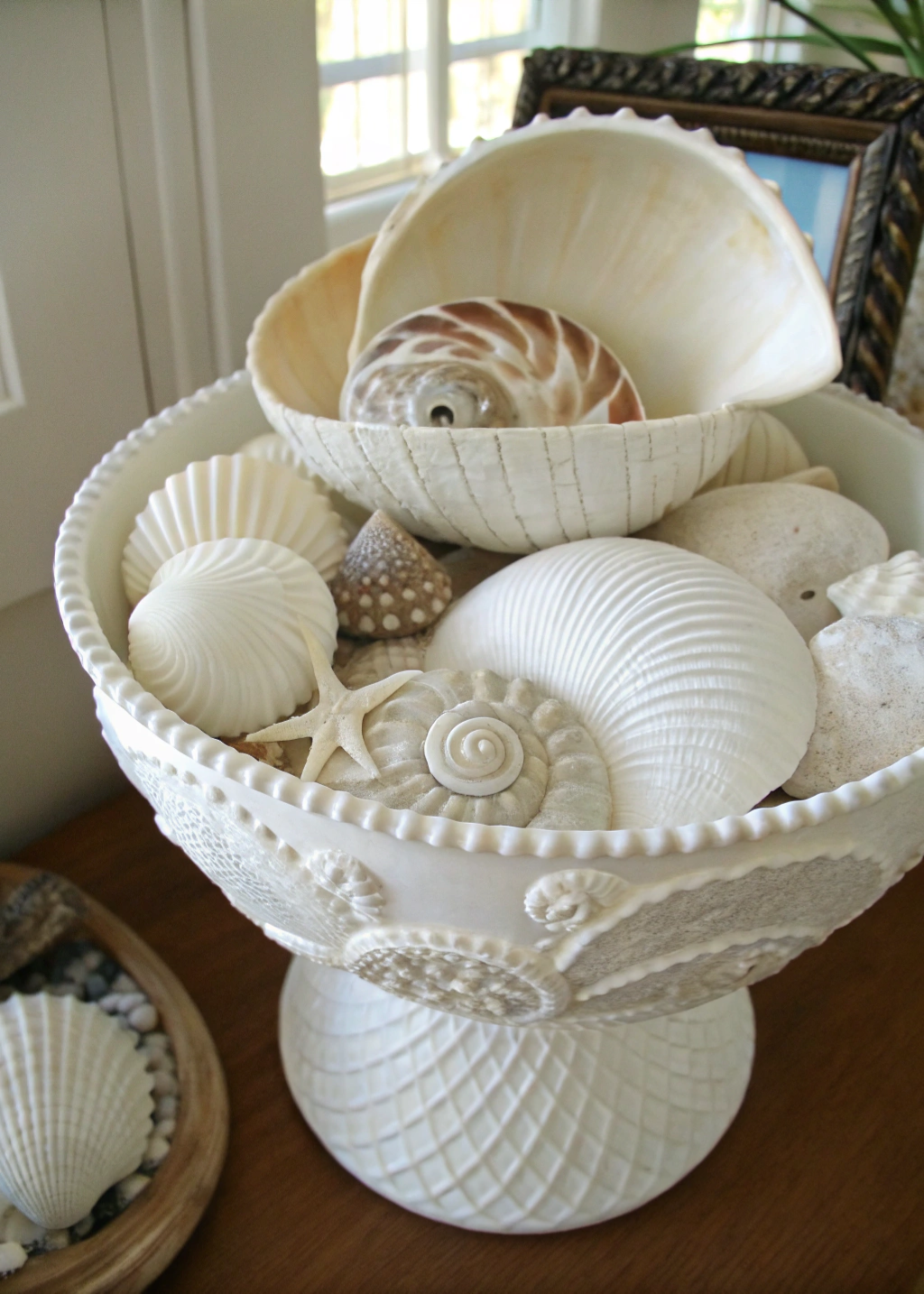
Fill the vase with only white shells.
This creates:
• A clean and minimal look
• A bright and airy feel
• A cohesive style
Perfect for modern coastal homes.
2. Mixed Neutral Shell Blend
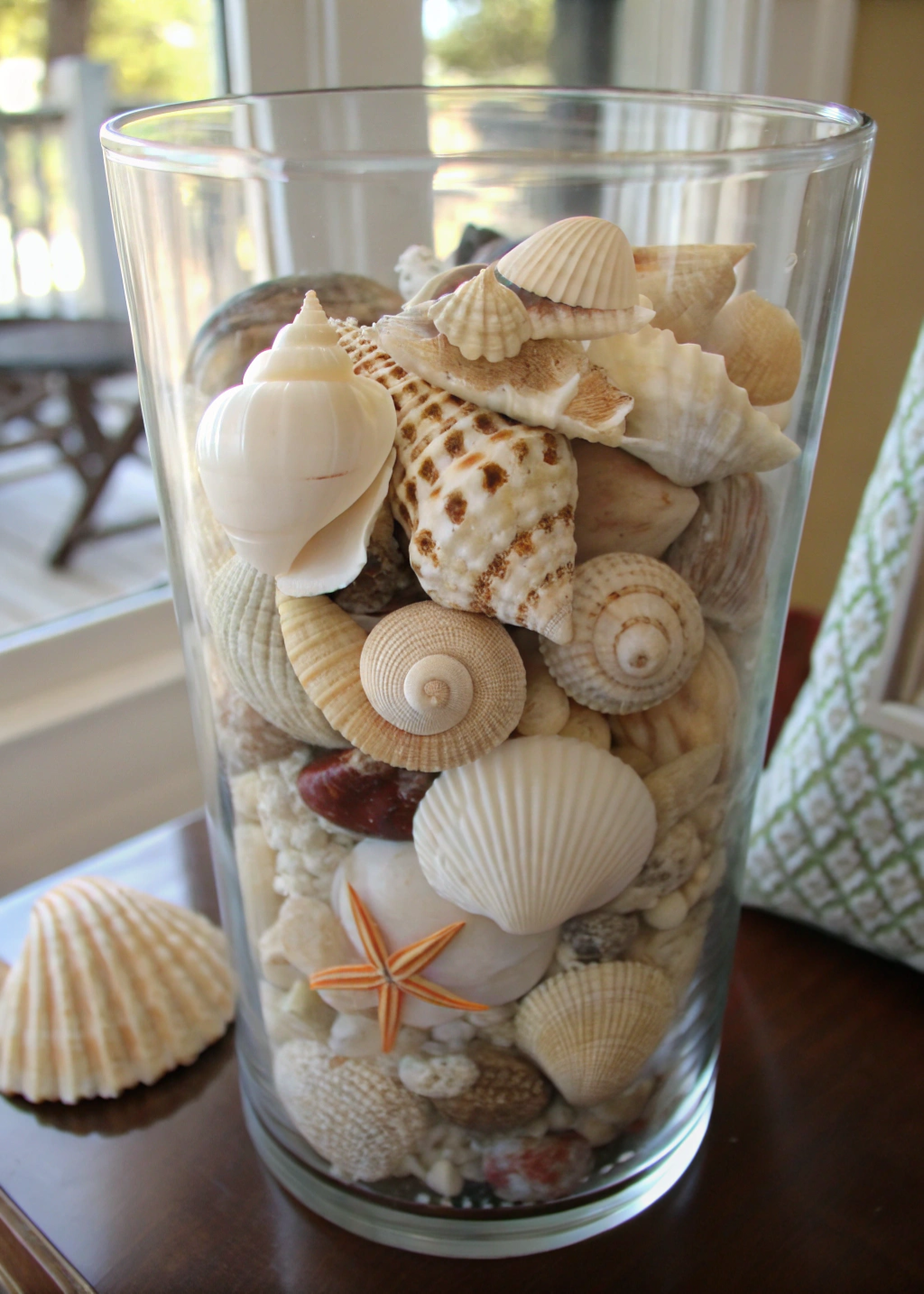
Use a variety of shells in soft tones.
Combine:
• Beige
• Cream
• Light gray
Adds natural variation without clutter.
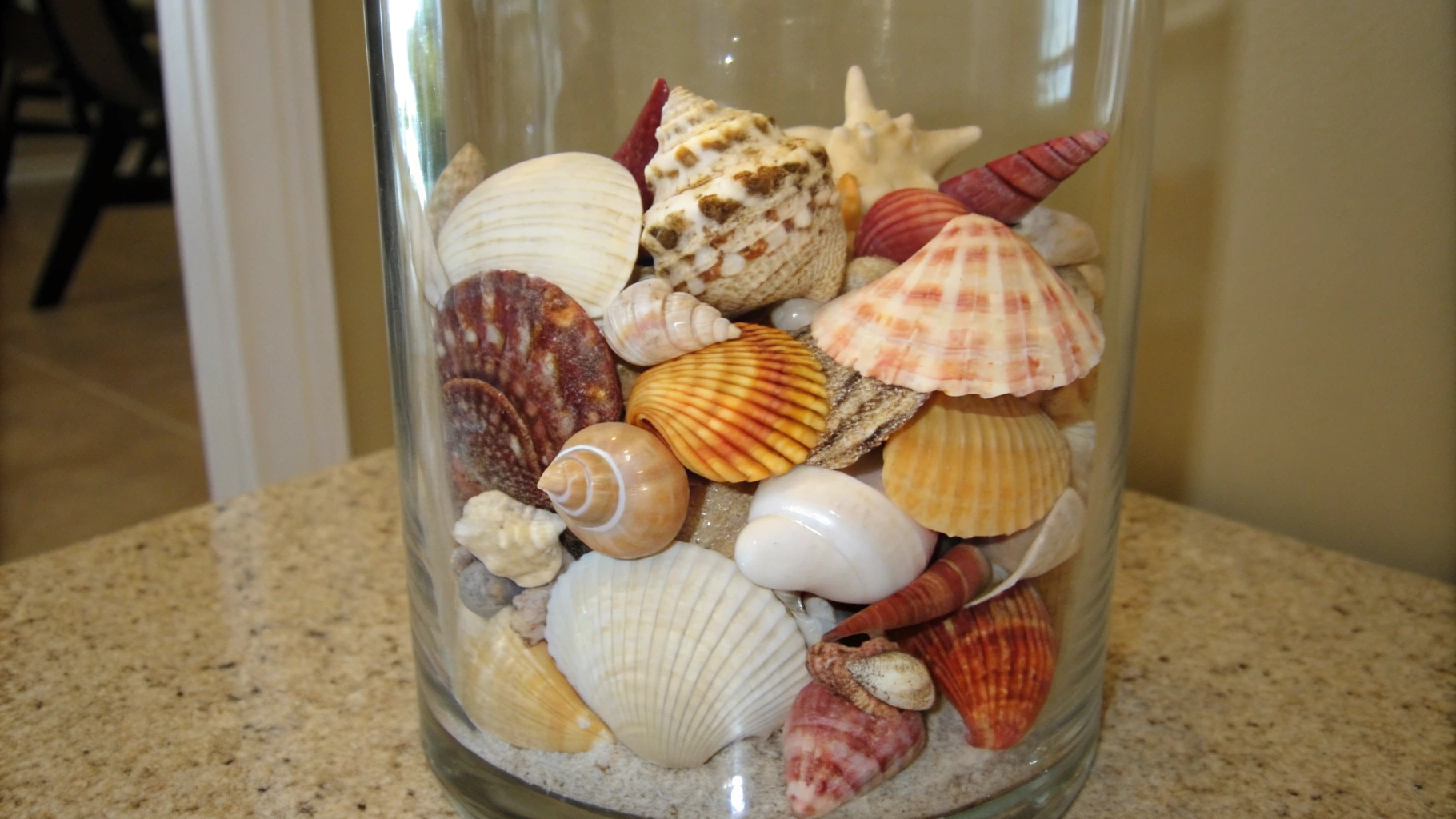
3. Shell and Sand Layering
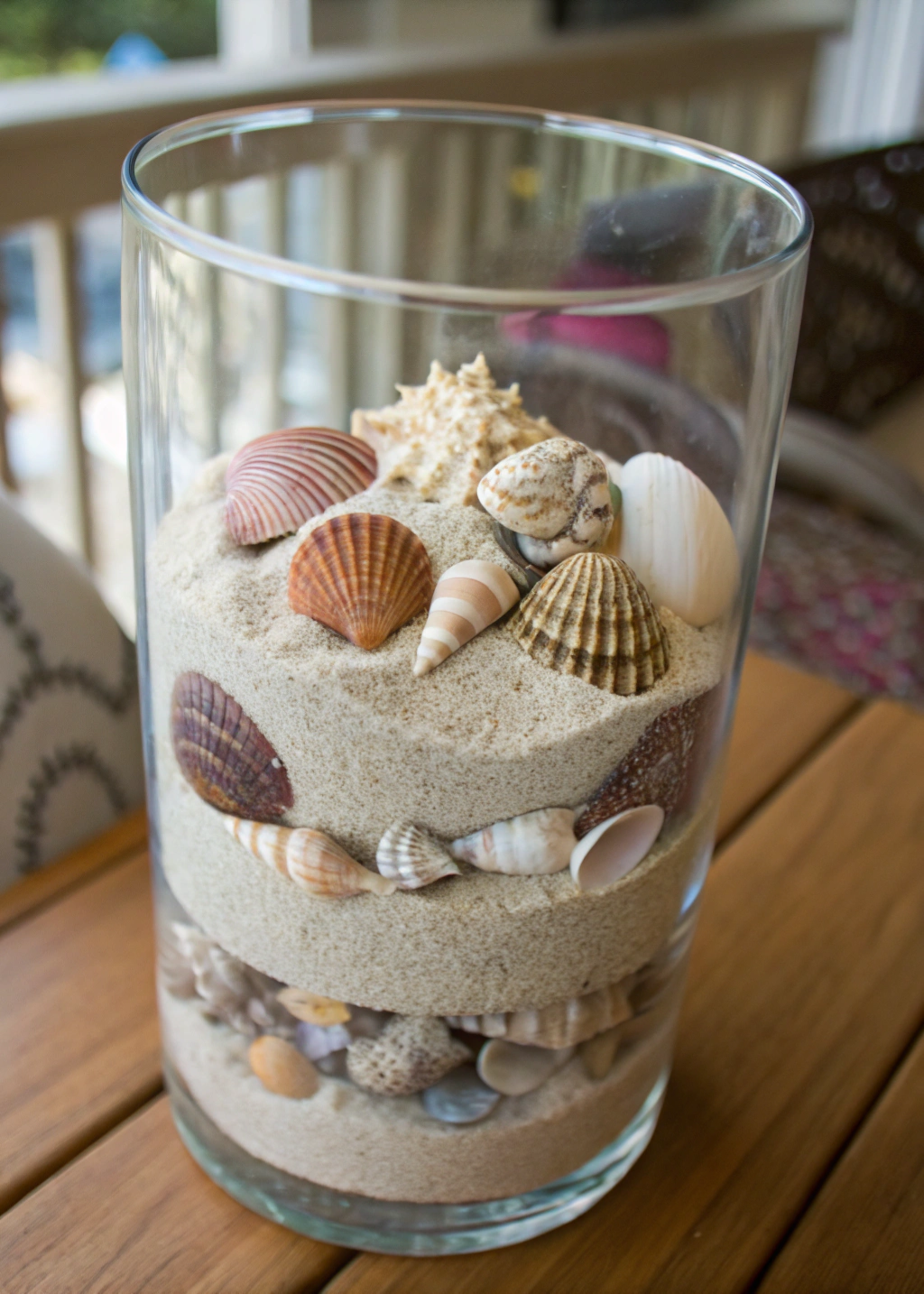
Create a layered effect inside the vase.
Use:
• A base of sand
• Shells on top
• Clear glass for visibility
It feels beach-inspired and textured.
4. Large Statement Shells Only
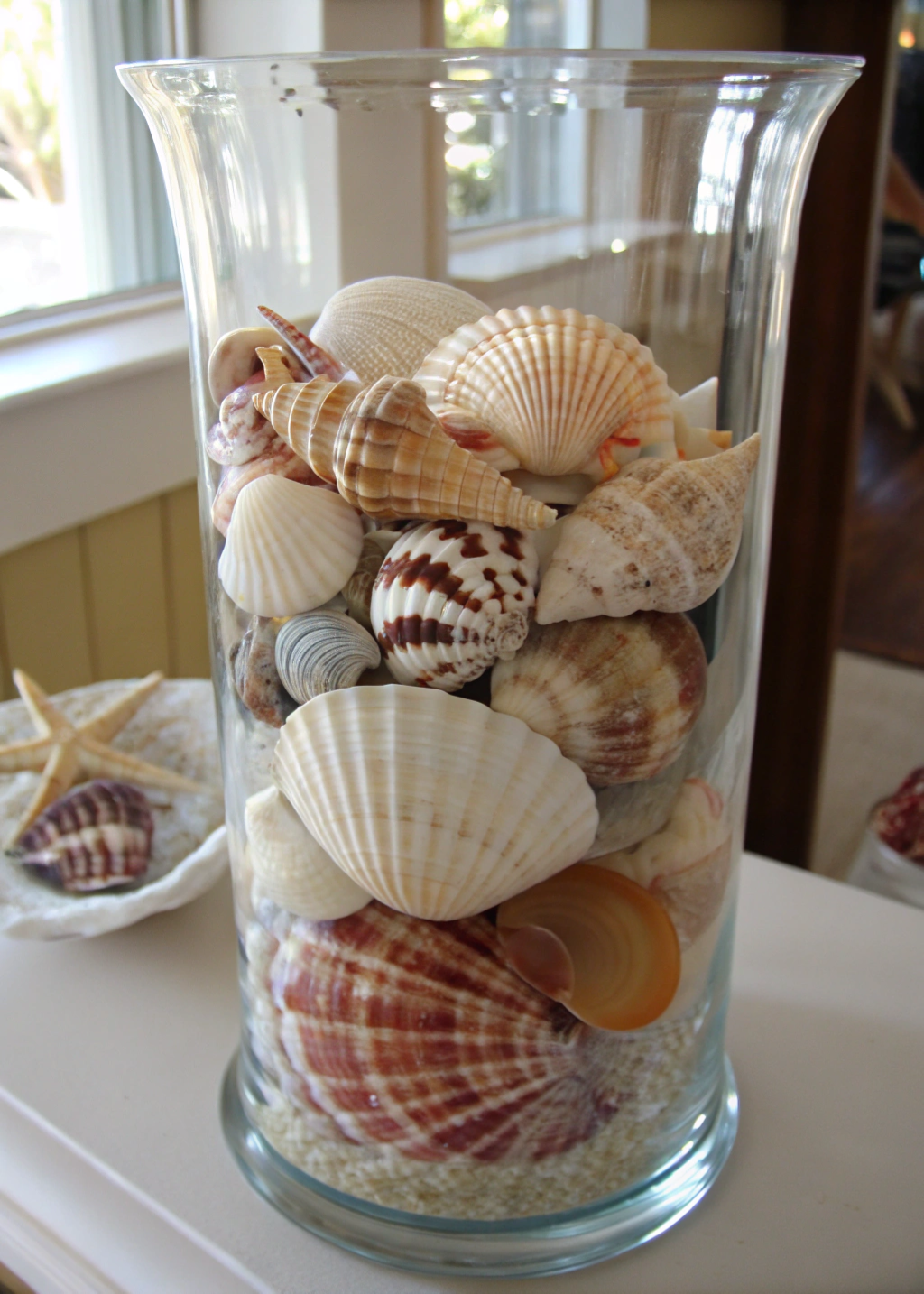
Use fewer but bigger shells.
Place:
• 3–5 large shells
• Evenly spaced
• With open space
Creates a bold, minimal look.
5. Crushed Shell Texture Fill
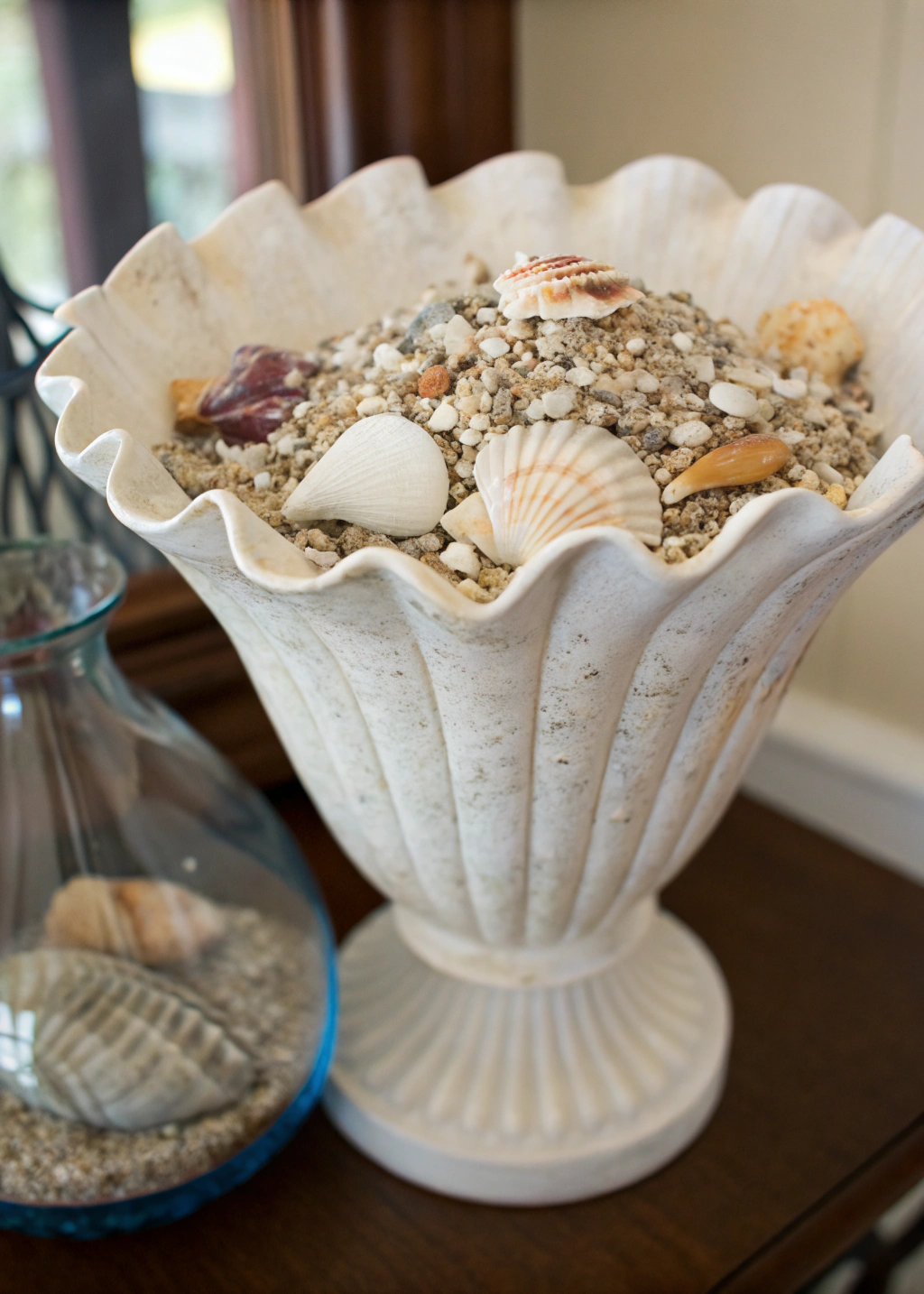
Use smaller crushed shells for a soft texture.
Fill:
• The entire vase
• With fine shell pieces
• For a uniform look
Adds subtle detail.
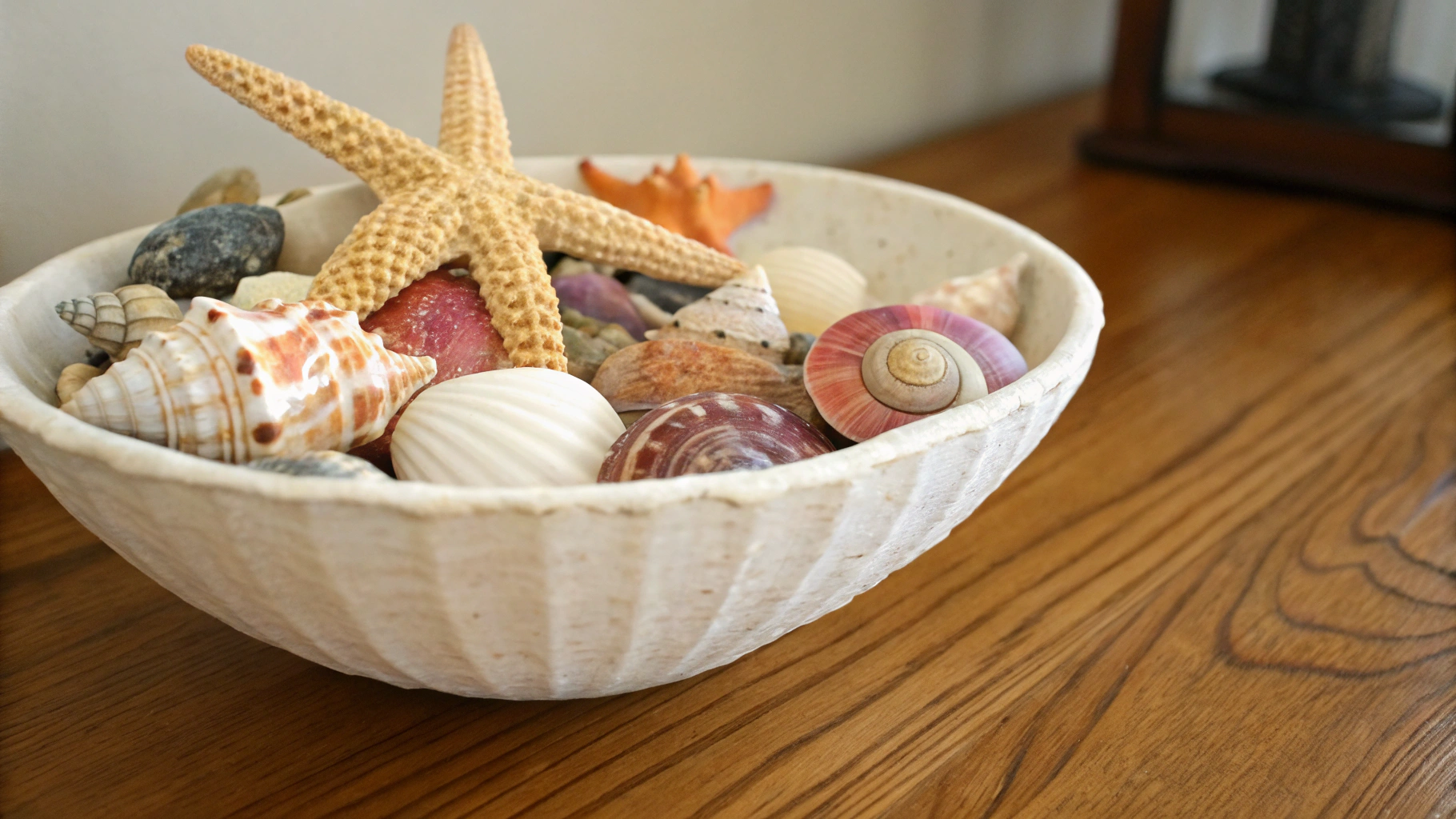
6. Shells with Pebble Mix
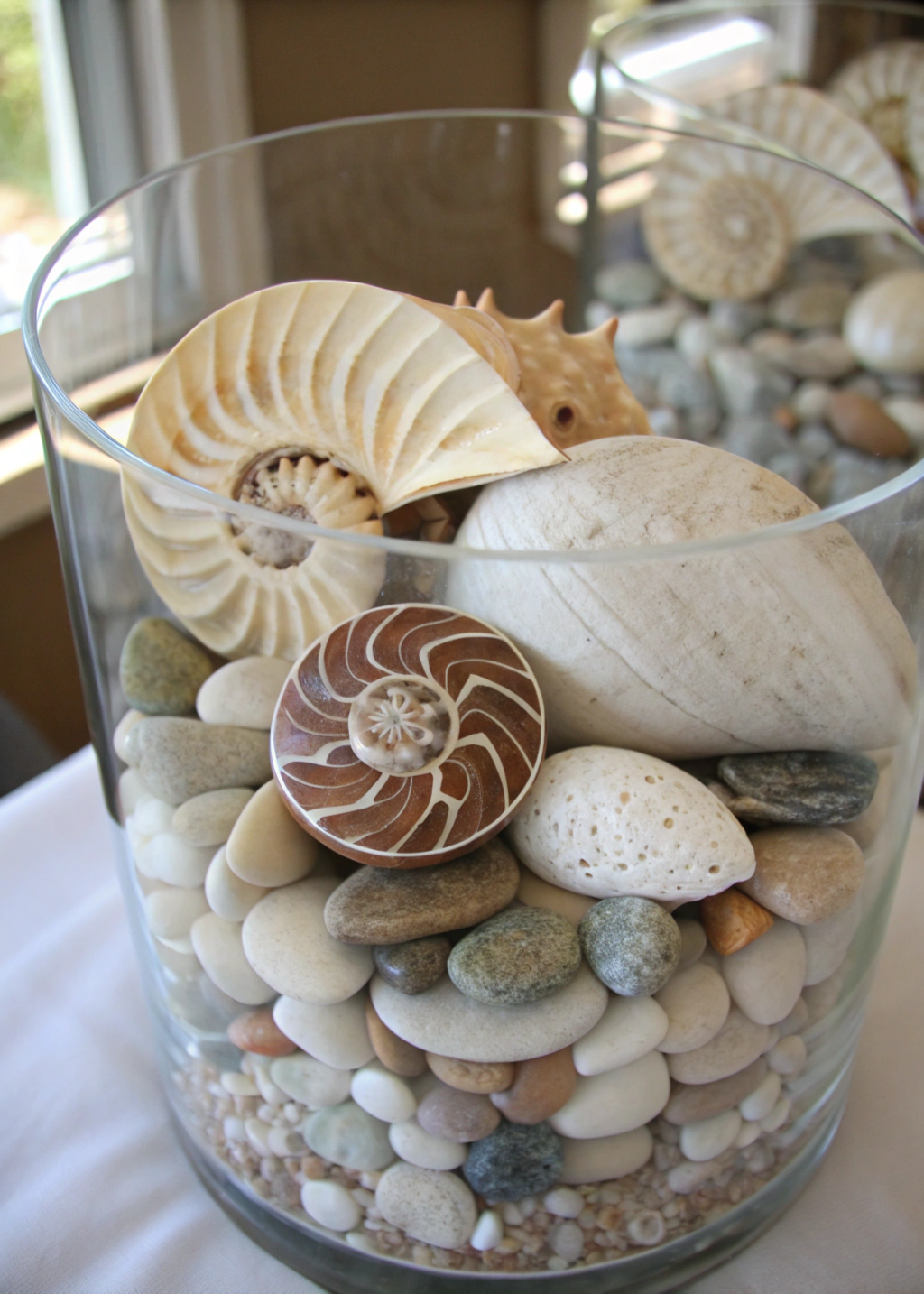
Add contrast with pebbles.
Combine:
• Light shells
• Small stones
• Neutral tones
Creates depth and interest.
7. Monochrome Beige Shell Fill
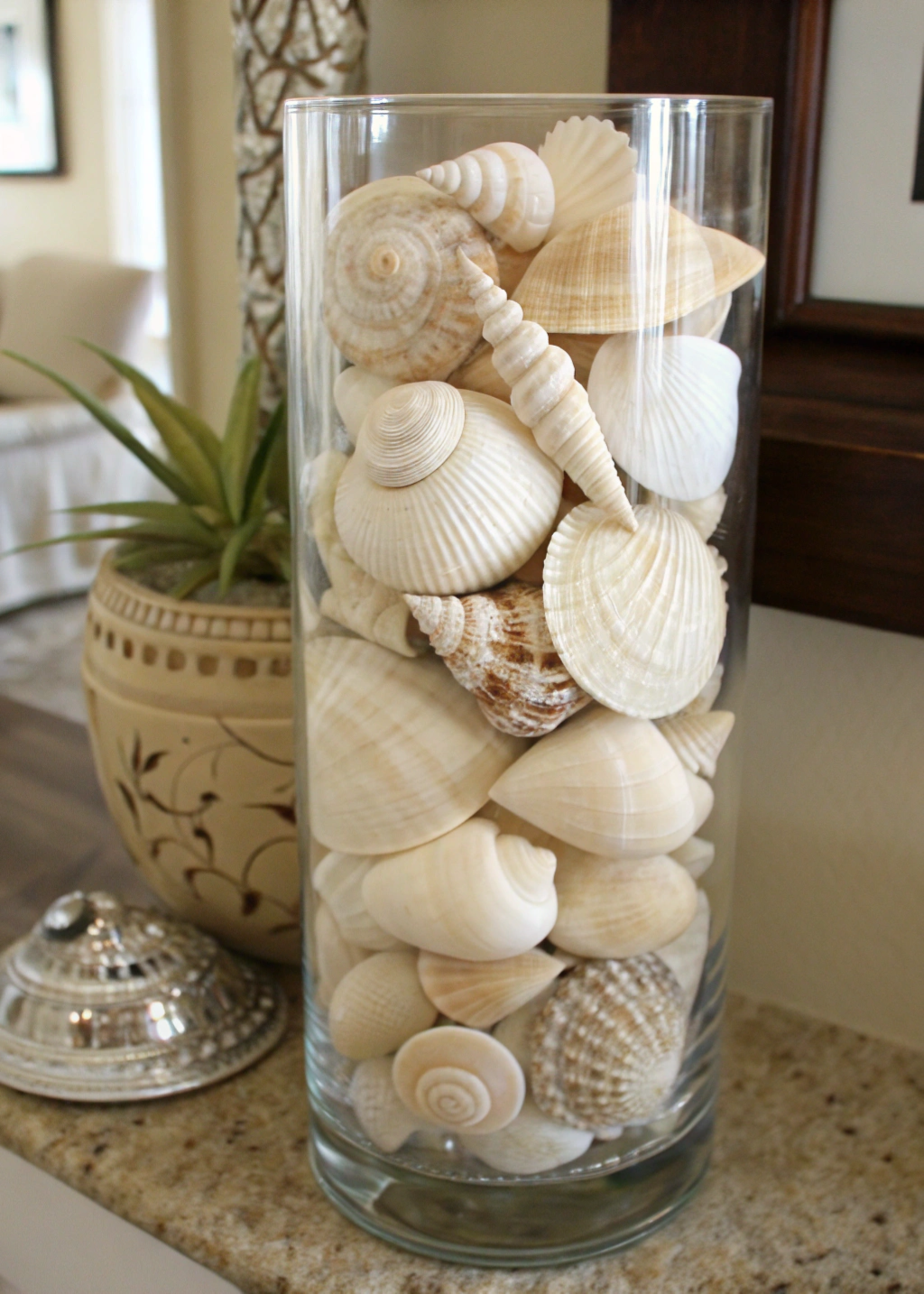
Stick to one warm tone.
Use:
• Beige shells only
• Soft variations
• Clean arrangement
Feels warm and cohesive.
8. Shells with Dried Grass
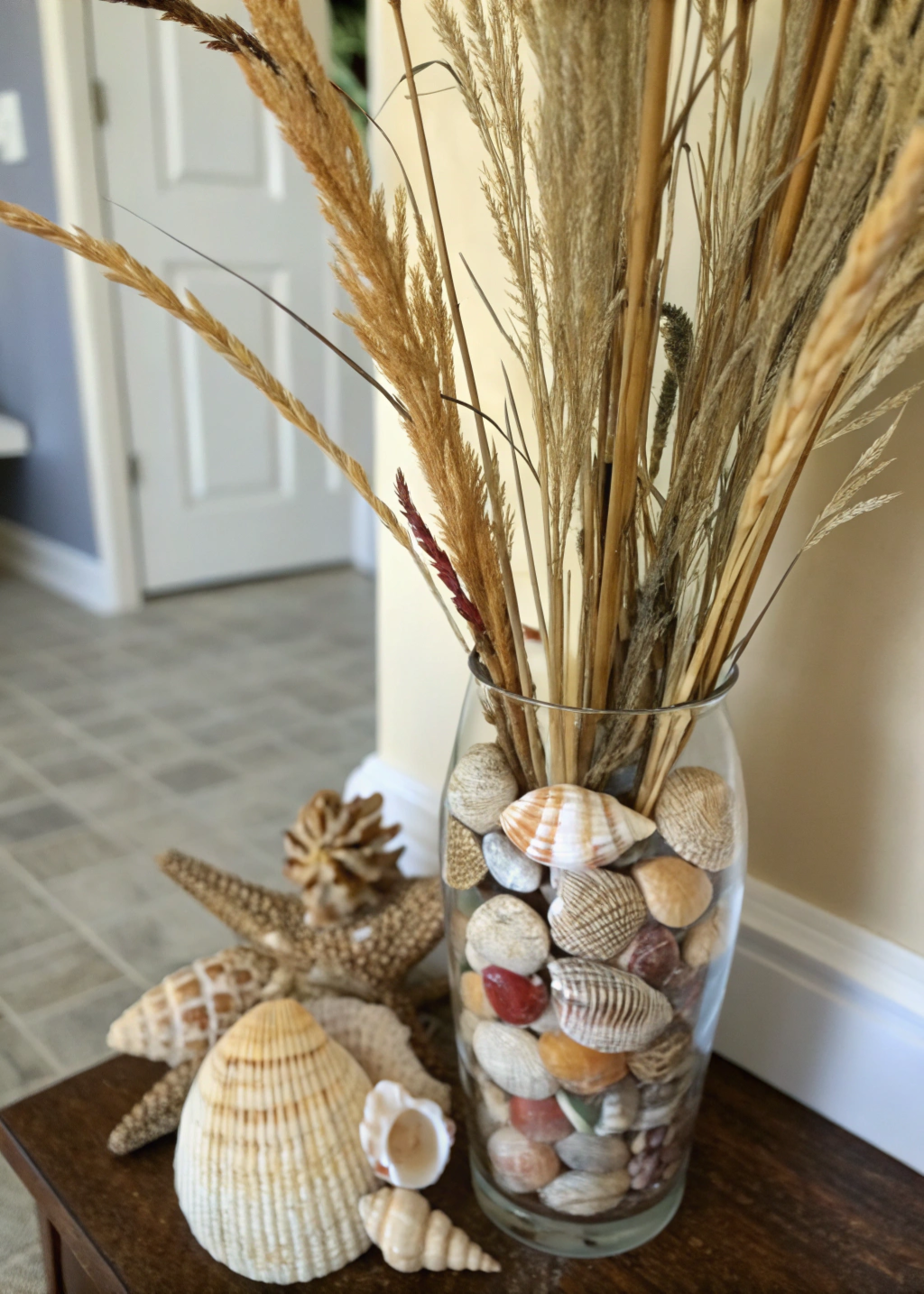
Add height and softness.
Use:
• Shells as a base
• Dried stems above
• Neutral colors
Creates a styled look.
9. Layered Shell Sections
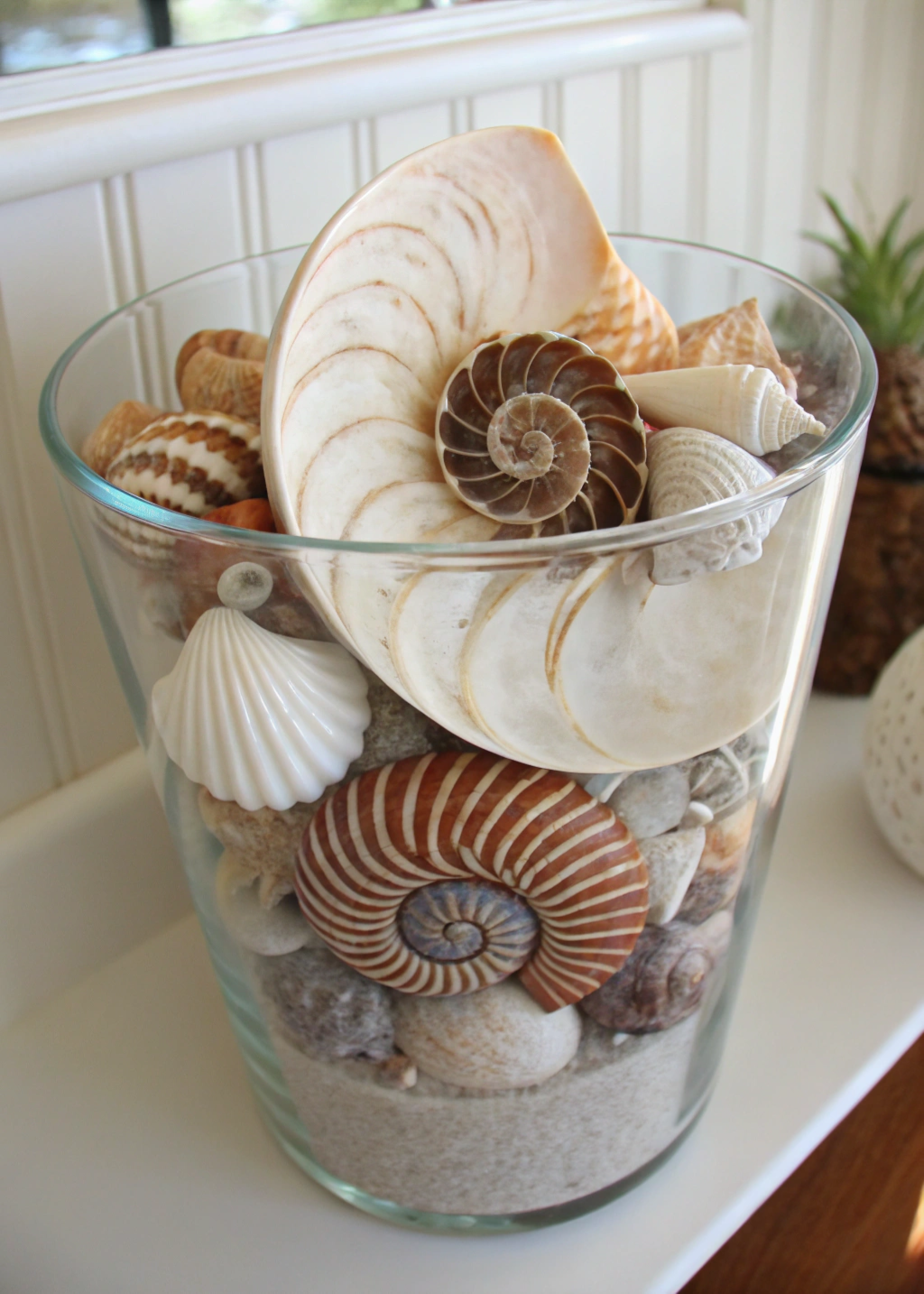
Create visible layers.
Arrange:
• Different shell types
• In sections
• With clear separation
Adds visual interest.
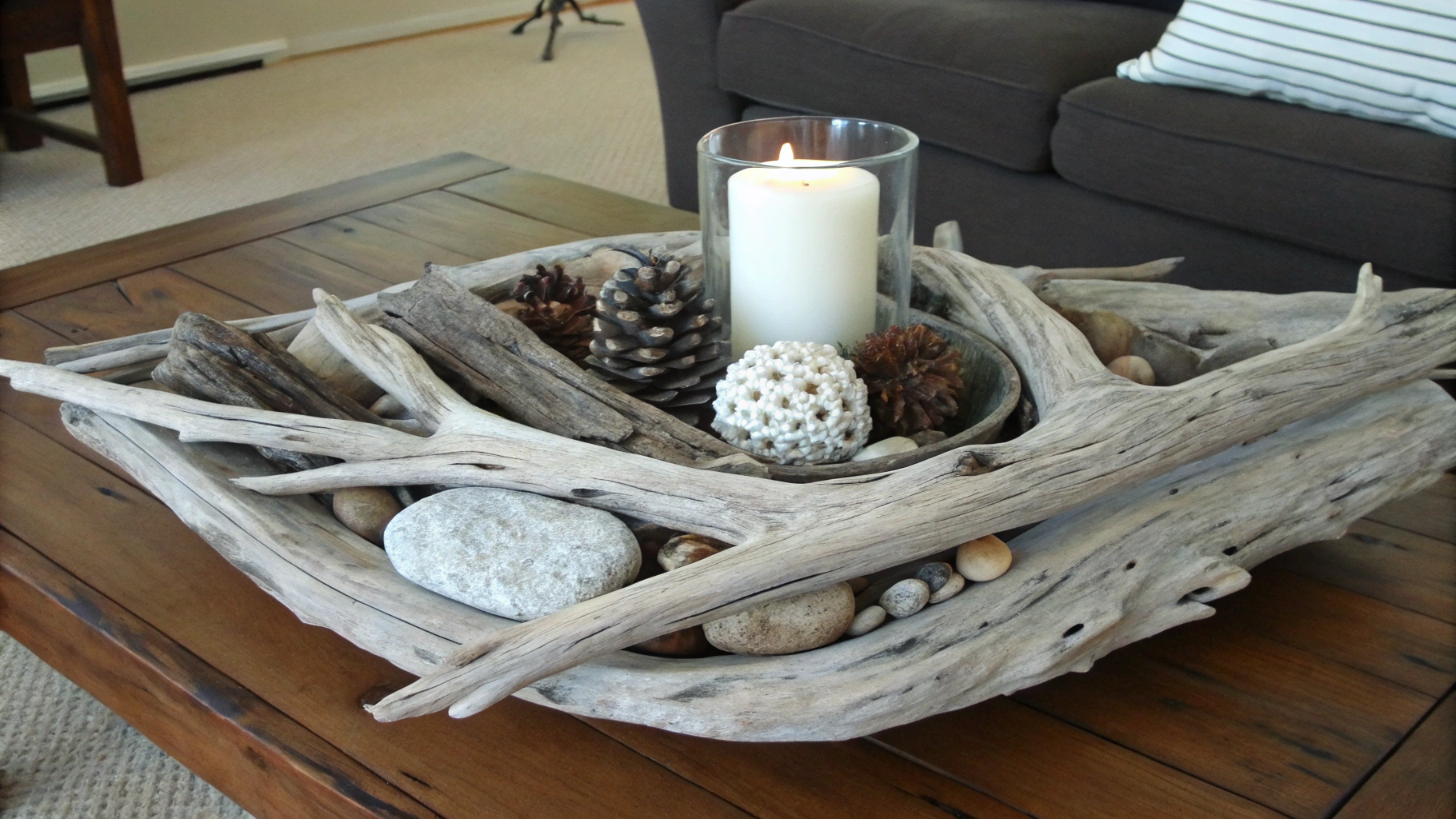
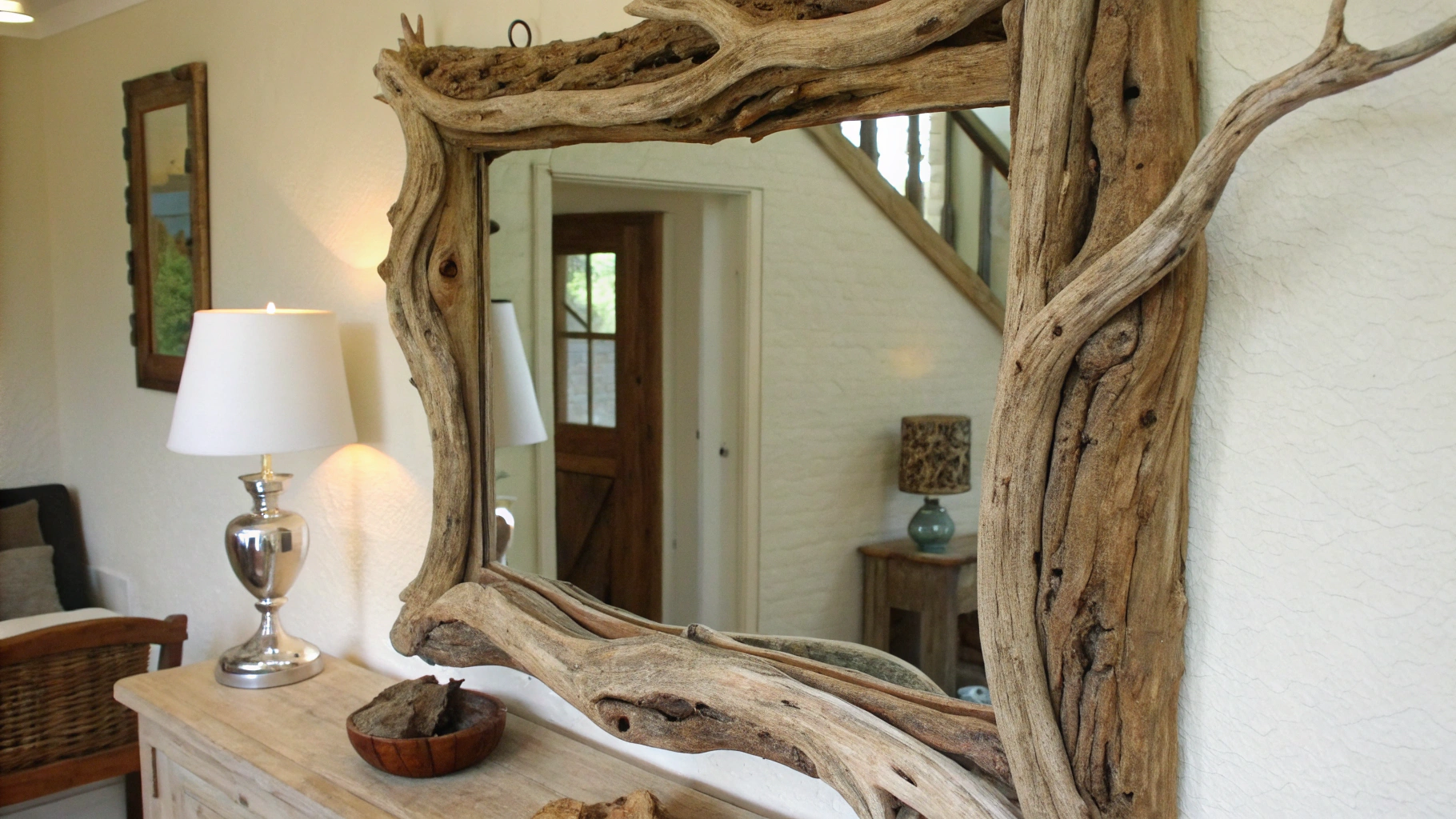
10. Shells with Driftwood Pieces
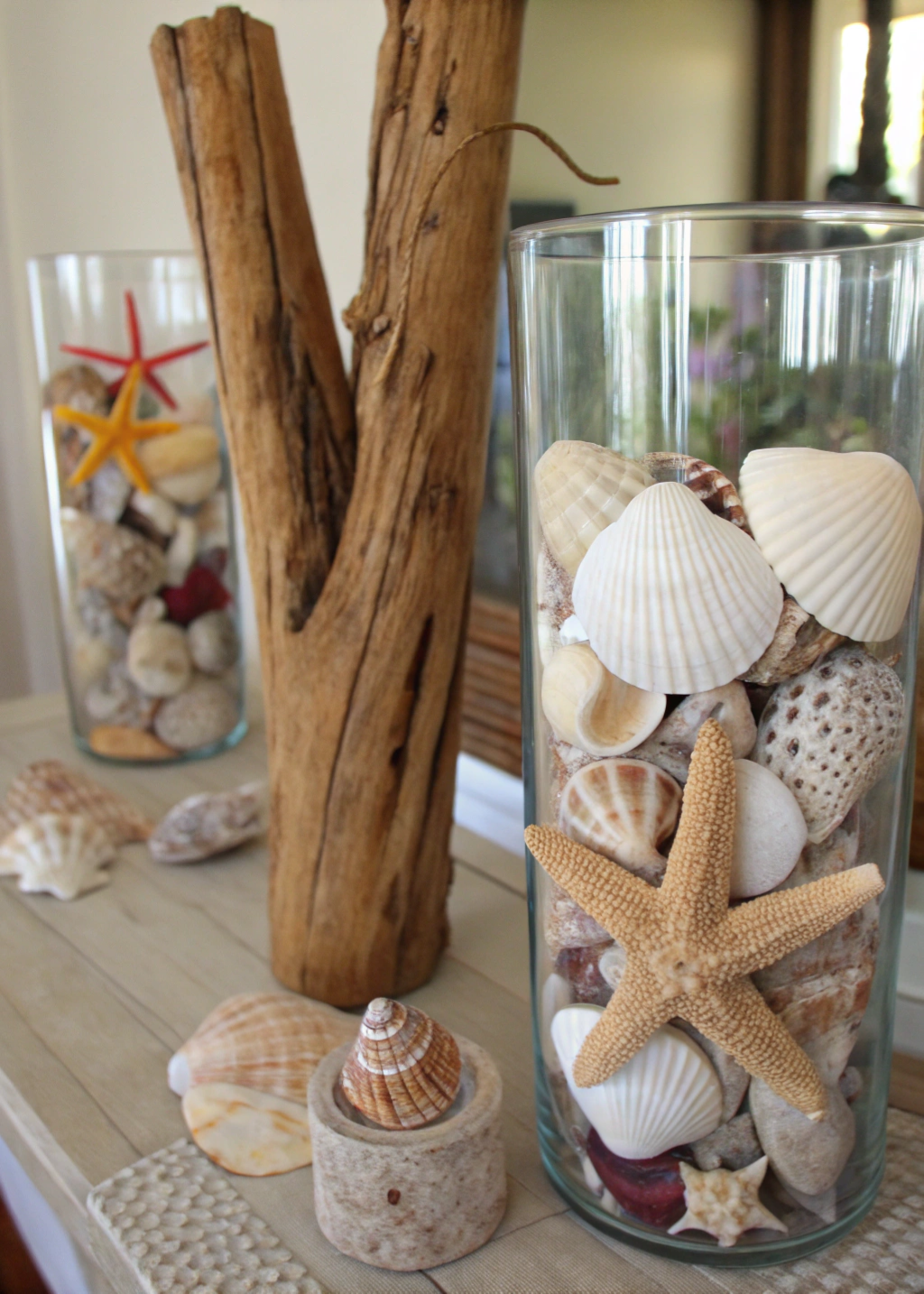
Mix textures for a coastal feel.
Combine:
• Small driftwood pieces
• Shells
• Natural tones
Feels organic and relaxed.
11. Minimal Half-Filled Vase
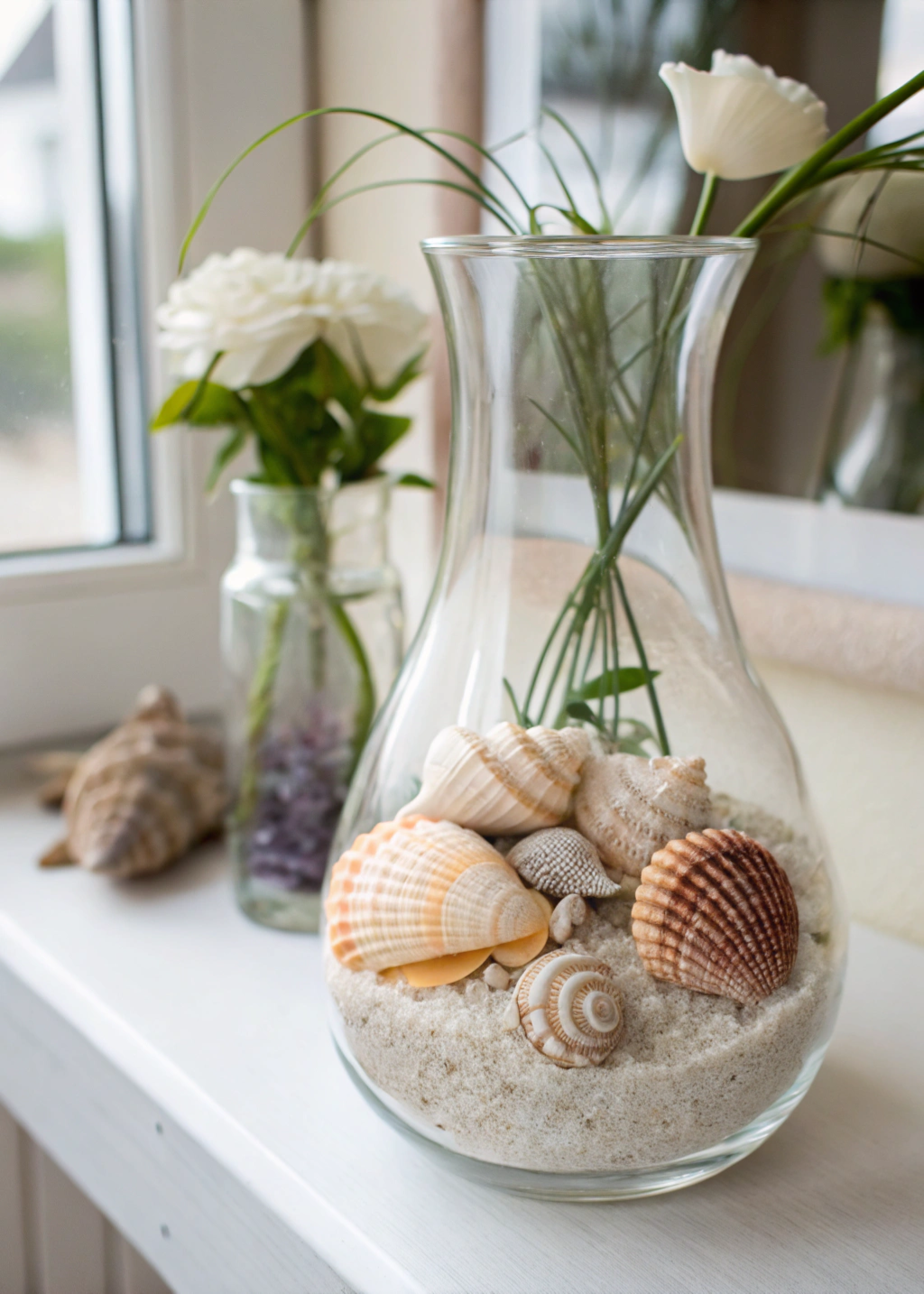
Leave part of the vase empty.
Fill:
• Only halfway
• With shells
• Keep the top open
Creates a modern look.
12. Shells with Subtle Metallic Accent
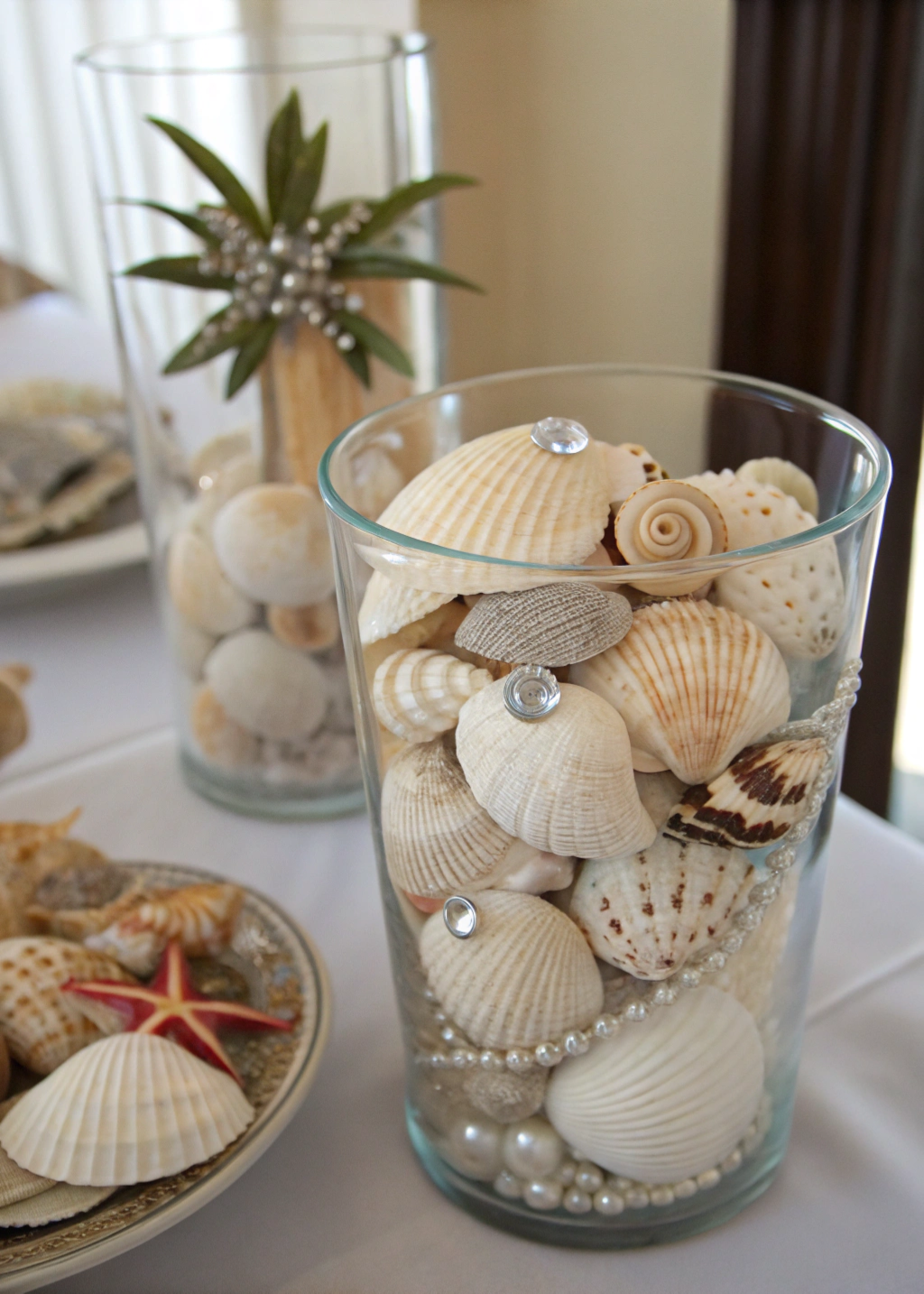
Add a touch of contrast.
Include:
• A few gold-toned shells
• Neutral base
• Minimal placement
Elevates the arrangement slightly.
Final Thoughts
Seashell vase fillers are a simple yet effective way to bring coastal charm into your home. By focusing on balance, texture, and a soft color palette, you can create arrangements that feel light, natural, and beautifully styled.
The key is to keep things effortless and let the natural beauty of the shells stand out.
FAQs
1. What type of vase works best for seashell fillers?
Clear glass vases work best to showcase the shells and layers.
2. Can seashell fillers look modern?
Yes, when styled minimally with neutral tones, they look clean and modern.
3. Should I mix different types of shells?
Yes, but keep the color palette consistent for a cohesive look.
4. How full should I fill the vase?
Avoid overfilling, leave some space for a more refined look.
5. What can I pair with seashell fillers?
Sand, pebbles, driftwood, or dried stems work well.