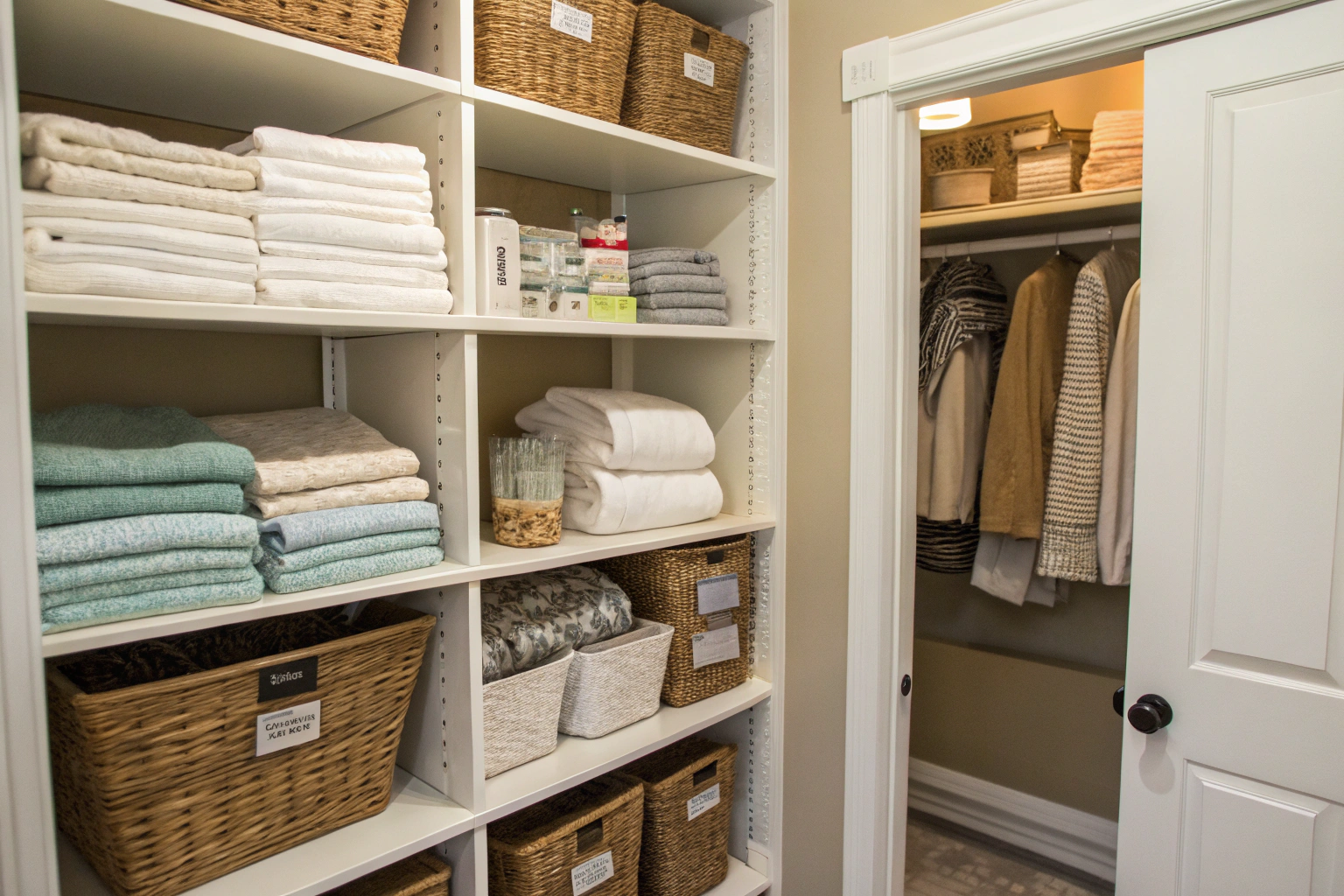
How to Organize a Linen Closet So It Doesn’t Fall Apart in a Week
You know exactly how this goes. You spend a Sunday afternoon pulling everything out of the linen closet, refolding every towel perfectly, stacking the sheets by size, organizing the pillowcases, grouping the spare blankets, and standing back at the end feeling genuinely satisfied with what you have created. It looks incredible. It feels like a victory.
And then a week later someone grabs a towel in a hurry, the stack shifts, something falls, and the whole thing begins its slow inevitable descent back into the pile of chaos it was before you started. Within a month it looks exactly like it did before your Sunday afternoon of effort. Sometimes it looks worse.
If this is your experience with linen closet organization you are not alone and you are not doing anything wrong. The problem is not your tidying ability. The problem is that most linen closet organization advice focuses entirely on the setup and almost nothing on the system design that makes the setup actually last. This guide is about both. How to set it up properly and how to design it so that it holds up under the reality of daily use by real people who are not always careful or methodical when they are grabbing a towel at seven in the morning.
Why Linen Closets Fall Apart So Fast
Before getting into the solutions it helps to understand the specific reasons linen closets fail so consistently. There are a few and they come up again and again regardless of how beautifully the initial setup was executed.


Folding Standards Are Too High to Maintain
Most linen closet organization systems are built around a level of folding precision that is completely unsustainable in daily life. The kind of folding where every towel is a perfect rectangle of identical dimensions, every sheet set is folded into a neat bundle, and every pillowcase lies flat and smooth. This level of precision looks beautiful on day one and requires so much effort to maintain that most people simply stop trying after the first few times something needs to be grabbed and replaced in a hurry.
When the folding standard is too high, the moment one thing is put back imperfectly the whole closet starts to look messy. And once it starts to look messy the psychological motivation to maintain it dissolves rapidly.
The System Does Not Account for How People Actually Use It
Most people do not use their linen closet the way it was organized. They grab things in a hurry. They shove things back without thinking. Multiple people with different standards of tidiness are putting things back. Children are reaching for things and not caring about the neatness of what they leave behind. The linen closet organization system that was built on a quiet Sunday afternoon meets the reality of daily household life and collapses because it was designed for one and not the other.
There Is No Designated Home for Everything
In a linen closet that lacks a proper system, things end up wherever there is space rather than in a specific designated place. This seems fine when there is plenty of space but as the closet fills it creates a situation where nothing has a permanent home and every restock becomes a puzzle. Where does this go? Wherever it fits. And wherever it fits is different every time which means the closet has no structure that can be maintained.
The Closet Is Storing Too Much
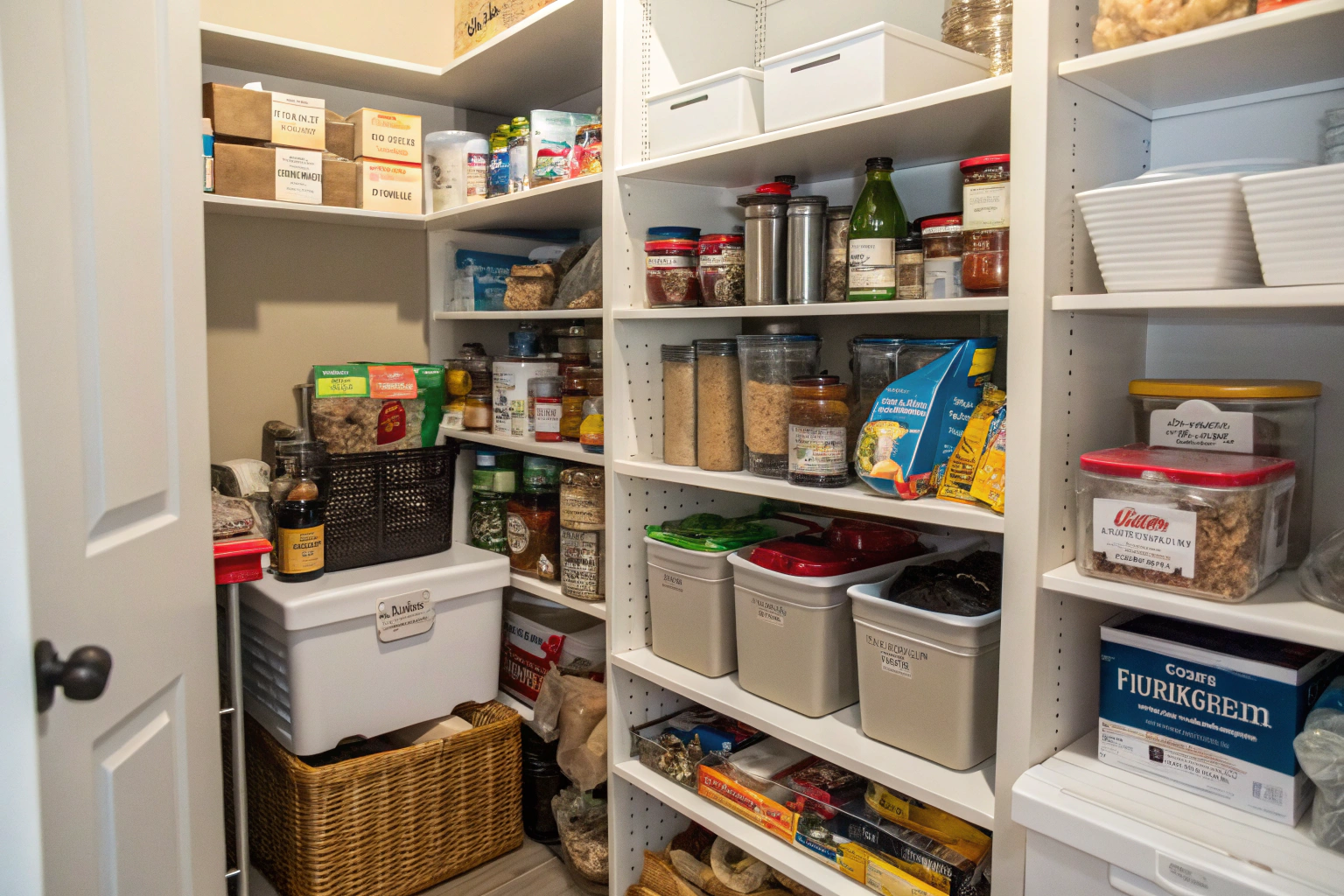
Linen closets tend to accumulate things beyond their original purpose. Extra toiletries, medicines, cleaning supplies, random household items that needed a home and ended up in the linen closet because it had a bit of space. Every non-linen item that enters a linen closet takes up space, disrupts the organizational categories, and makes the whole system harder to maintain. The more the linen closet tries to do, the less well it does any of it.
1. Start by Pulling Everything Out and Being Brutally Honest
This is the step that determines whether everything that follows will actually work. A linen closet organization system built on top of too much stuff will always fail. Before thinking about containers, labels, shelf heights, or folding methods you need to know exactly what you are working with and be willing to reduce it.
The Audit Process
Pull absolutely everything out of the linen closet and sort it into categories. Bed sheets, sorted by bed size. Pillowcases. Duvet covers. Towels, sorted by type, bath towels, hand towels, face cloths. Beach towels if they are stored here. Blankets and throws. Table linens if any. Any non-linen items that have accumulated.
Now within each category ask some honest questions. How many sets of sheets do you actually need per bed? The standard recommendation from professional organizers is two sets per bed maximum. One on the bed, one in the closet. If you have five sets of sheets for one bed, three of them are taking up space without serving a purpose. How many towels per person? Two to three is plenty. Eight per person is not unusual in most households and it is at least twice what anyone needs.
Look at the condition of everything. Towels that are thin, rough, or permanently stained should not be in your linen closet. Sheets that are pilling or that you never choose to use should not be there either. A good rule of thumb: if you would not put it on a guest bed, it should not be in the closet.
What to Do With the Excess
Donate towels and sheets that are in reasonable condition to local shelters, animal rescues, or textile recycling programs. Old worn towels make excellent cleaning rags and can be repurposed rather than thrown away. The goal is to leave the audit with significantly fewer items than you started with because a linen closet with appropriate quantities of things is dramatically easier to organize and maintain than one that is overfilled.
2. Measure the Closet and Design the System Before Buying Anything
The second most common reason linen closet organization fails is buying storage products that do not fit or do not suit the space. Bins that are too wide for the shelf. Baskets that are too tall and waste space. Dividers designed for a different depth of shelf. Buying first and measuring after is a very expensive way to discover the system does not work.
What to Measure
Measure the width, depth, and height of each shelf. Note whether shelves are fixed or adjustable. If adjustable, note the spacing options available. Measure the overall interior height of the closet from floor to ceiling and count the number of shelves.
Pay particular attention to shelf depth because it governs almost everything else about how you can organize the closet. A standard linen closet shelf is typically 12 to 16 inches deep. Items stored on a shelf shallower than this will hang over the front edge. Bins deeper than the shelf will not fit. Knowing your exact shelf depth before buying any storage product prevents the most common and most frustrating purchasing mistakes.
Designing the Shelf Layout
Once you know your measurements, decide which shelf gets which category. As a general principle assign the most frequently used items to the most accessible shelves. Eye level and just above are the easiest to reach without stretching or bending. Reserve the highest shelves for items used occasionally like spare blankets and seasonal bedding. Reserve the floor or lowest shelf for heavier items like stacked towels or large storage bins.
Grouping by user is often more practical than grouping by item type in a family home. A shelf or zone dedicated to each bedroom, containing that room’s sheets, pillowcases, and towels, means that when someone changes the bedding on their room they go to one zone and get everything they need. This is simpler to use and simpler to maintain than a system where all the queen sheets are on one shelf and all the king sheets are on another and the pillowcases for both are somewhere else entirely.
3. Choose a Folding Method You Can Actually Maintain
This is possibly the most important practical decision in a linen closet setup and it is the one that most organization content gets wrong by prioritizing aesthetics over sustainability.
The File Folding Method for Towels and Sheets
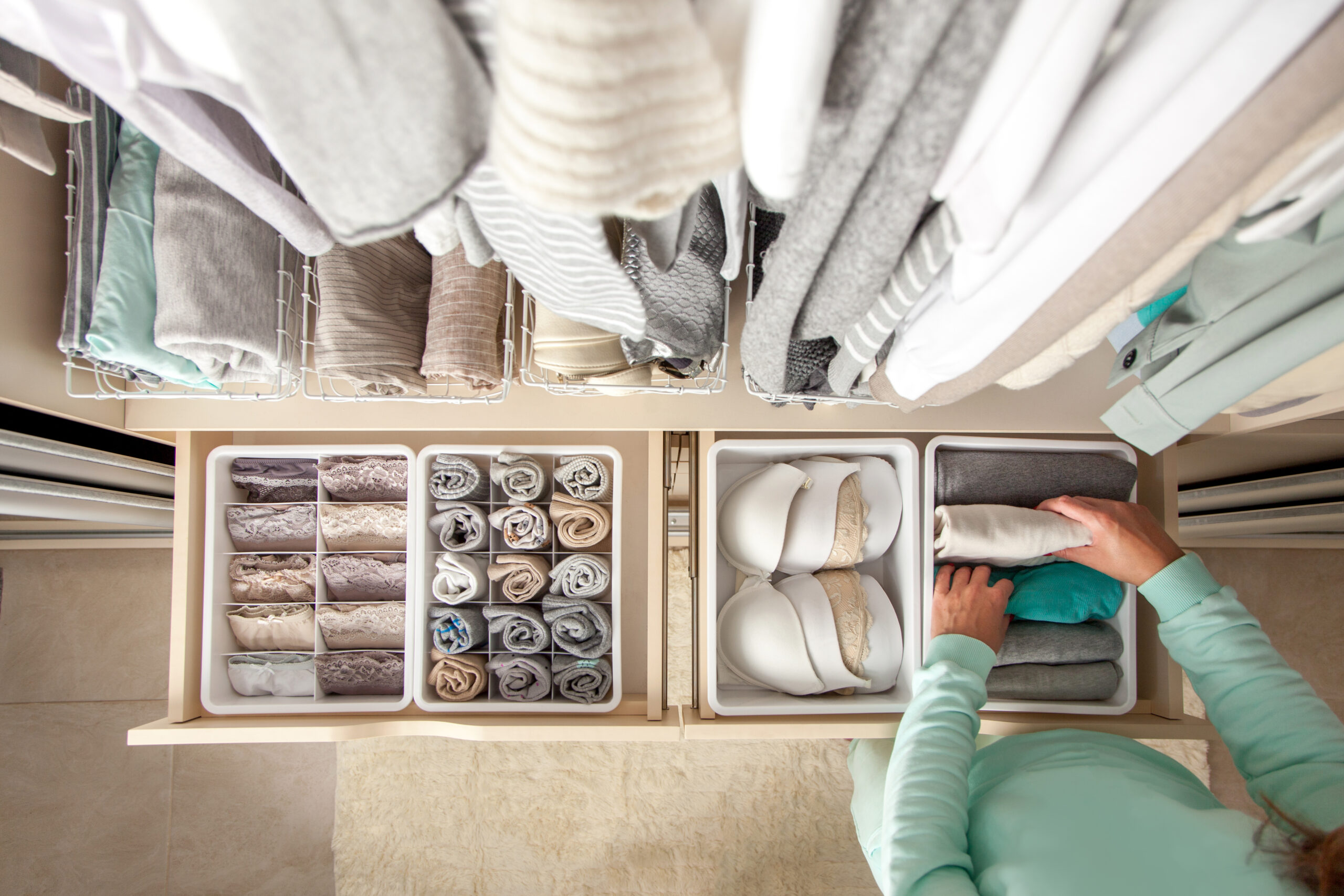
File folding, where items are folded into a rectangle and stored upright like files in a drawer rather than stacked flat on top of each other, is the single best method for maintaining a linen closet long term. The reason is simple. When towels and sheets are stacked flat you always need to take from the top of the stack which means the items on the bottom of the stack never get used and the top of the stack gets messy every time something is taken. When towels and sheets are filed upright you can pull from the front without disrupting anything behind it.
For towels: fold in half lengthwise, then in thirds to create a long rectangle, then fold in half again to create a square. Stand upright in a bin or basket. Every towel is equally accessible and removing one does not affect any other.
For sheets: fold the fitted sheet into a rough square, fold the flat sheet and pillowcases into neat rectangles, and bundle all three components of the set together. Store the bundle upright rather than in stacks. When you need to change a bed you pull one bundle and everything you need is already together.
The Pillowcase Pocket Method
The pillowcase pocket method is one of the most popular sheet organization techniques in 2026 and it genuinely works. After washing and folding a complete sheet set, fold the flat sheet and fitted sheet neatly and tuck them inside one of the matching pillowcases. The pillowcase acts as a pouch that keeps the complete set together. It looks neat on the shelf, everything for one bed change is in one place, and putting it away is simple because the set is already bundled.
The Honest Folding Standard
Whatever folding method you choose, set a standard that your entire household can meet on their worst day. Not their best day. Their worst day, when they are tired or rushed or just do not care very much about the linen closet. If the standard is only achievable when someone is in the right mood and has plenty of time, it will not be maintained. A slightly imperfect fold that happens consistently beats a perfect fold that happens occasionally.
4. Use Bins and Baskets to Create Foolproof Zones
Bins and baskets in a linen closet serve the same purpose they serve in an open pantry. They convert a chaotic collection of varying items into a single contained visual unit. They also do something specifically important in a linen closet which is to make putting things back foolproof. When a category of items lives in a clearly labeled bin, there is no decision to make about where it goes. It goes in the bin. The bin goes on the shelf. Done.
What Kind of Bins and Baskets Work Best
For a linen closet the most important property of any bin or basket is that it fits the shelf depth exactly or close to it. A bin that is 2 to 3 inches shallower than the shelf depth leaves a visible gap at the back of the shelf that looks slightly unfinished. A bin that is deeper than the shelf overhangs the front which is both a tripping hazard if someone catches it and a visual irritant.
Fabric bins in a linen closet have a warmth and softness that suits the contents. Linen or cotton bins in white, cream, grey, or natural tones look beautiful and are widely available in standardized sizes. The advantage of fabric bins is that they can be slightly compressed if overfilled rather than cracking or warping like rigid containers.
Clear acrylic bins are excellent for categories where you want to see the contents at a glance without pulling the bin out. Spare toiletries, medicine cabinet overflow, and accessories stored in the linen closet all benefit from being visible without having to open anything.
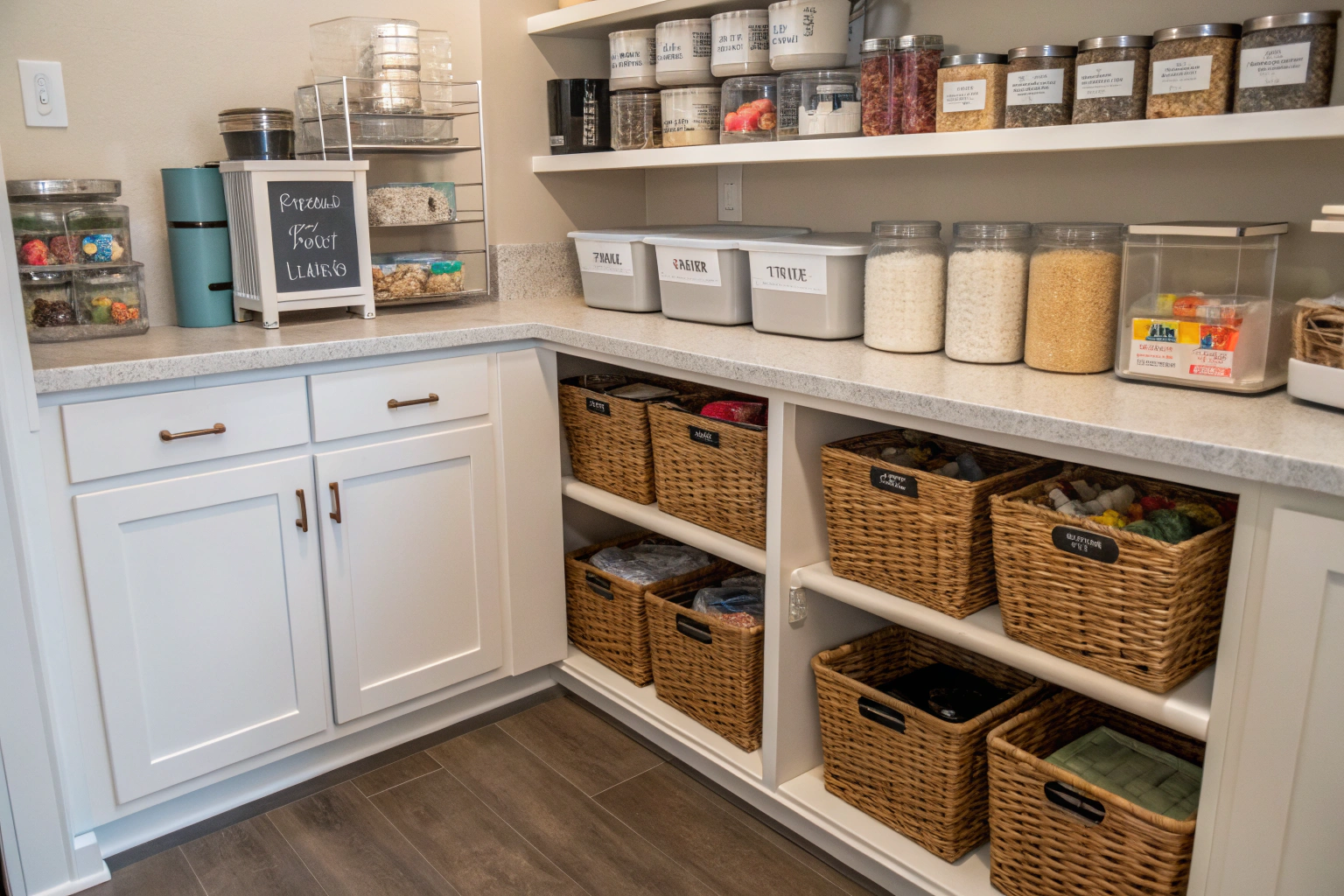
Woven seagrass or rattan baskets bring warmth and organic texture to a linen closet and look beautiful on open shelves. They are less practical for frequently accessed items because they require two hands to use, one to hold the basket and one to retrieve the item, but they work well for categories accessed less frequently like seasonal blankets and spare pillows.
How Many Bins and Baskets
Err on the side of fewer and larger rather than more and smaller. A large bin labeled Spare Towels is easier to maintain than three small bins labeled Bath Towels Guest, Bath Towels Family, and Hand Towels. The fewer individual units there are to manage the simpler the system is to maintain and the less likely it is to fall apart.
5. Label Everything Even If It Seems Obvious
This is the step most people skip in a linen closet because it feels like overkill. You know where everything goes. You do not need a label to tell you that the towels go in the towel bin. But the labels are not for you on your best organizational day. They are for everyone else in the household and for you on your worst day when you just want to put something away quickly and correctly without thinking about it.
What Labels Do in a Linen Closet
Labels remove the decision-making from the act of putting things away. When every shelf, bin, and basket is clearly labeled there is no ambiguity about where anything belongs. This is especially important in households with children, with multiple people of varying organizational standards, or with anyone who does not use the linen closet regularly enough to have memorized the system.
Labels also hold the system accountable. When a labeled bin contains the wrong items it is immediately obvious that something is in the wrong place. Without labels wrong placement is invisible and the organizational categories gradually blur into each other until the whole system stops functioning.
Label Style and Placement
Keep labels consistent throughout the closet. The same font, the same size, the same placement position on every bin or shelf. Consistency in labeling is one of those small details that separates a linen closet that looks professionally organized from one that looks like a good attempt.
For bins and baskets, stick-on labels or tied tag labels on the front of each bin at eye level work well. For shelf sections, a label on the front edge of the shelf creates a subtle but effective zone marker. Chalkboard labels work well for categories that might change over time. Printed or label-maker labels work better for permanent categories.
6. Add Shelf Dividers to Stop Stacks Toppling
Stack toppling is one of the most common immediate causes of linen closet chaos. A beautifully folded stack of towels or sheets begins to lean as items are added or removed from it, eventually toppling sideways and taking the rest of the shelf with it. Shelf dividers solve this problem completely and they are one of the most underused linen closet accessories.
How Shelf Dividers Work
Shelf dividers are vertical panels that clip onto the shelf and create compartments between stacks. They keep each stack contained within its own section which prevents the domino effect when one stack shifts. They also create visual separation between categories on the same shelf which reinforces the organizational zones without requiring a separate bin or basket for each category.
In 2026 shelf dividers come in acrylic, metal, and wood-finish versions. Acrylic dividers are the most invisible and let the items on the shelf take visual precedence. Metal dividers in white or chrome are clean and functional. Wood-finish dividers add warmth and look beautiful in a linen closet with natural material accents.
Where to Use Dividers
Shelf dividers are most useful on shelves where you are storing items in flat stacks rather than in bins or baskets. The towel shelf and the sheet shelf are the most obvious candidates. A divider between the bath towel section and the hand towel section and another between the hand towel section and the face cloth section turns one shelf into three clearly defined zones that maintain their structure even when items are being grabbed and replaced frequently.
7. Deal With the Awkward Items Every Linen Closet Has
Every linen closet has a collection of items that do not fit neatly into the standard organizational categories. The extra pillows. The spare duvet. The electric blanket. The mattress protectors. The things that are too big for a standard shelf but that need to live somewhere accessible. Dealing with these items properly is the difference between a linen closet that works and one that has a perpetually chaotic top shelf where oversized items live in defeated piles.
Solutions for Bulky Items
Vacuum storage bags are one of the best solutions for bulky seasonal items like spare duvets, extra pillows, and thick blankets. Compress them into a fraction of their usual size, seal the bag, and store flat on the top shelf or under other items. In 2026 good quality vacuum bags with durable seals that hold their compression for months are widely available and genuinely worth the investment for anyone whose linen closet is struggling with bulky seasonal bedding.
Large zip-up storage bags in clear fabric are a softer alternative to vacuum bags that works well for items you access more regularly. A spare duvet stored in a large clear zip bag can be identified at a glance, kept clean and dust-free, and pulled out easily when needed.
Shelf baskets specifically sized for the top shelf of the closet, large and deep enough to hold folded spare pillows or a rolled extra blanket, keep bulky items contained and looking intentional rather than dumped.
Mattress Protectors and Duvet Covers
These items are awkward because they are large, thin, and prone to unfolding themselves the moment they are placed on a shelf. The best solution is to store them inside their matching pillowcase using the pillowcase pocket method. A duvet cover, duvet inner, and two pillow cases all bundled inside one of the pillow cases takes up exactly as much space as the duvet cover alone did when stored loose and keeps everything for one bed change together in one neat bundle.
8. Create a Linen Rotation System to Use Everything Evenly
This is a principle borrowed from professional hospitality and it makes a significant difference to both the organization and the longevity of your linens. Without a rotation system the same towels and sheets get used repeatedly while others sit unused on the shelf. The used ones wear out faster and the unused ones take up space indefinitely.
How to Build a Simple Rotation
The principle is the same as first in first out in the pantry. Clean linens that have just been washed go to the back of the stack or the bottom of the pile. The next time you grab a towel or a sheet set you take from the front or the top which is the item that has been sitting longest. Everything gets used with roughly equal frequency and everything wears evenly.
In practice this means resisting the temptation to just replace the clean towel on top of the existing stack because it is quicker. Take the extra ten seconds to place it behind or below the existing items. This habit alone significantly extends the lifespan of your linens and keeps the rotation fresh.
9. Maintain the Closet With a Monthly Reset Rather Than a Weekly One
Unlike a pantry which is used multiple times daily and needs a weekly reset, a linen closet can be maintained with a lighter touch. A monthly reset of about fifteen to twenty minutes is enough to keep a well-designed linen closet system functioning beautifully long term.
What the Monthly Reset Involves
Straighten any stacks or bins that have shifted. Return any items that have migrated to the wrong shelf or zone. Check that all bins and baskets are in their correct positions. Remove anything that has appeared in the closet that does not belong there. Wipe down any shelf surfaces that need it. Check for any linens that are looking worn or damaged and remove them for repurposing or replacement.
The monthly reset works because a well-designed linen closet with proper bins, shelf dividers, and a sensible folding standard does not generate much disorder in a month. The system is robust enough to absorb daily use without requiring constant maintenance. The monthly touchpoint is just enough to catch anything that has slipped and prevent the gradual drift that eventually leads to a full reorganization.
The Trigger System for Between Resets
Between monthly resets, a simple trigger system prevents small disorder from accumulating into big disorder. The trigger is this: if you notice something is wrong when you open the closet, fix it immediately rather than leaving it for the next reset. A stack that is leaning gets straightened now. An item in the wrong zone gets moved now. A bin that has been left halfway off the shelf gets pushed back now.
These thirty-second interventions cost almost nothing and prevent the compound effect where one small mess leads to another until the whole closet is in disarray. It is much easier to maintain a system with frequent tiny interventions than with infrequent large ones.
10. Make the Linen Closet Smell as Good as It Looks
This is the finishing touch that most linen closet guides miss entirely and it is the one that makes the biggest difference to how the closet feels to use every day. A linen closet that smells fresh and clean is a pleasure to open. One that smells musty, stale, or of old fabric is a small but consistent source of annoyance that makes the whole organizational effort feel slightly less worthwhile.
How to Keep a Linen Closet Smelling Fresh
Ensure linens are completely dry before storing them. This is the most important factor in preventing musty smells. Even slightly damp towels or sheets stored in a closet will develop a musty odor within days that transfers to everything stored nearby. If you are putting linens away straight from the dryer, allow them to cool completely and air briefly before storing. If line-dried, make absolutely sure they are fully dry before folding and storing.
Linen sachets in a fresh scent placed among the stored linens are a beautiful and effective way to keep the closet smelling wonderful. Lavender is the classic choice and for good reason. It smells clean and fresh, it is a natural moth deterrent, and it has a calming quality that suits the bedroom-adjacent purpose of most linen closets. Cedar blocks serve the same dual purpose of fresh scent and natural moth protection. Replace sachets every three to four months or when the scent fades.
A small open box of baking soda placed on one of the shelves absorbs any ambient odors from the closet and can be replaced every couple of months. It is the most understated and practical of the scent solutions and works as a good baseline even if you also use sachets.
Conclusion
A linen closet that does not fall apart in a week is not a fantasy reserved for people with unlimited time and a passion for folding. It is the result of a system designed for real life rather than for a photograph. A system that accounts for how people actually grab towels in a hurry. A system where putting things back correctly is the path of least resistance rather than a considered effort. A system maintained with a light monthly touch rather than a dramatic periodic overhaul.
The foundations are straightforward. Start with less because a linen closet with appropriate quantities of things is infinitely easier to maintain than an overfilled one. Design the layout around how your household actually uses the closet. Choose a folding method that your worst-case self can maintain. Use bins and dividers to create foolproof zones that tell everyone where things belong. Label everything. Build in a monthly reset and a trigger system for in-between. And make the closet smell as good as it looks.
Do these things and the Sunday afternoon you spend setting up your linen closet will be the last time you need to do it from scratch. Not because it will be perfect forever but because the system will be robust enough to absorb real life and recover from it. Which is all any organizational system really needs to do.
Frequently Asked Questions (FAQs)
How do I keep my linen closet organized long term?
Design the system for your worst-case daily reality rather than your best-case. Use bins and shelf dividers to create foolproof zones where everything has an obvious home. Choose a folding standard that your whole household can maintain under time pressure. Label everything clearly. Do a monthly fifteen to twenty minute reset to catch anything that has drifted. And use the trigger system of fixing small problems immediately rather than letting them accumulate. A well-designed system maintained with these habits will hold up indefinitely.
How many sets of sheets and towels should I keep in my linen closet?
Two sets of sheets per bed is the professional organizer standard. One on the bed and one clean set in the closet is all you need for comfortable rotation. For towels, two to three per person is sufficient. Most households have significantly more than this and the excess is one of the primary reasons linen closets become overfilled and difficult to organize. Reducing to appropriate quantities before organizing makes everything that follows dramatically easier.
What is the best way to fold sheets for a linen closet?
The pillowcase pocket method is the most practical approach for maintaining organization long term. Fold the flat sheet and fitted sheet into neat rectangles and tuck both inside one of the matching pillowcases. The complete set is bundled together, easy to identify, easy to grab, and easy to put away. File the bundles upright in a bin or on a shelf rather than stacking them flat so every set is equally accessible without disturbing the others.
What is the best way to fold towels for a linen closet?
File folding is the most maintenance-friendly method. Fold each towel in half lengthwise, then fold into thirds to create a long rectangle, then fold in half to create a compact square. Store upright in a bin or on a shelf like files in a filing cabinet. Every towel is equally accessible and removing one does not disturb any other which makes the system dramatically easier to maintain than flat stacking.
How do I stop my linen closet shelves from getting messy so quickly?
Shelf dividers are the most effective single solution for preventing immediate shelf chaos. They keep stacks contained within their own sections and prevent the domino collapse that is the most common source of immediate linen closet disorder. Pair them with file folding rather than flat stacking and appropriate-sized bins for each category and the shelves will maintain their organization for significantly longer between resets.
What should I store in my linen closet versus somewhere else?
A linen closet should store bed linens, towels, spare blankets, and pillows. Items that commonly migrate into linen closets but belong elsewhere include cleaning supplies, medicines and first aid items, toiletry overflow, and miscellaneous household items without a proper home. Every non-linen item in the closet takes up space, disrupts the organizational categories, and makes the system harder to maintain. A linen closet that stores only linens is dramatically easier to organize and keep organized than one that has accumulated a wider brief.
How do I deal with bulky items like spare duvets and pillows in a linen closet?
Vacuum storage bags are the most space-efficient solution for seasonal or rarely used bulky items. They compress a spare duvet or set of pillows to a fraction of their usual size and store flat on the top shelf. For items accessed more regularly, large clear zip storage bags keep things contained, visible, and protected from dust. Using the pillowcase pocket method to bundle a complete duvet set including the cover, inner, and pillowcases into one compact package is also highly effective for managing duvet storage.
How do I make my linen closet smell fresh?
Make sure all linens are completely dry before storing them as any residual moisture will cause musty odors that spread to everything in the closet. Place lavender sachets or cedar blocks among the stored linens and replace them every three to four months. A small open box of baking soda on one of the shelves absorbs ambient odors as an effective baseline measure. And ensure the closet itself has adequate air circulation by not overfilling it since a tightly packed closet with no airflow is more prone to developing stale odors than one with some breathing room.

- What to Do With a Linen Closet You Don’t Actually Need - March 30, 2026
- How to Organize a Linen Closet So It Doesn’t Fall Apart in a Week - March 30, 2026
- How to Style an Open Pantry So It Looks Good, Not Chaotic - March 30, 2026