How to Repair Wall Cracks at Home for Cheap
Wall cracks are one of those home maintenance issues that almost everyone deals with at some point and almost nobody feels confident handling themselves. You notice a crack appearing in the plaster or drywall, you are not sure if it is serious or cosmetic, you google it and find advice that ranges from “just fill it with spackle” to “call a structural engineer immediately” and you end up more confused than when you started.
This guide cuts through all of that. It tells you clearly which cracks are cosmetic and fixable cheaply at home, which ones need professional attention, and exactly how to repair the fixable ones yourself with minimal tools, minimal skill, and minimal spending. Most wall crack repairs that fall into the cosmetic category cost between five and twenty dollars in materials and take less than an hour including drying time.
The goal is a wall that looks like the crack never happened. Not a patched wall that draws your eye to the repair every time you walk past. A properly done repair that disappears completely under paint and leaves no trace of what was there before.
Understanding Which Cracks Are Safe to Fix Yourself
This is the most important section in this guide and the one most people skip. Not every wall crack is a cosmetic issue. Some cracks are signals of underlying structural problems that cheap filler will not solve and that require professional assessment. Fixing the surface appearance of a structural crack without addressing the underlying cause is not just a waste of money. It can mask a worsening problem that becomes significantly more expensive to repair if left unaddressed.



Cracks That Are Safe to Repair Yourself
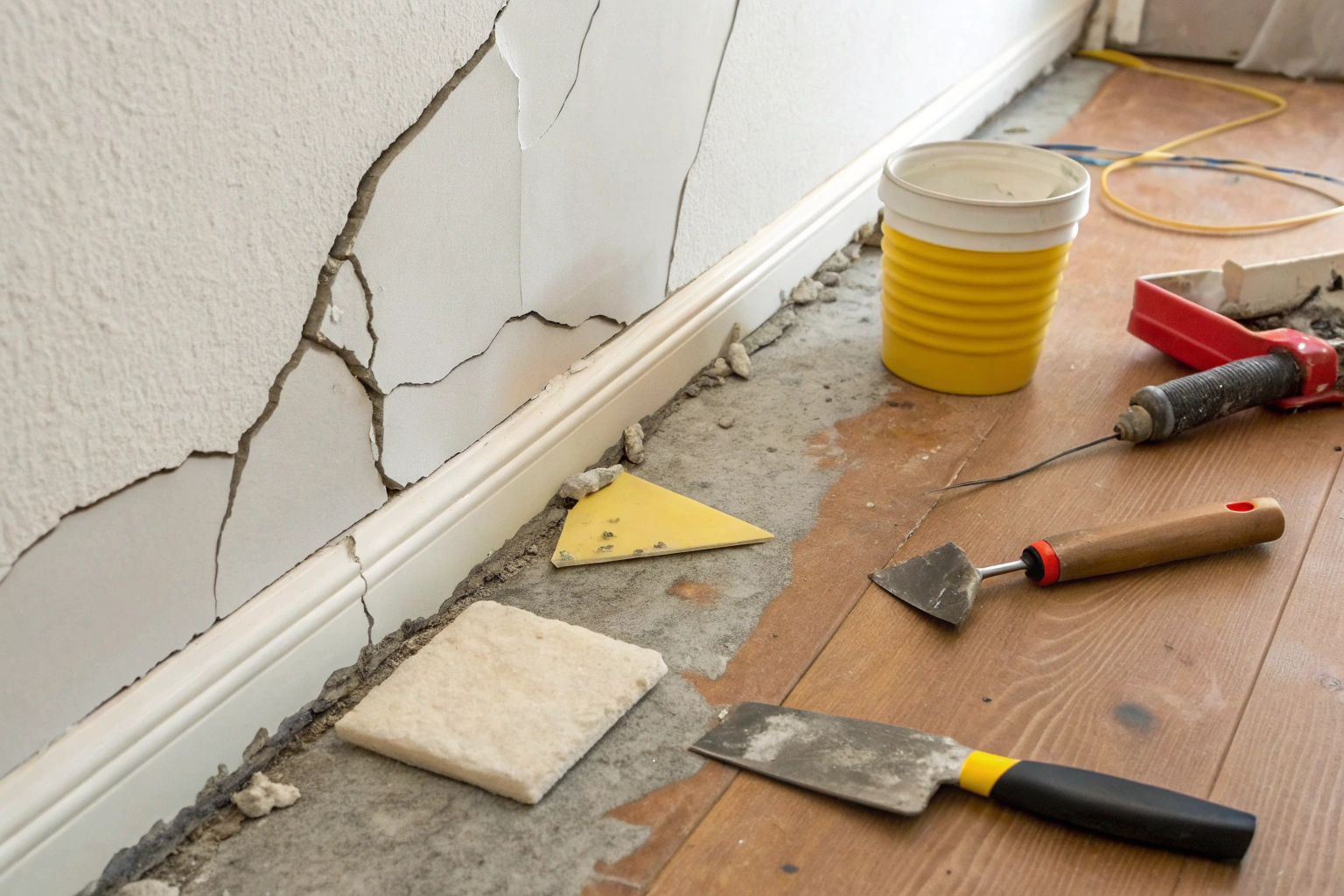
Hairline cracks are the most common type of wall crack and they are almost always cosmetic. These are very thin cracks, narrower than a millimeter, that appear in plaster or drywall as the house settles, as temperature and humidity cause materials to expand and contract, or as paint ages. They are superficial by nature and respond perfectly to simple filling and repainting.
Cracks around door and window frames are extremely common and usually cosmetic. The junction between a frame and the surrounding plaster is a natural stress point where slight movement in the frame causes the plaster to crack along the edge. As long as the crack is thin and the frame itself is stable, this is a simple cosmetic repair.
Small cracks in plaster that appear after painting are often caused by the paint drying and pulling slightly at weak points in the plaster surface. They look alarming but are entirely superficial and easy to fix.
Cracks that have been present for years without changing are almost always safe to repair. A crack that has been in the same place, the same size, and showing no signs of growing or widening for a long period is almost certainly the result of a one-time settlement event that has since stabilized.
Cracks That Need Professional Assessment
Wide cracks wider than five millimeters that appear suddenly or grow noticeably over a period of weeks or months deserve professional attention before any cosmetic repair. Width combined with growth rate is the key indicator of a potentially serious underlying issue.
Diagonal cracks running at roughly forty-five degrees from the corners of windows and doors at a consistent angle can indicate differential settlement of the building’s foundations. A single diagonal crack in isolation may be cosmetic but multiple diagonal cracks appearing simultaneously or a diagonal crack that is widening deserves a structural assessment.
Cracks that run horizontally across a wall, particularly in older homes with solid masonry walls, can indicate pressure from the soil outside the wall or problems with the wall’s structural integrity. Horizontal cracks in brick or blockwork walls should always be assessed professionally.
Cracks accompanied by other symptoms like doors or windows that have suddenly started sticking or jamming, floors that feel uneven, or visible bowing or bulging in walls are potentially part of a broader structural movement that needs professional diagnosis.
If you are in any doubt about whether a crack is cosmetic or structural, get a professional assessment before spending any money on repair materials. A structural engineer’s inspection costs a few hundred dollars. The peace of mind and the certainty of knowing whether you have a cosmetic problem or a serious one is worth every penny of that.
What You Need for Cheap Wall Crack Repairs
One of the best things about cosmetic wall crack repair is how inexpensive the materials are. Here is what you need for the repairs covered in this guide and roughly what each item costs.
Filler or spackle is the primary repair material. A small tub of ready-mixed wall filler or spackle is available at any hardware store for between five and ten dollars and will handle multiple repairs. In 2026 there are excellent ready-mixed fillers available that are designed specifically for fine cracks and go on smoothly without any mixing. For larger cracks a powder-based filler that you mix with water provides a stronger and more shrink-resistant result.
A filling knife or putty knife is the most useful tool for applying and smoothing filler. A basic filling knife costs three to five dollars and makes the job significantly easier and neater than trying to apply filler with your fingers or a random implement. If you already have an old butter knife or similar flat-bladed tool you can use that for small repairs.
Fine sandpaper, around 120 to 180 grit, is needed for smoothing the dried filler before painting. A single sheet costs almost nothing or you likely already have some.
Primer is needed before repainting over a repair. New filler is porous and will absorb paint unevenly if painted directly which makes the repair visible even under a fresh coat of paint. A small amount of appropriate wall primer prevents this. You can use a dedicated primer or a coat of diluted PVA glue as a cheap alternative.
Paint to match the existing wall. Color-matching your existing paint is the part that most people find most challenging. The best approach is to keep a small amount of leftover paint from when the room was last decorated. If you do not have this many paint retailers offer a color-matching service where they can match a small chip of your existing paint color.
For hairline cracks specifically, flexible decorator’s caulk or crack filler applied from a tube is often a better choice than standard filler because it remains slightly flexible after drying which prevents the crack from reappearing as the wall continues to expand and contract slightly with temperature changes.
Method 1: Fixing Hairline Cracks
Hairline cracks are the thinnest and most superficial type of wall crack. They are narrow enough that standard filler applied over the surface without any preparation will often crack again as the filler cannot bond adequately to the very thin edges of the crack. The right approach is slightly different from what most people intuitively try.

Step One: Widen the Crack Slightly Before Filling
This sounds counterintuitive but it is genuinely important for a lasting repair. A hairline crack is too narrow for filler to bond into properly. By slightly widening and deepening the crack using a screwdriver tip, a can opener point, or even a nail, you create a slightly wider channel that filler can key into properly.
Run the pointed tool along the length of the crack with gentle pressure to open it to approximately two to three millimeters wide and two to three millimeters deep. You are not trying to dramatically widen it. You just want to create a clean-edged channel that filler can sit in rather than just sitting on the surface.
Step Two: Clean Out Dust and Loose Material
Brush out any dust and loose plaster from the crack using an old paintbrush or a vacuum with a small nozzle. Filler will not bond properly to dusty or loose surfaces. Getting the crack clean before filling is one of the most important steps for a lasting repair and one of the most commonly skipped.
Dampen the crack slightly with a little water applied with a brush or spray bottle. Dry plaster will suck moisture from the filler too quickly which causes it to dry too fast and crack. Dampening first slows the moisture absorption and gives the filler time to key properly into the plaster.
Step Three: Apply the Filler
Use a filling knife or putty knife to press filler into the crack. Work along the length of the crack pressing the filler firmly into the widened channel rather than just dragging it across the surface. The goal is to fill the crack completely from bottom to top with no air pockets.
Once the crack is filled, draw the filling knife across the repair at a slight angle to remove the excess filler and leave the surface flush with the surrounding wall. You want the repair to be as flat as possible at this stage because excess filler that dries proud of the wall surface requires more sanding later.
For hairline cracks a thin flexible caulk applied from a tube using your finger as a spreader is often simpler and produces a better long-term result than standard filler. Work it into the crack with your fingertip, smooth it flush with your finger dampened with water, and allow to dry. The slight flexibility of caulk means the repair is less likely to crack again with minor wall movement.
Step Four: Allow to Dry Completely
This is the step most people rush and it is one of the most important. Ready-mixed filler looks dry on the surface long before it is fully cured through its full depth. Check the manufacturer’s guidance on your specific product. Most ready-mixed fillers need at least two hours for thin applications and considerably longer for deeper fills.
Applying paint or sanding before the filler is fully dry produces a poor result. The filler can crumble under sanding, shrink further as it continues to dry, or absorb paint unevenly. Wait until the filler is completely hard throughout, not just on the surface, before proceeding.
Step Five: Sand Smooth
Use fine sandpaper, 120 to 180 grit, to sand the dried repair smooth and flush with the surrounding wall. Use light, circular strokes and check frequently by running your fingertips across the surface. The repaired area should feel completely flush with the wall on all sides with no bump, hollow, or ridge.
Wipe away sanding dust with a slightly damp cloth and allow the surface to dry before priming.
Step Six: Prime Before Painting
Apply a thin coat of wall primer or diluted PVA over the repair and a few centimeters around it. Allow to dry completely. This sealing step prevents the porous filler from absorbing paint differently than the surrounding wall which would make the repair visible even under fresh paint.
Step Seven: Paint to Match
Apply your matching paint over the primed repair. In most cases two thin coats will be needed for full coverage and an invisible result. Allow each coat to dry fully before applying the next.
The most challenging part of this final step is achieving a perfect color and sheen match with the surrounding wall. Even a perfect color match can sometimes show as a slightly different sheen level if the wall has aged and the paint has dulled slightly. Feathering the paint out beyond the repair area so there is a gradual transition rather than a hard edge around the repair helps minimize this.
Method 2: Fixing Wider Cracks up to Five Millimeters
Wider cracks need a slightly different approach because standard filler applied in a single pass will often shrink slightly as it dries and may crack again or leave a visible depression. The solution is filling in layers rather than trying to fill the full depth in one application.
Preparation Is the Same
Clean out loose material, dampen the crack, and make sure the edges are clean and solid. For wider cracks it is worth cutting the edges of the crack back to solid plaster using a screwdriver or a small chisel if you have one. Crumbling or loose edges will prevent the filler from bonding properly and will be visible in the finished repair as the edge crumbles away from around the filler.
Fill in Layers
For cracks more than three millimeters deep, fill in two or three layers allowing each layer to dry before applying the next. The first layer should fill the crack to roughly halfway. Allow it to dry, apply the second layer to bring the fill level to just below the wall surface, allow that to dry, and apply a final skim coat that brings the surface perfectly flush.
Each layer should be pressed firmly into the crack to ensure good contact and no air pockets. The filling knife is your best friend here. Press, drag, smooth. Press, drag, smooth. The more time you spend getting each layer smooth and flush before it dries the less sanding you will need to do at the end.
Use Filler Tape for Larger Cracks
For cracks at the wider end of the cosmetic range, applying a strip of self-adhesive fiberglass mesh tape over the crack before filling provides additional reinforcement that significantly reduces the chance of the crack reappearing. The mesh tape is embedded in the filler rather than just sitting on the surface and it distributes any movement in the wall across a wider area preventing the fill from cracking again.
Press the mesh tape firmly onto the wall over the crack, apply filler over it pressing it through the mesh into the crack below, and smooth flush. Allow to dry and apply further coats as needed to bring the surface fully flush.
Method 3: Fixing Cracks Around Door and Window Frames
Cracks along the junction between a door or window frame and the surrounding wall are common and usually cosmetic but they need a flexible filler rather than a rigid one. If you fill this type of crack with standard rigid filler the crack will almost always reappear because the frame continues to move slightly with temperature changes and the rigid filler cannot accommodate that movement.

The right material is decorator’s flexible caulk. It comes in a tube, is available in white and various tints, and remains flexible after drying which means it can accommodate the slight movement at the frame-wall junction without cracking.
Cut the nozzle of the caulk tube at a slight angle to match the width of the gap you are filling. Apply a continuous bead of caulk along the crack, pressing it in firmly. Smooth with a wet finger using a continuous stroke along the full length of the repair to create a neat, concave surface. Wipe away excess with a damp cloth before it dries.
Flexible caulk dries quickly, usually within thirty to sixty minutes for surface drying, and can be painted once fully cured. It produces an extremely neat result and lasts significantly longer than rigid filler in this application.
Method 4: Repairing Larger Holes and Damaged Areas
For larger holes up to about 50mm in diameter there are excellent no-mix patching products available in 2026 that make the repair straightforward even without significant plastering skill.
Self-adhesive patch kits available at hardware stores consist of an aluminum mesh patch with a self-adhesive backing that you press over the hole and then apply ready-mixed joint compound or filler over. The mesh provides a rigid base for the filler to key into and the result is a solid repair that is as strong as the surrounding wall.
Press the patch over the hole, apply a thin coat of ready-mixed joint compound over the patch and feather it out several centimeters beyond the patch edges. Allow to dry, apply a second coat, sand smooth, prime, and paint. The feathering is important here because a sharp-edged patch will show through paint no matter how well it is sanded. By feathering the compound out gradually over a wider area the transition from the repaired section to the surrounding wall becomes imperceptible.
The Secret to an Invisible Repair: Getting the Paint Right
The repair itself is only half the job. The painting stage is where most home repairers fall short and where the otherwise excellent repair becomes visible as a patch rather than disappearing into the wall.
The Sheen Level Problem
Even perfectly color-matched paint can look different from the surrounding wall if the sheen level is not right. A wall painted in eggshell that has been living there for three years has a slightly different sheen than a brand new coat of the same eggshell paint. The aged paint has dulled slightly while the new paint is at full sheen. This difference catches the light differently and makes the repair visible.
The solution is to paint a wider area than just the repair itself. Rather than painting just the patch and a few centimeters around it, paint the entire wall section between two natural break points, corners, ceiling lines, or skirting board lines. This means any sheen difference is spread across the full wall section rather than being concentrated around the repair where it is obvious.
Test Your Color Match Before Committing
Before painting the repair with your matched color, test it on an inconspicuous part of the same wall and allow it to dry fully. Paint always dries slightly darker than it looks wet and the dried color is what needs to match, not the wet color. Compare the dried test patch in different lighting conditions, natural light, artificial light, and in the evening, since colors can shift significantly under different light sources.
If the match is not quite right most paint retailers can adjust the tint slightly to get closer to your existing wall color.
Preventing Wall Cracks From Returning
Once you have repaired your wall cracks it is worth taking a few steps to prevent them from returning as quickly.
Control humidity levels in your home. Significant humidity fluctuations cause plaster and drywall to expand and contract repeatedly which stresses the surface and causes cracks to develop and reopen. A consistent indoor humidity level between 40 and 60 percent minimizes this movement.
Use flexible caulk rather than rigid filler for any cracks at structural junctions, around frames, and at the junction between walls and ceilings. These are the highest-movement points in any wall and rigid filler will always crack at these locations eventually. Flexible caulk accommodates the movement and lasts significantly longer.
Check your repairs annually and reapply caulk or filler at any points where the repair has cracked again before the crack widens and becomes a more significant repair job.
Conclusion
Repairing wall cracks at home cheaply is genuinely achievable for most homeowners and most cracks with the right materials, the right method, and a little patience. The total cost for a hairline crack repair is typically under ten dollars. A larger crack repair using mesh tape and filler rarely exceeds twenty dollars. And the result, done properly, is a wall that looks as though the crack never existed.

The keys to success are identifying which cracks are safe to repair yourself before starting, preparing the crack properly before filling, using the right type of filler for the specific crack, filling in layers for deeper cracks rather than trying to do it all at once, and getting the painting stage right by priming before painting and feathering out the painted area beyond the repair.
Do those things and your wall repairs will be invisible. Skip them and even good-quality filler will produce a visible patch that reminds you every day that something was repaired. Take the extra time at each step. The results are worth it.
Frequently Asked Questions (FAQs)
What is the cheapest way to fix a crack in a wall?
The cheapest effective method is ready-mixed filler or spackle applied with a filling knife, sanded smooth when dry, primed, and painted to match. A small tub of ready-mixed filler costs five to eight dollars and will handle multiple repairs. For hairline cracks specifically, flexible decorator’s caulk applied with a wet finger is even simpler and often produces a better long-term result at a similar cost. The total material cost for most cosmetic wall crack repairs is between five and twenty dollars.
How do I know if a wall crack is serious or just cosmetic?
Hairline cracks and thin cracks that have been stable for a long time are almost always cosmetic. Cracks wider than five millimeters, cracks that are actively growing or widening, diagonal cracks running from window and door corners at a consistent angle, horizontal cracks in solid masonry walls, and cracks accompanied by other symptoms like sticking doors or uneven floors all warrant professional assessment before any cosmetic repair. When in doubt get a professional opinion before spending money on materials.
Can I use toothpaste or other household products to fill wall cracks?
Toothpaste is sometimes suggested as a temporary crack filler in a pinch and it does work superficially for very small hairline cracks for a short period. However it shrinks as it dries, is not paintable in the same way as proper filler, and does not provide a lasting repair. Baking soda mixed with white glue is another temporary household alternative. These improvised solutions are fine for a very temporary fix but for any repair you want to last and look good use proper wall filler which is very inexpensive and widely available.
Should I use spackle or joint compound to repair wall cracks?
Both work for crack repair and the choice depends on the size and depth of the crack. Ready-mixed spackle or all-purpose filler is the best choice for hairline cracks and small to medium repairs up to about three millimeters deep. It is easy to apply, dries relatively quickly, and sands smoothly. Joint compound is better for larger repairs and for feathering out over a wider area because it spreads more easily over a larger surface and dries with a finer, more paintable finish. For most homeowner repairs either product works well and the choice comes down to what is available and affordable at your local hardware store.
How long should I wait before painting over wall filler?
Wait until the filler is completely dry throughout, not just on the surface. For thin hairline crack repairs this typically means two to four hours with ready-mixed filler. For deeper fills it can take twelve to twenty-four hours or longer depending on the depth of the fill, the type of filler, and the temperature and humidity conditions. The filler should be completely white throughout, not grey or translucent at any point, before you paint over it. Applying paint before the filler is fully dry will result in an uneven finish and potentially visible shrinkage cracks in the repair.
Why does my wall crack keep coming back after I repair it?
A crack that keeps reappearing after repair is usually caused by one of three things. The underlying cause of the crack has not been addressed and the movement that caused the original crack is continuing. The wrong type of filler was used, rigid filler in a high-movement location like a door frame junction where flexible caulk is needed. Or the filler was not properly keyed into the crack because the preparation steps were skipped. For recurring cracks at joints and frame edges always use flexible caulk. For recurring cracks in the middle of walls that suggest ongoing movement have the underlying cause assessed professionally.
Do I need to prime before painting over wall filler?
Yes priming before painting over filler is important and skipping this step is one of the most common reasons a repair remains visible through paint. New filler is porous and absorbs paint at a different rate than the surrounding wall which causes the repair to show as a different sheen or tone even under a full coat of paint. A thin coat of wall primer or diluted PVA applied over the repair and allowed to dry fully before painting seals the filler’s surface and ensures it accepts paint in the same way as the surrounding wall. The primer step adds maybe fifteen minutes of work and makes a significant difference to the final result.
What is the best filler for cracks in old plaster walls?
Old plaster walls have specific characteristics that make some fillers more suitable than others. A lime-based filler is often the best choice for old lime plaster walls because it has similar properties to the original material and is less likely to cause problems with adhesion or moisture transmission than modern gypsum-based fillers. For small hairline cracks in old plaster a flexible decorator’s caulk works well. For larger repairs in old plaster a powder-based filler mixed to a firm consistency typically outperforms ready-mixed filler because it has lower shrinkage and better adhesion to the aged plaster surface. If you are working with genuinely old or historically significant plaster seek specific advice from a restoration specialist before attempting repairs.

- How to Paint a Room Without Making a Mess: A Complete Guide - April 1, 2026
- How to Install Peel-and-Stick Wallpaper Step by Step (A Simple Guide) - April 1, 2026
- How to Repair Wall Cracks at Home for Cheap - April 1, 2026