How to Style an Open Pantry So It Looks Good, Not Chaotic
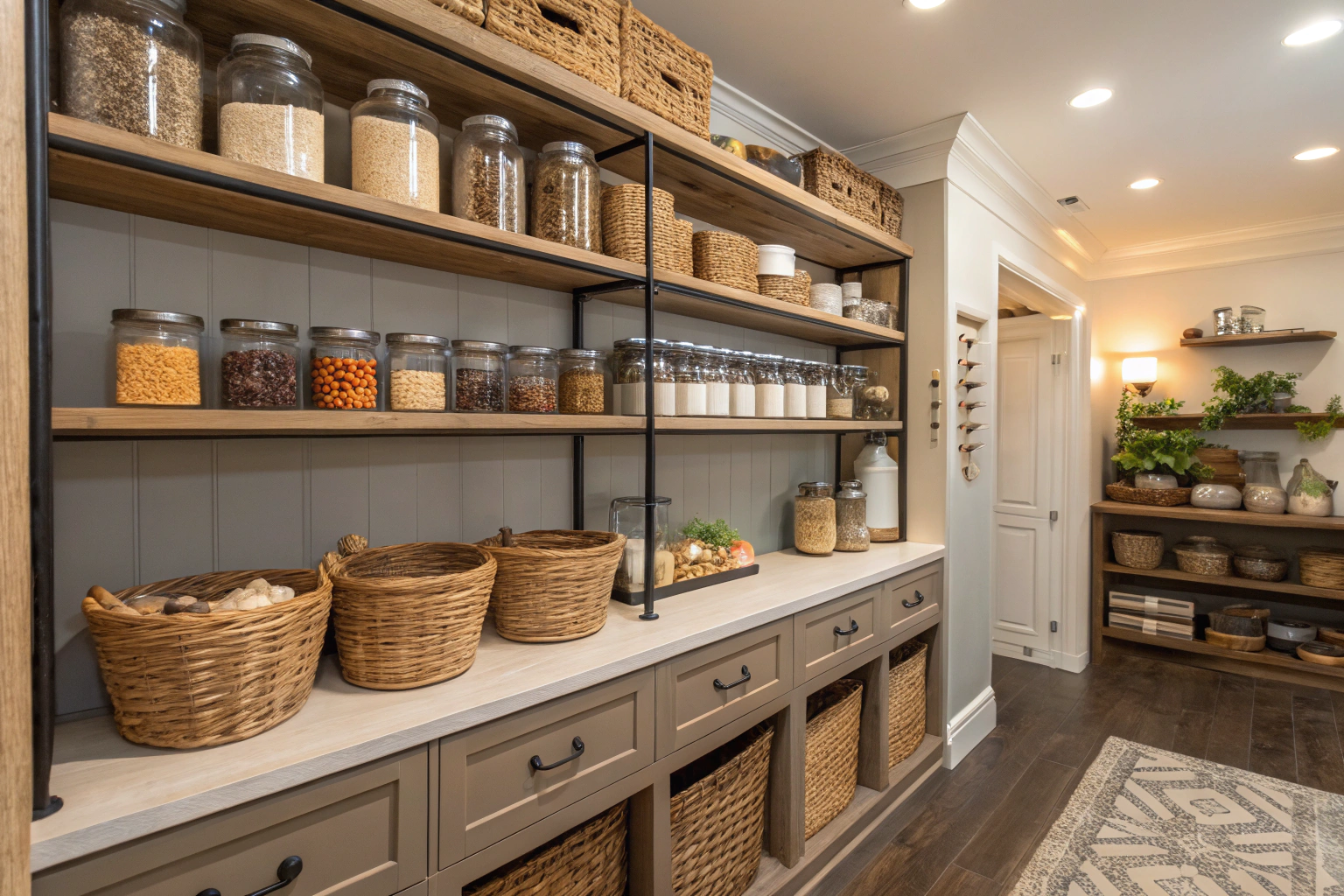
An open pantry is one of those things that looks absolutely stunning in design magazines and absolutely terrifying in real life. When it works it is genuinely one of the most beautiful features a kitchen can have. Shelves lined with matching containers, baskets in coordinating materials, labeled jars catching the light, everything visible and accessible and somehow also looking like it belongs in a boutique kitchen store.
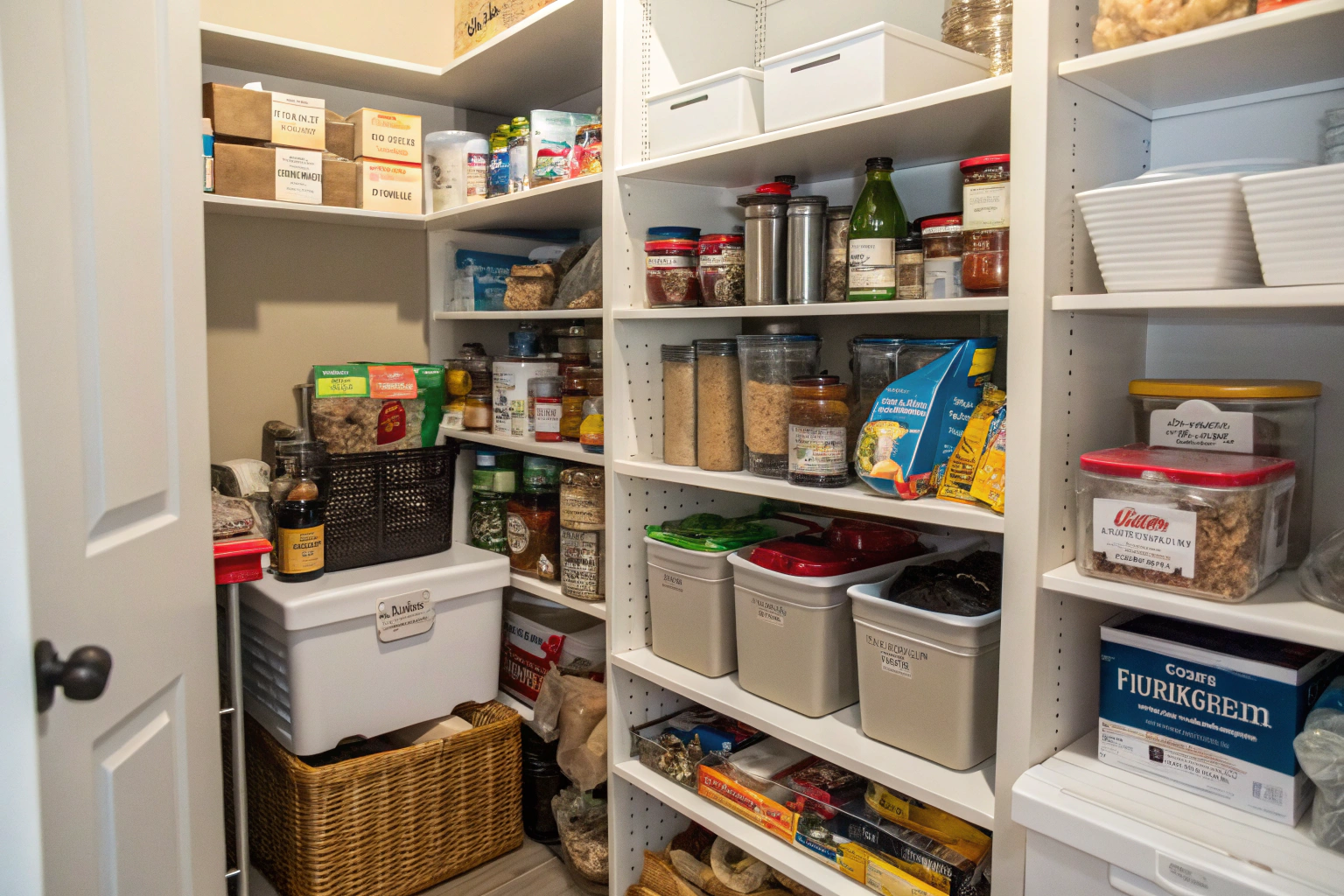
When it does not work it looks like a shelf unit that exploded. Mismatched packaging, random containers of varying heights and colors, half-used bags held closed with rubber bands, a rogue bottle of something that does not belong there but has been there so long nobody questions it anymore.
The difference between those two outcomes is not luck and it is not having a perfectly curated grocery list. It is understanding a handful of specific styling principles that professional organizers and interior designers use consistently when working with open pantry storage. Once you know what those principles are, applying them to your own pantry is genuinely achievable. This guide covers all of them.
Why Open Pantries Are Harder to Style Than Closed Ones
With a closed pantry you can put things away imperfectly and close the door. Problem hidden. With an open pantry everything is always on display. Every mismatched bottle, every half-empty bag, every item that does not quite belong is permanently visible from the kitchen. There is nowhere to hide.
This is why open pantries require a different approach from closed ones. It is not just about organization. It is about the visual experience of the storage itself. In an open pantry the way things look is as important as the way they function because the two things are inseparable. A chaotic-looking open pantry makes the whole kitchen feel chaotic regardless of how organized the actual contents are. A beautifully styled open pantry makes the kitchen feel calm, considered, and genuinely designed.
The good news is that the principles that make an open pantry look good are learnable and once you understand them they become second nature. Here is what they are.
1. Start With a Consistent Visual Framework Before Buying a Single Container
The single most common mistake people make when styling an open pantry is buying containers and baskets before establishing a visual framework. They buy some glass jars, some wicker baskets, some clear plastic bins, a few metal tins, and then wonder why the pantry still looks chaotic even though everything is technically in a container. The problem is that mismatched containers in different materials, colors, and styles create visual noise just as much as mismatched original packaging does.
What a Visual Framework Means
A visual framework for an open pantry is a set of decisions you make before buying anything that governs every purchase going forward. It covers three things: your color palette, your material palette, and your container system.
Your color palette for an open pantry should be tight and intentional. Two or three colors maximum. The most popular and most forgiving approach in 2026 is a neutral base with one accent. White or cream as the dominant color, natural wood or rattan as a warm secondary material, and one accent color carried through labels, a few containers, or decorative elements. This combination is popular because it works with almost any kitchen style from modern to farmhouse to Scandi and it photographs beautifully.
Your material palette should be equally restrained. Choose two materials for your containers and storage and stick to them throughout. Clear glass and natural rattan is a classic and beautiful combination. Clear acrylic and white ceramic works in a more modern kitchen. Matte white ceramic and natural wood suits a Scandi or minimalist aesthetic. The specific materials matter less than the consistency. Two materials throughout the pantry creates visual coherence. Four or five materials creates visual chaos.
Your container system means deciding on the brands, ranges, or styles of containers you will use and committing to them. Mixing containers from multiple ranges creates inconsistency even when the materials and colors are similar. Committing to one or two ranges and purchasing all your containers from within those ranges creates a built-in visual consistency that makes the pantry look like it was styled by a professional.
2. Edit Your Pantry Contents Ruthlessly Before You Style It
Styling an open pantry over existing chaos is like painting over a wall that needs to be replastered. The styling will not hold because the underlying problem has not been addressed. Before thinking about how the pantry looks you need to address what is in it.
The Editing Process
Pull everything out. Sort it into three piles. Keep, remove, and assess. The keep pile is for items you genuinely use regularly and want accessible in the open pantry. The remove pile is for expired items, things you bought once and never used, duplicates, and anything that does not belong in a kitchen pantry. The assess pile is for things you use occasionally and need to decide whether they deserve prime open pantry real estate or whether they would be better stored in a less visible location.
Be genuinely ruthless here. An open pantry that looks good is not possible if it is overfilled. Open pantries need breathing room, visible space between and around items, to look styled rather than crammed. If every single inch of shelf space is filled to capacity the pantry will always look chaotic regardless of how beautifully chosen the containers are.
A useful rule of thumb is to aim for roughly 80 percent filled shelves. That remaining 20 percent of visual breathing room is what separates a styled open pantry from an overcrowded one.
What Belongs in an Open Pantry and What Does Not
An open pantry works best for items that are genuinely beautiful or that can be made beautiful through decanting and good containers. Dry goods in glass jars, matching ceramic canisters, beautiful bottles of olive oil, woven baskets of bread and fruit, stacked ceramic plates and bowls if the pantry doubles as open kitchen storage.
Items that do not belong in an open pantry are those that cannot be made to look good regardless of what you do with them. A half-used packet of something held together with a clip. Heavily branded packaging in clashing colors that cannot be decanted. Cleaning supplies and household chemicals. Appliances that are used rarely and are not beautiful enough to display. These items need to live somewhere else or behind a door.
3. Master the Art of Decanting for Visual Consistency
Decanting is the process that transforms a functional pantry into a beautiful one and in an open pantry it is not optional. It is the single most important thing you can do for the visual quality of the space. But as discussed in the previous guide on pantry organization, decanting everything is more effort than it is worth and leads to maintenance problems. The key is strategic decanting for maximum visual impact.
What to Decant in an Open Pantry
Prioritize decanting for the items that are most visually prominent and most frequently restocked. Dry goods that live in the front and center of your shelves and that you reach for every day. Flour, sugar, coffee, tea, oats, pasta, rice, grains, nuts, and seeds all look dramatically better in glass or clear acrylic containers than they do in their original packaging.
Spices are one of the highest-impact decanting projects for an open pantry. A collection of matching spice jars in consistent sizes, lined up in a row or displayed on a tiered spice rack, creates an immediate sense of order and beauty that is disproportionate to the effort involved. In 2026 small amber glass spice jars with black lids or small clear glass jars with cork lids are both extremely popular and look beautiful in an open pantry context.
Oils, vinegars, and frequently used condiments in beautiful bottles can often stay in their original packaging if the packaging is attractive. A beautiful bottle of extra virgin olive oil in a dark green glass bottle looks right at home on an open pantry shelf. A squeezy plastic bottle of vegetable oil does not. Where the original packaging is attractive keep it. Where it is not, decant into a pour bottle.
The Container System for Decanted Items
Standardize your container sizes into three or four categories. A large size for bulk dry goods like flour and sugar. A medium size for regularly used staples like oats, pasta, and rice. A small size for nuts, seeds, and dried fruits. A miniature size for spices. Using the same range at each size creates a pantry that looks coherent and intentional even when viewed from across the kitchen.
Leave a small amount of space at the top of each container rather than filling to the brim. A container filled to absolute capacity looks strained and overwrought. A container filled to about 80 or 90 percent of capacity looks composed and deliberate.
4. Use Baskets and Bins to Contain Visual Chaos
Not everything in an open pantry can or should be decanted. Packets, pouches, small bags, and items in their original sealed packaging all need a home in the open pantry without their chaotic original packaging being fully visible. Baskets and bins solve this problem elegantly.
How Baskets Work in an Open Pantry
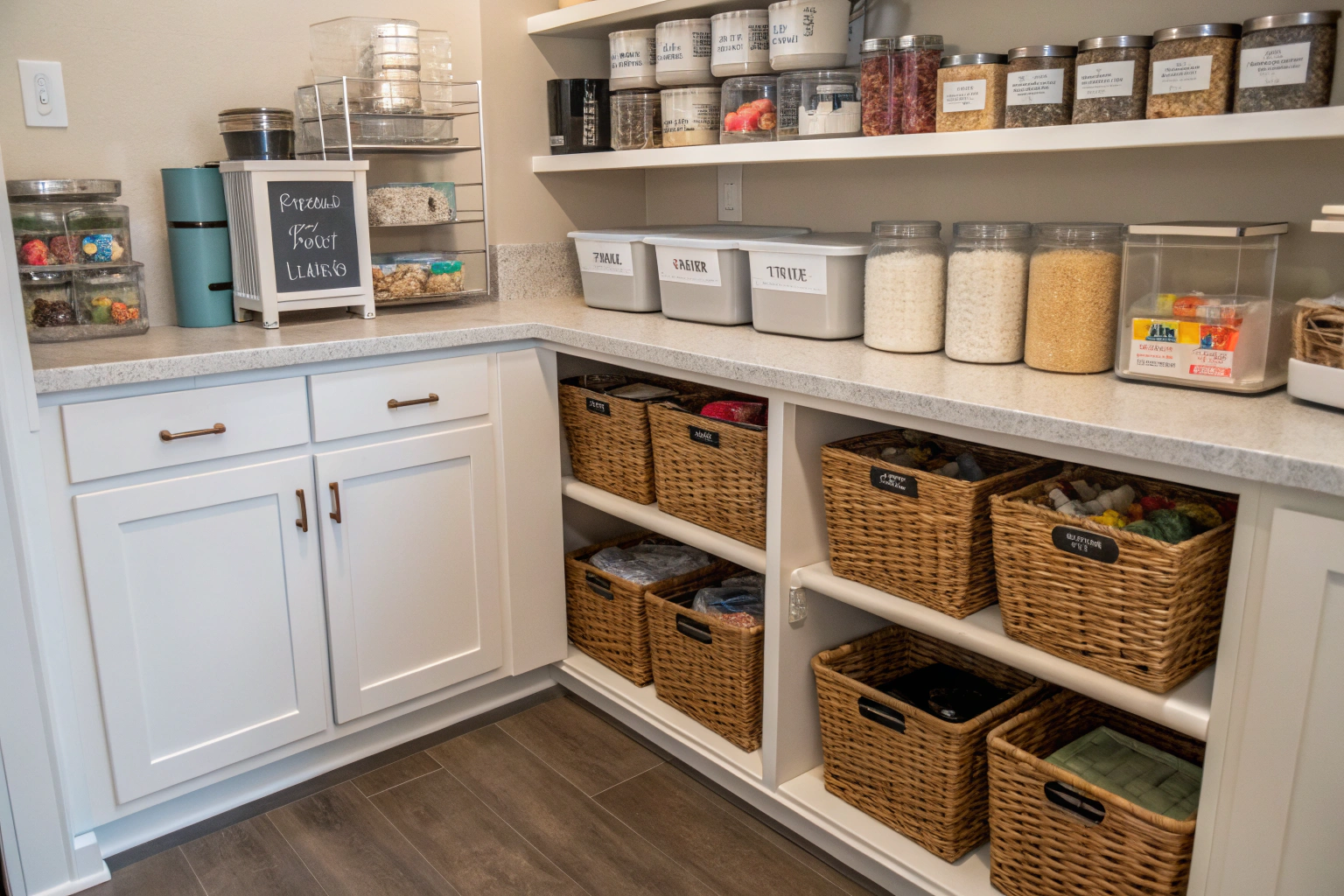
A basket or bin groups multiple small items of the same category into a single visual unit. Instead of seeing five different snack bags in five different colors and sizes on a shelf, you see one beautiful basket labeled Snacks. The visual complexity is reduced dramatically while the function remains identical. This is the most useful thing baskets do in an open pantry. They convert visual chaos into visual order without requiring any change to the actual contents.
Choosing the Right Baskets
Material consistency is everything when choosing baskets for an open pantry. Mixing wicker, rattan, wire, fabric, and plastic baskets on the same shelves looks just as chaotic as having no baskets at all. Choose one basket material and use it throughout for all your basket storage.
Natural seagrass or rattan baskets are the most popular choice in 2026 for open pantries and for good reason. They are warm, organic, beautiful, widely available, and look good in almost any kitchen style. They photograph exceptionally well. They come in consistent sizing within most ranges which makes building a coordinated collection straightforward.
Wire baskets in matte black or white are a more modern and slightly industrial choice that works beautifully in contemporary kitchens. They have the added advantage of allowing you to see the contents from the front without opening the basket which can be more practical for high-turnover items like snacks.
Linen-lined baskets or baskets with fabric liners in a neutral linen or cotton are a softer, more refined option that suits pantries with a more traditional or country kitchen aesthetic.
Sizing Your Baskets
Choose basket sizes that suit the category of contents. A large basket for bulky items like bread, potatoes, or onions that need to be stored in a dark container. Medium baskets for snack packets, pouches, and mid-sized packaged goods. Small baskets for tea bags, sauce sachets, and small packets. The same category principle applies: consistent sizing within each shelf tier creates the most orderly visual result.
5. Create Visual Rhythm With Height and Repetition
This is the styling principle that interior designers use across every type of display and it is just as important in a pantry as it is on a bookshelf or a mantelpiece. Visual rhythm is created by varying height in a predictable pattern and by repeating elements at regular intervals. It is the thing that makes a pantry shelf look styled rather than randomly arranged.
Working With Height
On each shelf of your open pantry vary the height of items in a deliberate way. The classic approach is tallest items at the back of the shelf, medium items in the middle, shortest items at the front. This creates a tiered effect that allows you to see every item clearly and creates a pleasant visual layering.
Another approach is to group items by height within their categories and let the varying heights across different categories create rhythm across the shelf. A tall section of pasta jars next to a medium section of spice jars next to a low row of small cans creates a gentle rise and fall across the shelf that feels dynamic and considered.
What to avoid is random height variation with no pattern. Tall items next to short items next to medium items with no logic is exactly what makes a pantry shelf look chaotic rather than styled.
Using Repetition
Repetition is one of the most powerful styling tools in an open pantry. When the same element appears multiple times across the pantry, whether that is a consistent container shape, a repeated basket style, or a recurring label design, it creates a visual thread that ties the whole display together and makes it feel cohesive.
This is why having a single container range throughout your pantry looks so much more polished than mixing multiple ranges. The repeated silhouette of the same container shape creates a visual rhythm that reads as intentional and designed even to someone who has never thought consciously about styling principles.
6. Label Everything Beautifully and Consistently
Labels in an open pantry are both functional and decorative. They need to tell you what is inside the container and they need to look beautiful doing it. In 2026 the best open pantry labels strike a balance between clarity, consistency, and visual appeal.
Label Style Options for 2026
A label maker with a clean modern font on white or clear tape is the most precise and consistent option. Every label looks identical which creates strong visual uniformity. The limitation is that it can feel slightly corporate or clinical in a pantry that is otherwise warm and organic.
Handwritten labels on kraft paper tags tied with twine are the warmest and most artisanal option. They suit pantries with a farmhouse, country, or bohemian aesthetic beautifully. The limitation is that consistent handwriting is hard to maintain and the labels can look messy if the handwriting is not naturally neat.
Printed labels from a home printer or an online label service represent the best of both worlds in 2026. You can choose a font and style that suits your aesthetic, print on adhesive paper, and apply them in minutes. The result looks professional and consistent while still feeling personal and designed.
Chalkboard labels are enduringly popular for open pantries because they are easy to update when contents change. Apply the label, write on it with chalk pen, wipe and rewrite when needed. They work particularly well on ceramic or glass containers and suit kitchens with a Scandi or farmhouse aesthetic.
What to Label and How
Label every container and every basket. In an open pantry where everything is visible, unlabeled containers create a visual guessing game that makes the pantry feel less organized than it is. Even when the contents are visible through a clear container, a label adds the finishing touch that signals the space was deliberately styled.
Keep label text brief and clear. The container name only, not the brand or variety. Flour not Organic Wholemeal Spelt Flour. Rice not Basmati Long Grain Rice. The simplicity of the text contributes to the clean, calm visual quality of the pantry.
Position labels consistently. All labels at the same height on the front of the container. All labels facing the same direction. This uniformity is one of those details that separates a pantry that looks professionally styled from one that looks like a good attempt.
7. Treat the Shelves Themselves as a Design Element
Most people think about what goes on the shelves without thinking about the shelves themselves. But in an open pantry the shelves are part of the visual display and they contribute enormously to the overall aesthetic.
Shelf Material and Color
White painted shelves create a clean, light backdrop that makes everything on them pop. Natural wood shelves add warmth and an organic quality that contrasts beautifully with the hard lines of containers and jars. Black or very dark shelves are a bold choice that creates a dramatic, moody pantry aesthetic that is popular in 2026 for contemporary and maximalist kitchen styles.
Whatever material and color your shelves are, consistency matters. Shelves in the same finish throughout the pantry look intentional. Shelves in mixed finishes look assembled rather than designed.
Shelf Liner
A shelf liner in a beautiful pattern or a complementary color is a detail that most people never think about and that makes a surprisingly significant difference to the overall visual quality of an open pantry. A liner in a classic print like a fine stripe, a small geometric, or a simple botanical seen peeking out from under containers and baskets adds a layer of visual interest and intention that signals real design attention.
In 2026 removable peel-and-stick shelf liner in subtle patterns is widely available, easy to apply, and adds a charming detail to open pantry shelves at a cost of almost nothing.
Shelf Spacing
If your shelves are adjustable, take the time to set the spacing correctly for your actual contents rather than leaving them at default intervals. Shelves spaced too far apart create dead space above shorter items that looks sloppy and wastes vertical storage. Shelves spaced correctly for the tallest item in each category look tight and purposeful.
8. Add Decorative Elements That Are Also Functional
The best open pantry styling blurs the line between decoration and function. Every decorative element earns its place by also being useful and every functional element is chosen to be beautiful. This principle is what creates a pantry that feels like a designed space rather than a storage space that someone tried to make look nice.
What Works as Decorative-Functional Elements
A wooden bread box is both storage and a warm natural material accent that adds character to the pantry. A ceramic fruit bowl holds fruit and adds a beautiful sculptural element. A beautiful glass oil decanter stores olive oil and looks better on an open shelf than any plastic bottle ever could. A collection of ceramic mugs on hooks under a shelf is both storage and display. A copper or brass measuring cup set hung on a hook is both a kitchen tool and a piece of visual interest.
Plants are one of the most impactful decorative-functional additions to an open pantry. A small potted herb, fresh rosemary, thyme, or basil, on an open pantry shelf is genuinely useful for cooking and also one of the most beautiful and organic elements you can add to the space. It brings color, life, and scent into what might otherwise be a very hard and inanimate display.
What Does Not Belong as a Decorative Element in a Pantry
Purely decorative objects with no function, a small figurine, a decorative plate stand, a collection of miniatures, these do not belong in an open pantry. Unlike a bookshelf or a mantelpiece where purely decorative objects enhance the display, in a pantry they read as clutter that is getting in the way of the function. Everything in an open pantry should be there because it is used or because it is genuinely beautiful in context. Non-functional decoration that could live anywhere does not make the cut.
9. Use Lighting to Make the Pantry Glow
Lighting in an open pantry is one of the most underestimated styling tools available. In a well-lit pantry every container, every basket, and every carefully chosen label catches the light and the whole display feels vibrant and alive. In a poorly lit pantry even the most beautifully styled shelves look flat and uninviting.
Under-Shelf LED Strip Lights
The most effective and popular lighting solution for open pantries in 2026 is LED strip lights installed along the underside of each shelf. They cast a warm, even downward light onto the shelf below which illuminates the contents beautifully and creates a warm glow throughout the pantry. Rechargeable battery-operated versions are widely available and require no wiring which makes them accessible for any pantry regardless of its electrical situation.
Warm white LEDs in the 2700K to 3000K range produce the most flattering light for a pantry display. They warm the natural materials, the wood tones, and the organic textures in a way that cooler white light does not.
A Pendant or Decorative Overhead Light
If the open pantry is large enough to walk into, a small pendant light or a simple ceiling fixture above the pantry area elevates the whole space from storage to a room within a room. A rattan pendant, a simple ceramic shade, or a small sculptural fixture adds a design moment that makes the pantry feel considered at every level from floor to ceiling.
10. Maintain the Styling With a Weekly Fifteen-Minute Reset
All of the styling work you put into an open pantry depends on maintenance to stay beautiful. And the visibility of an open pantry means that even small amounts of drift, a few items out of place, a label that has peeled, a basket that has been pulled out and not pushed back, are immediately noticeable in a way that they would not be in a closed pantry.
The Weekly Reset for an Open Pantry
Once a week, before your grocery shop, spend fifteen minutes on the pantry reset. Return any items that have drifted to the wrong zone or shelf. Push baskets and containers back to their correct positions. Wipe down any shelf surfaces that need it. Check labels and replace any that have peeled or faded. Do the first in first out check, moving older items to the front before the new shop arrives.
This fifteen-minute habit is the difference between an open pantry that maintains its beautiful styling and one that gradually drifts toward looking chaotic again. The visibility that makes an open pantry so appealing is also what makes the maintenance habit non-negotiable.
Seasonal Refresh
Beyond the weekly reset, a light seasonal refresh every three to four months keeps the open pantry feeling current and considered. This is the time to reassess the container system if it is not working, update labels that have faded, replace any baskets that have worn or damaged, and make small adjustments to the styling based on what is and is not working in practice.
A seasonal refresh is also a good opportunity to edit the pantry contents again. Toss anything that has expired, donate anything you bought with good intentions and never used, and reassess whether your current container and basket setup suits your actual current grocery habits. Pantry contents change with seasons, with changes in household size, and with evolving cooking habits. Your pantry styling should evolve with them.
Conclusion
An open pantry that looks good rather than chaotic is not about having the most beautiful containers or the most perfectly matched baskets. It is about understanding a set of consistent visual principles and applying them with intention. A tight color and material palette. Ruthless editing of contents. Strategic decanting into a standardized container system. Baskets that contain visual chaos. Visual rhythm created by height and repetition. Beautiful consistent labels. Shelves treated as a design element. Decorative elements that are also functional. Good lighting. And a weekly maintenance habit that keeps everything looking as good as the day it was styled.
None of these things require a large budget. They require thought, intention, and a willingness to make and commit to a set of visual decisions before you start buying anything. The open pantry that looks like it belongs in a boutique kitchen is not the result of expensive products. It is the result of consistent principles applied to whatever products you choose.
In 2026 there are more beautiful and affordable options for every element of an open pantry than ever before. The only thing standing between your pantry and the one you have been admiring online is knowing what to do. Now you do.
Frequently Asked Questions (FAQs)
How do I make my open pantry look less chaotic?
Start with ruthless editing. Remove anything expired, unused, or that does not belong in the pantry. Then establish a consistent visual framework: one color palette of two or three tones, one or two materials for containers and baskets, and one container range you commit to throughout. Decant your most prominent dry goods into matching clear containers, use matching baskets to contain packaged goods, label everything consistently, and add under-shelf lighting. These changes together transform a chaotic open pantry into a styled one.
What containers are best for an open pantry in 2026?
Clear glass or clear acrylic containers in standardized sizes from a single range are the best choice for decanted dry goods. They allow visibility of contents, look beautiful on open shelves, and create strong visual consistency. For basket storage, natural seagrass or rattan in a consistent size range is the most popular and versatile choice. The most important principle is consistency: one or two materials throughout rather than a mix of different container styles.
Should everything in an open pantry be decanted?
No and trying to decant everything creates more work than it is worth. Decant the items that benefit most visually and practically: loose dry goods like flour, sugar, pasta, rice, oats, coffee, tea, and spices. Leave items in their original packaging when the packaging is attractive, well-sealed, and practical. Canned goods, good-looking bottled products, and sealed snack bags are all fine in their original packaging within a well-chosen basket or bin.
How do I keep an open pantry looking good long term?
A weekly fifteen-minute reset before your grocery shop is the single most important maintenance habit. Return drifted items, push baskets and containers back into position, wipe surfaces, check labels, and do the first in first out rotation before unpacking new groceries. Pair this with a light seasonal refresh every three to four months where you edit contents, update worn labels, and make small adjustments to the styling based on what is working in practice.
What is the best lighting for an open pantry?
LED strip lights on the underside of each shelf, in warm white at around 2700K to 3000K, are the most effective and beautiful option. They illuminate the contents of each shelf evenly and create a warm, inviting glow throughout the pantry. Battery-operated rechargeable versions are widely available and require no wiring. If the pantry is large enough to walk into, a small pendant or ceiling fixture adds a further layer of design quality that elevates the whole space.
How do I choose a color palette for an open pantry?
Keep it to two or three colors maximum. The most versatile and widely appealing approach is a neutral base with one warm natural accent. White or cream containers, natural rattan or wood baskets, and one accent color carried through labels or a few accessories. This palette works with almost any kitchen style, photographs beautifully, and is the easiest to maintain over time as you add new items to the pantry. Avoid more than three colors as the visual complexity quickly starts to read as chaos rather than variety.
How do I style open pantry shelves without spending a lot of money?
Start with what you have. Edit the contents ruthlessly so the shelves have breathing room. Decant your most prominent dry goods into a small set of matching clear containers, which can be purchased affordably, and label them consistently with a printed label or a chalk pen. Contain packaged goods in a few matching baskets. Add adhesive shelf liner in a simple pattern for a finishing touch. A battery-operated LED strip under the shelves costs very little and makes an extraordinary difference to how the pantry looks. None of these changes require significant investment.
What should I not put on open pantry shelves?
Avoid items that cannot be made to look good regardless of effort. Cleaning supplies and household chemicals belong behind a door. Rarely used appliances that are not beautiful enough to display should be stored elsewhere. Heavily branded packaging in clashing colors that cannot be decanted should be kept in a basket or moved to a closed storage area. Purely decorative objects with no function do not belong in a pantry. And anything expired, unused, or that has no designated home should be removed entirely before any styling begins.
- What to Do With a Linen Closet You Don’t Actually Need - March 30, 2026
- How to Organize a Linen Closet So It Doesn’t Fall Apart in a Week - March 30, 2026
- How to Style an Open Pantry So It Looks Good, Not Chaotic - March 30, 2026