13+ Rustic Dining Room Ideas That Feel Warm and Inviting
Rustic dining rooms are all about warmth, natural materials, and timeless charm.
From reclaimed wood tables to cozy lighting, every detail helps create a welcoming space for family gatherings and intimate dinners.
What Actually Makes a Dining Room Feel Rustic?
Rustic is one of those words that gets used so broadly it can start to feel meaningless. So before we get into the ideas, it’s worth being clear about what actually creates a rustic dining room and what separates a genuinely beautiful one from something that just feels a bit themed.
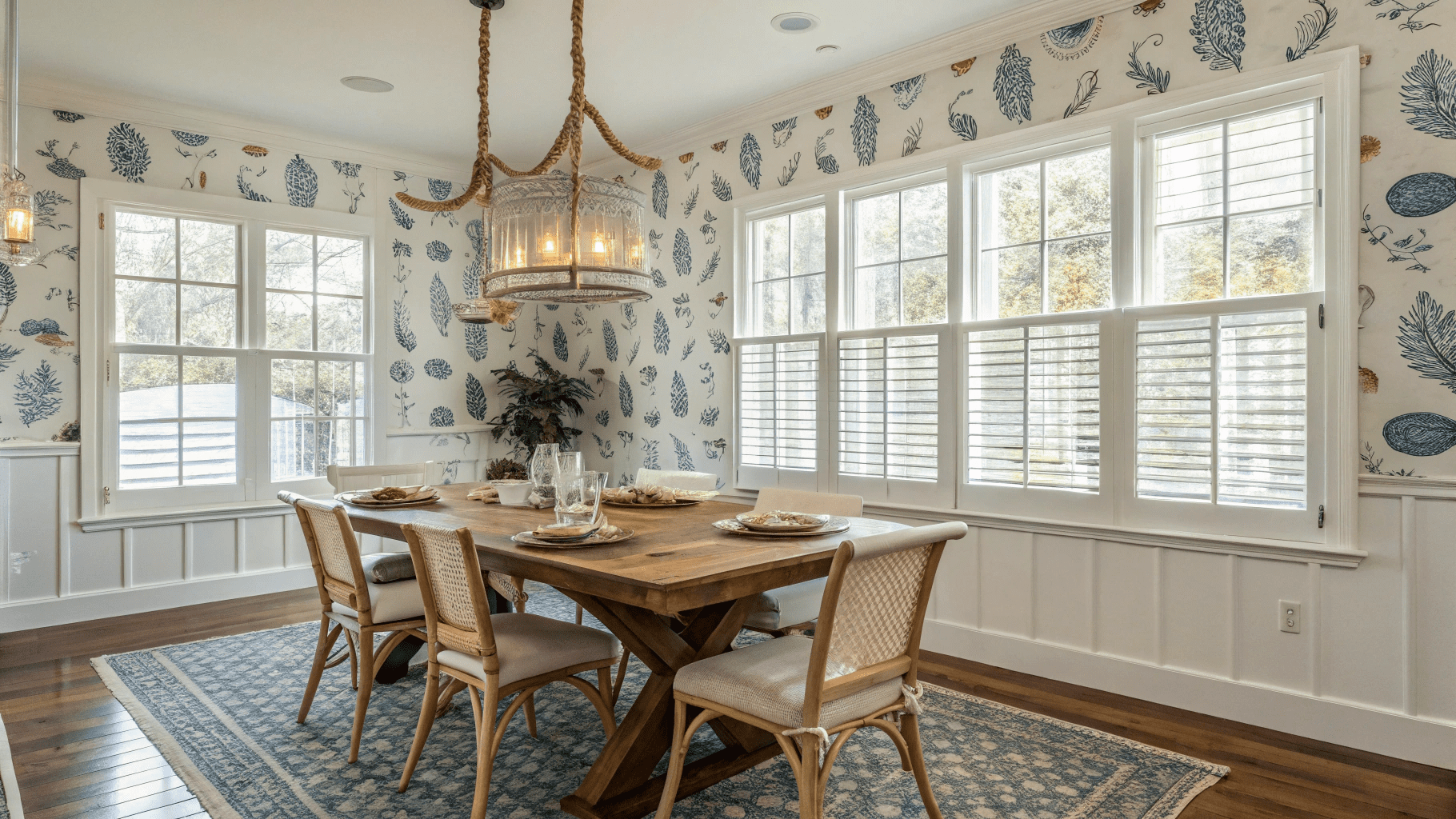
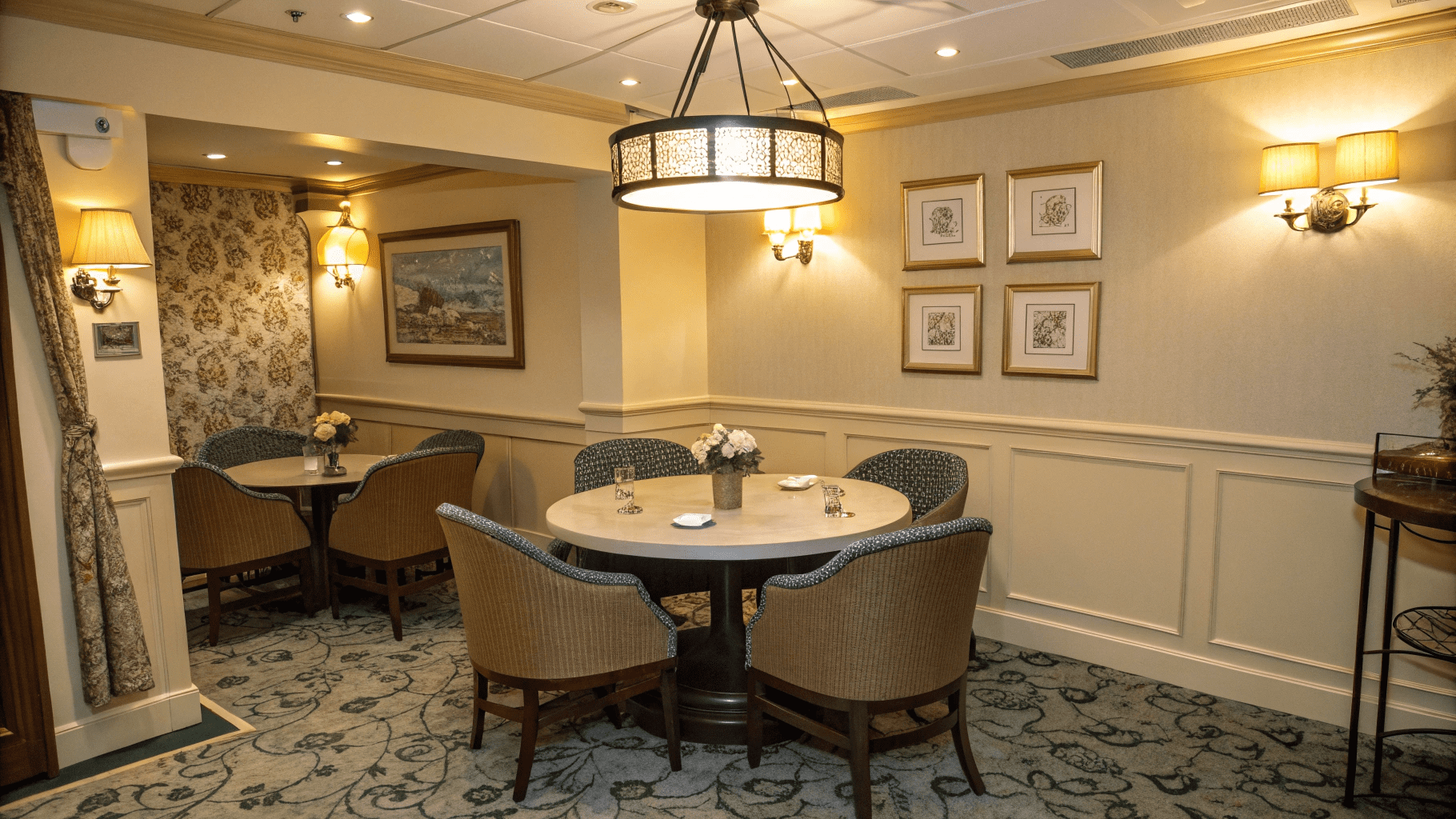
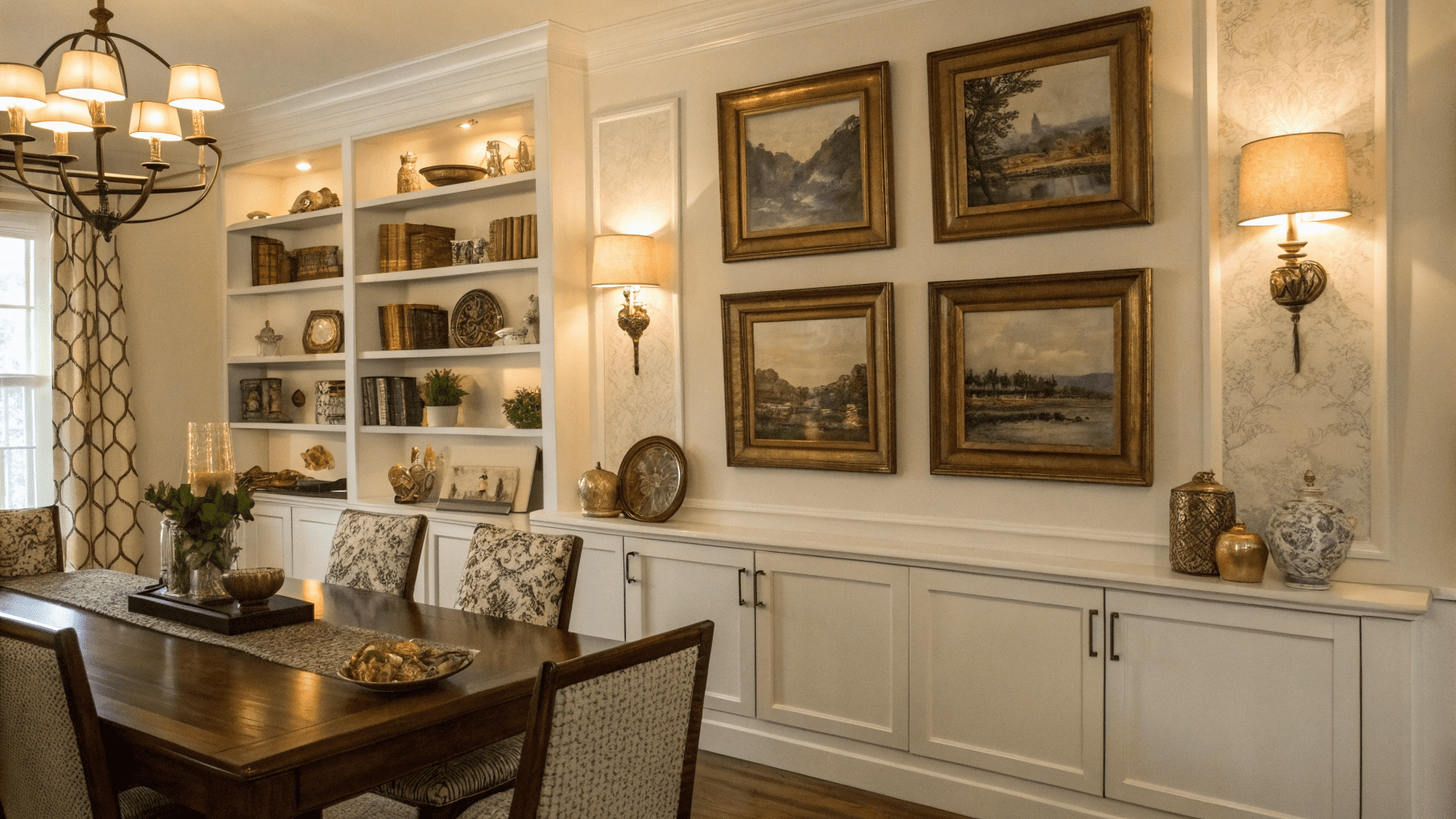
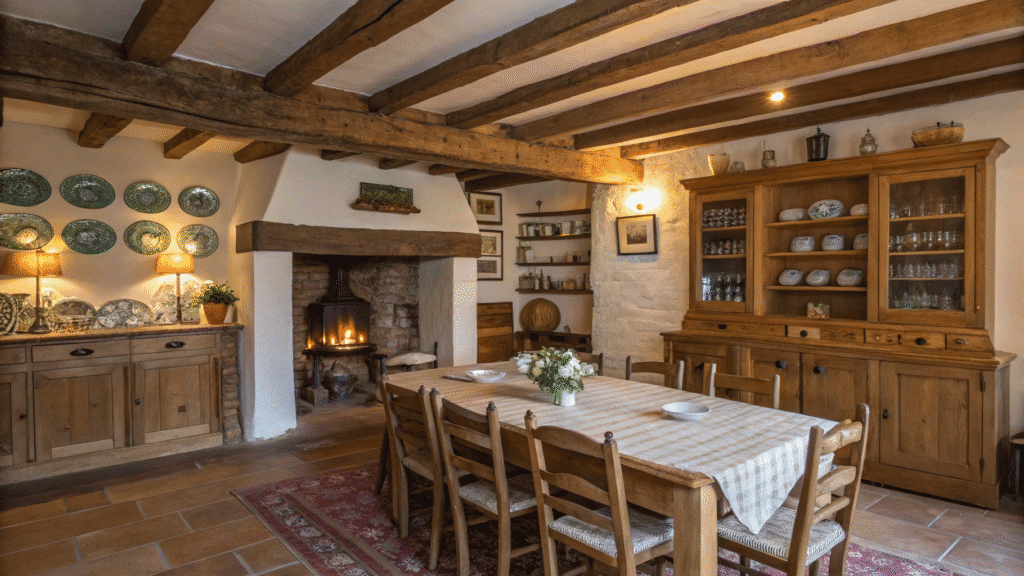
At its core, rustic design is about celebrating natural materials in their most honest, unpolished form. It’s reclaimed wood with its knots and grain still visible. It’s stone that looks like it came from a field, not a factory. It’s linen that creases. It’s ironwork that shows the hand of the person who made it. The beauty of rustic is in the imperfection, the texture, and the sense that things have a history and a story behind them.
What rustic is not is a collection of signs with farmhouse slogans and distressed-finish furniture from a flat-pack range. The best rustic dining rooms feel genuinely lived-in and layered over time, even when they’ve been deliberately designed to look that way. That’s the art of it.
Get this foundation right and everything else follows naturally. The furniture choices, the lighting, the colour palette, the accessories all feel cohesive because they’re all drawing from the same honest, natural well.
The Different Styles of Rustic Dining Room (And How to Choose Yours)
Rustic isn’t one single look. It’s a broad family of styles that share the same love of natural materials but go in very different directions. Here’s how to find your version:
Modern Rustic
Modern rustic keeps the natural materials but strips away anything fussy or overly traditional. Think a raw edge oak dining table paired with sleek upholstered chairs in a neutral fabric. Concrete floors, minimal wall decor, simple pendant lighting. The rustic elements provide warmth and texture while the modern editing keeps it from feeling like a country cottage. This is the most popular iteration of rustic right now and works brilliantly in contemporary homes that want warmth without going full farmhouse.
Farmhouse Rustic
This is the most classic and widely recognised version of the style. Large trestle or refectory tables, mismatched wooden chairs, open shelving stacked with ceramics, a butler’s sink visible from the dining area, shiplap or beadboard on the walls. It’s generous, unpretentious, and completely welcoming. Farmhouse rustic is the style that makes you want to pull up a chair, pour a glass, and stay for hours.
Industrial Rustic
Industrial rustic pairs raw natural materials with metal, exposed pipe, bare brick, and Edison bulbs. A reclaimed timber table on a steel frame, metal hairpin leg chairs, factory-style pendant lights overhead. It works particularly well in urban homes and apartments where the building itself has some industrial character. The contrast between warm wood and cool metal is genuinely beautiful.
Rustic Scandi
Rustic Scandi takes the warmth of rustic materials and filters it through Scandinavian minimalism. Lighter wood tones, a neutral palette of white, grey, and oatmeal, very clean lines on the furniture, and an almost meditative simplicity. Candlelight is everything in Rustic Scandi. It’s the style that practically invented hygge.
French Country Rustic
Soft, faded, romantic, and effortlessly elegant. French country rustic uses painted furniture (often in soft blues, greys, or washed whites), linen, aged terracotta tiles, and a palette that feels like a Provence morning. A scrubbed pine table, rush-seated chairs, a large stone or painted fireplace, and a vintage chandelier dripping with crystals is the dream version of this look.
Cabin or Lodge Rustic
Rich, dark, and deeply cosy. Log cabin rustic uses the darkest wood tones, leather seating, antler or wrought iron lighting, stone fireplaces, and heavy textiles like wool, faux fur, and plaid. It’s the dining room that feels like a mountain retreat and is almost impossible not to love in the depths of winter.
The Rustic Dining Table: How to Choose the Right One
The dining table is the centrepiece of any dining room but in a rustic scheme it carries even more weight. It’s the piece everything else organises around and the thing that sets the entire tone of the room. Getting it right matters enormously.
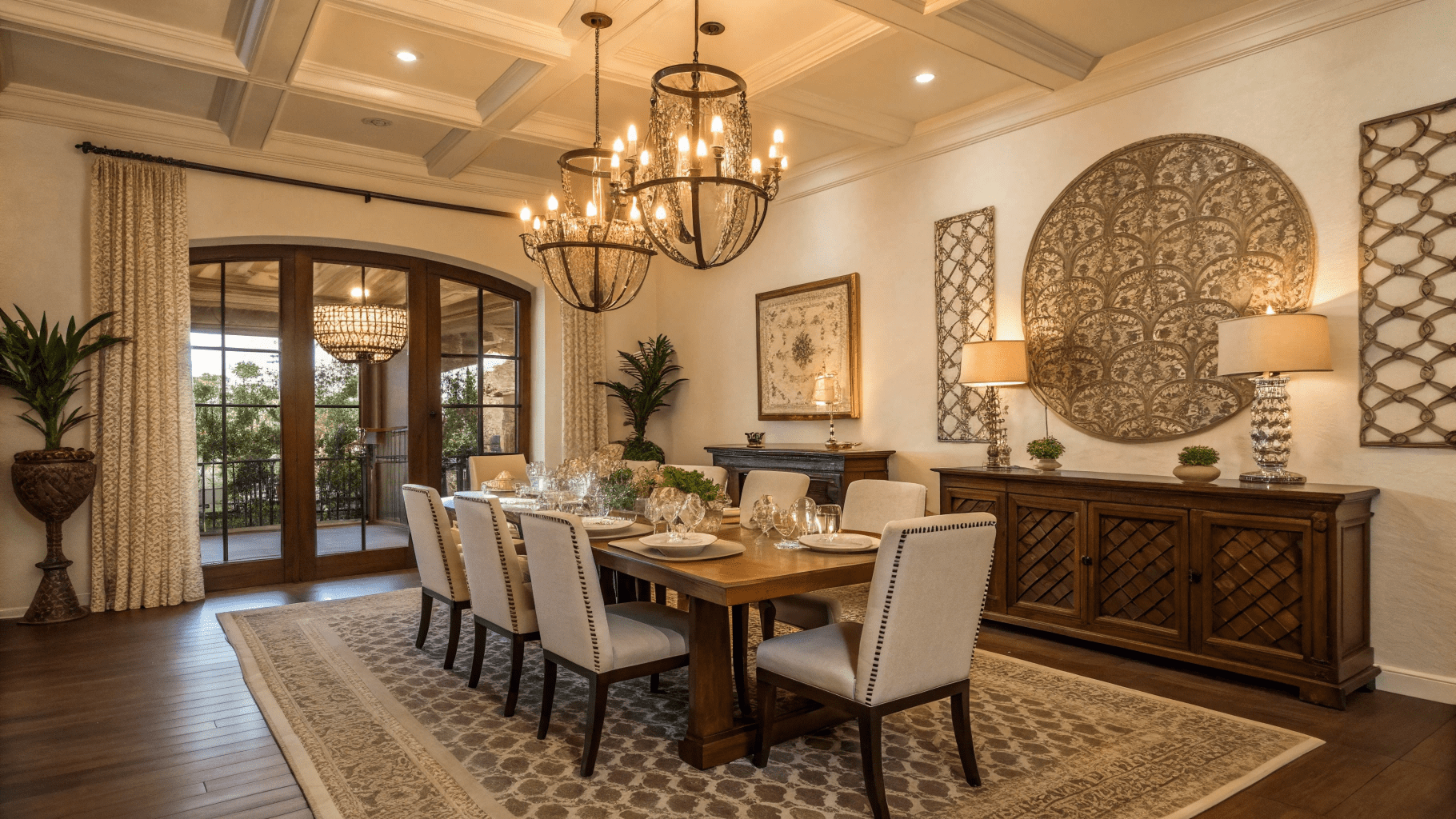
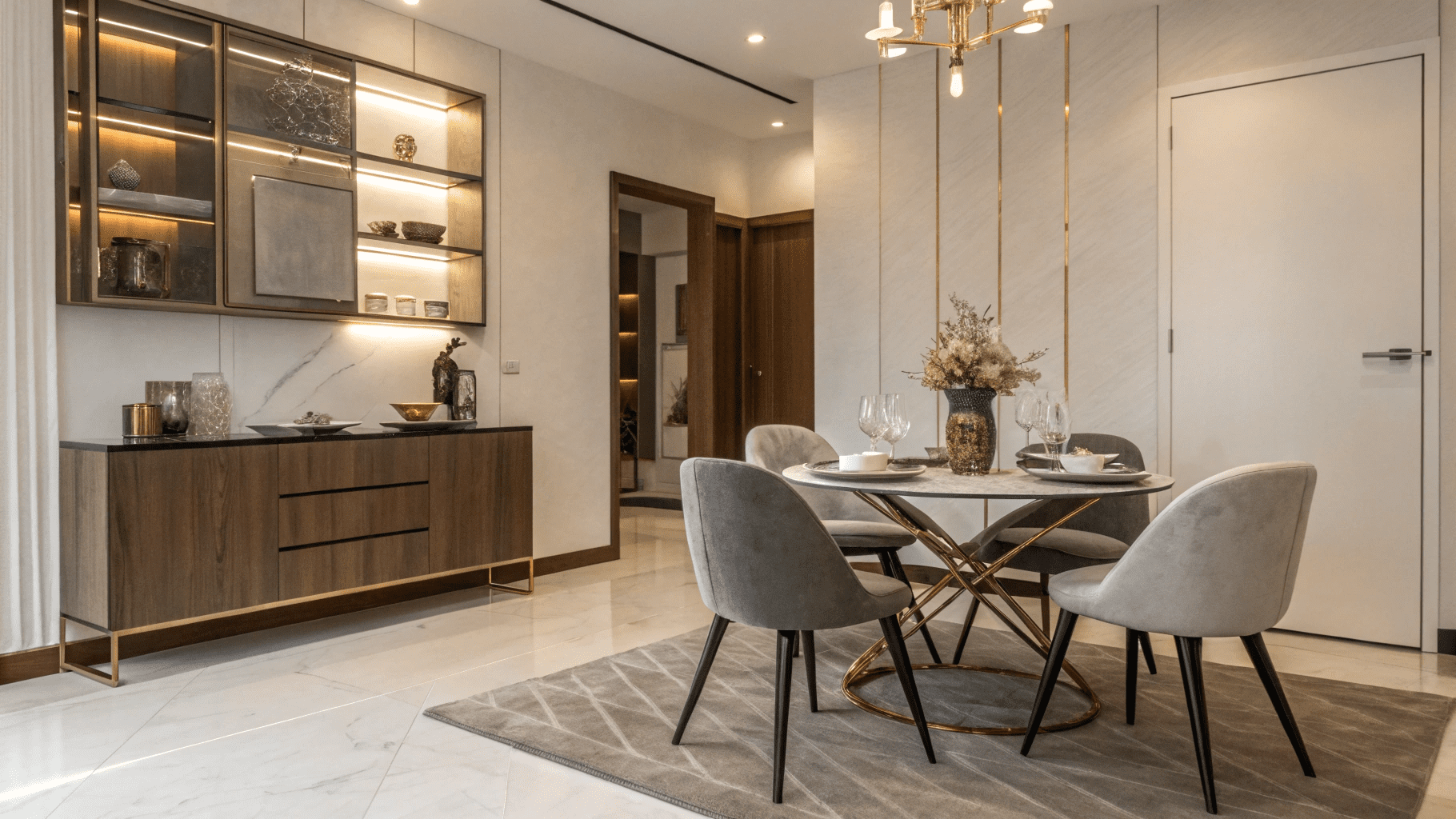
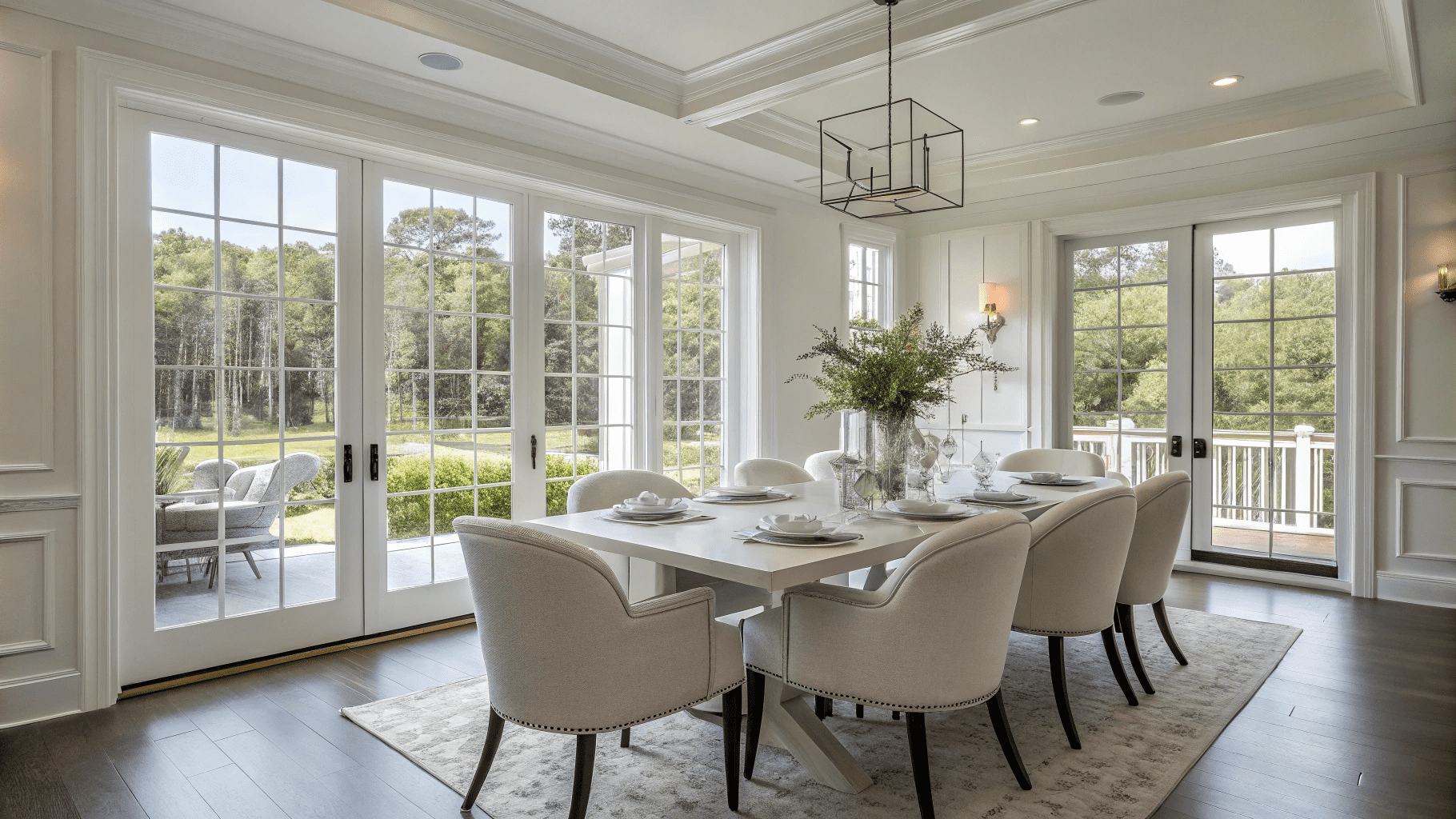
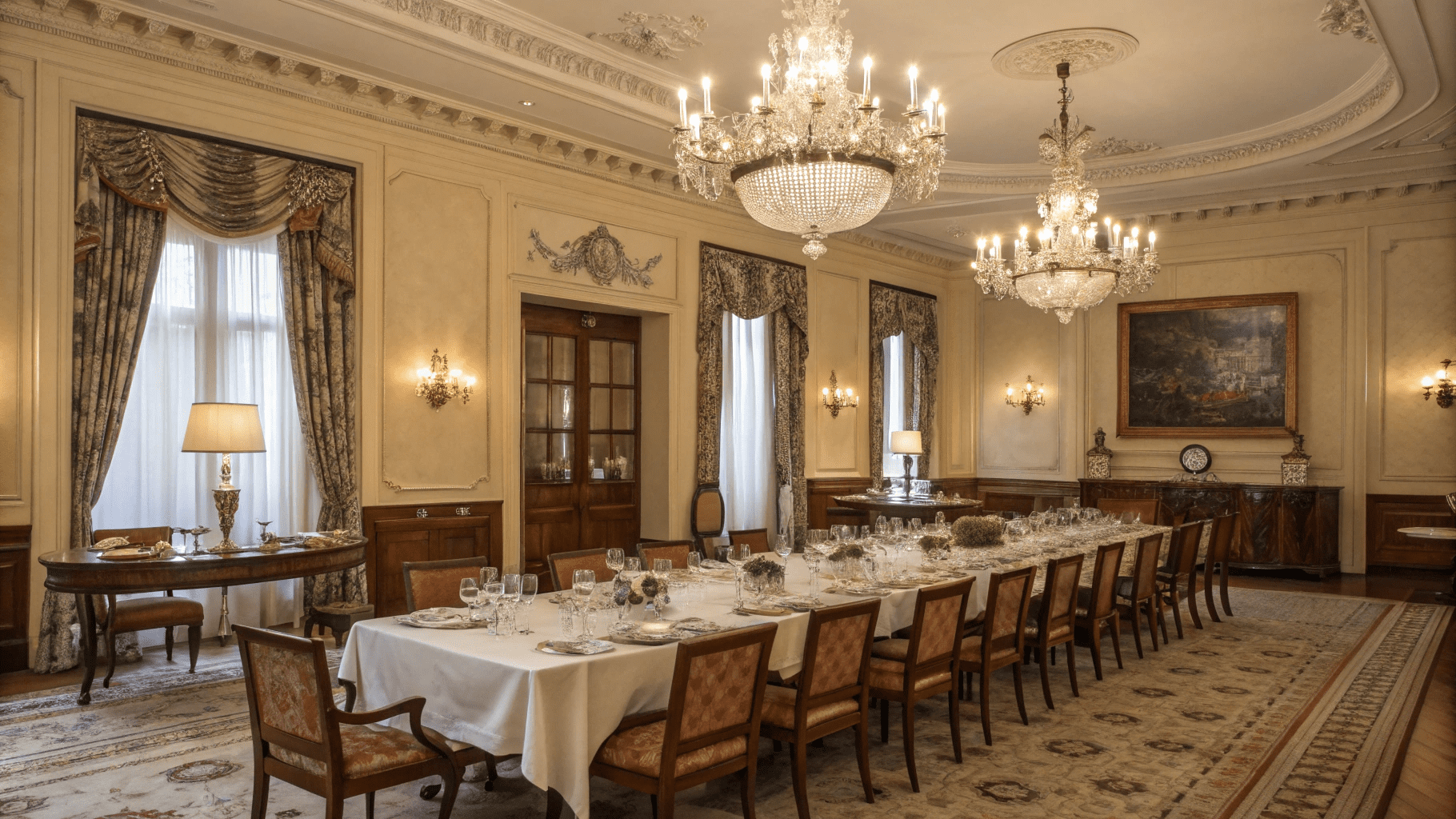
Reclaimed Wood Tables
A reclaimed wood dining table is the most authentic rustic choice available. Each one is genuinely unique, with its own grain patterns, knots, nail holes, and character marks that tell the story of the wood’s previous life. They’re incredibly durable, develop even more character over time, and never go out of style. If you’re investing in one piece for a rustic dining room, this is the one to spend properly on.
Live Edge Tables
A live edge table keeps the natural edge of the tree slab, leaving the organic, irregular profile of the wood completely untouched. The result is a piece that looks less like furniture and more like a piece of the forest itself. Live edge tables are genuinely sculptural and make an extraordinary centrepiece in a rustic dining room. They work particularly well in modern rustic and industrial rustic schemes.
Trestle Tables
A trestle table uses two A-frame or X-frame supports rather than four legs and has been the quintessential farmhouse dining table for centuries. It’s generous, practical, seats a crowd, and looks completely at home in a rustic space. You can find beautiful reclaimed timber trestle tables or, if you’re handy, it’s one of the more achievable DIY furniture projects.
Painted Farmhouse Tables
A painted table, typically in white, soft grey, or a chalky muted colour, is the French country and farmhouse rustic go-to. It brings lightness to the space that a dark stained wood table doesn’t. Pair it with warm wood chairs for balance and it looks beautiful. Chalk paint is forgiving on imperfect surfaces and chips and scuffs in a way that only adds to the charm over time.
What Size Table Do You Need?
Allow at least 60cm of table width per person for comfortable dining. For length, you need roughly 60cm per person too. A six-seater table should be approximately 180cm long and 90cm wide. Always allow at least 90cm between the edge of the table and the nearest wall or obstacle so chairs can be pulled out comfortably.
Rustic Dining Room Chairs: Mixing, Matching, and Getting It Right
One of the defining characteristics of a great rustic dining room is that the chairs don’t match perfectly. Matching chairs can look stiff and formal, like a showroom rather than a home. Thoughtfully mixed chairs look collected and lived-in, which is exactly the mood rustic design is after.
How to Mix Chairs Successfully
The key to mixing chairs without it looking chaotic is to keep one element consistent across all of them. This could be the material (all wood, even if different shapes), the colour (all painted the same shade even if different styles), or the general scale (all roughly the same height). Within that consistent thread, you have enormous freedom to vary the shape, style, and detail.
Bench Seating on One Side
One of the most popular and practical rustic dining room combinations is a wooden bench on one long side of the table and chairs on the other. The bench adds a relaxed, casual energy, seats more people when needed, and is one of the most classic farmhouse dining room compositions. Add cushions to the bench for comfort and it immediately feels more considered and intentional.
Upholstered Chairs in a Rustic Room
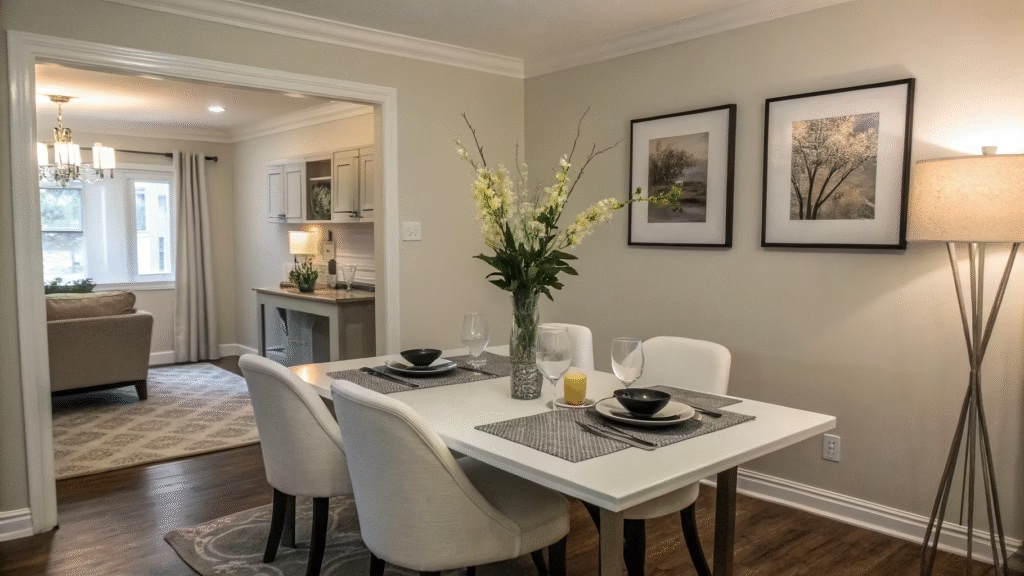
Upholstered dining chairs in a rustic room are a wonderful contrast. The softness of a fabric seat against rough-hewn wood, or the elegance of a linen upholstered chair paired with a raw timber table, brings a layer of sophistication that stops the room from feeling too rough and ready. Neutral linens, warm velvets, and woven fabrics all work beautifully.
The Mismatched Chair Look Done Well
If you want fully mismatched chairs, aim for no more than three or four different styles around the same table and make sure they’re unified by at least one common element, whether that’s wood tone, seat height, or a consistent paint colour across the set.
Rustic Dining Room Lighting Ideas
Lighting in a rustic dining room deserves real thought because it does so much of the atmospheric heavy lifting. The right light over a dining table at dusk, with the right candles burning and the right warmth in the room, is one of the most genuinely magical things interior design can produce.
Statement Pendant Lights and Chandeliers
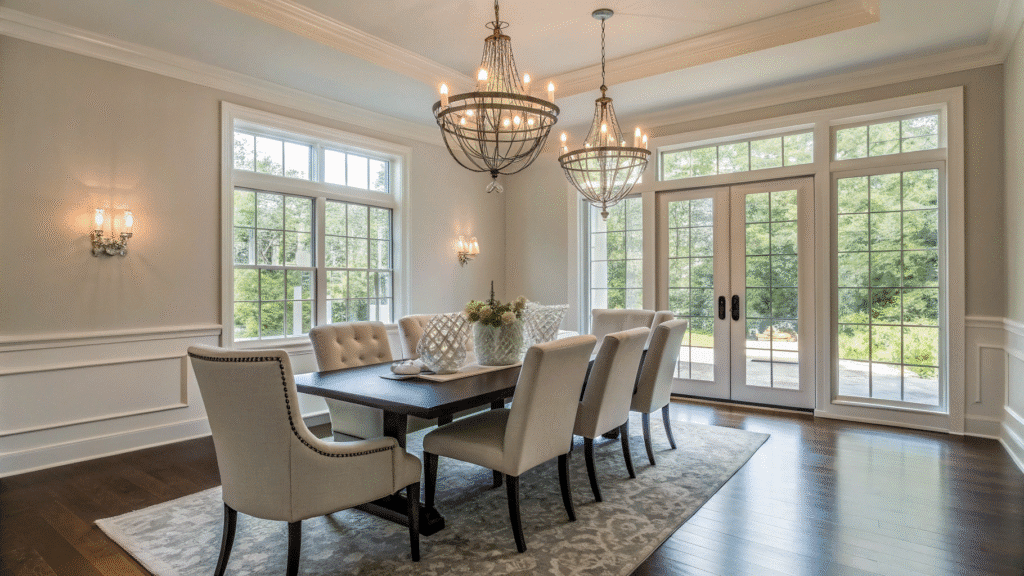
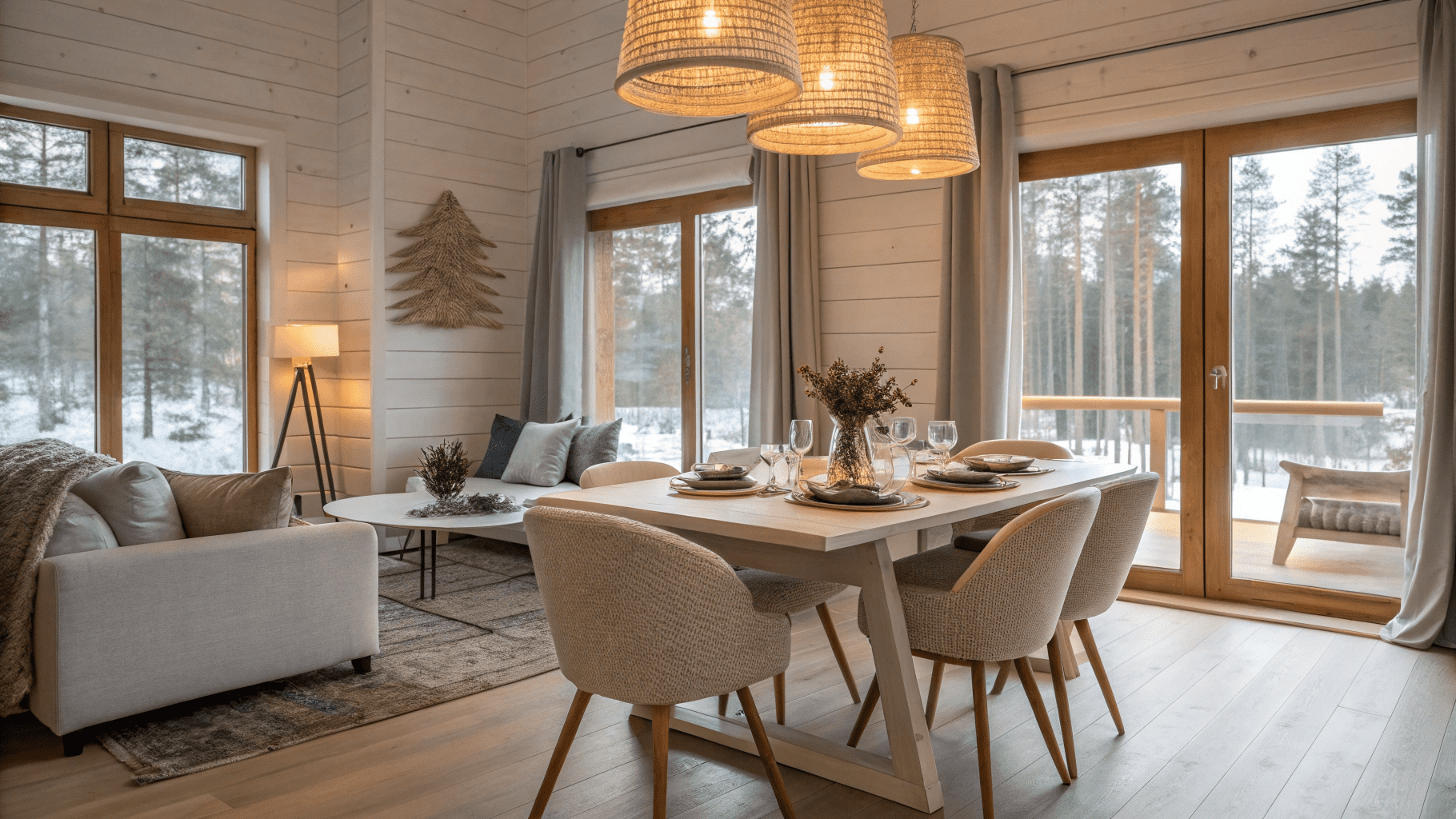
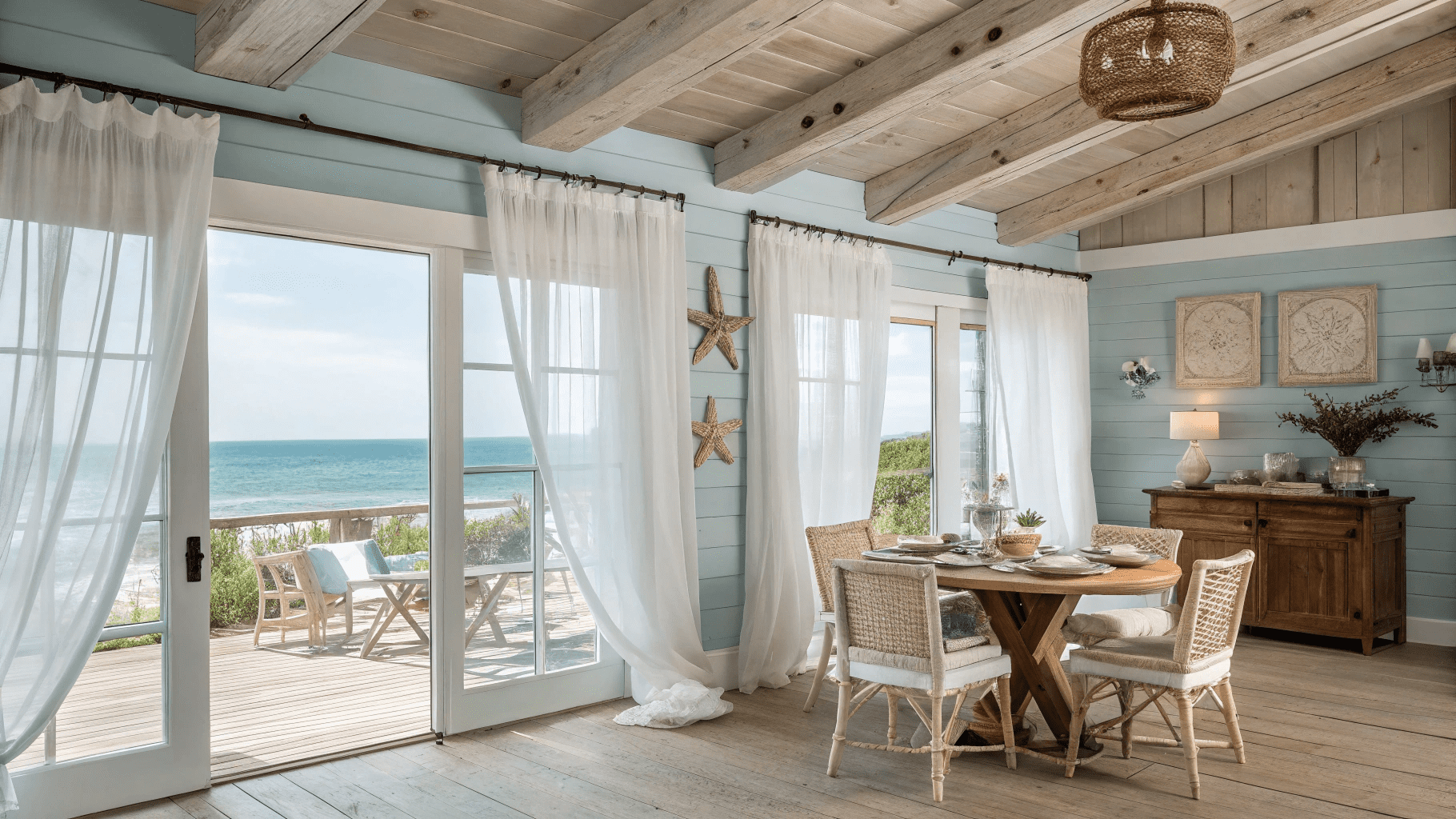
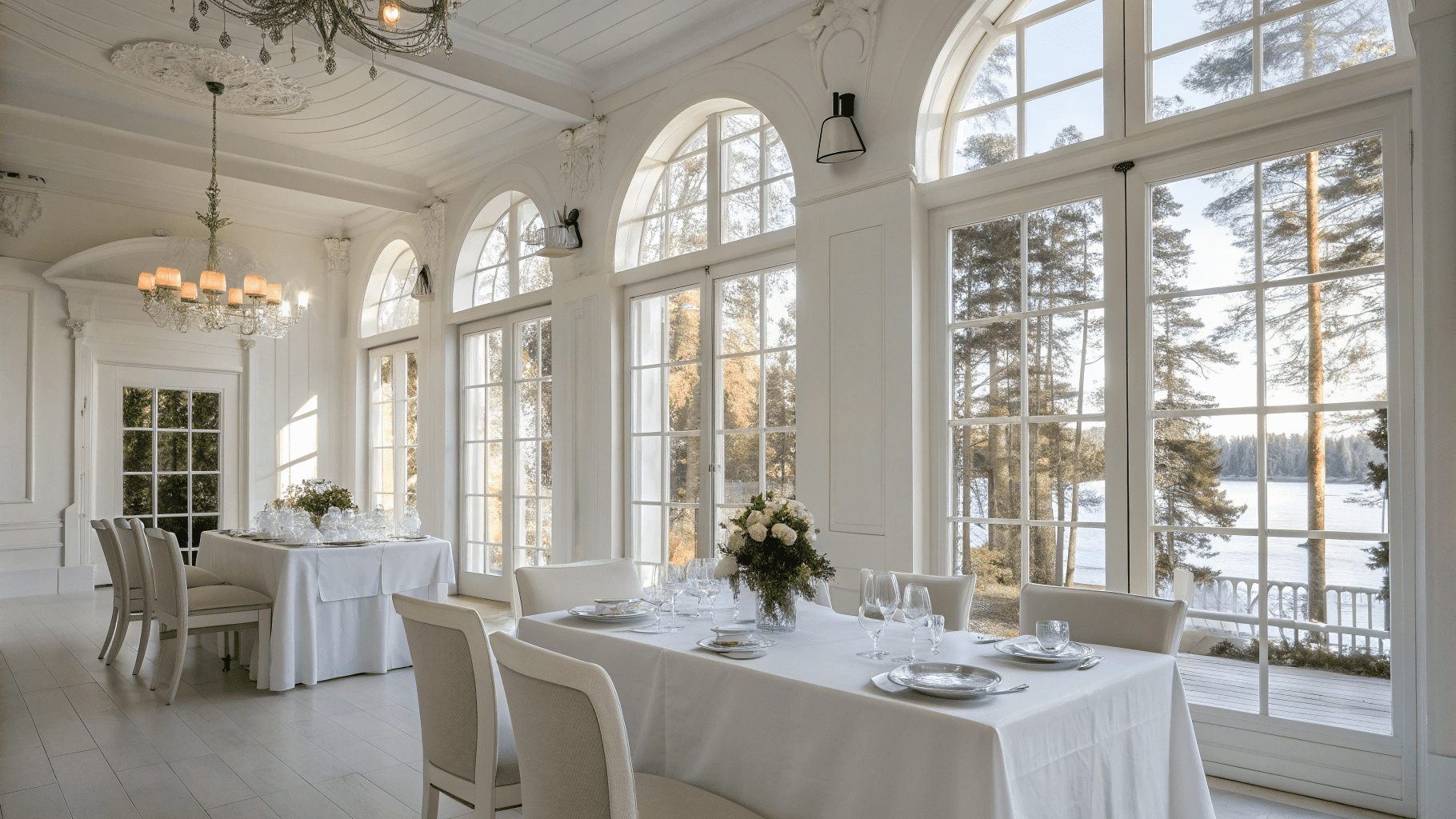
The pendant light or chandelier above the dining table is the single most important lighting decision in the room. For rustic dining rooms, the best choices are wrought iron chandeliers with candle-style bulbs, oversized rattan or woven pendant lights, industrial-style cage pendants with Edison bulbs, wooden beam-mounted pendants, and antler chandeliers for a cabin or lodge aesthetic.
Size matters enormously. A pendant or chandelier above a dining table should be roughly two thirds the width of the table. Any smaller and it looks lost. Hang it approximately 75 to 90cm above the table surface so it casts light directly onto the table without being in anyone’s eyeline.
Candlelight is Non-Negotiable
In a rustic dining room, candles aren’t an optional extra, they’re a core part of the aesthetic. A long low centrepiece of church candles, a cluster of different-height pillar candles in iron holders, or simple taper candles in wooden candlesticks all add a quality of light that no electric fitting can replicate. Candlelight is warm, flickering, intimate, and completely in keeping with everything rustic design is about.
Wall Sconces and Side Lighting
A central overhead pendant alone will leave the edges of the room dark and the atmosphere flat. Adding wall sconces on either side of the room, a side lamp on a console or sideboard, or low lighting on a dresser or shelf brings warmth and depth to the space and makes it feel far more atmospheric and considered.
Rustic Dining Room Walls: Ideas for Colour, Texture and Decor
Paint Colours for a Rustic Dining Room
The palette for a rustic dining room should feel drawn from the natural world rather than from a designer colour chart. Deep earthy terracotta, warm ochre, muted sage green, soft clay, aged linen white, charcoal grey, and warm taupe are all brilliant choices. Avoid anything too cool, too bright, or too perfectly neutral. Rustic colour has warmth and depth to it.
If you want to go dark and dramatic, a deep forest green, rich navy, or warm charcoal on all four walls with white trim creates an incredibly cosy, enveloping dining room that feels perfect for candlelit evenings. Dark walls make the wooden furniture glow and the candlelight dance.
Exposed Brick and Stone Walls
An exposed brick or stone wall is one of the most effective statements you can make in a rustic dining room. If you’re lucky enough to have original brickwork or stone behind your plasterwork, exposing it will transform the room completely. If you don’t have the real thing, limewashed brick effect renders and high-quality stone-look wall panels have come a very long way and can look convincing when chosen carefully.
Shiplap and Tongue and Groove Panelling
Horizontal shiplap boarding on the lower half of the walls, or tongue and groove panelling painted in a soft muted shade, immediately creates a farmhouse rustic atmosphere. It adds texture and architectural interest to plain flat walls and is a relatively affordable DIY project if you’re comfortable with basic carpentry. Paint it in a warm white, pale sage, or soft putty for a classic result.
Rustic Wall Decor
In a rustic dining room, wall decor should feel personal and curated rather than bought as a set. A large antique or vintage-style mirror, original oil paintings or botanical prints, a collection of old ceramic plates arranged as a gallery wall, carved wooden wall hangings, or a salvaged architectural fragment all add character without feeling themed. Avoid anything too perfect, too matching, or too obviously mass-produced.
Rustic Dining Room Flooring Ideas
Original or Reclaimed Hardwood Floors
Nothing anchors a rustic dining room better than a beautiful hardwood floor with real age and character to it. If you have original floorboards, sand and oil them rather than varnishing. A matte oil finish lets the natural grain and patina of the wood breathe and looks infinitely more beautiful than a shiny lacquer finish. Reclaimed hardwood boards, salvaged from old barns, mills, and factories, bring even more character and work brilliantly in a rustic space.
Stone and Slate Floors
Stone flags, slate tiles, and terracotta tiles are all classic rustic flooring choices with an enormous amount of warmth and character. Large irregular flagstones look genuinely ancient and beautiful under a farmhouse dining table. Terracotta tiles bring a warm Mediterranean warmth to a French country or farmhouse rustic room. They do feel cold underfoot in winter so underfloor heating is worth considering if you’re doing a full remodel.
Concrete Floors
Polished or honed concrete floors work surprisingly well in a rustic dining room, particularly in a modern rustic or industrial rustic scheme. The cool industrial quality of the concrete contrasts beautifully with warm wood furniture and soft textiles, and the result is a very grown-up, considered aesthetic.
Rugs Under the Dining Table
A rug under a dining table defines the dining zone, adds warmth underfoot, and softens the hardness of stone or wood floors. For a rustic dining room, natural fibre rugs in jute, sisal, or seagrass are the most authentic and practical choice. They’re durable, hardwearing, and look beautiful. Make sure your rug is large enough that all four chair legs sit on it even when the chairs are pulled out from the table.
Rustic Dining Room Storage and Display Ideas
Freestanding Dressers and Sideboards
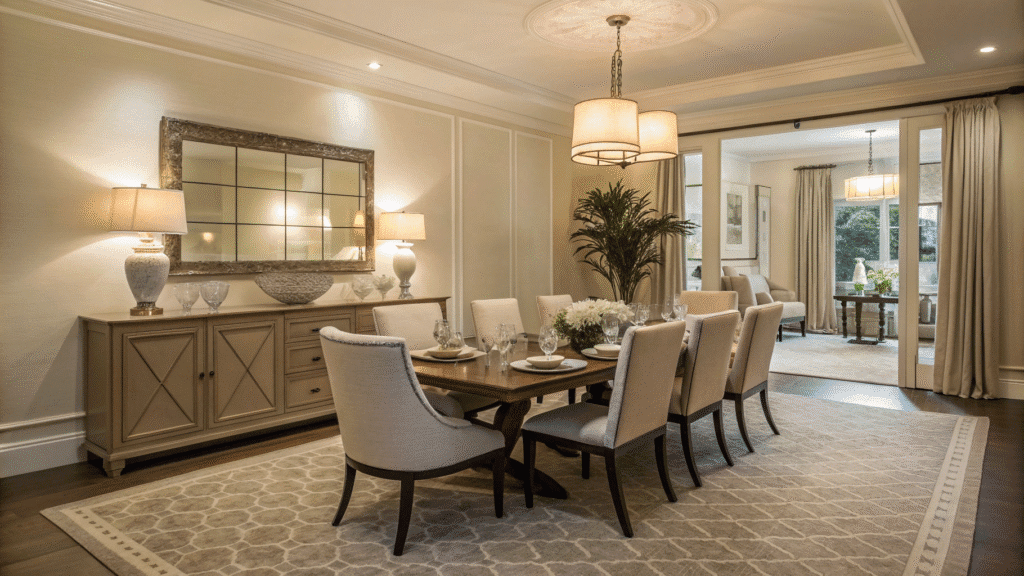
A large freestanding dresser or sideboard is perhaps the most quintessentially rustic dining room piece of furniture. Whether it’s a painted Welsh dresser stacked with mismatched vintage ceramics, a dark oak Jacobean-style sideboard with carved detail, or a simple reclaimed wood console, a dresser or sideboard adds enormous character and practical storage to a dining room. It’s also the perfect place to display the things that give the room personality.
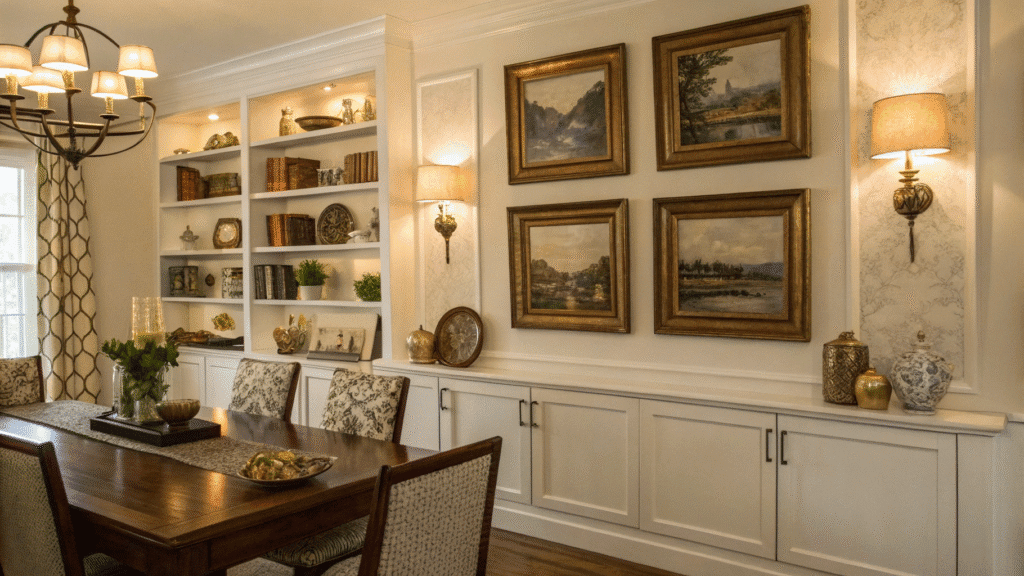
Open Shelving
Open shelves in a rustic dining room give you the opportunity to display the things you actually love using. Stack them with an evolving mix of ceramics, glassware, wooden boards, cookbooks, baskets, and small plants. The key is to keep it curated rather than cluttered. Edit ruthlessly and make sure everything on the shelf earns its place both aesthetically and practically.
Vintage and Antique Finds
The thing that takes a rustic dining room from good to genuinely special is the presence of authentic vintage and antique pieces. A Victorian apothecary cabinet, a set of mismatched vintage chairs from a French flea market, a collection of antique pewter on the dresser, a worn leather armchair in the corner. These pieces carry a quality of material and craftsmanship that simply can’t be replicated at any price point and they give a room the sense of having been built up over time rather than styled in a weekend.
How to Style a Rustic Dining Table for Every Day and for Entertaining
The Everyday Rustic Table Setting
A simple everyday table in a rustic dining room should feel effortless and natural. A wooden board or tray down the centre holding a small plant, a candle, and a small bowl of seasonal fruit or foraged branches is the perfect low-key rustic centrepiece. Linen napkins folded simply, plain ceramic plates, and mismatched glassware make even a Tuesday evening dinner feel warm and considered.
Dressing the Table for Entertaining
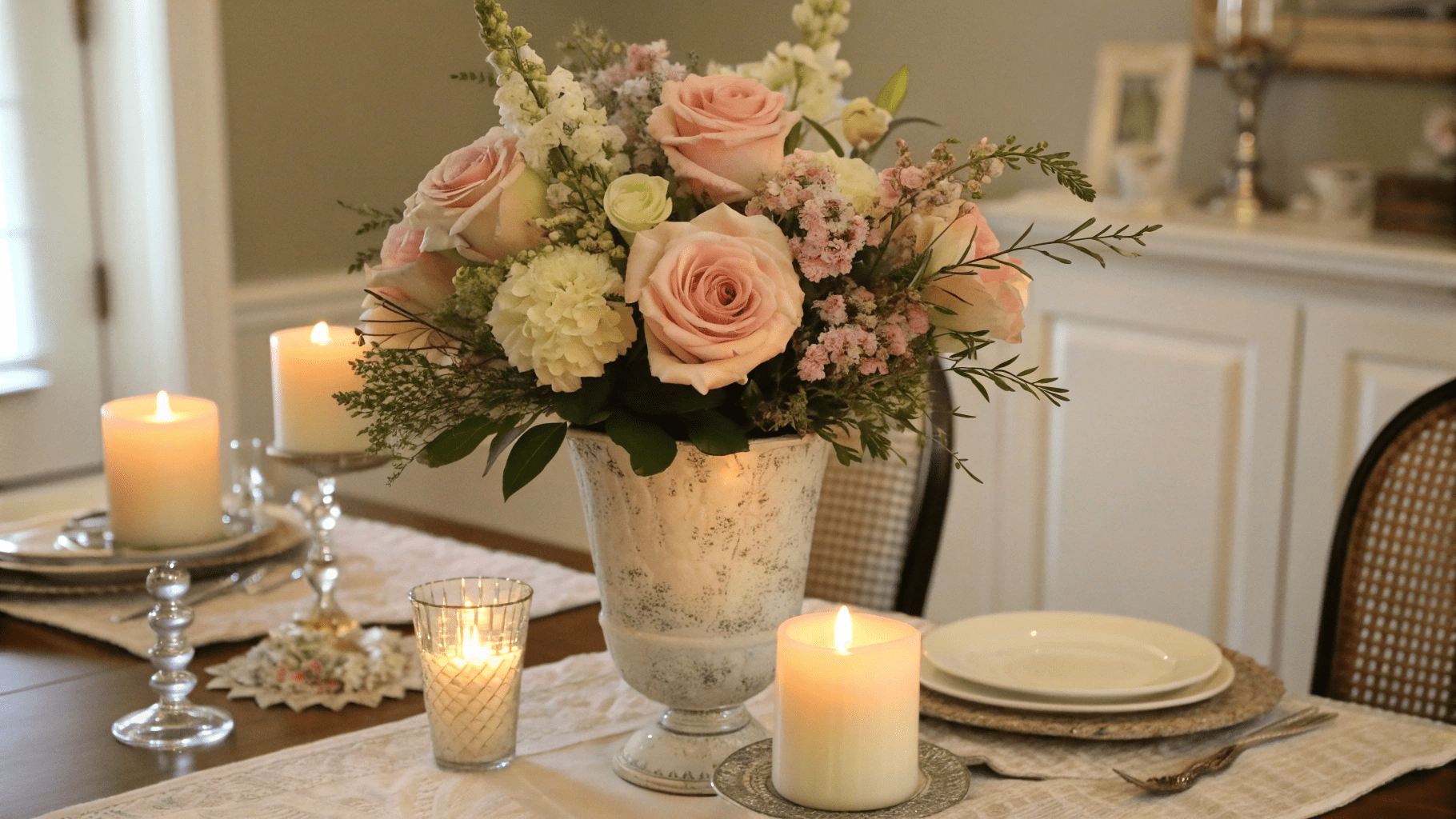
For a dinner party, a rustic table setting should feel abundant and generous without being fussy. A long linen or hessian table runner down the centre, a run of low pillar candles or tapers in mismatched holders, seasonal flowers in simple jugs or ceramic vases, and a mix of textures across the tableware all create an atmosphere that feels genuinely inviting. Fresh herbs laid along the centre, small pots of lavender, or a seasonal foliage runner are all beautiful rustic centrepiece ideas.
The Power of Mismatched Tableware
In a rustic dining room, perfectly matched tableware can feel slightly at odds with the spirit of the space. A mix of plain white ceramics, earthenware in warm terracotta and cream tones, and a few pieces with hand-painted detail or imperfect glazing looks far more at home and far more interesting. The same goes for glassware. A mix of heights and styles, from simple tumblers to vintage wine glasses, looks more generous and more beautiful than a perfectly matched set.
Common Mistakes to Avoid in a Rustic Dining Room
Going Too Themed
The biggest mistake in a rustic dining room is treating it like a themed set rather than a lived-in space. Signs, clichéd accessories, and anything that announces “this is a farmhouse” rather than simply being one will always undermine the effect. Real rustic rooms feel personal and organic, not assembled from a single aesthetic mood board.
Using Too Many Dark Heavy Elements
Rustic can quickly tip into gloomy if everything is dark, heavy, and matt. Balance dark timber with lighter surfaces, warm lighting, and pale textiles. One dark statement piece, whether that’s a deep painted wall, a very dark wood table, or a heavy iron chandelier, is powerful. Several competing dark elements make the room feel oppressive rather than cosy.
Ignoring Lighting Layers
A single overhead pendant, however beautiful, is not enough to make a rustic dining room feel the way it should. You need multiple light sources at different heights and intensities. Overhead, wall, side, and candlelight all working together is what creates that warm, enveloping atmosphere that rustic dining rooms are famous for.
Choosing New Furniture That Looks Fake Rustic
Mass-market distressed finish furniture that comes flat-packed and looks like it’s trying too hard is the enemy of genuine rustic style. Real wood ages and develops character naturally. Buying the best quality solid wood furniture you can afford, even if it’s simpler in style, will always look better than a cheap piece with a manufactured aged finish.
1. Reclaimed Wood Dining Table

A solid reclaimed wood table sets the foundation for an authentic rustic dining room.
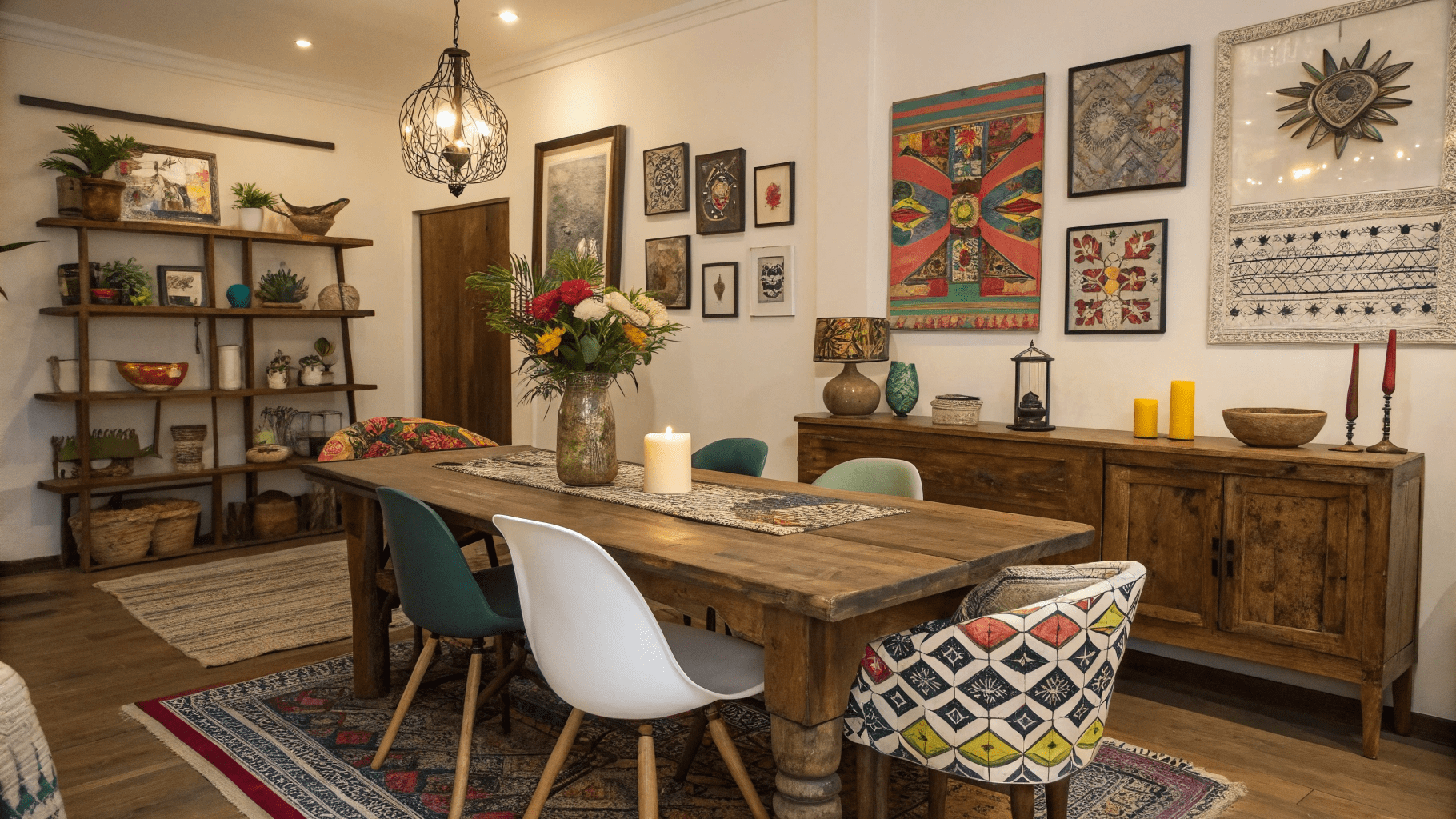
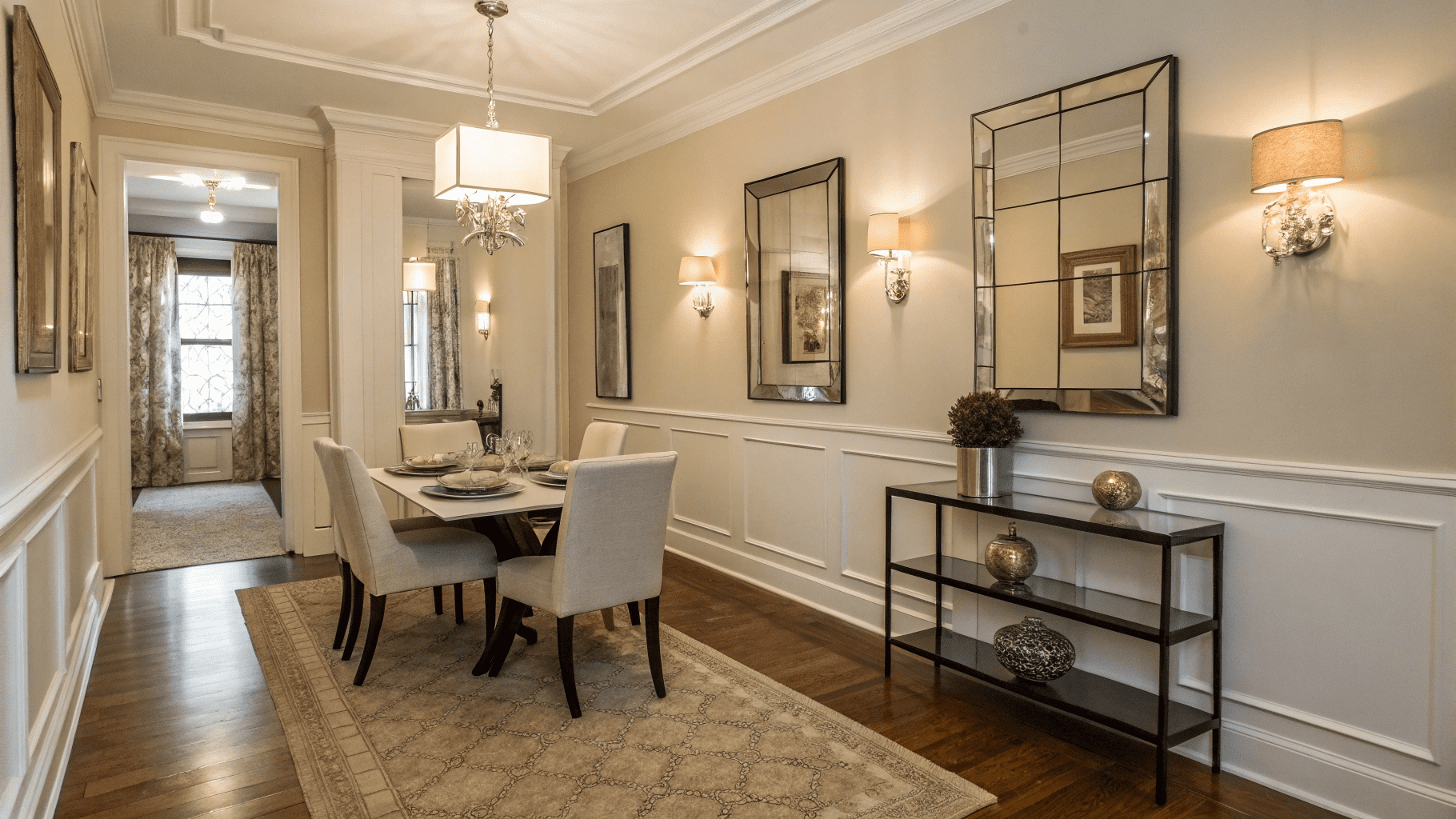
Pro Tip: Choose a table with visible grain and imperfections—they add character and soul.
2. Woven Textures

Introduce wicker chairs, jute rugs, or woven placemats for organic warmth.
Pro Tip: Mix textures in natural tones to create a cozy yet layered look.
3. Stone Accent Walls
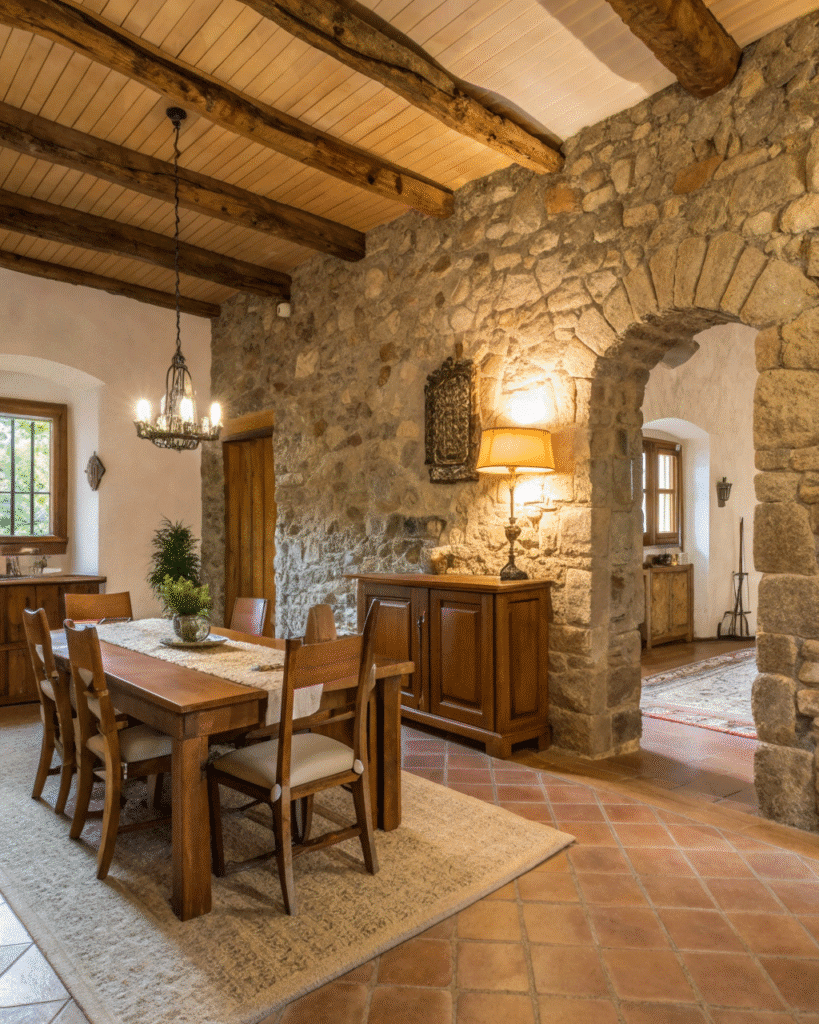
Add depth and earthiness with a natural stone feature wall behind your dining area.
Pro Tip: Use warm lighting to highlight the texture of the stone and create a cozy glow.
4. Farmhouse-Style Lighting
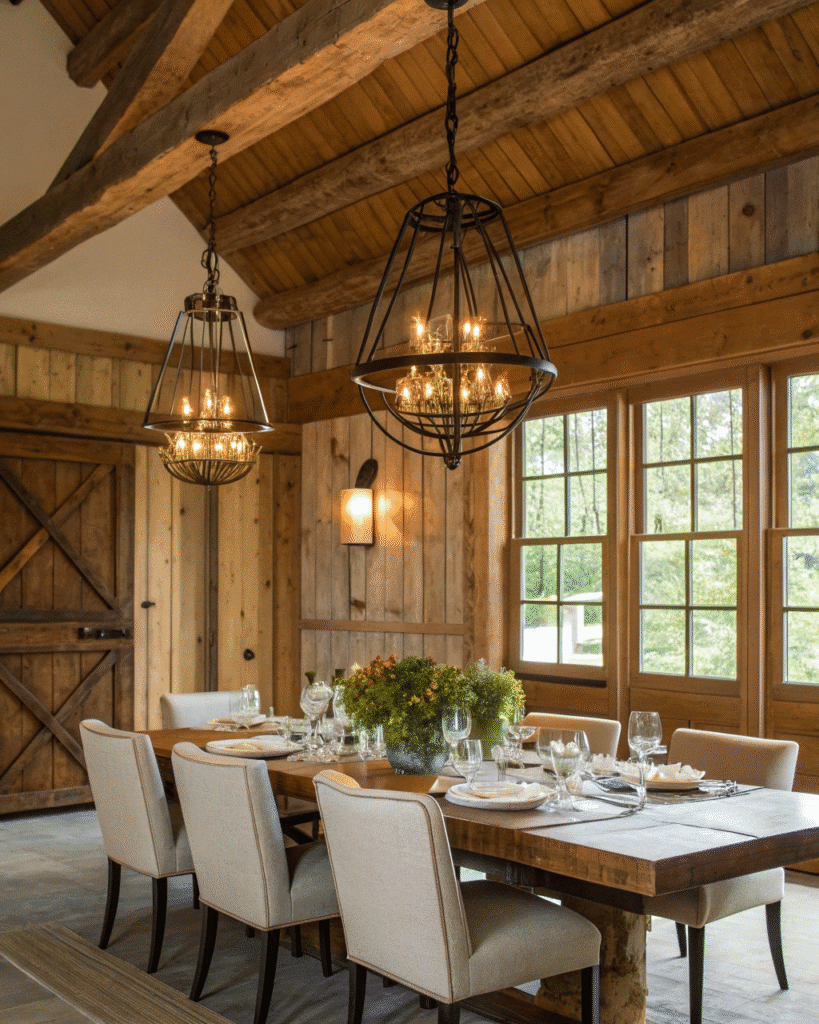
Opt for pendant lights or chandeliers with metal or wood finishes.
Pro Tip: Edison bulbs or soft amber lights enhance the rustic ambiance beautifully.
5. Mismatched Seating
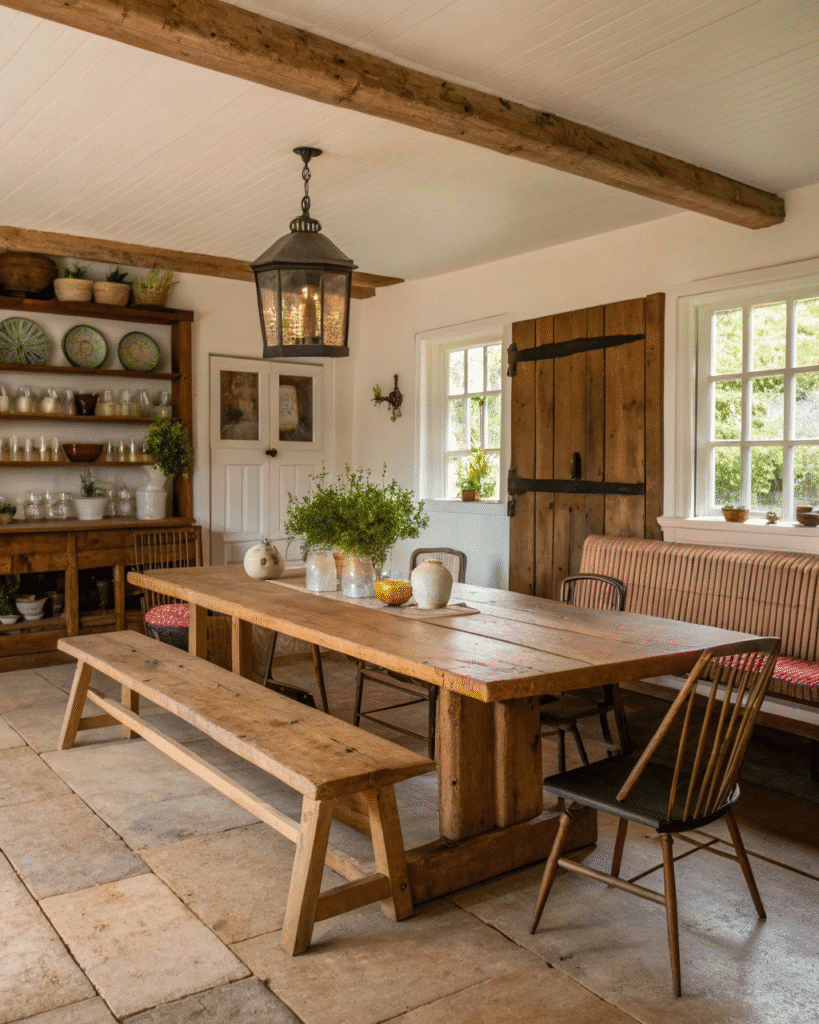
Combine benches and chairs in different finishes for a relaxed farmhouse vibe.
Pro Tip: Keep the palette cohesive with natural or muted tones to avoid visual clutter.
6. Exposed Beams
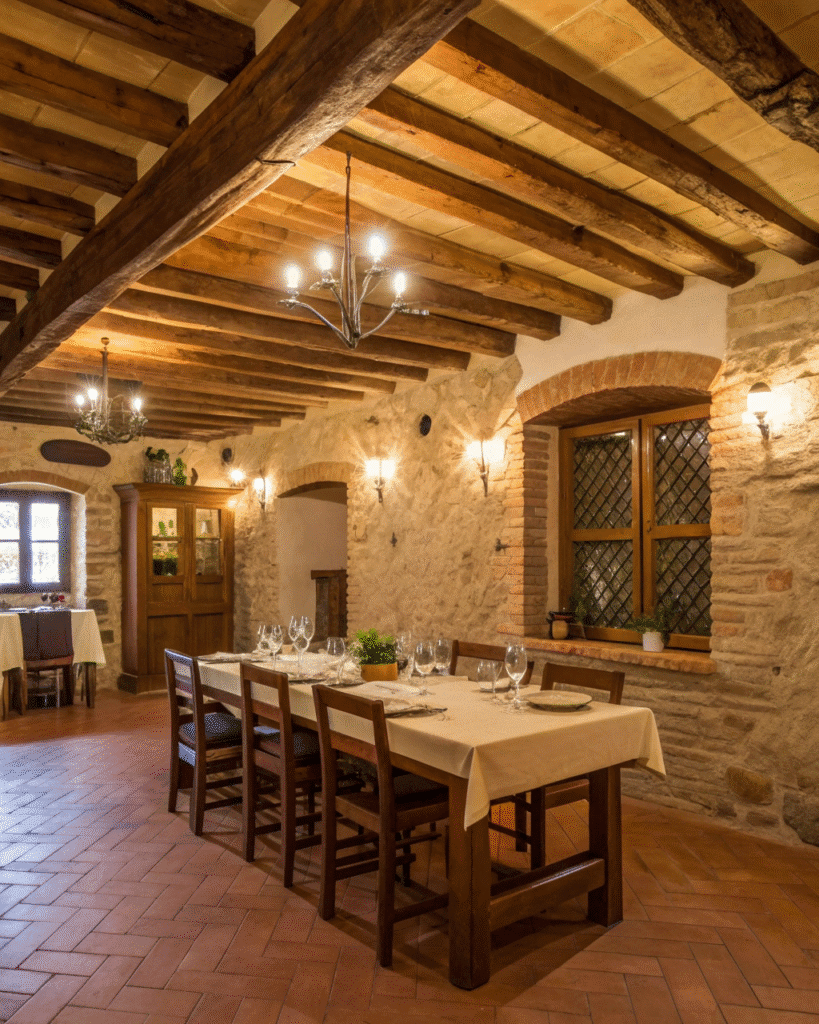
Show off ceiling beams for an authentic rustic architectural touch.
Pro Tip: If your space doesn’t have real beams, faux wood beams can give the same charm.
7. Vintage Tableware
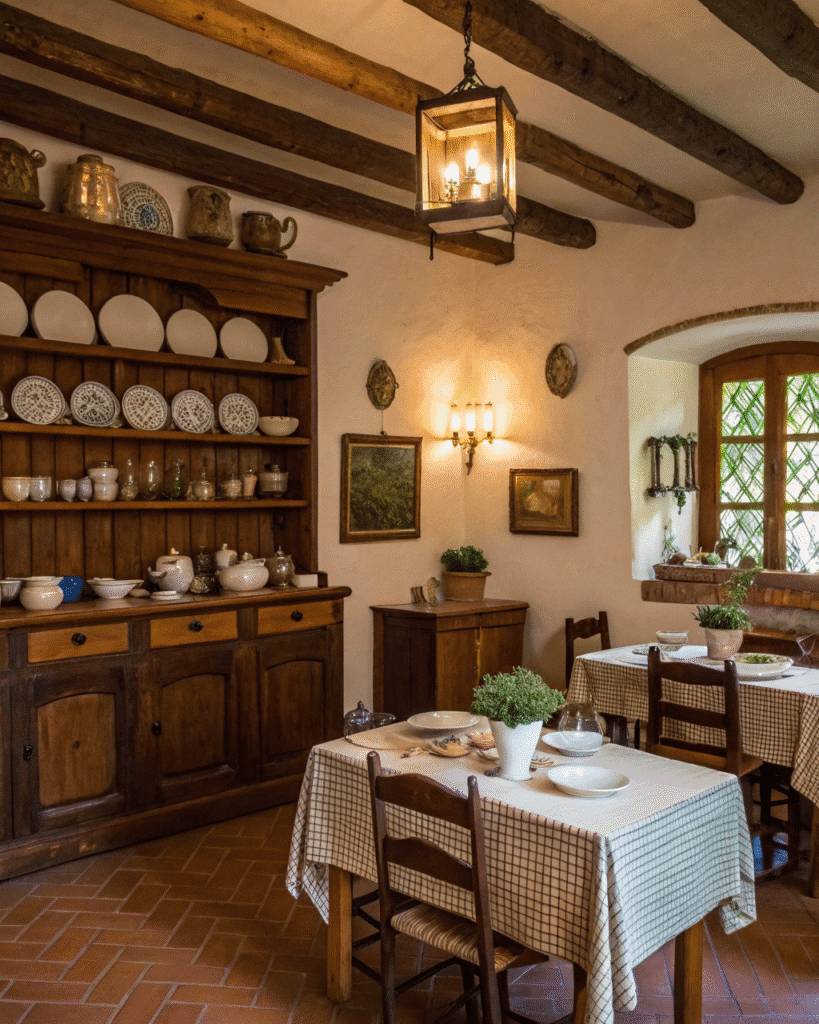
Display antique dishes or enamelware on open shelves for character.
Pro Tip: Mix old and new pieces for a collected-over-time aesthetic.
8. Cozy Fireplace Corner
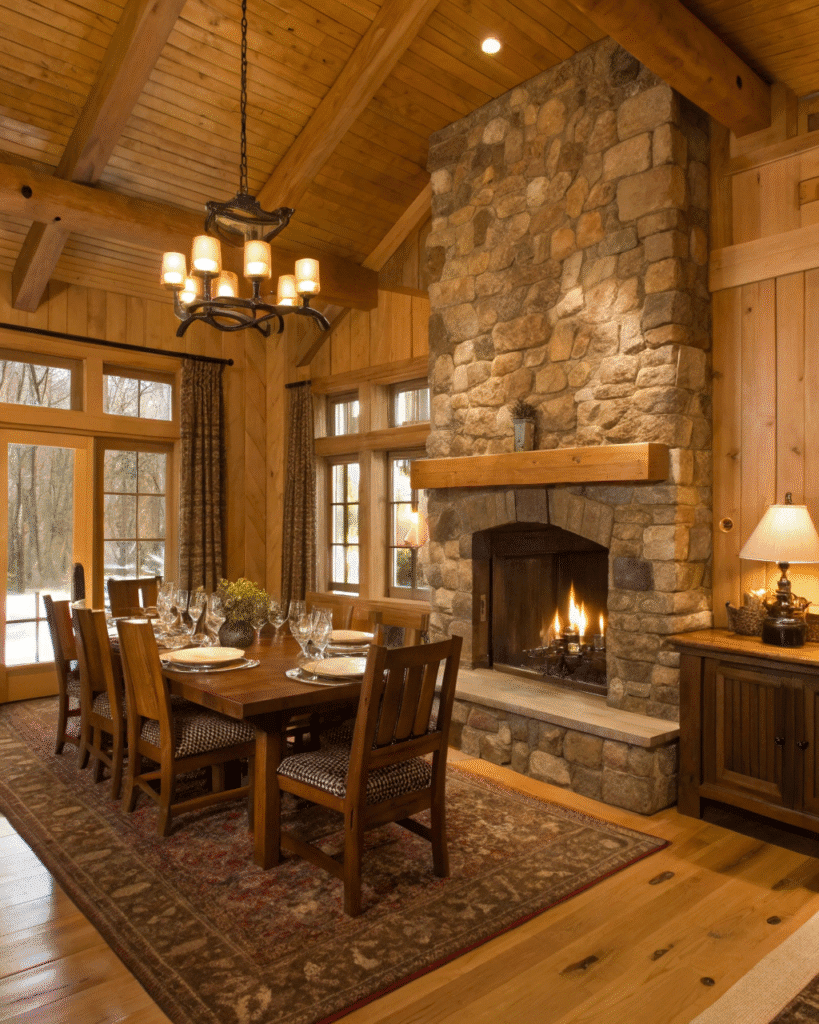
If you have space, a fireplace instantly adds warmth and rustic appeal.
Pro Tip: Decorate the mantel with candles, lanterns, or simple greenery.
9. Layered Linens

Use natural fabrics like linen or cotton for table runners and napkins.
Pro Tip: Stick to earthy tones or subtle patterns that feel lived-in and comforting.
10. Natural Centerpieces
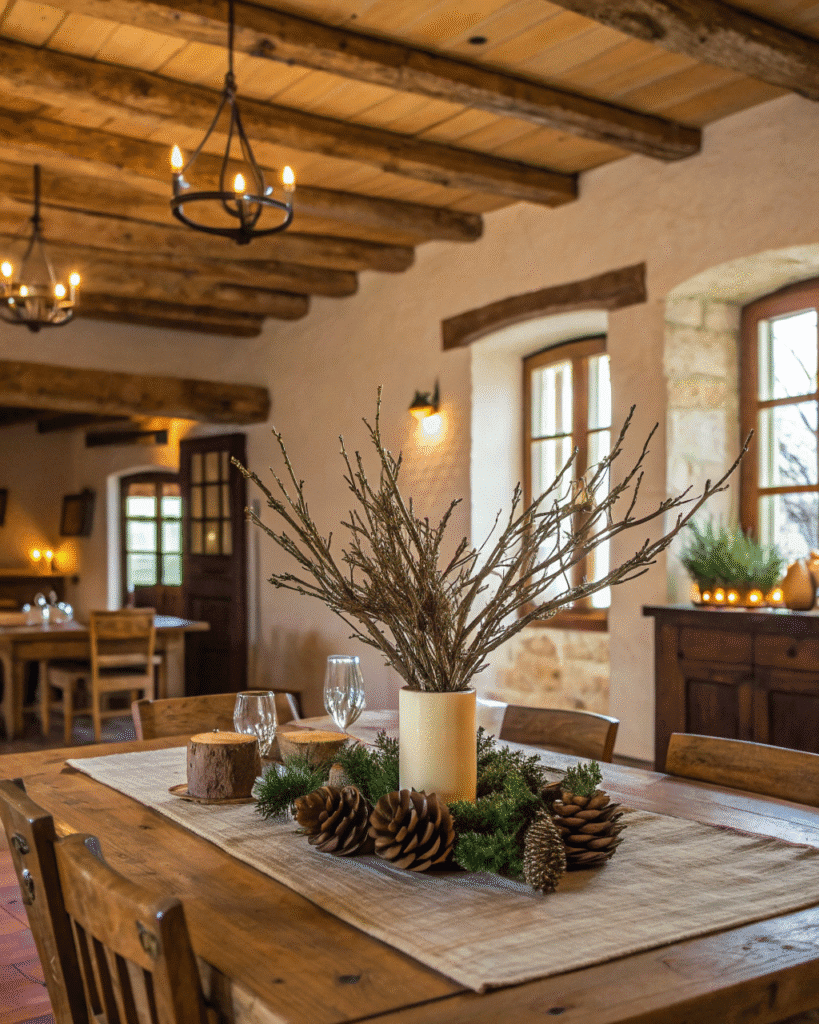
Center your table with branches, pinecones, or seasonal florals for a rustic feel.
Pro Tip: Use simple vases like glass jars or ceramic jugs for a homemade touch.
11. Wooden Sideboard or Hutch
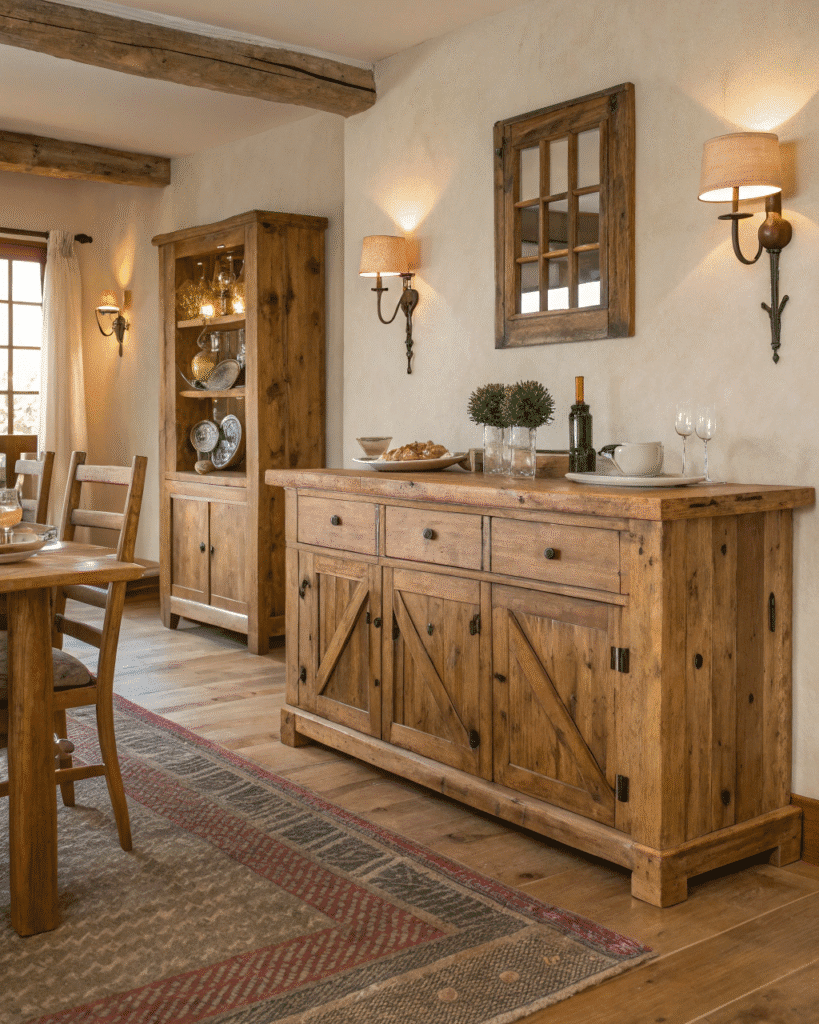
A distressed wood sideboard adds both function and farmhouse beauty.
Pro Tip: Display ceramics, woven baskets, or vintage finds on open shelving.
12. Rustic Wall Art

Hang wooden signs, nature prints, or framed botanical sketches for a natural look.
Pro Tip: Avoid cluttering the walls—one large statement piece is enough.
13. Warm Lighting Layers
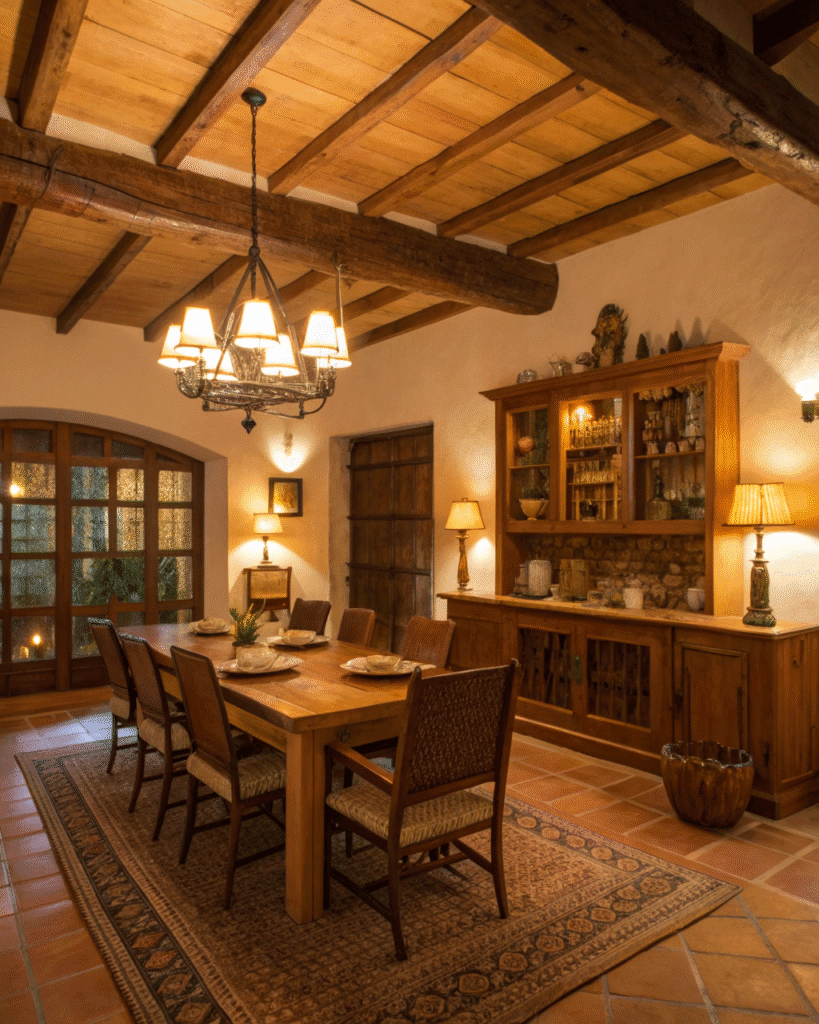
Combine ambient, task, and accent lighting to create a soft, inviting atmosphere.
Pro Tip: Use dimmers to adjust brightness and keep the space cozy during evening meals.
Final Thoughts
A rustic dining room blends comfort and charm with timeless design. By combining natural materials, soft lighting, and cozy details, you can create a space that feels inviting and full of heart.

- 12 Small Guest Room Ideas People Love - March 13, 2026
- 18 Thoughtful Guest Room Ideas Your Friends and Family Will Appreciate - March 13, 2026
- 16 Easy Ways to Make Your Guest Bedroom Feel More Inviting - March 13, 2026