17+ Small Bathroom Layout Ideas That Feel Bigger
Designing a small bathroom can feel challenging, but with the right layout choices, even the tiniest space can look open, airy, and beautifully functional.
It’s all about maximizing flow, choosing space-saving elements, and using smart visual tricks to expand the room.
Why Getting the Layout Right is Everything in a Small Bathroom
In a large bathroom, you can make layout mistakes and get away with it. In a small bathroom, layout is everything. A poorly planned small bathroom feels cramped, awkward, and frustrating to use every single day. A well-planned one feels generous, functional, and genuinely beautiful, even if the actual square footage hasn’t changed at all.
The difference isn’t money spent on tiles or fancy fixtures. It’s about understanding how people move through the space, where the natural sightlines fall, and how to position every element so nothing fights for room with anything else. Get the layout right first and everything else, the styling, the storage, the finishes, falls into place around it.
This is the section most bathroom guides skip over because it isn’t as pretty as talking about tiles and mirrors. But it’s the most important thing you’ll read before starting any small bathroom project.
Small Bathroom Layout Ideas by Room Shape and Size
Different room shapes call for completely different approaches. Here’s how to think about layout depending on what you’re actually working with:
The 5×8 Bathroom Layout
The 5×8 (roughly 150x240cm) is the most common small bathroom size in the UK and US, and the good news is it’s genuinely workable. The classic approach is to run all fixtures along one long wall, with the toilet at the far end, the vanity in the middle, and the bath or shower closest to the door. This keeps plumbing costs down and creates a clear walkway down the centre.
An alternative that works brilliantly in a 5×8 is placing the shower or bath on the short wall at the far end and positioning the toilet and vanity on the long wall. This creates a natural focal point when you walk in and can feel much more spacious because the shower isn’t immediately next to the door.
The 5×5 or Square Bathroom Layout
Square bathrooms are trickier because there’s no obvious long wall to work from. The best approach here is almost always to put the shower in a back corner, which frees up the centre of the room as usable turning space. Place the toilet on one of the side walls and the vanity on the opposite wall, centred if possible. A corner shower in a square room genuinely transforms how open the space feels because the middle becomes breathing room rather than a squeeze point.
The Narrow Bathroom Layout
Long and narrow bathrooms (anything roughly 4 feet wide or less) need very intentional planning. The goal is always to protect the walkway down the centre. Shallow-depth fixtures are your best friend here. A wall-hung toilet and compact wall-mounted vanity on opposite sides of the room keep the corridor clear. If you can place the door in the middle of the long wall rather than at one end, the room immediately feels more balanced and less like a corridor.
The Wet Room Layout
If your bathroom is very small but you need a shower, a wet room layout removes the need for a shower enclosure entirely. The whole room becomes the shower zone, with a central or linear drain and fully waterproofed walls and floor. This is the most space-efficient shower option available and can look absolutely stunning. It works in spaces as small as 4×6 feet and feels considerably more open than any enclosed shower would in the same footprint.
The Golden Rules of Small Bathroom Layout
Before you start moving fixtures around on a plan, there are a few non-negotiable principles that should guide every decision:
Never Move the Soil Pipe if You Can Avoid It
The soil pipe is the large waste pipe that your toilet connects to. Moving it is expensive, disruptive, and sometimes structurally complicated. If you can design your layout around keeping the toilet in roughly its current position, you’ll save significant money and time. Everything else, the vanity, the shower, the bath, is much cheaper and easier to relocate.
Protect the Centre of the Room
The single most common small bathroom mistake is filling the centre of the room with fixtures and leaving no clear space to stand, turn, or move. The centre of a small bathroom should be as clear as possible. Push everything to the walls and edges. Even 30 inches of clear floor space in the middle of a bathroom transforms how it feels to use every day.
Think in Zones
Even a tiny bathroom benefits from thinking in zones. The wet zone (shower or bath), the sanitary zone (toilet), and the vanity zone (sink and mirror) each have their own demands. Keeping the wet zone contained to one area, ideally opposite the door, makes the bathroom easier to clean and the layout feel more logical.
Door Swing Matters Enormously
In a small bathroom, a standard inward-swinging door can be a daily source of frustration if it swings into a fixture or limits how far you can open it. Consider a sliding door, a pocket door that disappears into the wall, or an outward-swinging door if the hallway allows. This is one of the cheapest and most impactful layout changes you can make.
Keep Plumbing on One or Two Walls
Every plumbing connection is a cost. The more walls you run pipes to, the more expensive the job. Clustering the sink, toilet, and shower on one or two adjacent walls keeps the budget in check and simplifies the build considerably.
Small Bathroom Layout Ideas Without a Bathtub
Choosing to go shower-only is one of the best decisions you can make in a small bathroom, and more and more people are doing it. A bath takes up a massive amount of floor space (typically 60 inches by 30 inches minimum) and is often used far less than a good shower. Removing it opens up the room completely.
Walk-In Shower Layout
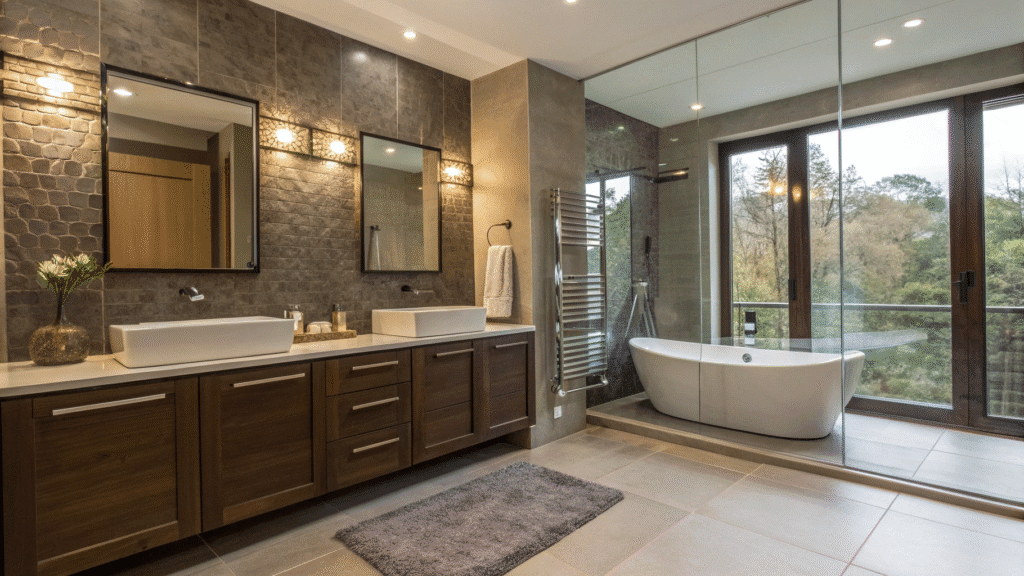
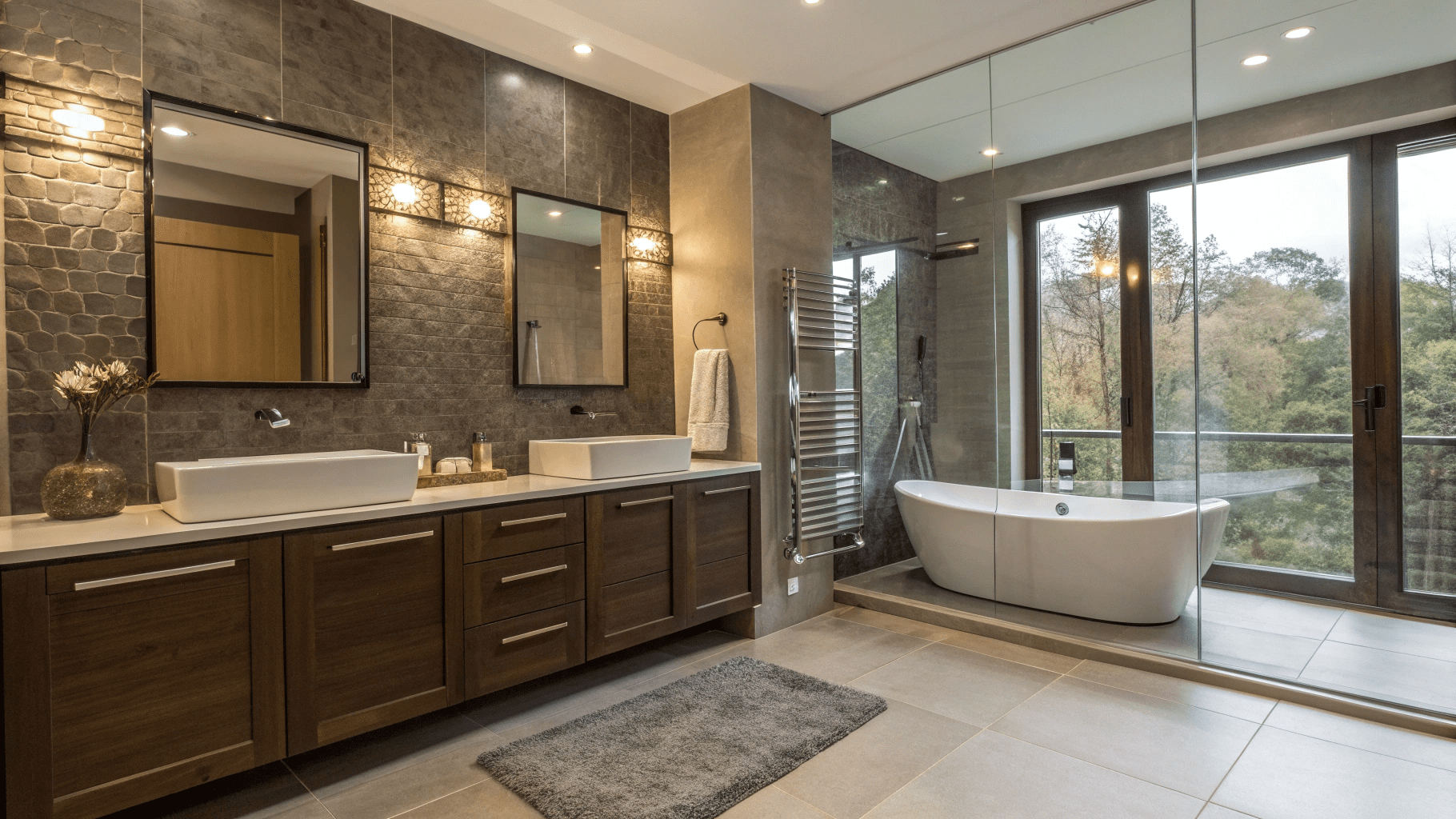
A walk-in or open shower with a glass panel rather than a full enclosure is the layout that makes a small bathroom feel most like a spa. The glass doesn’t interrupt the sightline across the room, which is the key reason it makes the space feel so much bigger. Go frameless if your budget allows. Even semi-frameless is dramatically better than a framed shower screen.
Corner Shower Layout
A corner shower tucks into the angle of two walls and uses an angled or curved door to open into the room. It’s compact, practical, and frees up the rest of the bathroom for a proper vanity and toilet arrangement. Standard corner shower trays start at around 800x800mm, which is genuinely comfortable to use.
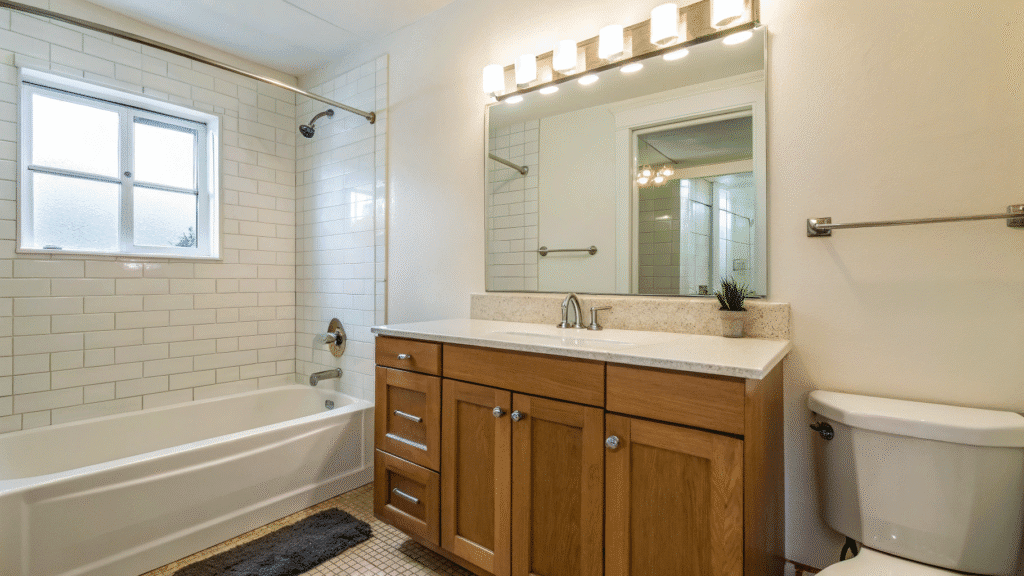
Shower Bath Combo Layout
If you really need a bath, a shower bath is the compromise that makes the most sense in a small space. It’s a bath with a slightly wider showering end, allowing you to use it as both. It takes up the same footprint as a regular bath but gives you both functions. Position it along the longest wall and keep everything else on the adjacent walls.
Small Bathroom Layout Ideas With a Bath
If you’re keeping the bath, here’s how to make it work without the room feeling completely overwhelmed:
Bath Along the Long Wall
The most space-efficient bath placement is almost always against the longest wall, running the full length of it. This frees up the width of the room as usable space and creates a natural corridor from the door to the end of the room. Position the toilet and vanity on the short wall opposite the door for the clearest, most open layout.
Freestanding Bath in a Small Bathroom
Counterintuitively, a small freestanding bath can sometimes make a small bathroom feel larger than a built-in alcove bath. This is because the floor is visible around it, which reads as more space to the eye. It only works if the bathroom is wide enough for the bath plus clear space on at least one side. You need a minimum of about 700mm of clearance beside a freestanding bath to use it comfortably.
Bath Under the Window
If your bathroom has a window on an exterior wall, placing the bath beneath it is a beautiful layout choice that also makes practical sense. It keeps the plumbing close to an outside wall (cheaper to run), gives you natural light while bathing, and creates a lovely focal point. Make sure your window has obscure or frosted glass for obvious privacy reasons.
Storage Layout Ideas for Small Bathrooms
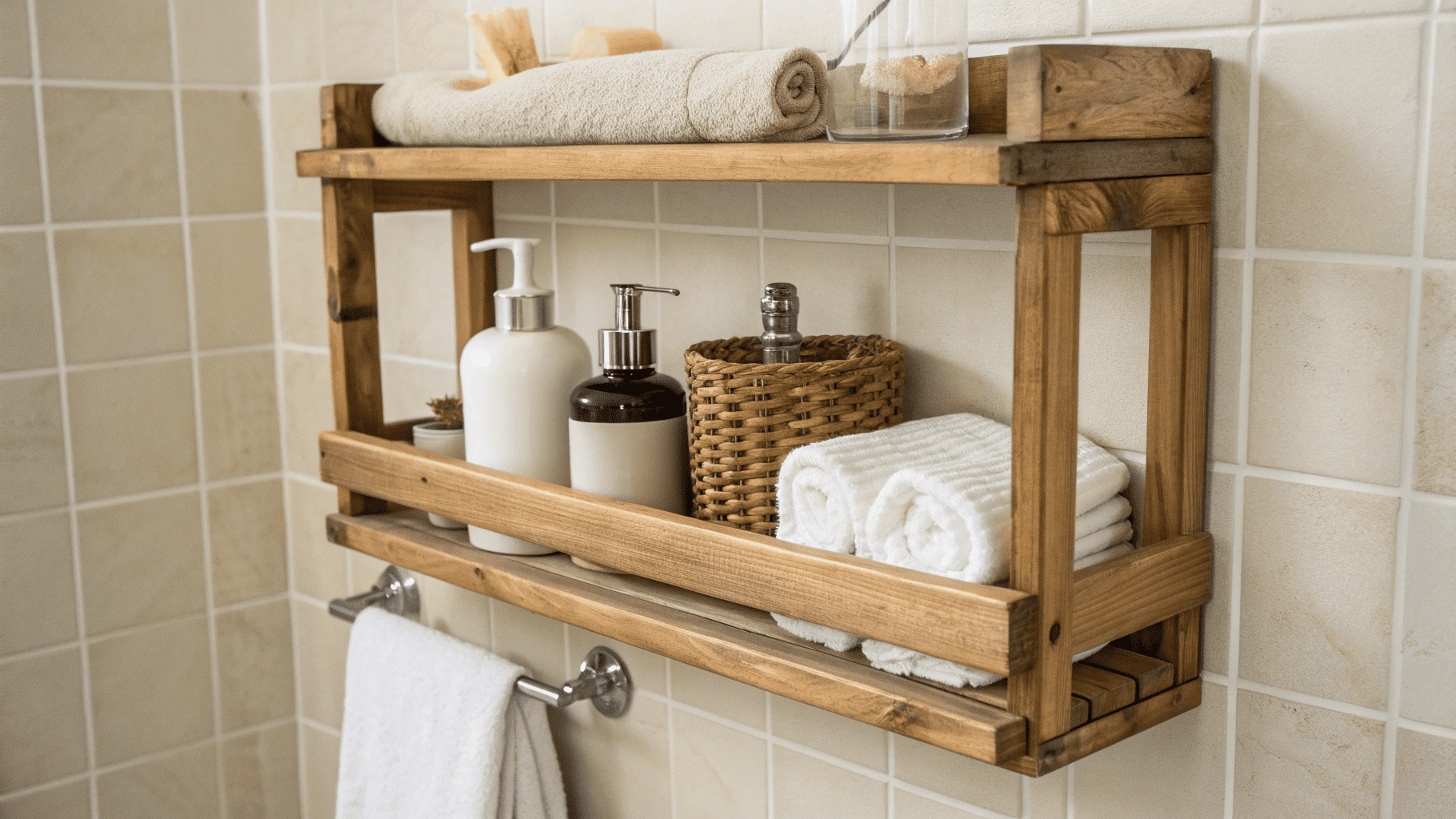
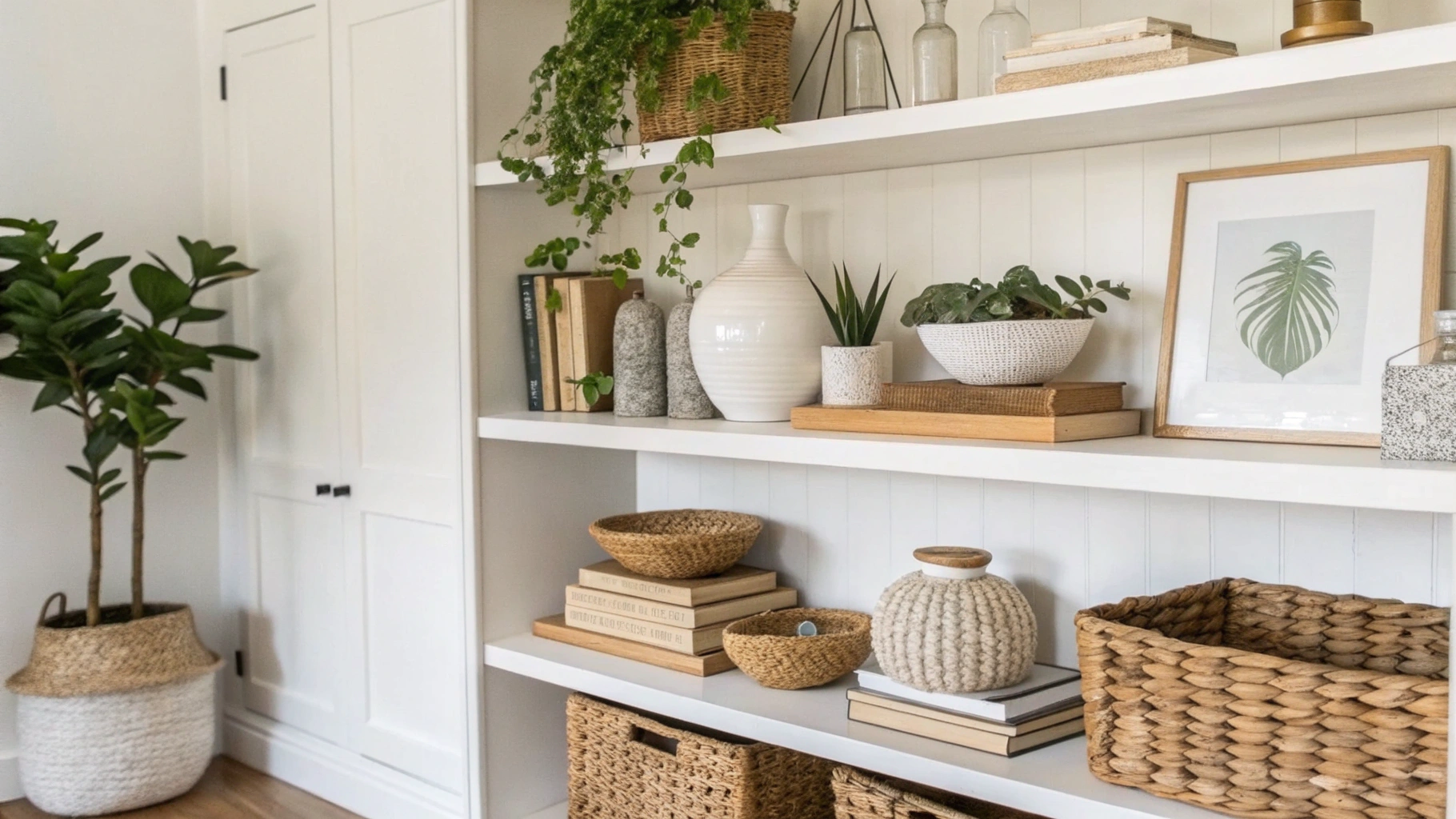
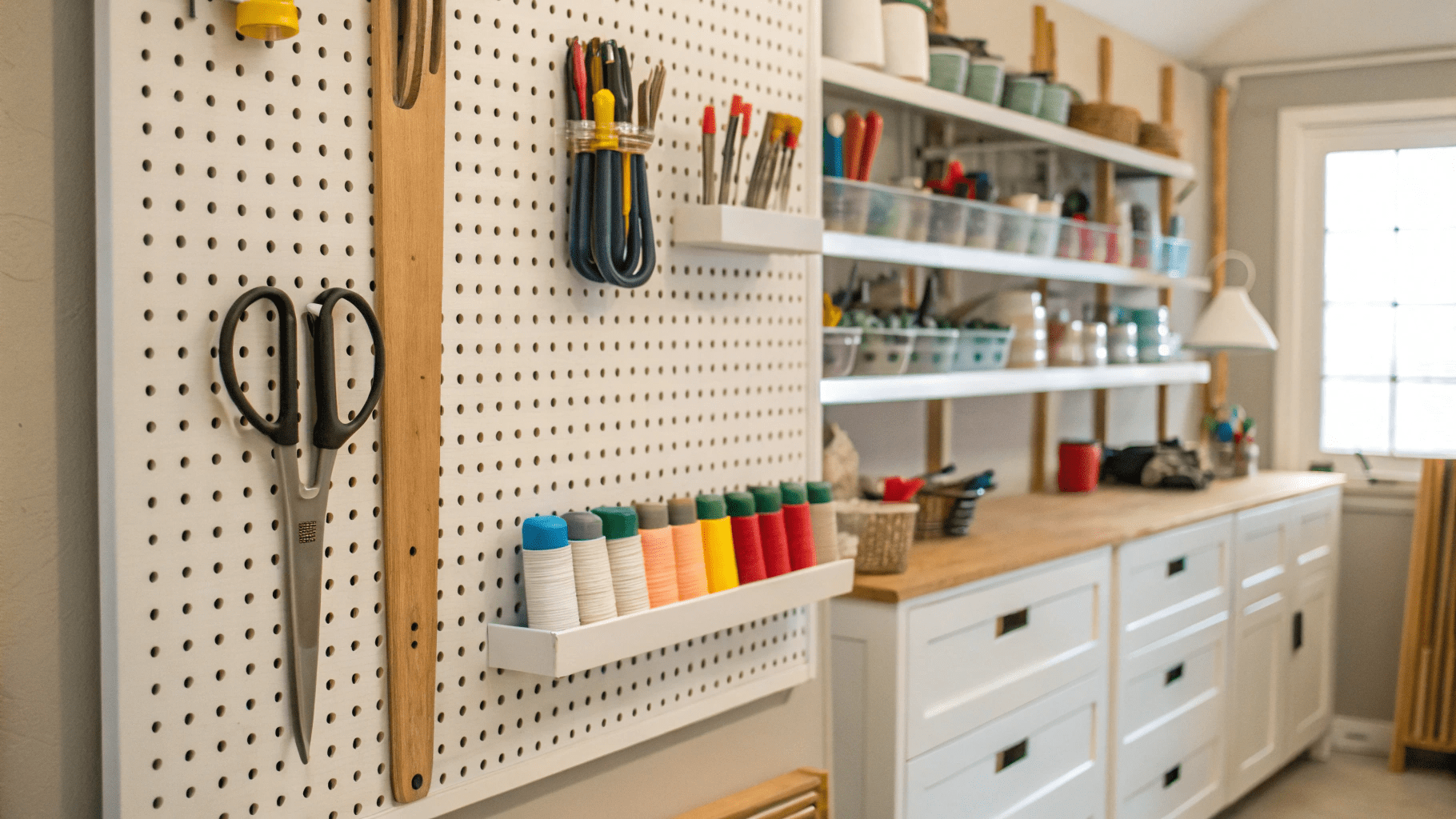
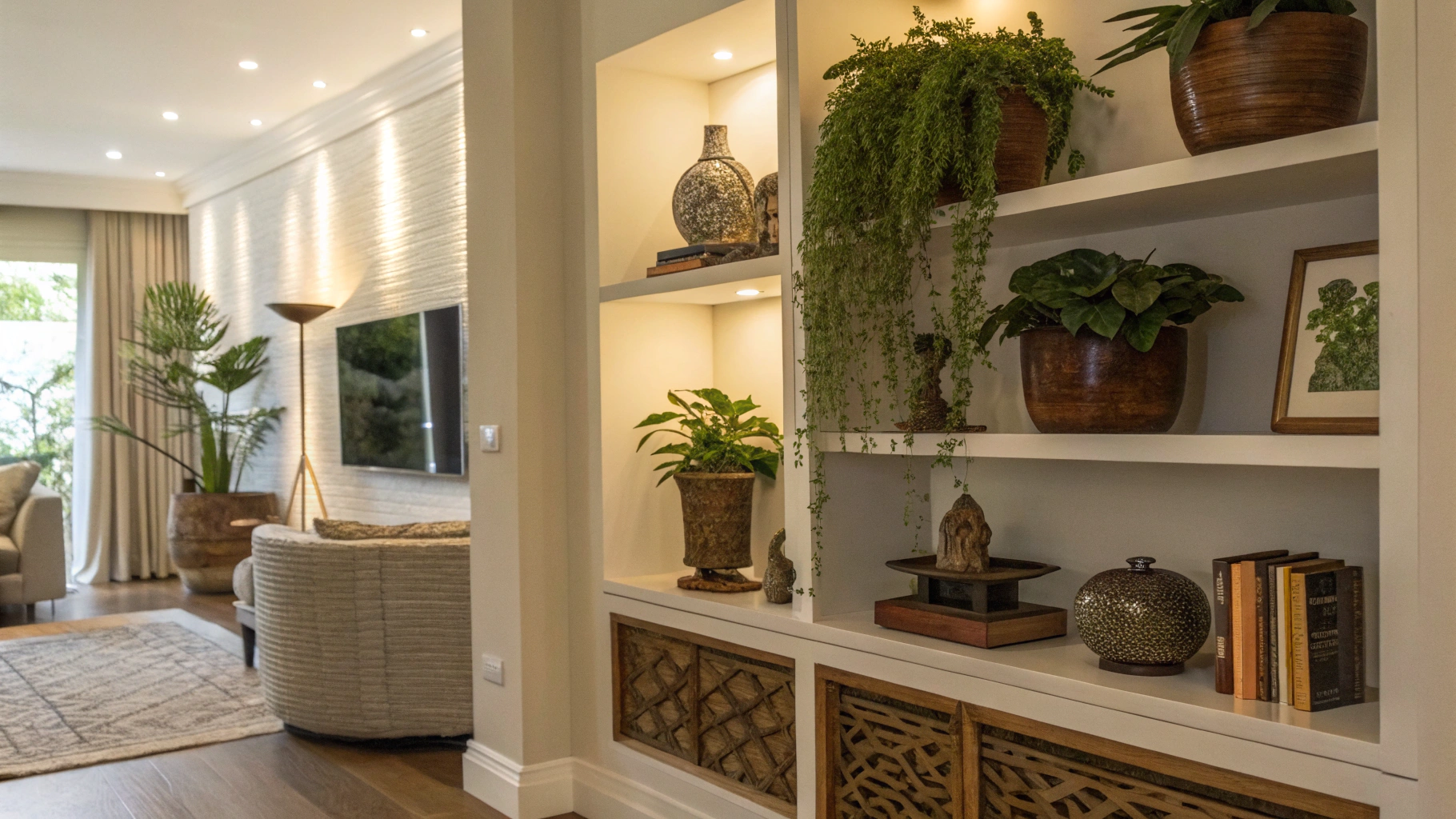
Storage is the thing most people feel they don’t have enough of in a small bathroom. The secret is almost always about using vertical space and recessing things into walls rather than adding things that project into the room.
Recessed Wall Niches
A recessed niche built into the wall between studs gives you shelving without taking any floor or wall depth. In a shower, a niche for shampoo and products is a game-changer. Above the toilet, a recessed niche for storage or display is equally brilliant. The depth of a standard stud wall (usually around 90 to 100mm) is surprisingly functional for bathroom storage.
Vanity With Storage
A vanity unit with drawers or cupboards below the basin is the most efficient way to hide bathroom clutter. Choose a wall-mounted vanity rather than a floor-standing one. The exposed floor beneath it makes the room feel larger and it’s much easier to clean. Even a small wall-mounted vanity of around 500mm width can hide an impressive amount of toiletries when well-organised inside.
Above-Toilet Storage
The space above the toilet is chronically underused in most small bathrooms. A slim wall-mounted cabinet or open shelving above the toilet cistern adds meaningful storage without taking any additional floor space. Keep shelves to a maximum depth of about 200mm so they don’t feel imposing.
Mirror Cabinets
A mirror cabinet above the vanity does double duty. It gives you the mirror you need for getting ready and hides storage behind it. In a small bathroom where every surface needs to earn its place, this is one of the best investments you can make. Choose one that spans the full width of your vanity unit for the most balanced, considered look.
How to Make a Small Bathroom Feel Bigger
Layout gets you most of the way there, but these design choices amplify the sense of space dramatically:
Use Large Format Tiles
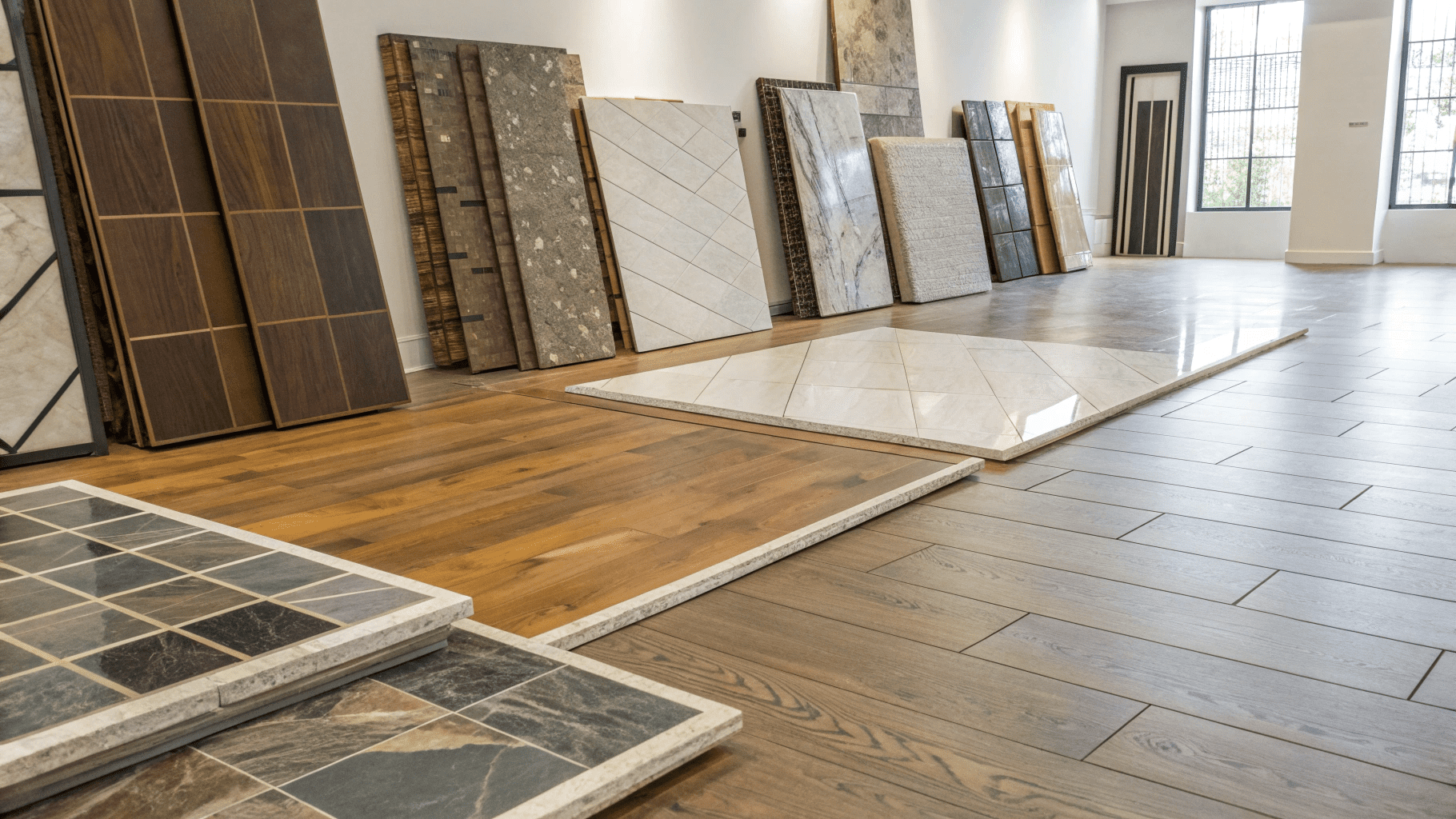
Fewer grout lines means less visual interruption, which makes the eye read the room as larger. Large format tiles (600x600mm or bigger) on the floor are one of the most effective tools for making a small bathroom feel more spacious. Running the same tile up the walls as well creates a seamless, continuous surface that feels very generous.
Continue the Floor Tile Into the Shower
Rather than stopping the floor tile at the shower tray and using a different tile inside, running the same floor tile continuously into the shower (with a linear drain at the wall rather than a shower tray) removes a visual boundary and makes the room feel considerably wider.
Choose a Frameless or Semi-Frameless Shower Screen
Every frame on a shower enclosure is a visual interruption. Frameless glass is essentially invisible and lets the eye travel across the full width of the room without stopping. In a small bathroom, this single change can feel transformative.
Keep the Colour Palette Tight
This doesn’t mean everything has to be white. It means limiting the number of different colours and materials you use. Two or three tones that work together, used consistently across floors, walls, and fixtures, will always feel more spacious than five different colours competing for attention.
Use a Large Mirror or Full-Height Mirror
A large mirror above the vanity, or ideally a full-height mirror on one wall, doubles the perceived depth of the room. The reflection creates the impression of space that simply isn’t there. In a very small bathroom, a mirror that runs the full width of the vanity wall is one of the most impactful things you can do.
Get the Lighting Right
Dark bathrooms feel small. Well-lit bathrooms feel generous. Recessed ceiling lights give a clean, uncluttered look. Adding a backlit mirror or LED strip lighting around the mirror creates a warm glow that makes the space feel both larger and more luxurious. Avoid a single central ceiling light as the only light source. It creates shadows in corners and makes everything feel flat and smaller.
Small Bathroom Layout Mistakes to Avoid
Choosing a Pedestal Sink Over a Vanity Unit
Pedestal sinks look elegant but give you zero storage. In a small bathroom, storage is precious. A wall-mounted vanity unit with drawers is almost always a better choice because it gives you the clean floating look without sacrificing function.
Fitting a Full-Size Bath When You Never Use It
If you genuinely use your bath regularly, keep it. But if you’re honest and it gets used a handful of times a year, removing it and fitting a proper walk-in shower will transform how your small bathroom feels and functions every single day.
Using Too Many Small Tiles
Small mosaic tiles on a large surface area mean an enormous number of grout lines, which visually breaks up the surface and makes the room feel busier and smaller. Save small tiles for accents and feature areas. Use large format tiles for floors and main wall surfaces.
Ignoring Ventilation
A small bathroom with poor ventilation becomes damp, mouldy, and unpleasant very quickly. An extractor fan that vents properly to the outside (not just into a loft space) is non-negotiable. If you’re doing a full remodel, this is the moment to get this right.
Choosing a Hinged Shower Door in a Tight Space
A hinged shower door swings outward into the bathroom floor space. In a very small bathroom, this means the door swings into the toilet, the vanity, or the person trying to use the bathroom at the same time. A sliding shower door or a pivot door that opens both ways solves this completely.
These layout ideas will help your small bathroom feel bigger, brighter, and more comfortable.
1. Choose a Floating Vanity
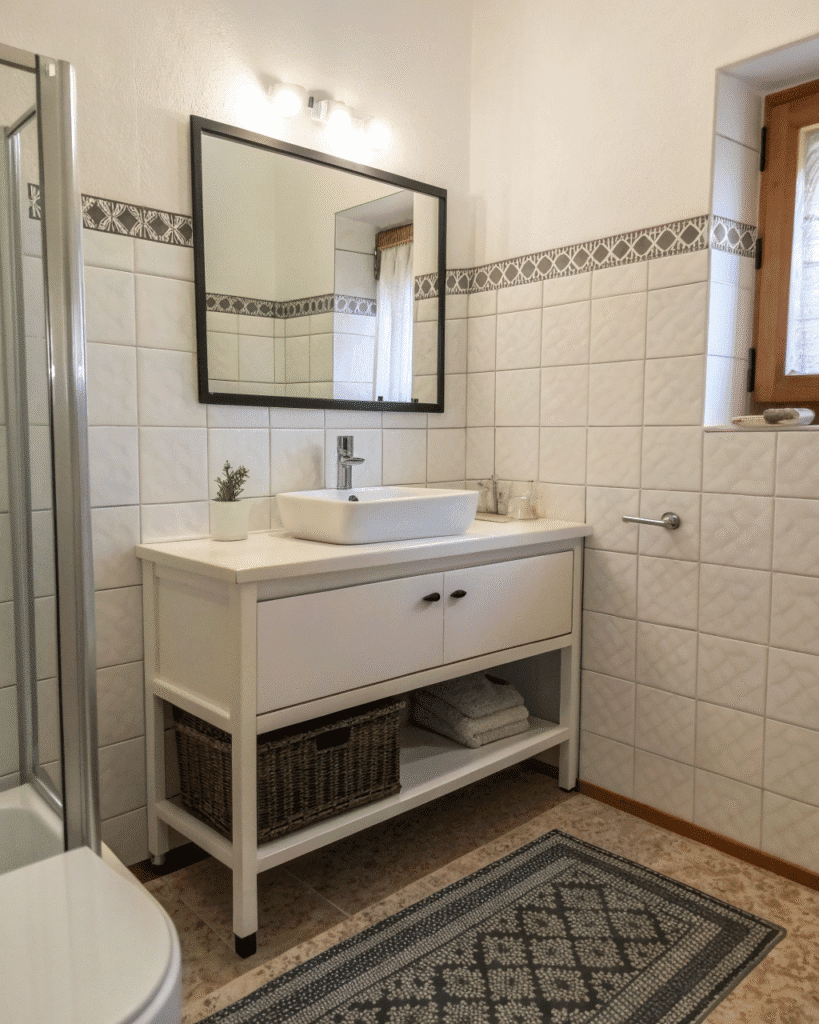
A wall-mounted vanity frees up floor space, helping the room feel more open and breathable.
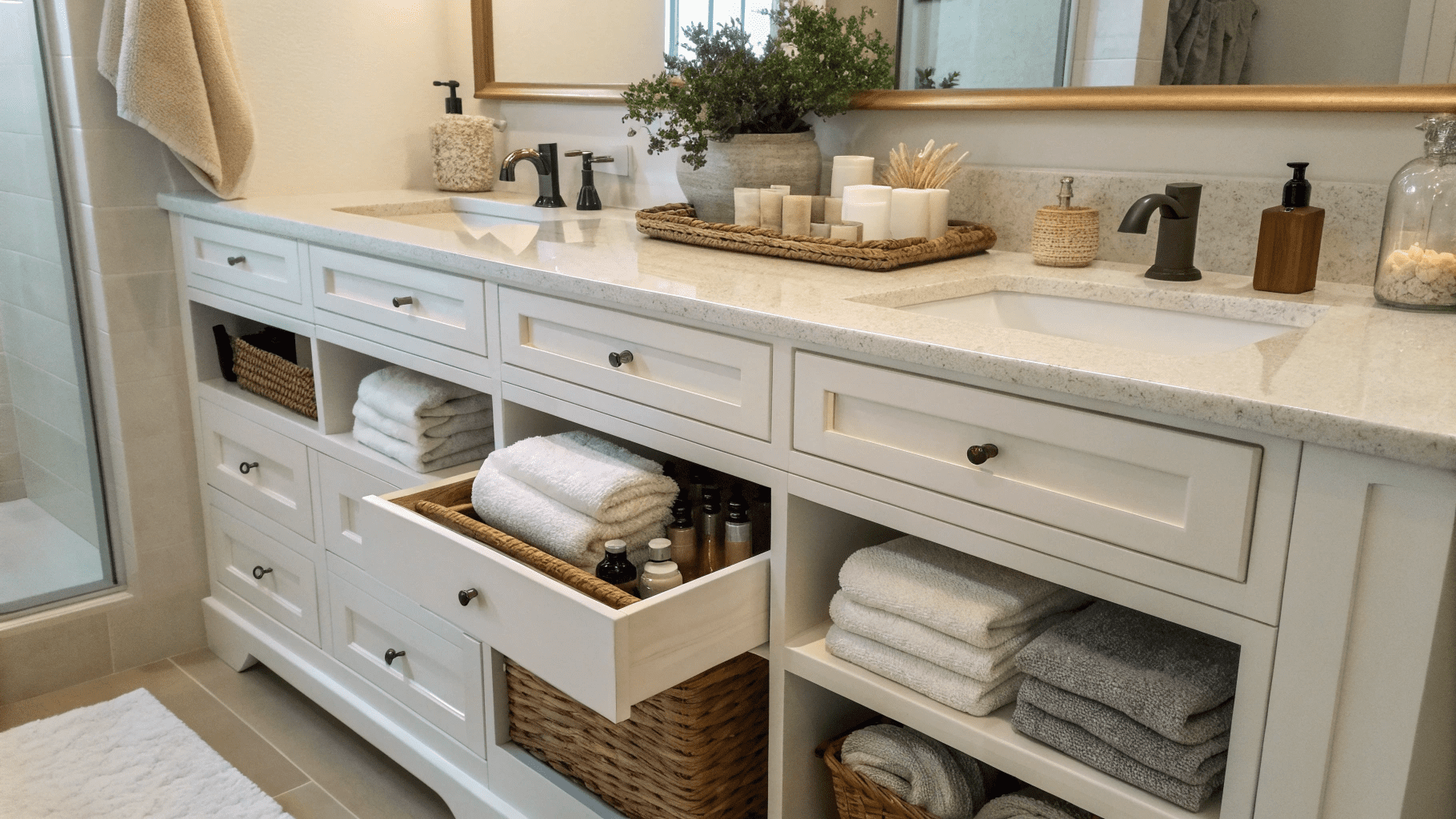
Pro Tip: Pick a vanity with built-in drawers to keep clutter out of sight.
2. Opt for a Corner Sink
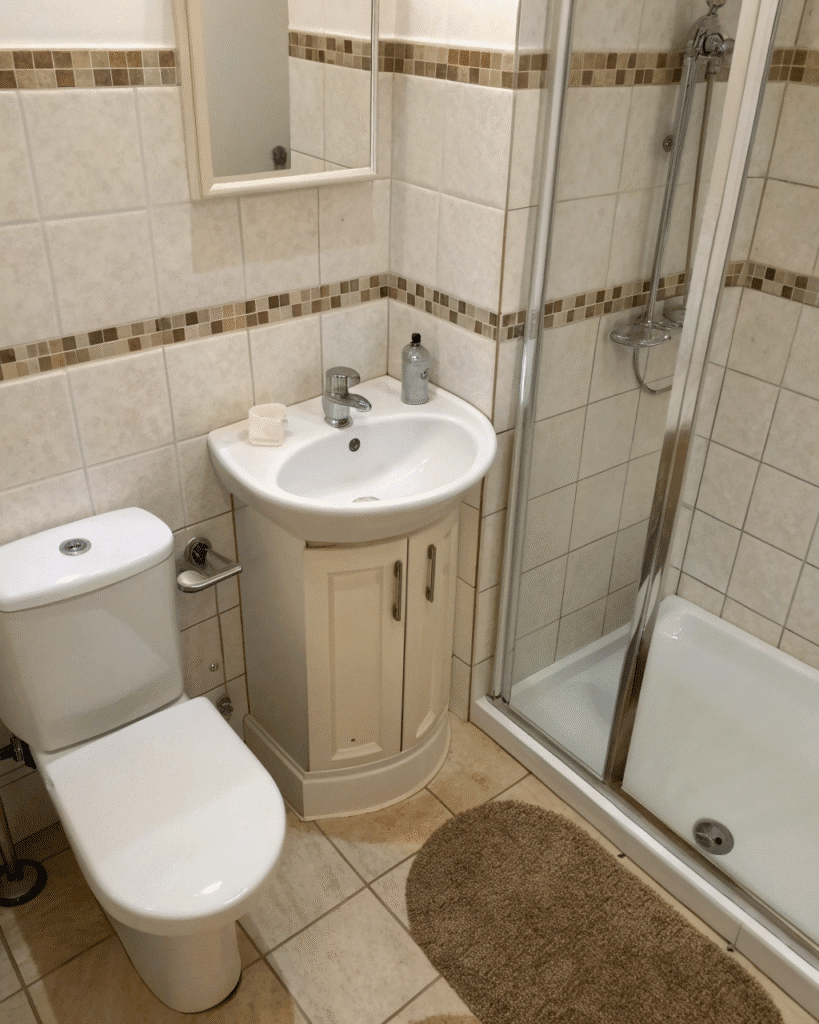
Corner sinks make great use of awkward angles and free up valuable square footage.
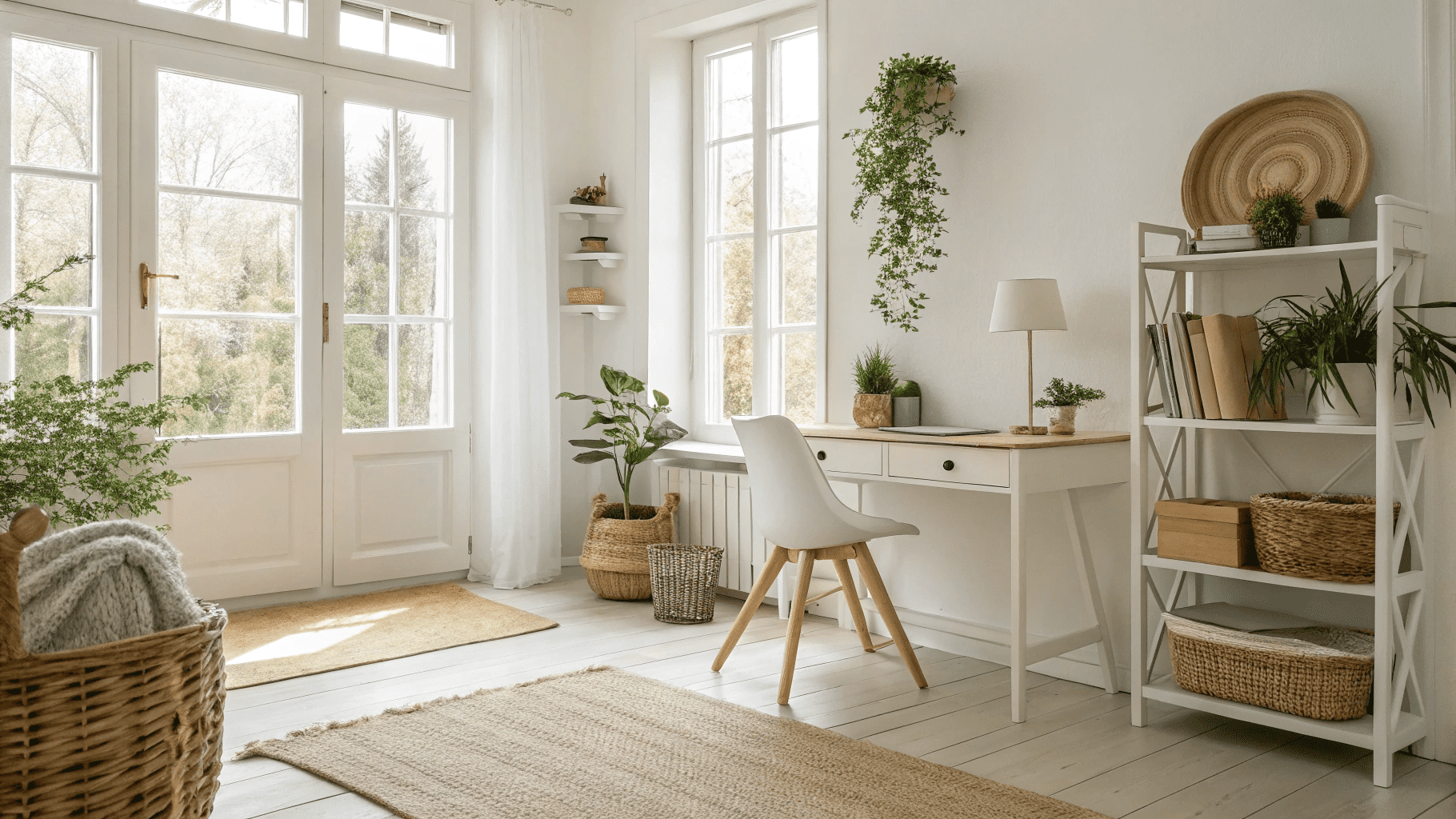
Pro Tip: Pair with a slim mirror to keep the wall looking light.
3. Install a Walk-In Glass Shower
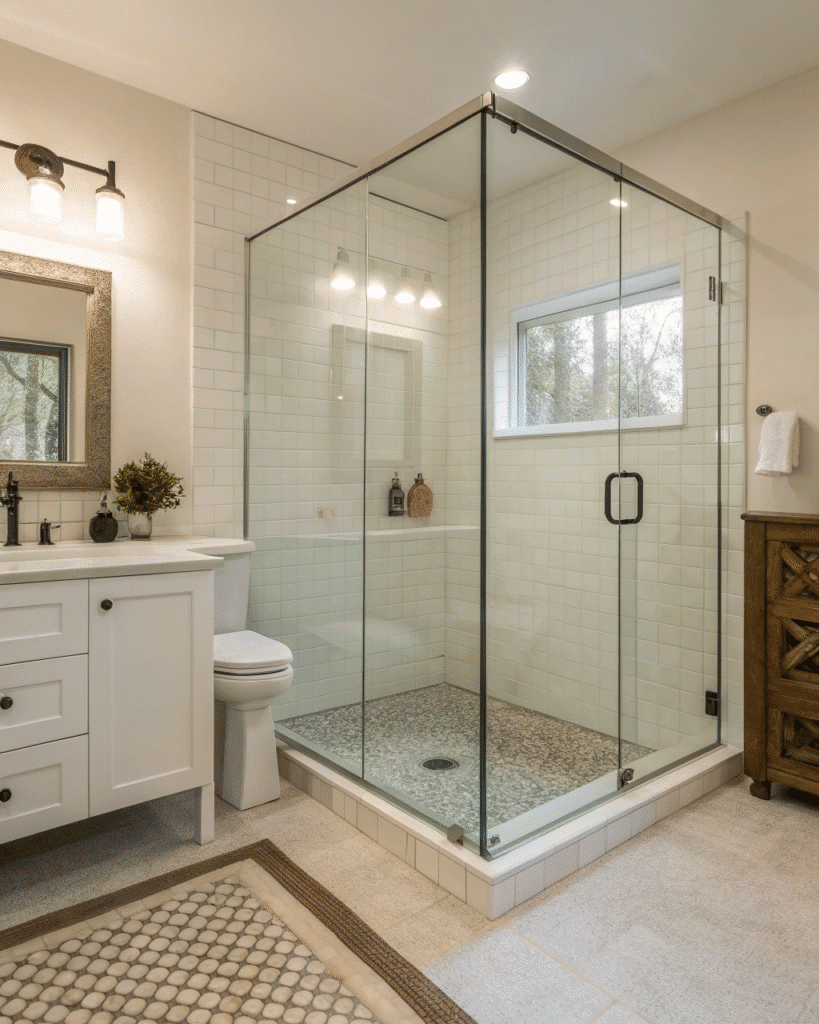
Glass shower walls eliminate visual barriers, making the bathroom feel much wider.
Pro Tip: Go for frameless glass for the cleanest, most spacious look.
4. Use a Wall-Mounted Toilet
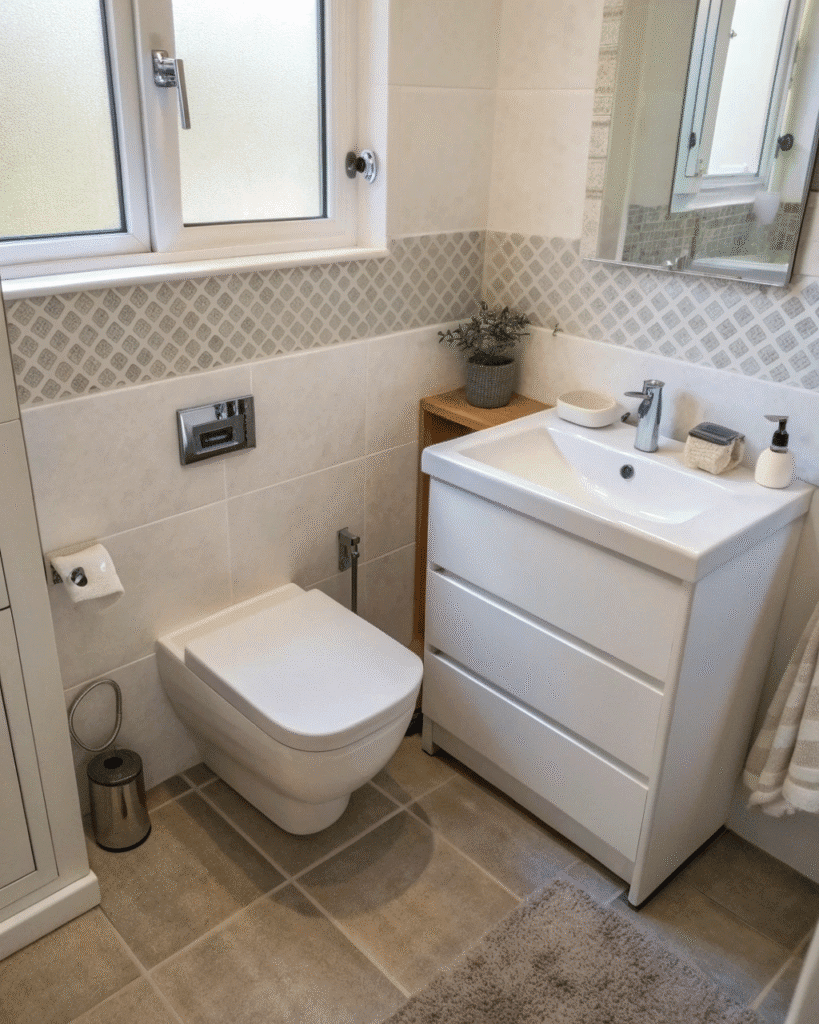
Wall-hung toilets save floor space and create a cleaner, floating effect.
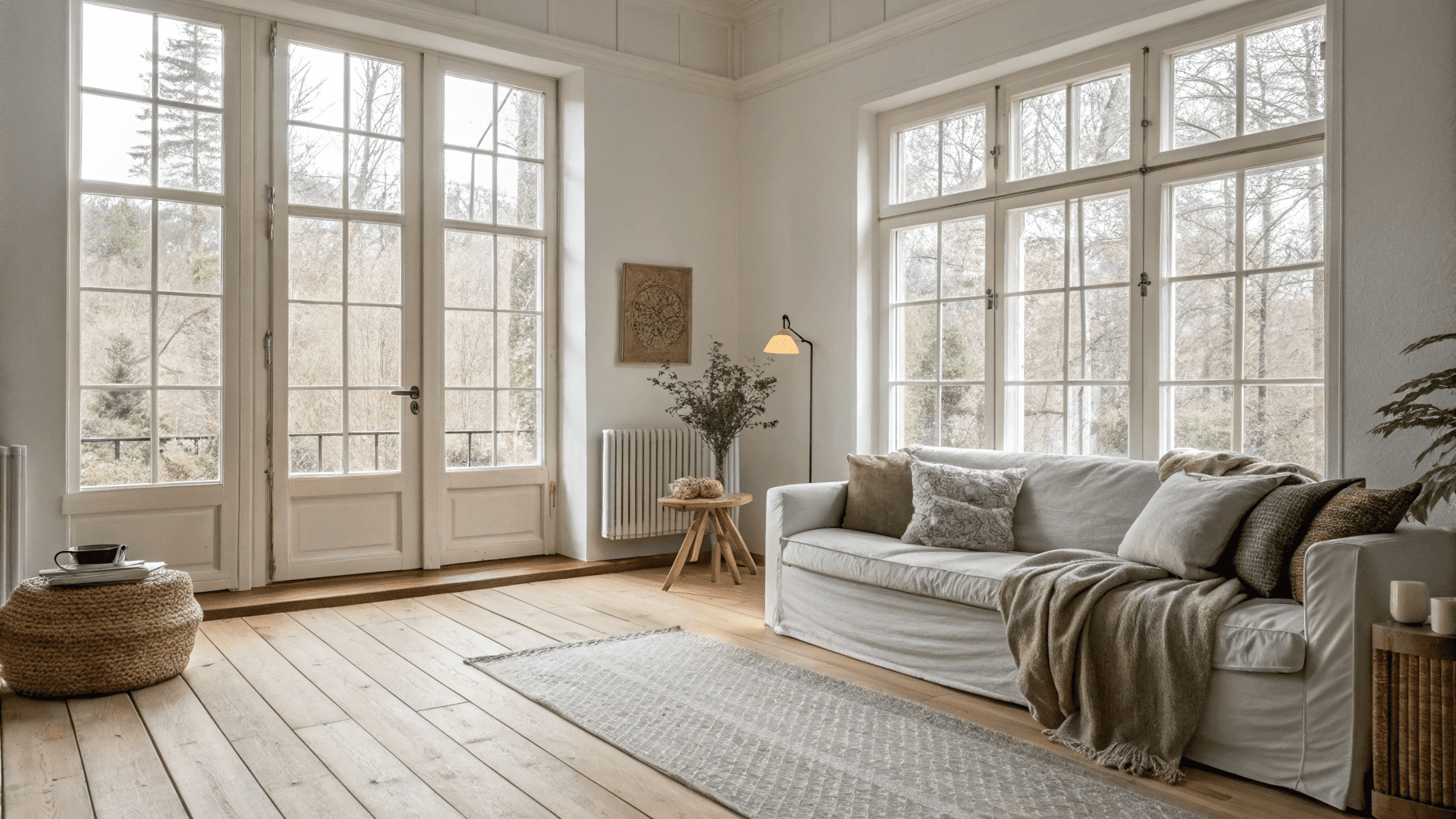
Pro Tip: Keep wall colors light to enhance the airy atmosphere.
5. Try a Sliding Door or Pocket Door
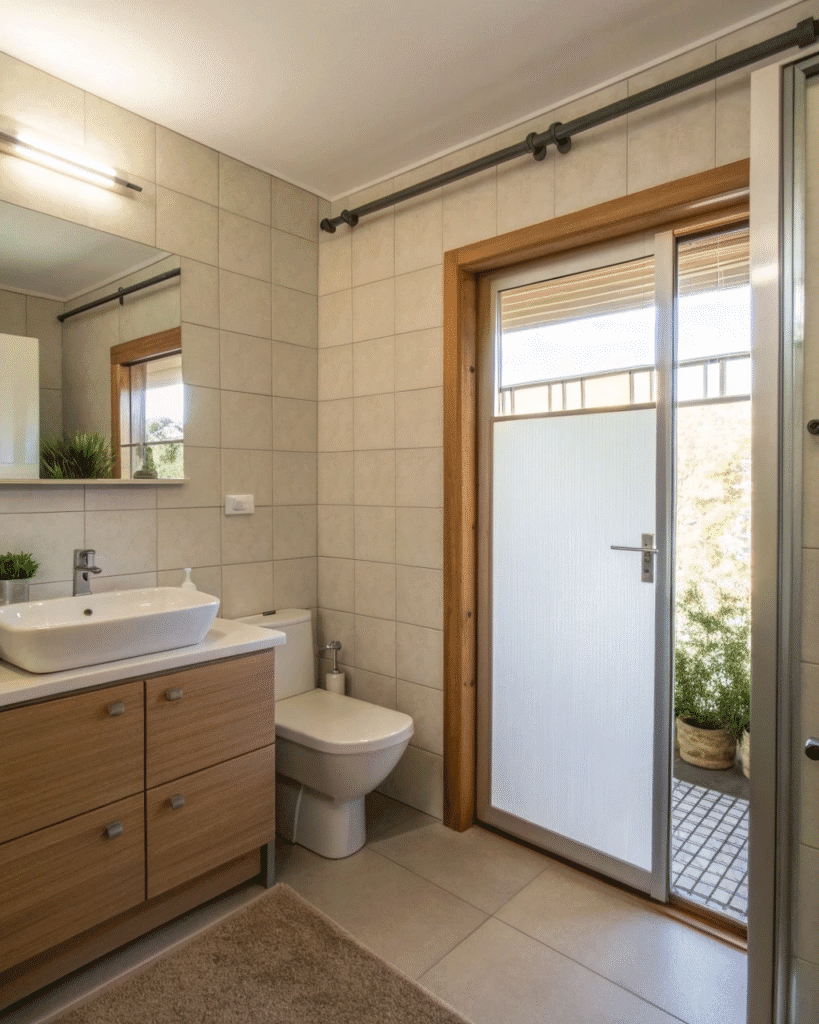
Sliding doors free up floor space that would normally be taken up by swinging doors.
Pro Tip: Use frosted glass if you want both light and privacy.
6. Keep the Shower and Floor Tiles Continuous
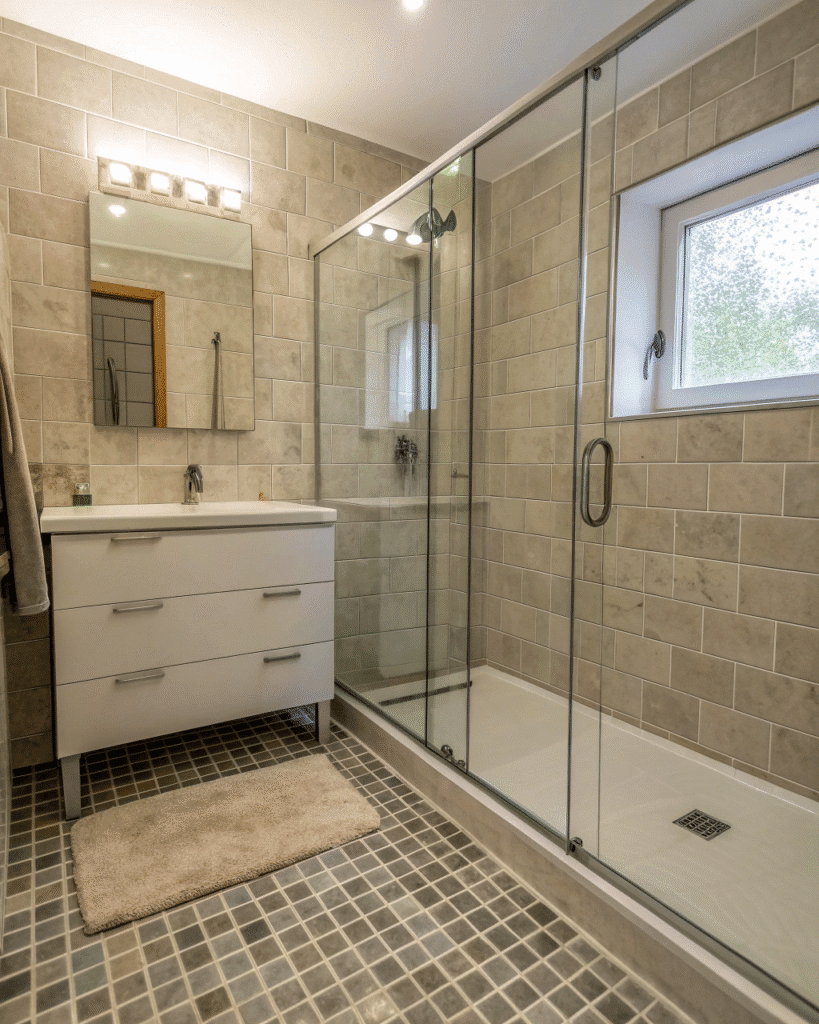
Extending the same tiles across the bathroom helps everything flow seamlessly.
Pro Tip: Choose light or neutral tiles to visually expand the space.
7. Use Vertical Storage Instead of Floor Units
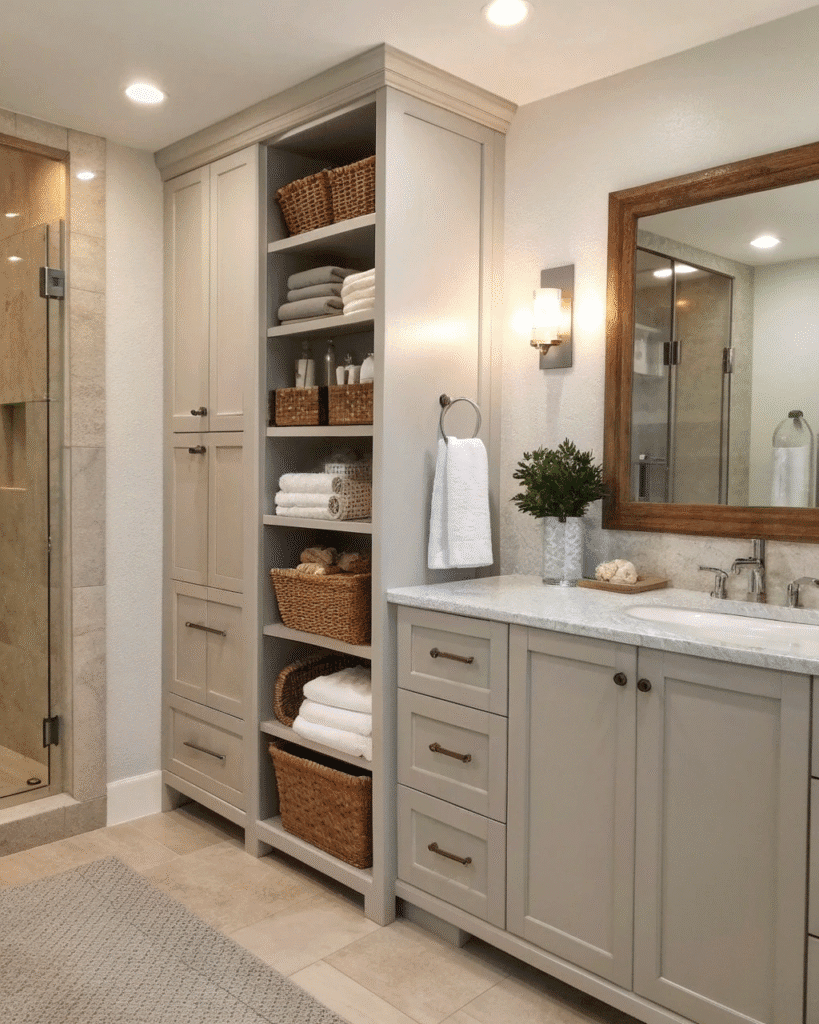
Tall, slim cabinets or shelving utilize vertical space without crowding the room.
Pro Tip: Keep the shelves minimally styled to avoid visual clutter.
8. Add a Large Mirror to Expand the Room
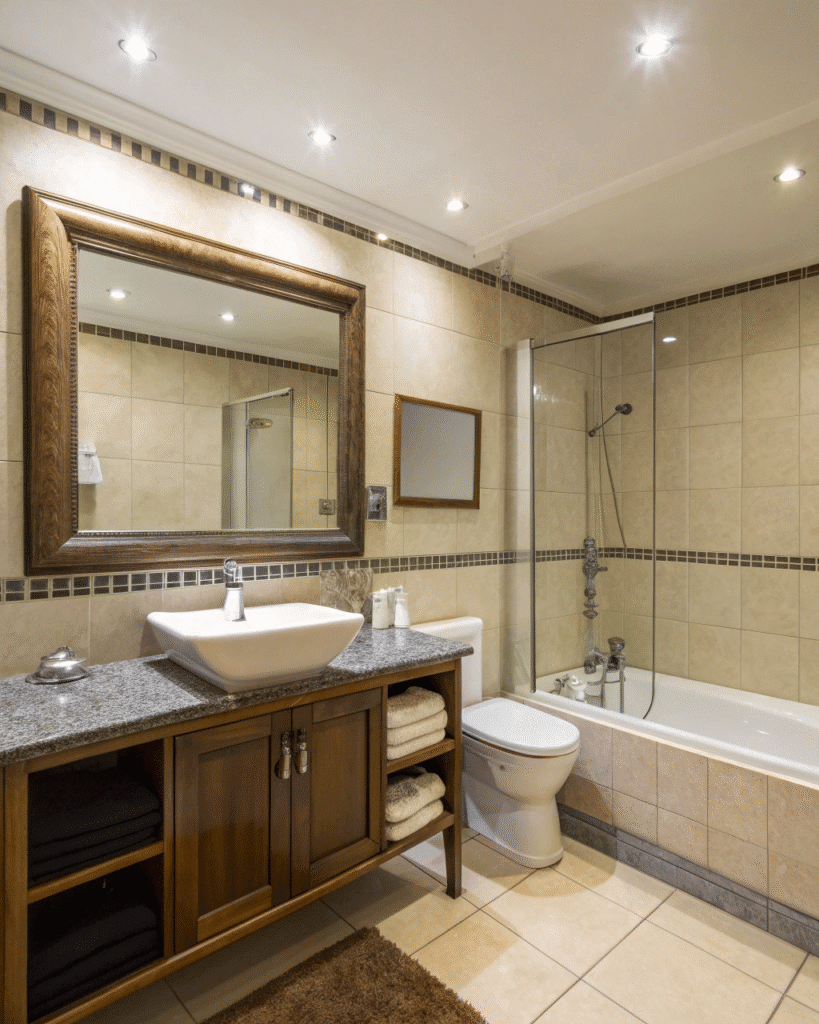
Mirrors reflect light and visually double your bathroom’s size.
Pro Tip: Choose a mirror that spans the entire vanity for maximum effect.
9. Choose a Compact Shower-Tub Combo
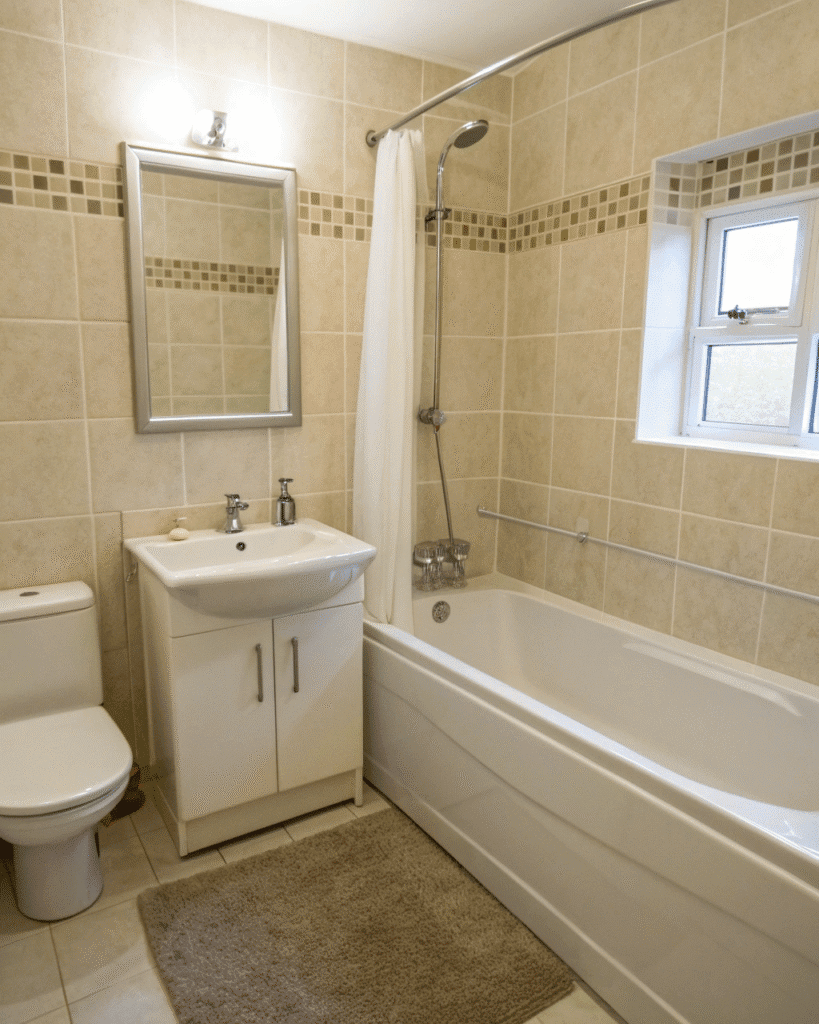
If you need both, a space-saving combo placed along one wall works beautifully.
Pro Tip: Install a clear glass panel instead of a curtain to keep things open.
10. Position the Vanity Opposite the Door
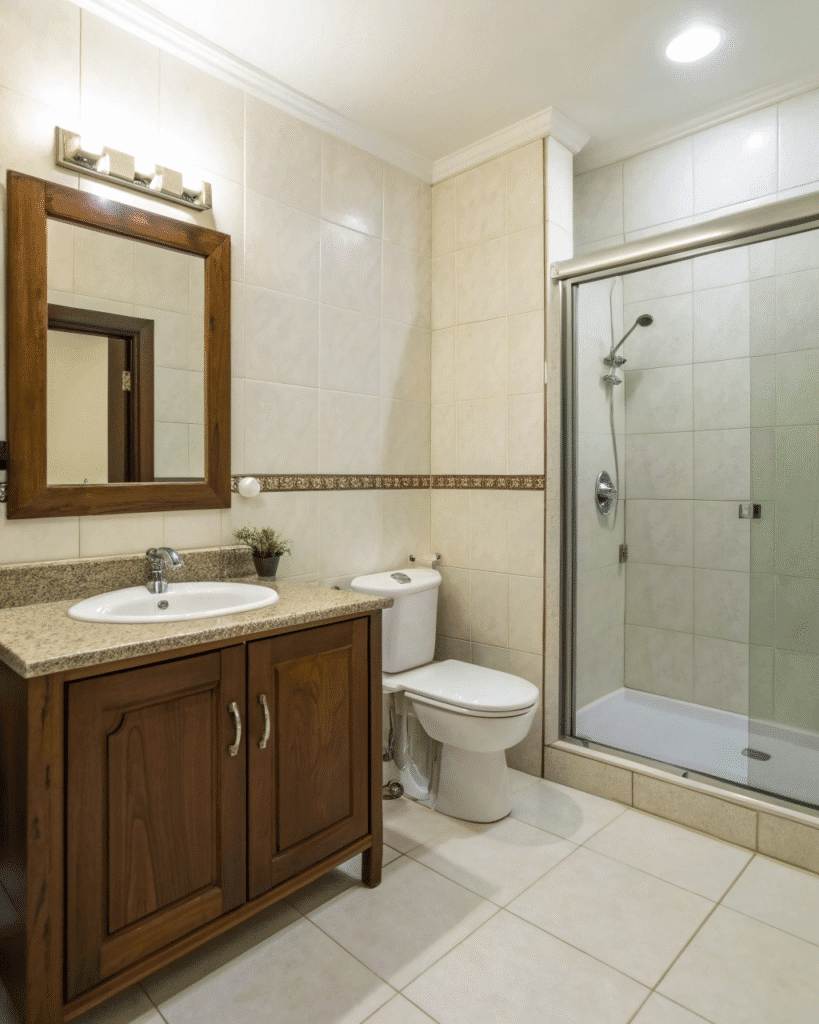
Placing the vanity directly facing the entrance makes the bathroom feel larger immediately.
Pro Tip: Choose a vanity with soft edges to keep movement smooth.
11. Add Recessed Shelving
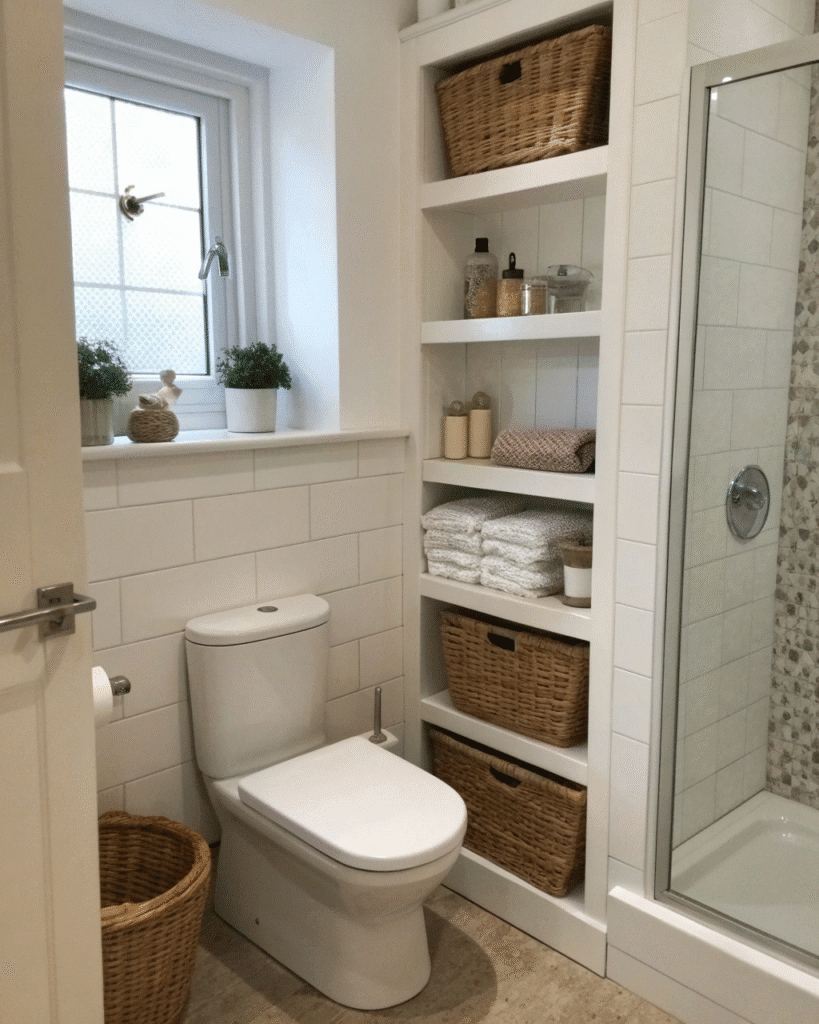
Built-in shelves inside the shower or above the toilet create storage without taking up space.
Pro Tip: Use the same tile inside the niche for a clean, integrated look.
12. Keep the Color Palette Light and Minimal
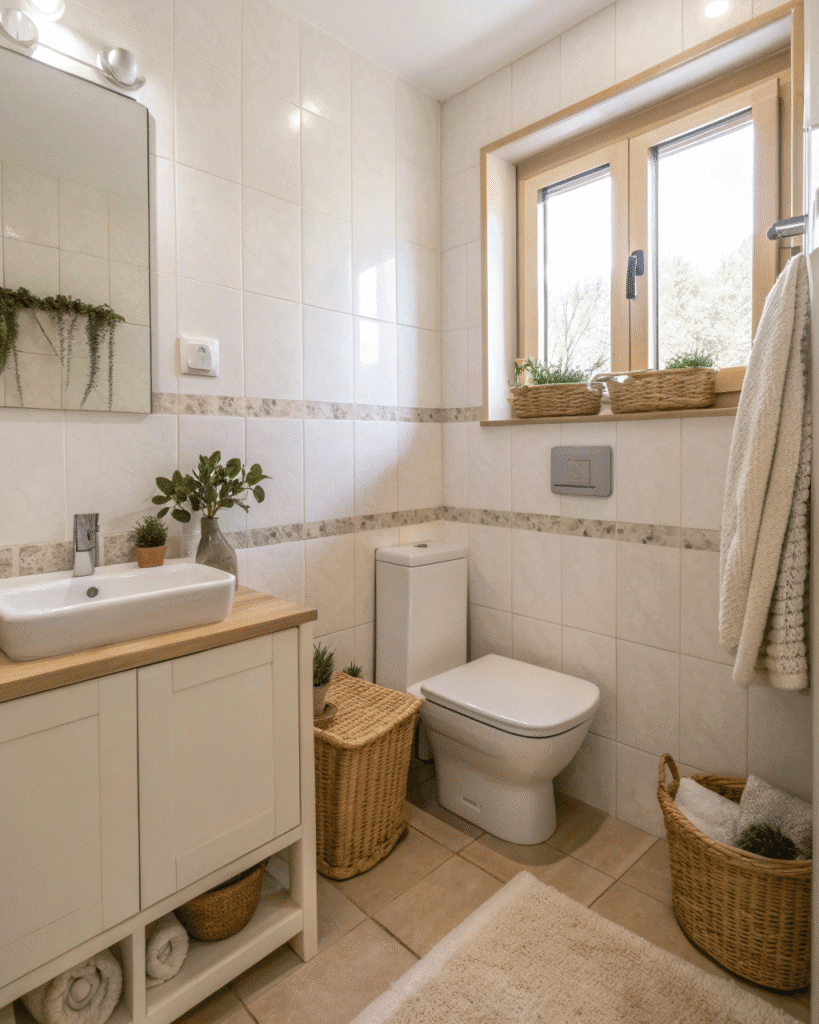
Soft tones help small bathrooms feel airy and uncluttered.
Pro Tip: Add subtle texture through towels, mats, or baskets to keep it interesting.
13. Use a Narrow Vanity or Pedestal Sink
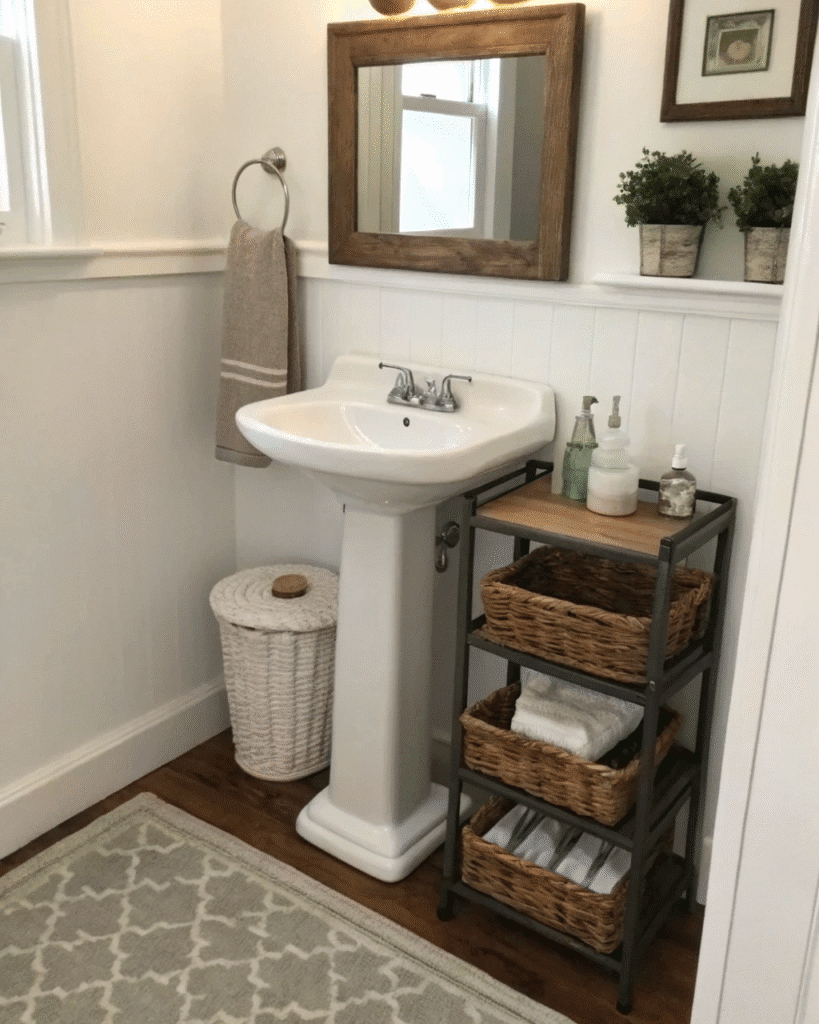
Narrow vanities provide just enough storage without making the room feel tight.
Pro Tip: Pair with a large mirror to help compensate for the smaller vanity.
14. Mount the Faucet on the Wall
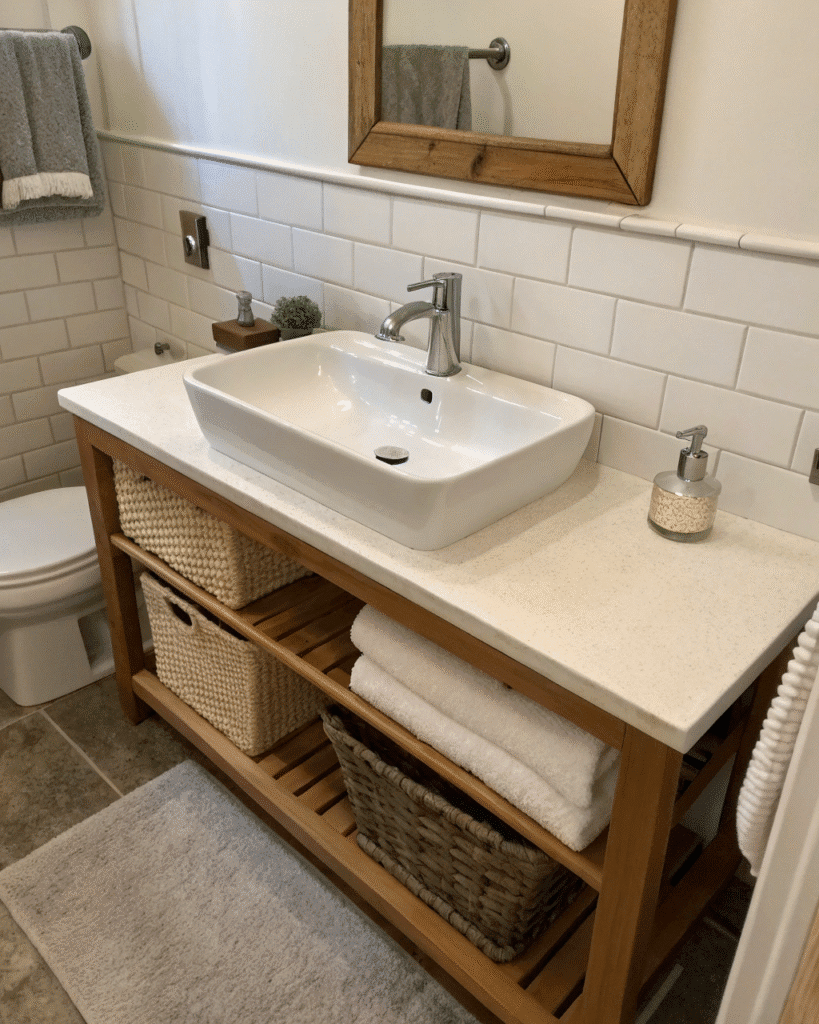
Wall-mounted faucets allow for a shallower sink and more counter space.
Pro Tip: Pair with a rectangular sink bowl to maintain a modern feel.
15. Add Backlit Mirrors or Lighting Strips
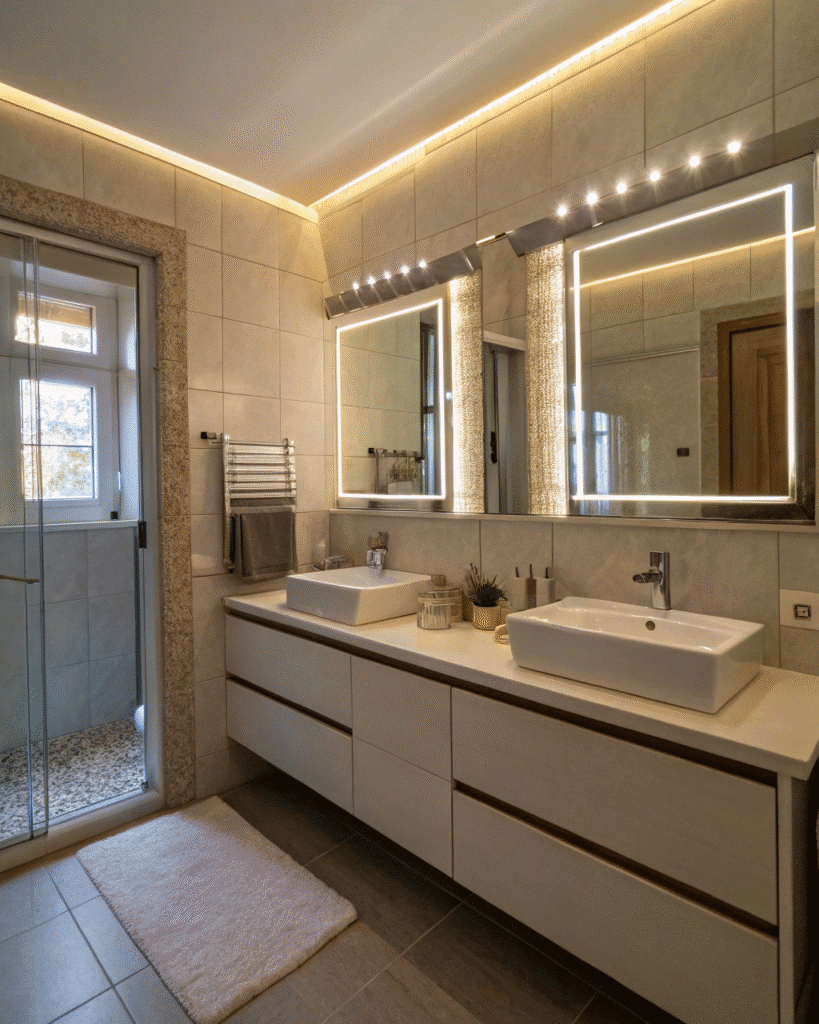
Hidden lighting creates a subtle glow that breaks shadows and expands the room visually.
Pro Tip: Warm LED lighting keeps the bathroom cozy and inviting.
16. Install a Shower Curtain Close to the Ceiling
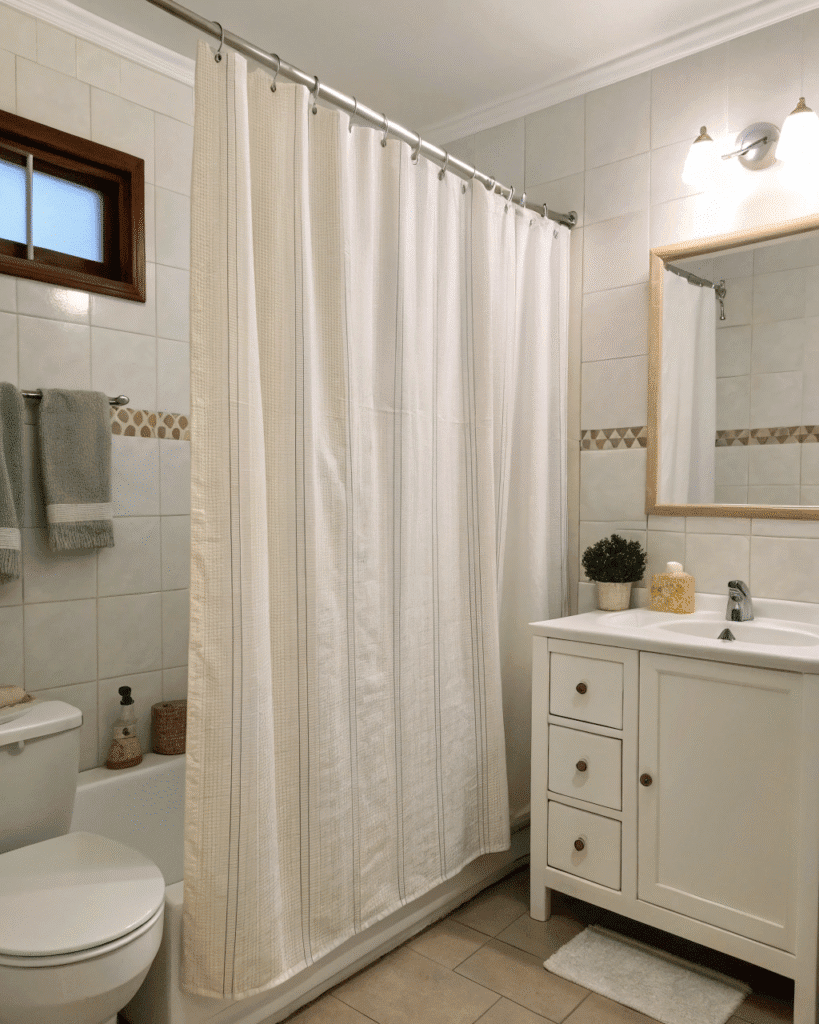
Raising the curtain height draws the eye upward, making the room feel taller.
Pro Tip: Choose a simple, light-toned fabric for a breezy look.
17. Keep the Floor as Open as Possible
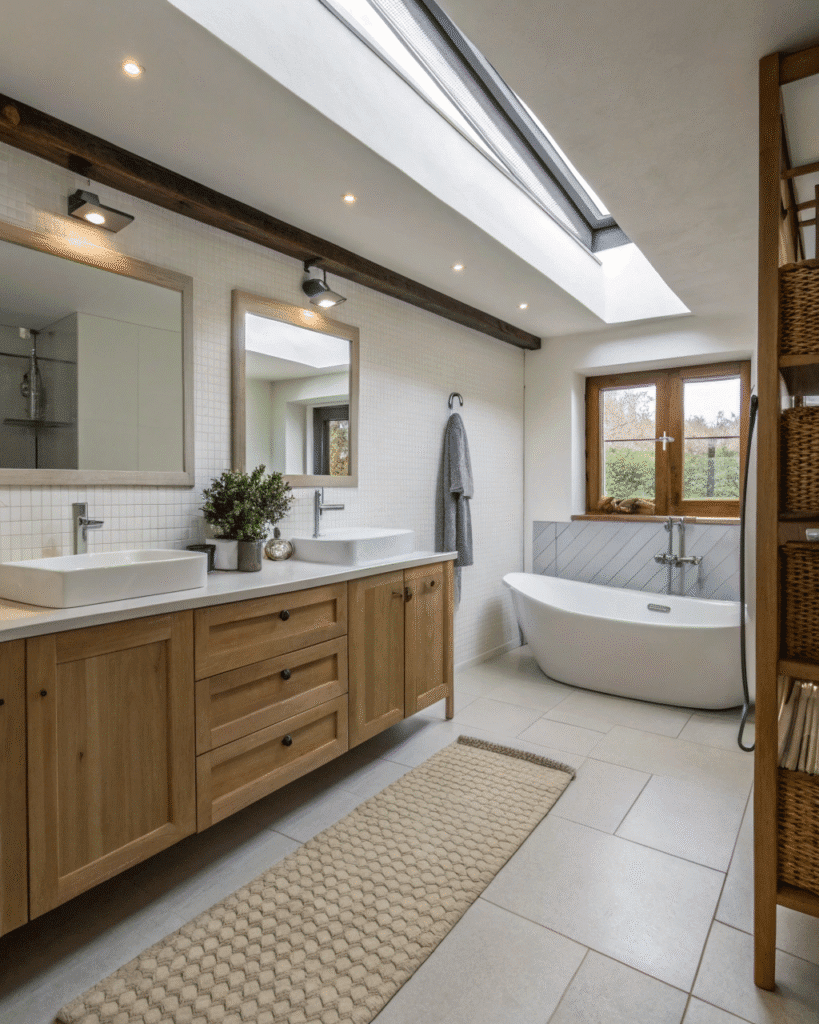
Avoid bulky furniture that interrupts the flow, open floor space helps the bathroom breathe.
Pro Tip: Use a small, airy mat instead of a thick rug to maintain openness.
18. Use Large Tiles for a Seamless Look
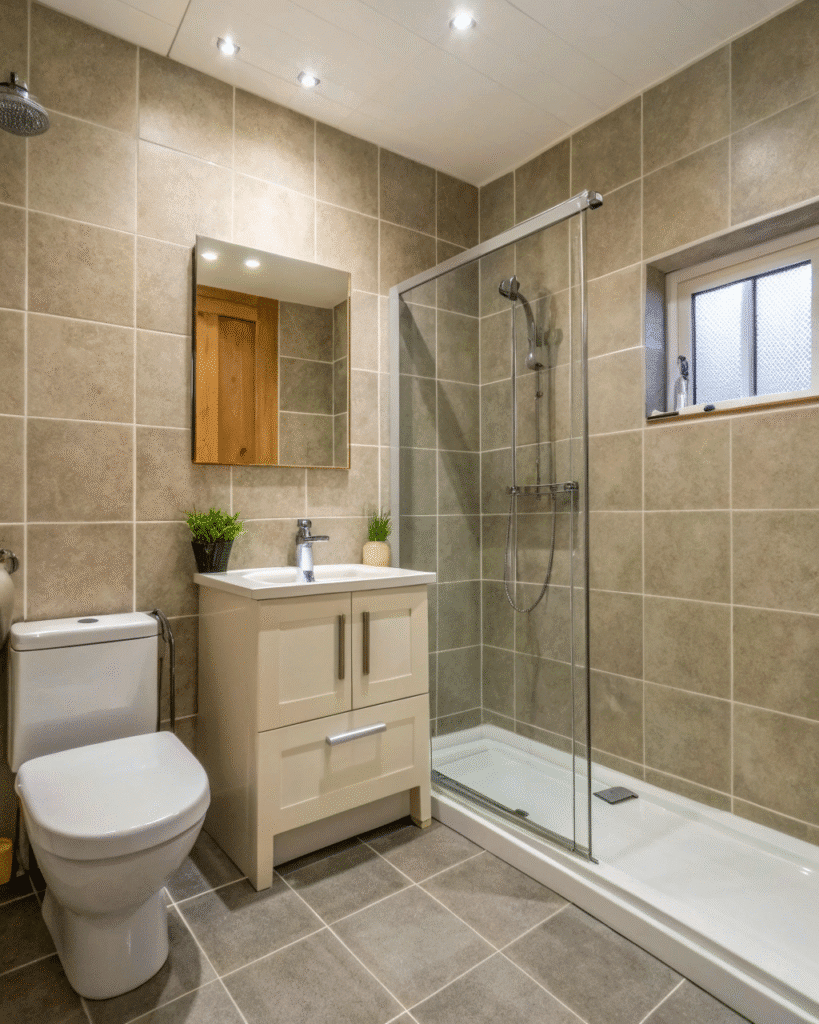
Bigger tiles reduce grout lines, helping the bathroom feel wider and smoother.
Pro Tip: Matte finishes with subtle patterns give a modern, spacious feel.
Final Thoughts
Small bathrooms can feel surprisingly spacious with the right layout choices.
By using vertical space, choosing floating fixtures, sticking to light tones, and keeping the design clean and intentional, you can create a bathroom that feels open, calming, and incredibly functional.
A few smart adjustments can transform even the smallest room into a refreshing retreat.
FAQs
1. What color makes a small bathroom feel bigger?
Light tones like white, cream, sage, and soft gray work best.
2. Are glass showers good for small bathrooms?
Yes, they remove visual barriers and open up the entire room.
3. How do I add storage without cluttering the space?
Use recessed niches, tall shelving, or floating cabinets.
4. Can small bathrooms have bathtubs?
Absolutely, just choose compact tub-shower combos.
5. What flooring works best in a small bathroom?
Large-format tiles or continuous tile patterns make the room feel bigger.

- 12 Small Guest Room Ideas People Love - March 13, 2026
- 18 Thoughtful Guest Room Ideas Your Friends and Family Will Appreciate - March 13, 2026
- 16 Easy Ways to Make Your Guest Bedroom Feel More Inviting - March 13, 2026