16+ Open-Shelf Styling Ideas That Look Designer
Open shelves can either look beautifully curated or quickly become visual clutter, the difference is in how you style them.
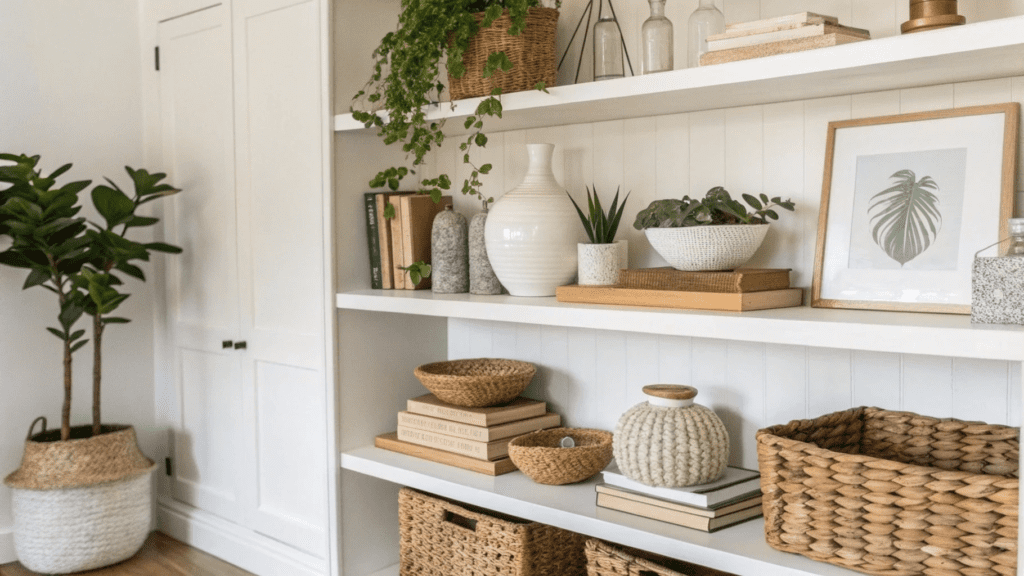
Designer-style shelving focuses on balance, spacing, repetition, and contrast. Instead of filling every inch, the goal is to create intentional groupings that feel airy and layered.
Here are open-shelf styling ideas that instantly elevate your shelves and give them a polished, designer look.
1. Follow the Rule of Three per Section
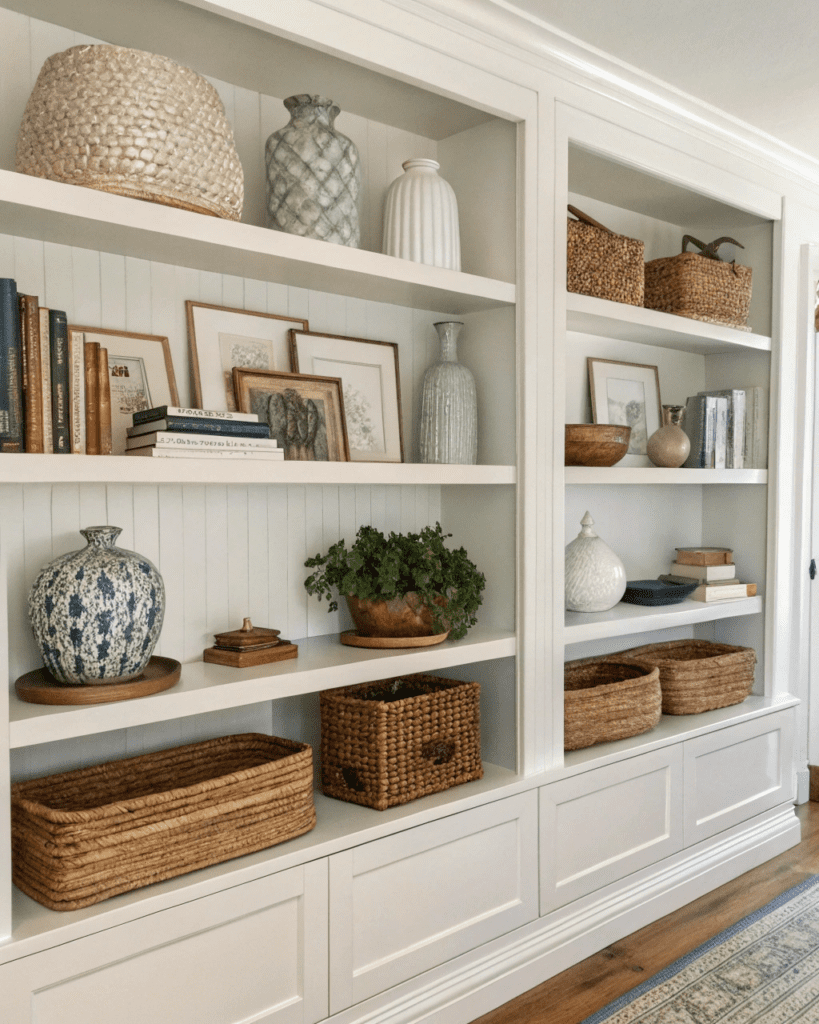
Group items in threes for natural balance.
Love Chic Living Club?
Add us as one of your preferred Google sources and discover more home decor, DIY, outdoor, and lifestyle inspiration from us.
- Three objects per cluster
- Vary heights within the trio
- Avoid single scattered items
2. Mix Vertical and Horizontal Stacks
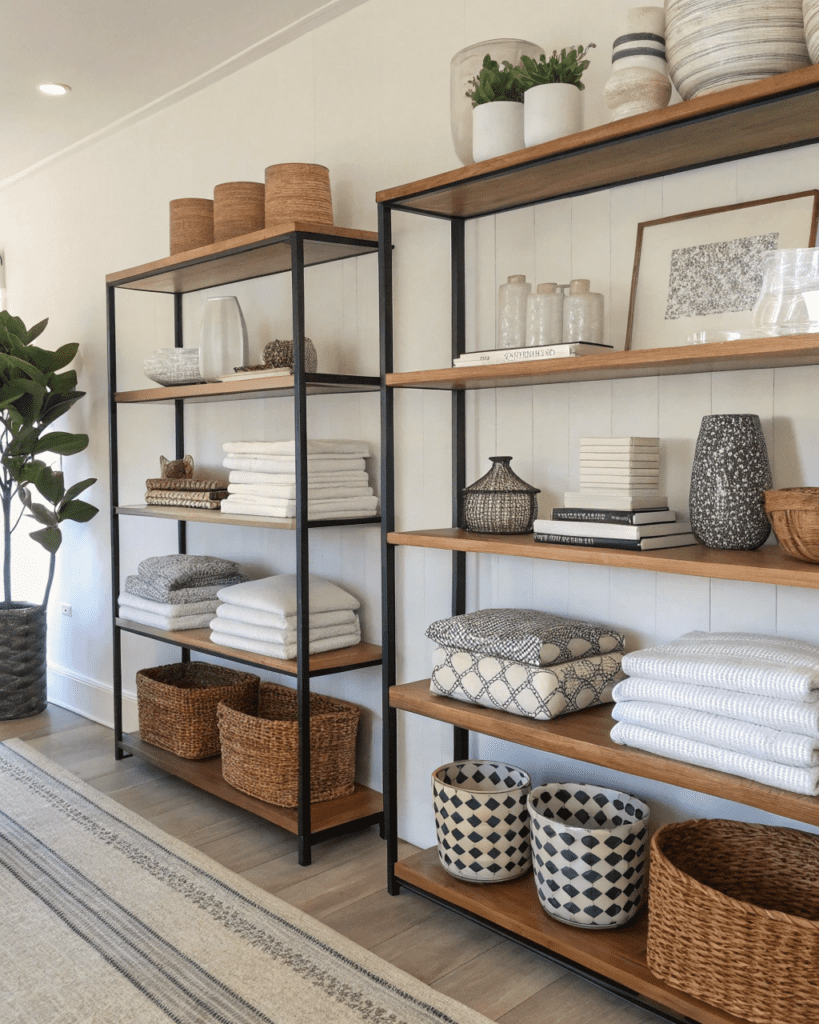
Combine upright and flat elements.
- Vertical books plus horizontal stacks
- Adds rhythm and structure
- Prevents flat lines
3. Leave Visible Negative Space
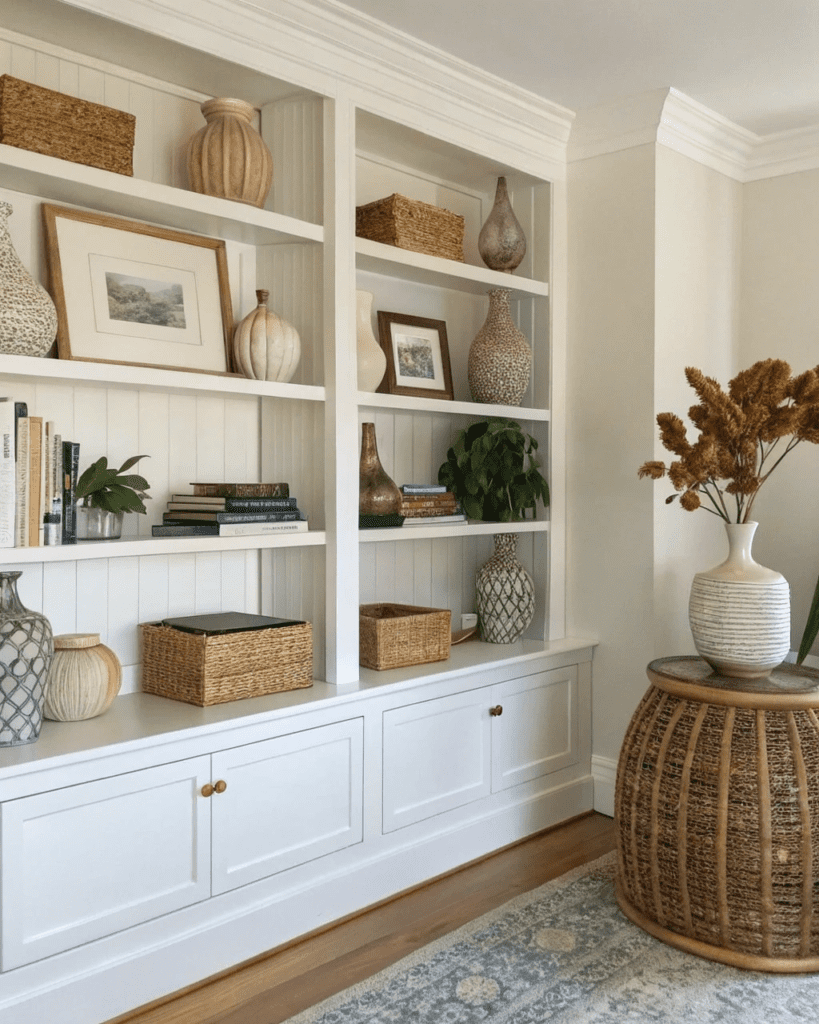
Don’t fill every gap.
- Empty space adds elegance
- Helps items stand out
- Prevents crowded feel
4. Repeat One Material Throughout
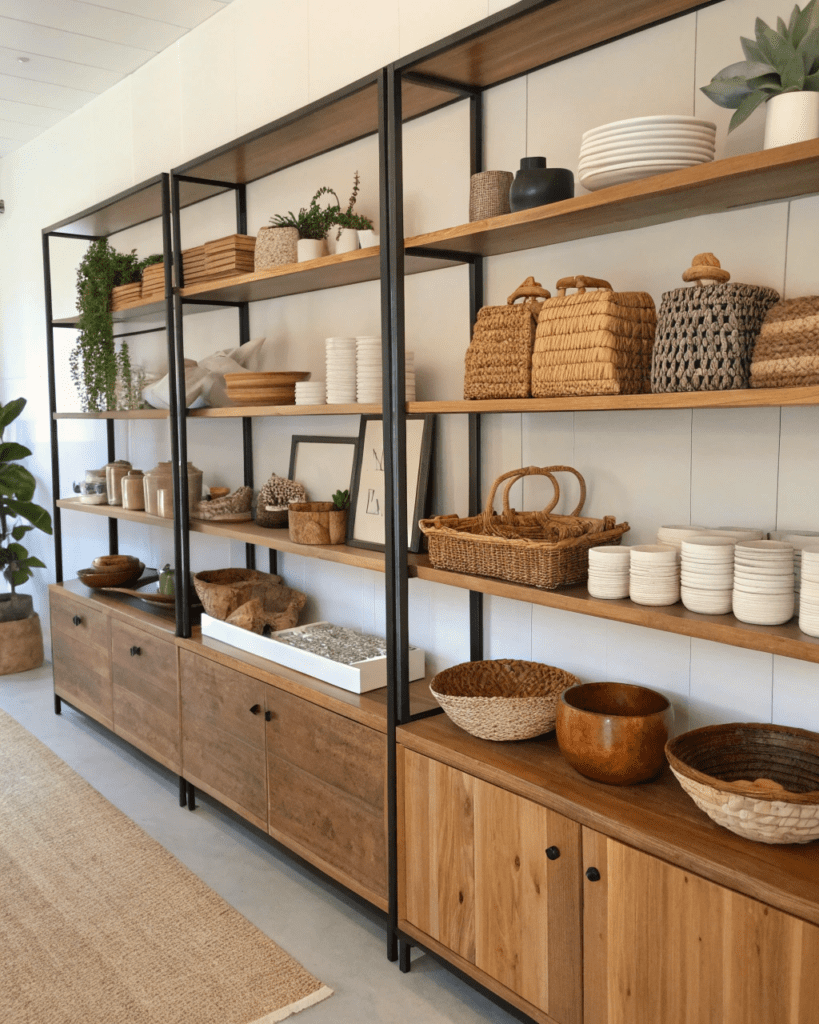
Echo one texture across shelves.
- Ceramic, wood, or metal
- Creates cohesion
- Feels intentional
5. Use Books as Styling Platforms
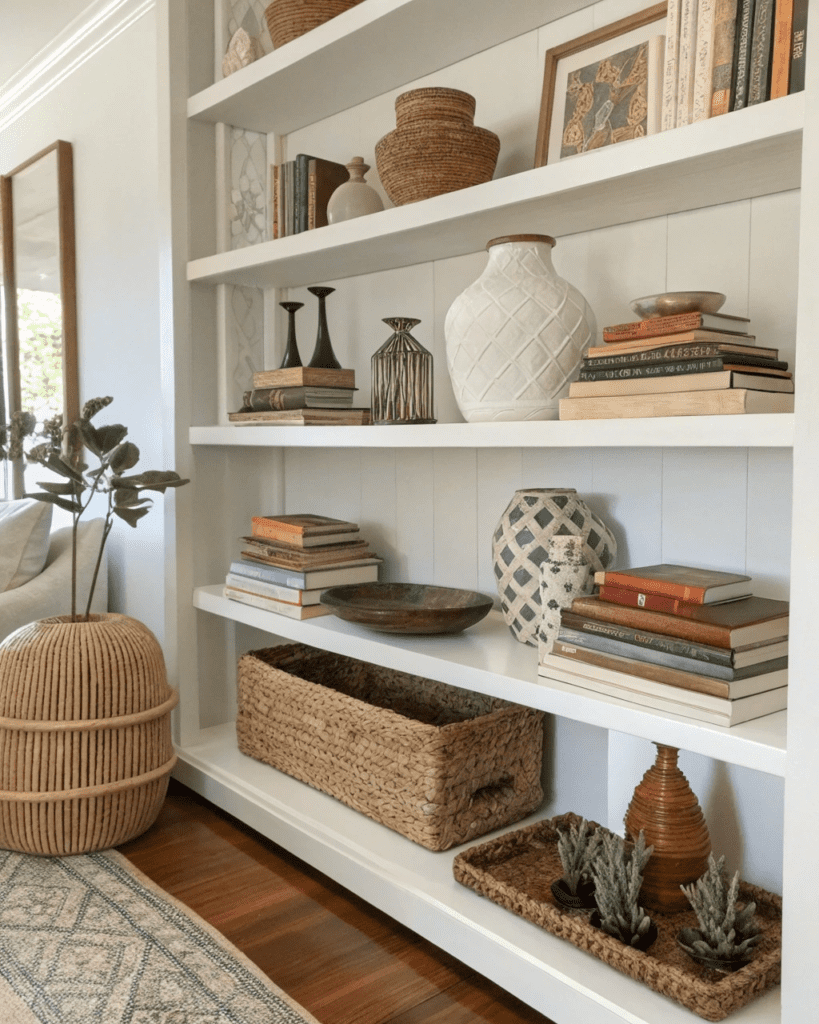
Stack books and place decor on top.
- Adds height quickly
- Grounds small objects
- Easy to adjust
6. Add One Trailing Element Only
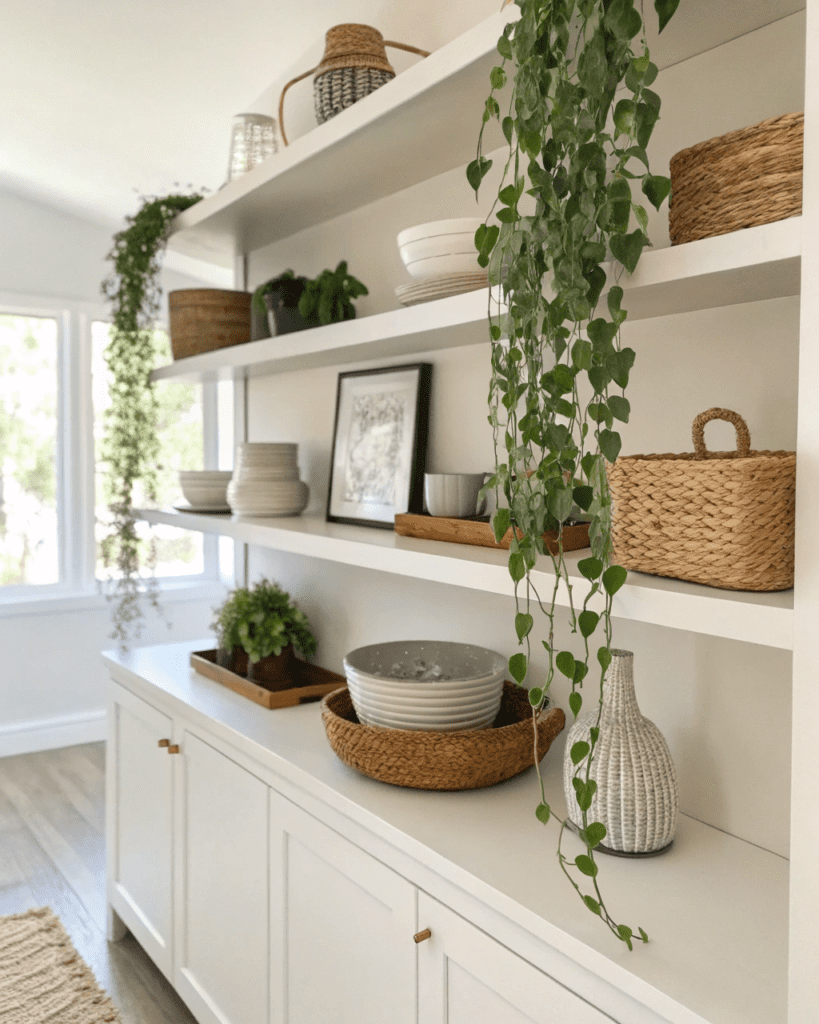
Use a single trailing piece.
- Plant or draped bead strand
- Adds movement
- Avoid multiple trailers
7. Keep a Tight Color Palette
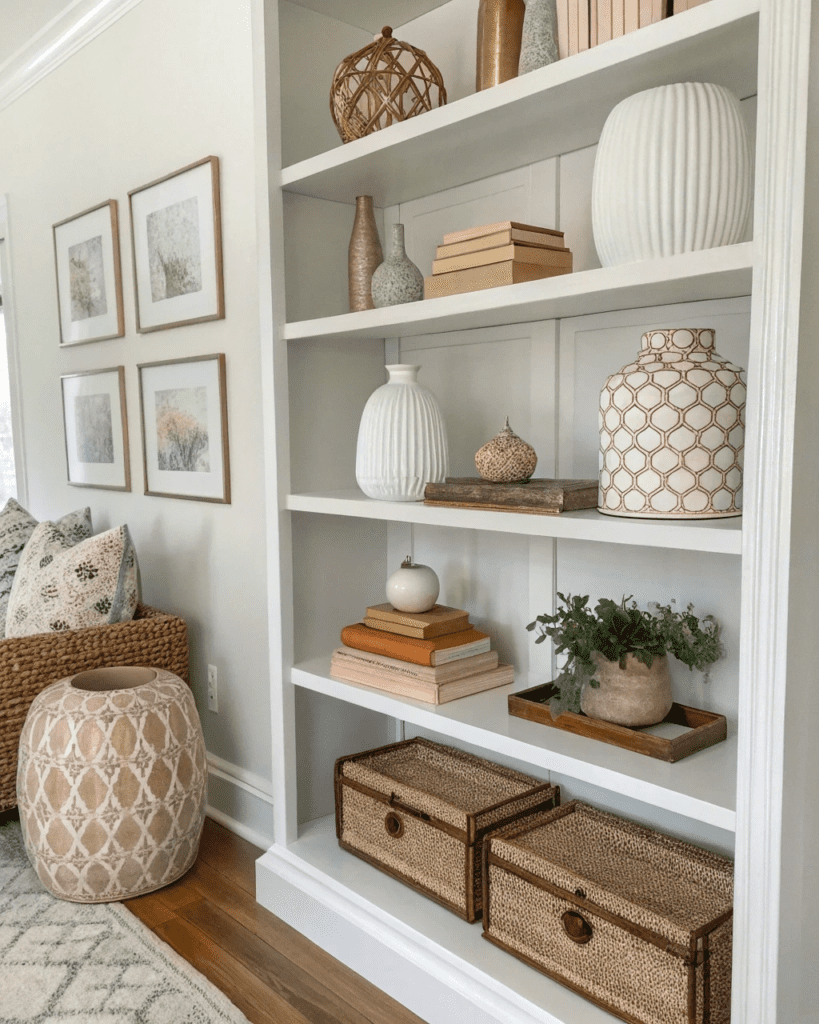
Limit color variation.
- Two to four colors max
- Supports visual calm
- Looks curated
8. Vary Heights Dramatically
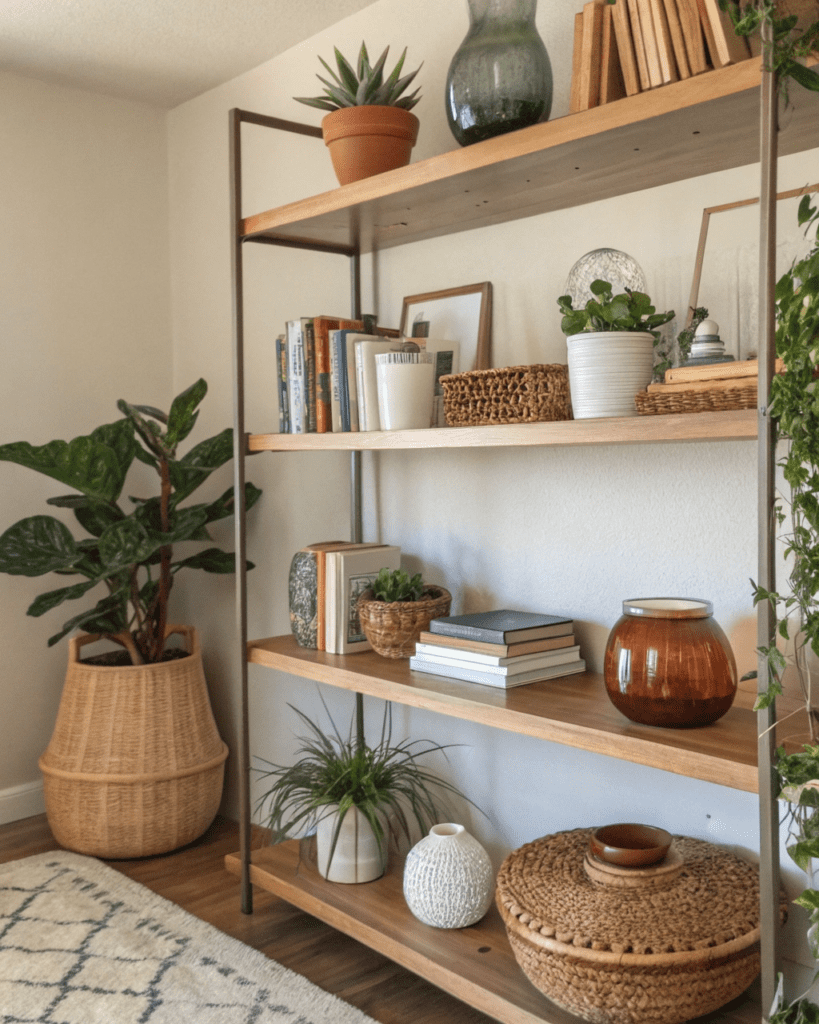
Use tall and short together.
- Tall vase beside low bowl
- Builds contrast
- Avoid same-height rows
9. Lean Art Instead of Hanging Everything
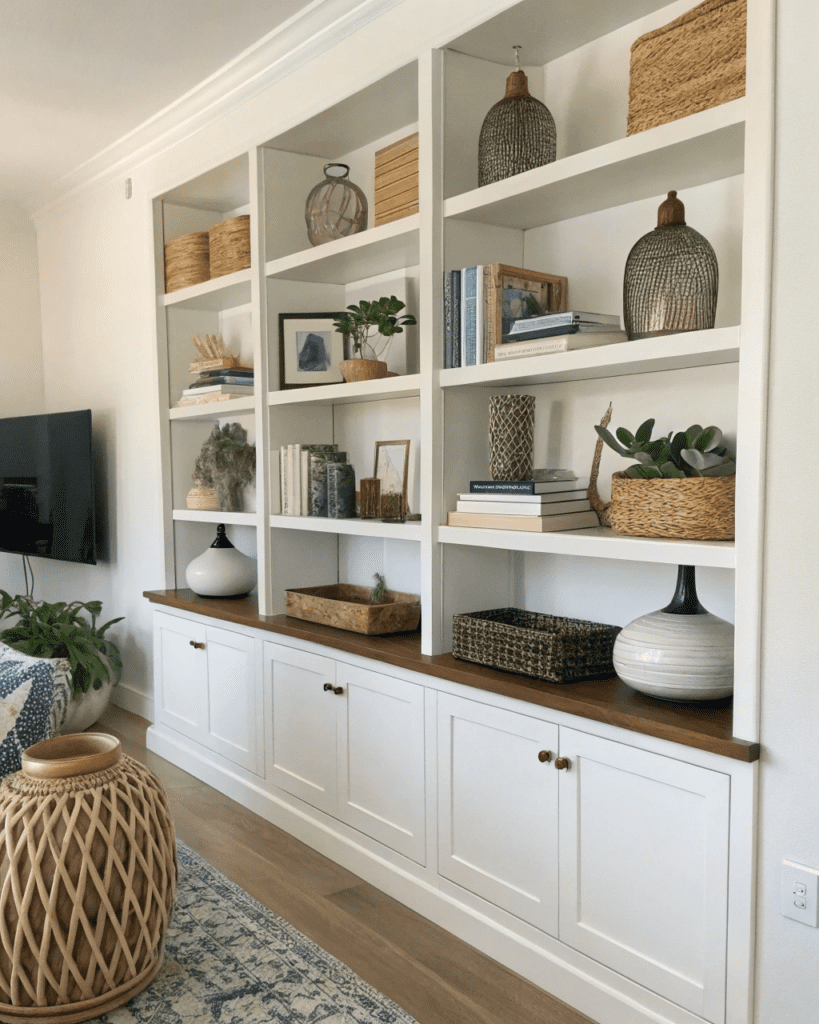
Lean frames against the wall.
- Softer designer look
- Easy to swap
- Adds depth layers
10. Use Odd Numbers in Groupings
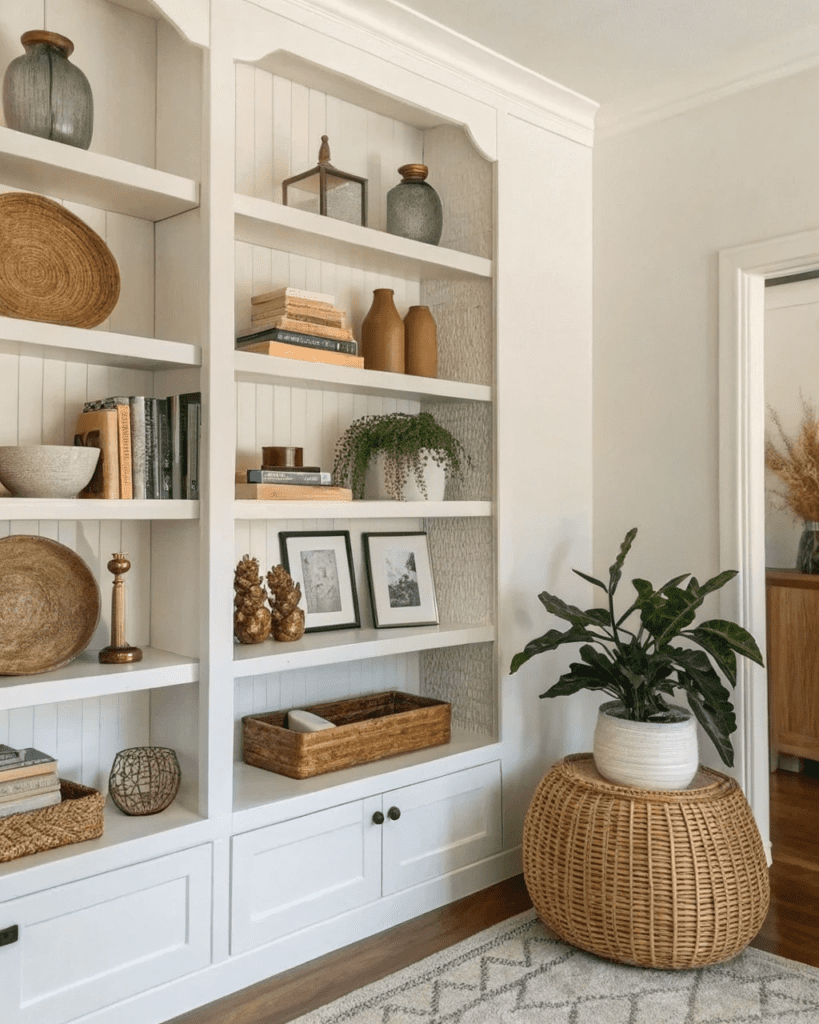
Odd counts feel more natural.
- 3 or 5 objects
- Better visual flow
- Less rigid than even sets
11. Combine Closed and Open Storage
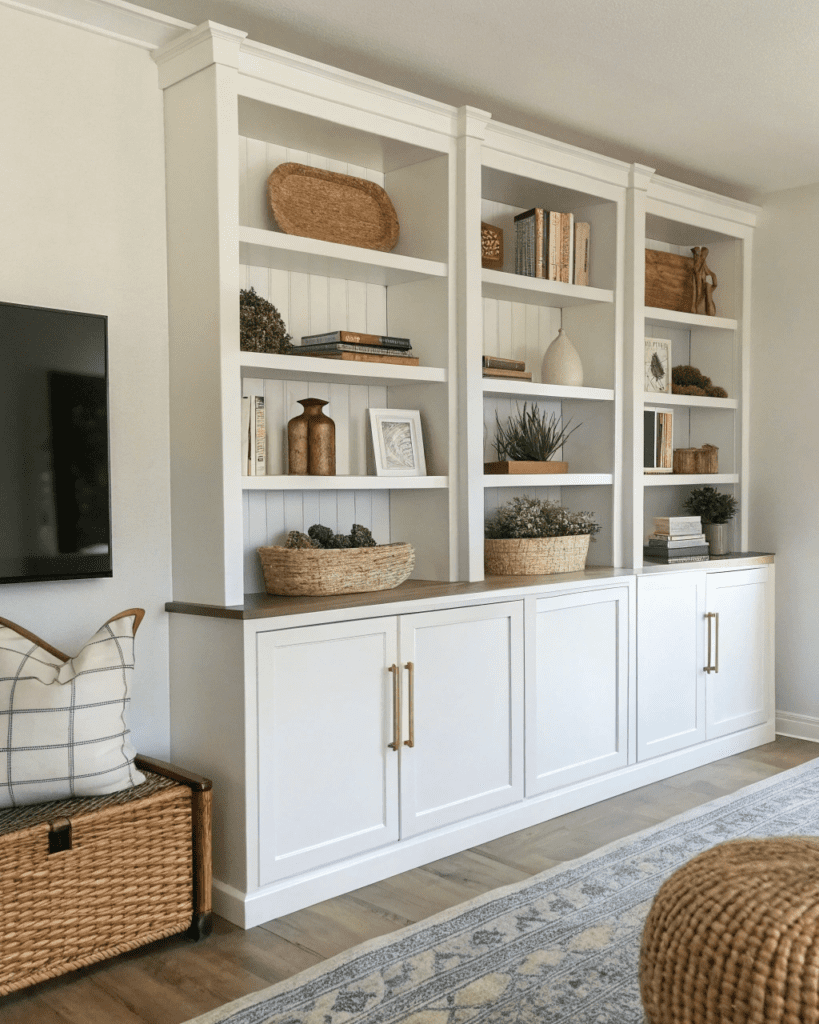
Mix boxes with display items.
- Hide visual clutter
- Adds structure
- Improves function
12. Layer Front-to-Back Depth
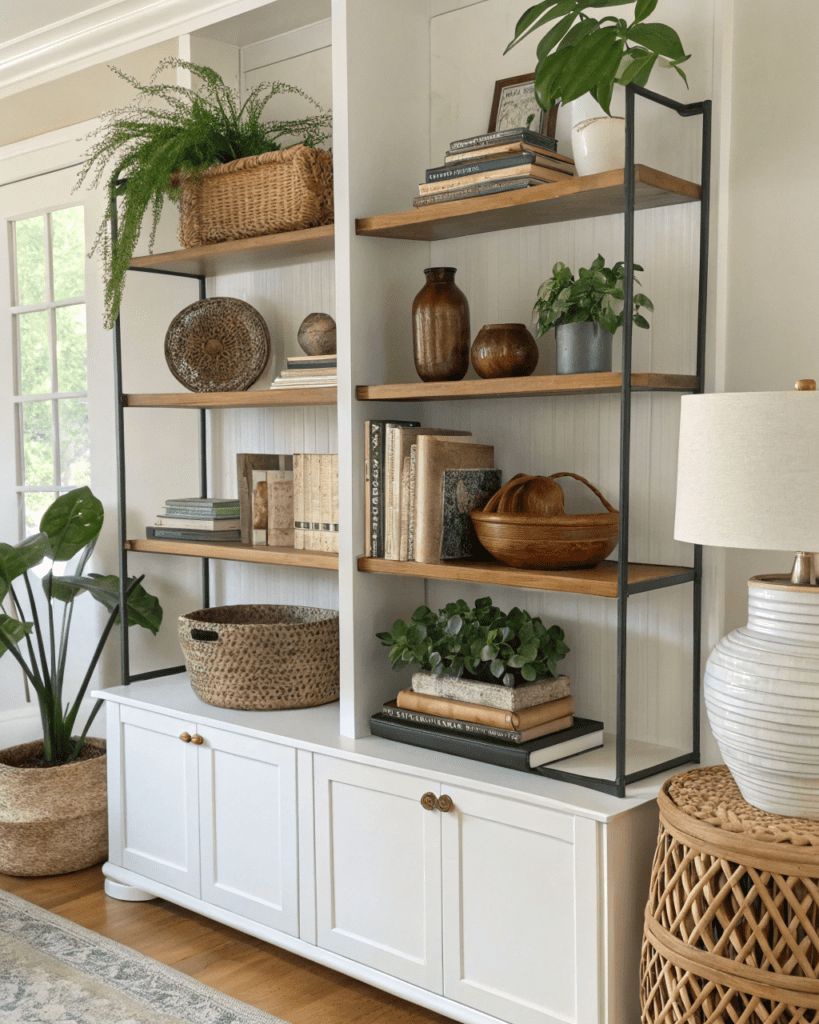
Place items slightly overlapping.
- Frame behind vase
- Bowl in front of books
- Creates dimension
13. Add One Sculptural Object per Shelf
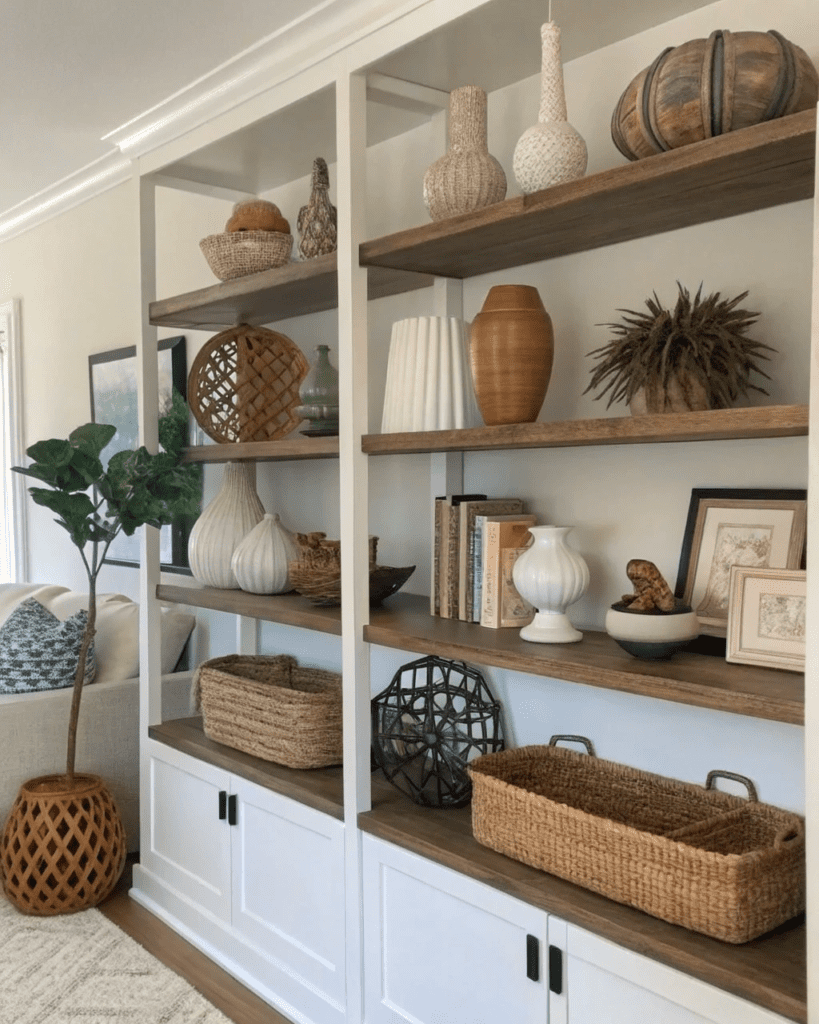
Include a statement form.
- Bust, abstract piece, or vessel
- Acts as focal point
- Avoid multiple statement pieces together
14. Use Matching Containers for Small Items
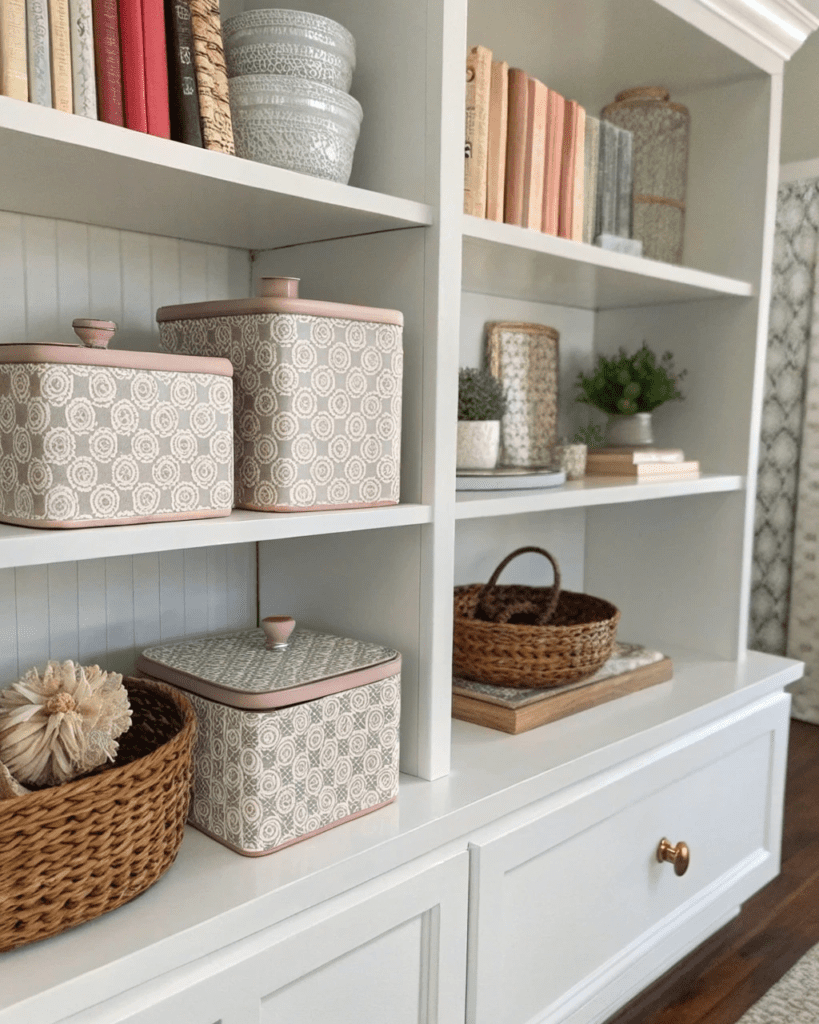
Corral small objects uniformly.
- Matching jars or boxes
- Reduces chaos
- Looks organized
15. Anchor Each Shelf With One Larger Piece
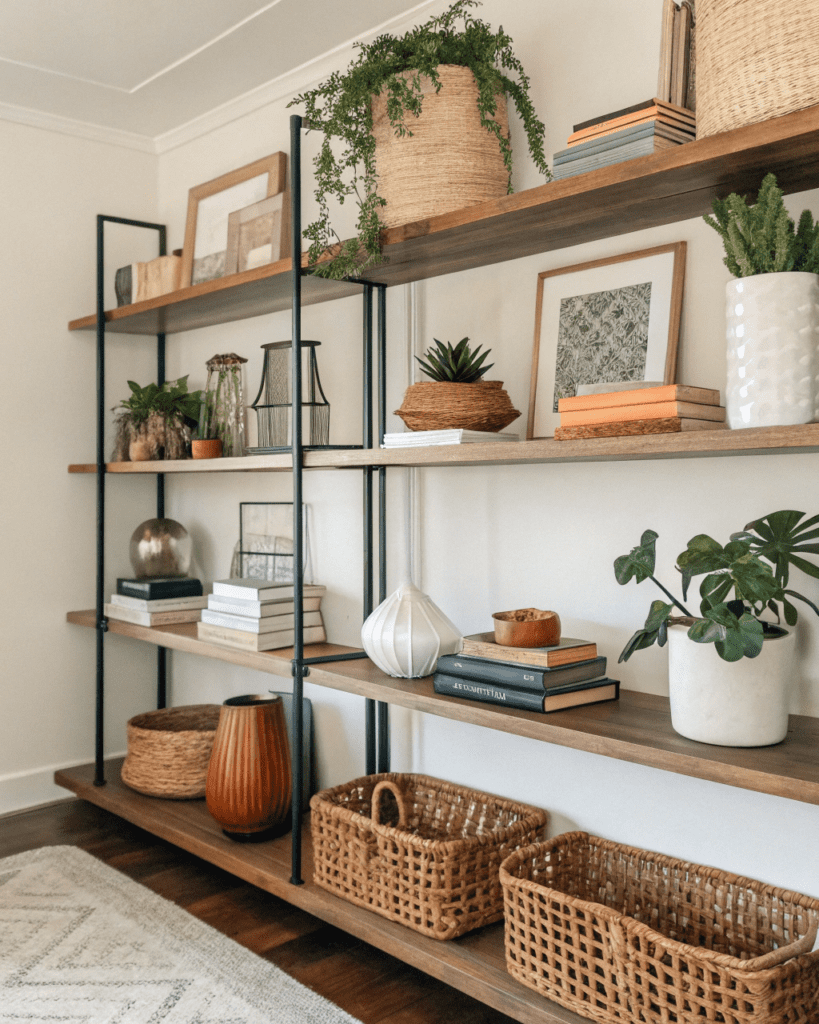
Start with a visual anchor.
- Medium or large object
- Build around it
- Prevents scattered look
16. Style in Visual Triangles
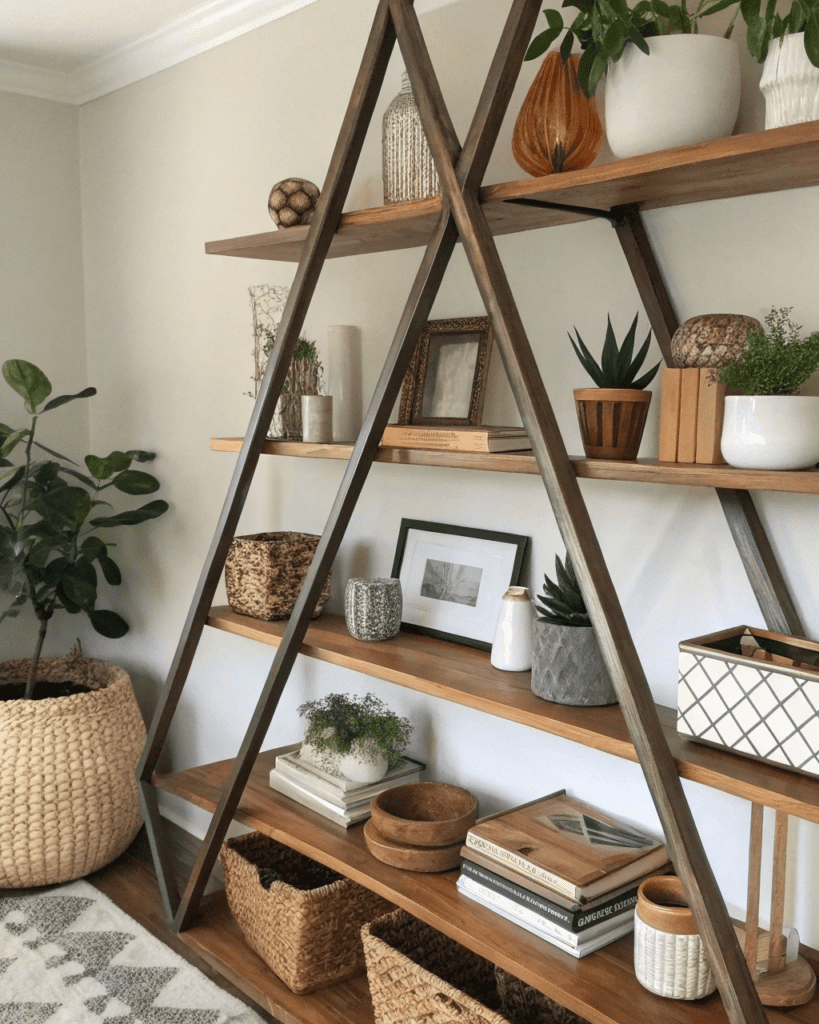
Arrange heights in triangle shapes.
- Tall, medium, low layout
- Designer styling trick
- Works every time
17. Edit 20 Percent Out After Styling
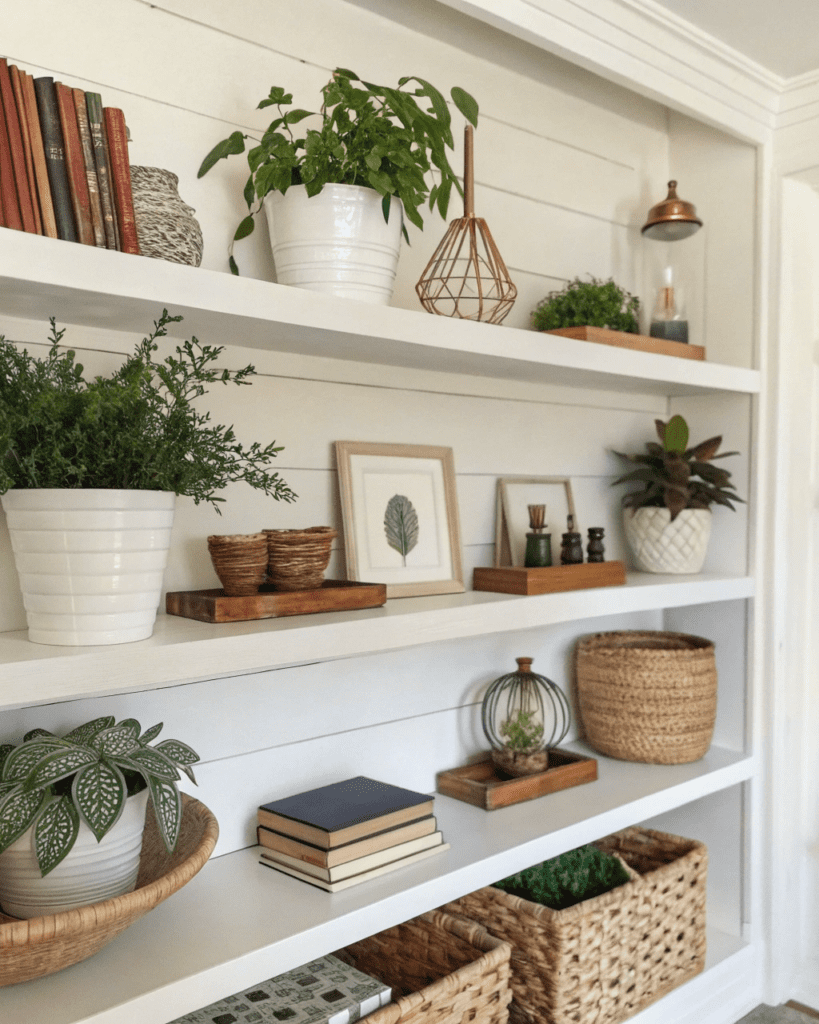
Remove a few items at the end.
- Improves breathing room
- Sharpens the look
- Prevents overstyling
Final Thoughts
Designer-looking open shelves are more about editing than adding. Focus on spacing, repetition, and height variation. Build each shelf as a small composition instead of a storage strip. When in doubt, remove one item — shelves almost always look better slightly underfilled.
Style, step back, edit, repeat.
FAQs
How many items should go on one shelf section?
Usually three to seven depending on size, with visible empty space.
Should open shelves match exactly?
No, they should feel related, not identical.
What is the biggest open-shelf styling mistake?
Overcrowding and using too many small objects.
Are books necessary for designer shelf styling?
Not required, but very helpful as height tools.
How do I keep open shelves from looking messy?
Use containers, repeat materials, and maintain a tight color palette.