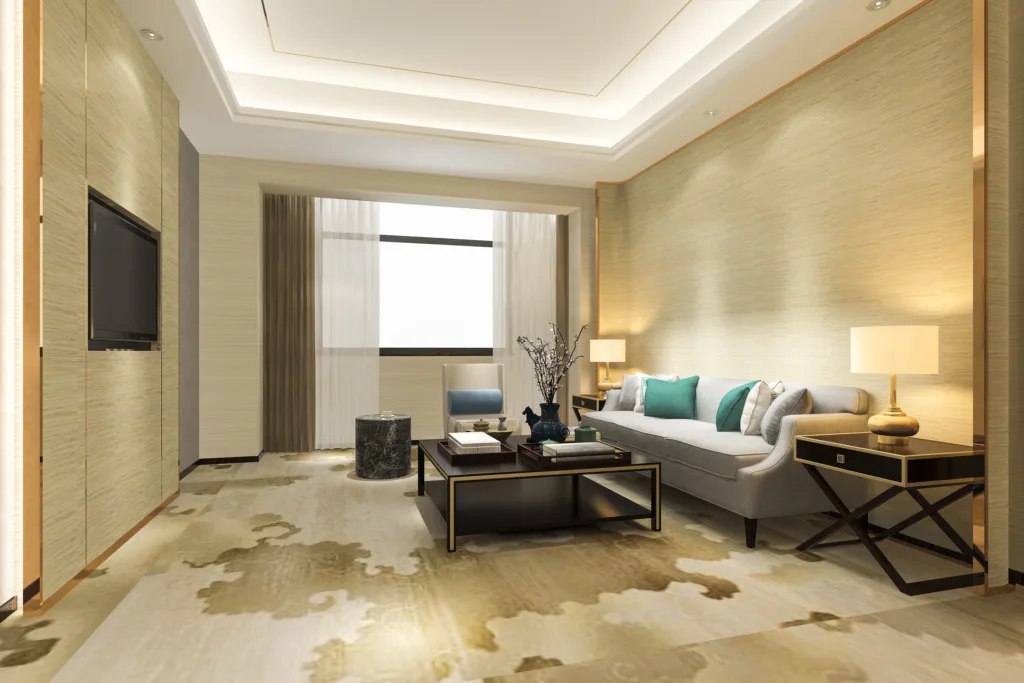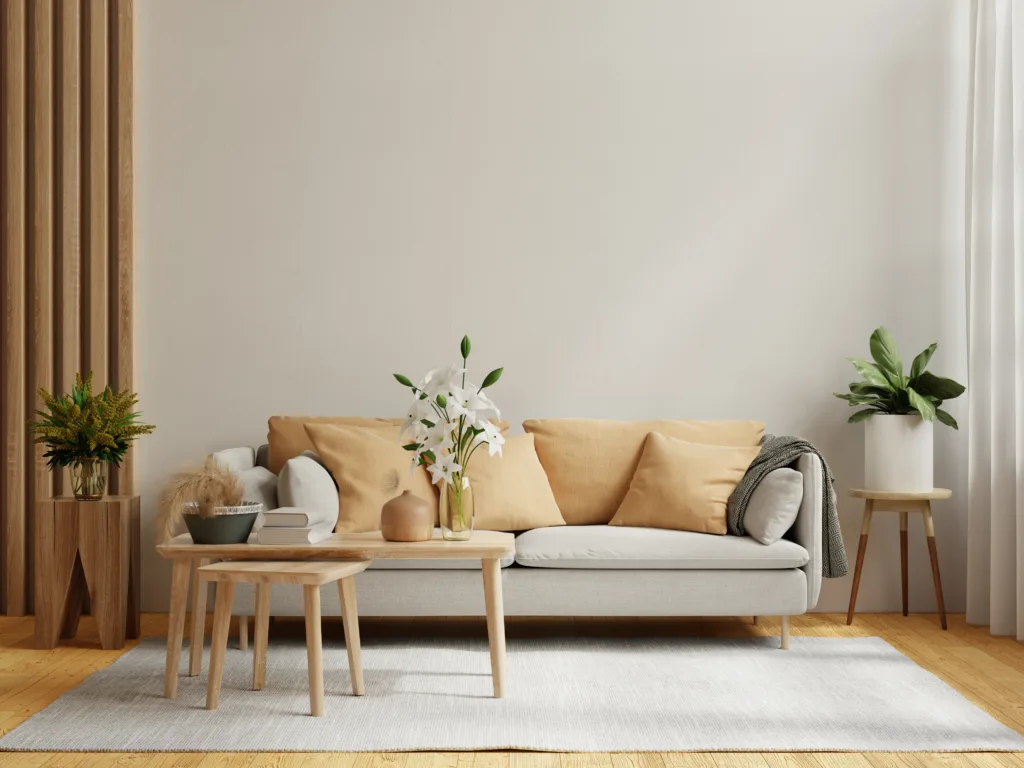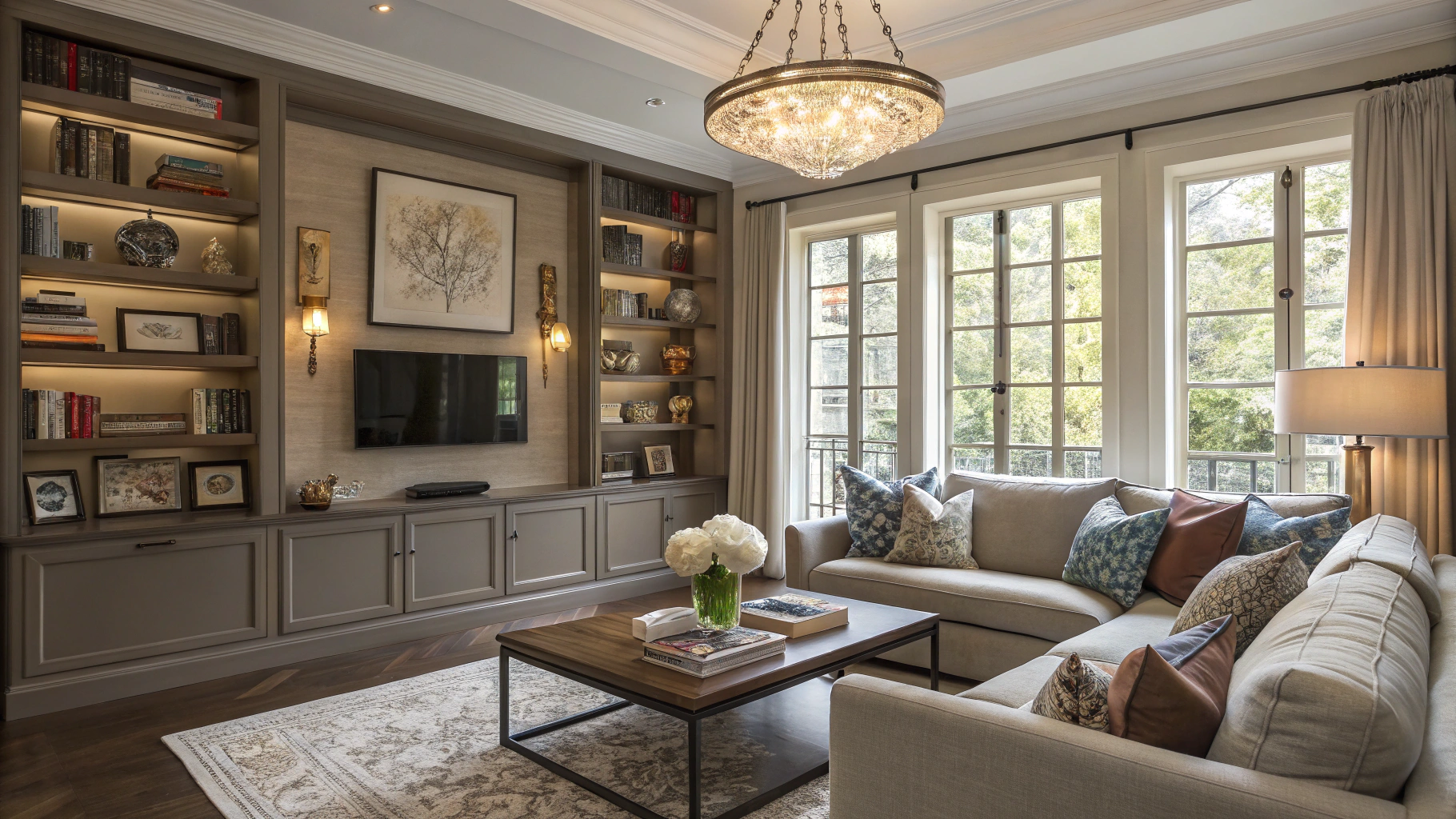
Living Room Decor Ideas: Everything You Need to Style Your Space
The living room carries more expectation than any other room in a home. It has to work as a place to relax, a space to have people over, somewhere the kids can pile onto the sofa, and still look like you have your life together when someone walks through the front door. That is a lot to ask of one room, and most people end up chasing their tail trying to fix it, buying new cushions when the real problem is the layout, or repainting when the issue is actually the light.
This guide works through the decisions that actually shape how a living room looks and feels, in the right order, with enough depth to be genuinely useful, and links out to more detailed guides on each topic when you want to go further.
What Makes a Living Room Actually Work
Before getting into colours and furniture, it is worth understanding what separates a living room that feels good from one that always feels like it is almost there. In almost every case it comes down to three things: whether the layout makes sense for how people actually use the room, whether the lighting is doing its job, and whether there is a visual logic to how everything sits together.
Layout is the thing people are least likely to question and most likely to get wrong. The default in most homes is to push all the furniture against the walls, leaving a big empty space in the middle that nobody ever uses. It feels safe but it produces a room that looks like a waiting area. Pulling the seating away from the walls, even by thirty or forty centimetres, and arranging it so people can actually face each other changes the whole character of the space. If the room has always felt slightly off, going through each change in sequence is a good way to get clear on what will make the biggest difference before spending anything.
Lighting is the second thing, and it gets less attention than it deserves. A room lit only by a single overhead fitting feels flat and a little institutional regardless of how good everything else in it is. The warmth and depth that make a living room feel like somewhere you genuinely want to spend time come from having light at different heights, a floor lamp in a corner, a table lamp on a side table, something on a shelf. The overhead fitting can stay, but it should not be doing all the work.
The third element is coherence. That does not mean everything has to match. Rooms where everything matches too precisely tend to feel sterile. It means there is a thread connecting the choices, whether that is a consistent tone in the colours, a recurring material like warm wood or natural linen, or simply a clear decision about which things are going to be the focal points and which are going to sit quietly in support.
Thinking About Colour
Colour in a living room is almost always overthought at the stage of choosing and underthought at the stage of understanding how it actually behaves. The samples that look beautiful in a paint shop or on a phone screen can look completely different on a wall under your specific light, next to your specific floor, with your specific furniture. The only reliable way to choose a wall colour is to get large samples, proper A3 or bigger, and live with them for several days before committing.
That said, some principles hold consistently. Warm neutrals, soft whites with a creamy or greige undertone, warm sand tones, pale earthy shades, are the most forgiving base for a living room. They reflect light well, they sit comfortably with a wide range of furniture colours and materials, and they give you enormous flexibility to bring in stronger colour through the things you can change more easily: a rug, cushions, a throw, a piece of art. The combination of warm off-white walls with walnut or oak furniture and natural textile textures is one of those pairings that has been popular for years without ever quite going out of fashion, because it satisfies something fundamental about warmth and material honesty that feels good to be around.
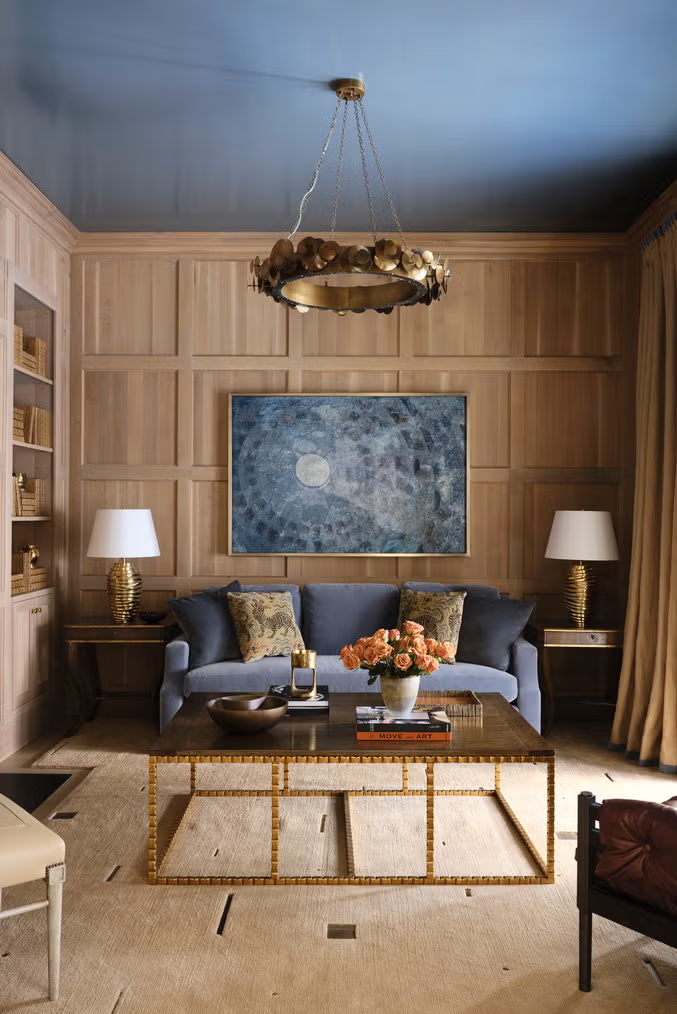
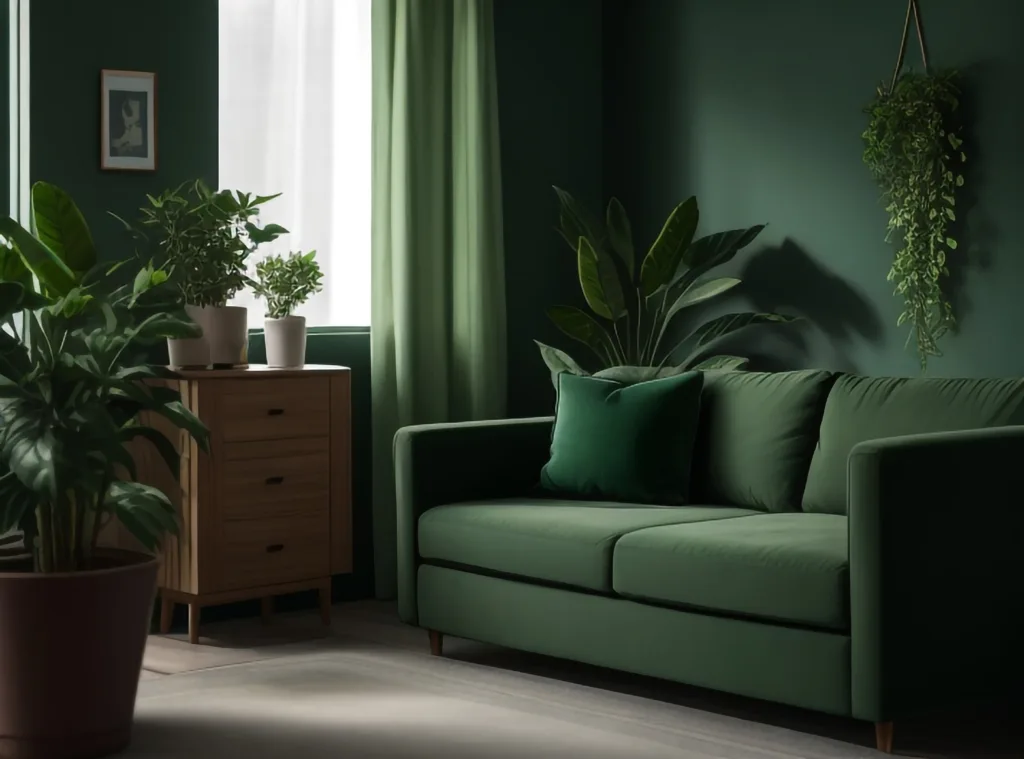
Where people often go wrong is in trying to use colour too literally, picking a shade because it appeared in a mood board, without considering whether it will work with the room’s natural light or with the tones already present in the floor and furniture. A dusty sage green that looks serene in a south-facing room with white painted floorboards can look cold and murky in a north-facing room with a dark wood floor. The colour itself is not the issue; the context is everything.
Accent walls work when they are genuinely the focal point, the wall you face when you come through the door, or the one a fireplace sits on, and when the stronger colour responds to what is already in the room rather than introducing an entirely unrelated tone. A single feature wall treated to a richer version of the main palette, or to a material like panelling or wallpaper, gives the room a sense of intention that four identically painted walls rarely achieve. If you are working through a full colour change and want to understand the sequencing of what to address first, there is a thorough guide to colour decisions that covers the steps most articles skip over.
Furniture: Scale, Placement, and What Makes a Room Feel Designed
The single most common furniture mistake in a living room is getting the scale wrong. In smaller rooms, people buy smaller furniture thinking it will create more space. It almost never does. A room with several undersized pieces of furniture reads as cramped and provisional. A room with fewer, properly proportioned pieces, with actual space between and around them, reads as considered and comfortable.
Before buying anything new, measure the room and mark out the footprint of what you are considering on the floor using tape. It costs nothing and takes ten minutes, and it will tell you things about scale and circulation that even good photographs cannot. Check that there is enough room to move around comfortably, that the sofa does not overwhelm the space it is going into, and that the coffee table is not so far from the seating that nobody can actually reach it.
The question of how to arrange what you have is often more valuable than the question of what to buy next. For an open plan space in particular, where the boundaries of the living area need to be established rather than inherited from the room’s architecture, thinking about zones, sightlines, and how rugs and furniture groupings work together is essential. The guide to open plan layouts goes into this in detail for spaces where the living area shares floor with a kitchen or dining room.
Statement furniture, a chair in a strong colour or distinctive silhouette, a coffee table with sculptural presence, a floor lamp that is clearly something more than functional, is worth having in a living room because it gives the eye somewhere to land and gives the room its personality. The rooms that feel flat are usually the ones where everything is equally inoffensive, equally neutral, equally easy to ignore. One piece that is genuinely interesting, chosen because you actually love it rather than because it was sensible, tends to make everything else in the room feel more considered by association.
You May Also Love
Getting Lighting Right
No other single change will do more for a living room than fixing the lighting, and almost no aspect of a living room is more consistently neglected. Most homes rely on a single ceiling fitting, turned on when it gets dark, turned off at bedtime. The result is a room that is functional in a utilitarian sense but that never quite feels warm or inviting, because light from a single overhead source falls downward, flattens everything, and creates a quality of illumination more appropriate to a corridor than a place for living.
The fix is not complicated. It is a matter of adding light at lower levels, table lamps and floor lamps, and making sure that the light they produce is warm rather than cool. Bulbs around 2700 Kelvin produce the kind of warm, slightly golden light that looks good on skin and surfaces. Bulbs at 4000K and above produce a much cooler, whiter light that feels clean and clinical and makes most living rooms feel unwelcoming in the evenings.
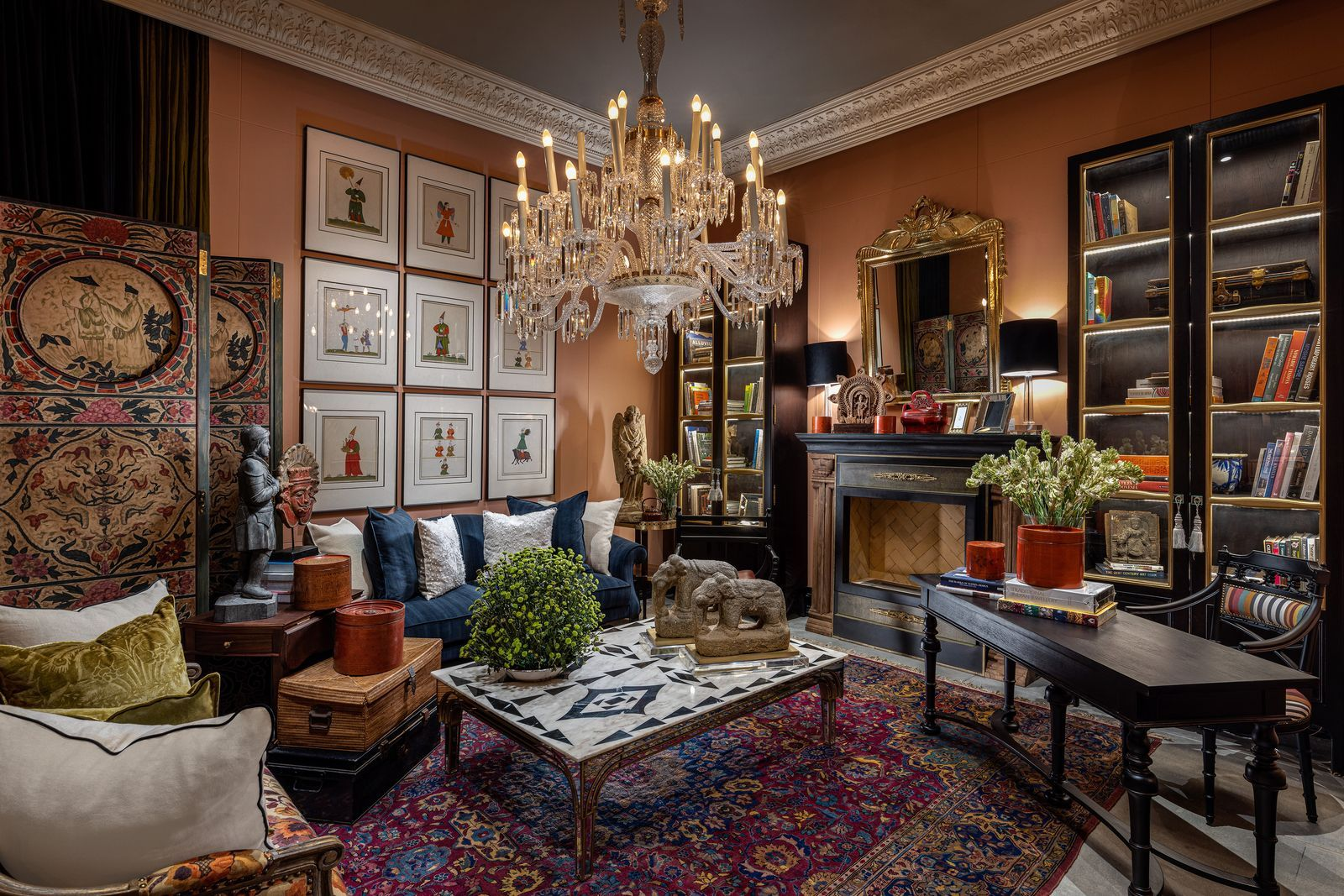
A dimmer switch on the main ceiling fitting is worth doing even if you do nothing else, because it gives you the ability to bring that overhead light down in the evenings so it adds warmth rather than washing everything out. Which kinds of fixtures to use, where to place them, and how to think about the relationship between different light sources is all covered in the guide to layering living room lighting.
Beyond function, light fixtures are also furniture. A floor lamp with a beautiful shade, a pendant that creates a sense of occasion over a reading corner, a pair of sconces flanking a fireplace, these add to a room visually even when they are switched off.
What to Do With the Walls
The walls of a living room are the most underused surface in most homes. They get painted and then essentially forgotten, treated as a backdrop rather than a design element. This is a missed opportunity, because walls offer more character-building potential than almost anywhere else in the room.
The most transformative wall treatment is usually panelling, whether that is proper tongue-and-groove boarding, simple vertical battens painted the same colour as the wall, or more traditional raised-and-fielded panelling. Panelling adds architectural depth that paint alone cannot create, it catches light in a way that makes a room feel more considered, and it photographs beautifully, which matters if you are building an audience around your home. The full range of what is possible, from panelling through wallpaper to textured plasters and tile, is covered in the guide to wall treatments.
A fireplace wall or alcove treated to tile work is one of those details that elevates a room without demanding that everything else be redesigned around it. A few square metres of handmade or patterned tile in a hearth surround or a recessed shelf introduces colour, craftsmanship, and material contrast that changes the whole feeling of the wall.
For wall decor that is less structural and more personal, a well-assembled gallery wall is one of the highest-impact changes you can make for almost no money. The word well-assembled matters here, because a gallery wall thrown together without a unifying principle tends to look worse than nothing. The approach that works most consistently is to unify the framing, all one material or finish, and vary everything inside the frames: sizes, orientations, a mix of art prints and photographs and perhaps one three-dimensional element.
Woven wall hangings add softness and acoustic warmth to a room that has a lot of hard surfaces. In a room with a stone floor, plastered walls, and a glass coffee table, a single large textile piece on the wall does more for the feeling of comfort than almost any furniture change would.
Storage That Does Not Look Like Storage
The lived-in reality of a living room is that it accumulates things, remotes, books, chargers, children’s objects, all the small stuff of daily life that does not have a natural home. How a room handles this accumulation is the difference between a space that feels curated and one that feels constantly on the verge of chaos.
The gold standard for living room storage is built-in shelving. Shelving and cabinetry built into alcoves or running along a wall gives you a large amount of storage capacity while taking almost no floor space, and it looks like an architectural feature rather than furniture that was added later. The most functional arrangement combines closed cabinets at the lower level, for hiding everything that does not need to be seen, with open shelving above for display. The principle to apply to open shelves is that a third of the space should be empty. Filled-to-capacity shelving reads as clutter even when every individual thing on it is beautiful.
For rooms where built-ins are not possible, floating cabinets are the next best option. They keep the floor visible beneath them, which makes the room feel lighter and more spacious, and the surface above becomes a natural display shelf that adds a layer of styling a floor-standing unit does not.
What goes on open shelves matters as much as the shelves themselves. Grouping objects in threes, mixing heights, combining books with ceramics with something organic like a plant or a piece of driftwood, these are the moves that make a shelf look like it was assembled thoughtfully rather than filled because it was empty. The approach to shelf composition is worth looking at even if maximum colour is not what you are going for, because the underlying logic applies regardless of palette.
Don't miss: 16+ Living Room Remodel Ideas with Fireplace Updates →
When the Living Room Is Small
A small living room is not an inferior version of a large one. It is a different kind of design problem, and one that rewards careful thinking more generously than a large room does. The decisions that feel like they matter less in a big space, the exact scale of a sofa, the height of a coffee table, whether a lamp sits on the floor or on a surface, matter enormously when the margins are tighter.
The most persistent myth about small rooms is that small furniture makes them feel bigger. It does not. A room with several small, mean-scaled pieces looks cramped and provisional. A room with one well-proportioned sofa and two chairs, with actual floor space visible between and around them, feels deliberate. The guide to small living rooms goes into the specific choices that make the most difference.
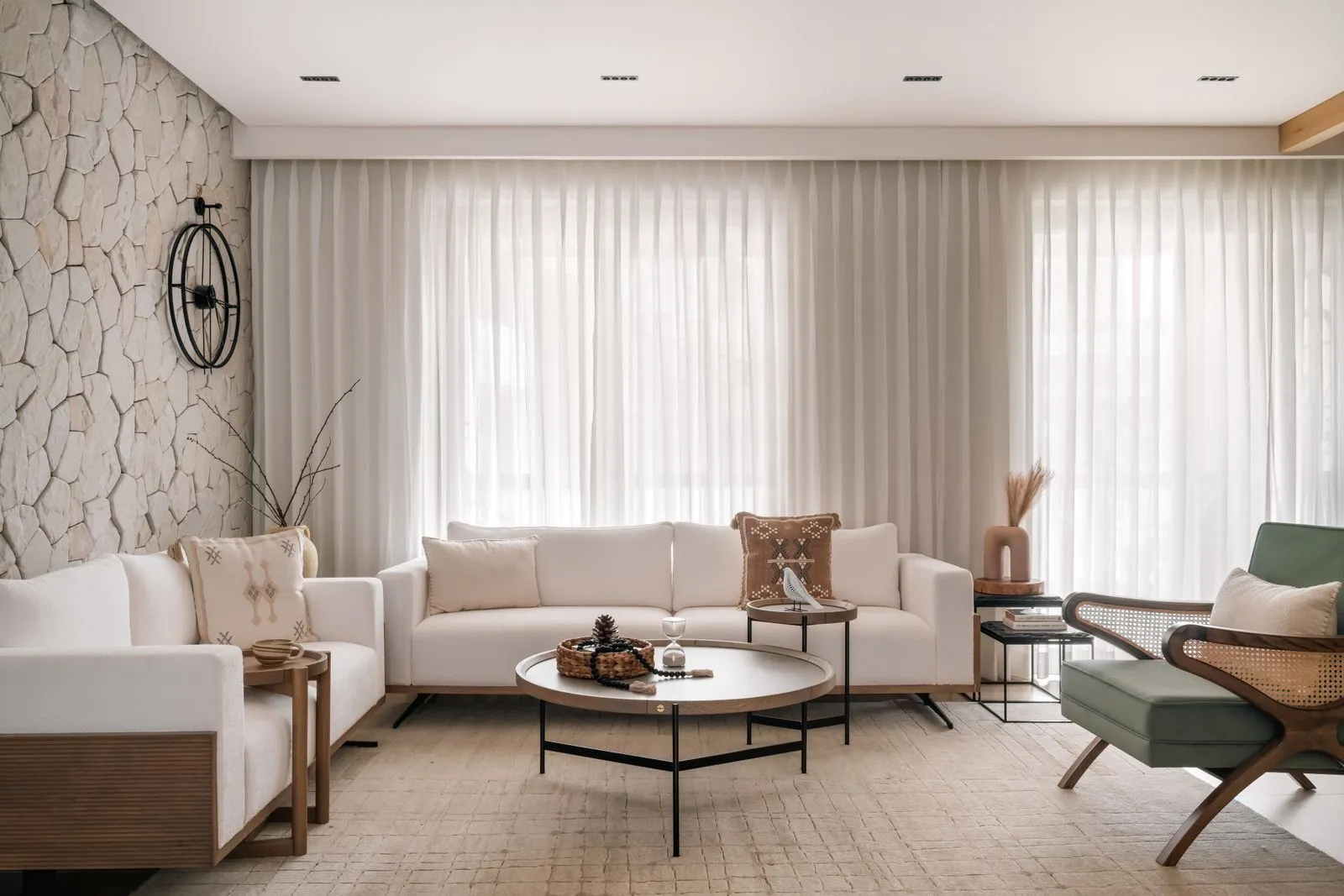
Mirrors placed opposite windows are one of the oldest tricks in spatial design and one of the most reliably effective. A large mirror, and size matters here because a small one does almost nothing for perceived space, reflects light and the view from the window back into the room and makes the space feel considerably larger than it is. This works because it is changing the actual visual information the room presents, not because it is a decorating trick in the superficial sense.
Furniture that sits on legs rather than directly on the floor makes a meaningful difference in a small room. When you can see the floor beneath a sofa, the eye reads more floor area than is actually there. This is why heavy, floor-grounding sofas that look magnificent in large rooms tend to make small rooms feel like the sofa is eating the space. If you are working in a flat or rented property specifically, the guides to small apartments and rental living rooms both address the particular constraints of those situations.
Choosing a Style That Actually Suits How You Live
Style in a living room is not about picking a label from a mood board and ordering everything that appears in it. It is about understanding what quality of space you want to spend time in and making decisions that serve that quality consistently. The rooms that feel most personal and most successful are almost never the ones that are most strictly stylistically consistent. They are the ones where the choices feel like they were made by someone with a clear point of view.
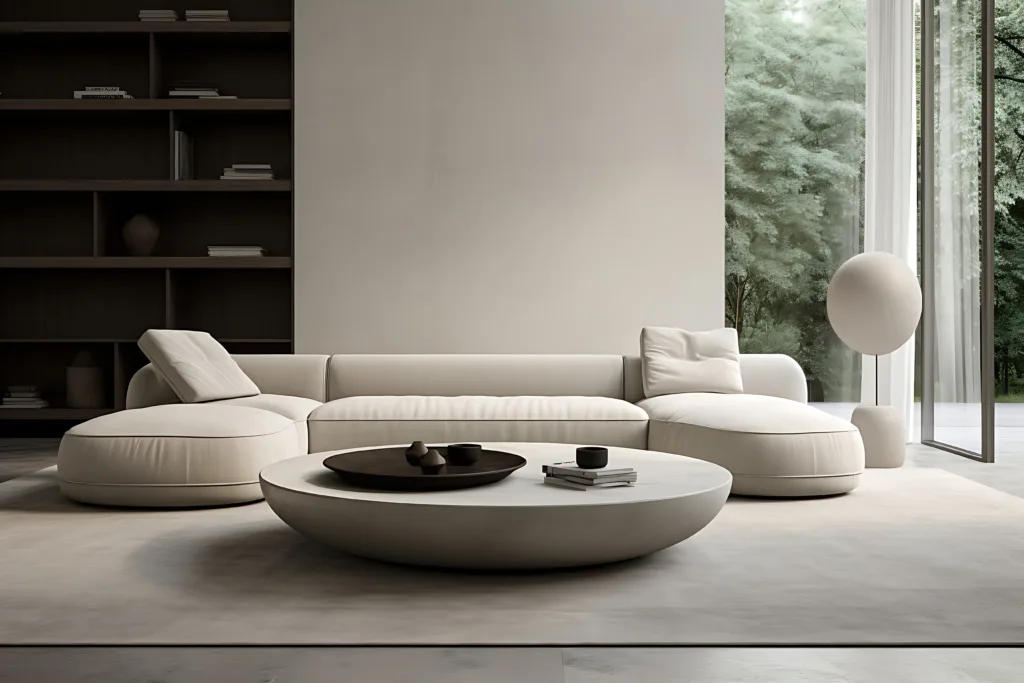
A minimal living room works when it is genuinely intentional, when the restraint in objects is compensated for by richness in materials, quality in furniture, and warmth in light. The version that reads as just empty is what happens when restraint is applied to objects without any corresponding investment in the quality of what remains. Minimal but cosy is a specific and achievable thing; it just requires understanding what warmth actually comes from when there is not much in the room.
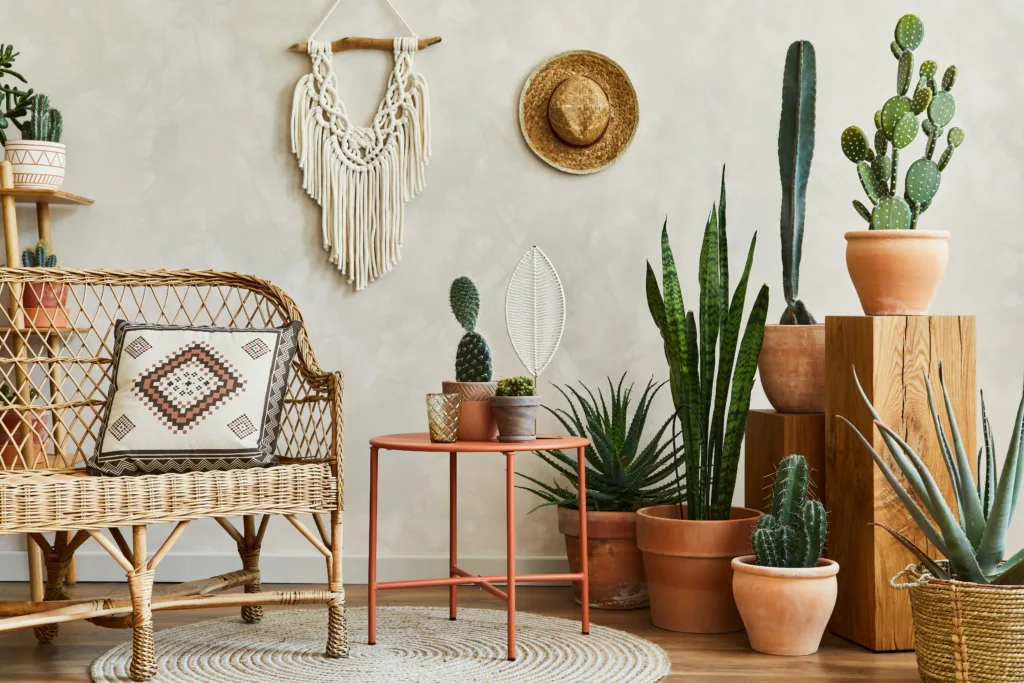
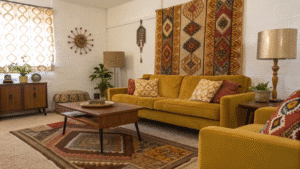
A more layered, lived-in approach works when there is still a coherent foundation, a consistent palette, a shared material language, under the accumulation of things. Boho style is the aesthetic most often attempted badly because it looks like anything goes. It does not. What gives a well-executed boho room its richness is that the base is actually very consistent, neutral plasters, natural fibre textiles, warm wood tones, and the pattern and colour and collected objects sit on top of that stable foundation.
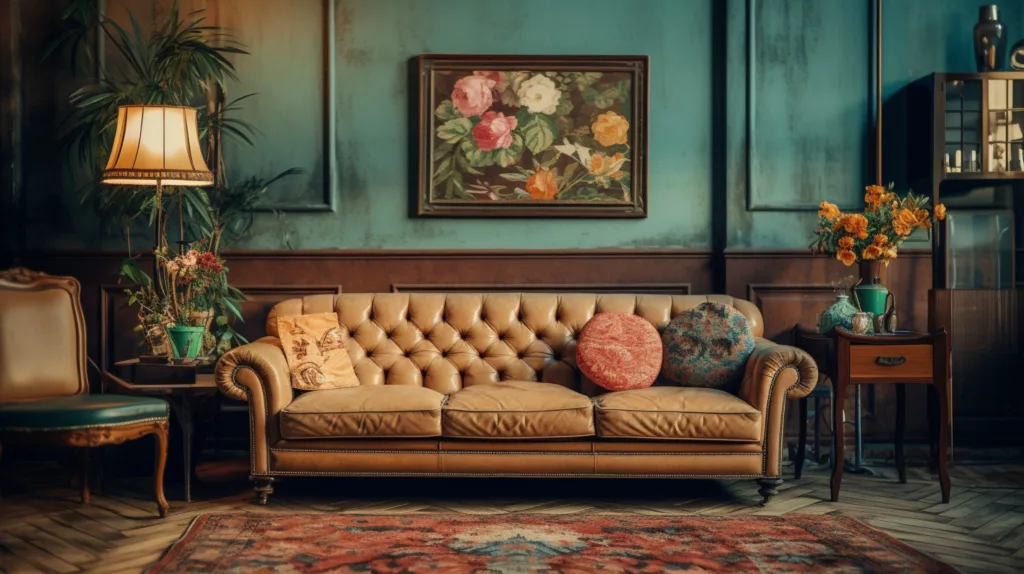
Industrial and farmhouse approaches share a love of raw and honest materials and they work in living rooms because they introduce genuine warmth through the materials themselves. Reclaimed timber, raw plaster, matte iron hardware have a physical presence that polished and finished surfaces do not. A single piece in that language, like a well-chosen farmhouse side table, can set the tone for a whole room without requiring you to replicate a look wholesale.
For dedicated style guides, the approaches to Coastal, Scandinavian, Afrobohemian, and Neo Deco interiors each take the style’s specific logic seriously rather than reducing it to a shortlist of products.
Keep Exploring
Seasonal Changes Without Starting Over
The living room is where seasonal changes to a home are most visible and most felt. A room that feels exactly the same in February as it does in July is a room that has not been given the chance to respond to the year, and responding to the year is one of the things that makes a home feel alive rather than static.
The key to doing this well without enormous effort or expense is having a base that is neutral enough to accept seasonal adjustment. A sofa in natural linen or warm grey, a rug in a tone that sits between warm and cool, walls in a warm neutral, none of these commit the room to a particular season, which means you can layer the seasonal character on top through textiles, flowers, foliage, candles, and the objects on your shelves and mantel.
In the colder months this means warmer textures and lower light, heavier throws, richer cushion colours, candles, the fireplace doing more visual work. The fireplace mantel is worth thinking about carefully, because it is in the sightline from most seating positions and is one of the few surfaces in a living room that practically demands to be styled. Whether the fireplace itself needs a cosmetic update, new tiles in the hearth, or simply a fresh approach to how it is dressed is covered in the guide to fireplace styling.
For the specific seasonal occasions, the dedicated guides to Christmas, autumn, and spring go into the living room in the context of the whole home with ideas that work when the room already has a solid foundation.
On Budget and Where It Is Worth Spending
The question of where to spend and where to save in a living room is not primarily about money. It is about what matters most to how the room feels. The rooms that look expensive without a large budget almost always share the same qualities: they are uncluttered, the lighting is warm and comes from more than one source, and there is at least one element that is genuinely good rather than everything being equally mediocre.
The things worth spending on are the things you interact with every day and the things that anchor the room visually. The sofa is the most used piece of furniture in the house; buying one that is genuinely comfortable and well made is almost always worth the investment over buying two passable ones in succession. A large, quality rug unifies a seating arrangement in a way that nothing else does, and a thin or too-small rug is worse than no rug at all. Lighting fixtures are something you look at whenever you are in the room, so a good floor lamp or pendant is worth paying for.
The things you can save on are the things that change easily and inexpensively as the room evolves: cushions, throws, plants, small decorative objects, art prints in simple frames. These are where personality enters a room and they do not need to be expensive to work well. The guide to luxury on a budget is built around exactly this hierarchy of where spending makes a proportionate visual difference.
If the room is a rental or you are not in a position to make permanent changes, the constraint actually simplifies the decision. Everything has to be freestanding, reversible, and chosen with care, and that discipline tends to produce rooms that are more considered than ones where structural changes can do the heavy lifting. The guide to rental rooms focuses on exactly those situations.
Frequently Asked Questions
Where should I start when decorating a living room from scratch?
Start with the three things that are hardest to change later and have the most impact: the wall colour, the main rug, and the sofa. Get those proportions and tones right first and everything else has a foundation to work from. Lighting should follow before you start thinking about accessories.
How do I make a living room feel bigger than it is?
Pull furniture away from the walls rather than pushing it against them. Use one large rug rather than several small ones. Choose a sofa and chairs that sit on legs rather than directly on the floor. Add a large mirror opposite the main window. Keep the colour palette on the walls and larger surfaces light and consistent.
Why does my living room feel cold even though I have decorated it?
Almost always a lighting problem. If the room relies on overhead lighting only, adding floor and table lamps at lower levels with warm-toned bulbs will change it more dramatically than any further decorating purchase. Also check whether the materials in the room are all hard and reflective, floors, glass, metal, lacquered furniture, without enough soft texture to absorb sound and create a sense of warmth.
How many cushions should be on a sofa?
Fewer than most people default to. A three-seat sofa with five to seven cushions in varying sizes looks well considered and still comfortable to sit on. Beyond that point cushions stop being decorative and start being an obstacle between you and the sofa. The arrangement should always leave room for someone to sit down without first having to move things.
What is the best approach to decorating a living room on a small budget?
Start with things that cost nothing: rearrange the furniture, remove anything that is not earning its place, and clean everything properly including the windows. Then address the lighting. A secondhand floor lamp or two will do more than almost any purchase in the same price range. After that, one plant, a throw, and a couple of considered cushions will take the room considerably further than a larger spend spread thinly across many small things.
Explore every room in the home through the Rooms section at Chic Living Club