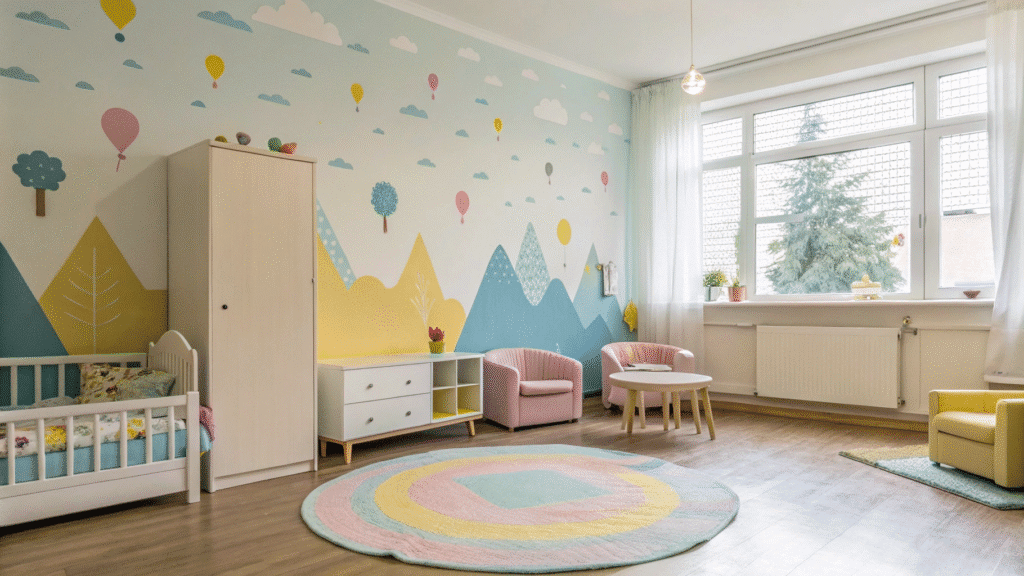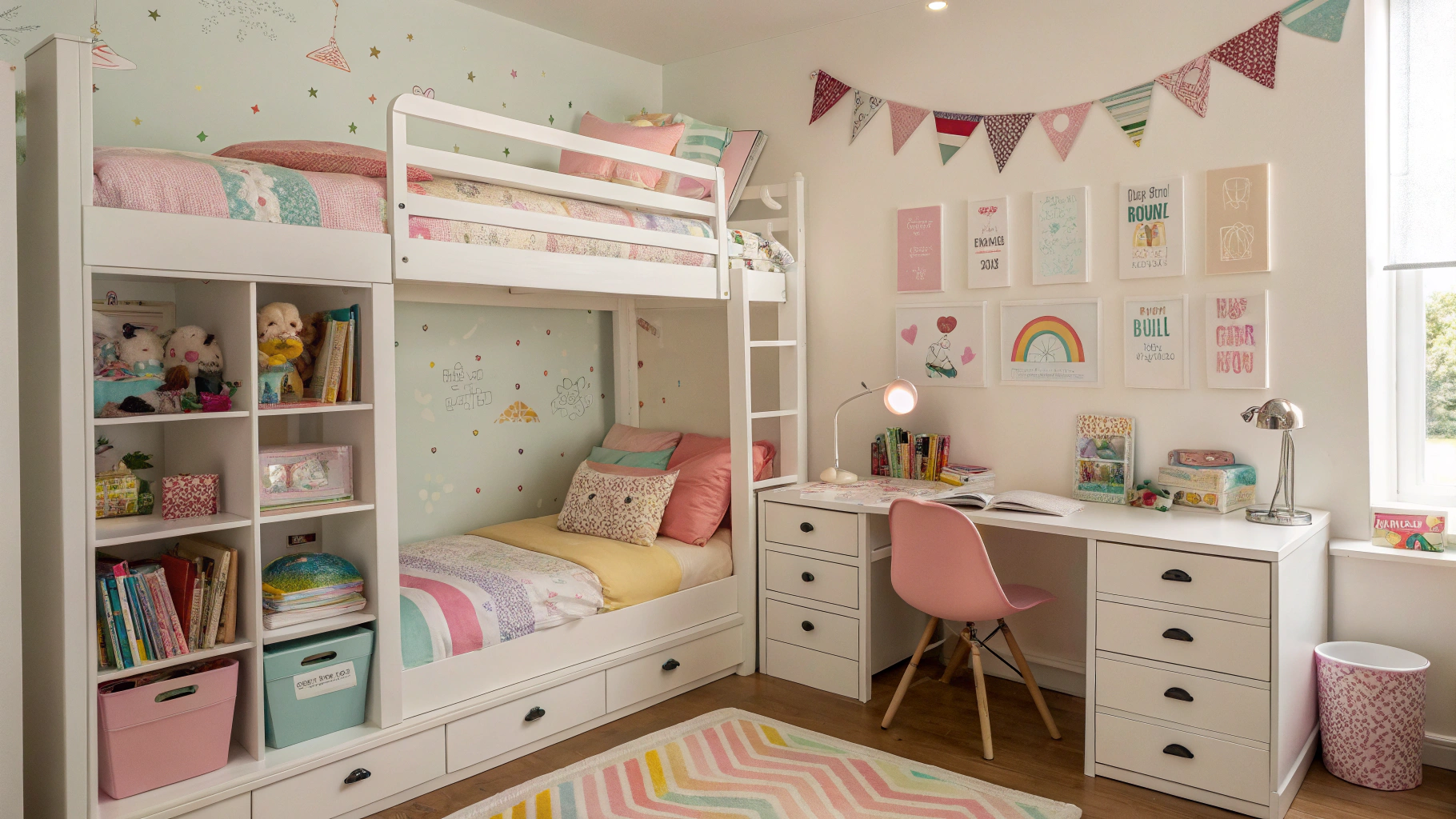
How to Design a Kids Room That Grows With Them
A complete guide to creating a kids bedroom that is fun, functional, and thoughtfully designed, from the first toddler room through the school years and beyond.
KEY POINTS
- The best kids rooms are designed to grow with the child, not for the age they are right now. Choices made with the next three to five years in mind save significant time and money later.
- Storage that a child can actually use independently is more valuable than storage that looks tidy to adults. Accessibility matters as much as capacity.
- A kids room that reflects the child’s genuine interests and personality, rather than a trend or a theme imposed by adults, is the one they will love and want to spend time in.
Decorating a kids room involves a tension that every parent knows: you want a space that is joyful, stimulating, and full of personality, but you also want one that is calm enough for sleep, functional enough for daily life, and not so tied to a particular phase that it needs a complete overhaul the moment your child moves on from dinosaurs or princesses.
Love Chic Living Club?
Add us as one of your preferred Google sources and discover more home decor, DIY, outdoor, and lifestyle inspiration from us.
The rooms that age best are the ones built on a considered foundation, a calm base in colour and furniture, with personality layered on top through the things that can be changed easily: bedding, wall art, soft furnishings, and the objects a child brings into the space themselves. This guide covers every element of that approach, from layout and furniture to colour, storage, and how to design a room that works as well at ten as it did at four.
RELATED: 17+ Kids Room Design Ideas to Spark Creativity and Comfort
Design for the Next Stage, Not Just This One
The most common kids room mistake is designing too specifically for the age the child is right now. A toddler room full of baby-pink paint and nursery motifs will feel wrong within two years. A space-themed room designed for a seven-year-old obsessed with rockets may feel embarrassing to the same child at eleven. The design decisions that last longest are the ones made slightly ahead of where the child currently is, not in response to their most recent phase.
This does not mean ignoring the child’s interests. It means understanding which of those interests are enduring, which are passing, and expressing personality through the elements that are easiest to update. Paint is reasonably easy to change. Built-in shelving is not. A bedframe bought to last is worth choosing in a tone that will work at every age. The interior design principles for a kids room that grows with them cover this trade-off in practical terms, including the specific decisions that lock you in versus the ones you can revisit without major disruption.
Choose Furniture That Lasts
Kids room furniture takes more punishment than furniture anywhere else in the home. It gets climbed on, drawn on, sat on from unusual angles, and generally used in ways that no designer anticipated. It also needs to work for a child at their current age and at three or four ages beyond it. Buying furniture that genuinely lasts, made from solid materials rather than particle board veneers, and chosen in styles that do not read as exclusively juvenile, is the highest-return investment in a kids room.
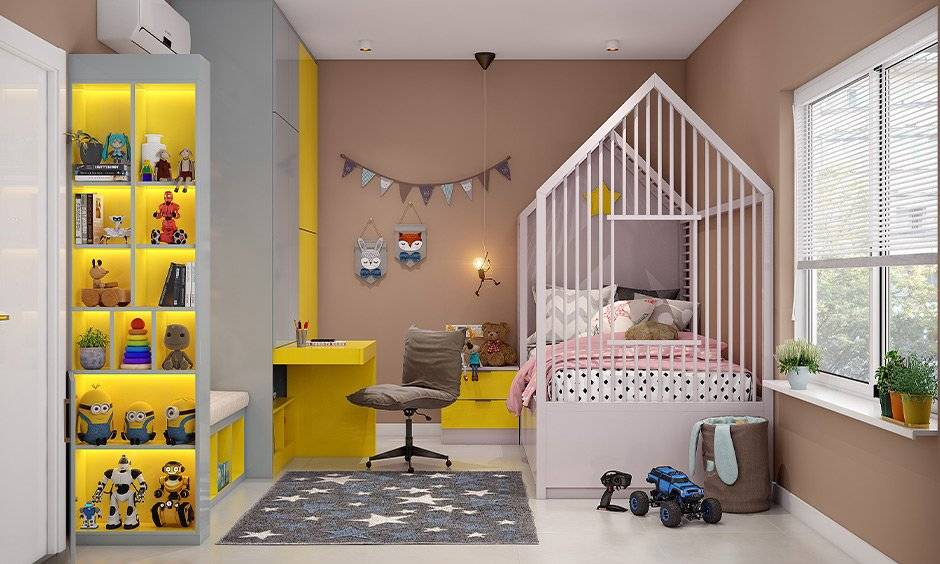
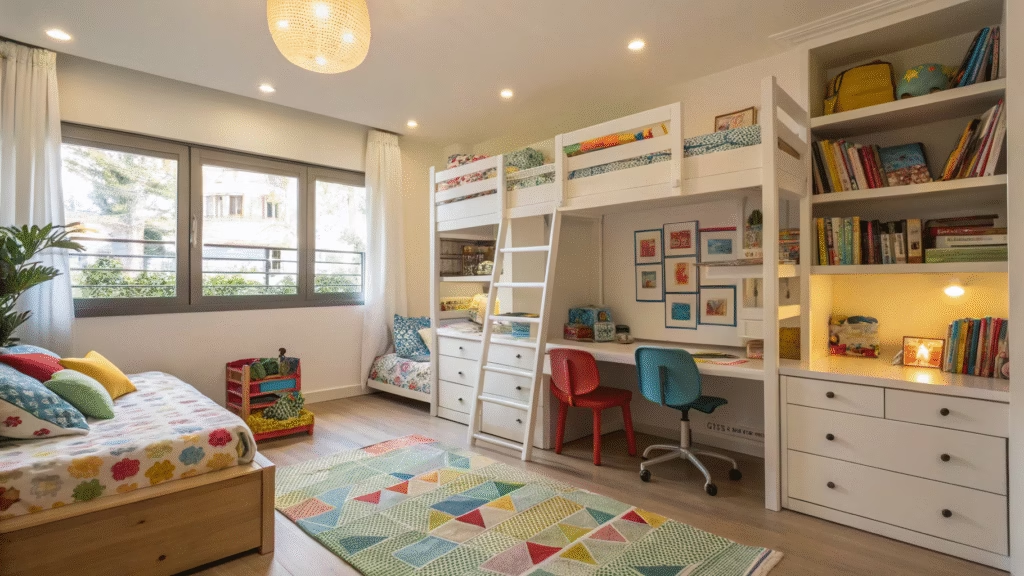
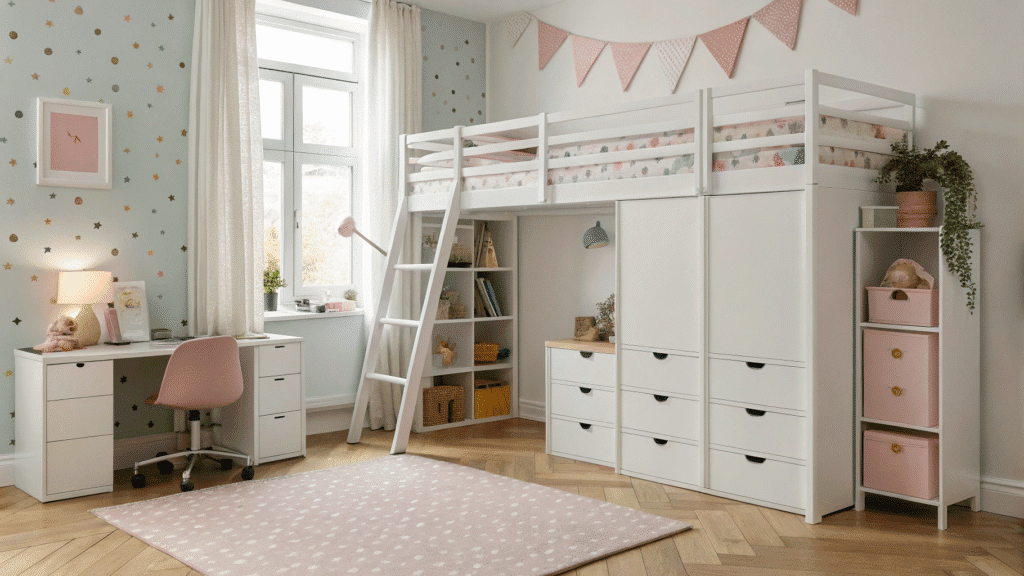
The bed is the most important piece and the one most worth spending on. A well-made solid wood bed frame in a simple design will serve a child from toddler age through to their teenage years if the sizing is right. Kids bed design ideas from bunk beds to loft configurations show how the bed can also solve space and storage problems simultaneously. A loft bed frees the floor beneath for a desk, a reading nook, or a play area, which is particularly valuable in smaller rooms. Bunk beds make a shared room genuinely workable for two children in a space that would feel cramped with two standard beds.
Kids room furniture that blends style and storage addresses the reality that a children’s room needs to hold an enormous amount of stuff and look reasonably together while doing it. A wardrobe with interior organisation suited to children’s smaller garments, a bookcase at the right height for a child to access independently, and a bedside table scaled to the bed are all investments that outlast any given phase or theme.
Get the Colour Right
Colour in a kids room is one of the most enjoyable decisions to make and one of the most frequently regretted. The instinct is to go bold and playful, and bold can work beautifully. The issue is that bold, highly themed colour is the hardest to live with as the child changes and the hardest to repaint around if the room has been decorated with the colour as the starting point.
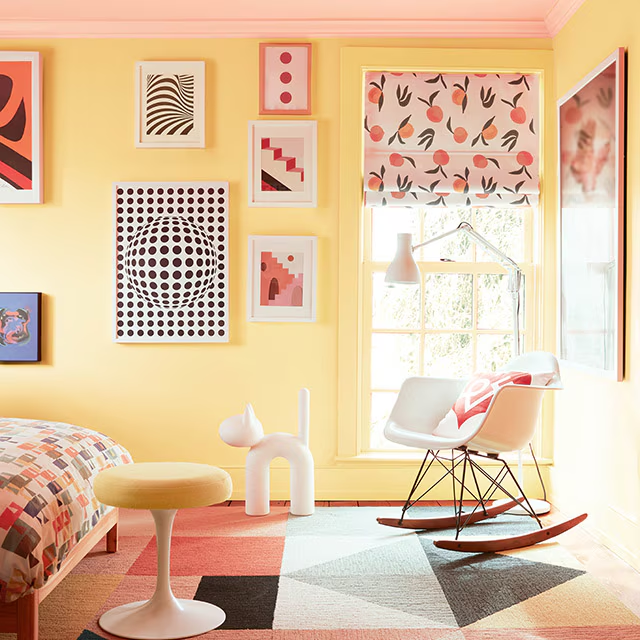
The approach that ages most gracefully starts with a calm, considered base, a warm white, a soft sage, a gentle greige, a muted blue or warm sand tone, and introduces personality through the things layered on top: a colourful rug, bright bedding, wall art, and the child’s own objects. This gives the room warmth and character while keeping the walls in a tone that will still feel right in three years.
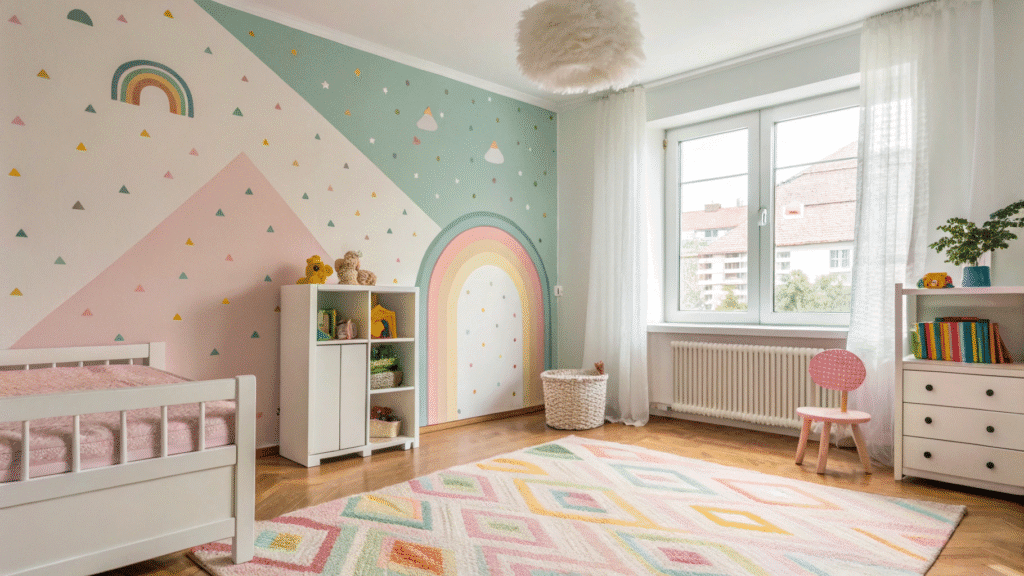
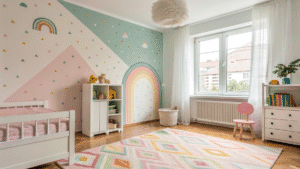
Kids room paint colours that feel playful and calming cover the full range of what works at different ages, from the very soft tones suited to young children through to the more saturated palettes that work well for older kids who want a room with more presence. Pastel kids rooms in soft blush, mint, and lavender have a serenity and gentleness that works particularly well for young children. Bright and airy kids rooms that use light colours to maximise a sense of space and cheerfulness are enduringly popular for good reason. And gender-neutral kids room ideas that work independently of pink and blue conventions tend to have a longer lifespan, because they are not tied to assumptions about the child that the child may quickly outgrow.
RELATED: 17+ Color Palette Ideas for Kids Rooms That Always Work
You May Also Love
Make Storage Work for the Child, Not Just the Adult
Storage in a kids room is only effective if the child can use it independently. Toy boxes that require adult involvement to open, shelves too high to reach, and wardrobes organised for adult convenience rather than child-height access all result in the same outcome: everything ends up on the floor regardless of how elaborate the storage system is.
The guiding principle for kids room storage is to put everything the child uses most frequently at the level they can reach without help. Books at eye height. Frequently played-with toys in open bins accessible from standing or sitting. Clothes hung at a bar low enough to reach. The things that need adult supervision or that are used occasionally can go higher.
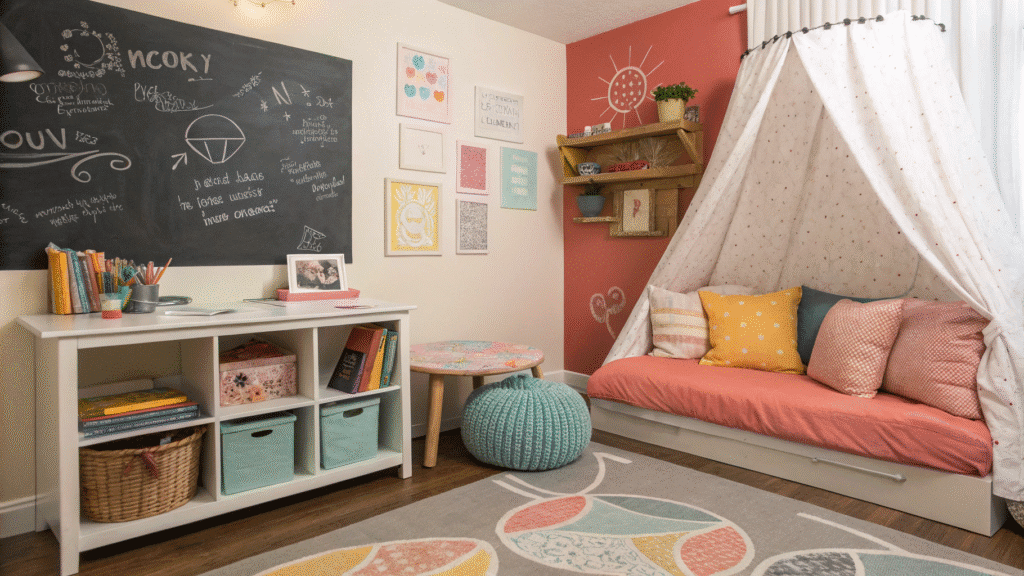
Kids playroom storage that looks chic and tidy shows how colourful, accessible storage can be genuinely attractive rather than merely functional. Low open shelving with labelled bins, a pegboard for hanging things at child height, and a dedicated place for the items used daily are what produce a room that stays relatively tidy, because tidy is easy when everything has a place a child can manage alone. Kids room organisation hacks that actually work for a tidy space address the practical systems that sustain tidiness through daily use, which is a different challenge from creating storage that looks tidy when the room is staged.
Kids closet organisation that makes mornings easier is worth thinking through carefully, because a well-organised wardrobe where a child can independently find and put away their own clothes is genuinely life-changing in terms of morning friction. Double hanging rails at two heights, labelled shelves for folded items, and a designated spot for school bags and uniform items all reduce the daily negotiation of getting a child dressed and out of the door.
TIP: Before buying any storage, do a full audit of what actually needs to be in the room. Most kids rooms contain three or four times as many toys as are actively played with, and the excess does not get played with more just because it is accessible. It just creates visual noise and makes tidying up feel overwhelming for a child. Rotate toys seasonally, keeping only the current favourites accessible, and store the rest. The toys that come back out after a few months will feel new again.
Work on the Walls
The walls of a kids room are the highest-impact, most enjoyable design element in the space, and also the one that dates fastest if handled badly. The safest wall approach for longevity keeps the painted surfaces in the base colour and uses accessories, art, and removable treatments for the personality.
Wallpaper in a kids room can be spectacular when the pattern is chosen with the next few years in mind rather than only the current moment. A classic botanical, a simple geometric, an animal print that is not species-specific, or a subtle stripe will all hold up far longer than a character-led design tied to a show or film the child is currently watching. Whimsical wallpaper designs that have a quality of charm and imagination without being tied to a specific character or franchise age consistently well.
Wall murals that tell a story are one of the most personal and memorable things you can do for a child’s room. A painted forest wall, a night sky with hand-painted stars, a world map in soft colours, or a mountain landscape create an environment that sparks imagination without being prescriptive about how the child uses it. Kids room wall art in framed prints is the easiest and most swappable approach: a gallery of prints that reflects the child’s current interests, changed out as those interests evolve, keeps the walls fresh without any repainting.
RELATED: 14+ Wall Mural Ideas for Kids Rooms That Tell a Story
Don't miss: 15+ Kids Room Paint Colors That Feel Playful and Calming →
Create Zones for Different Activities
A well-designed kids room is not just a bedroom. It is a place for sleeping, playing, reading, doing homework, and spending time independently. Treating the room as a single space with a bed in it misses the opportunity to create specific environments for each of those activities, which makes each of them work better.
The sleep zone is the bed and its immediate surroundings: the bedside table, the lamp, the accessible books. It should feel calm, warm, and slightly enclosed. The play zone needs floor space, accessible storage, and enough visual interest to invite engagement without overstimulating. The study zone needs a desk at the right height, good task lighting, and storage for school materials within reach. The reading zone needs comfortable seating at child height, good light, and bookshelves that present books face-out rather than spine-out for younger children who cannot read titles yet.
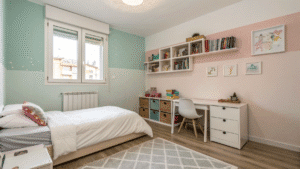
Kids study corner ideas that make homework genuinely inviting take the workspace seriously rather than treating it as an afterthought. A dedicated desk with a good lamp, organised storage for stationery and school materials, and a position that faces away from the play area all make concentration easier. Kids desk and study setup ideas for every age cover the specific needs at different stages, from the very young child who needs a low table for drawing to the older child who needs a full desk setup for homework and potentially a computer.
Creative corner ideas for kids bedrooms show how even the awkward corners that most rooms have can become the most loved parts of the space: a reading nook with a soft cushion and a small bookshelf, a dress-up corner with a low rail and a mirror, a Lego corner with a flat building surface and open storage for pieces. These small defined spaces within a room give children a sense of ownership and purpose that makes them more likely to use the room independently and more able to settle into specific activities.
Shared Rooms
Sharing a room with a sibling is the reality for many children, and a shared room that is well designed produces far less conflict than one that has been divided arbitrarily or that gives one child significantly more space, light, or storage than the other. The most important principle in a shared room is that each child has a clearly defined personal space, even within a room they share.
Shared room ideas for two siblings that work like magic use the architecture of the room to create a sense of individual territory: two bunk beds with curtains that can be drawn, two side-by-side loft beds each with their own study nook below, or simply two beds with their own distinct bedding, lighting, and the small personal objects that make a corner feel like someone’s own.
Shared room ideas for sisters address the specific challenge of creating individual identities within a shared aesthetic. Kids room ideas for a boy and girl sharing require a genuinely neutral base that does not impose either child’s colour preferences on the shared walls, with personalisation happening through bedding, wall art at each bed, and designated storage that belongs to each child. For three children in one room, kids room layout ideas for three siblings cover the specific configurations that make the space genuinely liveable rather than just technically possible.
RELATED: 14+ Room Ideas for Two Kids That Keep the Peace and the Style
Themes That Age Well
There is nothing wrong with a themed kids room. The issue is the kind of theme. Character-led themes, tied to a specific film, show, or franchise, typically have a lifespan measured in months. The child moves on, the room does not, and the parents face an expensive repaint and refit. The themes that last are the ones built around concepts rather than characters: nature, space, the ocean, adventure, creativity, animals as a broader category rather than a specific character.
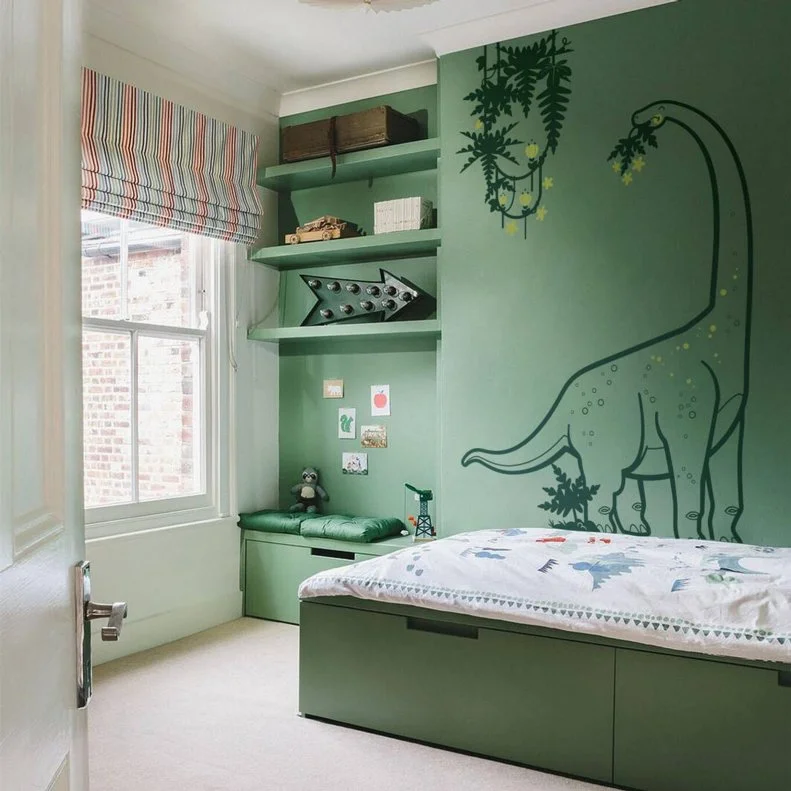
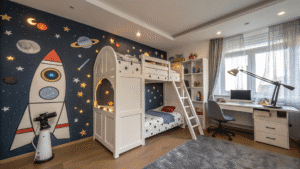
A nature-inspired kids room with earthy tones, botanical prints, wooden furniture, and foliage motifs will feel as relevant and as beautiful when the child is twelve as when they are four. A space-themed kids room built around navy walls, silver and white accents, and printed star maps rather than character merchandise grows into something genuinely cool rather than something to be embarrassed about. A vintage-inspired kids room full of character and carefully chosen older pieces has a quality of collected warmth that no contemporary theme achieves.
Dreamy kids bedroom themes that children genuinely love are built around experiences and feelings rather than products: the feeling of being in a forest, the feeling of adventure, the feeling of a cosy burrow. Those feelings are universal and age-proof in a way that this season’s favourite character is not.
Keep Exploring
Style Approaches Worth Knowing
The most enduring kids room aesthetics are the ones that borrow their logic from adult design thinking rather than from children’s retail.
A Montessori-inspired kids room prioritises independence and accessibility above all else. Everything in the room is at child height, designed for the child to use without adult help. Low beds, open low shelving, accessible art materials, and uncluttered surfaces that invite rather than overwhelm. The rooms that take this approach seriously tend to be some of the most genuinely functional kids rooms available, because they are designed around what the child can actually do rather than what looks organised to adults.
A minimalist kids room that stays warm and inviting is not a spartan or joyless space. It is a room where the editing has been done on behalf of the child: fewer toys, better organised, with room to actually move and play rather than navigate around accumulated objects. Modern kids room design with a minimal touch uses clean lines, natural materials, and a calm palette to create a room that looks genuinely grown-up while still being entirely appropriate for a child.
A Scandinavian kids bedroom applies the same principles as Scandinavian adult design: natural wood, white and warm neutral tones, simple forms, quality materials, and the particular warmth that comes from restraint applied thoughtfully. A cozy kids bedroom that inspires imagination uses layered textiles, warm lighting, and the kind of soft nooks and corners that make a child want to be in the room and feel safe within it.
RELATED: 14+ Montessori-Inspired Kids Room Ideas for Independent Play
Frequently Asked Questions
How do I design a kids room that will not need redecorating in two years?
Choose a calm, neutral base for the walls and larger furniture pieces, and express the child’s personality through things that can be changed easily: bedding, cushions, wall art, and accessories. Avoid character-led themes or very specific motifs in permanent elements like paint and built-in furniture. The personality of the room should come from the layer of things the child brings to it, not from the architecture of the space.
What is the best bed for a kids room?
A solid wood bed in a simple, unfussy design will outlast any trend and serve a child from their early years through to adolescence. If the room is small, a loft bed or bunk configuration frees floor space that makes the room dramatically more functional. Buy the size up from where the child currently is: a child who is in a single bed will need a double within a few years, and buying the larger size now avoids a disruptive replacement.
How do I manage toys in a small kids room?
Reduce before organising. Most children have more toys than they actually engage with, and accessible clutter is worse for play quality than a smaller, rotating selection. Keep current favourites in accessible open storage, rotate other toys through a less accessible spot, and bring them out seasonally or when interest changes. The toys that come back from rotation feel new again.
How do I divide a shared kids room fairly?
Each child needs a clearly defined personal space, regardless of whether the room is divided physically. Two beds with their own bedside tables, lamps, and the small personal objects that make a space feel owned give each child a sense of territory. Storage should be clearly assigned to each child, and the shared areas, the floor space for playing, the wardrobe if shared, need agreed and visible systems.
At what age should a child have input into their room design?
Earlier than most parents think. Even a three or four year old can meaningfully communicate colour preferences and what they want to see and do in their room, and involving them in decisions creates a sense of ownership that makes them more likely to look after the space and enjoy being in it. For major decisions like paint colour, the parent should ultimately choose from options that work within the design framework. For smaller decisions like bedding, wall art, and accessories, letting the child choose freely is both practical and good for their sense of autonomy.
Explore more room-by-room guides in our complete Rooms section.