How to Keep a Home Feeling Cool and Styled When It’s Sweltering Outside
When the heat index climbs past the point of reason, the instinct is to draw the blinds, crank the AC, and retreat into a dim, stuffy cocoon. But your home doesn’t have to choose between comfort and beauty in summer. With the right palette, materials, textiles, and a few surprisingly low-tech cooling tricks, you can create interiors that feel like stepping into a shaded courtyard in Provence — airy, effortless, and genuinely refreshing.
There’s a reason that homes in Mediterranean countries, coastal India, and the American Southwest have looked the same way for centuries: they were designed around heat. Thick walls, stone floors, linen curtains, cool-toned ceramics — these aren’t aesthetic choices alone, they are thermal ones. The good news is that every one of those principles translates beautifully into a modern home, with or without a renovation budget.
This guide covers your entire home, from the moment you pull into the driveway to the bedroom you collapse into at night, with actionable styling advice that works with your air conditioning, not instead of it.
Start With Color: The Psychology of a Cool Room
Color is the fastest, most affordable tool you have. Research in environmental psychology consistently shows that cool-toned interiors are perceived as significantly cooler than warm-toned ones — even when the actual temperature is identical. This is not a placebo effect. Warm colors stimulate the nervous system, while cool ones calm it. In summer, that distinction is everything.
Love Chic Living Club?
Add us as one of your preferred Google sources and discover more home decor, DIY, outdoor, and lifestyle inspiration from us.
The Heat-Defying Palette
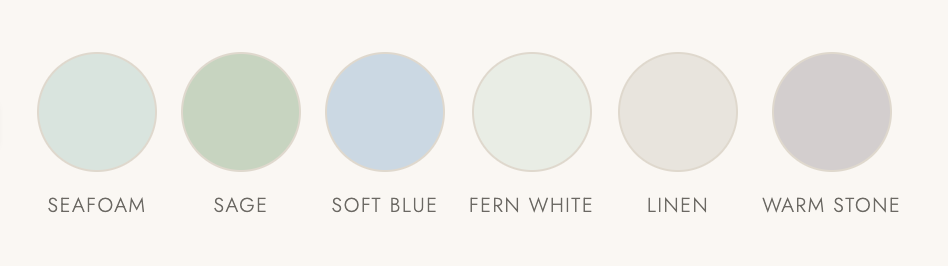
The most effective summer palette is built on whites, linens, soft greens, and stone grays — the colors of shade, of sea glass, of bleached cotton left in the sun. Interior designers refer to this as the “Nordic summer” approach: highly neutral backgrounds that reflect rather than absorb light, with greenery and natural textures providing the visual warmth.
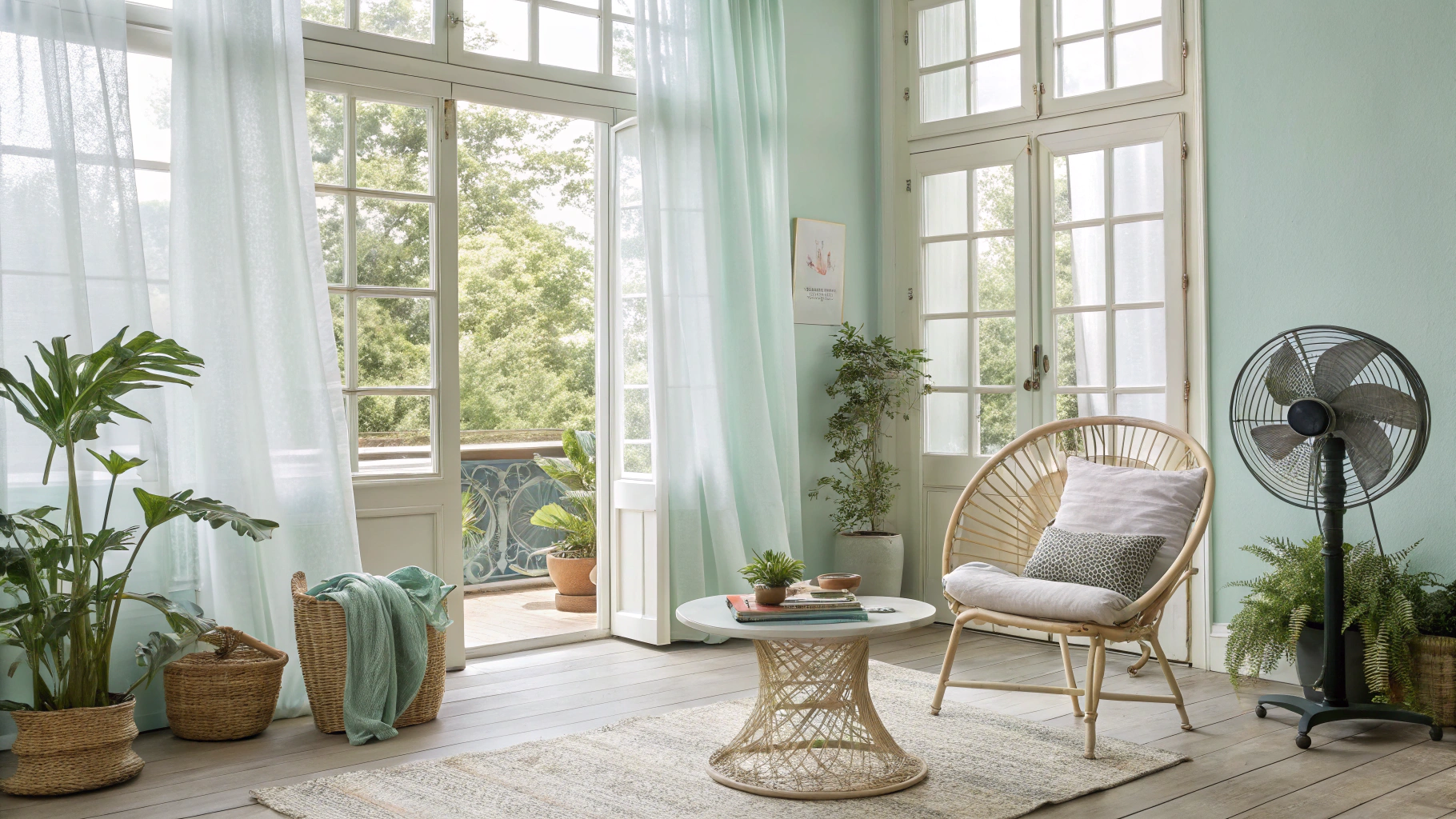
If your walls are already a deep or warm tone, you don’t need to repaint. Instead, do a seasonal textile swap: replace burgundy throw pillows with dusty sage or ice blue. Swap a chunky wool throw for a waffle-weave cotton blanket. Roll up the thick area rug and lay a jute or seagrass one instead. The room will feel 5 degrees cooler without touching the thermostat.
“The most elegant summer interiors don’t announce themselves as ‘decorated for summer.’ They simply feel like relief.”
What to avoid: red, burnt orange, and golden yellow as dominant tones. These colors don’t just read as warm — they genuinely raise perceived temperature. Even a single oversized orange piece of art on the main wall can undo all the cooling work of your palette. Save the terra cotta and spice tones for accents at eye level or below.
The Smart Approach to Light and Windows
Up to 76% of the sunlight that enters a standard window becomes heat. Knowing which windows to treat, when, and how is one of the highest-leverage things you can do — both for temperature and for ambiance.
The Layered Window Approach
The interiors editors at Better Homes & Gardens have long championed the layered window treatment for exactly this reason. The logic is simple: a single sheer isn’t enough to block heat, and blackout curtains alone look institutional. The combination of a sheer white voile liner (which diffuses glare and softens light beautifully) with a heavier linen drape pulled to the side gives you complete control over heat, privacy, and mood.
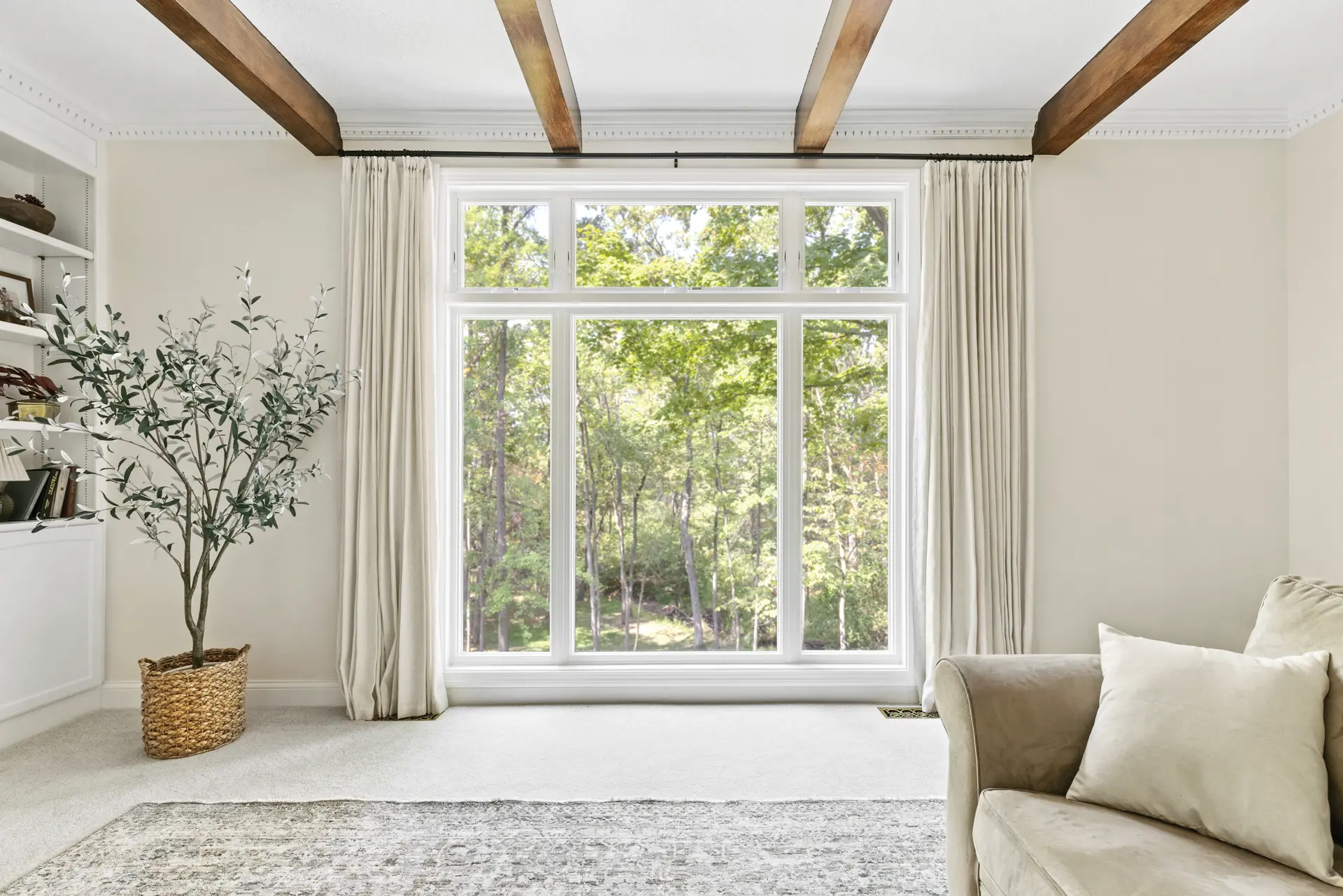
For maximum cooling without blackout curtains, hang your drapes as close to the ceiling as possible — ideally 2–4 inches below the crown molding — and ensure they are wide enough to overlap the window frame by at least 6 inches on each side. This creates a light-seal effect that can reduce solar heat gain by up to 33%, according to the U.S. Department of Energy.
Pro Tip
East and west-facing windows are your biggest summer heat culprits — they receive direct morning and afternoon sun respectively. Prioritize your window treatment budget here before south-facing windows. North-facing windows in the northern hemisphere rarely need more than a sheer.
Embracing Strategic Darkness
One of the most beautifully styled summer moves is learning to love selective dimness. In the hottest part of the afternoon (roughly 2pm–5pm), close the drapes on sun-facing rooms entirely. Then, when the sun angles away, draw them open again. This European shuttered-window approach is the reason that so many homes in Italy and Greece remain comfortable without air conditioning — and the rooms look exquisitely chiaroscuro in the filtered light.
Furniture and Materials: What Reads Cool
The materials you choose for furniture, flooring, and accessories are doing constant thermal work whether you realize it or not. Some materials radiate absorbed heat back into the room for hours after the sun sets. Others remain cool to the touch regardless of the conditions.
Materials That Stay Cool
- Natural stone, concrete, and ceramic tile— These have genuinely low thermal mass: they absorb heat slowly and release it gradually. If you have stone or tile floors and have been covering them with thick rugs, consider rolling those up for summer. Bare stone floors are a revelation in July.
- Rattan, bamboo, and light-toned natural wood— These materials carry an almost pavlovian cooling association and genuinely don’t trap heat the way dark, dense hardwoods or lacquered furniture can.
- Linen, cotton percale, and open-weave textiles— Their breathable weave structure allows air circulation that polyester-blend fabrics cannot. For upholstery, linen slipcovers are a designer-loved seasonal hack: they look deliberately considered while actively keeping you cooler than you’d be on leather or velvet.
- Brass and copper accents— A counterintuitive one: these warm-toned metals actually feel cool to the touch because they are excellent thermal conductors. More practically, they look exceptionally good against the pale, cool-toned palette of a summer room.
- Glass and mirror— Use these deliberately. A large mirror on a north-facing wall bounces natural light deep into a room without introducing heat, effectively brightening the interior without any of the warming effect of direct sunlight. Mirrored or glass-topped side tables amplify this quality.
Plants: Nature’s Own Air Conditioners
Interior botanists and environmental scientists are in agreement on this one: indoor plants meaningfully reduce ambient temperature through a process called transpiration — essentially the plant equivalent of sweating, which releases water vapor and cools the surrounding air. A 2009 study cited by The Spruce found that a room furnished with multiple plants can be up to 10°F cooler than a plant-free equivalent.
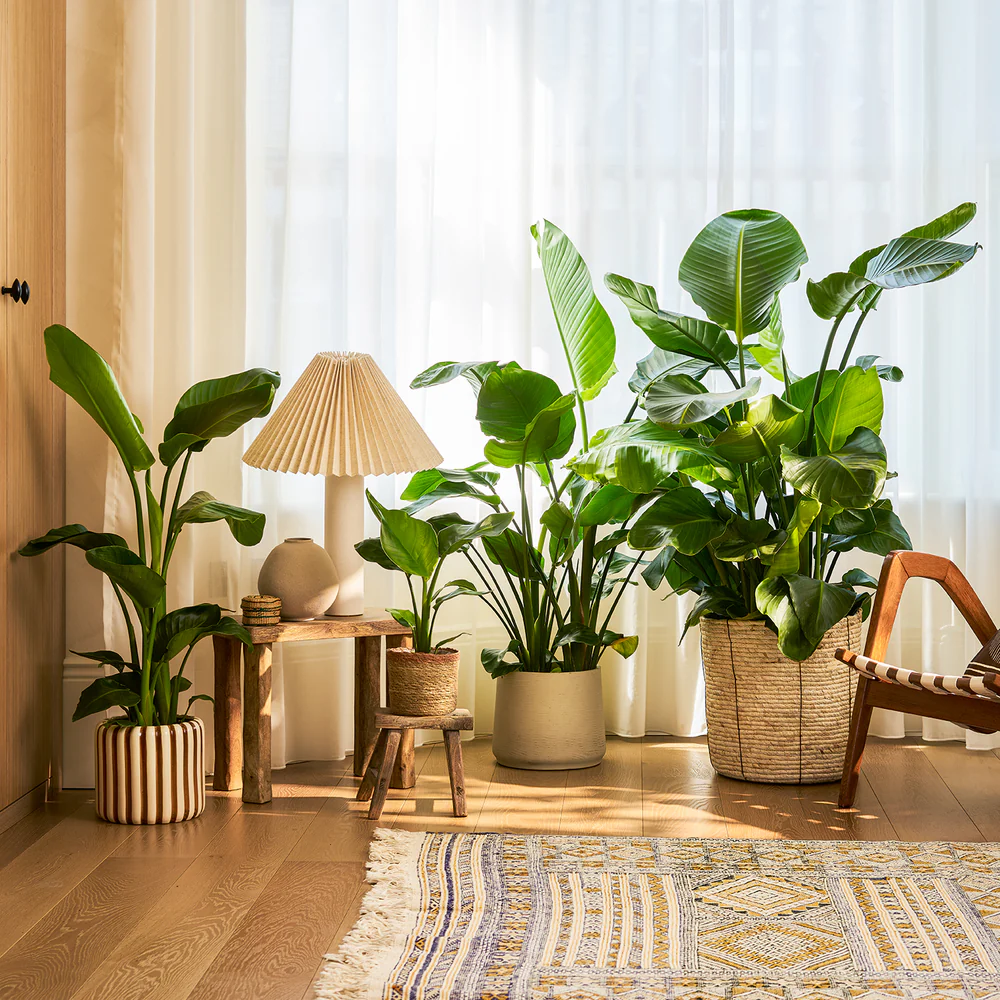
Beyond temperature, plants are one of the most powerful styling tools a summer room has. There’s a reason that every image in a Côte de Pablo-inspired summer feature is generously filled with greenery — it cools both the eye and the room.
The Best Cooling Plants for Indoor Summer Styling
Areca palm is the gold standard: large, architectural, and among the highest transpiration rates of any houseplant. It can release up to one liter of moisture per day from a mature plant. A pair flanking a sofa or framing an entry door is both effortlessly stylish and genuinely functional.
Boston fern requires a bit more care in terms of humidity but releases more water vapor than almost any other common houseplant. Style them in hanging baskets near windows where they’ll look lush and dramatic while working hard.
Peace lily, pothos, and snake plant are the workhorses — low maintenance, visually appealing, and effective contributors to air quality and humidity. Snake plants in particular suit the clean, graphic look that reads as cool and contemporary in summer interiors.
The Bedroom: Engineering the Perfect Cool Sleep
Sleep quality degrades significantly above 67°F according to research published by the Sleep Foundation. The bedroom, therefore, deserves its own cooling strategy — one that goes beyond simply setting the thermostat lower.
The Textile Edit
The single most impactful bedroom change you can make in summer is the bedding swap. Heavy duvets and flannel sheets are obvious culprits, but the subtler mistake is keeping your bedding in warm, saturated tones — deep navy, forest green, burgundy — which both absorb heat and signal warmth to the brain.
Summer bedding in the style of The White Company or Restoration Hardware: all-white cotton percale sheets layered with a single lightweight linen coverlet in a soft, cool neutral — blush, pale blue, sage, or ecru. Top with two to three linen pillow shams, an aged ceramic lamp, and a single stem of eucalyptus in a bud vase. The room will look like a luxury hotel and sleep like a dream.
Ceiling Fans: The Underrated Design Element
A ceiling fan running counterclockwise in summer creates a wind-chill effect that can make a room feel up to 8°F cooler — allowing you to raise your thermostat setting without sacrificing comfort, which translates to roughly 15% off your cooling costs per degree raised. More importantly, ceiling fans have become genuinely beautiful design objects. Sculptural rattan fans, artisan wood-blade designs, and sleek matte black or brass fixtures are now available at every price point and add architectural interest to a room that no AC unit can replicate.
The Living Room: Styling for the Long Summer Afternoon
The living room is where summer styling is most visible and most impactful. It’s the room guests see, the room you spend evenings in, and the room most likely to absorb the visual and thermal energy of summer.
The Seasonal Decor Swap — A Room-by-Room Checklist
Consider this the living room summer edit that interior designers do every year for their clients without advertising it as “seasonal decorating”:
Swap out heavy throw pillows for ones in washed linen, cotton gauze, or embroidered white canvas. Keep to three maximum on a sofa — summer living rooms look better under-accessorized than over.
Remove one large piece of wall art if it’s dark or warm in tone, and replace it with either a light botanical print, a simple cerused wood mirror, or nothing at all — a blank wall in a cool, pale color reads as restful in summer.
Bring in ceramics: a grouping of pale-glazed stoneware vessels on a coffee table or open shelf costs almost nothing to pull together and is among the most consistently photographed styling moves in homes featured in Architectural Digest summer issues.
Switch to low ambient lighting. A single warm overhead fixture is winter logic. In summer, use multiple low-level sources: table lamps, a floor lamp angled toward a corner, and whenever possible — the natural light from a shaded window. The room will feel cooler and look infinitely more editorial.
Your Outdoor Spaces: Making the Patio Feel Like a Room
A beautifully cooled and styled interior naturally extends the conversation to your outdoor spaces. The patio, front porch, or deck is where summer living actually happens — and with the right shade strategy and thoughtful styling, it can feel like the most comfortable room in the house even at 95°F.
The key is shade architecture. This means more than a market umbrella: it means creating a layered overhead experience that combines pergola or sail shade for hard coverage with tall potted plants and climbing vines for soft, breathing shelter. The dappled light that results is the single most appealing quality of a well-designed outdoor room.
For patio furniture, the materials that keep you coolest are aluminum with textile slings (air circulates under you), powder-coated steel with cushion gaps, and the ever-reliable teak with an open-weave outdoor rug beneath. Avoid solid, dark-colored cushions that absorb and radiate heat — opt for lighter, heat-reflective fabrics in white, stripe, or natural tones.
Outdoor rugs — one of the most transformational elements for turning a patio into a proper room — should be either natural fiber (sisal or coir) for a warm, editorial look, or a flat-weave polypropylene in a neutral or geometric pattern that doesn’t show sun fade.
Scent, Sound, and the Invisible Elements of a Cool Home
The experience of coolness is not purely visual or thermal — it is sensory. The homes that genuinely feel refreshing in summer engage all five senses in ways that go largely unnoticed but are deeply felt.
Scent
Eucalyptus, mint, white tea, cucumber, and water lily are the notes that consistently evoke freshness and cool air. A reed diffuser in your bedroom with a eucalyptus-basil blend will change the felt temperature of the room more than you might expect. Avoid heavy, sweet, or vanilla-dominant fragrances entirely in summer — they register as warm and stuffy even in a perfectly climate-controlled room.
Sound
Research in psychoacoustics has shown that the sound of moving water — fountains, streams, rain — significantly lowers perceived ambient temperature. A small tabletop water feature on a console table, or a compact outdoor fountain on the patio, is both beautiful and genuinely cooling to the psyche.
Texture
Highly tactile, rough, or nubby textures — raw linen, unglazed ceramic, jute, woven rattan — read as cool and airy in a way that smooth, polished surfaces don’t. Style your summer vignettes with texture-forward objects: a rough-edged ceramic bowl, a hand-woven basket, a stack of linen-covered books.
The Chic Living Club Summer Home Checklist
Use this as your room-by-room guide before the hottest weeks of the year:
- Living Room: Swap warm-toned pillows and throws for linen in cool neutrals. Remove or replace one dark piece of wall art. Add a grouping of pale ceramics. Switch to low-level lighting sources.
- Bedroom: Move to percale cotton sheets in white or pale stone. Replace heavy duvet with a linen coverlet. Ensure ceiling fan is set to counterclockwise. Add a diffuser with a cooling botanical scent blend.
- Kitchen: Clear countertops of heat-generating small appliances not in daily use. Add a small potted herb garden on a sunny windowsill — basil and mint are naturally cooling scents. Switch to lighter, matte-finish dishware for summer.
- Windows (All Rooms): Install or re-hang drapes as high and wide as possible. Add sheer liner panels to east and west-facing windows. Establish a habit of closing sun-facing windows between 1pm–5pm.
- Patio or Deck: Invest in shade architecture — at minimum a quality sail shade or pergola structure. Add at least two large potted plants for transpiration cooling. Lay an outdoor rug to define the space as a room. Switch to sling or open-weave furniture where possible.
- Scent and Sound: Place a reed diffuser in the bedroom and main living area with a cooling botanical scent. Consider a small tabletop water feature for a focal point that also reduces perceived heat.
“Coolness in a home is not just a matter of the thermostat. It is a matter of the eye, the skin, the nose, and the quiet intelligence of every material choice you have made.”
The homes that survive summer beautifully aren’t necessarily the coldest — they’re the ones where every design decision is quietly working in the same direction. Strip back the heavy, the dark, the dense, and the synthetic. Invite in the light-toned, the breathable, the natural, and the airy. Your home will feel like the break from the heat you’ve been looking for, and it will look better for it.