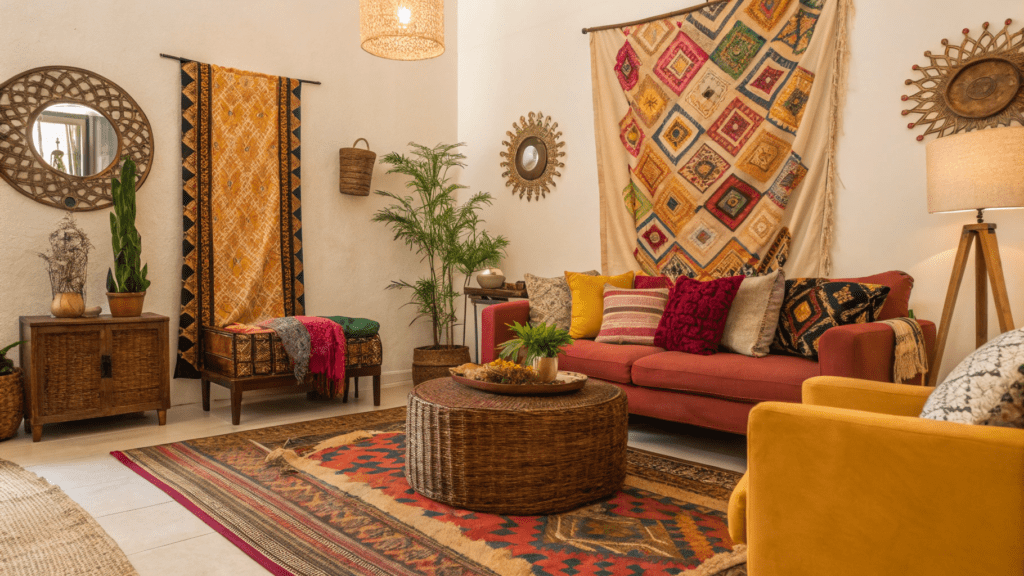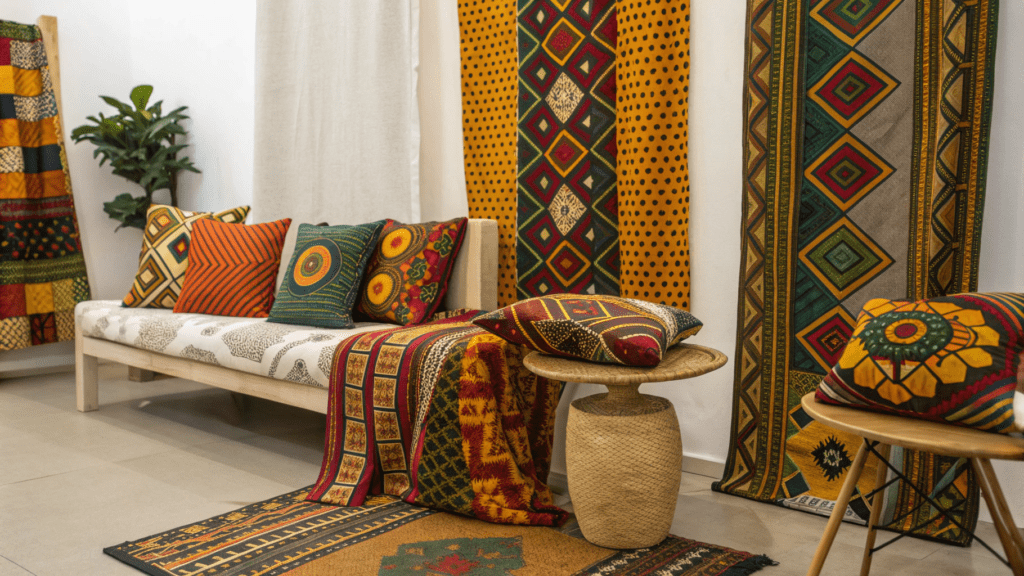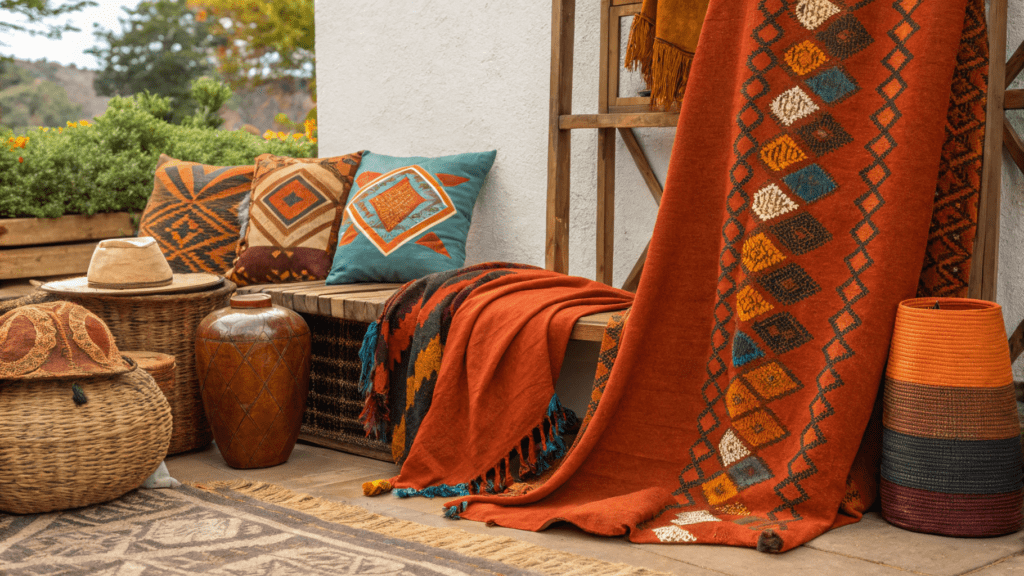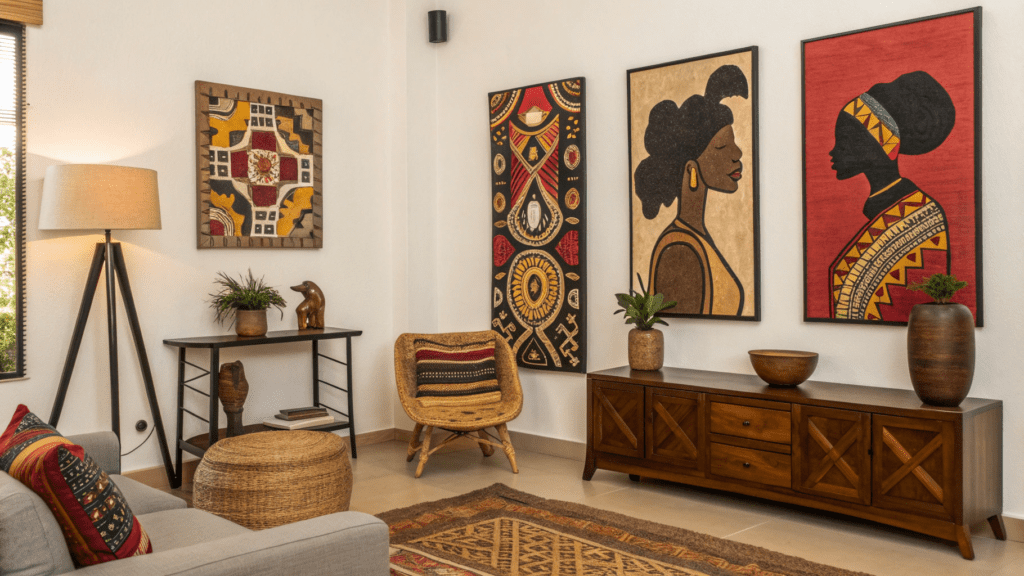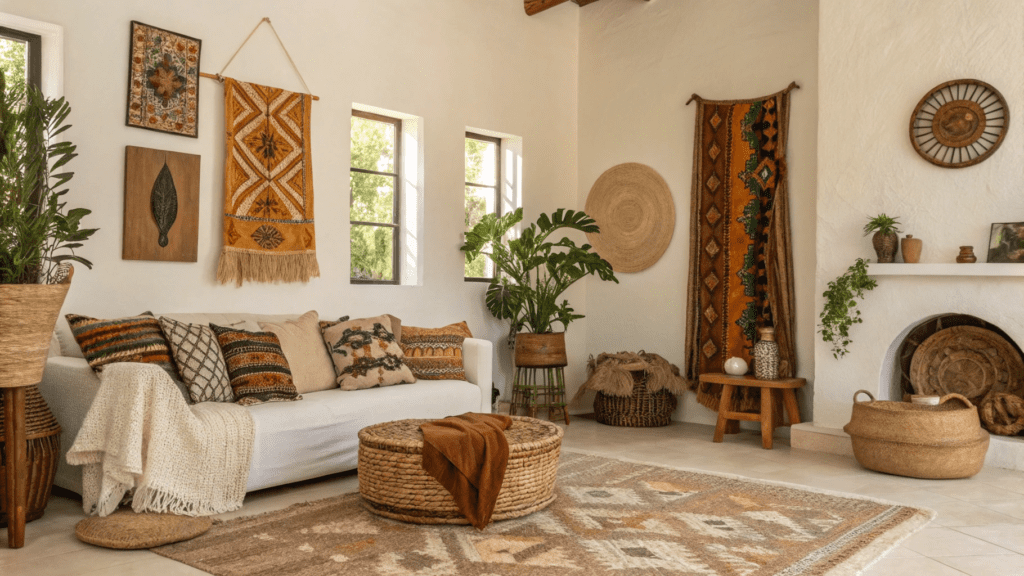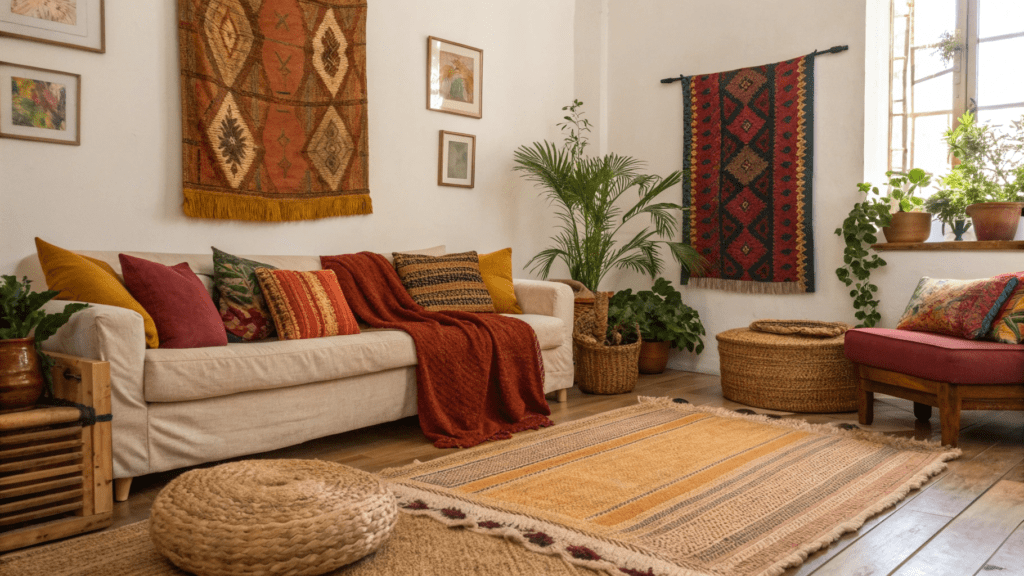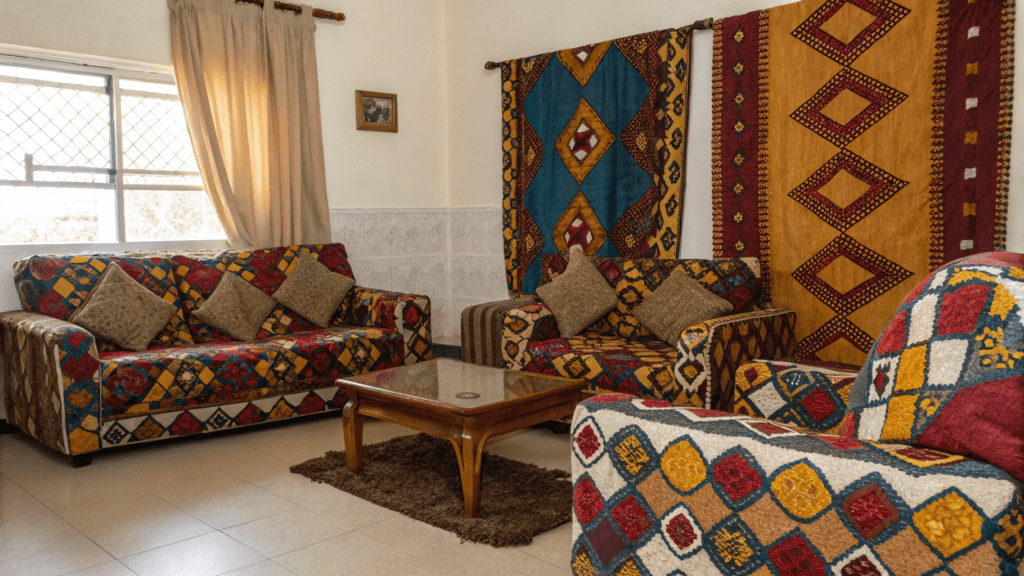
15+ Homes Using Adire Fabric Without Making It Feel Traditional
Adire fabric carries deep cultural meaning and striking indigo patterns, but it doesn’t have to feel traditional or heavy in modern homes.
When used with restraint, clean lines, and contemporary materials, Adire becomes a bold, artistic accent that feels current and elevated.
What Is Adire Fabric and Why Is It Having a Moment in Interior Design
Adire is a hand-dyed resist textile that originates from the Yoruba people of Nigeria, where it has been produced for centuries using indigo dye and techniques such as tie-dye, starch resist, and hand-stitching. The word itself translates roughly to “cloth that is tied and dyed” in Yoruba, and the resulting fabric is instantly recognisable for its deep blue and white patterns — ranging from geometric grids and circles to flowing organic forms that look different in every piece. Because each length of Adire fabric is made by hand, no two pieces are ever identical, which is part of what makes it so compelling as a design material.
In recent years, Adire has moved well beyond its traditional context and into the international interior design conversation. Driven by a growing appreciation for African craft traditions, the rise of Afrobohemian and globally-influenced interior aesthetics, and a broader cultural shift toward intentional, story-led decorating, Adire fabric is now being used by designers and homeowners who want depth and originality that mass-produced textiles simply cannot offer. Its indigo colour palette also happens to align naturally with contemporary design trends favouring cool, grounded tones alongside natural materials and neutral backdrops.
Love Chic Living Club?
Add us as one of your preferred Google sources and discover more home decor, DIY, outdoor, and lifestyle inspiration from us.
What makes Adire particularly interesting for modern interiors is its visual weight. The bold resist-dyed patterns have a graphic quality that reads almost like abstract art when framed or displayed thoughtfully. Unlike many printed fabrics, where the pattern sits on the surface, Adire’s designs are created through the dyeing process itself, giving the fabric a depth and variation of tone that rewards close attention. This is what allows it to function as both a cultural reference and a sophisticated design element in contemporary homes.
You May Also Love
The Key Principles Behind Using Adire Fabric in a Modern Home
The homes that use Adire fabric most successfully share a common philosophy: they treat it as a considered design choice rather than a decorative theme. The difference is subtle but significant. When Adire becomes a theme, rooms risk feeling costumed or culturally performative. When it is treated as a design choice, it functions the same way any other high-quality textile or artwork would — it earns its place through visual strength, restraint in application, and harmony with everything around it.
The first principle is singularity. Using Adire in one place per room is almost always more powerful than using it in several. A single framed Adire panel on a white wall, one throw draped over a contemporary sofa, or a bench cushion covered in Adire fabric against a concrete floor each make a clear, confident statement. Repeat the fabric in multiple applications within the same space and the impact dilutes — what was bold becomes busy, and what was cultural becomes costumey.
The second principle is contrast. Adire’s indigo and white tones are inherently high-contrast, and they need breathing room to land properly. Pairing the fabric with crisp white walls, light wood furniture, matte plaster surfaces, or clean-lined modern pieces allows the pattern to do its work without competing with other visual information. The indigo in Adire is also a surprisingly flexible tone — it reads as both warm and cool depending on surrounding colours, which means it can anchor a space without dominating it when placed correctly.
The third principle is editing. Homes where Adire feels modern are almost always homes where the overall decor is pared back. Fewer objects, simpler furniture, more open wall space, and a limited colour palette all create the conditions in which a single piece of Adire fabric can hold its own as a visual focal point rather than getting lost in a crowded room.
Don't miss: 15+ Afrobohemian Decor Moves That Instantly Add Character →
How to Style Adire Fabric in Different Rooms Without It Feeling Dated
One of the more practical questions around incorporating Adire fabric into a home is where and how it works best room by room. The answer depends largely on the scale of the space, the existing palette, and how much visual weight you want the fabric to carry — but there are clear approaches that consistently work across different interior contexts.
In living rooms, the most modern application is either as large-scale framed wall art or as cushions on a solid-coloured, clean-lined sofa. A single framed Adire panel — ideally 60cm or wider — hung in the style of contemporary textile art immediately elevates the room and gives it a point of cultural and artistic reference without requiring any other changes to the existing decor. On a sofa, two or three Adire cushions among a set of solid cushions in coordinating indigo, navy, or neutral tones creates a layered but controlled look.
In bedrooms, a single Adire bed runner across the foot of a bed with white or linen bedding is one of the most understated and effective ways to introduce the fabric. The contrast between the crisp, plain bedding and the intricate patterning of the Adire creates visual interest without demanding much effort or investment. A wall-hung piece above the bedhead works equally well as an alternative to conventional headboards or artwork, particularly in rooms with minimal furniture.
In dining spaces and entryways, Adire fabric used as a small hanging, a seat cushion on a modern dining chair, or even as the back panel of a built-in shelf or cabinet insert adds personality and warmth to spaces that can often feel functional but impersonal. The key in all of these applications is the same as it is elsewhere: one piece, well placed, surrounded by breathing room and complementary materials, rather than multiple applications competing with each other.
Here are ways homes are using Adire fabric while keeping the look fresh, modern, and intentional.
Keep Exploring
1. Use Adire as a Single Accent, Not a Theme
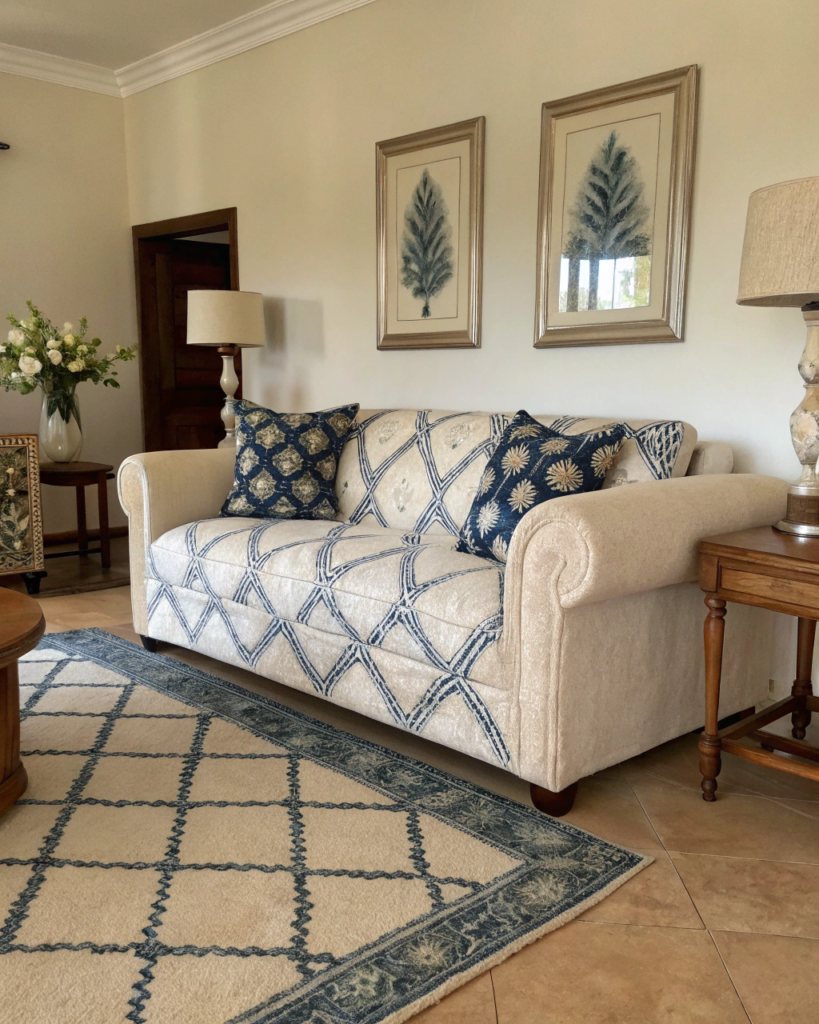
Use:
- One focal application only
- Neutral surroundings to support it
2. Pair Adire With Crisp White Walls
Use:
- Warm white or soft ivory walls
- Minimal wall decor nearby
3. Style Adire on Modern, Clean-Lined Sofas
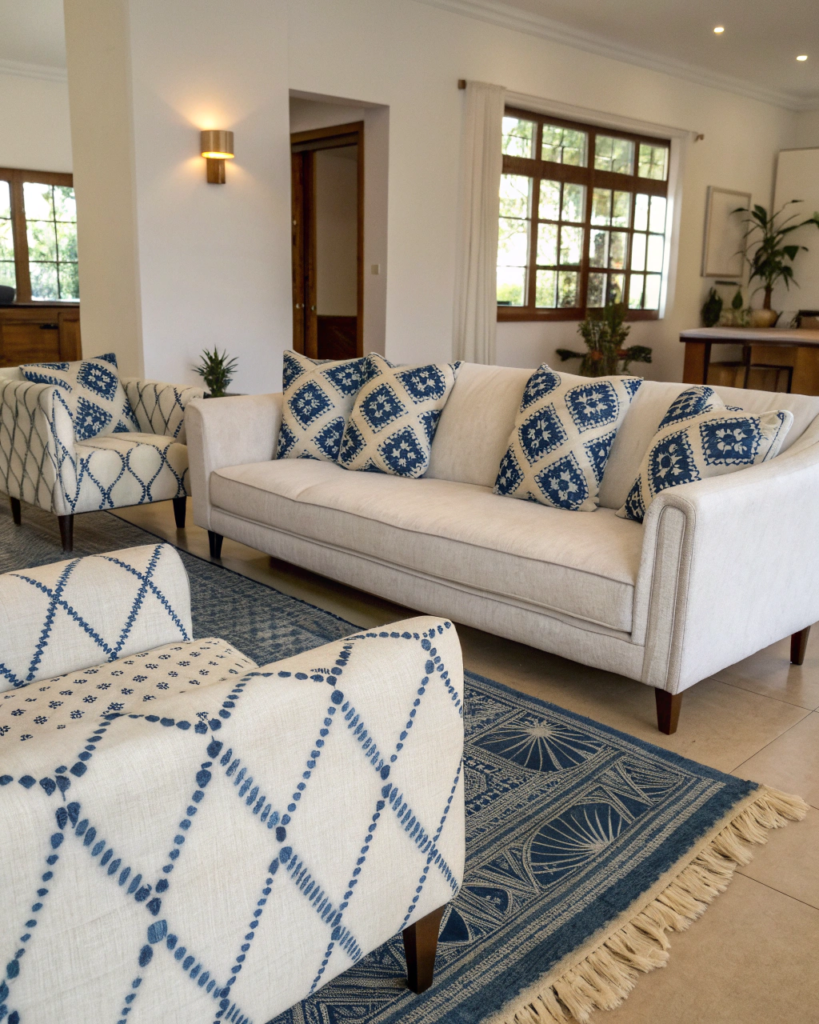
Use:
- Simple sofa silhouettes
- One or two Adire cushions
4. Frame Adire as Contemporary Wall Art
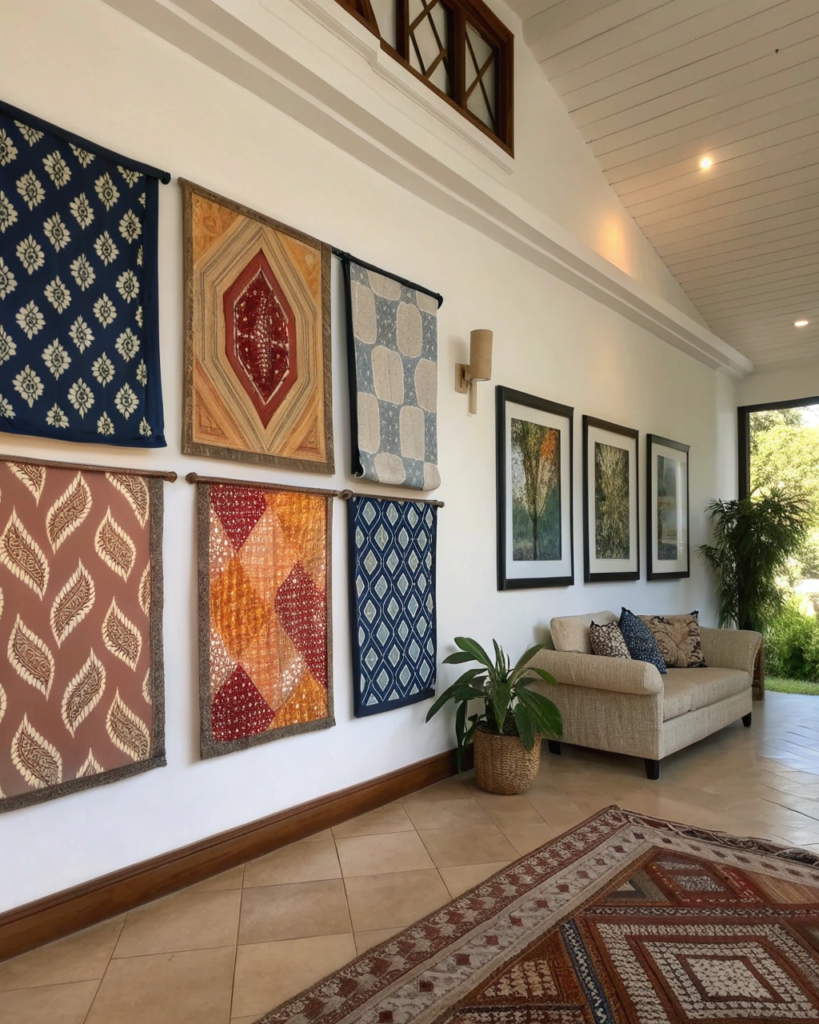
Use:
- Large-scale fabric panels
- Slim black or light wood frames
5. Combine Adire With Light Wood Furniture
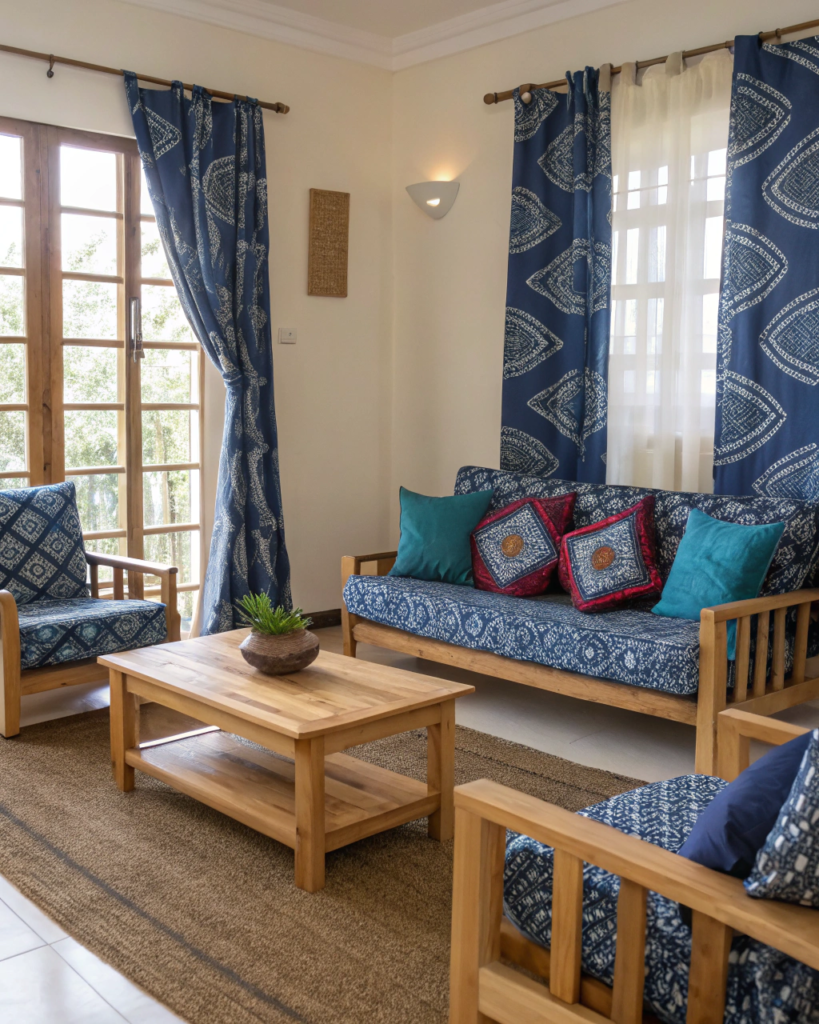
Use:
- Oak or ash furniture
- Matte, natural finishes
6. Keep the Color Palette Very Limited
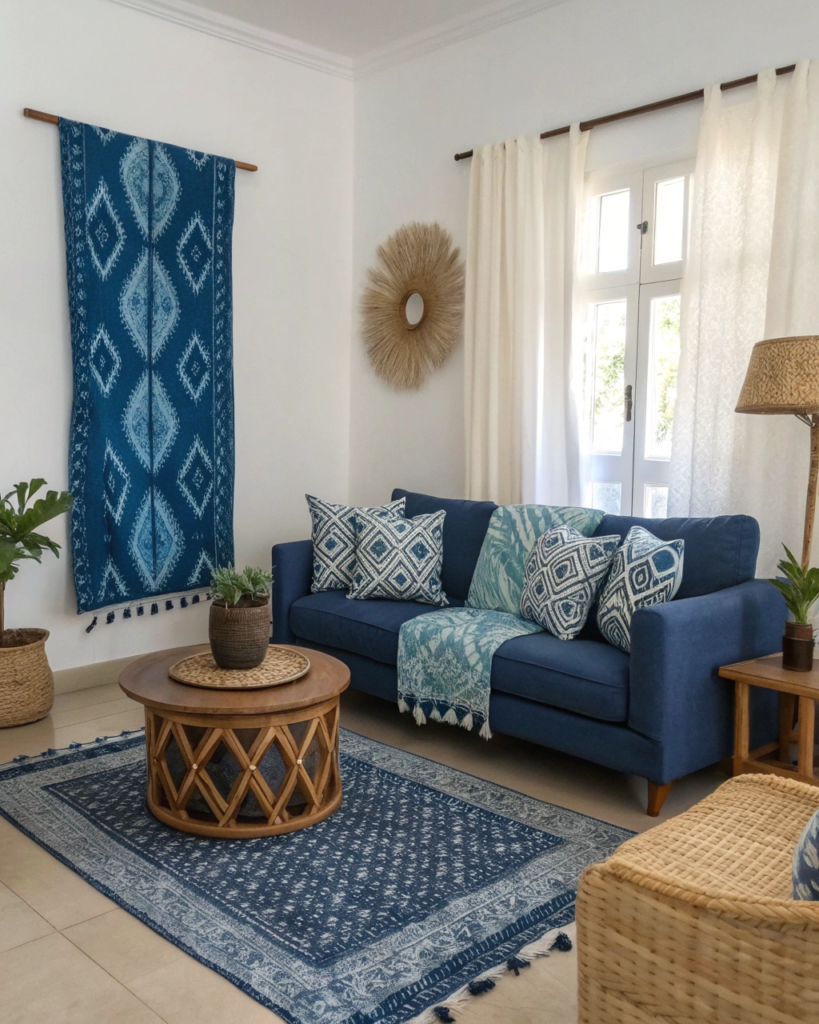
Use:
- Indigo
- White
- One warm neutral
7. Upholster One Modern Accent Chair
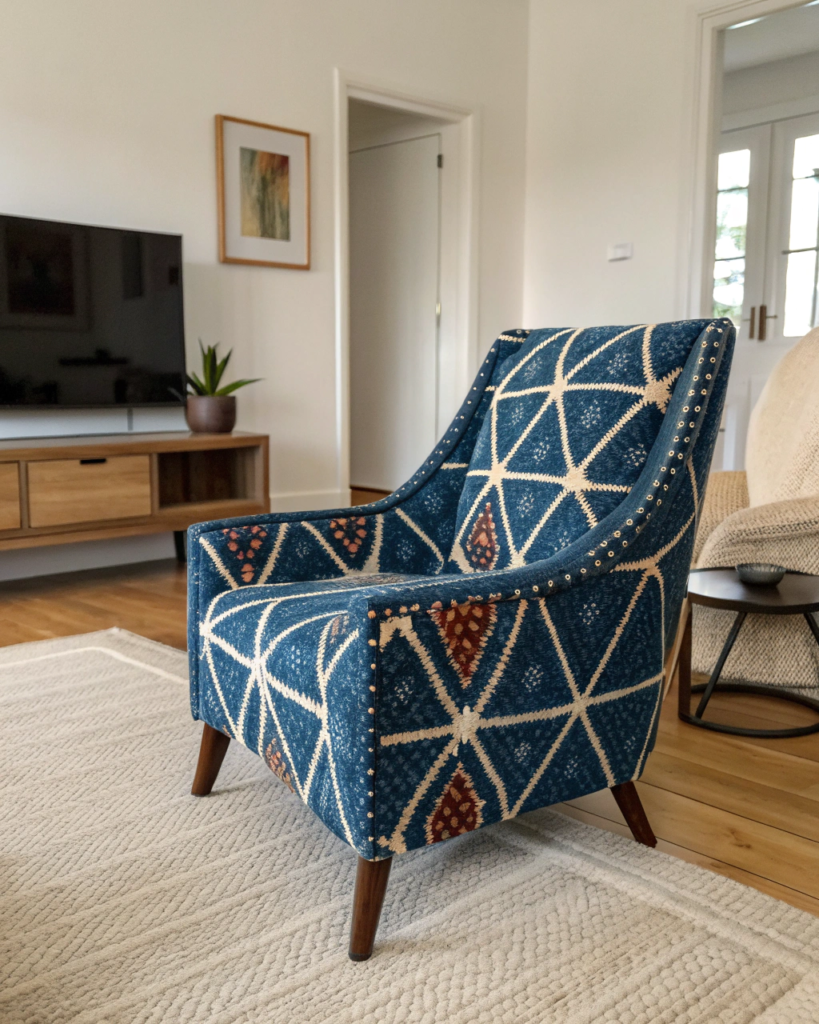
Use:
- Low-profile or sculptural chairs
- Solid wood or metal frames
8. Use Adire in Unexpected Places
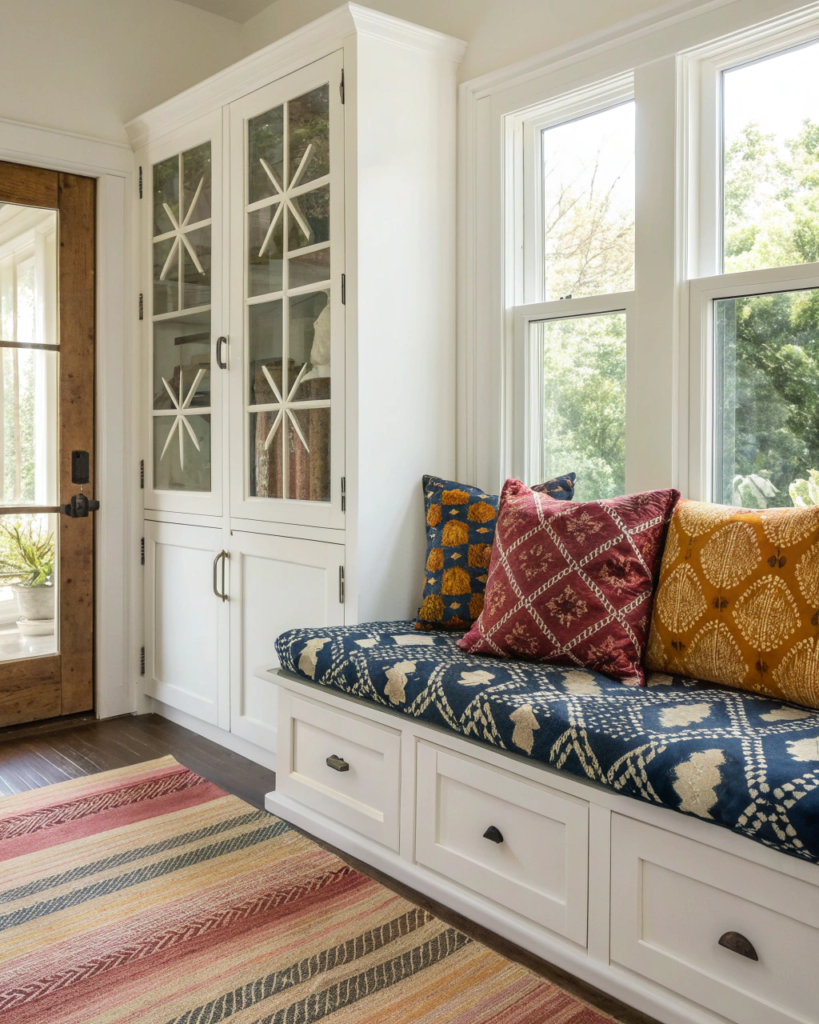
Use:
- Bench cushions
- Cabinet door inserts
- Shelf back panels
9. Mix Adire With Modern Materials
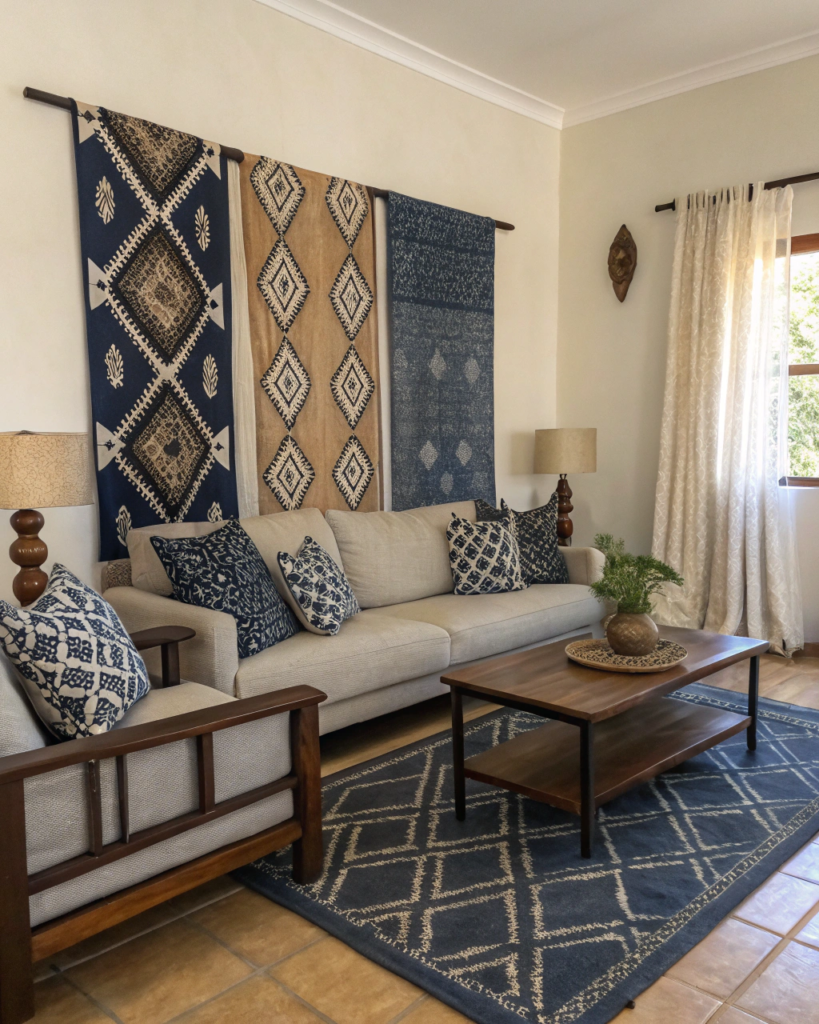
Use:
- Concrete or plaster walls
- Glass tables
- Matte black metal
10. Style Adire With Solid Indigo Textiles
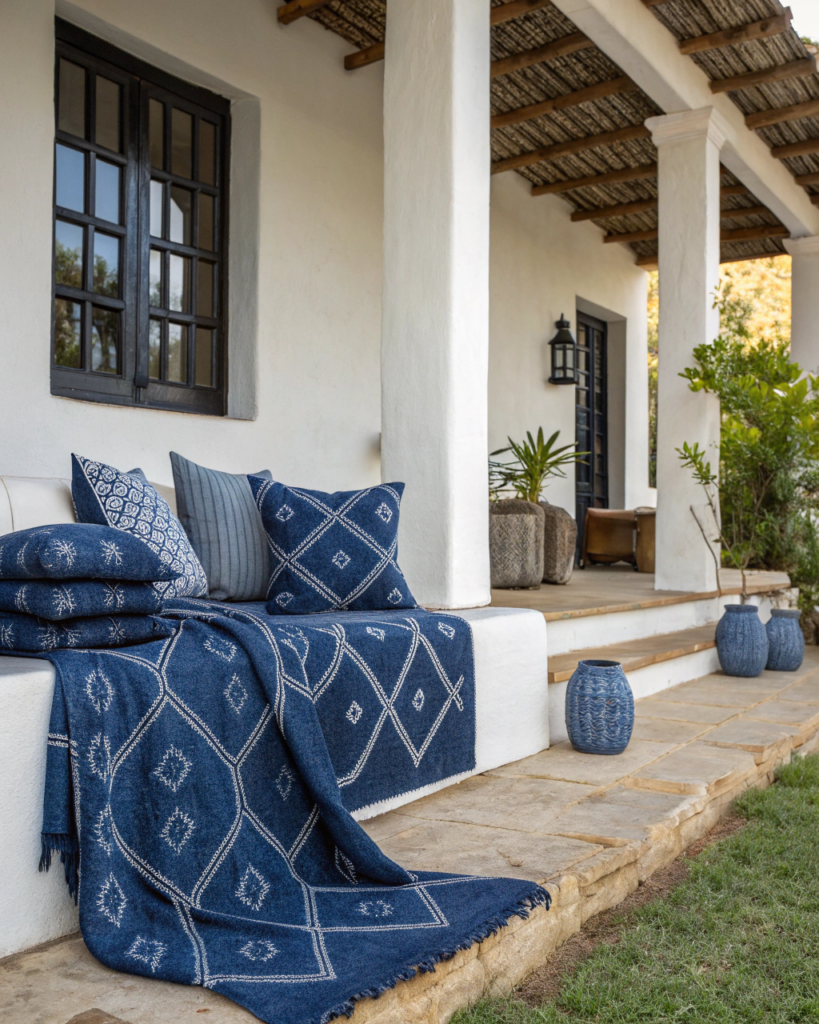
Use:
- Solid indigo throws
- Navy or blue-gray cushions
11. Avoid Layering Adire With Other Patterns
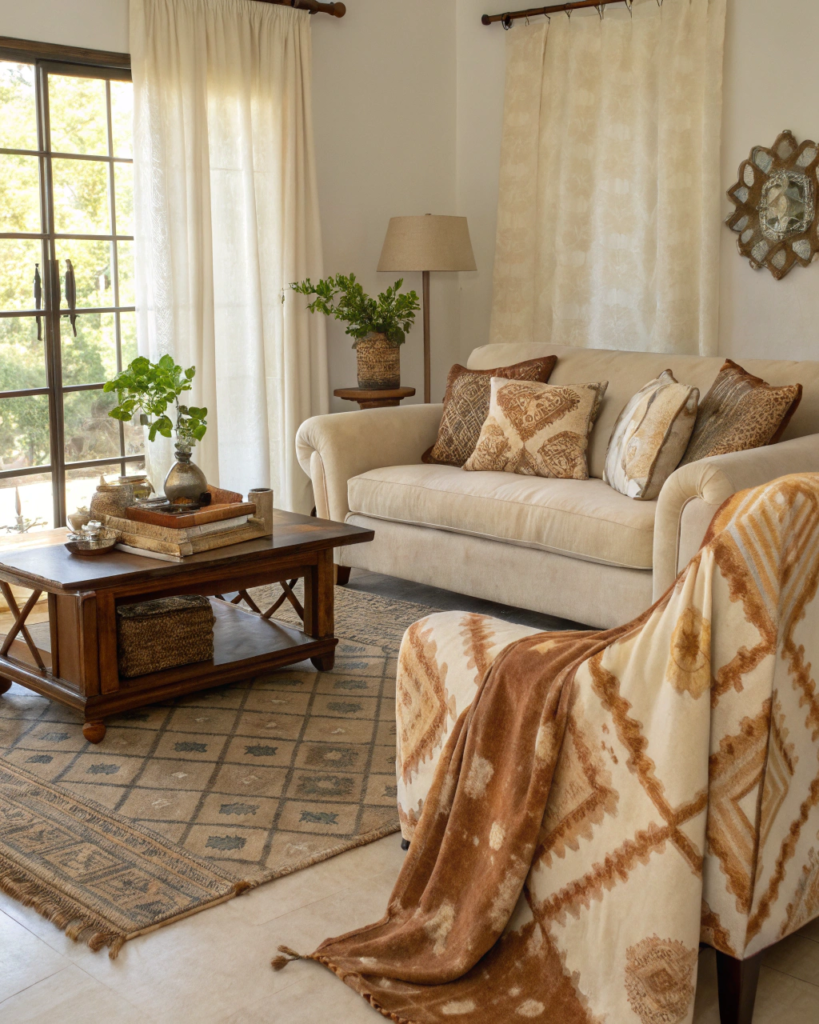
Use:
- Solid fabrics only
- Subtle textures instead of prints
12. Let Negative Space Do the Work
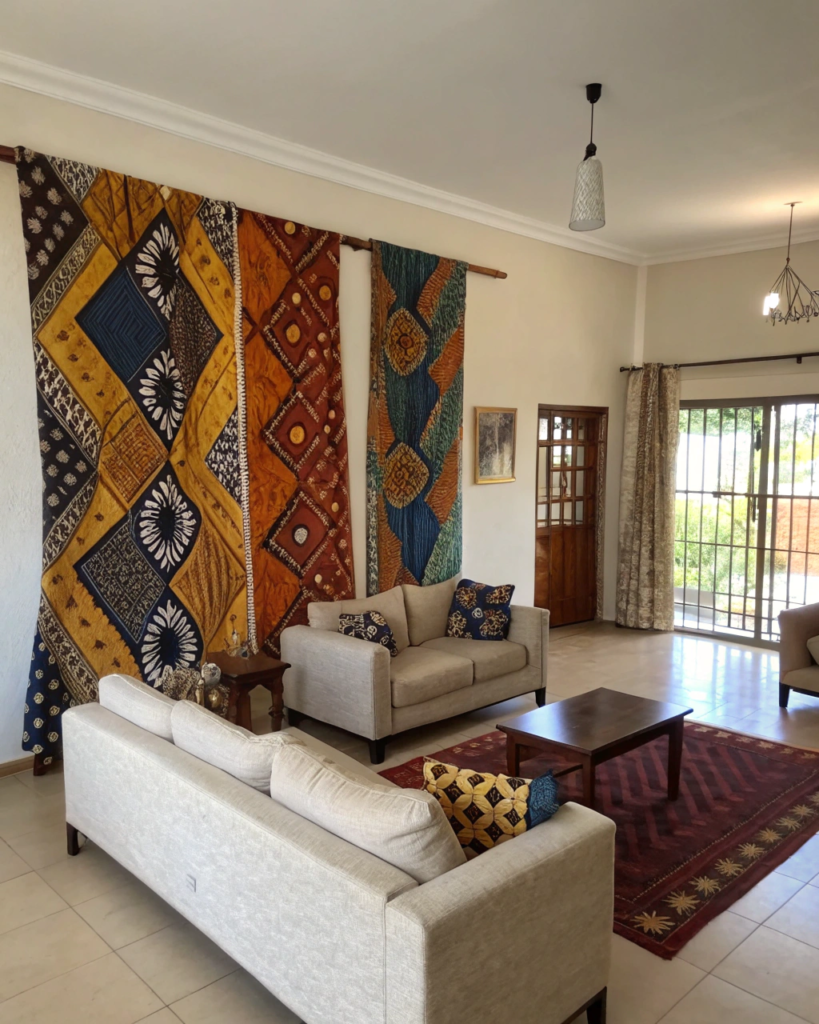
Use:
- Open wall areas
- Breathing room around Adire pieces
13. Use Adire in Minimal Bedrooms
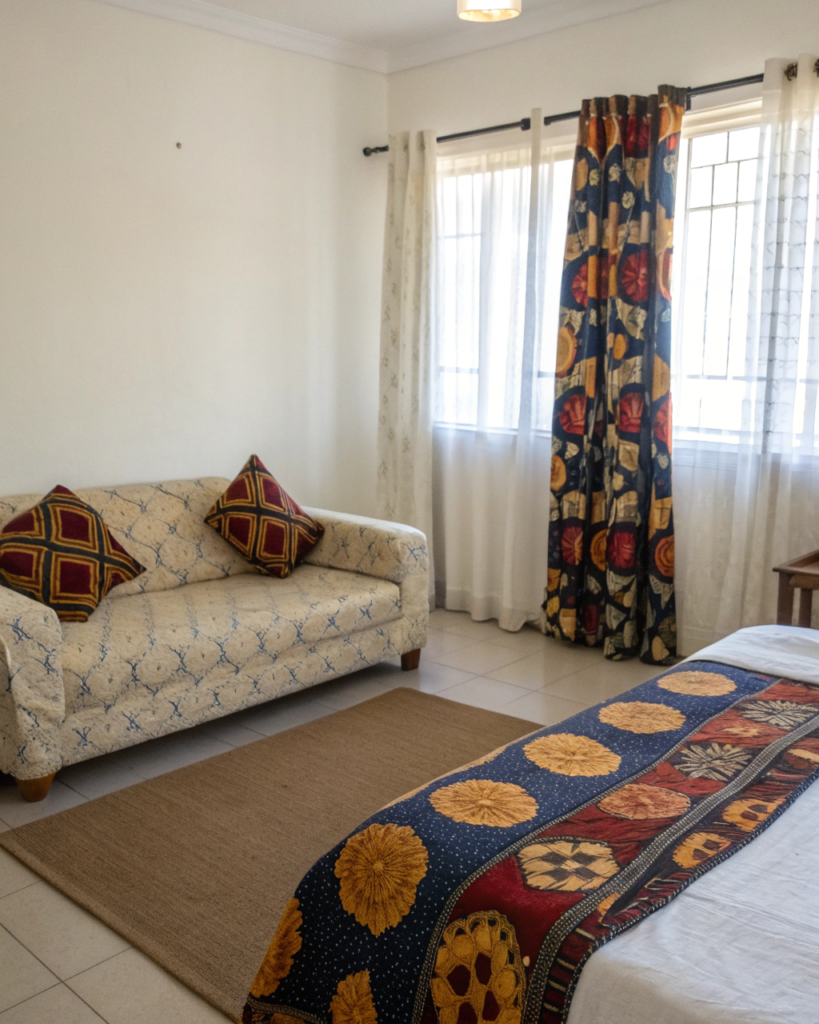
Use:
- One bed runner or throw
- White or linen bedding
14. Balance Adire With Contemporary Lighting
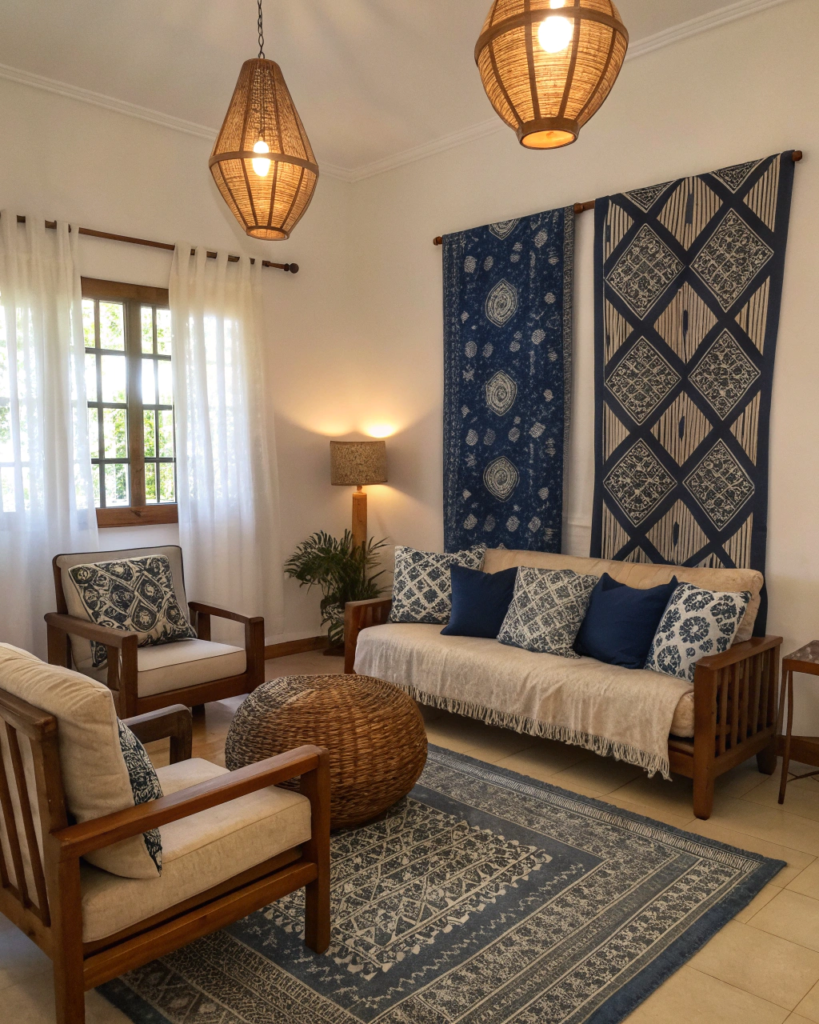
Use:
- Sculptural floor lamps
- Simple pendant lighting
15. Finish With a Carefully Edited Look
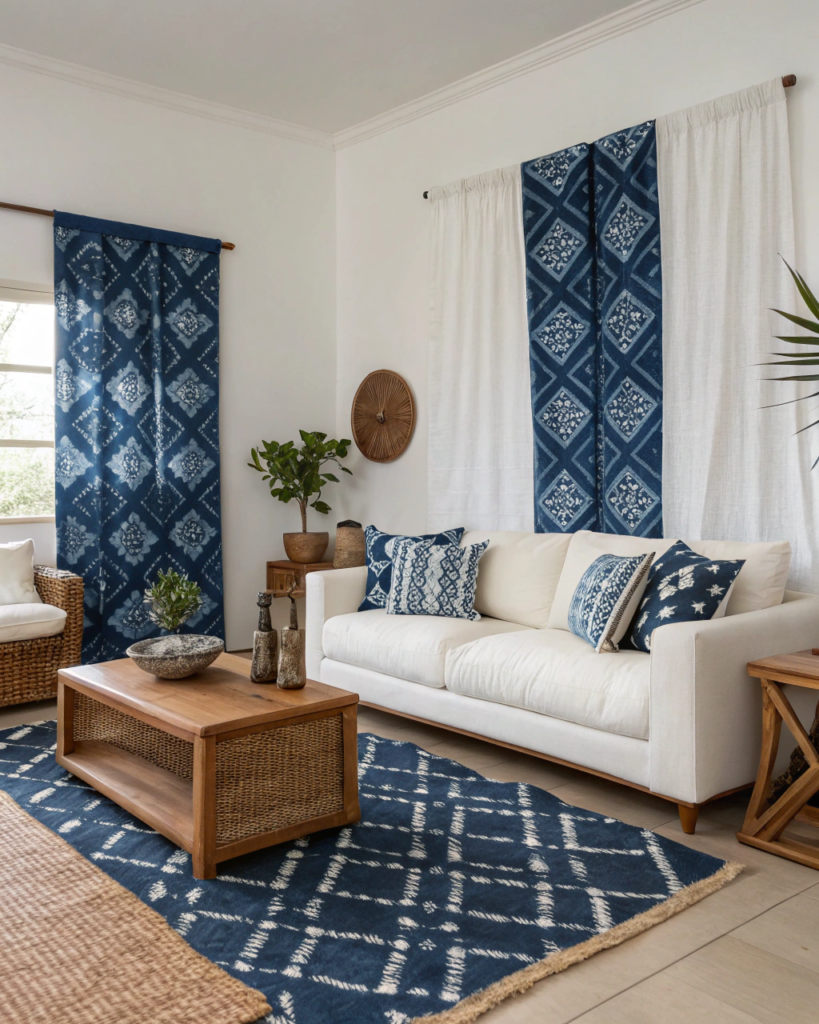
Use:
- Fewer accessories overall
- Repetition of indigo elsewhere in small ways
Final Thoughts
Homes that use Adire fabric successfully without feeling traditional rely on restraint, contrast, and clarity. By treating Adire as art rather than decoration, and pairing it with modern forms and neutral backdrops, the fabric feels expressive, current, and beautifully at home in contemporary interiors.
FAQs
Can Adire work in modern homes?
Yes, when paired with clean lines and neutral colors.
How do you avoid a traditional look with Adire?
Limit its use and avoid mixing it with other patterns.
What colors work best with Adire?
White, beige, light wood, and solid indigo tones.
Is Adire better as decor or upholstery?
Both work, but single accent pieces feel most modern.
Can Adire be used in minimalist spaces?
Yes, especially as wall art or a single textile accent.
What’s the easiest modern Adire update?
Framing Adire fabric as large-scale wall art.
ChatGPT can make mistakes. Check important info. See Cookie Preferences.