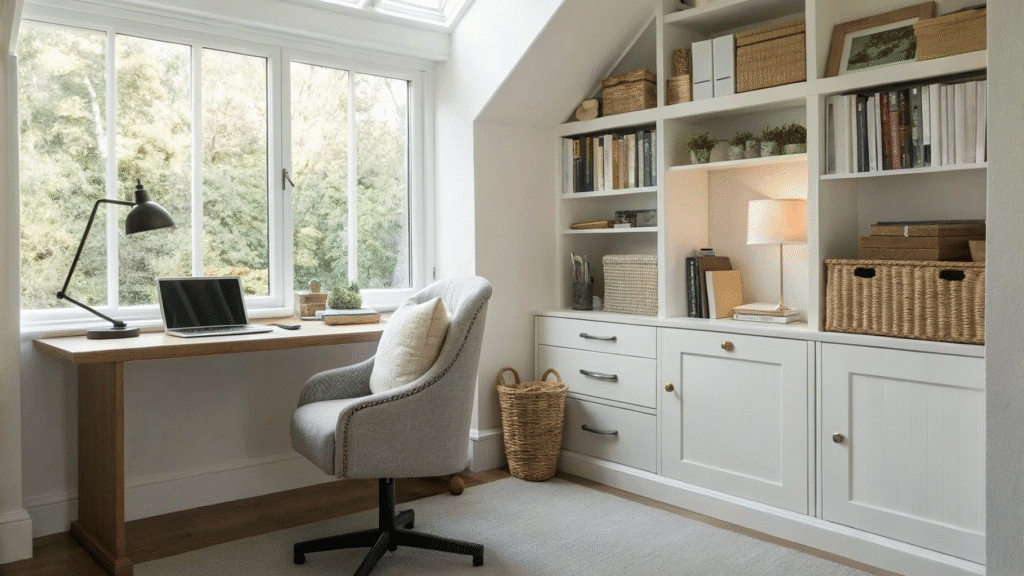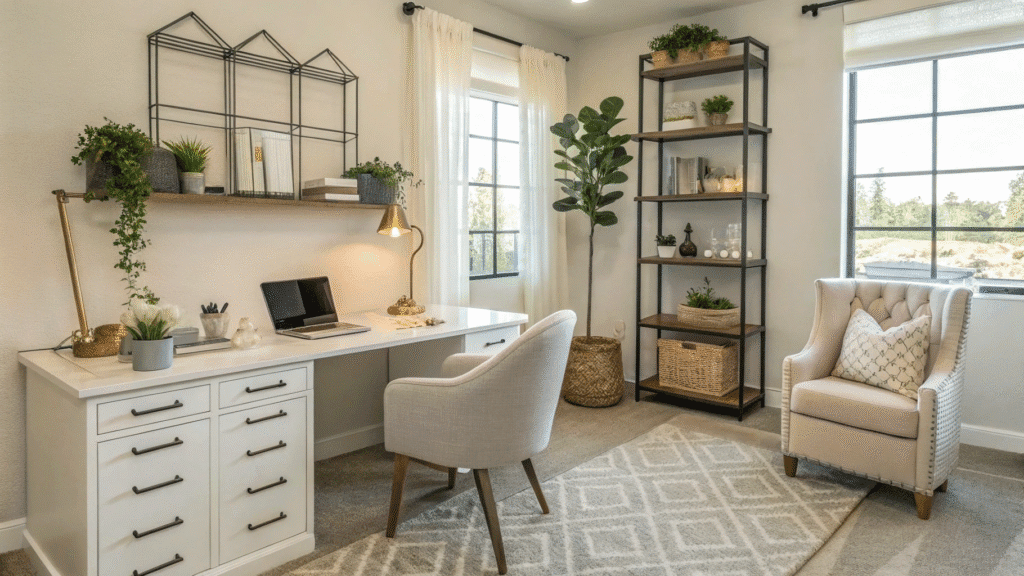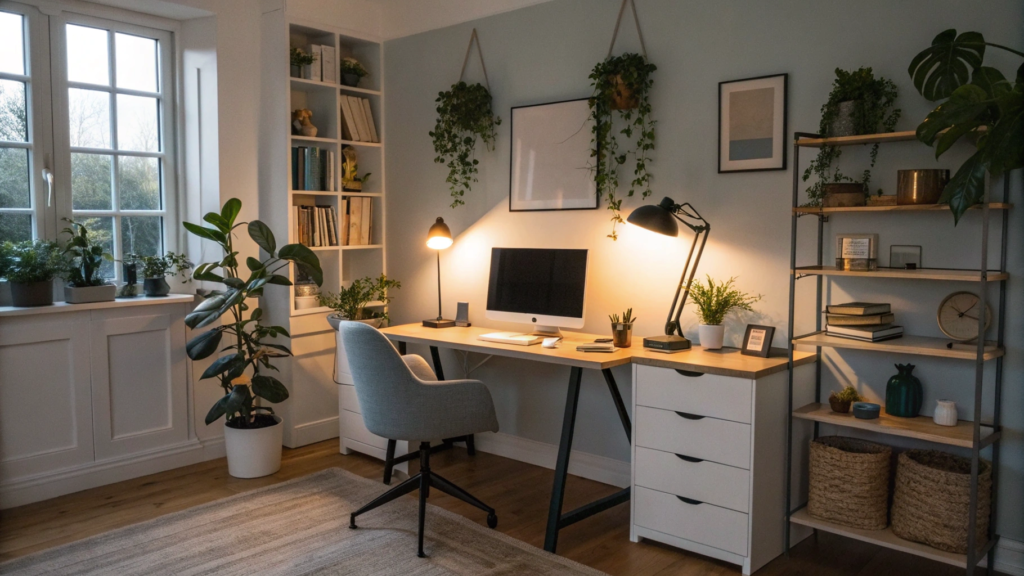
17+ Home Office Lighting Remodel Ideas That Reduce Strain
Good lighting is one of the most important elements in a productive home office. Poor lighting leads to eye strain, headaches, and fatigue, while well-planned lighting supports focus, comfort, and long workdays. The best lighting remodels layer light sources and position them thoughtfully rather than relying on a single fixture.
Here are home office lighting remodel ideas designed to reduce strain and improve daily comfort.
1. Use Layered Lighting Instead of One Overhead Light
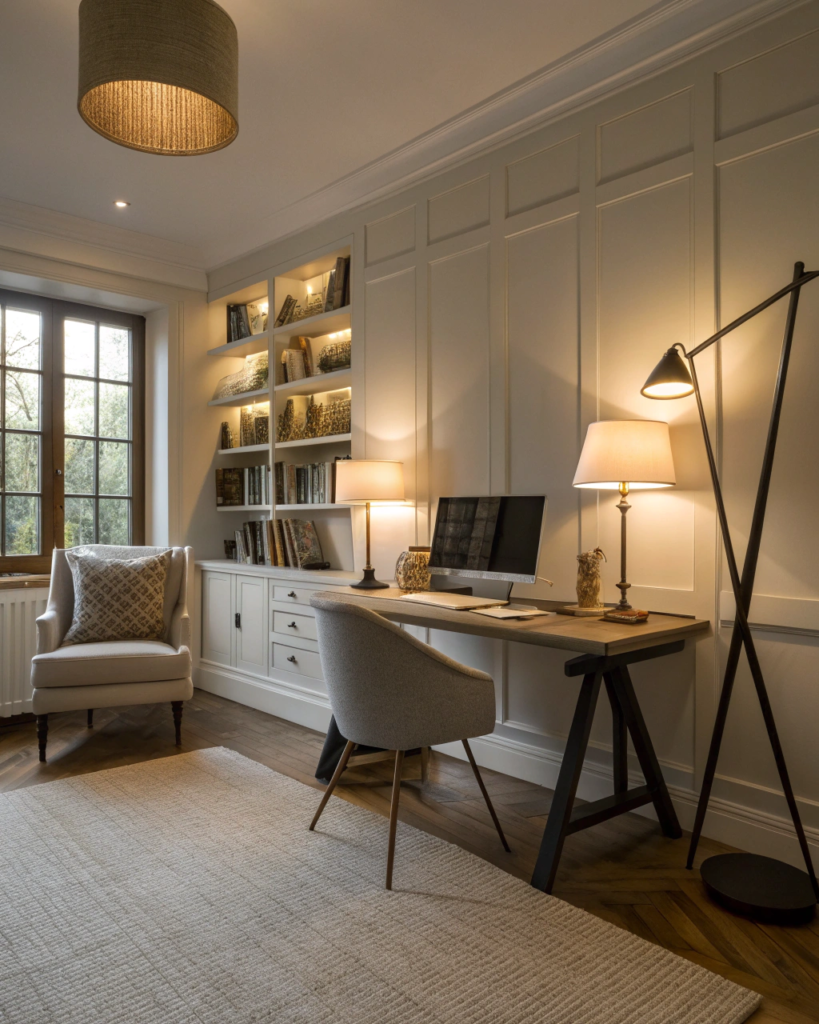
Multiple light sources reduce harsh contrast.


Use:
- Overhead lighting
- Task lighting
- Ambient lighting
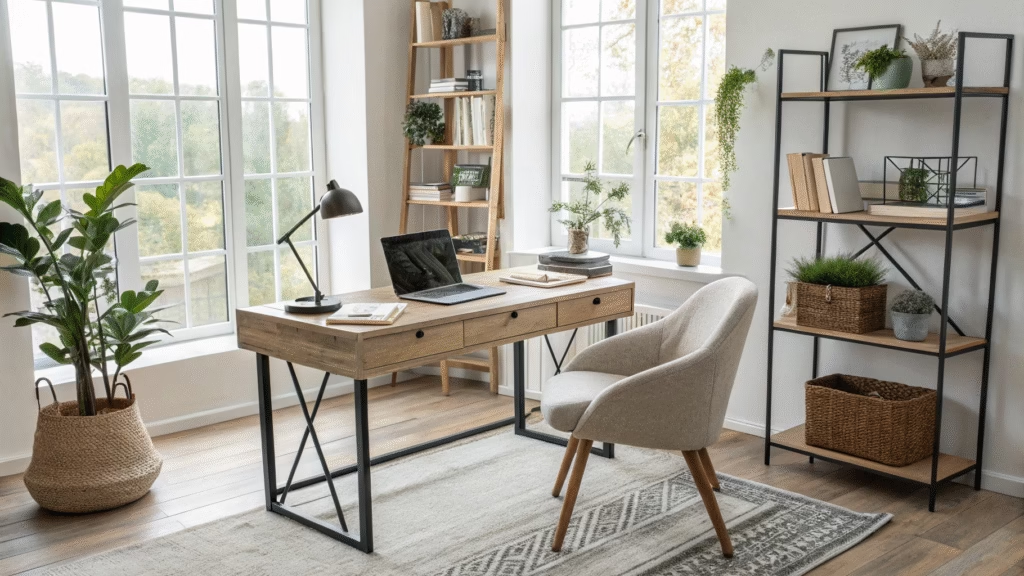
2. Add an Adjustable Desk Lamp
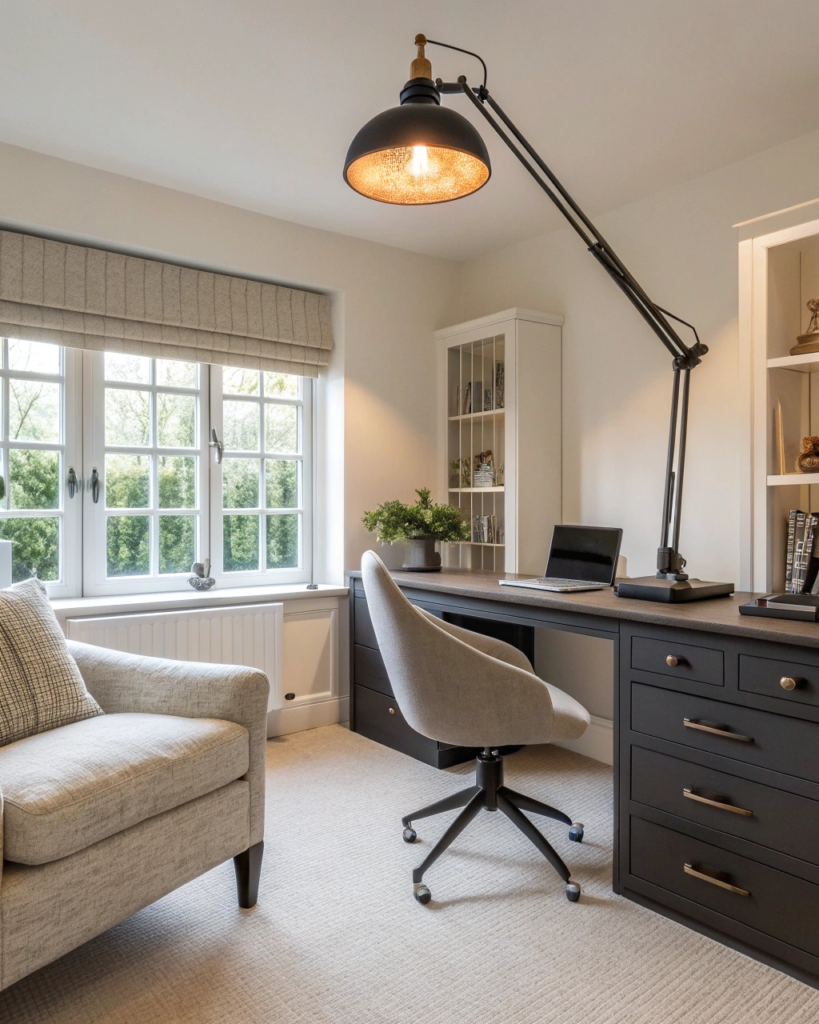
Task lighting is essential for focused work.
Use:
- Adjustable arm lamps
- Directional task lights
3. Choose Warm-Neutral Bulbs
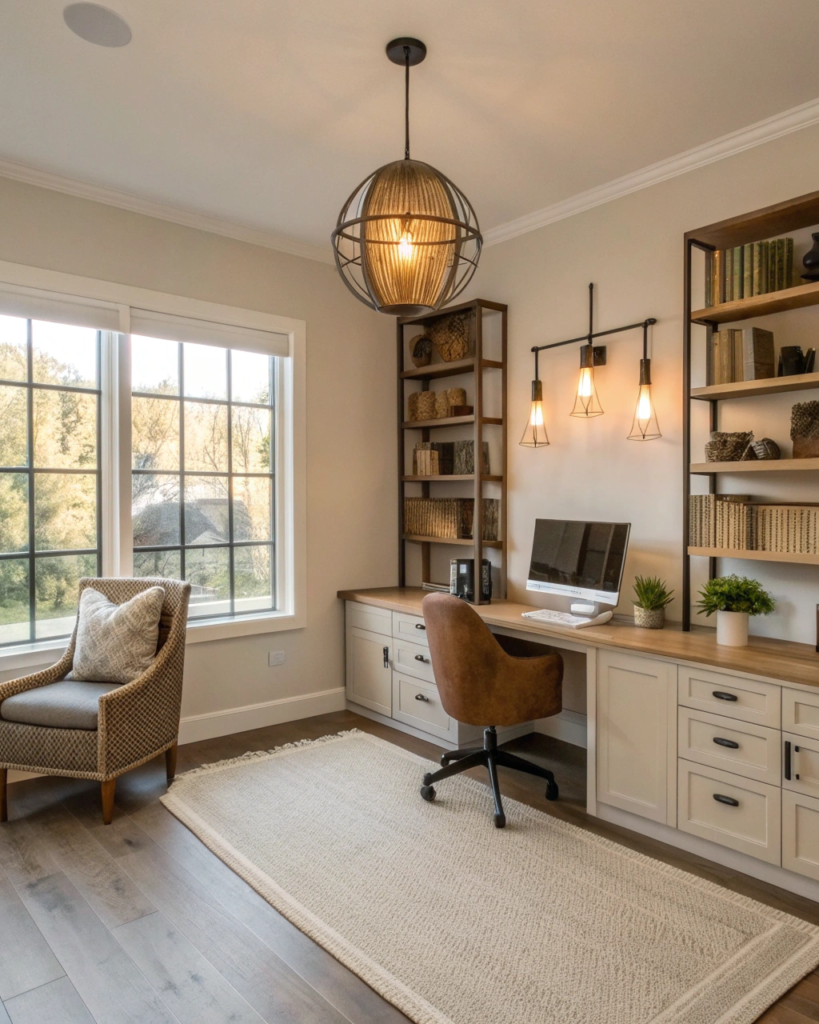
Color temperature affects eye comfort.


Choose:
- 3000K–4000K bulbs
- Avoid overly cool white light
4. Position Desk Lighting on the Non-Dominant Side
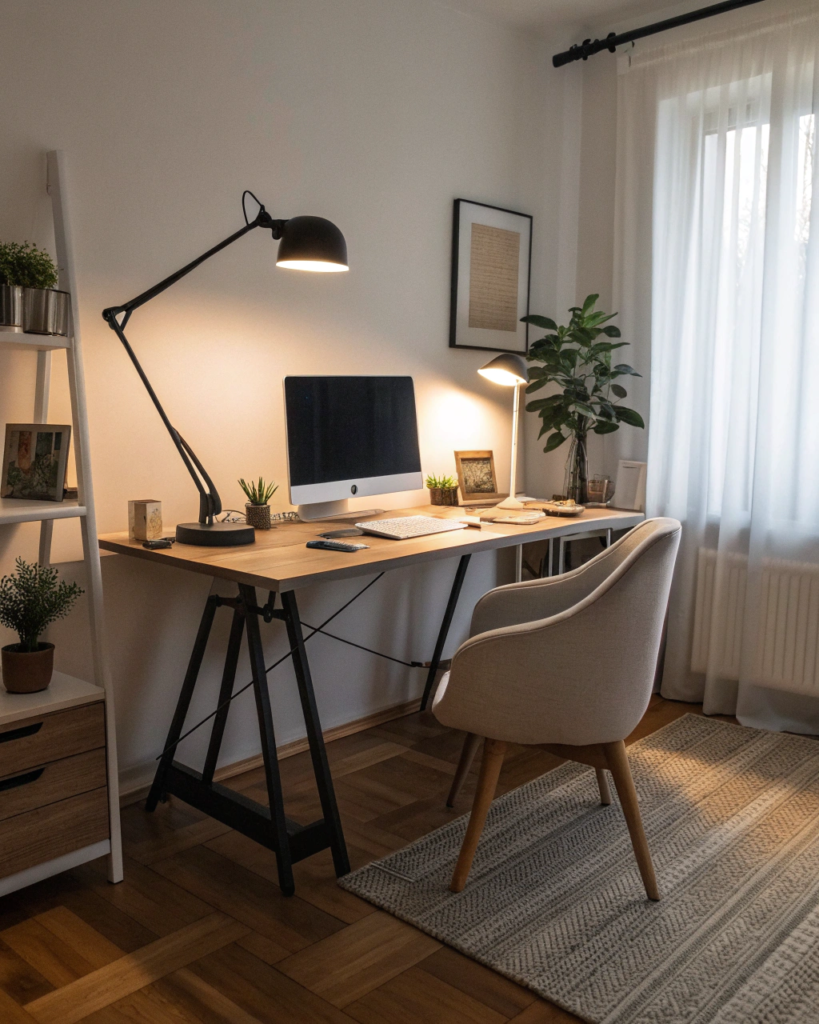
Proper placement reduces shadows and glare.
Place:
- Lamp opposite your writing hand
- Light angled toward the work surface
5. Use Indirect Ambient Lighting
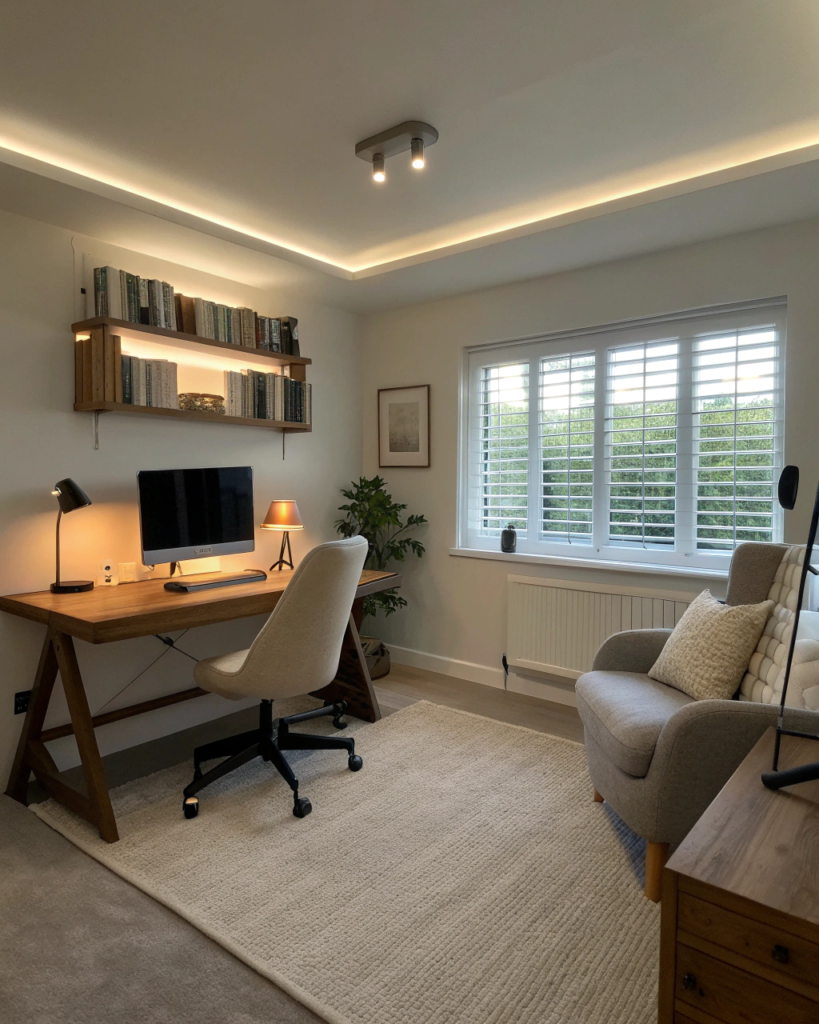
Indirect light softens the room.


Add:
- Floor lamps
- Wall sconces
- Light bounced off walls
6. Install Wall Sconces for Even Light
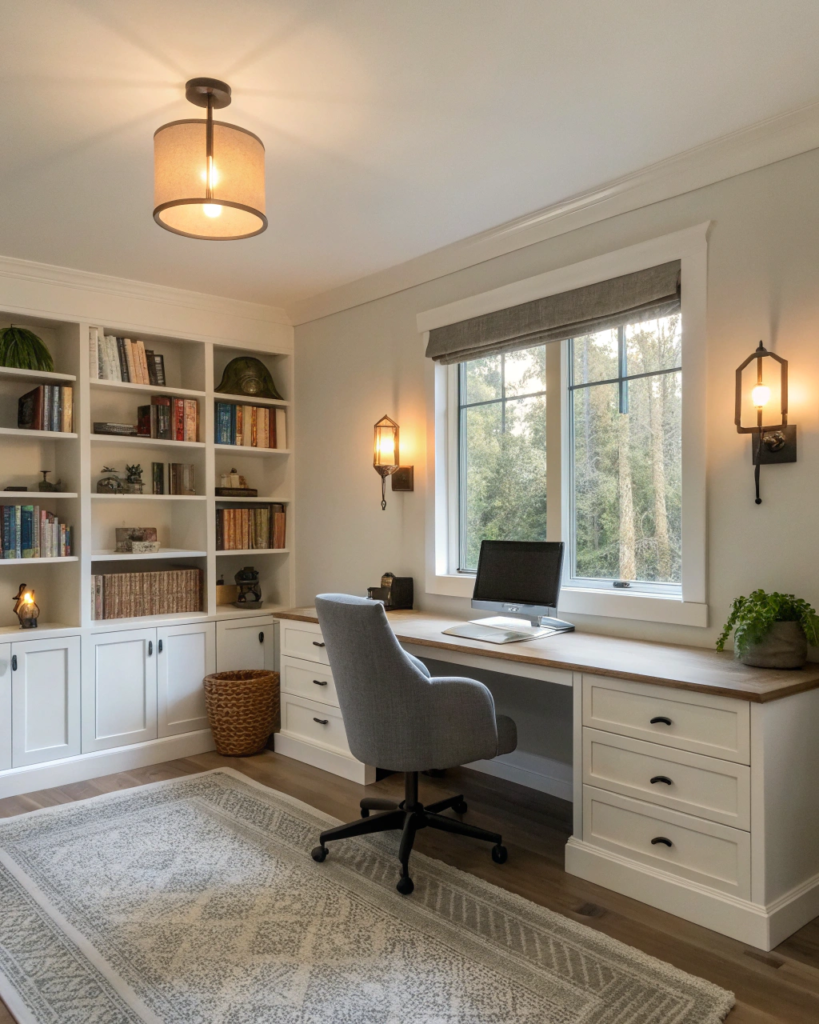
Wall lighting reduces reliance on overhead fixtures.
Use:
- Plug-in or hardwired sconces
- Soft, diffused shades
7. Avoid Bare Bulbs or Harsh Fixtures
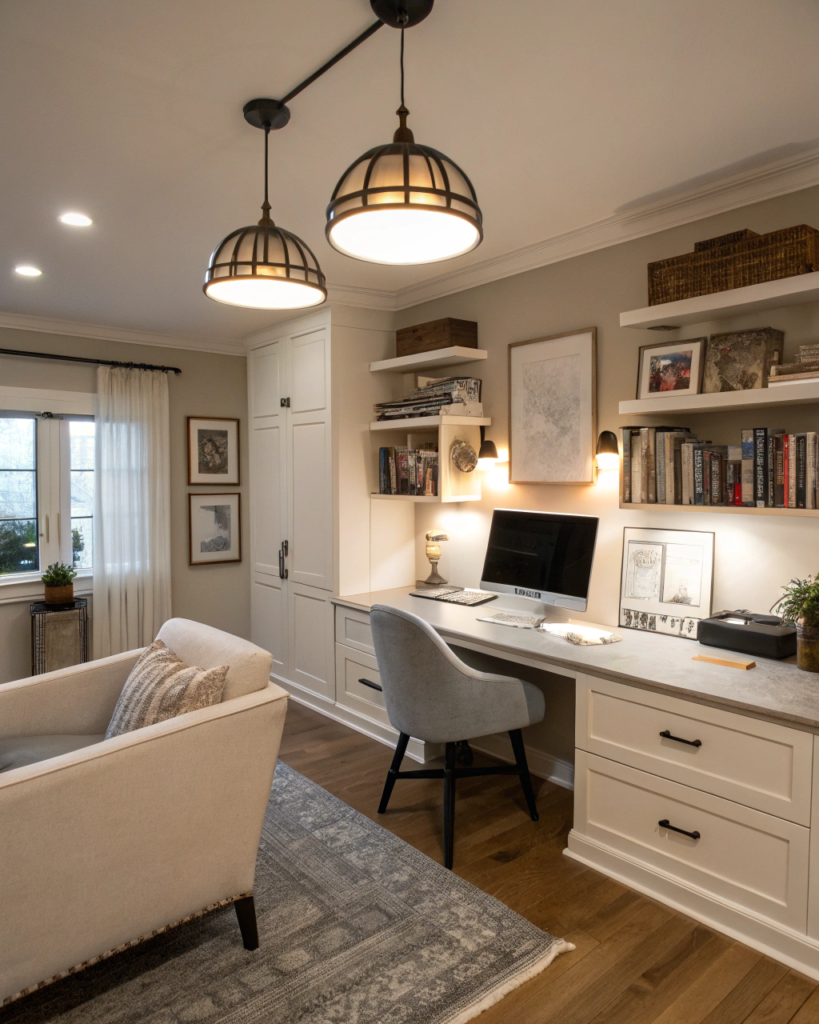
Exposed bulbs cause visual strain.
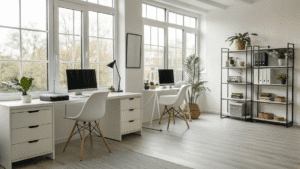
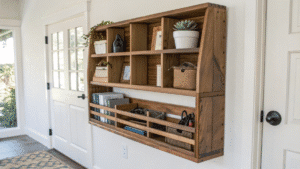
Avoid:
- Unshaded bulbs
- Harsh downward spotlights
8. Add a Floor Lamp for Overall Balance
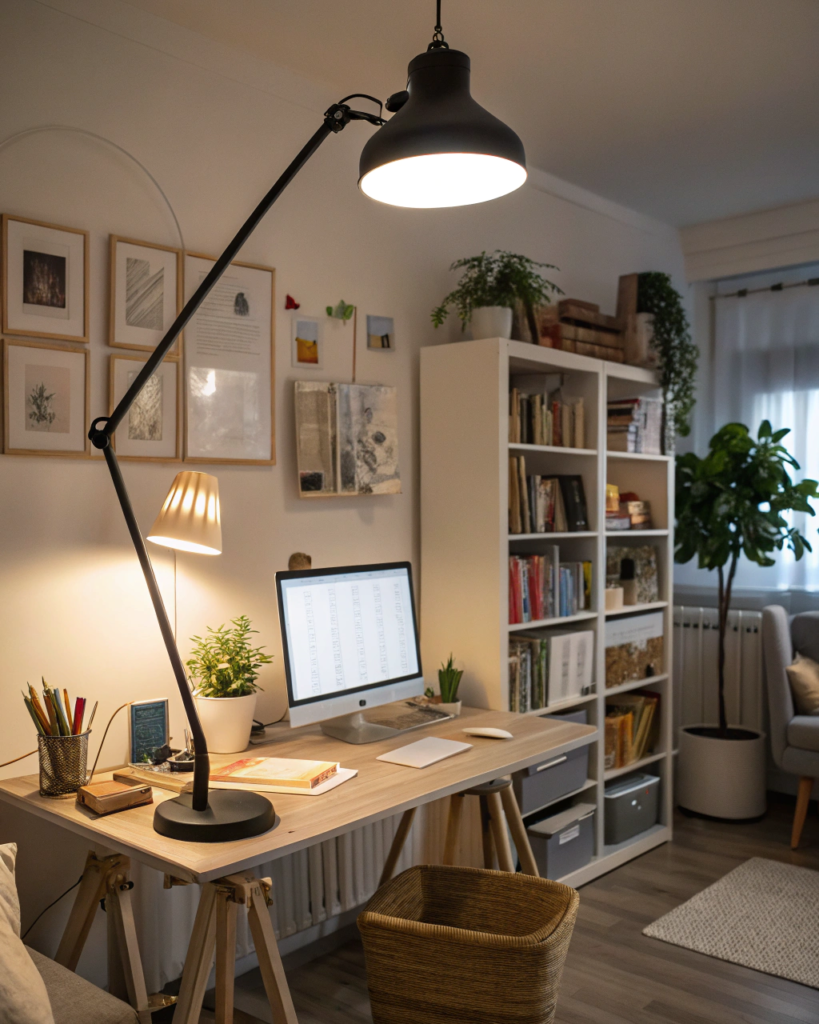
Floor lamps help distribute light evenly.
Use:
- Lamps with fabric shades
- Adjustable or dimmable options
9. Use Dimmers to Control Light Levels
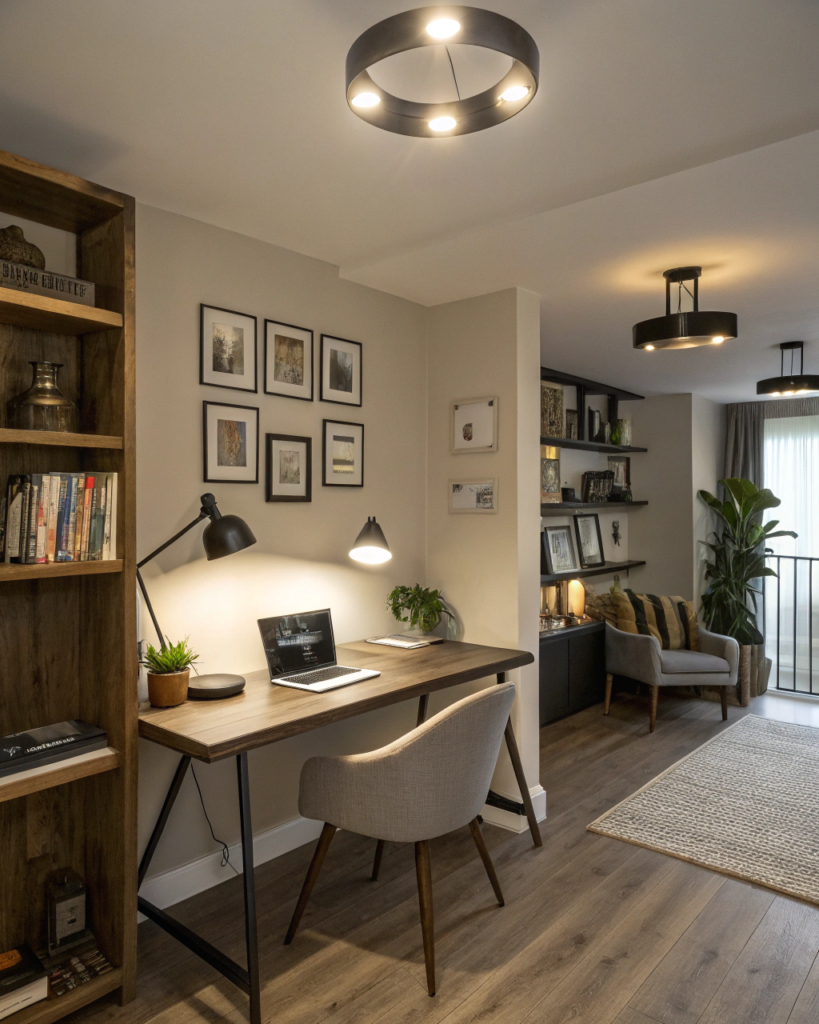
Adjustable light reduces fatigue throughout the day.
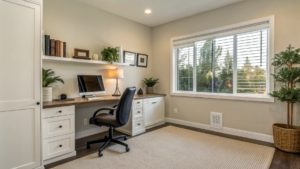

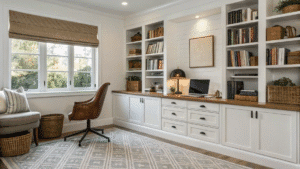
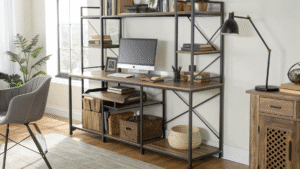
Install:
- Dimmer switches
- Dimmable lamps
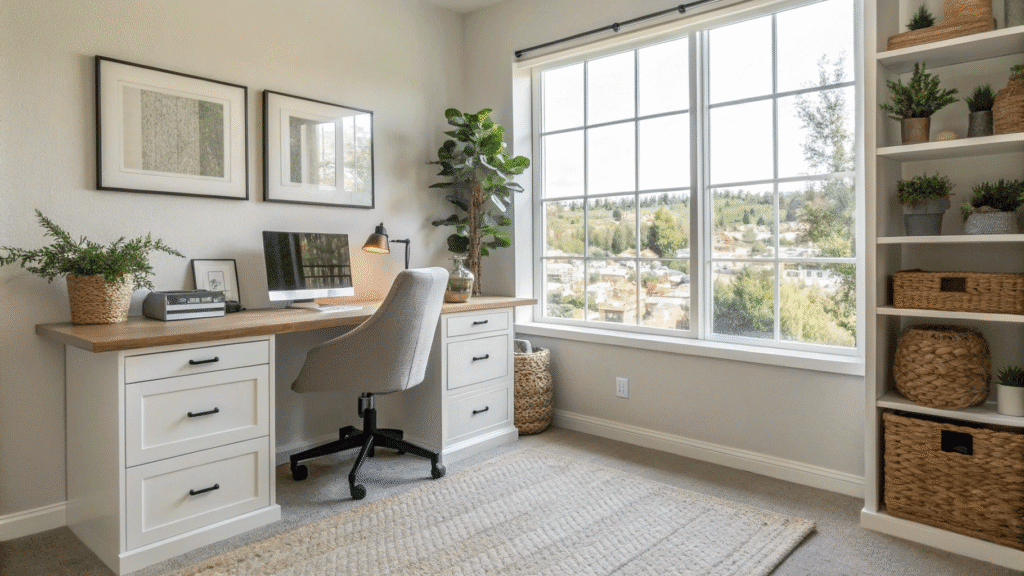
10. Position the Desk Near Natural Light
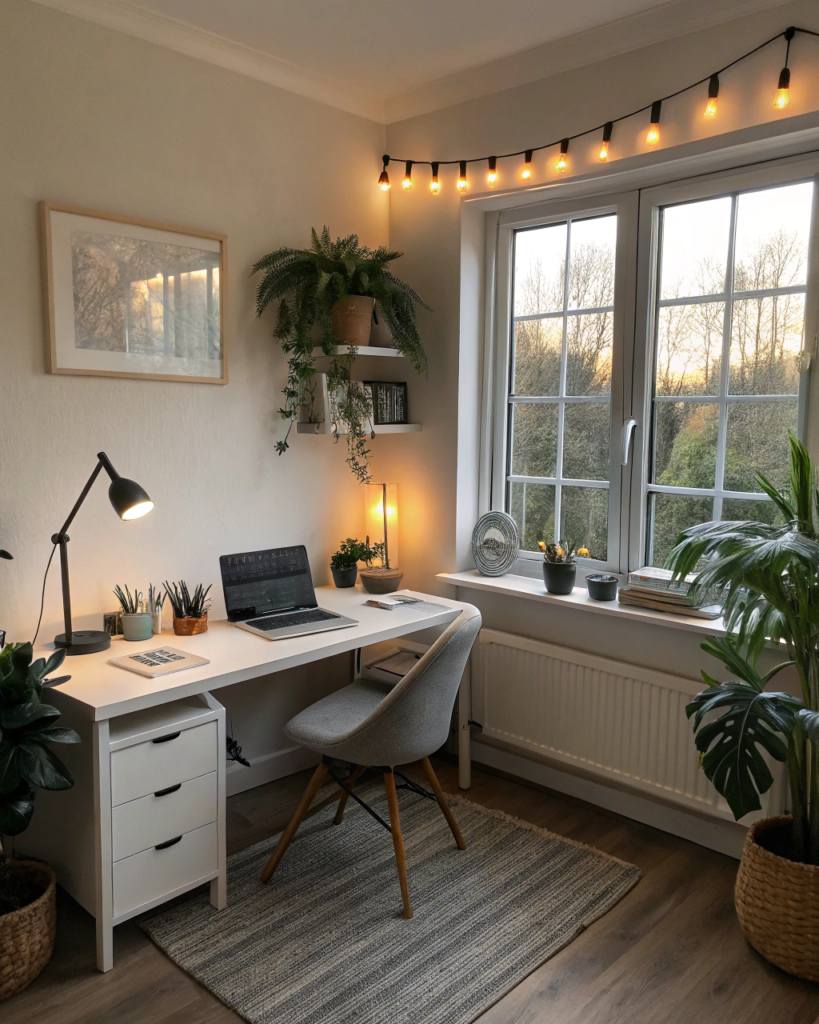
Daylight supports eye health and focus.
Place:
- Desk perpendicular to windows
- Avoid glare directly on screens
11. Use Light-Filtering Window Treatments
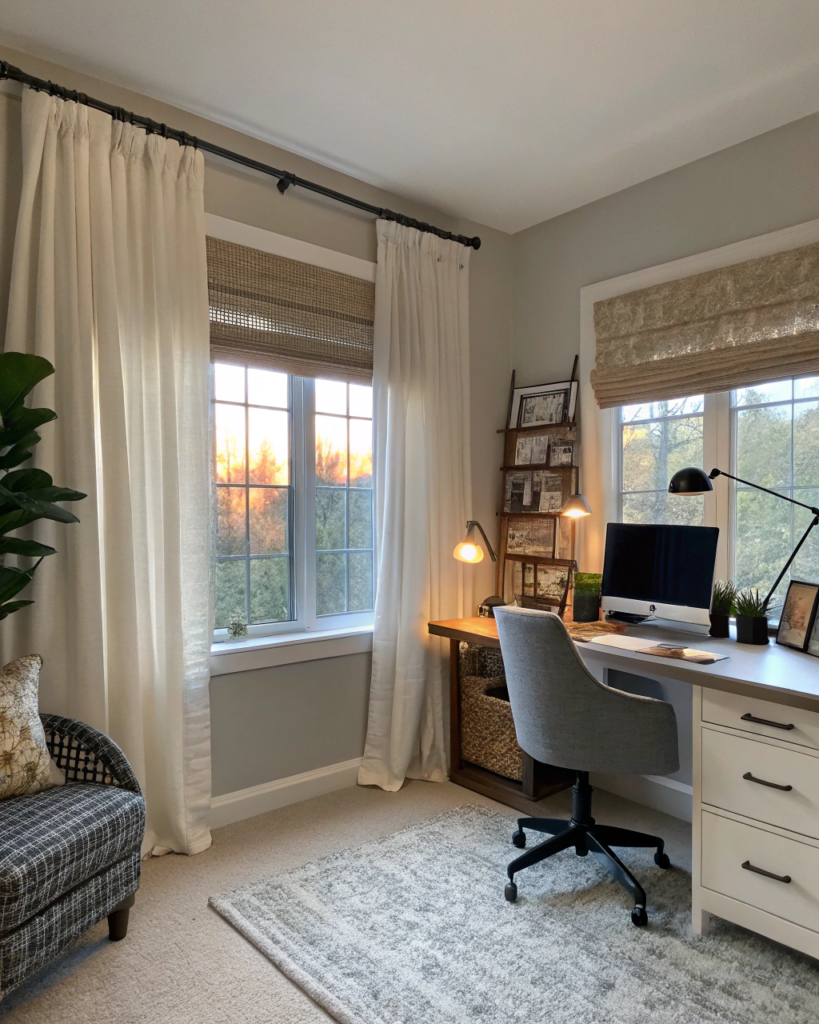
Filtered light is easier on the eyes.

Choose:
- Sheer curtains
- Light-filtering shades
12. Add Backlighting Behind Screens
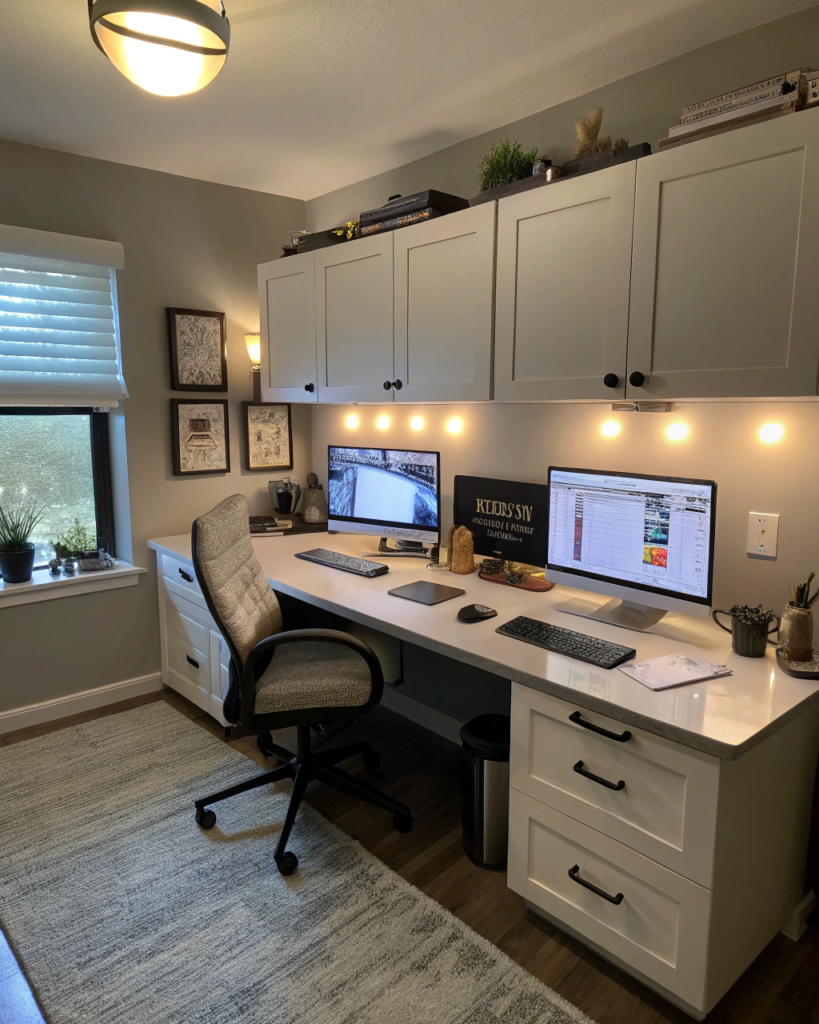
Backlighting reduces contrast strain.
Use:
- LED light strips
- Soft bias lighting
13. Match Lighting to Task Zones
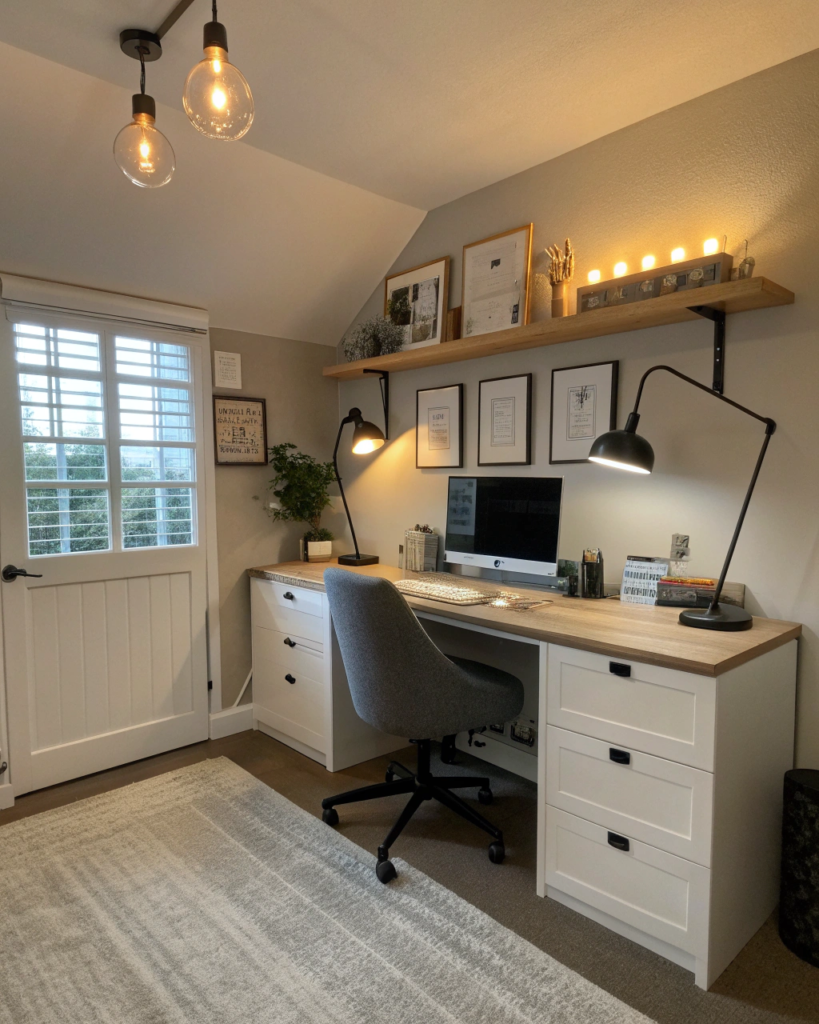
Different tasks need different lighting levels.


Use:
- Brighter light for desk work
- Softer light for reading or calls
14. Keep Ceiling Lighting Soft and Even
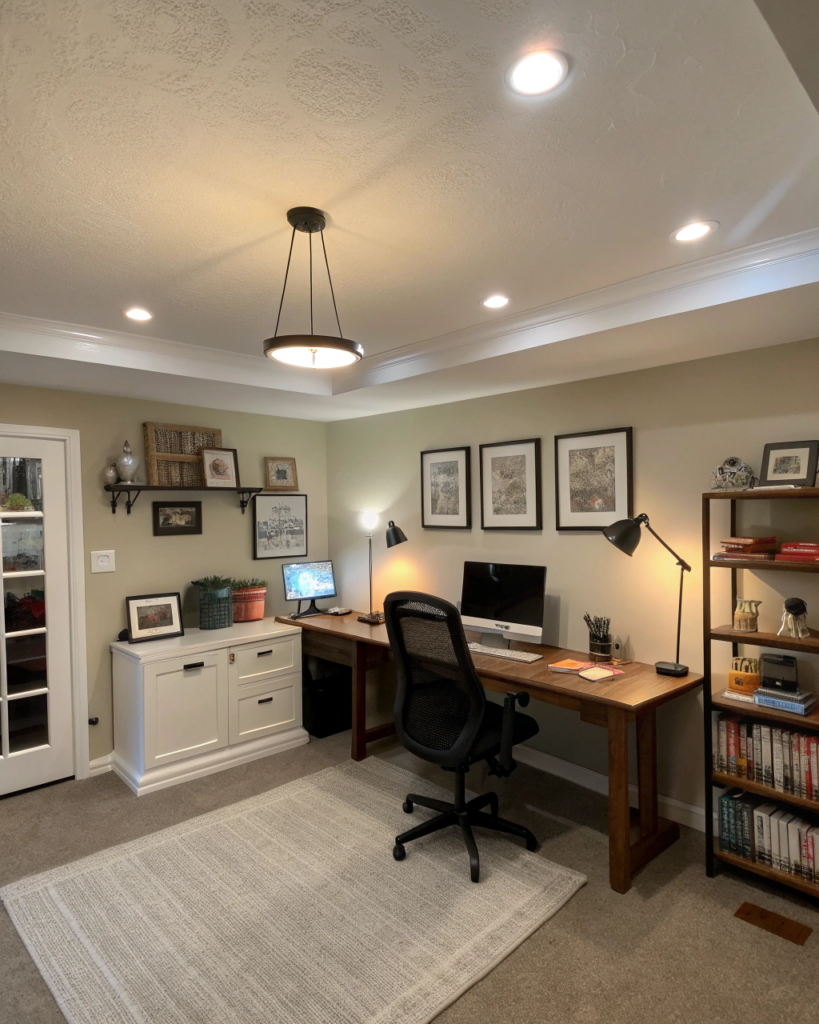
Ceiling lights should support, not dominate.
Choose:
- Flush mounts with diffusers
- Recessed lighting with warm bulbs
15. Avoid Glare on Screens
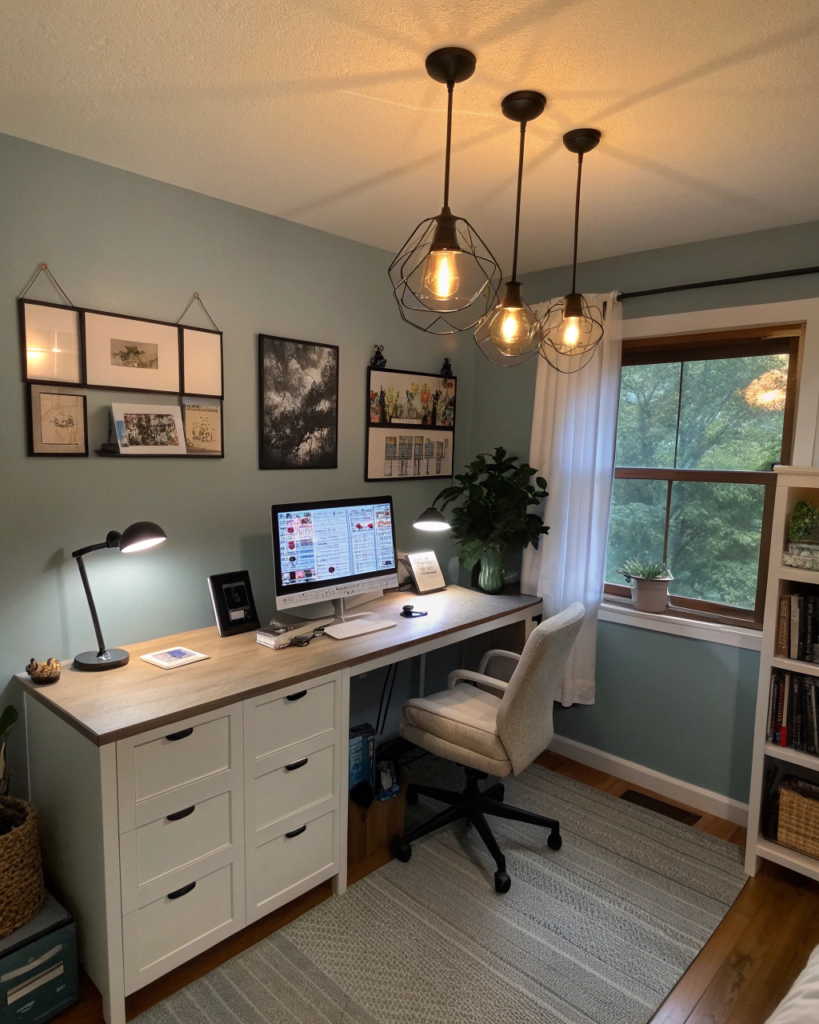
Glare increases eye fatigue.
Adjust:
- Light angles
- Screen position relative to windows
16. Use Consistent Light Color Throughout the Room
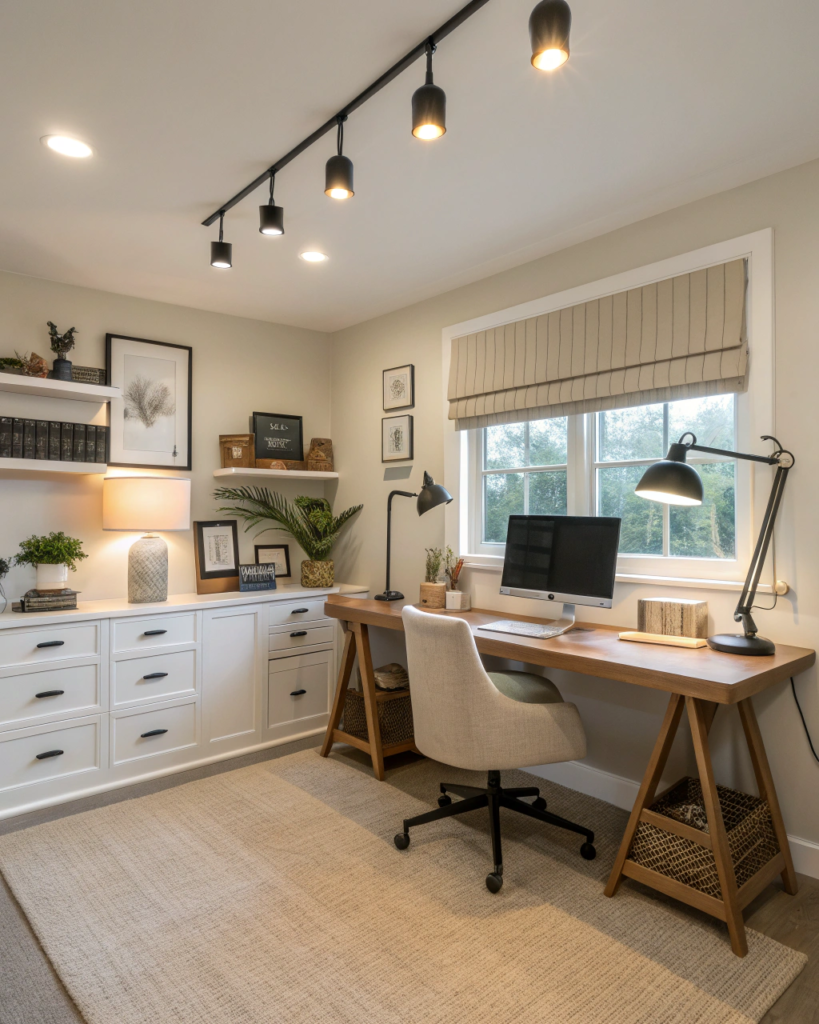
Mixed color temperatures strain the eyes.
Stick to:
- One bulb temperature
- Warm-neutral tones
17. Finish With a Lighting Test and Edit
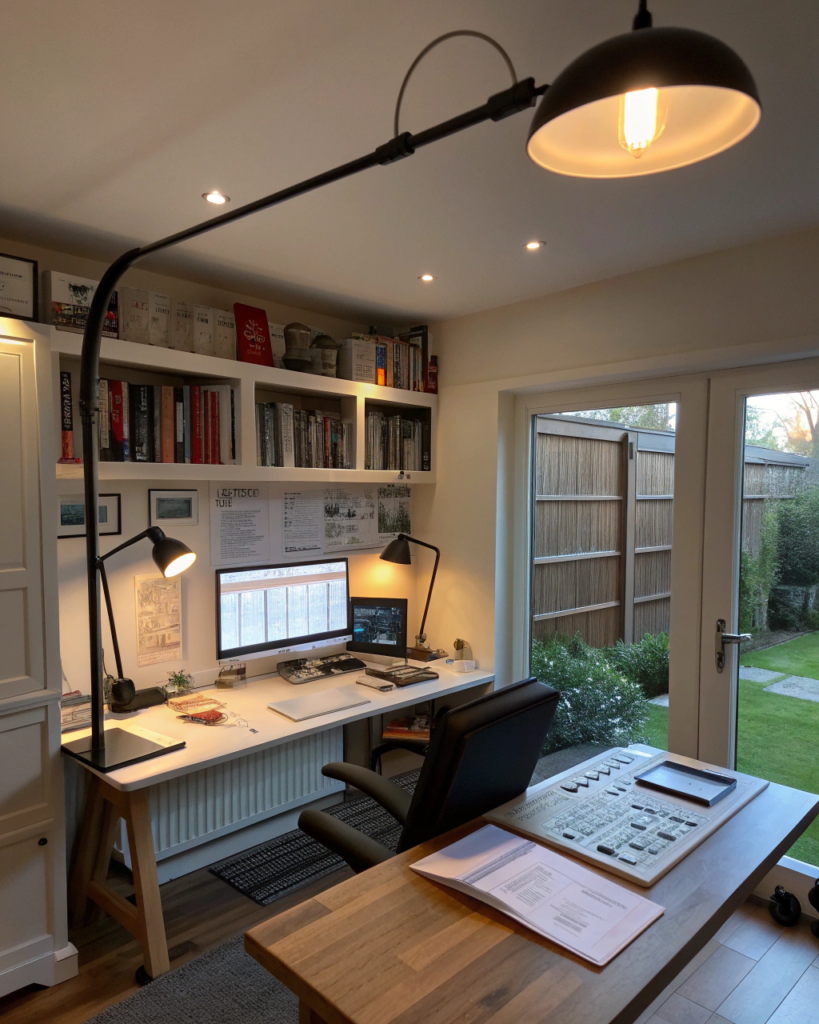
Testing ensures comfort over time.
Adjust:
- Lamp placement
- Brightness levels
Final Thoughts
Home office lighting remodels that reduce strain focus on balance, placement, and control. By layering light sources, choosing comfortable bulb temperatures, and positioning lights thoughtfully, you create a workspace that supports long hours of focus—without eye fatigue or discomfort.
FAQs
What lighting is best for reducing eye strain?
Layered lighting with warm-neutral bulbs and good task lighting.
Is overhead lighting enough for a home office?
No, task and ambient lighting are essential.
What bulb temperature is easiest on the eyes?
Around 3000K–4000K.
Should desk lamps be bright?
Bright enough for tasks, but adjustable to avoid glare.
Does natural light help reduce eye strain?
Yes, when filtered and positioned to avoid screen glare.
What’s the easiest lighting upgrade?
Adding an adjustable desk lamp and warm bulbs.

- 16+ Porch Railing Remodel Ideas That Update Style - January 25, 2026
- 14+ Porch Remodel Ideas That Increase Home Value - January 25, 2026
- 18+ Rustic Porch Remodel Ideas with Modern Touches - January 25, 2026