15+ Homes That Use Ethiopian Art as a Focal Point
Ethiopian art becomes most powerful in a home when it’s treated as the visual anchor rather than a supporting accent.
Instead of spreading pieces throughout a space, these homes let one artwork lead the room, giving it space, calm surroundings, and intentional placement. The result feels soulful, modern, and deeply personal.
Here are ways homes use Ethiopian art as a true focal point.
1. Large Ethiopian Textile Above the Sofa
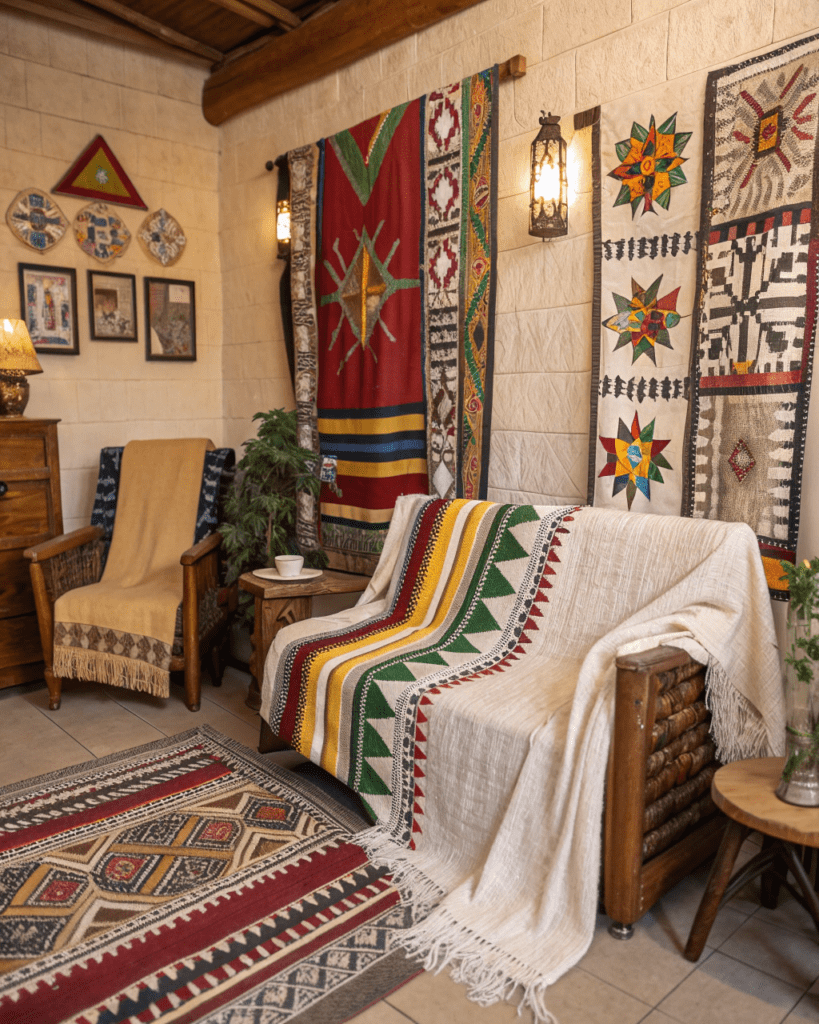
A single framed textile anchors the living room.
Love Chic Living Club?
Add us as one of your preferred Google sources and discover more home decor, DIY, outdoor, and lifestyle inspiration from us.
Use:
- Handwoven fabrics
- Simple black or wood frames
2. Oversized Ethiopian Cross on a Feature Wall
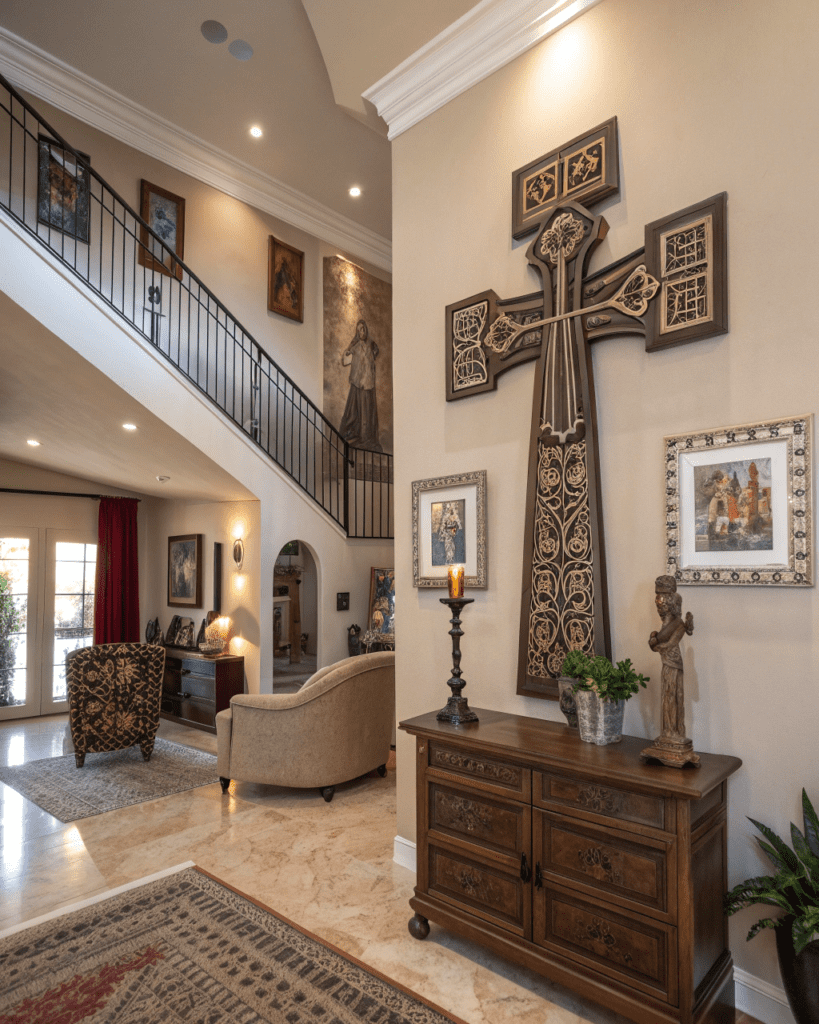
One sculptural piece creates instant presence.
Use:
- Iron or brass crosses
- Centered wall placement
3. Mesob Basket as Entryway Statement
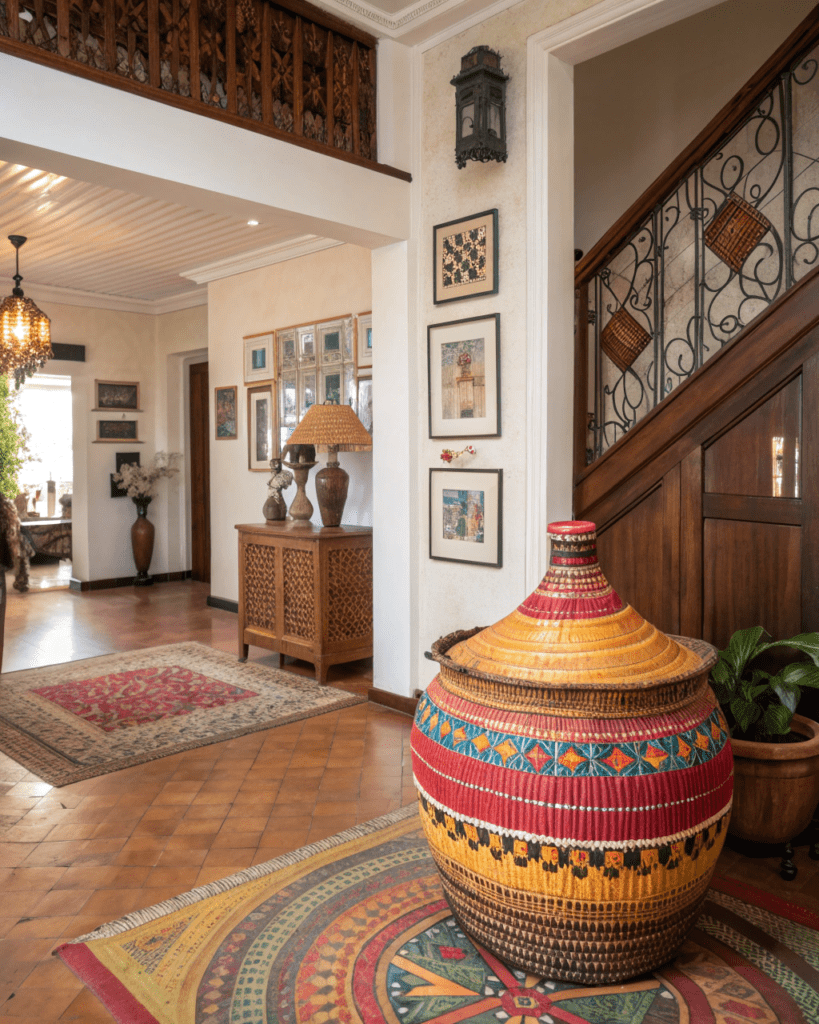
A large basket sets the tone immediately.
Use:
- One oversized basket
- Neutral surrounding walls
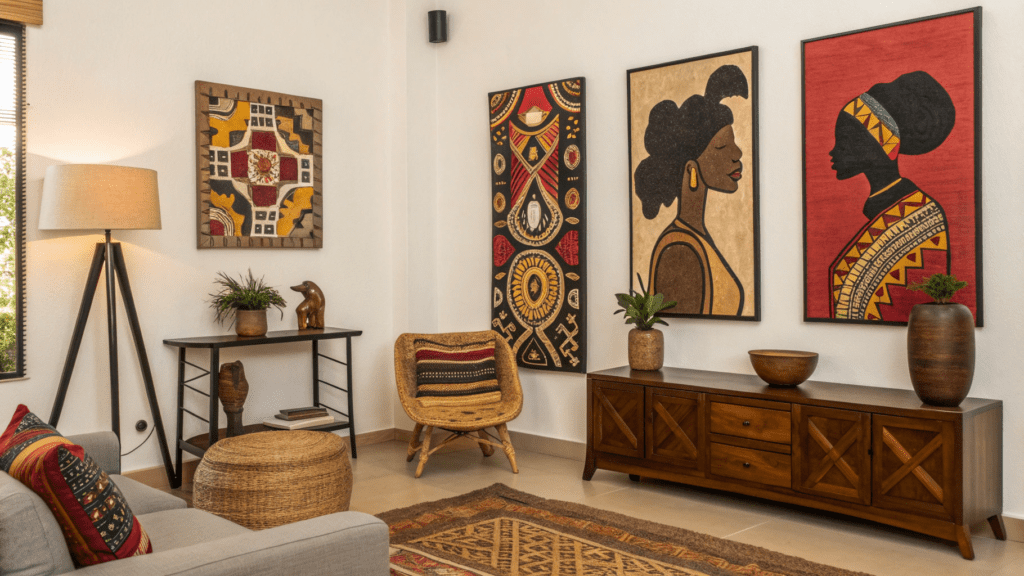
4. Ethiopian Portrait Art Behind the Sofa
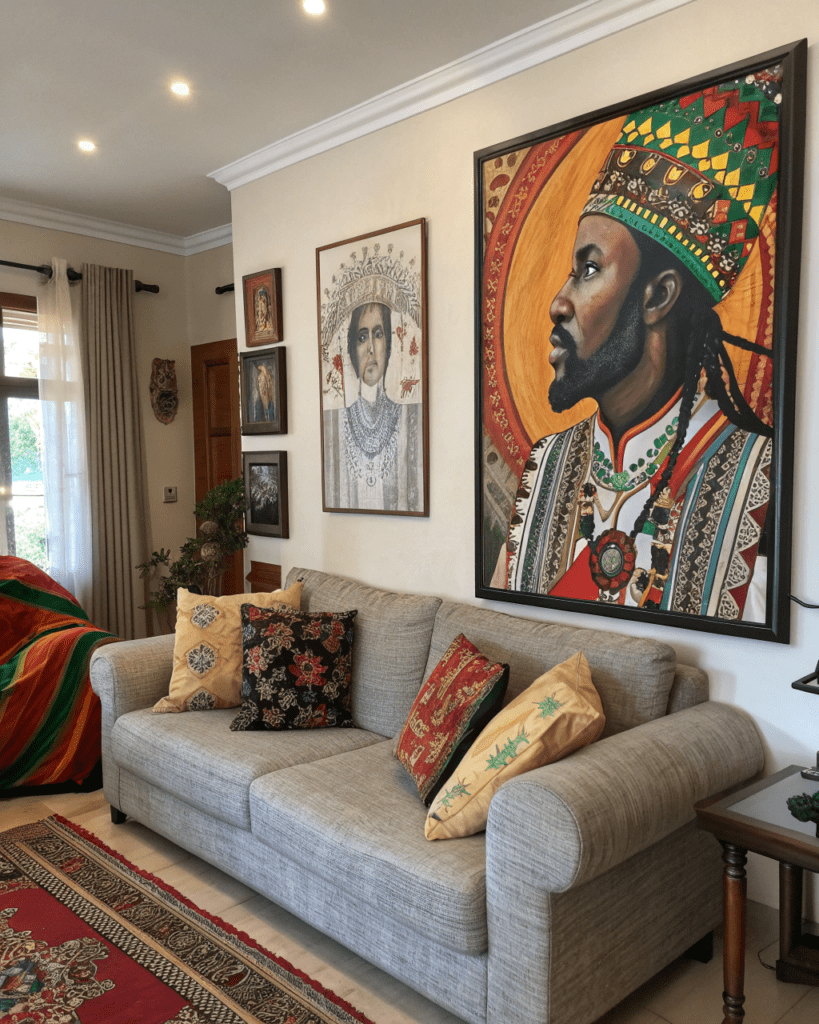
Figurative art adds story and emotion.
Use:
- Large-scale portraits
- Muted color palettes
5. Framed Amharic Calligraphy as Wall Focus
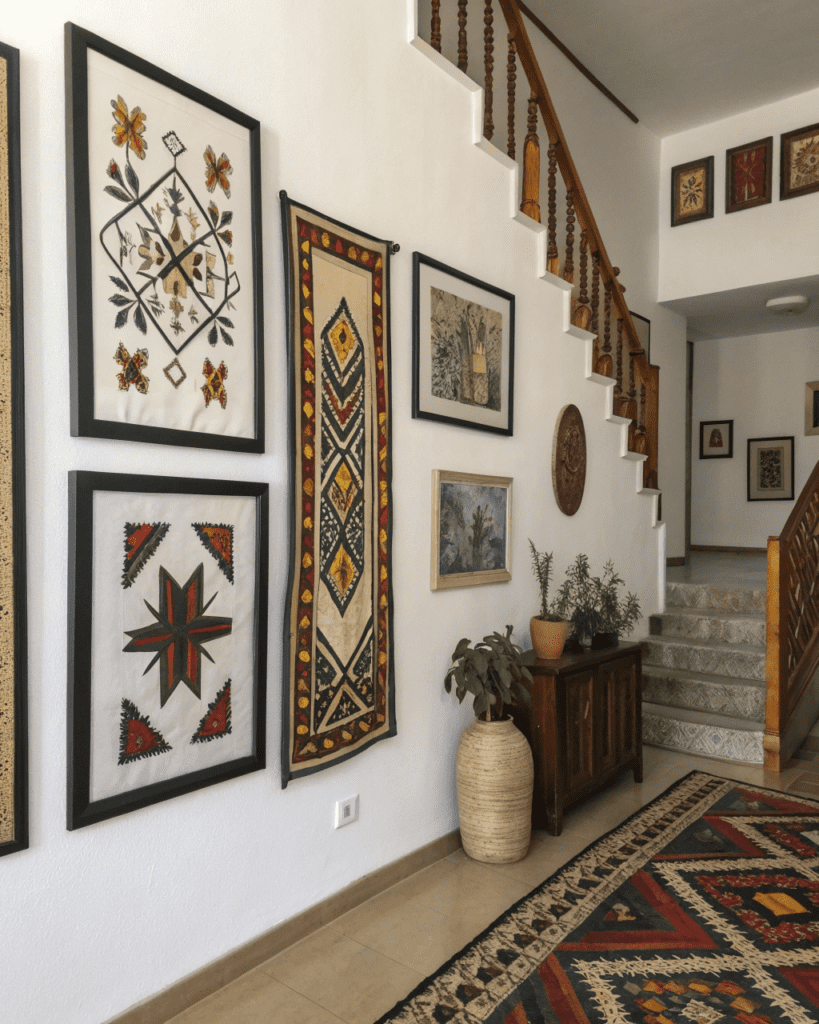
Text becomes graphic and modern.
Use:
- One large print
- Minimal framing
You May Also Love
6. Ethiopian Pottery as Mantel Centerpiece
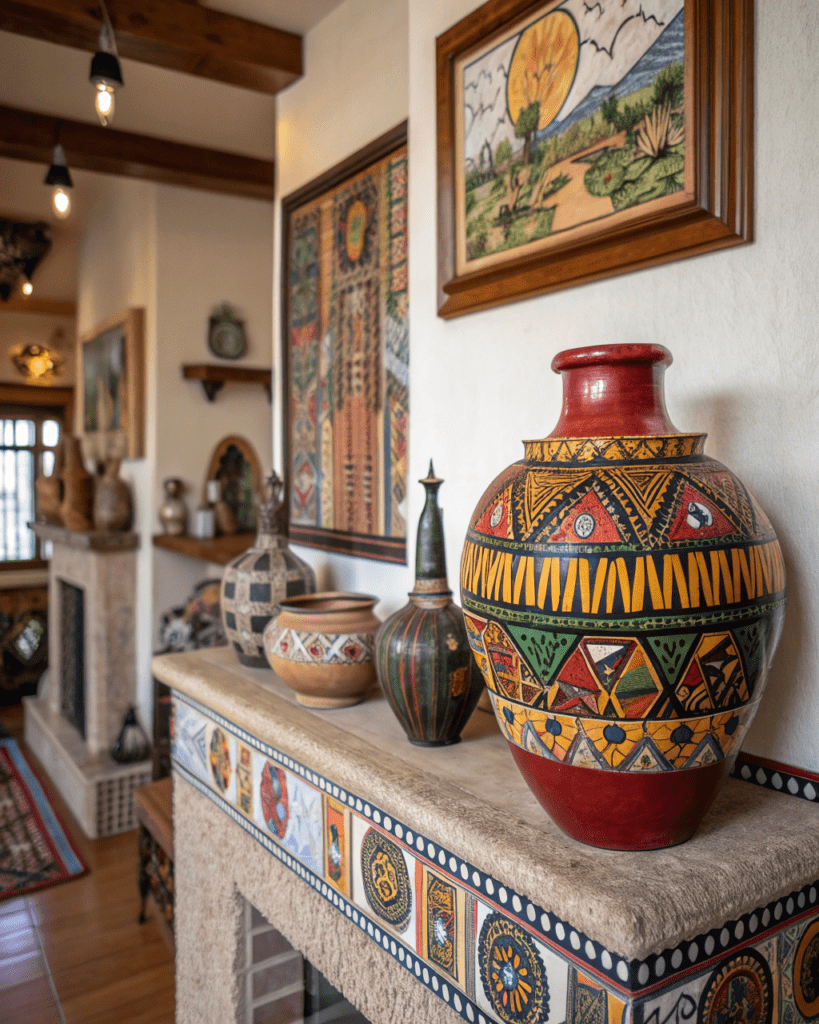
Sculptural pottery draws the eye naturally.
Use:
- Tall clay vessels
- Clean, uncluttered mantels
7. Carved Wooden Panel Above a Bed
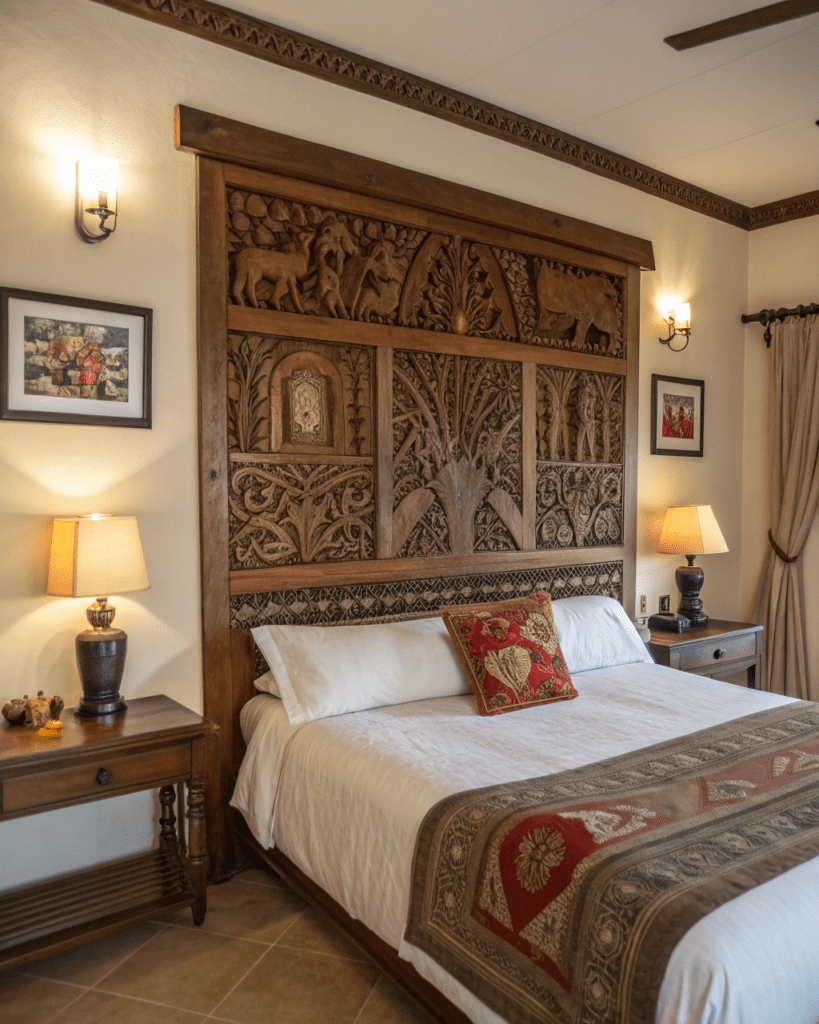
Art replaces traditional headboards.
Use:
- Single carved panels
- Neutral bedding
8. Ethiopian Metalwork in Dining Areas
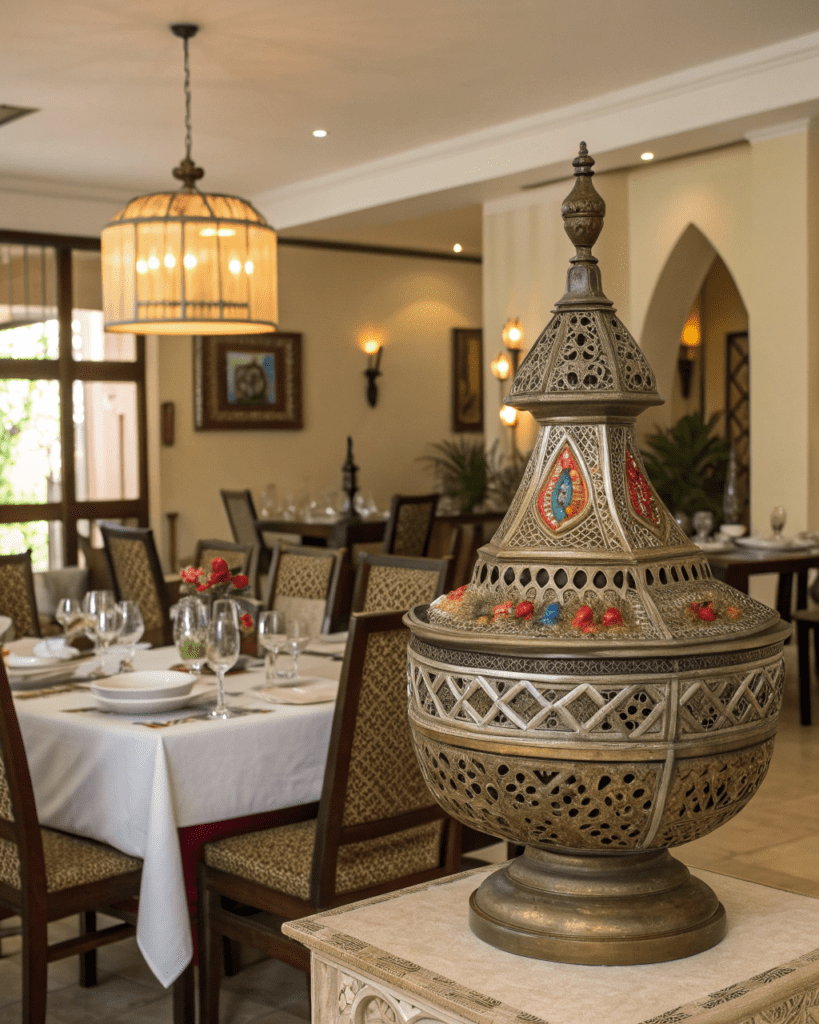
Metal adds contrast and weight.
Use:
- Wall-mounted brass or iron pieces
- Simple dining furniture
9. Beaded Ethiopian Art in Reading Nooks
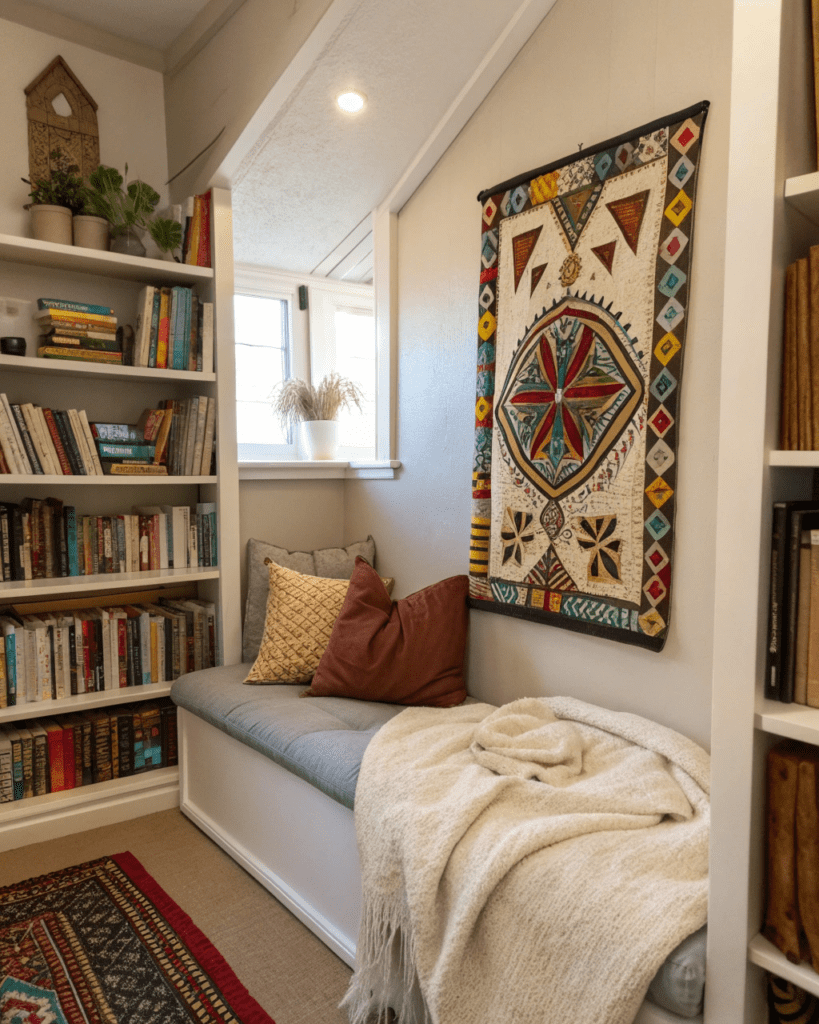
Texture defines intimate spaces.
Use:
- Framed beadwork
- Focused lighting
Don't miss: 11+ Afrobohemian Entryways That Set the Tone Instantly →
10. Ethiopian Textile Panels With Lighting
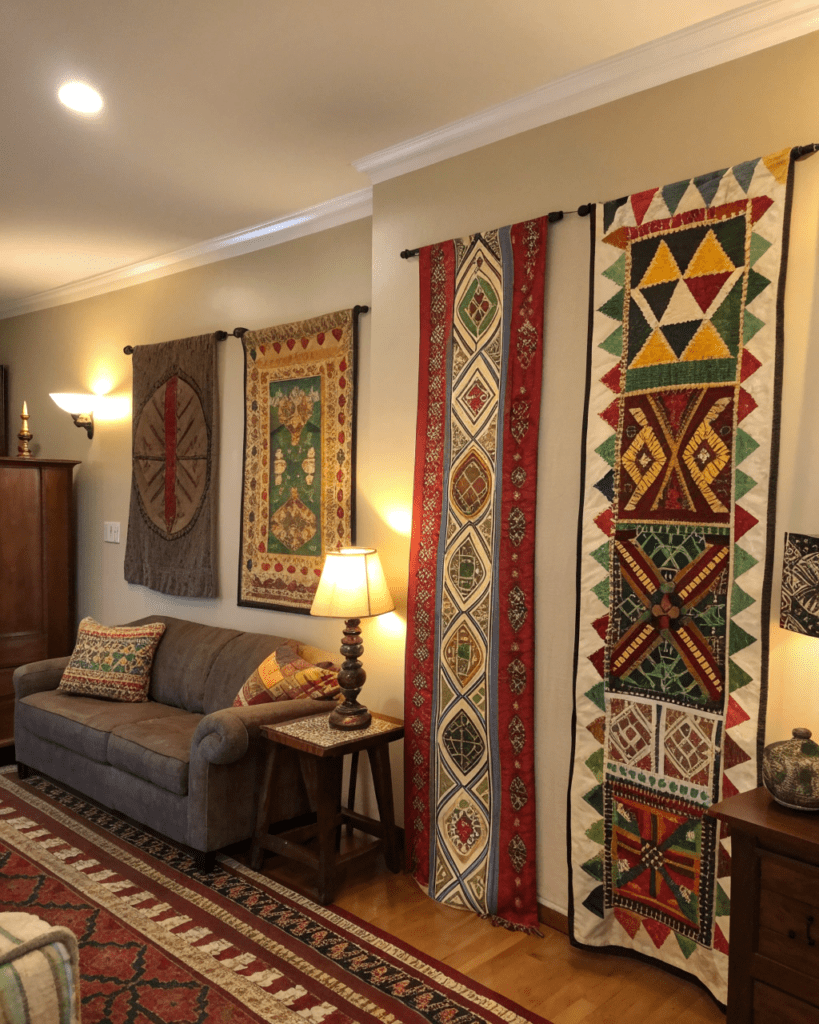
Lighting elevates the artwork.
Use:
- Soft picture lights
- Warm bulbs
11. Single Abstract Ethiopian Painting
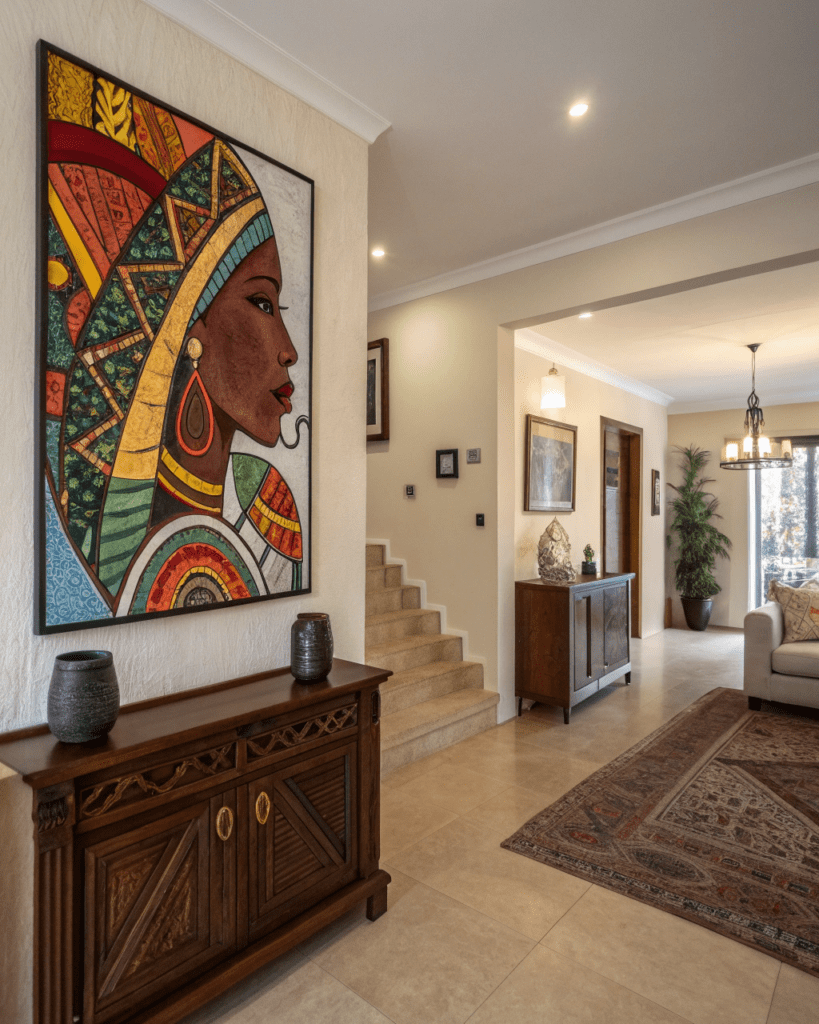
Abstract forms feel contemporary.
Use:
- Earth-toned compositions
- Open wall space
12. Calabash or Gourd Sculpture in Corners
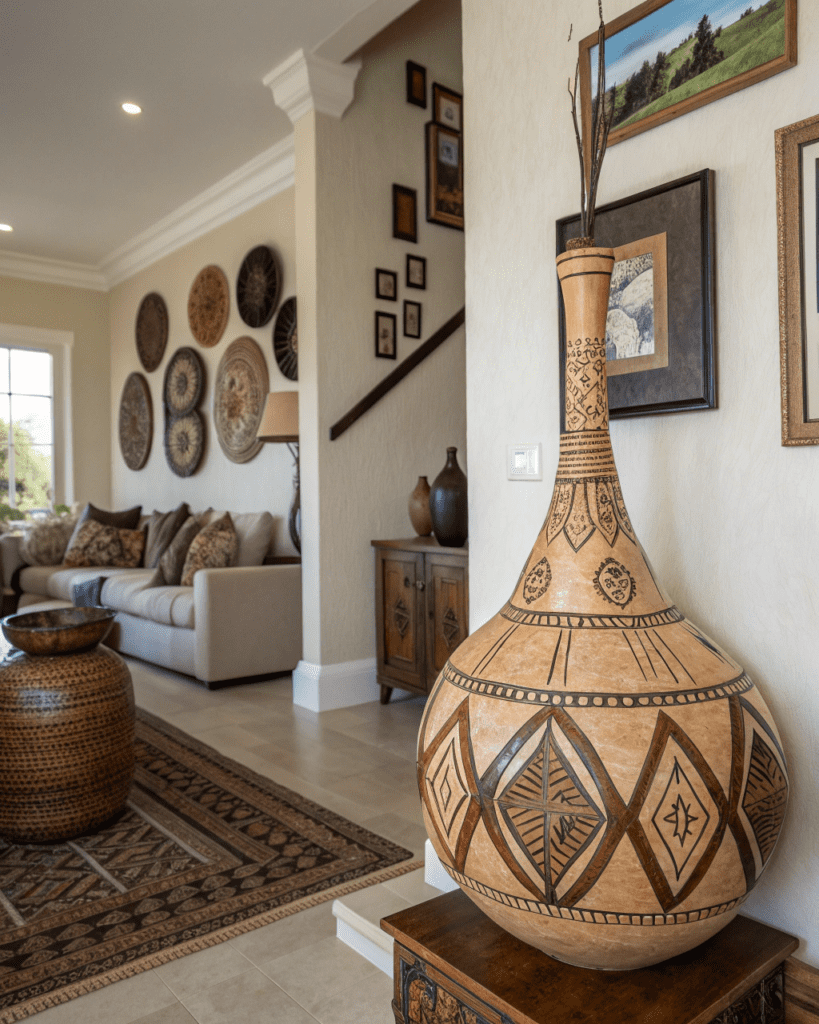
Natural forms act as floor art.
Use:
- One tall sculptural piece
- Minimal nearby furniture
13. Ethiopian Art Above Console Tables
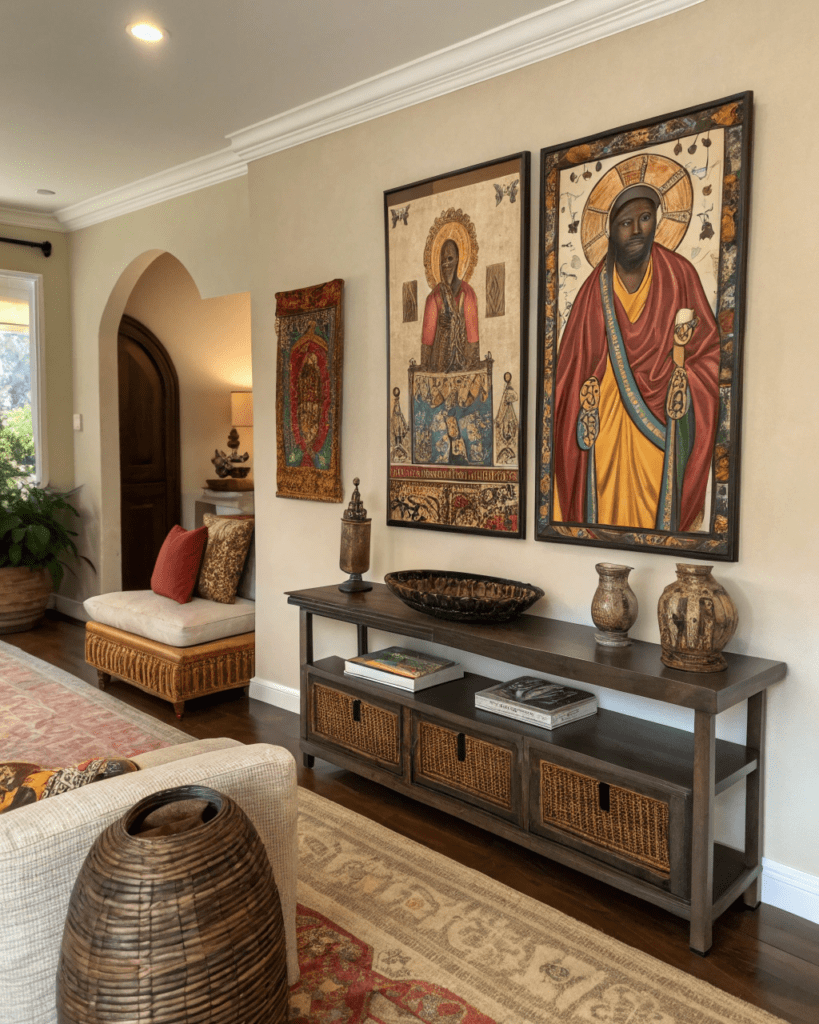
Furniture grounds the focal point.
Use:
- One centered artwork
- Clear surface styling
Keep Exploring
14. Grouped Ethiopian Art as One Visual Block
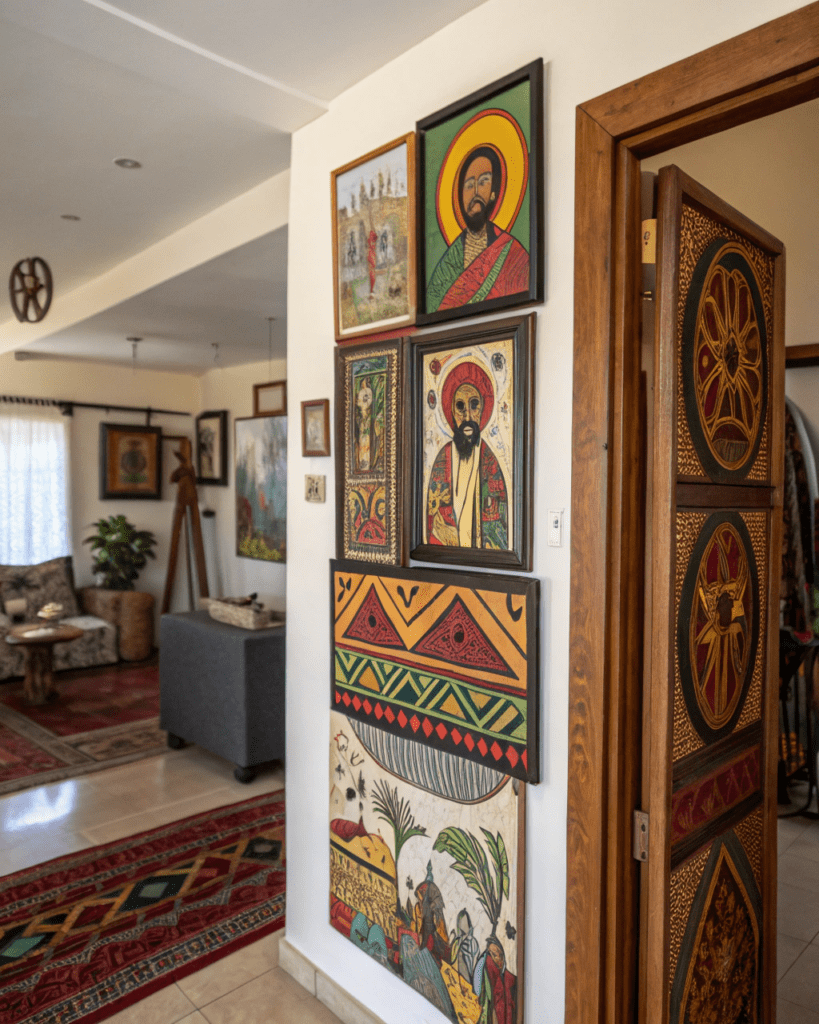
Multiple pieces read as one statement.
Use:
- Similar sizes
- Consistent framing
15. Ethiopian Art in First Sightlines
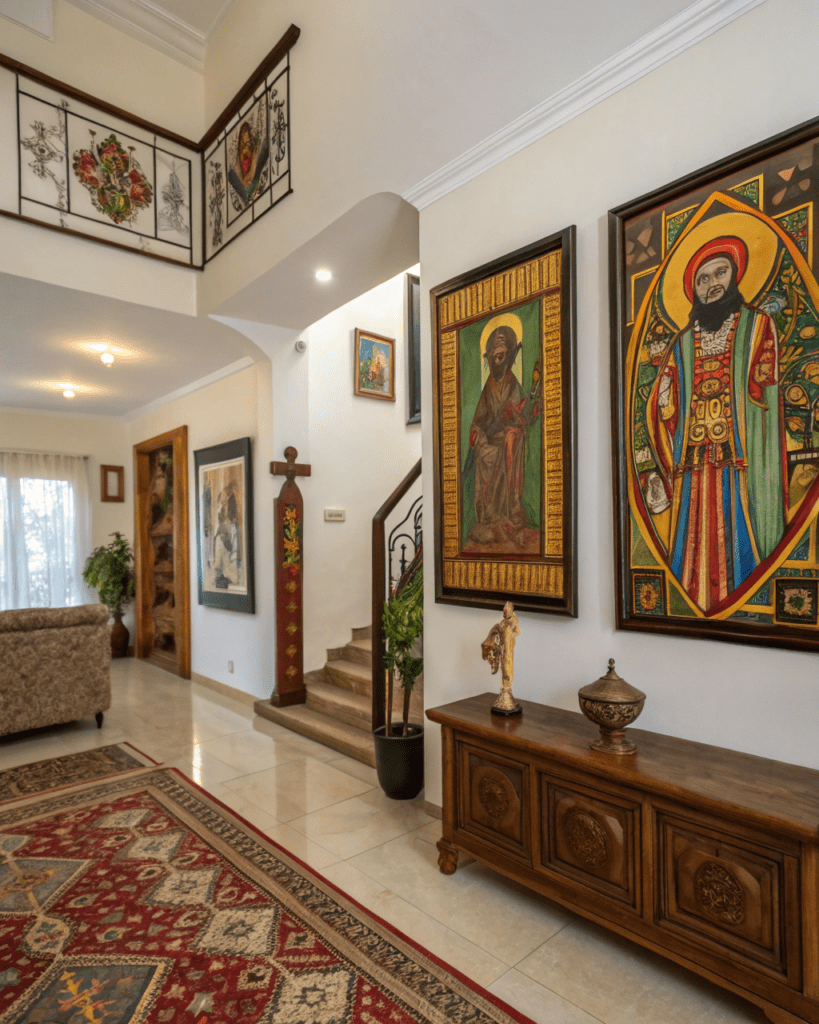
Placement matters as much as the piece.
Use:
- Entry views
- Direct sightlines from seating
16. Ethiopian Art Against Neutral Textured Walls
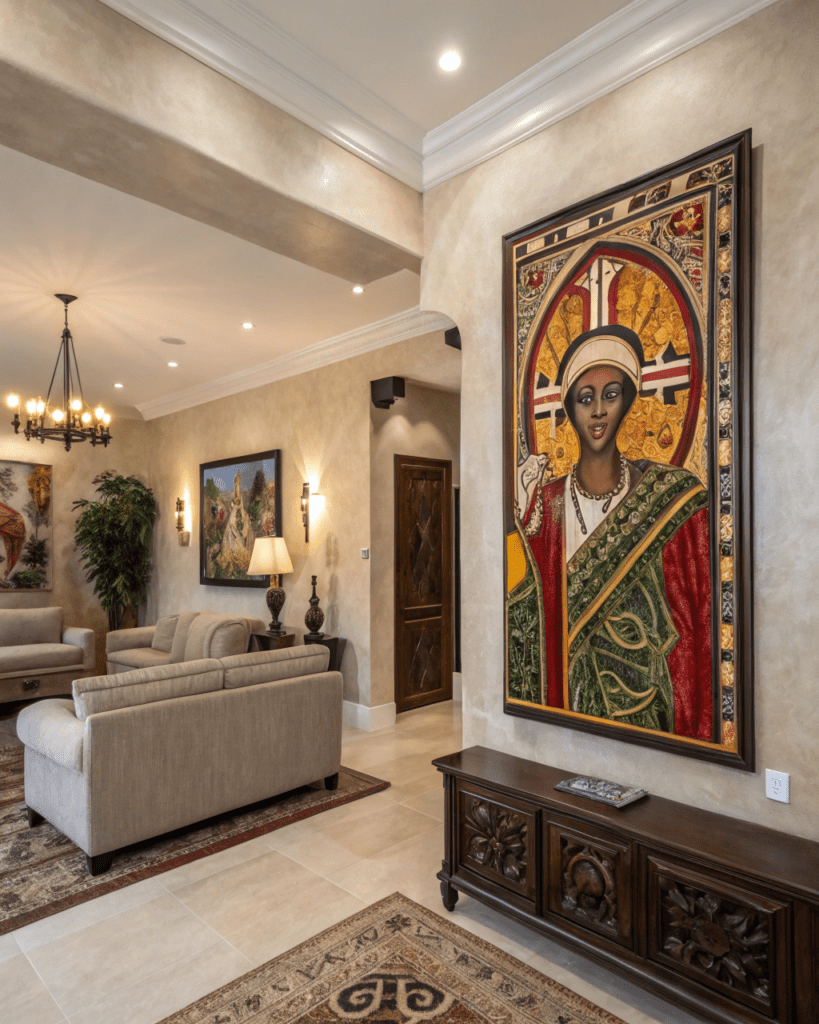
Texture supports, not competes.
Use:
- Limewash
- Soft plaster finishes
Final Thoughts
Homes that use Ethiopian art as a focal point succeed by giving the art space to breathe.
One strong piece, calm surroundings, and intentional placement allow the cultural depth and craftsmanship to shine. When treated as the heart of the room, Ethiopian art brings meaning, warmth, and timeless character to modern interiors.
FAQs
Can Ethiopian art be a focal point in modern homes?
Yes, especially when paired with neutral palettes and clean lines.
How many focal art pieces should a room have?
Usually one main piece is enough.
Does Ethiopian art need framing to stand out?
Framing helps integrate traditional pieces into modern spaces.
What rooms work best for focal Ethiopian art?
Living rooms, dining areas, and entryways.
Can smaller Ethiopian pieces act as focal points?
Yes, when grouped intentionally or highlighted with lighting.
What’s the biggest mistake when using art as a focal point?
Adding too many competing elements around it.