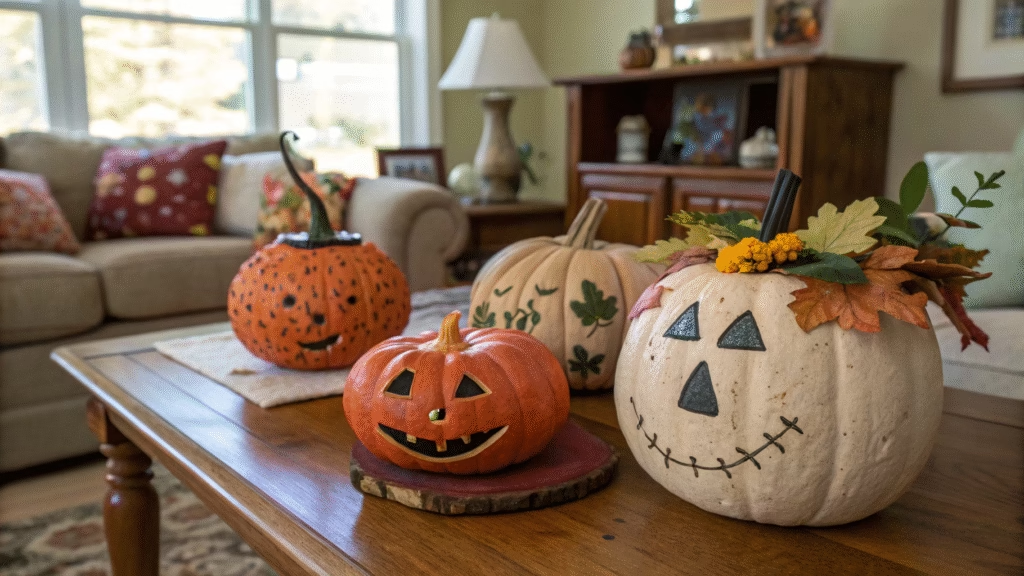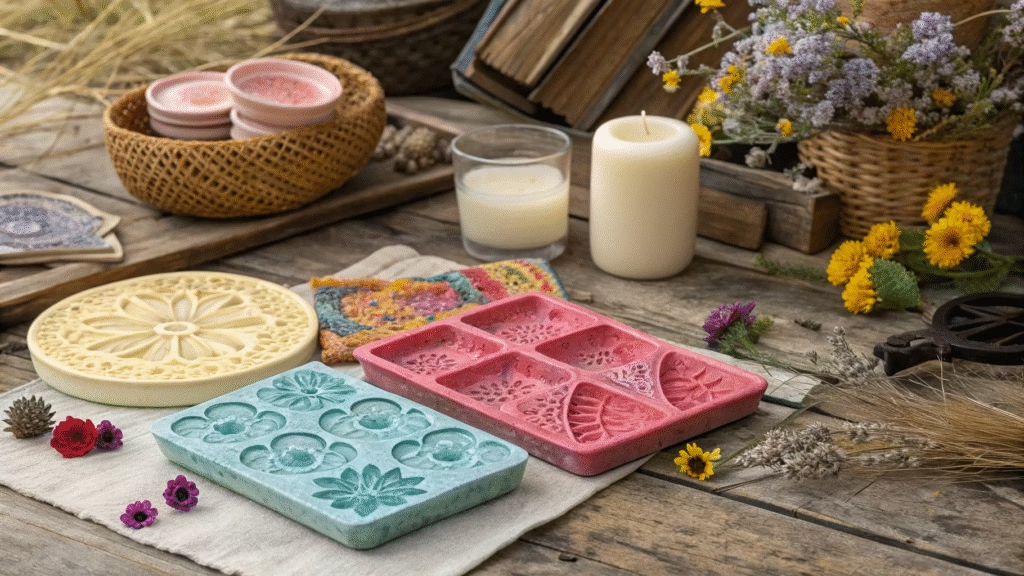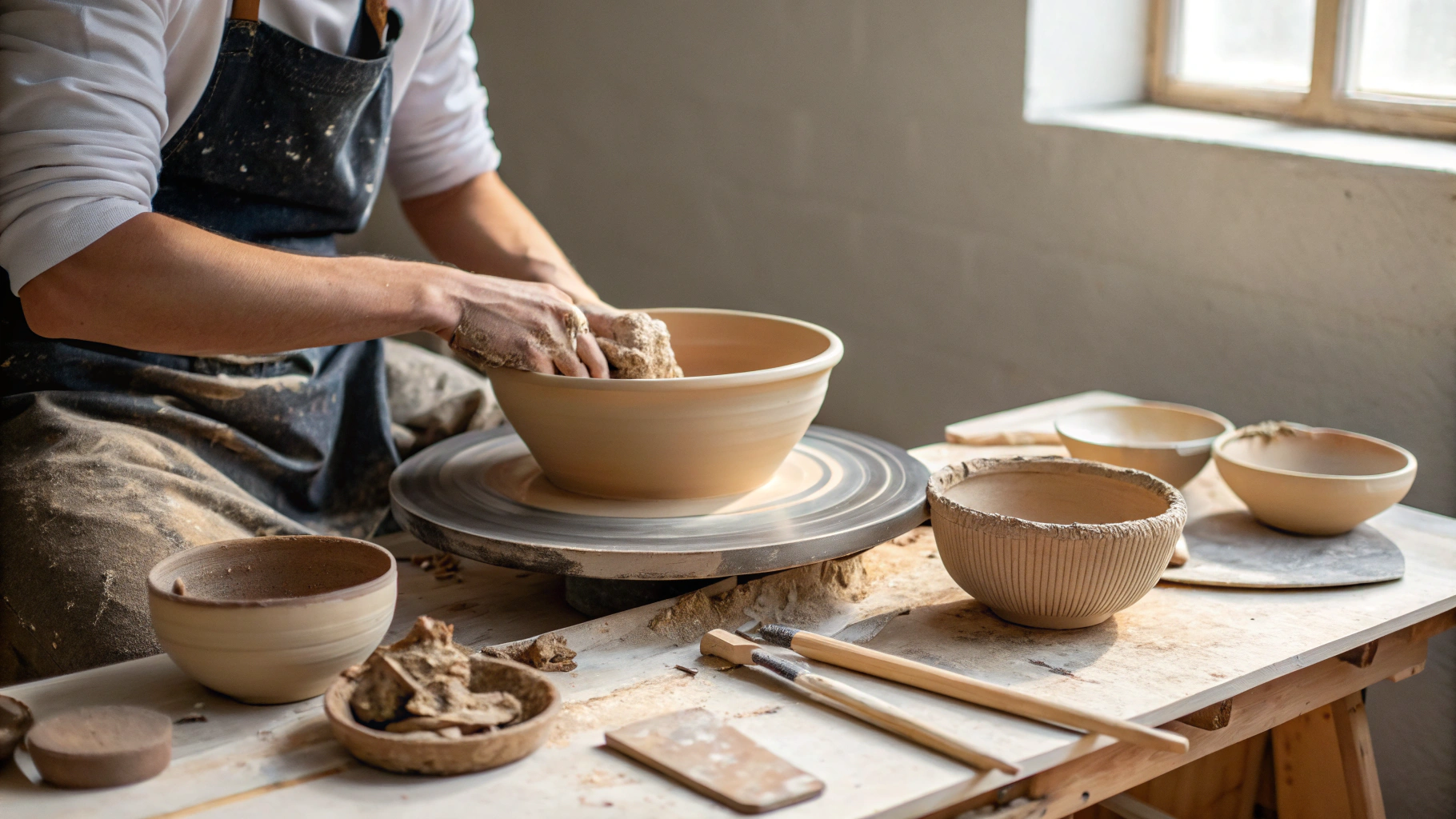
Clay and Modeling: The Complete Guide to Working With Clay at Home
Everything you need to know about clay as a creative practice, from choosing the right type for your project to hand-building techniques, pottery, jewelry, home decor, and the projects that are genuinely worth your time.
KEY POINTS
- Working with clay is one of the most satisfying creative practices available at home because it engages the hands, produces tangible results, and generates objects of genuine beauty and usefulness.
- Choosing the right clay type is the most important first decision. Air dry clay, polymer clay, and kiln-fired pottery clay each have completely different properties, applications, and finishing requirements.
- You do not need a wheel, a kiln, or specialist equipment to make beautiful things from clay. The most accessible and most rewarding clay projects require nothing more than your hands, a smooth surface, and the right material.
There is a particular quality to making something with clay that few other creative practices match. The material responds directly to touch. You can feel it changing under your hands as you work, and the object that emerges from the session is entirely the result of decisions made in the moment rather than translated through a screen or a machine. Clay is one of the oldest creative materials in human history, and the reasons people are drawn to it have not changed: it is direct, physical, meditative, and capable of producing results that are genuinely beautiful.
Love Chic Living Club?
Add us as one of your preferred Google sources and discover more home decor, DIY, outdoor, and lifestyle inspiration from us.
This guide covers the full landscape of clay work accessible at home, from understanding which type of clay suits which project to the techniques, project ideas, and finishing approaches that produce the best results, whether you are working on home decor, jewelry, gifts, or simply making something for the satisfaction of making it.
RELATED: 16+ Creative Clay Ideas for Beginners
Understand the Types of Clay First
The most important decision in any clay project is which type of clay to use, and it is the one most beginners make without enough information. Different clay types have fundamentally different properties, require different tools and working environments, and produce results with different qualities and durability. Understanding the options before starting prevents the frustration of working with a material that is wrong for what you are trying to make.
Air dry clay is the most accessible starting point for anyone new to working with clay. It requires no kiln, no specialist equipment, and no particular studio setup. You work it, shape it, and leave it to dry at room temperature over the course of one to three days depending on the thickness of the piece. The finished result is lighter and more porous than kiln-fired ceramics, which means it is not suitable for functional items that will hold liquid, but for decorative objects, wall hangings, small vessels, and jewelry it produces beautiful results. The full range of air dry clay ideas for home decor covers everything from simple pinch pots to more elaborate sculptural pieces, and the material is forgiving enough that even very first attempts tend to produce something worth keeping.
Polymer clay is a synthetic modelling material that stays workable at room temperature until it is baked in a domestic oven, which makes it one of the most convenient materials for home use. It does not air dry, which means you can work on a project over multiple sessions without the material hardening prematurely. It comes in an enormous range of colours that can be mixed, blended, and marbled, and it is capable of very fine detail. The beginner polymer clay projects that produce the most satisfying results early on include earrings, pendants, and small decorative pieces where the colour mixing and the precision of the material are used to full advantage. Because it is baked rather than kiln-fired, polymer clay can be finished with a smooth, hard surface that is durable enough for jewelry and decorative objects but not for functional ceramics.
Kiln-fired stoneware and earthenware are the materials used in traditional pottery, and they require either access to a kiln or membership of a pottery studio that provides one. The process involves shaping wet clay, allowing it to dry, firing it at high temperature, applying glaze, and firing again. The result is genuinely ceramic: hard, durable, food-safe when properly glazed, and capable of the extraordinary range of surfaces and textures that pottery produces. If you have access to a studio and want to explore the full range of what clay can do, kiln-fired pottery is the ultimate destination. The pottery ideas for beginners and handmade pottery ideas that cover hand-building techniques (the approaches that do not require a wheel) are the most accessible entry point into this tradition.
Getting Started: Tools and Setup
One of the great appeals of clay work is that the barrier to starting is very low. For air dry clay and polymer clay, the basic toolkit is minimal: a smooth non-porous work surface, a rolling pin or acrylic roller, a craft knife or blade, and your hands. More elaborate tools become useful as you progress, but they are not necessary for the first several projects.
For shaping and texturing, everyday objects from around the house work as well as purpose-made clay tools: a fork for texture, a skewer for making holes, a coin for impressed patterns, a leaf for botanical imprints, a credit card for smoothing surfaces. The clay home decor ideas that use texture pressed from found objects create some of the most interesting and most distinctive surfaces available in clay work, and the results look genuinely artisanal rather than manufactured.
For polymer clay specifically, a pasta machine is one of the most useful tools once you progress beyond the very first projects. It produces consistently even slabs of any thickness, which is the foundation of polymer clay slab work for earrings, pendants, and decorative pieces, and it makes colour blending significantly more controllable and more interesting.
Clay for Home Decor
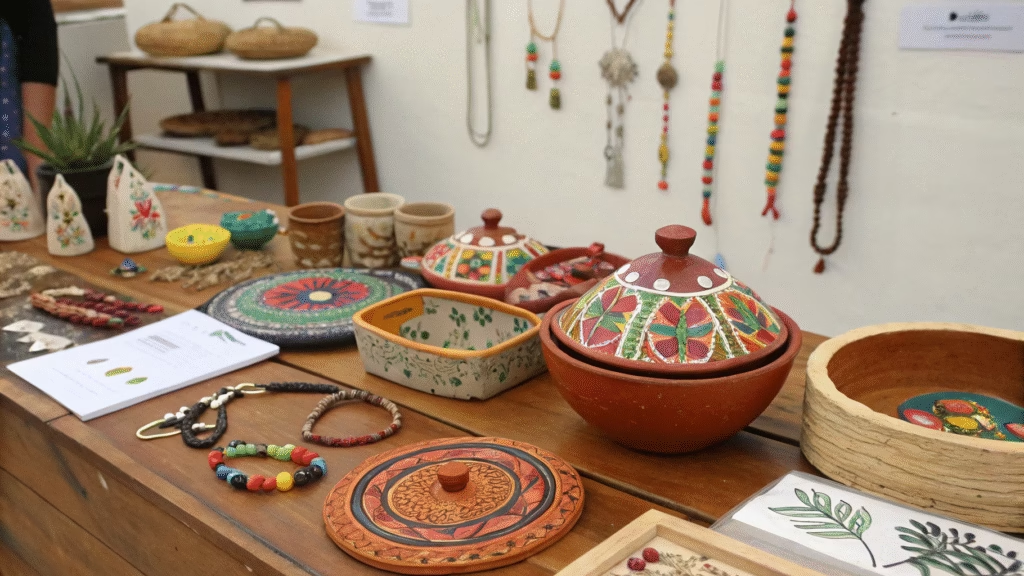
The range of decorative objects achievable with clay at home is genuinely extensive, and the handmade quality of clay decor adds a warmth and presence to a home that manufactured objects cannot replicate. A handmade clay vessel on a shelf, a set of handmade coasters on a coffee table, or a clay wall hanging in a bedroom all carry the evidence of the process that made them in a way that makes the objects feel genuinely personal rather than simply purchased.
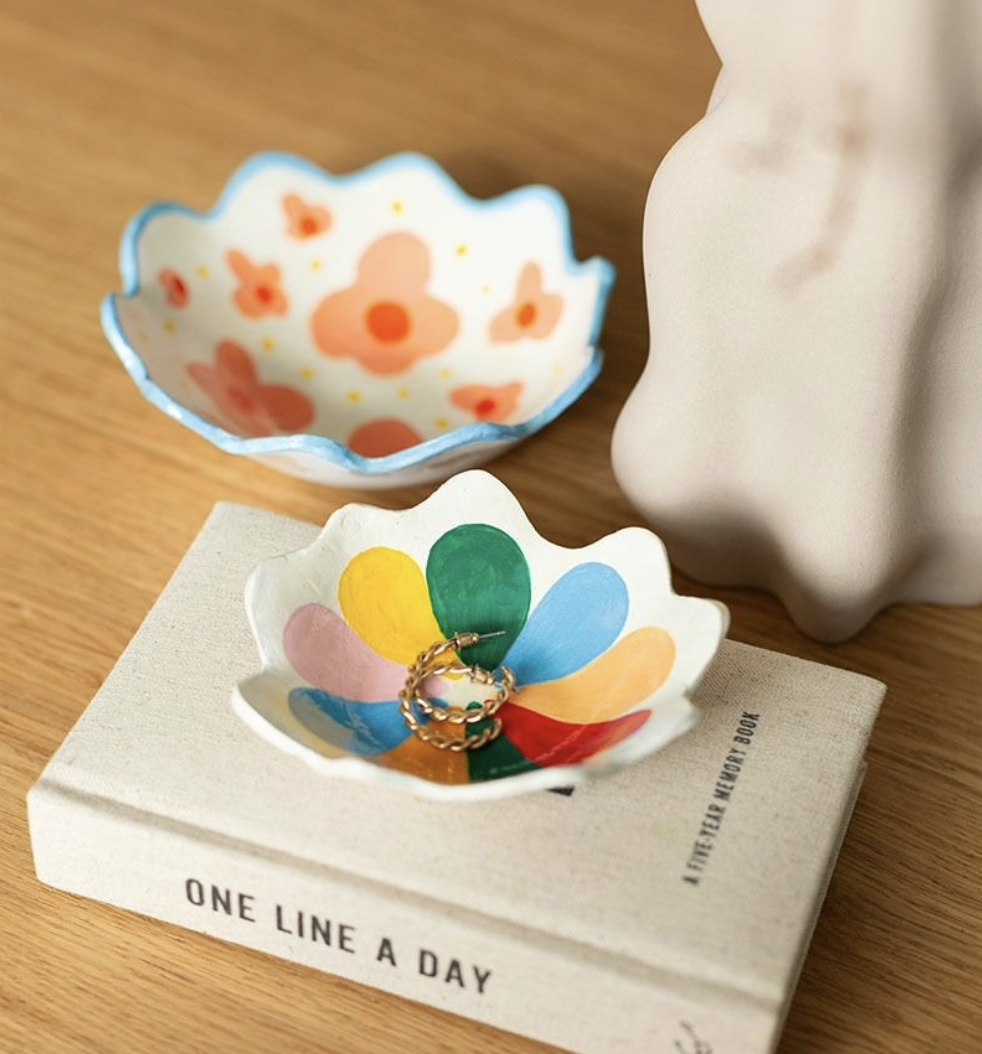
Trays and dishes are among the most satisfying and most useful home decor pieces to make from clay. A clay tray made from air dry clay, shaped over a small bowl or plate as a mould and then removed to dry, can be finished with paint or left in its natural state and used as a catch-all for keys and small objects on a console table or a bedside table. The cute clay trays that look polished rather than homemade are almost always the ones where the shaping is clean, the edges are neat, and the surface has a consistent texture rather than the fingerprint marks that come from overworking the clay.
Trinket dishes made from small pinched or pressed clay forms are one of the most popular air dry clay projects precisely because they are achievable in under an hour, produce something genuinely useful, and look beautiful grouped together on a dresser or a bathroom shelf. The same mould-pressing technique that produces a tray can produce a dish in any size from a ring dish to a full serving bowl, and the range of pinch pot ideas for home decor shows how this simplest of hand-building techniques produces forms of genuine beauty when the proportions are right.
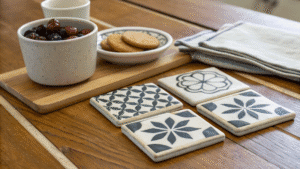
Clay coasters are practical and beautiful, and they represent the project category where clay work most directly improves the home’s daily use rather than just its appearance. Clay coasters made from a rolled and cut slab of air dry clay, finished with a smooth or textured surface and sealed to prevent moisture absorption, look genuinely considered when grouped on a coffee table. The ceramic coasters made from kiln-fired clay go further in durability and in the range of glaze finishes available, but air dry clay coasters sealed with a waterproof varnish perform surprisingly well for everyday use.
TIP: The most common mistake with air dry clay is working with pieces that are too thick. Anything over about one centimetre is likely to crack as it dries, because the outer surface dries faster than the interior. For pieces where thickness is unavoidable, hollow out the back or interior of the piece to reduce the clay mass, and dry in a cool, well-ventilated space away from direct heat. Cover loosely with a cloth if the drying process needs to be slowed to prevent surface cracking.
RELATED: 21+ Creative Air Dry Clay Ideas for Your Home Decor
You May Also Love


Clay Jewelry
Clay jewelry is one of the fastest-growing categories in handmade accessories, and the reason is immediately apparent when you hold a well-made piece: it is lightweight, distinctive, and achievable in a home setting with a very modest toolkit. Polymer clay is the dominant material for clay jewelry because it bakes to a hard, durable finish that holds detail beautifully and comes in colour combinations that produce genuinely sophisticated results.
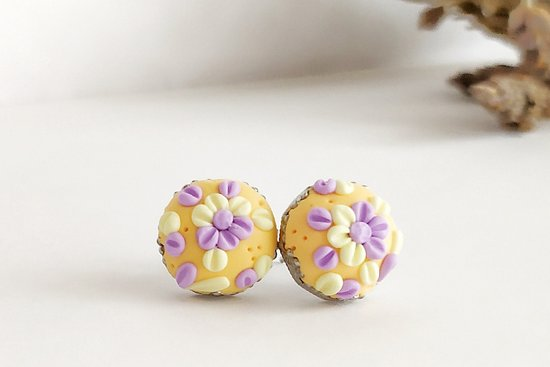
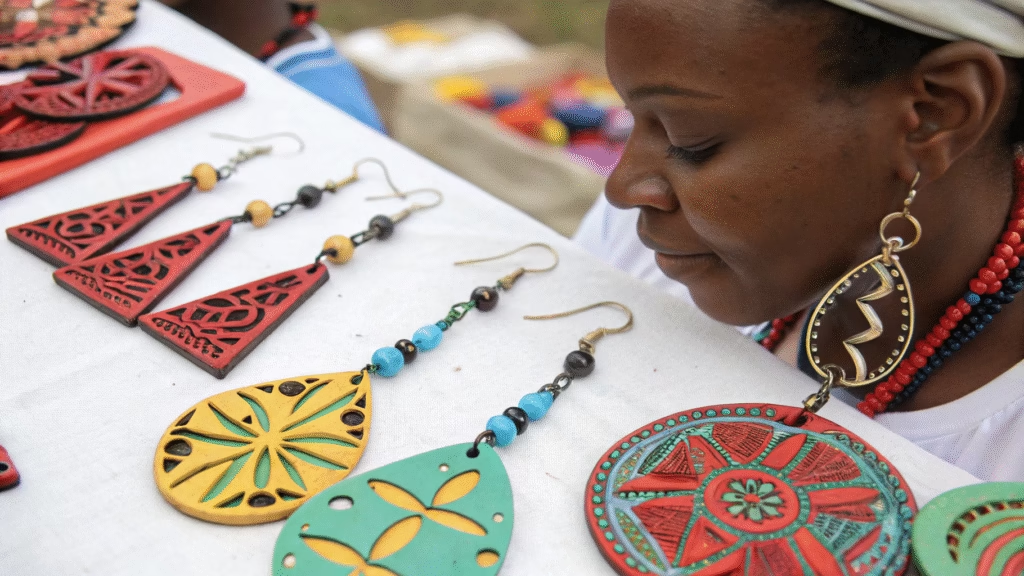
Earrings are the most popular clay jewelry project and the one that offers the most immediate creative satisfaction. The combination of polymer clay’s colour-mixing potential and the small scale of earring forms produces pieces that can be subtle or dramatic, abstract or botanical, minimal or maximally textured. Air dry clay earrings are a more accessible alternative for those without an oven setup, though they require careful sealing to prevent moisture absorption. The polymer clay jewelry ideas that look most sophisticated are the ones where the colour palette is edited, usually to two or three tones that relate to each other, and the form is clean enough that the surface and the colour do the talking.
Beyond earrings, clay bead bracelets made from rolled polymer clay beads in a consistent size and colour palette have a graphic, considered quality that mass-produced beaded jewelry rarely achieves. The unique clay jewelry ideas that go furthest beyond the standard earring-and-pendant repertoire include sculptural pieces, layered forms, and the combination of clay with other materials like wire, chain, and natural fibres. Clay ring ideas and the full range of clay jewellery making approaches show how the same material and techniques that produce earrings can be extended into a complete jewelry practice.
Don't miss: 13+ Creative Clay Candle Holder Ideas →
Pottery and Hand-Building
Pottery is the most ancient and the most technically rich of the clay disciplines, and the hand-building techniques that do not require a wheel are genuinely accessible to anyone willing to invest time in learning them. The three fundamental hand-building methods are pinching, coiling, and slab building, and between them they can produce almost any form that a wheel can.
Pinching is the most direct: you take a ball of clay, push your thumb into the centre, and work the walls outward and upward between thumb and fingers. It is the technique that most clearly demonstrates clay’s responsiveness to touch, because every movement leaves its mark in the form. Pinch pot ideas that go beyond the basic small bowl form include vases, cups, and sculptural pieces where the organic asymmetry of the pinching process becomes a deliberate aesthetic choice.
Coiling builds forms by rolling clay into long ropes and stacking them in a spiral, smoothing the joints as you go. It allows for larger and taller forms than pinching, and the coil marks, when left visible rather than smoothed away, give the finished piece a distinctive handmade quality. The coil pot ideas that look most accomplished are the ones where the coils are consistently even, the walls are uniform in thickness, and the decision about whether to smooth or preserve the surface texture is made deliberately.
Slab building cuts flat sheets of clay and assembles them into forms, in much the same way that a carpenter works with planks. It is the technique most suited to geometric, box-like forms: dishes, platters, rectangular vessels, and tiles. The inspiring pottery ideas for home cover the full range of what hand-building can produce, from the simplest pinch bowl to elaborate multi-part constructions.
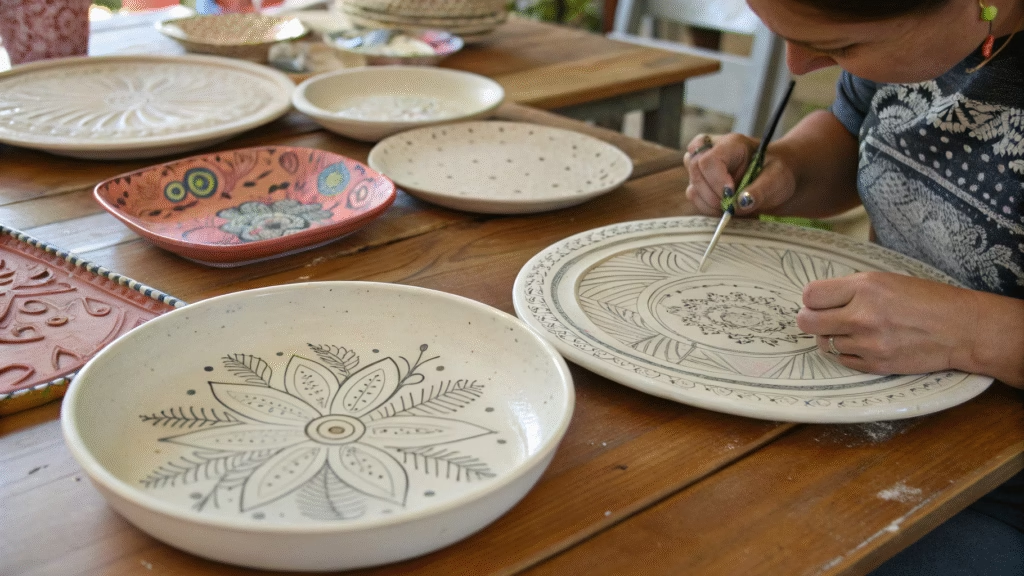
Pottery painting is the finishing stage where much of a piece’s character is determined, whether that involves painting bisqueware with acrylic or underglaze colours, applying oxide washes to enhance texture, or the more advanced technique of pottery carving that incises patterns and motifs into the clay surface before firing.
Sculptures and Figurative Work
Sculpture is where clay work becomes most expressively free, because the form is not constrained by functional requirements. A sculptural clay piece can be any shape, any size, any surface quality, and its only criterion for success is whether it achieves the visual effect intended.
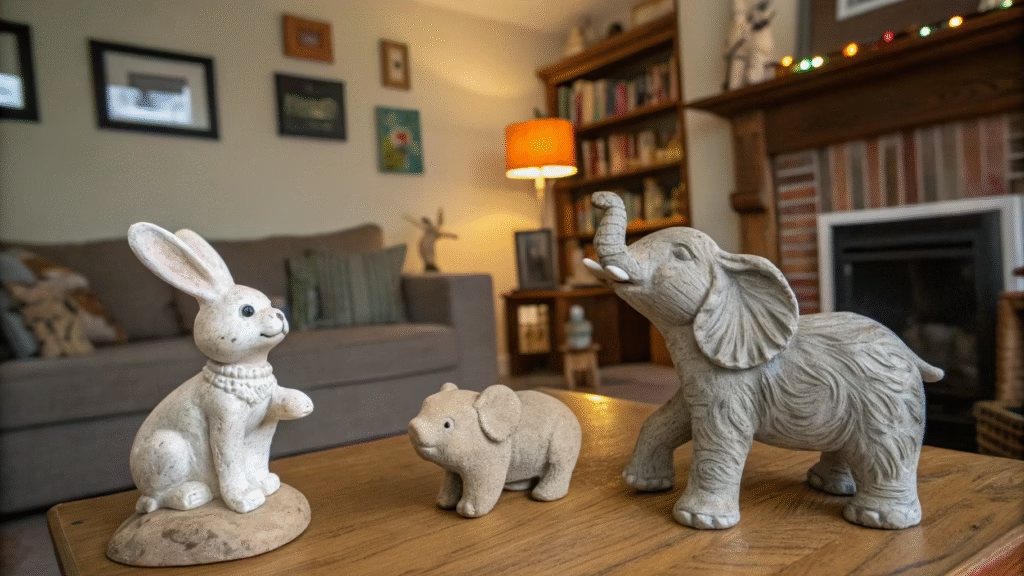
Clay sculptures that work well as home decor are almost always the ones where the form is resolved rather than tentative. A simple, clean form executed with confidence reads as designed. A complex form that has been overworked reads as effortful. Beginning with simple forms, learning how they feel under the hands, and gradually developing the vocabulary of shapes that are most natural to your way of working is the most reliable path to sculptures that feel genuinely your own.
Paper clay sculptures made from air dry clay mixed with paper fibres have a slightly different quality from standard clay: lighter, more resistant to cracking during drying, and capable of very thin walls that standard air dry clay cannot achieve. The paper clay projects for home range from abstract wall pieces to botanical forms and figurative work.
For the playful end of the sculptural spectrum, kawaii air dry clay characters and clay cupcakes and miniature food forms occupy a category of clay work that is primarily joyful and that appeals particularly to younger makers. The clay flower ideas that create botanical forms in clay, whether for pressing into pendants, making into brooches, or displaying as standalone decorative pieces, combine the sculptural and the decorative in a form that suits a very wide range of aesthetics.
Keep Exploring


Clay as a Gift
Handmade clay objects make genuinely meaningful gifts precisely because they carry the evidence of time and attention in a way that purchased gifts almost never do. The person who receives a handmade clay piece knows immediately that it was made specifically for them, and that knowledge is part of what makes the gift feel significant.
Pottery gift ideas cover the full range of handmade clay objects suited to gifting, from small trinket dishes and coasters to more substantial vessels and decorative pieces. Salt dough ornaments are a particularly accessible gift form because they use the simplest of clay-adjacent materials, flour, salt, and water, to create personalised ornaments that can be painted, imprinted with names or handprints, and hung as Christmas or celebration gifts. The handprint pottery ideas that capture a child’s handprint in clay are among the most treasured of all handmade gifts, precisely because they preserve something irreplaceable: the size of a hand at a specific moment in time.
Clay heart ideas and clay ornament ideas for home cover the gift-oriented end of decorative clay projects, and the clay magnets for home that sit on fridges and notice boards are one of those small personal objects that feels genuinely charming rather than merely functional when made by hand in a distinctive shape or colour.
RELATED: 15+ Unique Pottery Gift Ideas for Every Occasion
Frequently Asked Questions
What is the easiest clay to start with? Air dry clay is the most accessible starting point because it requires no equipment beyond your hands and a smooth work surface, and it dries at room temperature without any firing or baking. Polymer clay is a close second and offers more colour variety and a harder, more durable finish after baking in a domestic oven. Both are widely available and inexpensive to begin experimenting with.
Can I make functional pottery at home without a kiln? For food-safe functional pottery, a kiln is necessary because only kiln firing produces the hardness and impermeability needed for items that hold liquid or food. However, you can make decorative vessels, dishes for dry items, and display pieces using air dry clay that is properly sealed with a waterproof varnish. These are not food-safe but they are durable and beautiful for decorative use.
How do I prevent air dry clay from cracking? Keep pieces to a maximum of about one centimetre in thickness. Dry slowly in a cool, well-ventilated space away from direct heat or sunlight. For larger pieces, score and slip joins properly to ensure pieces adhere before drying. If small cracks appear during drying, they can be filled with fresh clay mixed with water to a paste consistency and sanded smooth after drying.
What tools do I actually need to start working with clay? At the absolute minimum: the clay itself, a smooth non-porous surface to work on, and your hands. A rolling pin or acrylic roller, a sharp blade, and a skewer or toothpick expand what you can do considerably. More specialist tools, loop tools for carving, ribbon tools for trimming, and stamps for texture, become useful as specific project needs arise but are not necessary to begin.
Is polymer clay safe to use at home? Polymer clay is safe when used and baked correctly. Bake at the manufacturer’s recommended temperature, which is typically between 110 and 130 degrees Celsius, in a well-ventilated oven. Do not overbake, as this can cause discolouration and release unpleasant fumes. Dedicated baking tools for polymer clay are recommended to keep them separate from food use.
Explore all DIY and craft guides in our DIY and Crafts section.