Coastal Interior Design: How to Bring the Seaside Into Your Home
A complete guide to coastal style, from the colour palette and materials that define it to room-by-room ideas, natural textures, and the details that make a home feel genuinely connected to the sea rather than decorated with it.
KEY POINTS
- Coastal style is not about decorating with ocean objects. It is about capturing a quality of light, air, and unhurried ease that the seaside produces. The best coastal homes feel like the sea without explicitly referencing it.
- Natural materials, a restrained palette of whites, creams, soft blues, and sandy neutrals, and an abundance of light are the three elements that do the most work in any coastal interior.
- The line between coastal style that feels elegant and coastal style that feels like a beach gift shop is almost entirely a question of restraint and material quality.
Ask someone what a coastal home feels like and they will almost always describe the same things: light, air, ease, the sense that time moves more slowly and that the outdoors is always just a step away. What they will not describe is a shelf of seashells and a blue-and-white striped sofa, even if that is what they picture when they think of coastal decor.
Love Chic Living Club?
Add us as one of your preferred Google sources and discover more home decor, DIY, outdoor, and lifestyle inspiration from us.
That gap between what coastal style feels like and what it is often reduced to in execution is where most coastal decorating goes wrong. The best coastal homes achieve their atmosphere through light, materials, and a lightness of touch with the decorative references rather than through literal marine objects and maritime typography. This guide covers the full approach to coastal design, from the foundational decisions about colour and material to the room-by-room details that make it genuinely work.
What Coastal Style Actually Means
Coastal design is fundamentally an atmosphere rather than a collection of objects. The atmosphere it seeks to create comes from the specific qualities of life near the sea: the brightness of light reflected off water, the bleached and weathered character of materials that have been exposed to salt air over time, the ease and informality of a place where sandy feet and wet towels are expected, and the particular palette of a landscape that is mostly sky, water, and pale sand.
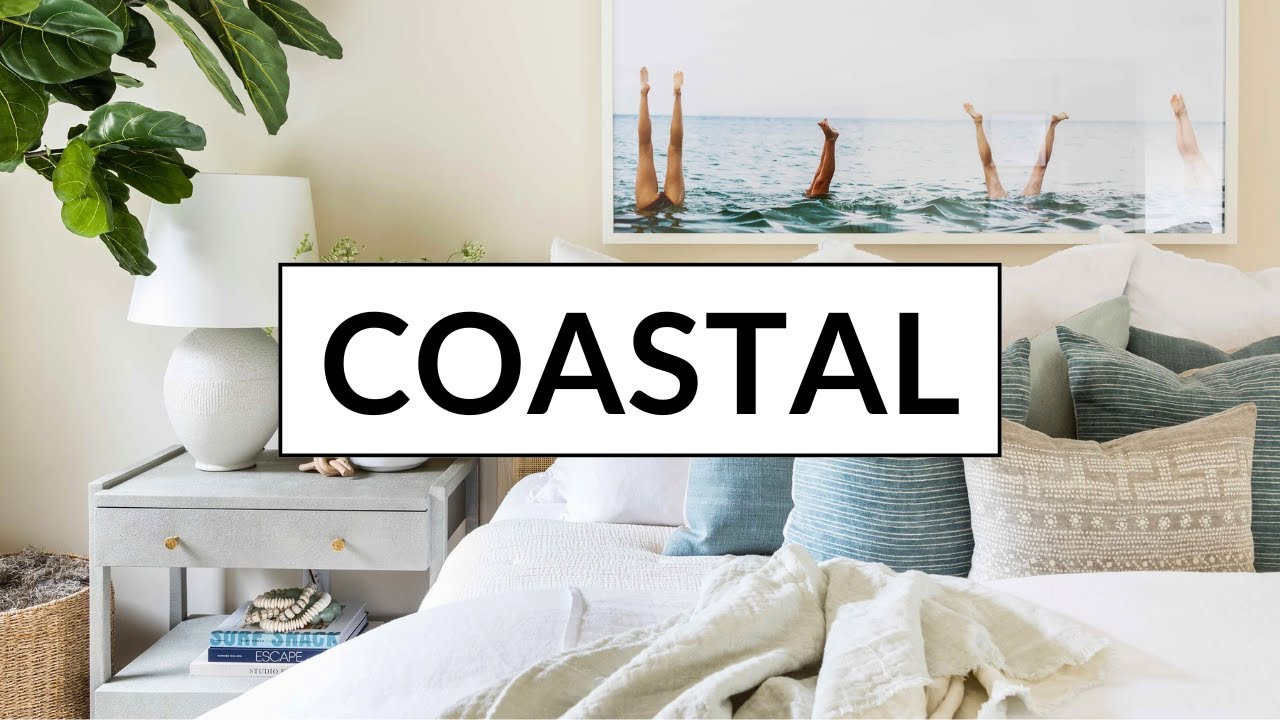
This means that coastal style is achieved primarily through decisions about colour, material, and light rather than through the application of nautical accessories. A room can be deeply, genuinely coastal without a single anchor, ship, or seashell in it. A room can have all of those things and still feel like a costume rather than a home.
The principle that separates coastal design that works from coastal design that feels themed is the same principle that applies to any style: the choices should feel like they emerged naturally from the place and the person who lives there rather than from a style category that has been applied from the outside.
The Coastal Colour Palette
The palette of a coastal interior is almost always built around light. Whites and off-whites form the dominant base, usually with a warm or slightly sandy undertone rather than the stark, cool white that feels more clinical than coastal. These light tones reflect and amplify natural light, creating the bright, airy quality that is the most recognisable characteristic of any well-executed coastal interior.
Layered on top of that pale base, the coastal palette introduces its other tones with restraint. Soft blues, ranging from the palest sky blue through to a deeper ocean navy, are the most expected element of coastal colour and for good reason: they genuinely evoke the landscape in a way that almost no other colour family does. Sandy neutrals, driftwood greys, and bleached natural tones all extend the palette without introducing warmth that competes with the essential lightness of the style.
What this palette consistently avoids is strong warm tone. The terracottas and ochres that work so well in an Afrobohemian or Mediterranean interior look wrong in a coastal room because they shift the temperature from light and airy to warm and grounded, and grounded is the opposite of what coastal style is trying to achieve. This does not mean the palette has to be cold: warm whites, the warm grey of weathered timber, and the natural warmth of linen all bring life to the palette without undermining its fundamental lightness.
Natural Materials Are the Foundation
If colour sets the tone of a coastal interior, natural materials give it its substance and authenticity. The most persuasive coastal rooms are the ones where the materials feel as if they have been gathered from the coastal landscape itself: bleached timber, natural rope, stone with a rough or salt-washed quality, linen and cotton in their most unprocessed forms, and the organic textures of seagrass, jute, and sisal.
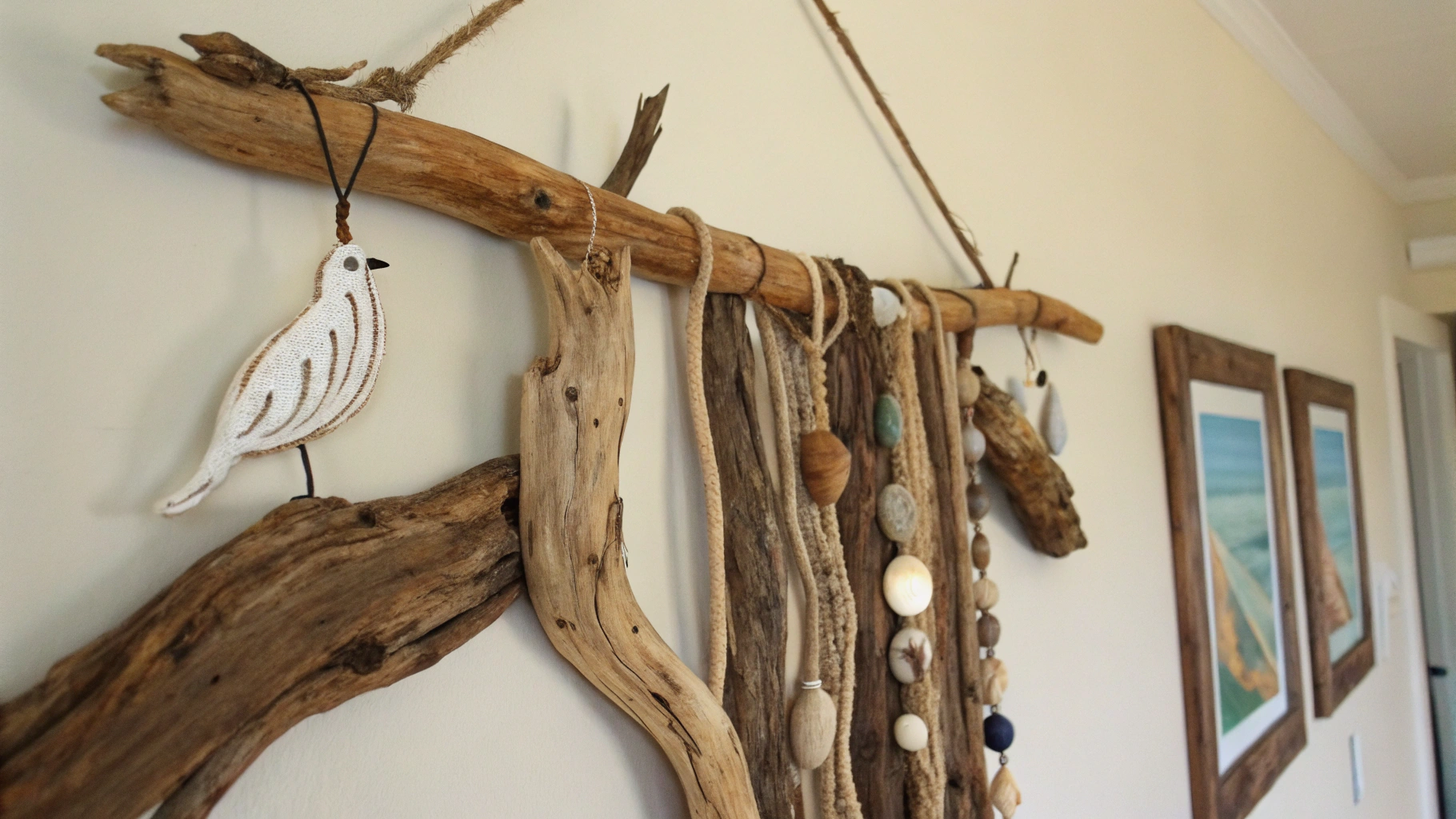
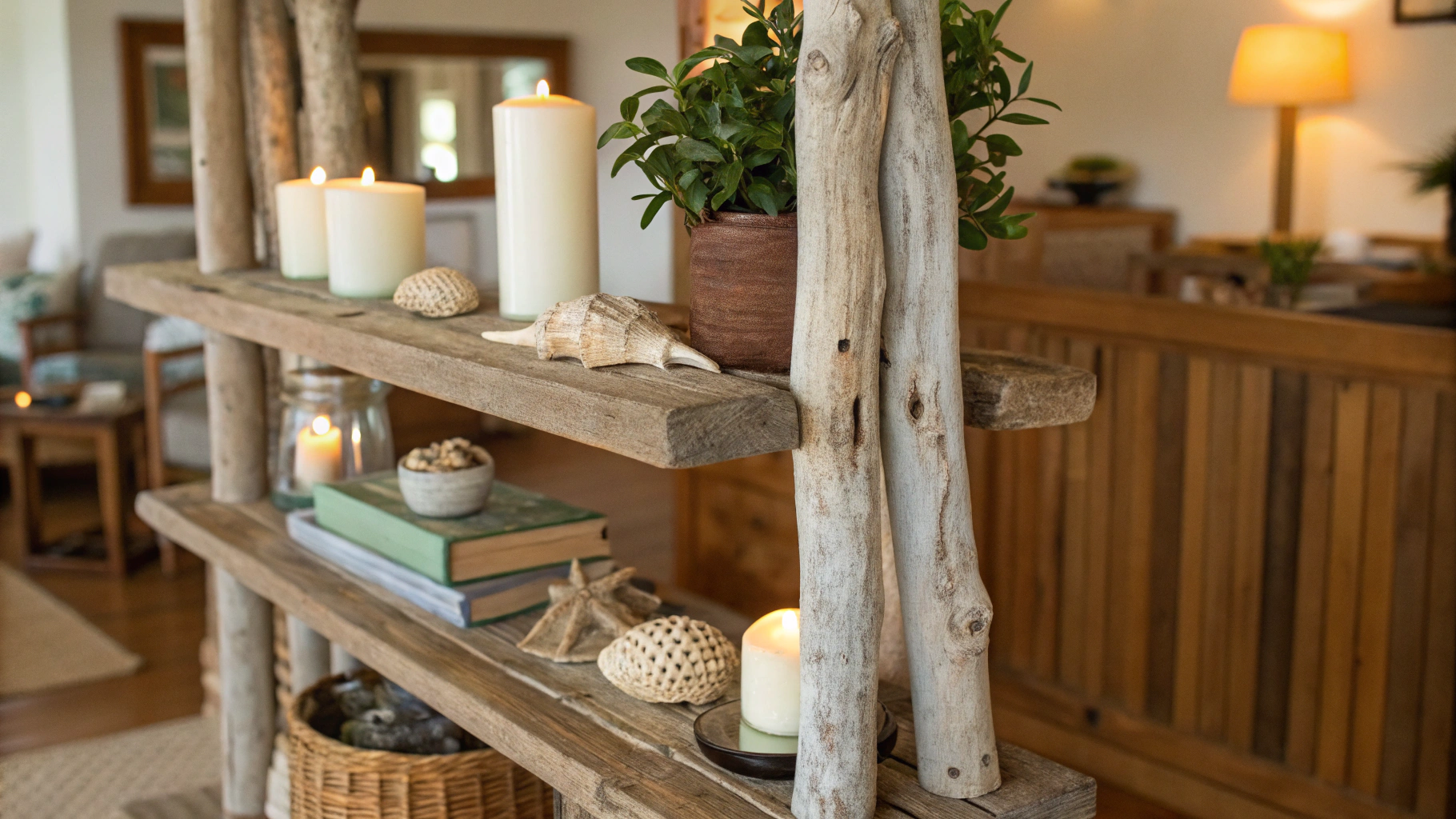
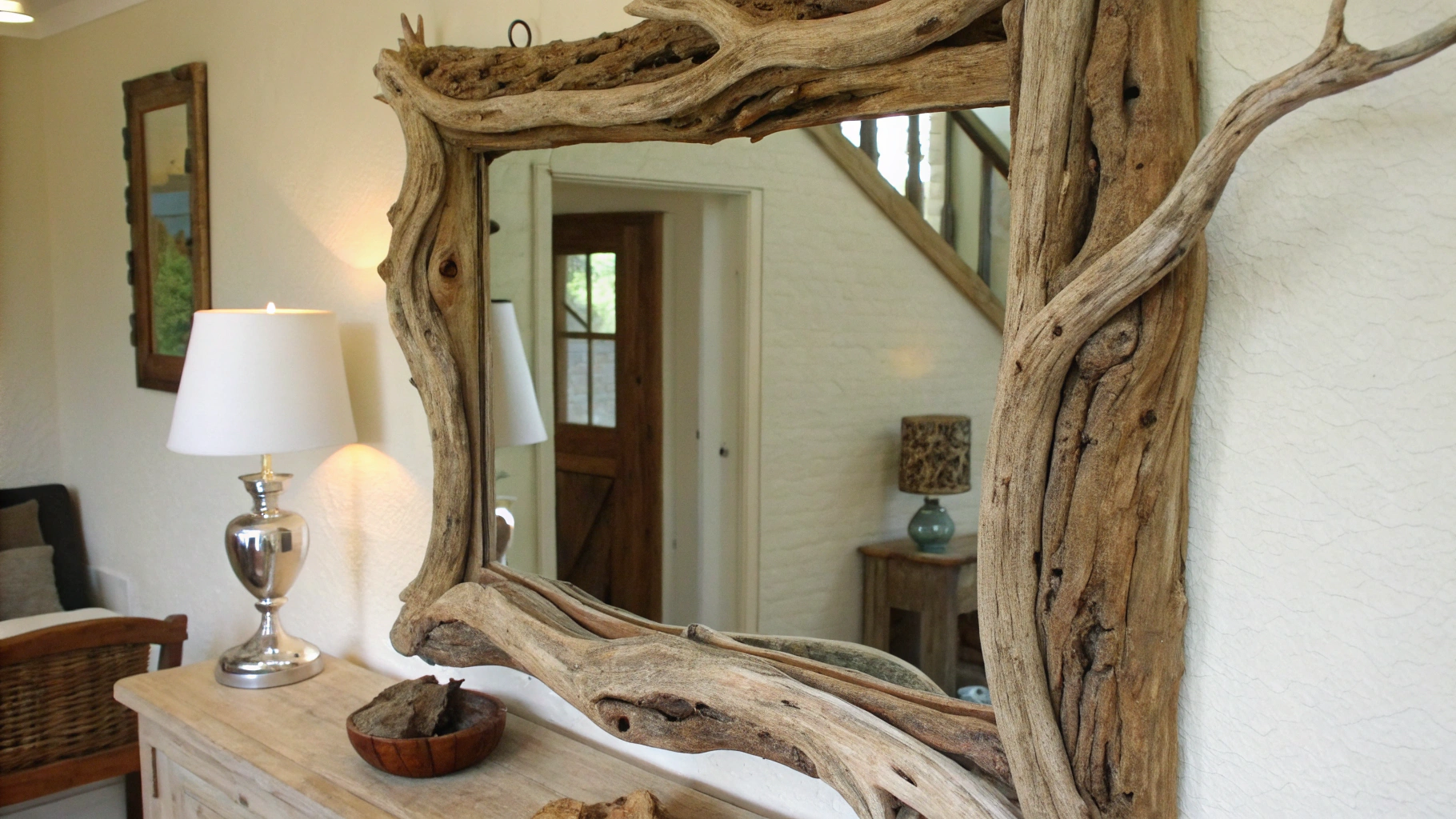
Driftwood is the material most closely associated with coastal design and the one most often handled badly. The temptation is to use it as a novelty, as a shelf or a mirror frame or a candle holder, in ways that make it feel like a craft project rather than a genuine design element. Used with restraint and with a clear sense of where it belongs compositionally, driftwood has a real material presence that no other coastal element replicates. A driftwood mirror frame is a perfect example of how this material, in the right form and the right scale, becomes genuinely architectural rather than merely decorative. The same principle applies to driftwood shelf styling in a living room, where the natural form of weathered wood introduces organic shape and texture to a surface arrangement that would otherwise feel too composed. A driftwood wall hanging as the primary wall statement in a coastal living room has a sculptural quality that a conventional canvas or print rarely achieves in this context.
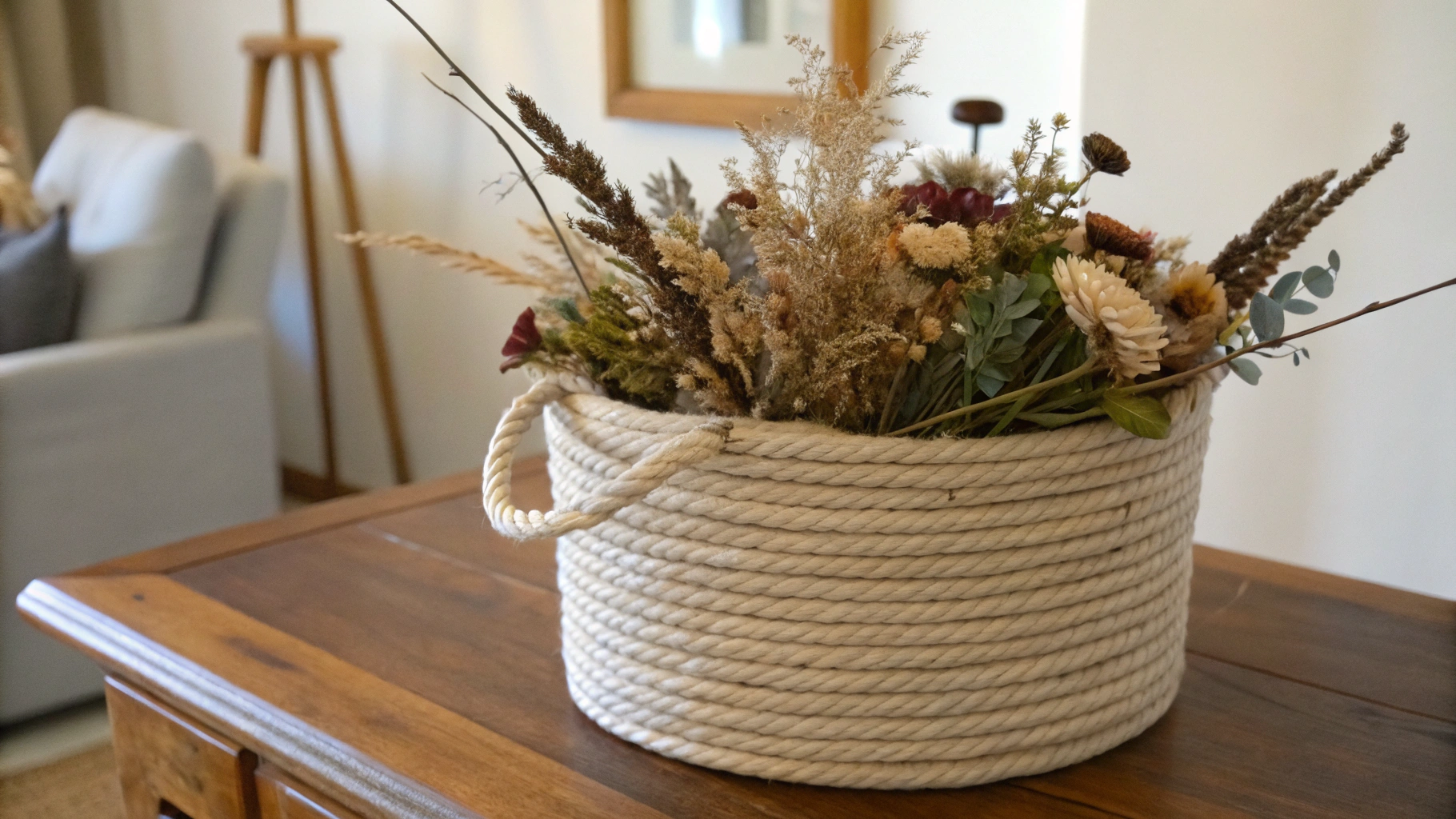
Rope is the other signature coastal material and one that can be used with more versatility than its specificity might suggest. Rope basket decor that brings natural coiled and woven forms into the interior adds texture and warmth at low cost. Rope curtain tiebacks on linen curtains are one of those small details that signal a thoughtful coastal interior without announcing themselves. Even something as specific as a rope-wrapped lamp can become a character piece rather than a novelty when the lamp itself has good proportions and the rope wrapping is done with craftsmanship.
You May Also Love
Handling Natural Objects
Seashells, driftwood, pebbles, and other objects collected from the shore are the most literally coastal elements available and the ones most likely to tip a room from stylish to themed. The principle that makes them work is the same that makes any collected object work: they should be few in number, beautiful in themselves, displayed with compositional logic, and given space to be seen.
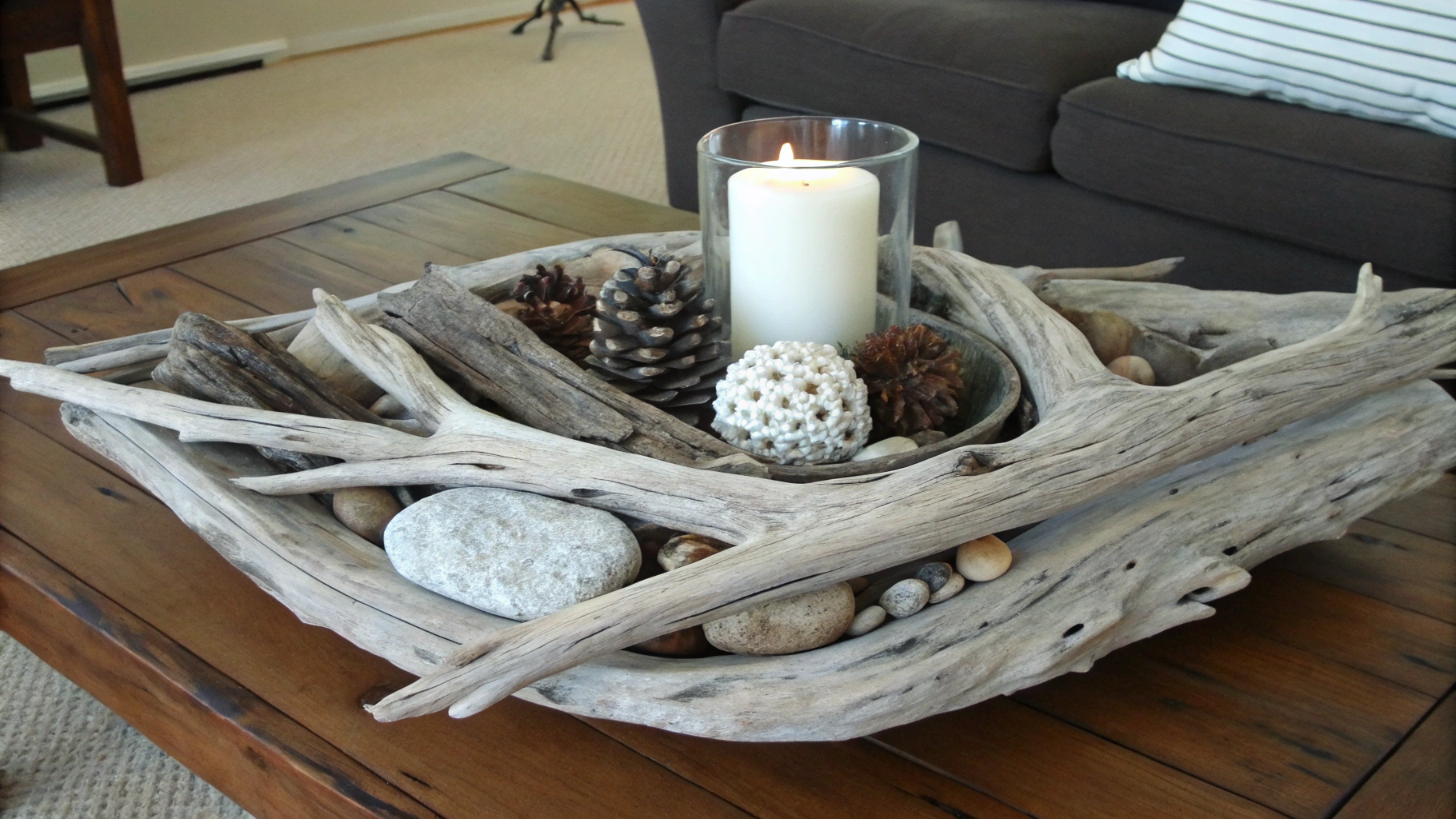
A driftwood coffee table centrepiece that uses one or two pieces of driftwood with a few pebbles and a small plant in a simple vessel reads as a thoughtfully assembled still life. The same table covered in a mass of shells, rocks, and maritime objects reads as a collection that has outgrown its space.
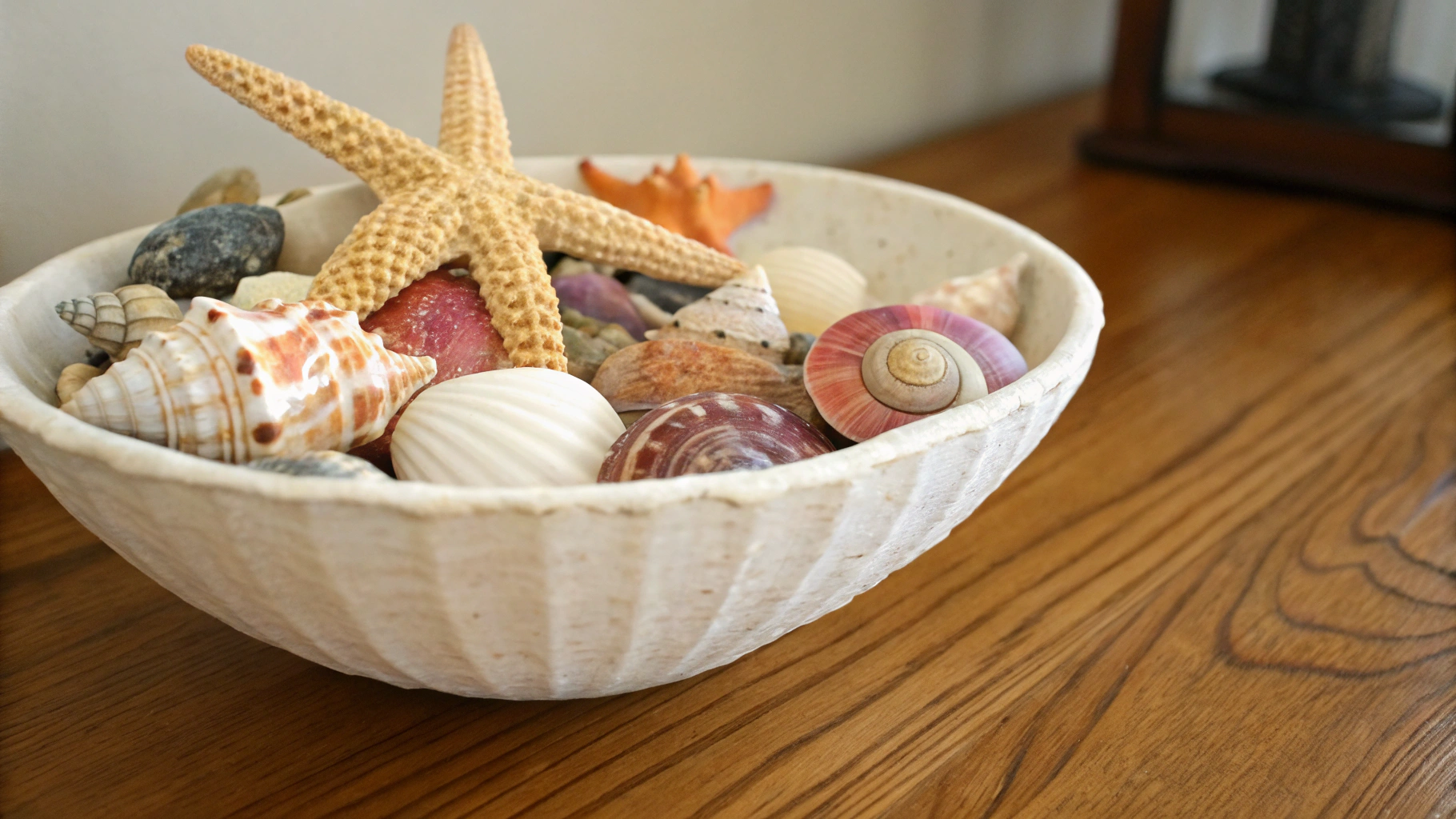
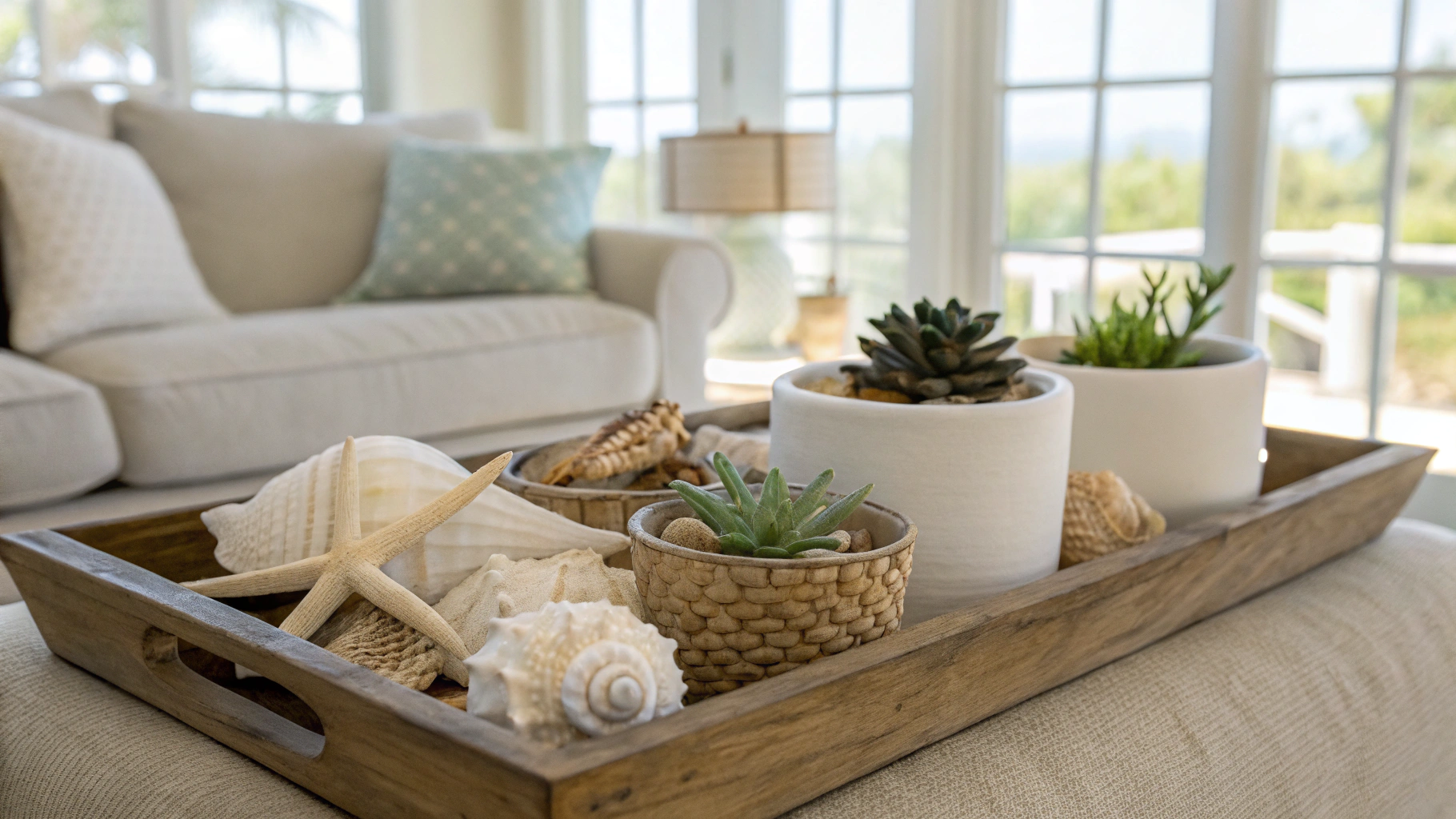
Seashell bowl decor on a coffee table is one of the easiest coastal styling moves available and also one of the most commonly overdone. A shallow ceramic bowl with a few beautiful shells, each chosen for its form and its colour, has the same quality as any well-edited collection: the individual pieces are given the space to be appreciated. The same shells scattered across the surface around the bowl, or piled into a bowl that is too small and visually congested, lose that quality entirely.
Seashell vase fillers that use a clear glass vase filled with a single type of shell, all in consistent colour and size, create a clean and graphic effect that reads as designed rather than accumulated. The success of this approach is in the editing: one shell type, one vase, one location.
TIP: Before placing any natural coastal object in a room, ask whether it would belong in the space if it were not from the sea. A piece of driftwood with beautiful form and interesting colour is a good object regardless of its origin. A shell with no particular form or colour is interesting only because it is a shell. The standard for coastal objects should be the same as for any decorative object: it needs to be genuinely beautiful, not just contextually appropriate.
RELATED: 16 Seashell Bathroom Tray Decor Ideas
Light and Curtains
Light is the element that makes or breaks a coastal interior more than any other, and the treatment of windows is the key decision. Coastal rooms feel wrong when they are dark. Even a room with a perfect coastal palette and flawless material choices will feel heavy and airless if the windows are poorly treated or blocked.
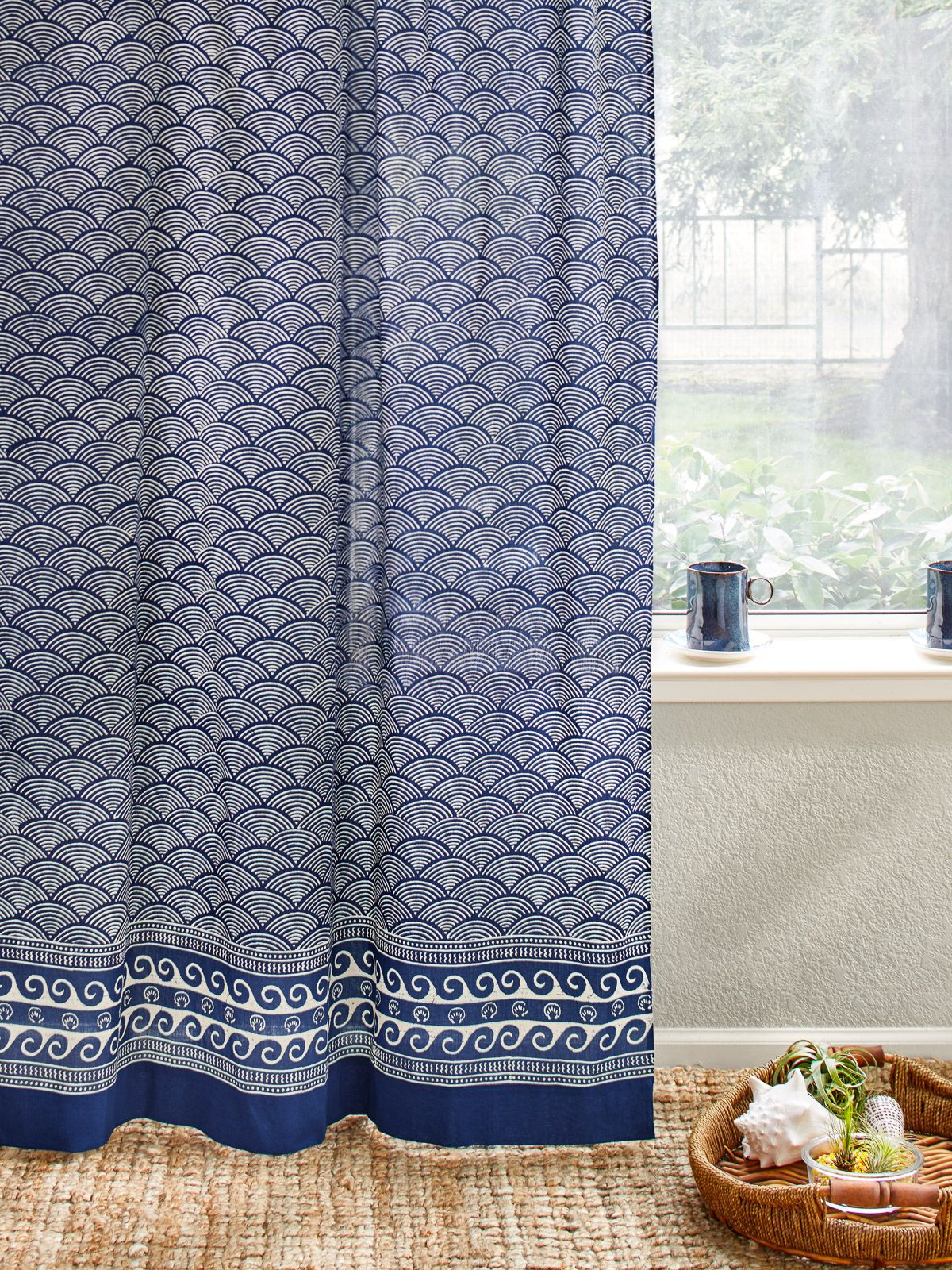
The window treatment that suits coastal interiors best is the one that lets in the maximum light while providing the option of privacy and shade when needed. Sheer linen or cotton curtains in natural off-white, hung high and wide beyond the frame on simple rods, diffuse light without blocking it and create the softly billowing quality that is so immediately associated with a coastal atmosphere. Thick, heavy curtains in any dark colour are the enemy of coastal light and should be avoided in any room that is trying to achieve this feeling.
Horizontal blinds in natural materials, white-painted shutters, and Roman blinds in natural linen are all workable alternatives for rooms where full-length curtains are impractical. The principle across all of them is the same: the goal is to manage light while keeping as much of it in the room as possible.
Don't miss: 15 Seashell Bowl Decor Ideas for Coffee Tables →
The Coastal Living Room
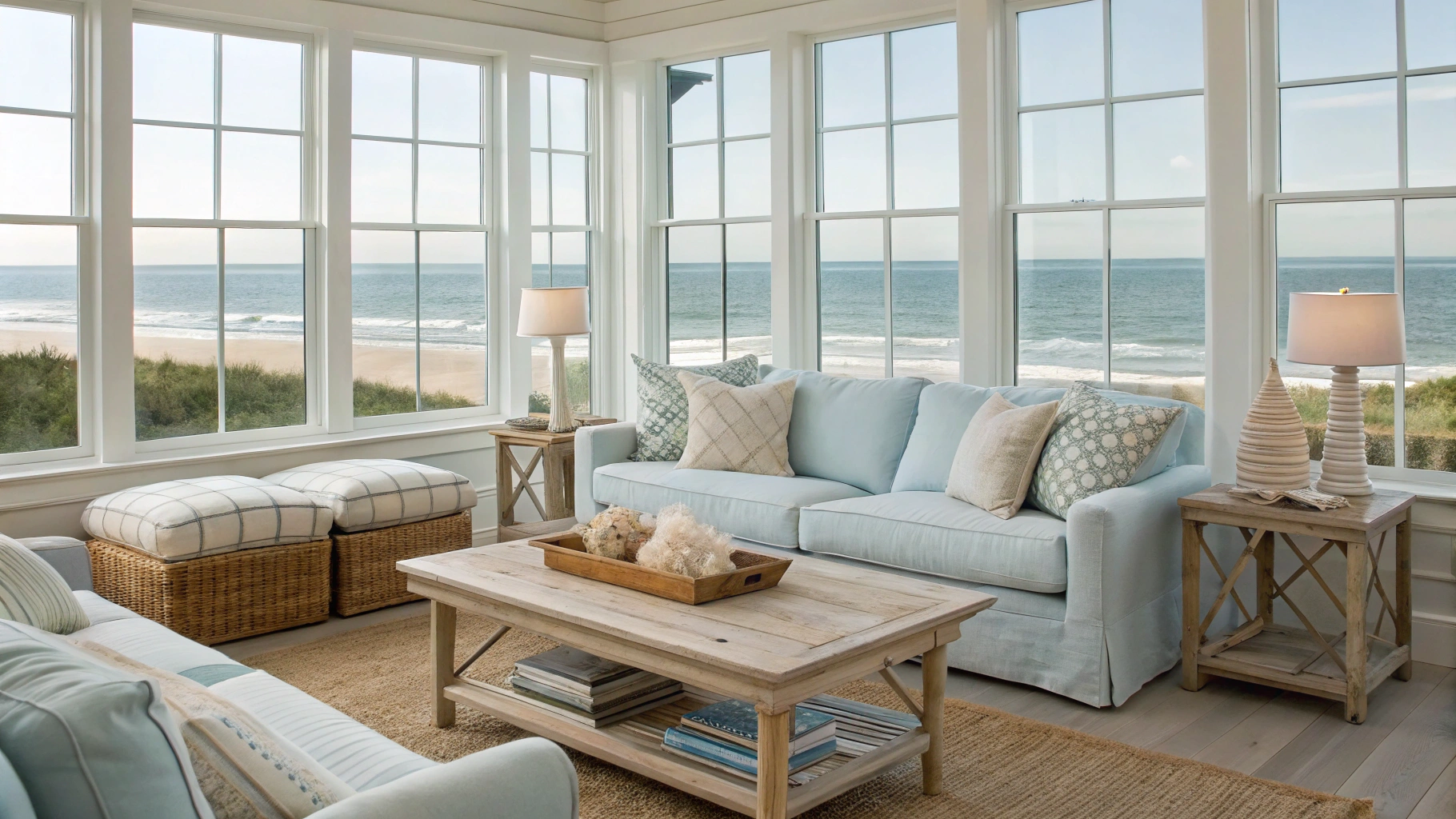
The living room is where coastal style typically makes its most complete statement, and the decisions here establish the visual language that the rest of the house responds to. A coastal living room begins with a pale base, usually white or off-white walls, and builds its character through the layering of natural materials, a restrained blue accent colour, and the kinds of surface styling that bring the atmosphere of the coast indoors.
The sofa in a coastal living room almost always reads best in natural linen or a soft white cotton rather than in a pattern fabric or a strong colour. It is the largest piece of furniture in the room and it should recede slightly so that the natural materials and lighter accessories can speak. Cushions in soft blue, sandy natural tones, and the occasional striped linen introduce pattern and colour at a scale that can be changed seasonally without disrupting the room’s foundations.
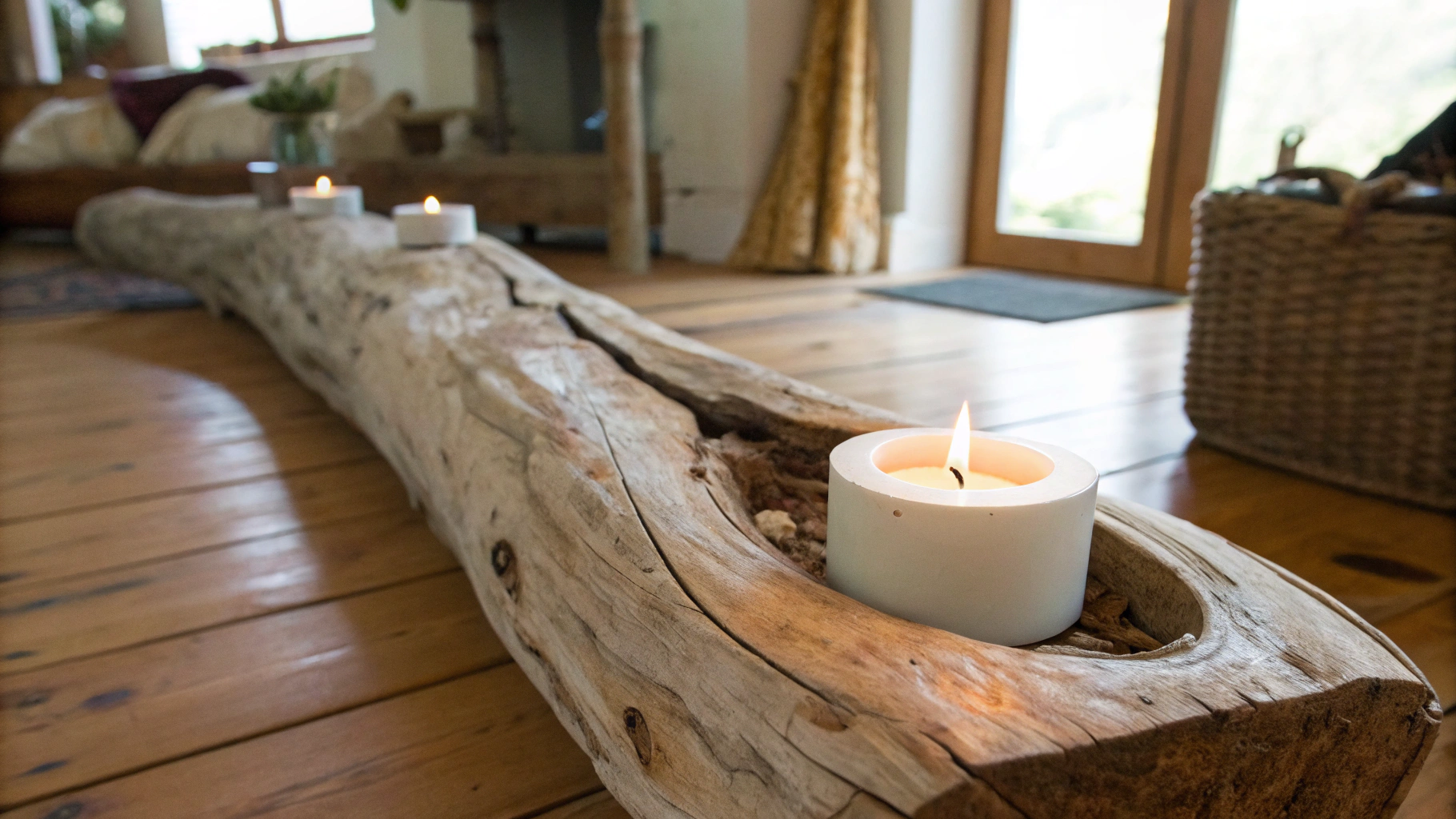
A driftwood candle holder arrangement on a coffee table or side table adds warmth and organic form to the living room’s flat surfaces in the evenings. Coastal coffee table tray styling that uses a natural fibre or bleached timber tray to contain a few curated objects, a small plant in a simple pot, a candle, perhaps a single shell or pebble with good form, creates a surface composition that is both considered and easy to live with.
The Coastal Kitchen
The coastal kitchen is lighter and more relaxed in character than most other kitchen styles. Open shelving in white-painted or natural timber, displayed with simple white ceramics, glass jars, and a few natural elements, has exactly the light, unencumbered quality that coastal design aims for. Closed cabinetry in a clean off-white or soft sage with simple hardware does the same work in a more contemporary format.
The surfaces on the counter, which in most kitchens tend to accumulate quickly, should be kept especially clear in a coastal kitchen because the lightness of the palette is immediately disrupted by clutter. Coastal kitchen counter tray styling uses a small tray with a restrained arrangement of everyday items, a good soap, a small plant, perhaps a jar of sea salt, to organise what needs to be out while keeping the visual field as clear as the style demands.
The Coastal Bathroom
A coastal bathroom is where the style’s connection to water is most natural and most easily achieved. The combination of white or very pale walls, natural stone or subway tile in simple formats, white sanitary ware with brushed nickel or chrome fittings, and linen or cotton towels in natural tones creates a bathroom that feels clean, honest, and connected to the sea without a single literal marine reference.
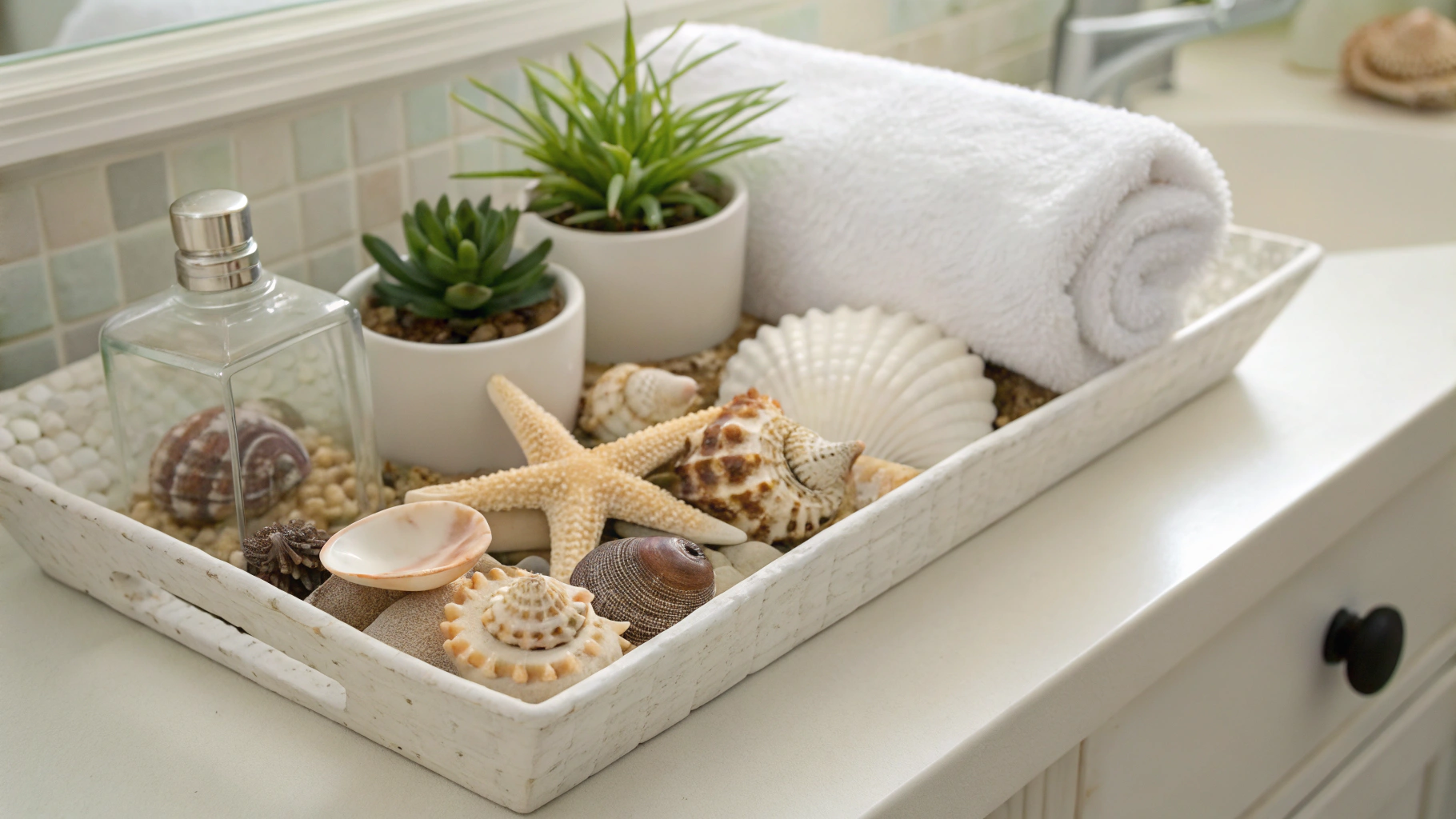
The surfaces in a coastal bathroom, the vanity counter and any open shelving, are where the styling decisions make the most difference. Seashell bathroom tray decor that uses a small tray to organise hand soap, a candle, and a shell or two creates the composed, boutique quality of a well-designed hotel bathroom without any elaborate styling. The key, as always, is the restraint: two or three objects arranged with intention outperform a surface covered in many.
Plants, as in any bathroom, contribute an organic warmth that no object can replicate. Ferns, orchids, and trailing pothos all suit the humid conditions of a bathroom and add a lush, growing quality that counterbalances the cool palette of a coastal bathroom without compromising its essential lightness.
Keep Exploring
Avoiding the Gift Shop
The most common failure in coastal decorating is accumulating too many literal references to the sea. When every surface has shells, when every wall has an anchor or a compass, when every object is labelled “beach” or “sea” or “waves,” the room stops feeling like a coastal home and starts feeling like a coastal souvenir shop. The objects have been chosen because they are coastal-themed rather than because they are beautiful.
The correction is not to avoid coastal references entirely. It is to choose them with the same standard that applies to any object in a well-designed home: it needs to be genuinely beautiful in itself, not merely appropriate to the style. A single extraordinary shell placed alone on a shelf is a coastal object that earns its place. Twenty shells in a net bag hung on a wall are a coastal stereotype that undermines everything around them.
The rooms that achieve coastal design at its best are almost always the ones where the references are few, the materials are real, and the palette is doing most of the work. The connection to the sea comes through atmosphere rather than through accumulation, and that atmosphere is created primarily by light, pale colour, natural texture, and the uncluttered, unhurried quality of a space that does not need to assert itself.
Frequently Asked Questions
How do I make a room look coastal without using cliches?
Start with a pale, light-reflecting palette of whites, off-whites, and soft sandy neutrals. Introduce natural materials in the furniture and accessories: linen, jute, weathered timber, rattan. Let in as much natural light as possible through lightweight curtains rather than heavy window treatments. The room will feel coastal through these foundational decisions before you add a single marine object.
What colours are most essential to coastal style?
White or off-white as the dominant base, soft blues as the accent colour, and sandy or driftwood neutrals as the transitional tones. These three together create the essential coastal palette. The blues range from the palest sky blue to a deeper ocean navy depending on how much contrast you want. The sandy tones bring warmth without heaviness.
Can coastal style work in an inland home?
Absolutely. Coastal style is an atmosphere created through colour, material, and light rather than a literal reference to the sea. A light, pale room with natural linen curtains, rattan furniture, weathered timber details, and a soft blue accent will feel coastal whether it is on a cliff above the Atlantic or in the middle of a city. The connection to the sea is evoked rather than literal.
What natural materials work best in a coastal interior?
Linen and cotton in natural and white tones for textiles. Weathered or bleached timber for furniture and accessories. Rattan and wicker for chairs and baskets. Jute and sisal for rugs. Natural rope for decorative details. Ceramic in simple white or sandy glazes for vessels. Stone in pale or grey tones for surfaces. The unifying quality across all of them is that they look as though they could have been shaped by wind, water, and sun.
How do I use seashells in decor without it looking tacky?
Edit ruthlessly. Choose only the shells that are genuinely beautiful in form and colour, and display them alone or in groups of two or three rather than en masse. Place them in simple vessels or arrange them as part of a composed surface display rather than scattering them across every available surface. The fewer the shells, the more each individual one can be seen and appreciated.
Explore the full range of home decor styles in our Styles section at Chic Living Club.