Afrobohemian Interior Design: The Complete Style Guide
Everything you need to understand, apply, and live with Afrobohemian style, from the colour palettes and textiles that define it to the room-by-room decisions that make it feel genuinely yours.
KEY POINTS
- Afrobohemian style is not a trend. It is a design language rooted in African heritage, craft traditions, and the bohemian value of personal expression. The homes that wear it best treat it as a living, evolving identity rather than a mood board to replicate.
- The foundation of Afrobohemian design is warmth: earthy tones, natural materials, handcrafted objects, and layered textiles. Everything else builds on that foundation.
- The difference between an Afrobohemian home that feels genuinely considered and one that looks like a collection of African-inspired products is personal meaning. What you choose matters less than why you choose it.
Afrobohemian interior design is one of the most distinctive and most misunderstood aesthetics in contemporary home design. At its best, it produces homes of extraordinary warmth and richness, spaces that feel alive with layered colour, texture, and cultural story. At its worst, it produces spaces that look like a shopping cart assembled from African-inspired products without any of the meaning or context that makes the style actually work.
Love Chic Living Club?
Add us as one of your preferred Google sources and discover more home decor, DIY, outdoor, and lifestyle inspiration from us.
Understanding what Afrobohemian design actually is, what principles drive it, and how to apply those principles to your own home is the starting point for getting it right. This guide covers the full picture, from the colour palettes and materials that define the style to the specific room decisions that bring it to life, including the nuanced question of how much is enough and when restraint serves the aesthetic better than abundance.
RELATED: 15+ Afrobohemian Decor Trends That Will Outlast 2026
What Afrobohemian Style Actually Is
Afrobohemian design sits at the intersection of two powerful aesthetic traditions. The African side brings a richness of pattern, the warmth of handcrafted objects, the use of natural materials with deep cultural history, and a colour palette rooted in earth and fire: terracottas, ochres, deep greens, warm blacks, and the saturated tones of West and North African textiles. The bohemian side brings the principles of personal accumulation over time, eclecticism over coordination, and the prioritising of lived experience and individual story over any single consistent visual scheme.
What makes Afrobohemian design distinct from either tradition alone is the way the two enhance each other. African design at its strongest is not timid or minimal. It celebrates colour, pattern, and the presence of the handmade. Bohemian design at its strongest is not random or undiscriminating. It builds a sense of personal narrative through the thoughtful collection of meaningful objects. Together, they produce interiors that feel both culturally rich and deeply personal, which is a combination very few other design aesthetics achieve.
The Afrobohemian decor elements that define the style most consistently include: handwoven textiles in bold patterns, natural fibres like rattan, jute, sisal, and wicker in furniture and accessories, earthy wall tones that provide a warm backdrop for layered decoration, ceramics and pottery with an artisanal quality, African art and cultural objects displayed with intention rather than as decoration alone, and an abundance of living plants that connect the interior to the natural world.
Start With the Colour Palette
The colour palette of an Afrobohemian interior is almost always rooted in the earth. The tones that work most consistently are the warm neutrals of natural materials: the sandy beige of undyed linen, the warm brown of raw timber, the burnt orange and deep terracotta of West African fired clay, the ochre gold of Saharan sand. These form the base from which everything else builds.
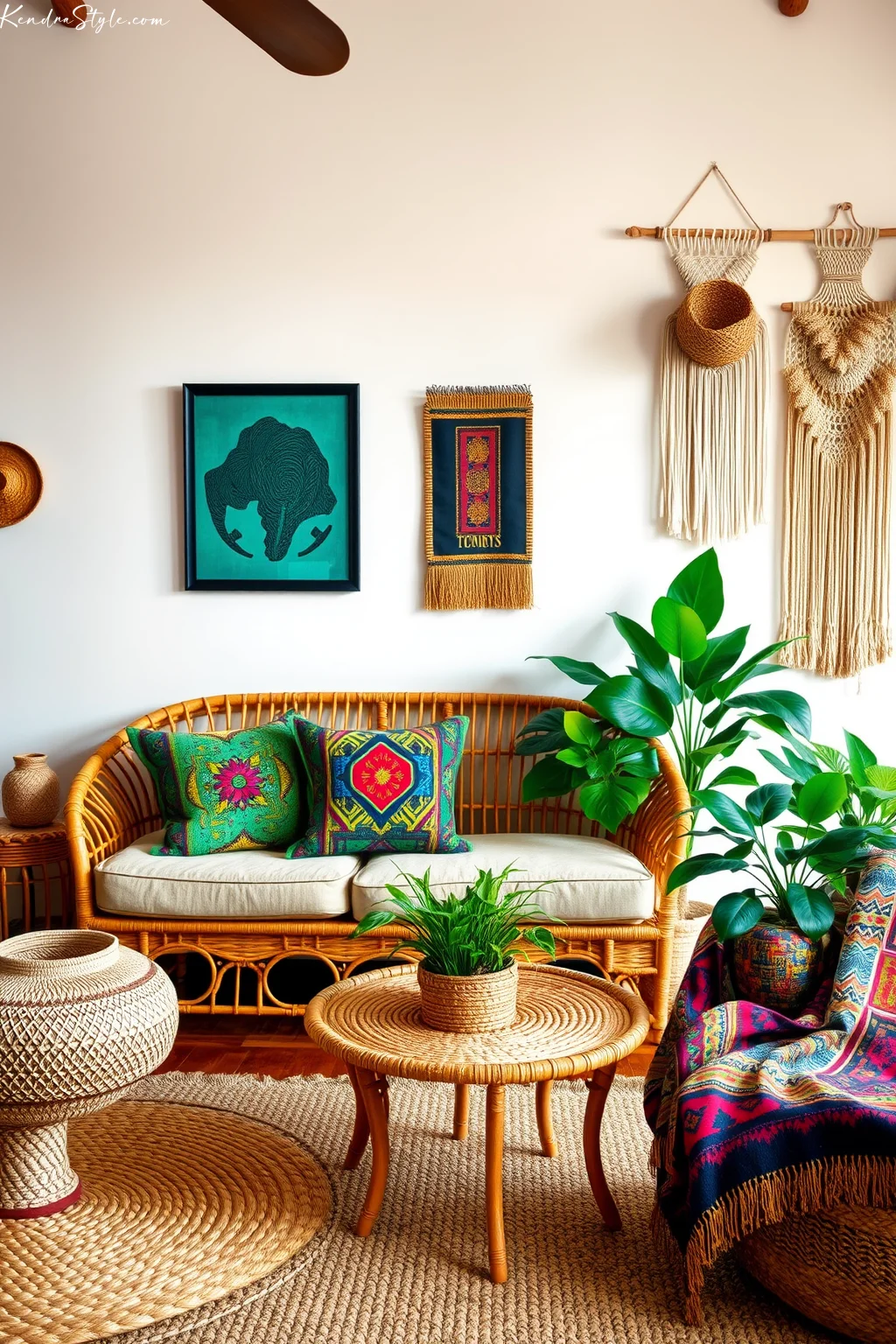
On top of this earthy foundation, Afrobohemian interiors layer stronger colour through pattern and textiles rather than through painted walls. A terracotta wall, which is perhaps the most common feature colour in this aesthetic, works because it is itself an earthy neutral at medium saturation, not because it is making a dramatic statement. It creates warmth and depth without dominating. The Afrobohemian colour palettes that designers most consistently trust are the ones where every colour present could plausibly be found in the natural landscape: fired clay, dried grasses, sun-bleached wood, deep forest green, warm midnight black.
What the palette generally avoids is the cool end of the spectrum. Blues and greys, which feature prominently in Scandinavian and contemporary minimalist design, are rare in Afrobohemian interiors precisely because they lower the temperature of a palette that draws its energy from warmth. When blue appears, it is almost always a deep indigo, the colour of Tuareg textile traditions and West African resist-dyed cloth, rather than the cool grey-blues of a northern European aesthetic.
RELATED: 18+ Afrobohemian Homes That Prove Neutral Doesn’t Mean Boring
The Role of Textiles
If there is a single element that does more work in an Afrobohemian interior than anything else, it is textiles. The richness, warmth, and visual complexity that makes this style so immediately recognisable comes primarily from fabric: from the patterns of handwoven cloth, the texture of natural fibres, the layering of rugs and cushions and throws and curtains that gives a room its depth and its character.
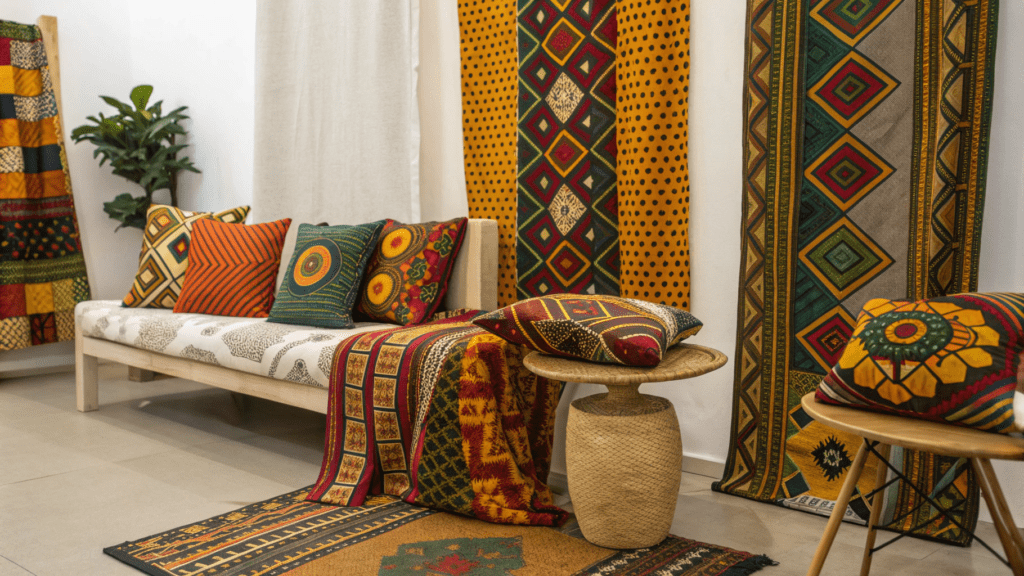
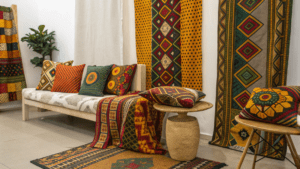
African textile traditions represent some of the most sophisticated textile arts in the world, and the design language that emerges from them, the geometric precision of Kente, the bold resist-dyed patterns of Adire, the diamond and chevron motifs of Berber weaving, the linear patterns of Kuba cloth, produces fabrics of extraordinary visual power. The Adire fabric decor ideas that feel fresh and contemporary in a modern home show how this West African dyeing tradition, with its deep indigo and white resist patterns, translates into cushions, throws, and wall hangings that feel genuinely distinctive rather than decoratively generic.
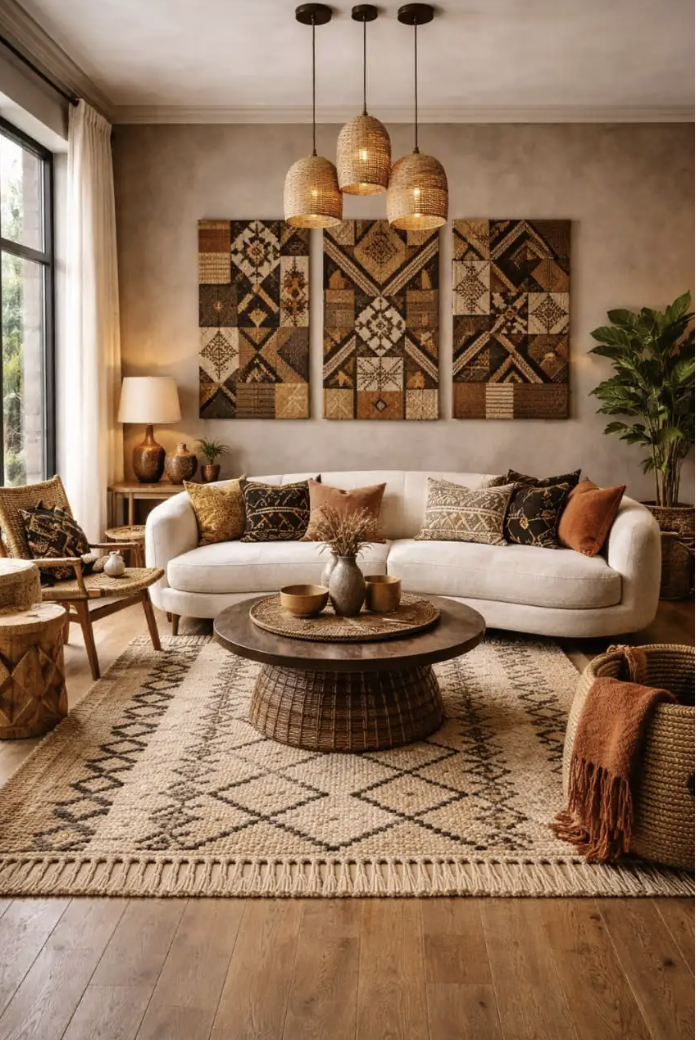
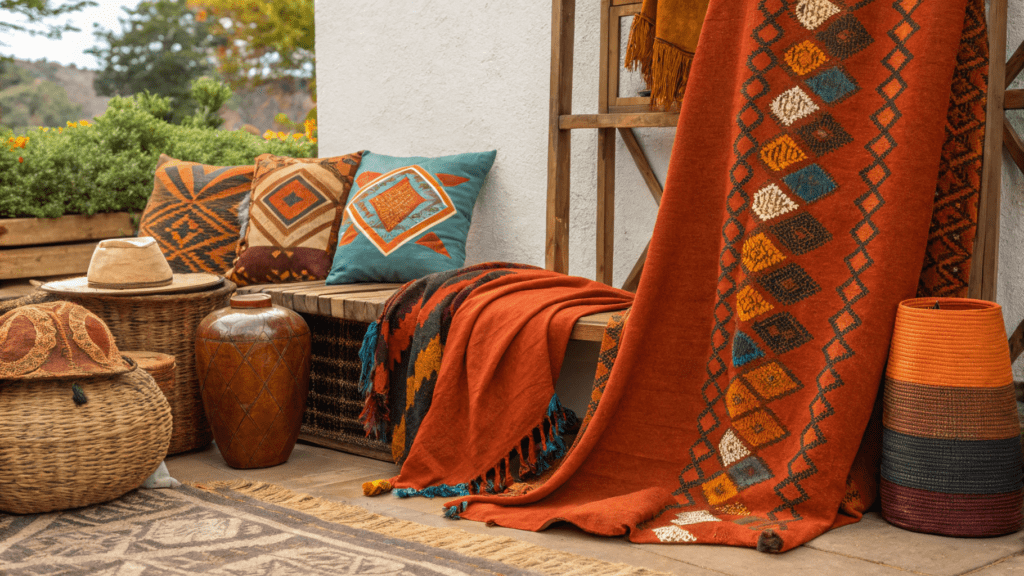
Berber pattern design in rugs, cushions, and wall treatments brings the North African textile tradition into the space with its characteristic diamond motifs, geometric zigzags, and the warm, earthy palette of undyed wool and natural dye that gives Berber textiles their deeply satisfying visual complexity. And the Motif Berbere aesthetic shows how this tradition translates into modern interiors that feel earthy and grounded without feeling like ethnographic reconstructions.
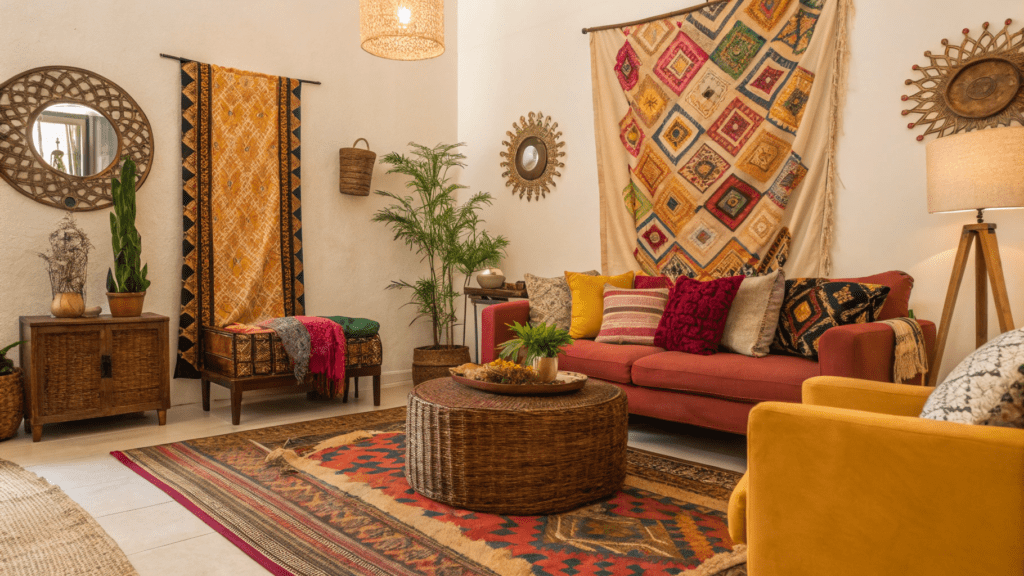
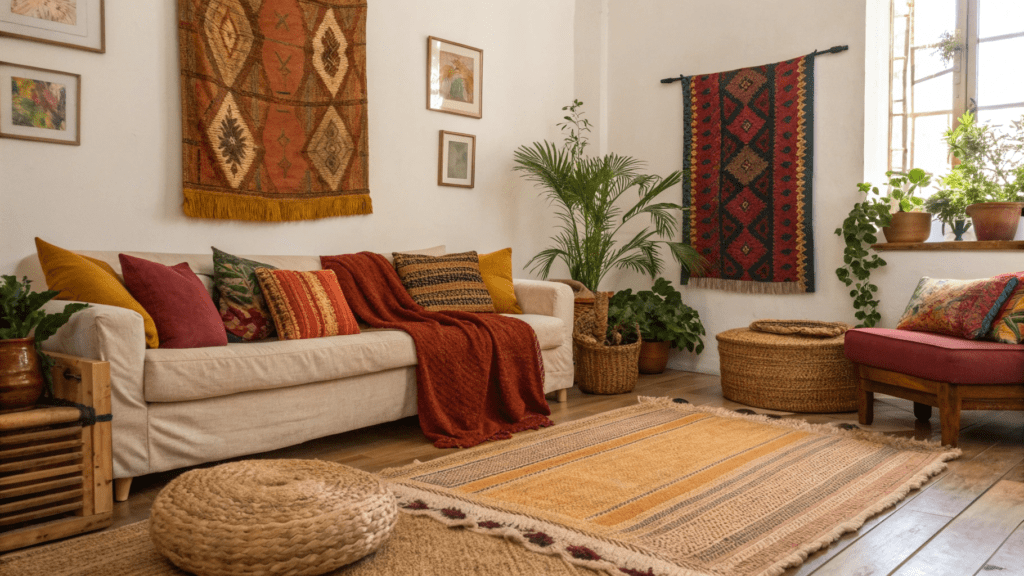
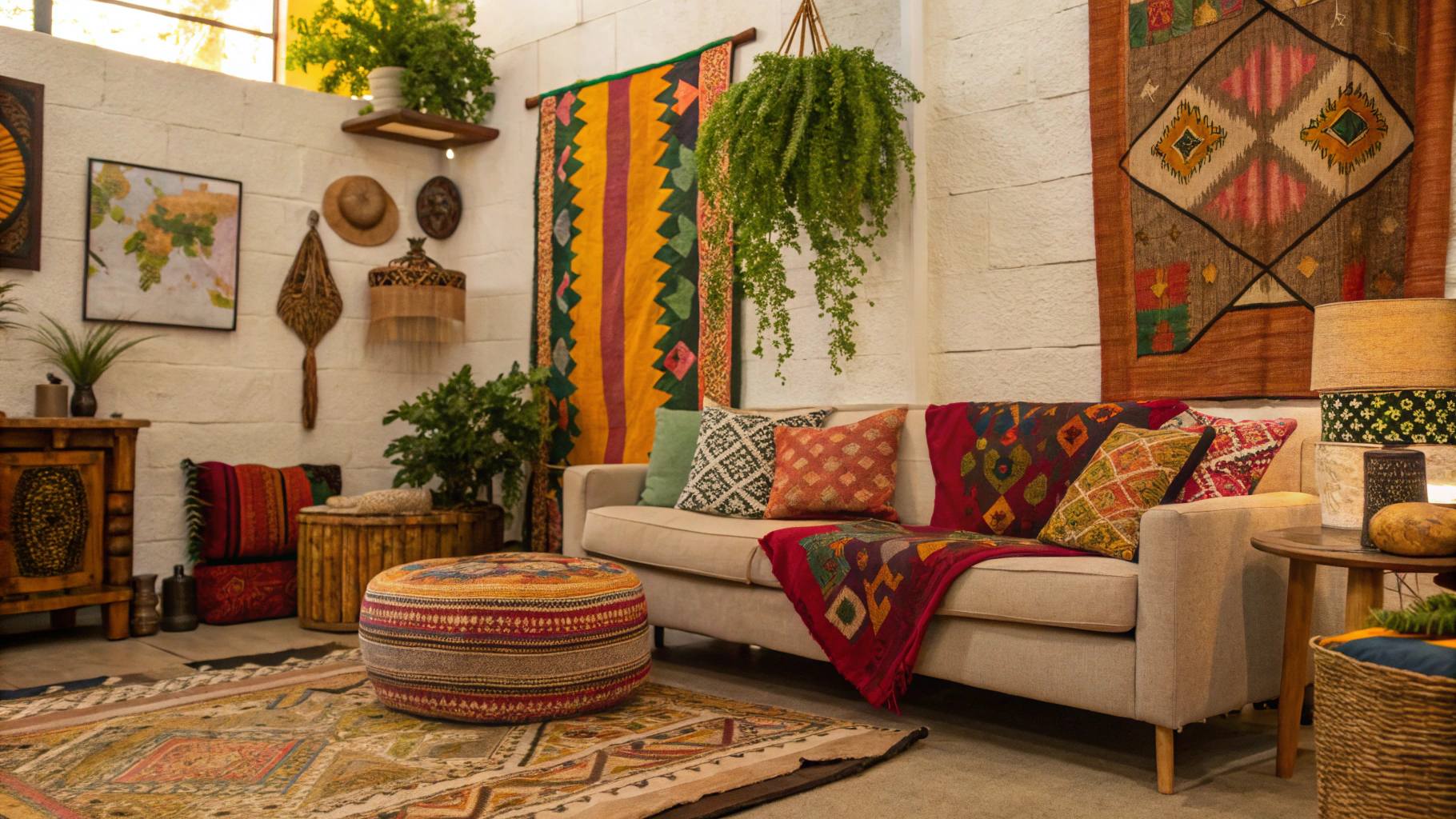
Layering is the key principle. A single African-pattern cushion on a plain sofa is decorative. A sofa dressed in a combination of pattern and plain cushions, with a woven throw, in front of a rattan chair, on a Berber-style rug, beside a table with a ceramic vessel, creates the layered warmth that is the hallmark of Afrobohemian design. The Afrobohemian texture pairings that work best combine different materials as well as different patterns: rough-woven jute with smooth ceramic, nubby cotton with polished wood, tactile linen with the tight weave of traditional cloth.
You May Also Love
The Rug as Foundation
The rug is the piece in an Afrobohemian interior that sets the palette and the tone for everything above it. Because the style relies so heavily on layering, the rug is the layer from which all others take their direction. Getting it right is one of the most important decisions in any Afrobohemian room.
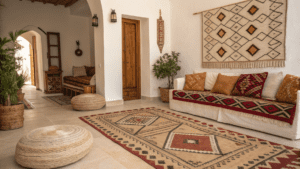
The Afrobohemian rug pairings that work most consistently are those where the rug introduces the warmest tones in the room and the most complex pattern, with everything else reading as a response rather than a competition. A large Berber-style flatweave in warm cream and terracotta with a geometric diamond pattern, placed under a rattan sofa with terracotta cushions and an ochre throw, pulls the whole arrangement together in a way that a plain rug never achieves. The rug is doing most of the heavy lifting so that the furniture and accessories can be relatively calm without the room feeling underdone.
Size matters as much in an Afrobohemian interior as in any other: the rug should be large enough that the main seating arrangement sits on it rather than around it. An undersized rug in a generously layered room emphasises the mismatch rather than hiding it. When in doubt, go larger.
Natural Materials and Handcrafted Objects
One of the most important things that distinguishes an Afrobohemian interior from a generic bohemian one is the presence of handcrafted objects with genuine cultural provenance. Mass-produced objects, however African-inspired their appearance, have a quality of anonymity that no amount of styling can fully disguise. Objects made by hand, by people whose craft tradition has been developed over generations, have a presence and a character that is immediately felt even by people who could not articulate why.
Afrobohemian pottery and ceramics are perhaps the most accessible category of handcrafted object for building an Afrobohemian interior. Hand-thrown pots and vessels in earthy glazes, unglazed terracotta, or the characteristic colours of African ceramics bring an artisanal quality to shelves, coffee tables, and entryways that manufactured objects simply cannot replicate. Grouped in threes on a shelf or clustered as a centrepiece on a coffee table, they create a composition that looks genuinely collected rather than coordinated.
Afrobohemian basket decor is another signature element of this aesthetic. Woven baskets in natural fibres, whether displayed on walls, used as storage, or stacked as decorative objects, introduce the craft tradition of African weaving into the home in a form that is both beautiful and functional. Wall-hung baskets in varying sizes and weave patterns create a display that reads as art rather than storage, and the varied natural tones and textures of different basket types produce a composition of remarkable richness without any other intervention required.
Rattan is the material that connects Afrobohemian interiors to both African craft traditions and the broader bohemian aesthetic. Rattan accent chairs have become one of the most searched furniture pieces in interior design precisely because a good rattan chair, in a peacock or woven-back form, brings both material warmth and visual interest that upholstered chairs rarely match. The rattan accent chair styling ideas for cozy living rooms show how to integrate this piece into different room setups without letting it become the only characterful element in the space.
The Walls
In an Afrobohemian interior the walls are never just a background. They participate actively in the design, either through colour that sets the warm tone of the whole room, or through art and wall decoration that contributes to the layered character of the space.
The Afrobohemian wall treatments that go beyond basic paint include limewash and textured plasters that bring a tactile quality to the surface; woven wall hangings and textile panels that introduce pattern and softness; gallery arrangements of African art that create a biographical record of taste and travel; and the architectural detail of exposed brick or rough render that provides a raw, honest backdrop for more refined objects placed in front of it.
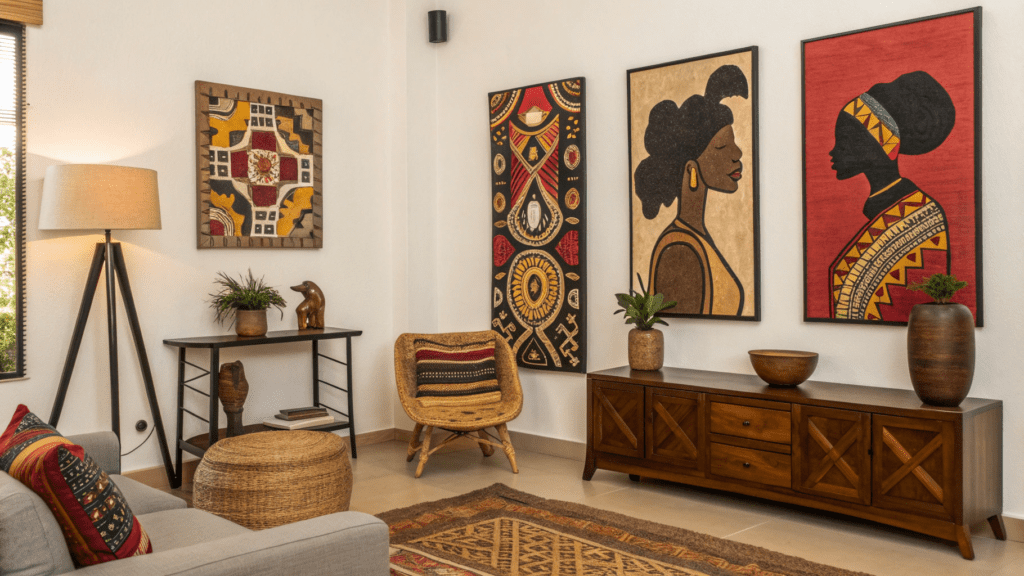
African art, displayed thoughtfully and personally rather than generically, is one of the most powerful tools available in this aesthetic. The Ethiopian art styling ideas for living rooms show how art with specific cultural origin and meaning can be integrated into a contemporary interior without the space feeling like an exhibition. The art is not there to educate. It is there because it is genuinely beautiful and because the person who lives in the room finds real meaning in it.
The difference between styling African wall art without overdoing it and a room that feels like it is making a cultural statement is primarily one of proportion and context. One or two significant pieces, chosen because they are genuinely loved and displayed in proper relation to the room’s scale, feel like personal expression. The same wall covered in every available African print or artefact without any compositional logic feels like performance rather than habitation.
Don't miss: 19+ Adire Fabric Decor Ideas You’ll See Everywhere in 2026 →
TIP: Before buying any new decorative object for an Afrobohemian interior, ask whether it has a story. It does not need to have been made in Africa or have literal cultural significance. It needs to have some reason for being chosen beyond its appearance. The objects that give this aesthetic its depth are the ones that were chosen because of what they mean to the person who lives with them, not because they complete a look.
Room by Room
The Afrobohemian aesthetic translates differently in different rooms, and understanding how to calibrate the approach to each space is what produces a home that feels coherent rather than a series of separately decorated rooms.
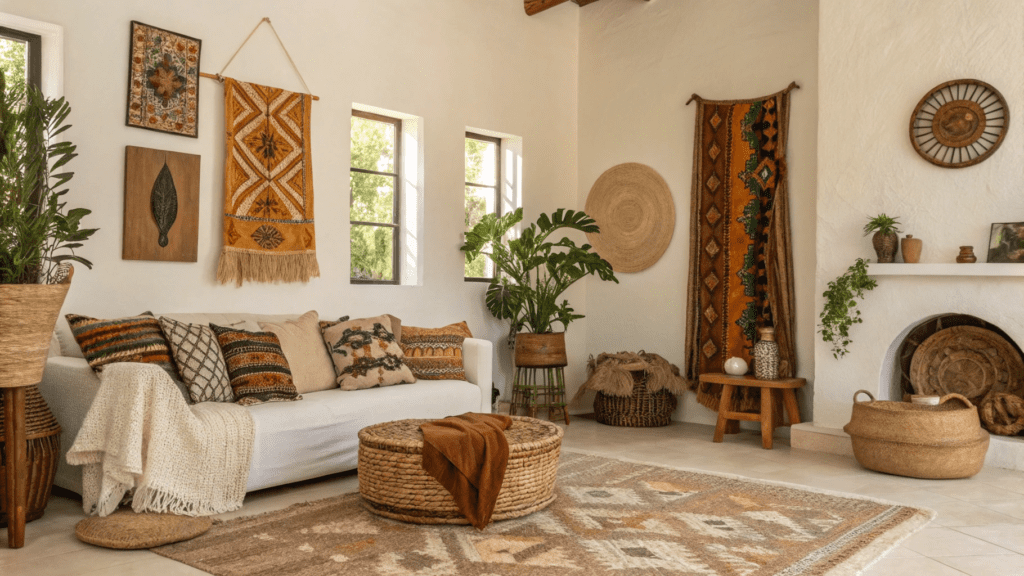
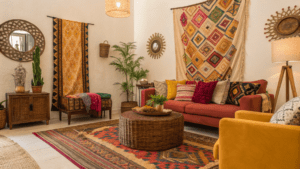
In the living room, which is where Afrobohemian design typically makes its strongest statement, the combination of a layered textile base (a warm rug, pattern cushions, a woven throw), a statement rattan chair or two, a coffee table with a considered display of ceramics and books, and art or baskets on the walls creates the characteristic warmth and depth of the style. The Afrobohemian living rooms that feel most collected rather than styled are the ones where the room has developed over time rather than being assembled in a single weekend. They feel lived-in because they are.
In the bedroom, the Afrobohemian approach typically softens in intensity without losing its warmth. Afrobohemian bedrooms that feel calm and grounded use the same earthy palette and natural materials but at lower volume: one significant textile on the bed rather than many competing patterns, a few ceramics rather than a shelf full, plants that bring organic life without filling every surface. The bedroom needs to support rest, and in this aesthetic rest comes from warmth and quiet rather than from the visual richness that the living room can sustain.
The Afrobohemian dining spaces with the most personality are the ones where the table itself becomes a setting for the style: a centrepiece of ceramics and candles, a tablecloth or runner in a pattern fabric, chairs that mix materials, and walls that carry the art and objects that give the room its character. The dining room is where the Afrobohemian aesthetic’s celebration of gathering and communal life is most directly expressed through the design of the space.
In the kitchen, the Afrobohemian approach tends to focus on the corners and surfaces rather than the cabinetry: Afrobohemian kitchen corners with texture and soul show how plants, ceramics on open shelves, a woven basket for fruit or bread, and a distinctive stool or chair can give a kitchen its character without touching the fitted elements. The entryway is where the aesthetic announces itself most immediately. Afrobohemian entryways that set the tone instantly use the small space of a hallway entry to create an immediate impression of warmth: a woven wall hanging, a ceramic pot with a plant, a statement rug, a basket for bags.
Lighting
Light in an Afrobohemian interior should always be warm, textured, and varied in source. The cool, flat lighting of more minimal interiors would flatten the richness of pattern and texture that this aesthetic depends on. Warm light, by contrast, makes earthy tones glow, brings out the grain of natural materials, and creates the kind of intimate atmosphere that makes a layered room feel genuinely welcoming rather than visually busy.
The Afrobohemian lighting choices that work best use materials consistent with the rest of the aesthetic: rattan pendants that cast patterned shadows, woven lampshades in natural fibres, ceramic bases with handmade quality, and the warm, flickering light of candles in terracotta or glass holders. The layering principle that applies to textiles applies equally to lighting: multiple sources at different heights and levels create depth and atmosphere that a single light source cannot.
Keep Exploring
The Afrobohemian Minimal Approach
Not every Afrobohemian interior is maximally layered. The Afrobohemian minimal rooms that are trending show that the aesthetic’s warmth and cultural richness can be achieved with considerably less volume than the more exuberant versions of the style. A neutral room with a single significant African textile, one well-chosen ceramic, a rattan chair, and a terracotta plant pot achieves the essential character of Afrobohemian design through the quality and meaning of the individual pieces rather than through their quantity.
This approach is particularly well-suited to smaller spaces. The Afrobohemian styling tricks for small apartments show how the aesthetic’s principles, warmth, natural materials, handcrafted quality, and personal meaning, can be applied in tight footprints without making the space feel overwhelmed. The Afrobohemian homes that still feel light and airy demonstrate that the style is not incompatible with openness and calm: it just requires understanding which elements carry the most character and editing down to those rather than including everything at once.
RELATED: 15+ Affordable Afrobohemian Decor Updates That Matter
The Shelf as a Story
Open shelving in an Afrobohemian interior is not just storage or display. It is biography. The objects chosen for display tell the story of the person who lives there: where they have been, what they find beautiful, what traditions they honour, what things have meaning for them. Afrobohemian shelves styled with story and character treat each shelf as a composition in which every object has been deliberately chosen rather than placed because it needed somewhere to go.
The shelf compositions that feel most genuinely Afrobohemian combine objects of different origins and scales: a handmade pot from a local ceramicist next to a book of African photography, a small woven piece beside a large-leafed plant, a candle in a terracotta holder, a found stone with an interesting form. The point is not consistency but meaningful curation, the same principle that makes a well-assembled life feel richer than a perfectly coordinated one.
Frequently Asked Questions
What is the difference between Afrobohemian and regular boho style?
Regular bohemian design is defined by eclecticism and personal accumulation, with an emphasis on global textiles, natural materials, and the collected-over-time quality of a space that has been lived in. Afrobohemian design shares these principles but draws specifically and intentionally from African aesthetic traditions: African textile patterns, craft objects, art forms, and the cultural colour palette of the African continent. The distinction is one of cultural rootedness rather than just visual style.
How do I start decorating in an Afrobohemian style without spending a lot?
Start with a rug and a plant. A warm, pattern rug in earthy tones immediately changes the temperature and character of any room. A large plant in a terracotta pot introduces the organic warmth and natural connection that is fundamental to this aesthetic. From there, add one well-chosen handmade ceramic and one piece of textile art or a woven cushion. These four additions, which together cost relatively little, establish the essential character of the style without requiring a full redecoration.
How do I stop an Afrobohemian room from feeling too busy?
Keep the palette consistent. The rooms that feel chaotic rather than richly layered are almost always the ones where the colours span too wide a range without a connecting logic. If every piece shares a common thread in the earthy, warm spectrum, the room can accommodate considerable pattern and texture without feeling busy. Also, apply the principle of leaving some surfaces completely clear: one clear surface for every two or three styled ones gives the eye somewhere to rest.
Can Afrobohemian style work in a minimal or contemporary home?
Absolutely. The Afrobohemian styling choices that make a space memorable work equally well in a contemporary home with clean lines. The contrast between the warmth and handcrafted quality of Afrobohemian pieces and the restraint of a more minimal room can be extraordinarily effective, with each quality making the other more visible and more appreciated.
How do I use African textiles without making the room look themed?
Use pattern textiles the way you would use any strong design element: as one part of a composed whole rather than as the whole. A single Adire-dyed cushion on a neutral sofa reads as considered. The same sofa covered entirely in Adire-patterned cushions reads as a statement about Adire rather than a designed room. Let the textile be one voice in the composition rather than the only one speaking.
Explore the full range of home decor styles in our Styles section at Chic Living Club.