How to Design a Nursery That Feels Calm, Beautiful, and Ready for Real Life
A complete guide to creating a nursery from scratch, from the crib and the colour palette to lighting, storage, and the thoughtful details that make the room feel like it was made for your baby.
KEY POINTS
- A nursery that works well is designed for the parent as much as the baby. The middle-of-the-night feed, the settling routine, the changing station within arm’s reach of the crib: these functional decisions matter as much as the aesthetic ones.
- Calm colours, warm lighting, and good blackout coverage are the three elements that do the most for how well both baby and parent sleep.
- Design for the next two to three years, not just the newborn phase. The decisions that feel right for a newborn often need rethinking before the first birthday.
Designing a nursery is one of the most emotionally charged decorating projects most people ever take on. There is the excitement of a new arrival, the pressure of getting everything right, the Instagram mood boards, the opinions of everyone who has ever had a baby, and the reality that you are making decisions for a person whose preferences you have not yet met. The result is often a room that looks beautiful in photographs and requires immediate reorganisation the moment you bring the baby home.
Love Chic Living Club?
Add us as one of your preferred Google sources and discover more home decor, DIY, outdoor, and lifestyle inspiration from us.
The nursery that actually works is the one designed around how the room is used in practice: at 3am in the dark, during a nappy change with one hand, while rocking a baby who refuses to settle. This guide covers both the design and the function, helping you build a room that is genuinely beautiful and genuinely practical from day one.
RELATED: 19+ Nursery Decor Ideas to Create a Dreamy Baby Room
Plan the Layout Around How You Will Use It
The most important layout decision in a nursery is where the crib sits relative to the door, the window, and wherever you will sit for feeds. These three relationships determine how the room actually functions in the exhausting, disorienting reality of the newborn phase.
The crib should not be directly under a window. Temperature fluctuations near glass, draughts in winter, and direct morning light that defeats blackout blinds are all problems that are easy to prevent at the planning stage and impossible to fix without moving the furniture. The crib should also not be directly against a wall that backs onto a noisy room, a street, or a boiler.
The nursing chair should be positioned so you can reach the crib from it without fully standing. In a middle-of-the-night feed, every unnecessary movement matters. A nursery chair placed within arm’s reach of the crib, with a small surface beside it for a drink and a phone, and a lamp that can be switched on and off without crossing the room, sets up the feeding routine for success rather than friction.
The changing station should be near the nappy storage and accessible from both sides where possible. A changing unit positioned in a corner where you can only approach from one side becomes a daily physical negotiation that feels minor in planning and exhausting in practice.
Choose a Colour That Serves Sleep
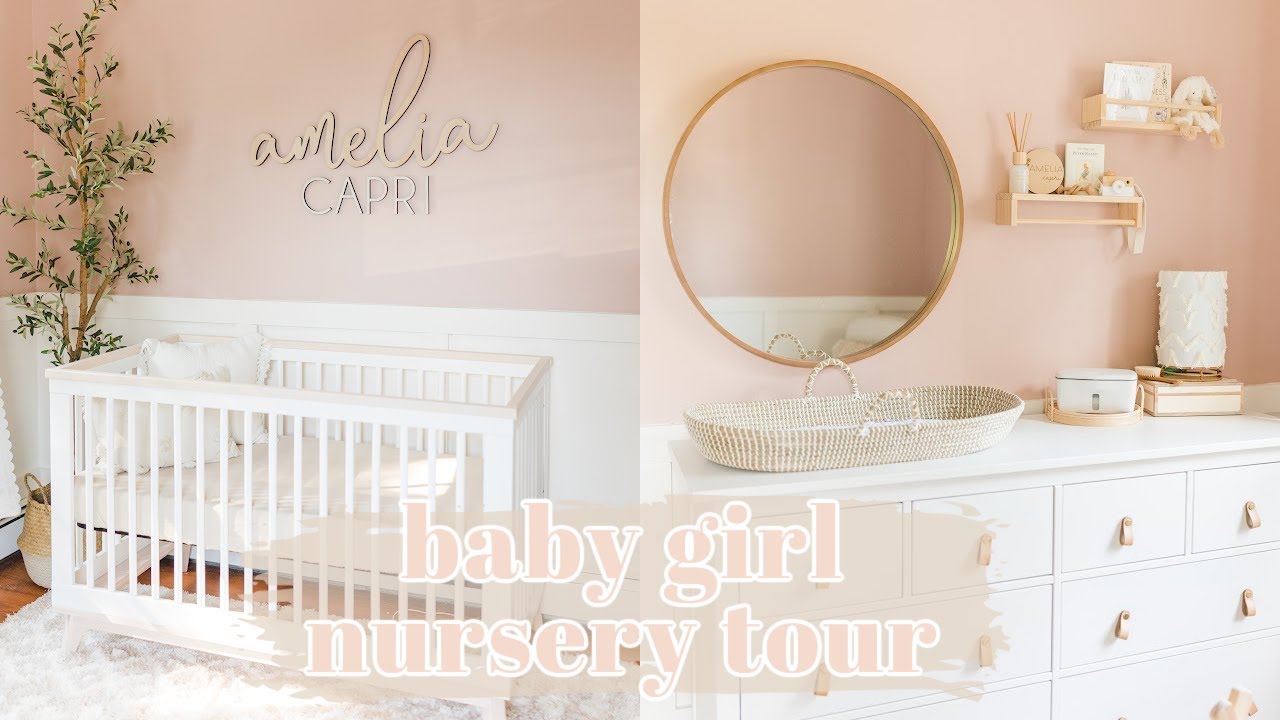
The colour of a nursery has more functional significance than in any other room in the house, because it directly affects the quality of sleep of a person who does not yet have any ability to manage their own sleep environment. Colours that are visually stimulating, bright primaries, high-contrast patterns, intense accent walls in dramatic tones, create visual stimulation that works against settling a baby for sleep.
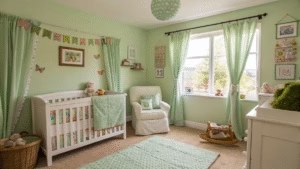
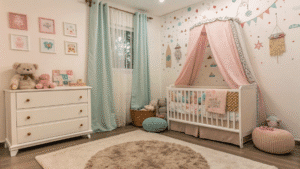
The palette that serves most nurseries best is soft, warm, and calm. Gender-neutral nursery colours in warm whites, soft sage greens, warm sand tones, muted dusty pinks, and gentle warm greys all create an atmosphere of quiet that supports sleep rather than fighting it. These palettes also have the practical advantage of working equally well for subsequent babies regardless of gender, and of transitioning more naturally into a toddler or young child’s room without full repainting.
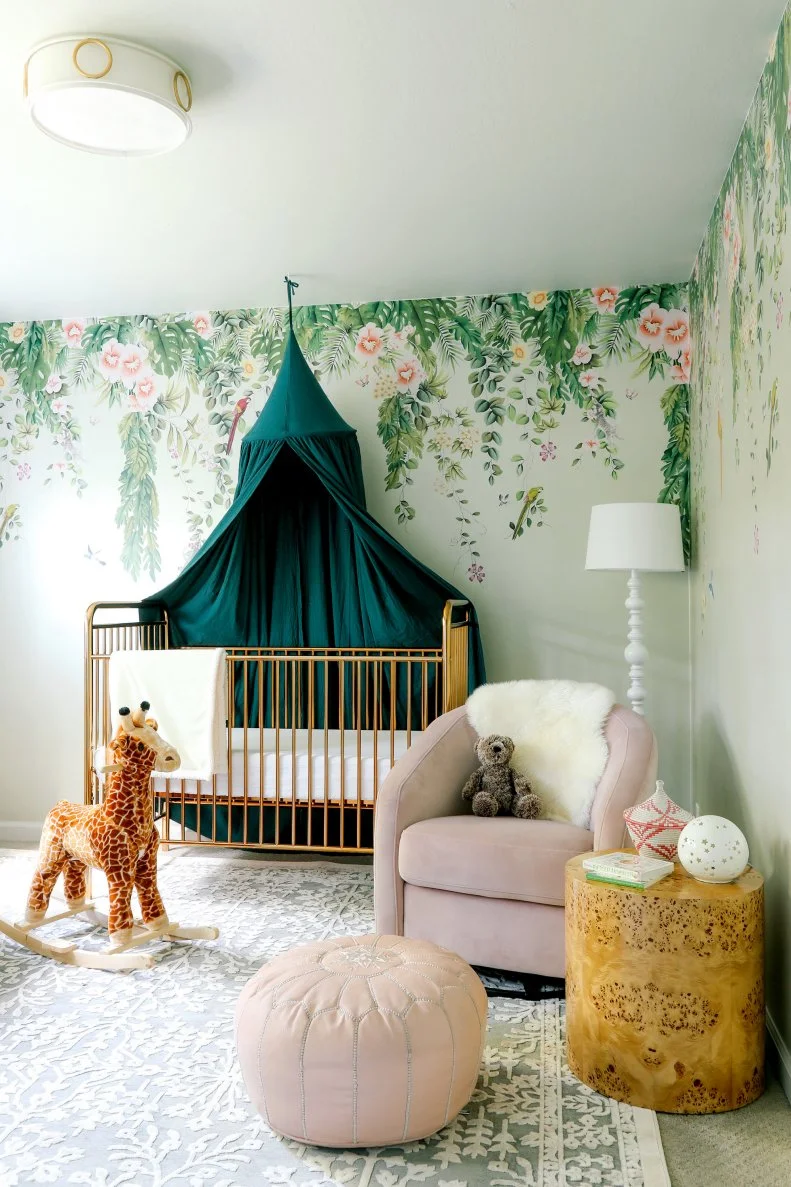
Bright colour schemes for nurseries can work beautifully when the bright colour is introduced through accents and accessories rather than applied to every wall. A soft white room with a colourful rug, bright bedding, and playful wall art has all the energy and joy of a bright nursery without the sleep-disrupting intensity of bright walls. The colour can grow with the child and be updated easily as tastes change.
RELATED: 17+ Gender-Neutral Nursery Ideas for a Calm and Cozy Space
Choose the Right Crib
The crib is the most safety-critical purchase in the nursery and the one where cutting corners carries real risk. Current safe sleep guidance consistently recommends a firm, flat mattress in a crib with fixed sides, no soft items in the sleep space, and a crib that meets current safety standards for your country. Understanding this guidance before shopping prevents the purchase of products that look beautiful but do not meet safety requirements.
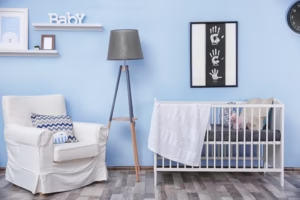
Beyond safety, the crib sets the visual tone for the whole room because it is the largest piece of furniture and the one the room is arranged around. A minimalist crib in solid wood with clean lines suits almost any nursery aesthetic and ages well through the toddler years. Vintage-inspired nursery furniture with spindle details and a more traditional profile creates a quality of warmth and character that contemporary designs rarely match. The choice between a standard fixed crib and a convertible one that becomes a toddler bed is worth making consciously: a convertible crib costs more upfront and saves the cost and disruption of a crib-to-bed transition that typically happens between eighteen months and three years.
Crib bedding in the newborn phase should be kept minimal in line with safe sleep guidance: a well-fitted sheet on a firm mattress. The beautiful quilts, bumpers, and decorative pillows that make a crib look spectacular in photographs are not appropriate for a sleeping newborn. They become part of the room once the baby is older and sleeping safely in a different arrangement.
You May Also Love
Get the Lighting Right
Nursery lighting has two entirely different jobs depending on the time of day, and most nurseries only address one of them. During the day the room needs to be well-lit for feeds, changes, and play. During the night it needs to provide the minimum light necessary for safe navigation and settling, without stimulating the baby into wakefulness.
The overhead light should always be on a dimmer. A bright overhead light switched on during a night feed sends a strong wakefulness signal to both the baby and the parent. The soft lighting ideas for a soothing nursery that work best for night use are low-level warm lights: a nightlight at floor level, a small lamp beside the nursing chair with a warm 2700K bulb, or a wall sconce that can be dimmed to almost nothing. The ability to navigate the room, complete a feed, and settle the baby back into the crib without turning on the main light is one of the most practically valuable features a nursery can have.
Nursery lighting ideas that layer different sources at different heights serve both the daytime and the night-time needs of the room simultaneously. A bright overhead for daytime activities, a dimmer function on that circuit, a dedicated low-level lamp beside the feeding chair, and a nightlight near the floor create a lighting system that can be adjusted to exactly what the moment requires without compromise in either direction.
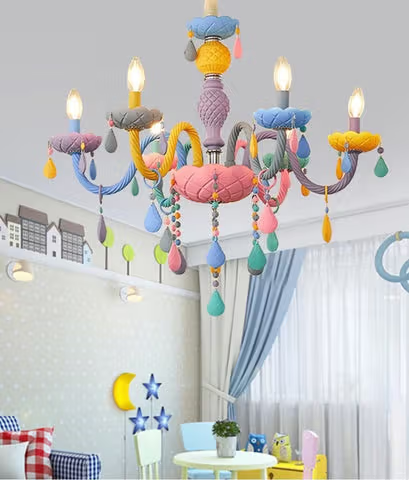
The ceiling is also worth thinking about specifically in a nursery, because it is the surface a baby spends the most time looking at. Nursery ceiling decor that uses a mobile, a canopy, painted stars, or a simple lantern pendant transforms the view from the crib into something genuinely engaging and beautiful. A DIY mobile above the crib is one of the most personal and most impactful things you can make for a nursery, and it costs almost nothing.
TIP: Fit a dimmer to every light circuit in the nursery before the baby arrives. This is a simple electrical job that costs very little, and it transforms the room’s functionality for night feeds and settling more than any other single change. The ability to bring every light in the room down to a warm glow rather than choosing between full brightness and complete darkness makes those middle-of-the-night moments considerably more manageable.
Build the Storage System Before the Baby Arrives
The volume of small items that accompanies a newborn is genuinely extraordinary. Nappies in multiple sizes, wipes, creams, muslins, sleepsuits in sizes that are outgrown within weeks, blankets, swaddles, soft toys, feeding equipment: all of it needs to live somewhere accessible, organised, and easy to use with one hand while holding a baby with the other.
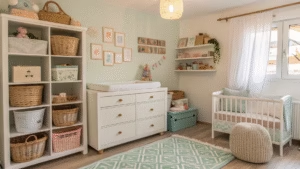
Building the storage system before the arrival is far easier than trying to organise it with a newborn in the house. A nursery closet organisation that separates items by size, keeps the most-used items at the most accessible level, and has a clear logic that both parents can follow reduces the daily friction of finding things significantly. A dedicated drawer or basket for each size of clothing means outgrown items can be packed away immediately rather than mixing with current sizes.
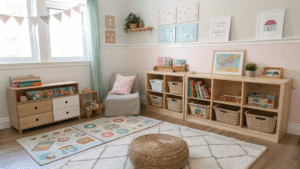
Nursery shelf decor that combines functional storage with visual display creates shelves that look considered rather than purely utilitarian. Neatly folded muslins, a few books, soft toys that are displayed rather than piled, and a plant or two make an open shelf both practical and beautiful. Creative shelving ideas for toy display show how the toys and objects that accumulate in a nursery can be organised into something that looks genuinely intentional.
The nursery organisation hacks that make the biggest practical difference are almost always the ones that solve a specific problem identified through use rather than anticipated in advance. After a few weeks with a newborn, the storage problems will be clear, and addressing them with targeted solutions at that point is more effective than attempting to anticipate everything before the baby arrives.
RELATED: 15+ Nursery Closet Organization Ideas That Work
Don't miss: 14+ Stylish Nursery Shelf Decor Ideas →
Create a Reading and Feeding Corner
Every nursery benefits from a dedicated spot for the activities that happen most often outside of sleep: feeding, reading, and the long stretches of holding and soothing that define the newborn period. A nursing chair, a small surface beside it, a lamp, and a basket of books and soft toys within reach creates a corner with genuine purpose that makes those hours more comfortable and more pleasant.
The nursery chair is one of the most-used pieces of furniture in the early months and deserves proper thought. It needs to provide real lumbar support for long feeding sessions, arms at the right height, and enough seat depth to be comfortable for an extended period. A rocking or gliding motion helps with baby settling and makes feeding more pleasant for both. The chair should also look good enough that you want to sit in it, because you will be spending a lot of time there.
A cozy reading nook for toddlers evolves naturally from the feeding corner as the child grows: the nursing chair becomes a reading chair, the basket of board books expands into a proper bookshelf, and the corner becomes a dedicated space for stories that establishes a reading habit from the very beginning. A window seat in the nursery that provides comfortable seating with natural light and integrated book storage is one of the most loved features a nursery can have, and it serves the child well from infancy through their early school years.
Work on the Walls
The walls of a nursery offer more creative potential than almost any other room in the house, partly because the scale and proportion of what goes on them matters more when the person experiencing them is small and looking up at the world from a low perspective.
A feature wall behind the crib is the most impactful wall decision in any nursery. Removable wallpaper used as an accent wall is one of the most practical approaches for renters or for parents who want the flexibility to change the design as the child grows, without the commitment of traditional wallpaper. A subtle botanical, a gentle geometric, or a dreamy cloud or star pattern creates a wall with genuine character and visual interest without the permanence of painted murals.
Nursery wall art in framed prints at a height the child can see from their crib and from floor level when they start to move introduces visual interest and early exposure to imagery, colour, and pattern that supports development as much as decoration. Animal-themed nursery decor is a perennial favourite precisely because it is concept-based rather than character-based: woodland animals, farm animals, or ocean creatures create a consistent theme with enormous variety that does not date and does not depend on a particular franchise remaining in favour.
A soft toy display on the wall, whether on a dedicated hanging shelf, a series of small ledges, or a simple macramé hanging, transforms the soft toys that accumulate in a nursery from clutter into decoration, keeping them visible and accessible without requiring floor space.
Choose a Style That Will Last
The nursery styles that age best are the ones built around a material and colour logic rather than around a specific character or trend. The first year of a child’s life is long enough to make a room that was designed around a current favourite feel dated by the time the child is forming opinions of their own.
A Montessori-inspired nursery is one of the most enduring approaches available, because its logic is developmental rather than aesthetic. Low surfaces, accessible toys, natural materials, calm colours, and a clear, uncluttered space designed around the child’s growing independence create a room that evolves naturally with the child rather than requiring reinvention at each stage.
A minimalist nursery that stays warm and genuinely welcoming uses restraint in objects and decoration but compensates with quality in materials: a beautiful solid wood crib, a handmade mobile, warm linen curtains, a soft natural fibre rug. The restraint is what makes the materials speak, and in a room that will accumulate objects quickly once a child begins to receive gifts and develop preferences, a calm foundation is worth establishing from the start.
A boho nursery brings the same warmth and layered texture that boho style achieves in living rooms: rattan furniture, woven wall hangings, macramé mobiles, an abundance of plants, and a palette of warm creams, terracottas, and earthy greens. The softness and organic quality of this approach suits a baby’s room particularly well, and the style evolves naturally into a toddler and young child’s room without feeling inappropriate.
A forest-themed nursery built around woodland imagery, tree motifs, earthy greens and browns, and natural wood furniture creates a sense of calm and wonder that works beautifully for a newborn and remains engaging and appropriate as the child grows into a curious toddler exploring the world. Themed nursery rooms that use nature as the theme, the ocean, the sky, the forest, consistently outlast those built around specific characters, because the theme grows with the child’s imagination rather than being replaced by it.
RELATED: 12+ Forest-Themed Nursery Ideas That Feel Natural and Peaceful
Keep Exploring

Special Situations
Some nursery situations require specific thinking that general advice does not always address.
Twins present a particular challenge because the room needs to accommodate two cribs, two sets of everything, and the specific dynamics of two babies who may sleep on different schedules. Twin nursery ideas that balance the needs of each baby show how to create a room where both children have genuine individual space within a shared environment. Boy-girl twin nursery ideas address the colour and styling challenge of creating a cohesive room that does not default to a blue-and-pink split.
Small nurseries in apartments or homes where a dedicated room is limited in size require the same clear thinking that small rooms anywhere demand. Small nursery ideas that maximise the available space without sacrificing calm or function focus on the decisions that matter most in a tight footprint: a compact crib, wall-mounted storage that frees the floor, and a carefully considered layout that keeps the essential items accessible without crowding the room.
Grandparents’ nurseries are a specific category that deserves specific thinking. A nursery set up at a grandparent’s home needs to serve different purposes from the primary nursery: it is used less frequently, the space is often more limited, and the level of permanent investment is typically lower. Nursery ideas for grandparents’ houses focus on the essentials that make a safe, comfortable space without requiring a full permanent setup.
Frequently Asked Questions
What are the most important things to have in a nursery?
A safe crib with a firm, flat mattress and a well-fitted sheet. A nursing chair positioned close to the crib. Good blackout coverage on the windows. A dimmer on the lighting. These four things address the most important functional requirements of a newborn nursery. Everything else is a layer on top.
What colour is best for a nursery?
Soft, warm, and calm. The colours that support sleep and create a genuinely restful environment are the gentle end of any palette: warm whites, soft sage greens, dusty pinks, muted sand tones, and warm greys. Avoid high-contrast patterns and strong, bright colours on the walls, which create visual stimulation that works against settling a baby.
How do I make a small nursery work?
Choose a compact crib rather than a full-size cot where the room genuinely cannot accommodate one. Use wall-mounted storage rather than freestanding furniture to keep the floor as clear as possible. Position the nursing chair carefully so that it does not block access to the crib. Keep the colour palette light and consistent across surfaces, which makes a small room feel more spacious.
When should I set up the nursery?
The practical answer is well before the due date, because the last few weeks of pregnancy make physical effort significantly harder, and because having the room ready removes one source of stress in a period that already has enough. Most parents aim to have the nursery complete by 36 weeks. Having the storage organised and the essentials in place before the baby arrives is far easier than doing it after.
How long does a nursery last before it needs redesigning?
It depends entirely on the design choices made. A nursery built around a specific character or theme may feel inappropriate by eighteen months. One built around calm colours, natural materials, and concept-based rather than character-based themes can serve comfortably through the toddler years and, with minor updates, into the early school years. The decisions that invest in longevity from the start are worth the slightly greater thought they require.
Explore more room-by-room guides in our complete Rooms section.