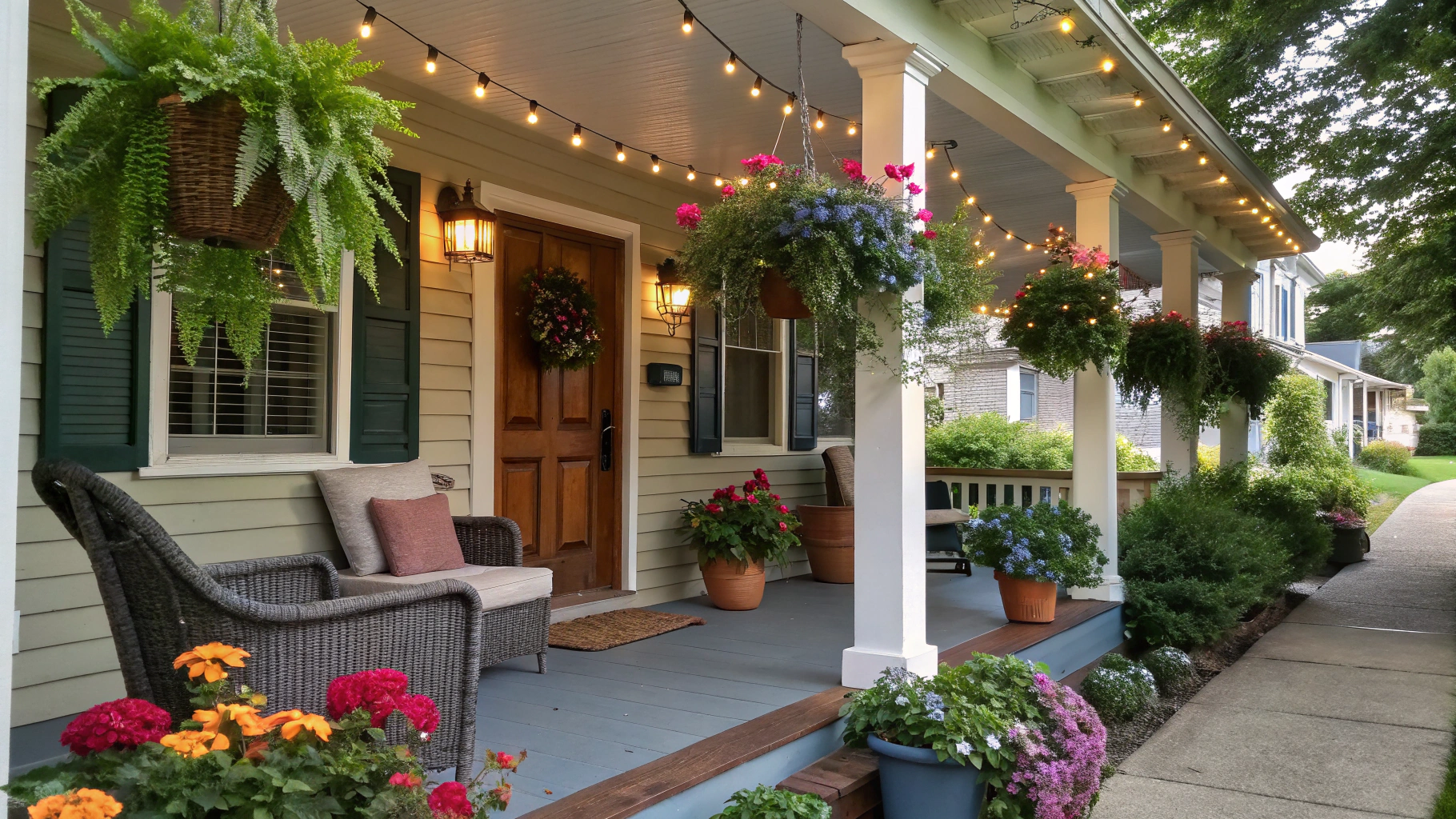
How to Decorate a Front Porch That Makes a Real First Impression
A complete guide to front porch styling, from seating and lighting to plants, seasonal updates, and the structural changes that add the most value.
KEY POINTS
- Your front porch is the first thing visitors see and the last thing you see when you leave home each day. Getting it right costs less than most people think.
- Seating, lighting, and plants are the three elements that have the most impact on how a porch feels, in that order.
- A porch that changes with the seasons stays visually interesting year-round and gives you a reason to keep tending to it.
The front porch is the only part of your home that has to do two things at once. It needs to welcome guests before they ever step inside, and it needs to be a place you actually want to sit in yourself. Most porches manage one of those things at best. They get a pot plant by the door and a welcome mat and nothing else, which produces a front of house that looks considered from a distance and entirely neglected up close.
This guide covers everything involved in making a front porch genuinely work, from the layout and the structural elements to the furniture, the lighting, the planting, and the seasonal changes that keep it looking alive throughout the year.
Love Chic Living Club?
Add us as one of your preferred Google sources and discover more home decor, DIY, outdoor, and lifestyle inspiration from us.
RELATED: 16+ Front Porch Remodel Ideas to Transform Your Space
Start With the Structure
Before any styling decision, the bones of the porch need to be sound. A beautiful arrangement of furniture and plants on a cracked, weathered, or poorly proportioned porch will always look like decoration applied to a problem rather than a space that has been properly considered.
The floor is the most important structural element and the one most often neglected. Porch flooring takes more punishment than almost any other surface in a home: constant foot traffic, exposure to weather, direct sun, and the expansion and contraction that comes with temperature change. Porch flooring upgrades that use composite decking, sealed hardwood, or quality tile give the space a foundation that looks intentional rather than makeshift, and they dramatically change how everything placed on top of them reads.
The ceiling is the second thing worth looking at. Most porch ceilings are flat and painted in whatever was most convenient at the time, which is functional but forgettable. A porch ceiling treated with tongue-and-groove boarding, painted in a warm white or a soft haint blue, is one of the most characterful details a porch can have and one that requires no ongoing maintenance once it is done. The railings are similarly worth addressing if they are generic or in poor condition. Porch railing updates that use more considered profiles, a fresh paint colour, or a different material entirely can shift the whole feel of a porch from builder-basic to genuinely designed.
RELATED: 14+ Porch Remodel Ideas That Increase Home Value
Get the Layout Right
The layout of a front porch is one of those things that seems obvious until you look at how many porches have furniture arranged with no particular logic. Two chairs pushed against the wall with nothing between them, a table too small to be useful, a doormat in front of the door with two feet of empty space on either side. These are the default arrangements that happen when nobody has thought about the porch as a space rather than a zone that just happens to exist in front of the house.
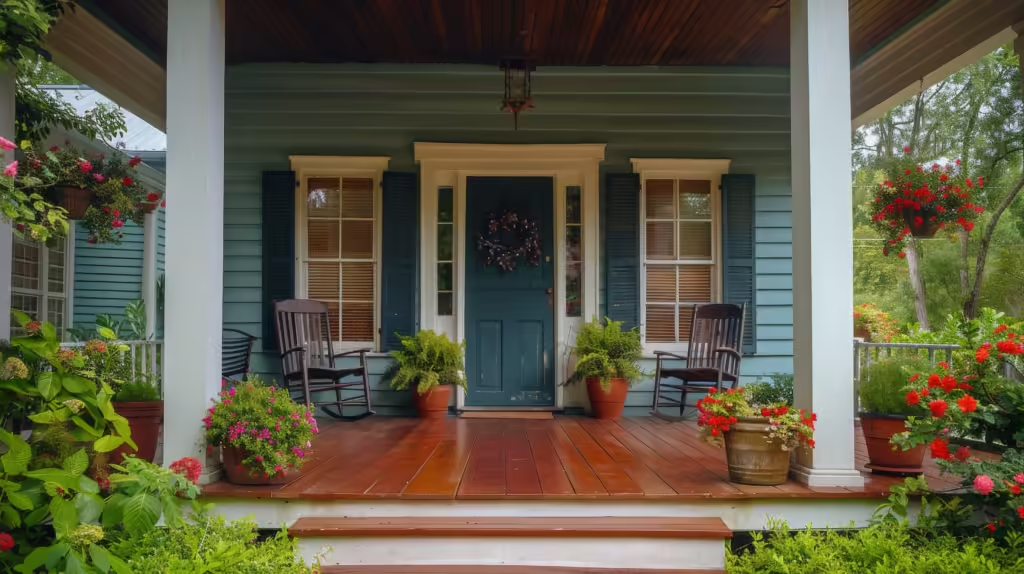
A well-laid-out front porch has a clear sense of where to sit, where to put a drink, and how to move from the steps to the door without navigating furniture. For a wider porch, a pair of chairs and a small table between them angled slightly toward the garden creates a proper seating arrangement rather than two chairs in storage position. For a narrower porch where space for a full seating arrangement is limited, a single bench or swing placed to one side and a planter on the other creates balance without congestion. The front porch layout ideas that work best are always the ones where the pathway to the door remains clear and the seating feels like it was positioned to be used rather than to fill space.
Choose Seating That Earns Its Place
The seating on a front porch is what determines whether the space gets used or just looked at. A chair that is uncomfortable to sit in for longer than a few minutes, or a swing that creaks and sways too aggressively to relax in, will stay empty regardless of how good the rest of the porch looks. Comfort matters here in a way that is easy to overlook when you are focused on aesthetics.
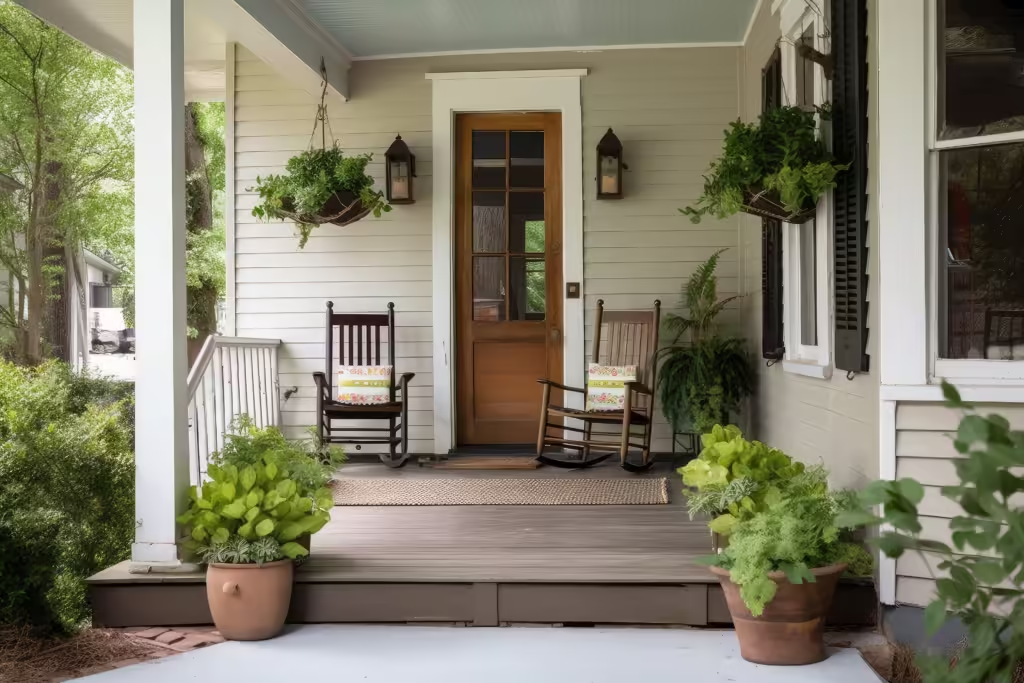
Rocking chairs are the most classic front porch seating option for good reason. They are comfortable for extended sitting, they suit almost any porch style from farmhouse to modern, and they have a quality of ease about them that more formal chairs rarely achieve. Front porch rocking chair arrangements work particularly well in pairs, with a small table between them for drinks. For a more relaxed and contemporary feel, porch swings and hammocks create a quality of effortless lounging that makes a porch feel genuinely inviting rather than just visually arranged.
The full range of front porch seating options covers everything from traditional arrangements to more unconventional approaches, and the right choice depends entirely on how the porch is used and how much space is available to work with. For wider, more generous porches with room for a proper furniture arrangement, the front porch furniture ideas that go beyond a chair or two and treat the porch more like an outdoor living room are worth looking at seriously.
Add a Rug to Define the Space
A front porch rug does the same thing for an exterior space that a rug does in a living room: it defines the area, warms the floor, and signals that the space has been thought about. On a painted or composite porch floor, a rug adds texture and colour that the hard surface alone cannot provide. On a natural wood floor, it introduces pattern without competing with the material beneath it.
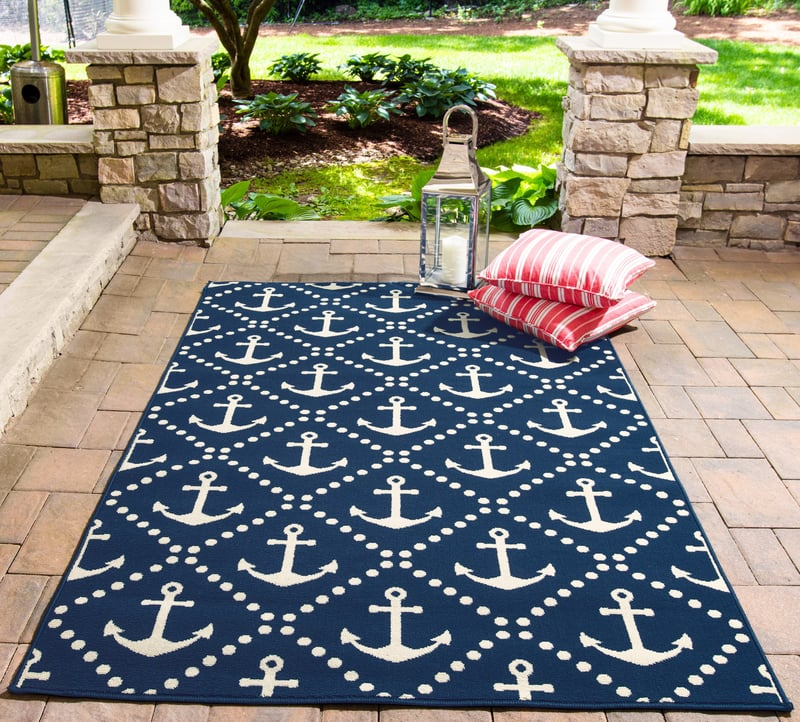
The sizing rules are the same as indoors. The rug should be large enough that the furniture legs sit on it or at least that the front legs do. A rug that floats in the middle of the furniture arrangement with legs scattered around its edges looks like it was chosen without measuring, which undermines everything else. Front porch rug choices should always be made from materials specifically rated for exterior use: polypropylene and other synthetic fibres designed for outdoor conditions resist moisture, mildew, and UV fading in a way that indoor rugs simply cannot.
Get the Lighting Right
Front porch lighting serves two entirely different purposes depending on the time of day, and most porches only address one of them. Functional lighting, which illuminates the entry safely after dark, is handled by a wall fixture beside the door. Atmospheric lighting, which makes the porch feel warm and welcoming in the evenings, is almost never addressed at all.
The wall fixture beside the door is often the most visible hardware element on the entire front of a house and the one most often left as whatever was installed when the home was built. Replacing a generic builder fitting with something that has genuine character, whether that is a lantern-style fixture, a simple black cage light, or a more decorative option that relates to the style of the house, makes a considerable difference to the overall impression the porch makes. Front porch lantern fixtures are particularly effective because they work in both traditional and contemporary contexts and have an architectural quality that more modern fixture styles rarely match.
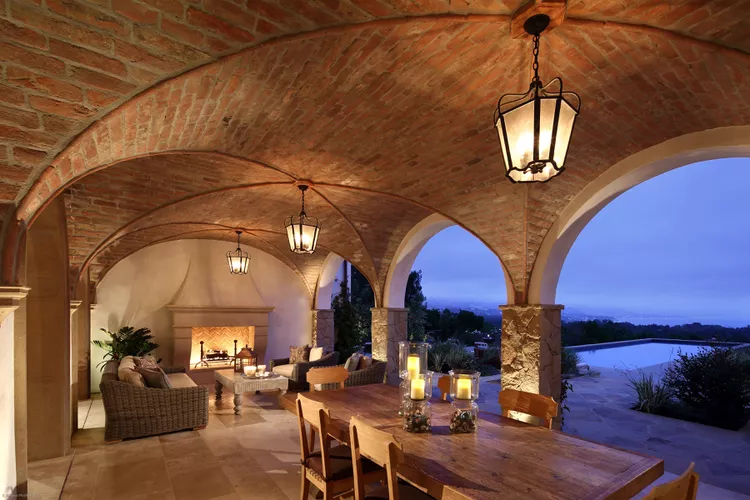
For the atmospheric layer, front porch lighting ideas that add warmth in the evenings include string lights hung along the roofline or through a ceiling fixture, battery candles in hurricane lanterns on side tables, and solar-powered path lighting that illuminates the approach without requiring any electrical work. The combination of a good overhead fixture and some form of lower-level atmospheric lighting is what gives a porch presence in the evening rather than just adequate illumination.
TIP: The colour temperature of your porch fixture bulb makes an enormous difference to how welcoming the porch looks after dark. Warm white bulbs at 2700 Kelvin produce the soft, golden glow that reads as inviting from the street. Cool white or daylight bulbs produce a harsh, flat light that makes the porch look like a security installation rather than a welcoming entrance. This is a thirty-second change that costs almost nothing.
Bring in Plants and Greenery
Plants are the element that makes a front porch feel alive rather than merely decorated. A porch with good furniture and good lighting but no greenery feels slightly clinical. The same porch with a pair of substantial planters flanking the door, a window box along the railing, and perhaps a climbing plant trained up a column or post feels genuinely cared for and alive.
The placement of plants on a porch follows a simple logic: frame the door. A pair of matching planters on either side of the entrance, scaled to the door’s height rather than chosen at the smallest available size, creates an immediate sense of welcome and gives the whole front of the house a focal point. Front porch planters that are large enough to make a genuine visual statement, using seasonal planting that changes throughout the year, are far more effective than several smaller pots scattered without a clear arrangement.
The plants themselves should be chosen for the conditions the porch actually provides. A deep covered porch that receives little direct sun needs shade-tolerant varieties. A sunny exposed porch in a warm climate can support almost anything. Matching the plant to the environment rather than the other way around is what keeps porch planting looking genuinely healthy rather than just surviving.
RELATED: 12+ Front Porch Decor Ideas to Refresh Your Entry
Make the Entryway Count
The front door and immediate entry are the focal point of the entire porch and the thing visitors look at first when they approach. If the door itself is the wrong colour, has hardware that has seen better days, or is surrounded by elements that feel unrelated to each other, no amount of good furniture or planting will fully compensate.
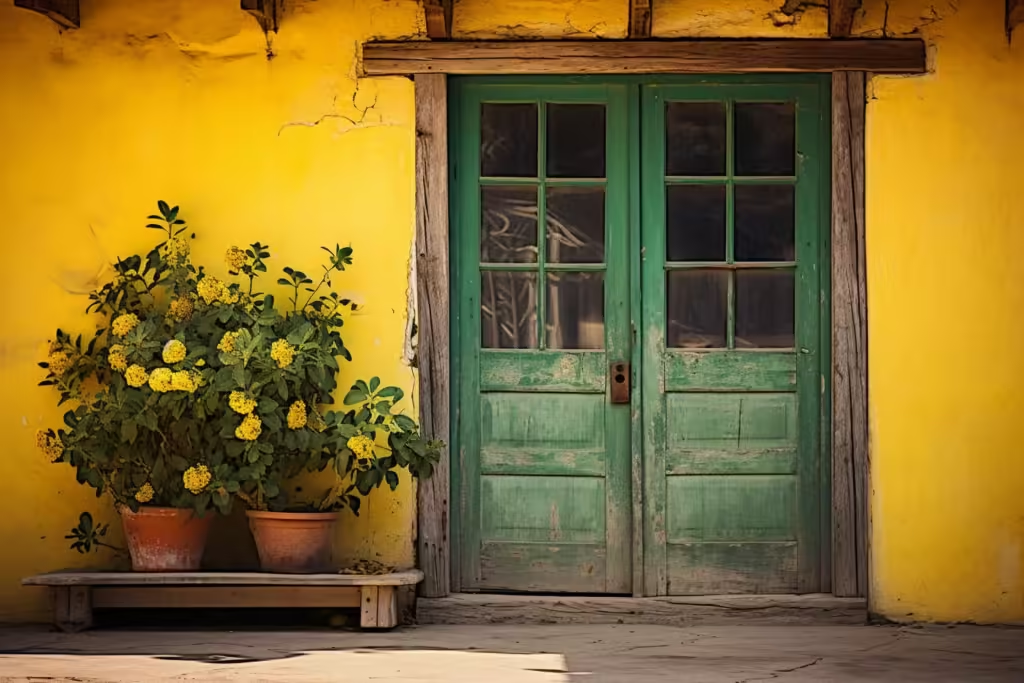
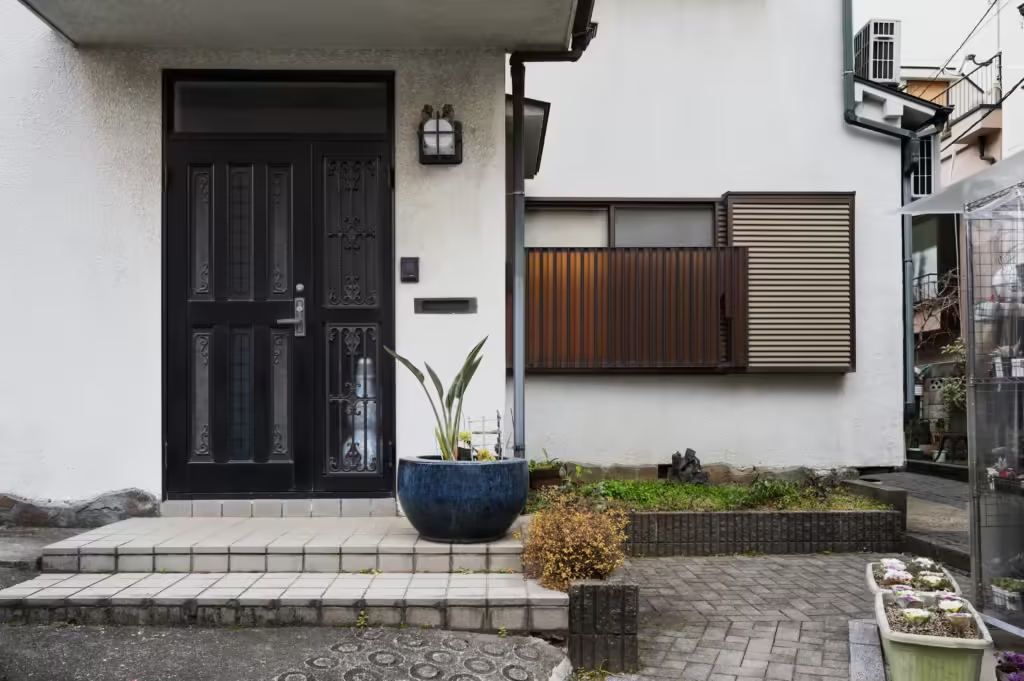
The front door colour is one of the highest-impact, lowest-cost changes available to any homeowner. A door painted in a considered, confident colour, whether that is a deep navy, a warm sage, a rich terracotta, or a bold black, gives the whole house a point of view that a standard white or magnolia door never achieves. The hardware on the door, the knocker, the handle, the letterbox if there is one, should all be in the same finish and should relate to the fixture beside the door. These small consistencies are what separate a front of house that looks pulled together from one that looks like several separate decisions.
Front porch entryway styling covers the full picture of how the door, the surround, the steps, and the immediate approach work together as a single composition. The step ideas that add the most to a porch entry are the ones that treat the steps as part of the design rather than just a functional transition from path to door: a runner on painted steps, a pair of planted pots at the base, a well-chosen doormat that reads clearly from the street.
Add Curtains for Privacy and Shade
Porch curtains are one of the most underused tools in front porch design and one of the most effective at transforming how a porch feels both practically and visually. On a porch that faces directly onto a street or a neighbour’s property, curtains create a sense of enclosure and privacy that makes sitting there for extended periods genuinely comfortable rather than exposed.
Hung from a simple curtain rod fixed to the porch ceiling or between columns, outdoor curtains in a heavy linen or canvas fabric add a quality of softness and texture that no other element achieves. They also provide shade when drawn and can be tied back when not needed without compromising the look of the porch in either position. Front porch curtain ideas range from simple white panels for a clean, airy look to patterned or coloured fabrics for a more characterful and distinctive result.
Think About the Structural Details
The details of a porch, the roof line, the overhang, the columns, and the railing profile, are what give it its architectural character and what determine how much renovation potential it has. Most of these elements are fixed, but understanding what you are working with and how to make the most of it is worth the time.
A porch roof that is well maintained and properly proportioned frames the whole front elevation of a house. A porch overhang provides shade and weather protection that makes the porch usable across a wider range of conditions. Porch railing design is one of the most visible details from the street and one that significantly affects how the porch reads architecturally. Where any of these elements are in poor condition or mismatched with the style of the house, addressing them as part of a broader front porch renovation produces results that no amount of furniture and planting can achieve on their own.
For porches that need structural work but where budget is constrained, the DIY porch update ideas that can be tackled over a weekend tend to focus on paint, new hardware, and cleaning, which are consistently the three changes that produce the most disproportionate visual result for the least outlay.
Update It With the Seasons
A front porch that looks exactly the same in January as it does in July is a porch that has not been given the chance to respond to the year. Seasonal updates on a porch are particularly visible because the front of a house is seen by everyone who passes, and a porch that changes with the seasons communicates that the home is cared for and alive.
The practical approach to seasonal porch updates is to keep the permanent elements neutral and invest in a rotating set of seasonal accessories: planters that change planting with the season, cushion covers that shift in colour and texture, and decorative elements that mark each part of the year without requiring a full redecoration.
In autumn, front porch Halloween styling and harvest-themed arrangements of pumpkins, gourds, and dried corn husks signal the season immediately and are some of the most enjoyed front porch updates of the year. In December, front porch Christmas decor in the form of a wreath on the door, garland along the railing, and lanterns with candles creates the warmest possible welcome during the most visited time of year. In summer, the porch is best served by lighter textiles, fresh seasonal planting, and the kind of relaxed, informal arrangement that makes it look like the perfect place to sit with a cold drink.
RELATED: 15+ Front Porch Halloween Ideas for a Spooky Setup
Style on Any Budget
A beautifully styled front porch is not a function of spending. It is a function of editing, consistency, and choosing a few things well rather than filling the space with many things chosen carelessly. The front porches that look most expensive on modest budgets are almost always the ones that are cleanest, most cohesive, and most deliberately considered.
The highest-impact free changes are cleaning and painting. A pressure-washed porch floor, a freshly painted front door, and clean windows change the entire impression of a house from the street and cost almost nothing except time. From there, budget porch ideas that look high-end focus on a single strong element, a quality wall fixture, a pair of substantial planters, a well-chosen rug, rather than spreading a small budget across many indifferent purchases.
For older homes with character details that just need restoring, porch remodel ideas for older homes tend to work with what is already there: original flooring, period details on the columns and railing, and the kind of architectural character that newer homes rarely have and that is far more effective when highlighted than when concealed.
Frequently Asked Questions
What is the easiest way to improve a front porch?
Paint the front door a confident colour, clean the porch floor thoroughly, replace the light fixture if it is generic or in poor condition, and add a pair of planters either side of the door with substantial planting. These four changes, which can be done over a weekend for a modest outlay, transform the impression a porch makes more reliably than any other combination of updates.
How do I make a small front porch feel bigger?
Keep the furniture scaled to the space rather than defaulting to standard outdoor furniture dimensions. A single bench or swing rather than two chairs and a table leaves more circulation space and feels less congested. Use vertical space with tall planters, wall-mounted lighting, and climbing plants rather than filling the floor area. Keep the colour palette light and consistent between the floor, walls, and furniture.
What plants work best on a front porch?
It depends on the light conditions. For a sunny porch, lavender, rosemary, salvia, and seasonal annuals like geraniums and petunias all perform well. For a shaded porch, ferns, hostas, impatiens, and begonias tolerate lower light without struggling. In all cases, choose plants that suit the conditions you actually have rather than the ones that look most appealing in a nursery.
How do I add privacy to a front porch?
Outdoor curtains hung from a ceiling-mounted rod between columns are the most effective privacy solution for a porch and the one that adds the most to the visual character of the space at the same time. Tall planters with dense planting create natural screening on the sides. Lattice panels with climbing plants provide a more permanent solution where structural changes are possible.
How do I style a front porch for winter?
Replace summer planting with evergreen specimens that hold their structure and colour through cold weather: boxwood, dwarf conifers, ornamental cabbage, and winter heathers all look good from autumn through early spring. Swap lightweight summer textiles for heavier cushion covers in richer tones. Add lanterns with candles or battery lights to compensate for the shorter days, and consider a wreath on the door that marks the season without requiring daily upkeep.
Explore the full outdoor living section in our Outdoor Living guides.