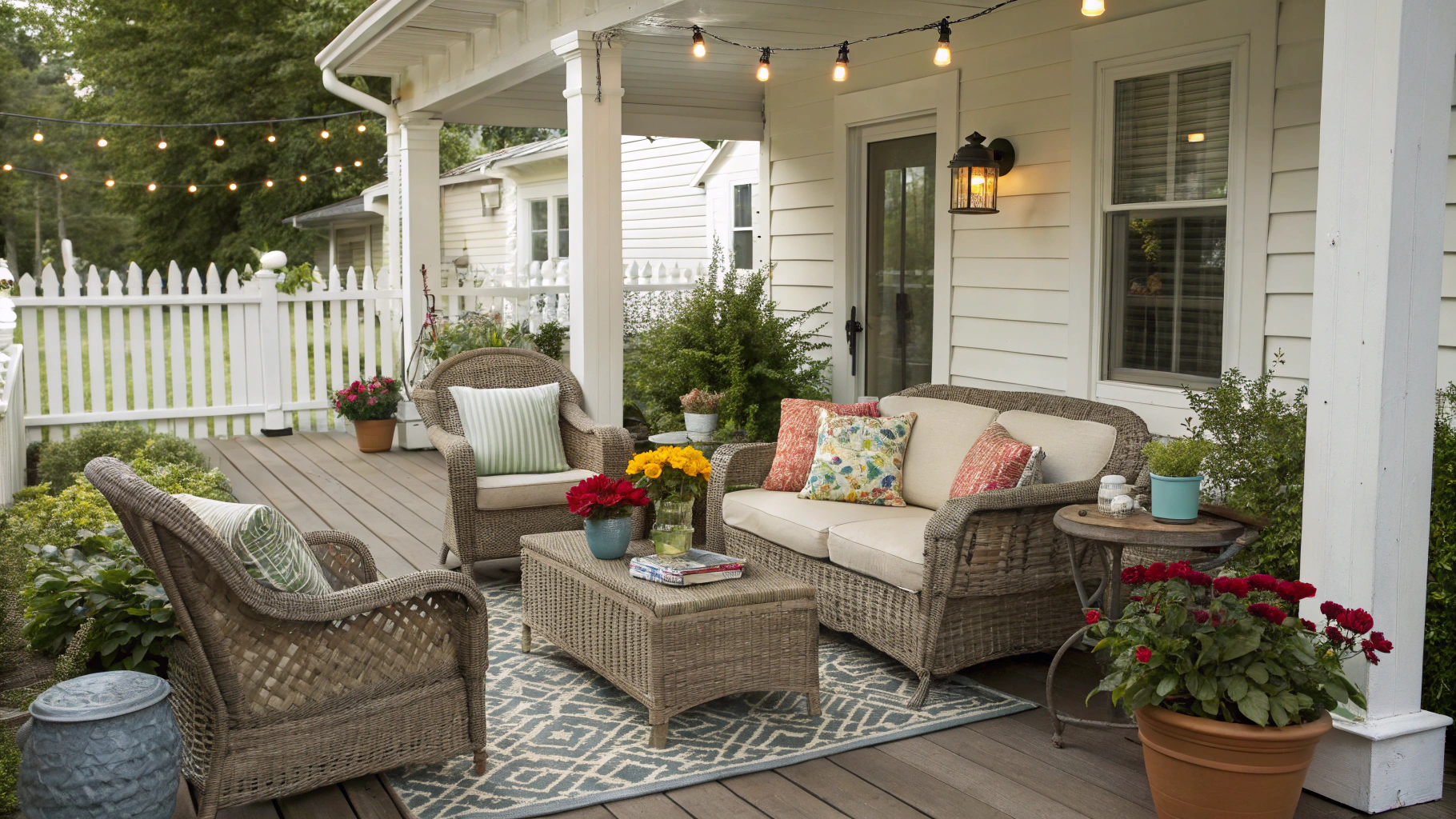
The Front Porch Styling Formula That Makes Neighbours Stop and Stare
Your front porch is the only part of your home that every single person who visits, walks past, or pulls up to your address will see. It sets the tone before anyone steps through the door.
And yet most porches are treated as an afterthought — a chair that ended up there, a plant that needed somewhere to go, a mat that was on sale. The homes that genuinely stop people in their tracks do something different. They follow a formula.
The good news is that this formula is not about budget. It is not about square footage. Some of the most arresting front porches in existence are tiny stoops on townhouses, compact platforms on bungalows, or narrow covered entries on Victorian terraces. What they share is intention: every element earns its place, every decision relates to the ones around it, and the result feels considered rather than collected.
After studying what makes certain porches genuinely unforgettable and others simply adequate, the formula breaks down into seven distinct steps. Work through them in order and you will have a porch that neighbours actually slow their pace to admire.
Love Chic Living Club?
Add us as one of your preferred Google sources and discover more home decor, DIY, outdoor, and lifestyle inspiration from us.
1. The Door: Your Anchor and Your First Statement
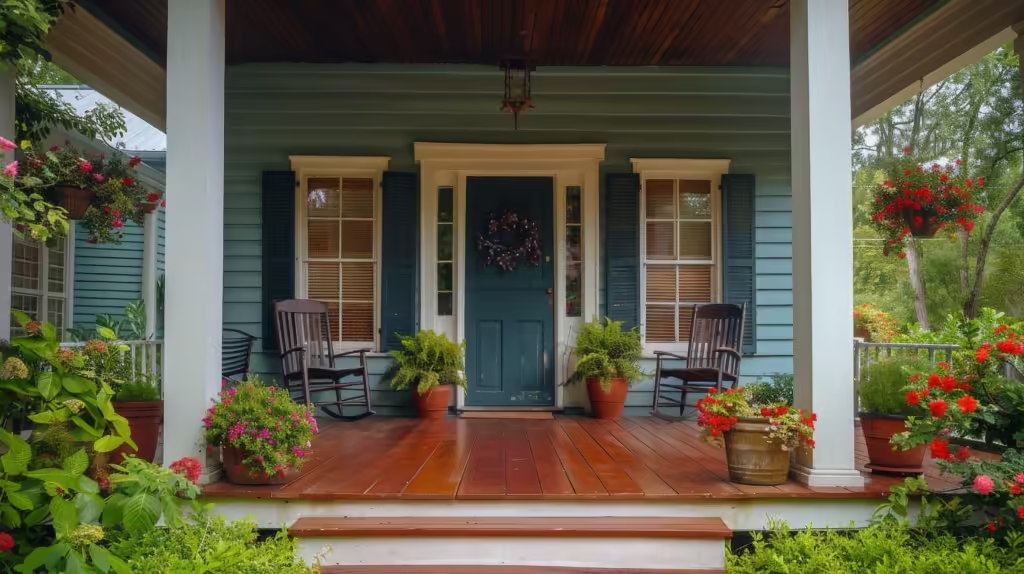
Every stunning front porch begins with the same decision: the door. It is the architectural centrepiece of the entire composition, the element every other choice must relate to. And it is the single upgrade that delivers the most dramatic visual return for the least physical effort.
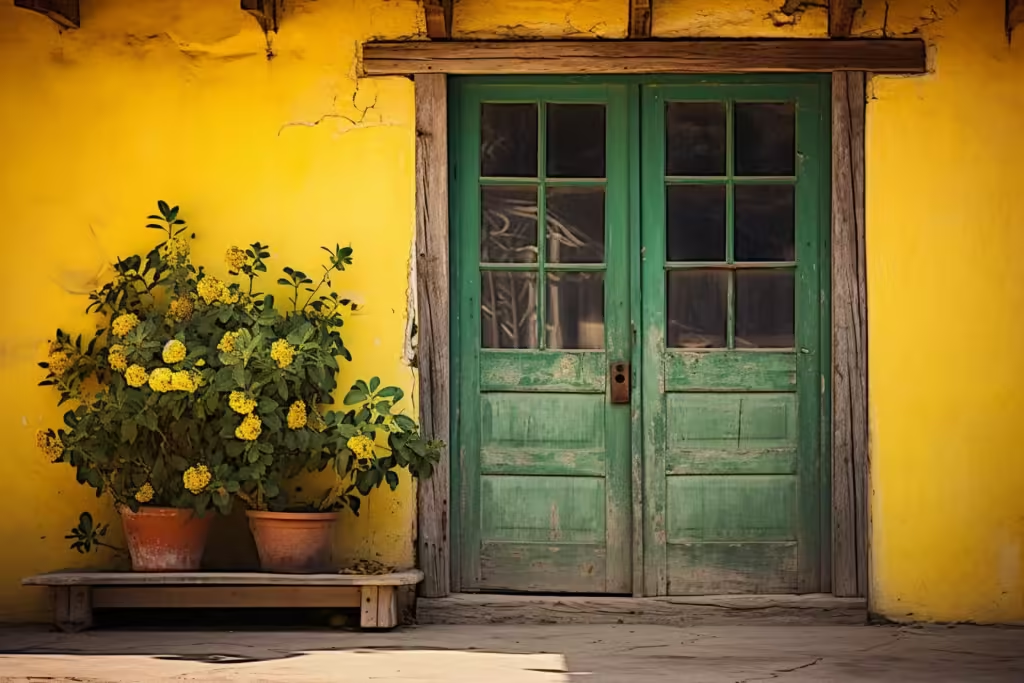
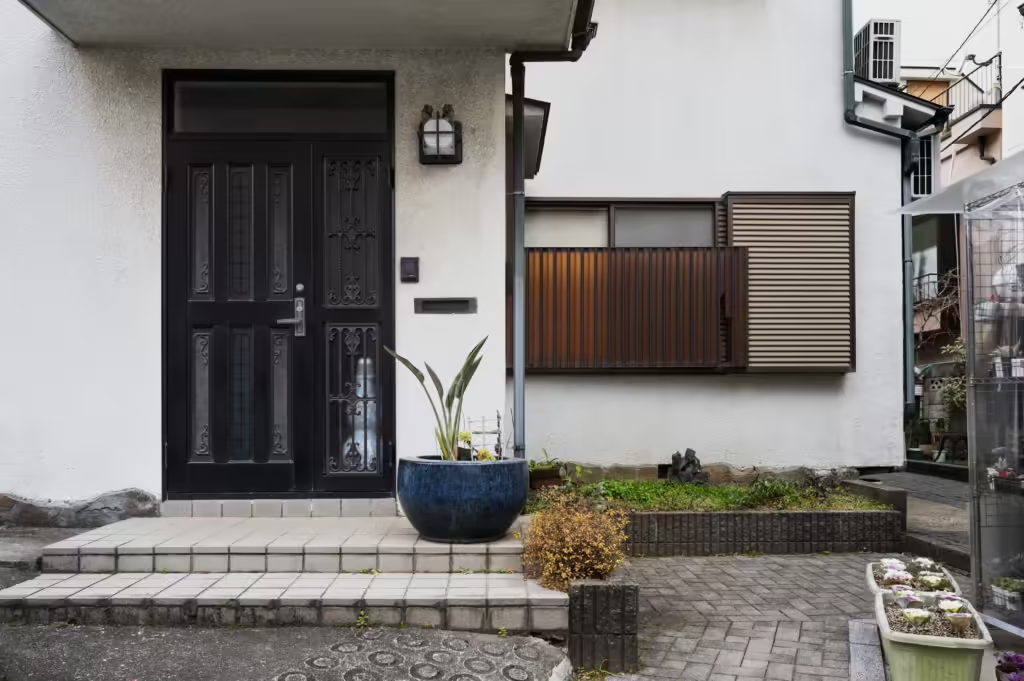
Designers in 2026 are moving decisively toward doors that feel intentional rather than default. Deep, nature-inspired colours are dominating — rich forest greens, warm terracotta, deep navy, and a returning interest in classic black that works across virtually every exterior style. Interior designer Lonni Paul notes that the most enduring front door choices are “nature-inspired hues and timeless statement shades that enhance curb appeal with a personal, lasting touch.” A deep navy, she adds, “offers classic sophistication suitable for most home styles.”
The principle to follow is this: your door colour should create enough contrast with your exterior to draw the eye without clashing with your roof line or brickwork. A warm cream or stone exterior is a blank canvas that welcomes almost any door colour. A red brick facade calls for moodier, cooler tones to prevent a visual conflict. A painted white or grey exterior? That is where a bold terracotta or forest green will sing.
If your door is already a colour you love but it looks tired, the fix is often not a new colour at all. A fresh coat of the same shade in a high-gloss exterior finish will transform the look completely. Gloss reflects light, makes the colour appear richer, and immediately reads as fresh and well-maintained.
The hardware matters more than you think
Once the door colour is resolved, the hardware becomes the punctuation. A beautiful door with cheap, mismatched hardware is like a tailored jacket worn with the wrong buttons. Matching your door knocker, handle, letterbox, and house numbers into a single finish — brushed brass, matte black, or polished nickel — creates a coherence that the eye registers even if the mind does not consciously identify why. This is one of the highest-return investments on a porch at any budget level.
You May Also Love

2. The Plants: Layered, Lush, and Never an Afterthought
Plants are the most transformative element of any front porch and, paradoxically, the one most often underdone. A single pot beside the door does not read as a design decision — it reads as a leftover. The porches that make people stop are characterised by abundance: a layered arrangement that feels generous, considered, and alive.
The layering formula that landscape designers use draws directly from painting. Landscape designer Doug Scott describes it this way: just as a painting needs a background, a middle ground, and a foreground, your plant arrangement needs to operate at three distinct heights simultaneously. Each layer serves a purpose, and there is no more important place for this thinking than the entrance to your home.
How to build the three layers
The background layer is your tallest element — a clipped bay tree, a trained climbing rose on a trellis, a pair of standard lollipop topiaries, or a tall ornamental grass in an oversized pot. This creates vertical drama and frames the door from a distance.
The middle layer is where most of your seasonal colour lives. A mix of flowering plants — hydrangeas, lavender, geraniums, or seasonal annuals in your palette — grouped in mid-height containers fills the composition and keeps the porch looking fresh as the seasons shift. Matching planters on either side of the front door create the symmetry that draws the eye straight to the entrance.
The foreground layer is the detail work: trailing plants that spill over the edges of pots, small succulents tucked into a front step, a low planter box of herbs that perfumes the air when brushed in passing. This layer is what makes the arrangement feel abundant rather than sparse.
For container selection, terracotta is in a genuine resurgence right now, particularly aged or hand-thrown pieces with visible texture. Tall cylindrical concrete planters paired with trailing plants are a signature of the current aesthetic. Classic designs — Grecian urns, simple sleek black pots, clean concrete boxes — will outlast seasonal trends and complement almost any architectural style.
Our guide to porch styling with natural materials explores how to use planters and organic textures to build a porch that feels genuinely considered.
Don't miss: 12+ Front Porch Lantern Decor Ideas for a Cozy Glow →
3. The Lighting: What Your Porch Looks Like After Dark
Most homeowners style their porch exclusively for daylight. The homes that attract admiring glances from neighbours and passersby have also solved the evening question: what does this space look like at 8pm in summer, when the light has softened and the porch is visible from the street?
According to real estate professional Debra Dobbs, “lighting has shifted away from being mainly utilitarian, now becoming more integrated into the overall landscape and used particularly to highlight a home at night.” The goal is no longer a bright security light that illuminates the front of the house like a car park. The goal is warmth, layering, and atmosphere.
The Front Porch Lighting Formula
- Replace your fixed overhead fixture with something more expressive. A lantern-style pendant or a pair of wall sconces flanking the door transforms the entry from the moment it is switched on. Choose warm white bulbs at 2700K or below.
- Add a secondary ambient source. String lights draped along a porch ceiling, looped through railings, or hung from hooks create the kind of soft overhead glow that photographs beautifully and feels genuinely welcoming in person.
- Light what you have planted. A small solar spike light pointing up into a statement plant or a well-placed uplighter beside a beautiful pot gives the porch a three-dimensional quality after dark that reads as thoroughly designed.
- Consider the house numbers. Backlit or individually illuminated house numbers are a small detail that reads as considered from the street, and they solve a practical problem at the same time.
The most important principle: every bulb on the porch should be the same colour temperature. Mixing warm and cool white light is one of the most common and most visually jarring errors on an otherwise well-styled porch. Commit to warm white throughout and the effect will be cohesive and genuinely lovely.
4. The Mat and Rug: The Ground Layer That Ties Everything Together
A welcome mat is one of the most underestimated elements of a front porch. Visitors look down as they approach a door — it is an almost universal behaviour. What they find there communicates a great deal about the home they are entering.
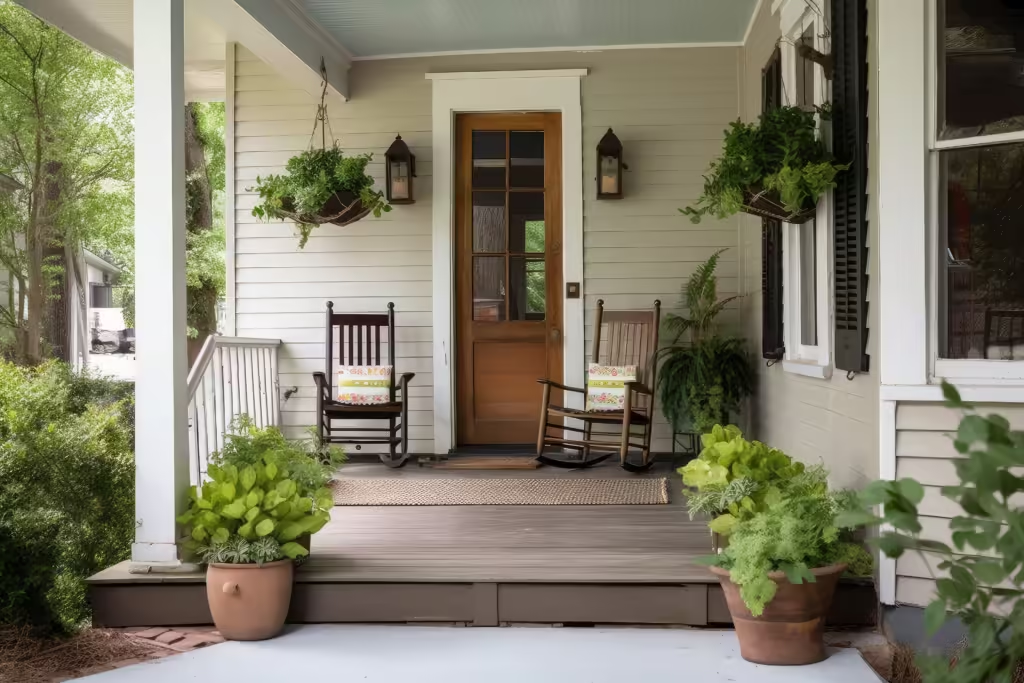
The porches that look polished and complete almost always have a layered approach to the ground level. A larger outdoor rug or coir mat underneath a smaller, more decorative mat is a technique borrowed from interior design — it adds depth, grounds the arrangement, and makes the doorway look intentional from every angle.
For the base layer, natural coir in a flatweave or textured pattern is the most versatile choice. For the top layer, something with a little more personality — a printed pattern, a seasonal motif done with restraint, or a bold geometric in a colour that echoes your door. The key is keeping both mats within the same family of tones so the layering reads as a choice rather than a collision.
If your porch is large enough for a proper outdoor rug that extends under seating, this investment pays enormous dividends. A rug defines the zone, makes the porch feel like a room rather than a transition point, and immediately positions the entire space at a higher level of intentionality. Look for outdoor-rated flatweave rugs in natural tones — sand, jute, warm cream — that can handle weather and foot traffic without showing their age within a season.
5. The Seating: An Invitation That Changes Everything
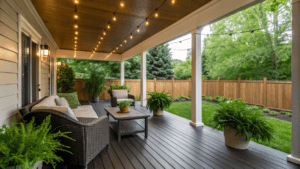
Seating on a front porch does something no other element can: it transforms the space from a threshold into a destination. A home with a rocking chair, a bench, or a pair of chairs facing the street sends a message to everyone who passes — this is a house where people actually live, where the outside world is welcomed, where there is time to sit and watch the day unfold.
The Southern tradition of the porch as a gathering place has been recognised by design commentators as one of the most relevant hospitality impulses in residential design right now. Positioning seating near the front of the property — even if that means two chairs beside the front steps rather than on a covered porch — genuinely encourages both inhabitants and visitors to linger. As Southern Living notes, moves like this “not only encourage friends and neighbours to linger longer, but provide a place to enjoy your own yard and greet passersby more easily.”
Choosing seating that suits your porch
Classic rocking chairs remain one of the most timeless choices for a front porch — they signal unhurried welcome and are genuinely comfortable for extended sitting. A wicker loveseat, a pair of painted wooden Adirondack chairs, or a simple wood bench with outdoor cushions all work beautifully depending on the scale of the porch and the style of the home.
Add outdoor cushions in colours that bridge your door choice and your plant palette. If your door is forest green and your plants include lavender and white, look for cushions in warm cream, sage, or a soft pattern that carries those tones. This colour continuity is what makes a porch feel curated rather than assembled.
If a full remodel of the porch structure is part of your thinking, our article on porch remodel ideas you can try today covers everything from cosmetic refreshes to structural updates that genuinely change how the space functions.
Keep Exploring

6. The Colour Story: Keeping the Whole Composition Coherent
One of the clearest markers of a porch that looks designed rather than decorated is colour coherence. The homes that stop neighbours in their tracks are almost never trying to do too many things with colour at once. They have selected a palette — usually three tones — and applied it with discipline across every element.
The 2026 porch palette that is resonating most strongly right now centres on what designers are calling “quiet luxury in nature’s tones.” Think deep greens anchoring the door and planting, warm terracotta or rust appearing in cushions or a single planter, and a neutral base of cream, sand, or warm white across the walls, mat, and larger furnishings. The result is rich without being loud, and utterly photogenic in any light.
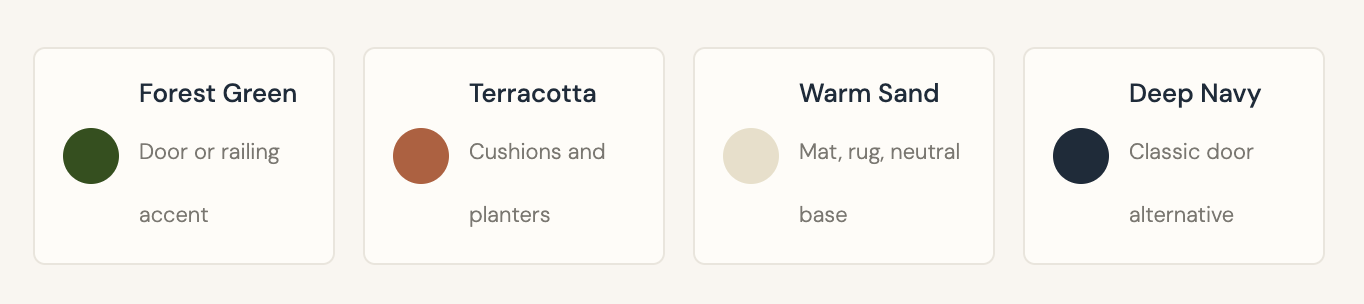
The principle of restraint is critical here. A porch that uses four different pot colours, cushions in three unrelated patterns, and a mat in a fifth tone is visually exhausting even if each individual item is attractive. Edit down to a coherent palette, then execute that palette generously and with confidence.
For those drawn to a farmhouse aesthetic, our piece on farmhouse porch remodel ideas that age well shows exactly how to use a restrained palette within a character-rich design language.
7. The Finishing Layer: The Details That Make It Feel Inhabited
The difference between a porch that looks good in a photograph and one that makes a neighbour genuinely pause on the pavement is the finishing layer. These are the small touches that signal a real person lives here, that care and pleasure have been invested in this space, and that the house behind the door is likely to be just as considered inside.
A wreath on the door — not exclusively a seasonal or holiday gesture, but a year-round choice in natural materials like dried botanicals, eucalyptus, or preserved olive branches — is one of the most effective finishing details available. It frames the door, softens the transition from wall to entrance, and adds a dimension of texture that catches the eye at close range.
A side table between two chairs, holding a small plant, a lantern, and perhaps a book left there by habit rather than design, tells a story about the household. A small water feature beside a planter adds the sound of moving water to the sensory experience of the entrance — and few things are as instinctively attractive to passersby as the gentle sound of a fountain on a warm day.
A porch swing or hanging seat, where the structure allows, is another finishing element that creates genuine kerb appeal — it moves, it invites, and it communicates a quality of domestic life that makes a home feel genuinely aspirational.
“A styled porch is what gives your house character and kerb appeal. It is one of the most important areas of the home and reflects your style entirely.”
The Complete Formula at a Glance
The seven steps above work as a system. Resolve each one in sequence and you will have a porch that looks like a designer was involved — even if the total spend was modest and the work was done over a weekend.
Your Front Porch Styling Checklist
- Statement door colour in a rich or nature-inspired tone
- Matching hardware in one consistent finish throughout
- Plants at three heights: tall, mid, and trailing
- Planters in complementary materials, never a random mix
- Warm white lighting at 2700K or below, consistently matched
- A statement pendant or pair of wall sconces flanking the door
- A layered mat — large base mat plus a decorative top mat
- An outdoor rug that extends under seating (where space allows)
- Seating that invites lingering, with cushions in your palette
- A side table to anchor the seating arrangement
- A colour palette of three tones applied across all elements
- A wreath or door decoration in natural, lasting materials
- A small personal finishing detail that tells a story
- Updated or illuminated house numbers in your hardware finish
How to Start When the Whole Thing Feels Overwhelming
The most common reason front porches remain underdone is not lack of budget or lack of taste — it is not knowing where to begin. The formula resolves that problem. Start at step one: the door. Paint it this weekend. Once the door is resolved, the rest of the formula will feel achievable because you have an anchor colour to work from.
Then add the plants. Then update the lighting fixture. Each step builds on the previous one and the momentum carries you through. Within a month, you will have a porch that looks like the result of a deliberate, sustained creative vision — because it is, even if that vision unfolded step by step rather than all at once.
For those considering a more structural approach to the porch itself, our guide on porch remodel ideas that increase home value is an excellent place to understand what investments deliver the greatest long-term return alongside the aesthetic gains.
And if you are working with a small or challenging porch footprint, do not assume the formula cannot apply to you. Our dedicated guide to porch remodel ideas for small homes shows precisely how the layering approach works at a compact scale — and how little space you actually need to create a genuinely arresting entrance.
Final Thought
Your front porch is not a staging area between the pavement and the front door. It is the opening statement of your home, and it deserves to be written well. The neighbours who slow to look, the visitors who arrive already delighted before they have stepped inside, the passersby who photograph the front of your house without quite knowing why — they are all responding to the same thing: an entrance that was designed with care.
That care does not require a renovation budget or a landscape team. It requires the formula, applied step by step, with a little patience and a clear sense of the story you want your home to tell.