How to Decorate a Kitchen You Actually Love Cooking In
A complete guide to kitchen styling, layout, colour, storage, and the small changes that make the biggest difference without a full renovation.
KEY POINTS
- Most kitchens can be dramatically improved without touching the cabinets or layout. Colour, lighting, and how you use your surfaces make an enormous difference.
- Cabinets and countertops set the tone for everything else. Get those two decisions right and the rest of the room follows logically.
- A kitchen that works well visually and practically is built around honest decisions about how you actually cook, not how kitchens look in showrooms.
The kitchen is the most complex room in a home to get right because it has to satisfy two entirely different demands at once. It needs to function as a workspace where things are found easily, surfaces are clear, and movement flows without interruption. And it needs to feel like a room worth being in, warm and considered and genuinely pleasant. Most kitchens do one of those things tolerably well. The ones that do both are the ones worth studying.
Love Chic Living Club?
Add us as one of your preferred Google sources and discover more home decor, DIY, outdoor, and lifestyle inspiration from us.
This guide works through every decision involved in a kitchen, from the layout and the cabinets to the backsplash, the lighting, and the styling of the surfaces people actually see when they walk in.
RELATED: 13+ Kitchen Remodel Ideas That Instantly Add Value
Start With the Layout
Before any decorating decision, the layout of a kitchen determines how well the room actually works. The classic principle is the work triangle: the distance between the sink, the hob, and the refrigerator should be short enough that moving between them does not require crossing the whole room, but spacious enough that two people can be in the kitchen at the same time without constantly being in each other’s way.
Most kitchens are not laid out badly from scratch. They are laid out badly because things have been added over time without thinking about flow. An extra appliance here, a bin in the wrong place there, and suddenly the route from the hob to the sink involves walking around three obstacles. Before spending anything, spend time just cooking in your kitchen and noticing every moment you have to take an unnecessary step or reach past something inconvenient. Those friction points are where the real layout problems are. There is a lot to think through when it comes to kitchen layout changes that genuinely improve how the room functions day to day.
RELATED: 14+ Kitchen Remodel Ideas for Open-Concept Homes
Choose Your Cabinets Thoughtfully
Cabinets cover more surface area in a kitchen than anything else, which means the decision about their colour, finish, and style sets the entire visual tone of the room. It is also one of the more expensive and disruptive decisions to undo, which makes it worth thinking through carefully before committing.
The most enduring kitchen cabinets tend to be the ones where the colour has some complexity to it. Flat white is functional and can look clean, but it also shows every mark and has no warmth. Warm off-whites, soft sage greens, muted navies, and warm greys all age better because they have a depth that reads differently under different light and at different times of day. The combination of grey and brass hardware is one of the most consistently satisfying pairings in kitchen design, because the warmth of the brass prevents the grey from feeling cold. On the bolder end, blue kitchen cabinets have become genuinely popular for good reason: a strong, considered blue in the right kitchen feels rich and intentional rather than risky.
If replacing cabinet doors entirely is not in the budget, the surfaces can still be transformed. Repainting existing cabinets, replacing the hardware, or adding glass-fronted doors to upper cabinets are all approaches that change the character of the room significantly without the cost and disruption of new cabinetry. The most commonly overlooked update is the hardware. Switching out handles and knobs for something with more considered design costs almost nothing relative to the visual difference it makes.
RELATED: 14+ Kitchen Cabinet Remodel Ideas Without Full Replacement
Pick the Right Countertop
The countertop is the surface you interact with most in a kitchen and the one that reads most prominently when the room is tidy. It needs to be durable enough for how you actually cook, and beautiful enough that you are happy to look at it every day.
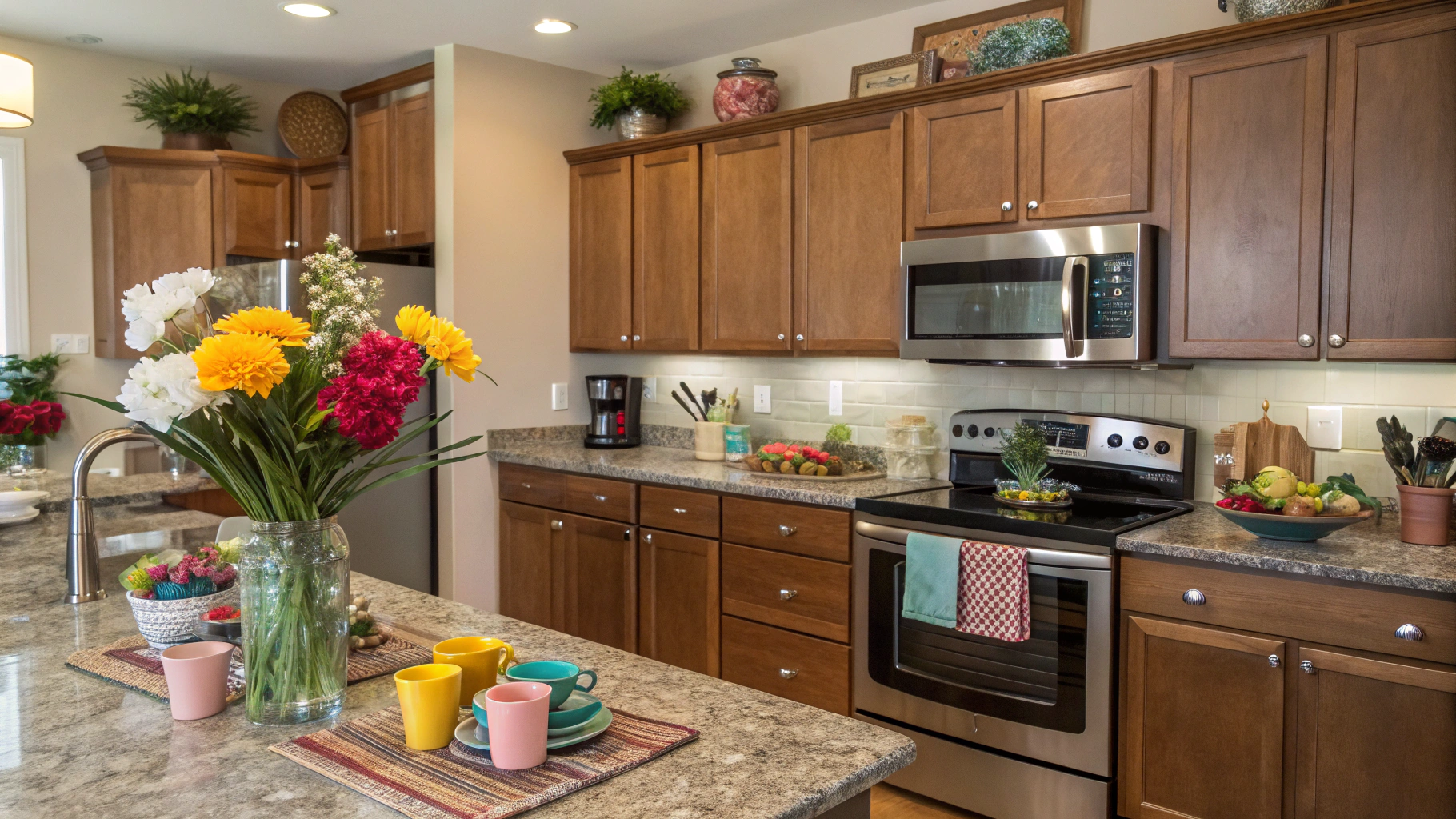
Stone is the benchmark. Quartz is the most practical version: it is non-porous, does not need sealing, resists staining, and comes in a very wide range of colours and finishes. Natural granite and marble are more beautiful and more demanding, requiring sealing and care to avoid staining. For kitchens where cooking is serious and frequent, the maintenance of a natural stone is worth understanding honestly before committing to it. For kitchens that see lighter use, marble in particular has a quality of material luxury that is difficult to replicate.
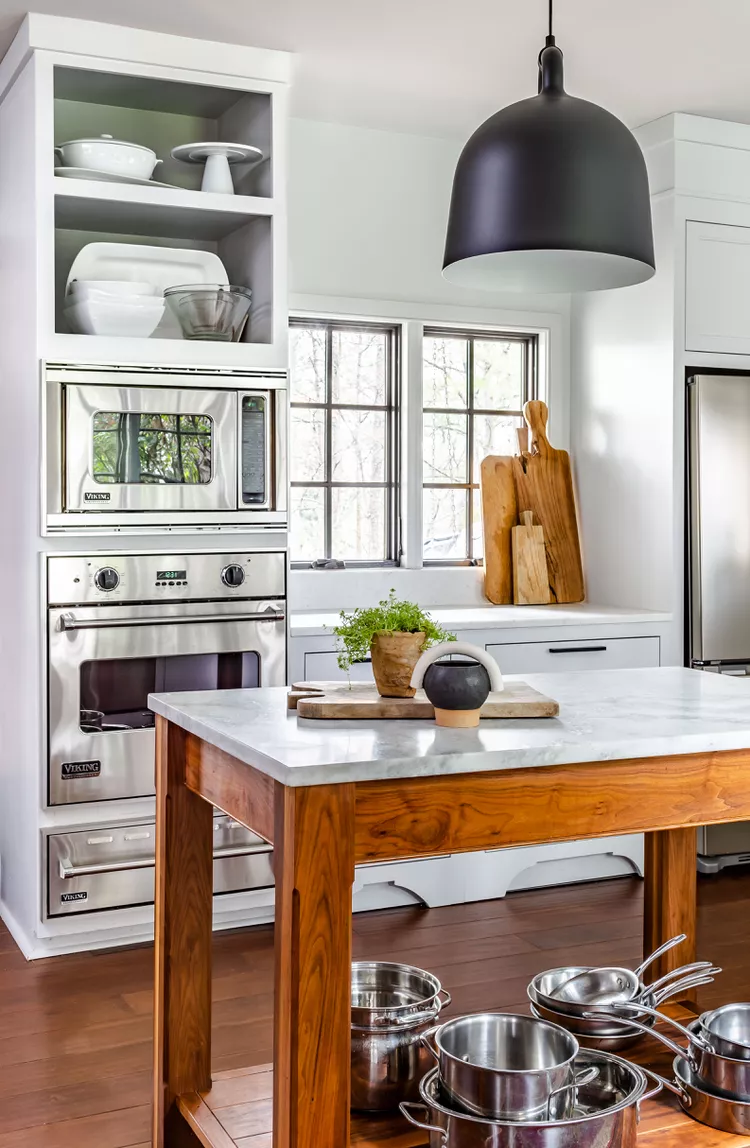
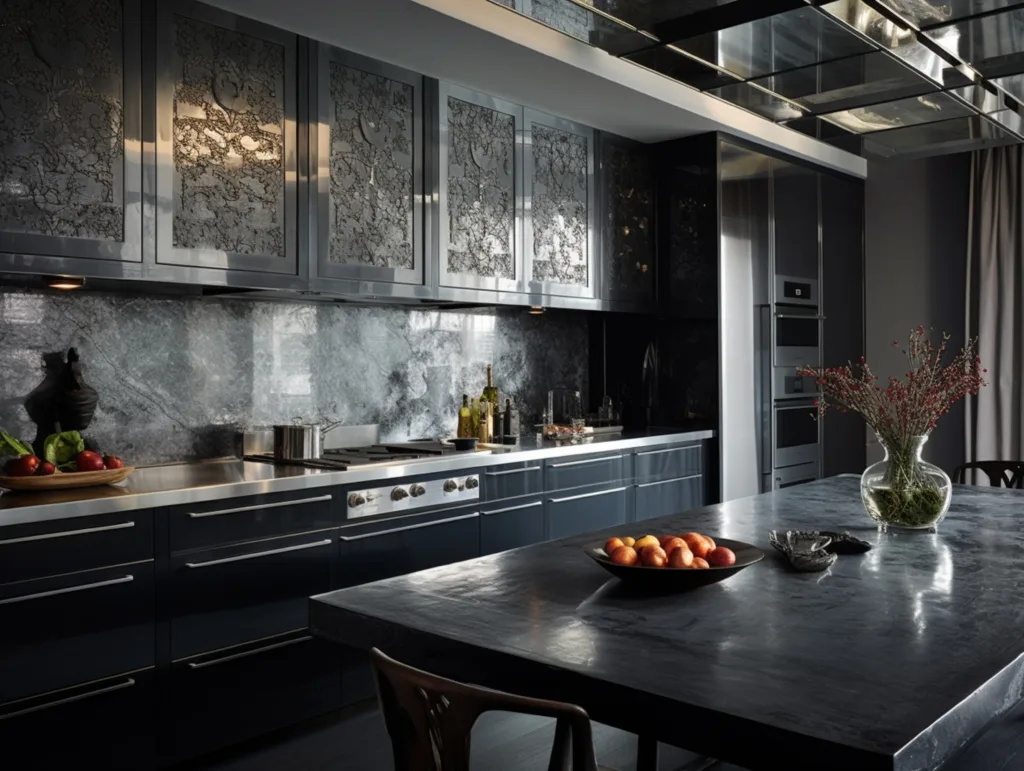
Beyond stone, trending cabinet and countertop combinations show how the relationship between the two surfaces matters as much as either decision in isolation. A warm wood countertop on white cabinets reads completely differently from a dark stone countertop on the same cabinets. The contrast between the two elements is what gives the kitchen its character, and understanding that contrast before ordering anything is essential.
RELATED: 15+ Kitchen Countertop Remodel Ideas Worth the Upgrade
Get the Backsplash Right
The backsplash is the one area of a kitchen where personality is most easily expressed without affecting function. Because it covers a relatively contained area, usually between the countertop and the upper cabinets, it can carry a stronger colour, a more distinctive material, or a more characterful tile than would feel comfortable across the whole room.
A kitchen backsplash that works well does one of two things: it introduces a material that adds warmth or texture to a kitchen that is otherwise fairly flat and consistent, or it provides a focused moment of colour or pattern that gives the whole room a focal point. Plain white subway tile is functional and widely used, but it is also the least interesting option in almost every kitchen. The same footprint in a handmade terracotta tile, a zellige in a warm white, or a simple stone-effect slab will make the kitchen feel more considered without costing significantly more.
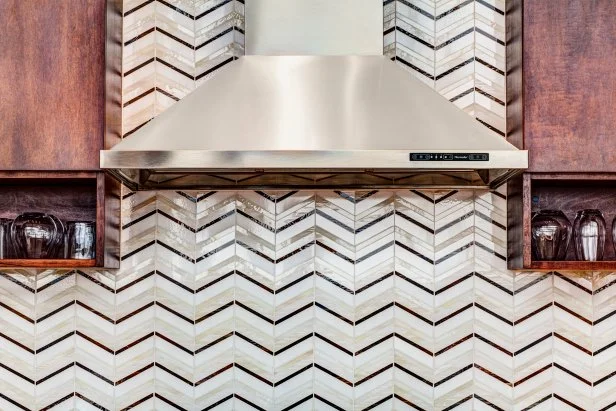
The area above the hob in particular benefits from being treated as a visual feature. A tile surround in a vintage-inspired style gives the cooking zone a character and presence that makes it the focal point of the kitchen in the best way, drawing attention to the place where most of the activity actually happens.
Think About the Island
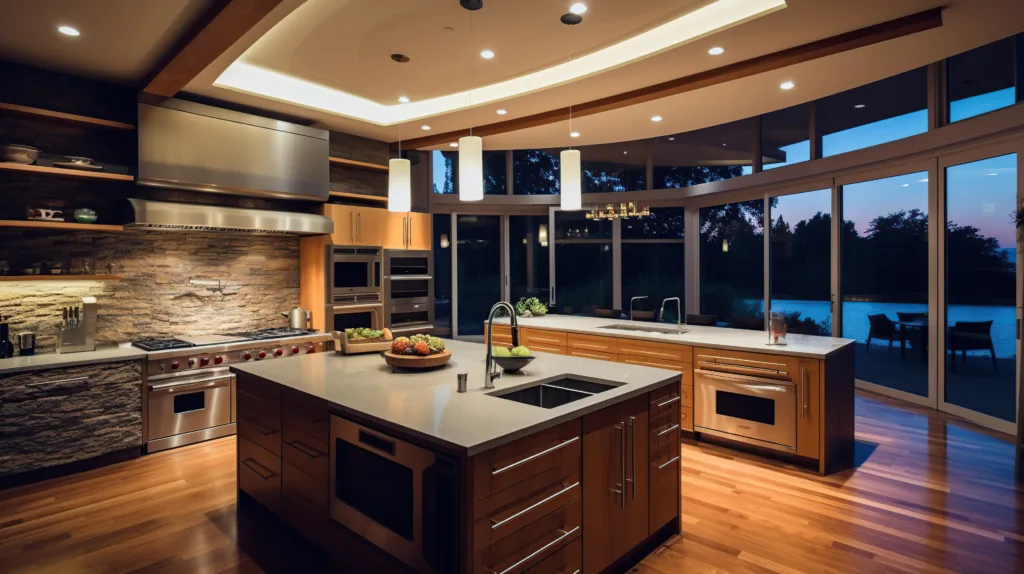
A kitchen island, where the space allows for one, changes how the whole room is used. It creates a surface for prep that is separate from the main countertop, a place for people to sit and talk while someone else is cooking, and a visual anchor for the room that no other piece of kitchen furniture provides.
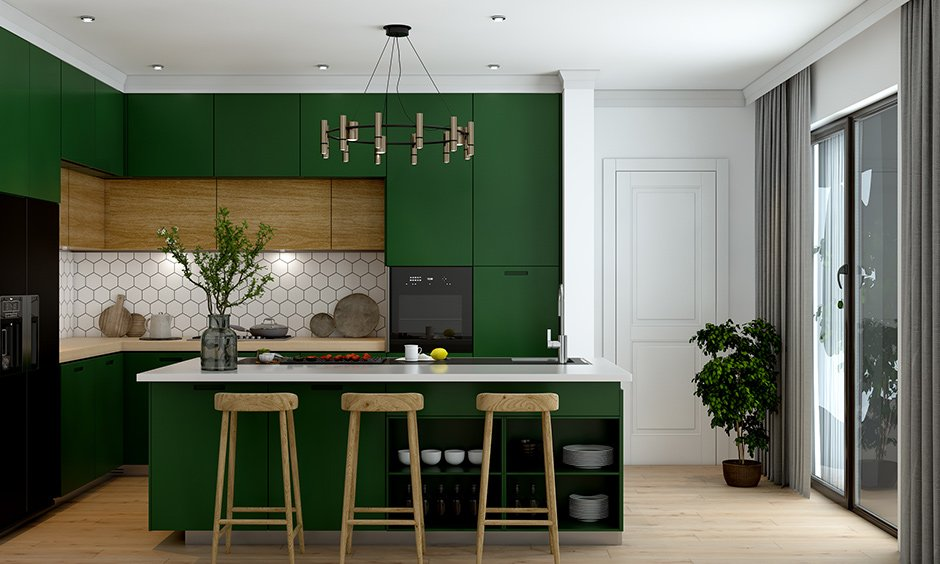
The decisions around an island are primarily about scale and function. An island that is too large for the kitchen creates congestion and removes the flow that makes a kitchen workable. The clearance between the island and the surrounding countertops or appliances should be at least 90 centimetres on all working sides. An island that is too small feels like an afterthought. Kitchen island remodel ideas for modern homes cover the full range of configurations, from simple butcher-block islands to more elaborate built-in versions with seating and storage integrated below.
Fix the Lighting
Kitchen lighting is almost always done in the most obvious way possible: a central fitting in the ceiling that illuminates everything equally from above. It functions. It does not make the kitchen feel good.
Task lighting, positioned specifically to illuminate the work surfaces rather than the room in general, makes cooking easier and safer and changes the quality of the light in the room immediately. Under-cabinet LED strips are the most practical and cost-effective way to achieve this, and they cost almost nothing relative to the difference they make. A pendant or two above an island or a breakfast bar adds warmth and visual interest at a lower level, breaking up the flatness of overhead-only lighting. Kitchen lighting choices that layer different sources at different heights are the ones that make a kitchen feel like a room rather than a workspace.
Bulb temperature in a kitchen is worth considering separately from the rest of the house. Warmer bulbs, around 2700 to 3000 Kelvin, make food and surfaces look their best and make the kitchen feel inviting. Cooler, bluer light above 4000K is fine for purely functional kitchens but produces a quality of light that feels clinical and slightly hospital-like in a room where people spend meaningful time.
RELATED: 14+ Kitchen Lighting Remodel Ideas You Must Try
Nail the Colour Palette
Colour in a kitchen works differently from colour in a living room or bedroom, because so much of the visual surface area is already determined by the cabinets, the countertop, and the floor. The wall colour, where walls are visible, is often a supporting role rather than a lead one, which means the palette decisions need to be made as a system rather than as individual choices.
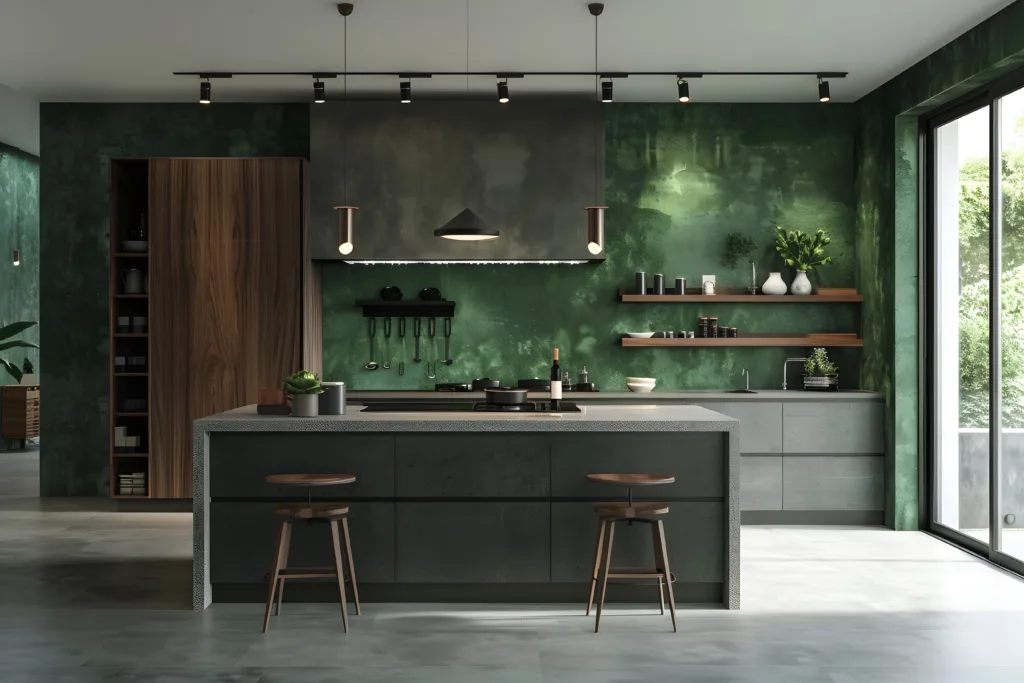
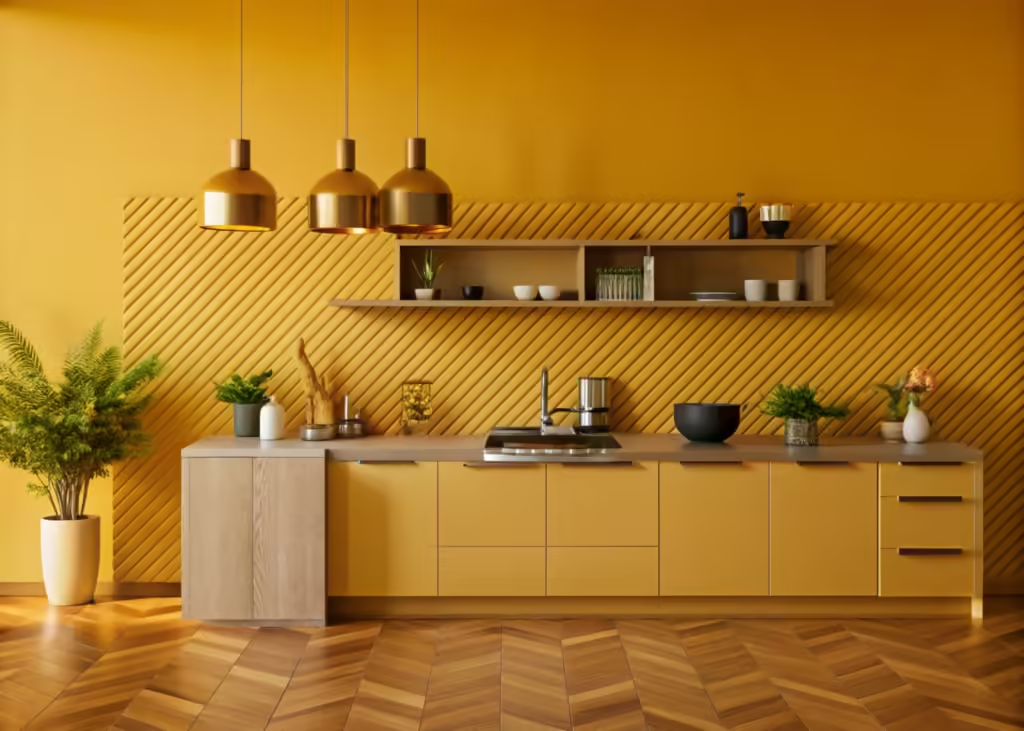
The kitchen colour palettes that feel most cohesive are the ones where two or three tones relate to each other across different surfaces. Warm white walls with warm wood countertops and natural linen blinds creates a consistent warmth across every surface. A navy cabinet with a warm white wall, brass hardware, and a stone countertop creates a contrast that is deliberate and controlled. The mistake is mixing warm and cool tones without intention: cool grey cabinets with warm yellow walls and chrome hardware reads as three unrelated decisions rather than one composed palette.
Sort the Storage
A kitchen that looks good in photographs but has nowhere to put anything is a kitchen that will never feel good to live in. Storage in a kitchen is not a secondary concern after aesthetics. It is the foundation that allows the aesthetics to exist, because a kitchen where everything has a proper home is a kitchen where the surfaces can stay clear and the room can look the way it is supposed to look.
The most useful kitchen storage is the kind that is designed around what is actually being stored. Deep base cabinets with pull-out drawers make pots and pans accessible without having to empty the whole cabinet to find the one at the back. A tall pantry cabinet, where space permits, centralises all the dry goods and small appliances that otherwise end up on countertops. Pull-out trash solutions are one of those small decisions that make a significant daily difference: a bin inside a cabinet rather than freestanding removes one of the most visually disruptive objects in most kitchens at a stroke.
Open shelving above a counter or in a breakfast area works beautifully when the things on it are genuinely worth displaying: a few pieces of ceramics you love, a row of cookbooks, some glass jars of dried goods that are used regularly. It works badly when it becomes the place where miscellaneous objects end up because there is nowhere else for them.
TIP: The objects that live permanently on your countertops should be limited to the things you use every single day. A kettle, a toaster if you use it daily, a knife block. Everything else earns its place on the counter only if it is used at least several times a week. The visual benefit of clear countertops is larger than almost any decorating change you can make to a kitchen.
RELATED: 17+ Kitchen Storage Remodel Ideas You Will Wish You Did Sooner
Consider a Kitchen Style
The most liveable kitchens are not the ones that slavishly follow a single aesthetic, but understanding where your instincts sit on the spectrum from minimal and modern to warm and characterful helps make the individual decisions feel more coherent.
A minimalist kitchen that still feels warm is one of the harder things to pull off well, because the restraint in clutter and decoration needs to be compensated for by richness in the materials themselves: a beautiful stone countertop, a handmade tile, quality cabinet hardware, a thoughtful lighting fixture. Without that material quality, a minimal kitchen just looks sparse.
A farmhouse kitchen works because it embraces the honest, unpretentious character of its materials: shaker cabinets, a ceramic sink, open shelving in natural wood, a tiled floor in a classic pattern. The things that make it feel warm are the same things that make it feel old-fashioned in the wrong way if they are not handled with care. The farmhouse kitchen remodel ideas that age well are the ones that lean toward the timeless rather than the trendy version of the style.
A boho kitchen carries the same principles as a boho living room: the base needs to be grounded and consistent, usually in natural materials and warm neutrals, and the personality comes in through texture, handmade objects, plants, and the accumulated evidence of a kitchen that is genuinely used. Mid-century inspired kitchens take a different approach, using distinctive silhouettes in furniture and fittings, warm wood tones, and a colour palette that references the era without being a pastiche of it.
RELATED: 14+ Trendy Kitchen Remodel Ideas That Will Not Date Fast
Style the Surfaces
Once the structure of the kitchen is right, the styling of the surfaces is what makes it feel like a room rather than a workspace. The countertops, the open shelves, the windowsill, and the top of the refrigerator if it is visible are all surfaces that will be seen constantly and that benefit from being thought about deliberately rather than left to accumulate whatever ends up there.
The most important surface in most kitchens is the one beside the hob. This is where things get put down during cooking, where oils and spices and tools need to be accessible, and where the eye often rests when standing at the stove. Keeping it clear except for the things that are genuinely needed there makes the whole kitchen feel more organised and more considered.
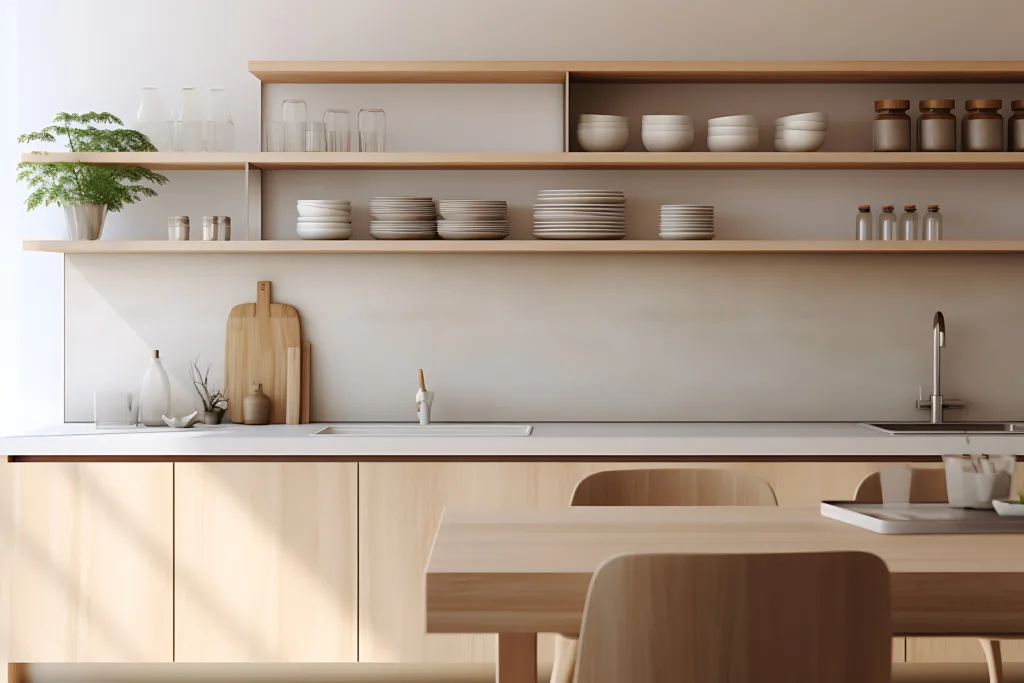
Minimal floating counter styling is worth looking at as a model for how much surface decoration a kitchen actually needs. The answer in most cases is less than you think. A single plant, a small bowl of fruit, a ceramic pot holding wooden spoons. The kitchen is a room where function provides most of the visual interest, and the decoration should support that rather than compete with it.
Small Kitchens Deserve Smart Decisions
A small kitchen is a design problem with a clear solution: every decision should maximise the sense of space and light while minimising anything that makes the room feel cramped. That means light cabinet colours, clear countertops, well-organised storage so nothing needs to live on the worksurface, and lighting that illuminates every part of the workspace rather than leaving shadows in the corners.
Compact kitchen remodel ideas for apartments are built around exactly this hierarchy of priorities. The small kitchen layouts that work best in tight spaces are the ones that prioritise workflow over storage quantity, because a small kitchen where everything is reachable without moving is more functional than a slightly larger one where things are awkward to access.
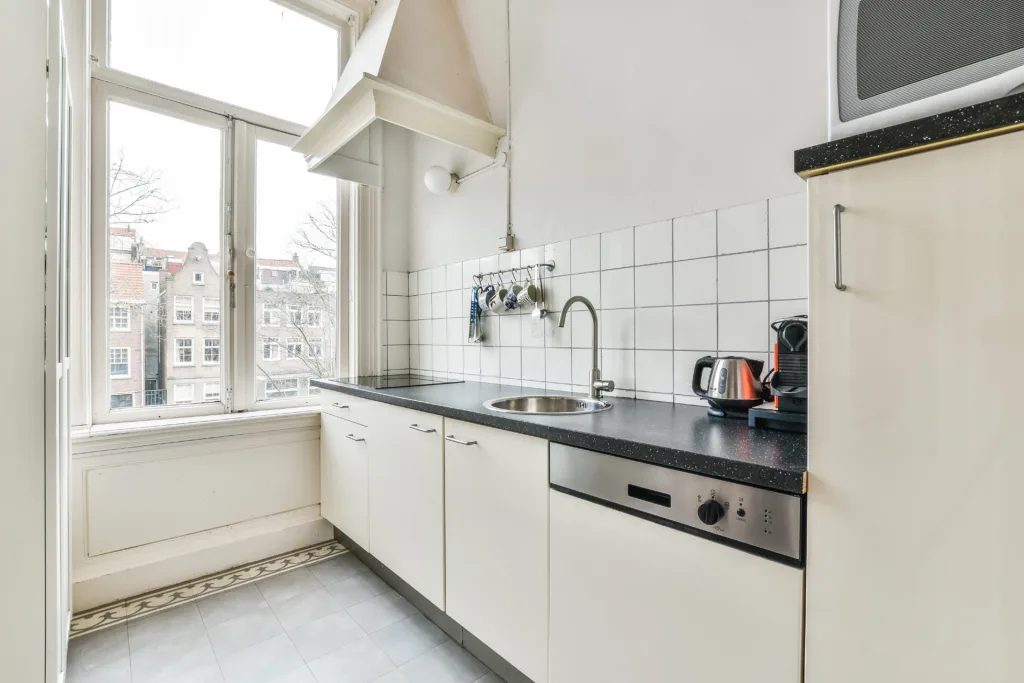
A galley kitchen, which is one of the more common layouts in urban apartments, is actually one of the most efficient kitchen configurations possible when it is designed well. Everything is within arm’s reach and the workflow is linear and logical. The galley kitchen remodel ideas that make the biggest difference are the ones that address the one weakness of the layout: it can feel like a corridor. Removing upper cabinets on one side and replacing them with open shelving, painting the walls a warm colour, and adding good lighting all open up the space considerably.
RELATED: 17+ Small Kitchen Remodeling Ideas That Maximize Space
Frequently Asked Questions
Where do I start when redecorating a kitchen?
Start with the two decisions that have the most impact on everything else: the cabinet colour or finish, and the countertop material. These set the palette and the material tone of the whole room. Once those are decided, the backsplash, hardware, lighting, and flooring all have a clear direction to follow. If the cabinets and countertops are staying, start with the lighting. It is the change that costs the least and makes the most immediate difference to how the room feels.
What colour makes a kitchen feel bigger?
Light, warm neutrals on the walls and cabinets make a kitchen feel more spacious than darker tones. Soft whites and pale warm creams reflect light well and create a sense of continuity across surfaces. Keeping the floor, wall, and cabinet tones in a similar family rather than introducing high contrast between surfaces helps a small kitchen feel more unified and therefore larger.
How do I make a kitchen look more expensive without a full renovation?
Replace the hardware first. New handles and knobs in a considered finish, brushed brass, matte black, or unlacquered brass, cost very little and change how the cabinets read immediately. Then address the lighting: add under-cabinet task lighting and consider a pendant above an island or table if there is one. Clear the countertops of everything that does not need to be there. These three changes, which together cost a fraction of any structural update, transform the kitchen more reliably than most things that cost ten times as much.
Is an open-concept kitchen worth it?
It depends entirely on how you cook and live. An open kitchen connected to a living or dining area makes a home feel more social and generous, and it is the configuration most buyers respond well to. The trade-off is that cooking smells, sounds, and mess are shared with the rest of the living space. For households where cooking is frequent, involved, and aromatic, a door or at least a half-partition between the kitchen and the living area is worth considering. There are open-concept kitchen remodels that handle this well, using peninsulas and partial walls to keep the connection while maintaining some separation.
How do I make my kitchen more sustainable?
Sustainability in a kitchen starts with what you choose not to replace. Refacing existing cabinets rather than replacing them, choosing countertop materials that last rather than trend-driven options that will be redone in a decade, and specifying energy-efficient appliances are all more impactful than most visible design choices. For the materials you do introduce, sustainable kitchen choices that use recycled content, responsibly sourced stone, or FSC-certified timber make a real difference without requiring any compromise on the final look.
Explore every room in the home in our complete Rooms section.