How to Design a Garden and Backyard You Will Actually Love
A complete guide to transforming your outdoor space, from planning the layout and choosing the right garden style to planting, lighting, entertaining, and everything in between.
KEY POINTS
- A well-designed garden starts with understanding how you actually want to use the space, not with choosing a style from a magazine.
- The gardens that look effortless are almost always the ones where the structure was planned first and the planting followed logically from it.
- Privacy, lighting, and a defined seating area transform a backyard from a space you look at into a space you genuinely spend time in.
Most backyards sit underused not because they are small or difficult or in bad condition, but because nobody has made a clear decision about what the space is actually for. There is a vague lawn, perhaps a few overgrown beds, a table and some chairs that only come out on the warmest days of the year. The garden ends up being something you look at through the back window rather than somewhere you choose to be.
Love Chic Living Club?
Add us as one of your preferred Google sources and discover more home decor, DIY, outdoor, and lifestyle inspiration from us.
This guide walks through the full process of designing a garden and backyard that works for how you live, whether you want a lush retreat full of planting, a practical family space, an entertainer’s garden with room for food and fire, or something calm and minimal that requires almost no maintenance.
RELATED: 14+ Stunning Backyard Transformation Ideas on a Budget
Start With How You Want to Use It
Before choosing a plant or buying a piece of garden furniture, spend time being honest about how you actually want to use your outdoor space. This sounds straightforward but most garden design mistakes begin here, with a plan built around an aspirational version of the garden owner rather than the real one.
If you have young children, the garden needs to accommodate play safely and visibly from the house. If you love to cook and entertain, you need easy access from the kitchen, a proper seating area, and somewhere to build a fire or grill. If you want to grow your own food, the layout needs to prioritise beds and raised planters with good sun exposure. If the primary desire is simply to sit outside in peace with a book, the priorities are shade, a comfortable chair, and enough planting to feel screened from neighbours.
The best gardens serve all these purposes in different zones, but clarity about which of them matters most to you is what gives the design its priorities and prevents the common outcome of a space that tries to do everything and succeeds at none of it.
Plan the Layout Before Anything Else
The layout of a garden is its skeleton, and like any skeleton it is invisible when it is working well and very obvious when it is not. A garden without a clear layout feels like a collection of separate decisions rather than a designed space. A garden with a clear layout, even one that is modestly planted, feels considered and purposeful.
The most useful question to ask when planning a garden layout is: where do I want to be at different times of day? Morning sun falls differently from afternoon sun. The spot where you want to have coffee at 8am may be completely different from where you want to sit at 7pm. A garden that is oriented around when and how you use it will be used far more than one that is arranged for how it looks from the back door.
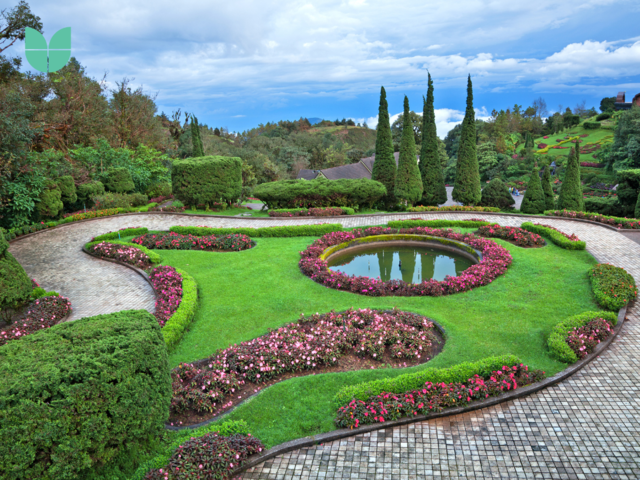
Paths are the connective tissue of a garden layout and the element most often handled badly. A path that goes directly from the house to the main destination in the garden, clearly marked and wide enough to walk without thinking about your feet, is more valuable than a meandering gravel track that requires careful navigation. The garden path ideas that work best combine function and beauty: a well-laid stone path that is comfortable to walk on and good-looking enough to become a feature in itself.
RELATED: 12+ Unique Backyard Garden Bed Layout Ideas
Create Privacy First
A backyard that feels overlooked is a backyard that does not get used. Privacy is the precondition for comfort outdoors, and it is the element most often addressed after the fact with fencing or fast-growing conifers that create solutions worse than the problem. Thinking about privacy at the layout stage, before any planting or hard landscaping, gives you far more elegant and effective options.
Planting is the most beautiful privacy solution available. Vertical trellis structures with climbing plants create a living screen that changes with the seasons, provides habitat for birds and insects, and looks considerably more attractive than any fence. A row of tall ornamental grasses, a hedge of mixed native species, or a line of espalier-trained fruit trees along a boundary all provide screening that feels natural rather than defensive.
Backyard landscaping for privacy goes into the full range of planting and structural approaches, from raised beds and planters that create tiered screening to pergola structures that block sightlines from upper windows. For gardens where structural planting is not yet established, garden wall ideas in rendered brick, natural stone, or timber sleepers create solid enclosure that also acts as a growing surface for climbers and wall-trained plants.
Choose a Garden Style That Suits How You Live
Understanding where your aesthetic instincts sit helps make the hundreds of small decisions that garden design involves feel coherent rather than arbitrary. The styles that endure are almost always the ones that relate honestly to how the garden is used rather than imposing an aesthetic from the outside.
A cottage garden is one of the most romantic and most forgiving styles available. It works through abundance and informality rather than precision, with plants allowed to self-seed, spill over edges, and intermingle in ways that would be mistakes in a more formal garden but are the point in this one. A cottage garden rewards regular deadheading and division more than any technical knowledge, and it gets better with age in a way that more structured styles rarely do.
A zen garden takes the opposite approach: everything is controlled, intentional, and minimal. Raked gravel, carefully placed stones, clipped evergreen shrubs, and the kind of deliberate negative space that creates genuine calm rather than just emptiness. A zen garden requires almost no seasonal maintenance once established and is particularly well-suited to people who want a beautiful outdoor space without the ongoing relationship with plants that more abundant styles demand.
A wildflower garden is one of the most ecologically generous things you can do with a backyard and one of the most visually rewarding. A meadow of native wildflowers buzzing with pollinators in summer, softening to a beautiful tangle of seed heads in autumn, and returning without effort the following year. It requires almost no maintenance once established and costs a fraction of more conventional planting schemes.
A tropical garden brings dramatic foliage, bold colour, and a sense of lush abundance that feels genuinely transportive in the right climate. Large-leafed cannas, bananas in sheltered spots, tree ferns, and bold perennials in hot colours create an atmosphere that no other garden style achieves quite so immediately. For colder climates, many tropical-looking plants are hardier than they appear, and the style is worth attempting even where winters are challenging.
A formal garden uses symmetry, clipped structure, and deliberate geometry to create a sense of order and grandeur that works particularly well in gardens attached to period properties. Topiary, box hedging, gravel paths with clean edges, and a central focal point, whether a fountain, a statue, or an architectural plant, give a formal garden its backbone. The maintenance commitment is higher than other styles, but the satisfaction of a well-kept formal garden is equally greater.
RELATED: 13+ Minimalist Backyard Design Ideas for Clean Looks
Grow Something to Eat
A garden that produces food is a garden with purpose beyond aesthetics, and that purpose has a way of making you spend more time in it, pay more attention to it, and care more consistently about its health and appearance. You do not need a large kitchen garden or an allotment-scale commitment to get started. A few raised beds in a sunny corner of the garden, a handful of reliable crops chosen for what you actually eat, and a basic understanding of when to plant and harvest is enough to make the whole garden feel more alive and more connected to daily life.
Backyard herb gardens are the most accessible starting point for food growing because herbs are small, fast-growing, and used often enough that you will remember to tend them. A collection of culinary herbs in pots beside the kitchen door, or in a small bed with good drainage and full sun, provides something genuinely useful every week of the growing season. Herb gardens in small backyard spaces specifically address the challenge of making productive planting work within tight constraints, which is relevant for most urban and suburban gardens.
Backyard vegetable gardens and edible garden designs go further, covering the full range of productive planting from salad leaves and tomatoes to fruit trees and climbing beans. The most satisfying edible gardens are the ones where the productive elements are integrated into the overall design rather than hidden away in a utility corner, making the kitchen garden as beautiful as the ornamental beds that surround it.
TIP: If you are starting a vegetable garden for the first time, choose no more than five crops that you genuinely love to eat and grow only those for the first season. Understanding what your plot can produce, how much time the crops actually require, and what the common problems are in your specific garden is far more valuable than attempting a wide range and losing half of it. You can always expand in subsequent years once the basics are established.
Add Water to the Garden
A water feature in a garden changes its atmosphere in a way that almost nothing else can. Moving water adds sound, which does two things simultaneously: it creates a quality of calm and masks the noise of traffic, neighbours, and the general ambient sound of urban life. Even a very small water feature, a simple bowl with a solar-powered pump, a small pond edged with marginal plants, or a wall-mounted spout falling into a stone trough, introduces this quality immediately.
Backyard water gardens cover the full spectrum from simple container water features to more substantial pond designs. A backyard pond with marginal plants and perhaps a few fish creates its own ecosystem that evolves and improves over time, becoming more interesting each year as the planting matures and wildlife discovers it. DIY water features cover the practical process of installing moving water without professional help, which is more achievable than most people assume and produces results that genuinely transform how a garden feels.
A sensory garden takes the use of sound, texture, scent, and movement a step further, designing the whole space around the experience of being in it rather than the appearance from a distance. Rustling grasses, fragrant plants placed where you will brush against them, the sound of moving water, and surfaces that are interesting underfoot, all combine to create a garden that engages you fully rather than just looking pleasant from a chair.
Light It Properly
A garden that is not lit is a garden that stops being a garden at dusk, and in the UK and northern Europe that means a garden that is unusable for most of the evening for much of the year. Getting the lighting right extends the garden season significantly and transforms how the space feels at the time of day when most people finally have time to be in it.
Backyard garden lighting works on the same principles as interior lighting: layer different sources at different heights, use warm-toned bulbs, and resist the instinct to illuminate everything equally. Uplights aimed at trees or architectural plants create dramatic shadows and give the garden a theatrical quality after dark. Path lights mark the routes through the garden without flooding the whole space with light. String lights overhead create the warm, festive atmosphere that makes a garden feel like an outdoor room.
String lights for a magical backyard are the single highest-impact garden lighting change you can make, largely because they create a ceiling of sorts, giving the outdoor space a sense of enclosure and intimacy that open sky alone does not. Rustic garden lighting ideas that use lanterns, candles, and warm-toned fixtures in natural materials suit a wider range of garden styles than more contemporary lighting approaches and age well in a way that trend-led choices rarely do.
RELATED: 16+ Inspiring Backyard Garden Lighting Ideas
Create a Seating Area Worth Using
A garden seating area that is genuinely comfortable and genuinely used is defined by a very short list of requirements: it needs to be positioned where you actually want to be at the time of day you are most likely to sit in it, it needs shade when the sun is strong, and it needs furniture comfortable enough to stay in for more than twenty minutes.
The placement question is the most important and the most often skipped. Most garden seating areas end up immediately outside the back door by default, which is convenient but frequently not the best position. A corner that catches late afternoon sun, a spot beside a water feature, a position with a view of the best part of the garden, or a slightly hidden spot screened by planting that feels like a genuine retreat are all more interesting and more inviting options than the nearest flat surface to the house.
Backyard pergola styling creates the structure and enclosure that makes a seating area feel like a room rather than furniture placed in a garden. A pergola defines the overhead plane of the space, gives you something to hang lights and plants from, provides support for climbing plants that create dappled shade, and gives the whole area an architectural presence that freestanding furniture rarely achieves on its own.
Planter boxes that double as seating are one of the most space-efficient and most beautiful solutions for gardens where a separate seating zone and planting zone would compete for limited floor space. The raised planting provides privacy and greenery while the built-in bench makes the whole arrangement multifunctional without feeling compromised.
For a more relaxed and portable approach, a backyard hammock positioned between two mature trees or on a free-standing frame creates one of the most genuinely restorative places in any garden. A hammock between two trees is not just a piece of furniture; it is a specific quality of experience that a chair never quite replicates.
RELATED: 14+ Boho Backyard Lounge Styling Ideas
Add a Fire Element
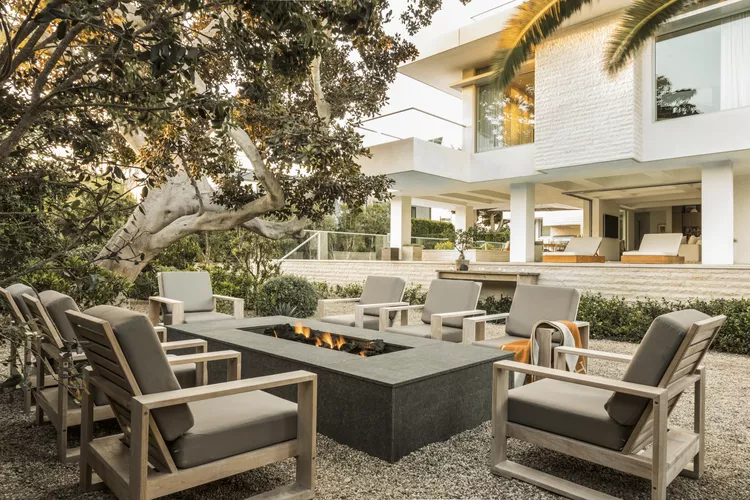
A fire pit or outdoor fireplace changes a garden from a summer space into a year-round one. The warmth extends comfortable outdoor sitting well into autumn and even into mild winter evenings, and the fire itself, whether in a simple pit, a cast iron bowl, or a built-in fireplace, becomes a focal point that makes every gathering feel more deliberate and more memorable.
Fire pit seating arrangements address the layout logic of designing a seating zone around a fire rather than as an afterthought beside one. The fire needs to be visible and accessible from every seat, the seating needs to be close enough to feel the warmth but far enough back to be comfortable, and there needs to be clear circulation around the whole arrangement. A circle of mixed seating, some chairs, perhaps a bench or two, and a few scatter cushions on the ground for the children, creates the informal but intentional atmosphere that makes a fire pit genuinely work as a social space.
For gardens where an open fire is not practical, a shade garden or a native garden focused on year-round interest through structure and texture gives the space a reason to be in at every season without the ongoing management that a high-maintenance planting scheme demands.
Entertain Outdoors Properly
A garden that is set up for entertaining is more likely to be used for entertaining, and the changes required to make this happen are more practical than they are decorative. An outdoor kitchen properly integrated into the garden layout, with a grill, a preparation surface, and somewhere to keep drinks cold, removes the constant movement between inside and outside that makes outdoor cooking feel more effortful than it is worth.
Backyard dining ideas for small spaces cover the challenge of creating a proper dining setup when the garden does not have room for a large table and set of chairs. A bistro table for two in a corner, a fold-flat table that can be brought out when needed, or a built-in bench arrangement along a fence that seats more people than the equivalent chairs in the same footprint are all approaches that make dining outside a genuine possibility rather than an occasional novelty.
Seasonal garden decor ensures the garden feels fresh and relevant throughout the year rather than reaching peak interest in June and declining quietly from August onwards. Changing the planting focus with the season, moving decorative containers to follow where the interest is, and adding seasonal elements like lanterns, wreaths, or bowls of foraged finds keeps the garden alive and engaged with the time of year.
RELATED: 17+ Outdoor Kitchen Ideas for Backyard Entertaining
Make a Small Backyard Work
A small backyard is a more focused design problem, and focus tends to produce better results than the expansive but underplanned approaches that large gardens sometimes allow. In a small garden, every decision is visible from every other point, which means coherence in the palette and materials matters more than in a large space where different areas can develop their own character.
Vertical space is the primary resource in a small backyard. Vertical garden ideas for small backyards show how walls, fences, and purpose-built structures can be used to grow plants, create privacy, and add visual interest without taking up any floor area. A wall covered in planting is worth ten times its equivalent in a ground-level bed in a small garden, both for the privacy it creates and for the sense of lushness and enclosure that makes a small space feel like an intentional room rather than a confined area.
Small backyard garden ideas that work consistently well are the ones that make clear decisions about what the space is for and then commit to those decisions rather than trying to include every possible element. A single seating area with excellent planting around it and good lighting above it is far more successful than a small seating area, a small lawn, a small border, and a small shed all competing for the same limited space.
Frequently Asked Questions
Where do I start when designing a garden from scratch?
Start by spending time in the garden at different times of day across different seasons before making any permanent decisions. Understand where the sun is at morning, midday, and evening. Notice which parts of the garden feel pleasant and which feel exposed or overlooked. Then plan the layout based on that knowledge, positioning the seating area where you actually want to be rather than where it is most convenient to put it.
How do I make a garden low maintenance without making it boring?
The most maintenance-intensive elements in most gardens are lawns and annual bedding. Replacing lawn with hard landscaping, gravel, or ground-cover planting removes the single most time-consuming weekly task in most gardens. Choosing perennial plants over annuals means replanting once rather than every season. A garden with good bones, strong structure provided by evergreen shrubs, architectural plants, and hard elements, needs very little maintenance to look considered and attractive.
How do I add privacy to my backyard without a high fence?
Planting is almost always a better privacy solution than fencing. A trellis with climbing plants creates a screen that is more attractive, more ecologically useful, and less permanent than a solid fence. A row of tall ornamental grasses, a mixed native hedge, or a line of espalier-trained trees along a boundary all provide effective screening while adding positive qualities to the garden rather than simply blocking a sightline.
What are the best plants for a low-maintenance backyard?
Native plants suited to your local climate are almost always the best choice for low maintenance, because they have evolved for your specific conditions and are naturally resistant to local pests and diseases. Beyond natives, evergreen structural plants like pittosporum, viburnum, and photinia hold their interest year-round without seasonal replanting. Ornamental grasses are drought-tolerant, provide movement and texture, and need nothing more than a hard cut back in late winter.
How do I transform my backyard on a tight budget?
Start with the changes that cost nothing: clear and declutter, cut back overgrown planting, clean the surfaces. Then prioritise lighting, because a well-lit garden at night looks considerably more designed than the same space in daylight without lighting. From there, a few large pots with structural plants, a rug to define a seating area, and a fire pit or some candles for evenings will transform the experience of being in the garden for a very modest outlay.
Explore the full outdoor living section in our Outdoor Living guides.