16+ Gorgeous Formal Garden Ideas for Backyards
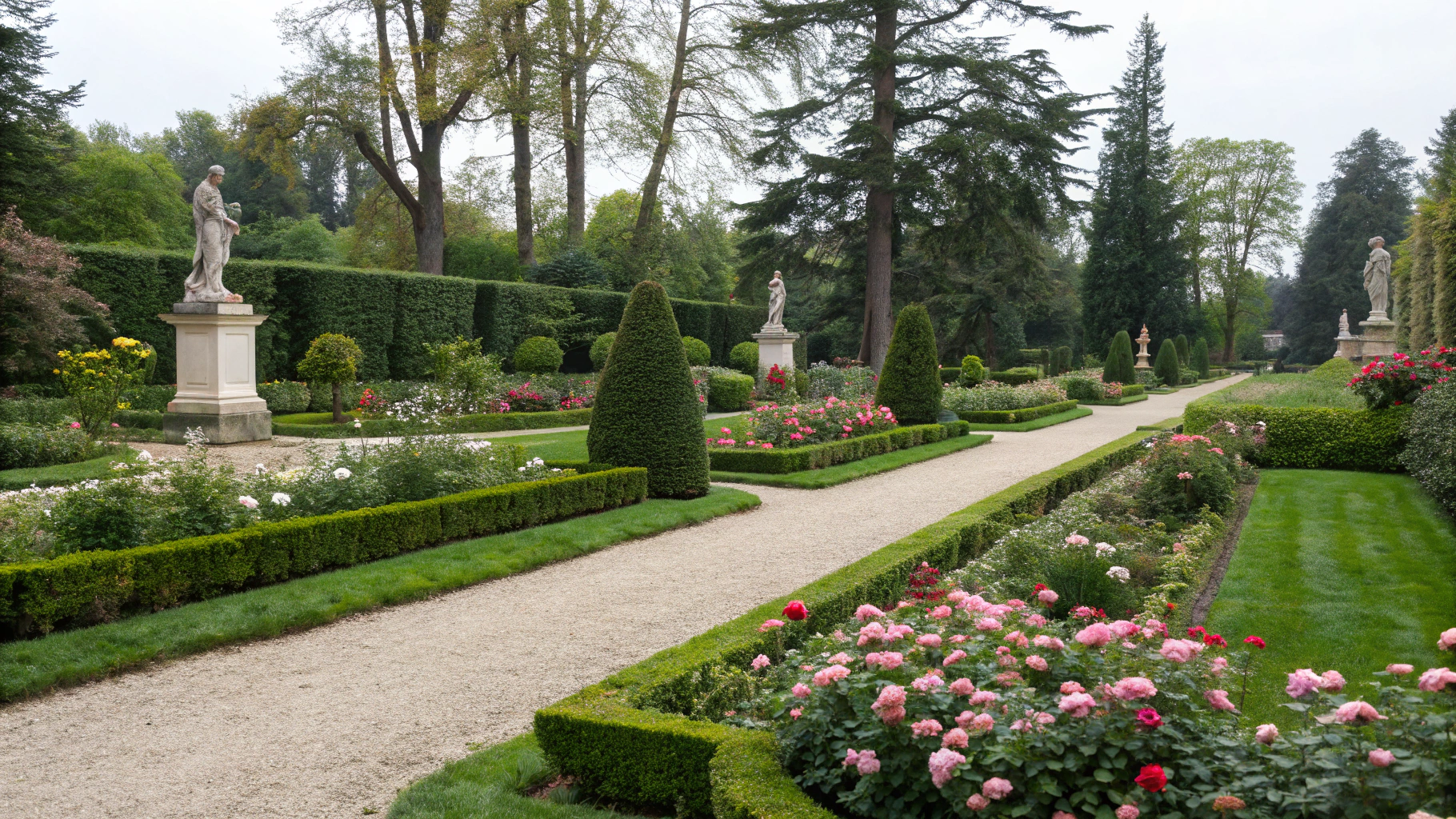
Formal gardens bring timeless elegance, symmetry, and structure to backyard landscapes through carefully planned layouts, manicured greenery, geometric pathways, and balanced planting designs. Inspired by classic European estates and traditional courtyard gardens, formal landscaping creates outdoor spaces that feel polished, peaceful, and luxurious while still being highly functional for entertaining and relaxation.
Whether you prefer traditional boxwood parterres, modern minimalist symmetry, or romantic fountain courtyards, these gorgeous formal garden ideas for backyards will inspire beautiful outdoor spaces filled with order, sophistication, and year-round visual appeal.
What Defines a Formal Garden?
Formal gardens focus on symmetry, structure, and intentional design.
Key elements of formal gardens include:
Love Chic Living Club?
Add us as one of your preferred Google sources and discover more home decor, DIY, outdoor, and lifestyle inspiration from us.
- Geometric layouts
- Symmetrical planting
- Defined pathways
- Manicured hedges
- Repeating patterns
- Focal points like fountains or statues
Unlike cottage-style gardens, formal gardens emphasize balance and clean visual organization.
Best Plants for Formal Backyard Gardens
| Plant | Best Feature | Benefit |
| Boxwood | Structured hedges | Classic formal shape |
| Lavender | Symmetrical borders | Fragrance and color |
| Roses | Elegant blooms | Traditional beauty |
| Topiary shrubs | Sculptural structure | Formal focal points |
| Hydrangeas | Soft floral balance | Seasonal interest |
Tips for Designing a Formal Backyard Garden
Prioritize Symmetry
Balanced layouts create the signature formal garden look.
Use Repetition
Repeating plants and shapes creates visual harmony.
Add Defined Edging
Crisp borders help gardens feel polished and organized.
Include a Central Focal Point
Fountains, statues, or seating areas anchor the design beautifully.
1. Create a Classic Boxwood Parterre Garden
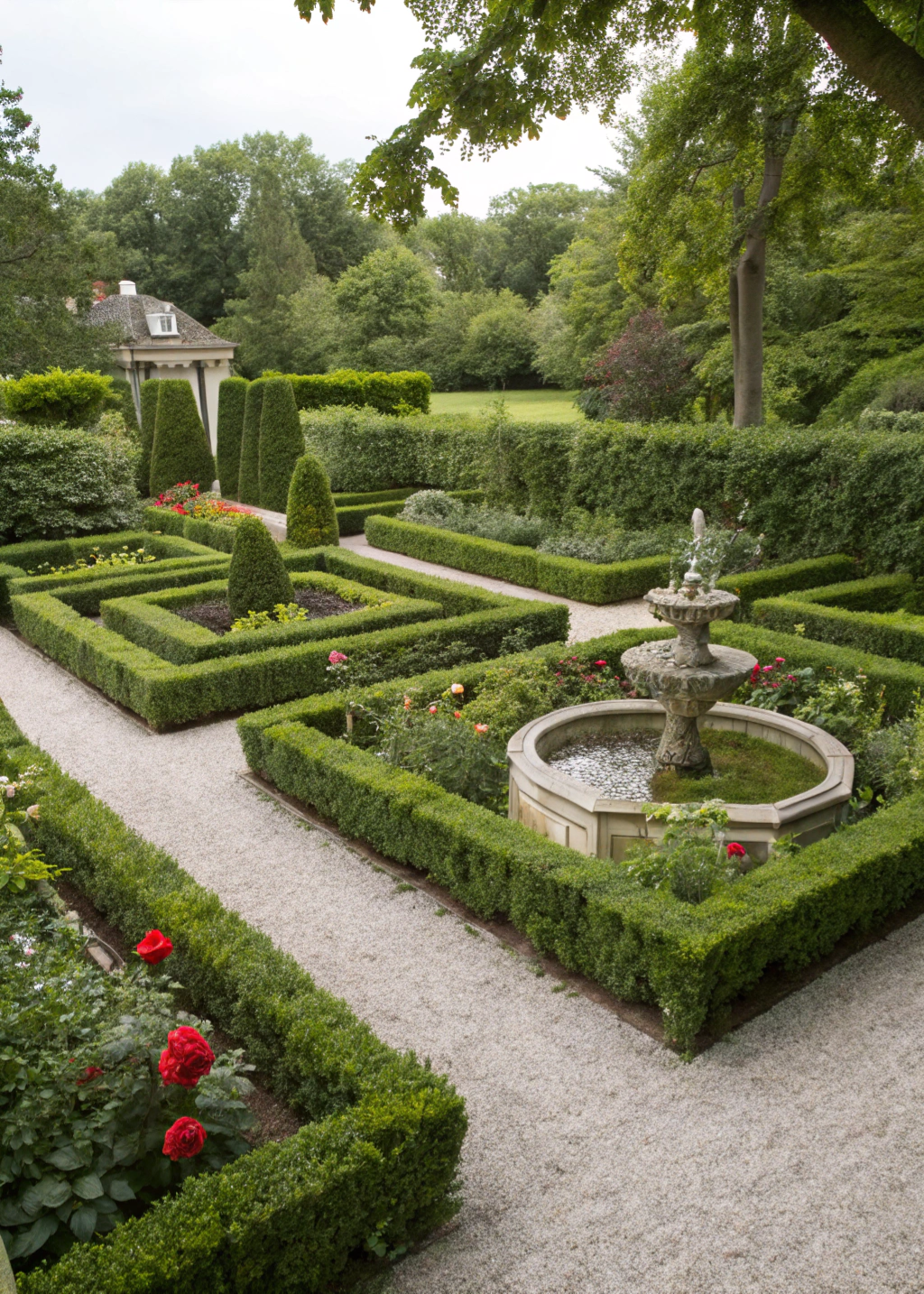
Parterre gardens are one of the most iconic formal landscape designs.
Best Features
- Geometric hedge patterns
- Symmetrical layouts
- Gravel pathways
Why It Works
- Creates luxurious structure
- Timeless European-inspired design
- Beautiful year-round appearance
Design Tip
Use low boxwood hedges with seasonal flowers inside the sections for added color.
2. Make a Formal Garden with a Central Fountain
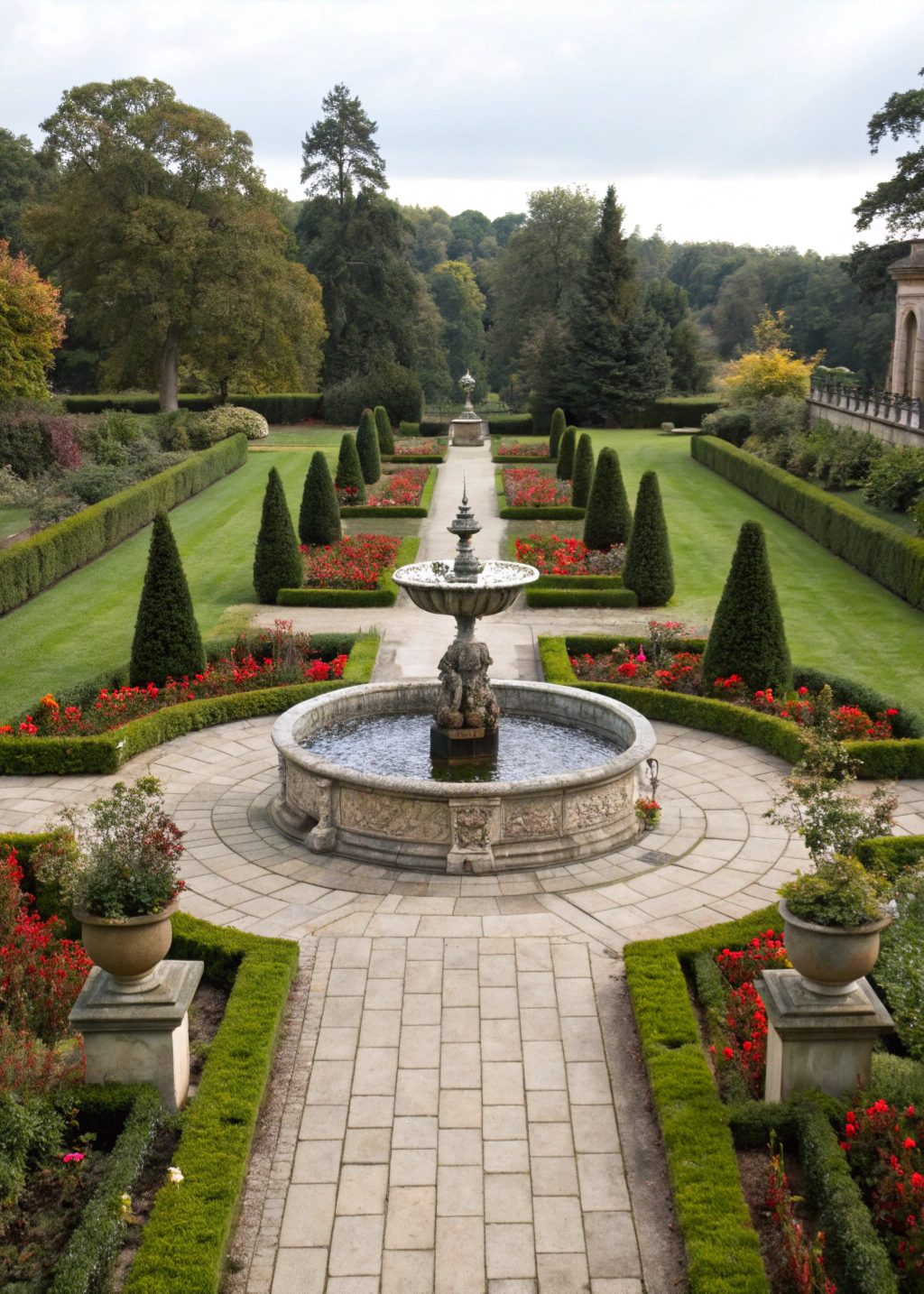
Water features create elegant focal points in structured gardens.
Best Fountain Features
- Stone basins
- Circular layouts
- Surrounding symmetry
Why Homeowners Love It
- Adds calming sound
- Creates visual centerpiece
- Elevates backyard luxury
Best Pairings
- Boxwood hedges
- Gravel walkways
- Lavender borders
3. Create a Symmetrical Rose Garden
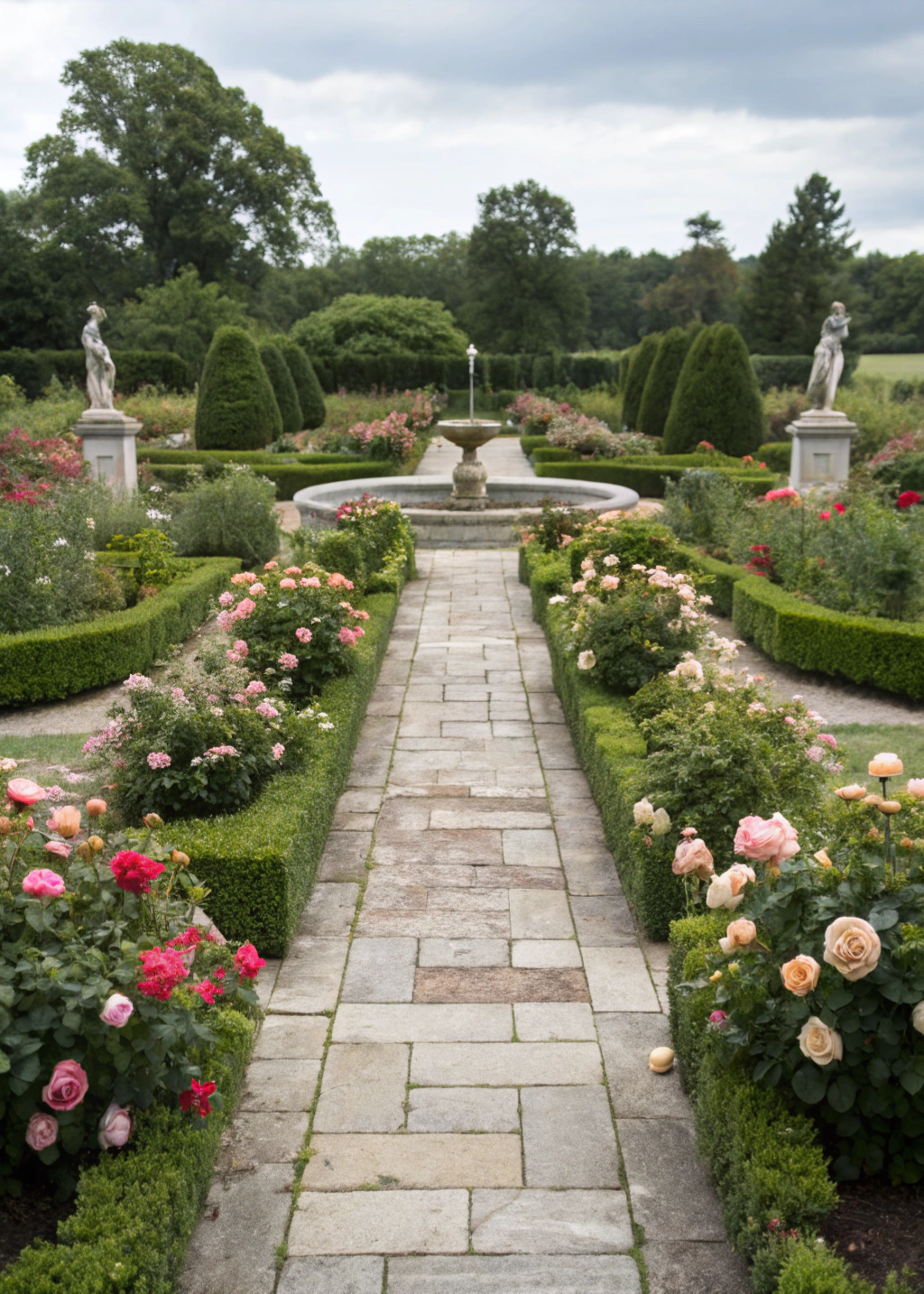
Roses soften formal gardens with classic romance.
Best Rose Garden Features
- Repeating rose bushes
- Straight pathways
- Structured borders
Why It Works
Balanced rose layouts combine elegance with lush floral beauty.
You May Also Love
4. Add Topiary Trees & Sculpted Shrubs
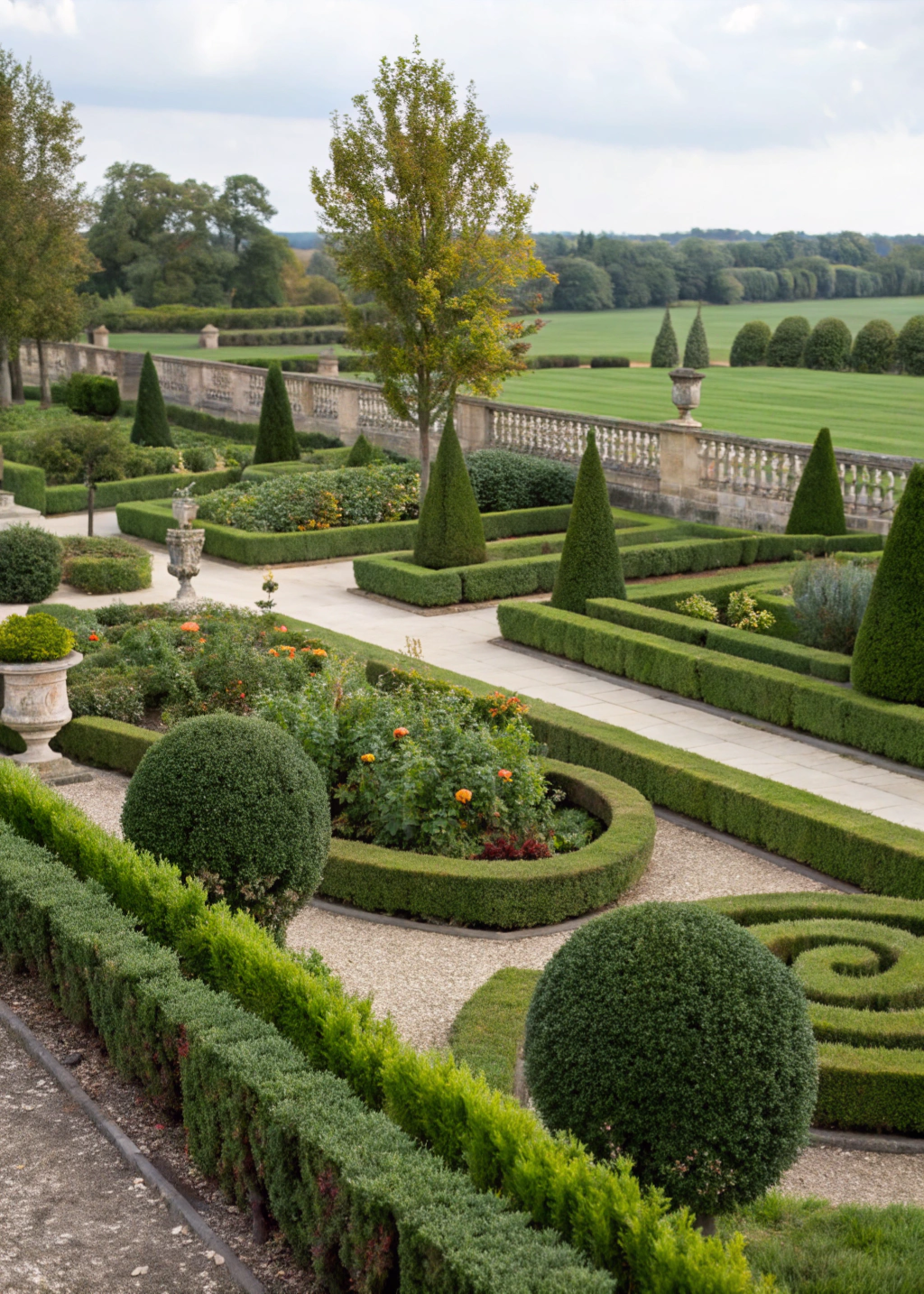
Topiary adds sculptural interest to formal landscapes.
Best Topiary Ideas
- Spiral evergreens
- Globe shrubs
- Cone-shaped hedges
Why It Works
Structured greenery reinforces the formal aesthetic.
5. Create Gravel Walkways with Defined Borders
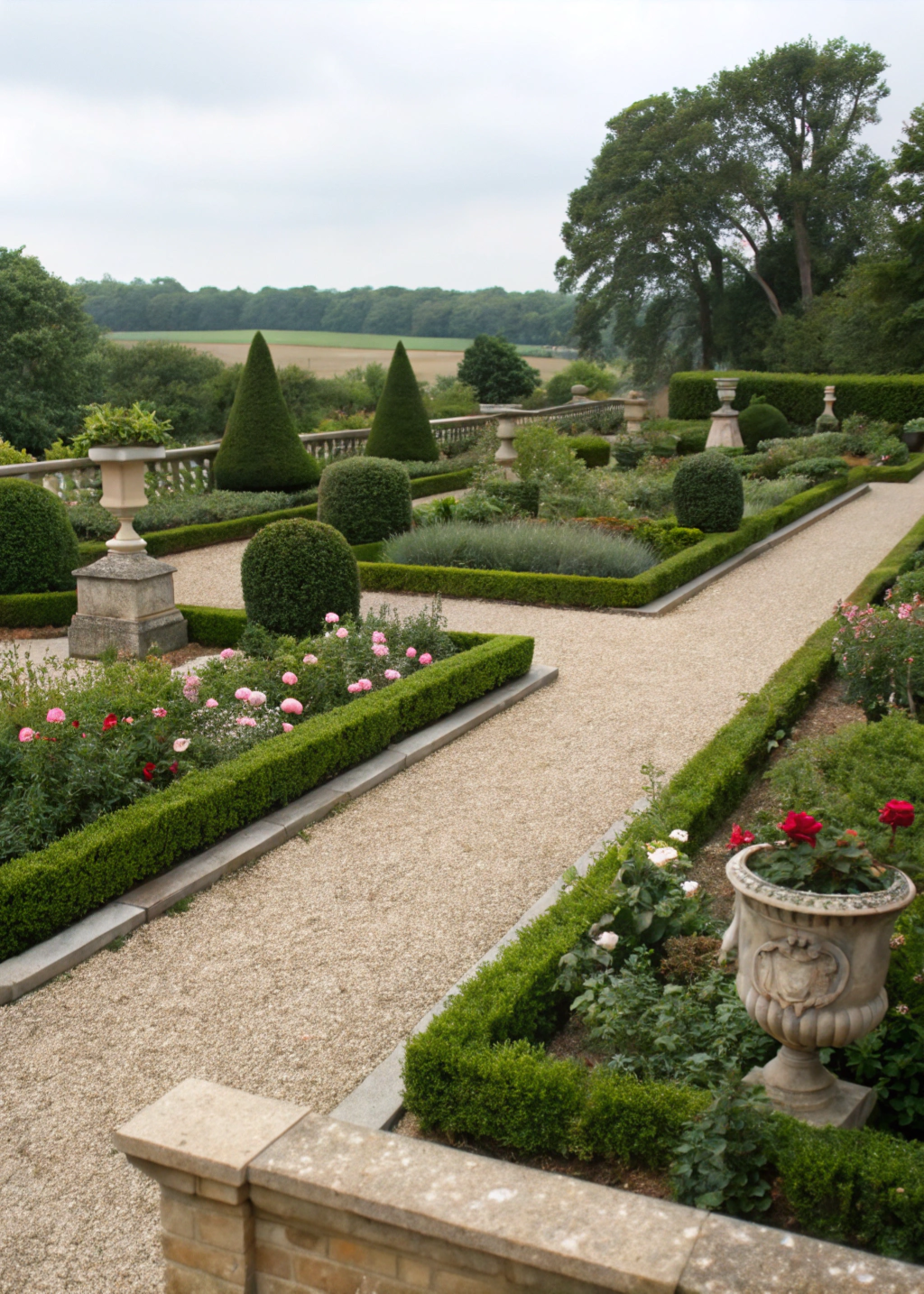
Pathways guide movement while enhancing garden structure.
Best Pathway Materials
- Gravel
- Brick
- Natural stone
Why It Works
Defined pathways create crisp visual organization.
6. Make a Formal Courtyard Garden
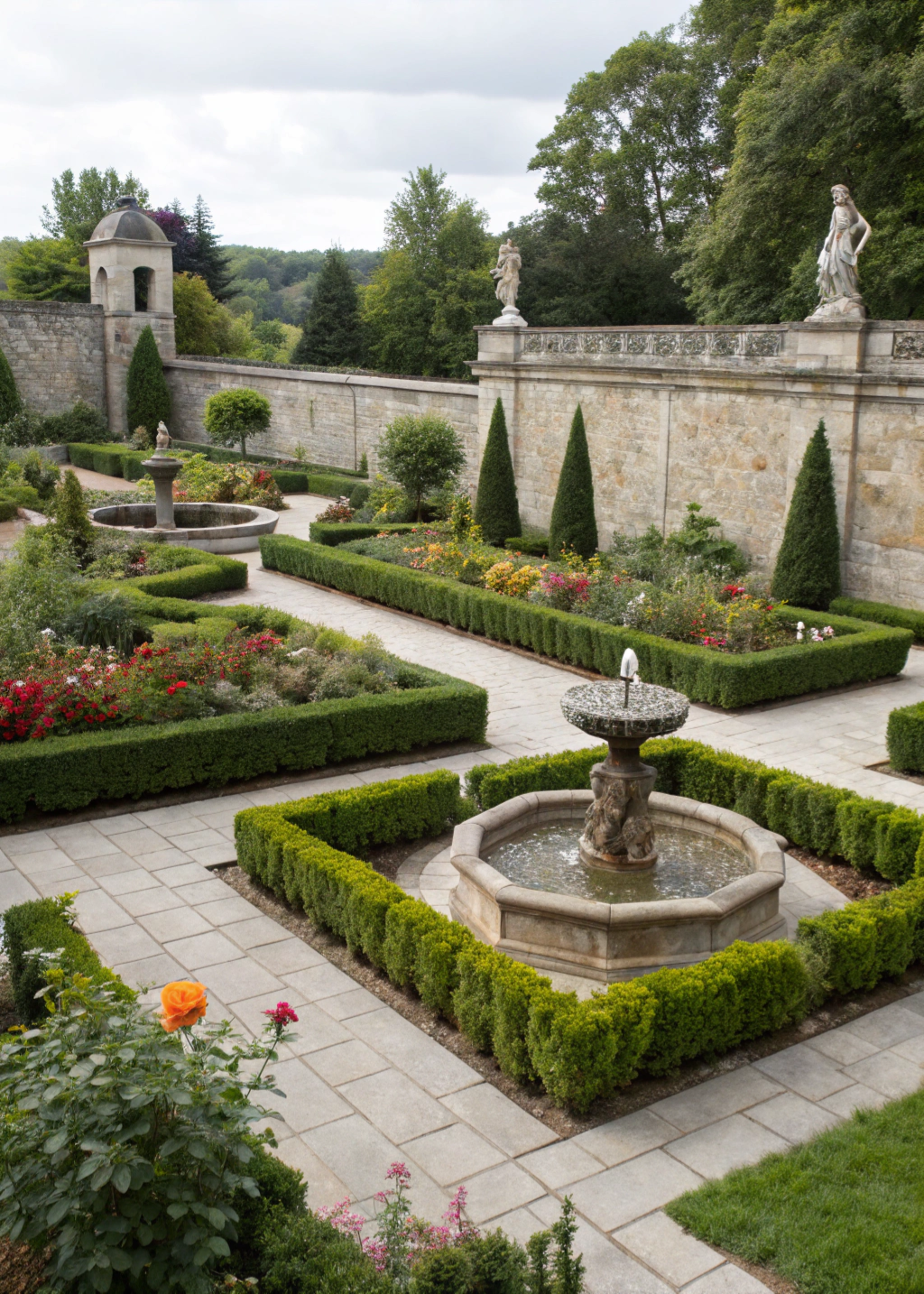
Courtyard gardens feel intimate and elegant.
Best Courtyard Features
- Enclosed seating
- Symmetrical planters
- Water features
Why It Works
Courtyards create luxurious private outdoor rooms.
7. Create a Formal Herb Garden Layout
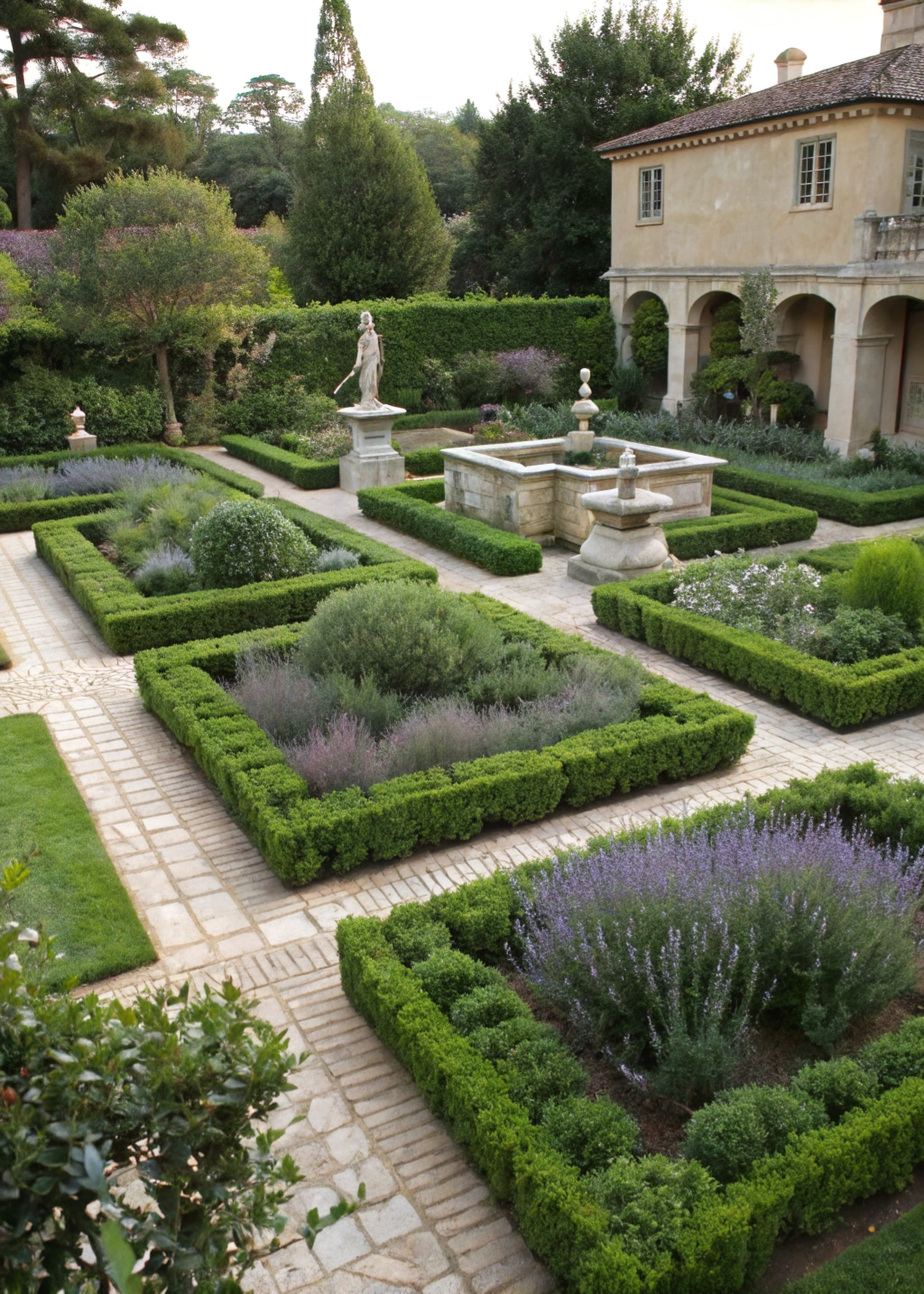
Herb gardens can be both practical and beautiful.
Best Formal Herb Plants
- Lavender
- Rosemary
- Thyme
- Sage
Why It Works
Herbs naturally suit geometric planting patterns.
8. Add White Flower Borders for Elegance
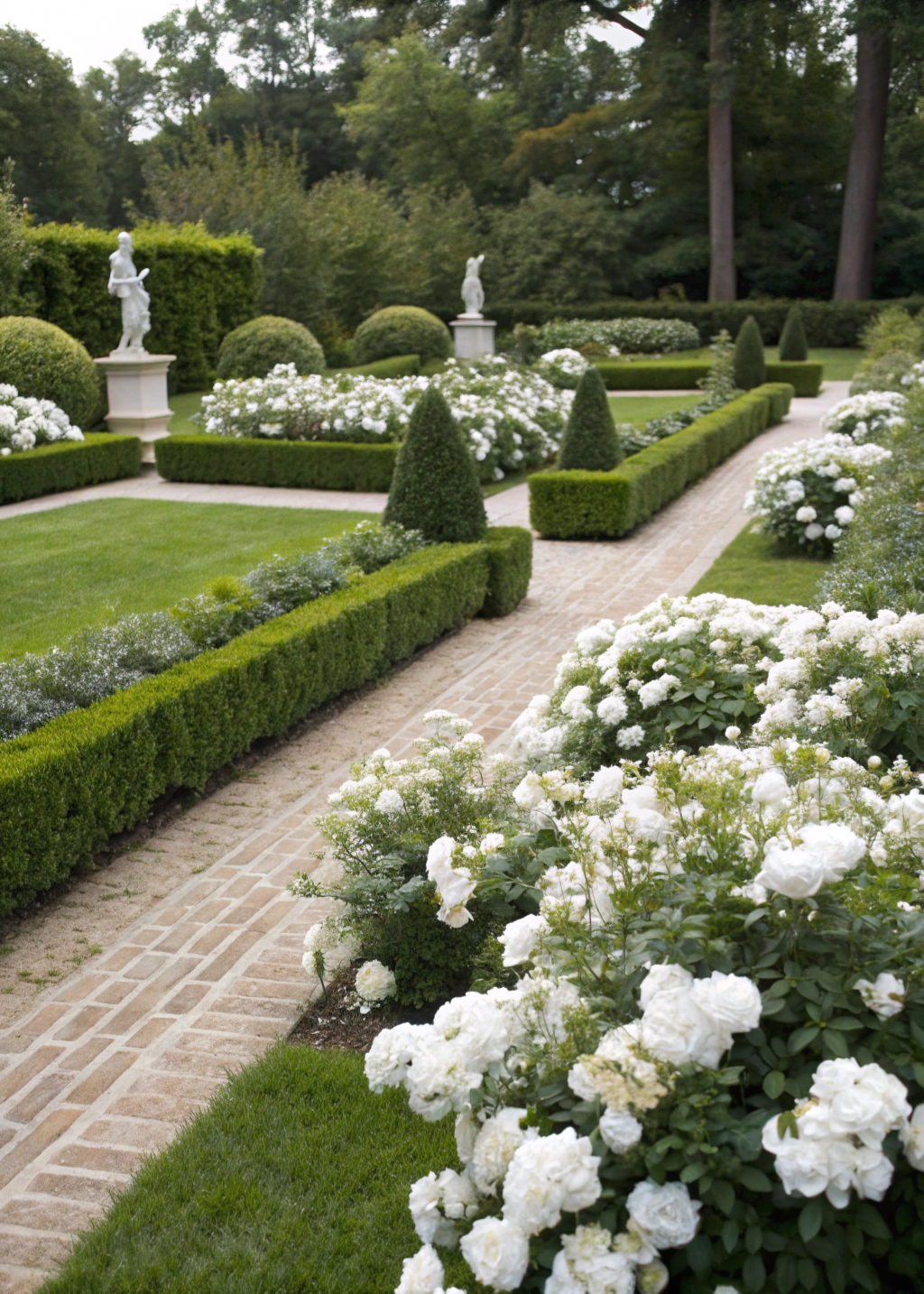
White flowers create timeless refined beauty.
Best White Flowers
- White roses
- Hydrangeas
- Tulips
- Gardenias
Why It Works
White blooms brighten structured landscapes beautifully.
Don't miss: 18+ Herb Garden Ideas for Small Backyard Spaces →
9. Create a Formal Backyard Seating Area
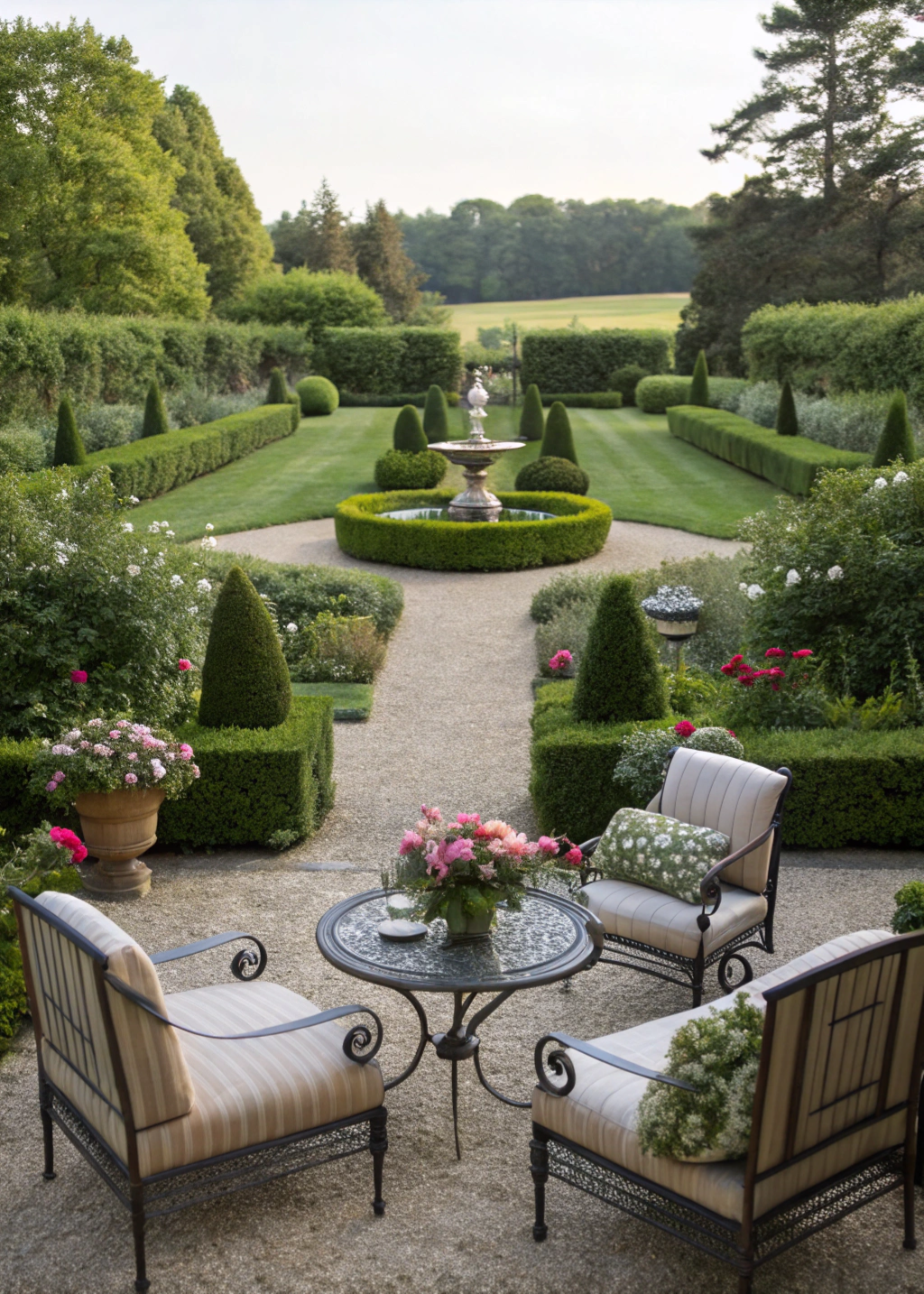
Structured seating areas improve both beauty and function.
Best Seating Features
- Stone benches
- Symmetrical furniture
- Pergolas
Why It Works
Formal seating areas feel elegant and welcoming.
10. Make a Minimalist Modern Formal Garden
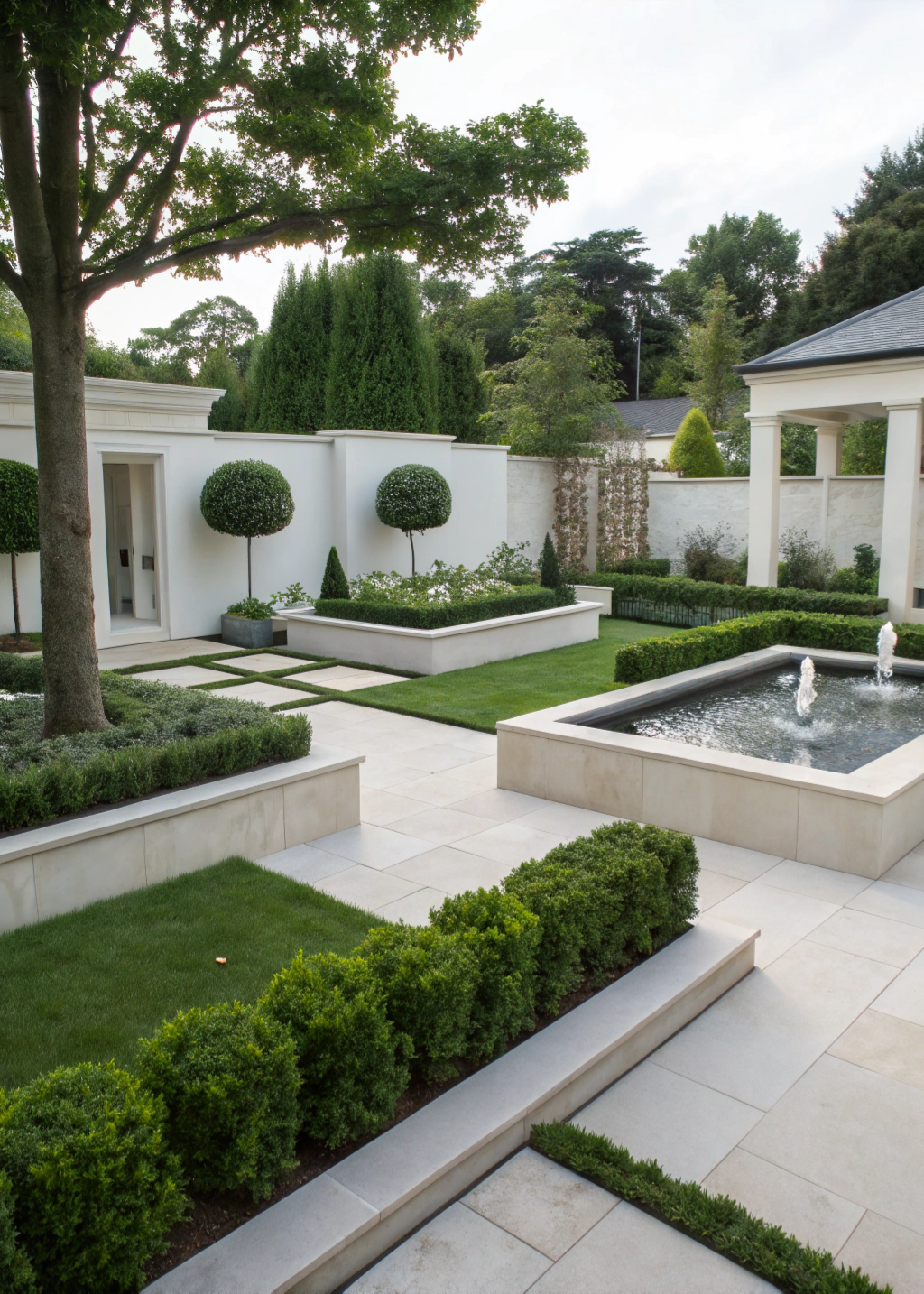
Modern formal gardens simplify traditional symmetry.
Best Modern Features
- Neutral palettes
- Clean lines
- Architectural plants
Why It Works
Minimalism creates calm sophisticated outdoor spaces.
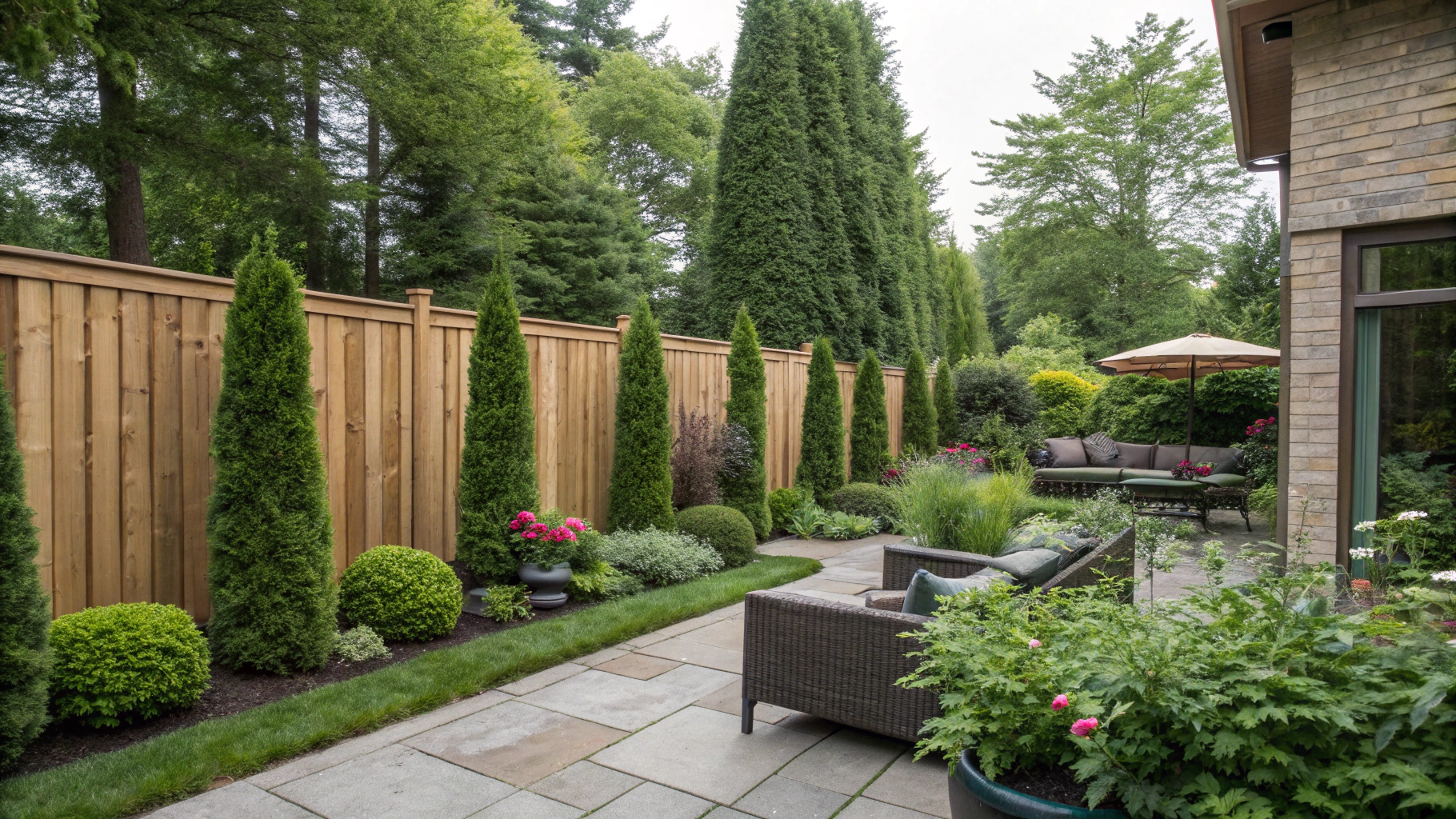
11. Create a Formal Garden with Tall Hedges
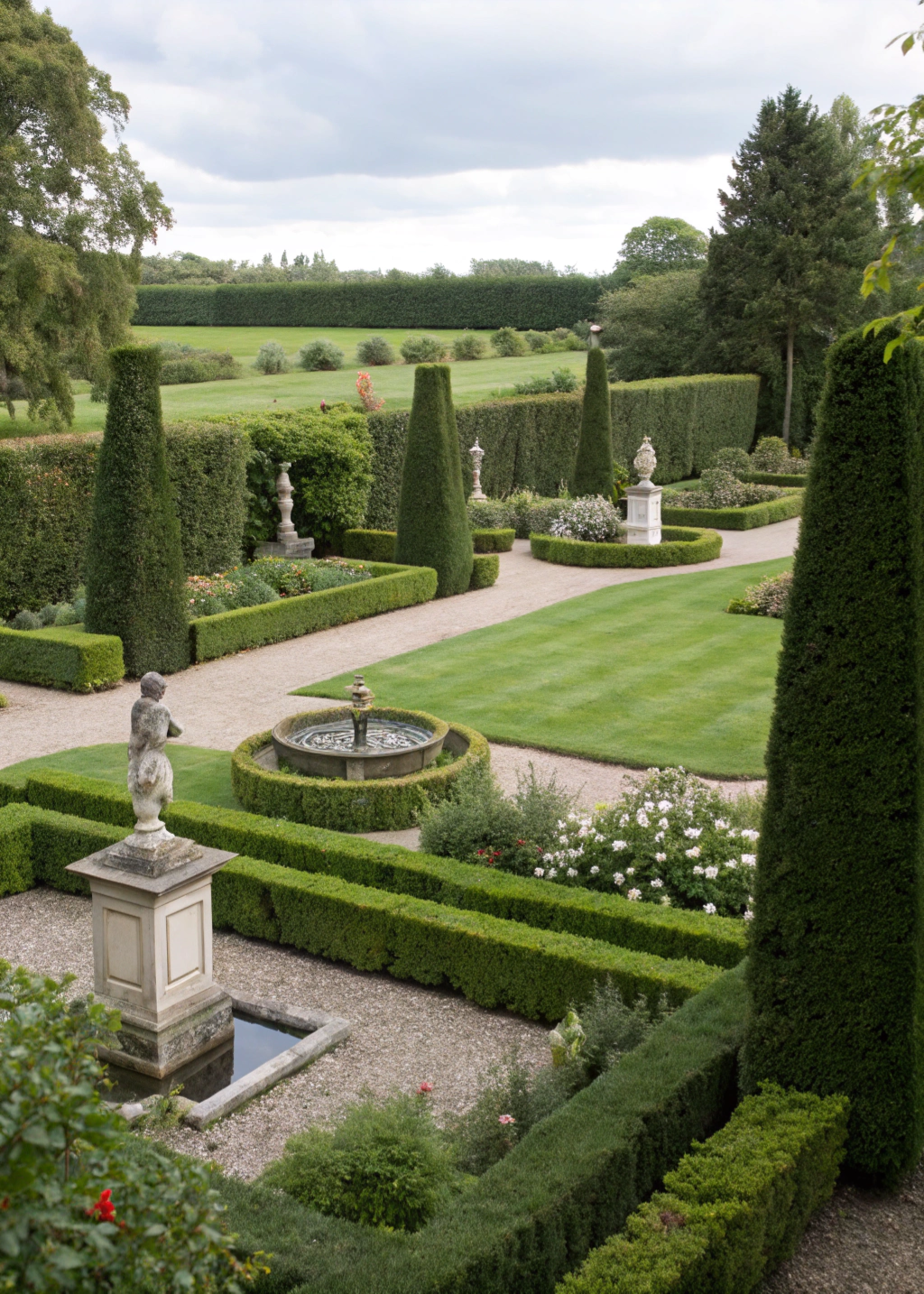
Tall hedges add privacy and structure simultaneously.
Best Hedge Choices
- Arborvitae
- Boxwood
- Laurel
- Cypress
Why It Works
Hedges create outdoor “rooms” with elegant enclosure.
12. Add Decorative Urns & Planters
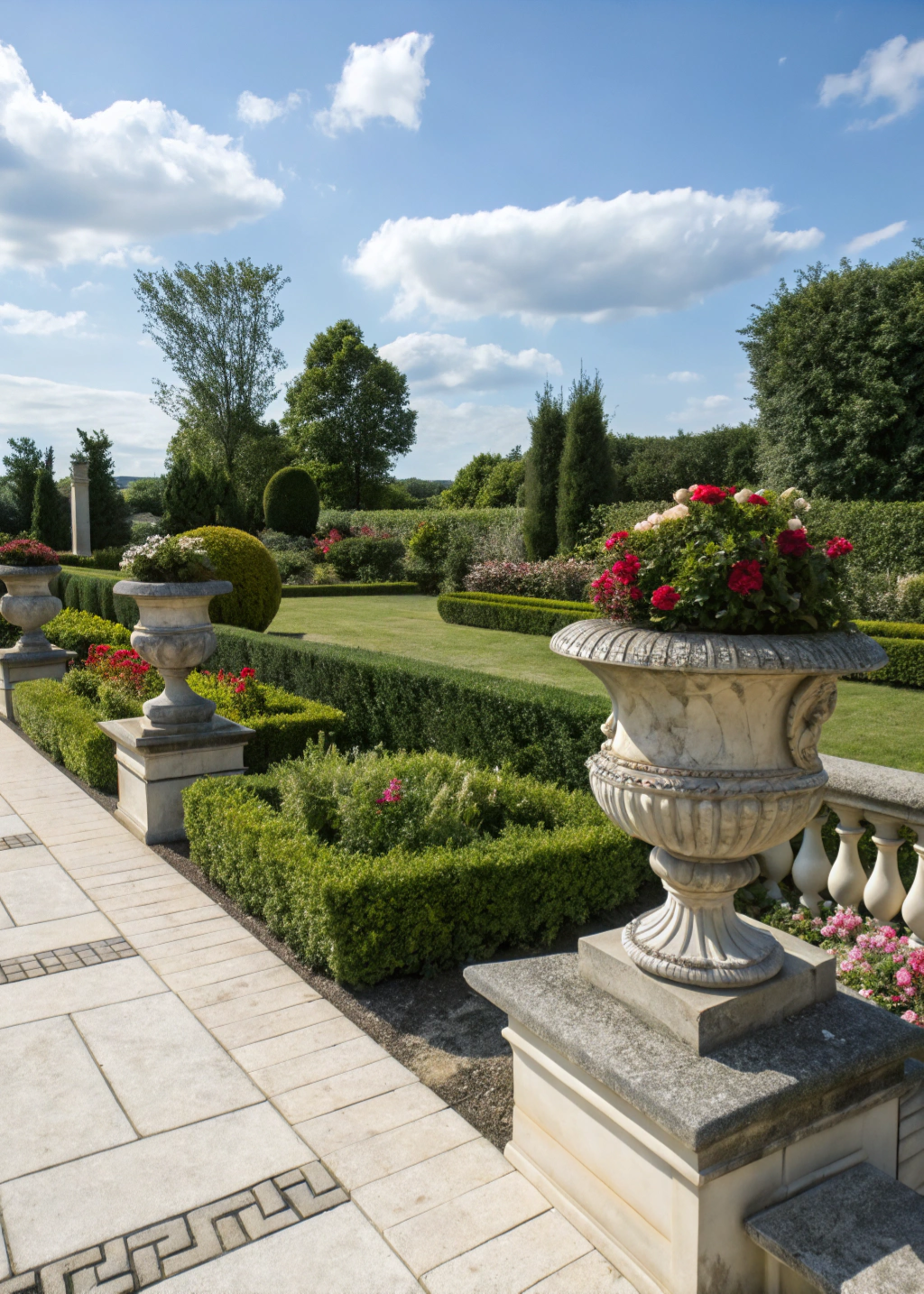
Classic containers elevate formal garden styling.
Best Planter Styles
- Stone urns
- Symmetrical pots
- Topiary containers
Why It Works
Decorative containers enhance symmetry and focal points.
13. Create a Formal Garden with Seasonal Tulips
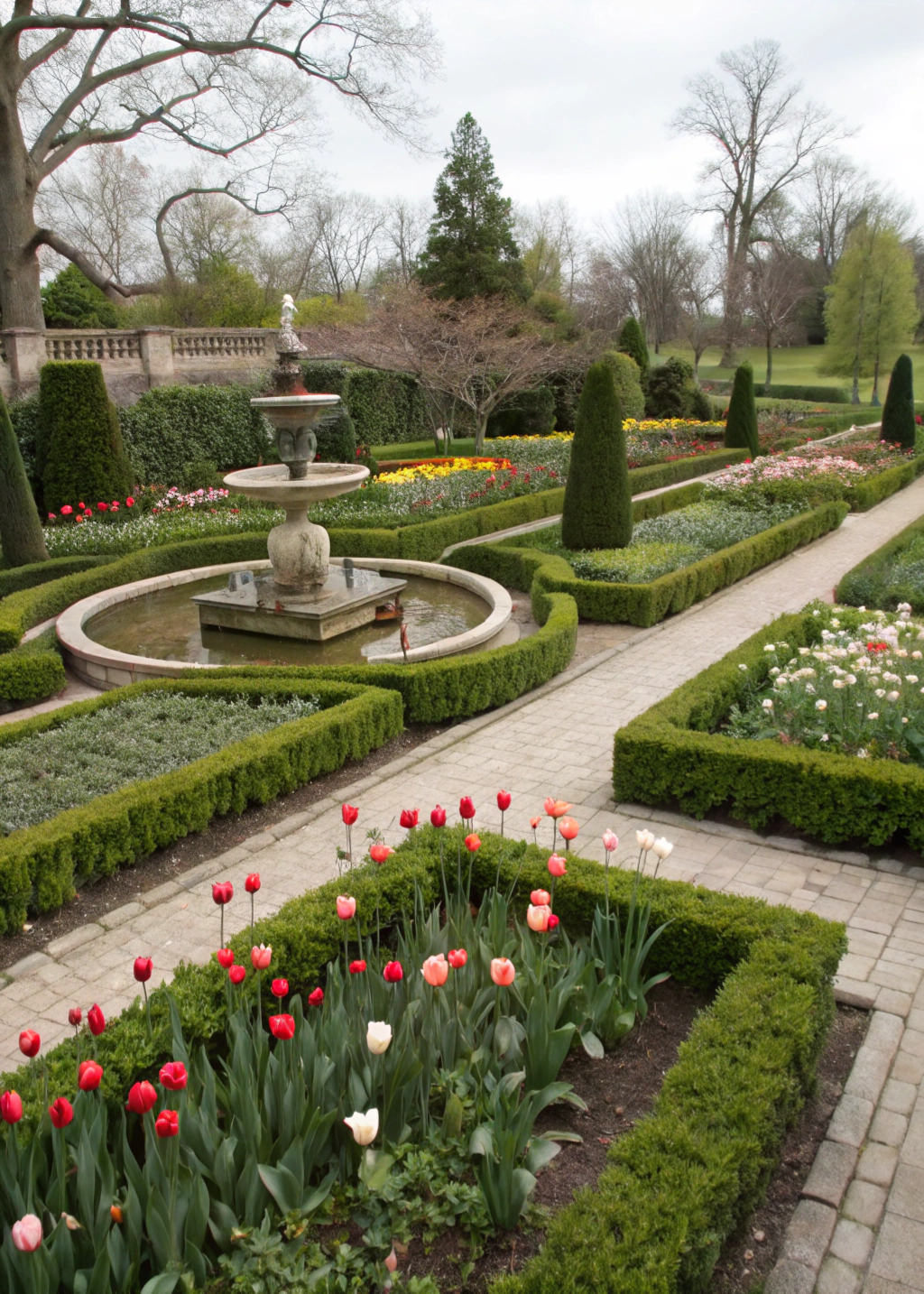
Tulips work beautifully in structured layouts.
Best Tulip Features
- Mass planting
- Repeating colors
- Straight borders
Why It Works
Tulips create dramatic seasonal displays.
Keep Exploring
14. Make a Formal Garden Pergola Walkway
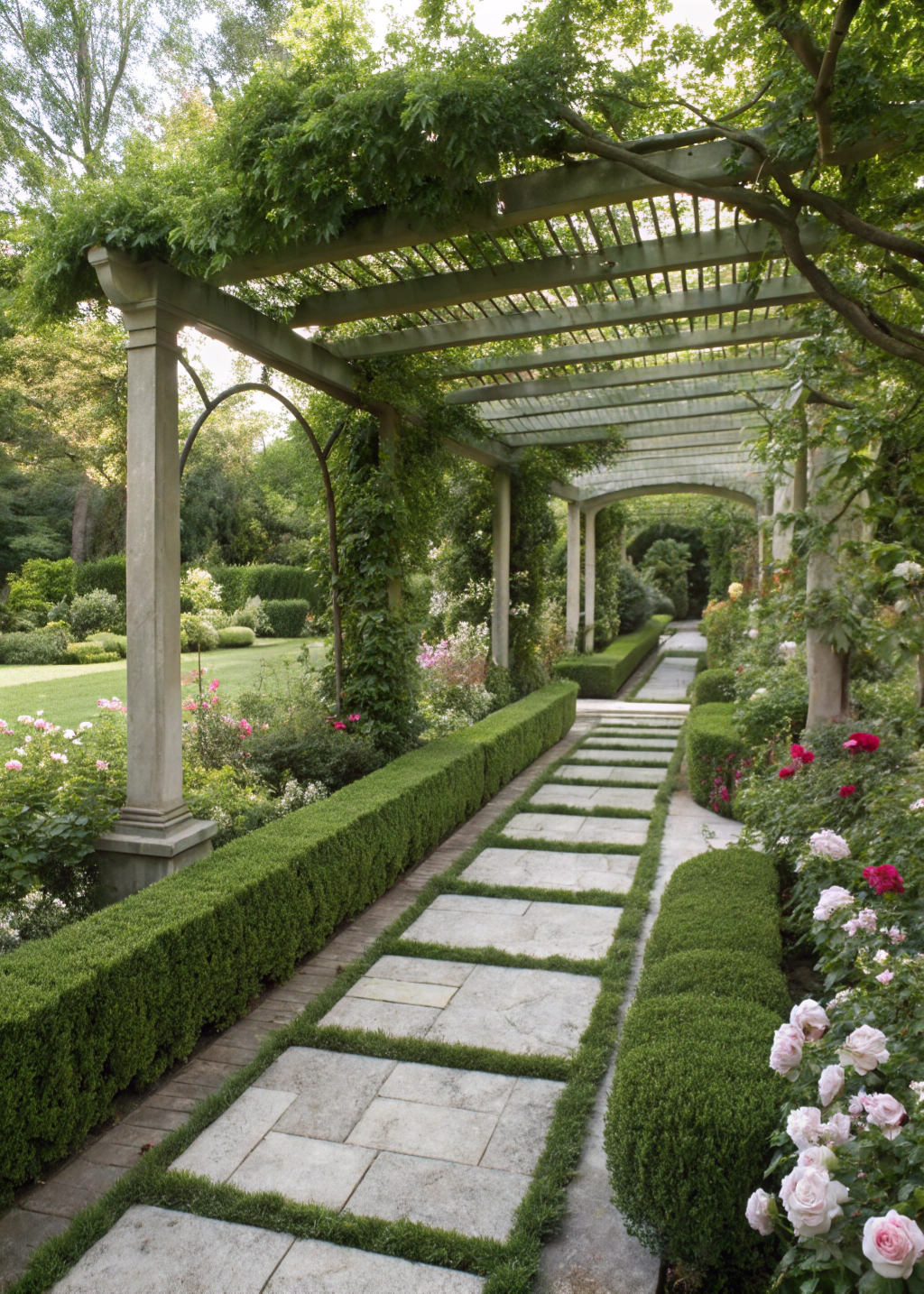
Pergolas create elegant vertical structure.
Best Pergola Features
- Climbing roses
- Wisteria vines
- Symmetrical placement
Why It Works
Pergolas guide movement while adding height and shade.
15. Create a Black & White Formal Garden Palette
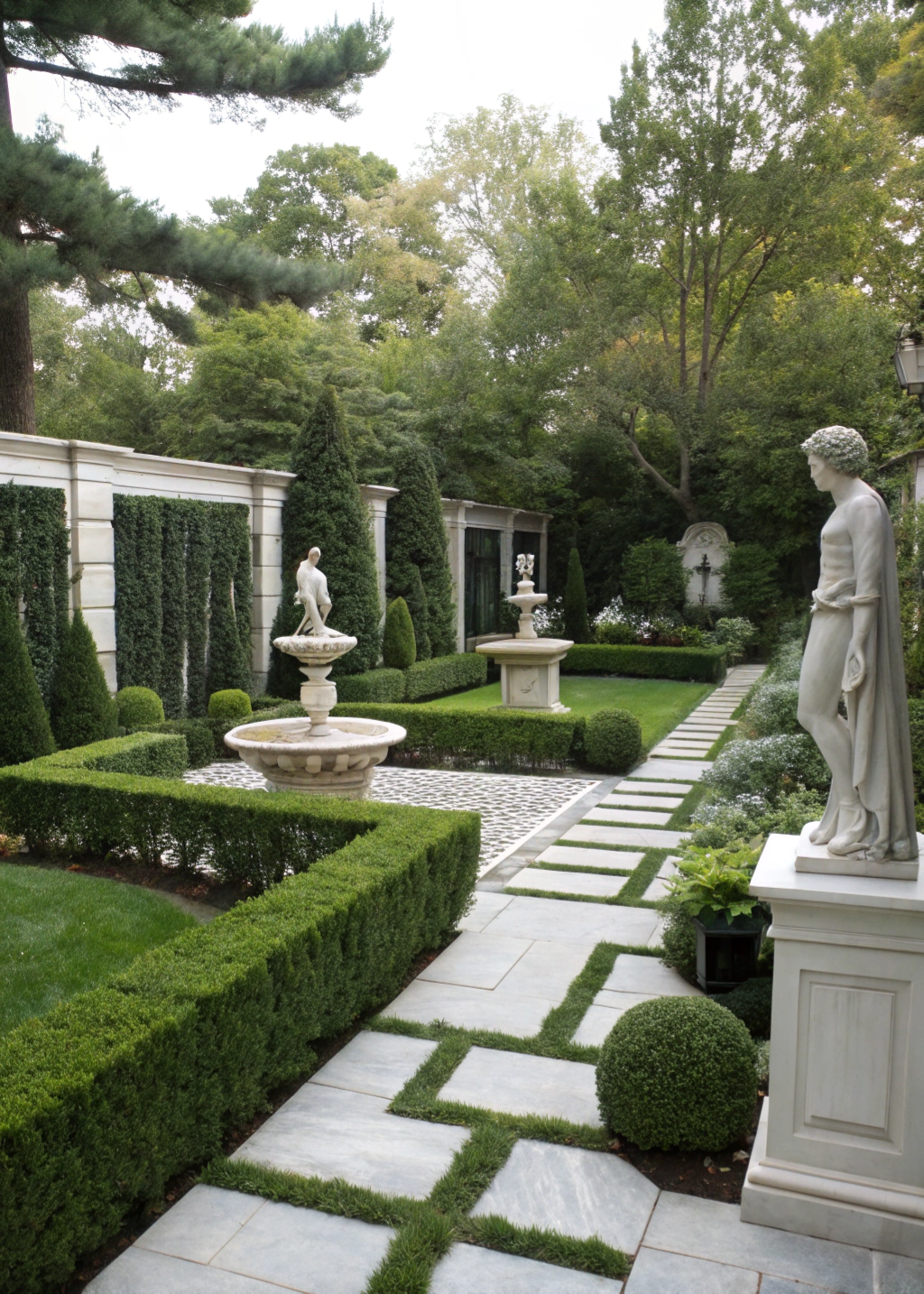
Monochrome gardens feel modern and luxurious.
Best Monochrome Features
- White flowers
- Dark green hedges
- Black planters
Why It Works
Simple palettes create dramatic elegance.
16. Add Formal Lighting for Evening Ambiance
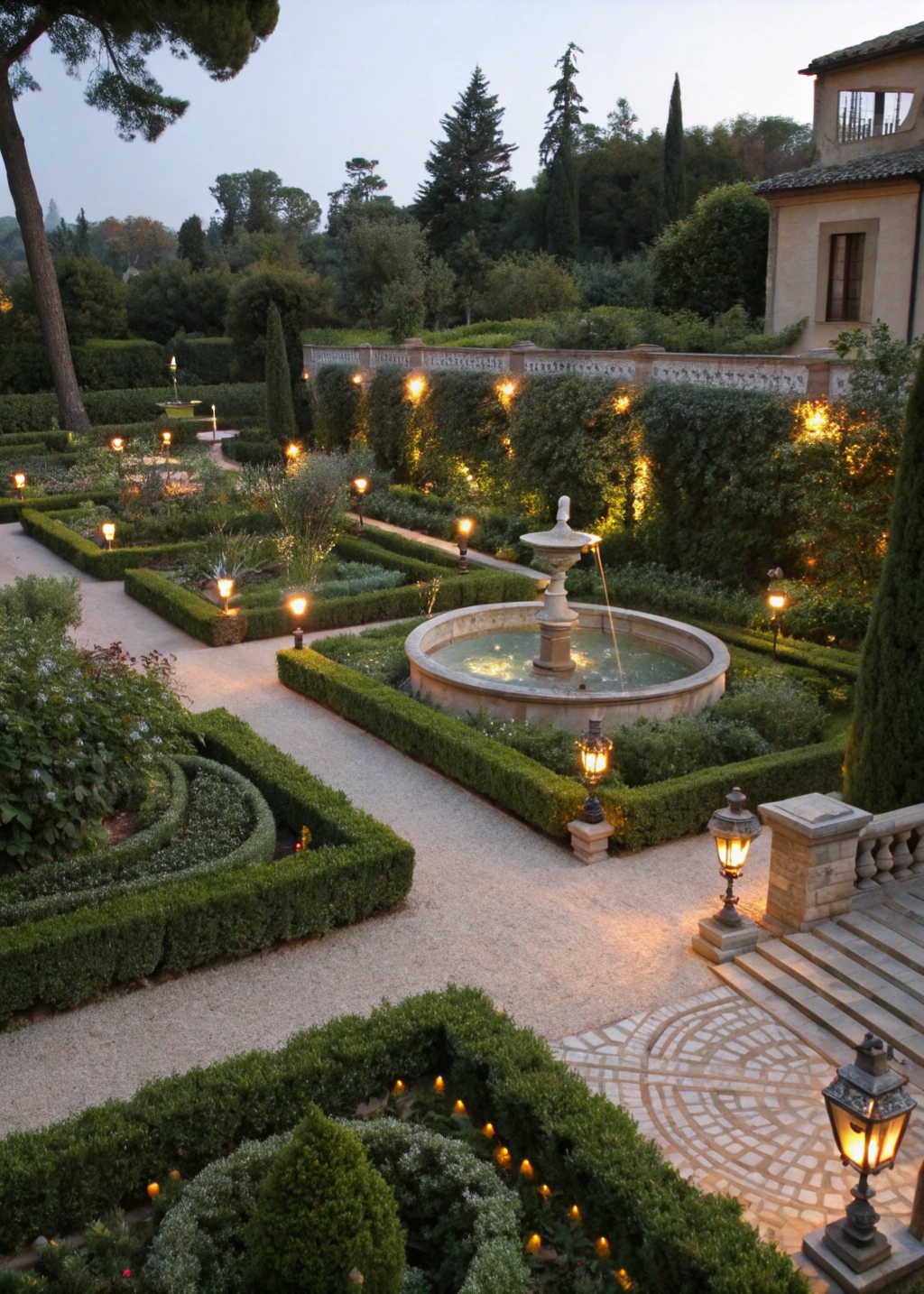
Lighting enhances formal landscapes beautifully after dark.
Best Lighting Ideas
- Path lighting
- Uplighting trees
- Lanterns
- Fountain lighting
Why It Works
Lighting emphasizes symmetry and architectural details.
17. Create a Formal Garden with Mixed Textures
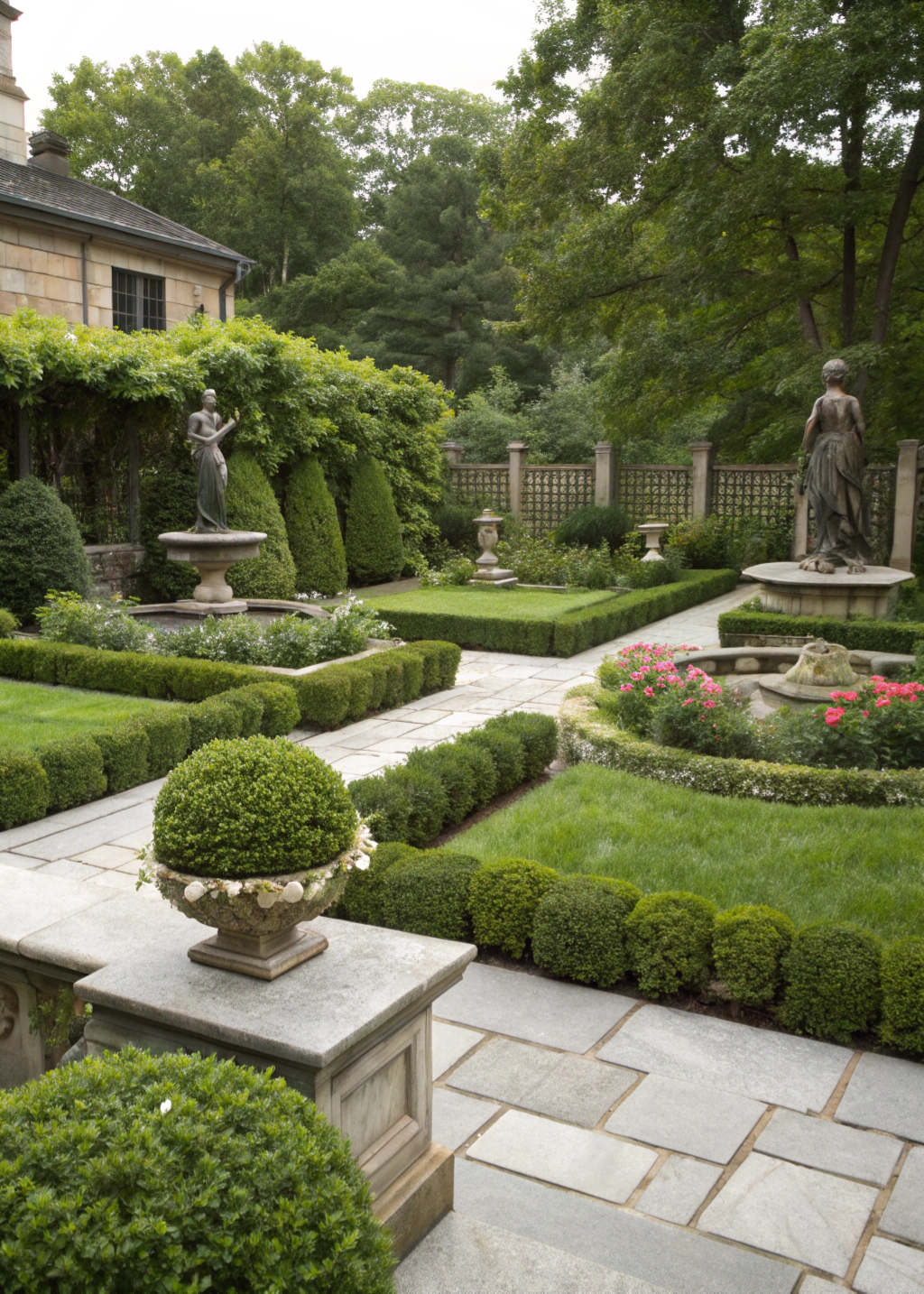
Texture prevents structured gardens from feeling flat.
Best Texture Elements
- Ornamental grasses
- Boxwood hedges
- Gravel
- Stonework
Why It Works
Texture adds softness and visual depth to formal layouts.
Final Thoughts
Formal backyard gardens create elegant and timeless outdoor spaces through symmetry, structured planting, geometric layouts, and carefully designed focal points. By combining manicured greenery, defined pathways, decorative hardscaping, and balanced plant arrangements, you can create a backyard that feels peaceful, luxurious, and visually refined throughout every season.
Whether you prefer traditional European-inspired parterre gardens, modern minimalist layouts, romantic rose borders, or structured courtyard designs, formal landscaping offers endless opportunities for sophisticated outdoor living. With thoughtful planning and attention to detail, even smaller backyards can achieve the beauty and elegance of a classic formal garden.
FAQs
What makes a garden formal?
Formal gardens use symmetry, geometric layouts, structured planting, defined borders, and focal points like fountains or statues.
What plants are best for formal gardens?
Boxwoods, roses, lavender, hydrangeas, topiary shrubs, and evergreen hedges are classic formal garden plants.
Are formal gardens high maintenance?
Formal gardens often require regular trimming and upkeep to maintain clean lines and symmetry.
Can small backyards have formal gardens?
Yes, even compact spaces can use symmetrical layouts, defined borders, and structured planting for a formal look.
What materials work best in formal gardens?
Gravel, stone, brick, wrought iron, and manicured hedges all suit formal garden styles beautifully.
How do you make a backyard look luxurious with landscaping?
Use symmetry, layered greenery, elegant pathways, lighting, fountains, and carefully maintained planting designs.