How to Set Up a Home Bar That Actually Gets Used
A complete guide to creating a home bar that fits your space, suits your entertaining style, and looks as good as what it serves, whether you have an entire room, a corner, or just a wall to work with.
KEY POINTS
- A home bar is one of the most personality-rich additions you can make to a home, and it does not require a dedicated room or a significant renovation to achieve.
- The difference between a home bar that gets used and one that collects dust is almost always placement, lighting, and how easy it is to actually use in the flow of everyday entertaining.
- Start with the format that suits your space honestly: a bar cart, a wall-mounted setup, a dedicated corner, or a full room. Each has a clear logic and a clear ceiling.
There is something about a well-set-up home bar that changes how a home feels for entertaining. It signals that the host has thought about the experience of their guests before they arrive. It makes pouring a drink feel like a deliberate ritual rather than a trip to the kitchen cabinet. And when it is done well, it becomes one of the most characterful features in any room, a display of personality and hospitality that no other piece of furniture quite replicates.
Love Chic Living Club?
Add us as one of your preferred Google sources and discover more home decor, DIY, outdoor, and lifestyle inspiration from us.
The good news is that none of this requires a dedicated room, a built-in counter, or any significant renovation. It requires understanding what format suits your space, what your entertaining style actually needs, and how to make the setup look as considered as what comes out of it.
RELATED: 13+ Home Bar Ideas to Create a Stylish Spot for Sipping at Home
Choose the Right Format First
The most important decision in any home bar setup is choosing the format that honestly matches the space and the way you entertain. The wrong format produces either a bar that overwhelms a room it was not designed for, or one that is so minimal it never feels like a proper bar at all.
A bar cart is the most flexible starting point. It can be moved for entertaining, repositioned when the room’s layout changes, and packed away if it is not being used regularly. A well-chosen bar cart in the right position in a living or dining room immediately signals that this is a home where entertaining is taken seriously, without committing any floor space permanently. The bar cart styling ideas that look most considered treat the cart as a composed display rather than a storage solution, with bottles, glassware, and a few decorative objects arranged with the same logic as any other styled surface.
Floating shelves as a bar setup are the best option for a wall that cannot accommodate a cart or a cabinet. A pair of well-positioned shelves, one for bottles and one for glassware, uses only the vertical footprint of the wall and frees all the floor space beneath. They also look intentional from the start, because shelves read as a designed feature rather than furniture that has been placed somewhere.
A wall-mounted bar takes this further, with a fold-down counter or a purpose-built wall unit that provides a proper surface for mixing and pouring without requiring a permanent counter. This is the right format for a room that needs the bar to disappear when not in use, which is particularly relevant for living rooms and dining rooms that serve multiple purposes.
RELATED: 16+ Wall-Mounted Bar Ideas That Save Space
Find the Right Spot
Where the home bar sits determines how often it gets used. A bar positioned in the natural flow of a gathering, visible and accessible from the seating area, will be used from the moment the first guest arrives. A bar tucked in a corridor, positioned behind a door, or requiring a separate trip away from the social space will be used reluctantly and infrequently.
The ideal position for a home bar is within the entertaining space itself, close enough to the seating that refilling a drink does not require leaving the conversation, and visible enough to serve as a focal point and conversation piece in its own right. In an open plan living and dining room, the bar often works best as the visual anchor of the living zone, positioned on a wall that can be seen from the dining table and the sofa simultaneously.
Home bar corners are one of the most effective positions available in any room. A corner that has always felt awkward or underused becomes a natural home for a bar setup because the two walls provide support for shelving and the position creates a sense of dedicated territory without requiring the bar to occupy the centre of the room. The corner nook bar ideas that feel most considered are the ones where the corner has been treated as a destination rather than a leftover space.
For homes where no existing room can accommodate a bar without compromise, the under-stair space is one of the most creatively satisfying positions available. The awkward triangular profile of an under-stair void becomes an asset when the bar is designed specifically for it, and the result feels genuinely bespoke in a way that a freestanding bar cart in the same house never would.
Design the Counter and Surface
The surface of a home bar is where every drink is poured and every guest looks while waiting. Getting it right, in terms of material, durability, and visual interest, elevates the whole setup from a drinks station to a bar worth gathering around.
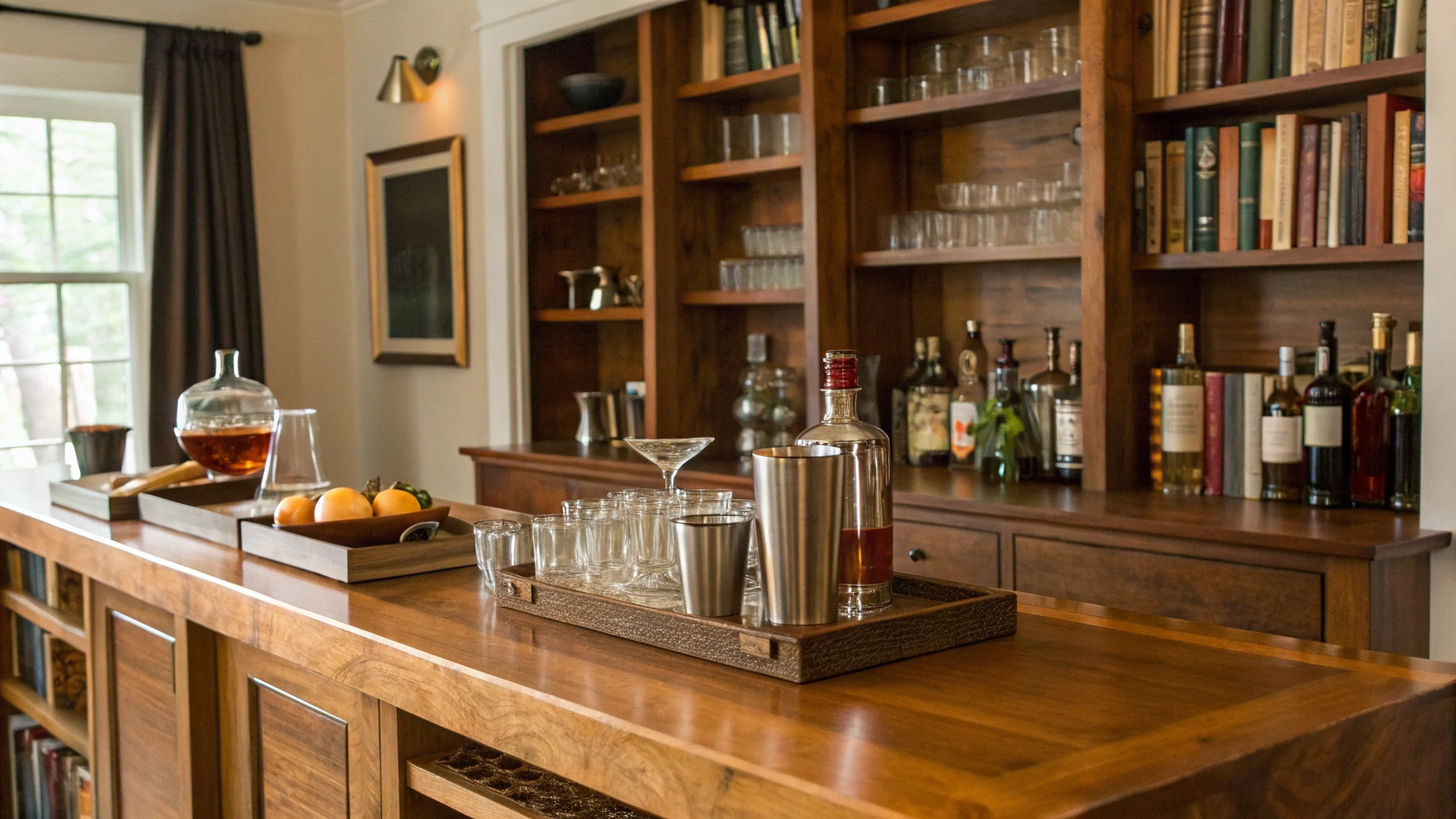
Butcher block bar tops are one of the most popular choices for a home bar surface and for good reason: the warm grain of hardwood has an inherent hospitality to it that stone and laminate surfaces lack. A butcher block top on a simple base creates the feel of a proper bar counter at a modest budget, and the material improves with use and care rather than showing wear as a flaw.
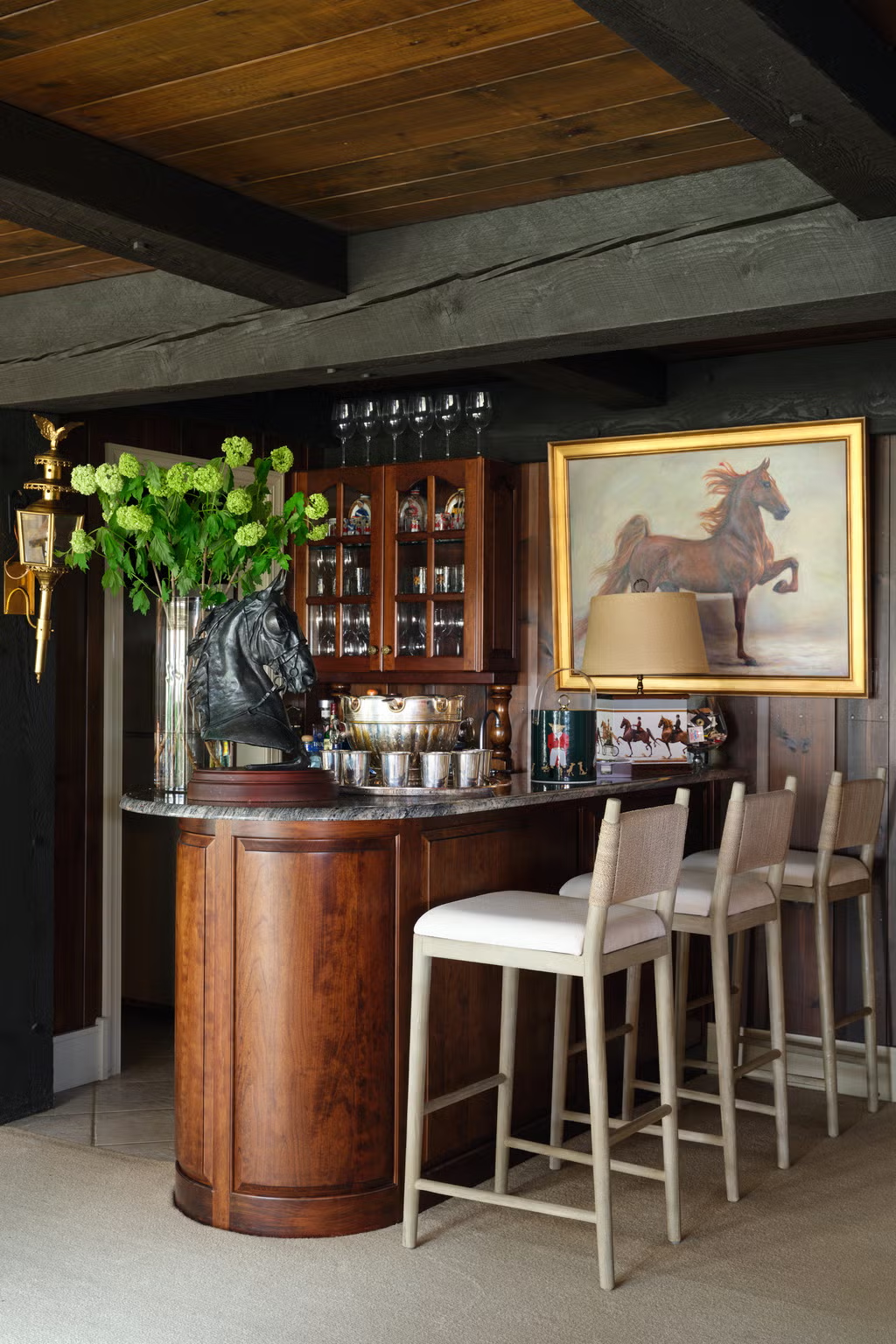
Epoxy bar tops have become popular precisely because they allow for a completely custom surface that is simultaneously distinctive and highly durable. River rock, coins, bottle caps, or any embedded object can be preserved under a glass-smooth epoxy finish that handles the spills and condensation of a working bar without showing damage. The result looks genuinely bespoke and works particularly well in a rustic or industrial bar aesthetic.
For a more finished, architectural look, the bar counter ideas that use stone, tile, or quartz surfaces bring the same material quality to a home bar that they contribute in a kitchen, and they are equally easy to maintain. A statement backsplash behind a dedicated bar counter does the same visual work it does in a kitchen: it defines the zone, introduces personality, and makes the counter surface feel finished rather than provisional.
Get the Storage Right
A home bar that looks good but cannot be used efficiently is a display rather than a bar. The storage needs to work: bottles accessible without having to move everything in front of them, glassware visible and reachable, the tools and accessories within arm’s reach of the pouring position.
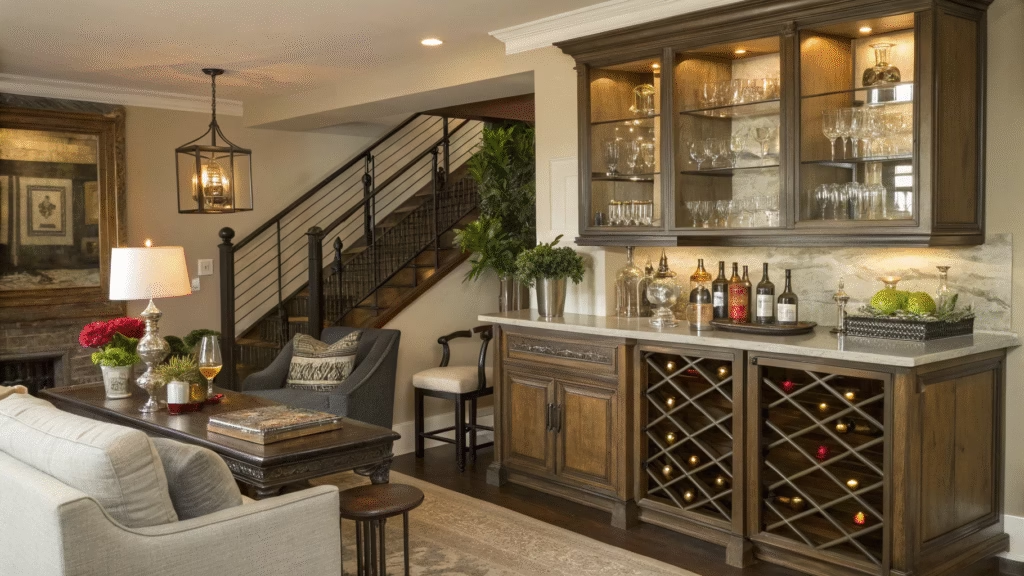
Home bar cabinet ideas that store spirits in style range from a dedicated drinks cabinet in a classic sideboard format to purpose-built cabinetry with wine storage, glass hanging rails, and a lockable section for spirits. The format depends entirely on the volume of what needs to be stored. A pair of shelves with twelve bottles and eight glasses requires very different storage logic from a bar that serves a household that entertains frequently with a broad range of spirits and wine.
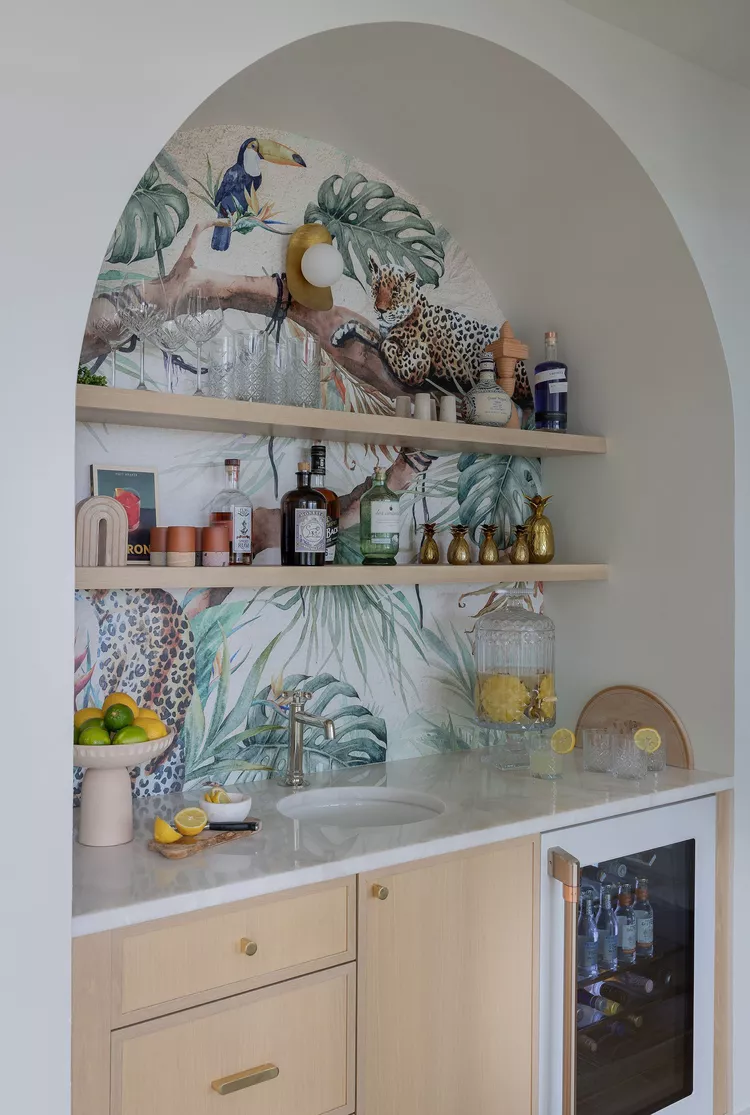
Open shelf bar displays that show glassware to best advantage work on the same principle as any open shelf display: the things on the shelf should be worth looking at. Well-chosen glassware in a consistent style, a few distinctive bottles with interesting labels, and one or two decorative objects create a bar shelf that looks curated. A shelf where every available bottle and glass has been placed without any compositional logic looks like a crowded drinks cabinet regardless of what is on it.
Dual-purpose furniture that doubles as a bar is particularly valuable for homes where floor space is genuinely limited. A sideboard that conceals a full bar setup behind closed doors, a console that incorporates a hidden drinks compartment, or a coffee table with a lift-top that reveals a mini bar: these are solutions that serve the bar function without requiring any permanent visible footprint.
TIP: Before buying any bar storage, take a full inventory of what you actually want to stock and how many glasses you genuinely need. Most home bars are over-stocked with bottles rarely touched and under-stocked with the glasses actually needed for everyday entertaining. Editing down to what you use regularly and choosing storage sized specifically for that produces a bar that stays organised rather than gradually accumulating whatever has been bought and not finished.
Light It Properly
Bar lighting is the single element most responsible for whether a home bar feels atmospheric or merely functional, and it is the one most consistently handled as an afterthought. A well-lit bar has warmth, drama, and a quality of invitation that makes it the focal point of the room in the evenings. A bar lit only by the room’s general overhead light looks like a shelf.
Home bar lighting ideas that create the right atmosphere layer different sources at different levels. A pendant above the bar counter at a height that focuses attention on the working surface without illuminating the whole room. Under-shelf LED strips that light the bottles and glassware from below, creating the backlit glow associated with professional bars. A small lamp on the counter surface that adds warmth at the lowest level of the composition.
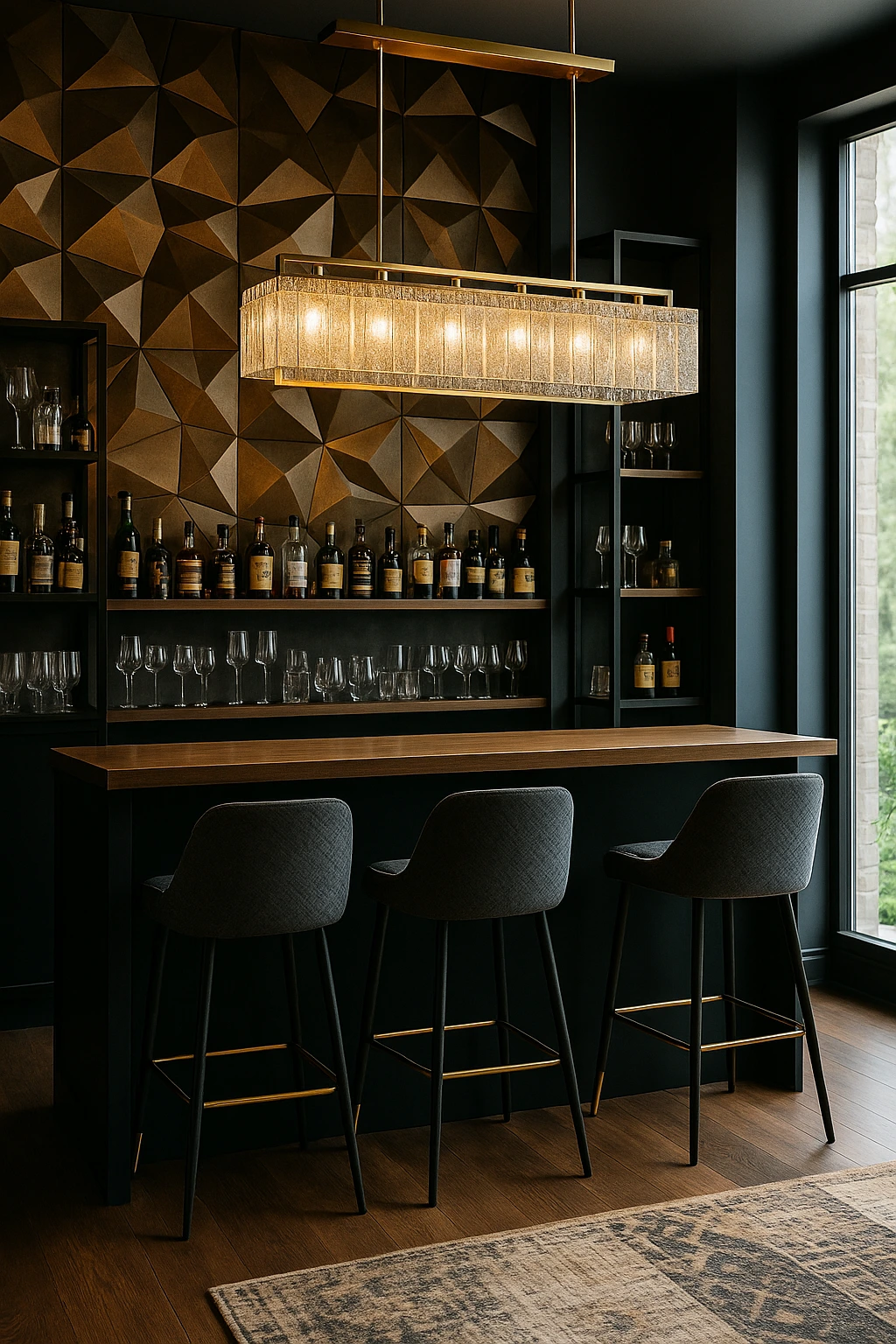
The quality of light matters as much as the position. Warm white bulbs at 2700 Kelvin produce the flattering, amber-toned light that makes bottles and glassware look their best and gives the bar a sense of evening warmth. Cool white or daylight bulbs produce a clinical quality of light that is entirely wrong for a space meant to feel like an invitation to have a drink.
RELATED: 13+ Lighting Ideas That Make Your Home Bar Shine
Style It With Intention
The top of the bar counter and the shelves above it are display surfaces as much as functional ones, and they benefit from the same compositional thinking applied to any other display in the home. A well-styled bar surface looks considered and inviting. A bar surface covered in the accumulated objects of daily use looks like a kitchen counter that has run out of space.
The bar counter styling ideas that look most professional keep the working surface clear except for what is immediately in use: a cocktail shaker, a bottle of whatever is being served, and the glasses. Everything else goes on the shelves. The shelves are where the styling happens: bottles arranged with some thought to height and label direction, glassware in a consistent style, a plant or two, perhaps a piece of art or a distinctive object that gives the bar a personal character.
Home bar top decor that finishes off a setup without cluttering it typically uses three or four well-chosen elements: a small plant, a candle or two, one distinctive object, and the tools that are genuinely used, a cocktail shaker, a strainer, a jigger, in a consistent material finish. The bar accessories that make entertaining easier are worth choosing with as much care as the furniture, because they are handled every time the bar is used and they contribute significantly to how the bar looks and feels to operate.
Integrate It Into the Living Space
A home bar that sits comfortably within the existing room rather than imposing itself on it requires thinking about how the bar’s materials and aesthetic relate to the rest of the space. A bar that is designed in isolation, in a different style, a different colour palette, a different material language from the room it sits in, will always feel like it was placed rather than designed.
The home bar for living spaces that blend most seamlessly are the ones where one or two elements of the bar are shared with the rest of the room: the same timber tone as the flooring, the same hardware finish as the door handles, the same palette as the other built-in storage. This consistency is what makes a bar feel like it belongs to the room rather than being an addition to it.
For living room home bars, the key is ensuring the bar does not dominate the room when it is not in active use. A bar cart that can be tucked against a wall, a wall-mounted setup that closes away, or a bar cabinet that reads as furniture first and bar second all allow the living room to function as a living room rather than as a bar with incidental seating.
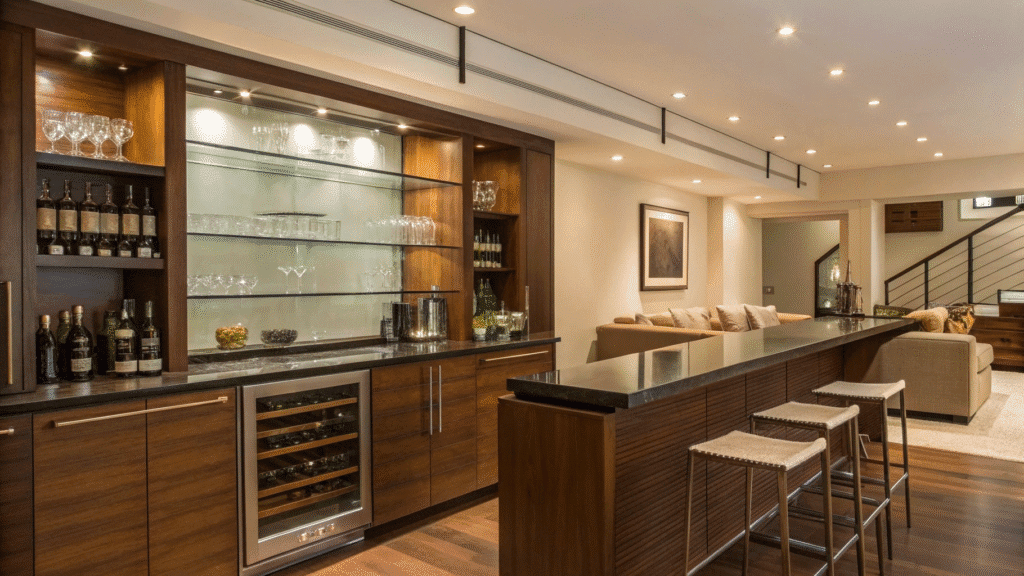
A basement home bar operates under different constraints and different possibilities. The basement is the one space in the home where committing fully to the bar aesthetic, with a proper counter, bar stools, dedicated lighting, and a feature wall, feels natural rather than excessive. The man cave home bar and lounge-style home bar both lean into this committed approach, creating a dedicated entertaining space with the full character of a proper bar.
Choose a Style That Suits You
The home bars that feel most memorable are the ones with a clear point of view. Understanding where your aesthetic instincts sit gives you a framework for making the dozens of small decisions that a bar setup involves, from the material of the counter to the finish of the hardware to the style of the glassware.
A rustic home bar uses raw timber, reclaimed materials, iron hardware, and the warm, honest character of materials that carry their history visibly. A vintage bar cart with a brass trolley frame, cut-crystal decanters, and classic cocktail tools has a quality of glamour and nostalgia that contemporary designs rarely achieve. A glam home bar leans into reflected surfaces, rich jewel tones, brass or chrome accents, and the kind of dramatic presentation that makes pouring a drink feel like a performance.
A minimalist home bar commits to restraint: one excellent material for the counter, clean-lined shelving, a curated selection of spirits in consistent bottles, and glassware in a single style. Nothing superfluous, everything intentional. A modern home bar applies the same restraint with slightly more architectural ambition: a statement counter material, considered lighting, and a design that holds its own as a furniture piece rather than receding into the wall.
A Japandi home bar brings together the Japanese preference for negative space and material honesty with the Scandinavian warmth of natural wood and soft tones, creating a bar that feels calm and considered rather than celebratory. A coastal home bar uses pale woods, nautical references handled with restraint, and the breezy palette of a room near the sea. An industrial home bar uses exposed metal, dark timber, and concrete or stone to create a setup with genuine edge and material presence.
RELATED: 15+ Earth-Toned Home Bar Ideas That Feel Grounded
Small Spaces and Compact Setups
The absence of a dedicated room or a generous wall is not a reason to abandon the idea of a home bar. Some of the most interesting and most characterful home bars exist in the tightest spaces, where the constraint has forced a clarity of decision that more generous spaces rarely produce.
Small home bar setups that feel sophisticated rather than provisional are almost always the ones that commit to doing fewer things well: two shelves rather than four, six glasses rather than twelve, three or four bottles of spirits that are genuinely used rather than a full collection that never moves. The editing is what produces the sophistication.
Compact home bar layouts for apartments address the specific constraints of smaller living spaces with approaches that are designed specifically for tight footprints rather than scaled-down versions of larger setups. Home bar ideas for small corners show what is achievable in a single corner of a room with a few shelves, a bar cart, or a wall-mounted unit. The small space home bar ideas that look the most considered are invariably the ones where the bar has been designed for the space rather than inserted into it.
Build It Yourself
A well-executed DIY home bar is one of the most satisfying home projects available and one that produces results that feel genuinely personal in a way that bought furniture rarely achieves. The investment of building something specific to the space, the style, and the materials you love produces a bar that could not have come from a shop.
DIY home bar projects that can be completed over a weekend range from a simple floating shelf arrangement to a more ambitious built-in with a counter, cabinet doors, and custom lighting. The skill required is less than most people assume, and the results are often better than what could be bought at the same budget. The DIY bar top ideas in particular show how much is achievable in terms of counter design with basic tools and materials that are far less expensive than professional installation.
Take It Outside
The home bar does not have to live indoors. An outdoor home bar positioned on a patio, a deck, or in a garden entertaining area extends the bar function into the outdoor space and makes alfresco entertaining considerably more fluid. Instead of running back and forth from the kitchen for drinks, a properly set-up outdoor bar keeps everything needed in the space where the entertaining is happening.
The considerations for an outdoor bar are primarily about materials and weather protection. Wood needs treating for exterior use. Open shelving needs weatherproof covering when not in use. Electronics and lighting need to be rated for outdoor installation. Within those constraints, the same principles of placement, lighting, and styling apply as indoors, and the outdoor bar with the right materials and a proper covered position can be as atmospheric and as considered as anything inside the house.
Frequently Asked Questions
What do I need to set up a home bar?
The essentials are a surface or cart to work on, storage for bottles and glassware, and the tools needed for what you plan to serve. A cocktail shaker, a jigger, a strainer, a bar spoon, and a citrus juicer cover most cocktail making. A selection of spirits focused on what you actually drink rather than a comprehensive collection covers every request without crowding the shelves. Start minimal and add as genuine need arises.
Where is the best place to put a home bar in a living room?
Beside the seating area rather than behind it, visible from the main gathering positions, and accessible without requiring anyone to leave the social space. A corner position is almost always the most effective, because it creates a sense of territory without taking floor area from the centre of the room. Avoid positions near a door where the bar is in the circulation route.
How do I make a home bar look expensive without spending much?
Consistency is the key. Choose glassware in a single style. Keep the bottle selection edited and arrange it with some thought to height and visual interest. Add proper lighting above or behind the bar. Remove anything from the surface that does not belong there. These four changes, which together cost almost nothing, produce a bar that looks more considered than one where money has been spent without those principles applied.
What is the best bar counter material for a home bar?
It depends on your budget and the look you are going for. Butcher block is warm, relatively affordable, and improves with care. Quartz is the most practical: heat and stain resistant, easy to clean, and available in a wide range of appearances. Stone and marble are the most luxurious and require sealing and care. Epoxy is the most distinctive and allows for genuinely custom designs at a moderate cost.
How do I store spirits and wine in a home bar?
Spirits are best stored upright, away from direct sunlight, at room temperature. Wine intended for drinking within a few months can be stored at room temperature in a rack; wine for longer storage needs a cooler environment. In a home bar context, a small wine fridge under the counter is the most effective solution for keeping wines at the right temperature without requiring a separate room.
Explore more room-by-room guides in our complete Rooms section.