How to Create a Fire Pit Area You Will Gather Around Every Evening
A complete guide to choosing the right fire pit, laying out the seating, styling the space, and making it safe and comfortable for every occasion.
KEY POINTS
- A fire pit area that gets used consistently is designed around comfort and ease first, and aesthetics second.
- The seating arrangement matters as much as the fire pit itself. Everyone needs to be able to see the fire, feel the warmth, and move around freely.
- The right fire pit for your space depends on your surface, your site conditions, and how much setup you are willing to do each time you use it.
There is something about a fire pit that no other outdoor feature replicates. It pulls people in, slows conversation down, and turns an ordinary evening in the garden into something worth staying for. The difference between a fire pit area that becomes the most-used part of a garden and one that sits empty most of the time is rarely the fire pit itself. It is the decisions around it: where it sits, how the seating is arranged, how sheltered the spot is, and how easy the whole setup is to actually use.
Love Chic Living Club?
Add us as one of your preferred Google sources and discover more home decor, DIY, outdoor, and lifestyle inspiration from us.
This guide covers the full process, from choosing the right type of fire pit for your outdoor space to laying out a seating area, styling it for different occasions, keeping it safe for families, and making it work in challenging conditions.
RELATED: 19+ Fire Pit Ideas to Make Your Backyard the Ultimate Hangout Spot
Choose the Right Type of Fire Pit
The fire pit market has expanded considerably in recent years, and the right choice depends on your outdoor surface, the size of your space, how often you plan to use it, and how much effort you want to invest each time. Understanding the differences between the main types before buying anything saves both money and disappointment.
A wood-burning fire pit is the most atmospheric option. The crackle and smell of burning wood, the quality of the light it produces, and the ritual of building and tending the fire are all part of why so many people prefer it over gas alternatives. The trade-off is that it requires dry firewood, produces smoke, needs cleaning after each use, and is subject to local fire regulations that vary significantly between areas. If you are happy to invest in that relationship with the fire, a well-chosen fire pit backyard setup centred on a wood-burning bowl or built-in pit produces an experience that gas cannot fully match.
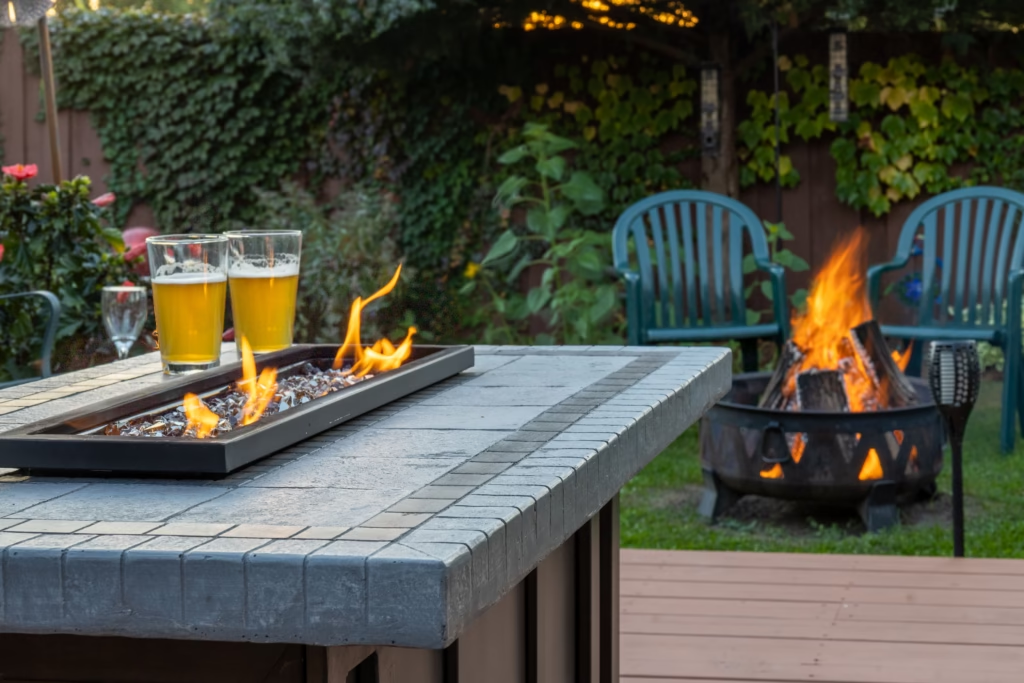
A gas fire pit removes almost all the friction. Turn it on, set the flame height, turn it off when you are done. No ash, no wood storage, no smoke. The flame is consistent and controllable, which makes it more practical for frequent use and more comfortable for guests who find wood smoke irritating. The aesthetic is different, cleaner and more modern, but the warmth is real and the light is genuinely atmospheric. A fire pit table with a gas burner integrated into a dining or coffee table surface takes this further, combining the practical appeal of gas with a piece of outdoor furniture that works even when the flame is off.
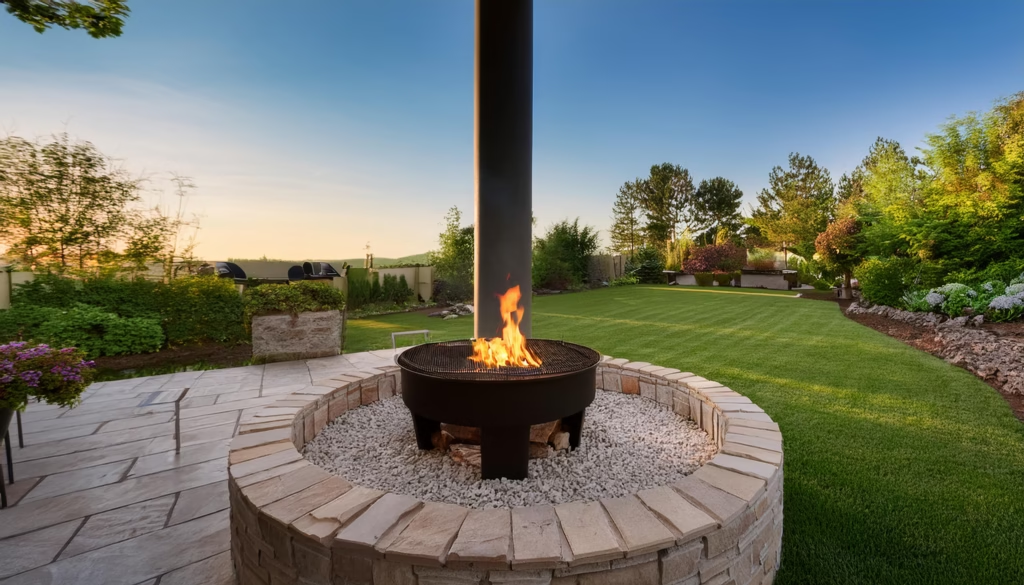
A Solo Stove and similar smokeless fire pit designs have become popular precisely because they solve the main practical objection to wood burning: the smoke. Through a secondary combustion system that burns off much of the smoke before it leaves the pit, these designs produce a cleaner, hotter fire with significantly less of the choking smoke that makes a traditional fire pit uncomfortable when the wind changes direction. The Solo Stove fire pit setup is worth understanding in detail if smoke is your primary concern with wood burning, because the difference in practice is considerable.
Find the Right Spot
Where you place the fire pit determines whether the area gets used. The most practical considerations are distance from the house and any structures, prevailing wind direction, and how the spot relates to the rest of the garden.
Distance from the house is primarily a safety question. Most manufacturers and fire safety guidelines recommend keeping an open fire pit at least three metres from any structure, fence, overhead canopy, or overhanging tree. For built-in or permanent fire pits, the landscaping around the base also needs to be non-combustible: stone, gravel, or a paved surround rather than timber decking or dry grass.
Wind direction is the practical question that most people do not think about until they are sitting in the smoke for the third consecutive evening. Note which direction the wind most commonly comes from in your garden, usually by watching how smoke or flags behave on a typical evening, and position the seating on the leeward side so the smoke blows away from the sitting area rather than across it. This is also the logic behind the design of smokeless fire pits, which reduce but do not entirely eliminate the smoke problem on very still or swirling wind evenings.
For gardens with a sloped site, fire pit placement on a sloped yard requires either levelling a section of the ground to create a flat base for the pit and seating, or choosing a bowl or freestanding pit that can be positioned safely on a prepared level pad within the slope. A sunken seating area cut into a slope is one of the most interesting and most naturally sheltered fire pit configurations available on a difficult site.
Design the Seating Area
The seating arrangement is the element that most directly determines how enjoyable a fire pit area actually is to spend time in. The fire provides the warmth and the atmosphere. The seating is where you spend the evening, and getting it right is at least as important as choosing the right fire pit.
The fundamental requirement is that everyone can see the fire and feel its warmth from their seat. This means the seating should wrap around the fire in a rough circle or arc, close enough to feel warm, typically between one and two metres from the edge of the pit depending on the size of the fire, and arranged so there is no position that puts someone with their back to the flame.
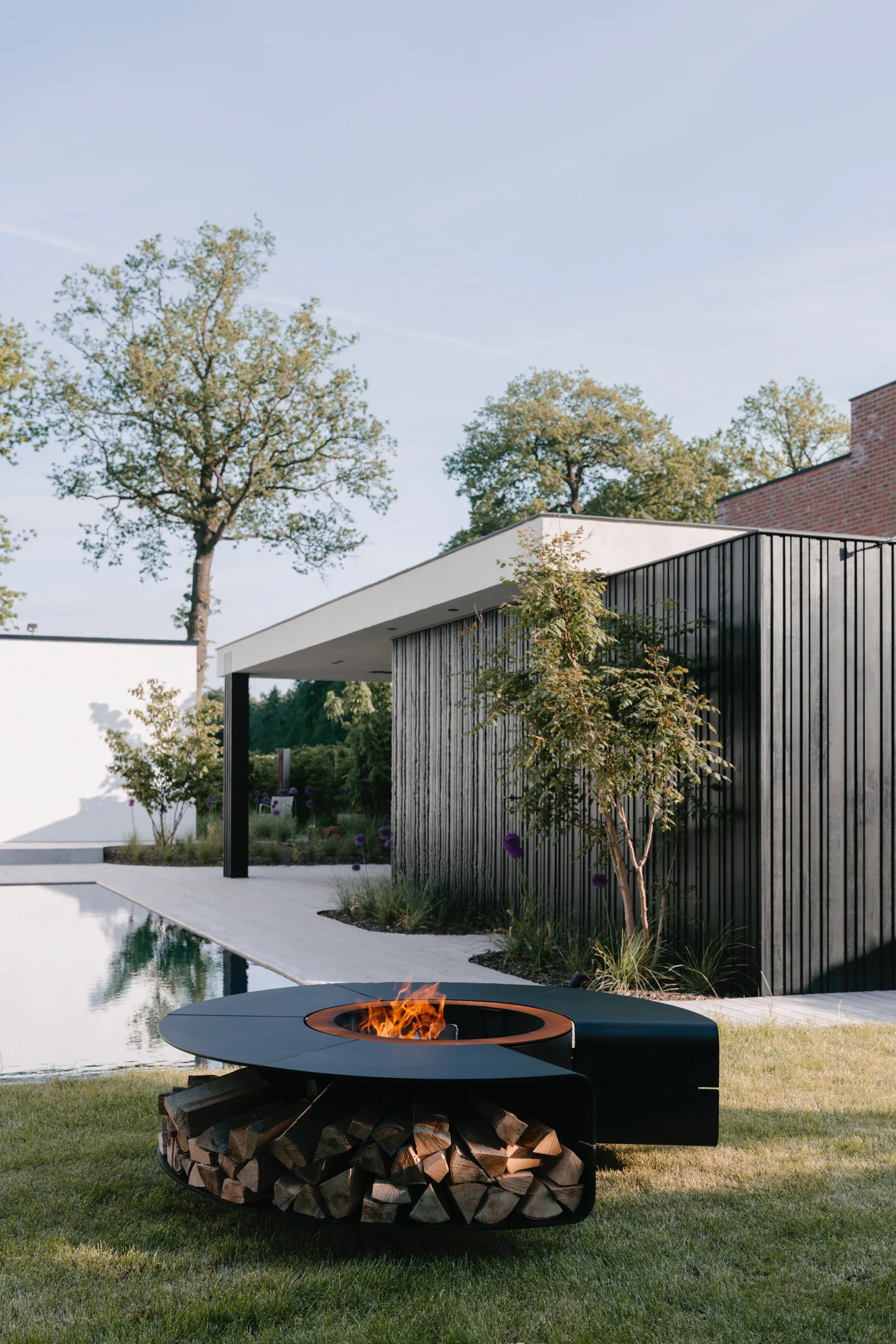
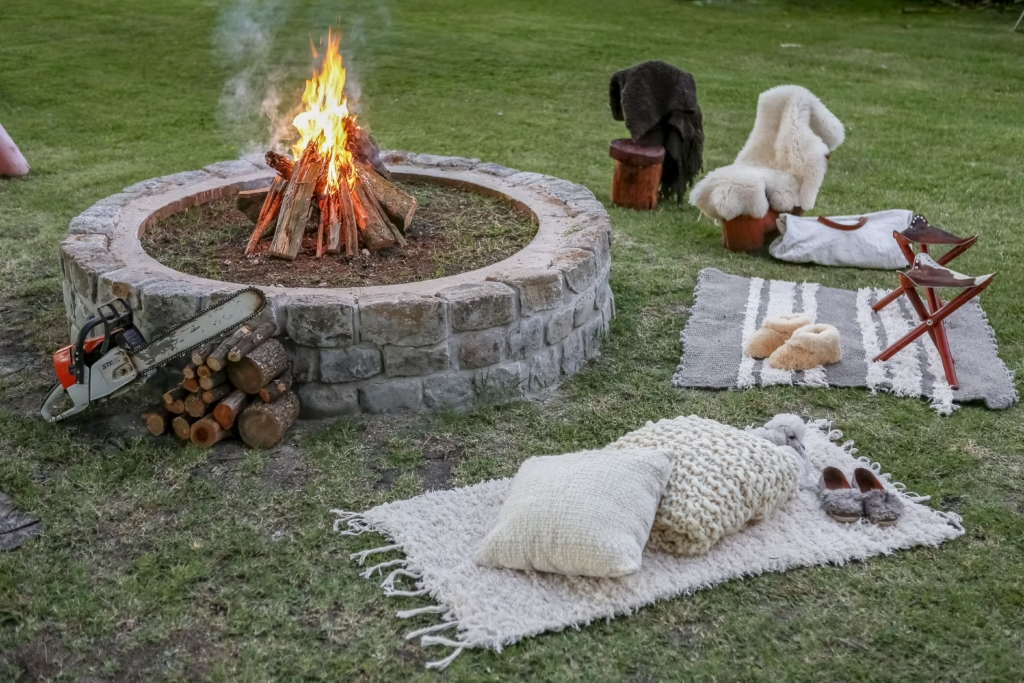
A circular arrangement of mixed seating, some chairs, a low bench or two, and perhaps a few scatter cushions on the ground for children or for evenings when more people arrive than seats exist, creates the informal but inclusive atmosphere that makes a fire pit genuinely sociable. The fire pit seating area ideas that feel most inviting are the ones that provide slightly different seating options at slightly different heights and distances rather than a uniform ring of identical chairs.
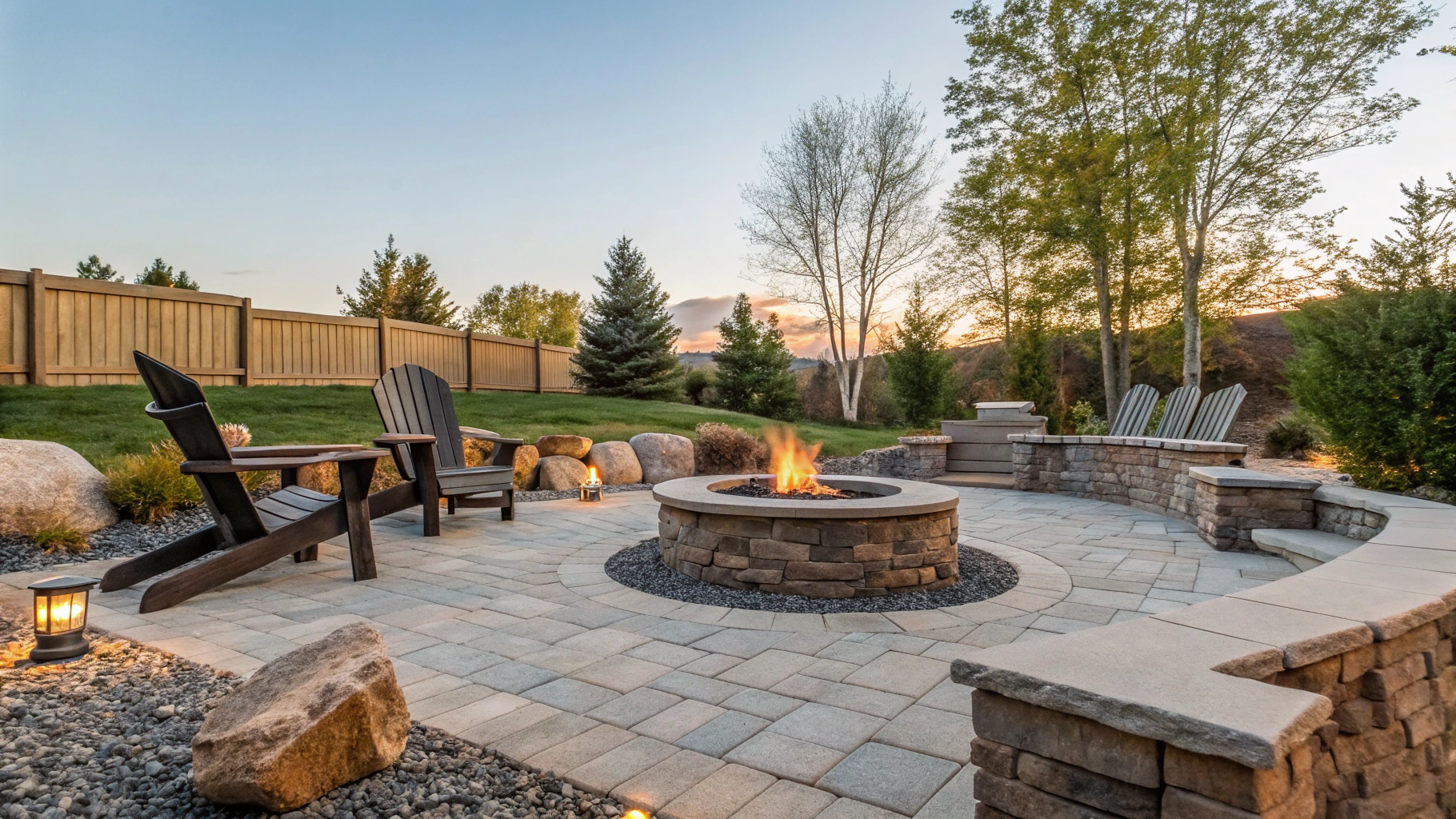
Built-in seating integrated into the hard landscaping around the fire pit, stone benches capping a low retaining wall, timber benches built into a surround, or a curved seat wall in rendered block, creates a permanence and an architectural quality that freestanding furniture rarely achieves. It also removes the setup and storage burden of portable outdoor furniture, which is a practical consideration that genuinely affects how often the space gets used.
RELATED: 15+ Fire Pit Area Layout Ideas That Feel Warm and Welcoming
You May Also Love


Make It Safe for Families
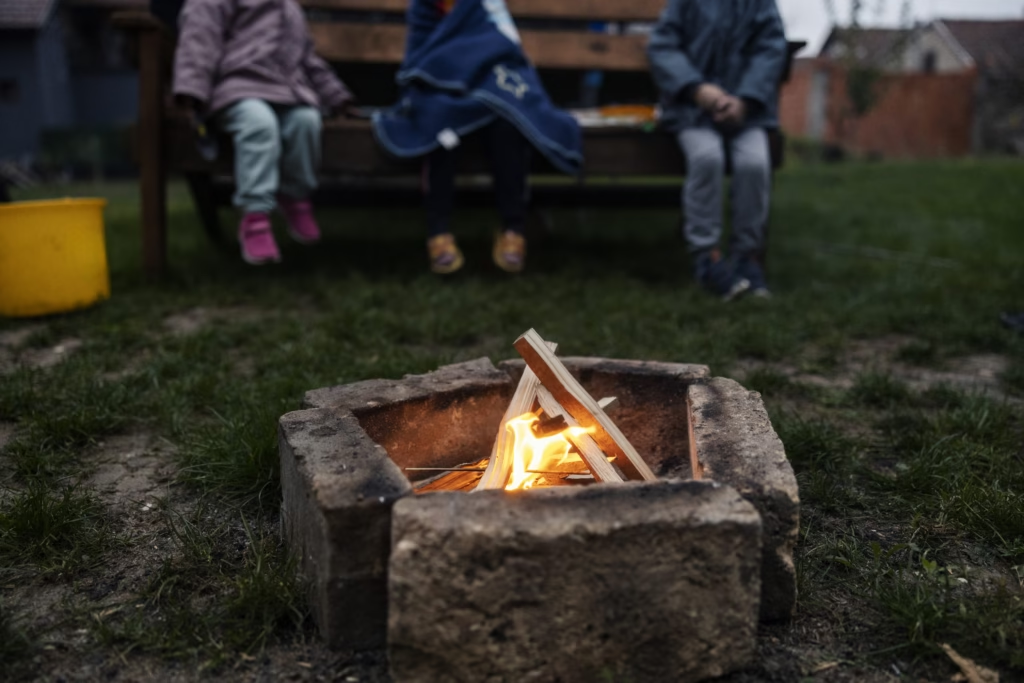
A fire pit with children present requires specific thinking that goes beyond the general safety principles that apply to any outdoor fire. The combination of open flame, excited children, and the informal, relaxed nature of a fire pit gathering creates hazards that are easy to prevent with the right setup and the right habits.
The most important practical measure is a physical barrier between the fire and the youngest children. A fire pit with family-friendly design typically uses either a raised fire bowl that keeps the flame out of arm’s reach of small children, a fire screen or spark guard that provides a physical barrier while still allowing the fire to be seen and enjoyed, or a built-in configuration with a raised surround that provides a clear visual and physical boundary.
Seating arrangements also matter. Chairs and benches positioned at a consistent distance from the fire remove the temptation to push closer, and a clear rule about where children sit and how close they can go makes supervision more straightforward. The area immediately around the fire pit should always be a clear, non-cluttered zone: no cushions, no toys, no trip hazards.
Teaching children from an early age to treat the fire pit with the same respect as a kitchen hob, as a heat source that requires awareness and distance rather than a novelty to approach closely, is the most durable safety investment. Roasting marshmallows with proper long sticks and adult supervision is both a genuinely enjoyable fire pit ritual and a practical introduction to safe behaviour around fire.
Choose the Right Surface
The surface beneath a fire pit and its surrounding seating area affects both safety and the overall look of the space. On a lawn or grass, a freestanding fire pit needs to sit on a non-combustible pad to protect the ground below. On an existing patio or deck, the suitability depends entirely on the material.
Fire pit ideas for decks require particularly careful thinking because timber decking and open flame are an inherently uncomfortable combination. The safest approach on a deck is a gas fire pit table with a completely enclosed burner, positioned on a heat-resistant mat and kept well clear of any railing or overhead structure. A wood-burning fire pit on a timber deck requires a substantial non-combustible mat beneath it and a clear understanding of the ember and spark behaviour of the specific pit, which varies considerably between designs.
For fire pit setups on patios, stone, concrete, and brick are all safe base surfaces. The fire pit surround itself, the area of hard landscaping immediately around the pit, benefits from using a heat-tolerant material: natural stone, engineering brick, or porcelain tile all handle radiated heat better than some softer natural stones.
Don't miss: 15 Creative Fire Pit Seating Ideas That Combine Style and Comfort →
TIP: Always keep a bucket of water or a garden hose within easy reach when using an open fire pit, not just for emergencies but for controlled extinguishing at the end of the evening. Embers in an apparently dead fire can remain hot enough to ignite material hours after the visible flame has gone. Dousing rather than simply leaving the fire to die out is the habit that prevents the majority of fire pit incidents.
Work Around Challenging Conditions
Not every garden offers ideal conditions for a fire pit, and some of the most common challenges, wind, a small space, or a difficult site, have specific solutions that make a fire pit area genuinely viable rather than a source of frustration.
Wind is the most common problem and the one most likely to make a fire pit area uncomfortable to use regularly. Fire pit solutions for windy areas range from choosing a design with a more enclosed structure that naturally shields the flame, to building windbreak landscaping around the seating area, to positioning the whole setup in the most naturally sheltered part of the garden. A low planted hedge, a stone or rendered block wall on the windward side, or a dense trellis with climbing plants all provide wind protection that improves the comfort of the fire pit area significantly without creating the enclosed, airless feeling that a solid fence on all sides would produce.
Fire pit ideas for small backyards address the challenge of bringing a fire element into a space that does not have room for a full seating area around a large pit. A smaller tabletop fire bowl, a compact gas fire pit table that doubles as outdoor furniture, or a wall-mounted gas fire feature all bring warmth and flame to a small outdoor space without requiring the footprint of a traditional ground-level fire pit setup. The fire pit options specifically designed for small spaces show how much is achievable in genuinely tight conditions.
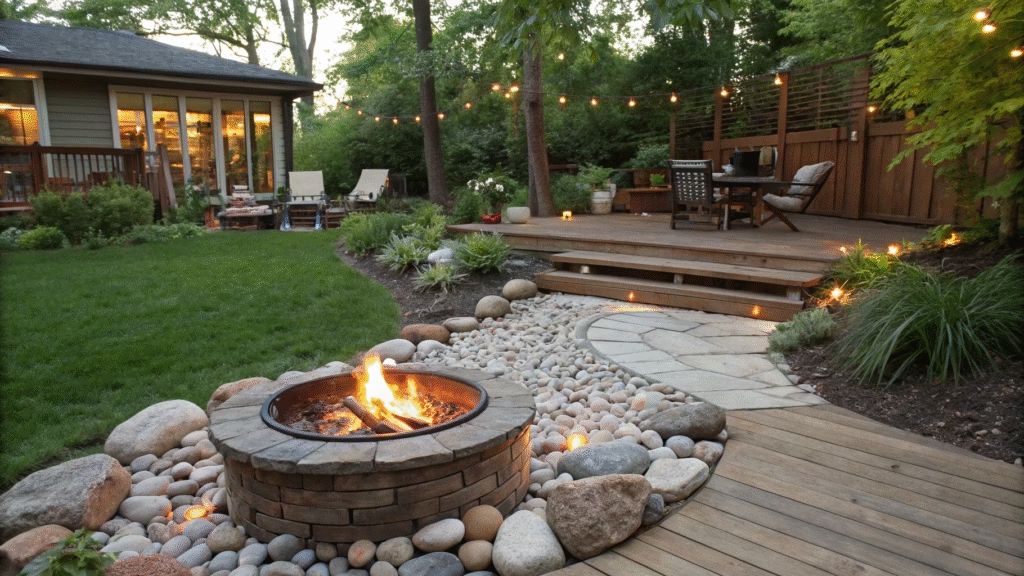
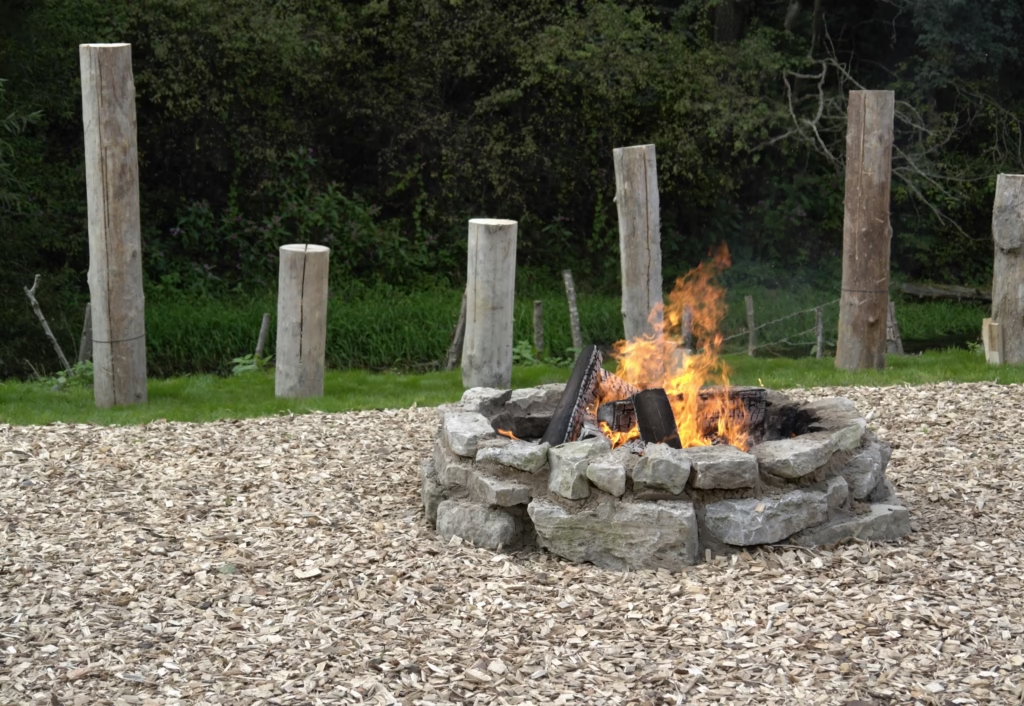
For gardens with a particular character or setting, a forest-inspired fire pit in a wooded or semi-wooded garden uses the natural enclosure of trees to create an atmosphere that no purpose-built structure can replicate. The light of a fire in a wooded setting has a quality entirely different from the same fire on an open patio, and designing the seating to take advantage of that atmosphere rather than fighting the conditions is what makes it work.
Style It With Intention
Once the practical foundations are right, the styling of a fire pit area is what gives it its character and makes it feel like a designed space rather than a functional one.
The materials in the hard landscaping immediately around the pit set the visual tone for everything else. Natural stone in warm tones, weathered brick, and raw timber all suit the elemental quality of fire in a way that smoother, more finished materials like polished concrete or porcelain tile do not. The fire pit itself can be chosen to reinforce this: a cast iron bowl has an honesty and a weight to it that pressed steel lacks, and a built-in stone or brick surround has a permanence that no freestanding pit achieves.
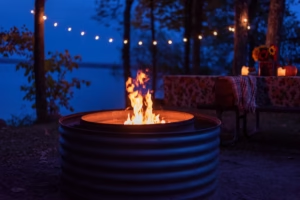
Lighting in the fire pit area serves a different purpose from lighting elsewhere in the garden. The fire itself provides the primary light source, and any additional lighting should support rather than compete with it. String lights overhead produce a gentle ambient glow that extends visibility beyond the firelight without washing out its warmth. Lanterns on low tables or on the ground between seating positions add supplementary light at a level and in a form that feels consistent with the mood. What the fire pit area does not need is any bright, directional, or overhead spotlighting that competes with the fire.
Creative fire pit seating that mixes materials and approaches, timber benches alongside upholstered chairs alongside low stools, creates an informal, gathered quality that uniform matching furniture sets do not. Outdoor cushions and throws on the seating in warm, earthy tones, woven textiles, heavy linen, or wool blends make the area feel genuinely comfortable for extended evenings rather than just visually attractive. For a specific campground aesthetic that leans into the outdoor, elemental character of fire pit gathering, the campground-inspired fire pit setup is worth looking at as a model for how to make relaxed and unpretentious feel deliberate.
RELATED: 17+ Cozy Fire Pit Seating Area Ideas for Nighttime Gatherings
Integrate It With the Landscape
A fire pit area that sits within a considered surrounding landscape looks completely different from one that is placed in the middle of a lawn with nothing around it. The landscaping around the fire pit, planting, paths, levels, and lighting, is what gives the area its sense of being a destination within the garden rather than a feature dropped into it.
The most effective landscaping approach for a fire pit area uses planting to create partial enclosure: enough to feel sheltered and private, not so much that the space feels cramped or airless. Low shrubs, ornamental grasses, and structural evergreen plants on two or three sides of the seating area create a sense of being in a room within the garden. The fire pit landscaping ideas that achieve the most integrated and most beautiful results are the ones where the pit and its seating feel like they emerged from the garden rather than being placed on top of it.
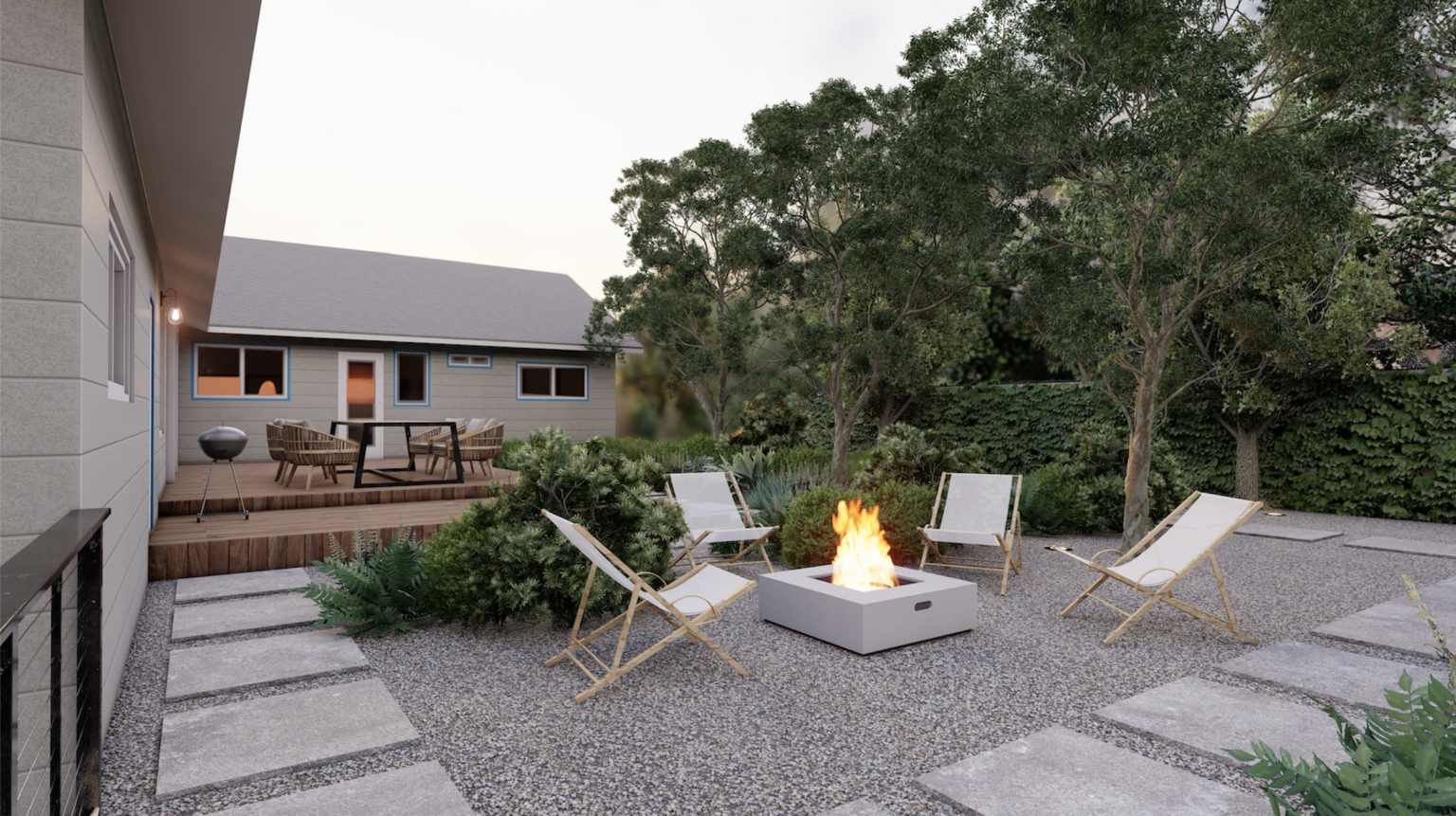
The path from the house to the fire pit area should be wide enough to walk comfortably and lit well enough to navigate safely after dark. This is a practical detail that most people overlook until they are carrying drinks to the fire pit in the dark and finding the path difficult to follow. Low path lighting, solar-powered or wired, along the route from the house to the fire area is one of the most useful and least expensive additions to any fire pit setup.
RELATED: 19+ Fire Pit Landscaping Ideas to Elevate Your Outdoor Space
Keep Exploring

Make It Work on Any Budget
A genuinely good fire pit area does not require significant expenditure. The elements that matter most, a safe and well-positioned fire, comfortable seating arranged to face it, and some form of shelter from the wind, can all be achieved for a modest outlay with the right priorities.
The budget-friendly fire pit ideas that look best focus on one quality element, usually the fire pit itself, and keep everything else simple. A good fire bowl in cast iron on a level gravel pad, surrounded by a mix of garden chairs with outdoor cushions added over time, and lit with a string of solar fairy lights overhead, produces a fire pit area that is genuinely inviting for a fraction of the cost of a built-in configuration.
The things worth spending on are durability and comfort. A cheap fire bowl that rusts through after one season is not a saving. Outdoor cushions and textiles that are not rated for exterior use and deteriorate quickly in the rain are not a saving. A fire pit area built from fewer, better decisions consistently outlooks and outlasts one built from many mediocre ones.
Frequently Asked Questions
What is the best type of fire pit for a garden?
It depends on how you intend to use it and what your surface allows. For the most atmospheric and traditional experience, a wood-burning pit in cast iron or steel on a non-combustible base is hard to beat. For convenience and frequent use with minimal setup, a gas fire pit table removes almost all the friction. For gardens where smoke is a problem, a smokeless design like a Solo Stove offers the best of both: real wood fire with significantly reduced smoke output.
How far should a fire pit be from the house?
Most fire safety guidelines and manufacturer recommendations specify a minimum of three metres from any structure, fence, overhanging tree, or overhead covering. For built-in fire pits, this clearance should be treated as an absolute minimum. The further the better, both for safety and for smoke management.
What do I put under a fire pit on grass?
Any open fire pit placed on grass needs a non-combustible pad beneath it to protect the ground. Concrete paving slabs, a layer of compacted gravel, a purpose-made fire pit mat, or a section of patio tiles all provide adequate protection. Never place a fire pit directly on dry grass, decking, or any combustible surface.
How do I keep a fire pit area from getting smoky?
Position the seating on the leeward side of the prevailing wind. Choose a smokeless or low-smoke fire pit design if smoke sensitivity is a consistent problem. Use dry, well-seasoned hardwood rather than softwood or green wood, which produces significantly more smoke. A fire that is burning hot and clean produces less smoke than one that is smouldering, so keeping the fire well-stoked with dry wood reduces the smoke problem considerably.
Can I use a fire pit on a deck?
With caution. A gas fire pit table with an enclosed burner on a heat-resistant mat is the safest approach for a timber deck. A wood-burning pit requires a substantial non-combustible mat and significant clearance from any railing or overhead structure. Always check the manufacturer’s guidance for your specific pit, understand the ember and spark behaviour of the design, and keep water within reach. When in doubt, position the fire pit on a paved area rather than on timber.
Explore the full outdoor living section in our Outdoor Living guides.