15+ Stylish Patio Brick Ideas for a Classic Look
Bringing your outside living area up to par with patio bricks will give you an improvement that will last throughout the years and is bound to be stunning.
Brick is one of the most timeless and versatile materials you can choose for a patio. It ages beautifully, suits almost every home style, and offers more pattern and design possibilities than most people ever explore.
Regardless of whether you are thinking about a country shanty or a royal outdoor eating area, patio bricks have numerous fashion principles to transform your yard into a fabulous garden.
Why Brick Is One of the Best Patio Materials You Can Choose
Brick has been used for outdoor paving for centuries and for good reason. It offers a combination of durability, beauty, and design flexibility that very few materials can match. Here is why it deserves serious consideration for any patio project.
Love Chic Living Club?
Add us as one of your preferred Google sources and discover more home decor, DIY, outdoor, and lifestyle inspiration from us.
It Ages Better Than Almost Anything Else
Most patio materials look their best when newly laid and slowly deteriorate from there. Brick does the opposite. A well-laid brick patio develops a patina over time, a slight weathering and softening of color, that makes it look more beautiful with every passing year. The moss that eventually settles into the joints, the gentle variation in tone that sun and rain produce, the slight worn quality of frequently used areas — all of this adds character rather than subtracting from it.
It Matches Almost Every Home Style
Red brick suits traditional, colonial, cottage, and farmhouse homes with effortless naturalness. Grey and buff brick tones work beautifully with contemporary and modern architecture. Whitewashed or painted brick has a relaxed, coastal charm that suits almost everything. This versatility is one of brick’s greatest strengths. Whatever your home looks like, there is a brick color and finish that will feel completely at home alongside it.
It Is Incredibly Durable
Quality clay brick pavers, properly laid on a well-prepared sub-base, will last for decades without significant maintenance. They do not fade, they do not crack under normal loading, and individual pavers that do get damaged can be lifted and replaced without disturbing the rest of the patio. This repairability is a genuine long-term advantage over materials that are difficult to match and patch once laid.
It Offers More Design Possibilities Than You Might Think
Most people think of brick paving as a single look. In reality, the combination of different brick colors, formats, and laying patterns creates an enormous range of visual outcomes, from the most traditional to the genuinely contemporary. The ideas in this post cover many of those possibilities and show just how varied a brick patio can look.
Choosing the Right Brick for Your Patio
Not all bricks are suitable for outdoor paving and choosing the wrong type is an expensive mistake to make. Here is what you need to know before you buy.
Always Use Paving Grade Bricks
Standard wall bricks are not suitable for use as paving. They are not manufactured to withstand the combination of foot traffic, moisture saturation from below, and freeze-thaw cycles that paving bricks must endure. Always specify paving grade clay brick pavers or engineering bricks for any patio project. These are denser, more durable, and rated for outdoor ground use.
Consider the Slip Resistance Rating
Outdoor paving bricks should have a slip resistance rating appropriate for external use. This is particularly important in areas that get wet frequently or in climates with significant frost and ice. Look for a minimum R10 slip resistance rating for general outdoor use, or R11 and above for areas that are regularly wet such as around a pool or outdoor shower.
You May Also Love
Match the Brick to Your Home
The single most impactful design decision with a brick patio is choosing a brick color and tone that relates well to your home’s existing brickwork, render, or stone. A patio that shares its brick tone with the house looks planned and permanent. One that clashes with or ignores the house exterior looks like an afterthought. Take a sample of your existing brick or a photograph with accurate color to your supplier when choosing.
Think About Joint Width and Color
The mortar or sand joint between pavers is a significant visual element of the finished patio. Tight joints with a jointing sand give a contemporary, clean look. Wider mortar joints with a contrasting color give a more traditional, handmade quality. Dark joints recede and let the brick color dominate. Light joints create more contrast and visual pattern. It is worth considering joint detail carefully as it has a real impact on the finished appearance.
New vs Reclaimed Brick
New paving bricks have consistent color and dimensions, which makes them easier to lay and gives a clean, uniform appearance. Reclaimed bricks have variation, character, and an instant aged quality that new materials cannot replicate. Reclaimed bricks are often more expensive per brick than new ones, not less, because the cleaning, sorting, and quality control required to prepare them for reuse is labor intensive. Both have their place depending on the look you are going for.
How to Lay a Brick Patio: What You Need to Know Before You Start
Whether you are planning to lay your brick patio yourself or hire a contractor, understanding the process helps you make better decisions and ask better questions.
The Sub-Base Is Everything
The quality and longevity of any brick patio depends almost entirely on the quality of the sub-base underneath it. A poorly prepared sub-base leads to sinking, cracking, and uneven paving within a few years regardless of how well the bricks themselves are laid. The standard sub-base for a brick patio is a minimum of 4 inches of compacted crushed stone or hardcore, topped with a 1-inch sharp sand bedding layer. For areas subject to heavy use or vehicles, increase the hardcore depth to 6 to 8 inches.
Drainage Must Be Planned Before You Lay
All paving must be laid to a slight fall away from the house, typically around 1 in 80, to direct surface water away from foundations and toward a drainage point. Plan where your surface water will go before you start laying. Into a lawn, a planting border, a channel drain, or a soakaway are all valid options. Paving that has no planned drainage outlet will cause problems eventually.
Don't miss: 13+ Stunning Bi-Level Patio Ideas for Large Yards →
Herringbone Is the Strongest Pattern
If you are undecided about laying pattern, herringbone is the most structurally stable option for a patio subject to regular foot traffic. The interlocking angle of the bricks distributes load more evenly than a running bond or stack bond pattern, which reduces the risk of individual pavers rocking or shifting over time.
Allow for Cutting
Every brick patio requires cut bricks at the edges and around any obstacles. Budget for approximately 10 percent extra bricks to cover cuts and breakages. For complex patterns like circular designs or intricate inlays, increase this to 15 percent. Cutting clay bricks requires a diamond blade disc cutter or angle grinder and appropriate safety equipment.
Pointing and Finishing
Once the bricks are laid and the bedding sand has set, the joints need to be filled. Kiln-dried jointing sand brushed into the joints is the standard approach for a dry-laid patio. For a mortared finish, a semi-dry mortar mix pointed into the joints with a pointing trowel gives a cleaner, more traditional result. Brush off all excess jointing material and clean the surface thoroughly before it sets.
Brick Patio Maintenance: Keeping It Looking Its Best
A brick patio is low maintenance but not no maintenance. A small amount of regular attention keeps it looking its best for decades.
Sweep Regularly
Regular sweeping removes leaf litter, organic debris, and the particles that settle into joints and eventually break down the jointing material. A stiff outdoor broom once a week is all it takes.
Address Weeds Promptly
Weeds growing in the joints of a brick patio are best dealt with early before their roots have a chance to penetrate the sub-base and disturb the bedding layer. Hand pulling is effective for small infestations. A path weed killer applied in spring and autumn keeps joints clear with minimal effort. Polymeric jointing sand, which hardens slightly when wetted, is more resistant to weed establishment than standard kiln-dried sand.
Keep Exploring



Moss and Algae Management
Moss and algae growth on brick paving is natural and in a shaded garden setting can look beautiful. If you prefer to keep the paving clear, a dilute bleach solution or a proprietary patio cleaner applied with a stiff brush is effective. Pressure washing removes moss and algae quickly but can dislodge jointing sand, which will need to be replaced after treatment.
Re-Pointing Over Time
The jointing material in a brick patio will eventually need refreshing, typically every ten to fifteen years depending on traffic and climate. Sand-filled joints can be topped up by brushing in new kiln-dried jointing sand and wetting it to settle. Mortar joints that have cracked or recessed significantly need to be raked out and re-pointed with fresh mortar.
Sealing
Sealing a brick patio is optional but offers benefits in high-traffic or high-stain-risk situations. A good quality impregnating sealer penetrates the brick surface and makes it more resistant to oil, food stains, and moisture without changing the appearance significantly. Always test a sealer on a small inconspicuous area first as some sealers darken the brick color noticeably.
These ideas will help you get the most out of brick and create a patio that looks genuinely classic and considered.
1. Herringbone Pattern
Source: Houzz
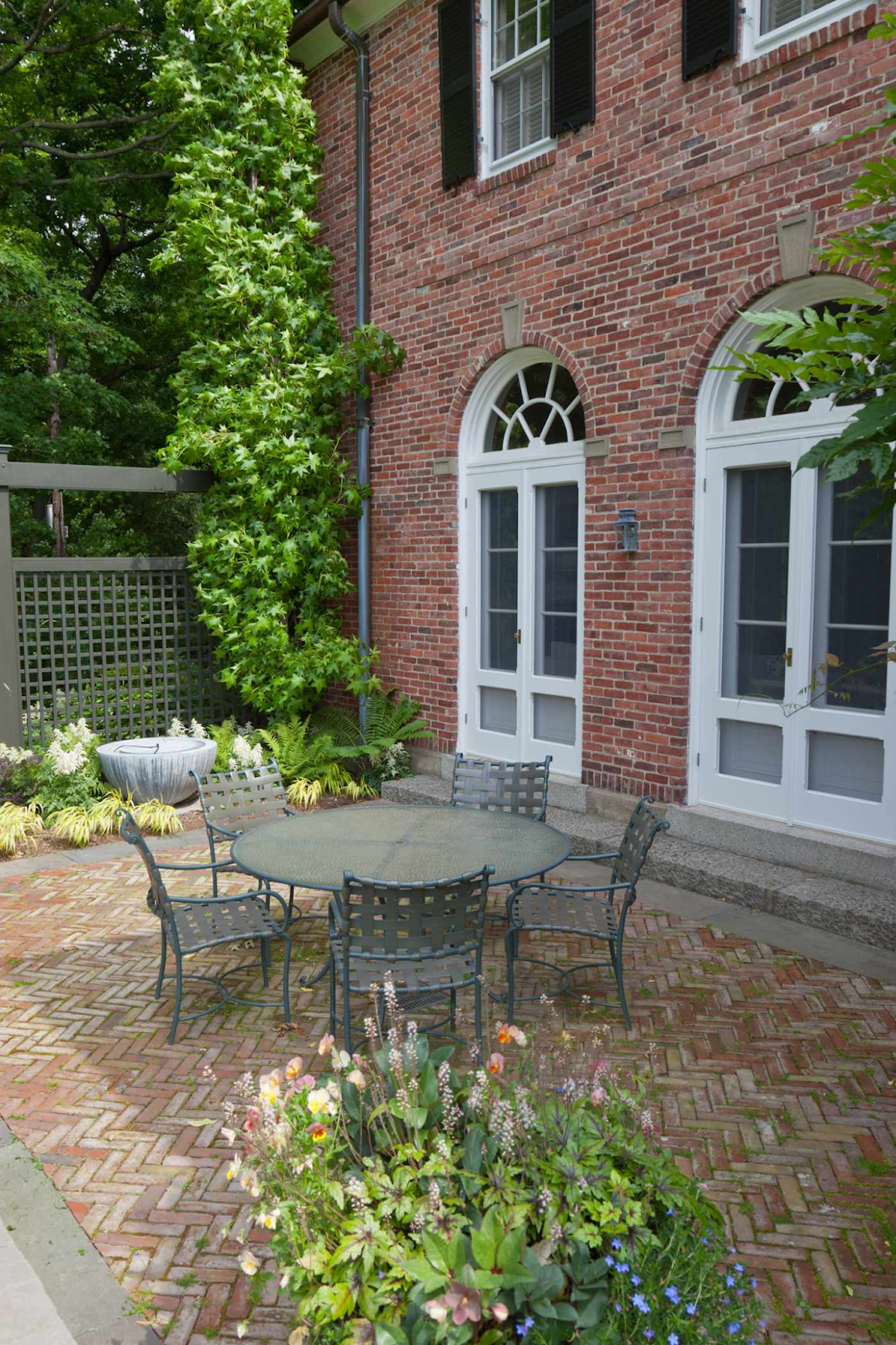
This is among the most well-known simplest and aesthetically pleasing patterns that could be lay down for patio bricks. This was entailing the laying of these bricks on an angle in order to form a wave like pattern on the floor of the patio and to me it has the dual effect of beautifying the patio whilst also adding a touch of movement to the whole structure.
2. Basketweave Design
Source: Houzz
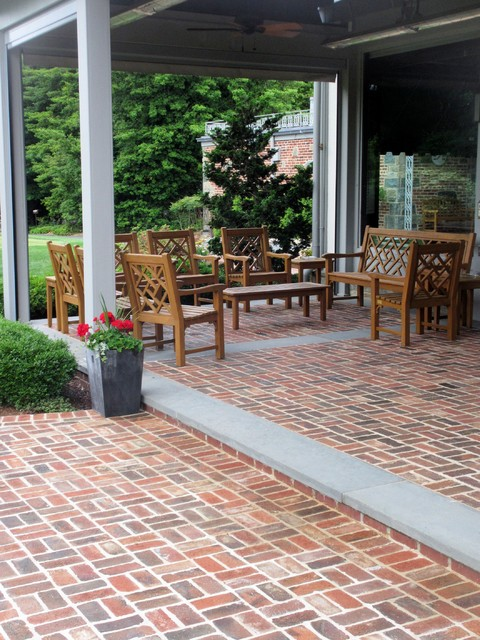
If one wants to keep the look a little more conservative but not without style, the basketweave is an excellent choice. In this pattern, bricks are interchanged in sets to form a lattice like appearance that is more like a basket. Basketweave patterns are good for pathways or small patios and make your outdoor area look not only practical, but interesting as well.
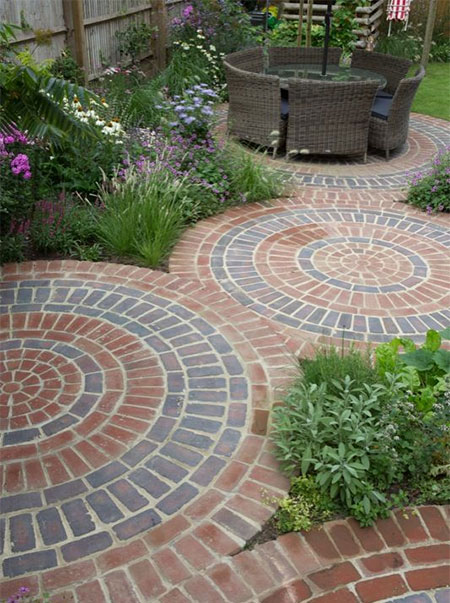
3. Circular Patio
Source: Home-Dzine
Make a discussion in your backyard space by making round patterned patio on the bricks. Circular patios add value to your backyard by defining the space as well as enhancing the circle concept of the backyard area. This design is especially suitable for the zones where people like to seat and have meals, as it creates a focus zone for people to communicate and appreciate the fresh air.
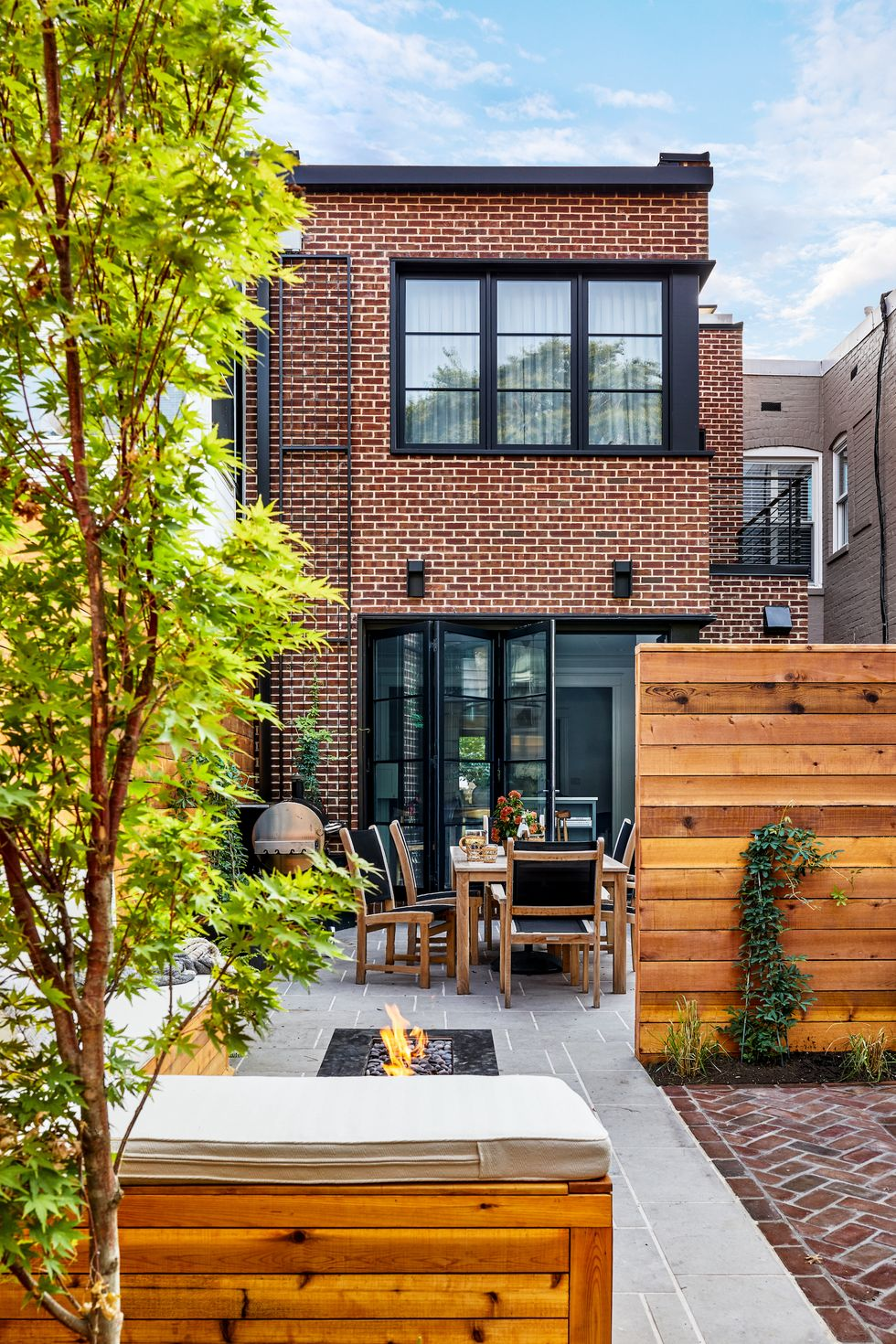
4. Mixed Materials
Source: House Beautiful
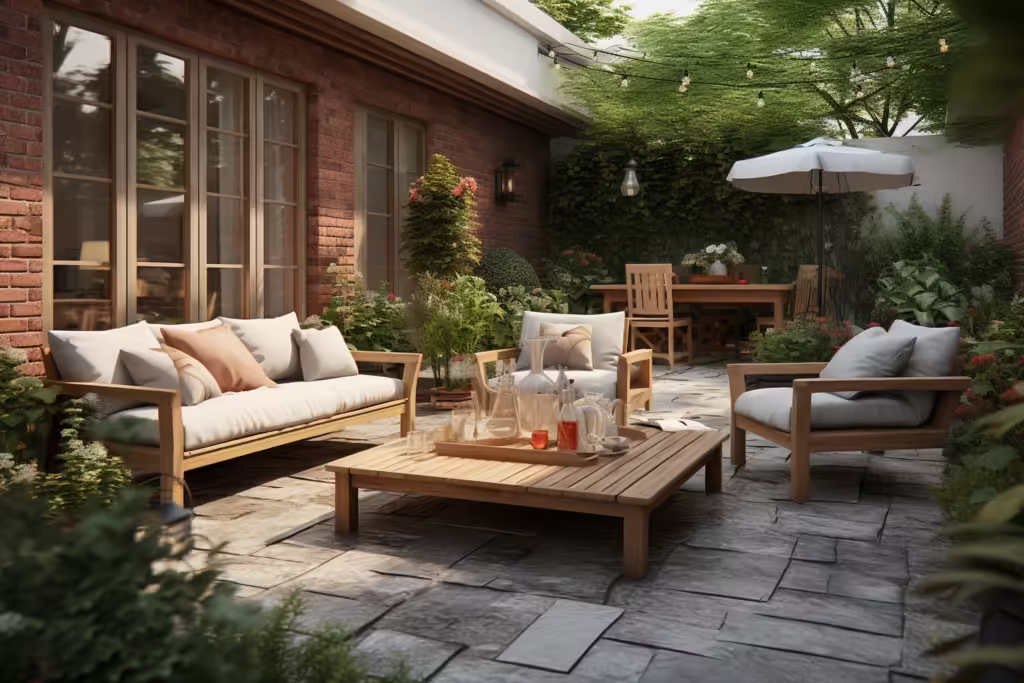
Merging of different materials is worthwhile when trying to raise the attractiveness of a patio. Introduce other materials alongside the bricks for roofing and other structures in the compound, for that unique look that compliments your personality. By combining a variety of textures and materials the exterior space will have appeal and feel like a proper outdoor room.
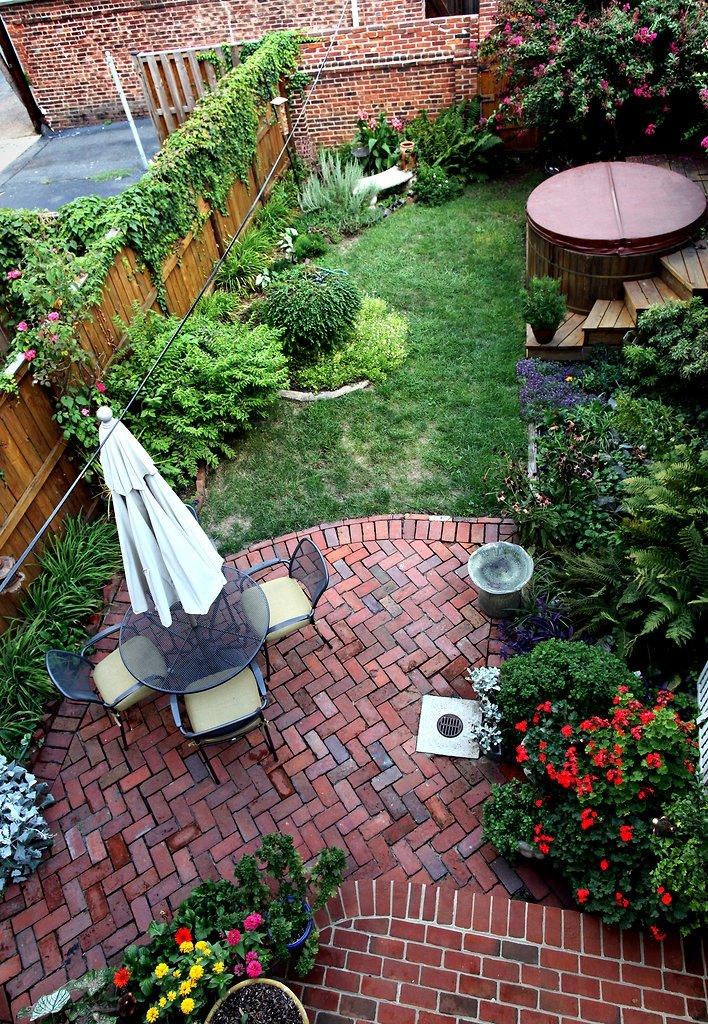
5. Vintage Red Bricks
Source: Decoist
Plastic permeases are commonly used patio chairs but they are expensive while other are pile shaped with classic red bricks, colorful, warm and flexible. These bricks provide a rather warm look to the vicinity and complement lush greenery or minimalistic outdoor furniture perfectly well. It’s through the incorporation of vintage red bricks either as the overall patio flooring or in the form of patterns, checkers or inlay, that this aesthetics is provided.
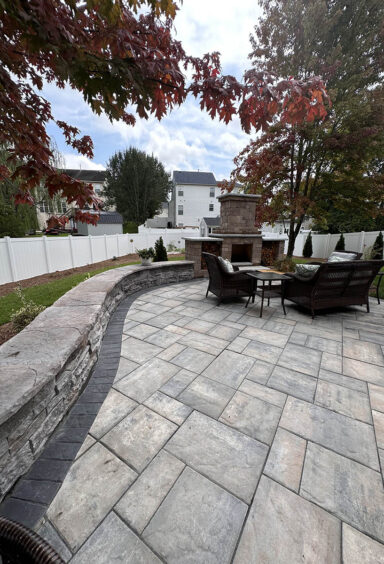
6. Grey Brick Pavers
Source: Landscape Solutions
Selecting grey brick pavers as the main material for the patio is a way to submit your territory to the modern trend while still staying classic. Lately, the grey bricks have been used to make structures with a dull look that is friendly with new modern furniture designs and outdoor greenery. They don’t draw much attention to themselves and subsequently allow color focussing on other components of a design, for instance, bright cushions, or luminous plants in the context of outdoor design.
7. Terracotta Tiles
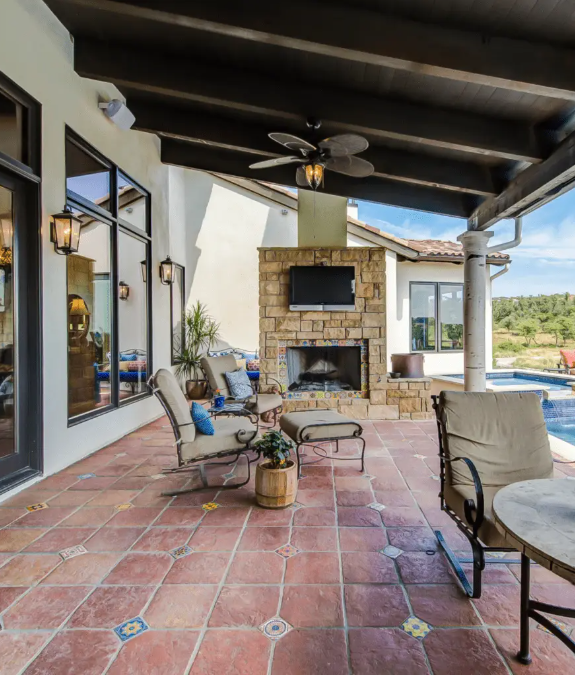
Source: Rustico Tile
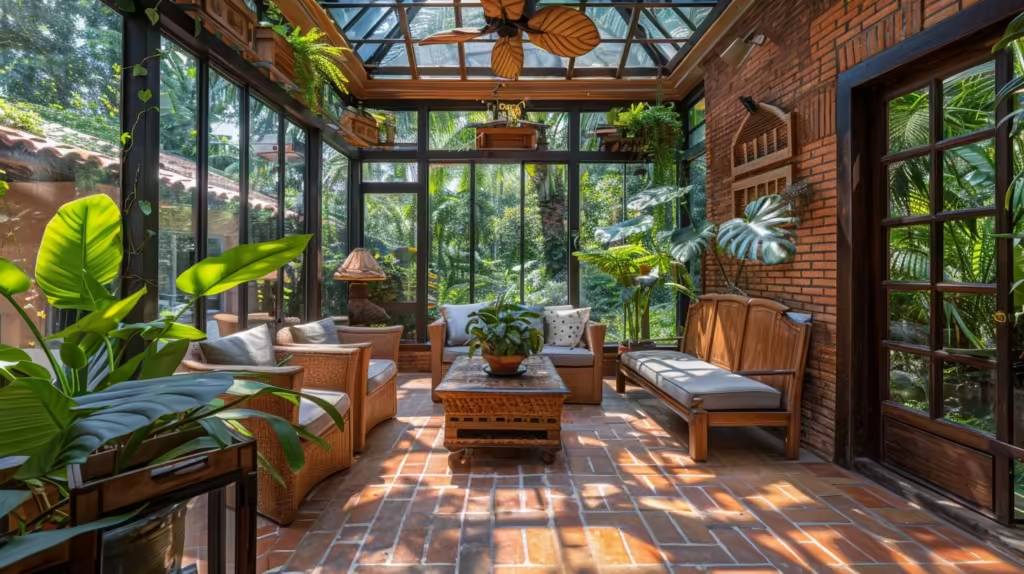
Excellent for giving a Mediterranean salad into a patio is terracotta brick tiles for pavement. Terracotta tiles have an element of warmth, being of a more earthen colour and with that rough feeling that makes one feel welcome. This makes them fit well in the natural environment and additionally, they create quiet a comfortable environment when placed in the outdoors. Terracotta tiles also do not wear out quickly or get damaged by bad weather conditions and can therefore be used in exterior space in different climates.
8. Border Accents
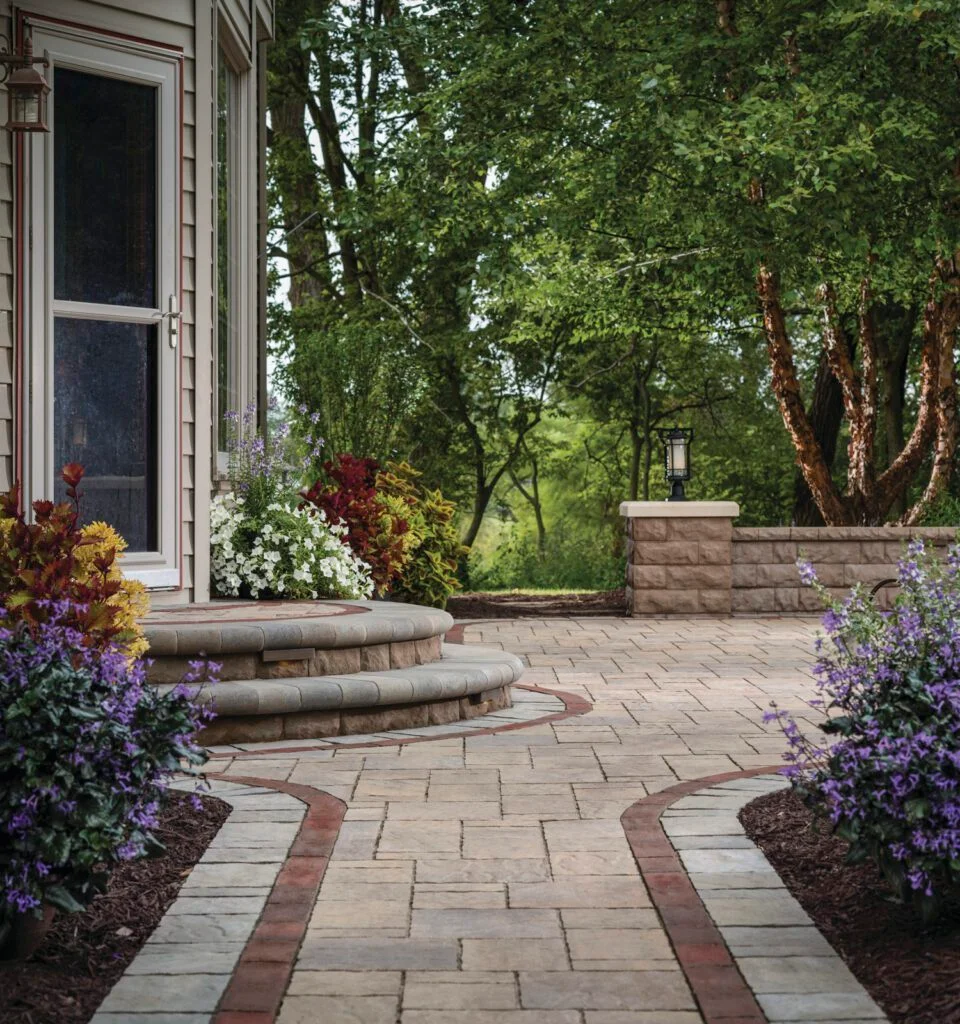
Source: Belgard Pavers
To give a perspective of the division of the different areas of a patio, it is recommended that the edges of the patio are done using bricks. Brick borders help to divide the place where people eat and relax or paths and planting beds in the case of an outdoor area. Thus, the application of borders does not only indicate division, identification, and amplification of space, but also works towards beautifying your patio.
9. Brick Steps
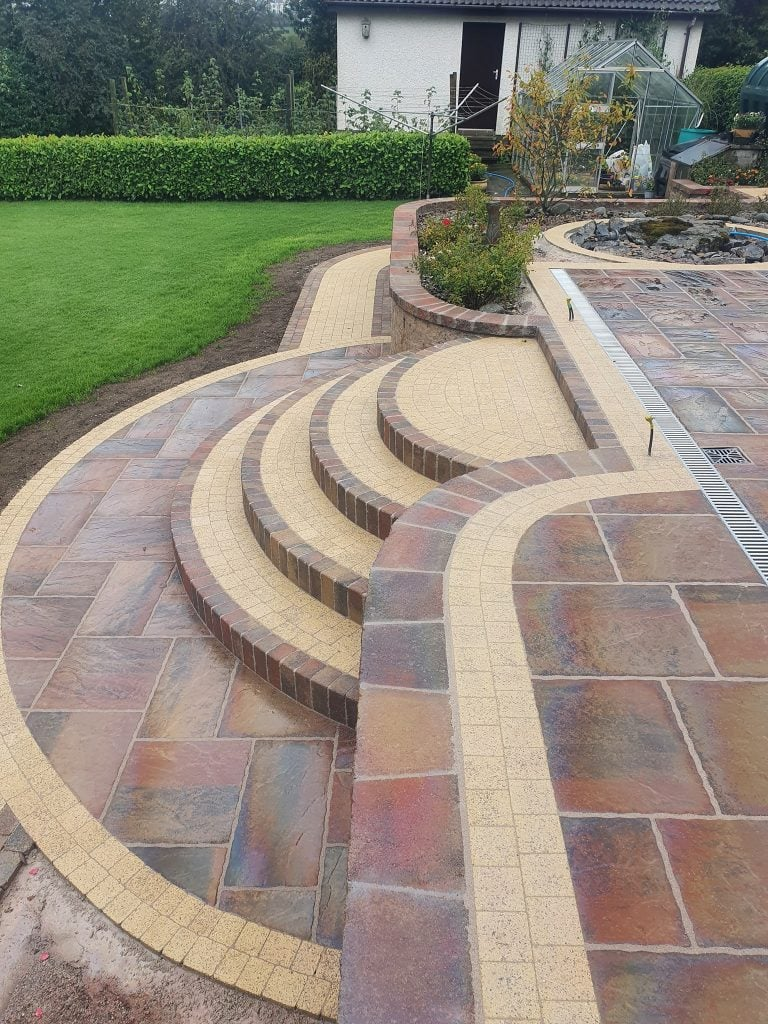
Source: Tobermore
Use brick steps in the patio to link two or more grounds or to move from one outdoor area to the other. As for the design, the brick steps can be of varied patterns starting from minimalist and ending with the patterns that can be found on the old buildings. They serve the purpose, and at the same time they enhance the architectural design and appearance of patios.
10. Intricate Inlays

Source: DoBytuDesign
Use small distinct bricks or stones for a patterned design on the patio floor. These ones may simple geometric designs, flowers or any other design that the client desires to have in their teeth. These detailed patterns do not only speak about inventiveness but can also turn into main objects in your outside area as well as add originality and enchantment as accessories on the patio ground.
11. Permeable Brick Pavers
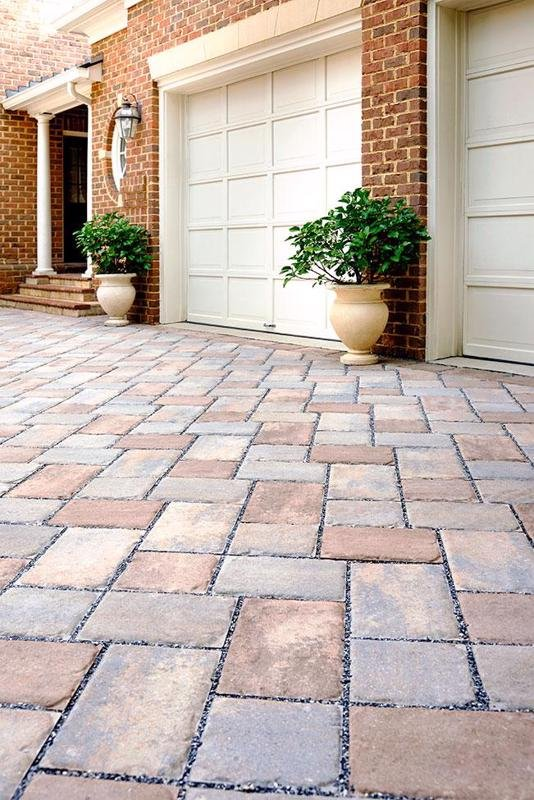
Source: American Paving Design
Select the plastic or brick pavers that allow the porosity for the environment friendly hard surface patios. Permeable bricks result to the infiltration of water through the surface in order to reduce runoff which is essential for the proper growth of plants in the garden. These bricks are most suitable for places where moisture is a factor, these bricks serve their purpose as functional and decorative elements in your outdoors.
12. Contrasting Borders
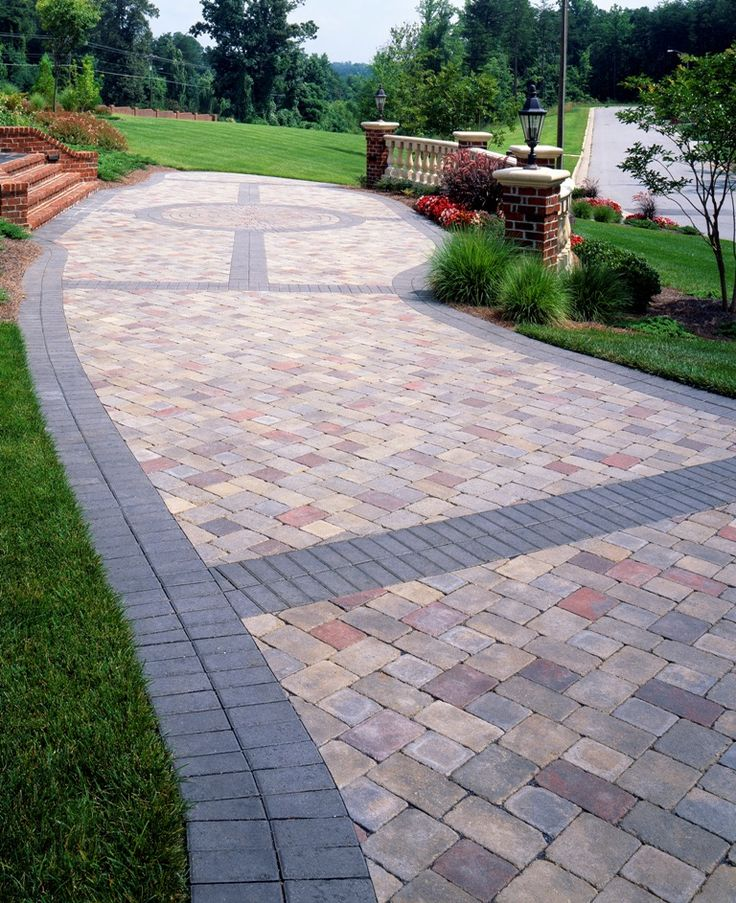
Source: Installitdirect
This gives an image of a door with light-color bricks and borders of a darker color or vice versa. Proper use of borders accentuates the form and can also tell about the structure of your patio and make the general appearance more Jacky. Hirzel actually points out that while this design can be used in the pathways, seating areas or at the edges of the patio it has the potential of increasing the beautification of your outside area.
13. Brick Fire Pit
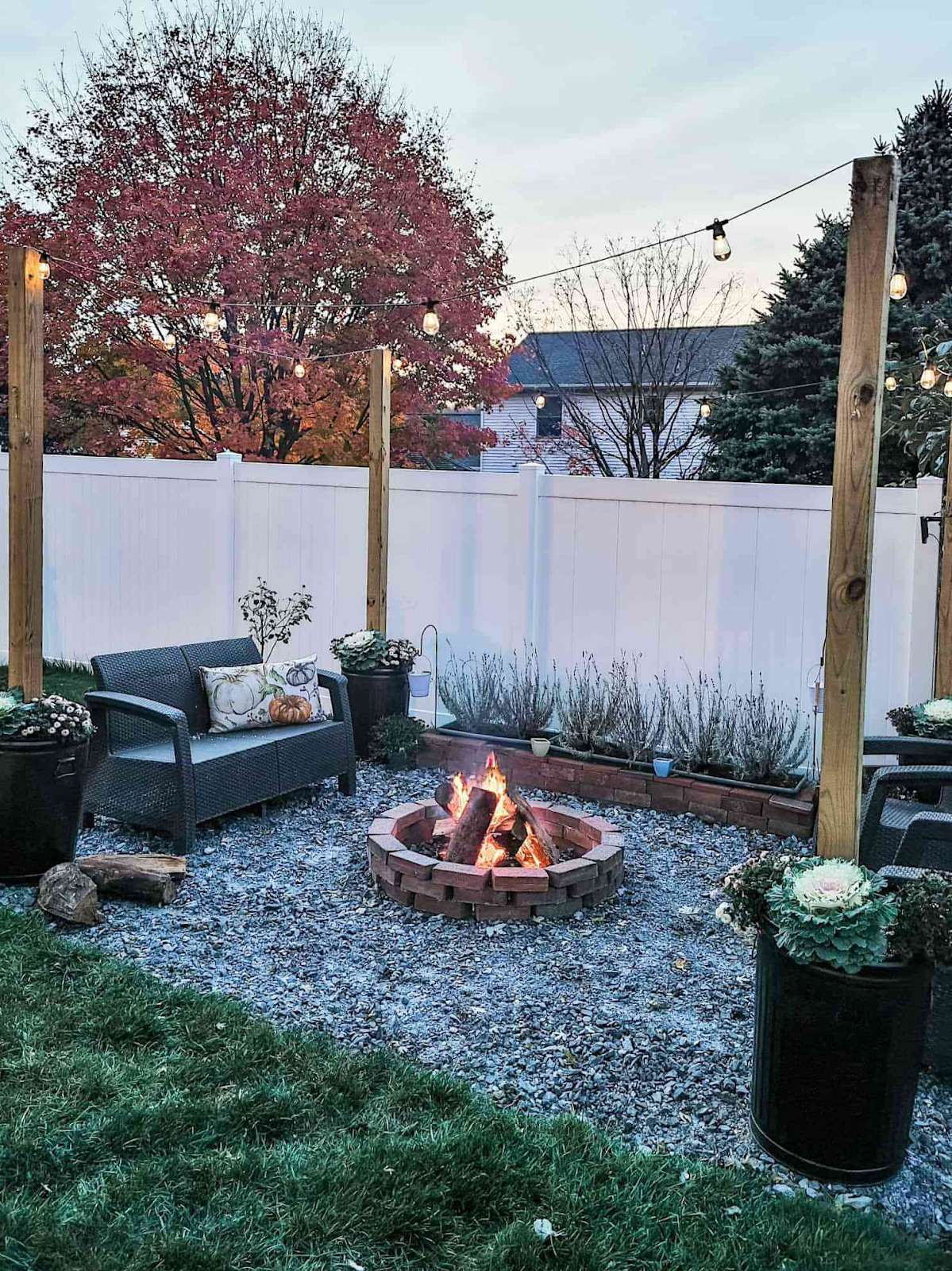
Source: The Spruce
Consider using a brick fire pit as a main item of a patio – this will be perfect for warm outgoing in the open air. This type of fire pit has the added consideration of being a central feature that brings families and friends together for conversation. The fire pit should be surrounded with comfortable furniture and warm light to get the nice atmosphere on the outdoor patio.
14. Geometric Patterns
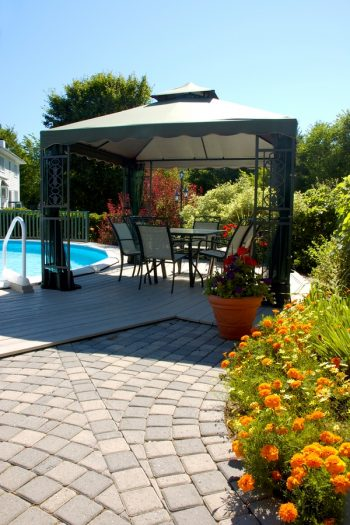
Source: Bless My Weeds
Some geometric brick patterns that can be useful to design a contemporary and fashionable patio are the chevron pattern, the diamond pattern or hexagonal pattern. Incorporation of geometric patterns gives your outside area a new look and a modern touch. Such patterns can be installed in patios’ floors, as a design for the walls or even as a part of the interior design.
15. Natural Stone Edging
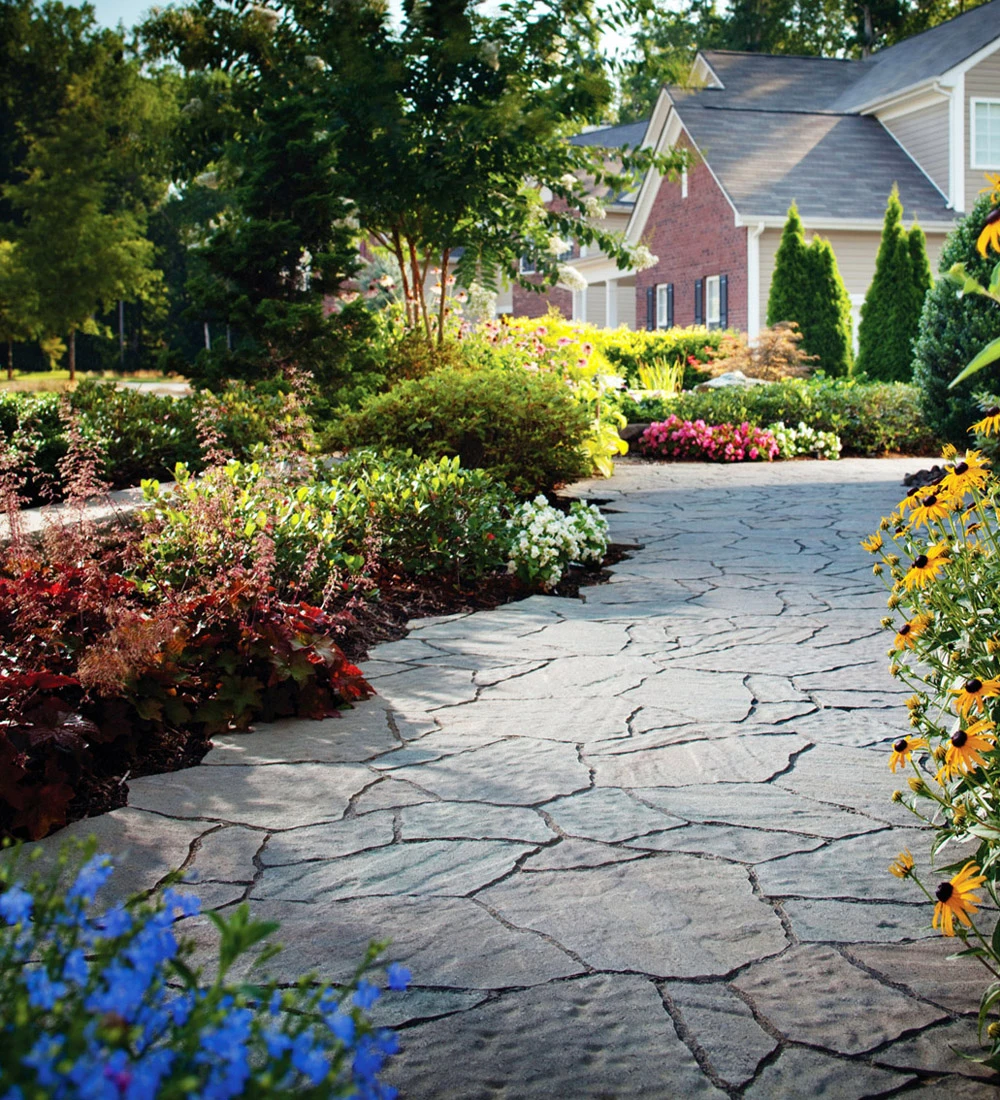
Source: Belgard Pavers
Such applications are brick as an edging for areas where you have incorporated natural stones such as pebbles, river rocks, flagstones among others. Patio natural stone edging is usually provide a smooth transition between the patio and garden landscape providing an added beauty to the project.
This type of selection of materials contributes to the increased perception of the area with the help of different textures and allows you to clearly determine where the territory of the patio ends.
Final Thoughts
Brick brings something to a patio that almost no other material can match — a warmth, a depth of character, and a timelessness that only improves with age.
Whether you go for the classic appeal of a herringbone red brick patio or the contemporary edge of grey pavers with a contrasting border, these ideas show just how much creative range brick genuinely offers.
Choose the idea that suits your home and your style and build something that will look even better in ten years than it does on the day it is finished.
FAQs
What type of brick is best for a patio?
Clay paving bricks or engineering bricks are the correct choice for outdoor patio use. Standard wall bricks are not suitable as they cannot withstand the combination of foot traffic, ground moisture, and freeze-thaw cycles that patio paving must endure. Look for bricks specifically rated for external paving use with an appropriate slip resistance rating for your climate.
How long does a brick patio last?
A brick patio laid on a properly prepared sub-base with quality paving grade bricks will last 30 to 50 years or more with routine maintenance. Individual bricks that crack or become uneven can be lifted and replaced without affecting the rest of the patio, making brick one of the most repairable and longest-lasting patio materials available.
Is a brick patio expensive to install?
Brick paving sits in the mid-range of patio material costs. New clay paving bricks are generally less expensive than natural stone but more expensive than standard concrete pavers. Reclaimed brick can be more expensive than new brick once cleaning and sorting costs are factored in. The laying cost for brick paving is similar to natural stone given the skill and time required for accurate laying and pointing.
Can I lay a brick patio myself?
A straightforward rectangular brick patio in a simple laying pattern like running bond or herringbone is a realistic DIY project for someone with good practical skills and the right tools. More complex designs involving circular patterns, intricate inlays, or significant level changes are better undertaken by an experienced paving contractor. The sub-base preparation is the most physically demanding part and also the most important for long-term results.
How do I stop weeds growing in my brick patio joints?
The most effective long-term solution is to use polymeric jointing sand rather than standard kiln-dried sand. Polymeric sand contains a binder that hardens when wetted and creates a more weed-resistant joint. Applying a path weed killer in spring and autumn keeps any remaining weed establishment under control. Regular sweeping also helps by removing weed seeds before they have a chance to germinate in the joints.
Do brick patios get slippery when wet?
Quality paving grade bricks with an appropriate slip resistance rating, R10 minimum for general outdoor use, provide good grip in wet conditions. Smooth or polished brick finishes are more slippery when wet and should be avoided on main patio areas. Textured or sand-faced brick surfaces provide the best grip. If an existing brick patio becomes slippery with age due to algae or polish, a proprietary anti-slip treatment can be applied to improve grip.