13+ Patio Extension Ideas to Maximize Your Outdoor Space
Expanding your Patio is a smart idea that transforms your outdoor area into a working and comfortable zone ideal for relaxation, parties, and family.
Your patio doesn’t have to stop where it currently ends. With the right extension ideas, you can add usable space, define new zones, and turn a basic outdoor area into something that genuinely rivals your indoor living room.
These ideas work for every budget, every yard size, and every style of home.
What Counts as a Patio Extension?
A patio extension is anything that expands the usable footprint of your outdoor space, either physically by adding more surface area, or functionally by making the existing space work harder and feel bigger. Both approaches are equally valid and often the most successful patio transformations combine the two.
Love Chic Living Club?
Add us as one of your preferred Google sources and discover more home decor, DIY, outdoor, and lifestyle inspiration from us.
Physical extensions include adding new paving, a deck section, a gravel zone, or a raised platform beyond the existing patio edge. Functional extensions include features like a pergola that creates a defined overhead space, an outdoor kitchen that turns the patio into an entertainment hub, or built-in planters that give structure and depth to what was previously just an open slab.
The best patio extensions feel like they were always part of the original design. That comes down to using materials that relate to what’s already there, keeping transitions clean, and making sure each addition serves a clear purpose rather than just filling space.
How to Plan a Patio Extension
Planning is where most patio extension projects either succeed or run into expensive problems. A little time spent upfront saves a huge amount of money and frustration later.
Assess What You Already Have
Before planning anything new, take stock of your existing patio honestly. What’s working? What isn’t? Where does the space fall short? Is it too small for the number of people you host? Does it lack shade or shelter? Does it feel disconnected from the garden? The answers tell you exactly what kind of extension will have the most impact.
Decide on Your Primary Goal
Every successful patio extension project has a clear primary goal. More space for dining. A dedicated area for the kids. A sheltered spot for year-round use. A kitchen and entertaining hub. Knowing your goal before you start stops you from adding features that sound appealing but don’t actually solve your problem.
Check Local Permit Requirements
In many US municipalities, patio extensions that are ground level and under a certain square footage do not require a building permit. However, any structure with a roof, like a pergola with solid panels, or any extension that involves drainage alterations or gets close to property boundaries may trigger permit requirements. Always check with your local building department before breaking ground. The rules vary significantly by state and municipality.
Think About the Ground Preparation
Any physical extension of your patio surface needs a properly prepared sub-base to prevent sinking, cracking, and drainage problems. A minimum of 4 inches of compacted gravel sub-base under any paving is a standard starting point. For areas subject to heavy use or significant rainfall, 6 to 8 inches is more appropriate. Skipping or skimping on sub-base preparation is the most common reason DIY patio extensions fail within a few years.
You May Also Love
Match Materials Carefully
The most common mistake with patio extensions is using a different material for the new section without thinking about how it will relate to the existing surface. Ideally, use the same material throughout for a completely seamless result. Where that isn’t possible or desirable, choose a material that complements rather than clashes, and use a deliberate, clean transition detail between the two surfaces.
Patio Extension Ideas for Small Yards
A small yard doesn’t limit your extension options as much as you might think. The key is being strategic about what you add and making sure every addition earns its place.
Extend Into Lawn Space
The simplest physical extension is to take some of your lawn area and convert it to patio. Even adding a 3 to 4 foot band of paving around the existing patio perimeter creates a noticeably larger usable surface and reduces the lawn maintenance that comes with a small garden. Use the same paving material as the existing patio for a seamless look.
Use the Side Return
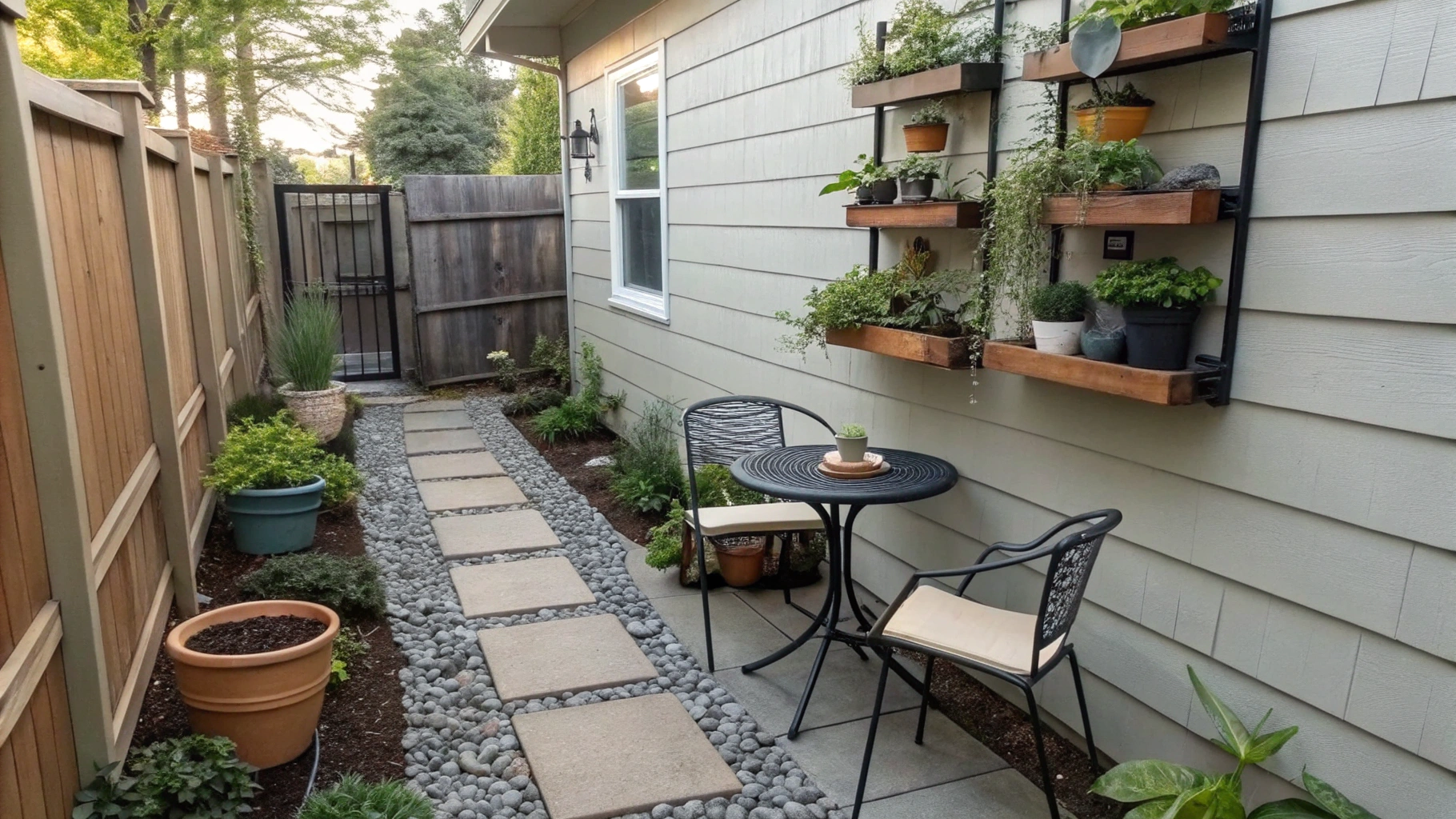
Many homes have an underused side return, the narrow passage between the house and the boundary fence. A well-designed side return extension can add a surprisingly useful zone to your outdoor space, perfect for a narrow dining setup, a vertical garden, a bike storage area, or simply a sheltered walkway that connects the front and back of the property.
Go Upward on a Roof Terrace
If you genuinely have no room to expand at ground level, a roof terrace above a single-storey extension or garage can create a completely new outdoor space from scratch. Roof terraces require structural assessment before any load is placed on them, but the payoff in terms of views, privacy, and the sheer luxury of a private elevated outdoor room is hard to beat.
Don't miss: 14+ Minimal Patio Remodel Ideas That Feel Open →
Patio Extension Ideas for Large Yards
A large yard gives you more room to play with but also more ways to get the design wrong. Thoughtful planning is just as important here as in a small space.
Create a Destination at the Bottom of the Garden
A large yard benefits from a secondary patio space at the far end of the garden, connected to the main patio by a path or stepping stones. This gives you a proper destination to walk toward, somewhere to sit in full sun when the main patio is shaded, and a natural way to divide the garden into distinct areas with different characters.
Build a Multi-Level Scheme
Large yards with any gradient are perfect candidates for a multi-level patio extension. Different levels create visual interest, define separate zones naturally, and make use of slopes that would otherwise be difficult to landscape. Use retaining walls and wide steps as design features rather than just engineering necessities.
Add a Pool or Hot Tub Surround
If you’re considering a pool or hot tub, a large yard gives you room to build a proper surround, a generous paved area around the water with loungers, an outdoor shower, storage for towels and equipment, and perhaps a bar or refreshment zone. This turns a pool into a genuine resort-style feature rather than just a tank of water dropped into the lawn.
Keep Exploring
How to Make a Patio Extension Look Seamless
The visual join between an existing patio and a new extension is where many projects come unstuck. Here’s how to make it look like it was always one space.
Use the Same Material Where Possible
If your existing patio is laid in a particular stone or paver, using the same material for the extension creates a completely seamless result. Keep the same joint width, the same laying pattern, and the same grout or jointing compound for an invisible transition.
Introduce a Deliberate Transition Detail
When using two different materials, a deliberate transition detail turns a potential weakness into a design feature. A single row of a contrasting paver, a metal or timber edging strip, or a narrow band of gravel between the two surfaces all create a clean, intentional-looking boundary that reads as a design decision rather than a patch job.
Extend the Levels and Drainage
Make sure your new paving continues the existing fall and drainage direction of the original patio. Water pooling at the join between old and new paving is a very common problem when extensions are added without proper attention to levels. Get this right from the start and you won’t be dealing with it for years.
Whether you want to create a cozy retreat or a lively entertainment space, these ideas will guide you in making the most of your patio. Below, you can find 13+ ideas for making the most of your patio space.
1. Pergola
Source: Houzz
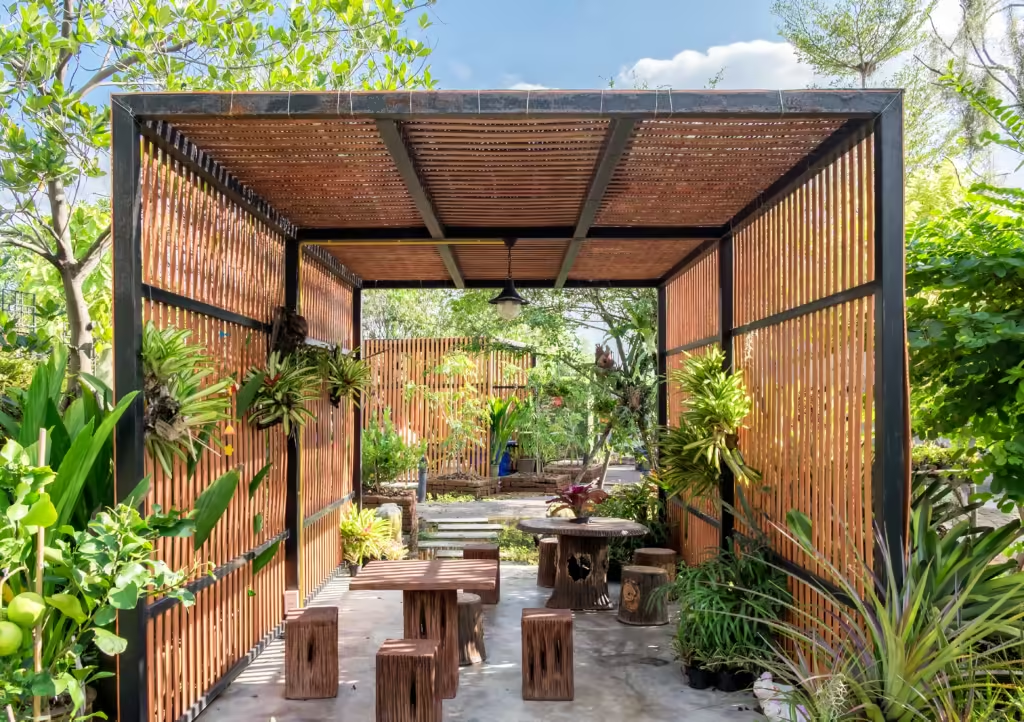
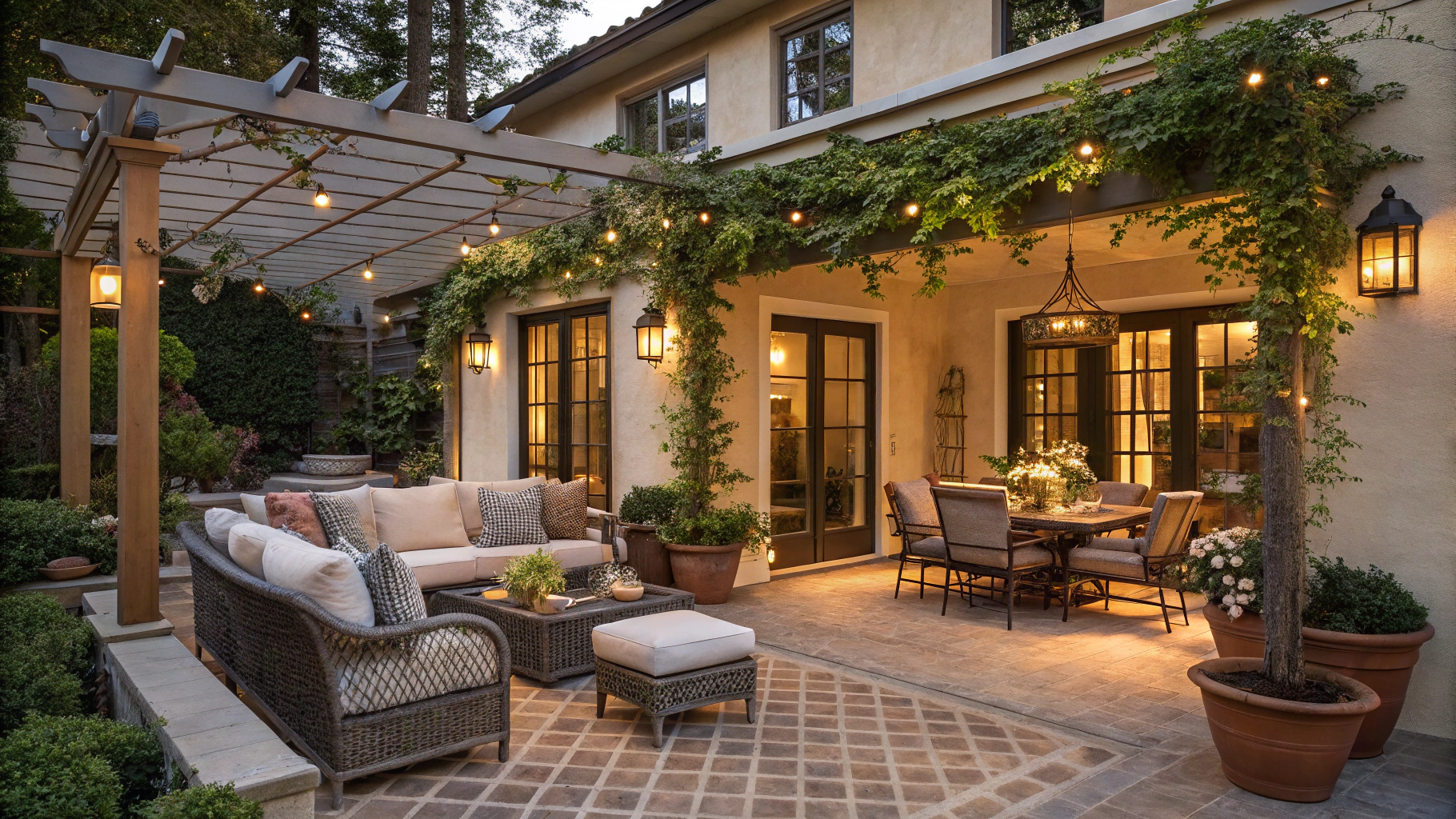
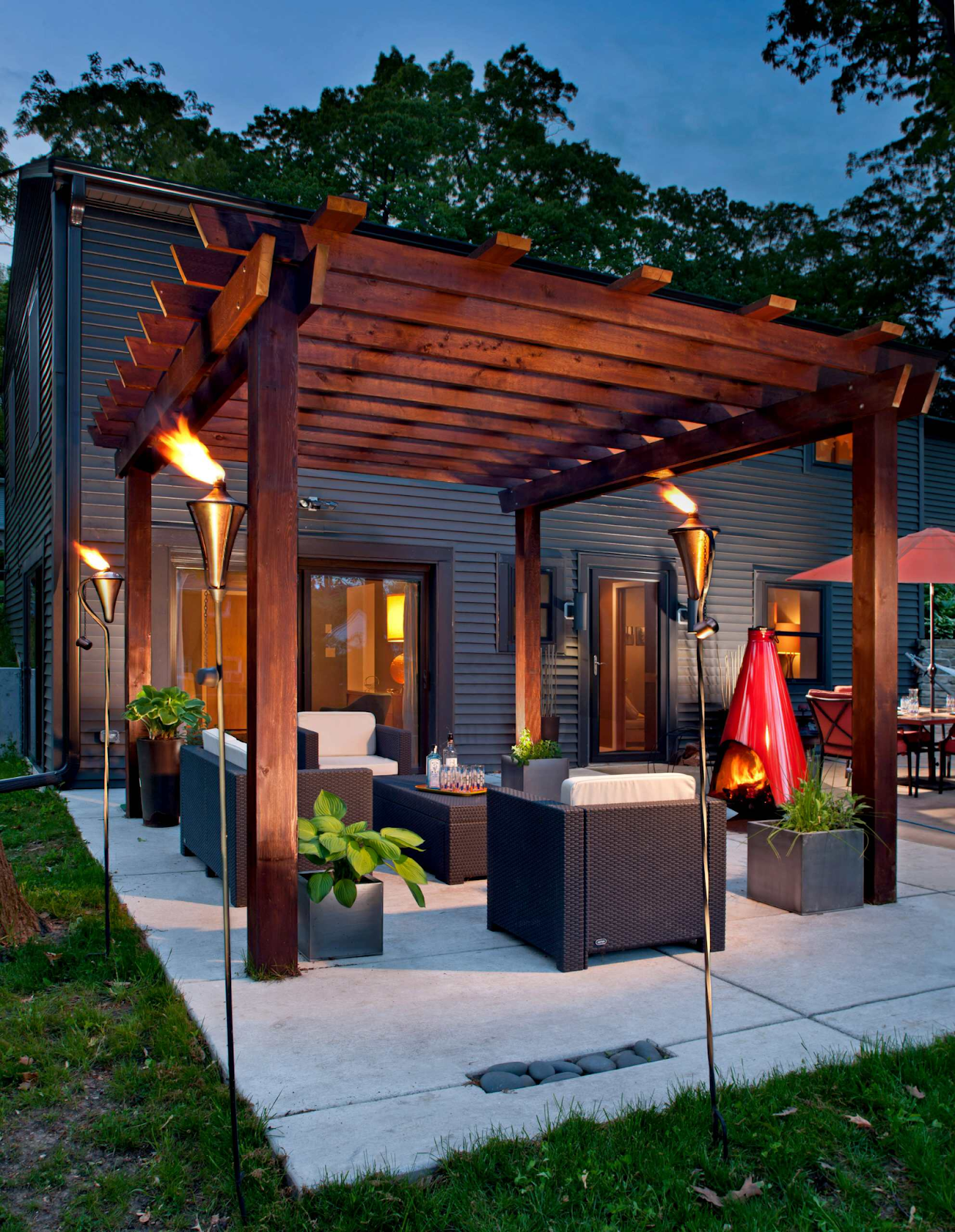
Besides giving extra protection to living spaces and increasing the living space, a pergola is also a good place to have a small rest on the patio. Choose a modern or traditional style based on your requirements and proclivities. It is possible to complement the design of the pergolas with vertical gardens, for example, with wisteria or ivy, and in this way, get an element of nature and provide more shade. They can also be enhanced with hanging lamps or drapes for a homely ambiance in the room, especially for couple use.
2. Outdoor Kitchen
Source: Forbes
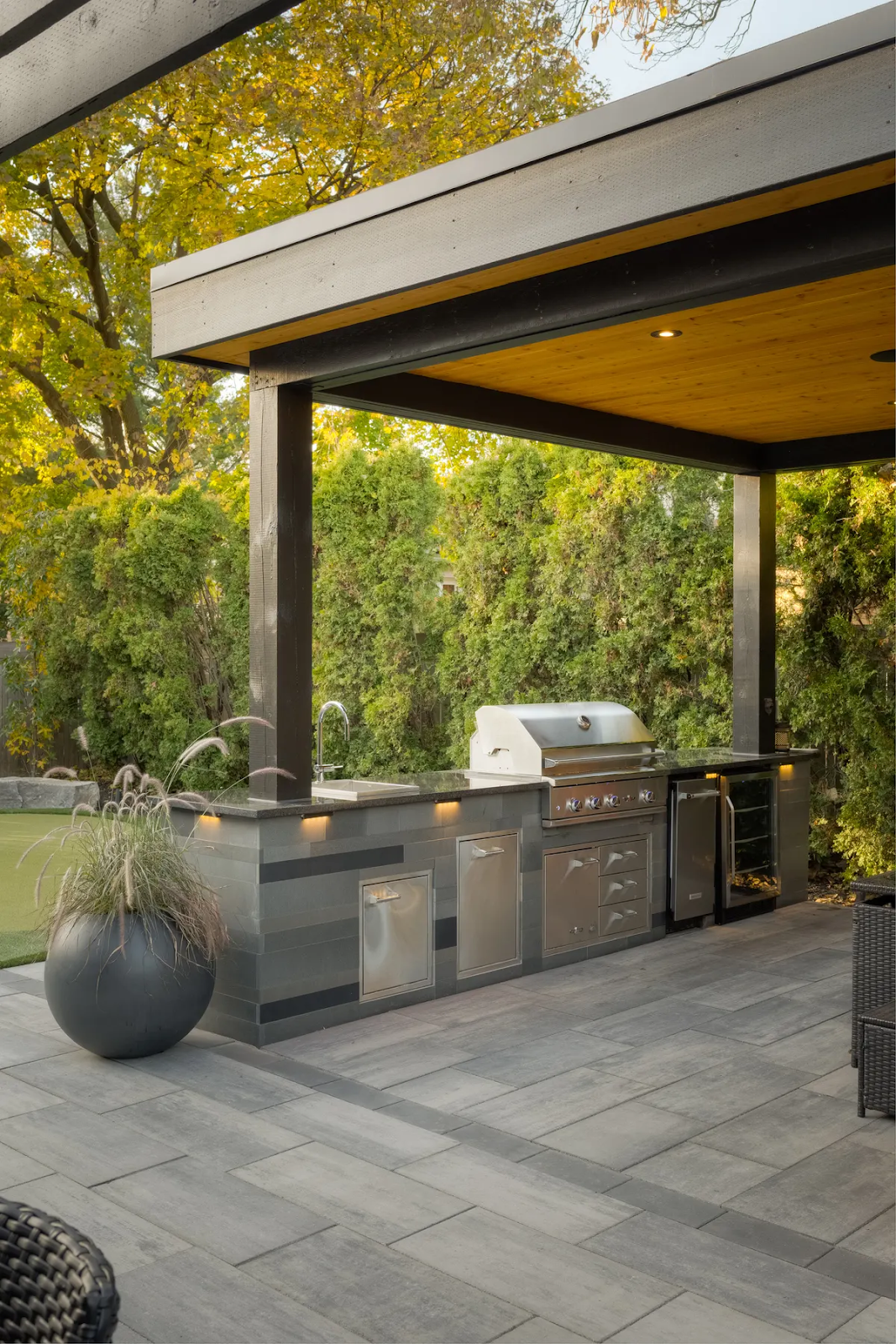
You can cook outdoors by including an outdoor kitchen in the patio to act like a dining area. This is because convenience is very important when cooking outside, and the inclusion of a grill, sink, and refrigerator will go a long way in making this possible. An outdoor kitchen may just entail a grill area or a complete set-up with countertops, cabinets, a pizza oven, and more. This mode of setting up offers an opportunity to prepare food while at the same time being outside and also hosting other people.
3. Fire Pit
Source: Town and Country Living
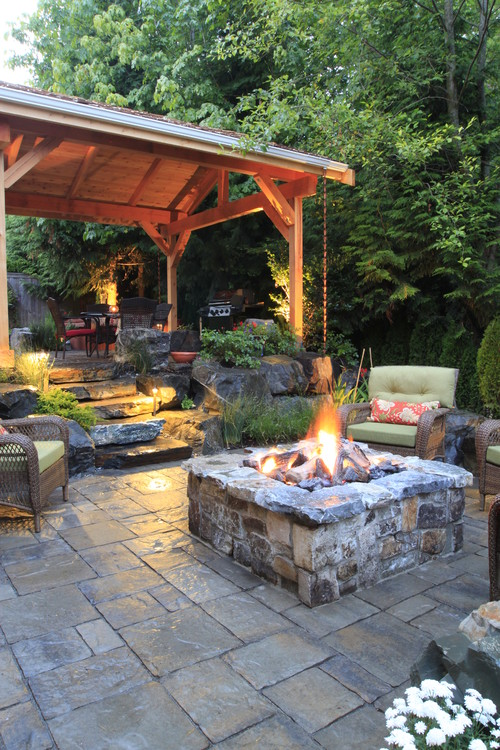
A fire pit adds warmth and charm to a space and could be used as a centerpiece. This kind of roof is best for the occasional cool evening and roasting marshmallows. Fire pits can be permanent structures or temporary fixtures in a range of designs and made from a range of materials, including stone, metal, and concrete. Apart from making the sitting area comfortable, having a fire pit is perfect for storytelling or just enjoying the warmth of the fire.
4. Water Feature
Source: Better Homes and Gardens
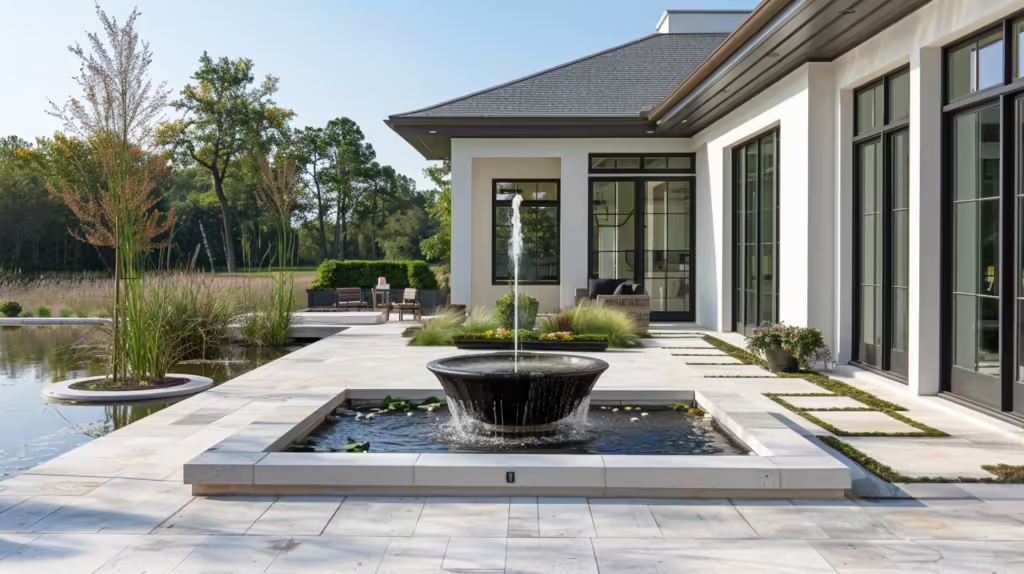
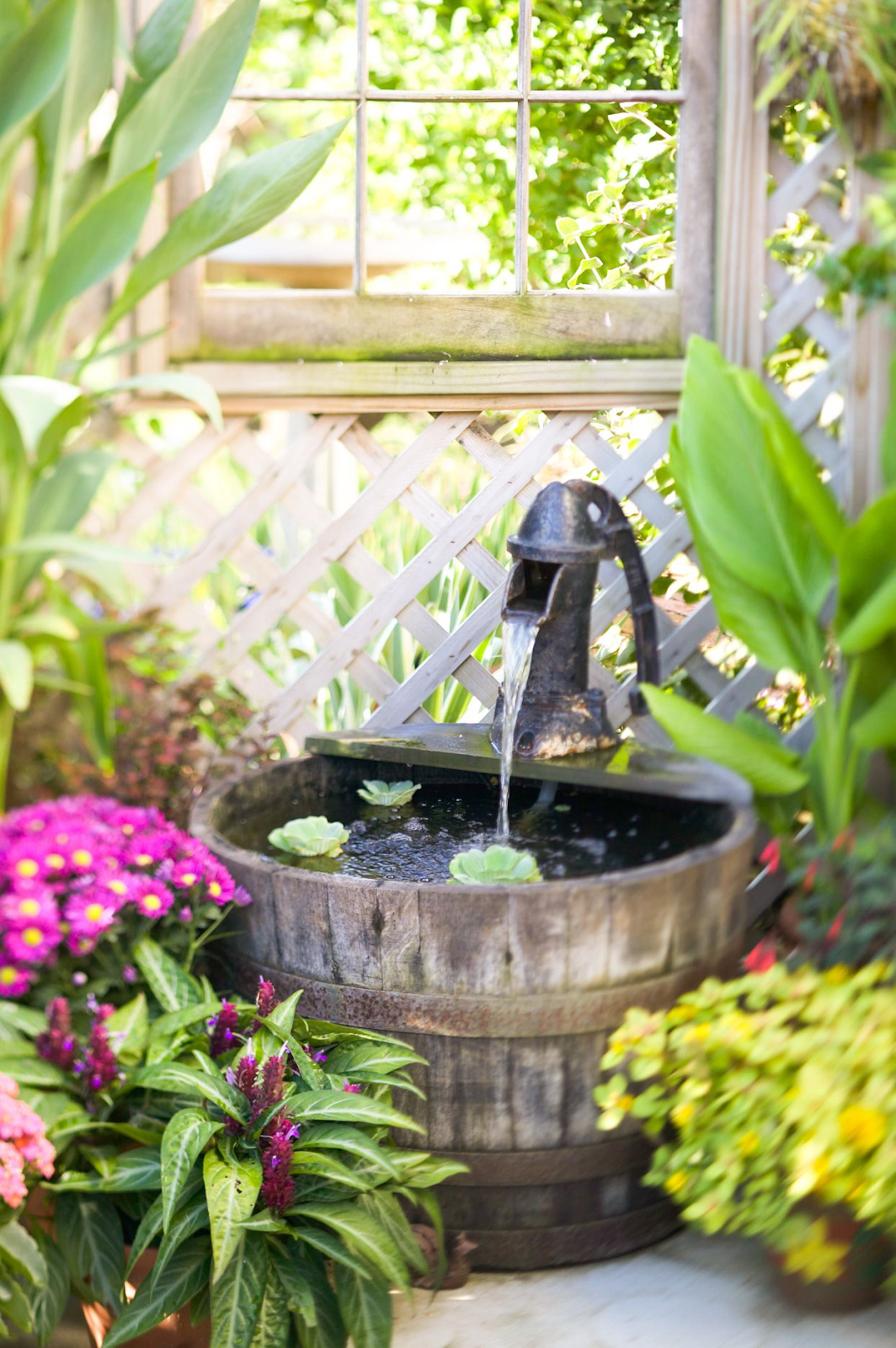
You can also select to have a fountain or a small pond in the patio for that quiet and serene environment. Water makes some sounds, which can also help create a certain environment or a positive atmosphere. Water elements can range from ordinary water sprays to streams or small waterfalls and fish ponds. They are visually appealing, and help attract birds and other wildlife and make your outdoor space worthwhile.
5. Vertical Garden
Source: Gogreen Landscape
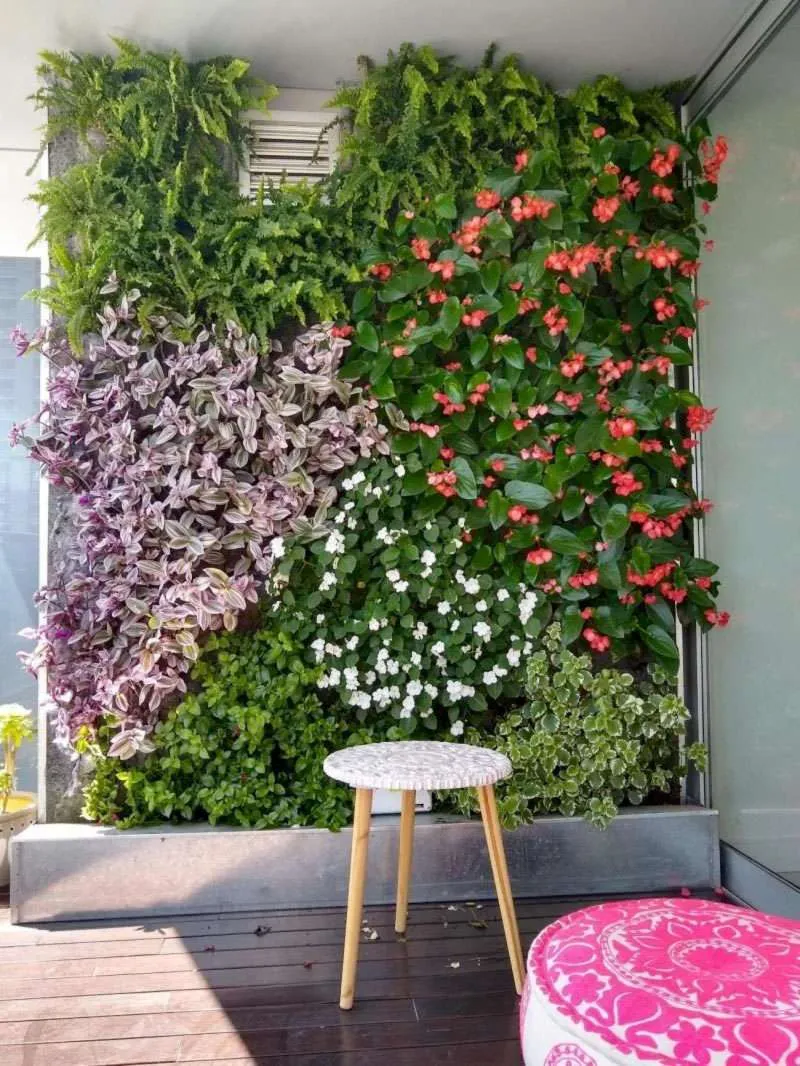
It is specifically suitable for areas with limited space since it does not require a large area. It enables you to cultivate herbs, flowers, or crops and will give your patio a natural feeling. Green walls can be developed by the installation of wall pockets, trellises, and vertical supports. They are ideal for incorporating aspects of nature in urban environments and can also be adapted to your specific area and style of gardening.
6. Outdoor Lighting
Source: Country Living
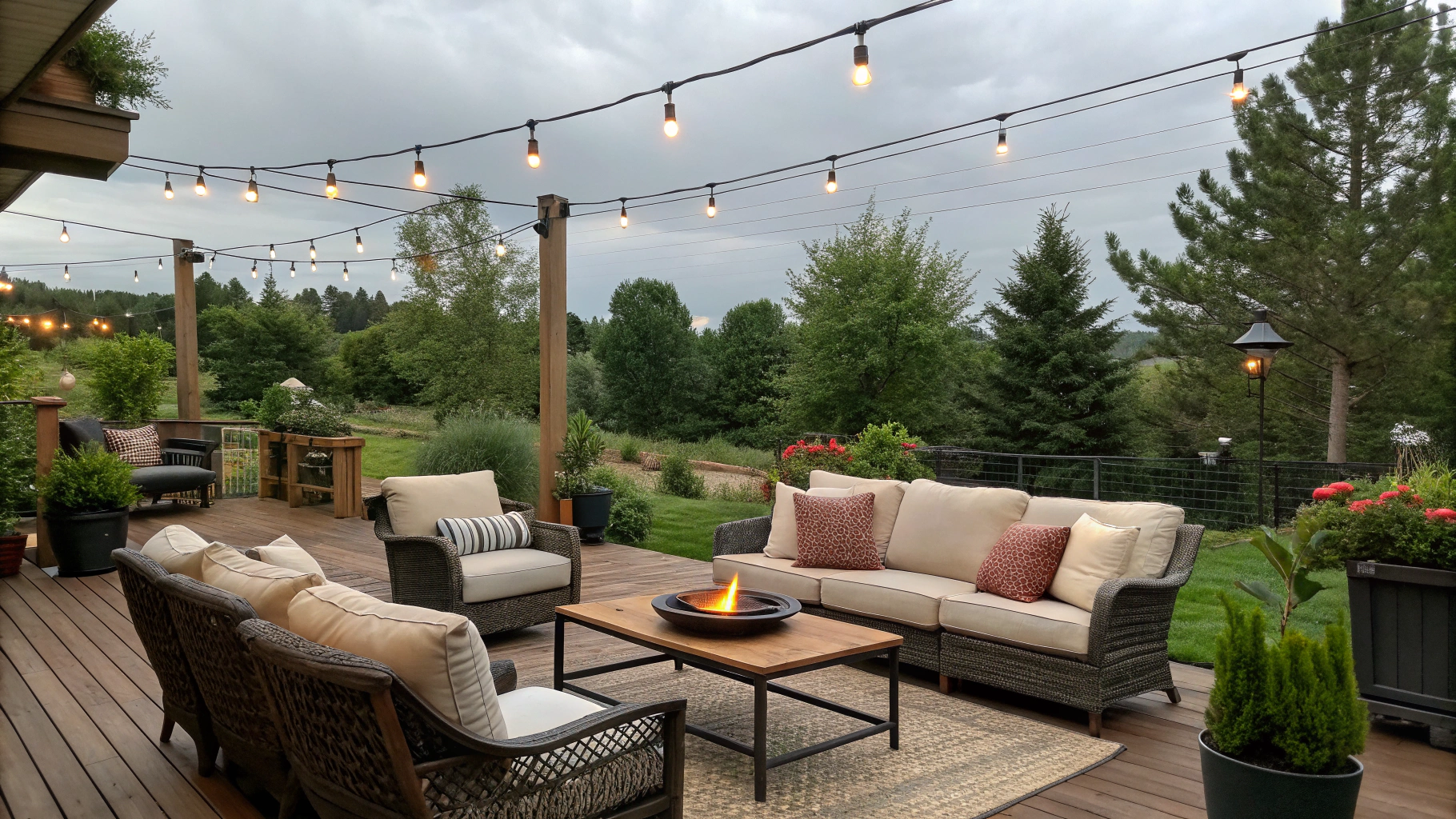
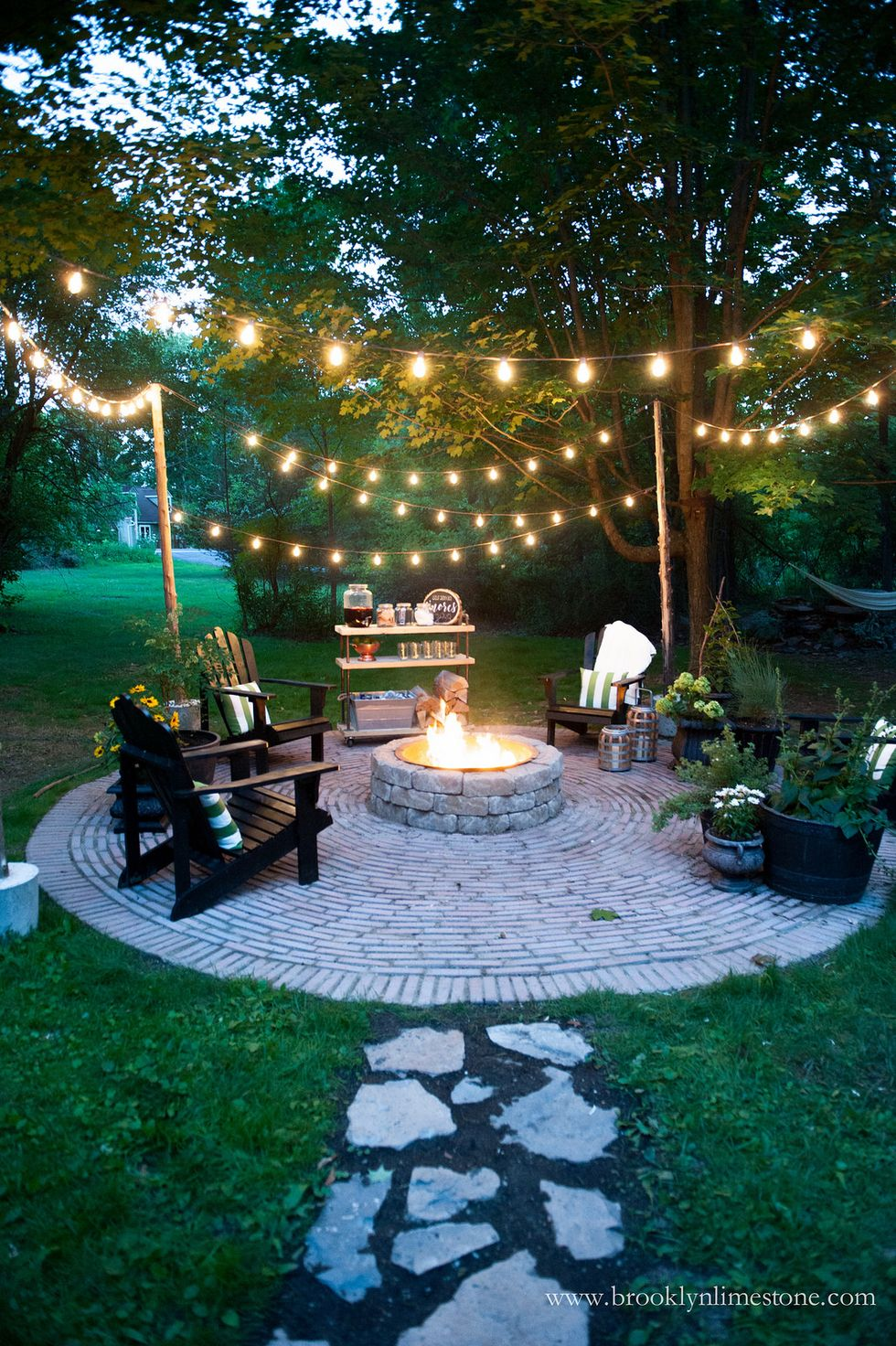
When night falls, string lights, lanterns, and path lights turn your patio into a romantic place. Illumination enhances the warmth of a space and can accentuate elements such as planters or a furniture arrangement. Sunlight is another good source of light that can be incorporated for the environmentally friendly option. Lighting is not only a crucial element of design that plays an important role in creating a visual look of the given area, but it also provides additional control over safety and usability of the room.
7. Retractable Awning

Source: Samson Outdoor Living
A retractable awning that can be pulled to cover the allowed space and rolled back to allow natural light and air when the need arises. It can add further versatility to your patio and the ability to use it during different weather conditions. There are two types of retractable awnings: manual and motorized. These structures are quite useful in that they can offer shade in the scorching summer or protection from a shower that is not a downpour.
8. Outdoor Furniture
Source: Barba Impianti
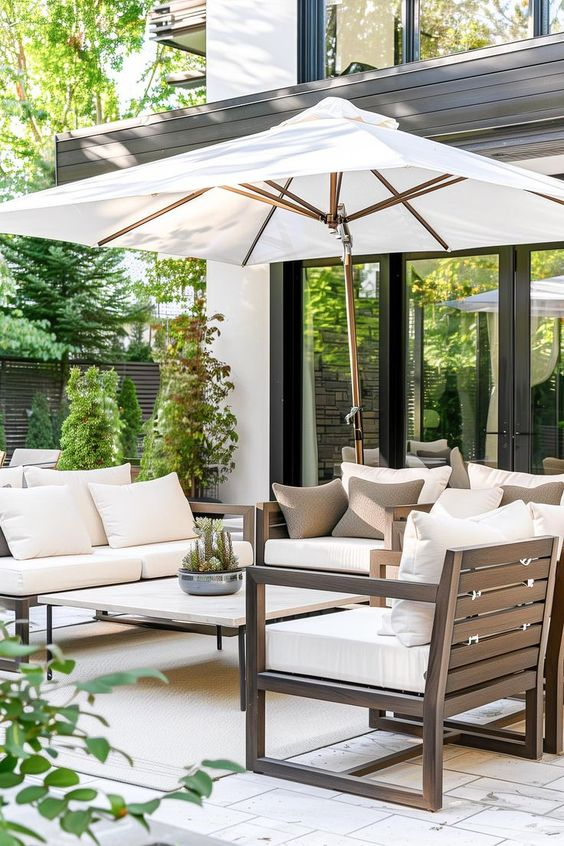
Choose proper furniture for outdoor use so you can enjoy the living room atmosphere while being outside. A dining set, lounge chair, and sofa can make your patio a versatile place to be. Select accented materials such as teak, wicker, or anodized aluminum, which are suitable for outdoor use. Extra cushions and throws can also improve the comfort and overall finish of the place to make it as good as being at home
9. Outdoor Rugs
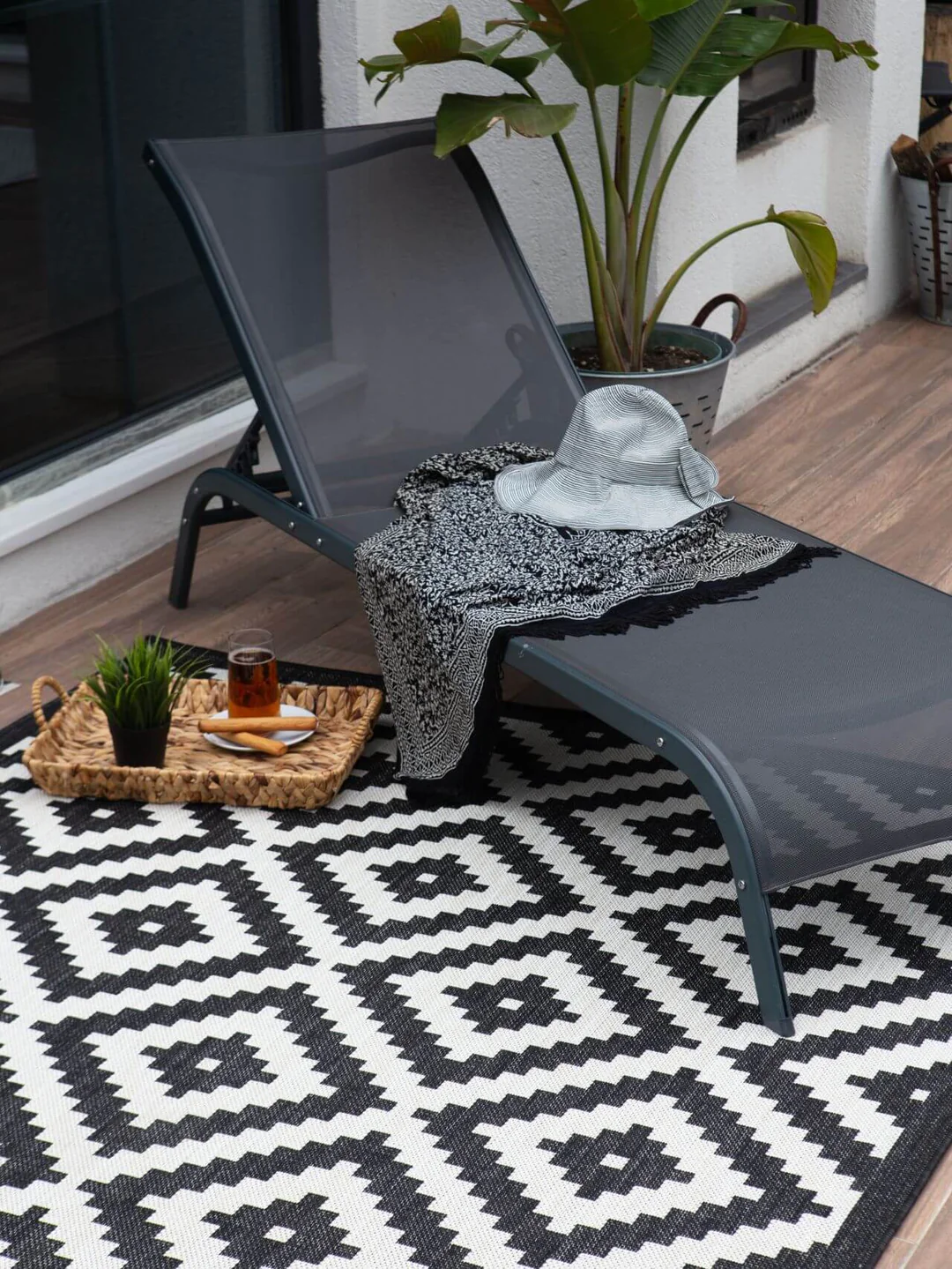
Source: THE RUGS
Terrace rugs also help outline various sections of your patio and enhance its color and pattern. They also make the space more comfortable underfoot, providing more cushioning than the concrete floor. Outdoor rugs can be used in any season and are easily maintained as they are exposed to different weather conditions. They can be utilized to divide space and come in handy as, for example, a dining zone or a relaxation area, but they also serve an aesthetic purpose.
10. Patio Heater
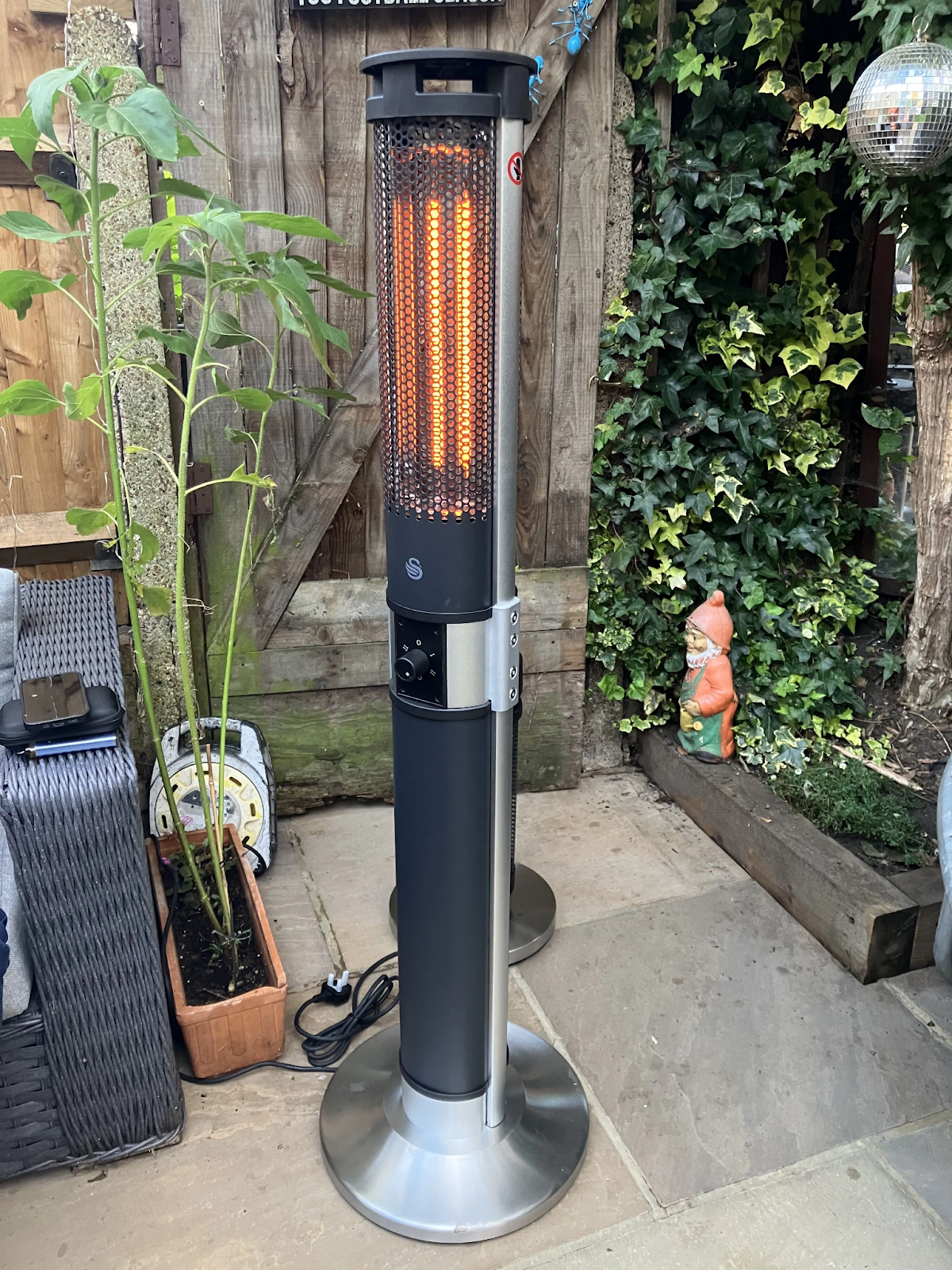
Source: Food and Wine
A patio heater helps you use the patio during the cold seasons due to its ability to warm the air around the area. These are available in the form of gas heaters, electric heaters, or even an open place for a fireplace. Patio heaters are available in several types including stand alone patio heaters, small portable patio heaters and even the tabletop type of heaters, and these can complement the patio. They offer a safe and cozy environment, enabling the occupants to be a part of the natural environment at any time of the year.
11. Sunken Seating
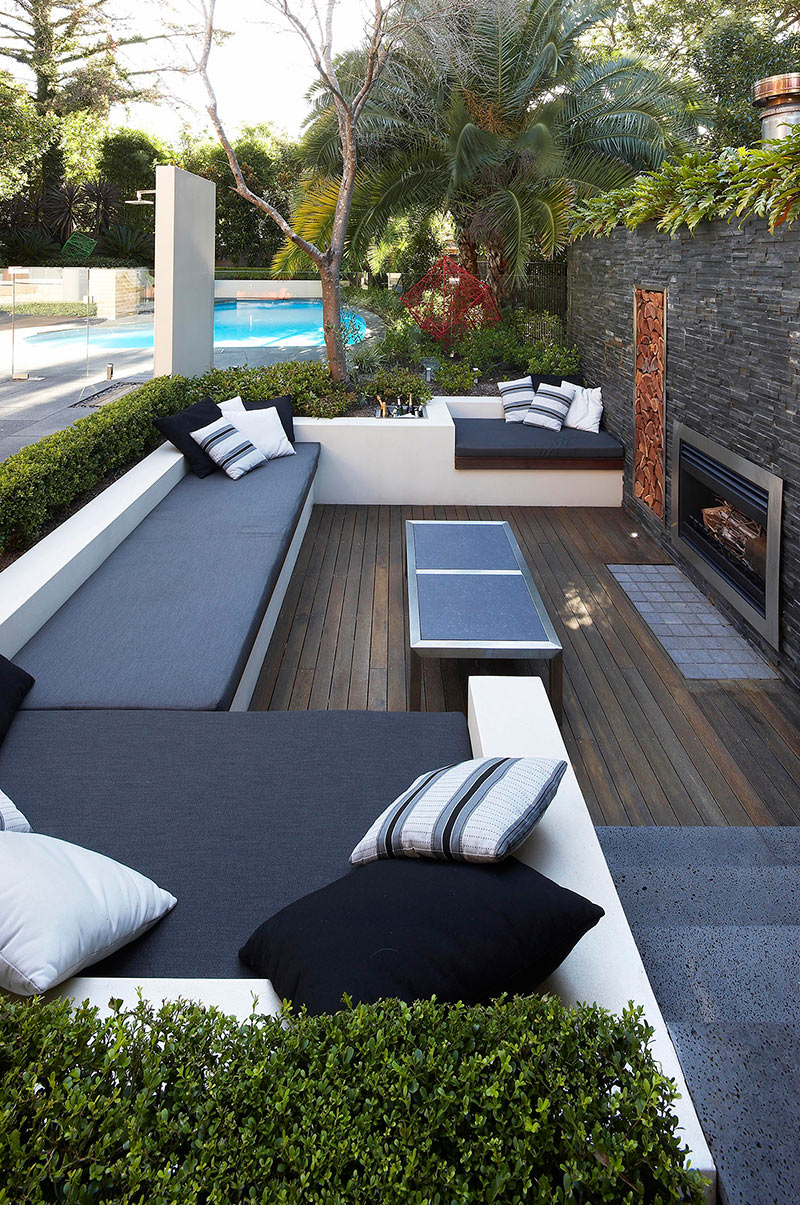
Source: Home Designing
A sunken seating area will be a plus when designing your patio as it will create and additional unique feel to your home. It is a perfect approach to build a channel specifically for a particular conversation. Sunken seating can be installed with incorporated benches, and include hedging or walls around them for seclusion. This setup can still encourage the use of space for socializing and relaxation due to the close contact furniture arrangement.
12. Deck Extension
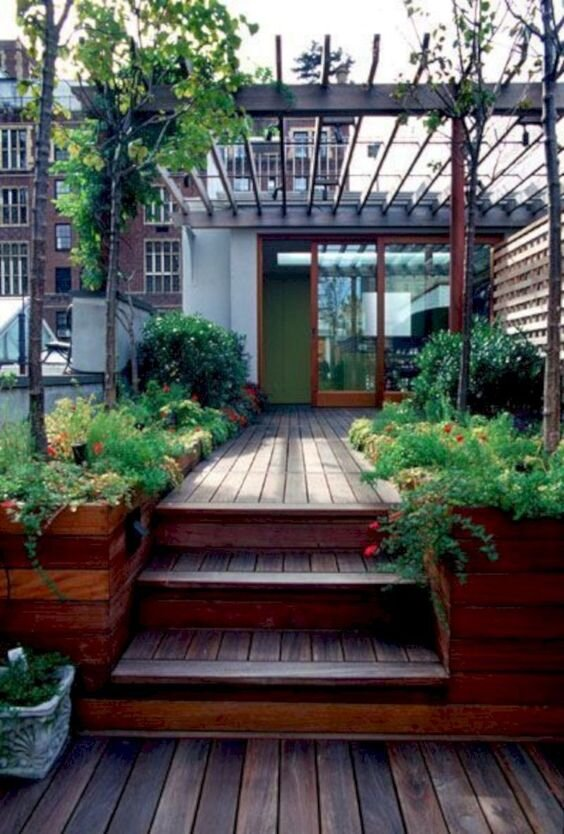
Source: Reno Guide
It is possible to add more space for sitting and recreation using a deck built out from the main house into the patio area. Employ products like composites as they can last longer and do not require much attention when compared to other materials. It is possible to build the extension of a deck that will be aesthetically integrated with the patio, thus making the division difficult to observe. It can also be raised to provide higher elevation for enhanced views or to transform the outdoor space into a more engaging one.
13. Built-In Planters
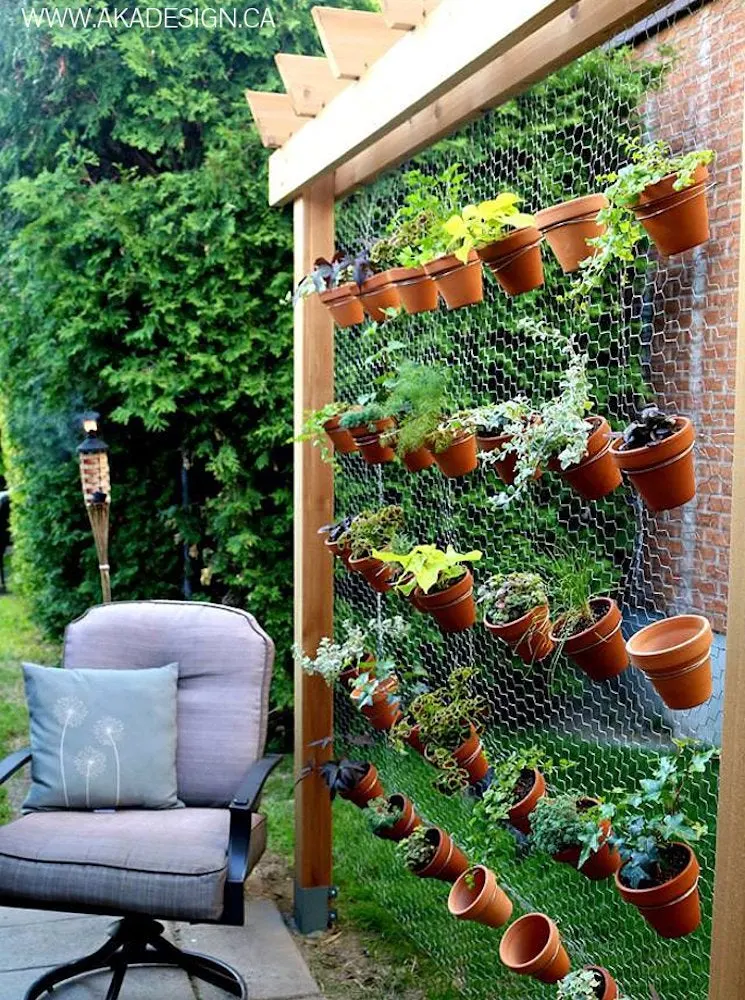
Source: Bob Vila
You can incorporate planters directly into your patio design to make it aesthetically more appealing and give it a well-finished look. You can use them to cultivate a variety of flowers, shrubs or even trees that are small in size. It is possible to incorporate planters into the design of seating walls or even the railings of a deck, which, in addition to the practicality, will also enhance the structure’s visual appearance. These can be used to help develop a consistent appearance and add a barrier around the area of the patio.
Final Words
Extending your patio is one of the most rewarding outdoor projects you can take on. Whether you add a pergola, a fire pit, a deck section, or simply a band of new paving, each extension brings you more space to live, entertain, and enjoy the outdoors. Start with the idea that solves your biggest current limitation and build from there.
FAQs
Do I need planning permission for a patio extension?
In most US states, a ground-level patio extension does not require a building permit provided it stays within your property boundaries and doesn’t involve significant structural work or drainage changes. Any covered structure, roofed pergola, or extension that approaches property boundary lines may trigger permit requirements. Always confirm with your local building department before starting work.
What is the cheapest way to extend a patio?
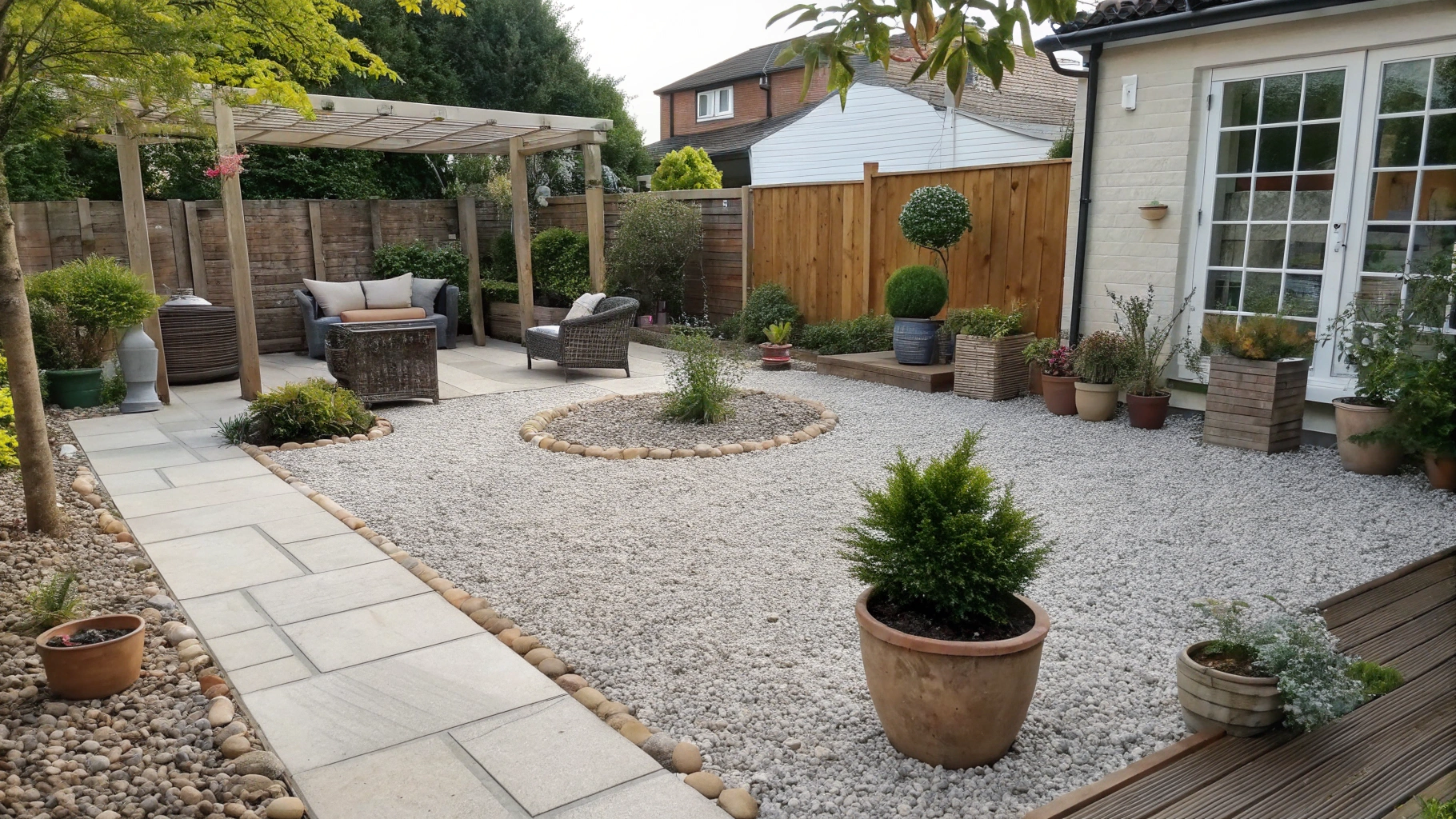
Gravel is the most cost-effective way to extend a patio surface quickly and affordably. It requires minimal sub-base preparation compared to paving, drains naturally, and can be laid directly adjacent to existing paving with a simple metal or timber edging strip to hold it in place. Concrete pavers are the next most affordable option for a more permanent, solid surface.
How do I extend my patio on a slope?
On a gentle slope, a compacted gravel sub-base with paving laid to a slight fall away from the house is usually sufficient. On a steeper slope, you have two main options: cut and fill to create a level platform retained by a low wall, or build a raised deck structure over the slope that sits level on posts. The steeper the slope, the more a deck approach makes sense over earthworks.
Can I extend my patio myself or do I need a professional?
A straightforward paving extension on flat ground is well within the capability of a competent DIYer with the right tools and some research. More complex extensions involving retaining walls, drainage management, overhead structures, or utility services are better tackled with professional help, at least for the structural elements. The investment in professional groundwork and sub-base preparation is almost always worth it in terms of longevity.
How long does a patio extension project typically take?
A simple paving extension of a moderate size, say 100 to 200 square feet, typically takes a competent landscaping team two to three days from ground preparation to finished paving. Add another day or two for features like pergolas, built-in planters, or lighting installation. DIY projects of the same scope typically take two to three weekends depending on experience and weather.
What is the best material for a patio extension?
The best material is whatever matches or complements your existing patio surface, is appropriate for your climate, and suits your budget. For versatility, durability, and low maintenance, large format porcelain pavers are hard to beat. For warmth and natural character, natural stone or composite decking are excellent choices. Concrete pavers offer the best value for money for a practical, hardwearing surface.