How to Style a Fireplace Mantel That Commands the Room
A complete guide to mantel styling, from the principles of composition and scale to seasonal updates, material choices, and the specific arrangements that make a fireplace the natural focal point of any room.
KEY POINTS
- The fireplace mantel is the most powerful styling surface in any room that has one. It sits at eye level, in the sightline from every seating position, and demands to be treated as a considered composition rather than a convenient shelf.
- The principles that make a mantel look good are the same ones that apply to any display surface: vary height, leave space, mix categories, and let one element do the talking.
- A mantel that changes with the seasons keeps the room feeling alive year-round and gives you a reason to engage with your home rather than simply inhabit it.
A fireplace mantel is a very specific kind of surface. Unlike a shelf, a console table, or a windowsill, it sits at the exact centre of a wall that the whole room is arranged to face. Everything in the seating area points toward it. Visitors look at it when they walk through the door. It is in the sightline from the sofa every time you sit down. The mantel is, in other words, the most visible flat surface in the most important room in most homes, and most of them are either bare or covered in whatever has accumulated there over time.
Love Chic Living Club?
Add us as one of your preferred Google sources and discover more home decor, DIY, outdoor, and lifestyle inspiration from us.
Getting the mantel right is one of the highest-return styling decisions available in any living space. This guide covers the principles of mantel composition, the specific decisions around materials and scale, how to approach the wall above it, and how to update it through the seasons without a complete reset each time.
RELATED: 21+ Fireplace Mantel Aesthetic Ideas for Every Style
Understand the Mantel as a Composition
The single most useful way to think about a fireplace mantel is as a composition rather than a collection of objects. A composition has a logic: it has a centre of visual gravity, it has objects that vary in height and form, it has breathing room between the elements, and it has a consistent material or colour thread that ties the different pieces together.
Most mantels that look wrong are not wrong because the individual objects are unattractive. They are wrong because the objects have been placed without any compositional logic: things arranged in a row at similar heights, every inch of surface filled, objects chosen without any relationship to each other in colour or material. The eye has nowhere to rest and nowhere to travel.
The approach that works most reliably starts from the centre and works outward. Place the anchor element at the centre of the mantel, whether that is a mirror, a piece of art, or a large object, and then build the arrangement on either side of it. Vary the heights as you move outward from the centre. Introduce an odd number of elements on each side rather than symmetrical pairs, which creates visual interest rather than static balance. Leave at least a third of the mantel surface visible. Filled-to-capacity mantels look frantic regardless of how good the individual pieces are.
The Mirror Above the Fireplace
The most classical and most consistently effective element above a fireplace is a mirror, and the reason is not simply convention. A fireplace mantel mirror positioned above the surround reflects the room back into itself at the exact point where the eye is most likely to travel, amplifying both the light and the perceived depth of the space. In a room with a window opposite the fireplace, the mirror reflects that window and creates a sense of brightness and openness that has a physical effect on how the room feels.
Size matters considerably. A mirror that is too small for the wall above the fireplace looks tentative and unresolved. The mirror should be wide enough to relate to the proportions of the mantel itself, typically at least two-thirds of the mantel’s width, and tall enough to fill a meaningful portion of the wall above the surround. An oversized mirror that seems almost too large for the space will almost always look better than a correctly sized one, because it takes the wall seriously rather than apologising for its presence.
The frame is as much a design decision as the mirror itself. An ornate gilded frame brings warmth and a quality of traditional elegance. A simple black metal frame is clean and contemporary. A raw or reclaimed wood frame adds organic warmth. The frame should be chosen to relate to the material language of the rest of the room rather than being selected in isolation.
Choose the Right Art
When a mirror does not suit the room or the aesthetic, a piece of art above the fireplace takes its place as the visual anchor of the whole wall. Fireplace mantel artwork that works well above a fireplace tends to be large in scale, calm in subject matter or palette, and confident enough to hold the wall without needing supporting elements around it.
Scale is the most common mistake. A small print or canvas above a fireplace looks lonely and lost, as if the wall above has not been properly addressed. The art should be wide enough to span a significant portion of the mantel’s width and tall enough to command the wall. A single large piece almost always outperforms a group of smaller pieces at this location, because the fireplace wall needs one strong focal point rather than a collection of competing elements.
The subject matter and palette of the art should respond to the room’s colour and material language. A room with warm neutrals and natural materials benefits from art that introduces similar tones and organic qualities. A more minimal room with a restrained palette can carry something more graphic or with greater contrast. The fireplace mantel art decor ideas that tie the room together most effectively are the ones where the art feels chosen for the room rather than placed on the most available wall.
The Mantel Surface Itself: Materials and Character
The mantel surround sets the material register of the entire fireplace wall and has a significant effect on the character of the room. The decision about what the mantel is made from, or how an existing one is treated, is worth more consideration than it typically receives.
Marble fireplace mantels are the most luxurious and the most architectural option. The veining and depth of natural marble gives a fireplace an inherent elegance that no other material quite replicates, and a marble mantel in a room with otherwise restrained decoration becomes its own statement without needing elaborate styling on top. Stone and wood mantel pairings combine the solidity and permanence of stone with the warmth of timber, creating a fireplace wall that feels both grounded and inviting.
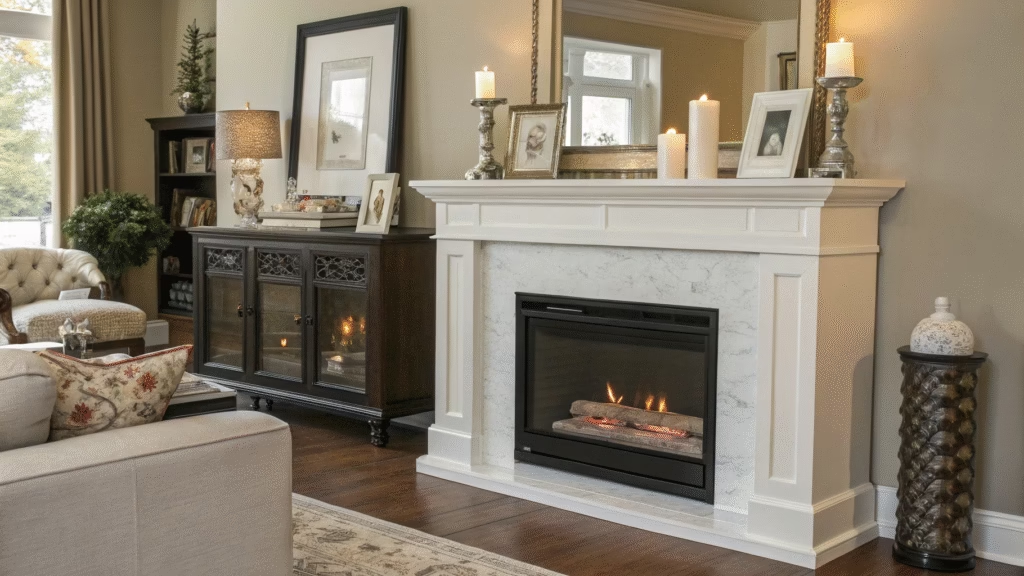
A white painted mantel is the most versatile starting point for styling, because its neutrality allows the objects on it to take centre stage. A white mantel in a colourful room recedes and lets the room speak. In a neutral room it provides clean architectural detail without competing with anything else. Painted fireplace mantels in deeper tones, a dramatic dark green, a warm charcoal, a confident black, make the fireplace wall a deliberate statement that anchors the room with more force than a white or neutral surround. A black fireplace mantel in particular has a graphic presence that reads as contemporary and confident in almost any room context.
Brick fireplace mantels have a quality of honest materiality that painted or plastered surrounds do not. The texture and warmth of exposed brick gives a fireplace wall an architectural character that is genuinely difficult to replicate with applied finishes. A brick surround works particularly well in farmhouse, industrial, and rustic settings where the raw material language is consistent throughout the room. Two-tone fireplace mantels that combine two materials or finishes, a painted upper section with a stone or tile lower surround, create a visual complexity and layering that a single material cannot achieve.
RELATED: 17+ Fireplace Mantel and Surround Ideas That Feel Cohesive
The Hearth and Surround
The mantel shelf is only one part of the fireplace wall. The surround, the hearth, and any inset or firebox all contribute to the overall character of the whole composition. Getting these elements right makes the mantel styling significantly easier, because the architectural foundation is strong enough to anchor the objects placed on it.
Fireplace mantel inserts that replace an existing firebox with something more contemporary or more suited to the room’s aesthetic are worth considering if the existing insert feels out of place. An electric insert in a modernised Victorian fireplace, a clean tiled inset replacing an outdated surround, or a simple blackened steel fireback that makes the interior of the fireplace a visual element in its own right: these are structural changes that transform the impact of the whole wall.
The combination of mantel and built-in shelving flanking the fireplace is one of the most effective architectural treatments available in a living room. The fireplace becomes the centrepiece of a composed wall of storage and display, giving the room a sense of permanence and intentional design that a standalone fireplace with bare walls on either side never achieves.
Styling the Mantel: The Practical Approach
The composition principles discussed earlier become much easier to apply when you understand what kinds of objects work well on a mantel and how to use them together.
Objects at varying heights are the foundation. A tall vase or branch arrangement at one end, a medium-height object at the centre, and lower objects on either side creates the varied horizon line that gives a mantel depth and movement. A row of objects all at the same height reads as a line rather than a composition.
Fireplace mantel shelf styling that looks effortless almost always involves a mix of organic and man-made elements: a plant or some foliage, a ceramic or stone object, a candle or two, and something personal that has genuine meaning. The organic elements introduce life and movement that purely decorative objects cannot provide. A branch in a simple vase, a trailing plant that drapes slightly over the edge of the mantel, a bunch of dried grasses or eucalyptus: these bring the same quality of life to the mantel that plants bring to any surface.
Fireplace mantel lighting positioned on or directly around the mantel adds a layer of atmosphere that changes how the whole room feels in the evenings. Sconces mounted on the wall on either side of the mirror at a height that flanks rather than competes with it produce the most formally considered effect. Candles on the mantel surface itself, in varying heights and clustered rather than spread, create warm flickering light that makes the fireplace wall come alive even when the fire itself is not lit.
TIP: When styling a mantel for the first time, start by removing everything from the surface and beginning with a single anchor element at the centre: a mirror, a large piece of art, or your most substantial decorative object. Add one element at a time, stepping back after each addition to assess the composition from the distance the room requires. Most mantels need far fewer objects than people instinctively place on them. If you are unsure whether to add the next thing, do not add it.
The TV Above the Fireplace
The question of whether to place a television above the fireplace is one that most rooms with both elements face, and it is worth thinking through honestly. The practical arguments against it are well documented: the screen sits above a comfortable viewing angle, the heat from the fireplace can affect the television over time, and the combination of a fire and a screen creates two competing focal points on the same wall that can make the room feel visually busy.
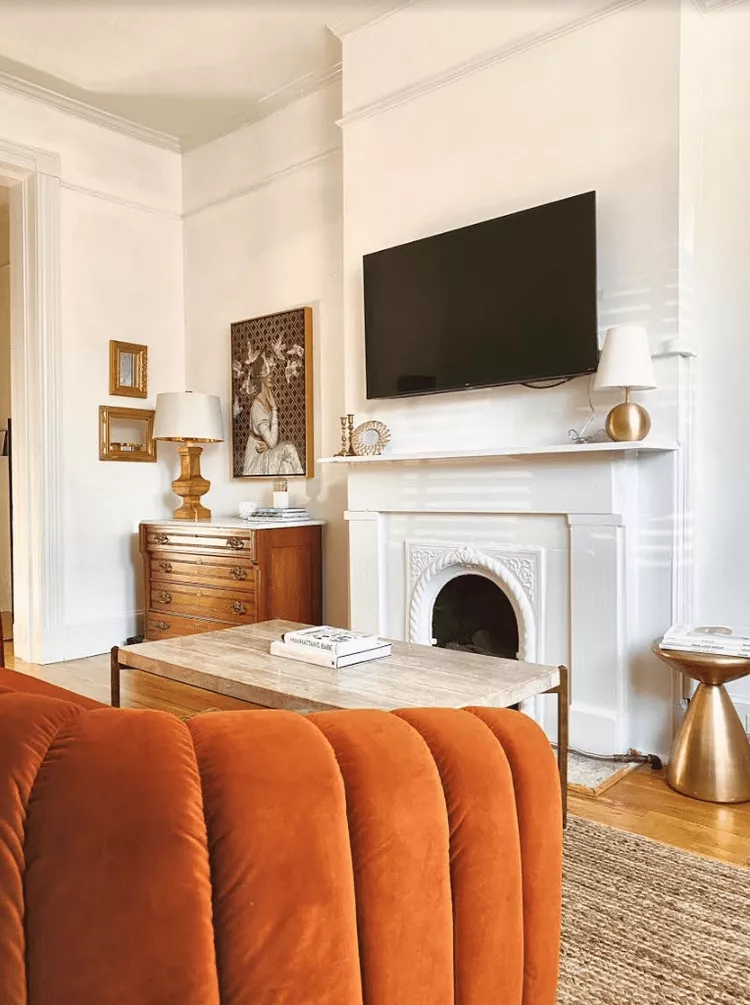
The practical arguments for it are equally real: it uses a wall that is already the room’s focal point, it keeps the television out of a position that might otherwise disrupt the furniture arrangement, and when done well with a properly designed enclosure or recessed mounting, it can look genuinely considered.
The fireplace mantel and TV wall ideas that achieve the most balanced result are the ones where the television is integrated into the wall composition rather than simply mounted on top of the fireplace. A recessed niche above the surround, a built-in arrangement that frames both the television and the fireplace within the same architectural composition, or a TV cabinet that can be closed when the screen is not in use all produce a more resolved result than a screen mounted directly on the chimney breast. The TV-friendly fireplace mantel ideas that acknowledge both elements rather than treating one as an afterthought are worth studying if this is your situation.
Style Approaches by Aesthetic
The fireplace mantel takes on different character depending on the room it sits in and the aesthetic it is designed to support.
A traditional mantel with classical proportions, raised-and-fielded panels, and a substantial cornice deserves styling that respects its architecture: a gilded or ornate mirror above, symmetrical arrangements on the shelf, quality ceramics and brass or bronze accessories. The formality of the surround calls for a corresponding intentionality in the styling.
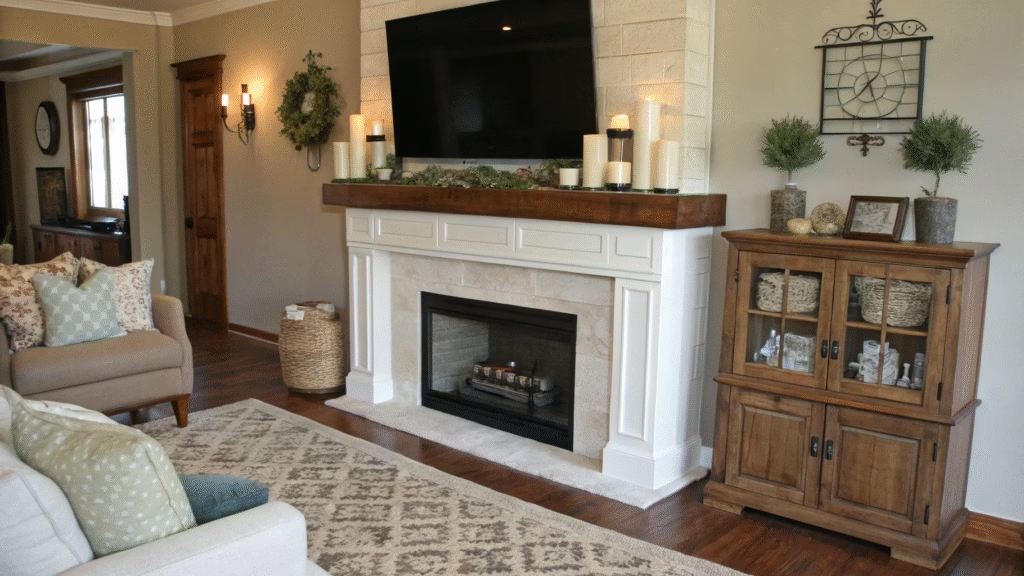
A farmhouse mantel in reclaimed timber or painted shaker-style woodwork suits the honest, unpretentious character of its materials: vintage objects, ironwork accessories, dried foliage, candles in simple holders, and a large clock or mirror that feels as if it has always been there. The modern farmhouse mantel takes the same approach with slightly cleaner lines, combining the warmth of the farmhouse aesthetic with the restraint of more contemporary design.
A minimalist mantel demands exactly what the name suggests: one or two exceptional objects with clear space around them, no accumulated clutter, and a quality in the individual pieces that can hold the composition without support from volume. The neutral mantel decor that achieves timeless style uses a palette of warm whites, creams, and natural tones that works in any season and at any time of day.
A boho mantel embraces eclecticism with intention: woven and macramé elements, collected objects with personal meaning, an abundance of organic textures, and a layered quality that builds over time rather than being assembled in a single session. A coastal mantel uses the pale, airy palette and natural textures of the sea. A rustic mantel leans into raw timber, honest materials, and the kind of objects that look as if they belong to the landscape rather than a showroom. A vintage mantel assembles antique and found objects with a quality of character and provenance that new pieces rarely achieve.
RELATED: 16+ Stone and Wood Fireplace Mantel Pairings That Wow
Seasonal Mantel Updates
The fireplace mantel is the most natural and most effective place to mark the change of seasons in any room. It is visible from every seating position, it is updated easily without any structural change, and it is the surface that most directly signals what time of year it is and what the room is celebrating.
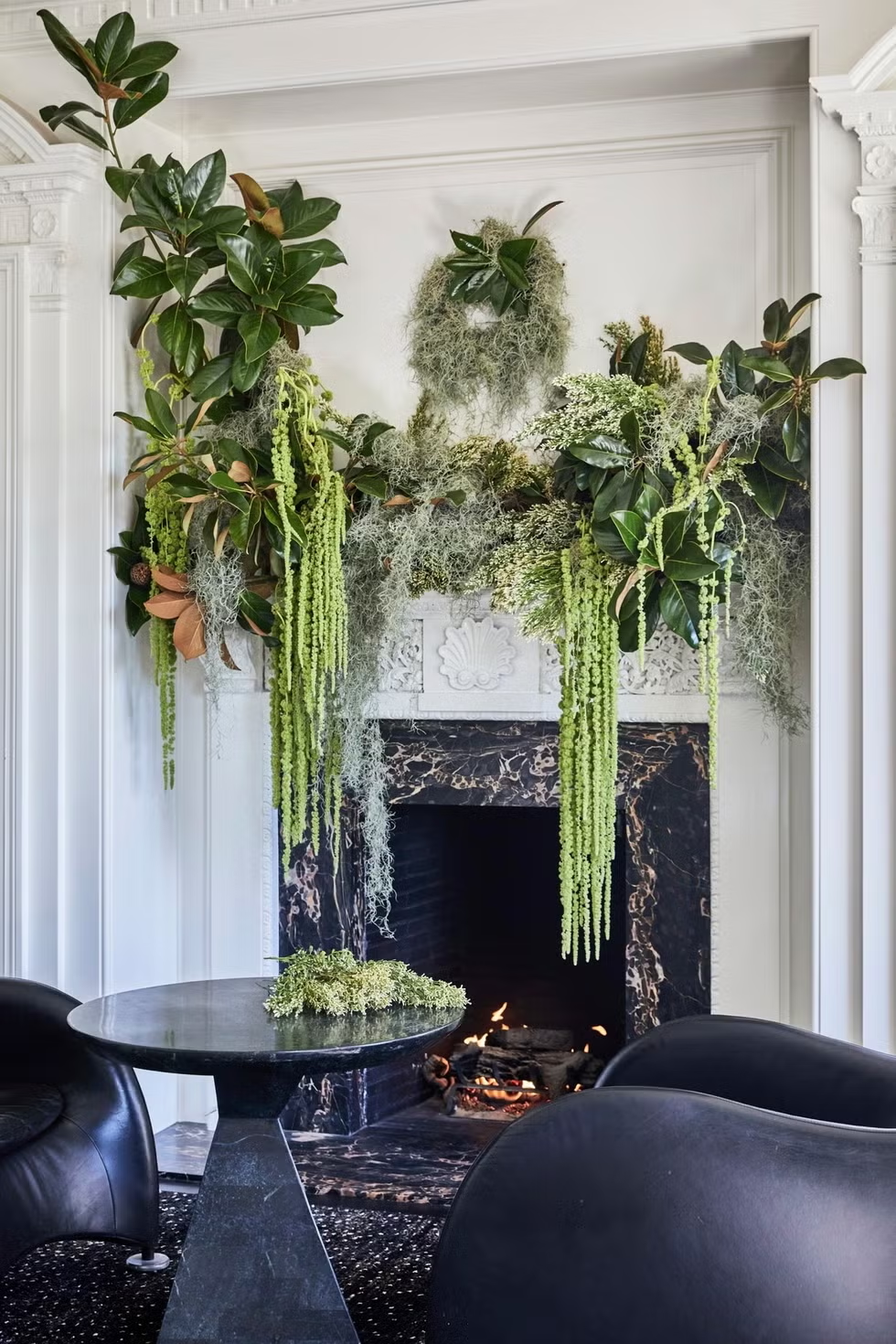
A spring mantel replaces the heavier, warmer elements of winter with something lighter and fresher: fresh florals, botanical prints, lighter candles in spring scents, perhaps some foraged branches with early blossom. The transition from the cocooning warmth of a winter mantel to a lighter spring arrangement is one of the most immediately felt seasonal changes available in any home.
A summer mantel leans into the breezy, airy quality of the warmer months: shells and driftwood in a coastal room, tropical foliage and linen textures in a warmer aesthetic, simple arrangements that feel pared back and effortless rather than heavily curated.
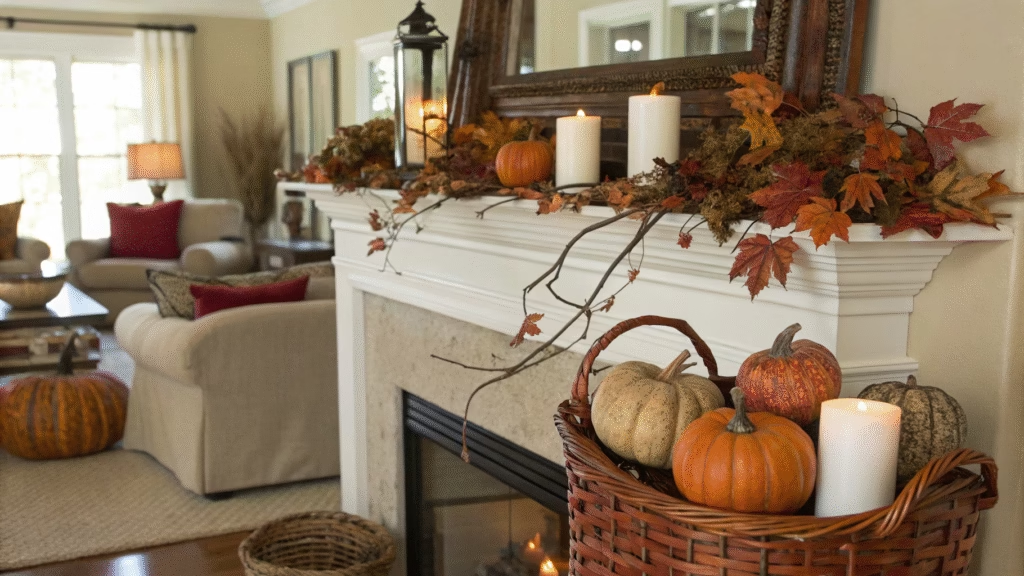
The autumn mantel is the most atmospheric of all the seasonal arrangements, and arguably the one where the fireplace is most in its element. Pumpkins and gourds, dried grasses and autumn seed heads, candles in warm amber and amber scents, foliage in copper and rust: these mark the season immediately and make the fireplace wall feel like the heart of the home in the truest sense.
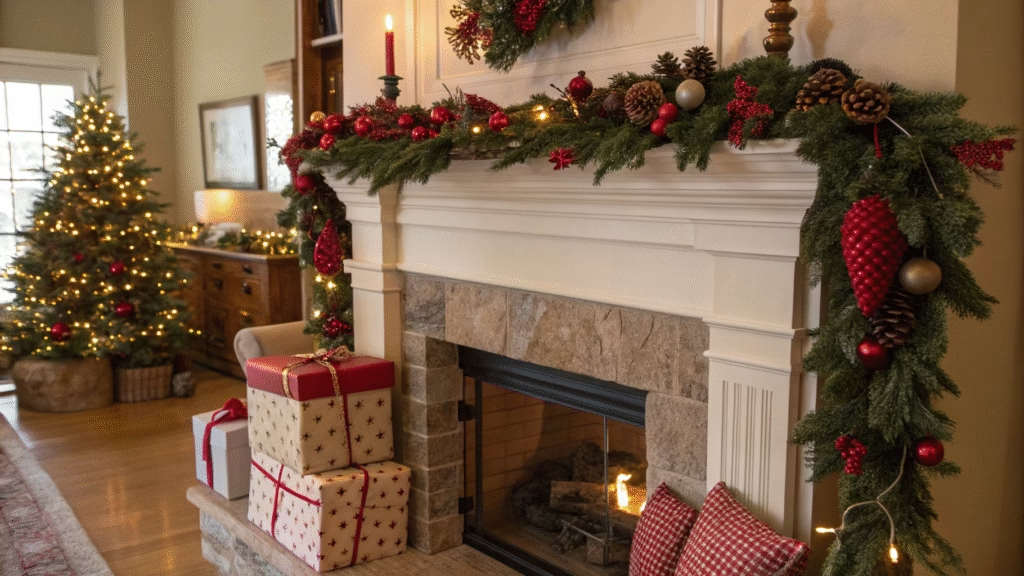
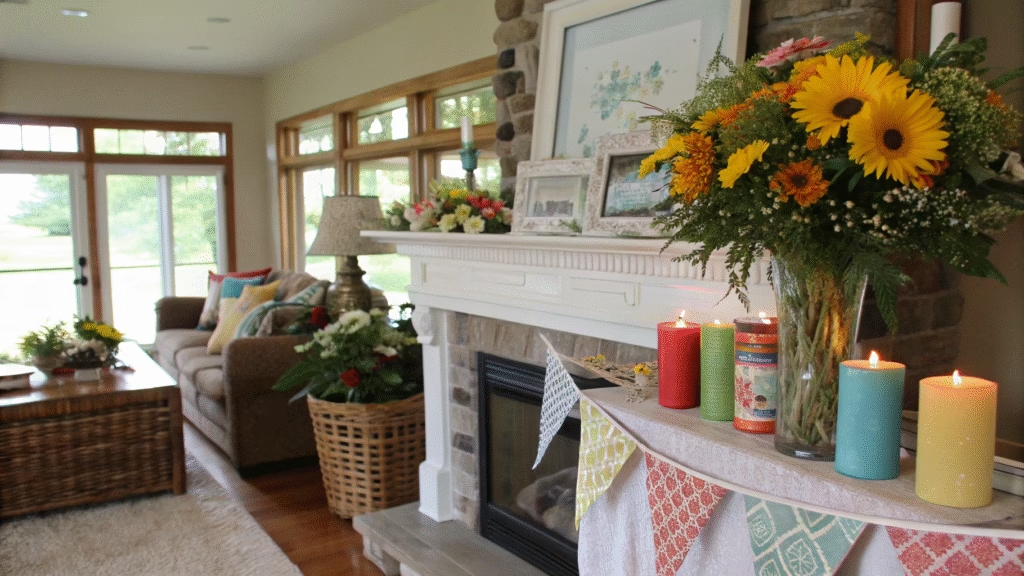
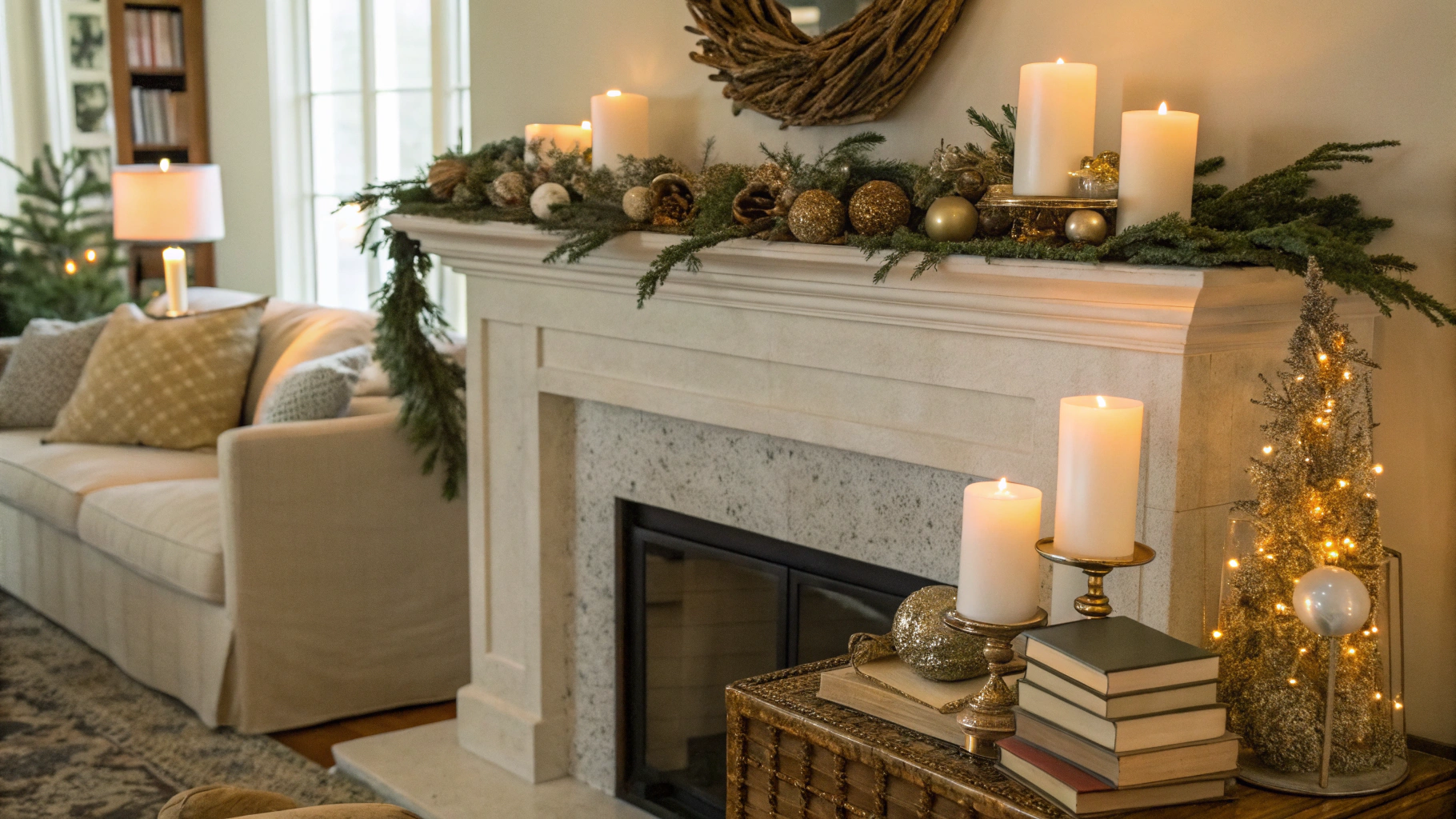
A Christmas mantel is one of the most anticipated annual styling projects in any home with a fireplace. Garlands of fresh greenery, stockings hung from the mantel shelf, candles at varying heights, and the warm glow of fairy lights give the fireplace wall its most dramatic moment of the year. A Halloween mantel with candelabras, dark foliage, and dramatic seasonal objects marks the most theatrical moment in the seasonal calendar. The mantel carries each of these occasions with an ease that no other surface in the home quite manages.
Special Situations
Not every home has a traditional wood-burning fireplace, and some of the most interesting mantel styling happens around non-traditional fire configurations.
Electric fireplace mantels have become genuinely popular as the quality of electric fire inserts has improved dramatically. A well-chosen electric insert in a properly designed surround creates a fireplace wall with all the visual and atmospheric impact of a traditional fireplace, without the need for a chimney, the management of fuel, or the associated maintenance. The mantel above an electric fire is styled in exactly the same way as any other mantel.
The outdoor fireplace mantel is a growing category as outdoor living spaces become more considered and more used year-round. An outdoor fireplace wall with a mantel shelf treated to the same compositional principles as an interior mantel, with objects chosen for durability and weatherproofing, creates an outdoor room with the same focal point quality that an interior fireplace provides.
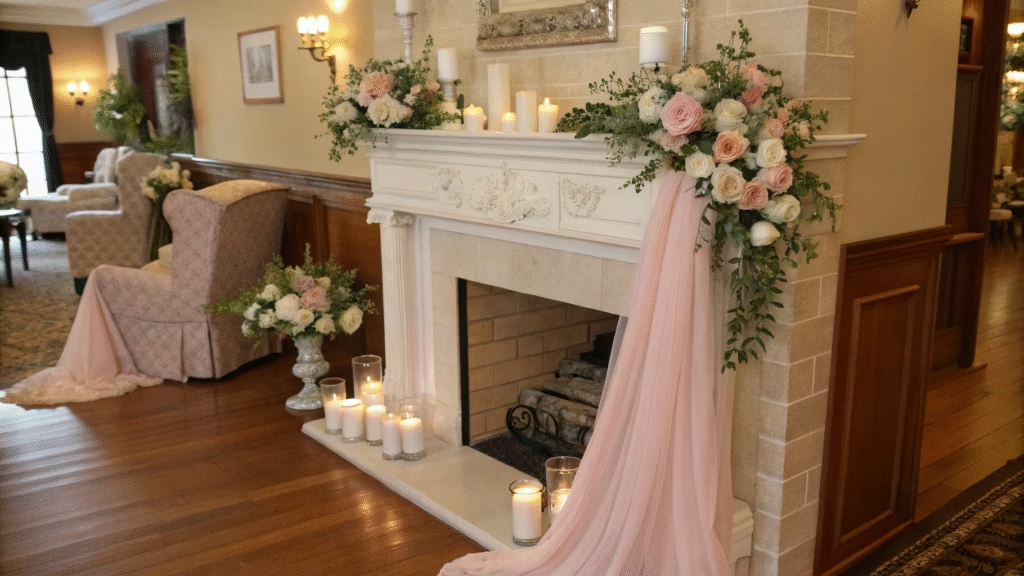
For special occasions beyond the home, wedding fireplace mantel decor shows how the same composition principles apply in event contexts, where the fireplace wall becomes a backdrop for photographs and ceremonies and benefits from styling that is both visually considered and personally meaningful.
Frequently Asked Questions
What should I put on my fireplace mantel?
Start with one anchor element at the centre, either a mirror, a piece of art, or your most substantial decorative object. Then add objects at varying heights on either side, keeping approximately a third of the surface empty. A mix of organic elements such as plants or foliage, functional elements such as candles, and personal objects creates a composition that feels lived-in and considered. The number of objects matters less than the logic of their arrangement.
How do I make my fireplace mantel look more expensive?
Remove everything and start again with fewer, better-chosen pieces. A single exceptional object or a large well-framed mirror will always outperform a crowded collection of smaller things. Consistency in material language, all objects in similar tones or from similar material families, gives a mantel a cohesion that reads as considered and luxurious regardless of what was spent.
How high should art be hung above a fireplace mantel?
Leave three to six inches of space between the top of the mantel shelf and the bottom of the frame. This maintains the connection between the mantel surface and the wall above it while keeping the art at a comfortable viewing height from a seated position. Hanging art too high above the mantel breaks the visual relationship between the two elements.
How do I update a fireplace mantel without replacing it?
Painting an existing mantel is the highest-impact, lowest-cost change available. A confident colour, a deep green, a warm charcoal, a classic white, can completely transform the character of the surround without structural work. New fireplace accessories in a consistent finish, replacing dated tiles in the hearth inset, and updating the mirror or art above the mantel are the next most impactful changes that require no construction.
How do I style a mantel if I have a television above the fireplace?
Work with the television as part of the composition rather than around it. The objects on the mantel shelf should relate to the width of the television above rather than only to the width of the mantel, creating a unified wall composition. Keep the shelf styling relatively calm so it does not compete with the screen. Consider how the arrangement looks when the screen is both on and off, since both states will be frequently observed from the seating area.
Explore more room-by-room guides in our complete Rooms section.