Bedroom Color and Wall Ideas: Paint, Wallpaper, Accent Walls and Feature Walls
A complete guide to bedroom wall decisions, from choosing a colour palette that genuinely calms the mind to feature walls, wallpaper, murals, gallery arrangements, and the flooring choices that anchor everything above them.
KEY POINTS
- Colour in a bedroom should always serve how the room feels, not just how it looks. The palette that photographs well in a bright studio will not always produce the calming quality a bedroom needs at ten o’clock at night.
- The feature wall behind the bed is the single most impactful wall decision in any bedroom because it is the first thing you see when you walk in and the backdrop to the most prominent piece of furniture in the room.
- Walls, floor, and ceiling work as a system. Making any one of these decisions without considering the others almost always produces a result that looks slightly unresolved.
The walls of a bedroom shape how the room feels before a single piece of furniture is placed. Paint them the wrong tone and the best bedding in the world will not compensate for the unsettling quality of a room that feels slightly off every time you walk into it. Get them right and even modest furniture feels like it belongs to a genuinely considered space.
This guide covers the full picture of bedroom wall decisions, from colour psychology and palette selection to the full range of feature wall treatments, from paint and wallpaper to murals, panelling, and gallery walls, as well as the flooring decisions that set the visual register for everything above them.
RELATED: 17+ colour schemes to instantly refresh your bedroom
Choosing a Bedroom Colour
The bedroom is the room where colour has the most direct effect on how you feel, because it is the colour you see last before sleep and first after waking. The principle that holds most consistently across every bedroom style is that the palette should be warm enough to feel enveloping rather than cold, and calm enough to feel restful rather than stimulating. These two qualities, warmth and calm, are not the same thing, but the colours that achieve both are in the sweet spot of what makes a bedroom genuinely feel like a place for rest.
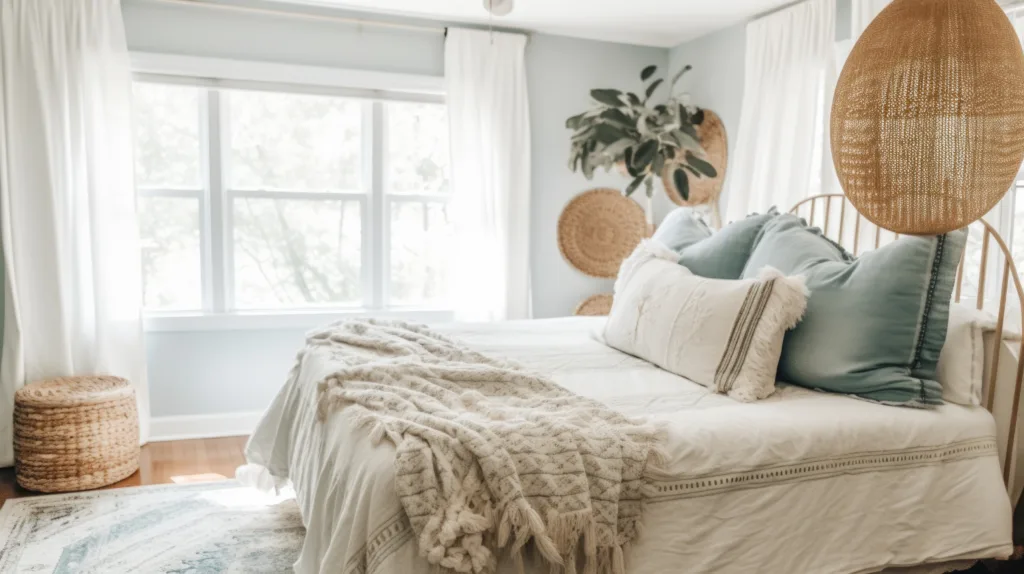
Warm neutrals sit in this sweet spot most reliably. Off-whites with a sandy or cream undertone, warm greiges, soft taupes, dusty taupes, and the particular warmth of undyed linen translated into paint: these are the tones that work in almost every bedroom orientation and with almost every furniture palette. They reflect light generously in rooms that are bright, and they hold warmth in rooms that are darker, which is why they appear so consistently in the bedrooms that feel most like genuinely restorative places to be.
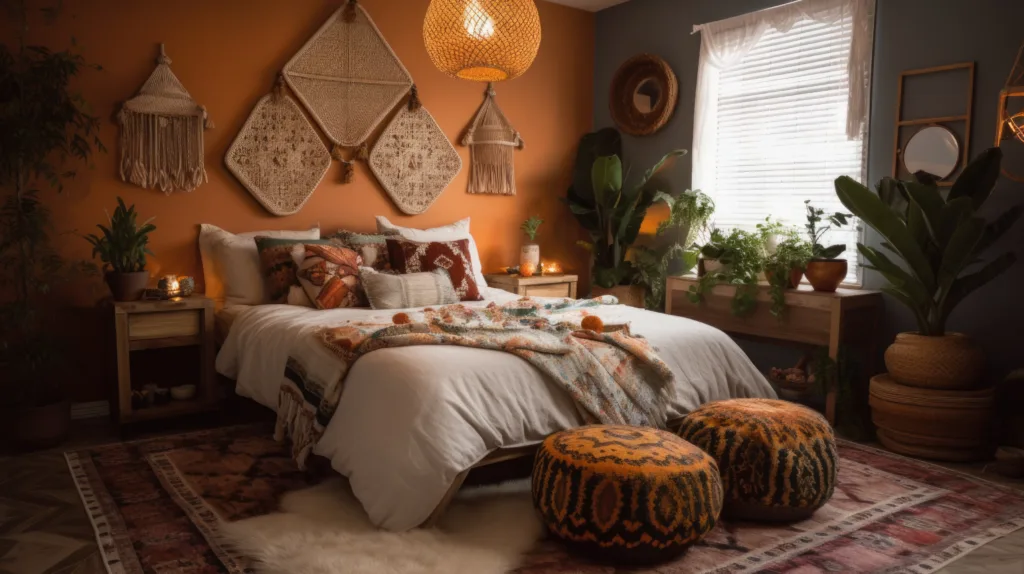
The full range of bedroom colour remodel ideas that calm the mind moves well beyond neutral, however. Soft sage greens, dusty blues, muted terracottas, and the particular depth of a very deep tone, a near-black forest green or a warm charcoal, all produce a quality of calm when they are chosen in their more muted, complex versions rather than their fully saturated primary equivalents. The colour that works is almost always the one with some grey or warmth mixed into it, softening the edge enough that it recedes rather than advances.
Building a Palette That Works Together
Choosing a wall colour in isolation from the floor, the bedding, and the furniture is one of the most reliable ways to produce a bedroom that feels slightly wrong despite each individual decision looking reasonable. The palette needs to work as a system, with every tone present sharing a temperature and an undertone that creates visual coherence rather than the subtle tension that comes from mixing warm and cool without a connecting logic.
The simplest and most reliable approach is to start with the floor, which is usually fixed and cannot be changed without significant cost, and build the wall colour from there. A warm honey-toned timber floor needs walls in the warm neutral range to feel coherent. A grey or cool-toned floor suits walls with a similar coolness, though even in that case a warm white ceiling and warm-toned bedding can prevent the room from feeling cold.
The colour scheme refresh approach that works most reliably treats the palette change as a system update rather than a wall repaint: if the wall changes, assess whether the bedding, the floor covering, and the larger furniture pieces still work with the new tone. In most cases one or two small adjustments in the softer furnishings are all that is needed to bring everything into coherence.
Feature Walls
The wall behind the bed is the natural feature wall of any bedroom, because it is the backdrop to the most prominent piece of furniture in the room and the first surface seen from the doorway. Treating it differently from the other walls, whether through a deeper tone of the main colour, a wallpaper, panelling, or a material treatment, gives the room a clear focal point and makes the whole space feel more deliberately designed.
The bedroom feature wall ideas that make the strongest statement range from the simplest approach, painting the headboard wall a single deeper tone of the room’s palette, to more elaborate material treatments that add texture, pattern, and physical depth to the surface. The guiding principle across all of them is that the feature wall should intensify rather than contradict what the rest of the room is doing. A deep green feature wall in a room with a warm neutral palette on the other three walls works because green and warm neutrals share an earthy quality. A vibrant pink feature wall in the same room would create a temperature conflict that no styling decision can resolve.
Bedroom wall panelling is one of the most transformative and most underused treatments available at a relatively modest cost. A panelled headboard wall, whether in simple vertical battens, traditional raised-and-fielded mouldings, or shiplap boarding, adds an architectural quality and physical depth to the surface that no paint colour alone can achieve. The shadow lines between panel elements change throughout the day as the light moves, giving the wall a quality of active interest that a flat surface never has.
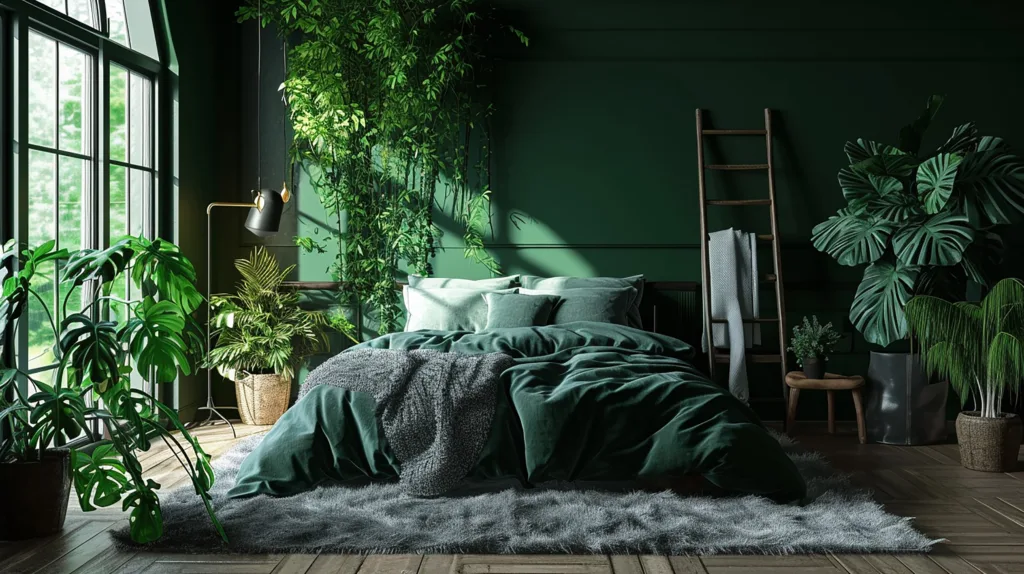
A green accent wall in the bedroom is worth specific mention because it sits in a unique position in the colour spectrum: warm enough to feel organic and connected to nature, cool enough to feel calming, and deep enough at its richest tones to feel genuinely cocooning without being oppressive. The range of greens that work in a bedroom covers everything from the palest sage, which reads almost as a warm neutral in gentle light, to the deepest forest green, which creates an enveloping quality particularly suited to a room designed primarily for sleep.
RELATED: 15+ feature wall ideas to make a statement
You May Also Love


Wallpaper in the Bedroom
Wallpaper on the headboard wall is one of the most dramatic and most immediately personal changes available in a bedroom remodel, because it introduces pattern and scale in a way that paint can never do. The bedroom is also one of the best rooms in the house for a bolder wallpaper choice, because the contained area of the headboard wall limits the pattern to a defined zone, and because the quality of quiet time spent in a bedroom means you look at the walls more closely and more consistently than in any other room.
The bedroom wallpaper ideas that add genuine personality range from subtle, tone-on-tone textural designs that add physical interest without colour contrast, to bold botanical prints that make the wall a landscape to sleep within. The choices that work most durably are the ones where the pattern has enough internal complexity to reward repeated close attention without becoming visually tiring over time. A geometric with a predictable repeat can feel mechanical after a few months. A botanical with organic variation will still feel interesting after years.
Scale matters in wallpaper selection in a way that is easy to misjudge from a sample. A pattern that looks balanced and beautiful on an A4 sample can disappear entirely on a large wall if the repeat is small, and the same pattern at a larger scale creates an entirely different presence and mood. When in doubt, request a larger sample, and if that is not available, view the pattern digitally at the scale it will actually occupy on the wall.
Murals
A bedroom mural, whether painted directly on the wall or applied as a wallpaper mural, creates the most immersive and most personal wall treatment available. When you sleep within a room where the walls tell a story, or evoke a landscape, or create an environment that is genuinely unlike anything else, the room takes on a quality of transportive intimacy that no standard wall treatment achieves.
The bedroom mural ideas that feel most personal rather than purely decorative are the ones where the subject matter has genuine meaning for the person who sleeps there: a landscape from a place they love, a botanical composition in colours they find beautiful, an abstract that produces a specific emotional quality. The mural ideas for walls cover the full technical and aesthetic range of what is possible, from subtle hand-painted treatments that add texture without defining a scene, to full-wall photographic and illustrated murals that dominate the room entirely.
Don't miss: 13+ Eco-Friendly Bedroom Ideas for a Green Space →
Gallery Walls and Artwork
Not every bedroom wall needs a structural or material treatment to feel considered. A well-assembled gallery wall or a single piece of art chosen with genuine care can carry a wall as effectively as wallpaper or panelling, and with considerably more flexibility to be changed as tastes evolve.
The bedroom gallery wall ideas that feel most personal use the wall to tell a story through art, photography, and objects chosen with real meaning rather than purely aesthetic criteria. The artful gallery wall that looks genuinely designed rather than randomly accumulated applies the same compositional principles that work everywhere: a consistent frame finish, varied sizes within the arrangement, a horizontal or vertical axis that gives the grouping structure, and enough clear space around the arrangement that it reads as a deliberate composition rather than a density of objects.
The bedroom artwork choices that work best in a sleeping space tend toward the calm rather than the energising, which is a different consideration from choosing art for a living room or a kitchen. The artwork sits at the edge of consciousness as you fall asleep and is among the first things your eyes settle on in the morning, which makes its emotional quality as important as its visual quality.
Art above the bed is one of the most frequently mishandled bedroom styling decisions, almost always because the scale is too small. A single small canvas above a large bed looks lost and tentative. A properly scaled piece, wide enough to relate to the width of the headboard and tall enough to fill a meaningful portion of the wall above it, creates the visual anchor that the headboard wall needs. The general rule is that the art should be at least two thirds the width of the bed or headboard beneath it.
Adding a Fireplace
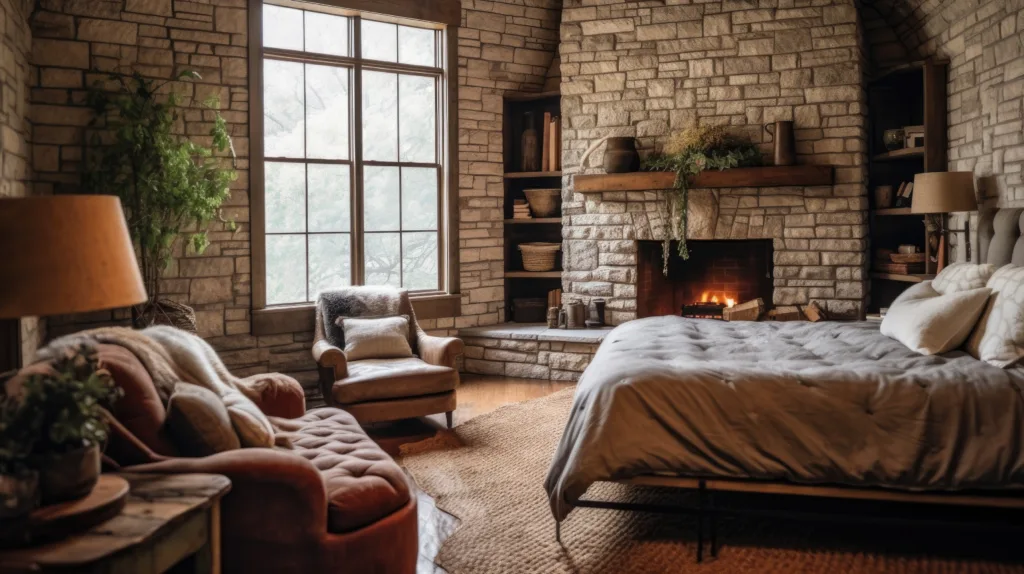
A bedroom with a fireplace occupies a different category of intimacy from one without. The fire introduces warmth, moving light, and a quality of occasion to the most private room in the house that transforms what it means to spend time in it. Even a non-functional fireplace, or an electric insert in a period surround, creates the visual and atmospheric presence associated with a room of genuine character.
The bedroom fireplace ideas that work most beautifully treat the fireplace as the room’s focal point rather than a secondary feature: the bed oriented toward it, the mantel dressed seasonally, and the surrounding wall given the architectural treatment it deserves. An electric fire in a well-chosen period surround with a painted or tiled inset creates a fireplace presence that is indistinguishable from a real one in terms of atmosphere, particularly in the evenings when the fire is the primary light source.
Keep Exploring


Flooring as the Wall’s Foundation
The floor of a bedroom sets the visual register for everything above it, which means every wall colour, every wallpaper choice, and every surface treatment decision needs to be made in relation to what is underfoot. The floor choice is therefore a wall decision as much as it is a floor decision, and making it without that consideration almost always produces a bedroom where the colours and materials feel slightly disconnected.
The bedroom flooring ideas that consistently elevate the space cover the full range from timber and engineered wood to carpet, natural fibre, and large-format tile, each of which sets a different temperature, texture, and visual weight for the room. The principle that holds across all of them is that floor and wall should share a temperature: warm timber floors want warm wall tones, cool concrete or stone floors want wall colours with a similar coolness, and the most coherent bedrooms are the ones where the floor and wall decision were made in relation to each other from the beginning.
RELATED: 18+ bedroom flooring ideas to elevate your space
Frequently Asked Questions
What is the best paint colour for a bedroom?
There is no single best colour, but the tones that consistently produce a calming bedroom atmosphere are the softer, more muted versions of any colour family: dusty blues, sage greens, warm taupes, and soft warm whites. The colours to approach with care are those with strong yellow undertones in bright rooms, which can feel sharp rather than warm, and cool blues and greys in rooms that receive very little natural light, which can feel cold without the sun to warm them.
How do I choose a feature wall?
Almost always the wall behind the bed, because it is the natural focal point of the room and the backdrop to its most prominent piece of furniture. The treatment should be consistent with and deepen the room’s existing palette rather than introducing an entirely new colour direction. A feature wall that contradicts the rest of the room in temperature or saturation will always look like a mistake rather than a deliberate choice.
Should bedroom wallpaper go on all four walls or just one?
For most bedrooms, one wall is the right answer, and it is almost always the headboard wall. Four walls of a bold wallpaper in most standard bedroom sizes produces a room that feels enclosed in a way many people find difficult to sleep in. One papered wall behind the bed creates drama and intimacy in exactly the right proportion.
How do I hang art above the bed?
The art should be at least two thirds the width of the headboard or bed beneath it, and should be centred above it. The bottom of the frame should sit between 15 and 25 centimetres above the top of the headboard, which keeps the art connected to the bed visually without being so close that it feels like it could be knocked. For a grouping rather than a single piece, treat the whole arrangement as a single unit and apply the same sizing and spacing principles.
Does the floor colour affect what colour I should paint the walls?
Significantly. The floor is almost always the fixed starting point, and every wall decision should be made in response to it. The most important consideration is temperature: warm floors want warm walls, and mixing warm and cool tones in the same room creates a subtle visual tension that is difficult to resolve with any styling decision. Assess the undertone of the floor first, then find wall tones in the same temperature family.
Explore all bedroom guides in our Bedroom section.