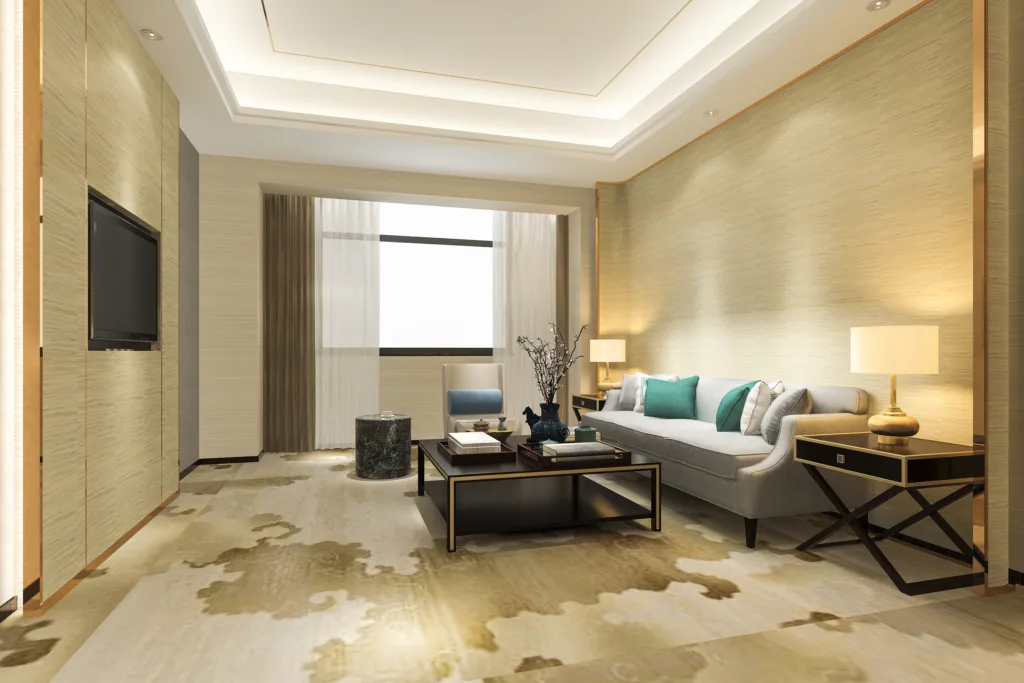
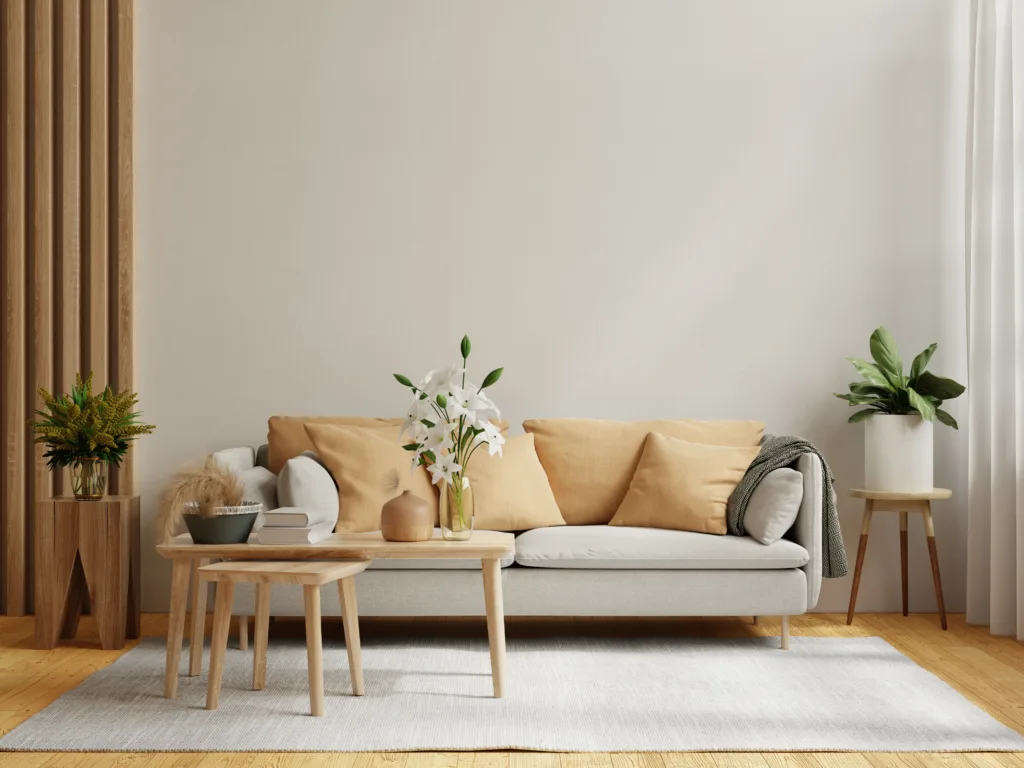
Living Room Wall Ideas: Color, Paint, Wallpaper and Accent Walls Complete Guide
Everything you need to know about transforming your living room walls, from choosing the right paint colour and colour scheme to accent walls, wallpaper, murals, tile treatments, and the flooring decisions that tie it all together.
KEY POINTS
- The walls of a living room are its largest surface and its most powerful design tool. Getting them right changes how every other element in the room is perceived.
- Most wall decisions fail not because the colour or treatment was wrong but because it was chosen in isolation rather than in response to the room’s light, floor, and furniture.
- An accent wall is only effective when it is the room’s natural focal point. Applied to the wrong wall, even the most beautiful treatment will feel arbitrary.
The walls of a living room are where the room’s character is established before a single piece of furniture is placed. Paint a room the wrong colour and the best sofa in the world will look out of place. Get the walls right and even modest furniture looks like it belongs. Despite this, most people treat wall decisions as an afterthought, choosing whatever feels safest or most available rather than thinking through what the room actually needs.
This guide covers the complete picture of living room wall decisions, from colour psychology and paint selection to accent walls, wallpaper, murals, tile treatments, wall decor, and the flooring choices that anchor everything above them.
RELATED: 14+ wall remodel ideas that go beyond paint
Choosing the Right Paint Colour
Paint is the most impactful and most reversible wall decision available, which is why it deserves the most careful thought before committing. The colour that looks perfect on a chip or on a screen will often look completely different once it occupies an entire wall under your specific light, next to your specific floor, with your specific furniture. The way natural light enters the room, from which direction and at what intensity, changes how every paint colour reads throughout the day.
The most reliable approach is to test large samples, at least A3 size painted directly onto the wall, and live with them for at least a week before deciding. Look at them at different times of day and under different lighting conditions. A warm cream that glows in afternoon sun will look yellowed and dingy in a north-facing room. A cool grey that feels sophisticated in bright light will read as cold and flat in a room that never gets direct sun.
The paint colour ideas that refresh a living room most effectively are almost always the ones chosen in response to the room’s existing conditions rather than against them. And the wall colour options that suit different moods and atmospheres show how the same palette decision can shift a room from calm and retreating to warm and enveloping simply by moving along the temperature scale.
Building a Colour Scheme
Choosing a wall colour is only one part of the colour decision. The more significant question is how the wall colour relates to everything else in the room, because a colour that works in isolation may look wrong the moment the furniture and floor are taken into account.
A well-built colour scheme starts with understanding the undertones of everything already in the room. Warm tones, those with yellow, orange, or red in their base, sit comfortably with each other and conflict with cool ones. Cool tones, those with blue, green, or grey in their base, work together but can feel cold when isolated from any warmth. Most rooms that feel slightly off are not wrong in any single element but are mixing warm and cool tones without a unifying thread.
The colour combinations that work consistently across different room sizes and furniture styles almost always share this quality: every tone present has a relationship to at least one other tone in the room, either through undertone, temperature, or saturation level. And the colour remodel approach that produces results lasting more than a couple of seasons treats colour as a system rather than a collection of individual choices made in sequence.
Accent Walls Done Right
An accent wall, a single wall treated to a stronger colour, a different material, or a more elaborate surface treatment, is one of the most commonly attempted and most commonly misjudged living room design moves. When done well it gives the room a focal point that organises the whole space. When done badly it looks like one wall that could not decide what it wanted to be.
The rule that holds most consistently is that the accent wall should be the wall the room naturally faces. The wall opposite the entrance, or the wall behind the main seating arrangement as seen from the door, or the wall a fireplace or television sits on: these are the walls that earn the treatment because they are already the focal points. A random side wall with a strong colour applied to it always reads as arbitrary.
The accent wall ideas that add genuine character cover the full range of approaches, from the simplest deeper-toned paint to more elaborate material treatments. For those who want colour with real energy, an orange accent wall creates immediate warmth that reads as bold in photographs and surprisingly liveable in practice when the rest of the room is kept calm. A turquoise accent wall introduces the freshness of blue-green in a way that works particularly well in rooms with a natural or coastal material base. And a yellow accent wall is one of the most reliably mood-lifting options available, particularly in rooms that lack strong natural light, because yellow reflects and amplifies whatever light is present.
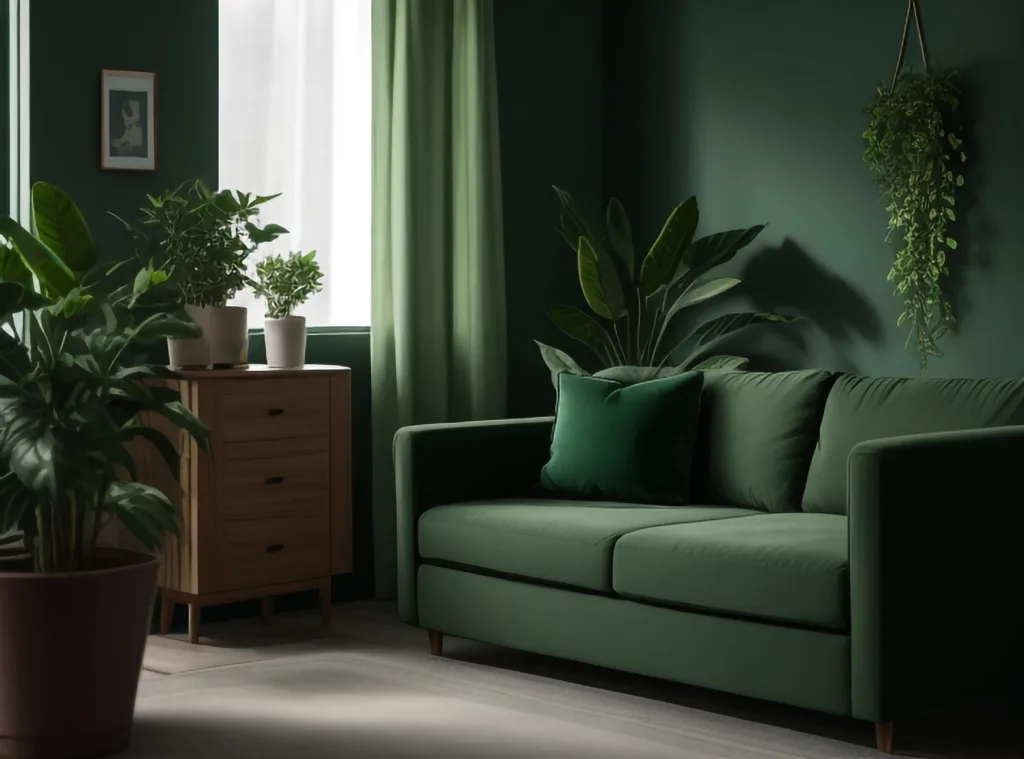
For a more graphic, contemporary effect, the colour block wall approach uses painter’s tape to create geometric divisions of colour rather than a single painted surface, producing a result that feels designed rather than simply painted. And the green accent ideas that work best in a living room treat green not as a single colour but as a family spanning everything from the palest sage to the deepest forest tone, each of which produces a very different room character.
RELATED: 15+ colour block wall ideas for the living room
You May Also Love


Wallpaper
Wallpaper has undergone one of the most significant aesthetic rehabilitations in recent interior design history. From being associated primarily with dated, difficult-to-remove patterns, it has become one of the most sophisticated and most impactful wall treatment options available, particularly for the feature wall behind a sofa or fireplace where a single well-chosen pattern can transform a room more dramatically than any paint colour.
The wallpaper ideas that dress up a living room most effectively are almost always the ones chosen for scale as much as pattern. A pattern that looks beautiful on a sample card can disappear entirely on a large wall if the repeat is too small, and the same pattern at a larger scale will have a completely different presence. As a general rule, large-scale patterns suit larger walls and larger rooms; smaller patterns work better in contained spaces where they can be seen at the right viewing distance.
Wallpaper does not need to cover every wall to make its impact felt. A single papered wall, used as the focal point behind the main seating, creates the full visual effect of a wallpapered room while remaining considerably more manageable in terms of cost, application, and the ability to update it in the future.
Don't miss: 19+ Bold Geometric Living Room Ideas to Try Now →
Wall Design Ideas Beyond Paint
The full range of what a living room wall can become extends well beyond paint and wallpaper. Architectural treatments, material applications, and decorative approaches that add texture, depth, and physical presence to the surface produce a quality of character that flat-painted walls rarely achieve.
The wall design ideas that elevate the look of a living room most durably are the structural ones: panelling, timber cladding, exposed brick, and the various forms of wall moulding that give a flat surface architectural detail. These treatments add depth that changes how light falls across the wall throughout the day, and that quality of changing shadow and texture gives a room a sense of permanence and craft that paint alone never does.
Ceramic tile accents used in a fireplace surround, an alcove, or a feature section of wall introduce material contrast and colour in a single element. Tile is particularly effective in a living room context because it brings the warmth and craft of a kitchen or bathroom material into a space where it is less expected, and the visual contrast between the tile surface and the painted or plastered wall around it gives both materials more presence than either would have alone.
Matte black hardware on shelving, light fixtures, and any wall-mounted fittings creates a finish consistency that makes the whole room feel more designed, because the eye reads the repeated dark metal tone as a deliberate decision rather than an arbitrary default.
Wall Decor and Murals
Once the wall treatment itself is settled, the decor applied to it, the art, the mirrors, the shelving, and the more playful elements like decals and murals, adds the personal and expressive layer that makes the room feel genuinely occupied rather than designed to a specification.
The wall decor ideas that add personality most effectively are almost always the ones chosen with the wall’s scale in mind. A piece of art that is too small for the wall it sits on looks timid and unresolved. The same artwork at double the size on the same wall would look confident and considered. Scale is consistently the variable that makes or breaks a wall decor decision, and the instinct to go larger is almost always right.
For a more immersive and more dramatic wall treatment, a living room mural creates a focal point with genuine presence, whether that is a painted landscape, an abstract composition, a botanical illustration, or a geometric pattern that runs across the full surface. Murals have become considerably more accessible in recent years through the range of wallpaper murals available, which combine the impact of painted work with the practicality of a removable surface treatment.
Wall decals occupy the most accessible and most easily reversible end of the wall treatment spectrum, offering a way to add pattern, texture, or graphic interest to a surface without any commitment. The decal options that look most considered are the ones with genuine artistic quality rather than the novelty designs that date quickly.
Keep Exploring


Flooring as the Wall’s Foundation
The floor is not a wall but it is impossible to make the right wall decision without understanding what the floor is doing. The two surfaces are seen simultaneously from most positions in the room, and a wall colour that works perfectly with one floor material can look completely wrong with another.
The hardwood floor ideas that suit a timeless living room show how the grain, tone, and finish of timber flooring sets the warmth register for the whole room and determines how much warmth or cool the walls can carry. A room with warm honey-toned oak flooring needs walls in the warm neutral range to feel coherent. The same walls in a cool grey would create a temperature conflict that no styling decision can resolve.
The modern flooring options that work across different living room styles cover the full range from polished concrete to large-format tile to engineered timber, each of which sets a different visual register for the walls above. The principle that applies consistently is that floor and wall should share a temperature, even if they differ in saturation and value, and that the most considered rooms are the ones where the floor and wall decision were made in relation to each other rather than independently.
RELATED: 14+ hardwood floor ideas for a timeless living room
Frequently Asked Questions
What colour should I paint my living room walls?
The most reliable answer is the one that responds to your room’s specific conditions rather than a general recommendation. Identify the undertone of your floor and your main furniture pieces, then choose a wall colour in the same temperature family. Test large samples on the actual wall and assess them in the morning, afternoon, and evening light before committing.
How do I choose between an accent wall and painting all four walls?
Paint all four walls in the same colour if the room lacks a natural focal point or if the architecture is simple enough that one strong colour throughout will add depth rather than confusion. Use an accent wall when there is a clear focal point, a fireplace, a sofa wall, a feature window, where a stronger treatment will reinforce rather than compete with the room’s existing logic.
Does wallpaper make a room feel smaller?
It depends entirely on the pattern scale and the colour. Dark, dense patterns in a small room can make it feel enclosed. Light, open patterns or large-scale botanicals on a single feature wall can actually make a small room feel larger by drawing the eye to a specific point rather than letting it wander across a plain surface. A well-chosen wallpaper in a small living room is more likely to improve it than overwhelm it.
What is the best wall treatment for a rental where I cannot paint?
Removable wallpaper and large-scale wall decals are the most practical options for rental walls. Removable wallpaper has improved significantly in quality and range in recent years and can be applied and removed without damage to the underlying surface. Large pieces of art leaned against the wall rather than hung, and built shelving units that stand independently, are the other approaches that add significant wall character without requiring permanent fixing.
How do I make my living room walls look more expensive?
The single most impactful change is usually paint quality. A high-quality paint in a considered colour, applied properly with two full coats, looks immediately more substantial than cheaper paint regardless of the colour chosen. Beyond that, adding architectural interest through panelling or moulding, ensuring all wall decor is properly scaled for the wall it sits on, and maintaining a consistent hardware finish throughout the room all contribute to a wall that reads as professionally considered.
Explore all living room guides in our Living Room section.