


Designing your baby’s nursery should be both adorable and practical.
In this article
- 1. Soft Neutral Color Palette
- 2. Convertible Crib
- 3. Functional Changing Station
- 4. Cozy Reading Nook
- 5. Floating Shelves
- 6. Soft Lighting Layers
- 7. Gender-Neutral Wall Art
- 8. Hidden Storage Solutions
- 9. Minimal Mobile
- 10. Statement Rug
- 11. Personalized Touches
- 12. Natural Materials
- 13. Soft Curtains
- 14. Play Mat Corner
- 15. Growth Chart Wall
- Final Thoughts
The best spaces blend comfort, storage, and personality so new parents can enjoy a peaceful, clutter-free room that grows with their little one.
1. Soft Neutral Color Palette

Choose soft whites, creams, or muted pastels to create a calm, cozy atmosphere that soothes your baby.
Pro Tip: Add texture through woven rugs or knit blankets instead of bright, busy prints.
2. Convertible Crib

Pick a crib that can transition into a toddler bed for long-term use and style consistency.
Pro Tip: Choose neutral wood tones so it blends seamlessly with changing decor.
3. Functional Changing Station

Designate a compact corner with a changing table and organized drawers for essentials.
Pro Tip: Keep wipes, diapers, and creams within arm’s reach in labeled baskets.
4. Cozy Reading Nook

Add a small armchair and soft lighting for bedtime stories and bonding moments.
Pro Tip: Use washable slipcovers for easy cleaning and durability.
5. Floating Shelves

Install shelves to display books, keepsakes, or framed art without taking up floor space.
Pro Tip: Keep items lightweight and evenly spaced for a balanced look.
You May Also Love

6. Soft Lighting Layers

Use a mix of dimmable lamps and wall sconces to create a warm, relaxing glow.
Pro Tip: Avoid harsh overhead lights—opt for bulbs with a soft, warm hue.
7. Gender-Neutral Wall Art

Choose simple animal prints or abstract shapes that suit any theme.
Pro Tip: Use removable wall decals if you want an easy update as your baby grows.
8. Hidden Storage Solutions

Incorporate baskets, under-crib drawers, and ottomans for keeping toys tidy.
Pro Tip: Stick to a consistent material like wicker or canvas to maintain a cohesive style.
9. Minimal Mobile

Hang a simple mobile with soft colors and organic shapes to engage your baby visually.
Pro Tip: Make sure it’s securely fastened and well above your baby’s reach.
Don't miss: How to Design a Kids Room That Grows With Them →
10. Statement Rug

A soft rug adds warmth and defines the nursery space while cushioning playtime.
Pro Tip: Pick a washable, low-pile rug that’s easy to maintain.
11. Personalized Touches

Add a custom name plaque, framed birth details, or hand-knit blanket for a sentimental feel.
Pro Tip: Keep it subtle to avoid overwhelming the minimalist aesthetic.
12. Natural Materials

Incorporate wood, cotton, and linen for a healthy, breathable environment.
Pro Tip: Avoid synthetic fabrics and strong scents for your baby’s comfort.
Keep Exploring
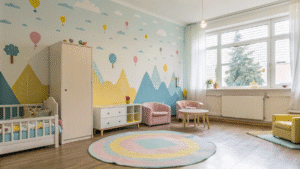
13. Soft Curtains

Choose blackout curtains in soothing colors to help regulate your baby’s sleep.
Pro Tip: Layer sheer curtains underneath for gentle daylight during naps.
14. Play Mat Corner

Dedicate a cozy corner for tummy time and gentle play sessions.
Pro Tip: Use foam mats with neutral patterns for comfort and easy cleanup.
15. Growth Chart Wall

Add a simple, aesthetic height chart to track milestones in style.
Pro Tip: Choose a removable one so you can keep it as a keepsake later.
Final Thoughts
A well-designed nursery doesn’t just look adorable. It supports calm routines and functional living. By blending softness, practicality, and a touch of personal charm, you can create a space both you and your baby will love.