

How to Clean Up After a Small Kitchen Fire
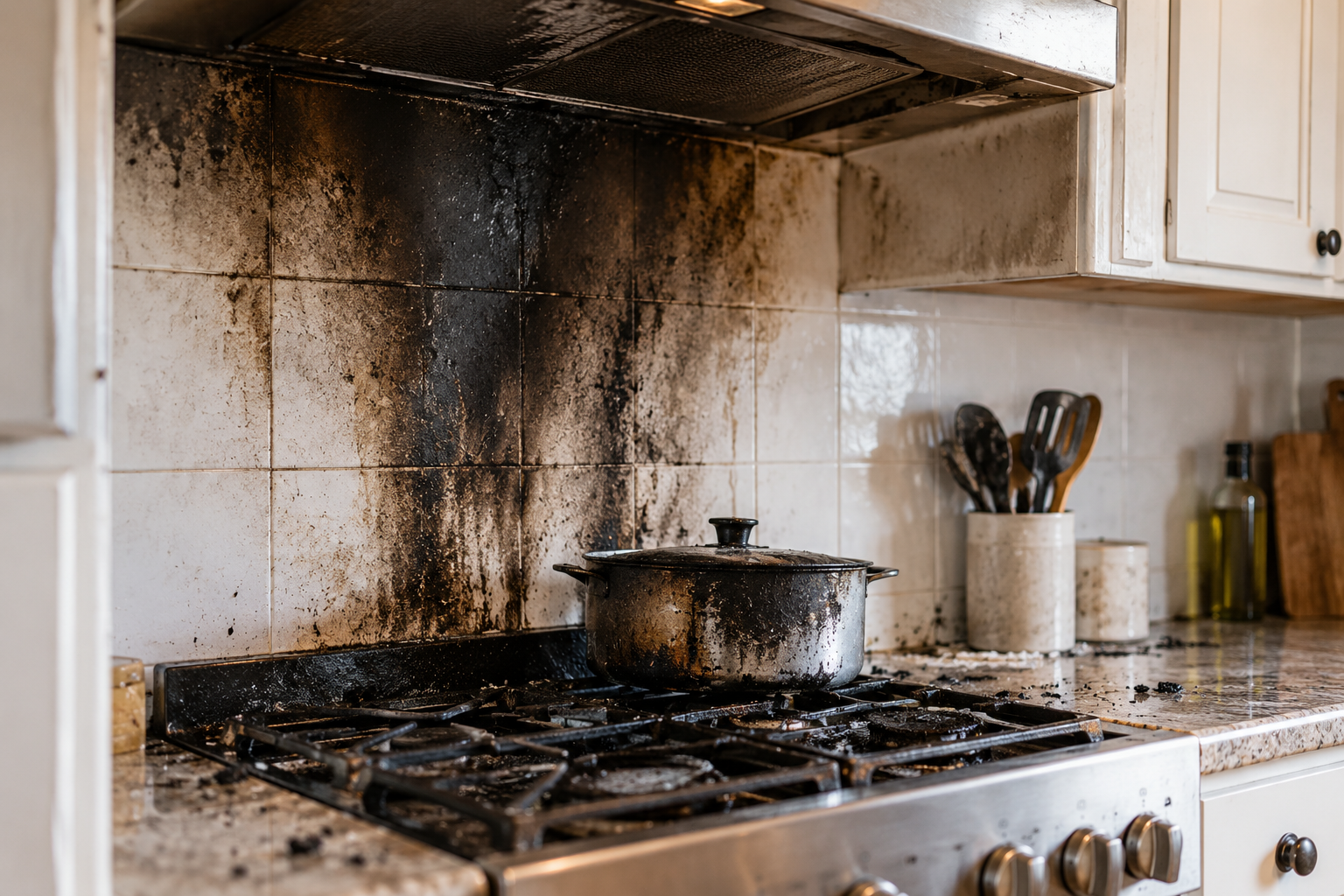
A small kitchen fire can happen in seconds. Maybe a pan of cooking oil overheats, food catches fire on the stove, or an appliance suddenly starts smoking. Even when the flames are quickly put out, the mess left behind can be harder to deal with than expected.
In this article
Soot, smoke, and burnt materials can affect your walls, cabinets, countertops, and even nearby rooms. The good news is that some minor fire damage can be cleaned with the right tools and precautions. Here’s how to clean up after a small kitchen fire and when it’s better to call a professional.
1. Make Sure the Area Is Safe Before Cleaning
Before you start cleaning, make sure the fire is completely out and there are no signs of smoke or smoldering materials. If the fire spread beyond a small, contained area, call the fire department and stay out until officials say it’s safe to return. Never assume everything is fine just because you can no longer see flames.
Let the kitchen cool down before touching burned surfaces or moving damaged items. If you notice a burning smell, unusual heat, or smoke coming from walls, cabinets, or appliances, don’t try to investigate it yourself. There could still be hidden damage that needs professional attention.
2. Open Windows and Protect Yourself
Once the area is safe to enter, open windows and doors to let fresh air circulate. This can help clear some lingering smoke, but avoid using fans in a way that pushes soot and smoke into other rooms. If your ventilation system may be contaminated, leave it off until it can be checked.
Wear gloves, protective eyewear, and suitable respiratory protection before handling soot or fire debris. Smoke residue can contain irritating particles, so avoid touching your face or breathing in dust while cleaning. If you have trouble breathing or experience other symptoms after smoke exposure, leave the area and seek medical advice.
3. Document the Damage and Remove Debris
Before throwing anything away, take photos of the kitchen and all visible damage. Capture burned cabinets, stained walls, damaged appliances, and affected personal belongings from different angles. These pictures can help when speaking with your insurance company or arranging restoration work.
Once you’ve documented everything, remove loose debris carefully. Place burned food, packaging, and other disposable materials in sturdy bags, but don’t handle damaged electrical components or materials that may contain hazardous substances. Check with your insurance company before discarding items that may be needed for a claim.
You May Also Love


4. Clean Soot From Kitchen Surfaces
Soot can settle on almost every surface, including walls, ceilings, cabinets, and countertops. It might look like ordinary dirt, but rubbing it with a wet cloth right away can spread the residue and make stains harder to remove. Start with the right cleaning method for each surface instead of trying to clean everything the same way.
For loose soot, a HEPA-filtered vacuum with a suitable attachment can help collect particles without spreading as much dust. Use a dry chemical soot sponge when appropriate, following the product instructions, and avoid scrubbing aggressively. After removing loose residue, clean washable surfaces with a suitable cleaner and test it on a small hidden spot first.
Don't miss: 17+ Budget Kitchen Remodel Tips That Look High-End →
Cleaning Kitchen Cabinets and Countertops
Kitchen cabinets can hold smoke residue, especially around doors, handles, and the spaces near the stove. Use a cleaner that’s safe for the cabinet material and wipe gently with a clean cloth. For porous wood or heavily stained surfaces, professional cleaning may be needed.
Countertops also need attention, particularly around cooking areas where grease and soot can collect. Follow the manufacturer’s cleaning instructions and avoid harsh products that could damage the finish. If smoke or heat has damaged the surface, cleaning alone may not be enough.
5. Get Rid of Lingering Smoke Odors
Removing visible soot doesn’t always mean the kitchen is completely clean. Smoke particles can settle into curtains, rugs, furniture, cabinet interiors, and other materials, leaving behind a burnt smell. That’s why odor removal should be part of the cleanup process.
Wash affected curtains, towels, and other washable fabrics according to their care labels. Clean hard surfaces that may have collected smoke residue, and replace contaminated filters when appropriate. Avoid using air fresheners to cover up the smell because they won’t remove the smoke residue causing it.
6. Check Appliances and Ventilation Systems
Don’t forget to inspect appliances that were close to the fire. Heat and smoke can damage wiring, electrical parts, and internal components even when the outside looks fine. Have affected appliances and electrical outlets checked by qualified professionals before using them again.
Your range hood and exhaust fan may also contain soot and grease left behind by the fire. Check accessible filters and replace them if they’re damaged or heavily contaminated. If smoke entered your home’s HVAC system, arrange an inspection to prevent residue from spreading through the air.
Keep Exploring



7. Know When to Call a Fire Damage Restoration Company
Some small fires only leave behind minor surface stains, while others cause damage that’s difficult to see. According to the U.S. Fire Administration, an estimated 160,300 residential cooking fires occurred in the United States in 2024. This shows how common cooking-related fires are and why proper cleanup should never be overlooked.
If you notice heavy soot, persistent smoke odors, damaged walls, or signs of hidden fire damage, consider hiring a 24/7 emergency fire damage restoration company. Restoration specialists have the equipment and experience to remove stubborn soot, clean affected materials, and address smoke odors. They can also inspect areas that may need repairs or further treatment.
Conclusion
Cleaning up after a small kitchen fire takes more than wiping away black marks and throwing out burned items. You need to make sure the area is safe, remove soot properly, address smoke odors, and check appliances before using them again. Taking these steps can help prevent further damage and make your kitchen safe and comfortable to use.
If the damage is more than you can handle, Spartan Restoration Inc. can help. Contact their team for professional fire damage cleanup and restoration services to get your kitchen back in shape.