

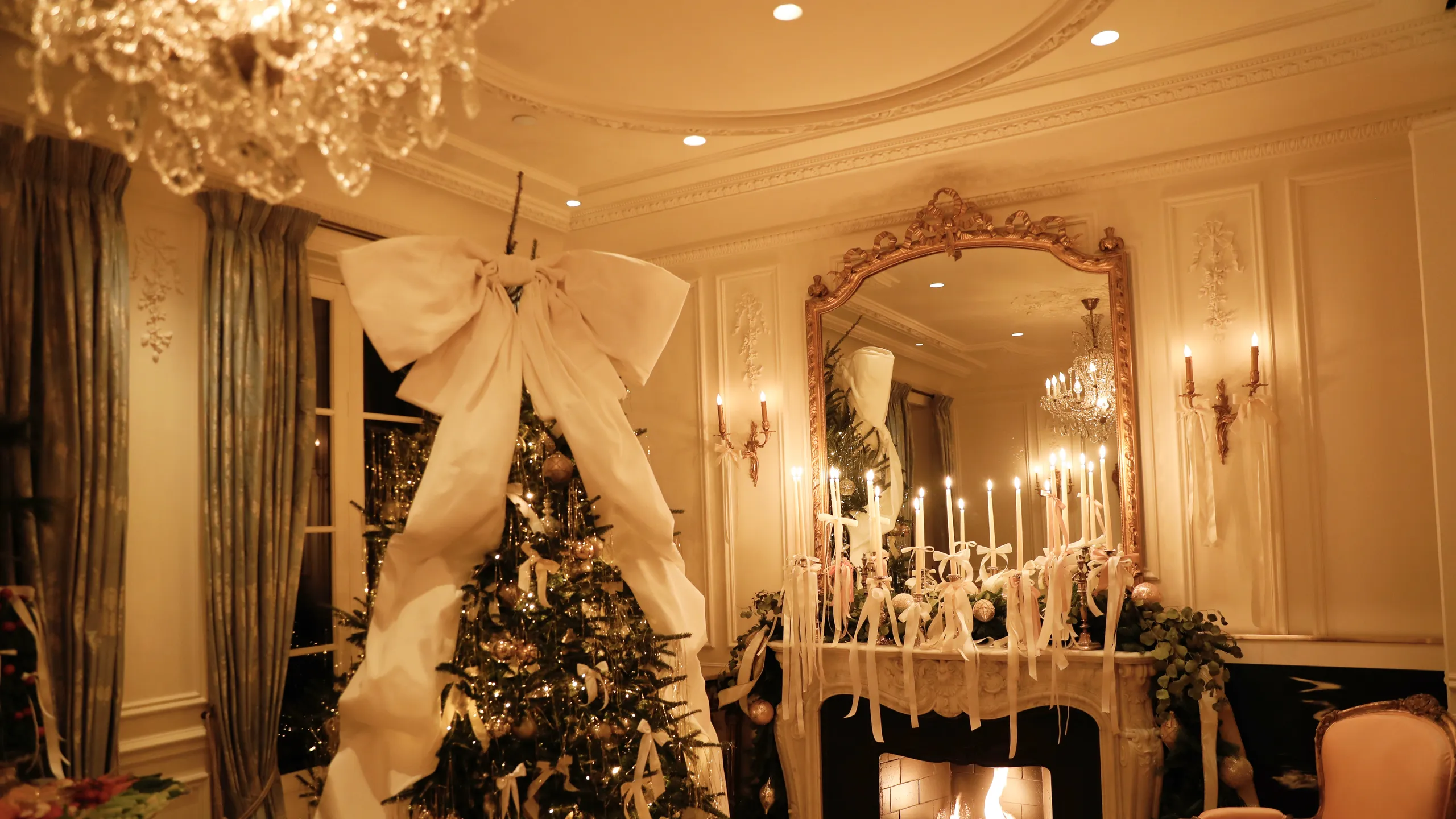
Christmas decorating has always been about the little details that make a home feel special, but this year, one familiar decoration is taking on a much bigger role. Bows are no longer reserved for gift wrapping or tiny ornaments tucked between Christmas tree branches. For Christmas 2026, oversized ribbons and statement bows are appearing on trees, wreaths, staircases, mantels and even dining chairs.
In this article
- 1. Make an Oversized Bow the Focal Point of Your Christmas Tree
- 2. Decorate Your Christmas Mantel With Statement Ribbon
- 3. Give Your Front Door a Festive Update With a Ribbon-Tied Wreath
- 4. Use Ribbon Along Your Staircase for a More Cohesive Christmas Look
- 5. Bring the Trend to Your Christmas Dining Table
- 6. Choose Velvet Bows for a Richer, More Traditional Christmas
- 7. Try Checked and Striped Ribbons for a More Playful Christmas
- 8. Decorate Christmas Presents With Bows That Feel Like Part of the Room
- 9. Create a Beautiful Christmas Look With Neutral-Colored Bows
- 10. Use Smaller Bows to Tie Different Christmas Decorations Together
- How to Choose the Right Christmas Ribbon
- How to Decorate With Oversized Christmas Bows Without Making Your Home Feel Cluttered
- A Few Christmas Decorating Safety Considerations
- The Most Beautiful Christmas Decorations Are the Ones That Feel Personal
The appeal is easy to understand. A beautifully placed bow can introduce color, texture and a sense of occasion without requiring an entirely new collection of Christmas decorations. Whether you prefer a traditional red-and-green Christmas, a softer neutral palette or something more playful, ribbon offers an easy way to make your existing decorations feel different.
This year’s look is also more versatile than it might initially appear. Velvet and satin bring a traditional sense of elegance, while checked fabrics, striped ribbons and playful patterns create a more relaxed, nostalgic atmosphere. The secret is knowing where to make a statement and where to keep things simple.
If you are considering bringing the oversized bow trend into your home this Christmas, these decorating ideas will help you create a festive look that feels thoughtful, welcoming and personal rather than overly decorated.
1. Make an Oversized Bow the Focal Point of Your Christmas Tree
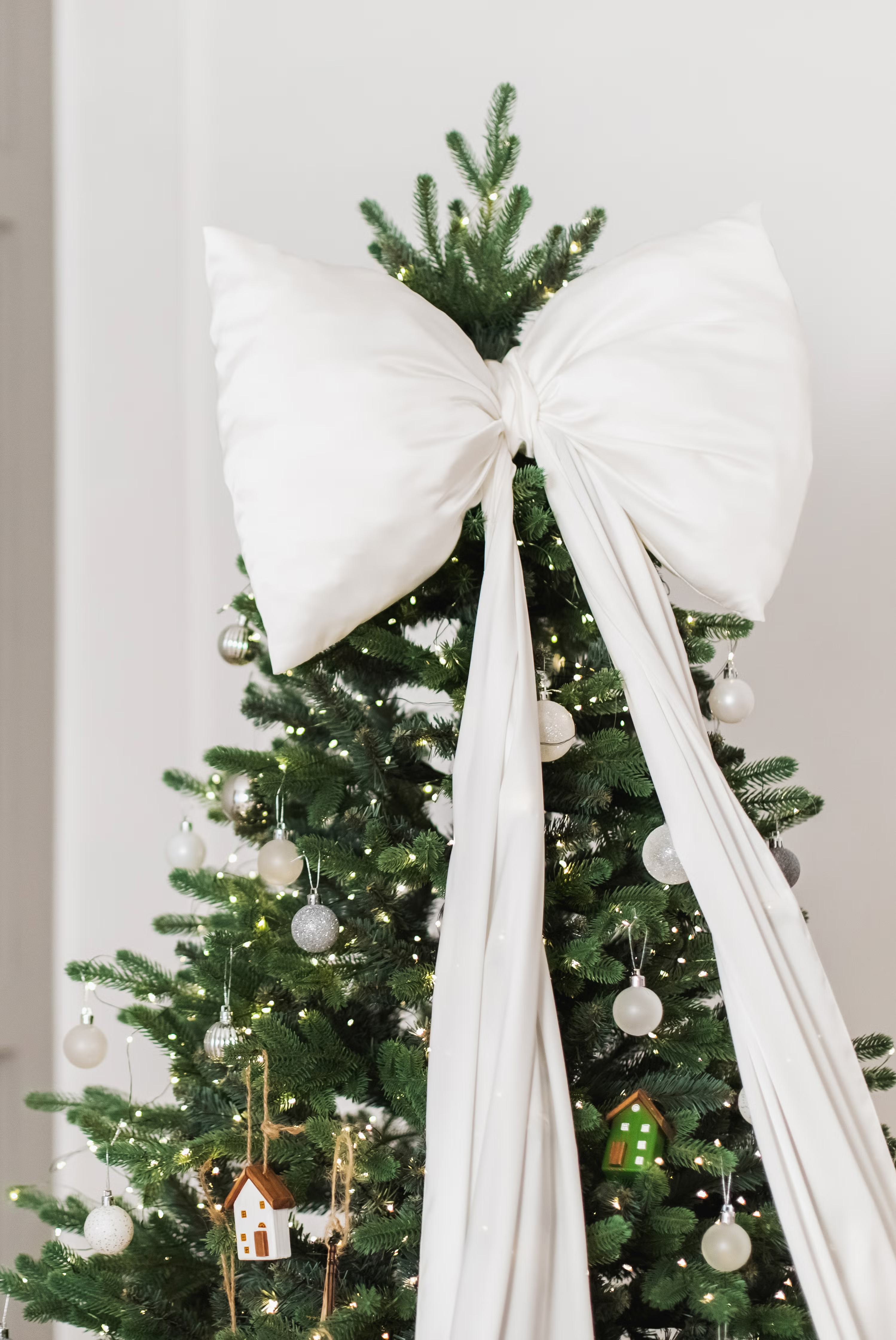
A statement bow can be a beautiful alternative to a traditional Christmas tree topper. Rather than filling the very top of the tree with several different decorations, try using one substantial bow to create a clear focal point.
A deep red velvet bow works particularly well against traditional green foliage, especially when paired with warm white lights, antique-style baubles and a few understated metallic ornaments. For a softer appearance, consider champagne, ivory or muted gold ribbon.
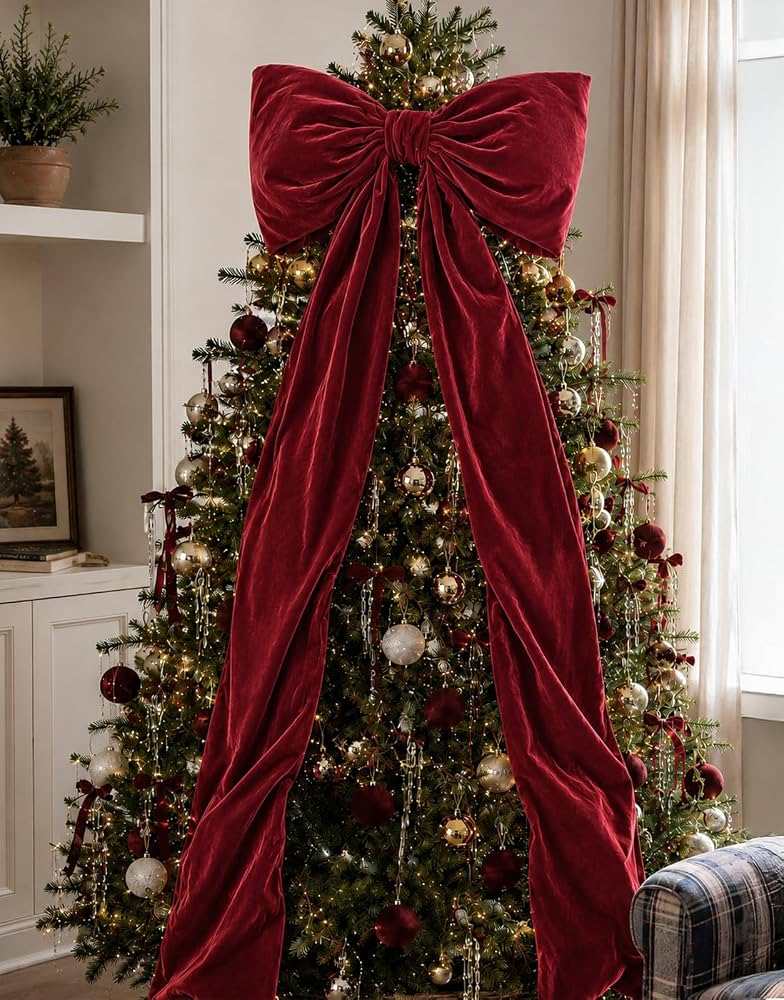
The size of the bow should complement the proportions of the tree. A particularly large tree can carry a fuller, more dramatic design, while a smaller tree may look better with a medium-sized bow that does not overwhelm its branches.
You can also extend the ribbon down through the upper branches, allowing the tails to fall naturally among the decorations. This creates a more connected appearance than simply attaching a bow to the very top.
For a more relaxed result, avoid making every decoration match perfectly. A combination of glass baubles, fabric ornaments and a few meaningful pieces collected over the years can give the tree a more personal character.
2. Decorate Your Christmas Mantel With Statement Ribbon
The fireplace mantel is one of the easiest places to experiment with oversized Christmas bows because it naturally provides a defined decorating area.
Start with a simple foundation of seasonal greenery. Eucalyptus, fir branches, pine foliage or a combination of artificial and natural greenery can create the base of the arrangement.
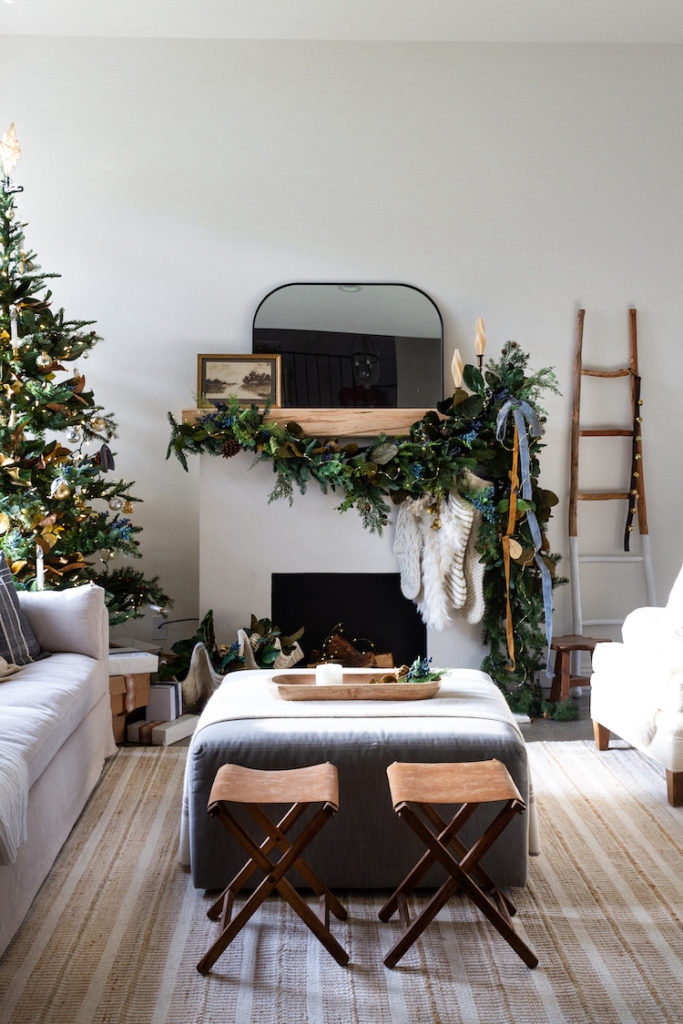
Next, introduce ribbon in a color that complements the surrounding room. A wide burgundy velvet ribbon can add richness to a neutral living room, while a traditional tartan bow works beautifully with wood furniture and classic country interiors.
Rather than scattering small bows across the entire mantel, try positioning one larger bow at one end of the greenery and balancing it with a few smaller decorative details on the opposite side.
You could also incorporate brass candlesticks, ceramic houses or a collection of traditional ornaments to give the display additional depth.
The important thing is to maintain some breathing room. A mantel filled with too many decorations can quickly lose its visual impact, particularly when the room already contains a decorated Christmas tree.
Keep fabric ribbon, dried foliage and other combustible decorations away from open flames, candles and heat sources.
3. Give Your Front Door a Festive Update With a Ribbon-Tied Wreath
A Christmas wreath is often one of the first decorations guests notice, making it an ideal place to introduce the oversized bow trend.
A traditional evergreen wreath can look especially inviting with a large red, burgundy or forest-green bow positioned near the top or bottom.
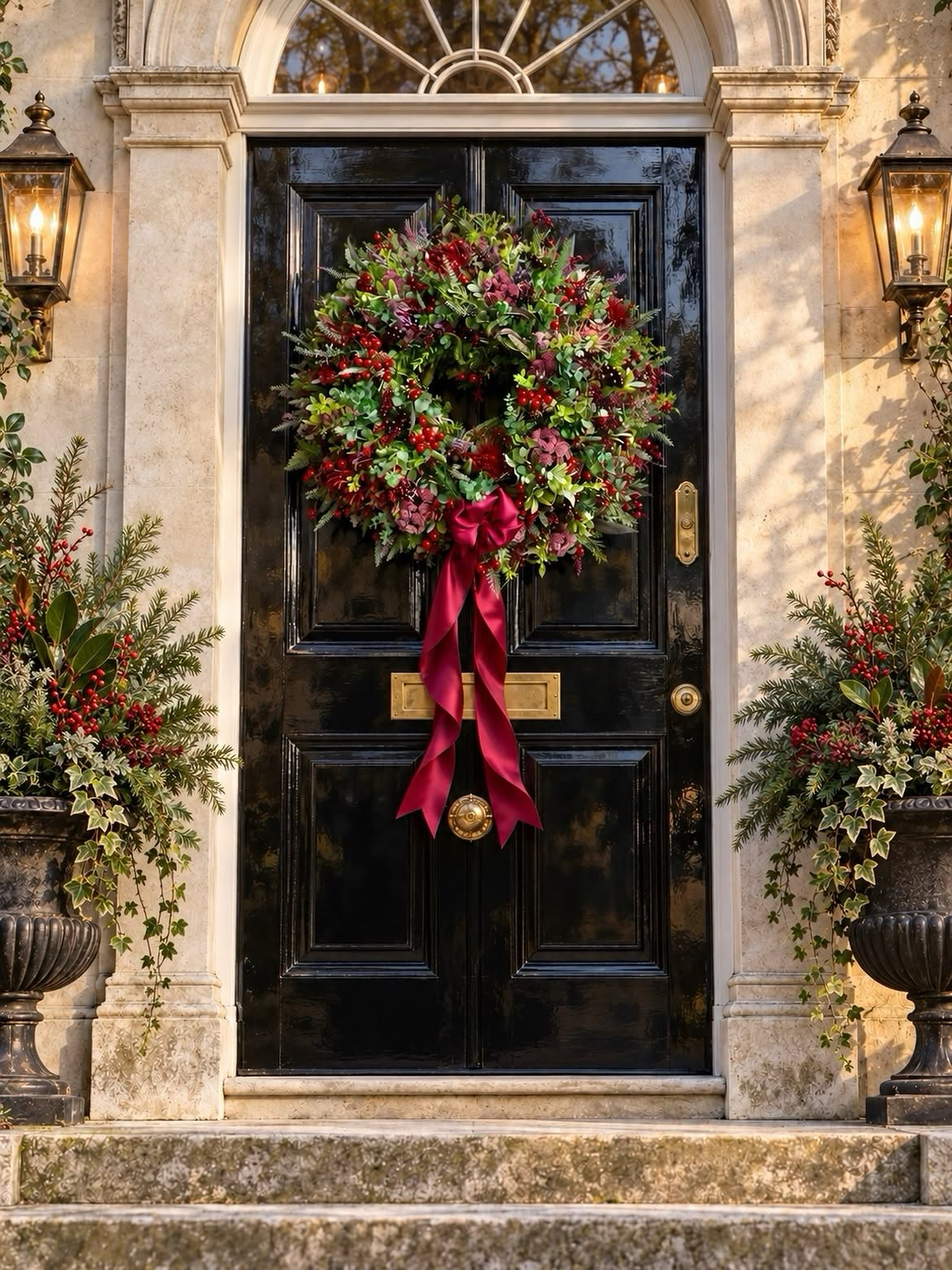
For a more contemporary approach, consider a simple wreath made from eucalyptus or natural foliage, finished with a wide velvet ribbon in chocolate brown, muted gold or deep olive.
The combination of natural greenery and soft fabric creates a decorative contrast without requiring lots of additional ornaments.
If your home has a more traditional exterior, tartan ribbon can bring a welcoming country-house feel. For a modern entrance, a plain linen-effect or satin ribbon may be more appropriate.
Think about the proportions of your front door before choosing the bow. A very small bow may disappear against a large wreath, while an oversized design can look unbalanced on a compact arrangement.
For outdoor wreaths, choose ribbon and attachments suitable for the weather conditions in your area. Wind, rain and direct sunlight can affect some fabrics and finishes.
4. Use Ribbon Along Your Staircase for a More Cohesive Christmas Look
A staircase offers a wonderful opportunity to carry your Christmas decorating scheme from one part of the home to another.
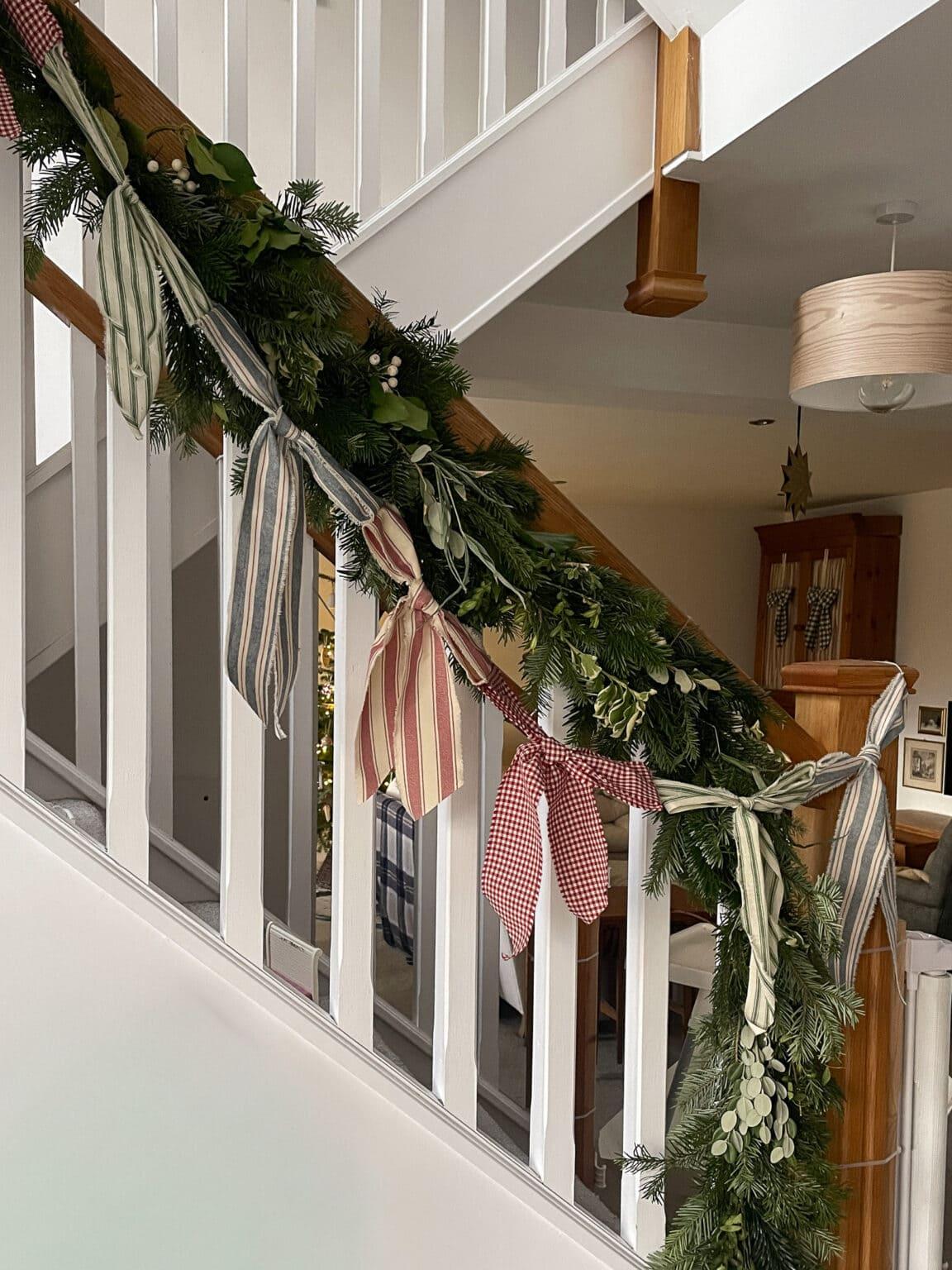
Begin with a simple garland running along the handrail. Evergreen foliage creates a traditional foundation, although a more minimal arrangement using eucalyptus or decorative artificial greenery can work equally well.
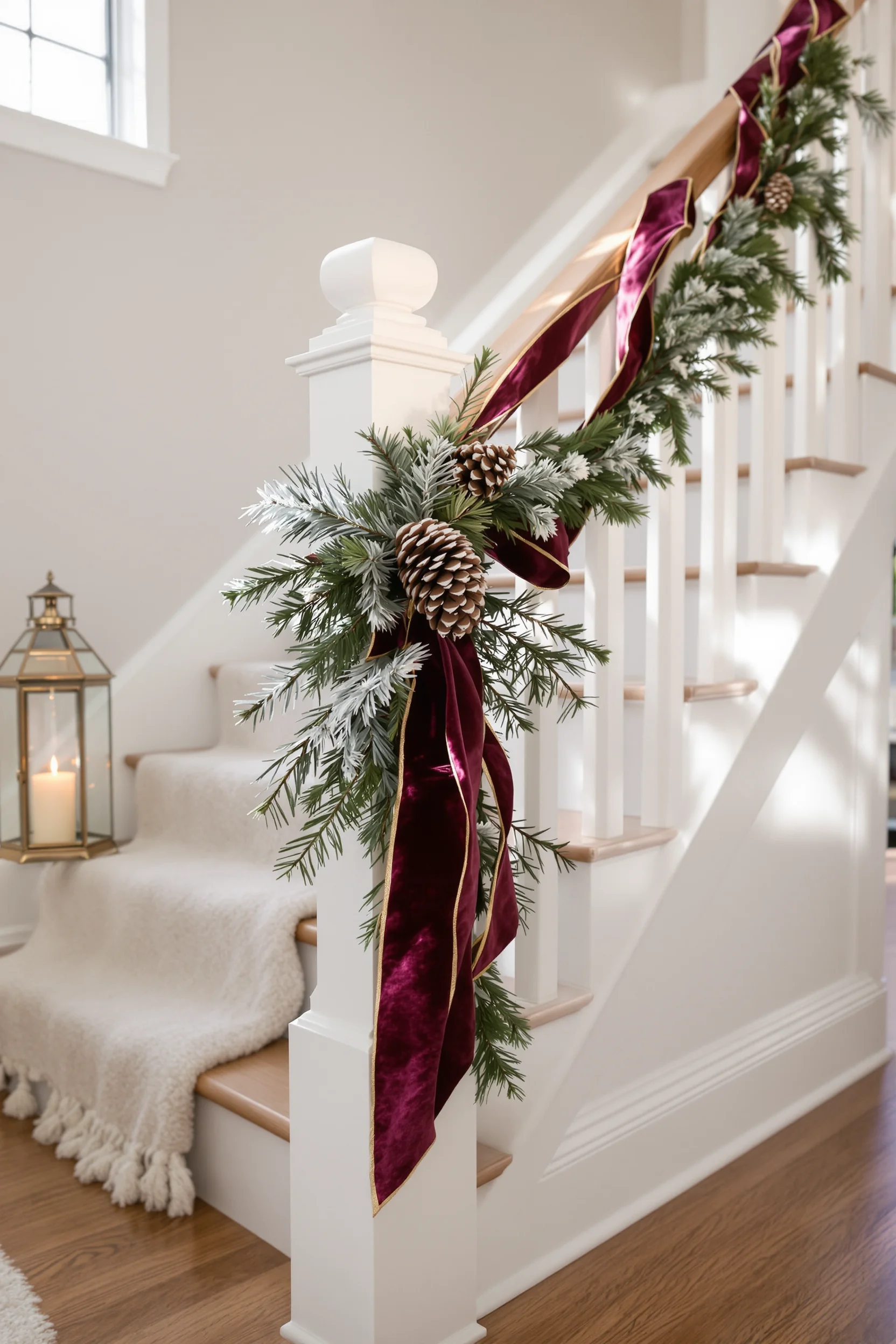
You can then introduce ribbon at intervals, using smaller bows to connect the garland visually.
If you want a more dramatic look, use a wider ribbon with longer tails and allow it to fall naturally alongside the greenery. Deep red velvet, forest-green satin and traditional checked fabrics are all worth considering.
For a more understated home, champagne or ivory ribbon can provide a softer finish.
There is no need to place a bow on every section of the staircase. A few carefully positioned details often create a more balanced effect.
Remember to keep the handrail secure and usable, and make sure that ribbon, garlands and decorative attachments do not obstruct stairs, walking routes or exits.
5. Bring the Trend to Your Christmas Dining Table
Christmas dining rooms do not always need elaborate centerpieces to feel festive. Sometimes a few well-chosen fabric details can create a more memorable setting.
One simple idea is to tie a small bow around each dining chair, using ribbon that complements your table linens and Christmas decorations.
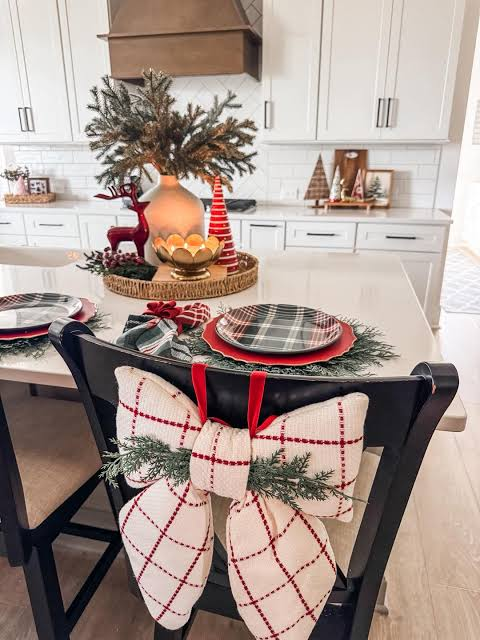
For a traditional dining room, burgundy velvet or dark green ribbon can introduce a rich seasonal accent. If your home has a lighter, more contemporary style, consider soft gold, cream or muted champagne.
You could also use ribbon to decorate napkins. Fold each napkin neatly and secure it with a narrow ribbon, adding a small sprig of rosemary or another suitable decorative detail.
For the centerpiece, combine seasonal greenery, natural foliage and a few carefully chosen ornaments. This helps connect the table setting with the rest of the home’s Christmas decorations.
The aim is to create a coordinated atmosphere rather than make every element identical. A mixture of textures and a consistent color palette will generally feel more interesting than matching every accessory.
You May Also Love


6. Choose Velvet Bows for a Richer, More Traditional Christmas
Velvet is particularly well suited to Christmas decorating because its soft texture adds depth to otherwise simple arrangements.
A wide burgundy velvet bow can make an ordinary wreath feel more considered, while forest-green velvet works beautifully against natural foliage.
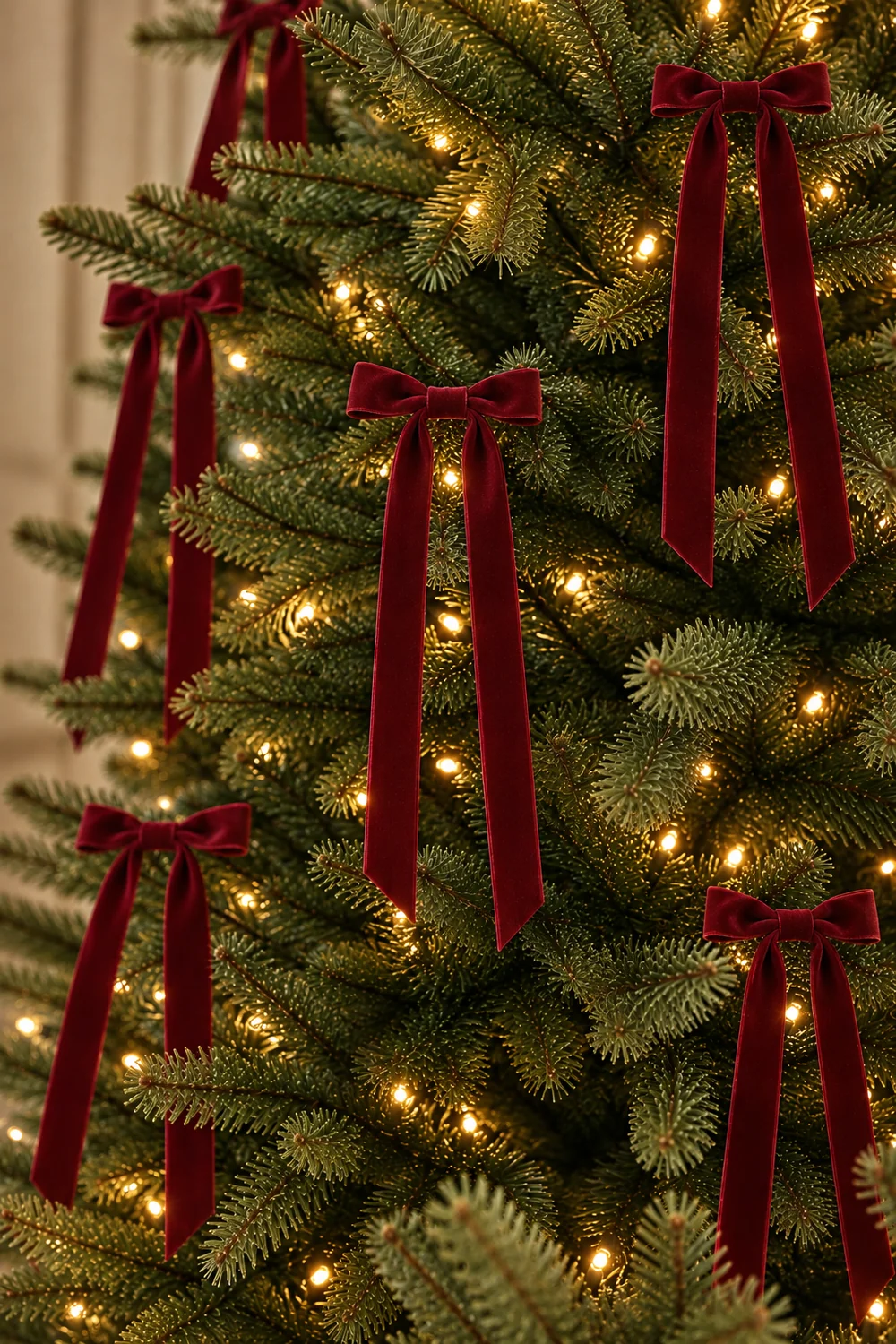
If you prefer a lighter decorating scheme, champagne, dusty rose and warm ivory are attractive alternatives.
Velvet also pairs well with traditional Christmas materials such as wood, brass, glass and natural greenery. These combinations can help create a room that feels warm and collected rather than overly coordinated.
For a more luxurious appearance, pay attention to the finish of the ribbon. A structured bow with gently shaped loops can look more substantial than a loosely tied strip of fabric.
You do not need to use velvet everywhere. Choosing one or two locations for this richer material will help it stand out.
7. Try Checked and Striped Ribbons for a More Playful Christmas
Not every Christmas decoration needs to look formal or elegant. Checked and striped ribbons can introduce a cheerful, nostalgic quality that feels particularly appropriate for the holiday season.
Red-and-white gingham, green tartan and candy-cane-inspired stripes all work well with traditional Christmas greenery.
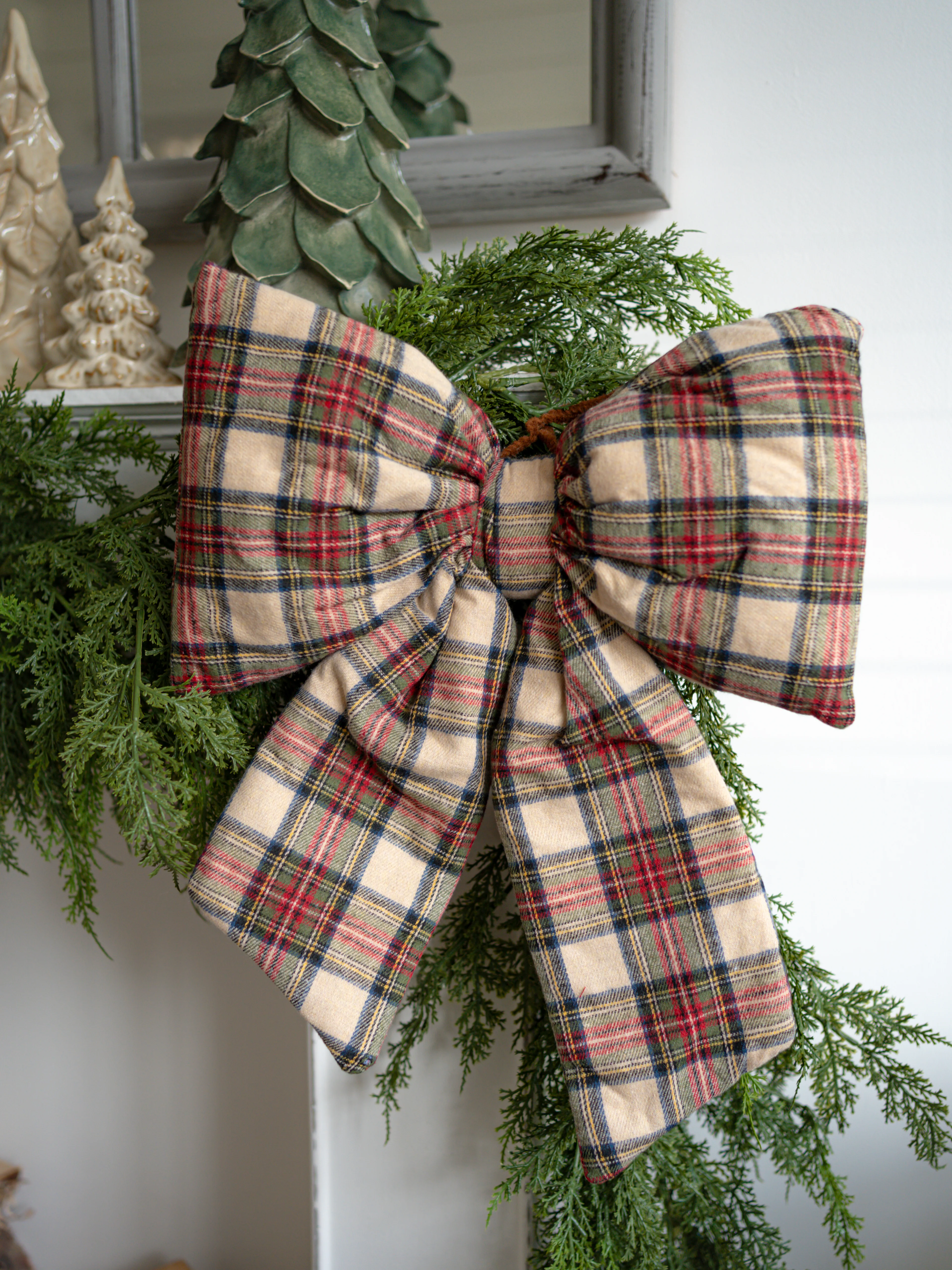
These patterns are particularly effective on Christmas trees, wreaths, wrapped gifts and staircase garlands.
If you are using a patterned ribbon, try keeping the remaining decorations relatively simple. For example, a tartan bow can look beautiful against a tree decorated with warm white lights and understated wooden or glass ornaments.
This allows the ribbon to become the main decorative feature without making the overall arrangement feel too busy.
Patterned ribbon can also be a useful way to bring together different colors already present in your living room, particularly if you want your Christmas decorations to complement rather than compete with your existing furniture and soft furnishings.
8. Decorate Christmas Presents With Bows That Feel Like Part of the Room
Gift wrapping can become part of your wider Christmas decorating scheme, particularly when presents are displayed beneath the tree or arranged on a console table.
Instead of using identical wrapping paper and ribbon for every present, experiment with a small collection of complementary materials.

Brown kraft paper, cream wrapping paper and traditional red paper can all provide a useful foundation. Finish each package with a different ribbon treatment, such as velvet bows, checked ribbon or simple fabric ties.
For larger presents, a fuller bow can create a decorative focal point. Smaller packages generally look better with narrower ribbon and more delicate details.
You can also introduce natural accents such as dried orange slices or small evergreen sprigs, provided they are securely attached and kept away from heat sources.
The overall effect should feel coordinated without being overly uniform.
Don't miss: 15+ Charming DIY Christmas Village Display Ideas →
9. Create a Beautiful Christmas Look With Neutral-Colored Bows
If traditional red and green decorations do not suit your interior, oversized bows can still work beautifully in a neutral Christmas scheme.
Look for ribbons in shades such as:
- Warm ivory
- Champagne
- Soft taupe
- Chocolate brown
- Muted gold
- Natural linen
- Soft sage
These colors can work particularly well in living rooms decorated with pale wood, cream upholstery, natural stone and understated accessories.
A large ivory bow on a green Christmas wreath, for example, can create a beautiful contrast without introducing a strong new color.
Similarly, champagne ribbon can bring a subtle festive finish to a neutral Christmas tree decorated with glass ornaments and warm white lights.
The trick is to introduce variation through texture rather than relying on lots of different colors. Combine velvet, linen-effect fabric and satin carefully to create a layered appearance.
10. Use Smaller Bows to Tie Different Christmas Decorations Together
Although oversized bows are the most noticeable version of this year’s trend, smaller bows still have an important role to play.
They can help connect different decorating areas throughout your home without making every display look identical.
For example, you could use a large burgundy bow on your Christmas wreath, smaller matching bows on your staircase garland and a narrow ribbon around your dining napkins.
This creates a subtle visual connection between rooms.
The same approach works with different fabrics. A large velvet bow can become the main feature, while smaller satin or cotton bows introduce variation without disrupting the overall scheme.
Think of the bows as a recurring decorative detail rather than the only feature of your Christmas decorating.
How to Choose the Right Christmas Ribbon
Choosing the right ribbon is just as important as deciding where to use it. Different fabrics create different effects, and the best option depends on the style of your home and the type of decoration you are making.
Velvet: A rich, textured option that works particularly well with traditional, heritage-inspired and elegant Christmas schemes.
Satin: Smooth and slightly reflective, satin ribbon can bring a more polished appearance to trees, wreaths and gift wrapping.
Grosgrain: Recognizable by its ribbed texture, grosgrain ribbon provides a more structured appearance and can work particularly well for smaller decorative bows.
Linen-effect fabric: A useful choice for relaxed, rustic and natural decorating schemes.
Organza: Lightweight and translucent, organza can introduce a softer, more delicate decorative detail.
Tartan and gingham: Patterned fabrics that bring a traditional or country-inspired quality to Christmas decorations.
When choosing ribbon, also consider its width and stiffness. Wider ribbon is generally easier to use for statement bows, while narrower ribbon is more suitable for smaller decorative details. A ribbon with some structure can hold its shape better, particularly when used on a Christmas tree or wreath.
How to Decorate With Oversized Christmas Bows Without Making Your Home Feel Cluttered
The oversized bow trend is easy to enjoy, but using too many statement decorations can make a room feel visually crowded.
A few simple principles can help.
Choose a consistent color palette. Select two or three main colors and repeat them across your Christmas decorations. This creates a more connected appearance.
Vary the scale. Combine one or two substantial bows with smaller decorative details rather than using oversized designs everywhere.
Consider the room’s existing style. A traditional home may suit velvet and tartan, while a contemporary space might look better with simpler satin or linen-effect ribbon.
Leave some areas undecorated. Not every shelf, doorway or piece of furniture needs a Christmas accessory. Empty space helps statement decorations stand out.
Repeat details thoughtfully. Reusing the same ribbon color in different parts of the home creates continuity without making every arrangement identical.
Prioritize practical placement. Avoid placing loose ribbon or garlands near candles, fireplaces, heaters or other heat sources.
Keep Exploring


A Few Christmas Decorating Safety Considerations
Fabric ribbons, bows, greenery and other seasonal decorations should be positioned with care.
The National Fire Protection Association advises keeping Christmas trees at least three feet away from heat sources, including fireplaces, radiators, candles, heat vents and lights. It also recommends watering live trees daily, using appropriately tested decorative lights and switching lights off before leaving home or going to bed.
Never use lit candles to decorate a Christmas tree. Keep ribbons and other combustible materials away from open flames and hot surfaces.
These small precautions are particularly important when decorating fireplaces, mantels and living rooms.
The Most Beautiful Christmas Decorations Are the Ones That Feel Personal
The oversized bow trend is a lovely reminder that Christmas decorating does not always require buying an entirely new collection of ornaments.
A carefully chosen ribbon can refresh a familiar wreath, bring character to a Christmas tree or make a simple dining table feel more festive.
The best approach is to choose materials and colors that complement your home rather than follow every seasonal trend. Whether you prefer traditional velvet bows, playful gingham patterns or understated neutral ribbons, a few thoughtful details can make your Christmas decorations feel more individual.
Ultimately, the most inviting Christmas interiors are not necessarily the most elaborate. They are the ones that reflect the people who live in them, the traditions they enjoy and the little details that make the season feel special.