16+ Coastal Deck Styling Ideas That Bring Seaside Energy Home
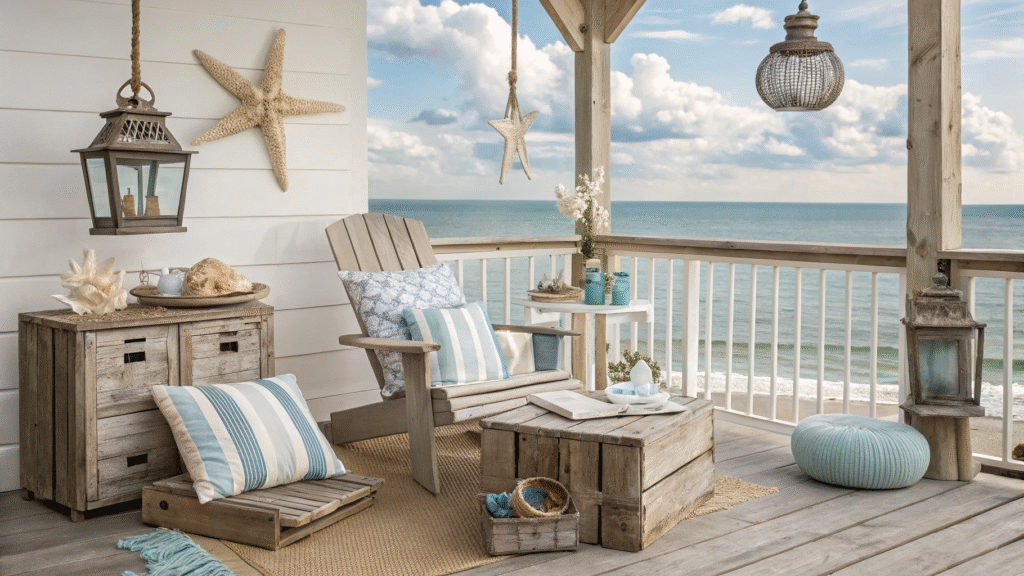
You do not need to live on the water to have a deck that feels like the coast.
The right combination of materials, colors, textures, and accessories can evoke the particular quality of seaside living, the openness, the lightness, the effortless ease, wherever your home actually is.
These ideas will help you create a coastal deck that captures that energy completely and makes every moment on it feel like a day at the shore.
What Coastal Deck Styling Actually Means
Coastal design is one of the most popular and most frequently misapplied outdoor aesthetics. At its worst, it becomes a collection of anchors, starfish, and rope accessories that feel like a gift shop rather than a genuine seaside space. At its best, it captures something true and specific about the quality of life near the water that makes it one of the most genuinely restorative outdoor aesthetics available.
Love Chic Living Club?
Add us as one of your preferred Google sources and discover more home decor, DIY, outdoor, and lifestyle inspiration from us.
It Is About Light and Openness First
The defining quality of genuinely good coastal outdoor design is not the accessories. It is the light. A coastal space is defined by the quality of light that exists near large bodies of water, bright, reflective, slightly diffused, and extraordinarily flattering to pale surfaces and natural materials. Achieving this quality means using pale, light-reflective materials, keeping the space as open and uncluttered as possible, and choosing a palette that maximises the brightness of the available light rather than absorbing it.
It Celebrates Natural Weathering
The most authentic coastal spaces have been shaped by the elements. Timber bleached and greyed by sun and salt air. Metal corroded to a beautiful verdigris or rust tone. Rope softened by moisture and use. Paint faded to a pale, chalky quality by seasons of UV exposure. This natural weathering is not deterioration to be corrected. It is the evidence of the space’s authentic relationship with the coastal environment and it is what gives genuinely coastal spaces their depth and character. A coastal deck styling approach that fights against weathering and insists on everything looking new and pristine misses this essential quality entirely.
It Prioritises Comfort and Ease
Coastal living has a particular cultural association with relaxation, ease, and the suspension of formality that comes from being near the water. A coastal deck should feel like somewhere you can arrive in bare feet and stay all day without any sense of occasion or performance. Deep, comfortable seating. Easy, informal arrangements. Everything slightly bleached and slightly soft and slightly worn in, in the most beautiful way possible. The coastal deck is the opposite of formal outdoor dining. It is the outdoor equivalent of a deep sofa and an unhurried afternoon.
The Real Coast Inspires the Color Palette
The most authentic coastal palettes are drawn directly from the specific beach or coastal landscape that inspires them rather than from a generic catalog of navy and white. Different coasts have dramatically different color qualities. The pale blue-grey of a New England shore. The warm sandy white of the Gulf Coast. The deep turquoise and bleached coral of a tropical beach. The dramatic rocky grey and silvery green of the Pacific Northwest. Working from a specific coastal landscape gives a deck styling scheme a specificity and authenticity that the generic nautical palette rarely achieves.
Building a Genuine Coastal Deck Palette
The color palette is the foundation of any coastal deck scheme and getting it right sets up everything else to work beautifully.
The Light Neutrals Are Non-Negotiable
Every successful coastal deck palette starts with pale, light-reflective neutrals. Bleached white, warm cream, pale sand, soft stone, and the silver-grey of weathered timber are the foundational tones that create the bright, open quality that coastal spaces require. These light neutrals should dominate the palette, appearing in the largest surfaces, the deck boards, the furniture frames, and the cushion base colors. Without a strong light neutral foundation, the coastal palette loses its characteristic airiness and brightness.
You May Also Love
Blue Is the Accent, Not the Base
One of the most common coastal palette mistakes is using blue as the dominant or base tone rather than as the accent. A deck that is primarily blue, with blue furniture, blue cushions, and blue accessories, does not feel like the coast. It feels like a marine-themed restaurant. The coast is primarily pale and bright with blue as a highlight, the sky above a white beach, the water visible beyond bleached timber, the stripe on a white cushion. Blue used as accent within a dominant pale neutral palette creates the coastal feeling. Blue as the base color creates a theme park interpretation of it.
Warm Versus Cool Coastal
The most important decision within the coastal palette is whether to go warm or cool. A warm coastal palette draws from the bleached, sandy, sun-drenched quality of southern and tropical coasts: warm white, sandy ochre, driftwood grey-brown, sea glass green, and warm turquoise. A cool coastal palette draws from the more dramatic, rocky, and atmospheric quality of northern coasts: cool white, blue-grey, slate, silver timber, sea foam green, and deep navy. Both are genuinely coastal but they create very different atmospheres and the choice should be driven by your climate and your home’s character as much as by personal preference.
Coastal Materials Guide
The materials you use on a coastal deck are as important as the colors in creating the right atmosphere.
Timber
Timber is the most fundamental material of coastal deck styling. The pale, bleached quality of UV-weathered timber, whether teak, cedar, or a pale composite in a silver or blonde tone, is the single most powerful material signal of a coastal space. Allow timber to weather naturally or choose materials that reference the weathered quality from the outset. Freshly stained dark timber does not read as coastal. Pale, bleached, or silver-grey timber does, unmistakably.
Rope and Jute
Natural rope and jute are the most immediately recognisable tactile materials of the coastal aesthetic. Rope wrapped around post bases, jute woven into cushion covers and rugs, hemp cord used as a railing detail or plant hanger. These natural fiber materials relate to the seafaring and fishing traditions that are at the cultural root of coastal design and they provide a warmth and texture that manufactured materials cannot replicate. Always use marine-grade or treated versions for any permanent outdoor application.
Don't miss: 20+ Creative Patio Floor Ideas for Every Style →
Wicker and Rattan
All-weather wicker and rattan furniture relates to the warm coastal traditions of beach house living and provides the relaxed, slightly informal quality that is central to the coastal outdoor aesthetic. Choose synthetic all-weather versions for outdoor use and in pale natural, white, or bleached tones for the most authentically coastal result.
Metal With Character
Corroded, weathered, or verdigris-patinated metal is more authentically coastal than polished or powder-coated metal in standard colors. Bronze, copper, aged iron, and galvanised steel all develop beautiful patinas that relate to the coastal material tradition. Marine-grade stainless steel in a brushed finish is the practical alternative that handles genuine coastal conditions without the corrosion risk.
Glass and Ceramic in Sea Tones
Sea glass colors, soft greens, faded turquoise, pale blue, and frosted white, in ceramic planters, glass accessories, and decorative objects provide the color accent layer of a coastal deck without introducing any strong, manufactured color that would disrupt the natural, weathered quality of the overall scheme.
Keep Exploring

Coastal Deck Planting Guide
The right planting is essential to an authentic coastal deck atmosphere and the choice of plants is more important in a coastal scheme than in almost any other outdoor aesthetic.
Choose Plants That Survive Coastal Conditions
If your deck is genuinely near the coast, planting choices must be driven primarily by the plants’ ability to handle salt air, wind exposure, and the specific drainage and soil conditions of your site. Tough coastal plants like ornamental grasses, lavender, agapanthus, sea holly, rosemary, and ice plant all thrive in coastal conditions and look authentically right in a coastal setting. Delicate plants that struggle in coastal conditions look unhealthy and defeated rather than luxuriant and connected to the landscape.
Grasses for Movement and Air
Ornamental grasses are the most perfect coastal planting choice available. Their movement in the breeze, their bleached, feathery quality in late summer, their pale seed heads catching the light, all of these qualities directly evoke the coastal landscape and bring a sense of air and movement to the deck that no other plant category achieves as effectively.
Restrained Tropical Notes
Potted palms, phormiums, and architectural succulents introduce a subtropical coastal note that suits warm coastal palette decks beautifully. Use these sparingly as statement plants rather than filling the deck with tropical planting, which can tip a coastal scheme into a resort aesthetic that lacks the personal, weathered quality of a genuine beach house.
1. White and Blue Palette
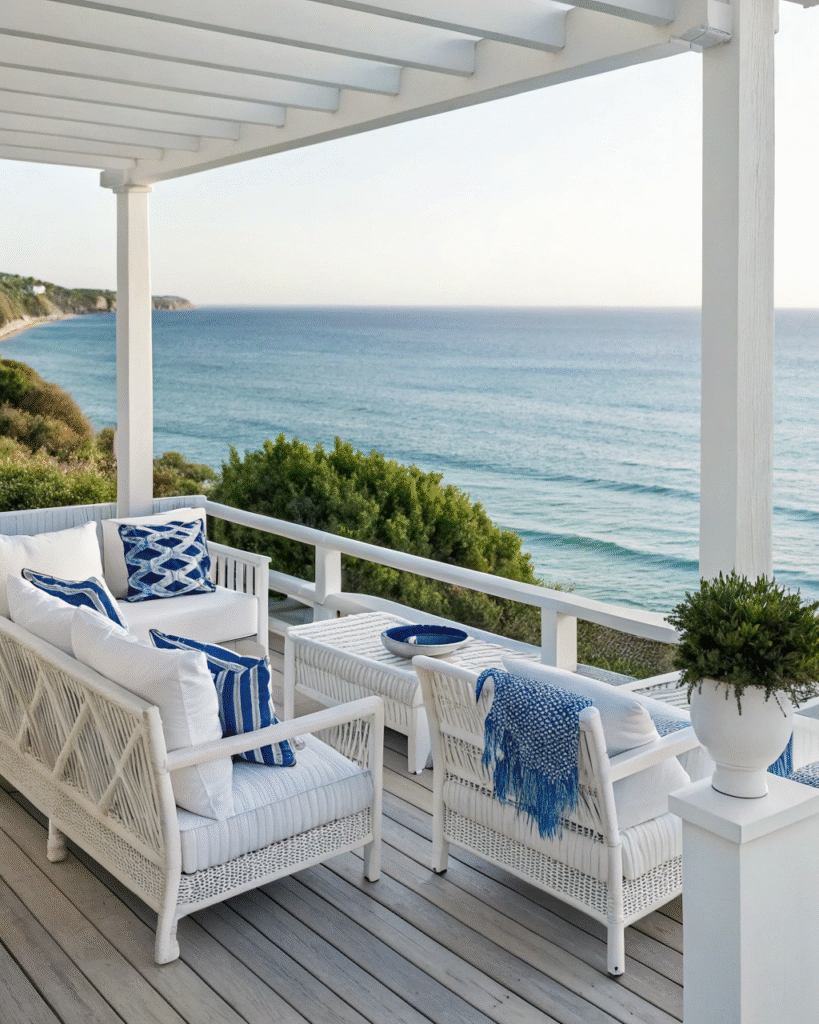
A mix of crisp whites and ocean blues instantly gives your deck a coastal vibe.
Pro Tip: Add striped cushions or rugs to complete the classic seaside look.
2. Wicker and Rattan Furniture
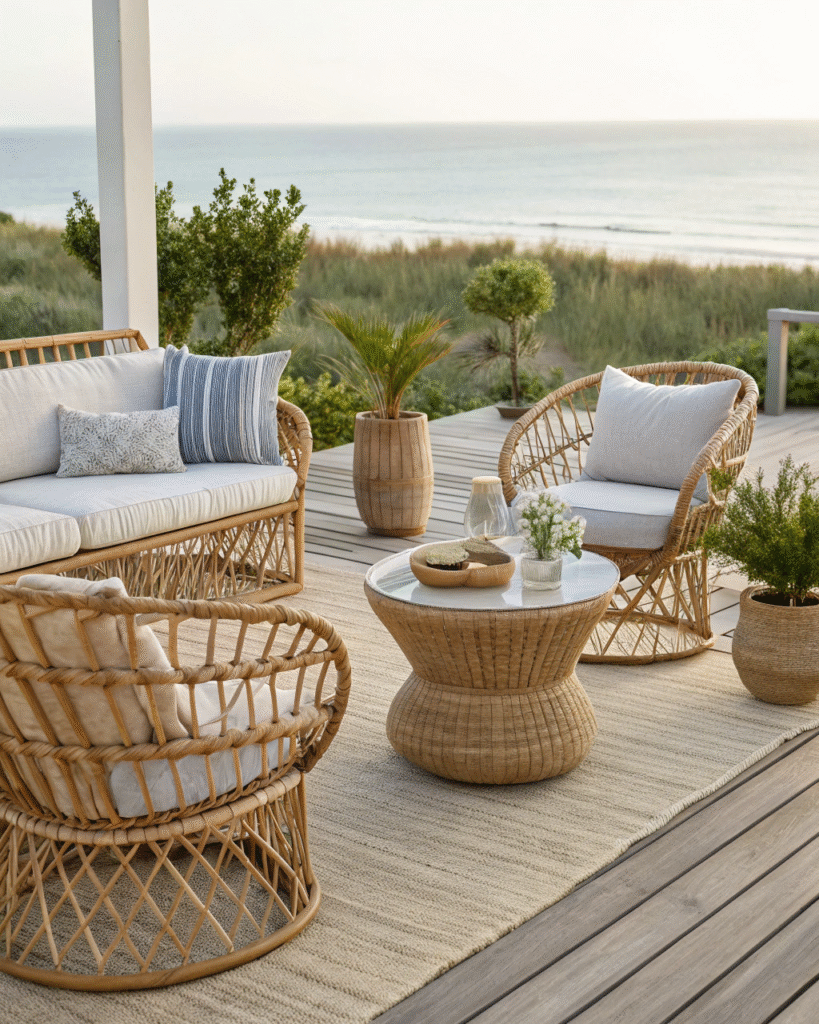
Natural woven furniture feels light, airy, and perfect for outdoor lounging.
Pro Tip: Keep cushions in soft neutrals like cream or pale blue for a relaxed tone.
3. Nautical Stripes
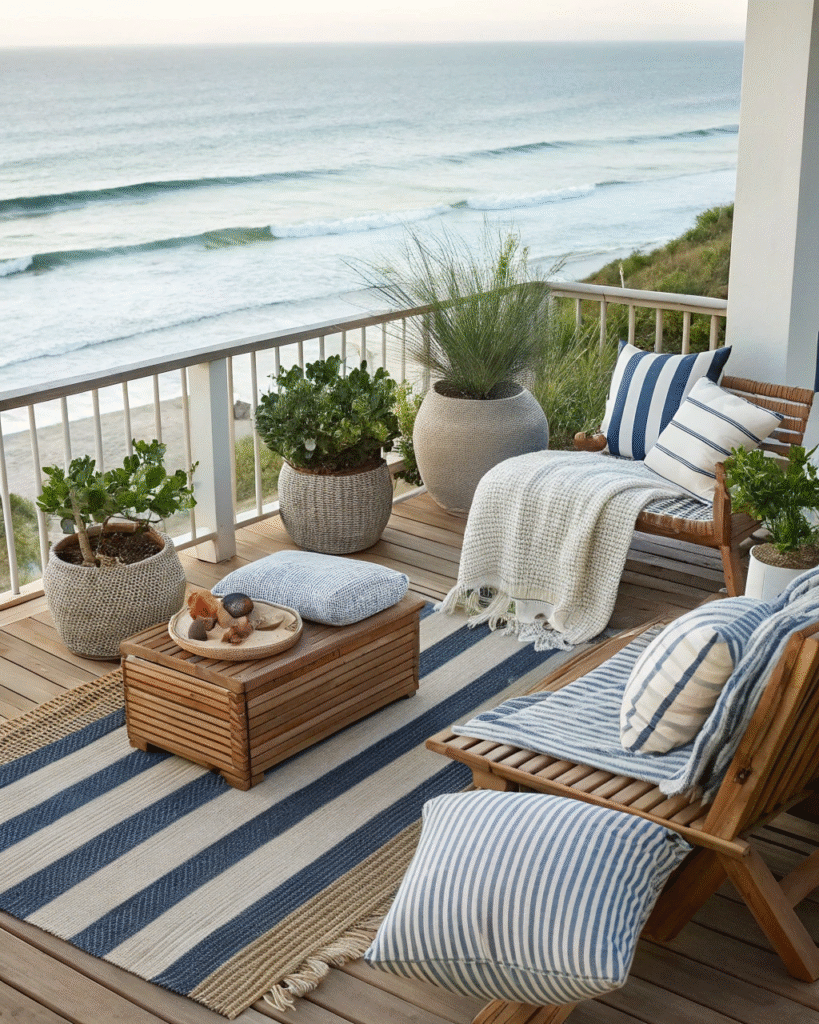
Add a touch of the sea with striped textiles on pillows, rugs, or throws.
Pro Tip: Choose wide, soft stripes in muted blues for a timeless coastal finish.
4. Driftwood Decor
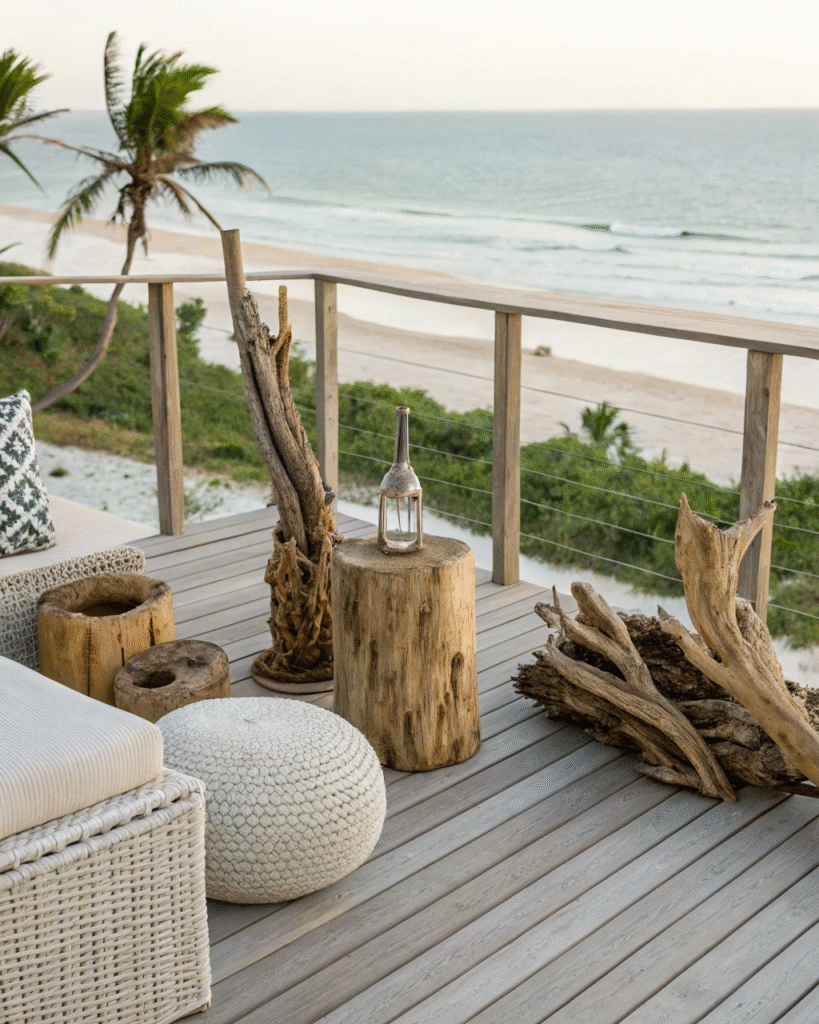
Decorate with driftwood pieces for authentic seaside charm.
Pro Tip: Use a large driftwood branch as a centerpiece or accent on a side table.
5. Light Wood Flooring
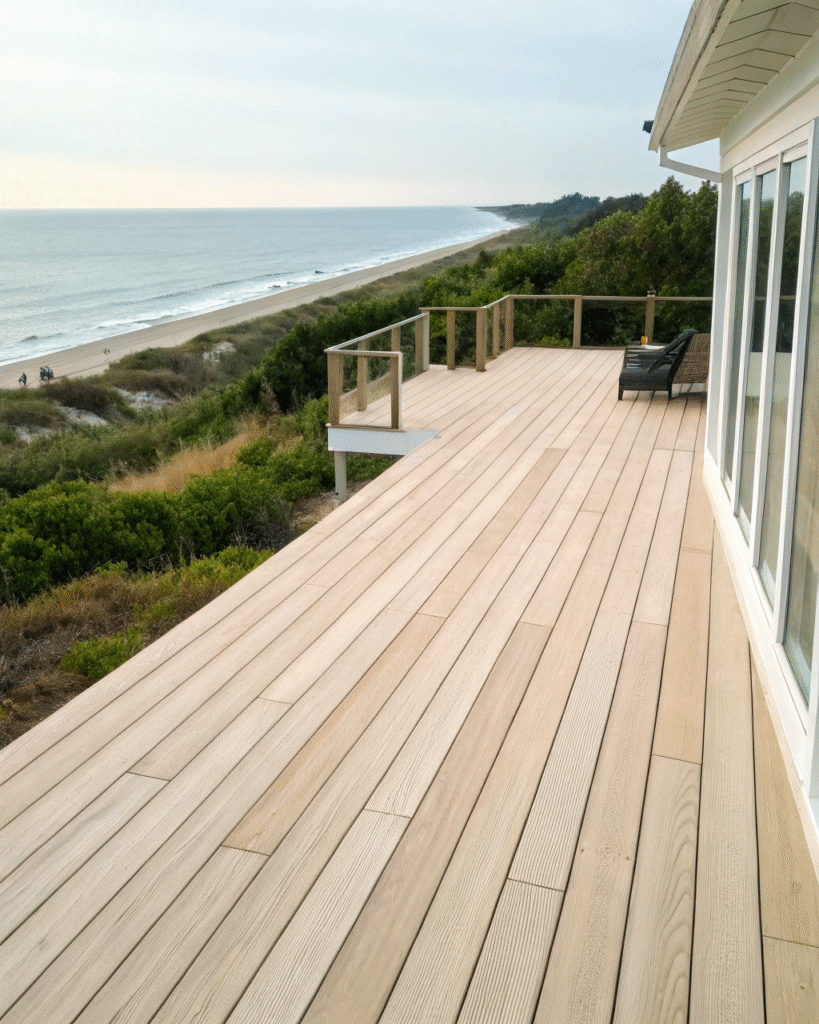
Pale wood decking mimics the look of sun-bleached beach planks.
Pro Tip: Protect with a matte sealant to maintain the natural, weathered appearance.
6. Sheer White Curtains
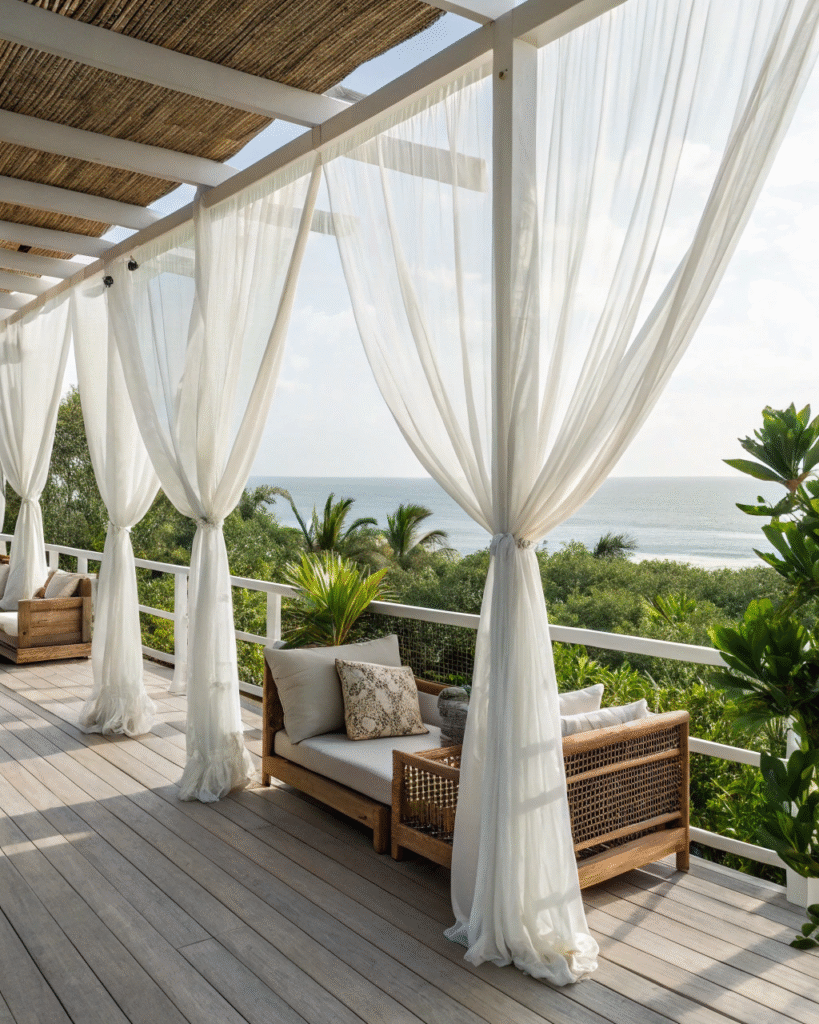
Flowing curtains create movement and a breezy coastal feel.
Pro Tip: Hang them from a pergola or canopy to soften sunlight and add elegance.
7. Sea Glass Accents
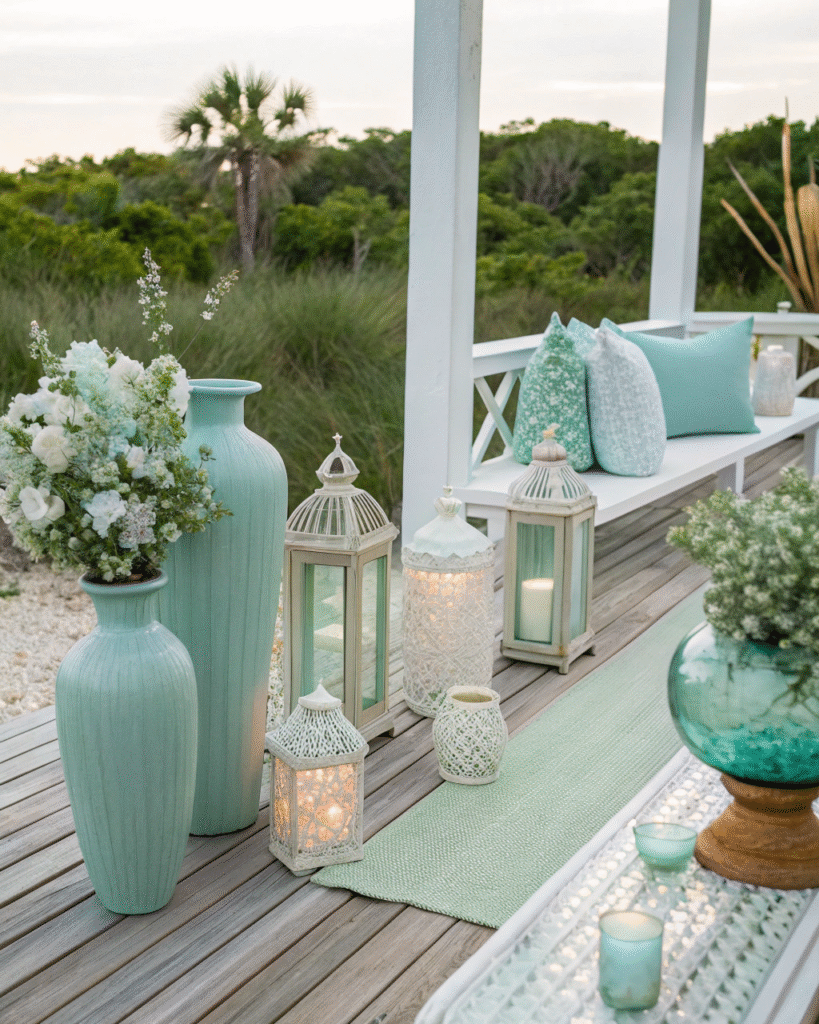
Incorporate sea glass in vases, lanterns, or table decor for soft color and shine.
Pro Tip: Mix shades of turquoise, teal, and frosted white for a fresh, oceanic palette.
8. Coastal Lantern Lighting
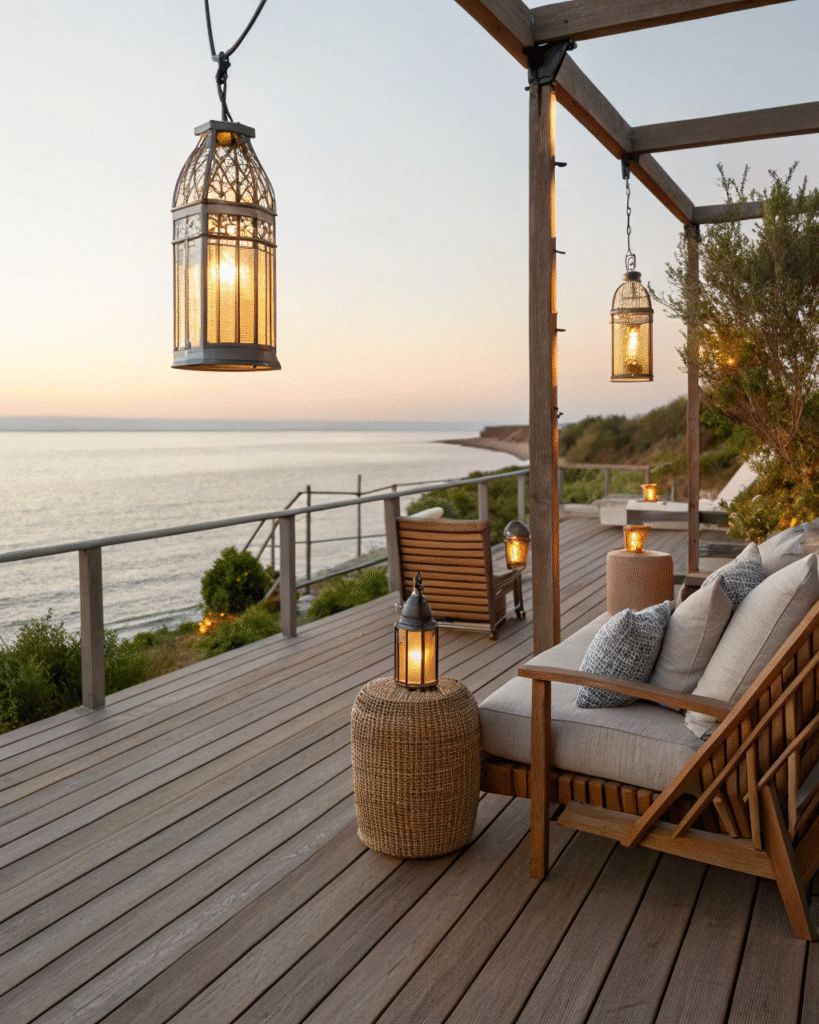
Lanterns add warmth while maintaining a nautical aesthetic.
Pro Tip: Choose distressed white or galvanized metal finishes for coastal authenticity.
9. Rope Details
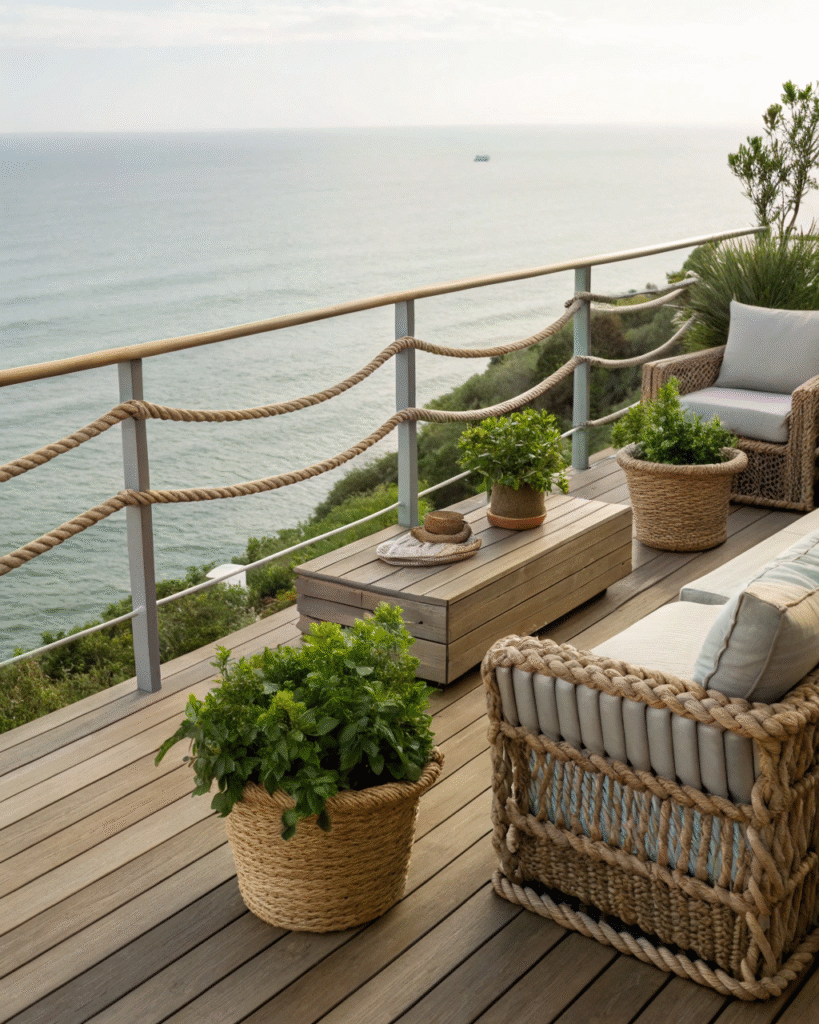
Add rope accents to furniture, planters, or railings for a subtle nautical touch.
Pro Tip: Pair natural jute rope with light wood tones for a cohesive look.
10. Potted Palms and Ferns
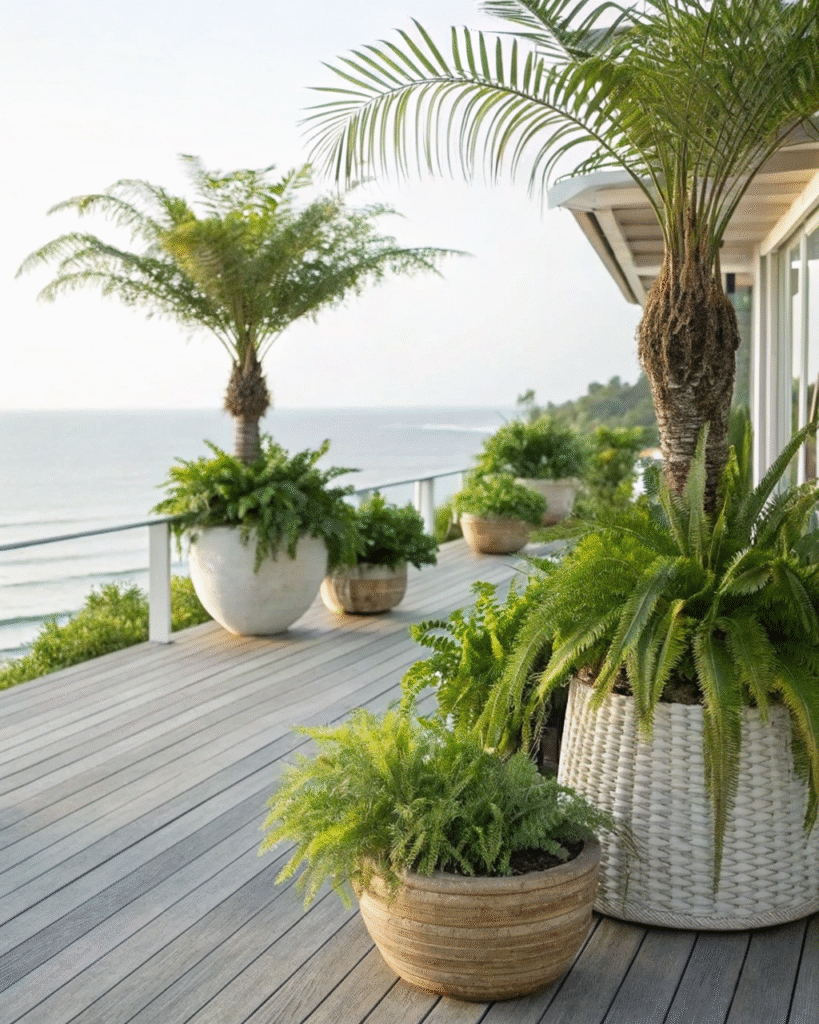
Bring greenery reminiscent of seaside landscapes with tropical plants.
Pro Tip: Place them in woven or ceramic pots to match your coastal decor theme.
11. Ocean-Inspired Artwork
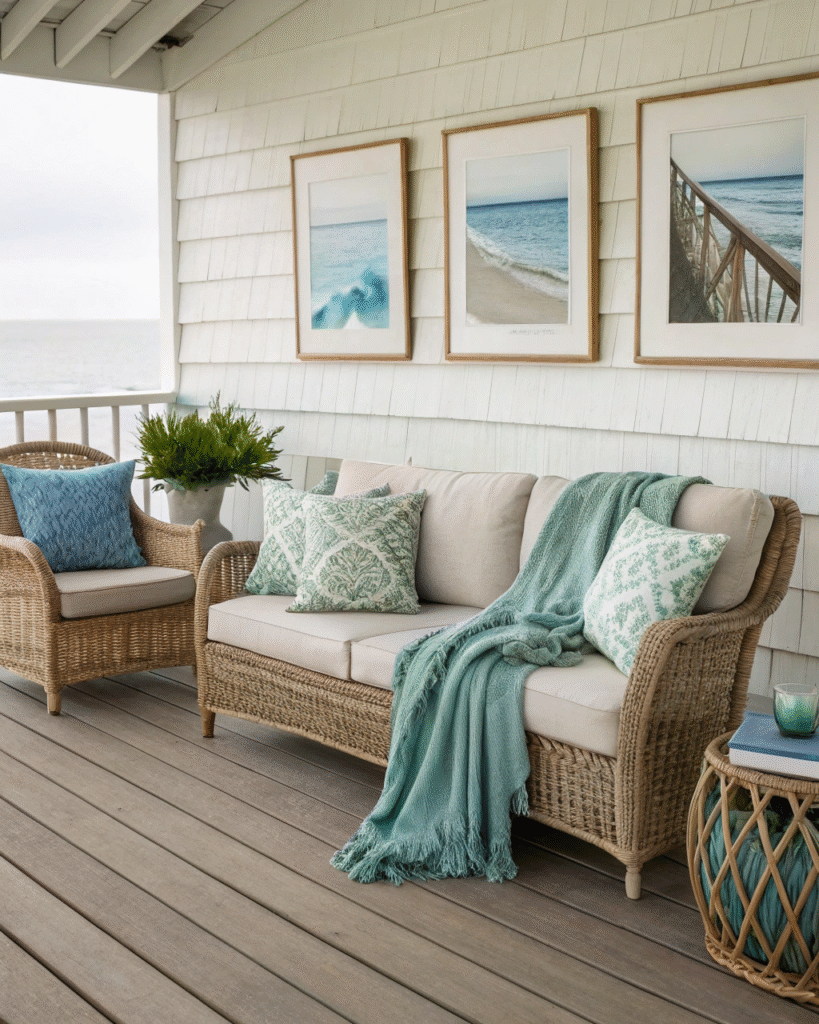
Hang framed prints or wall hangings with soft, sea-toned imagery.
Pro Tip: Keep artwork minimal and muted to maintain the serene coastal mood.
12. Linen and Cotton Fabrics
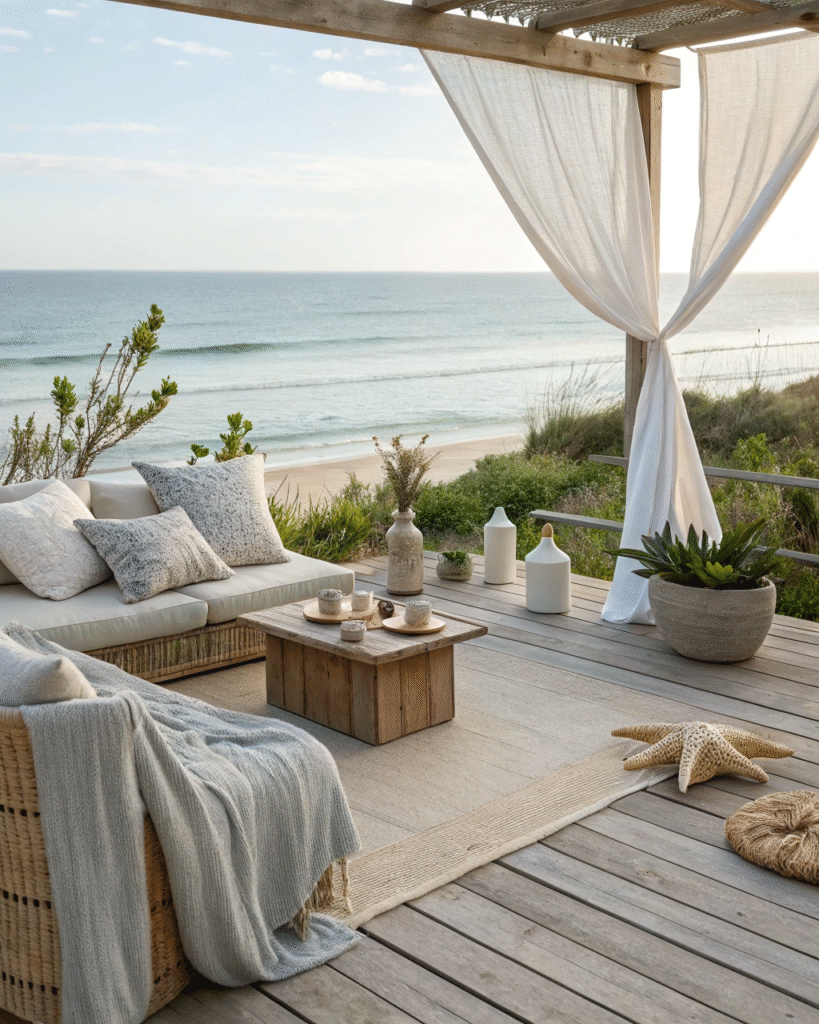
Soft, breathable fabrics add a casual and inviting atmosphere.
Pro Tip: Use throws and cushions in shades of sand, white, and sky blue.
13. Outdoor Rug with Coastal Pattern
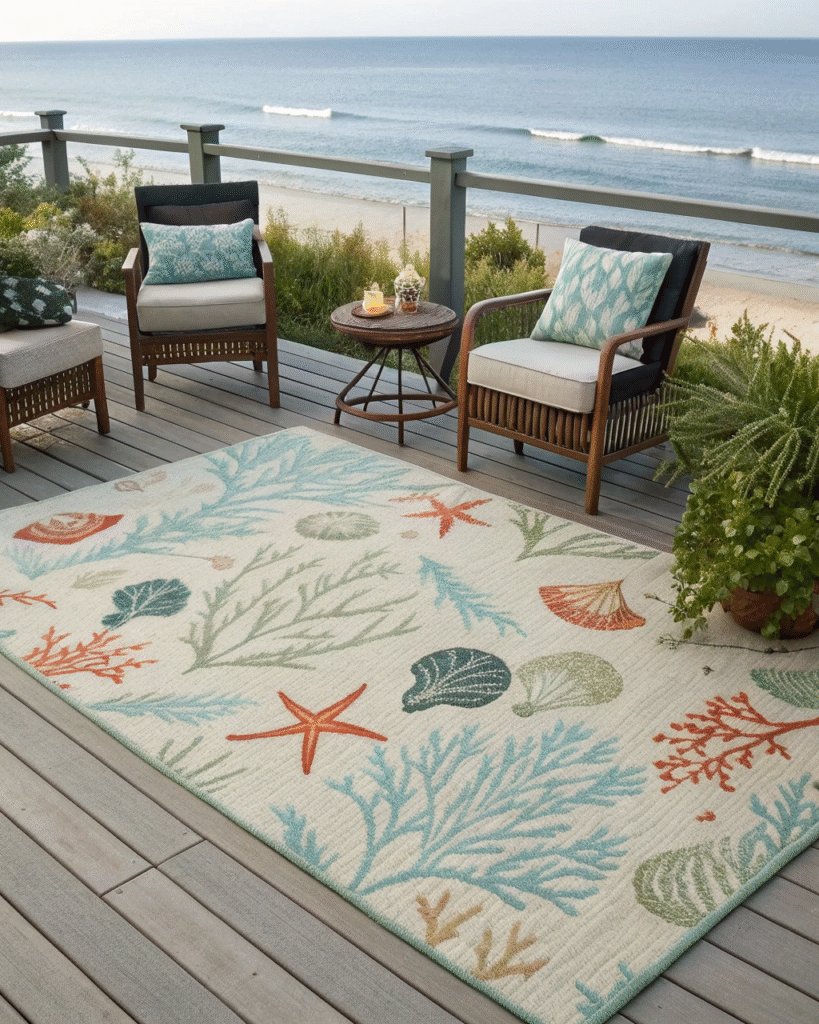
A rug anchors your seating area and adds a splash of seaside style.
Pro Tip: Choose durable, fade-resistant materials suitable for sun and salt air.
14. Weathered Metal Accents
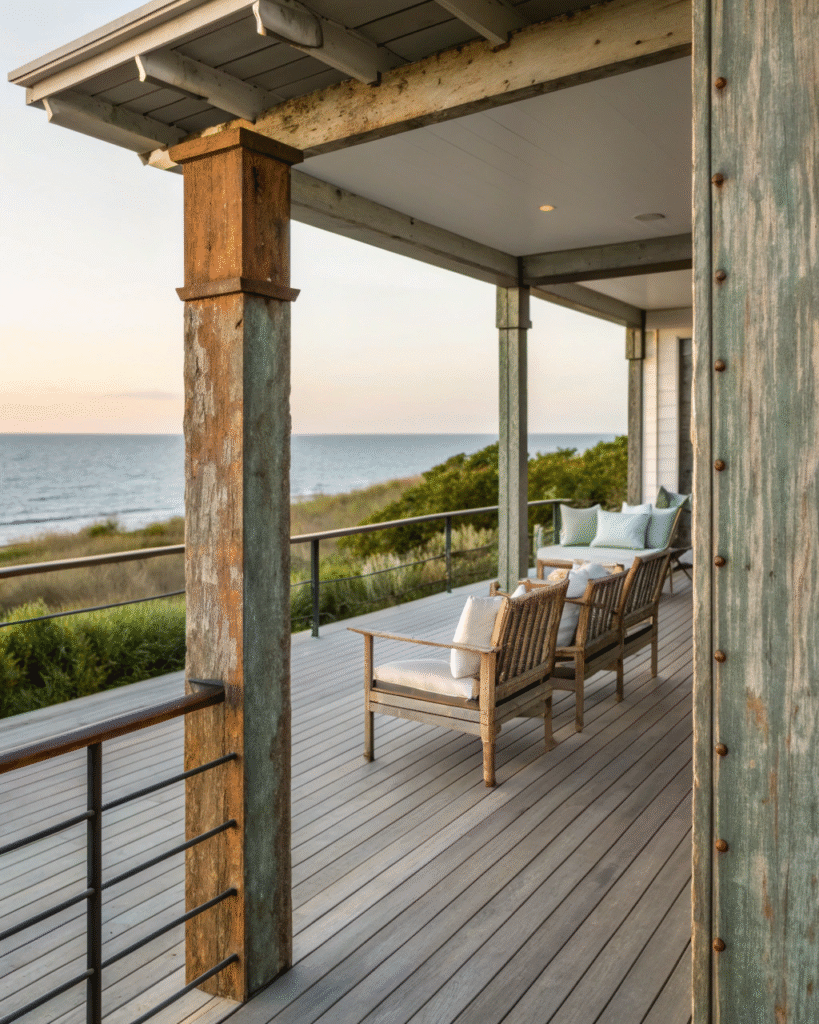
Subtle touches of aged bronze or galvanized steel bring a rustic coastal edge.
Pro Tip: Use metal trays, lanterns, or planters for understated elegance.
15. Seashell or Coral Decor
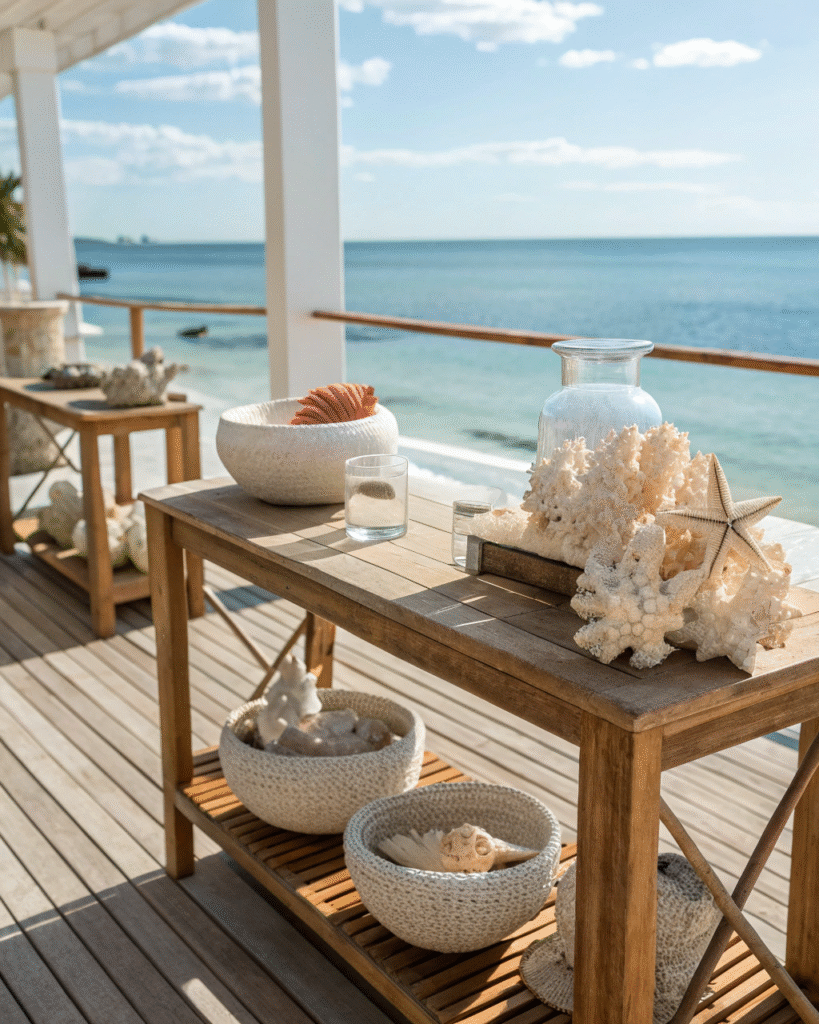
Decorate side tables or shelves with shells, coral, or small glass bowls of sand.
Pro Tip: Keep displays minimal to avoid clutter while maintaining a beachy feel.
16. Outdoor Dining with Ocean Touches
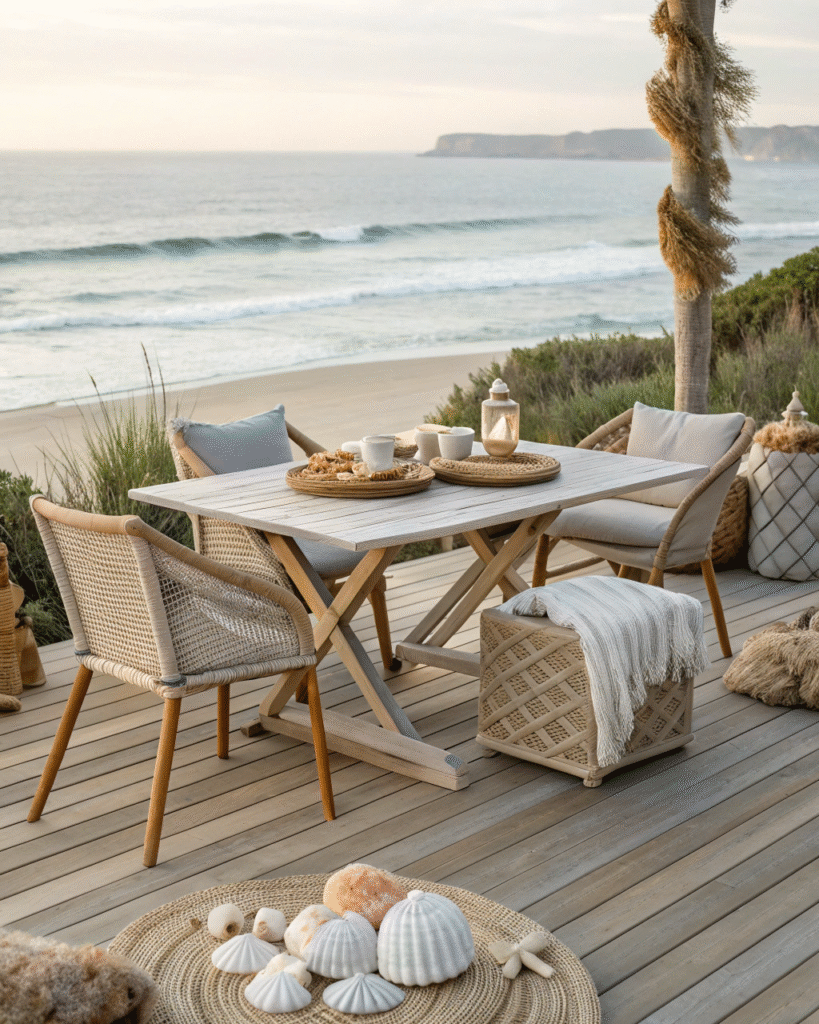
Set a casual dining space with simple tableware and coastal accents.
Pro Tip: Use woven placemats, clear glassware, and a centerpiece of greenery or driftwood.
Final Thoughts
A coastal deck done well captures something genuinely restorative about life near the water and delivers it wherever you happen to live.
The lightness, the openness, the relaxed ease of pale materials and natural textures, the quality of a space that feels like you could arrive barefoot and stay all day without any sense of occasion, these are qualities that genuinely improve daily life and that the coastal aesthetic expresses more naturally than almost any other outdoor design approach.
Build your coastal deck around light, natural materials, and the specific coastal landscape that means the most to you, and let it weather and develop its character over time. The best coastal spaces are not designed. They are lived in.
Frequently Asked Questions
Do I need to live near the ocean to use coastal deck styling?
Not at all. Coastal design is an aesthetic that references the sensory and atmospheric qualities of life near the water rather than requiring its physical proximity. The pale materials, the natural textures, the light palette, and the relaxed, informal quality of coastal styling can be applied in any geographic setting and create a genuine coastal atmosphere regardless of the distance to the nearest body of water. Millions of the most beautifully executed coastal spaces in the US are far from any actual coast.
What is the difference between coastal and nautical styling?
Nautical styling draws heavily on maritime imagery and symbolism, anchors, ropes, wheels, life rings, navy and white stripes in abundance, to reference seafaring and sailing traditions. Coastal styling is broader and more atmospheric, drawing on the material and sensory qualities of the coastal landscape rather than maritime iconography. A nautical deck looks like it belongs on a boat. A coastal deck looks like it belongs at the beach. Coastal styling is generally considered more sophisticated and more broadly applicable than nautical theming.
What is the best furniture material for an actual coastal environment?
For a deck in a genuine coastal location subject to salt air, marine-grade stainless steel hardware, powder-coated aluminium or teak furniture frames, and synthetic all-weather wicker are the most durable choices. Standard steel corrodes rapidly in salt air. Untreated or poorly sealed timber deteriorates faster in marine environments. The investment in materials specifically rated for marine conditions pays back significantly in longevity compared to standard outdoor furniture in a genuine coastal setting.
How do I prevent a coastal deck from looking like a themed restaurant?
The risk of coastal styling tipping into a themed or kitschy direction is real and the prevention is restraint in the use of literal maritime objects. Limit specific nautical and beach objects, anchors, starfish, seashells, and ropes, to one or two genuinely beautiful pieces used with intention. Build the coastal atmosphere primarily through material choices, the pale timber, the wicker furniture, the linen textiles, the natural rope texture, and let the objects be secondary. A coastal scheme that achieves its atmosphere through materials and light rather than through themed accessories is always more sophisticated and more genuinely coastal than one that relies on the accessories to communicate the theme.
What plants work best for a coastal deck in a cold climate?
In a cold climate, choose plants that evoke the coastal landscape without requiring tropical warmth. Ornamental grasses, particularly blue fescue, Miscanthus, and Karl Foerster feather reed grass, provide the movement and feathery coastal texture of beachside planting. Sea holly, lavender, rosemary, and thyme all thrive in cold coastal conditions. Cold-hardy sedums and stonecrops provide structural interest. Native beach plum and rugosa rose add authentic regional coastal character in New England and Mid-Atlantic settings.
How do I make a coastal deck feel authentic rather than decorated?
Authenticity in coastal styling comes from allowing natural weathering rather than fighting it, using real natural materials rather than manufactured imitations where possible, building the scheme gradually through genuine discovery rather than purchasing everything at once, and referencing a specific coastal landscape that means something personally rather than applying a generic coastal template. The most authentic coastal decks look like they have been lived in for years, developed through real use and real connection to the water, and the staging of that quality is always less convincing than the actual development of it over time.