Crafts for Kids: The Complete Guide to Creative Projects at Every Age
A complete guide to crafting with children, from choosing the right projects for different ages and keeping sessions genuinely fun to the materials, seasonal ideas, and occasions that make crafting a meaningful part of family life.
KEY POINTS
- The best kids crafts are the ones that match the child’s age and attention span, use materials that are safe and easy to work with, and produce something the child feels proud enough to show someone.
- Crafting with children is about the process as much as the product. The mess, the experimentation, and the sense of making something with your own hands all matter as much as what ends up on the table at the end.
- The simplest materials, paper plates, cotton balls, cardboard rolls, and popsicle sticks, consistently produce the most satisfying crafts because they are immediately accessible and leave the creative decisions to the child rather than the material.
Crafting with children is one of those activities that is simultaneously simple and genuinely important. It keeps hands busy and screens off. It develops fine motor skills, patience, and the confidence that comes from finishing something. It produces objects that children are proud of, sometimes irrationally and intensely so, in the way that only handmade things can be. And on the best sessions, it creates the kind of relaxed, focused time together that both children and adults find themselves remembering long afterwards.
This guide covers the full landscape of crafts for kids: how to match projects to age and ability, the everyday materials that produce the most successful sessions, the seasonal and occasion projects that mark the year, and the specific project categories that work consistently well across a wide age range.
RELATED: 21+ Seasonal Crafts for Boys to Try Year-Round
Matching Projects to Age and Ability
The single most important principle in choosing a craft for a child is matching the project to their developmental stage. A project that is too simple for the child feels babyish and does not engage them. One that is too complex produces frustration, a half-finished mess, and a reluctance to try again. Getting this right is what separates craft sessions that end with a proud child holding something up to show you from ones that end with tears and a table covered in abandoned materials.
Toddlers, broadly ages one to three, are primarily sensory explorers. They want to touch, squish, tear, and apply paint with their hands. The projects that work best for this age group are open-ended and process-focused: finger painting, tearing and sticking tissue paper, pressing shapes into play dough, and simple stamping with sponges or found objects. Results at this age are less important than the experience, and the adult role is primarily to provide the materials, manage the mess, and appreciate what emerges.
Preschoolers, ages three to five, begin to have clear ideas about what they are making and the motor skills to pursue them with increasing control. Simple nature crafts for toddlers that use leaves, sticks, and found materials bridge the gap between purely sensory play and more intentional making, producing results that feel genuinely like something without requiring skills the child does not yet have. Easter crafts for toddlers and similar seasonal projects give this age group a clear direction and a result they can connect to an occasion they understand.
School-age children, five to twelve, can follow instructions, manage more complex assembly, and have the sustained attention to complete longer projects over multiple sessions. This is the age range where the material-based projects, working with beads, paper, card, and simple construction materials, become genuinely creative rather than primarily tactile. It is also the age where the child’s own aesthetic preferences become strong and worth involving in the project choice, because a child who chose what they are making will always be more engaged than one who was given a project.
The Best Everyday Materials
The most consistently successful kids crafts use materials that are available at home, safe to handle without constant supervision, and open-ended enough to be used in multiple ways without a single prescribed outcome. Understanding which materials these are, and keeping a basic supply of them accessible, is what allows spontaneous craft sessions to happen rather than requiring a special trip to a craft shop.
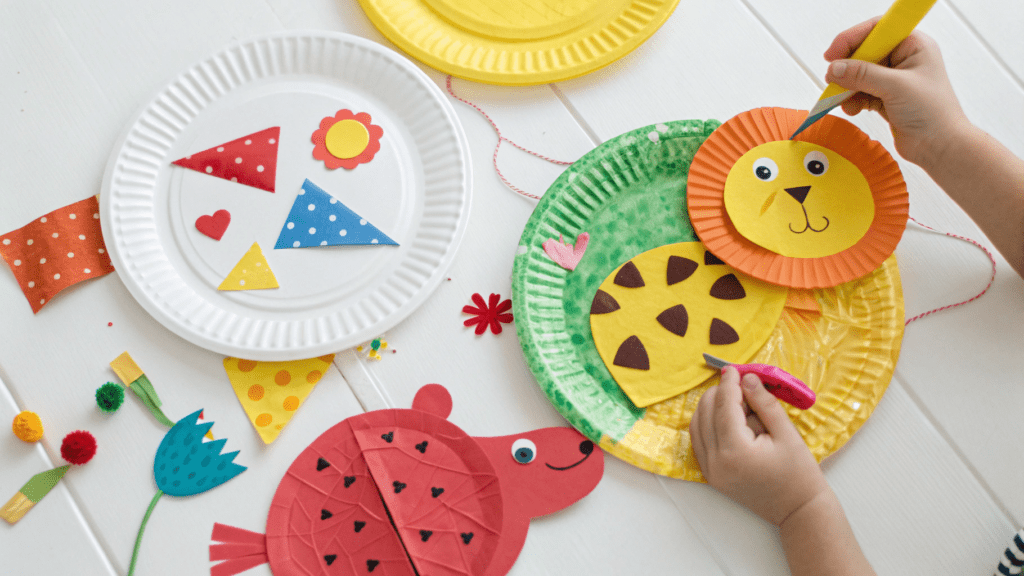
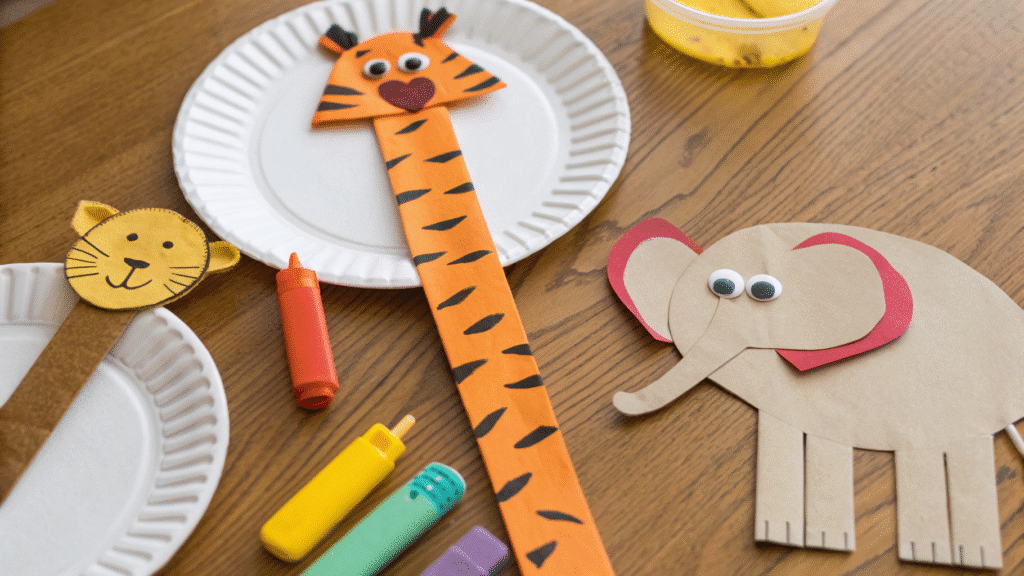
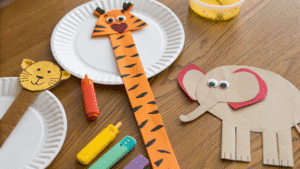
Paper plates are one of the most versatile craft materials available for children of almost any age. They are rigid enough to paint on, light enough to cut, and the circular form suggests faces, animals, and clocks in a way that a blank piece of paper does not. The easy paper plate crafts for toddlers that use paint, googly eyes, and simple cut shapes produce results that genuinely delight young children, and the range of what paper plates can become scales all the way up through the age groups.
Cotton balls are an underrated craft material precisely because they are so inexpensive and so tactilely satisfying to work with. Cotton ball crafts for kids range from simple gluing onto coloured card to make cloud scenes or sheep to more complex texturing and padding projects. They are safe for very young children, produce no mess beyond the occasional fluff, and the softness and whiteness of cotton balls makes them particularly effective in winter and Christmas craft contexts.
Cardboard toilet paper and kitchen roll tubes are the most reused material in children’s craft and with good reason. They are free, they are strong enough to paint and decorate, they roll and stack and connect in endlessly variable ways, and craft ideas using toilet paper rolls cover an extraordinary range of finished forms from binoculars and telescopes to rocket ships, animals, and flower stems.
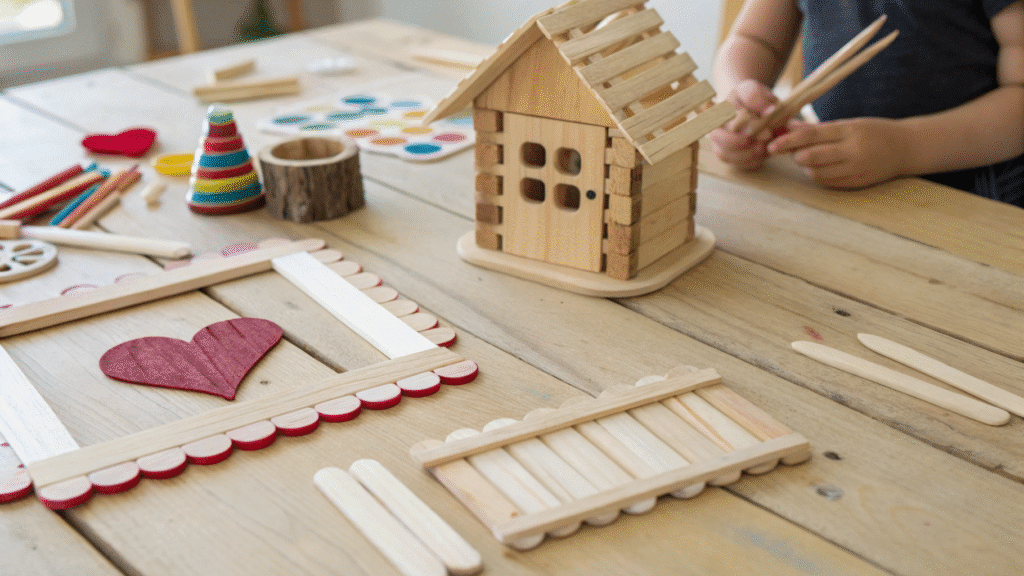
Popsicle sticks, also called craft sticks or lolly sticks, are the structural material of choice for children’s construction because they glue easily, paint well, and have a natural rigidity that makes simple structures achievable without advanced woodworking skills. DIY popsicle stick crafts for kids include picture frames, small boxes, miniature furniture for doll’s houses, and decorative items that look considerably more polished than their simple materials suggest.
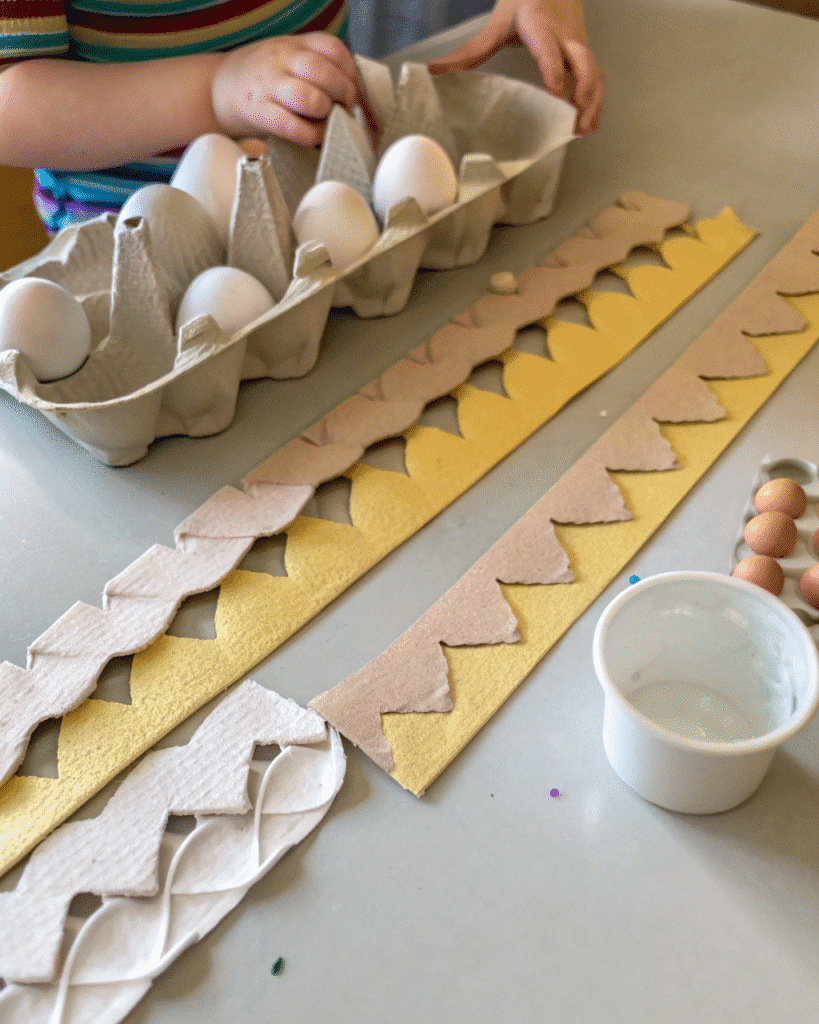
Egg cartons are one of those materials that are immediately satisfying to craft with because each cup already looks like something, a face, a flower, a body segment, without any cutting or shaping. Egg carton craft ideas for toddlers use the cups as caterpillar segments, flower petals, and paint holders, while older children use complete cartons as the basis for more complex constructions. The twelve-cup carton is particularly useful as a starting point for animal bodies and architectural models.
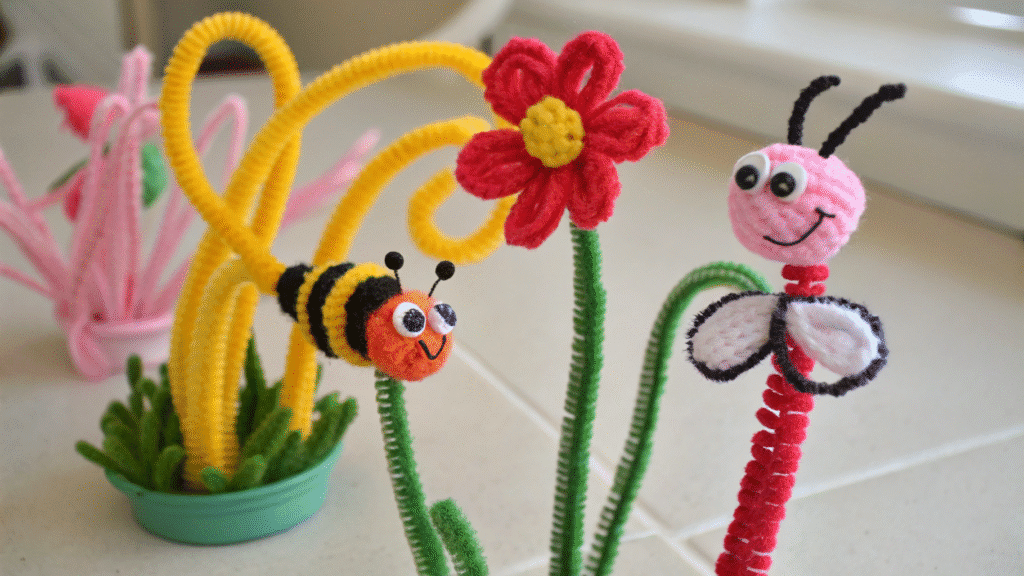
Pipe cleaners, or chenille stems, are one of the most genuinely fun craft materials because of their flexibility. A child can bend, twist, and shape them without any tools, and the variety of colours available makes simple constructions immediately bright and cheerful. Simple pipe cleaner crafts for kids include flowers, glasses frames, animals, and miniature figures, all achievable in under ten minutes and requiring no cutting or gluing.
RELATED: 20+ Easy Cotton Ball Crafts for Kids
Paper-Based Projects
Paper crafts are the most accessible category in children’s making because the material is free, universally available, and produces results with virtually no drying time. A child who has made something from paper can hold it up and show it within minutes of starting, which is the quality that makes paper crafts so persistently popular with young children whose sense of time and patience for waiting is limited.
Paper bag puppets and foam puppets are some of the most satisfying paper-based projects because the finished object is immediately playable rather than merely displayable. DIY paper bag puppets for boys and simple DIY puppets for toddlers extend naturally into imaginative play, where the craft and the game become continuous rather than separate activities. The transition from making the puppet to using it in a story is one of those moments that makes craft sessions feel genuinely worthwhile rather than merely time-filling.
DIY paper flower crafts for girls develop scissor skills, colour sense, and the ability to follow a multi-step process in a context where the stages feel meaningful because each one visibly contributes to the finished flower. Paper flowers also have genuine domestic utility: a child-made paper flower arrangement on a kitchen table or in a bedroom has a quality of handmade charm that lasts far longer than fresh flowers and carries the particular warmth of something made specifically for the space it occupies.
Cardboard box playhouses for girls take paper-based construction to its largest scale, turning a household recycling contribution into a genuine architectural project. A large cardboard box painted and decorated by a child becomes one of the most-used objects in any home with young children, precisely because its physical scale matches the child’s sense of inhabiting rather than just observing.
You May Also Love
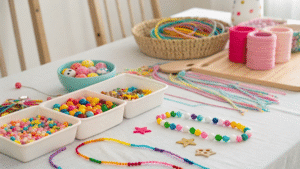
Jewelry and Wearable Crafts
The crafts that children wear or carry with them have a particular significance because they move with the child into the world beyond the craft table. A friendship bracelet worn to school, a necklace made at home and shown to a friend, or a crown worn to a birthday party carries the handmade quality of the session into the child’s social life in a way that a drawing pinned to the fridge does not.
Friendship bracelet ideas for girls are among the most enduringly popular crafts for school-age children because they combine a making activity with a social ritual: the giving and receiving of friendship bracelets carries meaning that a purchased friendship token rarely does. The basic knotted bracelet technique is achievable for children from around age seven upward and develops concentration and fine motor coordination alongside the more social dimension.
Easy DIY jewelry crafts for kids cover the full range from the simplest bead threading for younger children to more complex wire-wrapping and macramé techniques for older ones. Colorful bead crafts for kids are particularly good for developing colour sense and pattern making alongside the physical coordination of threading, and the finished bracelets and necklaces are immediate and wearable in a way that encourages the child to continue making rather than losing interest after a single session.
For dress-up and imaginative play, DIY crown crafts for girls and creative DIY masks for kids produce the props that feed imaginative play for far longer than they take to make. A handmade crown decorated by the child wearing it has a personal investment that shop-bought costume accessories cannot replicate, and the decoration choices, which colours, which gems, which patterns, give the child genuine creative agency.
TIP: For craft sessions with mixed age groups, choose a project with multiple stages of varying complexity and assign each child the stages that match their ability. For a bead jewellery session, a toddler threads large wooden beads onto a cord while a seven-year-old makes a more complex pattern bracelet alongside them. Everyone is making, everyone is included, and nobody is bored or frustrated. The key is having the materials ready for each stage before the session starts so that transitions are smooth and momentum is maintained.
Nature Crafts
The crafts that use materials gathered from outside are consistently among the most satisfying for children because the gathering itself is part of the process. A walk through a park or garden with the specific purpose of collecting leaves, sticks, seed heads, and interesting stones gives the outdoor time a focus that transforms it from exercise into an expedition.
Simple nature crafts for toddlers that use the materials exactly as found, pressing leaves between paper and tapping them with a heavy book, arranging stones into simple patterns, or gluing fallen petals onto card, require no preparation and produce results that are immediately beautiful because the materials themselves are. Nature crafts also have the particular quality of being different every time, because the leaves and stones and flowers available change with the season, which means the same basic technique produces something genuinely new each time it is done.
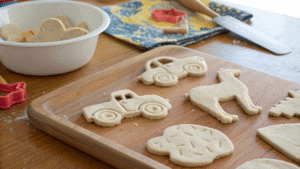
Salt dough is the nature-adjacent material that bridges the gap between gathered materials and made objects. A simple mixture of flour, salt, and water that dries in a low oven, it can be shaped, pressed with found objects to take their impressions, cut with cookie cutters, and decorated once dry. Salt dough craft ideas for boys cover the full range from simple animal shapes and ornaments to more elaborate tiles and imprinted botanical pieces. The material is edible while raw, which makes it completely safe for the youngest crafters, and the finished pieces, once painted and sealed, are robust enough to last for years.
Don't miss: 18+ Recycled Craft Ideas for Kids →
Recycled Materials
The crafts that use materials destined for the recycling bin have a particular appeal to children because they transform something ordinary into something made and chosen. A cardboard tube that was going to be thrown away becomes a telescope or a rocket ship. An egg carton becomes a garden of flowers. The transformation is what makes recycled material crafts genuinely exciting rather than merely sustainable.
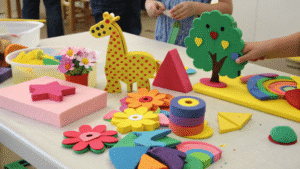
Recycled craft ideas for kids cover the full range of household materials that can be redirected into making: cardboard boxes and tubes, bottle lids, plastic containers, fabric scraps, old newspapers and magazines, and the foam trays that come with supermarket produce. DIY foam crafts for kids that use foam sheets cut into shapes are particularly good for younger children because foam is easy to cut with children’s scissors and does not require drying time after gluing.
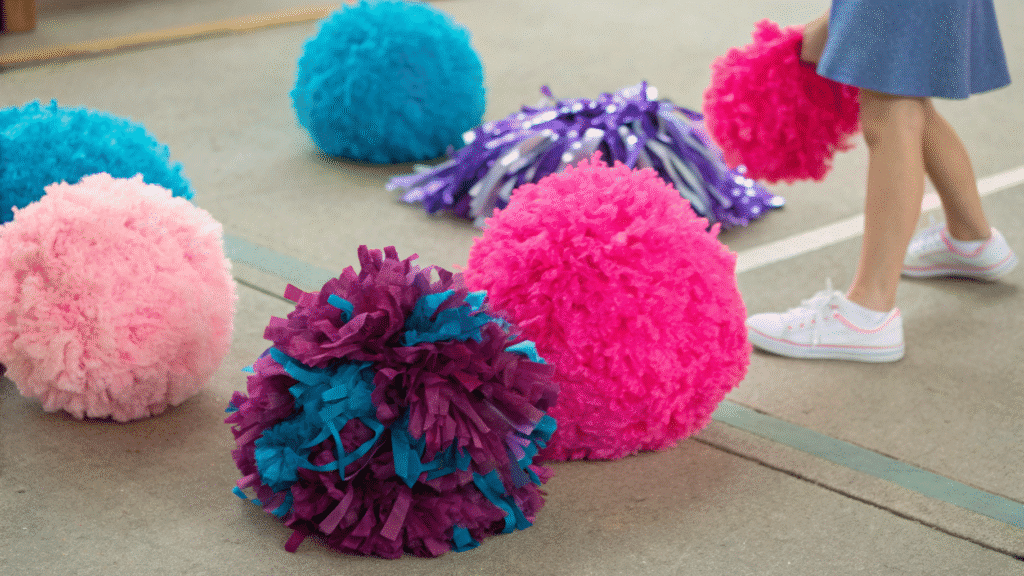
Pom-poms occupy the border between craft material and recycled material: technically purchased, they are inexpensive enough and sufficiently reusable that they function like a household craft supply. Fun pom-pom craft ideas for girls show the range of what these simple coloured balls can become when combined with googly eyes, pipe cleaners, and simple shapes: animals, creatures, garlands, and the kind of tactile, cheerful objects that children respond to immediately and want to keep making.
Seasonal and Holiday Crafts
Seasonal crafts are among the most meaningful projects in the annual craft calendar because they mark time and occasion in a way that generic crafting does not. A Christmas craft project for girls made in December and hung on the tree carries the memory of the making year after year in a way that a shop-bought ornament never does. A Valentine’s Day card made by a child for a grandparent is received with a quality of gratitude that a purchased card does not generate.
The seasonal craft projects that work best are the ones where the result is genuinely used or displayed rather than filed away. DIY holiday ornament crafts for kids produce objects with a specific destination on the tree, which gives the making purpose and gives the child a clear sense of contribution to the seasonal home. Halloween crafts for boys that produce decorations for the house or props for costumes are used immediately and visibly, which makes the craft session feel like it mattered.
For the year’s other seasonal occasions, spring-themed crafts for girls in April and May use the season’s natural materials and colours in projects that reflect what is happening outside. Summer craft ideas for girls during the long school holiday use the time available for slightly more ambitious multi-session projects that would not be possible during term. Winter craft ideas for kids use the season’s indoor quality and the coming Christmas as the backdrop for making that marks the time of year.
RELATED: 15+ Christmas Craft Projects for Girls
Keep Exploring
Crafts for Gifts and Occasions
The crafts that children make as gifts for others have a particular emotional weight, because the act of making something specifically for another person introduces the child to the pleasure of giving through effort rather than through purchase. A handmade birthday card, a decorated photo frame, a set of salt dough ornaments made specifically for a grandparent: these have a quality of care and personalisation that shapes the child’s understanding of what a gift actually is.
DIY birthday crafts for girls cover the full range of making projects suitable as birthday gifts or for use at birthday parties, from decorated frames and personalised cards to party favour bags made and filled by the birthday child. Valentine’s Day crafts for men and women that children make for the adults in their lives produce some of the most treasured objects in any family’s collection: the wobbly handmade card, the slightly uneven decorated heart, the handprint pressed into clay and painted with the child’s choice of colours.
For occasions that call for craft as part of a celebration, the DIY animal crafts for preschool boys and similar themed projects produce the kind of party activity that children find genuinely engaging because it gives them something to take away at the end rather than simply occupying time during the event.
Frequently Asked Questions
What crafts are best for two-year-olds?
Simple, sensory, and process-focused. Finger painting, tearing tissue paper and sticking it onto card, pressing shapes into play dough or salt dough, and stamping with sponges all suit two-year-old motor skills and attention spans. Results at this age are irrelevant; the experience is everything. Anything involving small pieces that could be swallowed should be avoided completely.
How do I keep a craft session from descending into chaos?
Set up before the children sit down. Have everything cut, portioned, and accessible before the session starts. Cover the table. Have wet wipes or a damp cloth within reach. Keep the project short enough to finish in one sitting for younger children. End the session before the child loses interest rather than after, which means the experience ends positively and they want to do it again.
What is the best age to start crafting with children?
From around twelve months, children can engage with simple sensory craft: finger painting, tearing paper, sticking pre-cut shapes. The richness and complexity of what is possible increases steadily with age and fine motor development. There is no age at which crafting begins: it evolves from sensory play into intentional making as the child develops.
How do I store and display children’s craft projects?
Display a rotating selection on the fridge, a cork board, or a dedicated wall space, and rotate what is displayed regularly so the child sees new pieces and feels each one was noticed. Store the rest in a flat portfolio folder or a large envelope labelled with the child’s name and age. At the end of each year, keep three to five pieces that feel significant and recycle the rest. Photograph everything before recycling if the child is attached to specific pieces.
What craft materials should every home have for spontaneous sessions?
Paper plates, cotton balls, popsicle sticks, pipe cleaners, toilet paper rolls, googly eyes, PVA glue, washable paint in primary colours, child-safe scissors, and a roll of masking tape. These materials between them can produce the majority of the craft projects in this guide, they cost very little to stock, and they are safe for children from toddler age upward. Having them accessible means a craft session can begin within two minutes of the idea being suggested, which is the condition under which most of the best craft sessions actually happen.
Explore all DIY and craft guides in our DIY and Crafts section.