How to Design a Home Office That Makes You Actually Want to Work
A complete guide to creating a home workspace that is productive, comfortable, and genuinely well designed, whether you have a dedicated room, a spare corner, or just a wall to work with.
KEY POINTS
- A home office that works well is not just about looking good on a video call. It is about designing a space that reduces friction, supports focus, and makes the hours you spend in it feel less like a compromise.
- The desk, the chair, and the lighting are the three decisions that have the most impact on how productive and comfortable you actually are. Everything else is secondary.
- A home office in a small space, a corner, a nook, or a shared room, can work just as well as a dedicated room if the right decisions are made about layout, storage, and how the space transitions between work and non-work.
Working from home has shifted from an occasional exception to a daily reality for a significant proportion of people, and the homes most people live in were not designed with that in mind. The result is a working environment that is often makeshift, uncomfortable, and visually disconnected from the rest of the home. A kitchen table covered in cables, a laptop balanced on a pile of books in the corner of a bedroom, or a dedicated room that has accumulated everything that did not have another home.
Love Chic Living Club?
Add us as one of your preferred Google sources and discover more home decor, DIY, outdoor, and lifestyle inspiration from us.
This guide covers the full process of creating a home office that works well for focused work, looks considered, and fits honestly within the space you have. It applies whether you have an entire room to dedicate to work or a single corner that needs to do the job.
RELATED: 19+ Functional and Stylish Home Office Decor Ideas
Understand What Kind of Worker You Are First
Before any furniture decision or layout choice, it is worth being honest about how you actually work. The home office that suits someone who needs deep, uninterrupted focus for long stretches is fundamentally different from the one that suits someone who works in short bursts, takes frequent calls, and needs to move between tasks and tools throughout the day.
If you do a lot of video calls, the background visible behind you is part of your professional environment and deserves as much thought as the desk itself. A well-considered Zoom background communicates professionalism without effort once it is set up, and the decisions that make it look good, a calm wall colour, good lighting, a bookshelf or a plant within the frame, are the same decisions that make the office feel good to work in.
If you do creative work that involves multiple tools, materials, or reference materials, the storage and organisation requirements are considerably different from a setup built around a single laptop. The home office ideas specifically for creative work address the specific challenge of keeping a visually active workspace feeling considered rather than chaotic.
Choose the Right Layout for Your Space
The layout of a home office is determined first by the constraints of the space and second by how you work. Getting the desk position right matters more than almost any other single decision, because everything else in the room, the storage, the lighting, the chair, arranges itself around where you sit.
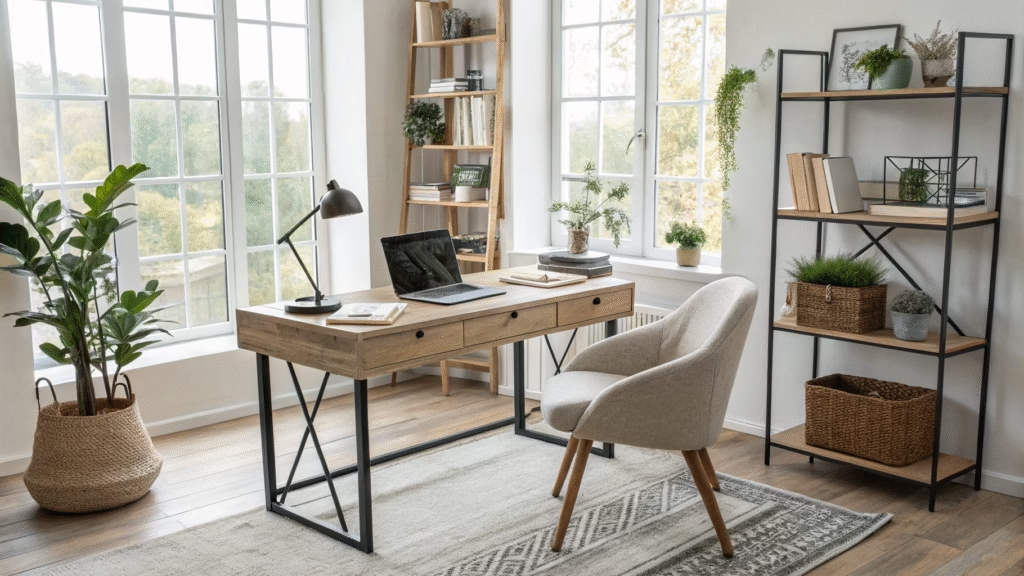
The classic advice is to position the desk facing a wall rather than a window, to prevent screen glare and the distraction of an external view. This is reasonable but not universal. A window to the side provides natural light without glare and a visual break that research consistently suggests improves sustained focus. A window behind you creates a difficult lighting situation for video calls. If you have a choice, a desk positioned perpendicular to the window is usually the best combination of natural light, minimal glare, and a usable video background.
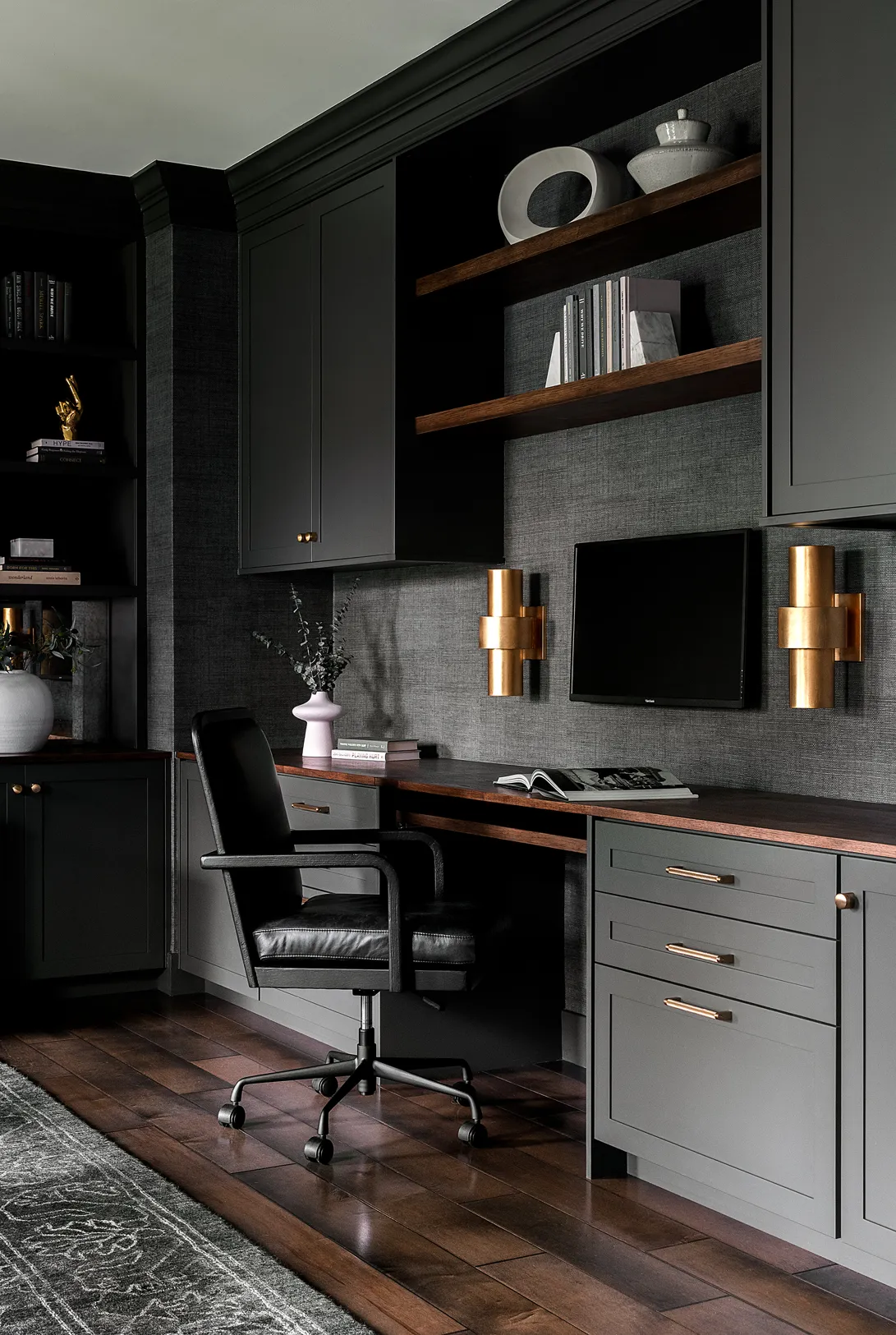
For a dedicated room, a home office layout that places the desk away from the door, with the entry visible from the seated position, creates a sense of control and orientation that a desk facing the wall directly inside the door never achieves. For a shared space, a flexible layout for rooms used for multiple purposes needs to plan for how the workspace transitions to non-workspace, with storage that closes, a desk that faces away from the living area, and clear visual delineation between the two zones.
RELATED: 18+ Home Office Remodel Ideas for Shared Spaces
Get the Desk Right
The desk is the piece of furniture you interact with more hours per day than almost anything else in your home, and it deserves considerably more thought than most people give it. The right desk for your work depends on what you actually do at it, how much surface area you genuinely need, whether you prefer to sit or stand, and how the desk relates to the storage around it.
Surface area is the first consideration. A desk that is too small forces you to constantly move things to access what you need, which creates a low-level friction that adds up significantly over the course of a working day. A desk that is too large for the room dominates the space and makes everything feel cramped. For most home workers with a laptop and a second screen, a desk between 120 and 150 centimetres wide is the functional sweet spot.
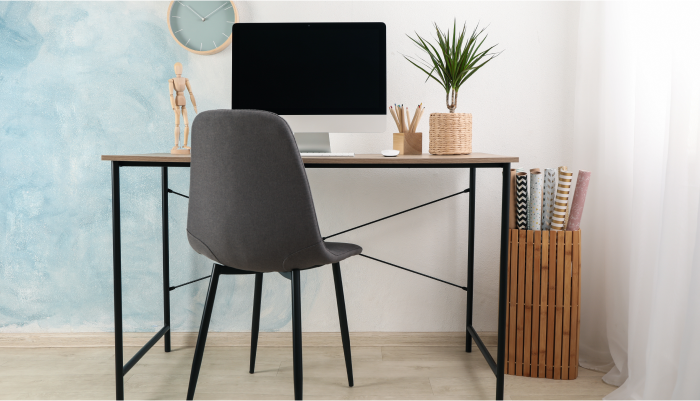
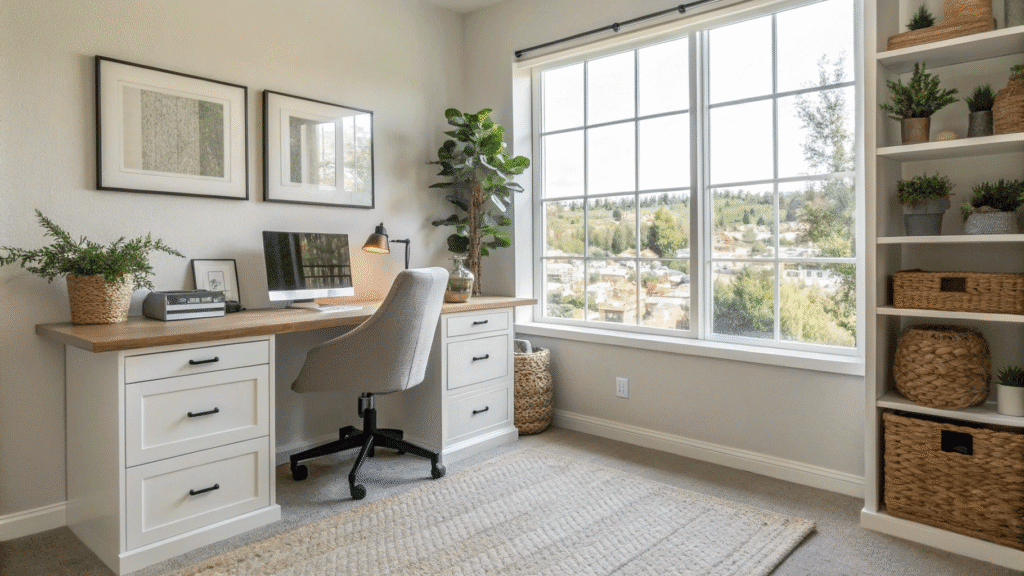
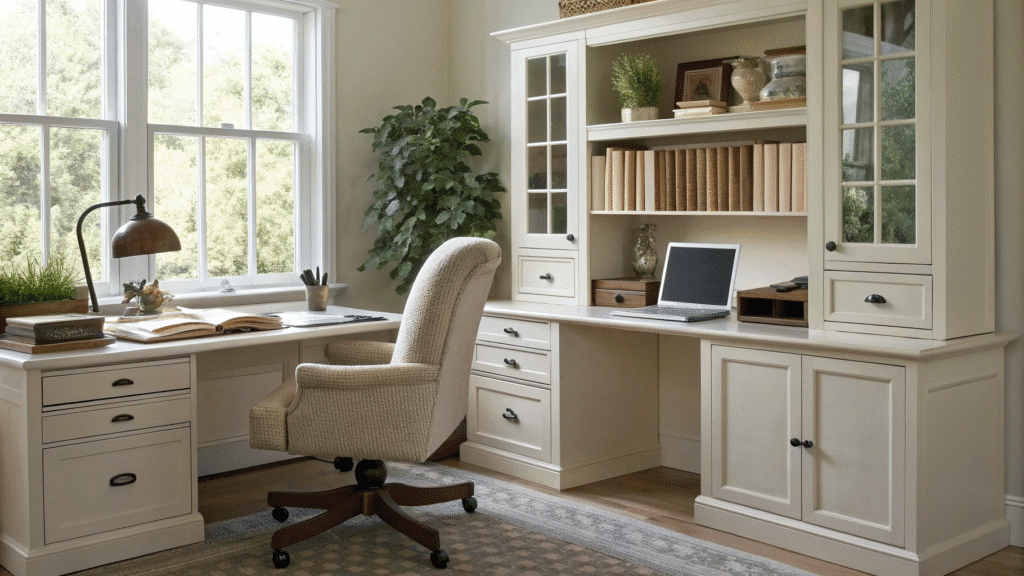
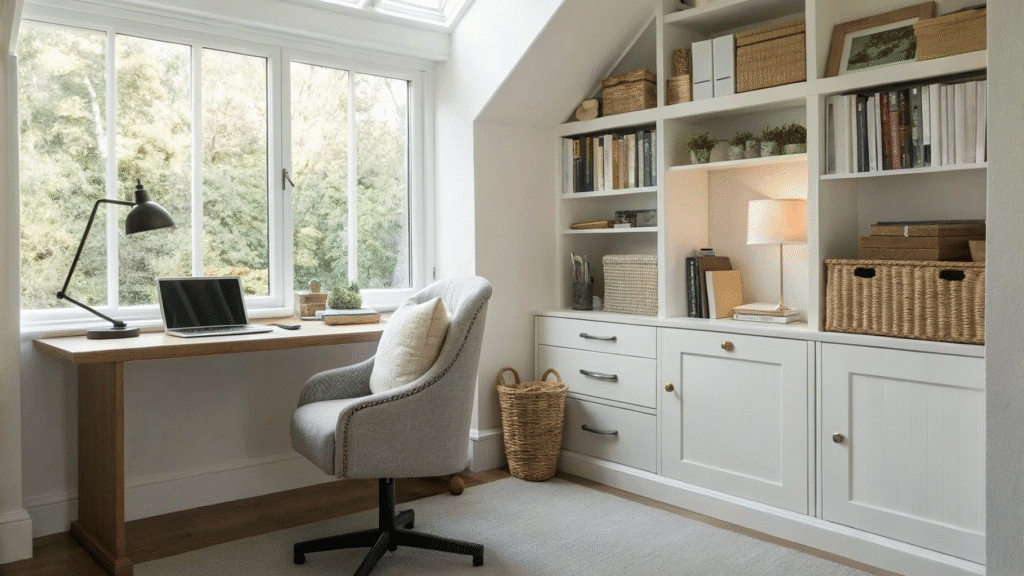
Built-in desk solutions are worth considering seriously for any home office where the space is permanent and the layout is settled. A built-in desk fitted to the available wall takes the awkward question of desk size and placement and resolves it definitively, creating a workspace that feels like part of the room’s architecture rather than furniture that has been placed in it. For rooms where floor space is at a premium, a wall-mounted floating desk that folds flat against the wall when not in use allows a working space to exist in rooms that could not accommodate a freestanding desk. A minimalist floating desk setup takes this further, using the wall-mounted surface as the sole workspace with everything stored above or beside it rather than on it.
For smaller footprints still, a compact desk in a genuinely tiny space shows how much is achievable when the decisions are made with the specific constraints in mind rather than defaulted to standard furniture dimensions.
You May Also Love

Invest in the Chair
The chair is where you spend the most time in the office, and buying a cheap one to save money almost always proves to be a false economy. A chair that is not properly adjustable, does not support the lower back, and forces a compromised sitting position will produce discomfort and fatigue that reduces productivity and eventually creates physical problems that no decorating decision can compensate for.
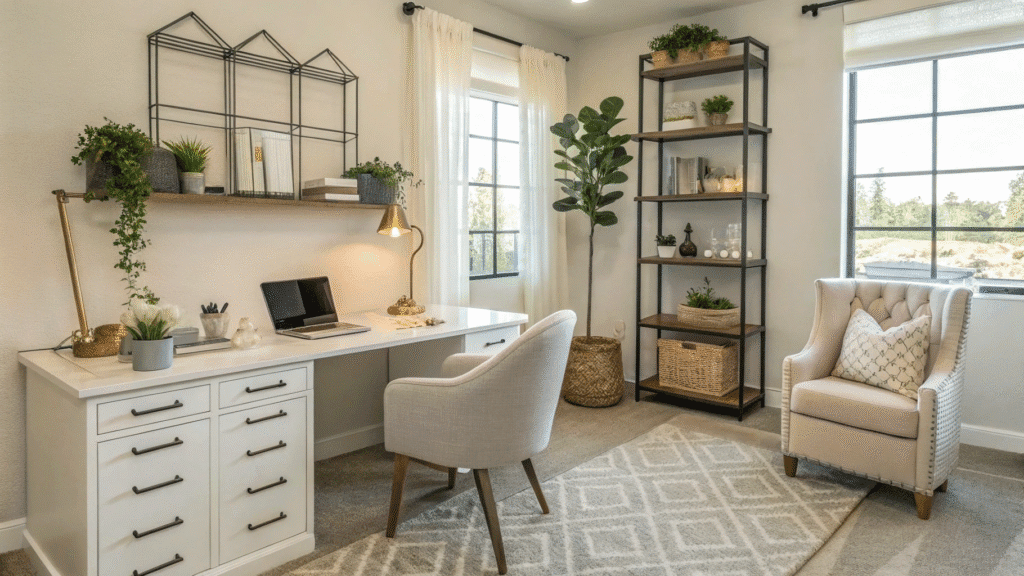
A genuinely good ergonomic chair is one of the few purchases in a home office where the functional argument for spending more is unambiguous. Adjustable seat height, lumbar support, arm height, and tilt all matter in practice for anyone sitting for several hours a day. The chair does not need to be a clinical-looking task chair. Statement office chairs that combine proper ergonomic function with a considered aesthetic exist at many price points, and choosing one that you actually want to sit in is worth the effort of finding.
For smaller spaces where a full-size office chair overwhelms the room, small space office chair styling shows how to balance ergonomic function with the proportional needs of a compact workspace. Adding a cozy throw and cushion to an office chair is one of the simplest ways to make a functional chair feel warmer and more personal without replacing it.
Get the Lighting Absolutely Right
Lighting in a home office affects both how you feel working in the space and how you appear to others on video calls. Most home offices are lit badly in both respects: a single ceiling fitting that casts flat light, a desk positioned where the light comes from behind the screen, and no thought given to the warmth or quality of the light source.
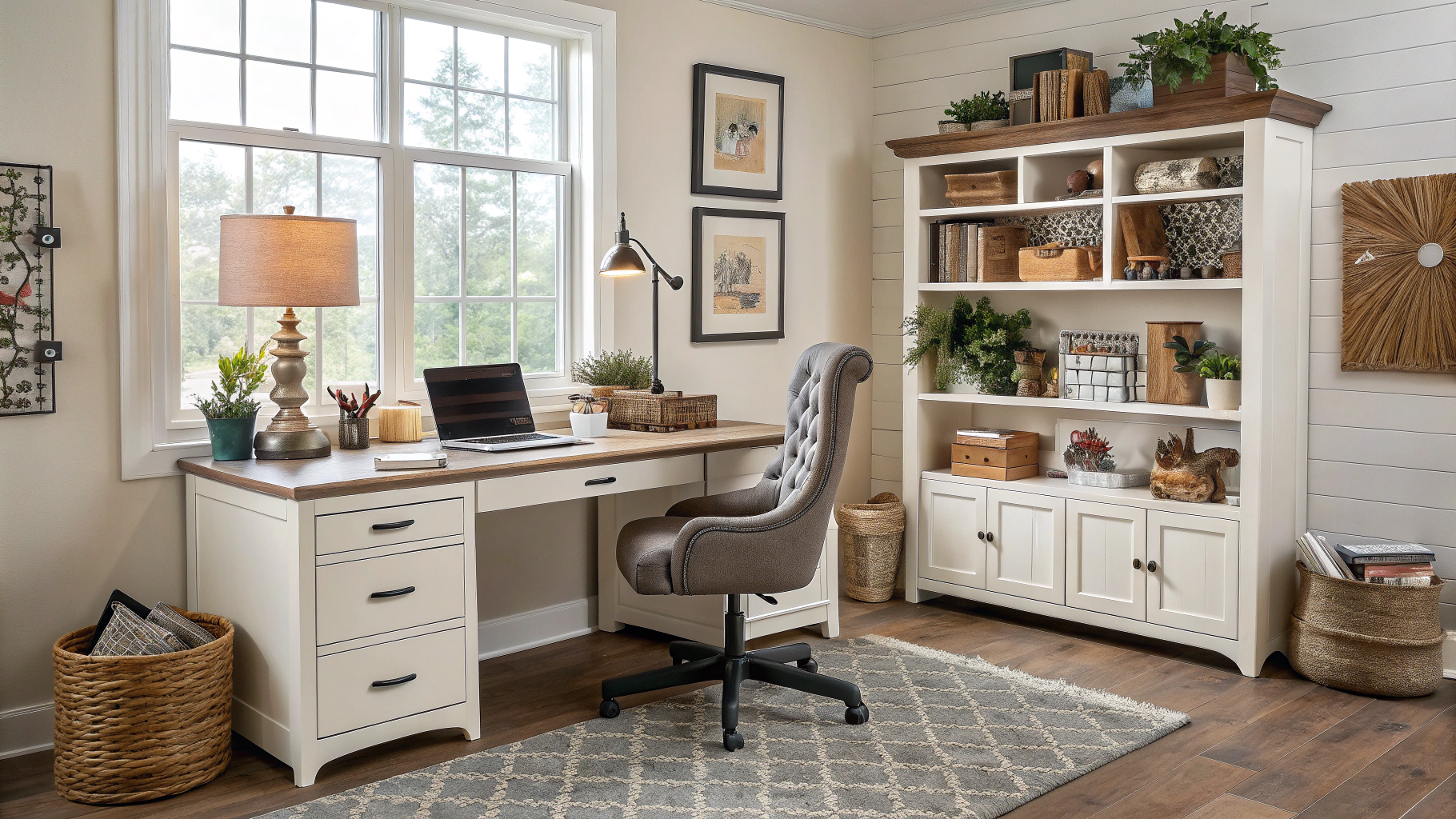
Task lighting directly over or beside the desk, positioned so it illuminates the workspace without creating glare on the screen, is the foundation. A stylish desk lamp on the work surface gives you direct, focused light for reading and writing that overhead lighting cannot provide. The lamp also contributes to the aesthetic of the desk, which matters both for how the space feels during the working day and for how it appears in the background of video calls.
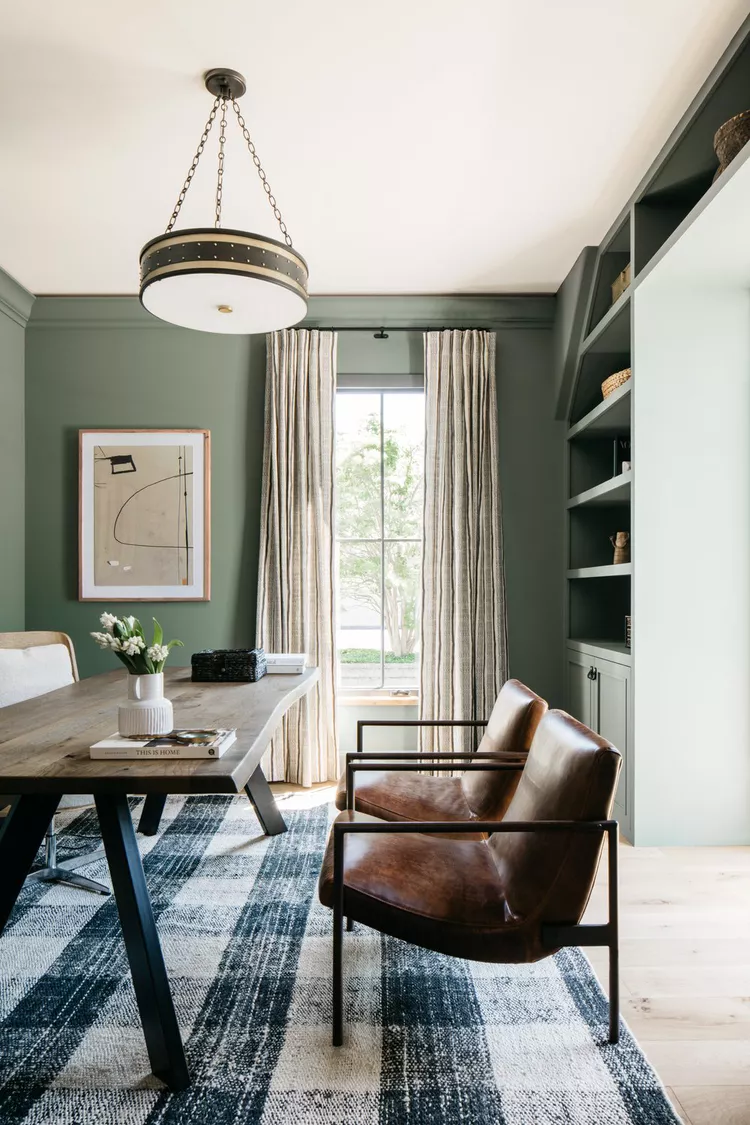
For video calls, the direction of light is critical. A light source in front of you, between you and the camera, produces flattering, even illumination that makes you look well-rested and present. A light source behind you turns you into a silhouette. A window behind you in daylight does the same. Small home office lighting ideas that work in rooms with limited natural light cover the specific arrangements that produce a usable video call setup without requiring professional lighting equipment.
TIP: The single most effective improvement to most home office video call setups costs nothing. Move the desk so a window is in front of you rather than behind you, and your natural light becomes your key light. If the window produces uneven light at different times of day, a sheer blind diffuses it without losing the brightness. This change, which requires no equipment and no spending, produces a more professional video call appearance than any ring light.
Sort the Storage and Kill the Clutter
A cluttered desk produces a cluttered mind. This is not a decorating opinion; it is a consistently replicated finding from research on cognitive load and distraction. The visual noise of a surface covered in objects that are not immediately needed competes for attention in a way that is small and cumulative but real in its effect on sustained focus.
The principle that applies to home office storage is the same that applies everywhere: everything needs a designated home, and the home needs to be in the right place. Papers that need to be filed should not be living on the desk surface. Cables that are in use should be managed so they do not dominate the visual field. Objects that are not used daily should not be on the desk at all.
Cable management is one of those details that sounds minor and makes an enormous visual difference. A desk with visible cables running in every direction looks chaotic regardless of how good the furniture is. Cable clips, cable boxes, a desk with built-in cable management, or simply gathering cables together and running them along the back edge of the desk all produce a cleaner result than ignoring the problem. The home office storage ideas that actually hide the clutter rather than just organising it visibly are the ones that produce the most useful result, because the goal is a workspace where the visual field is calm enough to support rather than interrupt concentration.
Home office storage solutions for the full range of needs, from file storage to stationery to reference materials, cover the options at different scales and budgets. For stationery specifically, creative pen and stationery storage and DIY wall organiser ideas bring a level of organisation to the small daily-use items that prevents them from accumulating into the random scatter that most desk surfaces become without a system.
RELATED: 16+ Home Office Storage Remodel Ideas
Don't miss: 14+ DIY Desk Organizer Ideas for a Clutter-Free Space →
Use the Walls
The walls of a home office are an underused resource in most setups, and using them well is one of the most effective ways to expand the functional capacity of a workspace without expanding its footprint.
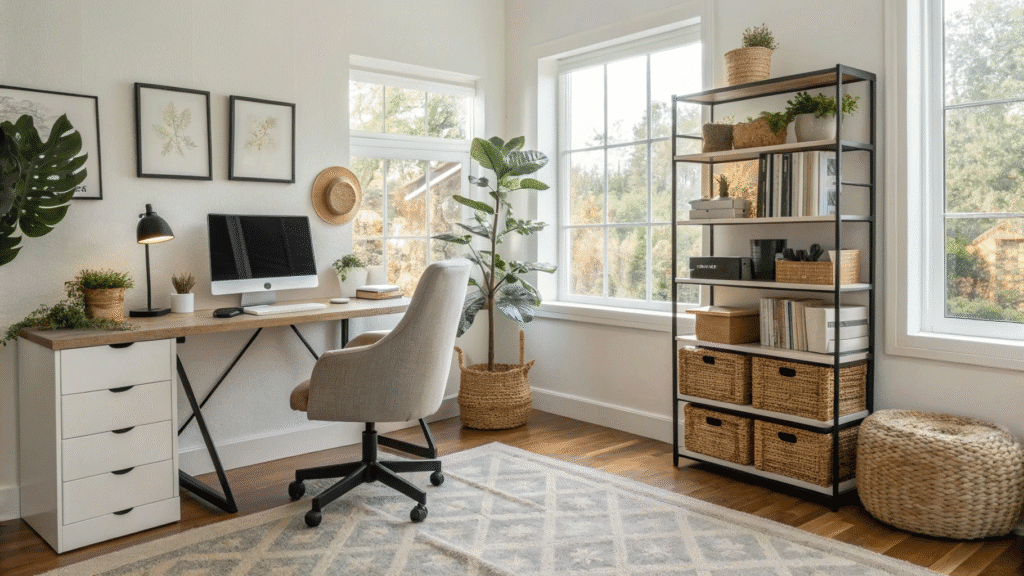
Shelving above the desk, whether a single floating shelf or a more substantial statement bookshelf arrangement, takes storage and display off the desk surface and into the vertical space that is otherwise empty. Floating shelf styling for work essentials covers how to arrange these surfaces so they are genuinely functional and visually considered rather than just additional flat surfaces for accumulation.
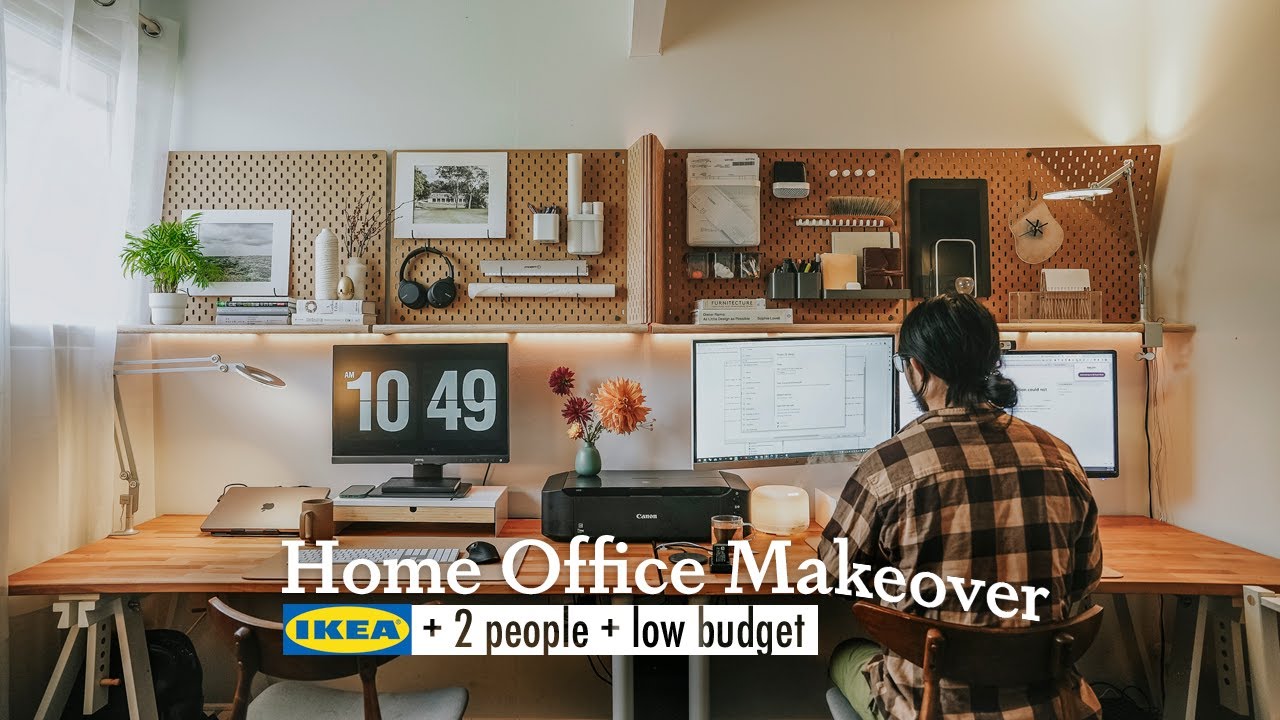
A pegboard mounted on the wall beside or above the desk is one of the most flexible and most useful home office additions available. It organises tools, cables, small storage, and decorative objects within easy reach of the desk without taking any desk surface. It is also infinitely rearrangeable as needs change. A DIY floating wall organiser takes the same principle in a more curated direction, using a combination of small shelves, hooks, and pockets to create a wall-mounted organisation system that is specific to what actually needs to be stored.
For visual inspiration during the working day, a DIY office bulletin board gives you a designated surface for reference material, visual inspiration, and the kind of working notes that currently live in a disorganised layer on the desk.
Create a Small Home Office That Actually Works
The majority of home workers do not have a dedicated room for work. They have a corner of a living room, a spare wall in a bedroom, a landing, or an alcove that needs to function as a workspace without dominating the space it shares. This is genuinely achievable with the right decisions, and the constraint often produces more considered and more interesting results than a dedicated room that defaults to generic office furniture.
The home office nook ideas that work best in multipurpose rooms are the ones that create a clear visual delineation between the work zone and the living zone without using a physical partition. A rug under the desk, a pendant or wall lamp positioned specifically over the workspace, and a storage solution that closes when work is done all create a boundary that the brain responds to, making it easier to switch between work and rest modes in the same room.
For apartments where even a corner feels tight, apartment home office remodel ideas and small corner home office solutions address the specific constraints of genuinely limited space, including the challenge of making a workspace that disappears at the end of the working day so the room can fully function as something other than an office. A cozy window seat that serves as both reading and working space is one of the most pleasant dual-purpose solutions available in a room with a bay or deep window, combining natural light, comfortable seating, and integrated storage in a configuration that looks intentional rather than makeshift.
RELATED: 15+ Small Home Office Remodeling Ideas That Work
Keep Exploring


Style It So You Actually Want to Be There
A home office that is purely functional but aesthetically joyless is a space you will avoid rather than seek out, which matters because the quality of your working environment has a direct and measurable effect on how motivated you feel about the work itself. A workspace that is considered and personal enough to feel like yours is one you will maintain, organise, and spend your working hours in more willingly.
The desk surface is the primary styling canvas. A clear working area with one lamp, a small plant, one or two objects you find genuinely interesting, and minimalist desk accessories in a consistent finish creates a desk that looks professional and personal without visual noise. The colorful office accessories that boost mood are worth considering if you work in a space that feels too neutral or too corporate. Colour introduced through a desk pad, a lamp shade, or a pen holder rather than through the furniture itself keeps the workspace feeling fresh and easy to update.
A plant in the home office does more than look good. The home office plant ideas that work best for a desk environment are species that tolerate the dry conditions of a heated room and the variable light of an interior workspace. A small succulent on the desk, a trailing pothos on a shelf above, or a snake plant in the corner all bring the quality of life and organic presence that makes a workspace feel less institutional without requiring significant care.
For those who work best with a completely calm visual field, the minimal home office ideas that stay calm show how restraint in objects, combined with warmth in materials and good lighting, produces a workspace that feels genuinely supportive rather than cold. For those who work better surrounded by visual inspiration, the modern home office remodel ideas take a more curated approach that still feels considered rather than cluttered.
Do It on Any Budget
A functional, well-designed home office does not require significant expenditure. The purchases that make the biggest difference to how the space works are the chair, the task lighting, and the storage. Everything else can be approached with considerable restraint.
The budget home office remodel ideas that look polished focus on getting the fundamentals right rather than filling the space with accessories. A good desk lamp, a cleared and organised work surface, a plant, and a single piece of art above the desk transform a generic workspace into a considered one for a very modest outlay. For those willing to put in some work, the DIY home office remodel ideas cover the projects that produce the highest visual return for the lowest material cost: a pegboard, a floating shelf, a painted accent wall behind the desk.
Frequently Asked Questions
How do I make a home office in a small space?
Start with the desk: choose one scaled to the space rather than standard dimensions. A floating wall-mounted desk takes almost no floor area. Position it where the natural light falls in front of you rather than behind you. Use vertical wall space for storage above rather than furniture on the floor. A clear, organised small workspace is more productive than a large cluttered one.
What is the best desk setup for video calls?
Position the desk so a window faces you rather than being behind you. This makes natural light your key light and eliminates the silhouette problem. The camera should be at eye level or slightly above, never looking up from a laptop on a flat surface. Keep the background within frame calm and considered: a bookshelf, a plant, a neutral wall. These three things produce a professional video call setup without any specialist equipment.
How do I keep a home office tidy?
Everything needs a designated home. Papers that do not have a home pile up on the desk. Cables that are not managed become visual chaos. The daily habit of clearing the desk surface at the end of the working day takes two minutes and means you start the following day with a clear visual field. The storage needs to match what is actually being stored: if the filing cabinet is full, filing stops happening. If the desk has no cable management, cables accumulate.
What colour is best for a home office?
Colours that support focus without inducing drowsiness tend toward the calm, slightly cool end of the palette: soft greens, muted blues, warm greys, and warm whites all perform well. Bright, highly saturated colours create visual stimulation that works against sustained concentration. Very dark colours can make a small office feel oppressive. A warm neutral on the walls with a stronger colour introduced through the desk accessories or a single piece of art is the most flexible starting point.
How do I make a home office feel less like an office?
Warm materials are the key. A timber desk surface, a lamp with a warm shade, a plant, a rug under the chair, and a piece of art on the wall all shift the room away from the institutional quality that generic office furniture produces. The goal is a space that feels like a considered room that happens to contain a desk, rather than an office that happens to be in a home.
Explore more room-by-room guides in our complete Rooms section.