How to Use Plants and Flowers to Transform Any Room in Your Home
A complete guide to choosing, placing, and styling plants and flowers indoors and outdoors, from beginner-friendly houseplants to statement trees, room-by-room guides, and seasonal displays.
KEY POINTS
- Plants and flowers do something for a space that no decorative object can replicate. They bring movement, organic texture, and a quality of life that makes any room feel genuinely inhabited.
- The most common plant mistake is choosing for appearance and ignoring conditions. Match the plant to the light, humidity, and temperature of the actual room it will live in.
- You do not need a green thumb. You need the right plant for the right place. Most houseplants fail because they are in the wrong conditions, not because they were cared for badly.
Walk into any home that feels genuinely warm and considered, and you will almost certainly find plants. Not because plants are on trend, though they always seem to be, but because living things in a space change the quality of that space in ways that furniture and lighting and art cannot fully replicate. A plant in a corner that has always felt slightly empty does more than fill the corner. It makes the room feel alive.
This guide covers the full picture of using plants and flowers at home: how to choose the right plant for each room and its specific conditions, how to style plants so they look deliberate rather than accumulated, which plants do specific functional jobs like cleaning the air or adding humidity, and how to use cut flowers and dried botanicals to bring seasonal colour and fragrance into every room of the house.
Love Chic Living Club?
Add us as one of your preferred Google sources and discover more home decor, DIY, outdoor, and lifestyle inspiration from us.
RELATED: 17+ Indoor Plants That Instantly Elevate Your Living Room
Match the Plant to the Room, Not the Other Way Around
The single most important principle in successful indoor plant keeping is also the one most consistently ignored: the plant has to suit the conditions of the room it is going into, not the other way around. A fiddle-leaf fig placed in a dark corner because it looks beautiful in that position will struggle, drop leaves, and eventually die regardless of how carefully it is watered. The same plant in a bright, indirect-light position in the same house will thrive for years with minimal attention.
Before choosing any plant, assess the actual conditions of the space. How much natural light does the room get and from which direction? North-facing rooms receive very little direct sun and need plants that genuinely tolerate low light. South-facing rooms get strong direct light that suits cacti, succulents, and many flowering plants but will scorch shade-lovers. Is the room humid, as bathrooms and kitchens tend to be, or dry, as heated living rooms and bedrooms often are in winter? Is the temperature consistent or does it fluctuate significantly near a door or radiator?
Answering these questions before visiting a nursery or scrolling through plant accounts is what separates a home full of thriving plants from one where everything slowly declines and is eventually replaced. For rooms with genuinely limited natural light, the low light indoor plants that genuinely thrive in dim conditions, rather than merely surviving, make all the difference. For rooms with no windows at all, plants that grow under artificial light show what is achievable without any natural light source.
Start With Easy-Care Plants if You Are New to This
Every experienced plant person started somewhere, and most started by killing something they loved. The fastest way to build confidence with plants is to begin with genuinely forgiving species that can tolerate irregular watering, temperature fluctuations, and less-than-ideal light without immediately showing it. Success with a few easy plants is far more motivating and educational than failure with difficult ones.
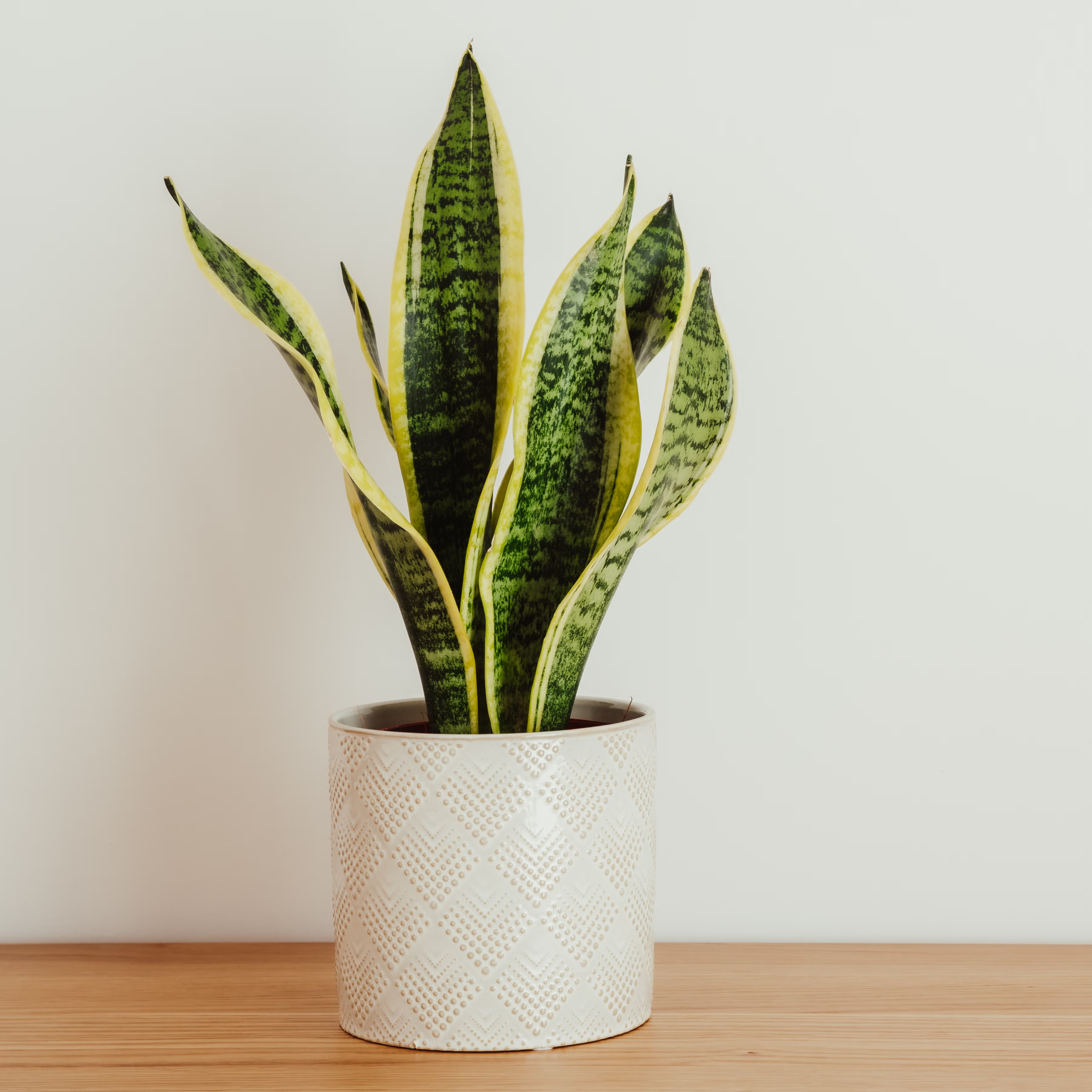
The easy-care houseplants that consistently perform well for beginners include pothos, which trails beautifully and will tolerate almost anything; snake plants, which are essentially indestructible in any reasonable indoor conditions; ZZ plants, which can go weeks without water and still look excellent; and spider plants, which are fast-growing, adaptable, and produce offshoots you can propagate into new plants. All of these are widely available, inexpensive, and forgiving enough that you can learn how each one behaves before moving on to more demanding species.
Drought-tolerant plants are worth particular mention for anyone who travels frequently or is honest about the fact that they tend to forget to water. Plants adapted to dry conditions, including most cacti, succulents, and many Mediterranean herbs, will not punish occasional neglect in the way that moisture-loving tropical plants will. A collection of succulent varieties on a sunny windowsill is one of the most low-maintenance and most satisfying plant displays available to anyone who loves the look of greenery but cannot commit to a regular watering schedule.
Choose the Right Plant for Each Room
Every room in a home has different conditions and different visual needs, which means the plant choices that work brilliantly in one room may be entirely wrong for another. Understanding what each room offers and needs from its plants is what produces a home where the planting feels considered rather than random.
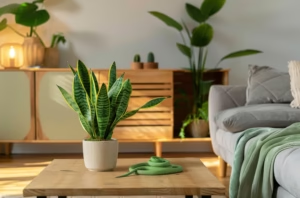
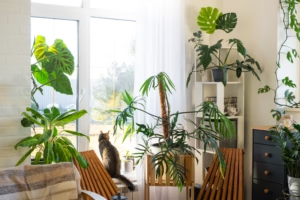
The living room is usually the room where plants can be largest and most dramatic, because it tends to have the most floor space and the most natural light. A statement floor plant in a corner, something with genuine scale like a monstera, a bird of paradise, or a large fiddle-leaf fig in good light, anchors the room in a way that no smaller plant can. For coffee table styling, small tabletop plants in beautiful pots add life to the central surface without interrupting sightlines across the room.
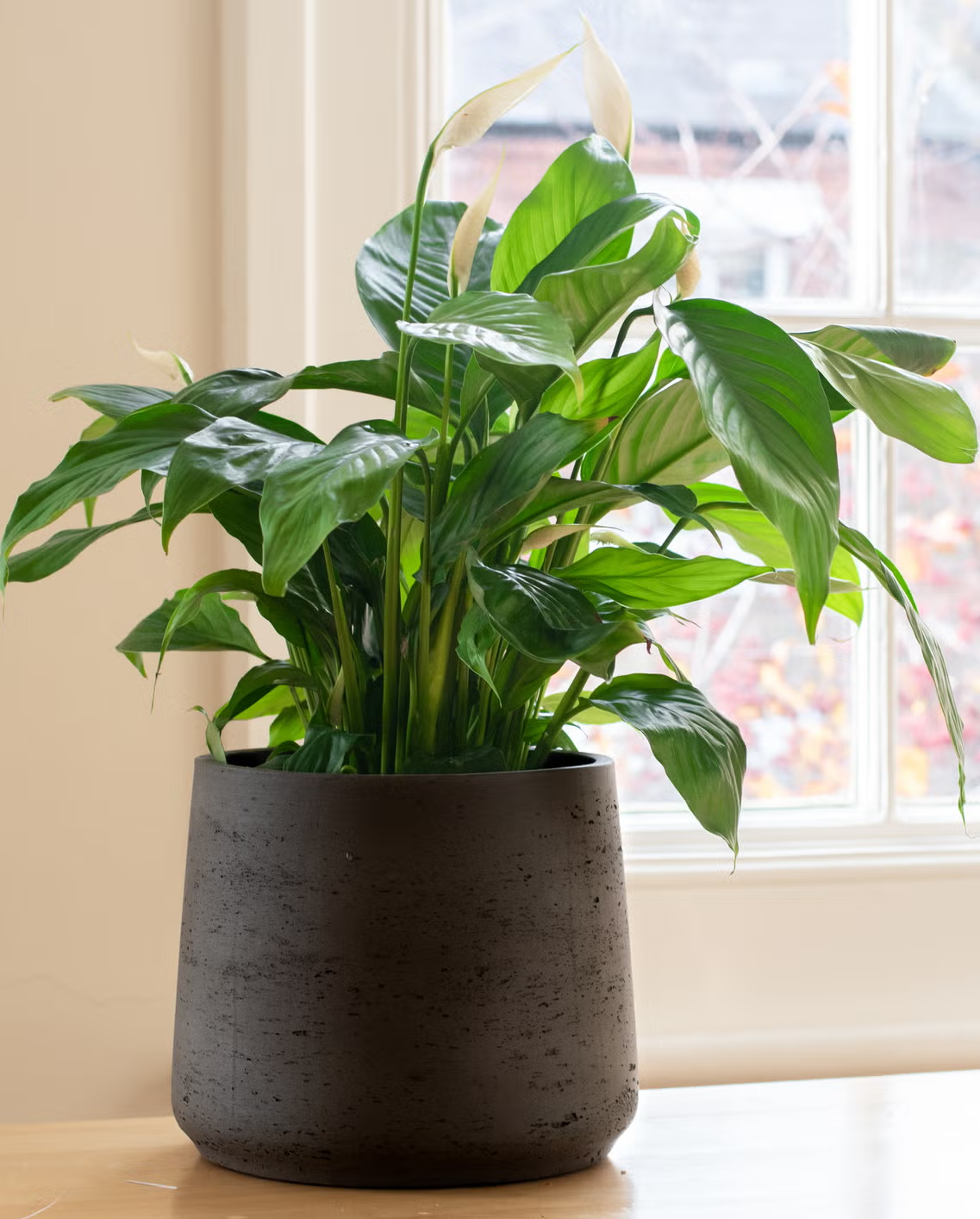
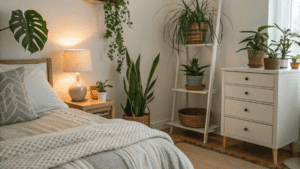
The bedroom benefits from plants chosen specifically for their calming qualities and their air-improving properties. The bedroom plants that promote restful sleep include lavender, jasmine, and peace lilies, all of which release fragrance or compounds associated with reduced stress and better sleep quality. For rooms where floor space is limited, hanging plants above the bed add greenery in a dimension that does not compete with furniture, and small bedroom plant ideas that work on windowsills and shelves show how much is achievable in a tight space.
The bathroom is often overlooked as a plant environment but is actually one of the best rooms in the house for certain species. The combination of humidity from showers and steam, warmth, and often reasonable light suits ferns, orchids, peace lilies, and many tropical plants that struggle in drier rooms. Plants that thrive in bathrooms include species that actively benefit from the moisture in the air, and shower plants placed within or beside the shower create a genuine spa-like quality that transforms the experience of the room.
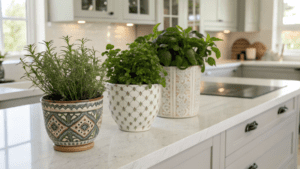
The kitchen is the ideal location for edible plants: herbs on the windowsill, a small lemon tree on the counter, microgreens in a tray. Kitchen counter plants that are both beautiful and functional are among the most satisfying plant choices in any home because they are used daily. Herbs that grow indoors year-round give you fresh flavour throughout the seasons, and edible plants that double as decor show how productive planting and beautiful styling are not at all in conflict.
The home office benefits from plants chosen for their focus-supporting and air-improving qualities. Desk plants that boost concentration include rosemary, which has been associated with improved memory, and several varieties of succulents and cacti that tolerate the dry conditions near a computer without complaint. An office shelf styled with plants adds visual interest to the background of video calls and creates a workspace that feels more alive and less institutional.
The entryway and hallway present a specific challenge because they tend to be the lowest-light areas in most homes. Low-light hallway plants that genuinely perform in dim corridor conditions, rather than slowly yellowing and declining, make the difference between an entryway that feels welcoming and one that always has a slightly struggling plant by the door. Entryway plant ideas that use architectural plants at scale beside the door create a first impression that communicates immediately that this is a home where living things are tended.
RELATED: 15+ Bedroom Plants That Create a Peaceful Retreat
You May Also Love


Think About Scale Before You Buy
Scale is the most common plant styling mistake, and it happens in both directions. Too small is the more frequent error: a single small plant in a large room disappears entirely and contributes nothing to the space. Too large in a small room creates a sense of the plant competing with everything else for attention.
The rule that applies consistently is to go larger than feels comfortable. A plant that feels almost too big when you first bring it home will usually settle into the space and feel right within a few days. A plant that looks fine in the nursery but feels insignificant once it is home will always look underdone regardless of how beautiful the specimen itself is.
For large rooms, indoor trees are worth considering seriously. A properly grown olive, a tall fiddle-leaf fig, a standard bay tree, or a large Ficus benjamina can reach two metres or more and create a sense of architectural presence that smaller plants simply cannot. The statement planters that hold these large specimens are as much a part of the visual effect as the plant itself: a beautiful ceramic pot, a woven basket, a simple terracotta at scale, all contribute significantly to how the plant reads in the room.
Style Plants With Intention
A single beautiful plant in the right pot is more impactful than six mediocre plants scattered without arrangement. This is the principle that separates plant styling from plant accumulation, and it is worth understanding before buying your tenth small succulent.
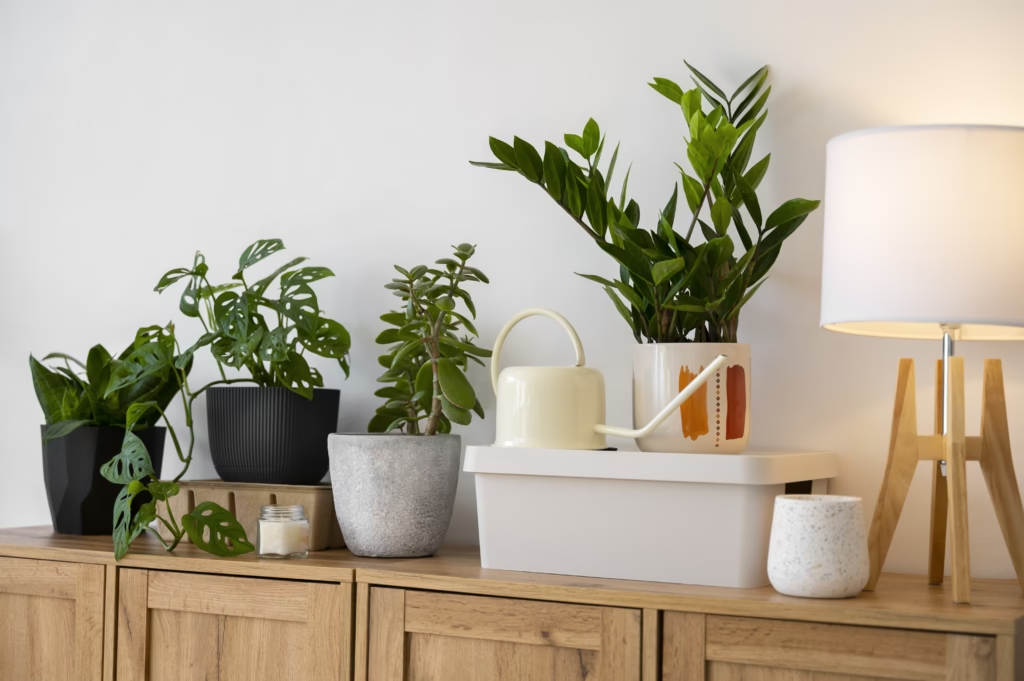
The most effective approach to styling plants in a room is to group them in compositions rather than distributing them evenly around the space. A cluster of three plants at varying heights, in pots that share a material or colour family, reads as a deliberate arrangement. The same three plants placed in different corners of the room read as plants that needed somewhere to go.
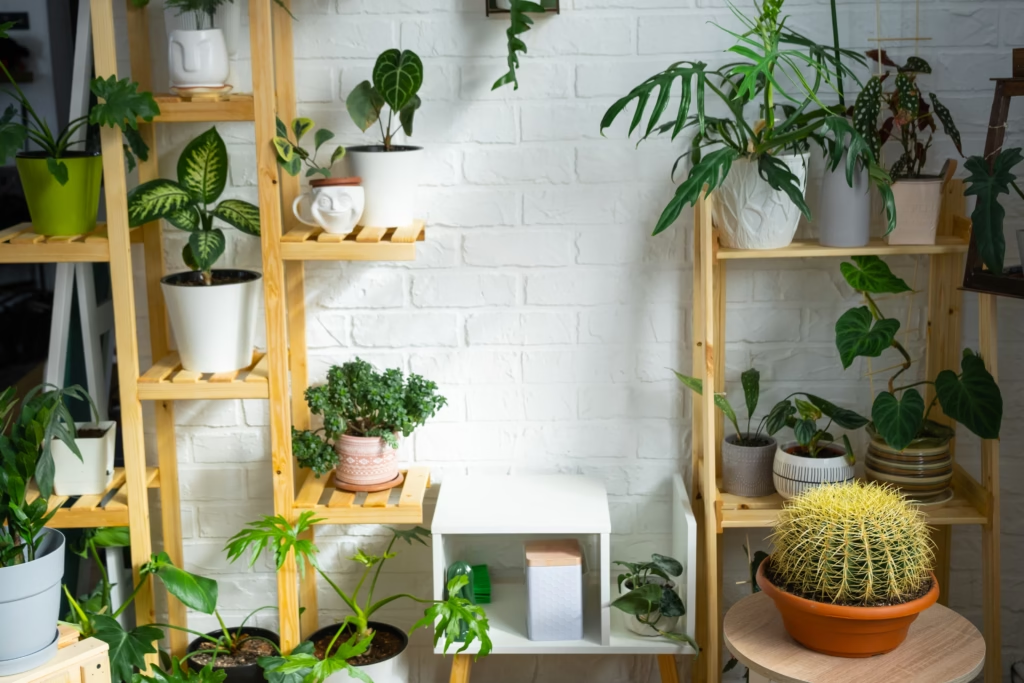
Plant shelf styling works on the same principles as any shelf styling: vary the heights, leave space between objects, mix plants with other items rather than dedicating the shelf entirely to plants. Compact shelf plants suited to the dimensions of floating shelves, small trailing varieties, tiny succulents, compact ferns, create beautiful micro-arrangements without the weight and footprint concerns of larger specimens.
For a minimalist home, one or two plants chosen for their architectural form and housed in exceptional pots will always outperform a larger collection of plants that individually are nothing special. The restraint that makes minimalist interiors work applies equally to the plants within them.
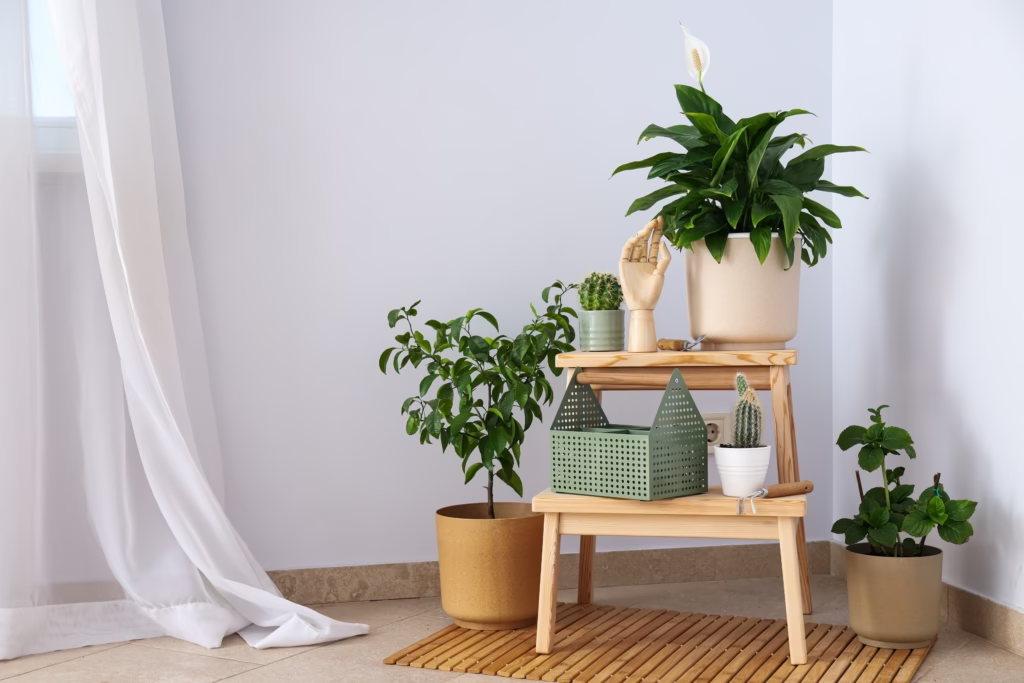
A plant corner in a room that needs a focal point is one of the most effective and most affordable design interventions available. A floor lamp, a large plant, a smaller plant on a side table beside it, and a trailing plant on a shelf above creates a layered, lush corner that photographs beautifully and genuinely transforms how the room feels. Tiered plant stands allow you to create this kind of layered display without requiring multiple pieces of furniture, by presenting plants at different heights within a contained footprint.
Don't miss: 16+ Best Plants for Bedrooms with Relaxing Vibes →
TIP: When potting or repotting a plant, always choose a pot no more than two centimetres larger in diameter than the root ball. Going much larger than the roots need means the excess soil stays wet for too long, which encourages root rot. This is the most common cause of houseplant decline and it is entirely preventable. When in doubt, go smaller rather than larger with the pot.
Add Plants That Do Functional Jobs
Beyond their visual and atmospheric contribution, some plants perform specific functions in a home that make them worth choosing for practical as well as aesthetic reasons.
Air-purifying plants have received considerable attention over the years, and while the effect of any single plant in a normally ventilated home is modest, a collection of plants does contribute meaningfully to air quality. The species most consistently cited for air-purifying properties include peace lilies, spider plants, snake plants, and Boston ferns, all of which are also among the most reliably easy indoor plants. For bedrooms specifically, plants that clean the air while you sleep include aloe vera and snake plants, both of which produce oxygen at night rather than carbon dioxide.
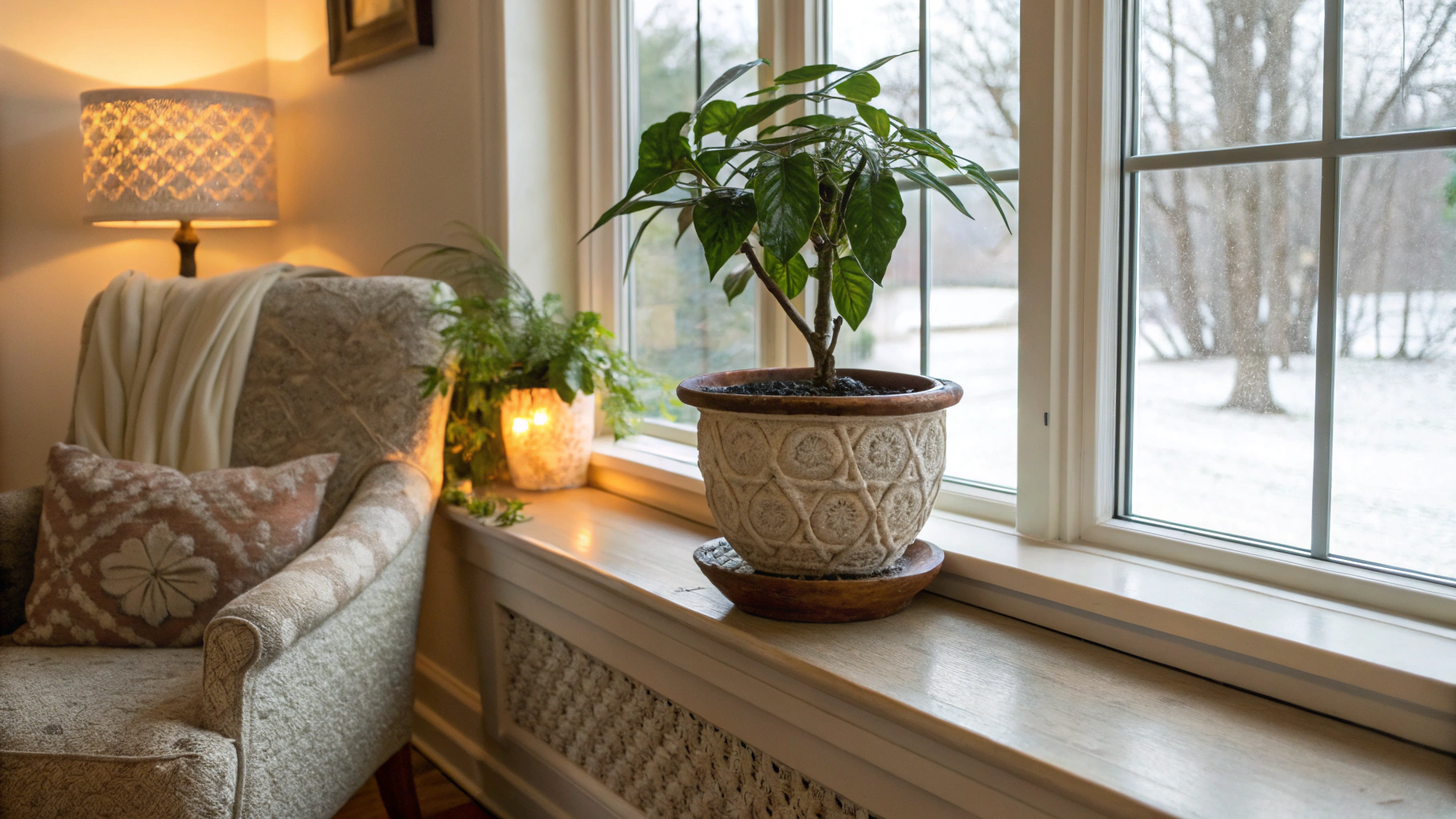
Plants that act as natural humidifiers by releasing moisture into the air through their leaves are particularly valuable in centrally heated rooms in winter, where the air can become very dry. Peace lilies, Boston ferns, spider plants, and areca palms all transpire significantly and can raise the humidity of a room measurably with a sufficient number of specimens.
Fragrant indoor plants contribute to the sensory quality of a home in a way that goes beyond what you can see. Jasmine near a window, lavender on a sunny sill, a gardenia in a warm bright room, a bay tree in the kitchen: fragrant plants change how a room feels at the level of experience rather than just appearance. The calming bedroom plants that most reliably improve sleep quality are the fragrant ones, particularly lavender and jasmine, both of which produce compounds associated with reduced anxiety and lower heart rate.
RELATED: 16+ Plants That Double as Natural Humidifiers
Consider Special Circumstances
Several common situations require specific plant thinking that general houseplant advice does not always address.
If you have cats or dogs, many popular houseplants are toxic to pets when ingested, including lilies, pothos, and peace lilies. Choosing from the range of genuinely pet-safe plants before bringing anything home prevents a situation that is both distressing and avoidable. Spider plants, Boston ferns, calatheas, and most succulents are all non-toxic to cats and dogs and still provide excellent visual interest.
If you are drawn to unusual or conversation-starting specimens, the unusual indoor plants that most people have never encountered include some genuinely extraordinary examples of plant form and character that are often no harder to care for than their more common counterparts. Rare houseplants that are genuinely difficult to source add a quality of distinctiveness to a plant collection that the tenth monstera does not.
If you want the visual impact of tropical foliage without the warmth requirements of true tropicals, tropical-looking plants that are hardier than they appear include many phormiums, cannas in sheltered spots, and the hardier banana varieties that can overwinter in temperate climates. Leafy green plants with bold, dramatic foliage create the same visual effect as true tropicals in most interior settings without the temperature and humidity demands.
For small apartments where floor space genuinely cannot accommodate large floor plants, compact plants for small apartments and vining plants trained up walls or along shelves bring a generous amount of greenery into a tight space without using floor area. A pothos or devil’s ivy trained along a shelf or up a wall can cover a surprisingly large surface within a growing season and creates a lush, abundant feel that is completely disproportionate to the single small pot it originates from.
RELATED: 18+ Compact Plants Perfect for Small Apartments
Bring Cut Flowers and Dried Botanicals Into Your Home
Plants that live in soil are not the only way to bring nature indoors. Cut flowers and dried botanicals contribute colour, fragrance, and organic presence in ways that potted plants do not, and they have a quality of seasonality and deliberateness that a permanent plant collection cannot replicate.
A weekly bunch of fresh flowers from a farmers’ market or a florist, chosen for what is in season rather than for a specific aesthetic, keeps the home connected to the rhythm of the year in a way that is immediately felt even if not consciously registered. Autumn dahlias, winter narcissi, spring tulips and ranunculus, summer sweet peas and peonies: each brings a quality of the season into the home that has nothing to do with the decoration of the vase or the room it sits in.
Colorful foliage plants that are not simply green introduce the visual complexity of autumn leaves, variegated patterns, and burgundy or silver tones that purely green plants do not provide. Caladiums, rex begonias, prayer plants, and calatheas all offer foliage patterns that are as visually interesting as any flower and that last considerably longer.
Dried botanical arrangements have earned their popularity because they offer year-round visual interest with no maintenance. Pampas grass, dried hydrangeas, preserved eucalyptus, bunches of dried lavender, and sculptural seed heads all photograph beautifully and bring a warmth and earthiness into a room that fresh flowers provide temporarily and dried botanicals provide permanently.
Keep Exploring
Grow Something Outdoors Too
The scope of this guide has been primarily indoor, but plants in outdoor spaces, on a patio, in containers on a balcony, in beds and borders, extend the same principles of matching plant to conditions and styling with intention into the garden.
Shade-loving outdoor plants for gardens or courtyards that do not get direct sun include some of the most beautiful and most underused plants in any palette: hostas, astilbes, ferns, hydrangeas, and many hellebores all thrive in exactly the conditions that most gardeners find challenging. Flower bed ideas for the front of the house that add instant visual impact demonstrate how a focused planting scheme in a small area can transform the impression a whole property makes from the street.
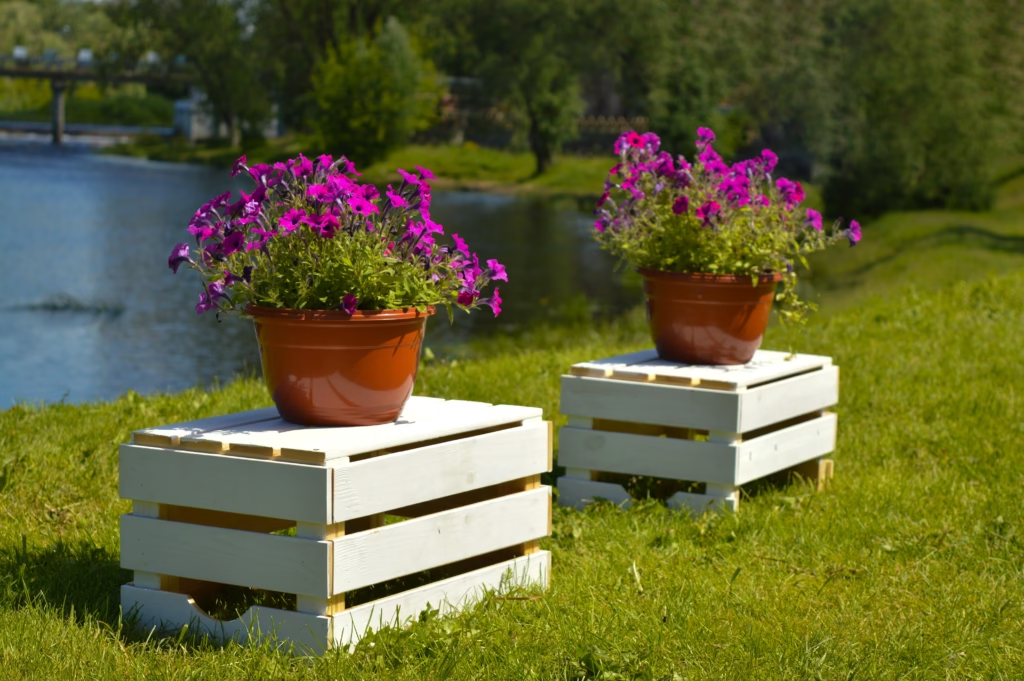
For balconies and patios, wooden planter boxes and DIY planters allow you to create substantial planting displays without a garden, and the same principles apply as indoors: scale matters, the pot contributes as much as the plant, and one well-chosen large specimen will always outperform several small ones.
Frequently Asked Questions
What are the best plants for beginners?
Pothos, snake plants, ZZ plants, and spider plants are all genuinely forgiving of irregular watering, variable light, and the occasional neglect that happens when life gets busy. These four will build your confidence and help you understand what plants need before you move on to more demanding species.
How often should I water my houseplants?
There is no single answer, because it depends entirely on the plant, the pot size, the soil, the light level, and the season. The rule that applies most broadly is to check the soil rather than the calendar. Push your finger an inch into the soil: if it is dry at that depth, water. If it is still moist, wait. Overwatering kills far more houseplants than underwatering.
Which plants are safe for homes with cats and dogs?
Spider plants, Boston ferns, calatheas, prayer plants, most succulents, and orchids are all non-toxic to cats and dogs. Lilies, in particular, are highly toxic to cats and should never be in a home with cats. Peace lilies, pothos, and philodendrons are toxic to pets at moderate levels and should be kept out of reach if you have animals that chew plants.
What plants work best in a bathroom with no windows?
Bathrooms with no natural light are genuinely challenging. The most tolerant species for these conditions include cast iron plants, ZZ plants, and pothos, all of which can survive under artificial light alone. Consider using a grow light on a timer to supplement if you want a wider range of options.
How do I stop my plants from dying in winter?
Most houseplant deaths in winter come from two causes: overwatering and cold draughts. Plants need significantly less water in winter when they are growing slowly, and many people continue watering at their summer frequency without realising it. Check the soil before watering. Keep plants away from cold window draughts and from radiators that blast dry hot air. Move plants closer to windows to compensate for the reduced light.
Explore every room and outdoor space in our complete guides at Chic Living Club.