11+ Modern Minimalist Deck Designs for Clean Outdoor Living
There is a particular kind of outdoor space that stops you the moment you see it. Not because it is trying to impress you with how much it contains but because of how confidently it contains so little. Every line is intentional. Every surface is clear. Every element has earned its presence. This is what a modern minimalist deck looks like when it is done well and the effect it creates is one of the most genuinely restful outdoor environments available.
Minimalist deck design is not about deprivation. It is not about sitting on a bare wooden platform with nowhere to put your drink and nothing to look at. It is about the discipline of choosing less so that what you do choose can be seen, appreciated, and used properly. It is about trusting the quality of materials and the strength of a few good decisions rather than filling every available surface with objects that add visual noise without adding value.
What Modern Minimalism Actually Means in an Outdoor Context
The word minimalism gets used loosely in design conversations to mean anything from sparse to monochrome to simply tidy. In the context of a deck design, modern minimalism has a more specific and more useful meaning.
It means that every design decision is made with a clear reason. The furniture is the right scale for the space, in materials that suit the outdoor environment and the architectural context of the home. The color palette is restrained and consistent, with decisions made about which tones to use and which to exclude. The layout creates clear open space rather than filling available floor area with objects. The lighting is integrated and subtle rather than decorative and abundant. The plants are architectural and deliberate rather than numerous and varied.
Love Chic Living Club?
Add us as one of your preferred Google sources and discover more home decor, DIY, outdoor, and lifestyle inspiration from us.
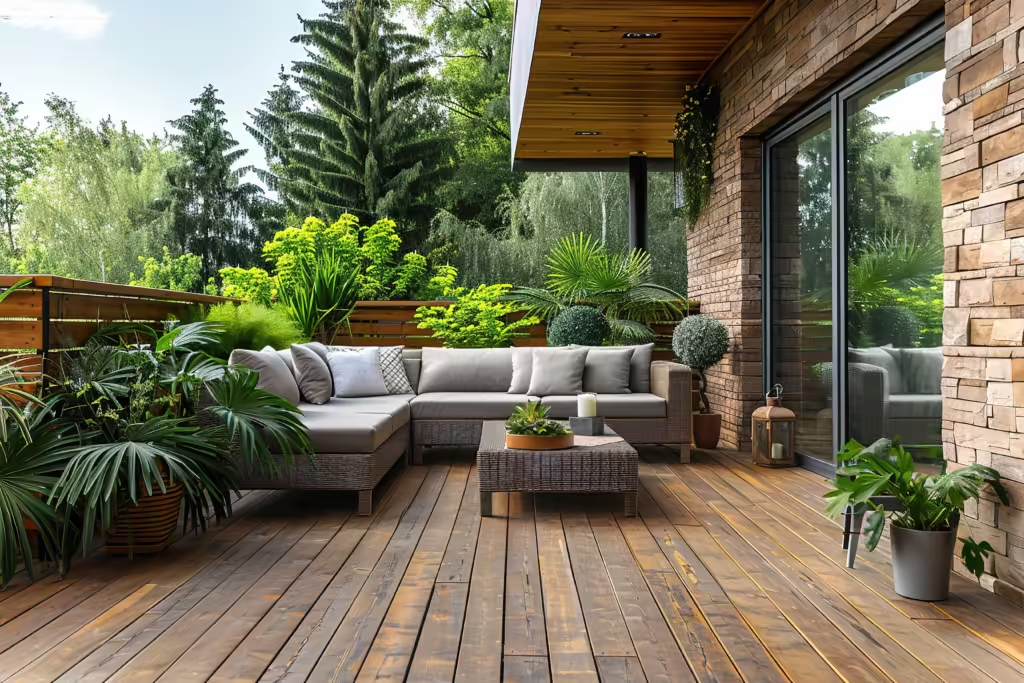
The modern element of modern minimalism in deck design specifically refers to the design vocabulary of clean horizontal lines, flat planes, flush detailing, and an absence of ornamental or historical reference. A traditional Colonial porch can be sparsely furnished but it is not modern minimalist. A deck with flat composite boards, frameless glass railings, flush-mounted LED lighting, and low-profile furniture with simple geometric forms is.
The combination of modern and minimalist in a deck context produces outdoor spaces that feel current without being trendy, calm without being cold, and refined without being fussy. It is one of the most satisfying and enduringly beautiful approaches to outdoor living design.
The Principles That Guide Every Decision
Quality Over Quantity in Every Category
In a minimalist deck design where each object is fully visible and not obscured by surrounding clutter, the quality of every individual piece is exposed in a way it would not be in a more densely decorated space. A beautifully designed concrete planter reads as a sculptural element in a minimalist deck. A poorly made plastic planter in the same position reads as exactly what it is. Invest in fewer, better things rather than more, adequate things.
Material Consistency Creates Cohesion
Using two or three materials consistently throughout the deck design creates a sense of cohesion that a wider material palette cannot achieve. Choose your primary deck surface material and then select furniture, planters, and structural elements that share or complement it. Wood and concrete is a classic modern minimalist pairing. Composite and aluminum is another. Steel and stone is a third. Pick your pairing and commit to it throughout the design.
You May Also Love
Every Line Should Be Intentional
In a minimalist deck, every edge, every joint, and every junction between materials is visible and examined in a way that more decorated spaces never expose. Flush-mounted deck boards with hidden fasteners look significantly more intentional than surface-screwed boards with visible fastener lines. Continuous material runs without unnecessary breaks look cleaner than interrupted surfaces. The more invisible the construction detail, the more refined the overall result.
Don't miss: 16+ Gorgeous Patio Privacy Ideas with Plants →
Negative Space Is the Point
An open, unoccupied section of deck is not wasted space in a minimalist design. It is the visual breath that allows the elements that are present to be seen clearly and appreciated fully. Resist the instinct to fill every corner, cover every surface, and maximize every linear foot of deck space with an object. The open space is as much a part of the composition as the furniture or the planting.
Keep Exploring

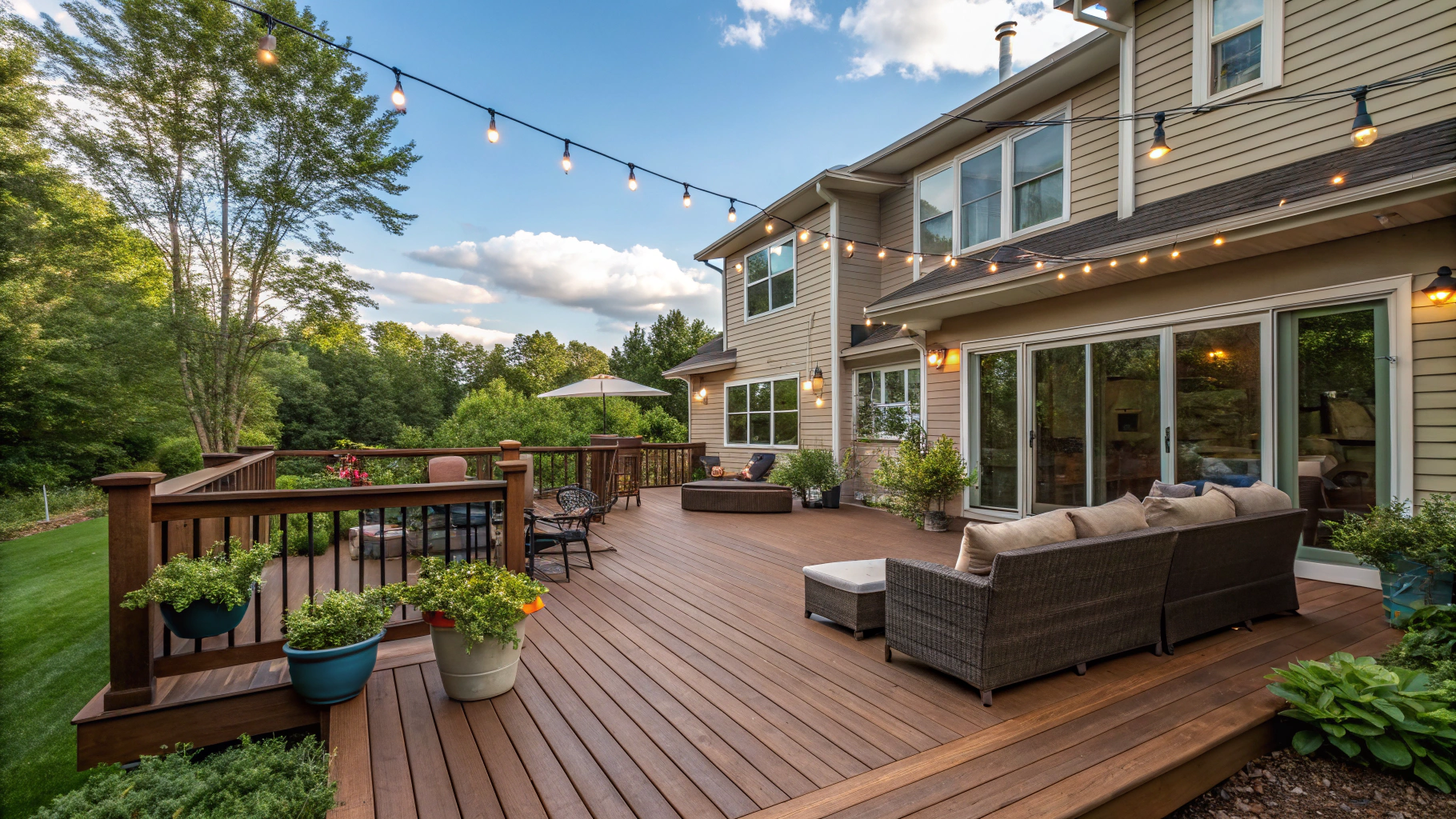
Common Mistakes in Minimalist Deck Design
Understanding what goes wrong in minimalist deck attempts is as useful as understanding what goes right.
The most common mistake is confusing minimalism with simply having less stuff. A deck with five pieces of mismatched furniture that are pushed to the edges to create open space in the middle is not minimalist. It is sparse and awkward. True minimalist design involves choosing the right pieces at the right scale in the right relationship to each other and to the space around them, not simply removing things until what remains looks like insufficient furnishing.
The second most common mistake is inconsistent detailing. A minimalist deck with clean composite boards and frameless glass railings that is then fitted with ornate cast-iron furniture, fussy textile patterns, and an abundance of small decorative objects is working against itself. The investment in clean architectural detailing at the structural level is undermined by decorating choices that introduce the visual complexity that minimalism is specifically trying to avoid.
The third mistake is poor quality materials. Minimalist design cannot hide material quality behind decoration or abundance. When a deck has very little on it, the quality of the few things it does have is fully exposed. Cheap furniture, low-quality composite boards, and budget fixtures look exactly like what they are in a minimalist setting in a way that they might not in a more densely decorated space.
These 12 ideas build a complete framework for a modern minimalist deck, from the fundamental decisions about color and layout to the finishing details that make restraint look intentional rather than unfinished.
1. Neutral Color Palette

Stick to soft grays, whites, and beiges for a balanced and airy deck design.
Pro Tip: Use one accent color, like black or muted green, for subtle contrast.
2. Streamlined Furniture

Opt for sleek, low-profile furniture with straight lines and minimal detailing.
Pro Tip: Choose weatherproof materials like metal or teak for durability and simplicity.
3. Built-In Benches

Built-in seating maintains flow and eliminates bulky furniture.
Pro Tip: Keep cushions neutral and add a few textured throws for comfort.
4. Open Deck Layout

A spacious layout emphasizes the minimalist principle of “less is more.”
Pro Tip: Avoid overcrowding by leaving open areas that allow easy movement.
5. Wood and Concrete Combo

Mix natural wood with smooth concrete for a modern, textural balance.
Pro Tip: Keep both materials in natural tones to maintain a cohesive look.
6. Subtle Deck Lighting
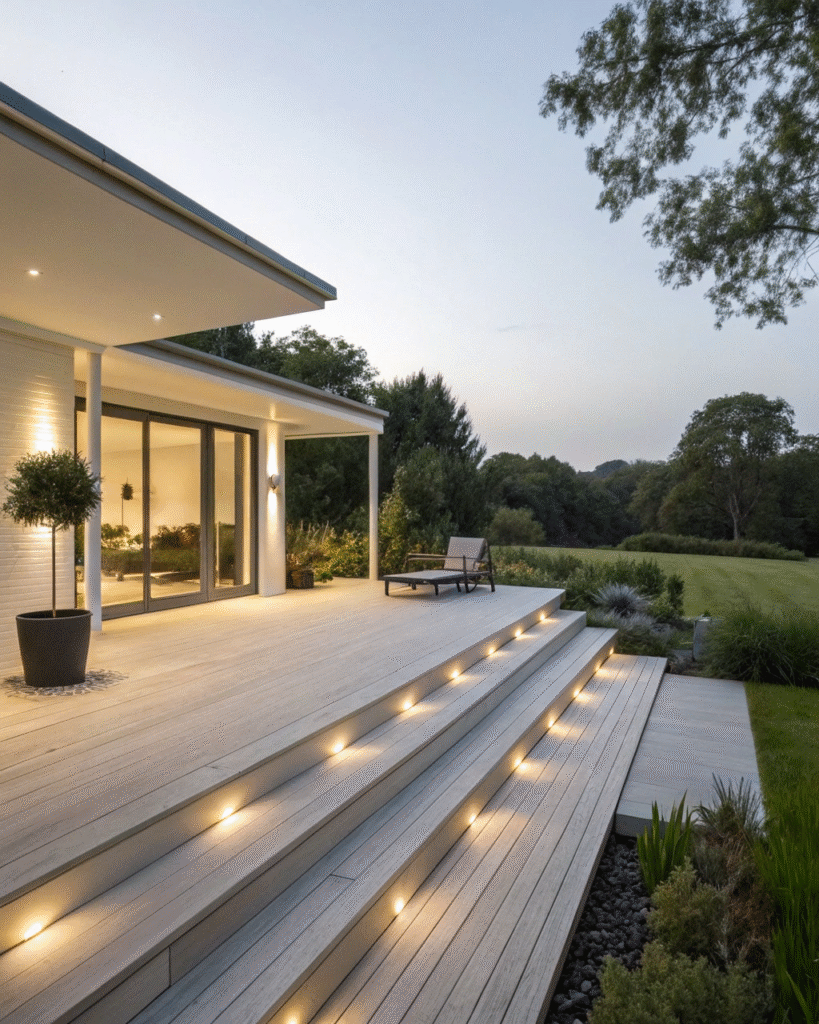
Use soft, integrated lighting to highlight structure and create ambiance.
Pro Tip: Install under-rail or step lights for a clean, floating effect at night.
7. Monochrome Theme

A monochrome design creates a refined, harmonious atmosphere.
Pro Tip: Add visual depth by varying textures like matte, smooth, and woven finishes.
8. Glass Railings

Glass railings provide openness while maintaining sleek, contemporary lines.
Pro Tip: Use frameless or thin-framed glass for a barely-there aesthetic.
9. Minimal Plant Styling

Choose sculptural, low-maintenance plants for a tidy and serene feel.
Pro Tip: Limit your palette to two or three plant types for visual consistency.
10. Floating Deck Design

A slightly elevated deck with clean edges gives a modern, weightless appearance.
Pro Tip: Use recessed lighting around the perimeter for subtle nighttime drama.
11. Decluttered Decor
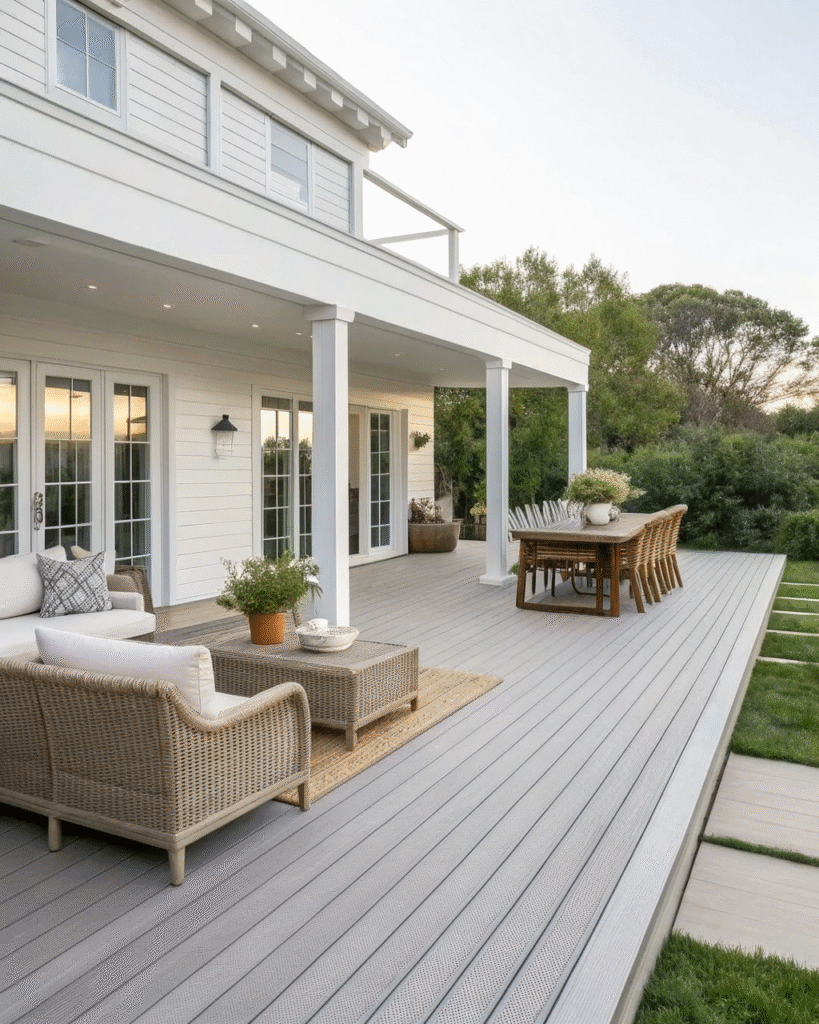
Keep decor minimal and functional, focusing on texture rather than quantity.
Pro Tip: Incorporate natural elements like a stone bowl or bamboo tray for organic warmth.
12. Integrated Fire Feature

Add a sleek, built-in fire pit or linear burner for cozy minimal luxury.
Pro Tip: Choose materials like black steel or concrete for a modern, understated look.
Final Thoughts
A modern minimalist deck is one of the most demanding design challenges in outdoor living because it requires the discipline to choose less and the confidence to trust that less is genuinely more. It demands quality over quantity at every level from the deck surface material to the furniture to the single decorative object on the side table. It requires ongoing commitment to keeping the space clear and resolved rather than allowing the gradual accumulation that eventually compromises every minimalist design.
But when it is done well, when every element has been chosen with genuine thought and placed with genuine intention, and when the open space of the deck is as clearly a design decision as the objects within it, the result is one of the most beautiful and most genuinely restful outdoor environments available. It is the kind of deck that makes you want to come outside, sit quietly, and stay for a while. Which is, in the end, exactly the point of any deck worth building.
Frequently Asked Questions
How do I make a small deck look minimalist without it feeling empty?
The key is to choose a single well-scaled furniture arrangement rather than multiple smaller pieces. One compact sofa and a coffee table in the right proportion to the deck size creates a complete, resolved seating zone. Add one or two architectural plants in quality planters. Keep surfaces completely clear. The result feels curated and intentional rather than empty because every element present is the right element at the right scale.
What furniture material is most appropriate for a minimalist deck?
Powder-coated aluminum is the most consistently appropriate material for minimalist outdoor furniture because of its clean appearance, light visual weight, virtually unlimited color range, and complete weather resistance. Teak in a simple, unornamented design is an equally appropriate choice that adds natural warmth to the palette. Avoid wicker, rattan, ornate cast metal, and any furniture with decorative detailing as these work against the clean geometric language of modern minimalist design.
Can I add color to a minimalist deck?
Yes, but use it with extreme restraint. One deliberate color accent, a single cushion in a specific tone, one planter in a particular color, or a single textile introducing a chosen hue, can add life and personality to a minimalist palette without disrupting its essential calm. The rule is one color accent and no more. Introducing multiple color accents creates the visual competition between elements that minimalism is specifically designed to avoid.
How do I keep a minimalist deck looking its best over time?
The most important habit is regular clearing of everything that accumulates on the deck surface. Outdoor furniture naturally attracts leaves, forgotten items, and accumulated accessories that gradually increase visual noise until the clean quality of the design is obscured. A quick weekly clear of the deck surface and a commitment to returning every object to its proper place rather than leaving temporary items out indefinitely maintains the minimalist quality of the space over time with very little effort.
Is a minimalist deck appropriate for a family with children?
A minimalist deck can absolutely accommodate family life if the design is planned with that use in mind from the beginning. Choose furniture and surfaces that are genuinely easy to clean. Provide adequate but concealed storage for outdoor toys, tools, and accessories that would otherwise sit on the deck surface. Design a clear open area that serves as a circulation and play zone. A minimalist approach to a family deck simply means that the children’s things have a proper place to go when not in use rather than remaining permanently visible on the deck surface.