11+ Deck Flooring Alternatives That Refresh Your Space
The floor of your outdoor space does more work than almost any other element in it. It sets the tone, defines the aesthetic, determines how comfortable and safe the space is to move around in, and either supports or undermines everything you place on top of it. When the flooring is right, the whole space feels grounded and complete. When it is wrong, or simply worn out and tired, even the most beautiful furniture and the most carefully chosen plants cannot compensate for what is happening underfoot.
The good news is that refreshing your deck or patio flooring does not always mean tearing everything out and starting from scratch. Several of the options on this list install directly over existing surfaces, transforming the look and feel of the space in an afternoon without any demolition or significant construction. Others represent longer-term investments that change the character of the outdoor space permanently and dramatically. Both approaches have their place depending on your situation, your budget, and how fundamental a change you are looking for.
Why Your Deck Flooring Choice Matters More Than You Think
Most people focus their outdoor decorating budget and attention on furniture, lighting, and plants, all of which sit above the floor rather than on it. But the floor is the largest single surface visible in any outdoor space and it influences the character of everything above it in ways that are easy to underestimate until you change it.
The color and tone of the flooring affects how the entire space feels. Dark flooring creates a grounding, sophisticated base that makes furniture and plants read more vividly against it. Light flooring creates openness and brightness that makes small outdoor spaces feel larger. Warm-toned flooring creates intimacy and connection to natural materials. Cool-toned flooring creates clarity and a contemporary edge.
Love Chic Living Club?
Add us as one of your preferred Google sources and discover more home decor, DIY, outdoor, and lifestyle inspiration from us.
The texture of the flooring affects the sensory experience of the space at the most immediate and constant level. You feel the floor under every step and every barefoot crossing of the space on a warm day. Rough textures feel natural and safe. Smooth textures feel refined and contemporary. Soft textures feel inviting and comfortable in ways that hard surfaces never quite achieve.
The practical performance of the flooring determines how much maintenance the space demands and how safely and comfortably it can be used in wet conditions. Slippery surfaces are a genuine safety hazard in outdoor spaces where rain and morning dew are regular occurrences. Surfaces that hold moisture and develop mildew require constant cleaning to remain attractive. Choosing a flooring material that performs well in your specific climate reduces the ongoing maintenance burden significantly.
What to Consider Before Choosing a Deck Flooring Alternative
A few specific considerations should guide your flooring choice before you are influenced by aesthetics alone.
Load and Structural Capacity
If you are installing a flooring material over an existing deck structure, the combined weight of the new flooring and any existing structure must be within the structural capacity of the deck framing below. Stone pavers and concrete overlays are significantly heavier than timber decking and the deck structure must be able to support the additional weight safely. Have the structure assessed by a qualified contractor or structural engineer before installing any heavy overlay material on an elevated deck.
Drainage
Any outdoor flooring material must allow adequate drainage of rainwater and surface water. Materials that trap water between the flooring surface and the structural deck below create conditions for accelerated rot in timber framing, mildew growth, and eventual structural deterioration. Choose flooring materials and installation methods that allow water to drain freely away from the structure below.
You May Also Love
Thermal Performance
In hot climates, the color and material of outdoor flooring directly affects the temperature of the space above it. Dark-colored hard surfaces like black porcelain or dark composite decking absorb significantly more solar heat than light-colored or reflective surfaces and can become uncomfortably hot underfoot in direct summer sun. In climates with intense summer heat, light-colored flooring or materials with lower heat absorption characteristics like wood and some composites are more comfortable for barefoot use.
Don't miss: 13+ Inspiring Shade Structure Patio Ideas →
Slip Resistance
All outdoor flooring materials should have adequate slip resistance for use in wet conditions. Check the slip resistance rating of any tile, composite panel, or overlay product before purchasing. Tiles and smooth stone surfaces in particular vary enormously in slip resistance between products and an outdoor flooring specification that does not meet the appropriate slip resistance rating is a genuine safety hazard.
Keep Exploring
Installation Approaches: Permanent vs Temporary
The distinction between permanent and temporary flooring solutions matters significantly for renters, for anyone who may want to change direction in the future, or for anyone installing flooring on a surface that needs to remain accessible for maintenance.
Permanent flooring installations including concrete overlays, mortar-set stone pavers, and permanently bonded composite panels require significant effort and cost to remove and are essentially irreversible without damaging the substrate below. They suit owned properties where a long-term commitment to a specific flooring approach makes sense.
Semi-permanent installations including interlocking deck tiles, loose-lay vinyl planks, and rubber mat systems can be removed and replaced without damaging the substrate. They suit renters, temporary setups, and anyone who wants the flexibility to change their flooring without a major construction project.
Temporary overlays including outdoor carpet tiles and loose-laid rubber mats require no installation at all and can be removed, repositioned, or replaced in minutes. They are the most flexible option but also the most limited in terms of visual impact and long-term performance.
These 12 ideas cover every type of deck flooring alternative from quick overlay solutions to complete surface replacements, so you can find the right approach for your specific space and situation.
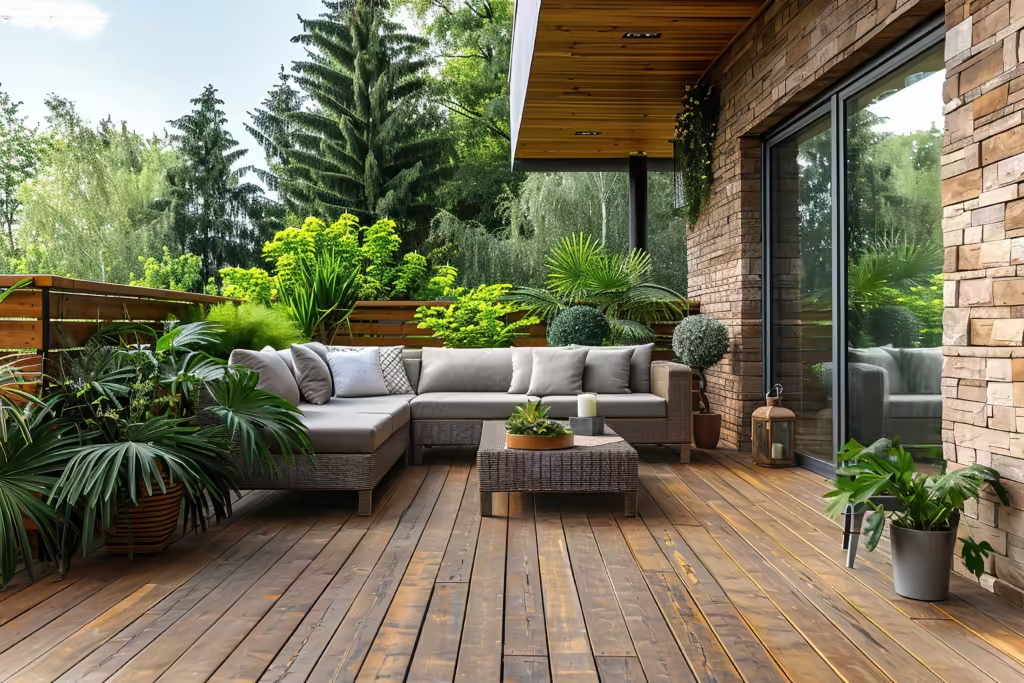
1. Composite Decking
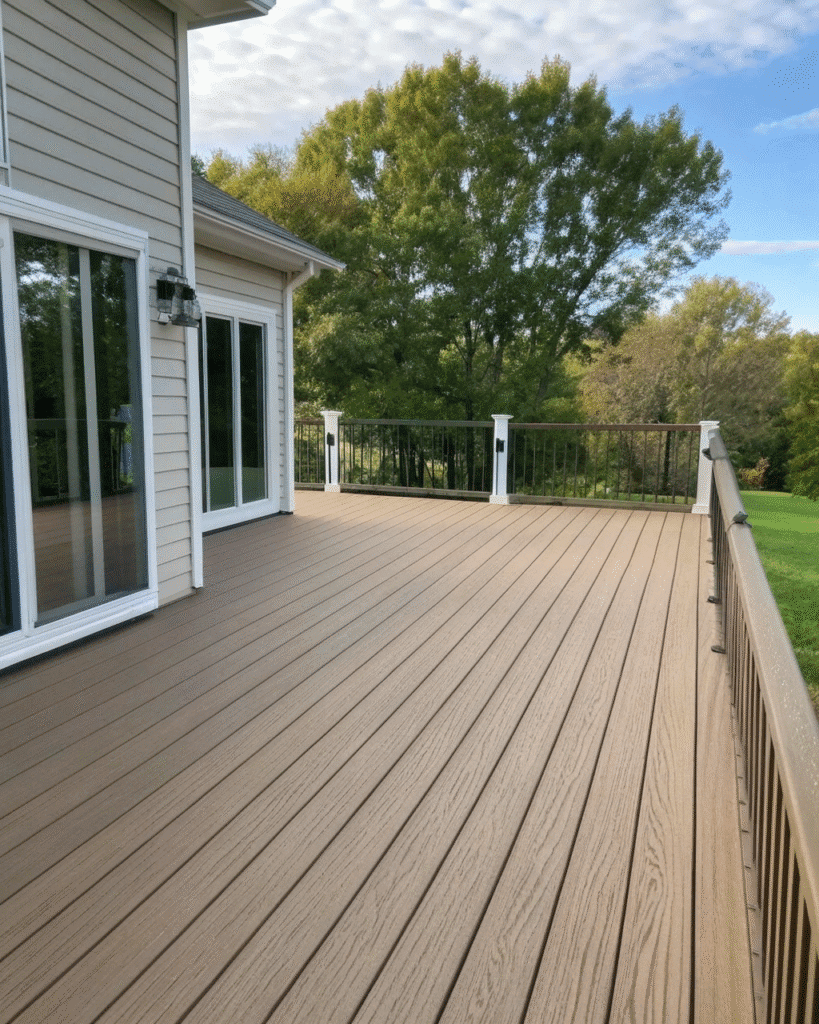
Composite decking offers the look of wood with minimal maintenance.
Pro Tip: Choose lighter shades to keep your deck cooler in sunny weather.
2. Interlocking Deck Tiles

Easy to install and versatile, interlocking tiles are perfect for DIY makeovers.
Pro Tip: Mix wood-look and stone-look tiles for a custom design that stands out.
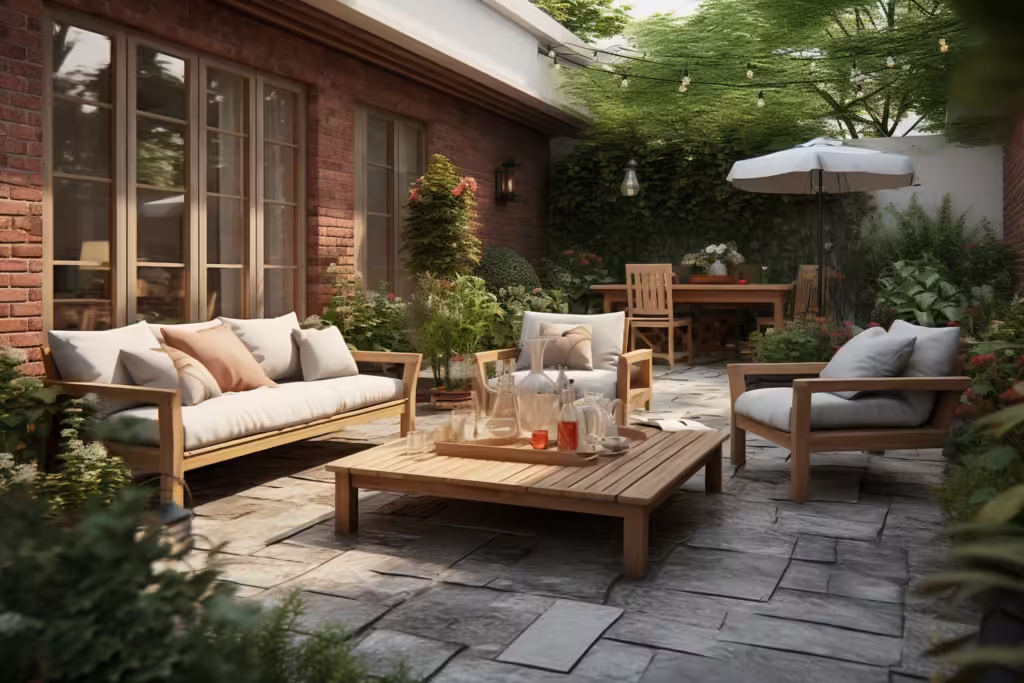
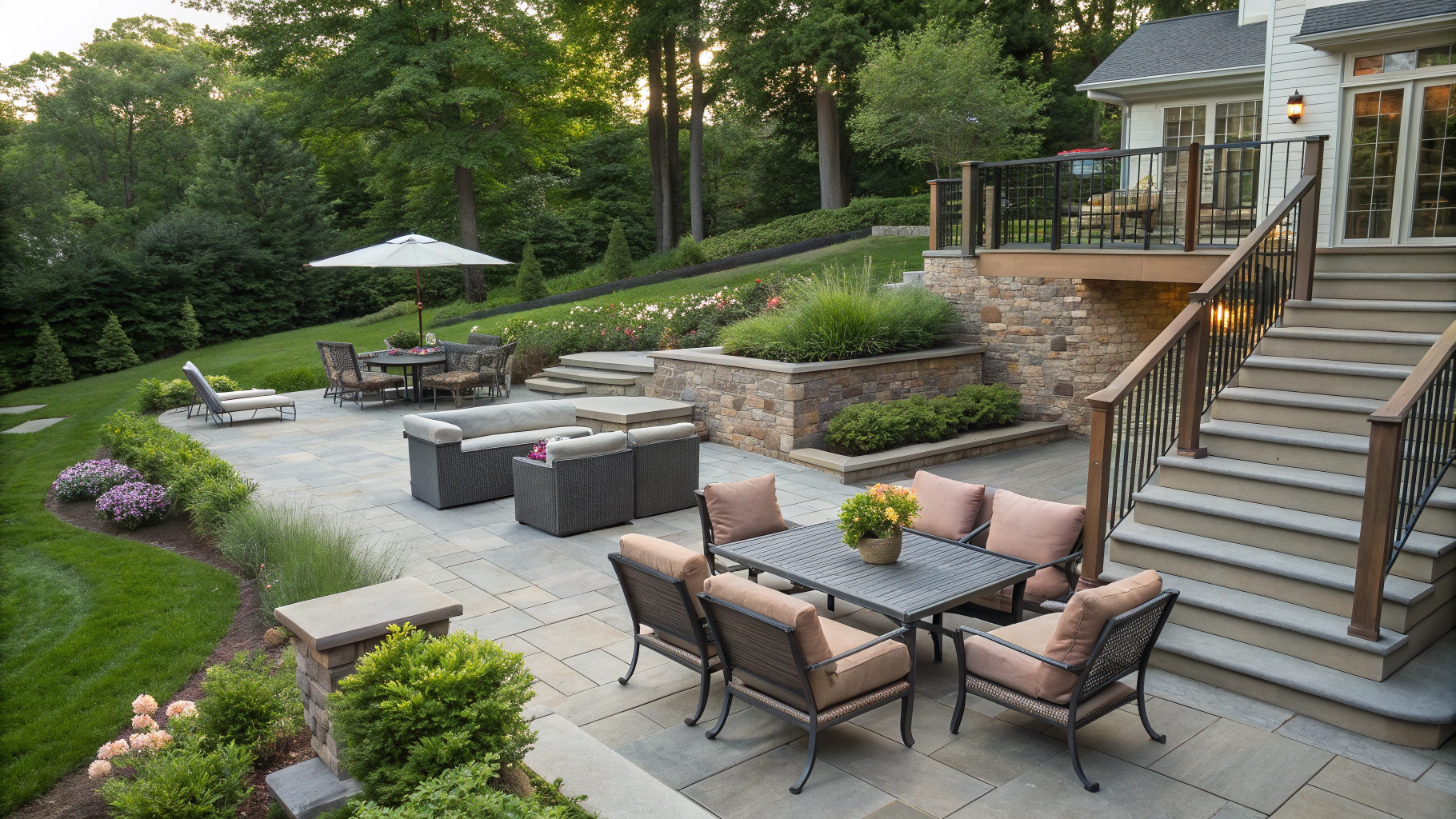
3. Stone Pavers
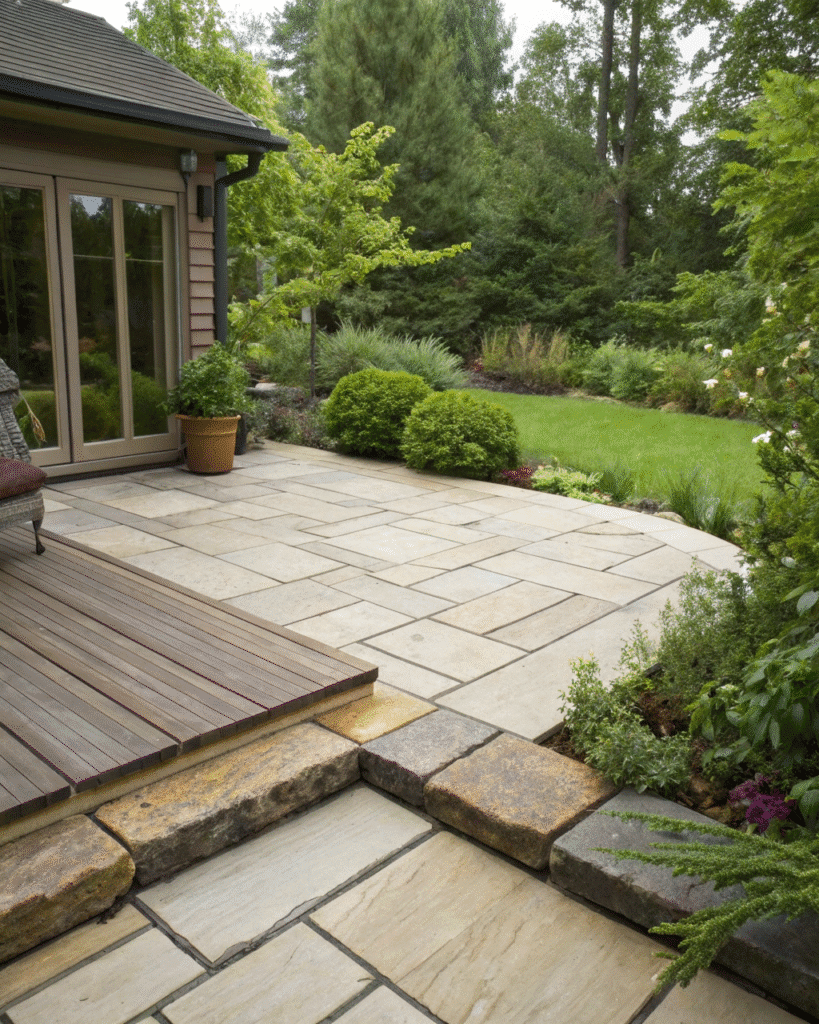
Stone adds natural beauty and a durable finish that feels elegant underfoot.
Pro Tip: Use irregular shapes for a rustic feel or uniform tiles for a clean, modern look.
4. Concrete Overlay
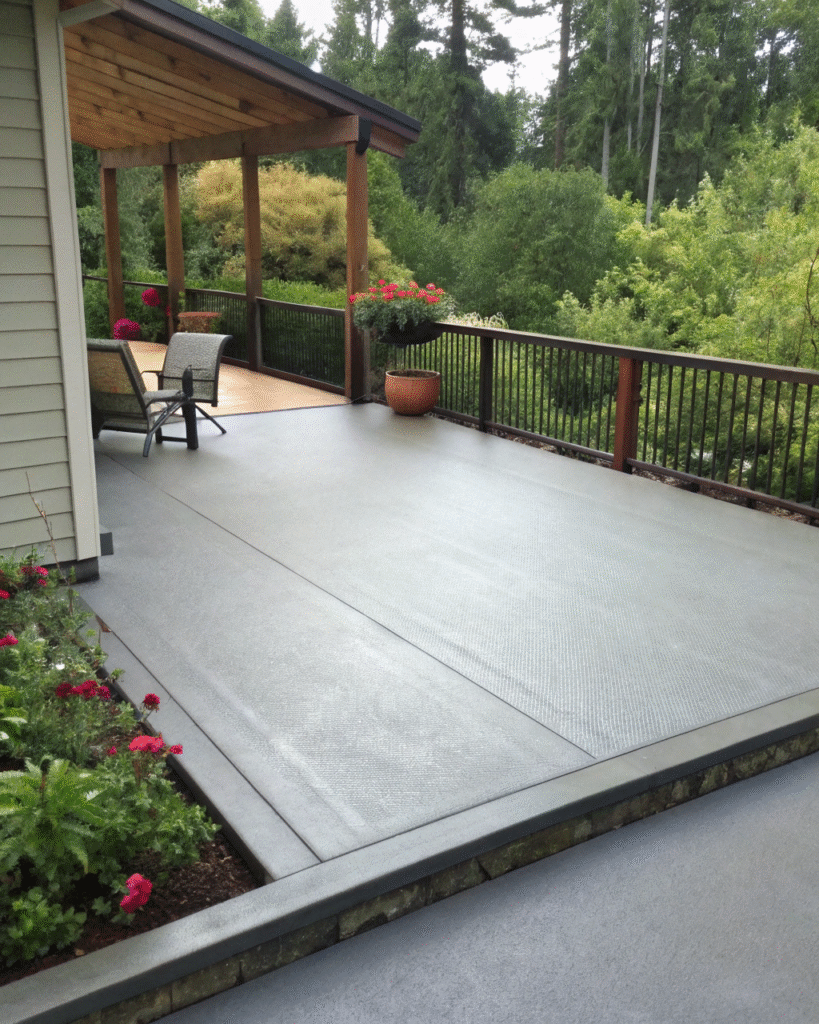
A concrete overlay gives your deck a sleek, contemporary finish.
Pro Tip: Stain or stamp the surface to mimic stone or add subtle texture.
5. Outdoor Carpet Tiles
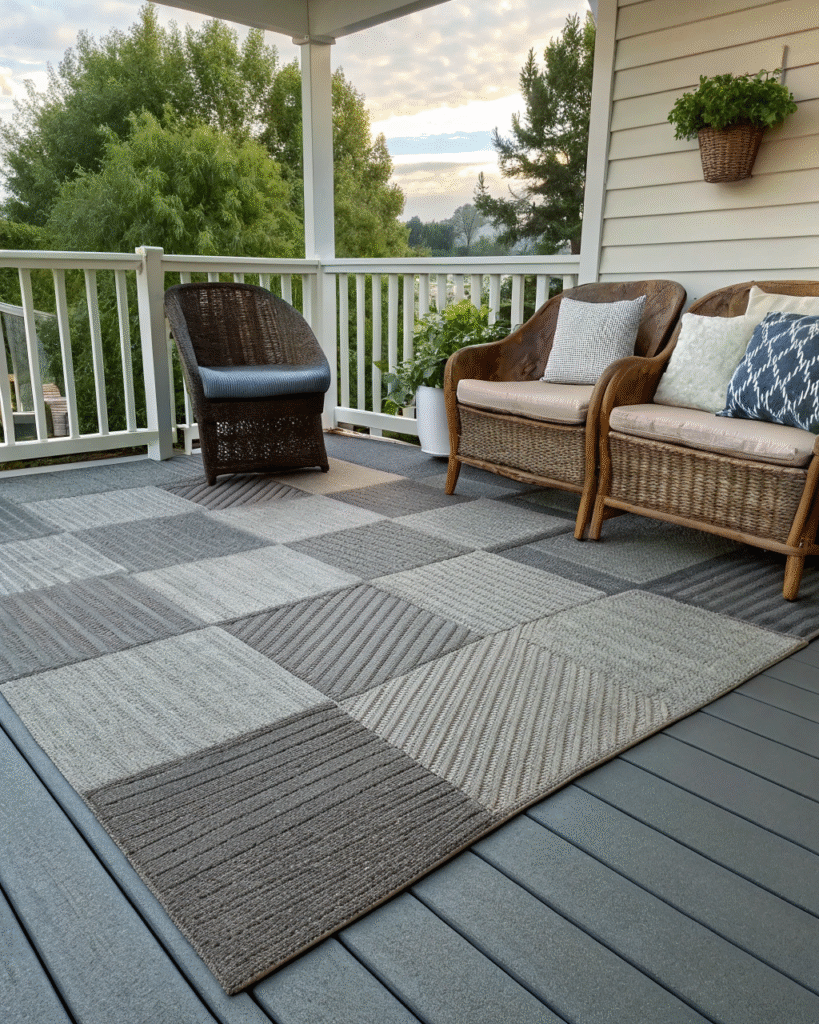
Soft and cozy, carpet tiles make your deck feel more like an outdoor living room.
Pro Tip: Choose weather-resistant, quick-drying materials for lasting comfort.
6. Artificial Grass
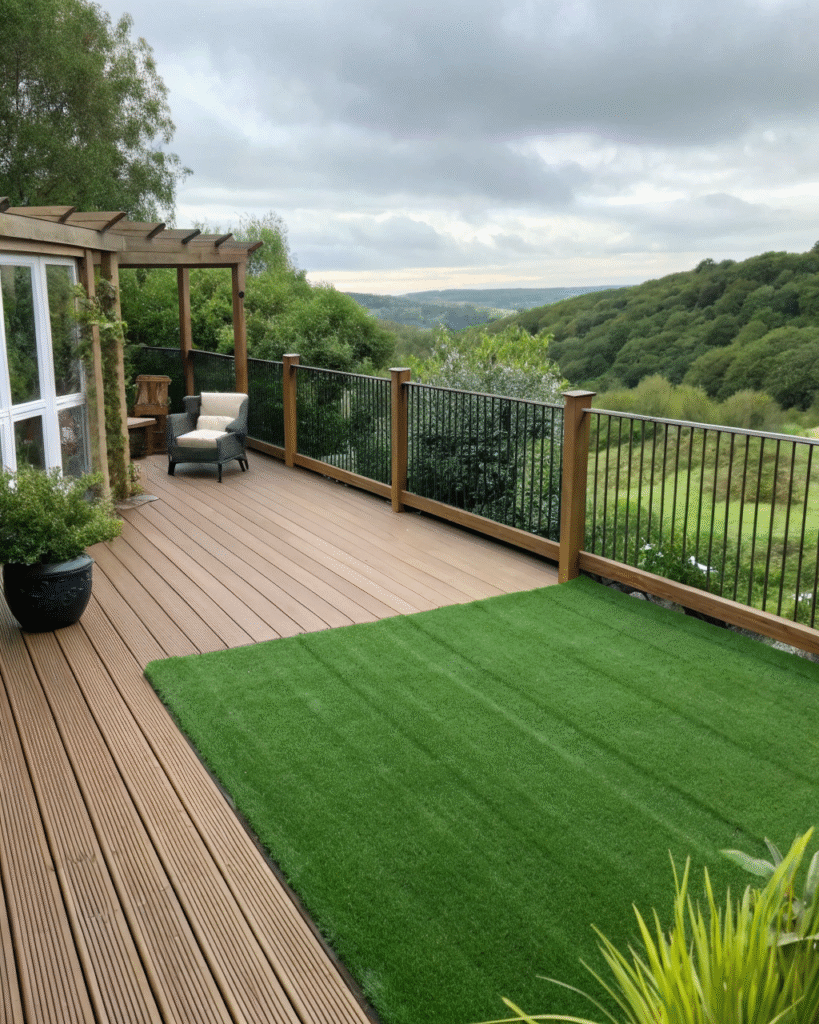
Add a touch of greenery and softness with synthetic turf flooring.
Pro Tip: Use in small zones like lounging or play areas to create contrast and comfort.
7. Porcelain Tiles
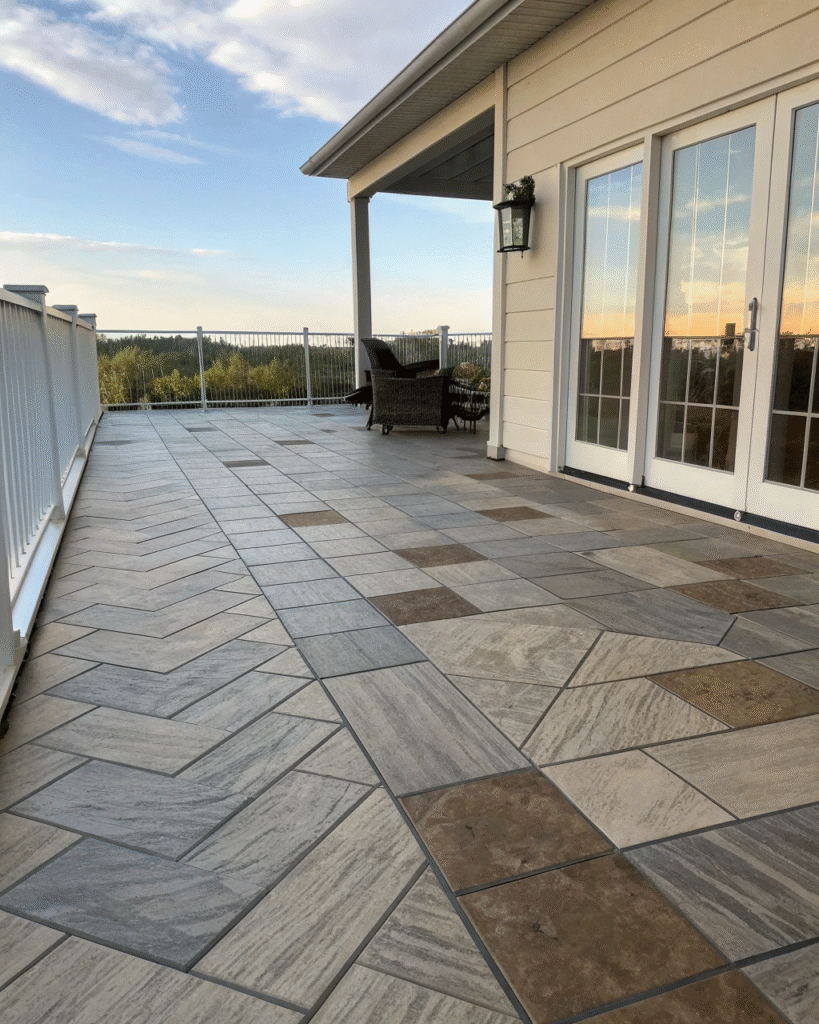
Porcelain tiles are elegant, durable, and available in countless finishes.
Pro Tip: Pick slip-resistant tiles for safety, especially around wet areas or pools.
8. Rubber Decking
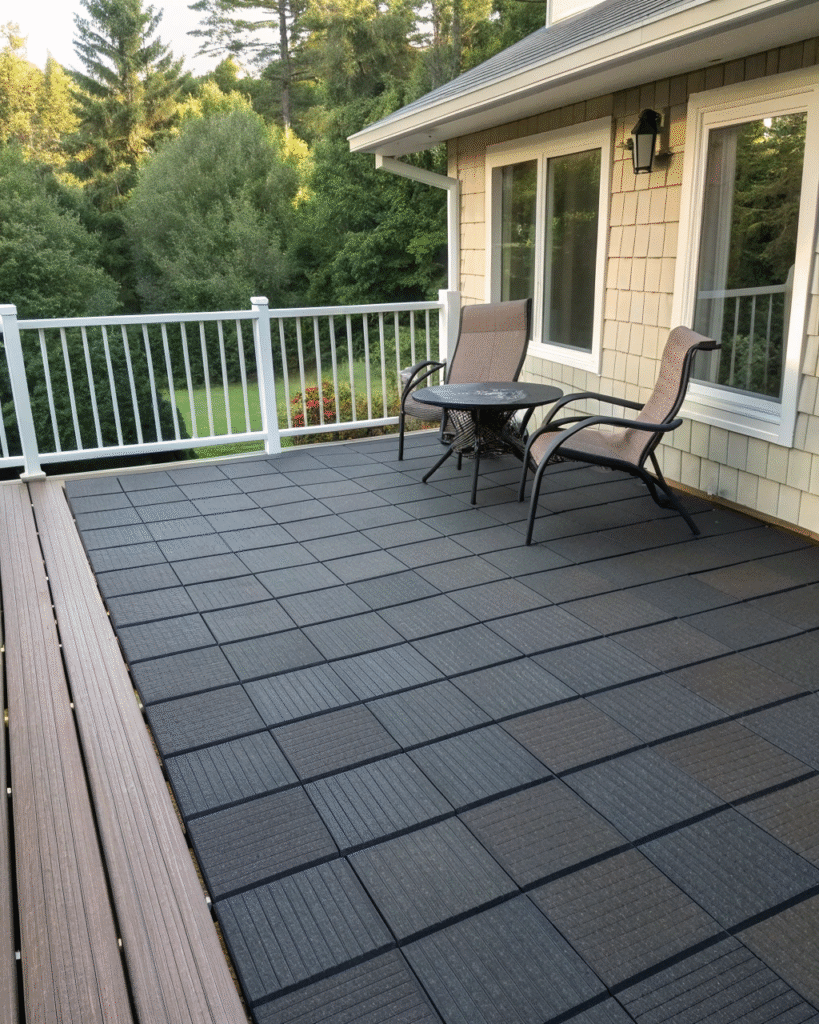
Rubber tiles are soft underfoot, easy to maintain, and great for family decks.
Pro Tip: Use dark tones for a modern touch or lighter ones to reflect heat.
9. Wood-Look Vinyl Planks
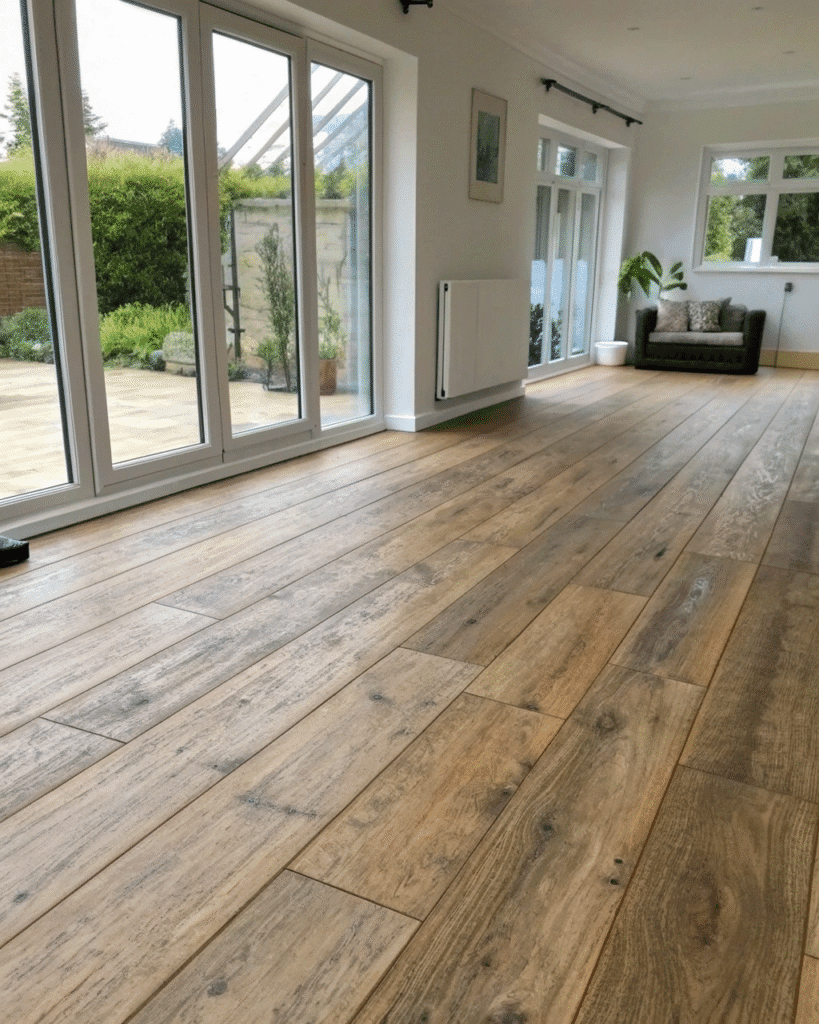
Vinyl planks mimic natural wood but are waterproof and low-maintenance.
Pro Tip: Use textured finishes for a realistic, warm, and comfortable feel.
10. Gravel Flooring

Gravel is affordable and gives decks a relaxed, natural vibe.
Pro Tip: Pair with stone borders or pavers for better structure and easy maintenance.
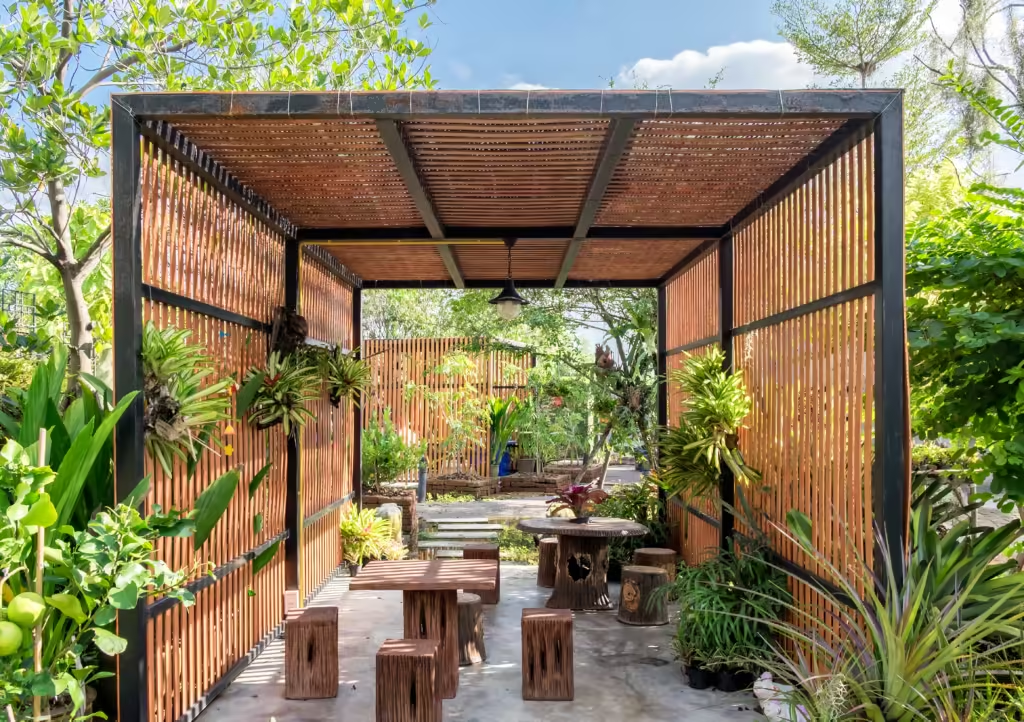
11. Bamboo Flooring

Eco-friendly and stylish, bamboo brings a calm, organic look to outdoor spaces.
Pro Tip: Seal bamboo regularly to keep it weather-resistant and looking new.
12. Painted Wood Floor

A fresh coat of paint can revive wooden decks and hide imperfections.
Pro Tip: Choose exterior-grade paint in earthy or neutral tones for a timeless finish.
Final Thoughts
The floor you choose for your outdoor space sets the foundation for every other decision you make about it. Get it right and everything above it looks better, feels more cohesive, and contributes to the overall character of the space more effectively. Get it wrong and the best furniture and the most beautiful plants will struggle to compensate for a floor surface that is tired, inappropriate, or working against the aesthetic you are trying to create.
Take the time to consider your options properly. Think about your climate, your structural situation, your maintenance tolerance, and the overall aesthetic direction you want your outdoor space to move in. Then choose the flooring that serves all of those needs most effectively, install it properly, and experience the difference that a fresh, appropriate, beautifully chosen floor surface makes to every hour you spend in the space above it.
Frequently Asked Questions
What is the most low-maintenance deck flooring option?
Composite decking and outdoor porcelain tiles are the two lowest-maintenance permanent deck flooring options available. Both require only periodic sweeping and occasional washing to maintain their appearance. Neither needs sealing, staining, oiling, or painting. Both resist fading, staining, and moisture damage effectively. Between the two, composite decking is warmer and more comfortable underfoot and more forgiving of imperfect installation. Porcelain tiles are harder, more heat-resistant, and available in a wider range of surface appearances.
Can I install new flooring over an existing deck without removing the old surface?
Several options in this list install directly over an existing surface including interlocking deck tiles, outdoor carpet tiles, rubber tiles, and loose-lay vinyl planks. These can be installed on any reasonably flat and structurally sound existing surface without removal of the original flooring. Concrete overlay systems can also be applied over existing concrete without removal. Heavy materials like stone pavers require structural assessment before installation over an existing deck frame.
What deck flooring is best for a hot climate?
Light-colored materials with lower heat absorption characteristics perform best in hot climates. Light-toned composite decking, natural stone in light sandstone or travertine, pale porcelain tiles with a textured surface, and natural timber all absorb significantly less solar heat than dark-colored materials. Avoid dark composite, black or very dark grey porcelain, and rubber flooring in black in fully sun-exposed positions in hot climates as these materials can become uncomfortably hot underfoot on summer afternoons.
How do I make my deck floor non-slip?
Choose a flooring material with appropriate wet slip resistance from the outset. For existing surfaces, anti-slip strips or treads applied to the most trafficked areas improve safety significantly. Deck paint with added grit texture creates a slip-resistant painted surface. Anti-slip sealer applied over existing stone or tile surfaces improves wet grip without significantly affecting appearance. Regular cleaning to remove algae, mildew, and organic material buildup is also important as these biological growths are a major cause of slippery outdoor surfaces.
What is the cheapest way to refresh a deck floor?
Painting an existing timber deck is the most affordable complete visual transformation available. A quality deck paint costs a fraction of any material replacement option and can completely change the character of the space in a single weekend. Outdoor carpet tiles laid directly over an existing surface are another very affordable refresh option. Interlocking wood or composite deck tiles installed over a concrete patio are affordable and reversible. All three options deliver significant visual transformation for relatively modest investment.