13+ Japandi Style Patio Ideas for Calm Outdoor Vibes
Some patios invite you to stay. Others just exist. A Japandi patio belongs firmly in the first category, but not because it tries hard. Quite the opposite. It earns its appeal through restraint, through the careful removal of everything that does not need to be there, and through the quiet confidence of a space that knows exactly what it is.
Japandi is the design philosophy that emerges where Japanese minimalism meets Scandinavian warmth. Both traditions share a deep respect for natural materials, honest craftsmanship, and the idea that a space should contain only what genuinely belongs there. Outdoors, those principles translate into something that feels less like a decorated patio and more like a natural extension of the world around it.
What Is Japandi Style and Why Does It Work So Well Outside?
Japandi draws from two distinct but surprisingly compatible design traditions. Japanese design philosophy is rooted in wabi-sabi, the acceptance of imperfection and the beauty of natural aging and simplicity. Scandinavian design brings hygge, the Nordic concept of warmth, comfort, and contentment achieved through honest, simple means.
Where the two meet is in their shared values: natural materials over synthetic, functional beauty over pure decoration, and restraint over abundance. Both traditions believe that a well-made, well-placed object is worth more than a dozen mediocre ones crowding the same space.
Love Chic Living Club?
Add us as one of your preferred Google sources and discover more home decor, DIY, outdoor, and lifestyle inspiration from us.
Outdoors, these principles work with particular power because the natural environment is already doing so much of the aesthetic work. A Japandi patio does not fight against its surroundings. It extends them.
The Core Principles That Guide Every Decision
Less Is Always More
Every object in a Japandi space should be there because it belongs, not simply because you own it or because you have space for it. Before adding anything to your patio, ask whether removing something first would serve the space better.
Natural Materials Over Everything
Wood, stone, bamboo, ceramic, linen, jute, and rattan are the vocabulary of this aesthetic. Synthetic materials and overly polished or reflective surfaces work against the organic quality that gives Japandi its distinctive calm.
You May Also Love

Negative Space Is Part of the Design
Empty space in a Japandi patio is not wasted space. A patch of gravel with nothing on it, a wall with nothing hanging on it, a corner with a single plant and nothing else are all intentional design decisions. The breathing room between objects is what allows each one to be truly seen.
Don't miss: 15+ Inspiring Ground Level Deck Ideas →
Functionality Is Beauty
A beautifully made object that also serves a clear purpose is worth infinitely more in a Japandi space than a purely decorative one. The cushion, the planter, and the lantern should all be genuinely useful as well as genuinely beautiful.
Keep Exploring
Japandi vs Minimalist: Understanding the Difference
This distinction trips up a lot of people and it is worth getting clear on. Minimalism focuses primarily on reduction, on stripping a space down to its absolute essentials. The result is often beautiful but can feel cold, austere, and unwelcoming.
Japandi does everything minimalism does in terms of editing and restraint but it adds warmth through natural textures, organic materials, and the kind of lived-in comfort that Scandinavian design always prioritizes. A Japandi patio feels calm and curated but also genuinely inviting. It is minimalism with a heartbeat.
These 13 ideas will show you exactly how to create that calm, clean, deeply appealing outdoor atmosphere on your own patio.
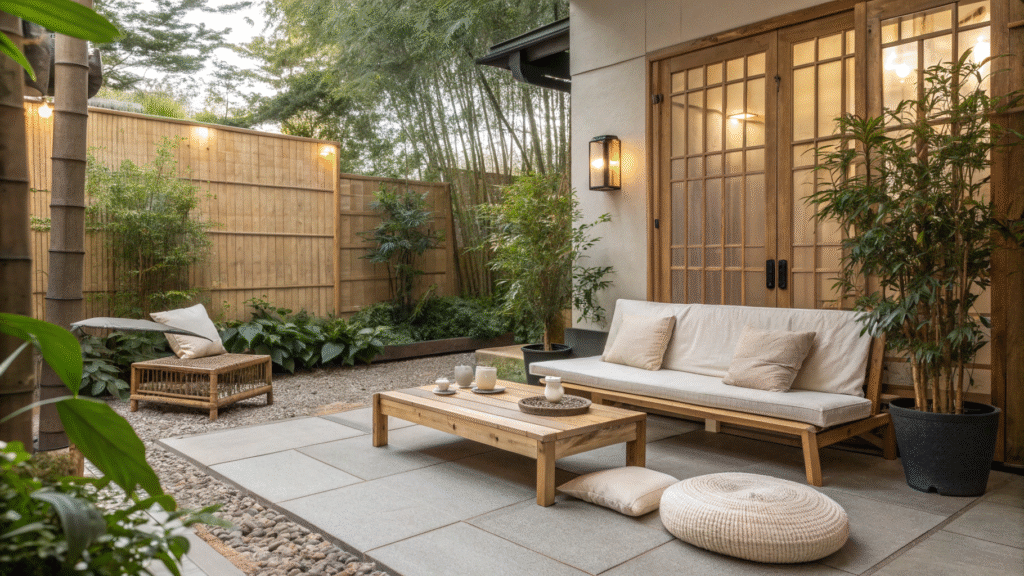
1. Neutral Color Palette
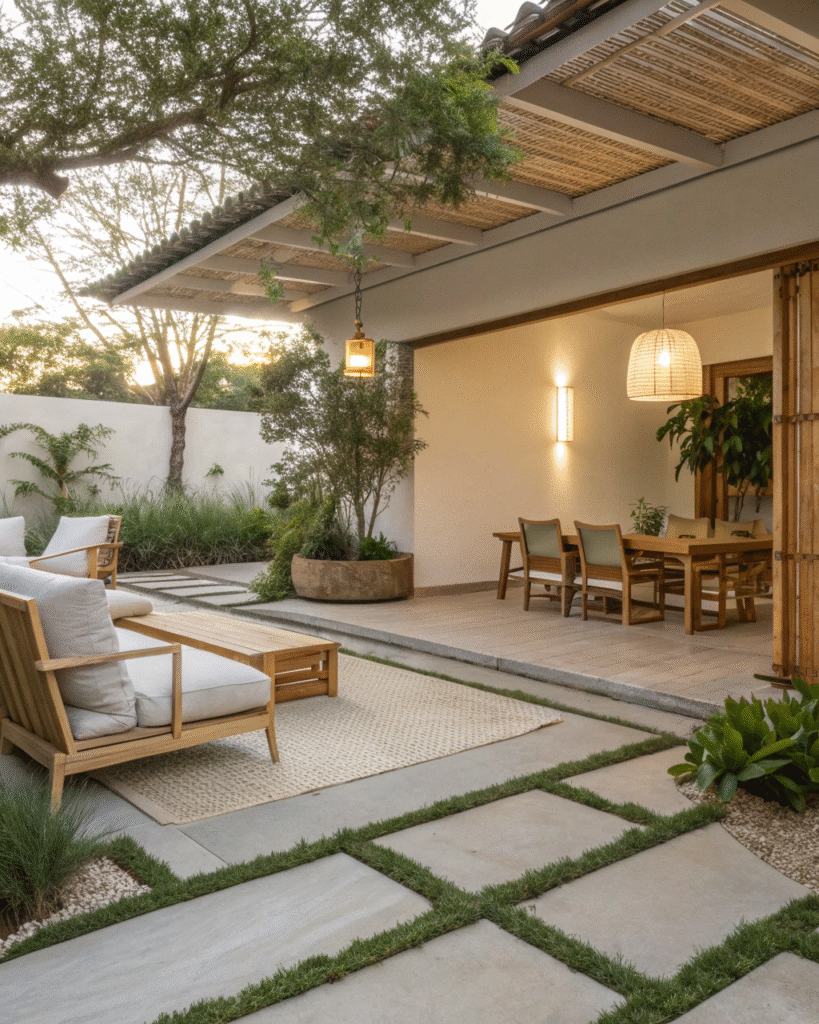
Stick to natural tones like beige, soft gray, and warm white for a serene foundation.
Pro Tip: Add hints of black or charcoal to create subtle contrast and depth.
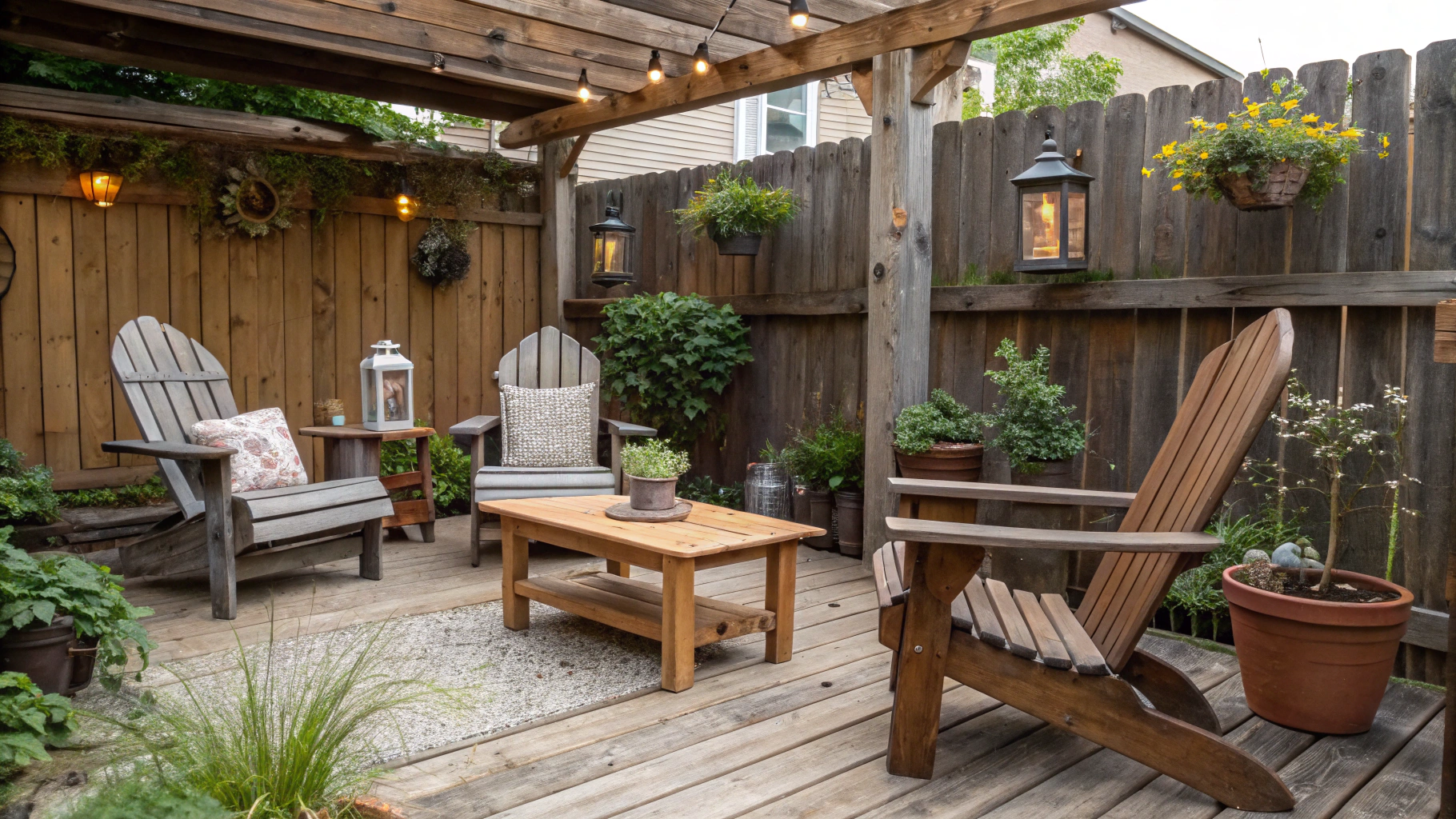
2. Simple Wooden Furniture
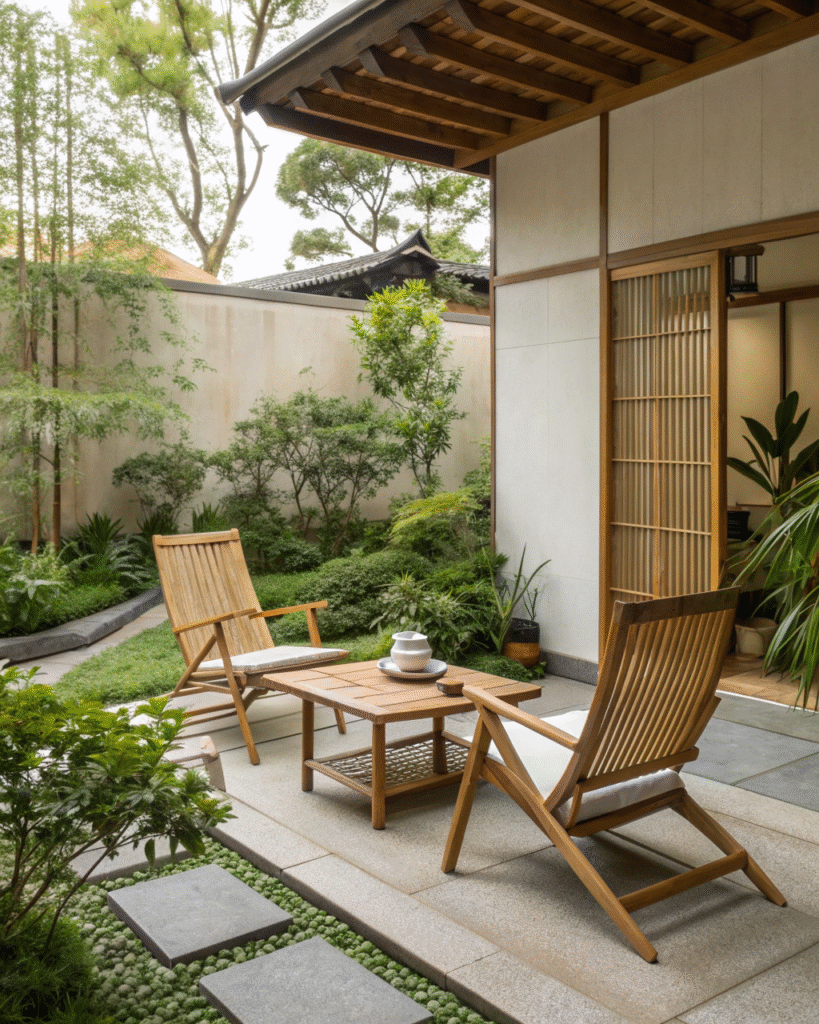
Clean-lined wooden furniture is essential for a minimalist Japandi look.
Pro Tip: Choose low, sturdy pieces made of oak, ash, or bamboo for authenticity.
3. Layered Natural Textures
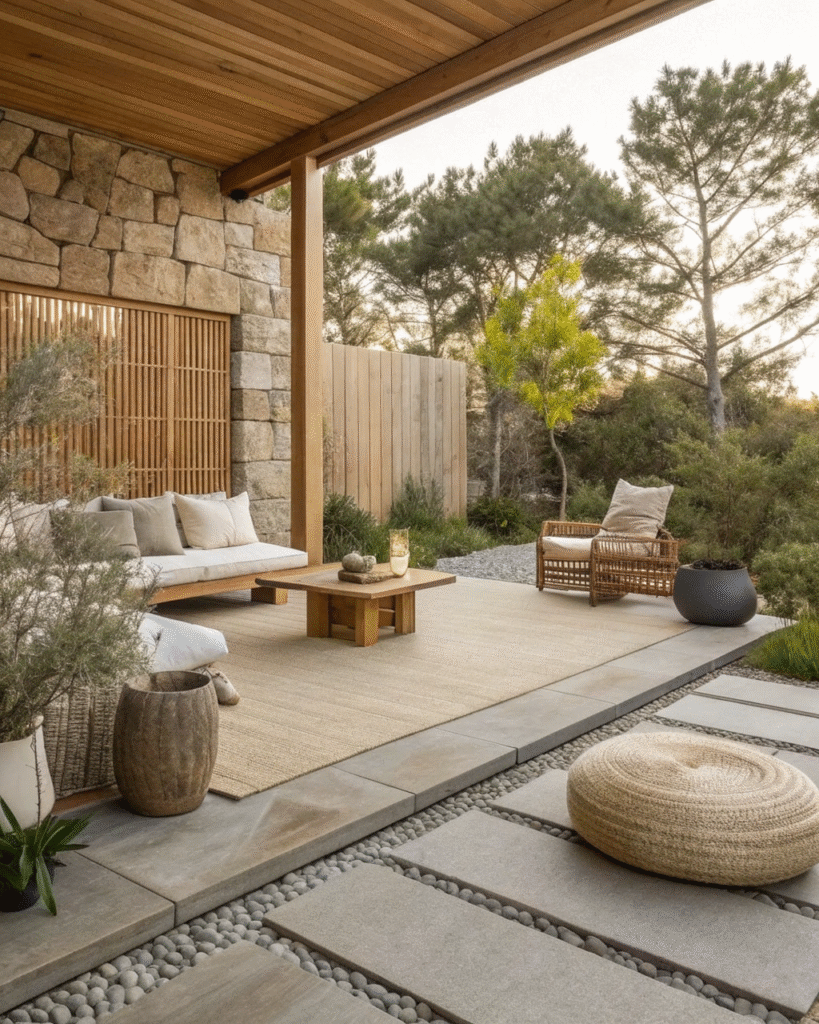
Mix wood, linen, and stone for a warm yet understated aesthetic.
Pro Tip: Keep the palette cohesive and avoid overly glossy finishes for a calm effect.
4. Potted Greenery
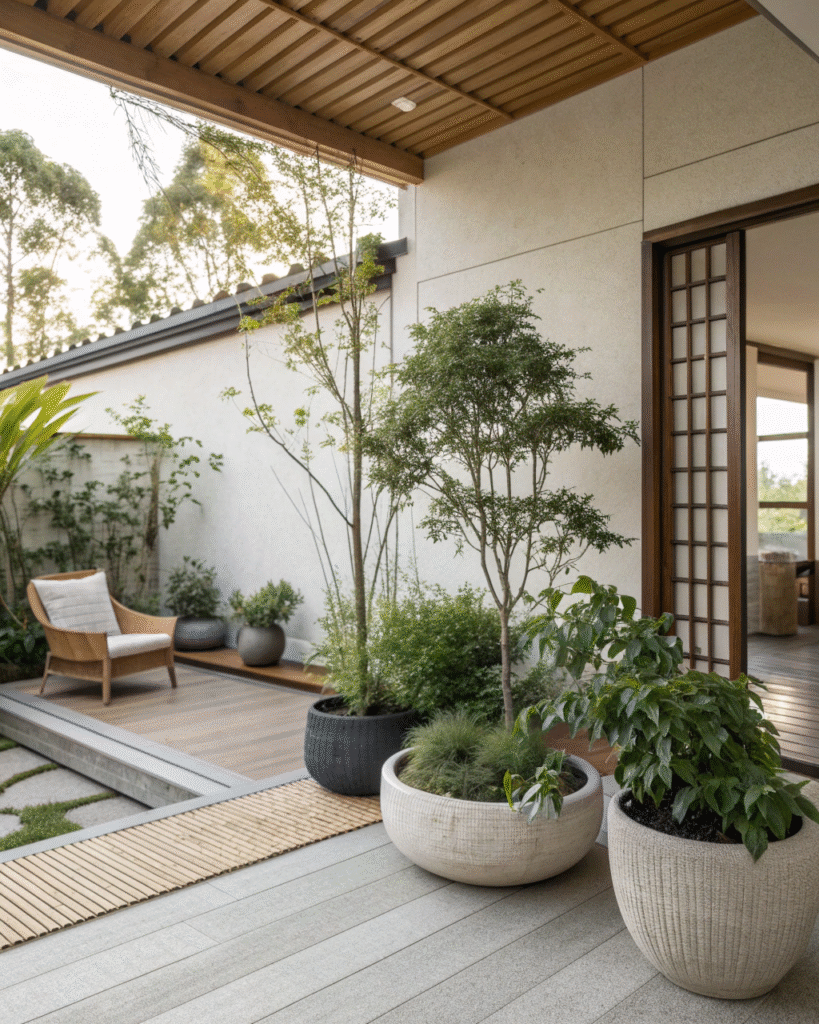
Add greenery that feels intentional and balanced, not overcrowded.
Pro Tip: Go for bonsai, ferns, or small bamboo plants that bring structure and tranquility.
5. Gravel or Pebble Flooring
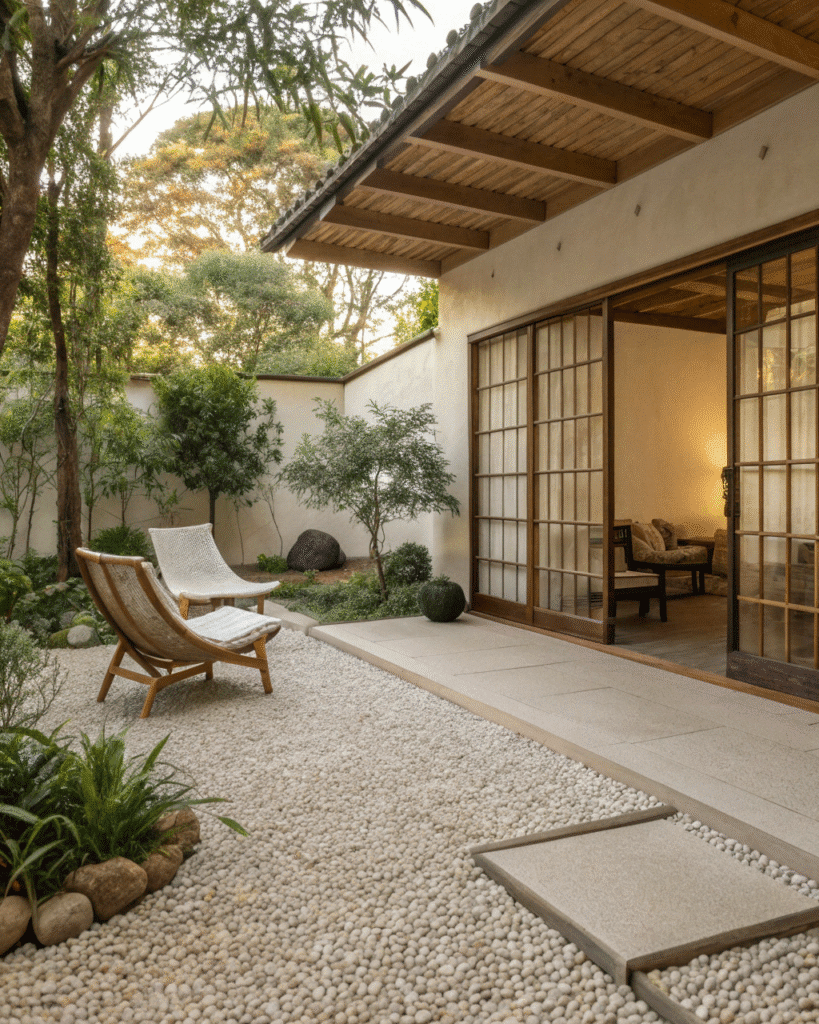
A gravel base adds texture and enhances the zen-inspired vibe.
Pro Tip: Use light gray or white gravel to reflect sunlight and brighten the space.
6. Soft Lighting
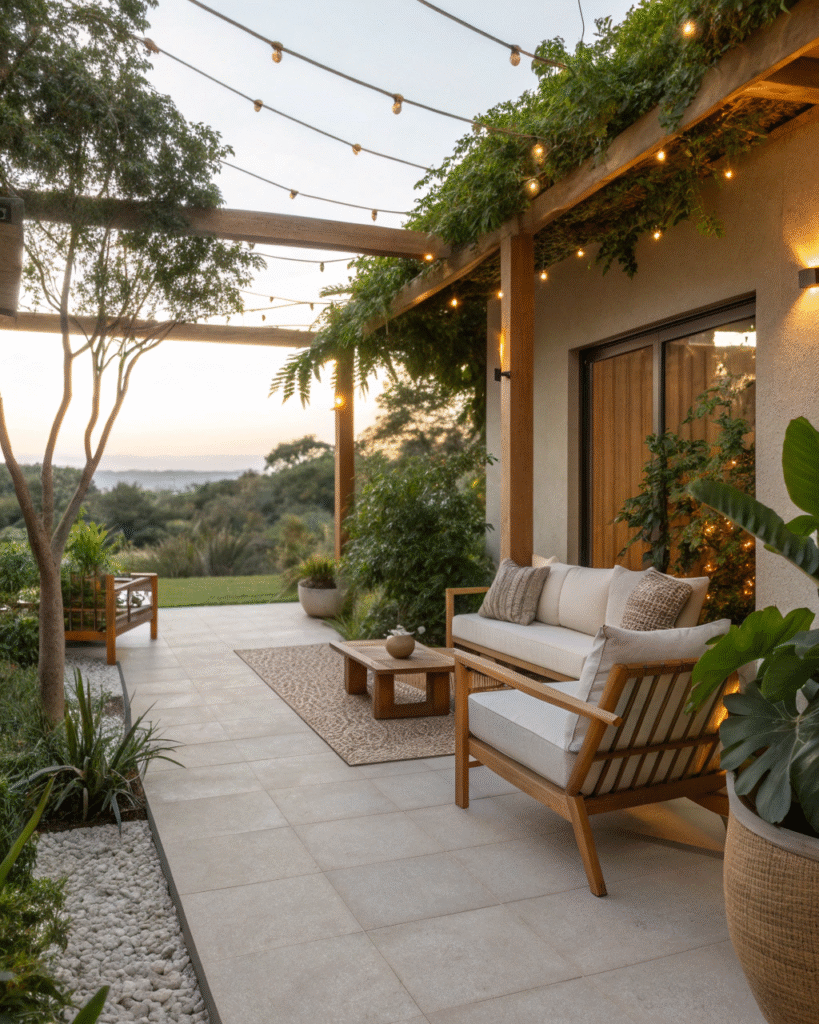
Warm, diffused light enhances the peaceful mood of a Japandi patio.
Pro Tip: Choose lanterns or hidden LED strips to maintain a soft and soothing glow.
7. Floor Cushions and Low Tables
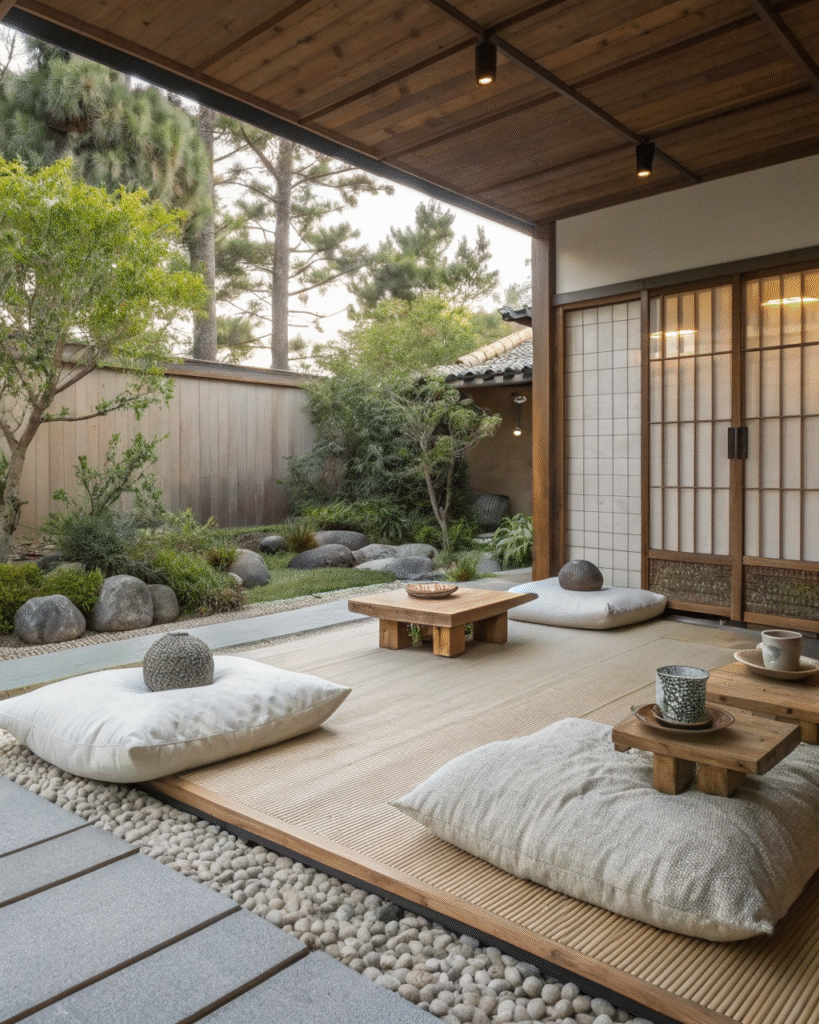
Low seating adds comfort and a grounded feeling to your patio.
Pro Tip: Combine neutral floor cushions with a wooden table for relaxed gatherings.
8. Minimal Decor
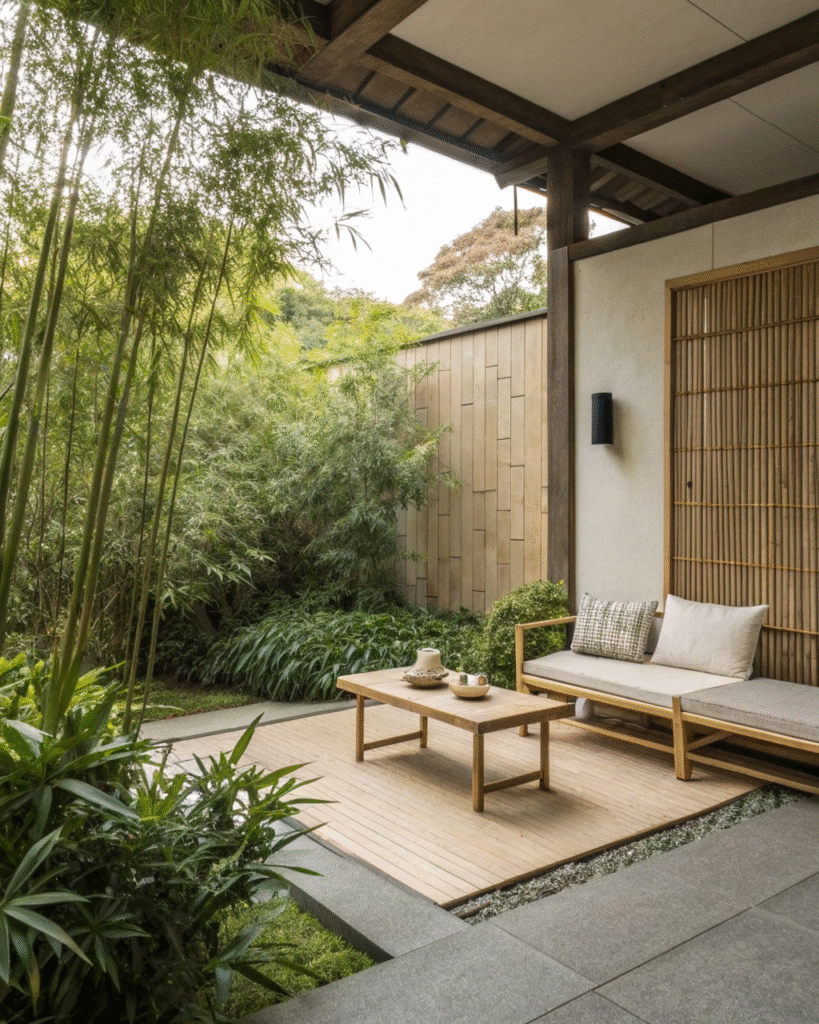
Less is more when it comes to Japandi design.
Pro Tip: Choose a few meaningful accents like ceramic bowls or handwoven mats instead of clutter.
9. Stone Accents
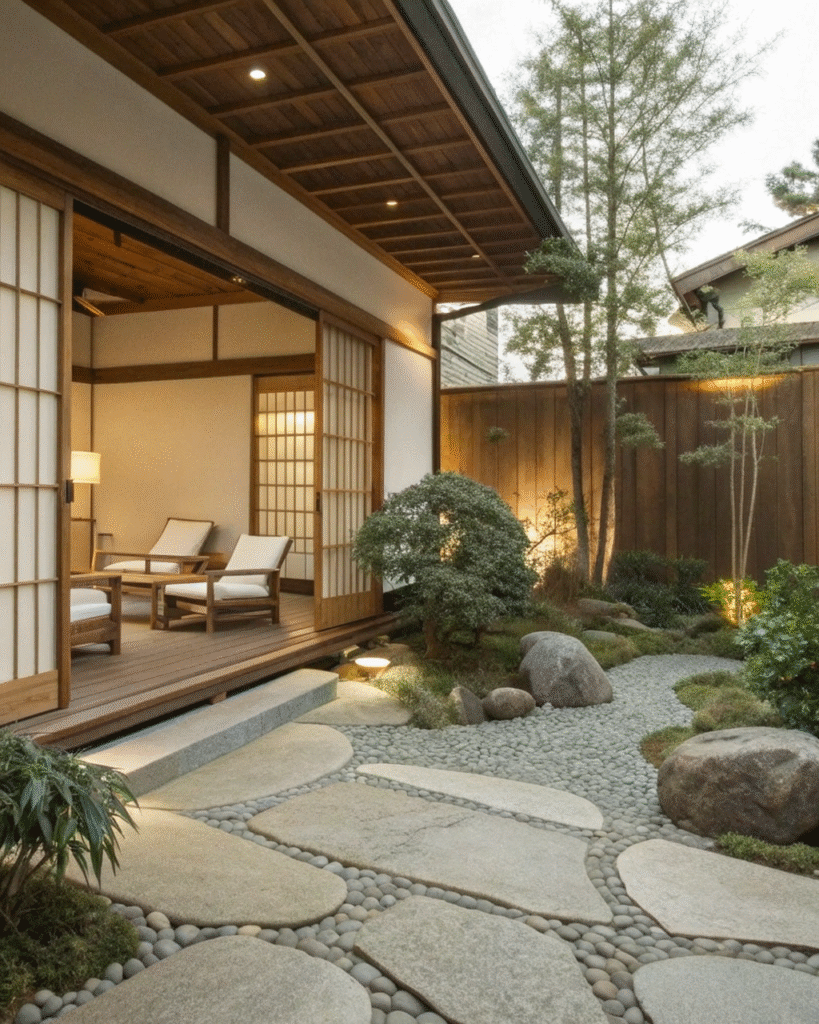
Natural stone adds a sense of permanence and calm energy.
Pro Tip: Use small boulders or stepping stones to define pathways and create flow.
10. Bamboo Elements
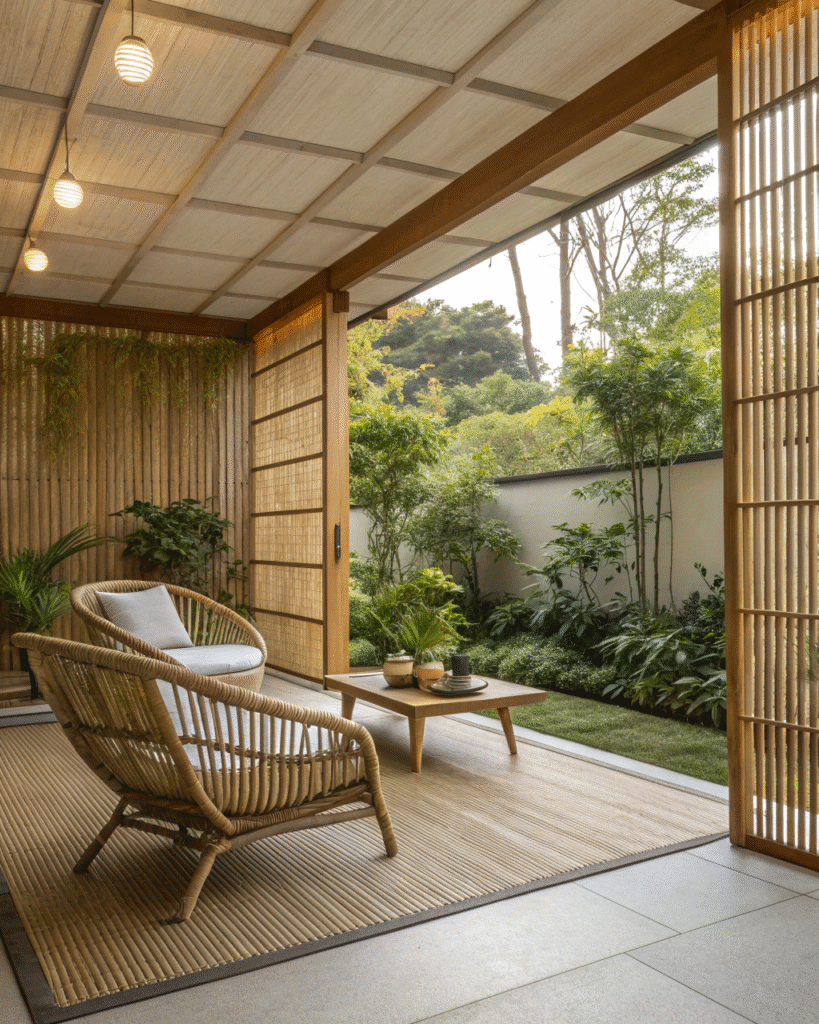
Bamboo screens, furniture, or decor bring texture and lightness.
Pro Tip: Pair bamboo with linen fabrics and neutral tones for balance and warmth.
11. Water Feature
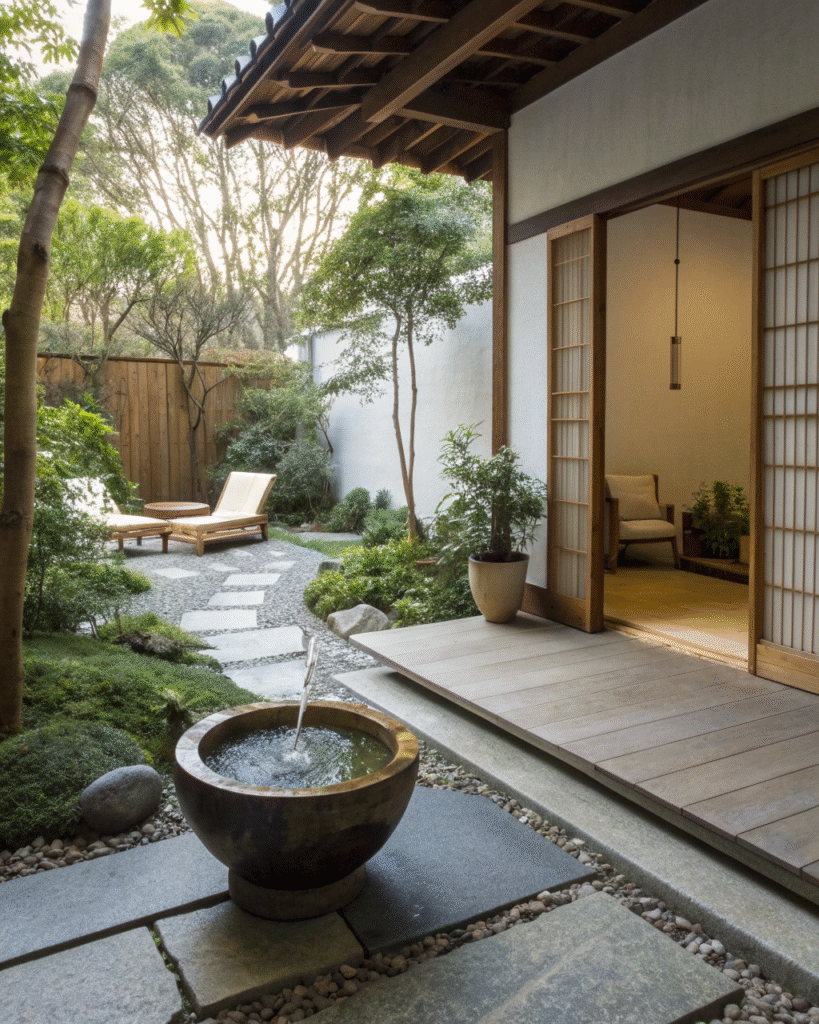
A small water bowl or fountain introduces a tranquil sound to the space.
Pro Tip: Keep the design minimal with clean lines and smooth stone finishes.
12. Zen-Inspired Planters
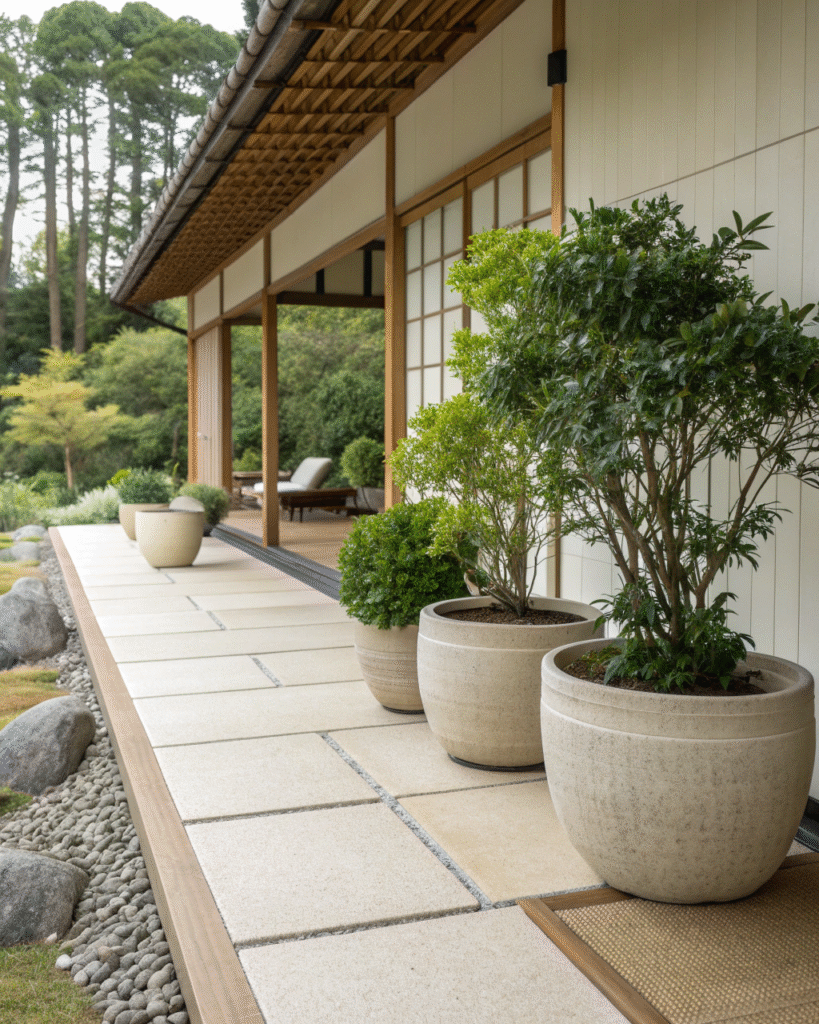
Simple clay or ceramic planters align perfectly with Japandi principles.
Pro Tip: Choose matte finishes and earthy colors that blend seamlessly into your setting.
13. Soft Outdoor Fabrics
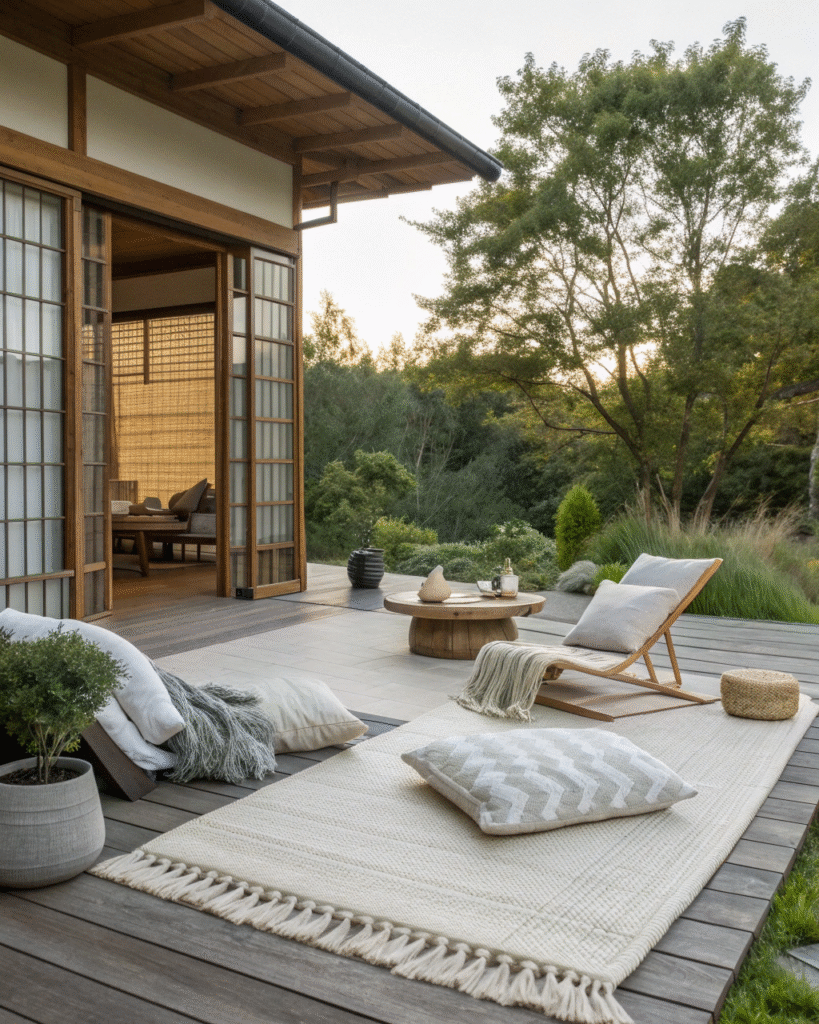
Incorporate cozy throws, cushions, or rugs for comfort without excess.
Pro Tip: Stick to breathable, natural fabrics in muted tones for harmony and texture.
Final Thoughts
A Japandi patio is not a style you finish and walk away from. It is an ongoing commitment to choosing less, choosing better, and trusting that the space will do more when it contains less.
Start with the color palette, edit ruthlessly, and add natural materials one piece at a time. Resist the urge to fill every empty corner. The space will tell you when it is right and when it does, the calm it offers will be exactly what you came outside to find.
Frequently Asked Questions
What is the difference between Japandi and minimalist patio style?
Minimalist design focuses primarily on reduction. Japandi does that too but adds warmth, natural texture, and genuine comfort that pure minimalism does not always achieve. A Japandi patio feels calm and curated but also inviting rather than cold or austere.
What furniture works best for a Japandi patio?
Look for pieces in natural teak, acacia, bamboo, or rattan with clean lines and no ornamental detailing. Low-profile furniture suits this aesthetic particularly well. Avoid metal frames in bright finishes, highly polished surfaces, or anything with decorative carving or pattern work.
What plants suit a Japandi patio?
Japanese maple, ornamental bamboo, bonsai, moss, ornamental grasses, snake plants, and simple evergreen topiary all work beautifully. The key is choosing plants with architectural form and restraint rather than those that produce a lot of colorful flowers or bushy, unstructured growth.
Can a small patio work in Japandi style?
Absolutely. A small patio is in many ways ideal for this aesthetic because restraint and negative space are easier to achieve and maintain in a compact space. One or two furniture pieces, one or two plants placed with care, and clear surfaces are all you need.
How do I keep a Japandi patio looking uncluttered over time?
Remove something every time you add something. Before any new item comes onto your Japandi patio, decide what it replaces. This one practice prevents the gradual accumulation of objects that eventually turns even the most carefully designed outdoor space into a cluttered one.