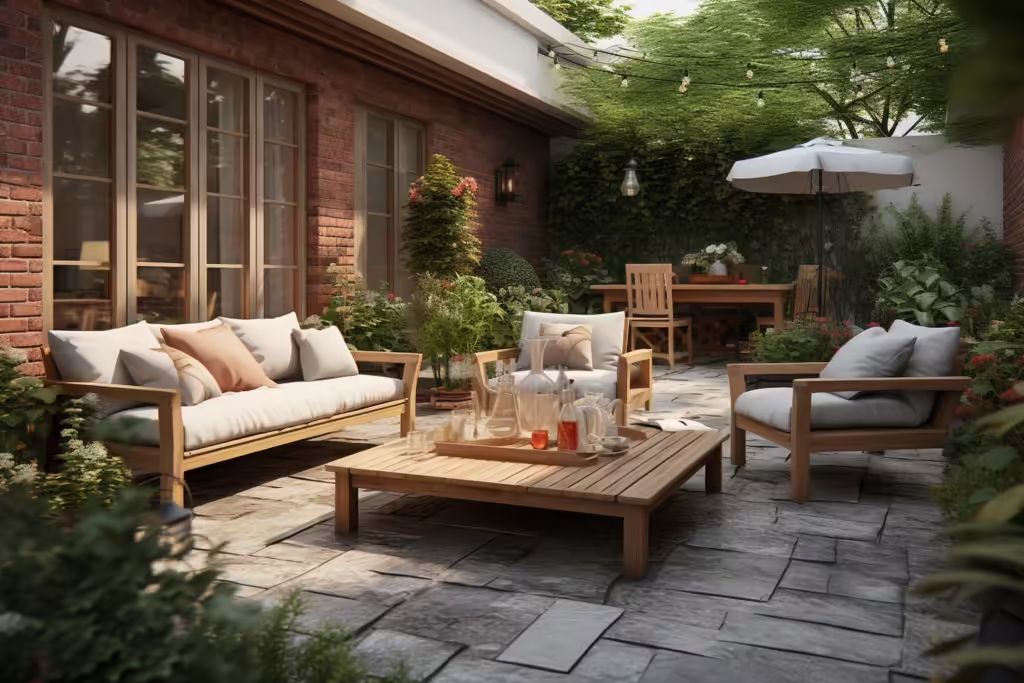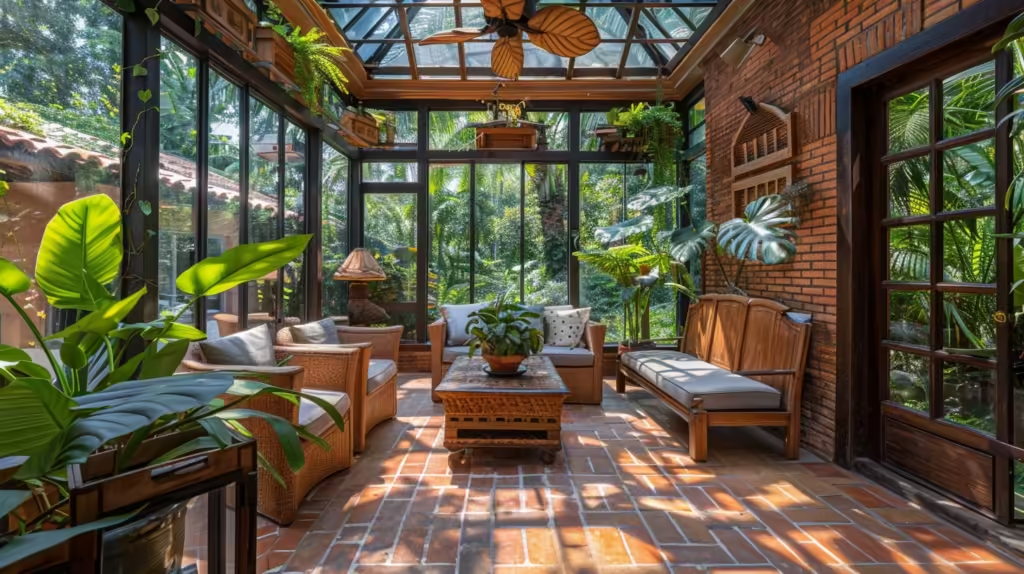
12+ Patio String Light Ideas for a Cozy Glow
Few things change the feeling of an outdoor space as quickly and completely as string lights. You can spend thousands of dollars on furniture, landscaping, and decor and the patio will still feel like an outdoor area. But hang a strand of warm glowing bulbs overhead on a summer evening and something shifts immediately. It stops being a patio and starts being a place.
String lights are one of those rare upgrades that work on every budget, every patio size, and every design style. A tiny apartment balcony with a single strand of bistro lights feels cozy and intentional. A sprawling backyard with zigzagging canopy lights overhead feels like an outdoor restaurant you never have to leave. The principle is the same regardless of scale: warm light overhead transforms how a space feels after dark.
Why String Lights Work Better Than Almost Any Other Outdoor Lighting
Most outdoor lighting comes from below or from the sides. Path lights illuminate the ground. Wall sconces light the edges. Tabletop lanterns cast a small pool of warmth at surface level. All of these are useful and none of them create what string lights create, which is the sense of being inside a glowing, enclosed space.
When light comes from overhead, even softly and at low wattage, it defines a ceiling for your outdoor room. It tells your brain that this space has boundaries, that it is a room rather than just an area of the garden. That psychological shift is what makes a string-lit patio feel so immediately comfortable and intimate compared to a patio lit only from below.
Love Chic Living Club?
Add us as one of your preferred Google sources and discover more home decor, DIY, outdoor, and lifestyle inspiration from us.
String lights also do something very flattering that most outdoor lighting does not. The warm, diffused glow of an Edison bulb at a comfortable height above the table produces the most flattering light possible for faces, food, and conversation. It is not coincidental that the best outdoor restaurants and cafes in the world almost universally use string lights or similar warm overhead lighting. They understand that light quality shapes the entire experience of being in a space.
What to Look For When Buying Outdoor String Lights
The market for outdoor string lights is enormous and the quality range is equally enormous. Here is what separates a string light setup that looks great and lasts for years from one that fades, sags, or stops working after a single season.
Wire Gauge and Durability
The wire gauge of a string light determines how durable and weather-resistant it is. Commercial-grade string lights typically use 18-gauge wire, which is significantly thicker and more durable than the lightweight wire used in decorative or party string lights. Thicker wire maintains its shape better over long spans, handles temperature changes without becoming brittle, and resists damage from UV exposure much more effectively. If you are planning a permanent or semi-permanent installation, commercial-grade wire is worth the extra cost.
Bulb Type
For outdoor string lights, warm white LED bulbs in the 2200K to 2700K color temperature range produce the golden incandescent-style glow that makes patios look warm and inviting rather than clinical. Look specifically for bulbs labeled as warm white rather than just white or daylight, as these produce a much cooler and less flattering blue-toned light outdoors. Shatterproof plastic LED bulbs are significantly more practical than glass for outdoor use because they survive drops, wind, and impact without breaking.
You May Also Love
IP Rating
The IP rating of an outdoor string light tells you how weather-resistant it is. IP44 means the light is protected against splashing water from any direction and is suitable for covered patios and porches. IP65 means the light is protected against direct water jets and is suitable for fully exposed outdoor locations. For a covered patio, IP44 is sufficient. For a fully exposed backyard setup, IP65 is the safer choice.
Don't miss: 13+ Patio Remodel Ideas with Greenery Integration →
Connectable vs Non-Connectable
Connectable string lights have a plug socket at the end as well as a plug at the beginning, which means you can link multiple strands together end-to-end without needing multiple extension cords running back to the outlet. For larger patios that require more than one strand of lights, connectable sets are significantly more practical and produce a much cleaner result with fewer visible cords.
Keep Exploring
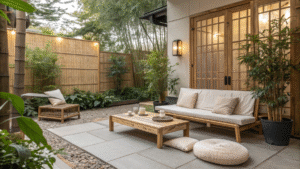
How to Hang String Lights Without Drilling
One of the most common questions about patio string lights is how to hang them without drilling holes into walls, fences, or house siding. The good news is that there are several reliable no-drill methods that work very well.
Adhesive outdoor hooks are the simplest solution for attaching string lights to walls or siding. Look specifically for hooks rated for outdoor use with an adhesive designed for exterior surfaces. Standard indoor adhesive hooks will not hold in outdoor humidity and temperature swings. Outdoor-rated adhesive hooks can hold several pounds of weight, which is more than sufficient for a lightweight string light strand.
Shepherd’s hook garden stakes driven into the soil or anchored in large planters filled with gravel or concrete are one of the most practical solutions for a freestanding string light setup in an open backyard. They require no drilling, they are repositionable, and they give you mounting points at any location in your garden regardless of where your walls and posts are.
Screw-in cup hooks installed into wooden fence posts, pergola beams, or deck railings are quick, inexpensive, and very secure. These require a screwdriver rather than a drill in most cases as the cup hook can be screwed in by hand into softwood. For hardwood posts, a small pilot hole makes the job easier.
Tension wire systems strung between two posts or anchor points and then clipped to with string light hooks give you a clean, professional-looking installation with no drilling into your house walls. The tension wire does all the structural work and the string lights simply hang from it.
How Far Apart Should String Light Poles Be?
If you are using poles or posts as mounting points for your string lights rather than hanging them from a structure, the spacing between poles significantly affects how the lights look and how much they sag.
For a classic bistro-style catenary drape where the string hangs in a gentle curve between two mounting points, the ideal span between poles is eight to twelve feet. Shorter than eight feet and the curve is too shallow to look intentional. Longer than twelve feet and most string lights will sag too heavily in the middle, especially in warm weather.
For a zigzag or grid pattern across a larger space, spacing your poles or hooks ten to twelve feet apart in a grid gives you the most balanced overhead coverage with the least amount of visible hardware.
Always install your mounting points slightly higher than you think you need. String lights look best when the lowest point of the hanging curve is still at least eight feet from the ground. Installing hooks or poles at ten to eleven feet gives you enough height to accommodate the sag while keeping the lights well above head height.
String Light Bulb Shapes: Which One Is Right for Your Patio?
The shape of your string light bulb makes a significant difference to the overall look and feel of your patio lighting setup. Here are the most popular options and what each one suits best.
Globe bulbs in the G40 or G50 size are the most popular choice for outdoor string lights. They produce an even, omnidirectional glow and look beautiful whether the lights are on or off. Globe bulbs suit bistro-style setups, pergola lighting, and any space where you want the bulbs themselves to be a visual feature.
Edison or vintage-style tubular bulbs with a visible filament inside have a warmer, more amber glow than standard globe bulbs and a distinctly nostalgic quality that suits farmhouse, rustic, and boho patio aesthetics particularly well. The visible filament adds an extra layer of visual interest when the lights are on.
Mini string lights with very small individual bulbs are the right choice when you want the overall glow rather than visible individual bulbs to be the visual feature. They are ideal for weaving through plants, wrapping around railings, or creating a fairy light canopy effect where the points of light blend together into a diffused glowing surface.
Edison filament globe bulbs that combine the round globe shape with a visible filament inside are arguably the most versatile and universally flattering option. They look great in modern, traditional, coastal, and farmhouse settings and produce the warmest and most incandescent-like glow of any LED option available.
These 12 ideas cover every setup from a no-drill balcony to a full backyard canopy, so you can find the right string light approach for your specific space.
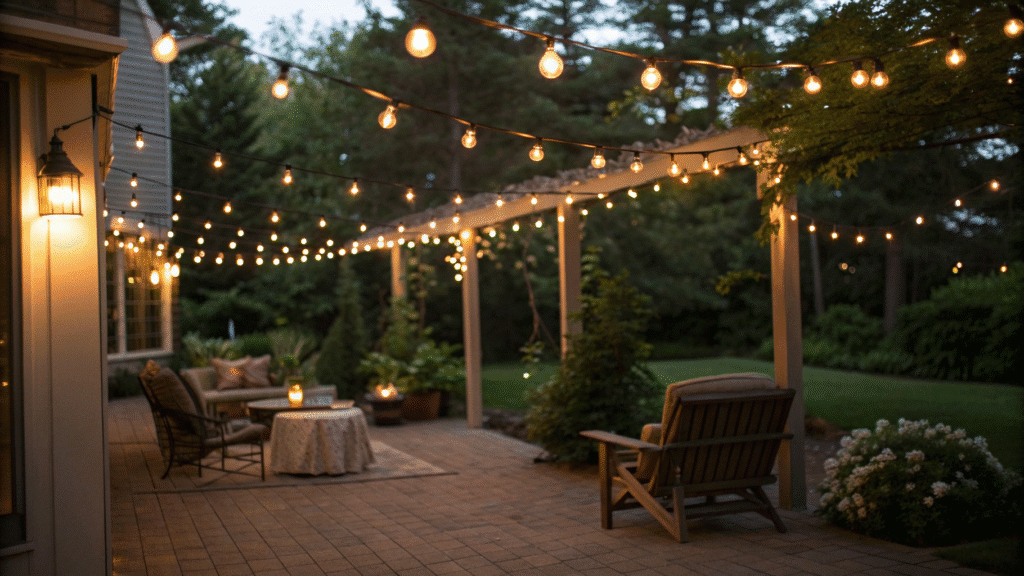
1. Overhead Canopy Lights
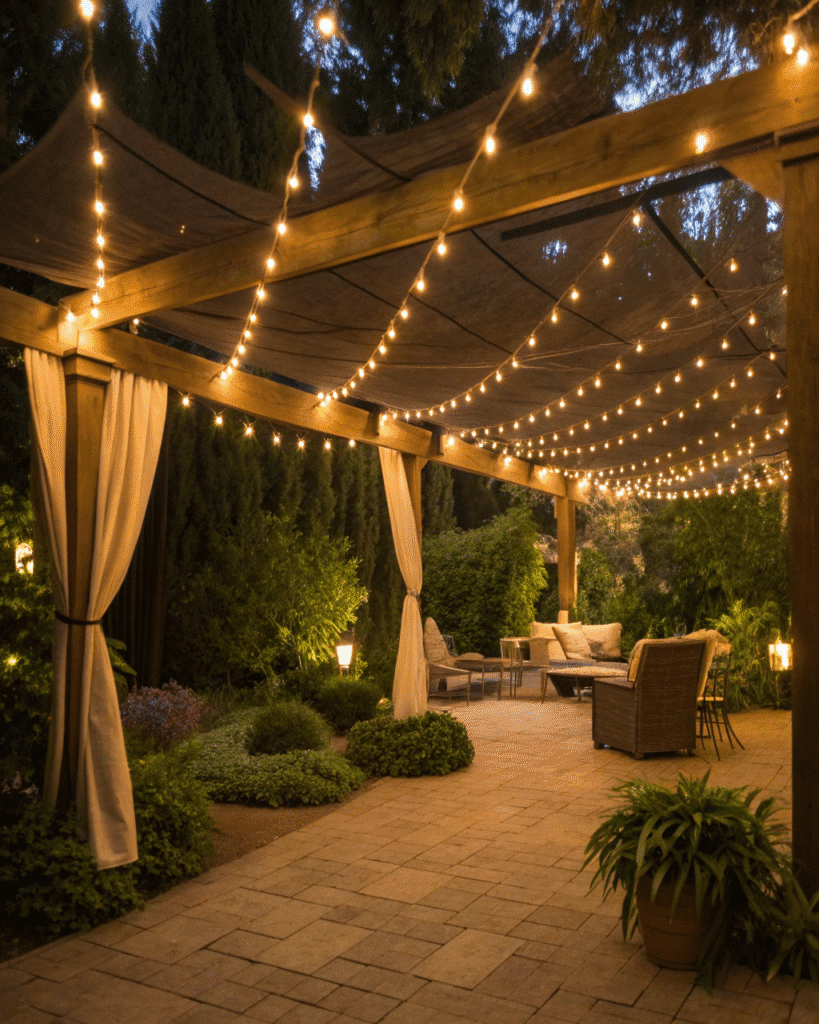
Create a magical ceiling effect by draping string lights across your patio.
Pro Tip: Hang them in rows or crisscross patterns for an evenly lit and dreamy look.
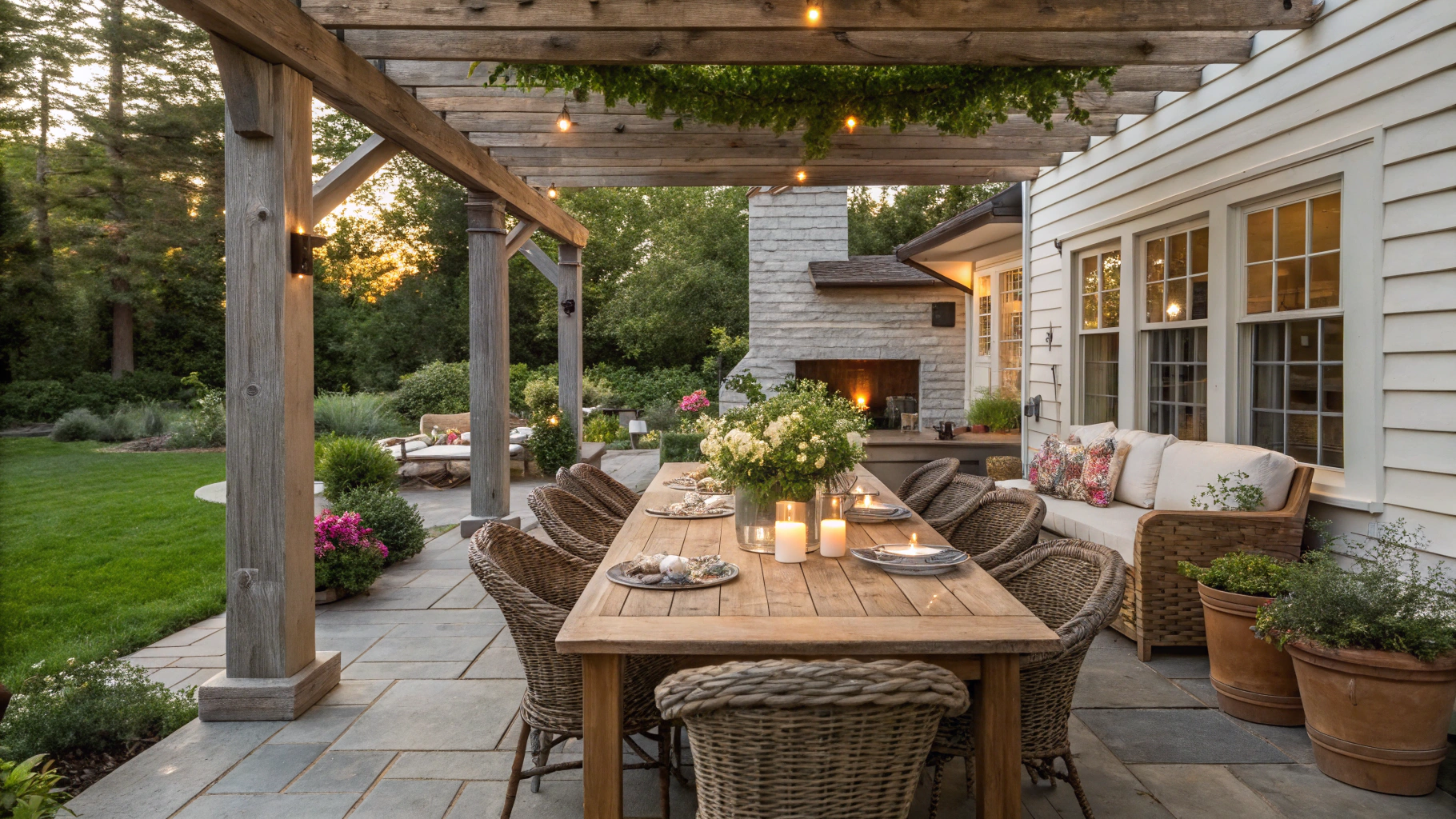
2. Pergola Lighting
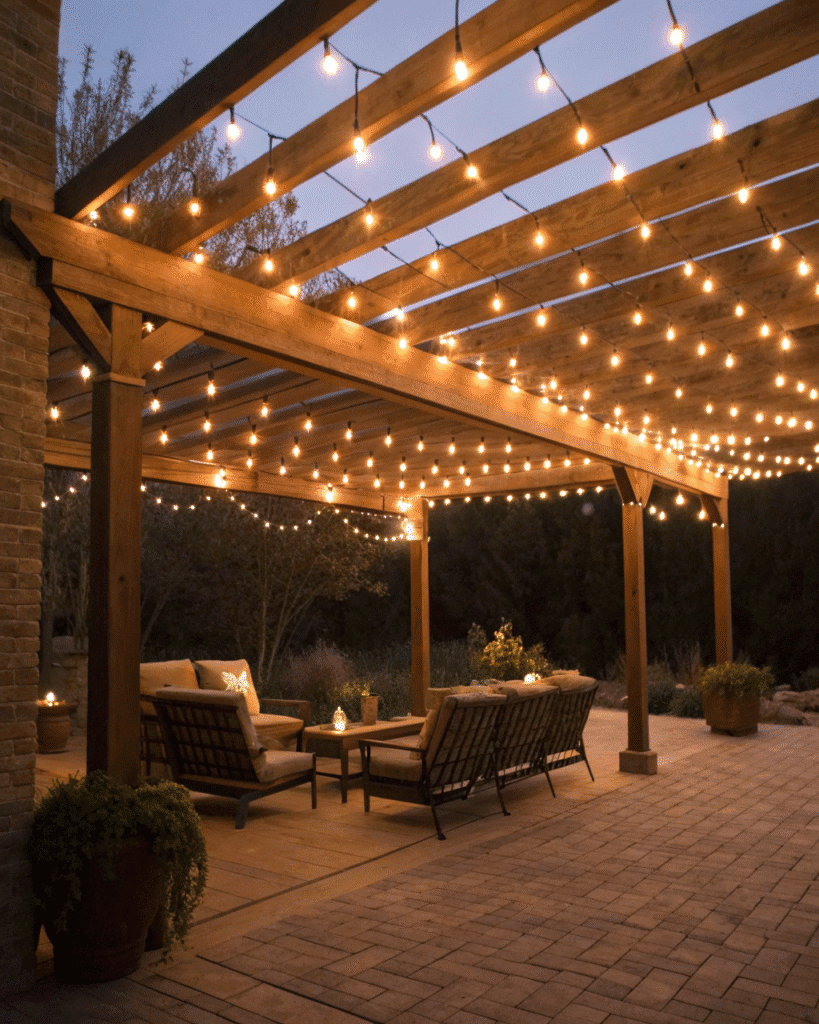
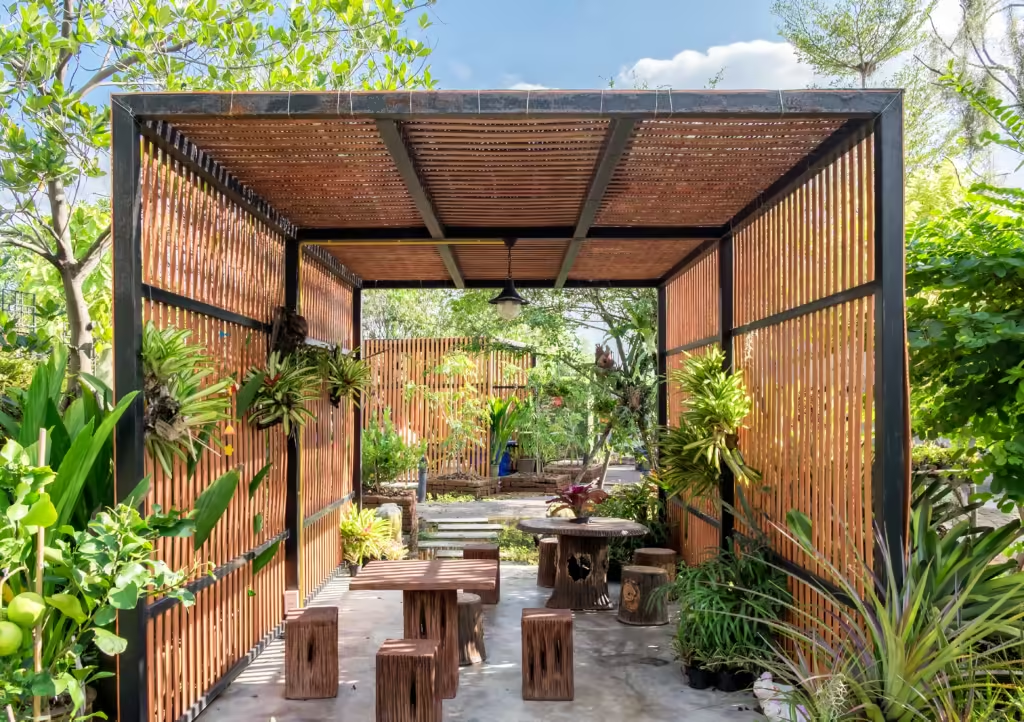
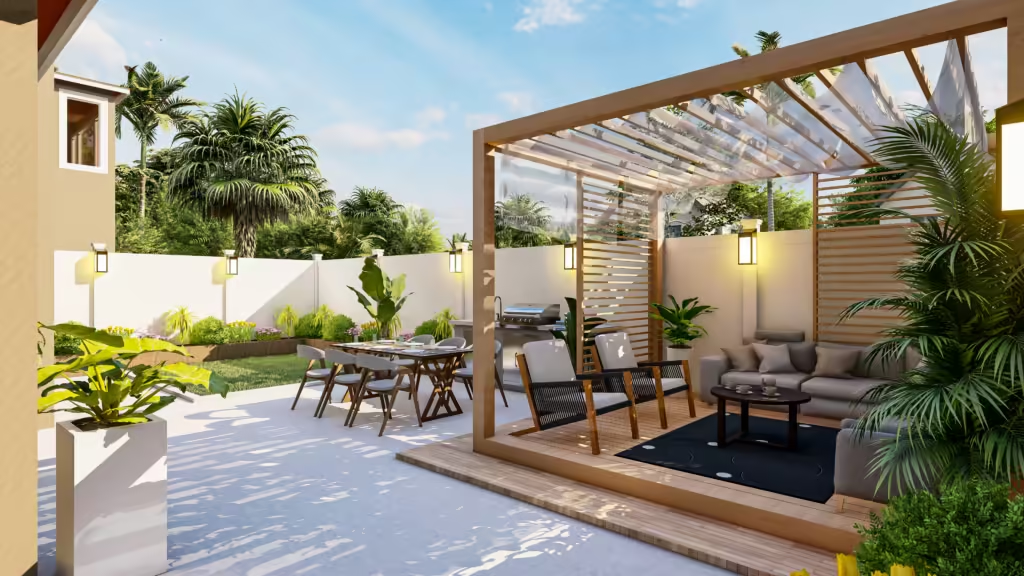
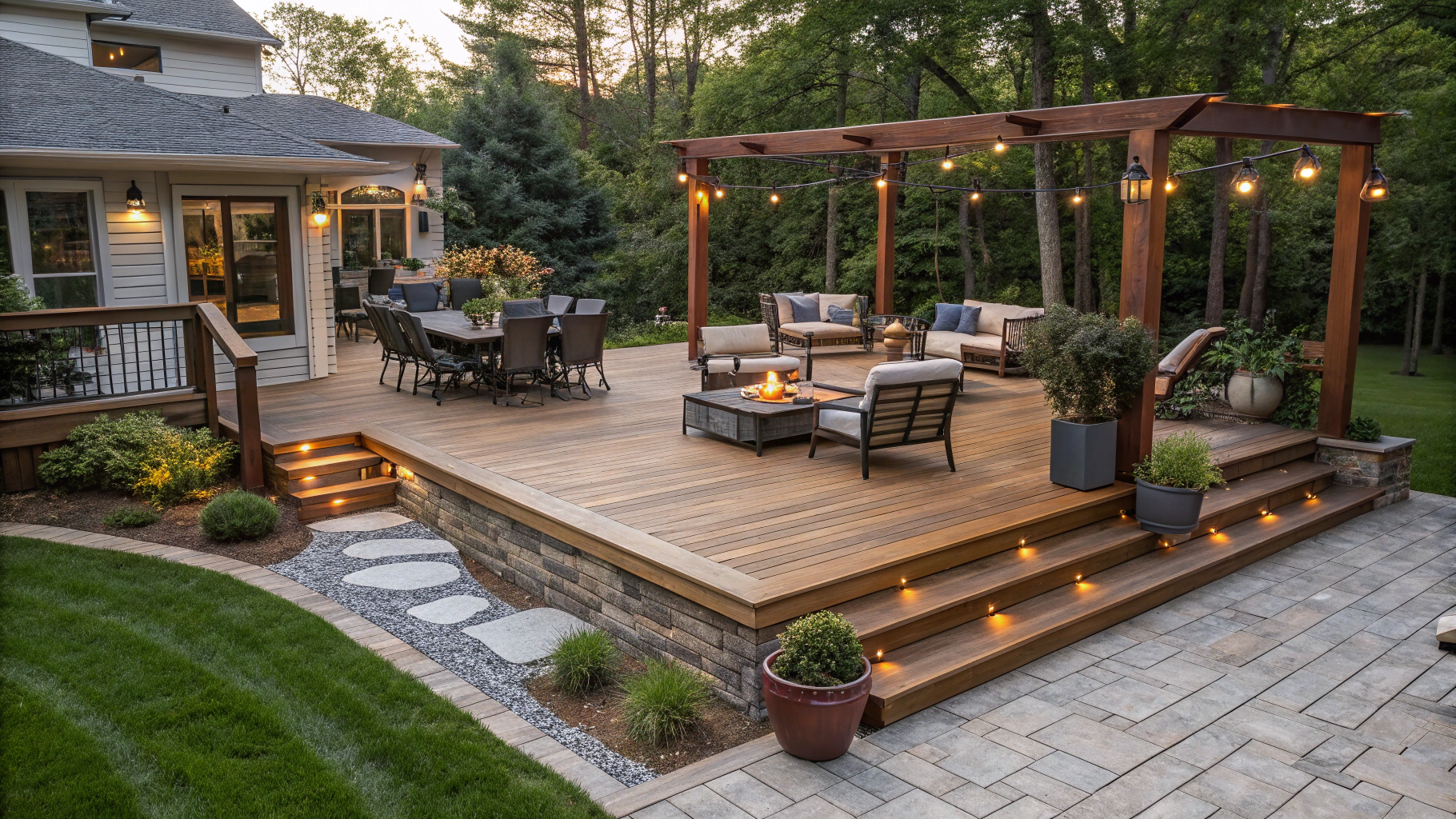
Wrap string lights around the beams of your pergola for a structured glow.
Pro Tip: Use warm white bulbs for a soft, inviting light that feels timeless.
3. Fence Line Glow
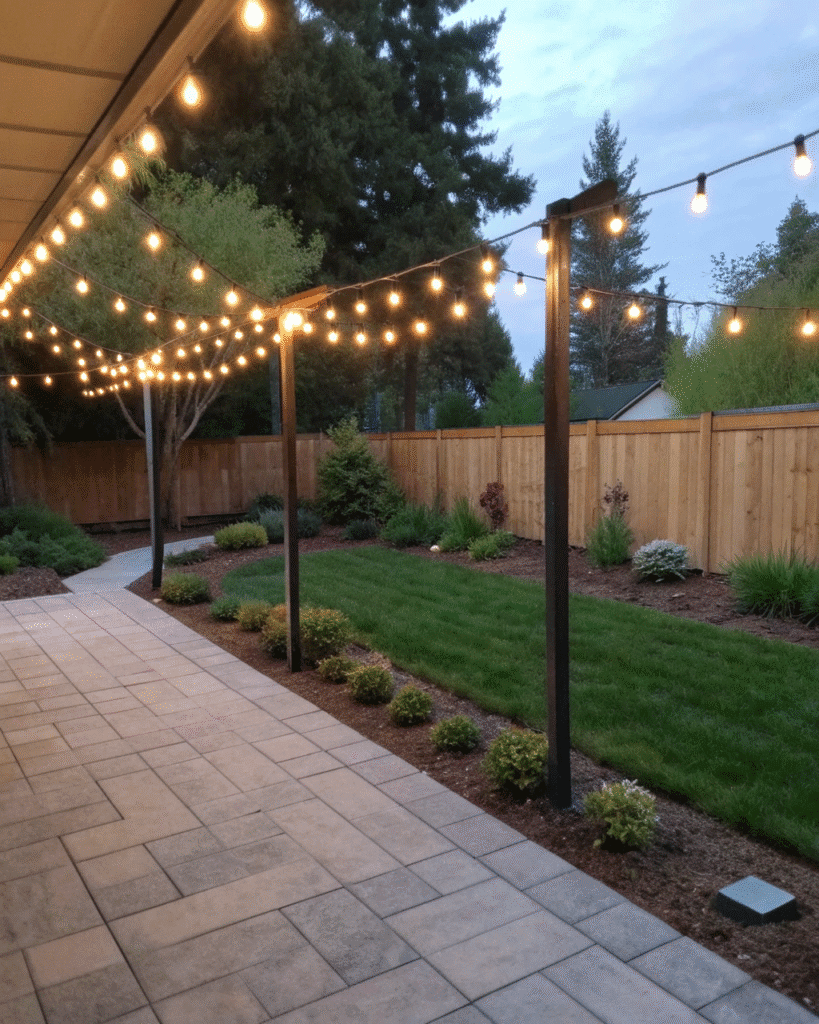
Attach lights along your fence to softly outline your patio space.
Pro Tip: Secure them with outdoor clips for a neat and clean finish.
4. Twinkling Tree Lights
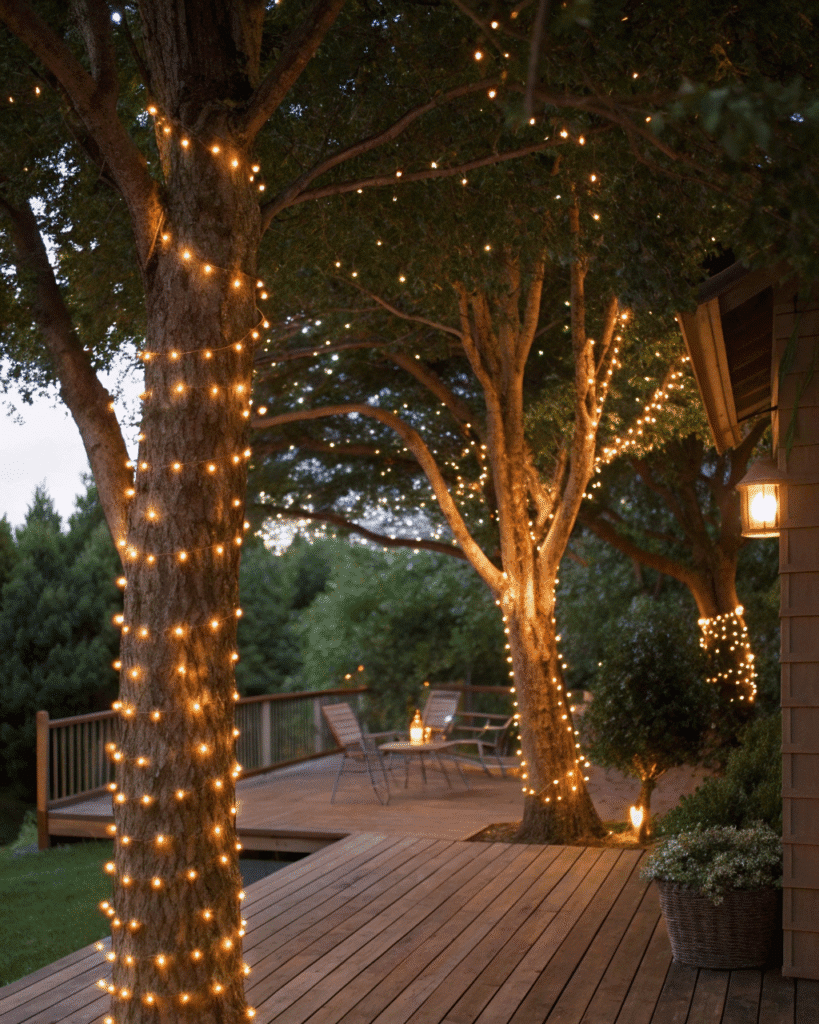
Wrap string lights around tree trunks or branches to create a natural sparkle.
Pro Tip: Use solar-powered lights to make installation easy and eco-friendly.
5. Bistro Style Hanging
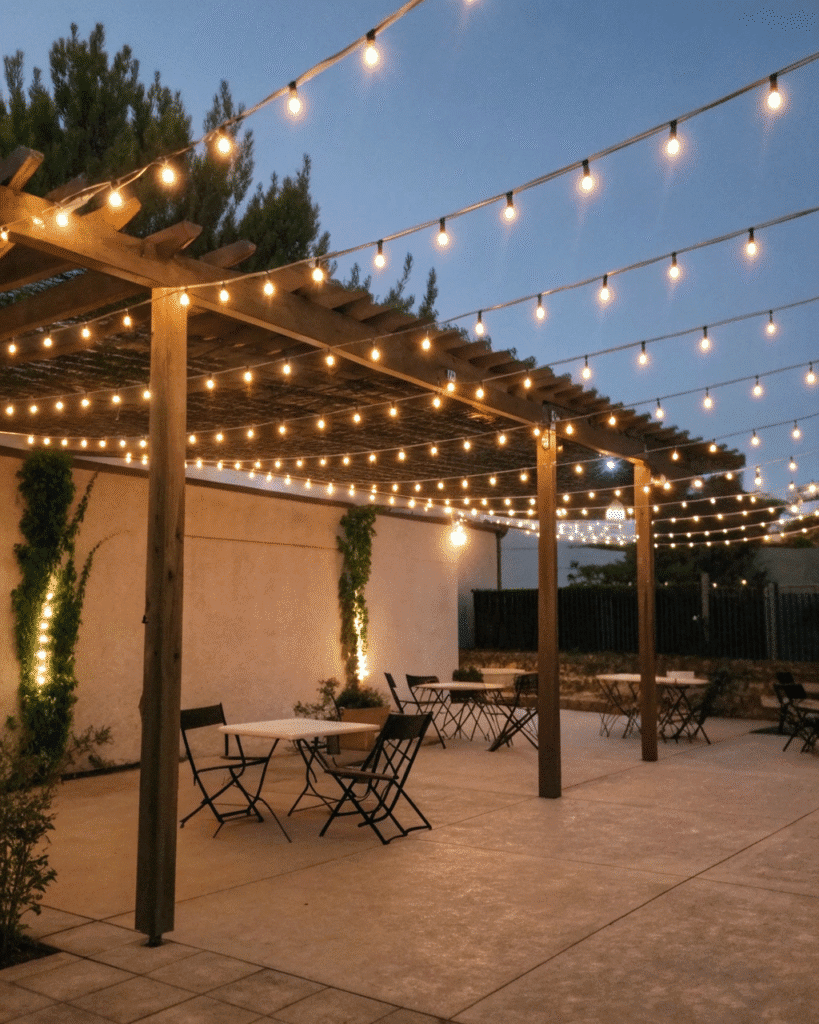
Drape lights from poles or walls for a casual café-inspired setup.
Pro Tip: Choose globe bulbs for a classic, restaurant-style patio atmosphere.
6. Curtain Light Wall
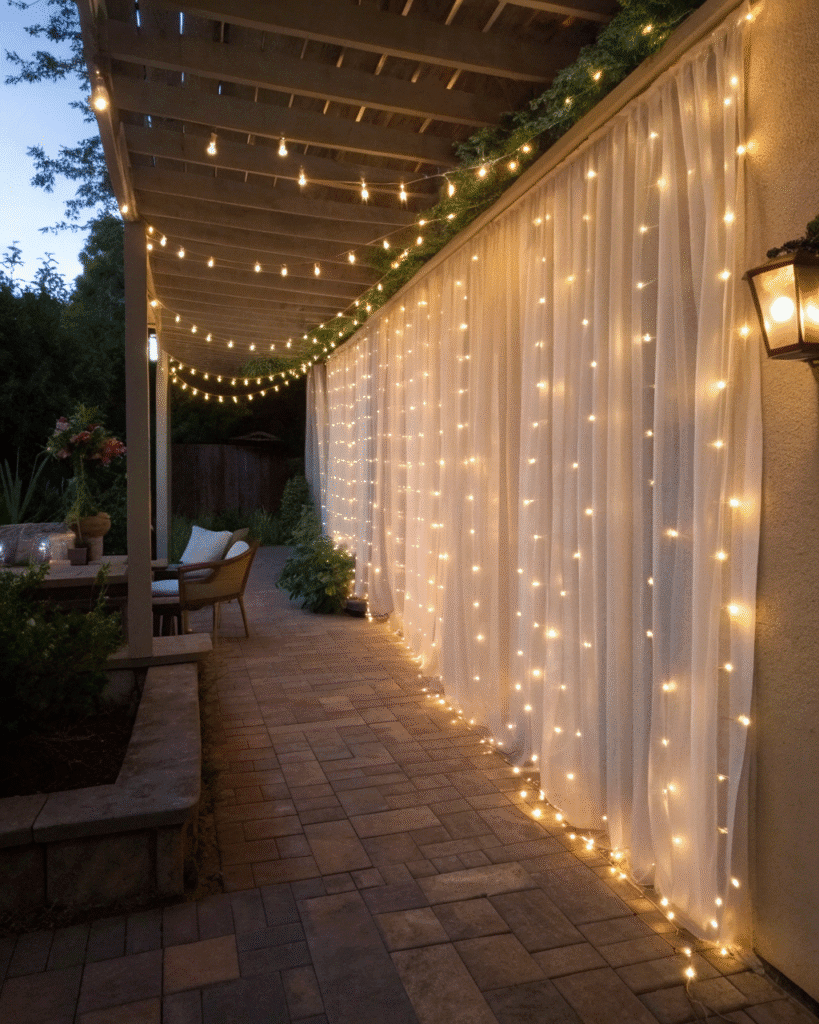
Hang string lights vertically to create a curtain of soft, glowing light.
Pro Tip: Use them behind furniture or plants to add subtle depth to the space.
7. Wrapped Railing Lights
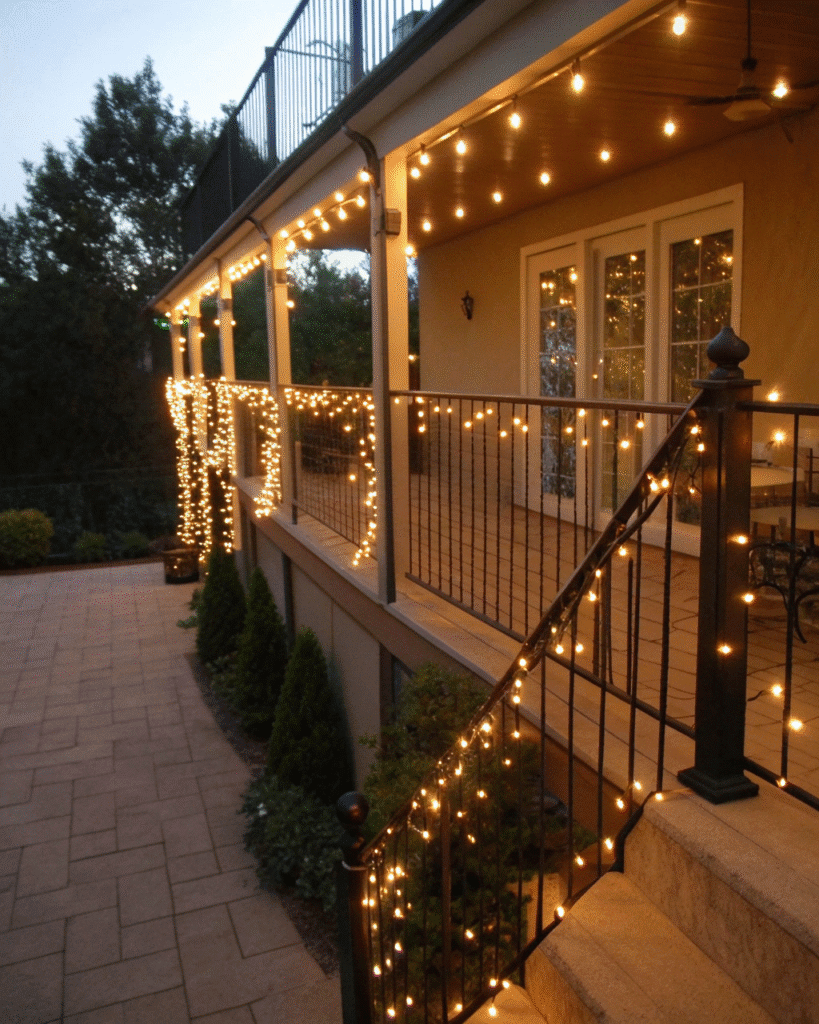
Wrap your patio railings with lights to define the area and add charm.
Pro Tip: Pair with greenery or garlands for an extra decorative touch.
8. Jar or Bottle Lights
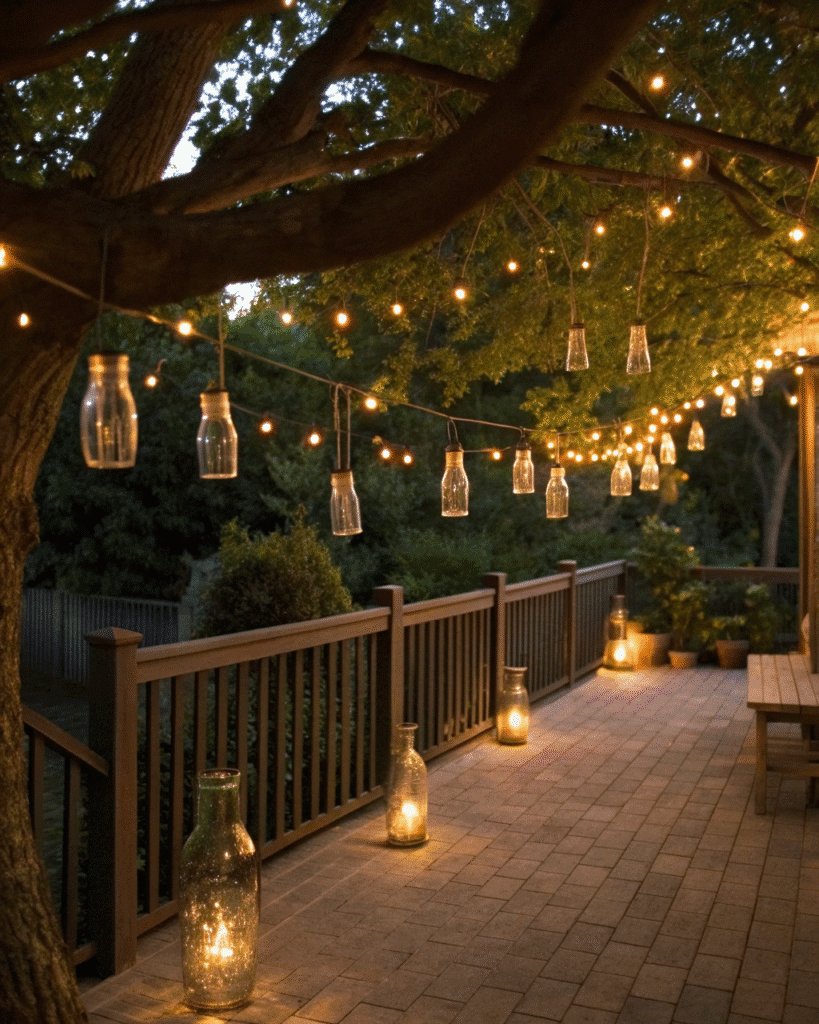
Place string lights inside glass jars or bottles for a rustic, handcrafted look.
Pro Tip: Use different bottle shapes to create variety and visual interest.
9. Umbrella Lighting
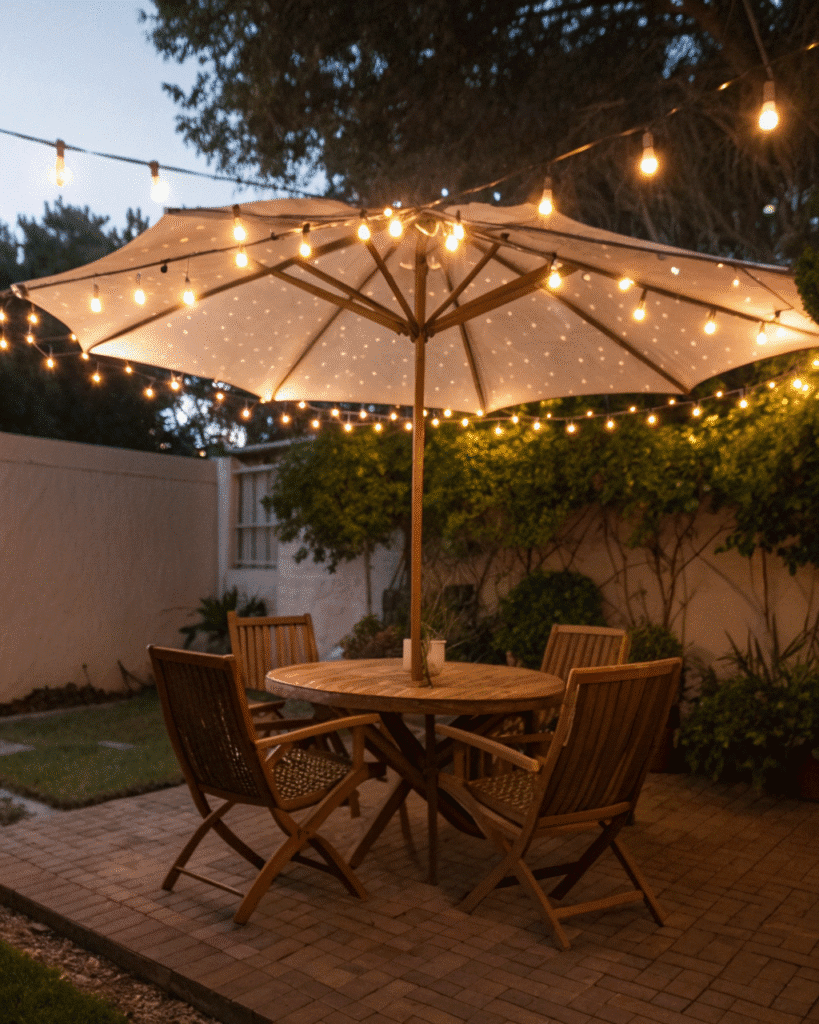
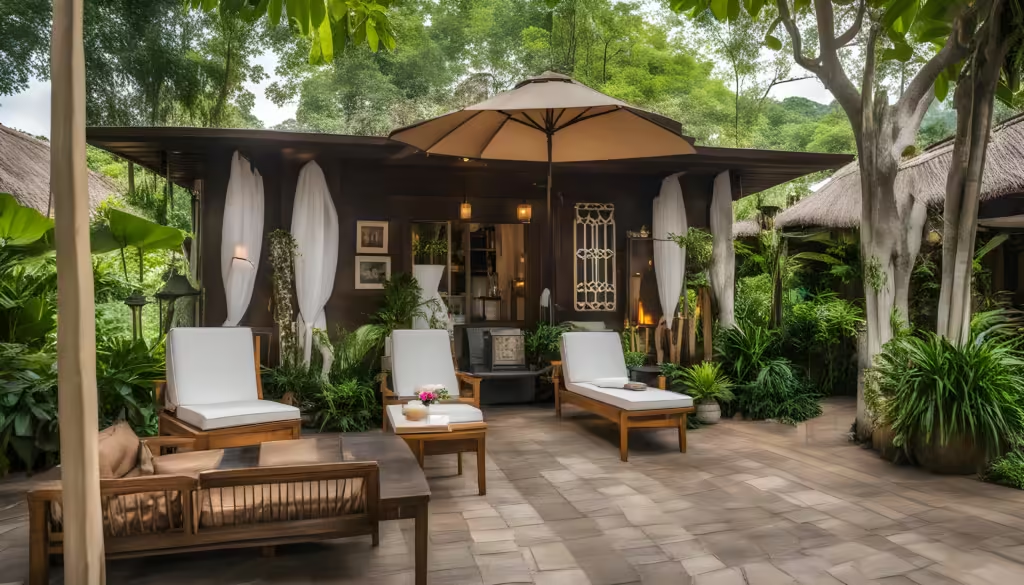
Weave string lights through your patio umbrella for an enchanting glow.
Pro Tip: Choose battery-operated options to keep cords hidden and organized.
10. Hanging Planter Lights
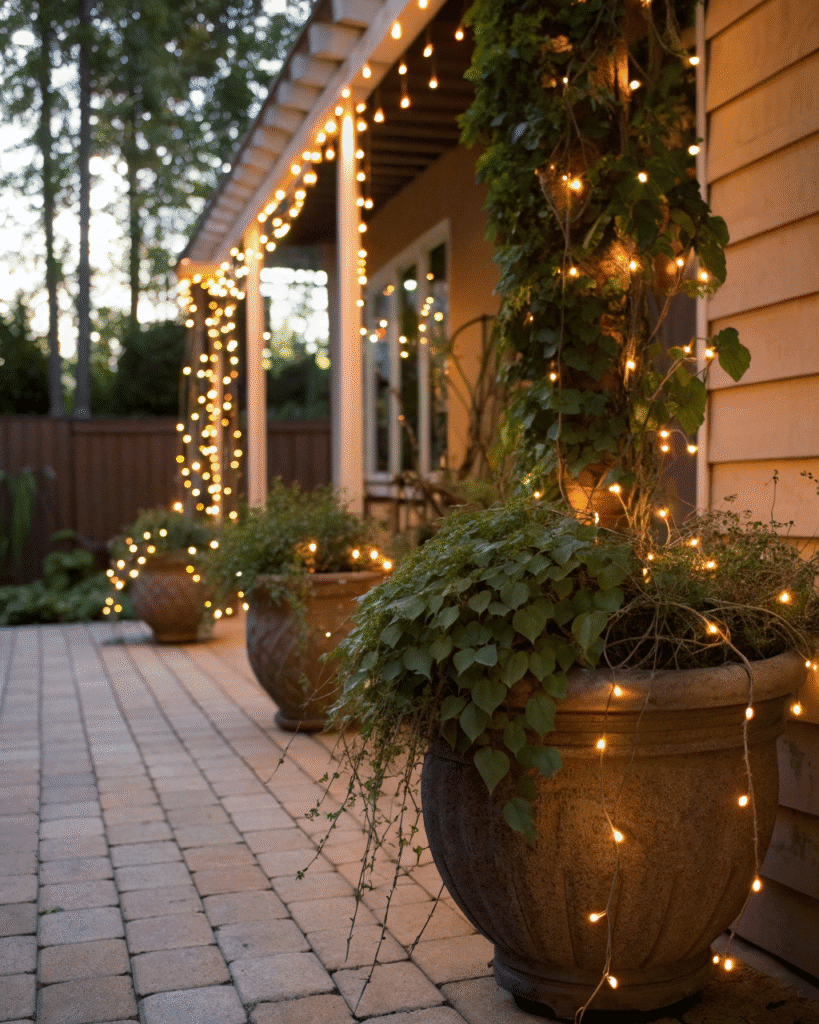
Wrap string lights around hanging planters for a warm, whimsical effect.
Pro Tip: Mix in small lanterns or fairy lights for extra texture and charm.
11. Deck Edge Lighting
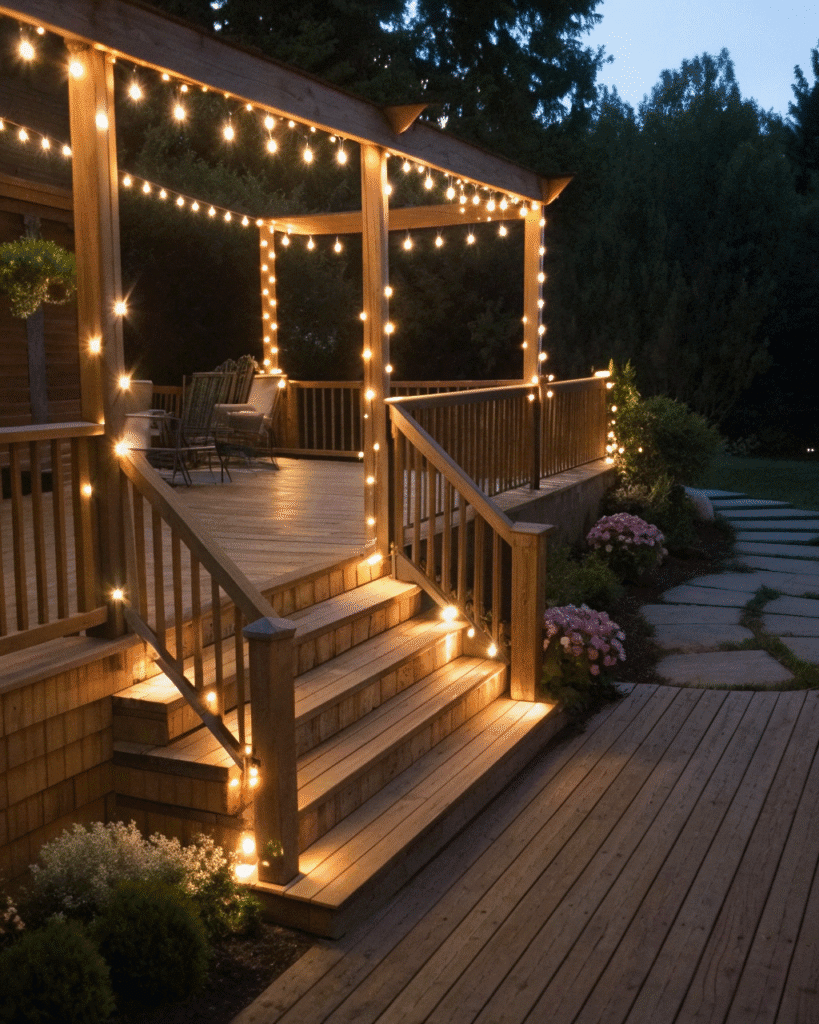
Line the edges of your deck or stairs with string lights for subtle illumination.
Pro Tip: Use waterproof LED lights to ensure safety and durability.
12. Wall-Mounted Zigzag
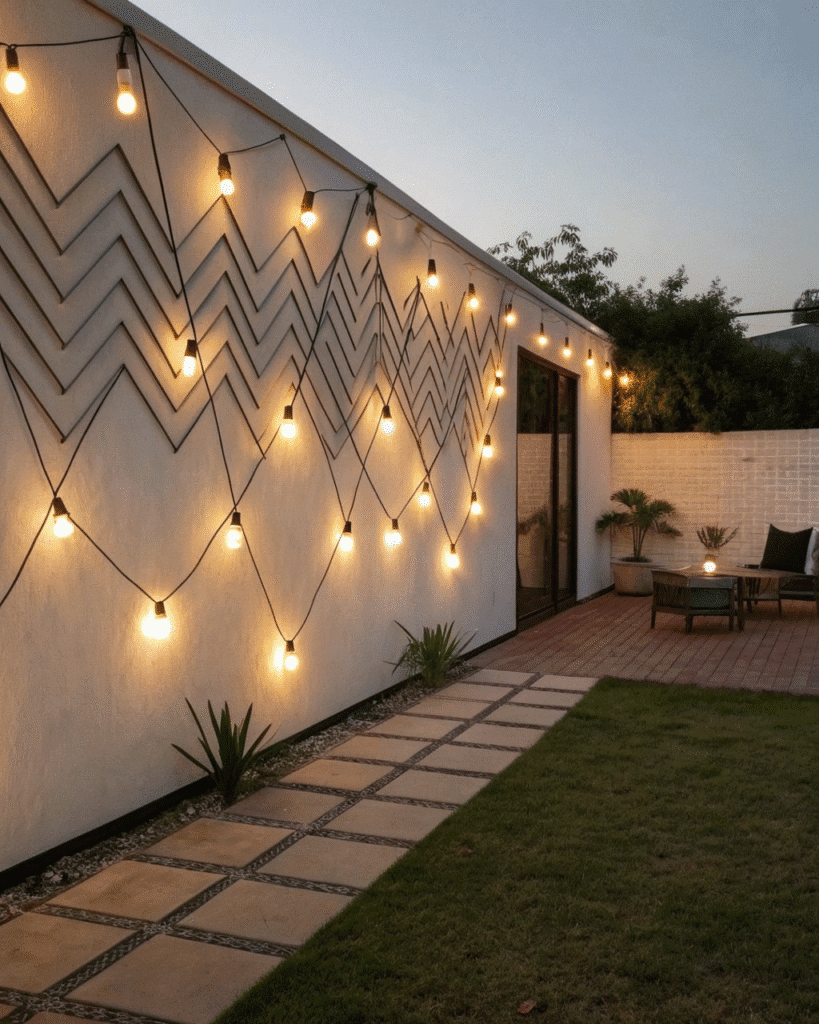
Hang lights in a zigzag design on a blank wall for a modern decorative twist.
Pro Tip: Space them evenly for a clean and intentional look that feels balanced.
Final Thoughts
String lights are one of those rare outdoor upgrades that deliver well beyond what their price tag suggests. A good quality outdoor string light setup costs a fraction of what you might spend on furniture or landscaping and yet it is often the single element that makes the biggest difference to how your patio actually feels to spend time in after dark.
Pick the setup from this list that fits your structure and your style, invest in quality wire and bulbs, and get the height right. Do those three things and your patio will have the warm, glowing, cozy after-dark atmosphere that makes people want to pull up a chair and stay long after dinner is done.
Frequently Asked Questions
How long do outdoor string lights last?
Quality LED outdoor string lights with commercial-grade wire typically last between 25,000 and 50,000 hours of use, which translates to many years of regular evening use. Cheaper decorative string lights with thinner wire and lower-quality bulbs may last only one to two seasons before bulbs begin failing or the wire starts to degrade.
Can string lights stay outside in winter?
LED string lights rated for outdoor wet locations can generally stay outside through winter in most US climates. In areas with very heavy snow or ice accumulation, it is worth removing lights from horizontal spans where snow load could stress the wire. Always bring battery-operated and solar string lights inside during freezing temperatures as cold significantly reduces battery performance.
How many string lights do I need for my patio?
For a zigzag or grid canopy over a standard ten by twelve foot patio, plan for approximately fifty to sixty feet of string light strand. For a simple bistro-style single drape between two posts twelve feet apart, a twenty to twenty-five foot strand gives you enough for the span plus some slack for the natural droop of the catenary curve. Always buy slightly more than your measurement suggests as it is much easier to have a small amount of extra strand than to be just short of covering your intended span.
Do solar string lights work as well as plug-in lights?
Modern solar string lights have improved significantly but they still generally produce less light output than comparable plug-in lights. They work best in locations that receive at least six hours of direct sun daily and for applications where ambient atmosphere is the goal rather than functional task lighting. For a primary patio lighting setup where you need reliable consistent output every evening, plug-in lights are still the more dependable choice.
What is the best way to store string lights when not in use?
Wrap string lights around a piece of cardboard, a pool noodle, or a purpose-made cord reel rather than bundling them loosely. Loose bundling causes tangling and kinking that can damage the wire over time. Store in a cool dry location away from direct sunlight, which can degrade the wire insulation even in storage.