14+ Patio Rug Ideas to Complete the Look
A patio without a rug is a space that is almost there. The furniture is in place, the lighting is sorted, the plants are looking good, and yet something still feels unfinished. Nine times out of ten, the missing piece is a rug. The right outdoor rug pulls a seating area together, anchors the furniture arrangement, adds warmth and color underfoot, and signals to anyone who steps onto your patio that this space was put together with genuine intention.
Outdoor rugs have come a very long way from the thin, faded, plasticky mats that used to be the only option available. Today you can find outdoor rugs in every style imaginable, from bold Moroccan prints to simple natural jute weaves, in materials that resist UV fading, mildew, and rain with minimal maintenance. There is genuinely an outdoor rug for every patio style, every climate, and every budget.
Why Every Patio Needs an Outdoor Rug
The case for an outdoor rug goes well beyond aesthetics, although the aesthetic argument alone is compelling enough. Here is what a well-chosen patio rug actually does for your space.
It defines the seating area. On a large patio or open deck, a rug placed beneath the furniture arrangement creates a visual room within the larger space. It tells every guest exactly where the seating zone begins and ends and gives the arrangement a sense of cohesion that floating furniture on bare flooring simply does not have.
Love Chic Living Club?
Add us as one of your preferred Google sources and discover more home decor, DIY, outdoor, and lifestyle inspiration from us.
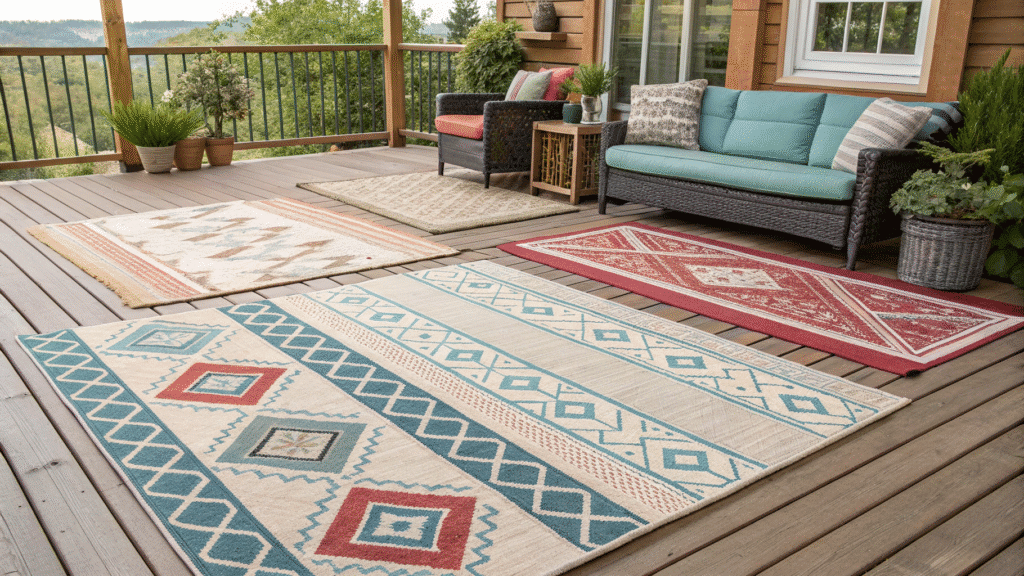
It adds warmth underfoot. Concrete, stone, and composite decking can all feel cold and hard underfoot, especially in the morning or the evening when temperatures drop. A rug with even a modest amount of thickness transforms the underfoot experience and makes the whole patio feel more comfortable and livable.
It protects your flooring. Under furniture legs, a rug provides a buffer between the chair and table legs and your patio surface, reducing scratches on wooden decking and preventing the black scuff marks that metal furniture legs can leave on concrete or stone over time.
It introduces color, pattern, and texture. If your patio furniture is neutral and your surrounding surfaces are plain, a rug is the single most effective way to introduce a design element that gives the space personality and character without a major commitment or investment.
What Makes a Good Outdoor Rug: Materials and Construction
Not all rugs are made equal and not all indoor rugs are suitable for outdoor use. Here is what to look for when choosing an outdoor rug that will actually hold up to the conditions.
Polypropylene
Polypropylene is the most popular material for outdoor rugs and for good reason. It is completely synthetic, which means it does not absorb moisture, resists mildew and mold, and can be cleaned by simply hosing it down. It is also highly UV-resistant, which means it holds its color well even in full sun exposure. Polypropylene outdoor rugs are available at every price point and in virtually every style and pattern imaginable. For most patios, a quality polypropylene rug is the right choice.
Recycled Plastic
Outdoor rugs made from recycled plastic bottles are an increasingly popular and genuinely impressive option. They look and feel remarkably similar to woven natural fiber rugs, they are completely waterproof, and they are among the most durable outdoor rugs available. They also have the benefit of being an environmentally responsible choice. Many of the best-looking flat-weave outdoor rugs on the market today are made from recycled plastic.
You May Also Love

Natural Fibers
Jute, sisal, seagrass, and coir are natural fiber rug options that look beautiful outdoors but require more careful placement and maintenance than synthetic options. Natural fiber rugs are best used on covered patios where they are protected from direct rain, as prolonged moisture exposure will cause them to rot and mold over time. In the right conditions, a natural fiber rug adds a warmth and organic quality to a patio that no synthetic material can fully replicate.
Don't miss: 17+ Patio Remodel Ideas That Feel Resort-Inspired →
Flatweave vs Pile
Outdoor rugs are most commonly available in a flat-weave construction rather than the pile construction typical of indoor rugs. Flat-weave rugs dry faster after rain, are less likely to harbor mold or mildew in the pile, are easier to clean, and tend to be more stable underfoot on outdoor surfaces. A low pile outdoor rug is also practical but choose one with a very low, dense pile rather than a deep shag, which will hold moisture and dirt.
Keep Exploring
What Size Outdoor Rug Do You Need?
Getting the size right is the most important single decision you will make about your outdoor rug and it is where most people go wrong. The most common mistake is choosing a rug that is too small for the furniture arrangement it sits beneath.
For an outdoor seating area, all four legs of every piece of furniture in the arrangement should sit on the rug when the furniture is in its normal position. If only the front legs are on the rug the arrangement will feel disconnected and the rug will look like it does not belong there. The minimum size for a standard four-piece outdoor sofa and chairs arrangement is typically eight by ten feet. For a larger sectional arrangement, a nine by twelve or ten by fourteen is often more appropriate.
For an outdoor dining table, the rug should extend far enough beyond the table edge that the dining chairs remain fully on the rug even when pulled out for a guest to sit down. For a standard six-person dining table, this typically means a rug that extends at least twenty-four inches beyond the table edge on all sides, which for most standard outdoor dining tables requires a minimum rug size of eight by ten feet.
For a small balcony or apartment patio, even a four by six or five by eight rug can make a significant difference to the feel of the space as long as it is appropriately sized for the furniture on it.
How to Keep Your Outdoor Rug From Moving
An outdoor rug that constantly shifts, bunches, or flips up at the corners is both a tripping hazard and an aesthetic frustration. Here is how to keep it in place.
An outdoor rug pad placed beneath the rug is the single most effective solution. Outdoor rug pads are made from a non-slip open mesh material that grips both the rug above and the floor surface below without trapping moisture. Make sure you choose a rug pad specifically designed for outdoor use as indoor rug pads can trap moisture and cause mildew on outdoor surfaces.
Rug anchor stakes designed for outdoor use can be driven through the corner of a rug and into a lawn or soil surface to hold it firmly in place in windy conditions. For rugs on hard surfaces, double-sided outdoor rug tape applied along the perimeter edges holds the rug flat against concrete, stone, or decking surfaces very effectively.
Furniture weight is also a practical anchor. Placing the legs of heavy furniture pieces on the corners and edges of the rug keeps the center from lifting and prevents the corners from curling. The heavier the furniture, the more stable the rug will be.
How to Clean and Maintain an Outdoor Rug
One of the great advantages of a quality outdoor rug is how easy it is to maintain compared to an indoor rug. Here is the basic routine that keeps most outdoor rugs looking good year after year.
Regular sweeping or shaking removes loose dirt, leaves, and debris before they get ground into the weave. For most patios, doing this once a week during the seasons you use the rug regularly is sufficient.
For deeper cleaning, most polypropylene and recycled plastic outdoor rugs can simply be hosed down on both sides and left to dry in the sun. For stubborn stains or mildew spots, a diluted solution of mild dish soap and water scrubbed in with a soft brush and then rinsed thoroughly works on the vast majority of outdoor rug materials.
At the end of the outdoor season or before an extended period of heavy rain, rolling the rug up and storing it in a dry covered location significantly extends its life. Even the most weather-resistant outdoor rug will last longer if it is not sitting in pooled water or under heavy snow accumulation for weeks at a time.
These 14 ideas cover the full range so you can find the right rug for your specific outdoor space and get that finished, pulled-together look you have been after.
1. Neutral Woven Rugs
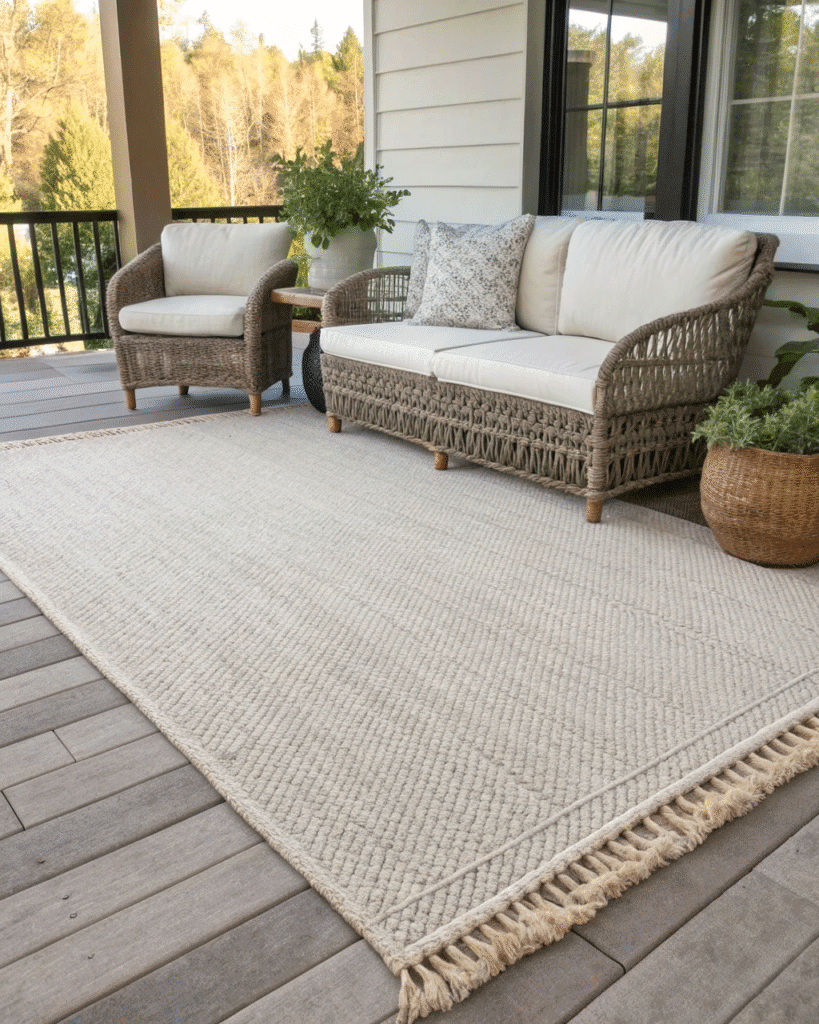
Simple woven rugs in beige or gray add softness without overwhelming your decor.
Pro Tip: Choose flatweave textures that dry quickly and resist outdoor wear.
2. Bold Geometric Patterns
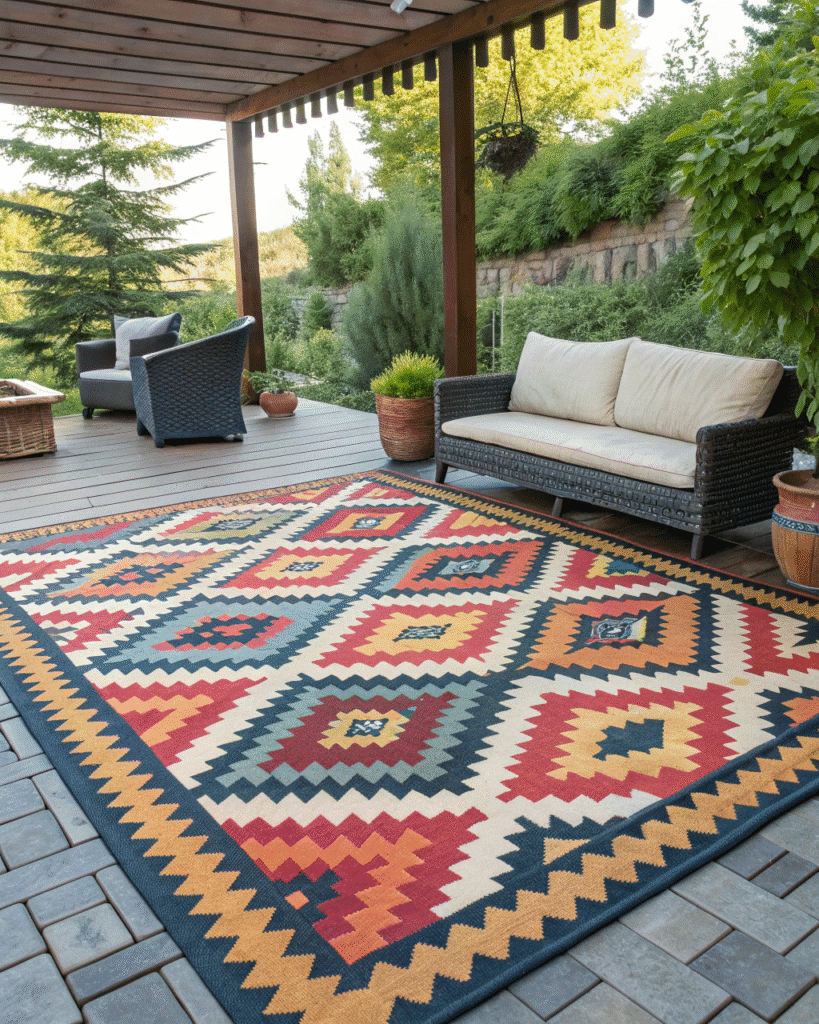
A patterned rug brings visual interest and defines your seating area beautifully.
Pro Tip: Keep surrounding furniture minimal to let the pattern stand out.
3. Striped Coastal Rugs
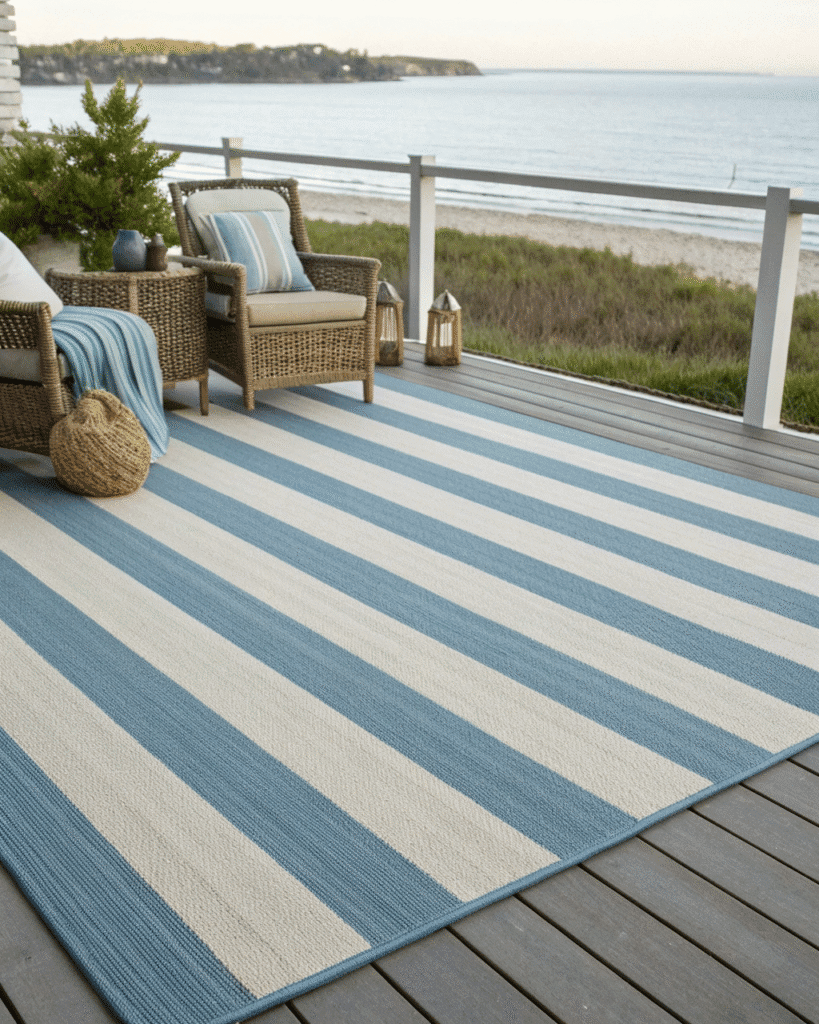
Classic stripes give your patio a relaxed, beach-inspired feel.
Pro Tip: Pair navy and white stripes with rattan or teak furniture for a coastal finish.
4. Natural Jute Rugs
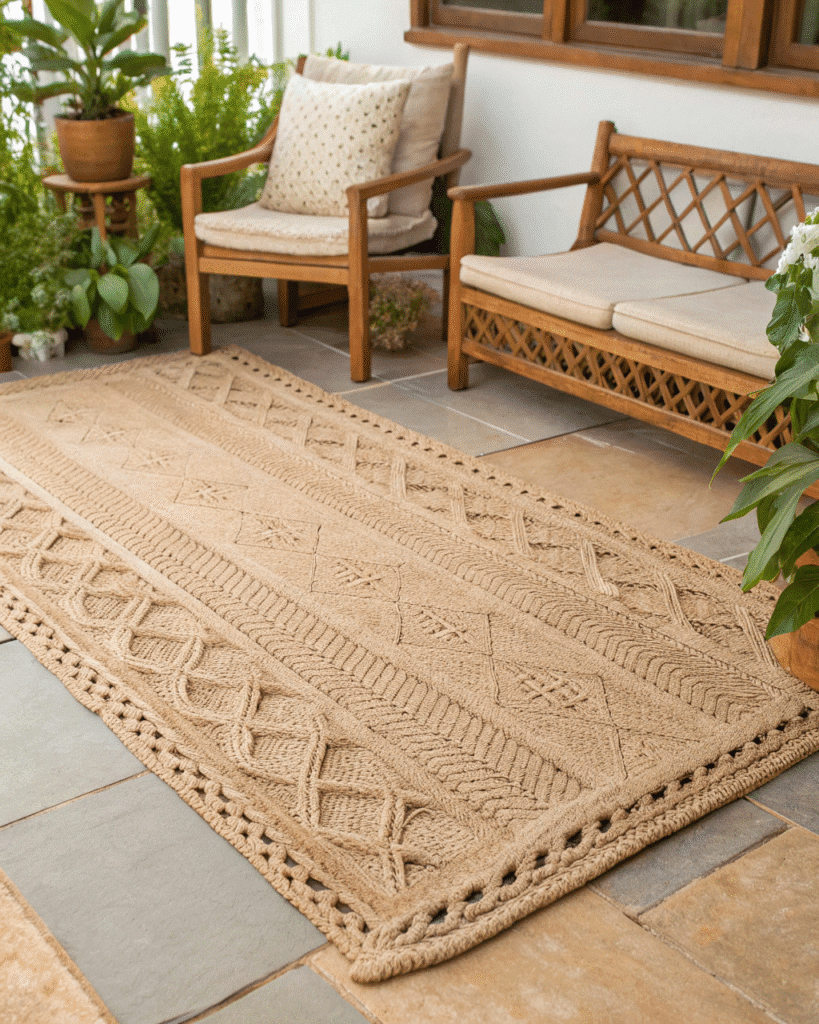
Jute rugs add earthy texture and a cozy, grounded look to outdoor spaces.
Pro Tip: Use them in covered patios to protect against heavy moisture.
5. Round Rugs for Small Spaces
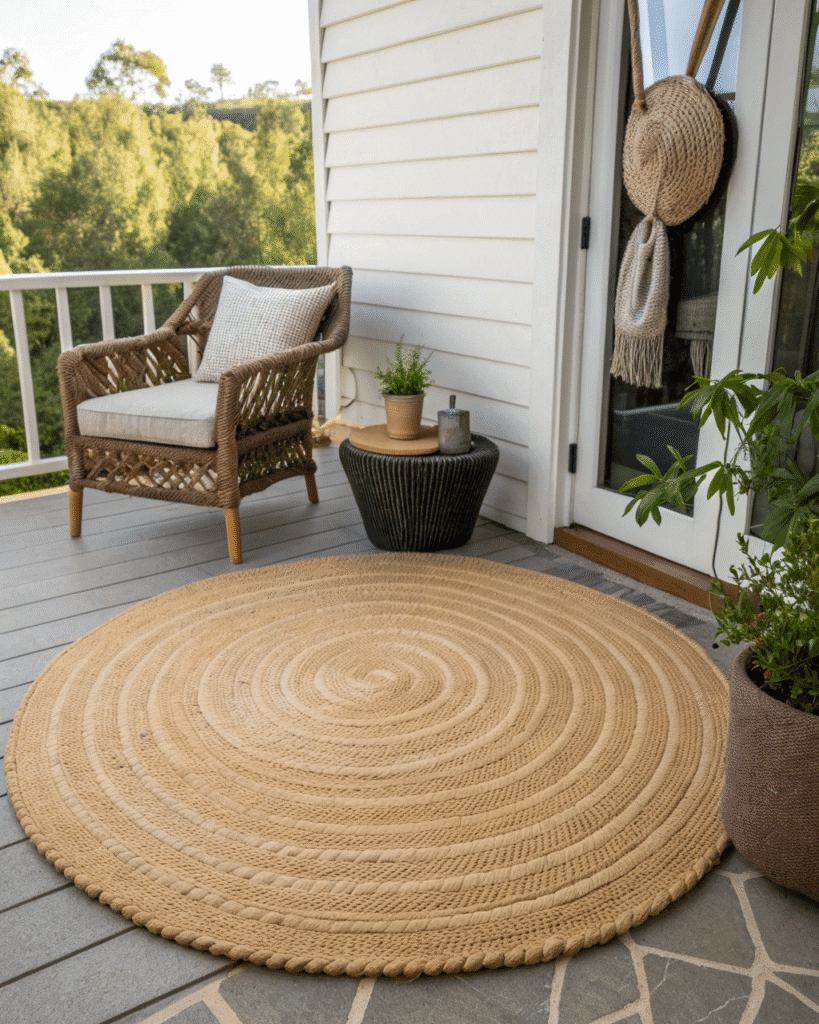
A circular rug softens sharp angles and makes compact patios feel more open.
Pro Tip: Place it under a round table or centered in a cozy nook for balance.
6. Colorful Moroccan Prints
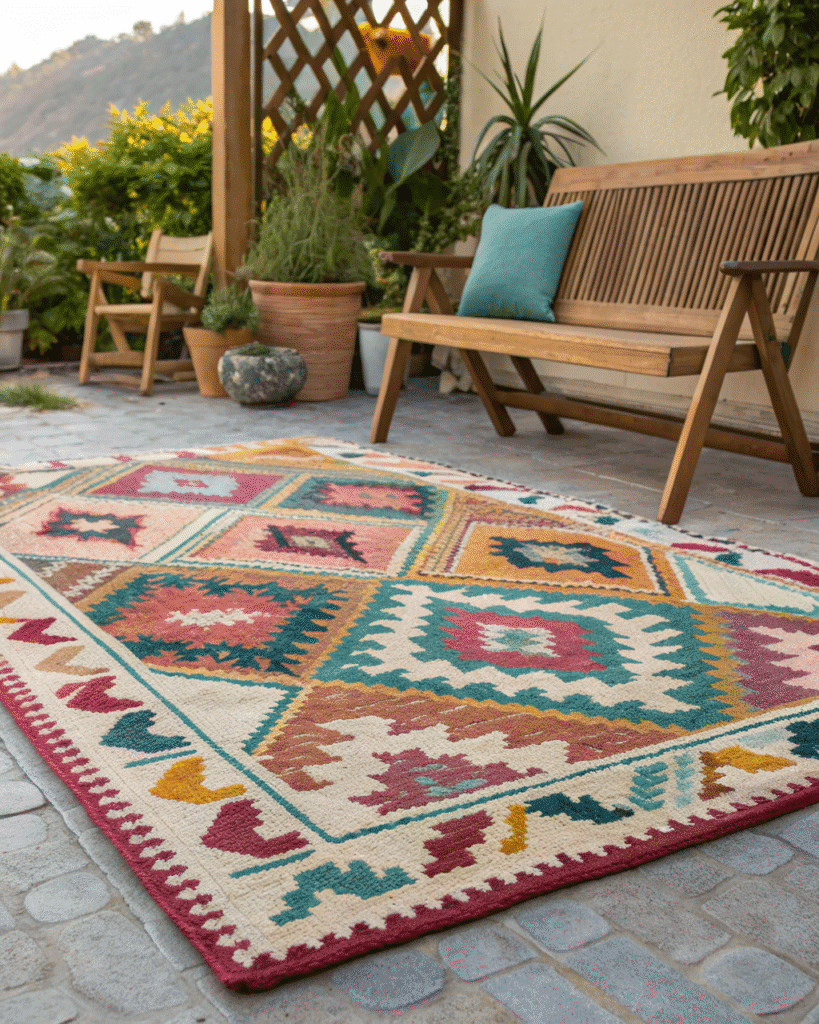
Add energy and character with Moroccan-style prints and vibrant colors.
Pro Tip: Choose washable outdoor fabrics to make maintenance easy.
7. Black and White Contrast
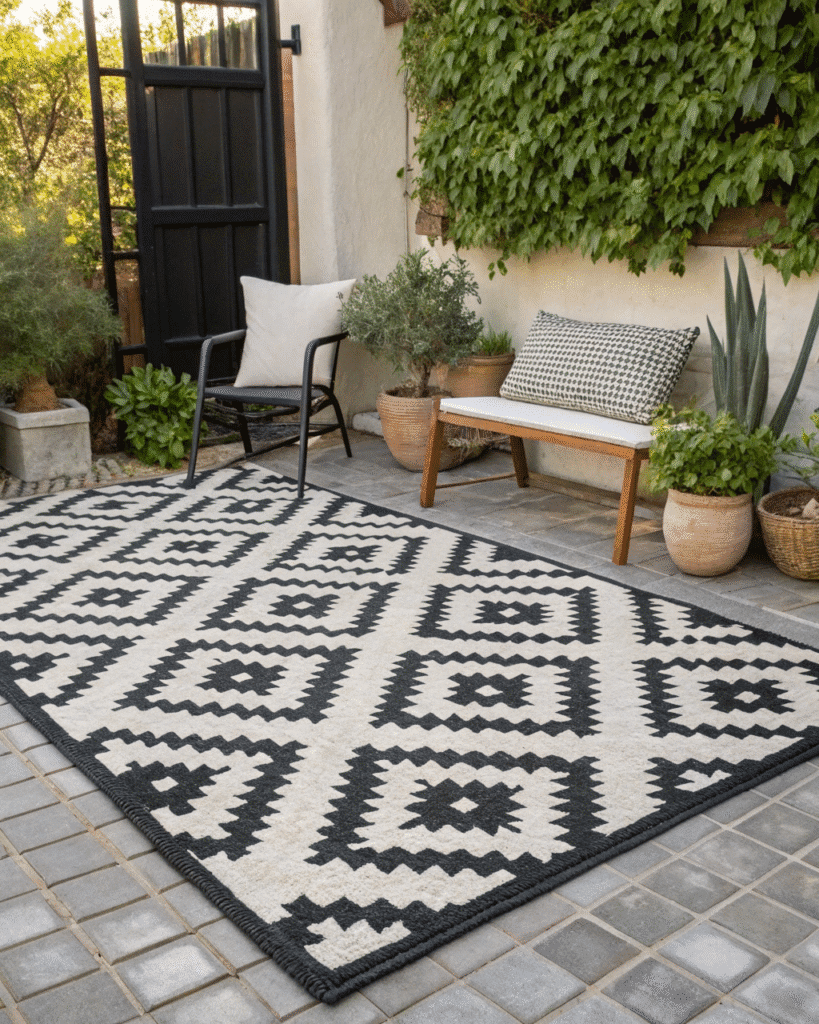
Monochrome rugs create a chic, modern look that fits any style.
Pro Tip: Layer with neutral cushions or a bold accent color for extra depth.
8. Layered Rug Look
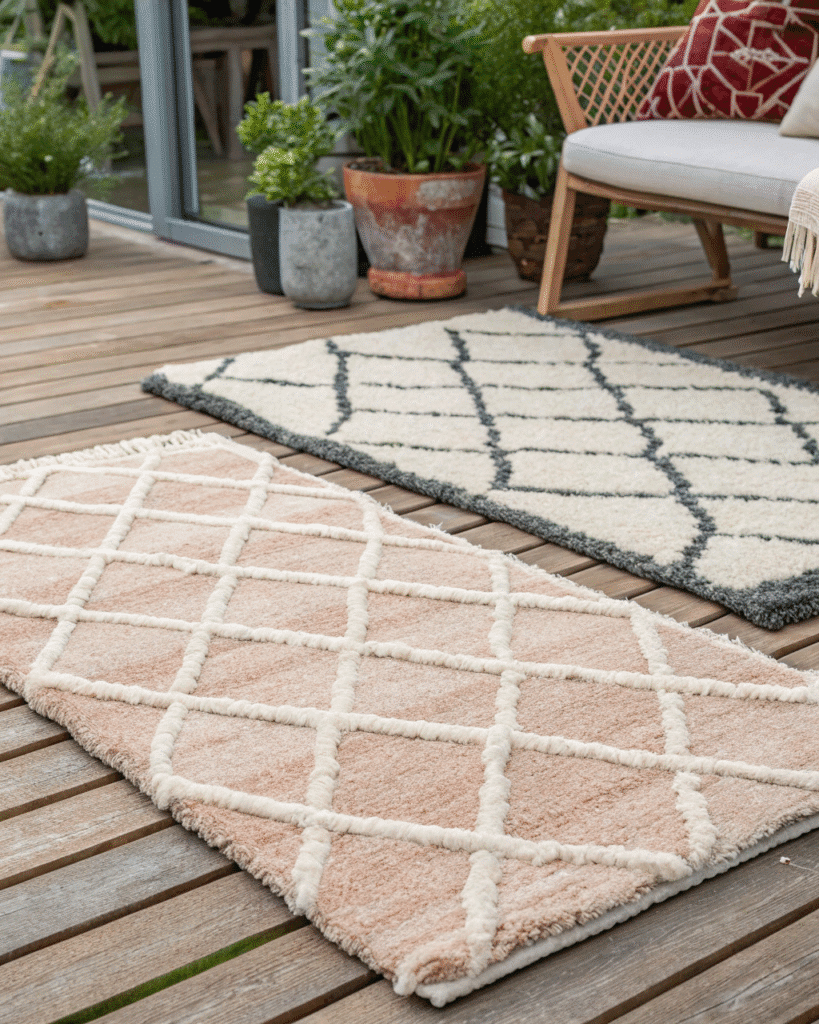
Stack two rugs of different textures for a designer-style layered effect.
Pro Tip: Use a larger neutral base rug and a smaller patterned one on top.
9. Floral Patterns
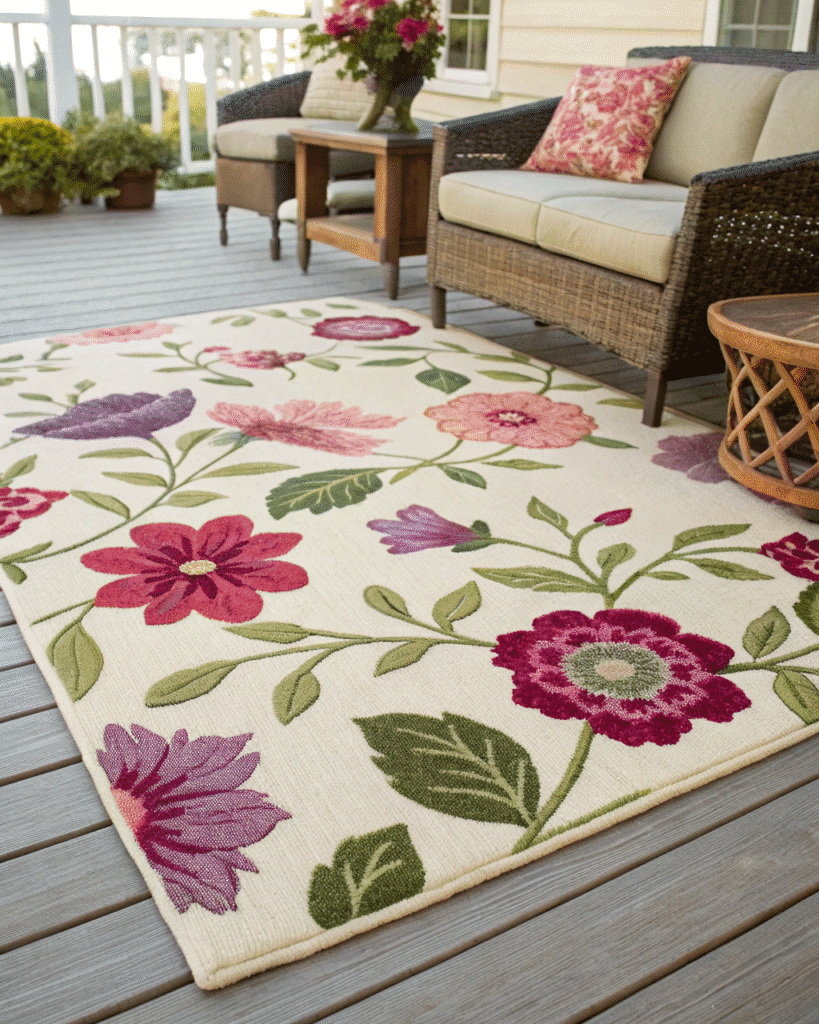
A floral rug brings freshness and color to your patio without using real plants.
Pro Tip: Stick with muted florals for an elegant, timeless finish.
10. Tropical Vibes
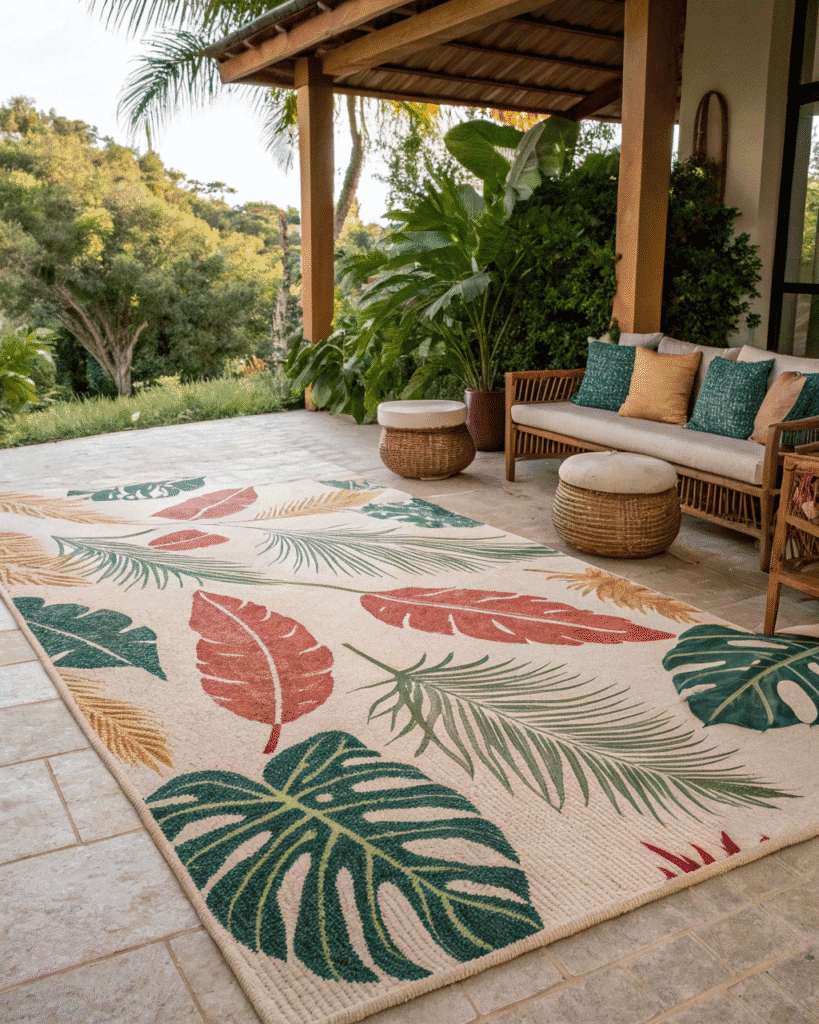
Rugs with palm or leaf prints make your patio feel like a resort escape.
Pro Tip: Keep decor simple and let the rug set the tone for the entire space.
11. Border-Defined Rugs
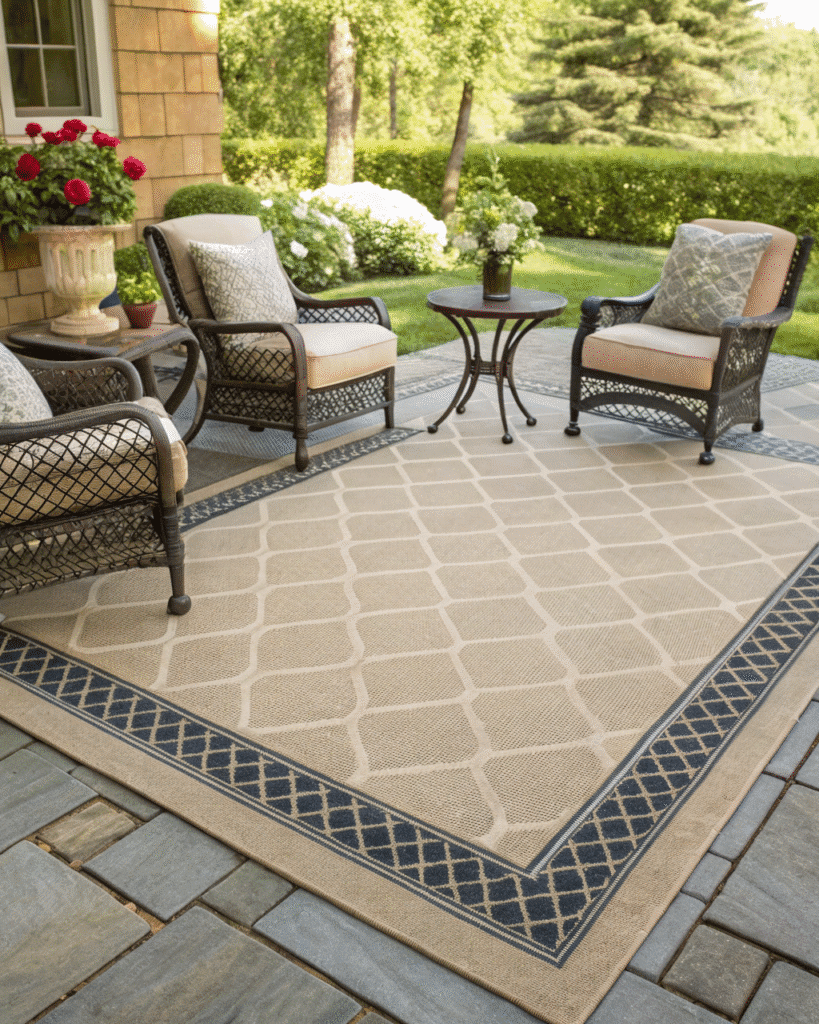
Rugs with bordered edges give structure and visual balance to outdoor seating areas.
Pro Tip: Match the border color with your cushions or curtains for cohesion.
12. Vintage-Inspired Rugs
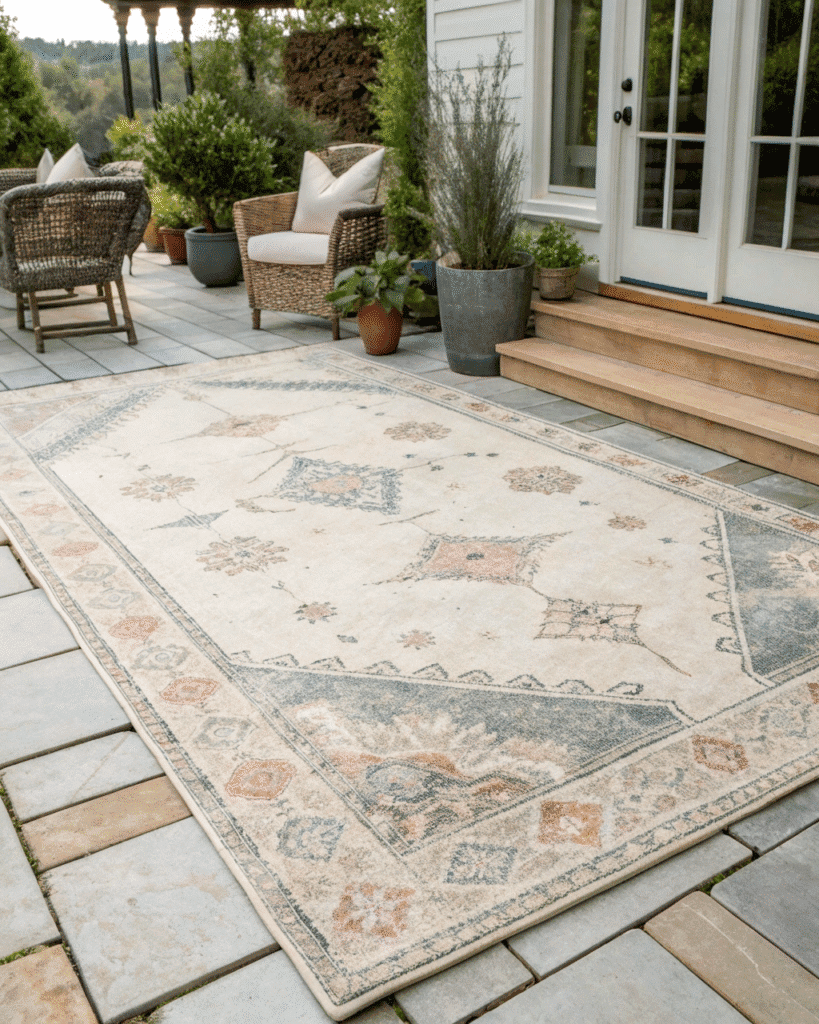
Faded prints and distressed details bring charm and character to modern patios.
Pro Tip: Choose muted tones for a subtle, lived-in aesthetic that feels effortless.
13. Textured Braided Rugs
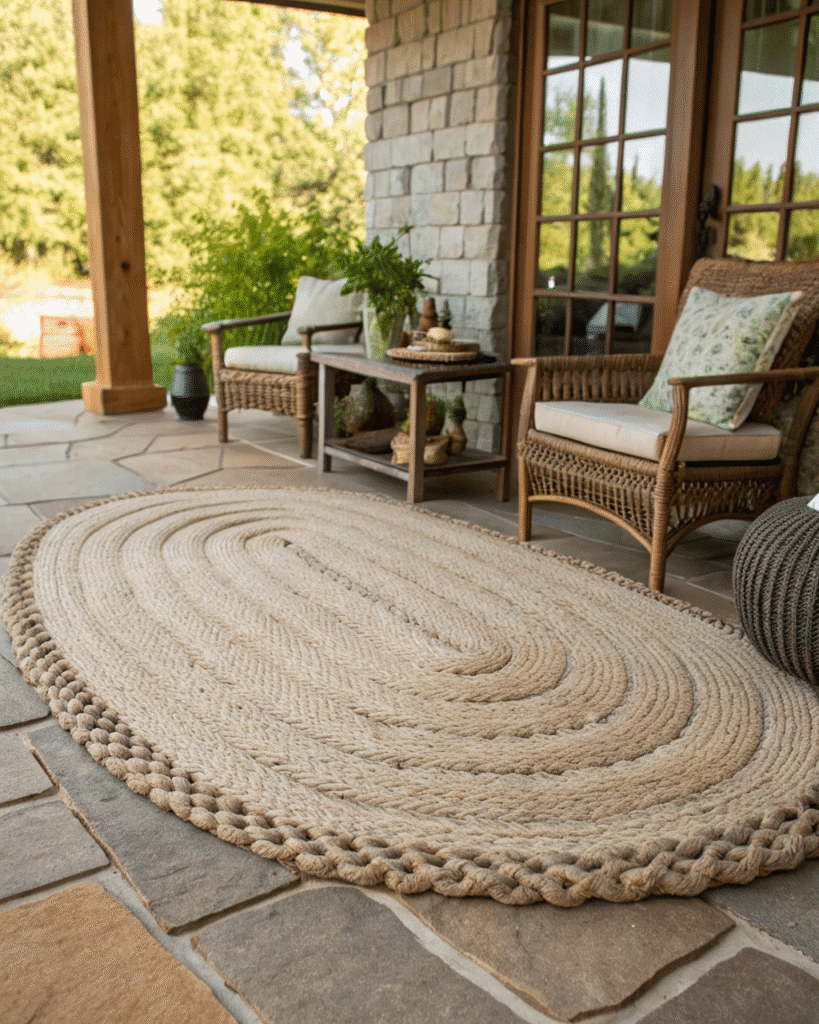
Braided rugs add a handmade, rustic quality that feels warm and inviting.
Pro Tip: Mix neutral tones for a natural, layered appearance that complements wood furniture.
14. Minimal Solid Rugs
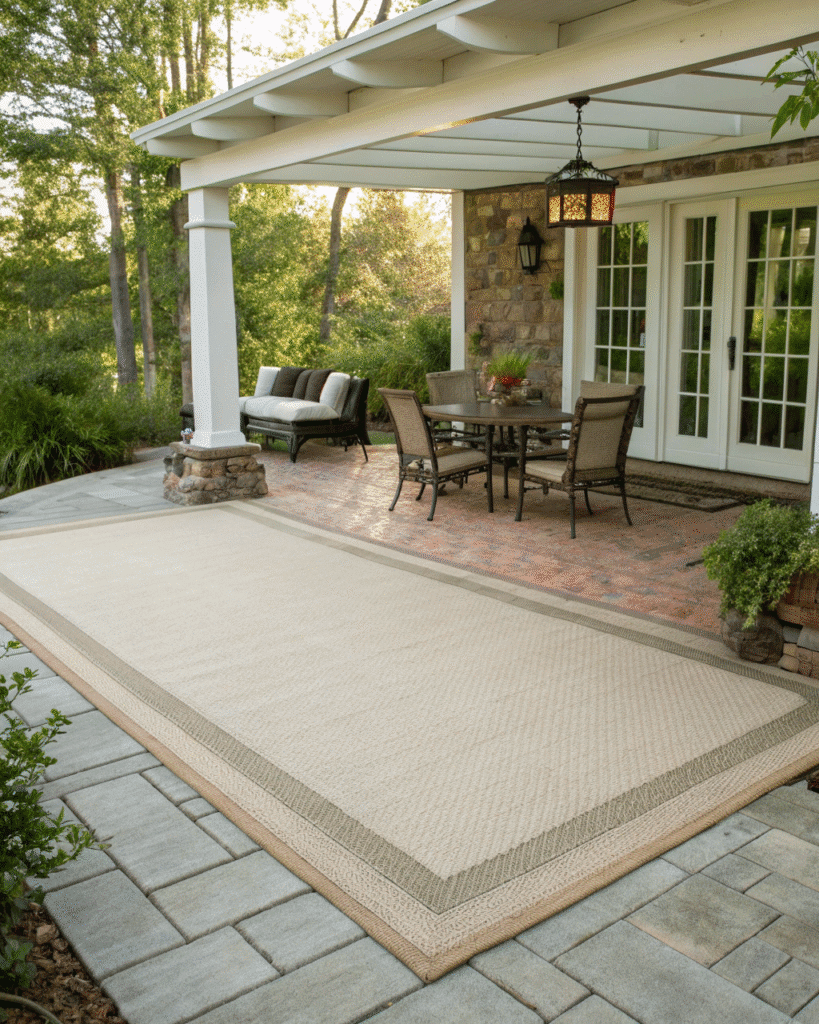
A simple solid-colored rug enhances the overall flow without stealing attention.
Pro Tip: Choose colors like taupe, charcoal, or sage for a modern, understated touch.
Final Thoughts
A great outdoor rug is the finishing touch that makes everything else on your patio click into place. It anchors your furniture, defines your space, adds color and warmth underfoot, and signals that your outdoor room was put together with the same care and intention as any room inside your home.
Choose the right size before you choose the right pattern, invest in a quality outdoor-rated material, and let the rug do the work of pulling your whole patio design together. Once it is down and the furniture is sitting on it properly, you will wonder what the patio ever looked like without it.
Frequently Asked Questions
Can you use an indoor rug outside on a covered patio?
Technically you can but it is not recommended even on a covered patio. Indoor rugs are not treated for UV resistance or moisture and will fade, rot, and develop mildew much faster than an outdoor-rated rug in the same conditions. A good outdoor rug is designed specifically for the environment and will last significantly longer even under a roof.
How often should you replace an outdoor rug?
A quality polypropylene or recycled plastic outdoor rug used on a covered patio can last five to seven years or more with basic care. Rugs in full sun exposure without a cover typically show significant fading and wear after two to four years depending on climate and maintenance. Natural fiber rugs have a shorter outdoor lifespan of one to three years even in covered conditions.
How often should you replace an outdoor rug?
A quality polypropylene or recycled plastic outdoor rug used on a covered patio can last five to seven years or more with basic care. Rugs in full sun exposure without a cover typically show significant fading and wear after two to four years depending on climate and maintenance. Natural fiber rugs have a shorter outdoor lifespan of one to three years even in covered conditions.
What do you put under an outdoor rug on concrete?
An outdoor-rated non-slip rug pad is the best option under a patio rug on concrete. Choose an open mesh pad specifically designed for outdoor use that allows water to drain through rather than a solid foam pad that will trap moisture and cause mildew under the rug. Double-sided outdoor carpet tape along the rug edges is a good supplementary measure for rugs in windy locations.
Should patio furniture sit on or off the rug?
All furniture legs should sit on the rug rather than off it. A rug that only catches the front legs of a sofa or the center of a seating arrangement looks too small and disconnected. Sizing up so all legs sit fully on the rug is almost always the right decision even if it means spending a little more on a larger size.
Can outdoor rugs get wet?
Polypropylene and recycled plastic outdoor rugs can get wet without damage as long as they are allowed to dry between soakings. Flat-weave constructions dry particularly quickly. Natural fiber rugs should be kept dry as much as possible and brought inside or covered during heavy rain. All outdoor rugs benefit from being lifted periodically so the underside and the floor beneath can dry fully, which prevents mildew from developing in the contact zone between the rug and the patio surface.