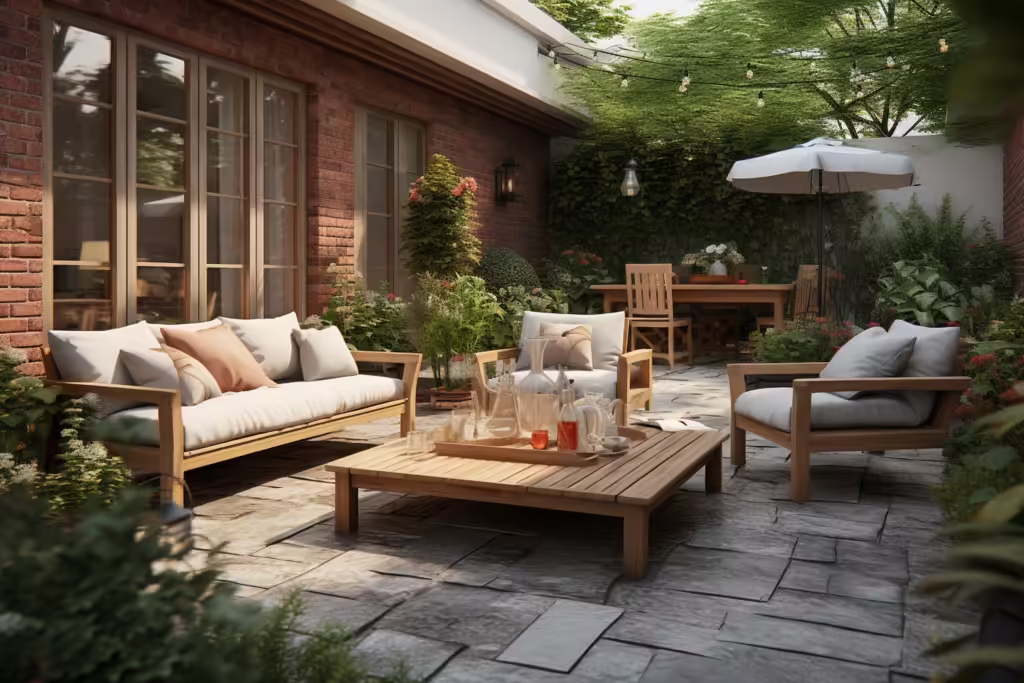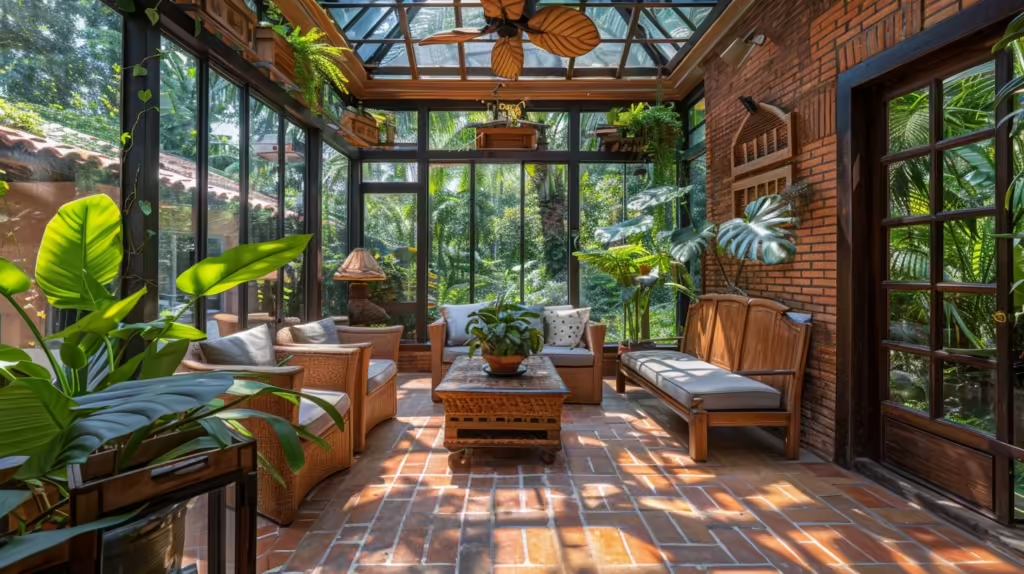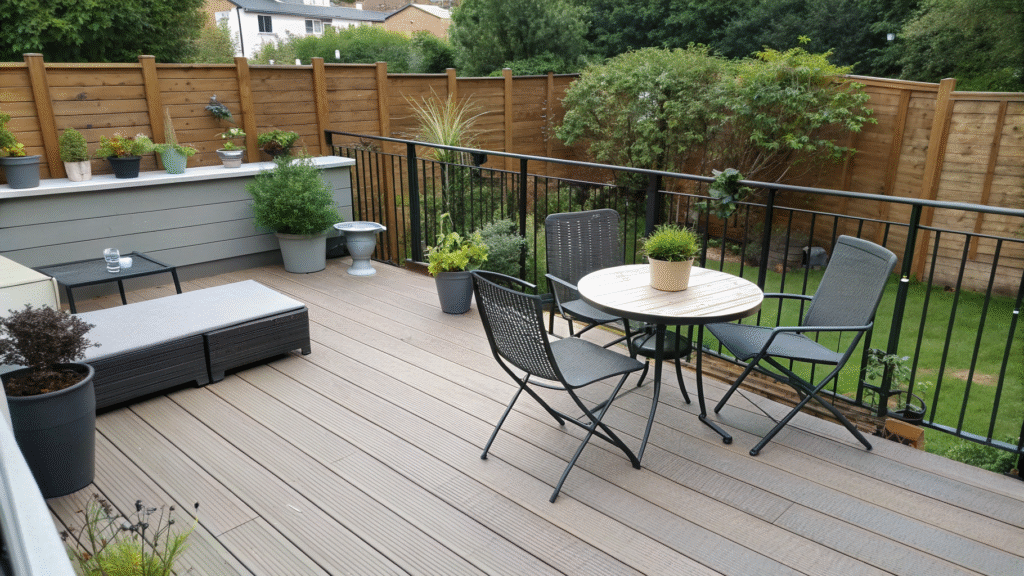
14+ Small Deck Layout Ideas That Feel Spacious and Open
A small deck is not a limitation. It is a design challenge that, when handled well, produces some of the most beautiful, most intimate, and most personally satisfying outdoor spaces of any size.
The key is knowing which layout principles genuinely create a sense of space and which ones simply make a small deck feel smaller.
Why Small Deck Design Requires a Different Approach
Designing a small deck is not the same as designing a large deck with fewer things in it. A small deck requires a specific set of principles and priorities that are different from those that govern larger outdoor spaces. Understanding this distinction is the starting point for getting a small deck genuinely right.
Every Decision Has More Impact
On a large deck, a poorly chosen piece of furniture or an awkward furniture arrangement is a problem in one part of the space that the rest of the deck compensates for. On a small deck, every single decision is visible from every other point in the space simultaneously. A piece of furniture that is the wrong scale affects the entire deck. A layout that does not flow properly makes the whole space feel wrong. This heightened impact of individual decisions is why small deck design rewards careful thought more than large deck design does.
Love Chic Living Club?
Add us as one of your preferred Google sources and discover more home decor, DIY, outdoor, and lifestyle inspiration from us.
Openness Has to Be Actively Designed
On a large deck, openness exists naturally because there is simply more room. On a small deck, the sense of openness has to be deliberately designed through material choices, furniture selection, layout decisions, and visual tricks that create the perception of more space than actually exists. This is a skill that interior designers apply to small rooms constantly and the same principles apply just as effectively outdoors.
Multi-Functionality Is Not Optional
On a large deck, you can afford to have a chair that is only ever a chair and a table that is only ever a table. On a small deck, every piece of furniture should ideally do more than one job. A bench that also stores cushions. A table that folds flat when not needed. A planter that doubles as a privacy screen. A step that functions as extra seating. This multi-functionality mindset is not about compromise. It is about intelligence in design and it is what separates small decks that work brilliantly from ones that perpetually feel inadequate.
The Vertical Dimension Matters Enormously
On a small deck, the floor is a limited and precious resource. The walls and vertical surfaces are not limited in the same way. A small deck that uses only its floor area is missing half its potential. A small deck that uses its vertical surfaces for planting, lighting, privacy screening, and decorative elements feels dramatically richer and more considered than one that ignores the vertical dimension entirely.
Small Deck Layout Principles That Create Space
These are the specific design principles that have the greatest impact on how spacious a small deck feels. Apply as many of them as possible and the difference in how the space reads and feels will be significant.
Use Light Colors Throughout
Light colors reflect rather than absorb light and make surfaces visually recede rather than advance. A small deck with light-colored decking boards, pale or natural-toned furniture, cream or white accessories, and light boundary surfaces feels significantly more open than the same deck in dark tones. This does not mean everything has to be white. Natural timber tones, pale greys, warm creams, and soft sage greens all read as light in an outdoor context and all contribute to a sense of openness.
You May Also Love
Keep the Floor Clear
The single most effective thing you can do for the sense of space on a small deck is keep the floor as clear as possible. Every piece of furniture with legs that sit on the floor takes up visual floor space even when the physical footprint is small. Built-in furniture, furniture on slim legs that allow the eye to see the floor beneath, and wall-mounted elements all reduce the visual occupation of the floor and make the deck feel more open.
Use Slim Profiles Throughout
Heavy, bulky furniture makes a small deck feel smaller. Slim-profile furniture, slim table legs, thin railing posts, narrow chair arms, slim planters, creates more visual breathing room and makes the space feel airier and more spacious. This is not about sacrificing quality or comfort. Quality furniture can absolutely be slim in profile. It is about choosing pieces that do not take up more visual space than their physical dimensions require.
Create One Focal Point
A small deck with multiple competing focal points feels cluttered and visually restless. Choose one focal point, whether that is a view, a planting arrangement, a fire feature, or a piece of outdoor art, and orient the layout around it. Everything else in the layout supports and defers to the focal point rather than competing with it.
Don't miss: 11+ Gorgeous Side Yard Patio Ideas →
Keep the Railing as Open as Possible
The railing of a small deck is one of its most significant visual elements. A solid or visually heavy railing closes the deck in and makes it feel like a box. A glass panel railing, a cable railing, or a widely spaced vertical baluster railing maintains the visual connection between the deck and the surrounding landscape, making the deck feel like part of a larger space rather than a contained box elevated above the ground.
Common Small Deck Layout Mistakes to Avoid
Understanding what not to do is just as valuable as understanding what to do. These are the mistakes that most consistently make small decks feel smaller than they are.
Oversized Furniture
This is the most common and most damaging small deck mistake. A sofa or dining table that is the right size for a large patio looks enormous on a small deck and leaves no room for circulation or visual breathing space. Measure the deck accurately, mark out the furniture footprint on the deck with tape before buying anything, and choose furniture that is sized for the actual space rather than for your aspirations about the space.
Pushing Everything Against the Walls
The instinct on a small deck is to push all the furniture against the perimeter to maximise the central open space. This almost always makes the deck feel smaller, not larger, because it emphasises the enclosed boundary of the space and creates an uncomfortable, waiting-room quality to the layout. Pull furniture slightly away from the edges to create a more natural, inhabited arrangement.
Too Many Different Materials and Colors
Visual complexity makes a small space feel busy and contracted. A small deck benefits from a very restrained material and color palette, one decking material, one furniture material, one accent color, applied consistently throughout. Every additional material or color introduces more visual complexity that the limited space cannot comfortably absorb.
Keep Exploring

No Lighting Plan
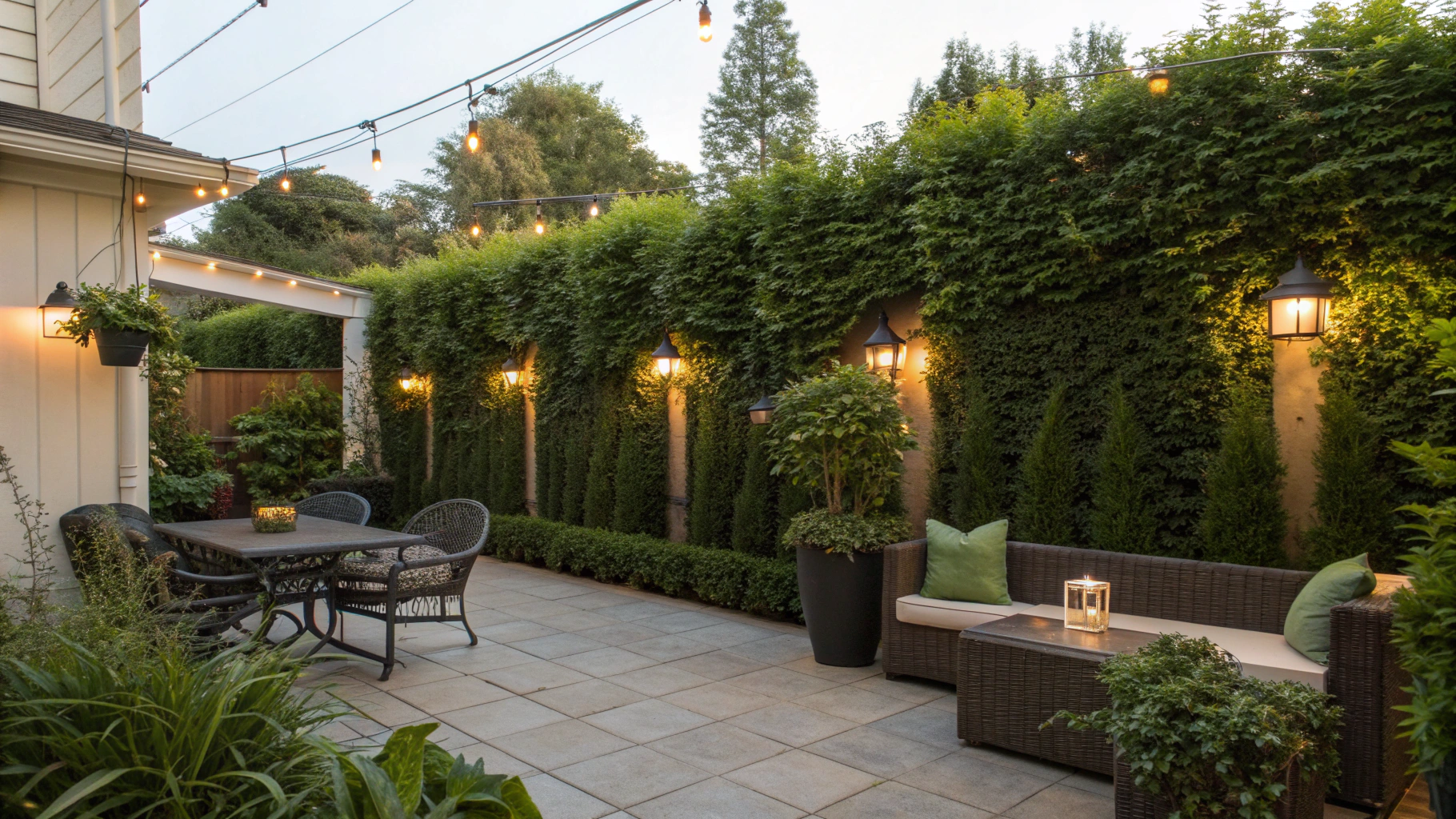
A small deck without lighting looks abandoned after dark. Good lighting makes a small deck feel warm, inviting, and complete in the evening and can be transformative in terms of how the space reads after the sun goes down. Integrated deck lighting, string lights overhead, and one or two low-level lanterns are all that is needed to make a small deck feel genuinely beautiful at night.
Ignoring the View Beyond
On a small deck, the view beyond the deck boundary is as much a part of the visual experience as the deck itself. A small deck that is oriented toward a beautiful garden view or an interesting landscape feels far larger than one that faces a fence or a blank wall. Position the main seating to face the best available view and ensure the railing does not obstruct it.
These ideas will help you get every square foot working as hard as possible.
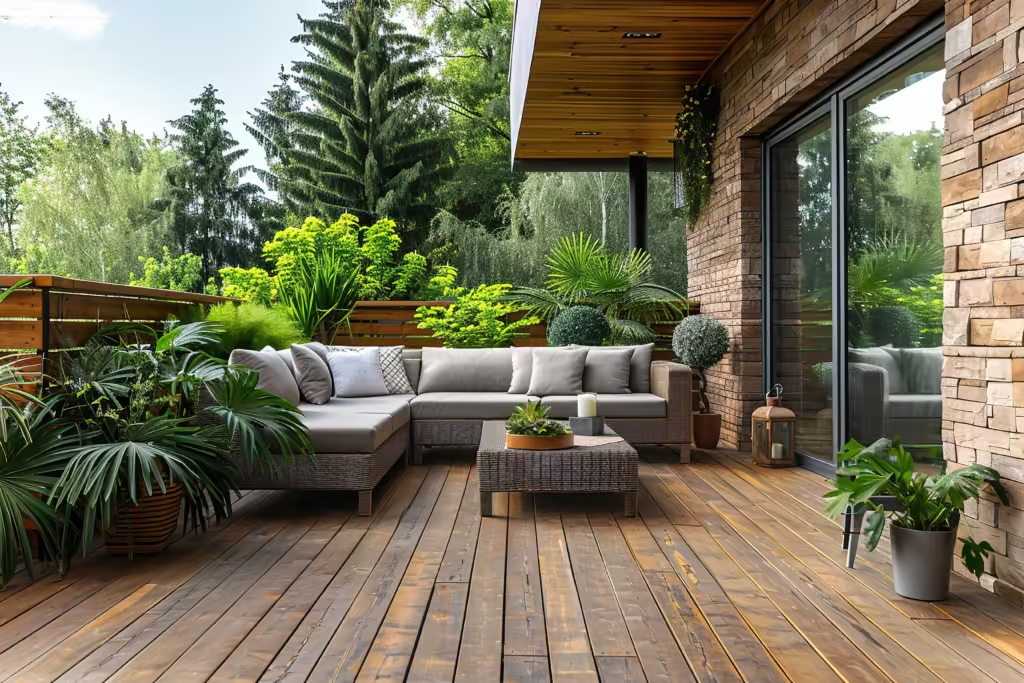
1. Corner Seating Arrangement
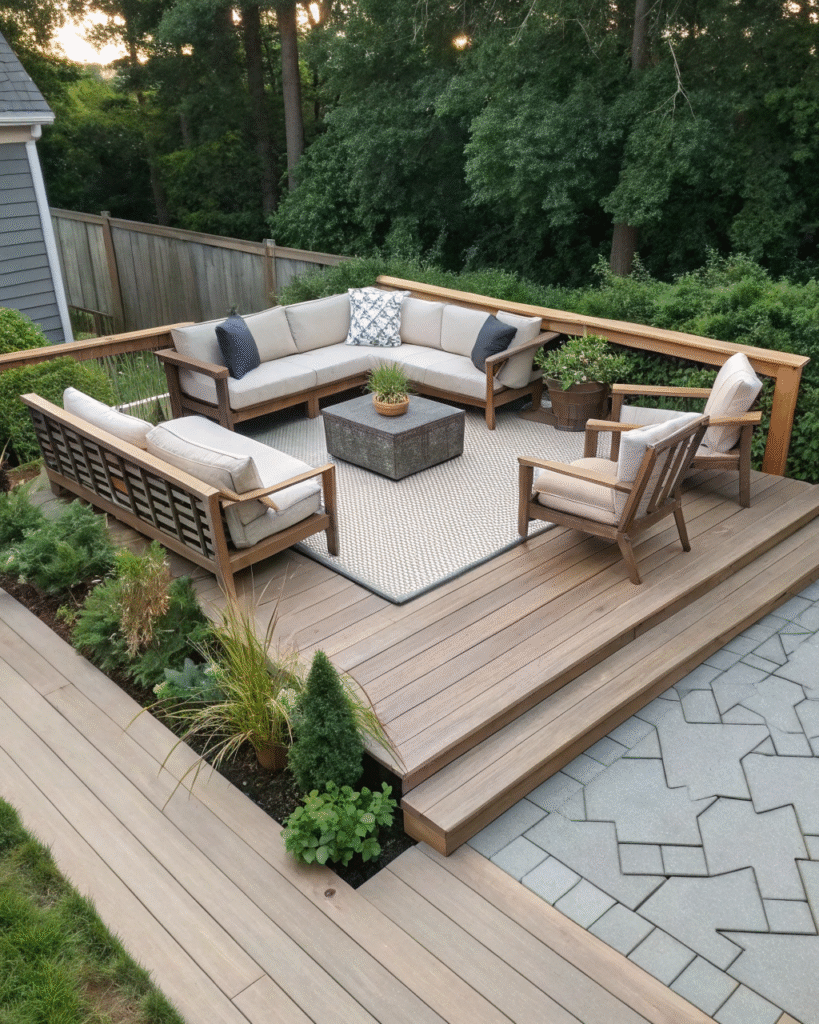
Use L-shaped seating to maximize corner space and create a cozy gathering spot.
Pro Tip: Add built-in benches with storage to keep the area clutter-free and organized.
2. Floating Furniture Setup
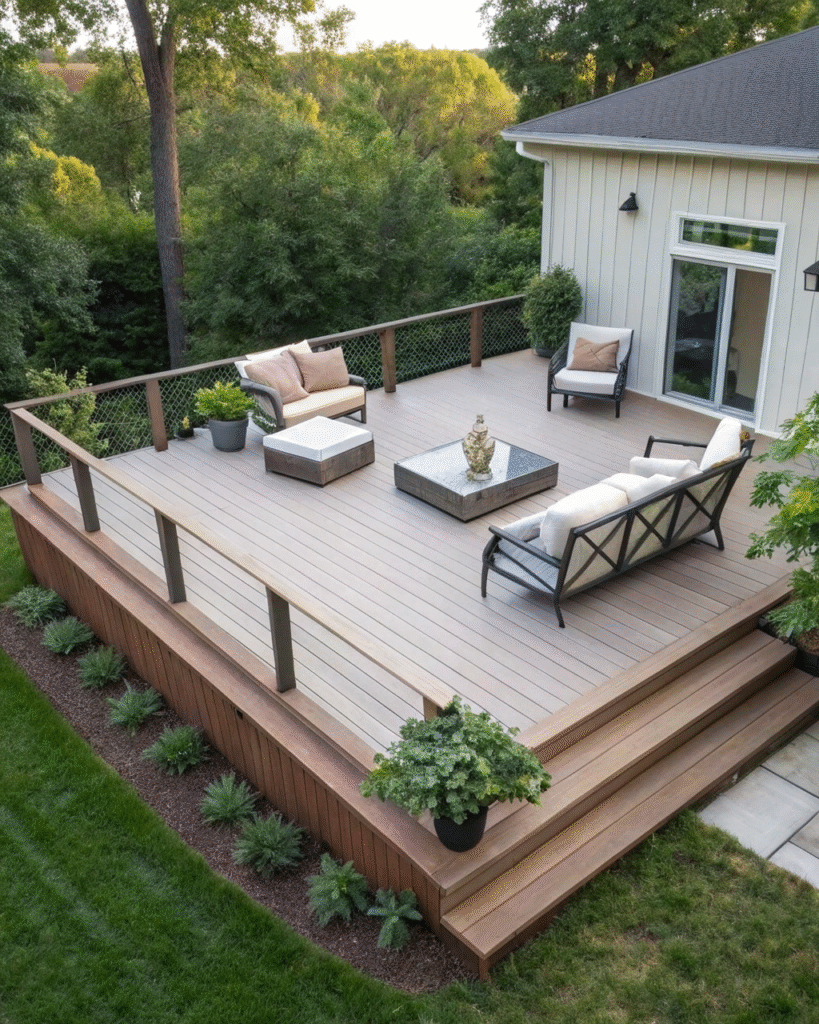
Keep the center of your deck open by placing furniture along the edges.
Pro Tip: Choose lightweight, movable chairs that are easy to rearrange for different occasions.
3. Round Dining Table
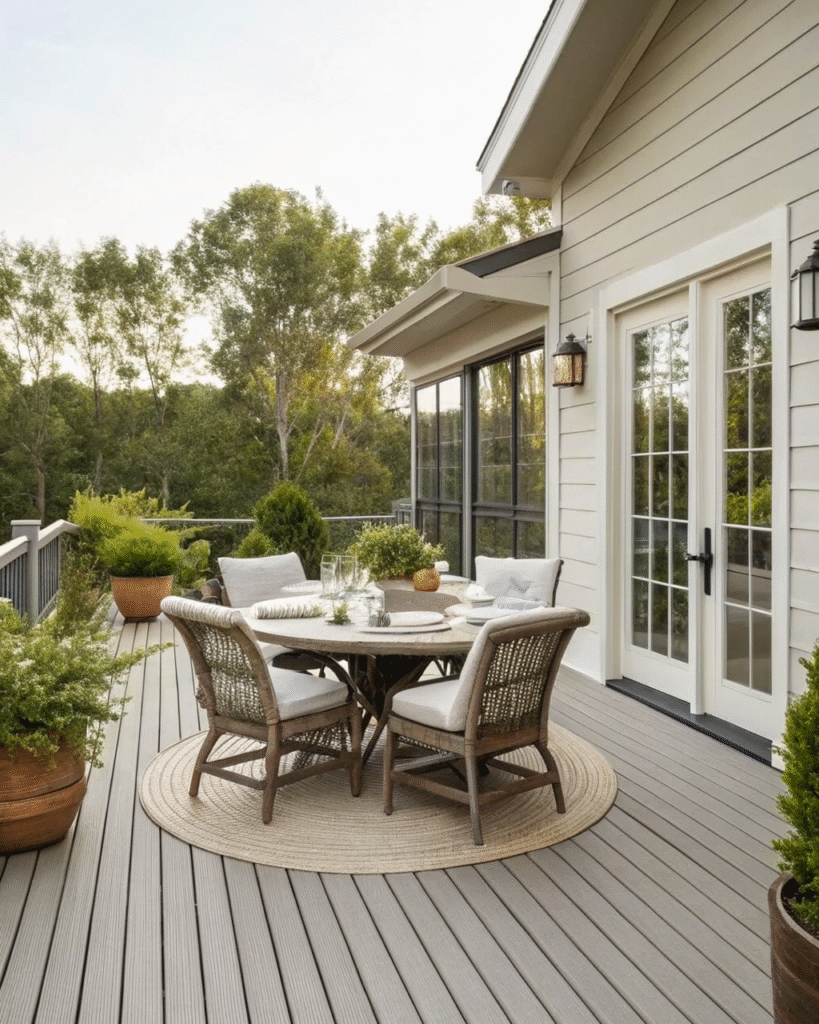
A round table encourages flow and makes small decks feel more spacious.
Pro Tip: Pair it with foldable or stackable chairs for flexible seating options.
4. Multi-Level Deck Zones
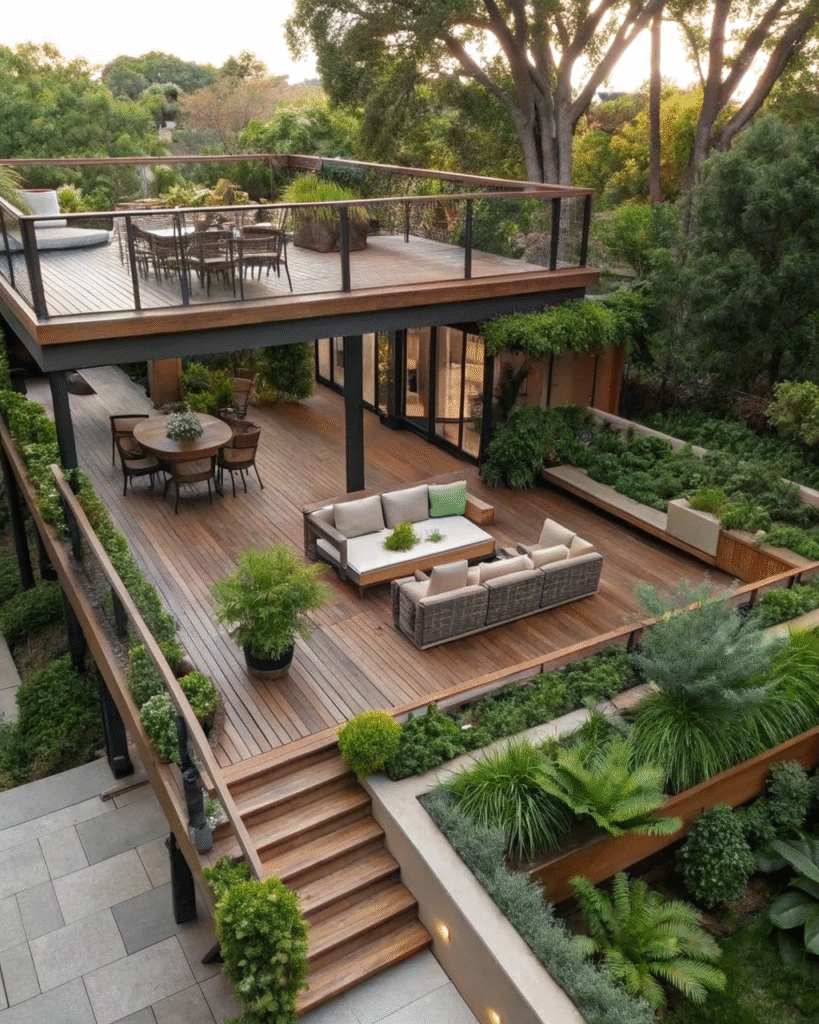
Create different levels for dining, lounging, or greenery to define areas visually.
Pro Tip: Use subtle steps or contrasting deck stains to separate zones without barriers.
5. Built-In Benches
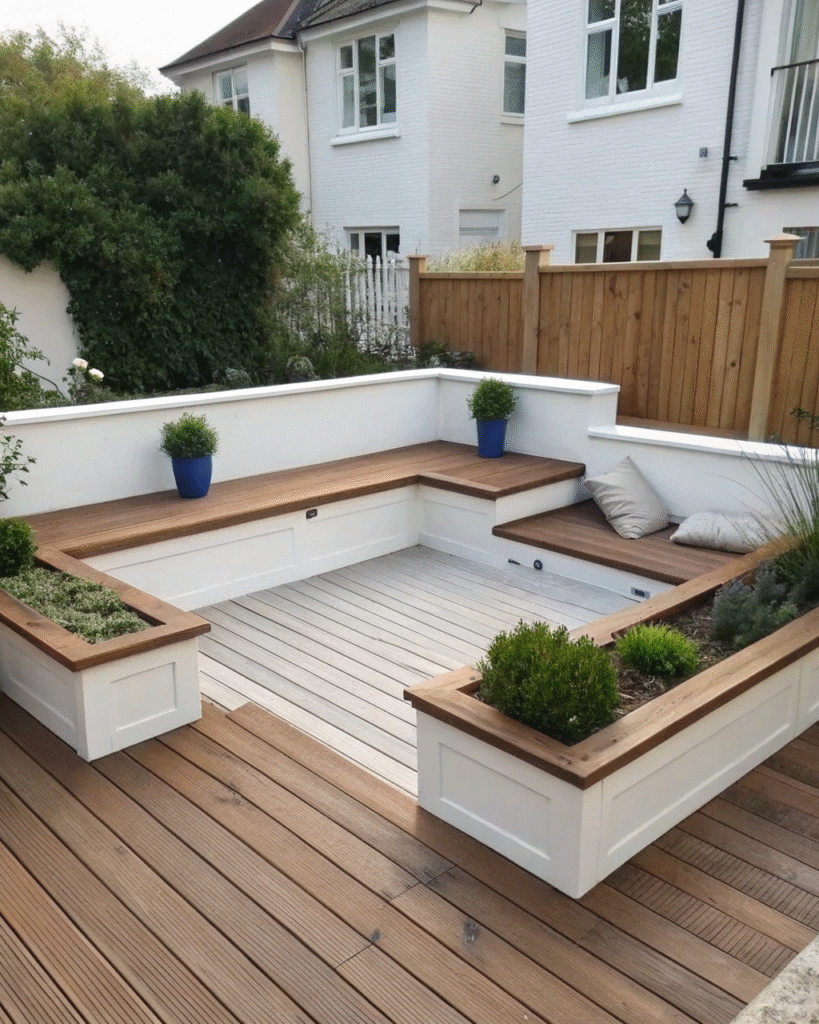
Built-in benches save space while providing plenty of seating.
Pro Tip: Add colorful cushions or throws to soften the look and make it inviting.
6. Vertical Greenery
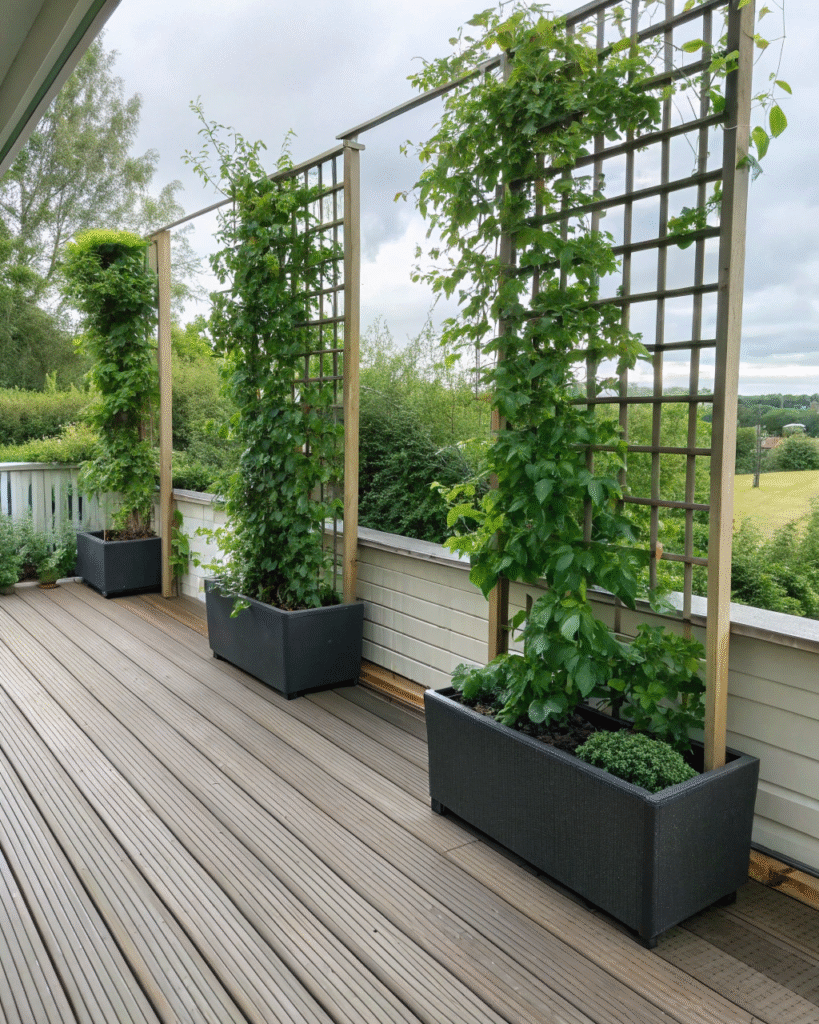
Grow plants vertically to add life without taking up floor space.
Pro Tip: Use hanging planters or wall-mounted pots for an easy, compact garden.
7. Compact Bistro Setup
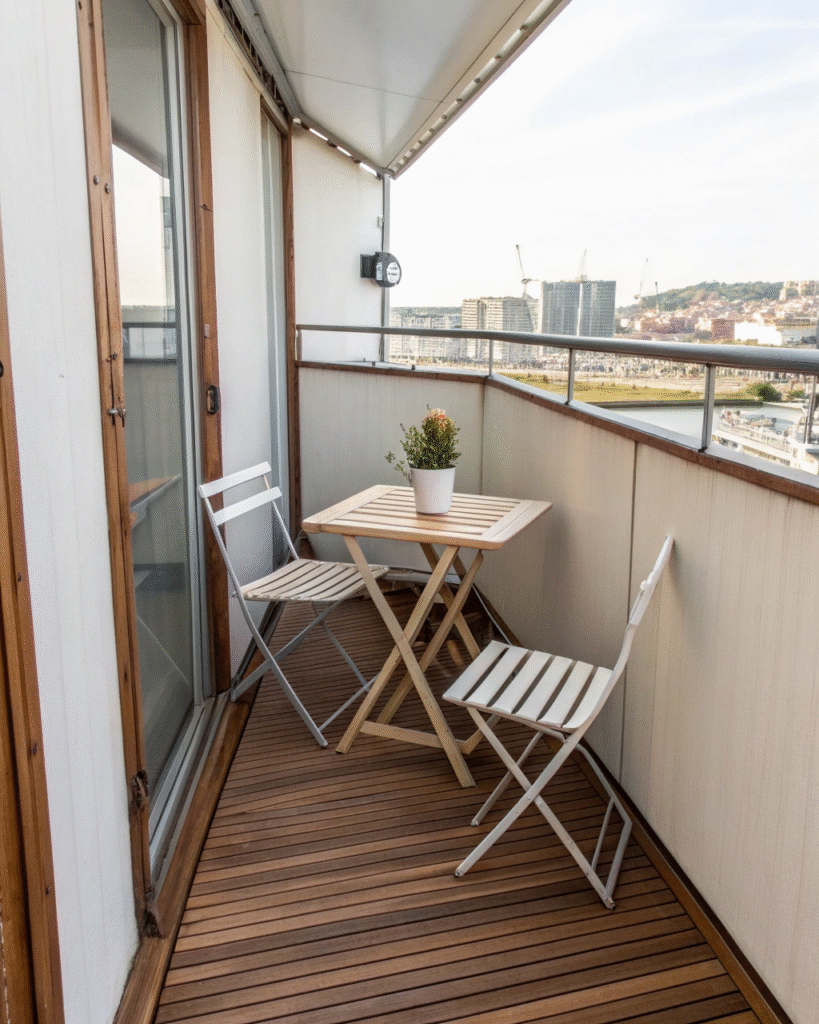
A small bistro table and two chairs fit perfectly into narrow deck spaces.
Pro Tip: Choose furniture with slim legs and open frames to keep the look light and airy.
8. Minimalist Layout
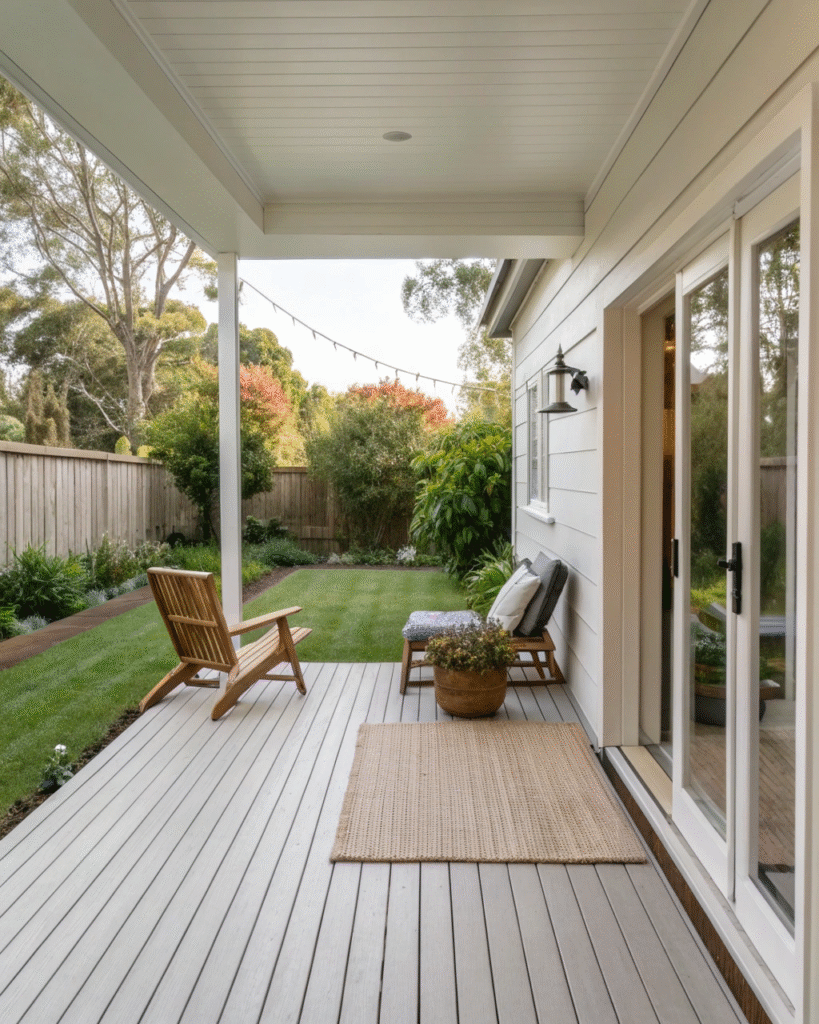
Keep furniture simple and minimal to maintain an uncluttered look.
Pro Tip: Use a single color palette to visually expand the space.
9. Built-In Planters
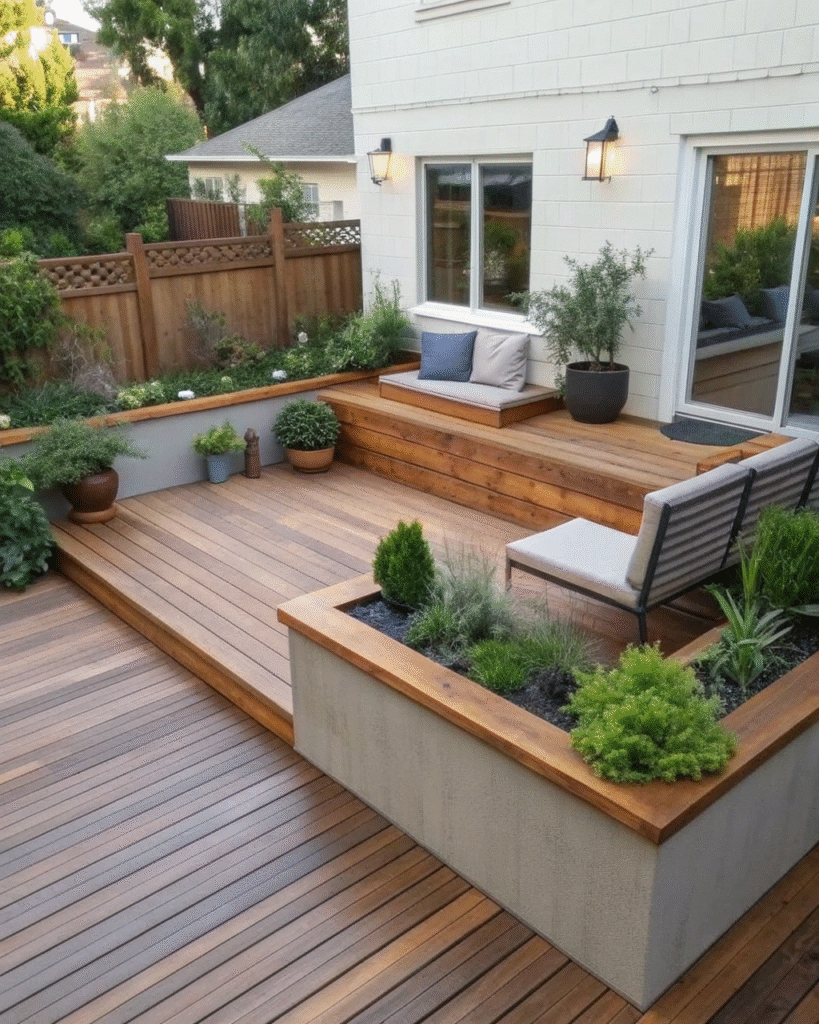
Planters integrated into the deck edges save space and look polished.
Pro Tip: Use low-maintenance plants that add greenery without overgrowth.
10. Folding Furniture
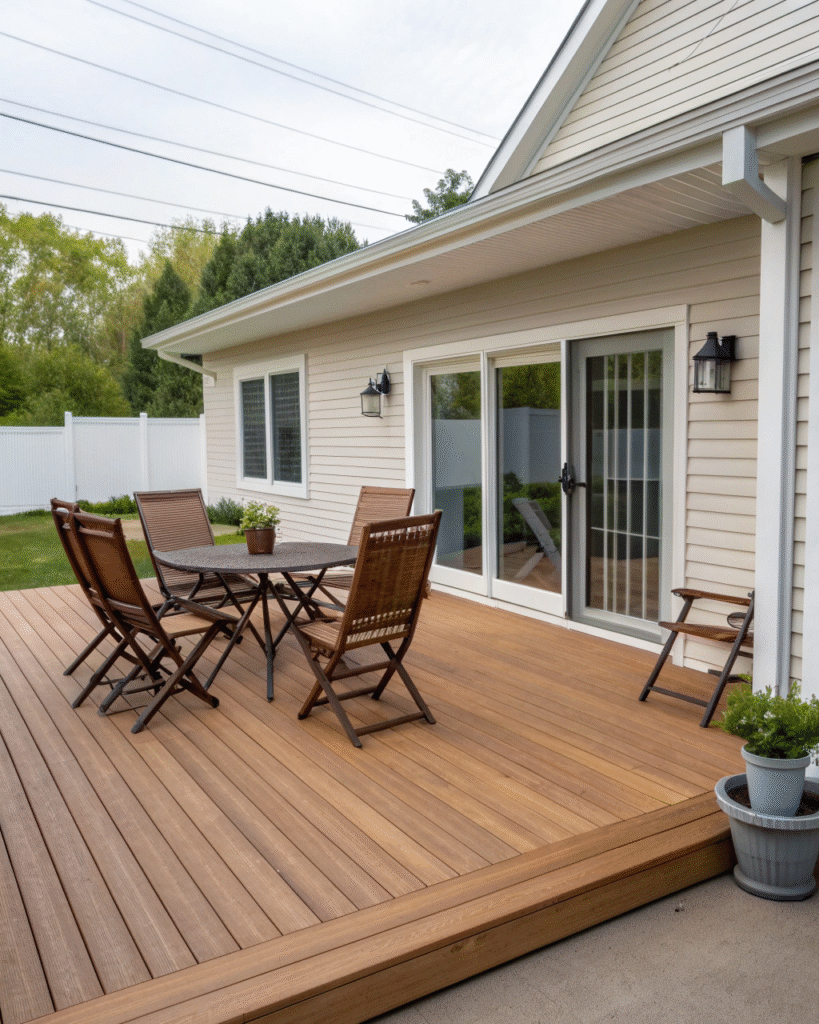
Folding chairs and tables make it easy to adapt the deck for lounging or dining.
Pro Tip: Store folded pieces vertically against a wall when not in use to free up space.
11. Long Bench with Side Table
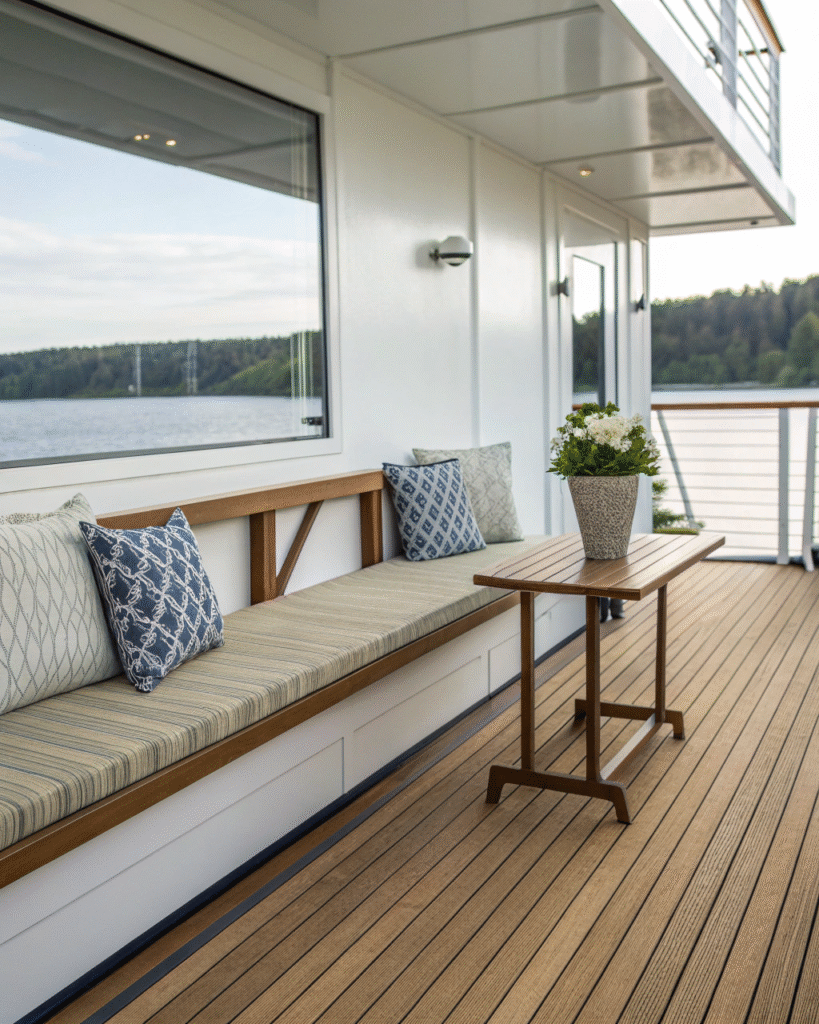
A single long bench paired with a compact side table feels streamlined and open.
Pro Tip: Add a narrow rug underneath to define the seating zone.
12. Integrated Lighting
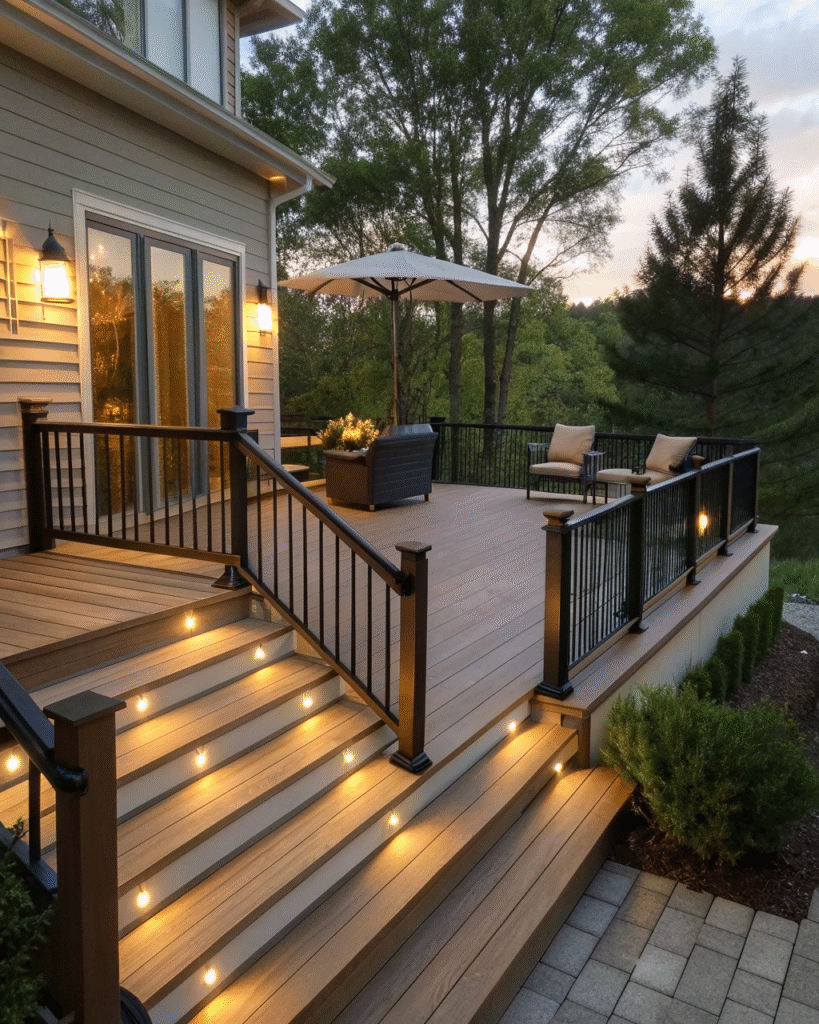
Built-in lights along railings or steps create ambiance without taking up room.
Pro Tip: Use warm LED strips for a soft glow that enhances evening relaxation.
13. Diagonal Furniture Placement
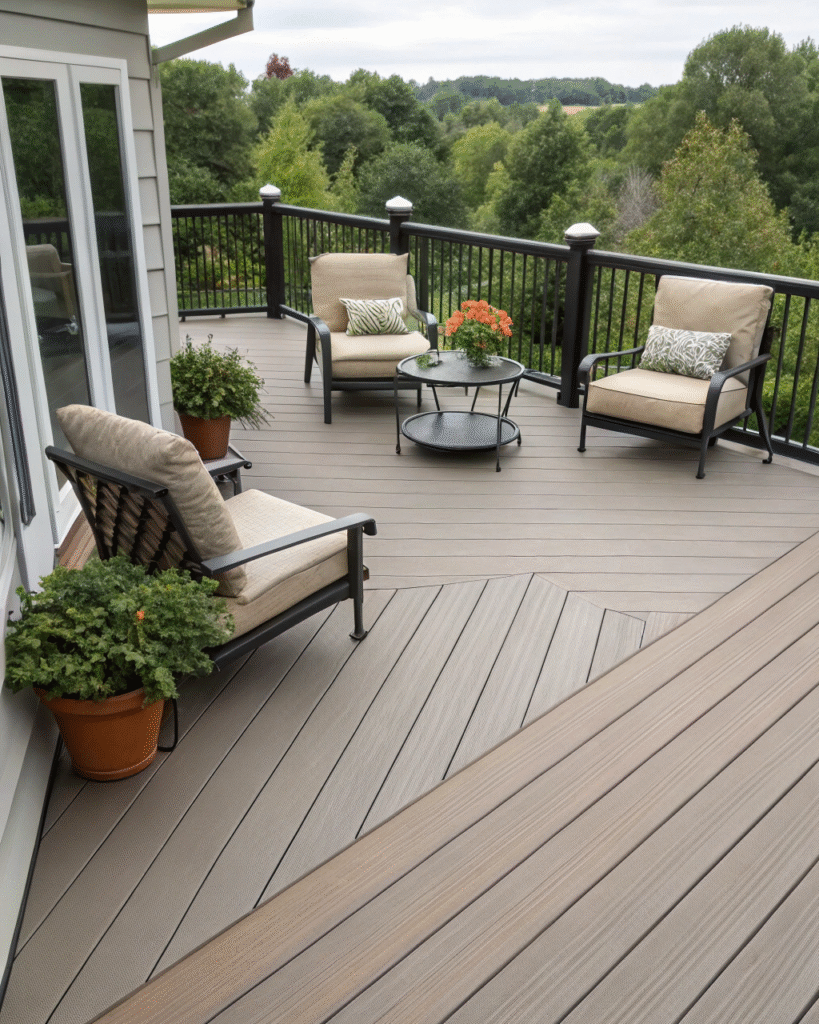
Angling furniture diagonally makes your deck feel larger and more dynamic.
Pro Tip: Keep the layout simple and balanced to avoid visual clutter.
14. Transparent Furniture
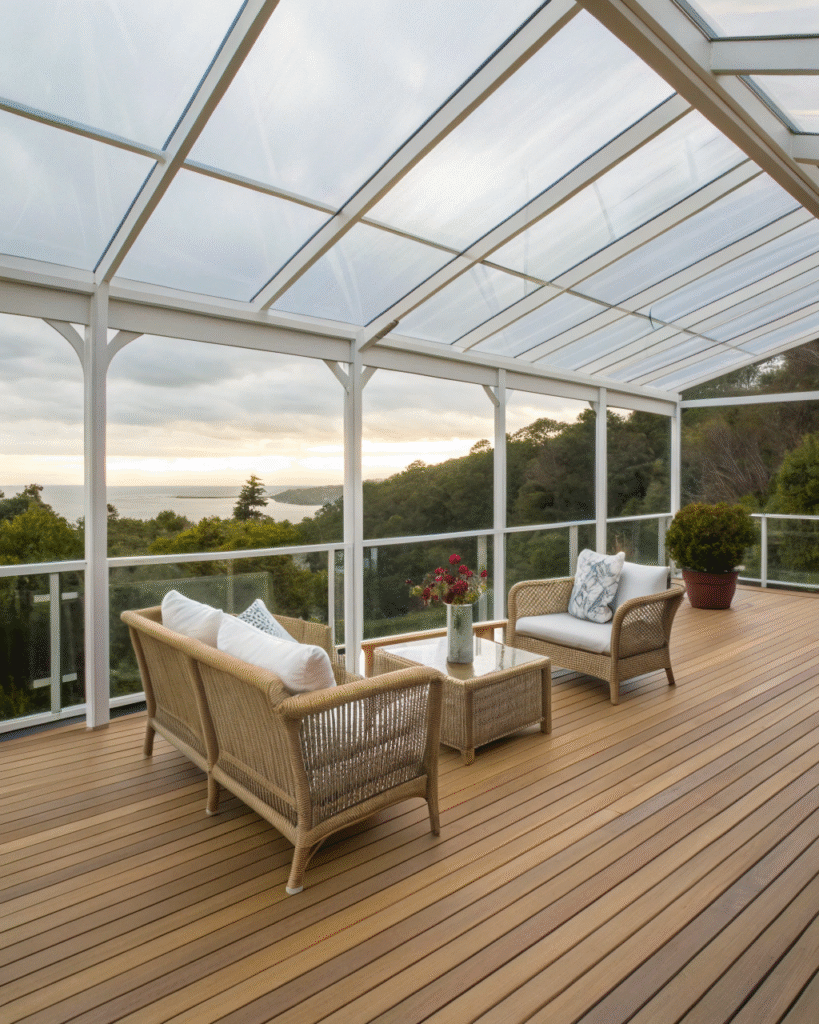
Clear acrylic or glass furniture maintains an open, airy look on small decks.
Pro Tip: Pair with light-colored cushions for a sleek, modern finish.
Final Thoughts
A small deck handled well is one of the most delightful outdoor spaces you can create. The constraints force clarity of purpose, restraint in furniture selection, and creativity in layout that larger decks rarely demand and rarely achieve.
Apply the principles in this guide, choose furniture that is genuinely scaled for the space, keep the floor as clear as possible, use the vertical dimension generously, and light it beautifully for the evening.
Your small deck will feel spacious, open, and genuinely inviting every time you step onto it.
Frequently Asked Questions
What is the most important layout principle for a small deck?
Keeping the floor visually clear is the single most impactful principle. Built-in furniture, furniture on slim legs, and wall-mounted elements all reduce the visual occupation of the limited floor and make the deck feel more open. Combined with a light color palette and a restrained number of furniture pieces, this principle consistently produces the greatest improvement in how spacious a small deck feels.
What size deck is considered small?
A deck under 200 square feet is generally considered small for residential use. Within that, anything under 100 square feet is very small and requires the most disciplined approach to furniture selection and layout. A well-designed 80 to 100 square foot deck can accommodate a dining setup for two to four people and a simple lounge arrangement if the right furniture is chosen and the layout is thoughtfully planned.
What furniture works best on a very small deck?
Bistro tables and chairs, folding furniture, built-in bench seating, and slim-profile furniture in light materials like powder-coated aluminium are all excellent choices for very small decks. Furniture with visible legs is better than upholstered pieces that sit close to the ground as the visible floor beneath the legs creates a more open feeling. Round tables are more efficient than rectangular ones in tight spaces.
How do I add privacy to a small deck without making it feel smaller?
A trellis with climbing plants is the best privacy solution for a small deck because it provides meaningful screening while remaining visually lighter than a solid fence or wall. Cable or wire systems with climbing plants, bamboo in tall planters, and frosted glass privacy panels all provide privacy without the visual weight that closes in a small space. Avoid solid timber screens or solid masonry walls as these are the most space-compressing privacy solutions available.
Can I have an outdoor dining area and a lounge area on a small deck?
Yes, with the right furniture choices. A bistro table that folds away when not in use combined with a small built-in bench or corner seating arrangement allows a small deck to serve both functions without permanently dedicating floor space to two distinct zones simultaneously. Furniture that transitions between dining and lounge use, like a coffee table that raises to dining height, is another solution for very small decks where maintaining permanent separate zones is not practical.
How do I make a small deck feel cozy rather than cramped?
The distinction between cozy and cramped is largely one of intention and quality. A small deck that feels cramped has too much furniture for the space, poor lighting, and no clear sense of purpose. A small deck that feels cozy has just the right amount of furniture scaled correctly, warm layered lighting, good planting, quality textiles, and a clear focal point that gives the space a sense of destination. Cozy is achieved through restraint and quality. Cramped is what happens when you try to fit too much into the space without editing ruthlessly.