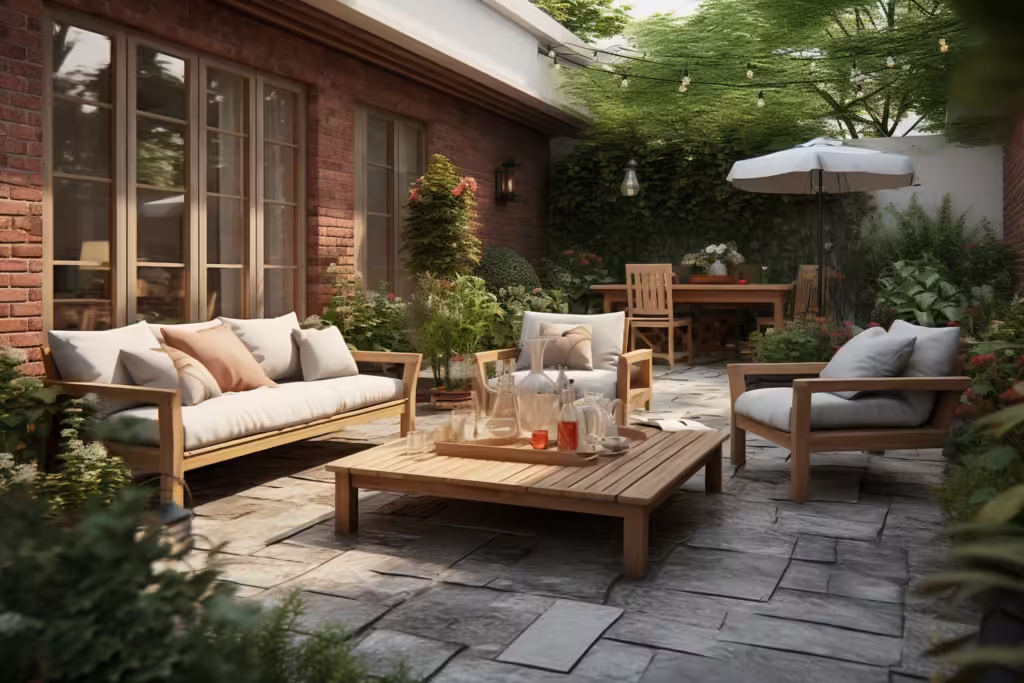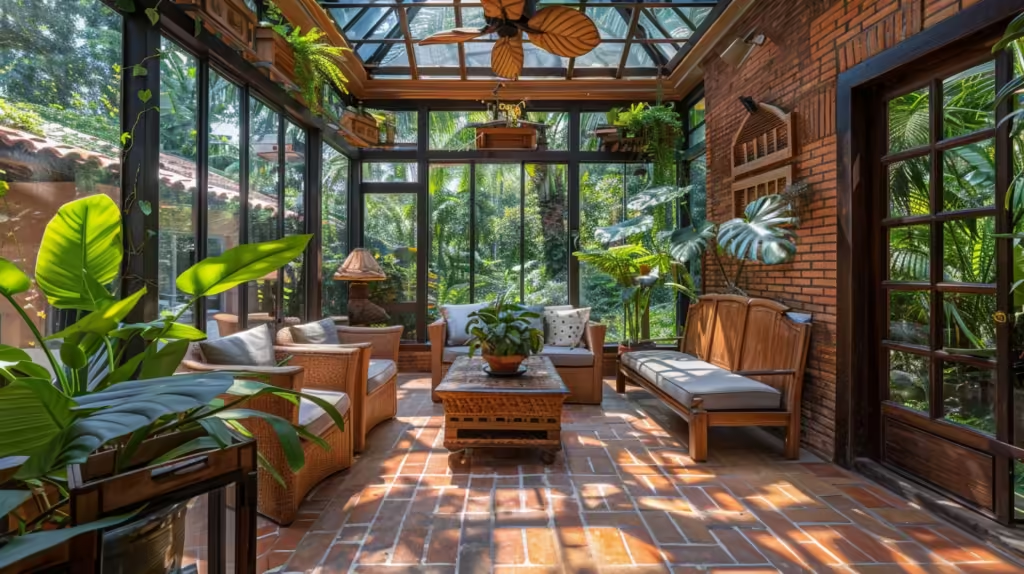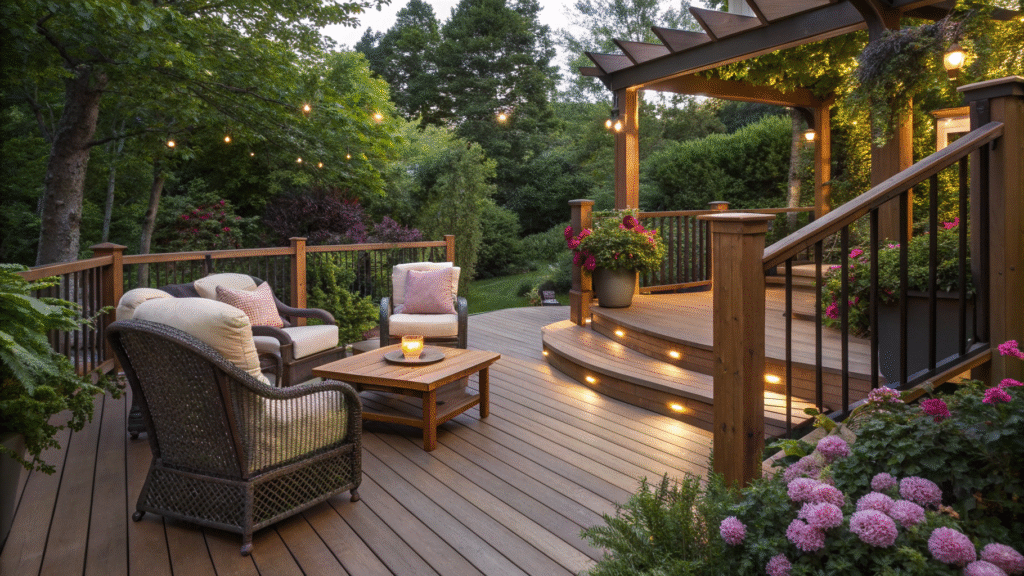
13+ Creative Deck Corners You’ll Never Want to Leave
A deck corner is one of the most underused and most underestimated spaces in any outdoor area.
Most people treat corners as dead zones, the awkward edges where the main furniture arrangement runs out of ideas.
But a well-designed deck corner can become the most compelling, most personal, and most consistently used spot on the entire deck.
Why Deck Corners Deserve More Design Attention
Corners are where two edges of the deck meet and where the deck boundary is most strongly felt. That sense of enclosure is not a weakness. It is a design opportunity that most people completely overlook.
Love Chic Living Club?
Add us as one of your preferred Google sources and discover more home decor, DIY, outdoor, and lifestyle inspiration from us.
Corners Are Naturally Enclosed
The meeting of two walls, railings, or boundaries at a corner creates an automatic sense of enclosure on two sides. This is the quality that makes nooks and alcoves so appealing in interior design and it is available for free in every corner of every deck. Adding a third element overhead or on a third side turns a corner into a space that feels genuinely sheltered and private in a way that the open middle of the deck can never match.
They Create a Destination Within the Space
A deck without defined zones is just a surface. A deck with thoughtfully designed corners has multiple destinations within it, different spots that serve different purposes and invite different experiences. A reading corner here, a bar corner there, a hammock in the far corner. Each one gives a reason to explore the deck rather than always gravitating to the same spot and makes the whole outdoor space feel larger, richer, and more varied.
They Make the Most of Every Square Foot
Corners are often the least used parts of a deck not because they are the least valuable but because they are the most awkwardly shaped for standard furniture placement. The furniture designed for open floor areas tends to leave gaps and dead zones in corners. Designing specifically for the corner, using built-in bench seating that follows the angle, a hanging chair that suspends freely in the corner space, or a round table that fills the corner geometry, transforms dead space into one of the most productive areas on the deck.
They Suit Intimate Uses That Open Space Cannot
Some of the best things you do on a deck, reading quietly, having a conversation over morning coffee, sitting by a small fire at the end of the day, are fundamentally intimate activities that feel better in an enclosed, sheltered setting than in the open middle of a space. Corners are the natural location for these intimate uses and designing them intentionally for those purposes creates a deck that serves every kind of outdoor moment rather than just the social and performative ones.
How to Design a Deck Corner That Actually Works
A deck corner that is well-designed follows a handful of principles that apply regardless of its purpose or the style of the deck.
Start With the Enclosure
Before deciding on furniture or features, think about how to create enclosure in the corner. The two sides of the corner are already given. The question is what to do about the third side and overhead. A trellis panel on the open third side, tall planters that frame the opening, an overhead shade structure, a pergola section, or a hanging canopy all add the remaining enclosure that turns a corner into a proper space. The level of enclosure you create determines the character of the corner. More enclosure gives intimacy and shelter. Less gives openness with a sense of containment.
You May Also Love
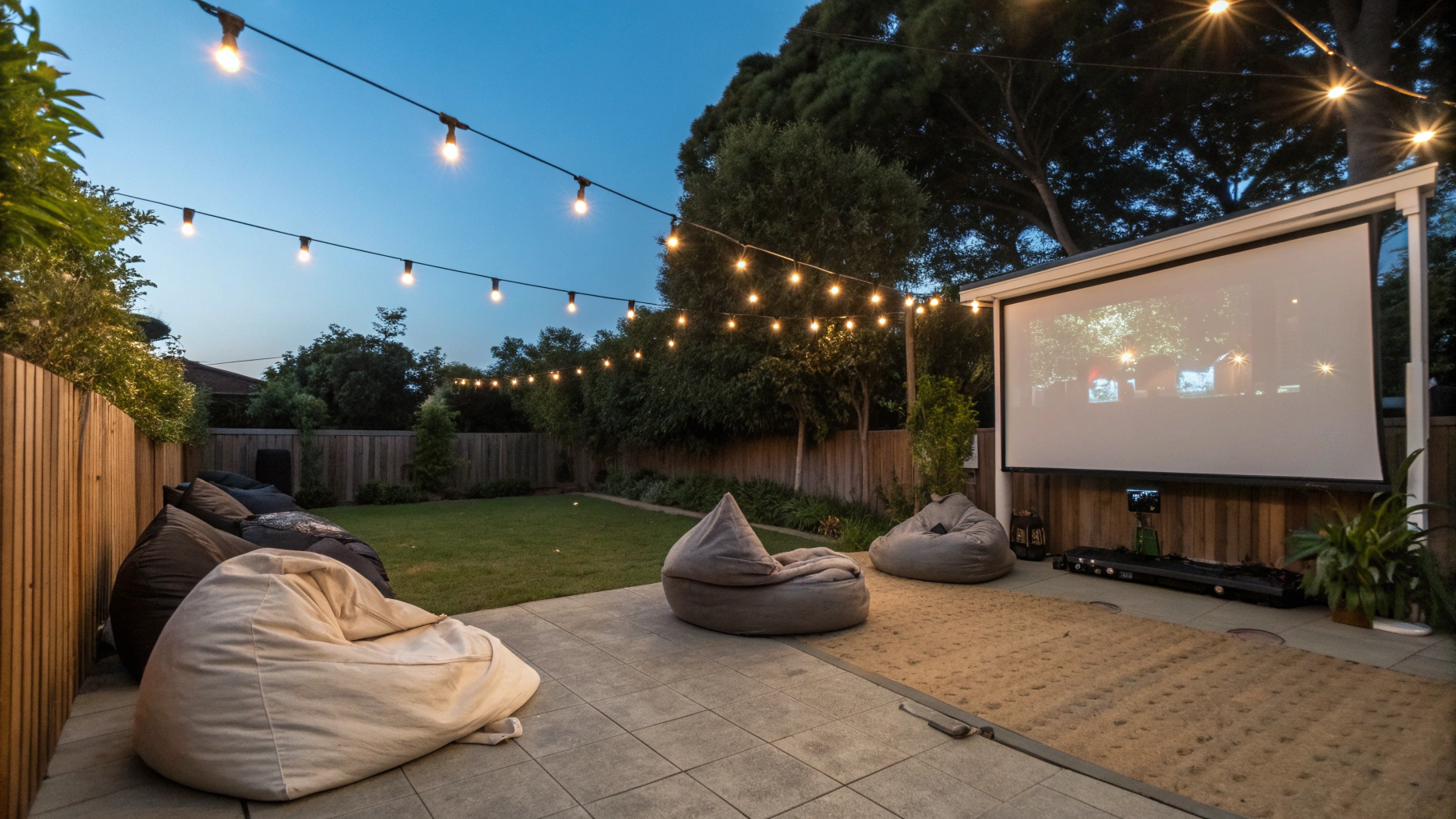
Define the Floor Zone
Even in a corner, a defined floor zone helps the space feel intentional. An outdoor rug under the corner seating, a different decking material or direction in the corner area, or a change in level with a step creates a clear signal that this is a distinct zone rather than just the edge of the main deck. On a small deck where a rug might not be practical, even a deliberate arrangement of furniture that clearly occupies and defines the corner is enough.
Scale Everything to the Corner
A corner is typically a smaller, more intimate space than the main deck area and furniture should be scaled accordingly. A deep sofa that works well in the open deck area may overwhelm a corner. A pair of low armchairs, a hanging chair, a built-in bench, or a compact bistro setup all feel proportionally right in a corner setting. The scale of the furniture is one of the most important factors in whether a corner feels cozy or cramped.
Light It Separately
The best deck corners feel like their own space in the evening and that separation comes largely from lighting. A corner that is lit differently from the main deck area has its own identity after dark. String lights within the corner canopy, a floor lamp in one corner of the seating arrangement, a lantern on the side table, or recessed step lighting around the corner perimeter all create a pool of intimate, self-contained light that makes the corner feel like a separate, private zone even without physical walls.
Deck Corner Design for Different Deck Styles
The right corner treatment depends on the overall style of the deck and the home it belongs to.
For Contemporary Decks
Clean lines, a single material used consistently, slim-profile furniture in neutral tones, architectural planting in the corner, and integrated lighting that is flush and unobtrusive. The contemporary deck corner is defined by what is left out as much as what is included. A single hanging chair, a single large architectural plant, and a recessed floor light in each corner is all that is needed to create a corner that feels considered and complete.
Don't miss: 15+ Creative Outdoor Fireplace Patio Ideas →
For Rustic and Farmhouse Decks
Rough-sawn timber built-in seating with a generous seat cushion, a small crate or basket for a side table, trailing plants in terracotta pots, lanterns on the floor and on the ledge, and a throw blanket draped over one end. The farmhouse deck corner should feel like somewhere you found rather than somewhere you designed, with a warmth and informality that deliberately styled spaces rarely achieve.
For Coastal Decks
Rope-wrapped details, natural rattan or wicker seating, bleached or whitewashed timber, ornamental grasses or coastal plants in generous pots, string lights in a loose canopy above, and accessories in navy, white, and natural linen tones. The coastal deck corner should feel like the most relaxed spot at a beach house, somewhere you sit down and immediately feel the pressure of the day dissolving.
For Traditional and Colonial Decks
A classic bench or loveseat with painted timber frame, cushions in a traditional pattern, potted topiary or box balls in matching planters on either side, a pendant lantern above, and planting that includes fragrant traditional garden plants like roses, lavender, and jasmine. The traditional deck corner should feel permanent and established, as if it has been there and been enjoyed for many years.
Keep Exploring

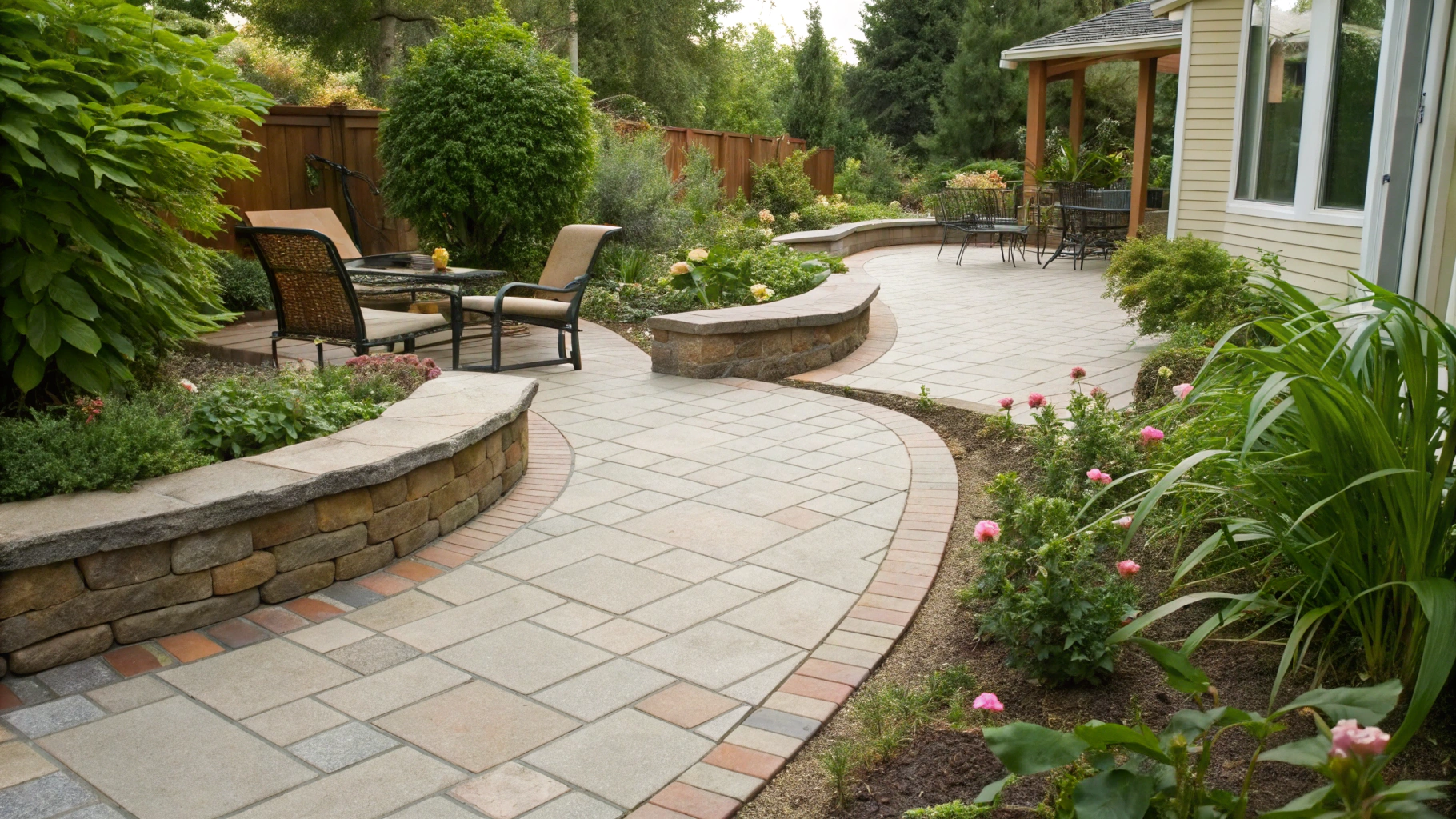
Planting for Deck Corners
Plants are the most powerful tool for transforming a deck corner from an awkward geometry problem into a beautiful, enclosed, and atmospheric space. Here is how to use them most effectively.
Use Height Strategically
Tall plants in the back of the corner and lower plants toward the open front creates a sense of depth and enclosure that low planting alone cannot achieve. A bamboo, a tall ornamental grass, or a trained climber on a trellis panel at the back of the corner, with medium-height flowering plants in the middle and low ground cover or trailing plants at the front, creates a layered, naturalistic planting arrangement that feels genuinely lush and designed.
Include Fragrance
An enclosed corner concentrates scent in a way that open spaces do not. A fragrant climbing rose on the trellis, a jasmine trained around the corner post, lavender at the front of the planting, or a pot of mint or rosemary on the step all make a corner significantly more sensory and more memorable. The fragrance is part of the experience of being in the corner and it is the detail that people notice most viscerally even if they cannot immediately identify why the corner feels so appealing.
Choose Plants That Suit the Light
Corner positions on a deck can be significantly shadier than the open deck area, particularly if there is an overhead structure. Choose plants that genuinely suit the light level available in the corner rather than the plants you find most attractive. Shade-tolerant plants in a shaded corner will look beautiful and thrive. Sun-loving plants in the same corner will struggle, look unhappy, and require constant replacement.
These ideas will show you exactly how to transform every corner into somewhere you genuinely never want to leave.
1. Reading Nook Corner
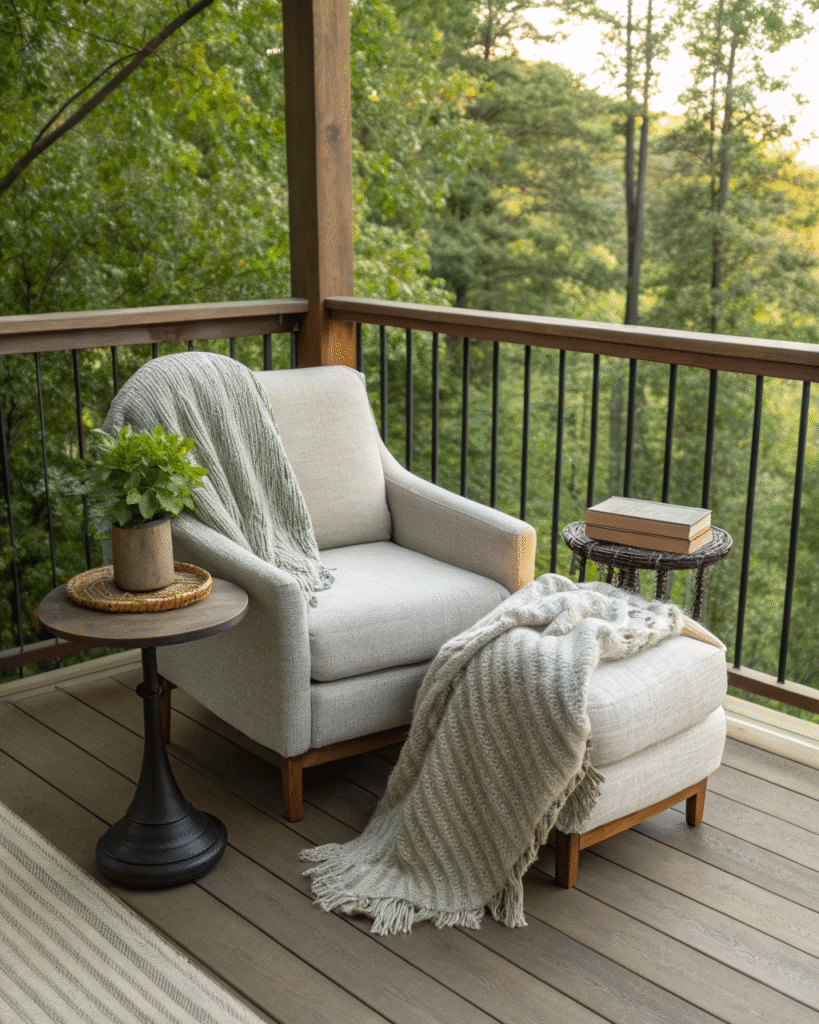
Add a comfy chair, side table, and soft throw to create a quiet reading escape.
Pro Tip: Surround the space with potted plants or a small screen for added privacy.
2. Corner Planter Display
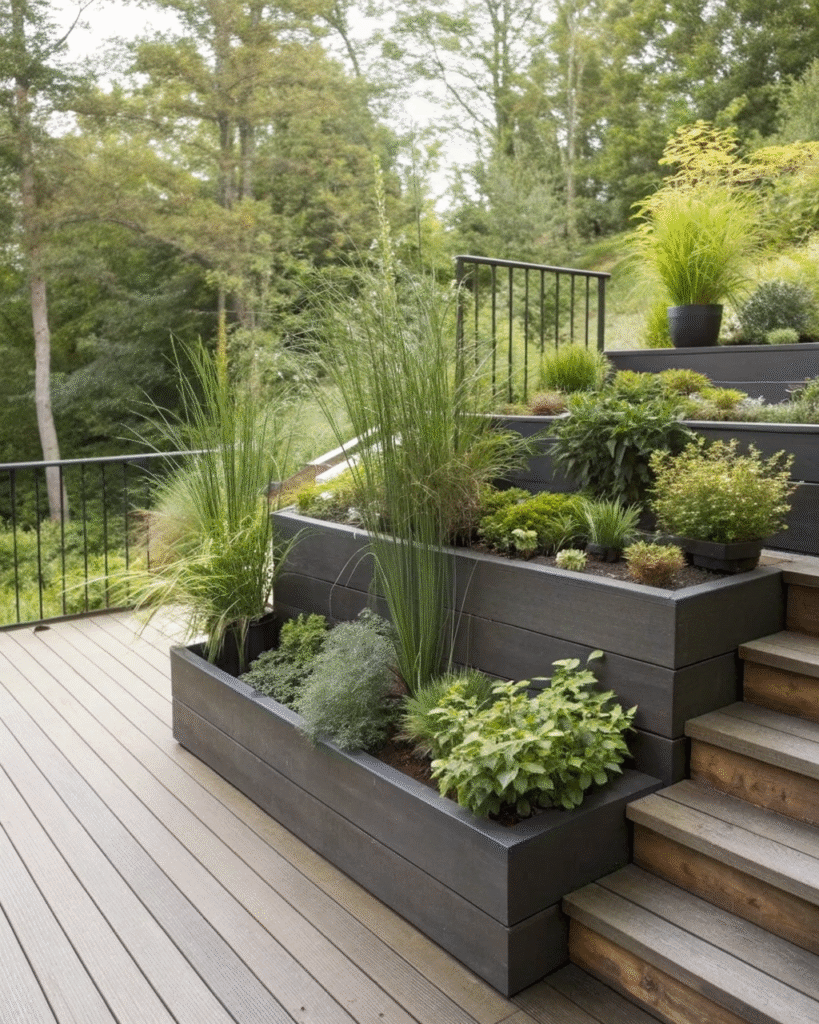
Fill a deck corner with tiered planters or tall greenery for a vibrant, natural touch.
Pro Tip: Mix plant heights and leaf textures for a full, layered effect.
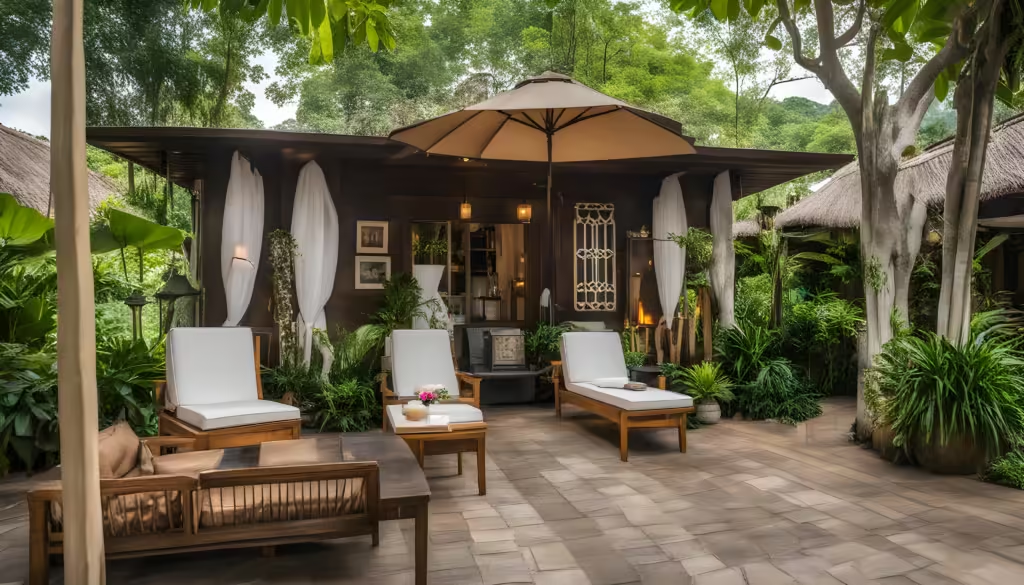
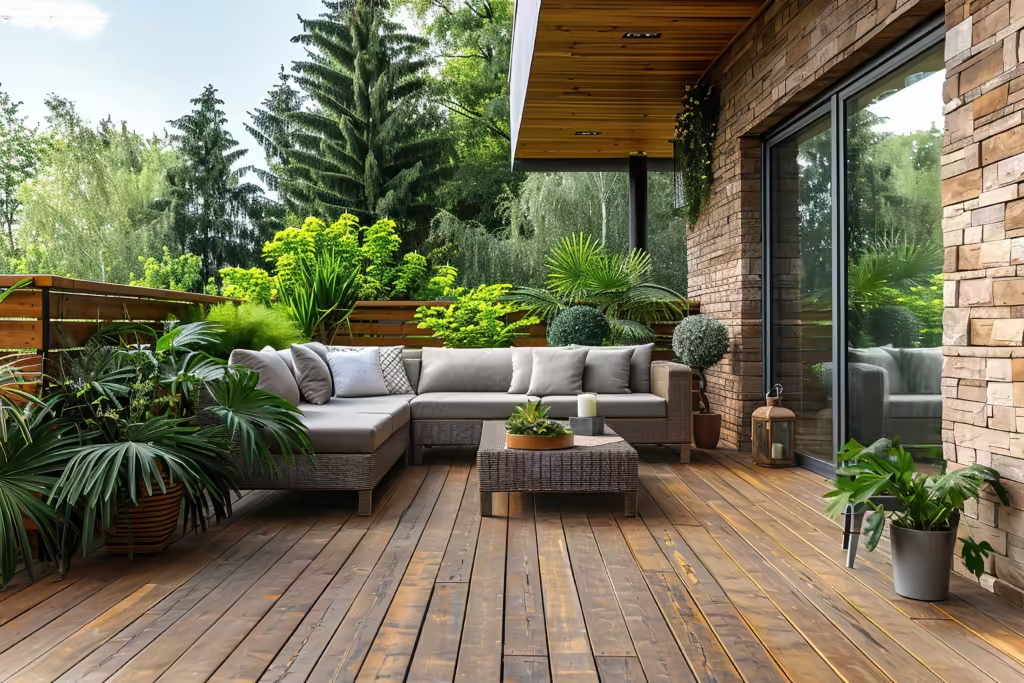
3. Cozy Lounge Setup

Transform a corner into a lounge with an L-shaped sofa or bench seating.
Pro Tip: Use outdoor cushions in warm tones for comfort and style.
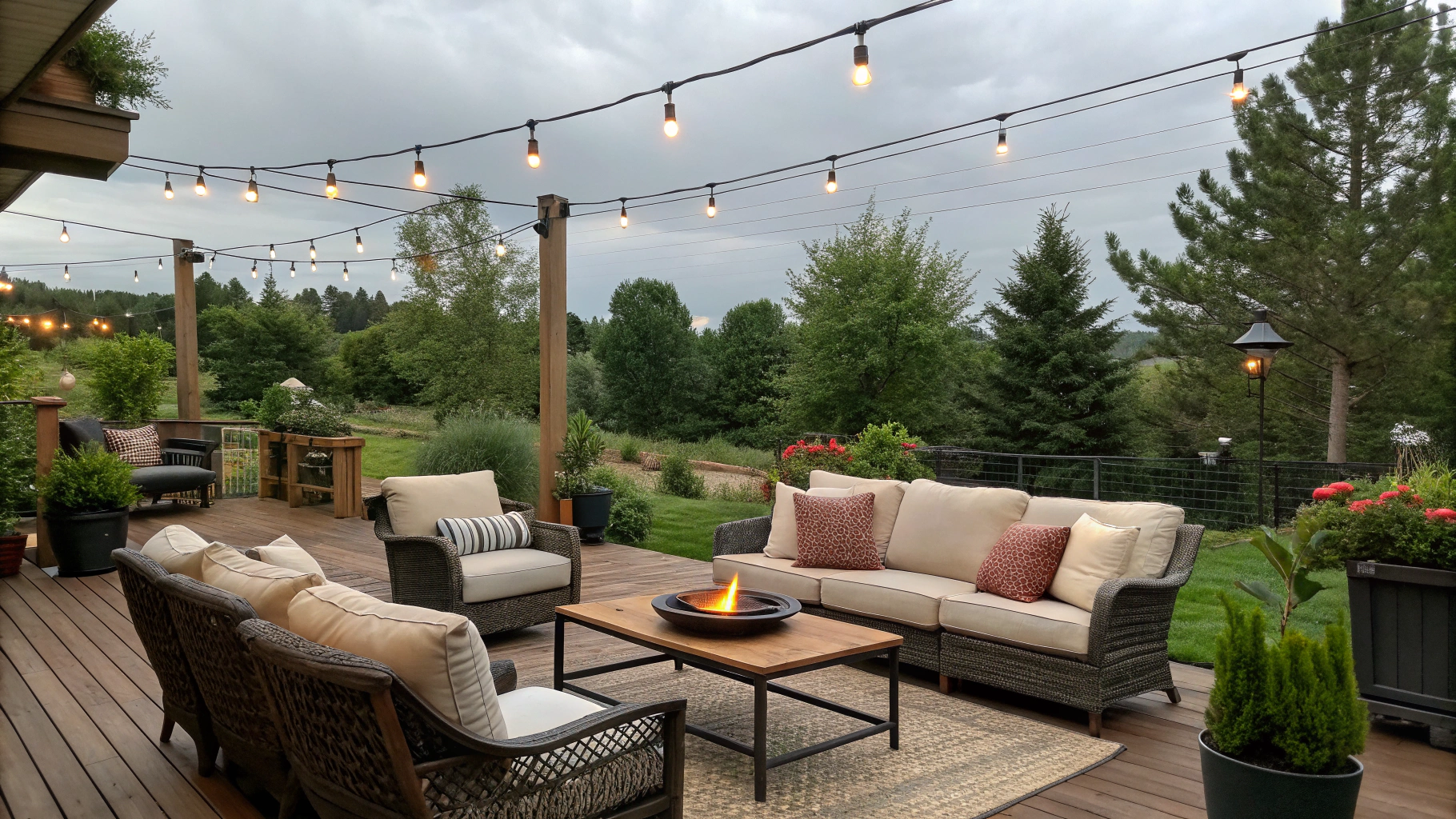
4. Fire Pit Corner
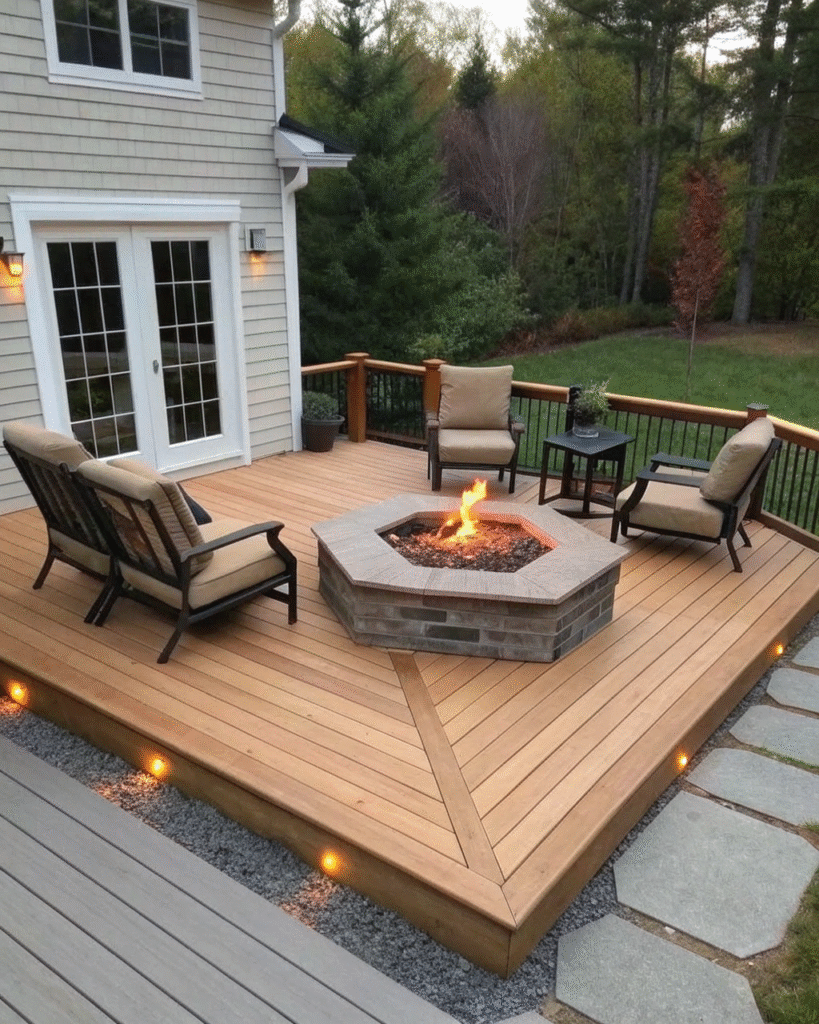
Install a small fire pit with seating around it for cozy evenings outdoors.
Pro Tip: Add string lights overhead to make the space glow at night.
5. Hammock Retreat

Hang a hammock in your deck corner for a calm and relaxing spot.
Pro Tip: Use neutral fabric and add a side table for a balanced, peaceful look.
6. Dining Corner

Set up a small dining table and chairs in one corner for intimate meals.
Pro Tip: Use a round table to save space and encourage easy movement.
7. Zen Garden Space

Fill the corner with pebbles, a small water feature, and minimalist plants.
Pro Tip: Keep the design simple and use calming tones like gray, beige, and green.
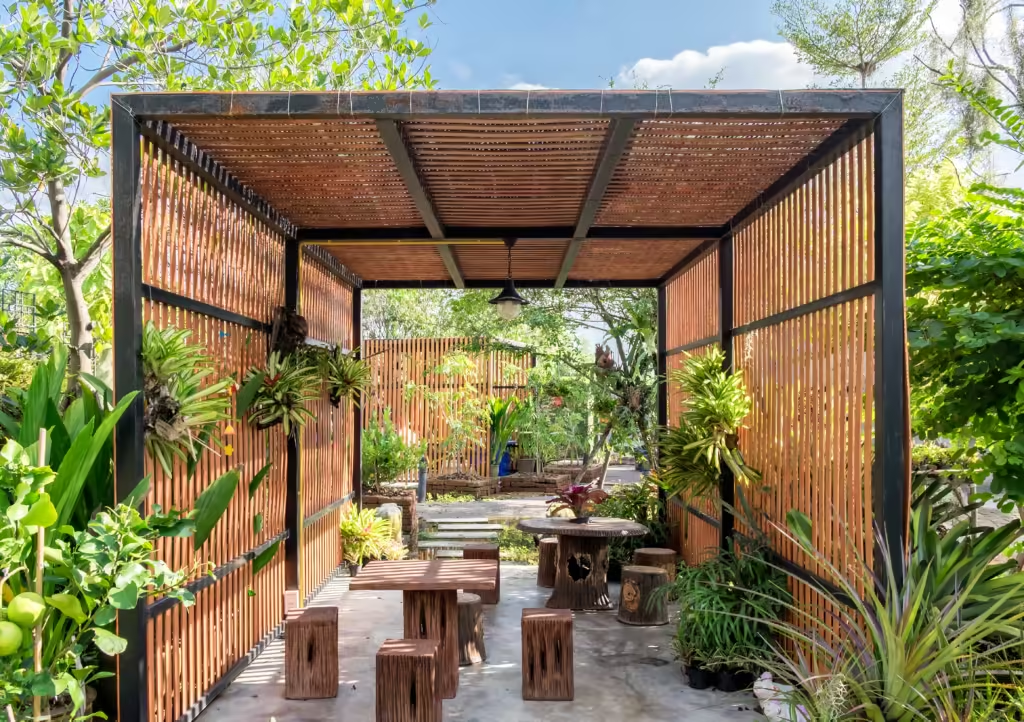
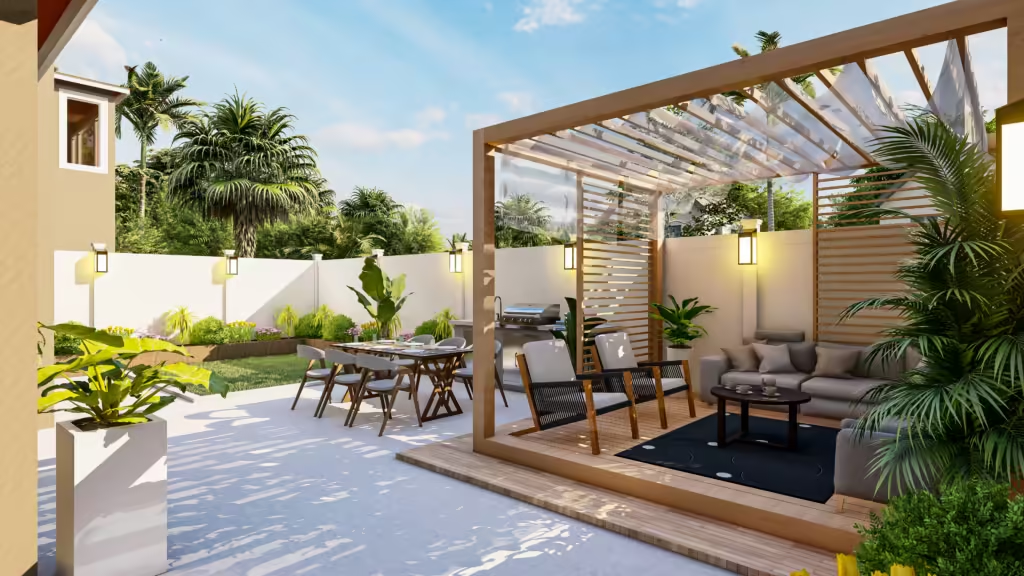
8. Corner Pergola

Add a compact pergola to define your corner and offer gentle shade.
Pro Tip: Decorate with climbing vines or string lights for a romantic feel.
9. Built-In Bench Seating
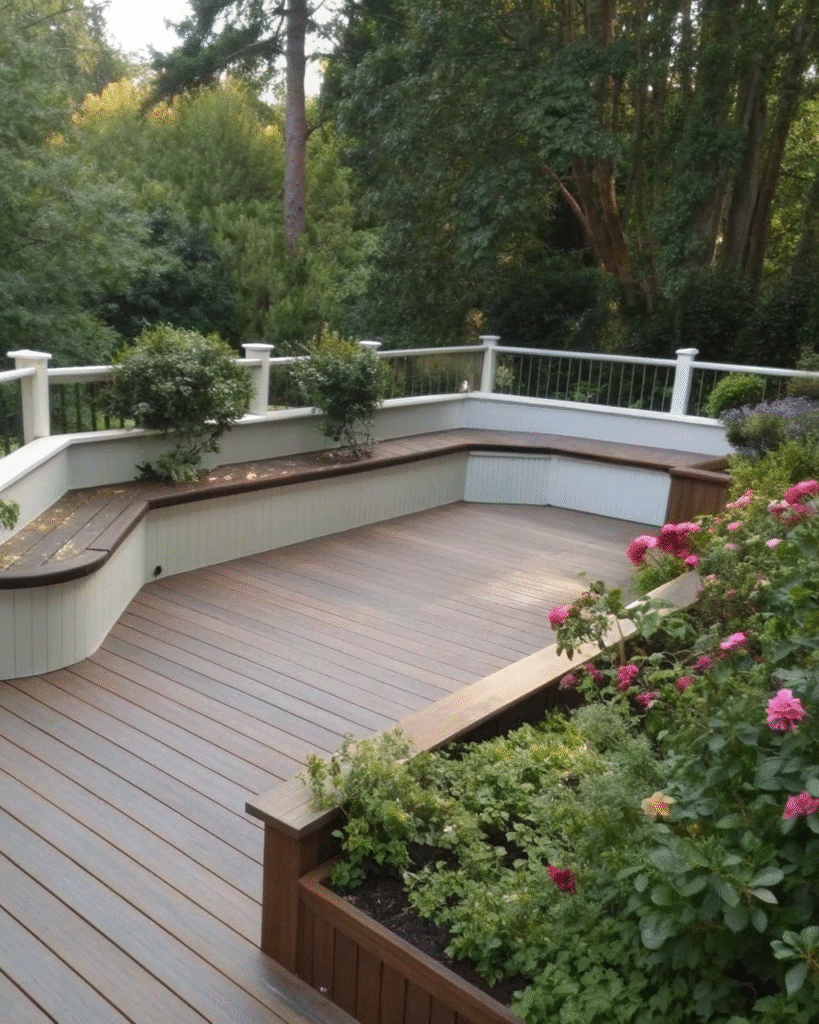
Built-in benches fit perfectly into corners and create a sleek, integrated look.
Pro Tip: Add storage underneath to keep extra cushions or blankets handy.
10. Corner Bar Setup
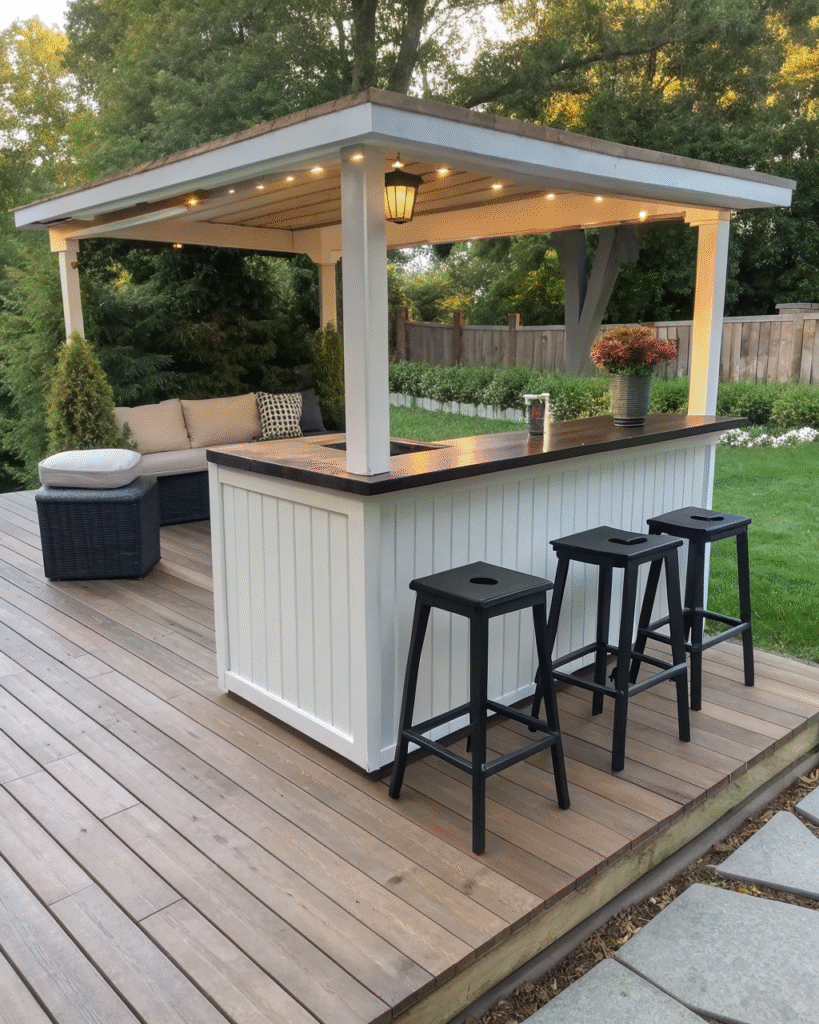
A small outdoor bar turns your deck corner into an entertaining hub.
Pro Tip: Include a mini fridge or storage cart to keep drinks within reach.
11. Swing Chair Corner
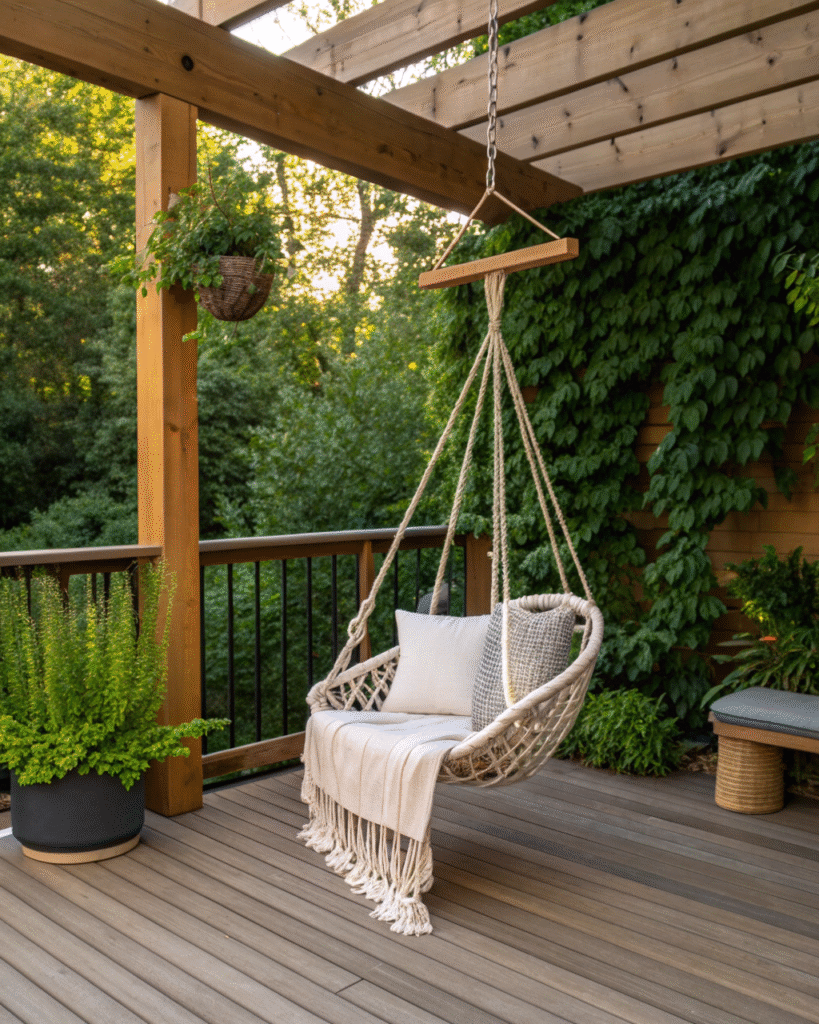
A hanging swing chair adds movement and charm to unused corners.
Pro Tip: Pair with cozy cushions and a rug to make it feel like an outdoor living room.
12. Artistic Accent Area

Use the corner to showcase outdoor art, a sculpture, or a feature wall.
Pro Tip: Add soft lighting to highlight textures and details after sunset.
13. Morning Coffee Spot
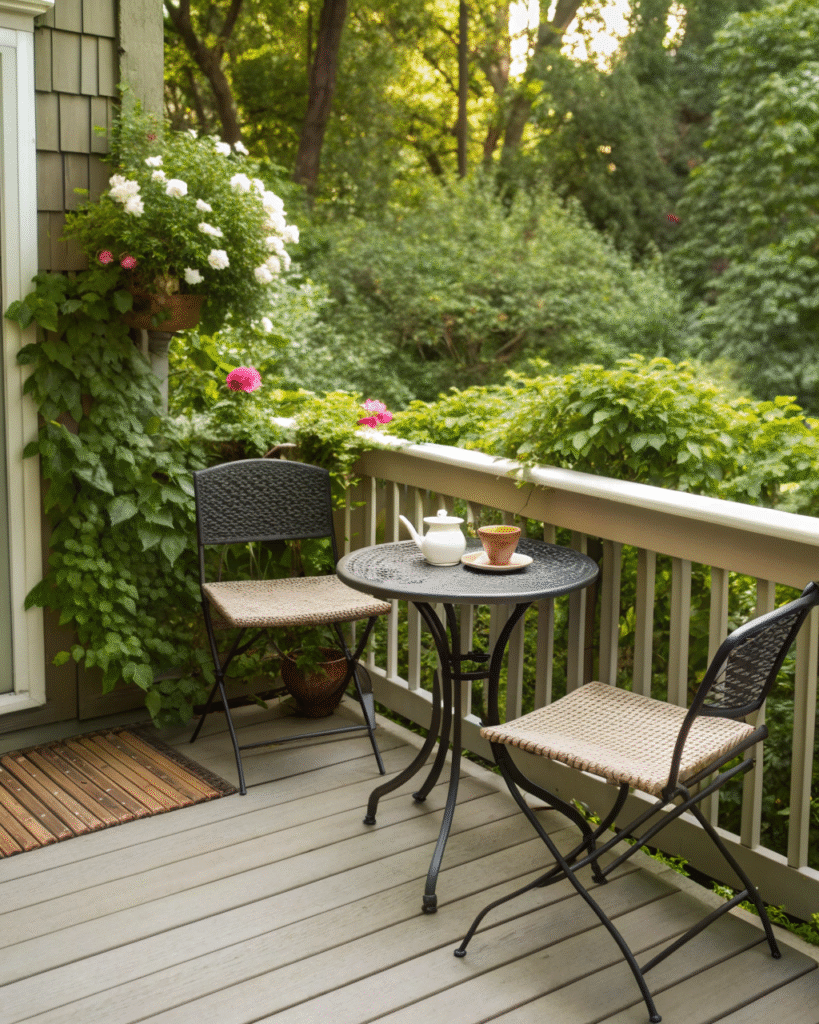
Place a bistro table and two chairs for a simple, serene coffee nook.
Pro Tip: Face it toward your garden or sunrise view for the perfect morning ritual.
Final Thoughts
Every deck has corners and every corner has the potential to become the best spot on the whole deck. It takes a deliberate design decision, the right furniture scaled for the space, some element of enclosure, good lighting for the evening, and a clear sense of purpose.
Whether you create a reading nook that you disappear into on weekend mornings, a fire pit corner that draws the whole family outside on cool evenings, or a swing chair retreat that becomes your personal favorite spot in the entire house, a well-designed deck corner repays every bit of attention you give it.
Start with one corner this season and see what a difference it makes to how you use and how much you love your outdoor space.
Frequently Asked Questions
How do I make a deck corner feel more private?
Tall planters with screening plants like bamboo or ornamental grasses on the open side of the corner, a trellis panel with climbing plants, outdoor curtains hung from a corner pergola beam, and a canopy overhead all create meaningful privacy in a corner without permanent construction. Positioning the seating with its back toward the overlooked direction and facing into the deck or garden also reduces the sense of exposure significantly.
What is the best furniture for a deck corner?
Built-in L-shaped bench seating is the most space-efficient and most architecturally resolved choice. Among freestanding options, a hanging egg chair, a pair of low armchairs, or a compact corner sofa all work well in deck corners. The most important criteria are that the furniture is scaled for the corner rather than for the open deck, that it creates a sense of enclosure rather than emphasising the openness of the space, and that it serves the specific purpose the corner is designed for.
How do I add lighting to a deck corner?
String lights within an overhead canopy or pergola structure, a floor lamp in one corner of the seating arrangement, recessed step lights around the perimeter of the corner, and one or two lanterns at table level create the most effective and most atmospheric deck corner lighting. The goal is a pool of warm, intimate light that makes the corner feel self-contained and separate from the rest of the deck rather than part of a uniform overall lighting scheme.
Can I create a corner feature on a very small deck?
Yes and on a small deck, a well-designed corner feature is even more important than on a large one because it gives the limited space a defined purpose and character. A single hanging chair in one corner, a compact bistro setup in another, or a simple planter display in the third corner gives a small deck multiple distinct destinations and makes it feel significantly larger and more varied than an undifferentiated open space with furniture placed in the middle.
What plants work best in deck corners?
Plants that provide height and screening, like bamboo, tall ornamental grasses, and climbers on a trellis, are the most useful in corner positions where they contribute to the sense of enclosure. Fragrant plants like jasmine, lavender, rosemary, and climbing roses add a sensory dimension that makes corners particularly appealing. Choose plants that suit the specific light conditions of the corner, which is often shadier than the main deck, and that do not drop excessive debris onto the deck surface.
How do I make a corner feel cozy without making it feel cramped?
The distinction between cozy and cramped in a corner is primarily one of scale and intention. Furniture that is sized correctly for the corner rather than oversized for it, overhead enclosure that is high enough to feel sheltering rather than low enough to feel oppressive, planting that frames the corner rather than overwhelming it, and lighting that creates a warm pool rather than harsh brightness, all contribute to coziness. Cramped happens when too much furniture is forced into too small a space without thought for proportion, circulation, or visual breathing room.