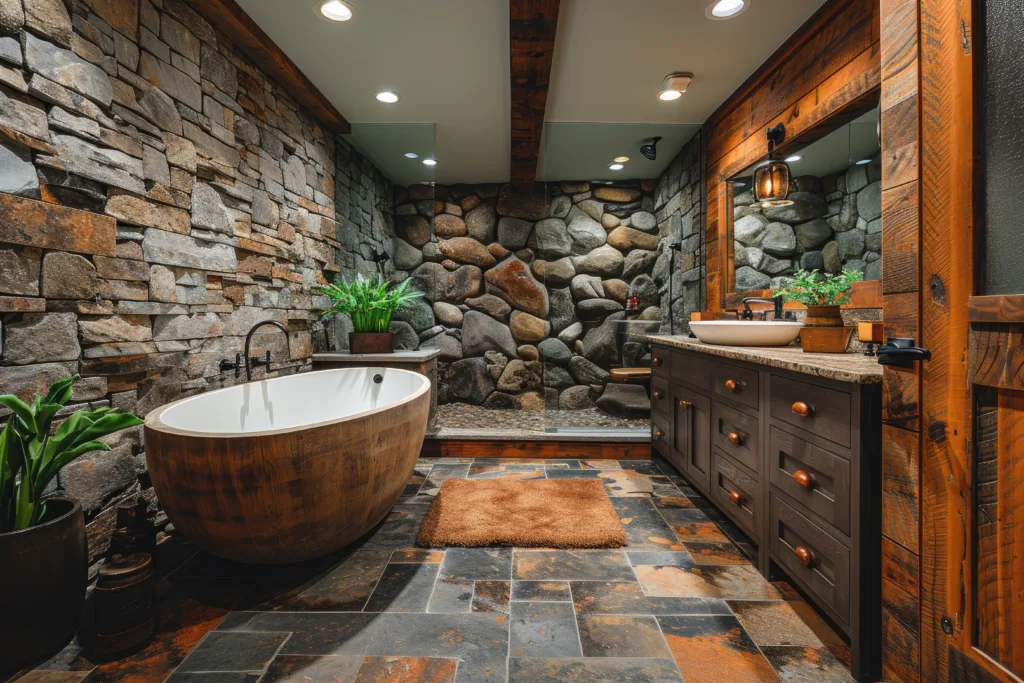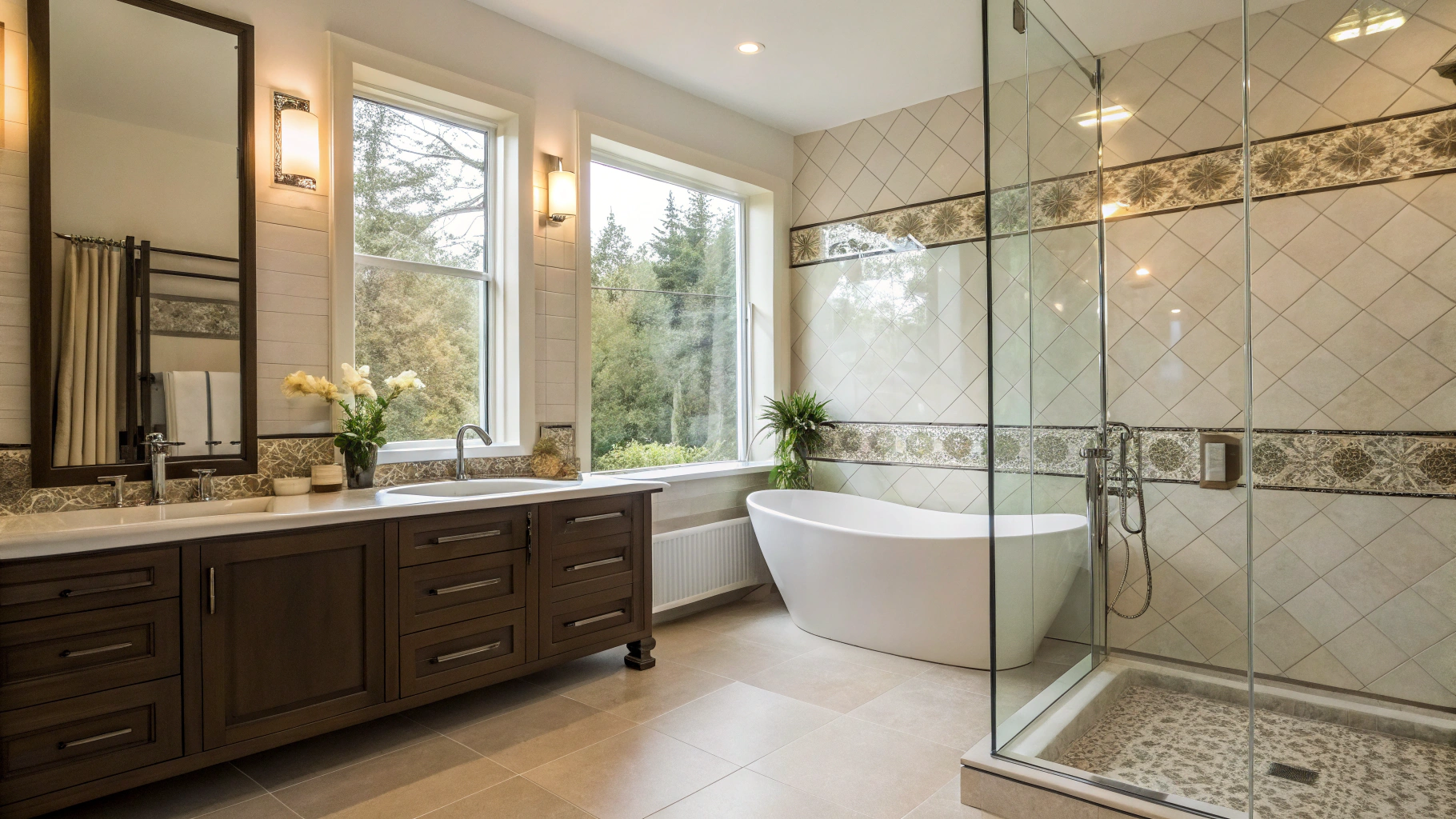
How to Decorate a Bathroom That Feels Like a Retreat
A complete guide to bathroom design, from tiles and vanities to lighting, storage, colour, and the small details that turn a purely functional room into one you genuinely look forward to being in.
KEY POINTS
- A bathroom that feels like a retreat is not about having a large space or an expensive renovation. It is about getting the lighting, the materials, and the finishing details right.
- Tile, the vanity, and the shower are the three decisions that set the character of the whole room. Everything else responds to those choices.
- Small bathrooms reward clever thinking more than large ones. The constraints produce some of the most interesting and most beautiful bathroom designs available.
The bathroom is one of the few rooms in a home where you are alone, the door is closed, and the outside world is completely absent. That quality makes it one of the most underappreciated design opportunities in any house. Most bathrooms are treated as purely functional spaces, designed to contain the necessary fittings and nothing more. The result is a room that works but feels like a chore to be in rather than a pleasure.
Love Chic Living Club?
Add us as one of your preferred Google sources and discover more home decor, DIY, outdoor, and lifestyle inspiration from us.
Getting a bathroom right does not require a complete gut renovation or a significant budget. It requires understanding which decisions have the most impact on how the room feels, in what order to make them, and what the finishing details are that separate a bathroom that functions from one that genuinely restores. This guide covers all of it.
RELATED: 13+ Bathroom Remodel Ideas That Feel Like a Spa
Start With the Layout
The layout of a bathroom is the most constrained decision in any room because it is largely determined by where the existing plumbing runs. Moving a toilet or a shower to a completely different wall is possible but expensive and disruptive, and in most bathroom projects it is not necessary. The layout question is more often about optimising what you have: whether the door swings the right way, whether there is clearance on both sides of the toilet, whether the vanity position makes sense for how the room is used.
The most common bathroom layout problems are not structural. They are about how the existing fittings relate to each other and to the door. A vanity that blocks the door from opening fully, a toilet positioned so close to the vanity that the space feels cramped, a shower that has no natural light: these are issues worth addressing before choosing a single tile. The bathroom layout remodel ideas that improve flow without moving plumbing cover the adjustments that make the most practical difference within the constraints most bathrooms present. For smaller rooms specifically, the small bathroom layout ideas and the small bathroom remodelling layouts that genuinely maximise a tight floor plan are worth understanding before committing to any fixture choices.
Choose Tile That Does the Work
Tile covers more surface area in a bathroom than almost any other material and is the single decision most responsible for the room’s visual character. It is also one of the more permanent and more expensive decisions to undo, which makes it worth thinking through carefully before committing.
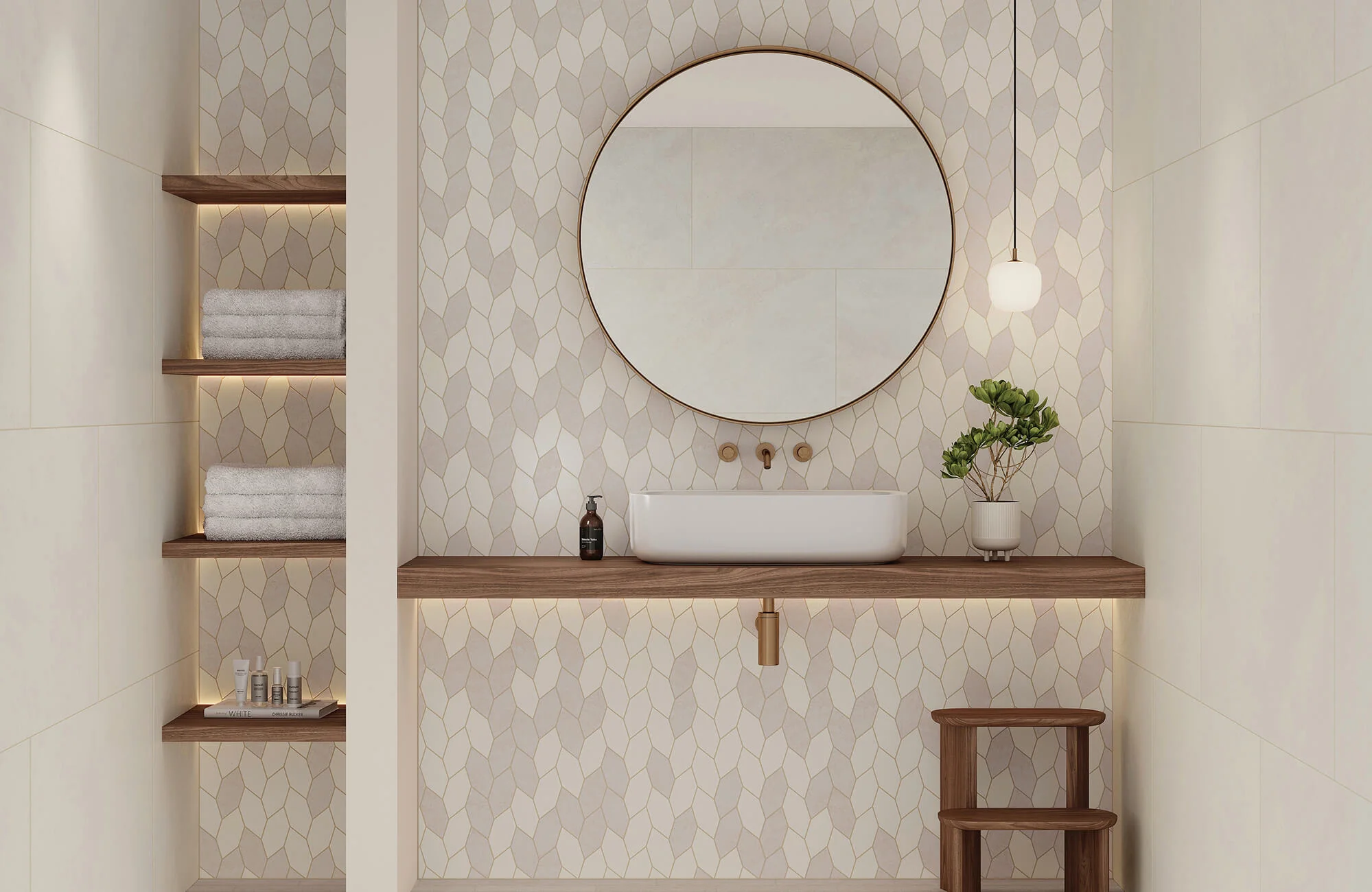
The most enduring bathroom tiles are the ones chosen with the specific room in mind rather than simply the ones that looked best in a showroom. Scale matters: a large-format tile makes a small bathroom feel more expansive because there are fewer grout lines interrupting the visual field. A small mosaic tile adds texture and interest in a large shower but can feel busy if used across every surface. The bathroom tile remodel ideas that consistently produce the most considered results are the ones where the tile choice responds to the room’s proportions rather than being chosen in isolation.
The trending tile patterns that have staying power beyond the moment tend to be the ones with a material quality that improves with age: handmade terracotta in warm earthy tones, zellige in a soft white or sage, encaustic cement tiles with a geometric pattern in muted tones, classic subway in a format with enough variation to feel handcrafted rather than generic. The patterns that date quickly are almost always the ones that were primarily a response to what was fashionable rather than what suits the room and its materials.
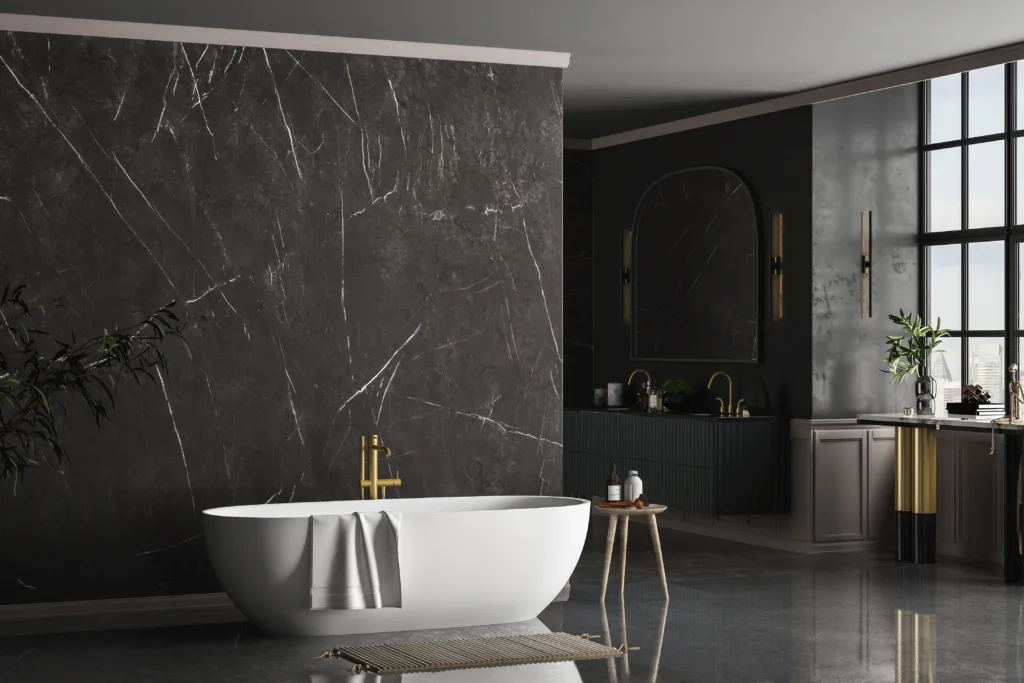
Textured bathroom walls in limewash, microcement, or tactile plaster finishes have become popular precisely because they introduce warmth and depth in a way that flat-painted walls never achieve. The combination of a textured plaster wall in a warm tone with a simple rectangular tile in the shower or bath zone creates a material contrast that makes the whole room feel more considered without requiring an elaborate or expensive tile choice.
RELATED: 15+ Bathroom Tile Remodel Ideas Worth Copying
Get the Vanity Right
The vanity is the most-used surface in the bathroom and the one that frames the mirror, which means it is also the one you look at most. Getting the vanity right, in terms of scale, storage, and material, makes a disproportionate difference to how the room feels and how it functions daily.
Scale is the first consideration. A vanity that is too small for the room looks mean and provisional. One that is too large makes the remaining floor space feel cramped. In general, the vanity should be as wide as the wall space comfortably allows, stopping short of the toilet or any adjacent fitting by enough clearance to feel generous rather than squeezed.
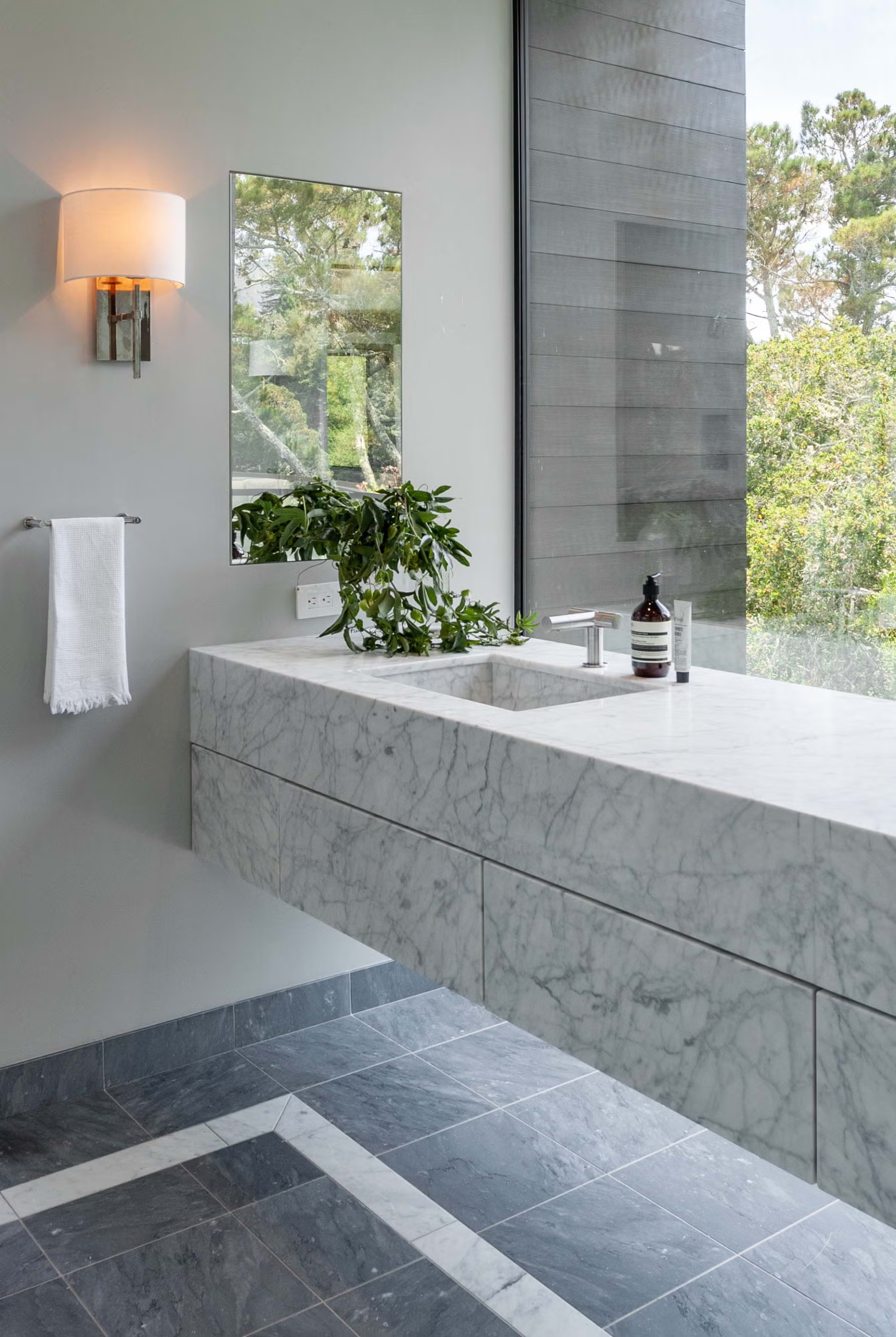
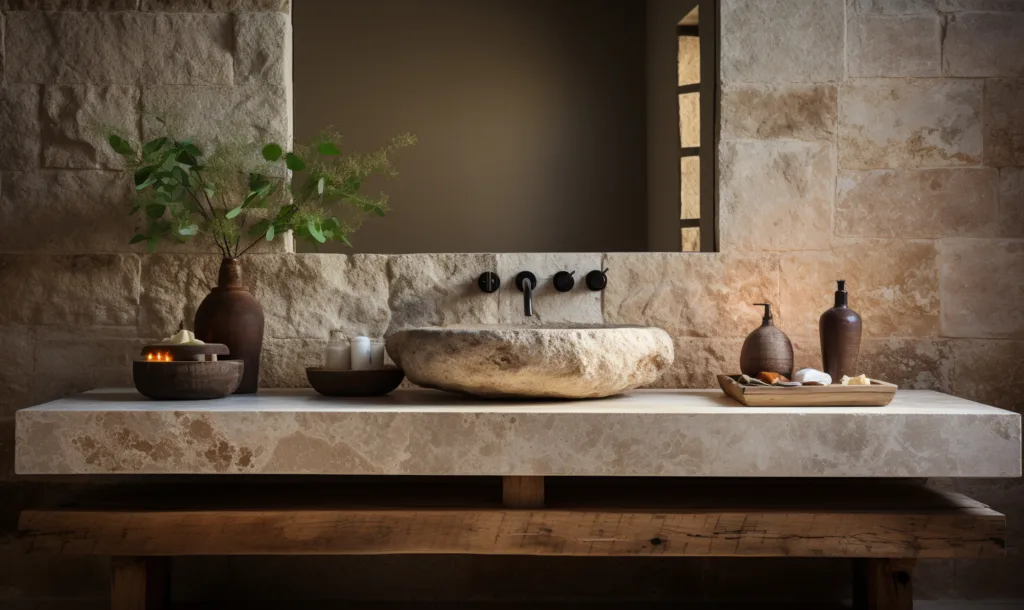
The choice between an undermount basin set into a stone or quartz top and a vessel basin sitting above the surface changes the whole character of the vanity. An undermount creates a seamless, clean line that is easy to wipe down and suits a more pared-back aesthetic. A vessel basin in ceramic, stone, or a creative sink design becomes a sculptural focal point of the whole room, which works beautifully when the rest of the space is calm enough to let it be the star.
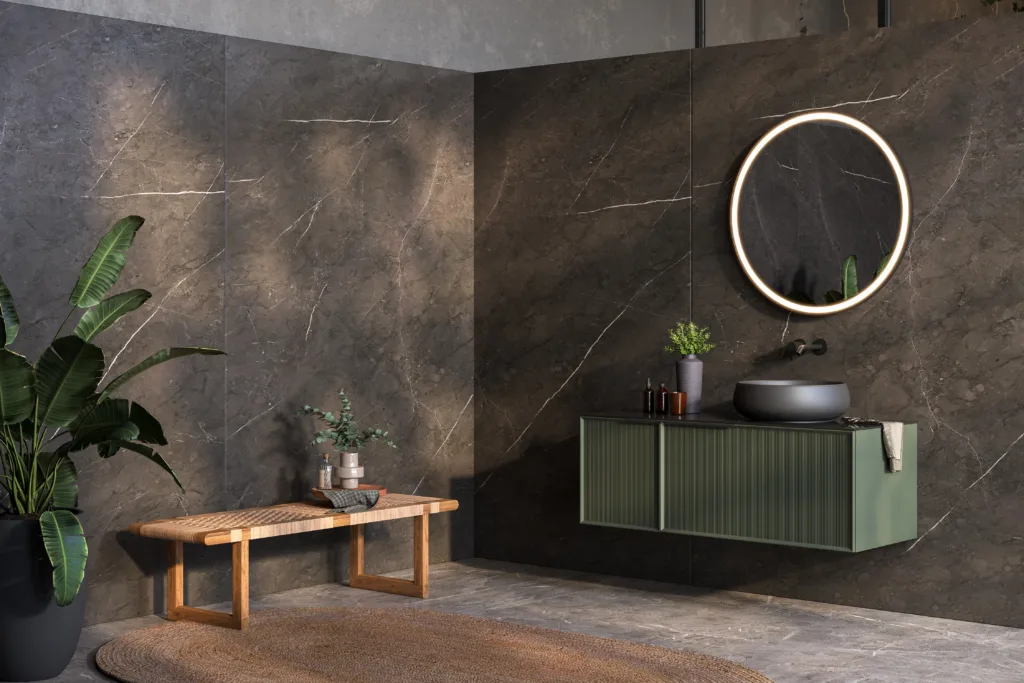
Bathroom vanity remodel ideas that update an existing vanity without full replacement cover the changes that have the most impact for the least outlay: new hardware, a fresh coat of paint on the cabinet in a considered colour, a new basin, or a replacement worktop. These four changes, done individually or together, can shift the character of a bathroom substantially without touching the plumbing.
Design the Shower
The shower is where most people spend the most functional time in the bathroom, and a shower that is badly sized, poorly lit, or tiled in a way that makes it feel dark and enclosed is a daily source of low-level frustration. Getting it right is worth considerably more thought than the standard choice of a glass enclosure and whatever tile is on promotion.
The most immediately impactful shower upgrade available at almost any budget is to remove any frame from the glass enclosure. A frameless glass panel or a walk-in configuration with no door at all removes the visual interruption of a metal frame and makes the shower feel considerably larger and more open, even if the physical dimensions have not changed at all.
Tile choice in the shower should prioritise the effect of being inside it, not just how it looks from across the room. A stone and marble shower creates a quality of material luxury that is immediately felt under the water. A large-format tile with a subtle surface texture feels like standing in a considered space rather than a standard enclosure. The shower remodel ideas that feel genuinely transformative are almost always the ones that treat the shower as the primary design moment of the bathroom rather than as a functional box to contain within the room.
Shower lighting is consistently overlooked and consistently important. A recessed waterproof fitting directly above the shower head provides functional illumination. A second fitting toward the back of the shower, or a light set into a niche, eliminates the shadow that a single overhead source creates and makes the whole enclosure feel brighter and more generous.
Fix the Lighting
Bathroom lighting is almost always worse than it should be, and the consequences are immediate: a bathroom where you cannot see your face properly in the mirror is a bathroom that makes getting ready more frustrating than it needs to be, regardless of how beautifully designed everything else is.
The classic vanity lighting mistake is a single fitting above the mirror that casts downward shadows on the face. Lighting positioned at either side of the mirror at face height, whether as sconces or as a vertical strip fixture, produces the even, shadow-free illumination that actually shows you what you look like. It is the arrangement used in professional makeup studios and theatre dressing rooms for exactly this reason.
Beyond task lighting at the mirror, bathroom lighting remodel ideas that layer different sources create an atmosphere in the evening that a single ceiling fixture never achieves. Recessed downlights on a dimmer for general illumination, mirror lighting for tasks, and perhaps a low-level decorative fitting near the bath for the kind of warm, ambient light that makes a soak in the bath feel genuinely restorative rather than merely functional. The light-filled bathroom layouts that feel most successful are the ones where natural and artificial light have both been considered from the outset, with windows positioned to bring in as much daylight as possible and the artificial layer designed to complement rather than compensate.
TIP: Fit a dimmer to at least one bathroom lighting circuit. The ability to bring the overhead light down for an evening bath makes the bathroom feel like a genuinely different space from the bright, functional room it is in the morning. This single change, which costs almost nothing, is the most impactful improvement available to any bathroom where the lighting currently operates at one level only.
Colour and Material Choices
The colour palette of a bathroom is largely determined by the tiles and the vanity, which means the wall colour is usually a supporting role rather than a lead one. The bathrooms that feel most cohesive are the ones where the wall tone responds to the tile and vanity rather than being chosen independently.
Warm, calm tones serve most bathrooms best. The combination of warm wood bathroom elements with white or cream walls creates an organic warmth that feels genuinely relaxing. Earth-toned bathroom designs in terracotta, warm clay, and soft olive have a quality of groundedness and calm that cooler palettes rarely achieve. For a more minimal, contemporary approach, the subtle luxury bathroom details that use a restrained palette with exceptional materials, one beautiful tap, one good stone surface, one well-chosen tile, produce a result that feels genuinely elevated without looking overdone.
The hardware finish across the bathroom should be consistent. Mixing chrome, brushed nickel, and brass in the same bathroom creates a visual incoherence that is difficult to pin down but easy to feel. Choosing one finish and applying it to every tap, handle, towel rail, and fitting, whether that is matte black accents for a contemporary edge, brushed brass for warmth and luxury, or polished chrome for a clean and timeless result, gives the bathroom a cohesion that elevates every individual element.
RELATED: 17+ Bathroom Color Ideas That Work for Remodels
Sort the Storage
A bathroom that looks beautifully designed with everything put away and feels chaotic the moment daily life resumes is a bathroom with insufficient storage. The countertop above the vanity is the most visible surface in the room and the one most likely to accumulate everything that does not have a home. Solving the storage problem before styling the surfaces is what allows the surfaces to stay clear.
The vanity cabinet is the primary storage solution for most bathrooms, and how it is organised inside matters as much as how it looks outside. A cabinet where everything is visible and accessible, with a designated place for each category of product, stays organised in a way that a cabinet used as a catch-all never does. Drawer dividers, small bins for loose items, and a clear system for what goes where are the unglamorous but genuinely effective interventions.
Open shelf bathroom ideas that keep the display surface considered rather than accumulated are among the most popular bathroom styling approaches, and they work when the things on the shelves are genuinely worth displaying: neatly folded towels, a plant, a few beautiful products in consistent packaging, a candle. They fail when the shelf becomes the place where everything without another home ends up. The bathroom shelf styling that always looks effortless is the result of deliberate editing rather than casual accumulation.
Bathroom storage remodel ideas without clutter cover the full range of solutions at different scales, from recessed niches built into the shower wall for product storage to floor-to-ceiling cabinetry that eliminates the problem entirely. For smaller rooms specifically, small bathroom storage ideas that add capacity without adding bulk are worth looking through before buying any freestanding storage that would further reduce the already limited floor area.
Create a Spa Atmosphere
The quality that most people are reaching for when they say they want their bathroom to feel like a hotel or a spa is not primarily visual. It is atmospheric: a sense of calm, warmth, and being away from the everyday that makes time in the bathroom feel restorative rather than just functional.
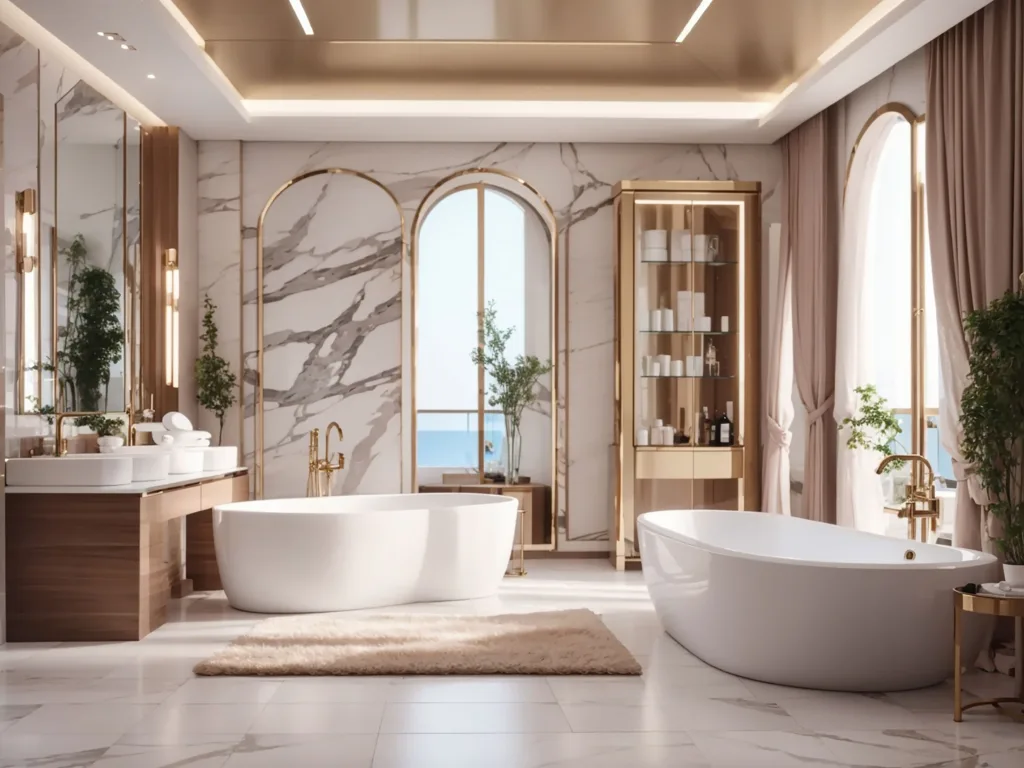
The elements that create this atmosphere are almost all within reach regardless of budget. Dreamy spa bathroom setups that achieve a genuine sense of retreat use a consistent, warm palette; towels that are soft and plentiful; surfaces clear of daily clutter; and a lighting level that shifts with the time of day and the purpose. A candle lit beside the bath, a warm towel on a heated rail, a plant on the windowsill: these are the details that create the experience.
Bathroom scents and candles contribute to the sensory quality of the room in a way that goes beyond what you can see. The right fragrance in a bathroom changes the experience of being in it immediately. Eucalyptus and mint feel clean and invigorating for morning showers. Lavender and sandalwood feel calming and conducive to unwinding. Cozy candlelight bathroom corners with a small shelf or ledge beside the bath holding a few candles at different heights create the kind of warm, flickering light that no electrical source replicates.
Bathroom plants that genuinely thrive in humid conditions, ferns, orchids, peace lilies, and trailing pothos, bring organic life and a spa-like quality to a bathroom in a way that any number of accessories cannot. A single well-chosen plant in a beautiful pot on the windowsill or on an open shelf changes how the room feels immediately.
Work on the Walls
The walls above the tile line in a bathroom are an opportunity that most rooms leave underdeveloped. A well-chosen paint colour, a single piece of art, or a considered accent treatment above the vanity transforms the upper half of the bathroom and makes it feel like a room rather than a utilitarian space with tiles in it.
Bathroom accent walls that work well in a smaller bathroom tend to be applied to the wall behind the vanity and mirror, which is already the focal point of the room. A painted feature wall in a deeper tone of the main colour, a small-repeat wallpaper in a moisture-resistant finish, or a simple tiled panel above the vanity that ties back to the shower tile all give this wall the visual weight it deserves.
Bathroom art is worth taking seriously. The bathroom is a room where you stand still and look at the walls, which makes it one of the best rooms in the house for a single piece of art that you genuinely love. It does not need to be expensive. A framed botanical print, a simple abstract, a black and white photograph: anything with quality and personal meaning transforms the room in a way that purely decorative accessories cannot.
Make It Work for Guests
A guest bathroom is the one part of your home where visitors are entirely alone and have nothing to look at except the room itself. The impression it creates is disproportionately important relative to its size, and the details that make a guest bathroom feel genuinely considered are almost all small and inexpensive.
Guest bathrooms that make visitors feel at home start with the basics: a clean, clear surface with a hand soap they would actually use, a fresh hand towel, and enough space to put a bag down. From there, a candle, a small plant, and one piece of art on the wall create a room that communicates care in a way that a purely functional guest bathroom never does. The guest bathroom remodel ideas that impress focus on the same elements as any bathroom, just concentrated into a smaller footprint and a higher standard of finishing detail.
Style Approaches Worth Knowing
The bathrooms that feel most distinctive are the ones with a clear material and colour logic running through every element.
A minimal bathroom that stays genuinely calm uses restraint in colour and surface decoration but compensates with exceptional materials. One beautiful stone, one considered tile, one quality tap finish. The restraint is what makes the materials speak. A modern bathroom that stays timeless applies contemporary proportions and clean profiles to classic material choices: white or neutral walls, a stone or quartz surface, frameless glass, and hardware that will still look right in ten years.
A warm wood bathroom introduces timber as a primary material in the vanity, the shelving, or the flooring, creating an organic warmth that white-and-chrome bathrooms cannot achieve. The key to making wood work in a wet environment is using properly treated and sealed materials, or choosing alternatives like wood-effect tile and composite boards that give the same visual warmth without the maintenance demands of real timber in a high-humidity space.
For those interested in eco-friendly bathroom choices, the material decisions in a bathroom renovation present a genuine opportunity to choose better: recycled tiles, sustainably sourced timber vanities, water-efficient fixtures, and low-VOC finishes all make a measurable difference without requiring any compromise on the quality or the appearance of the finished room.
RELATED: 15+ Subtle Luxury Bathroom Details That Feel Effortlessly Special
Do It on Any Budget
The most impactful bathroom improvements are not always the most expensive. The changes that make the biggest difference to how a bathroom looks and feels are often the ones that cost least: decluttering the surfaces, replacing old hardware, adding a plant, changing the towels, fitting a dimmer switch.
Budget bathroom remodels that look genuinely high-end focus on the details that signal quality rather than the structural changes that cost the most. New taps in a considered finish, a vanity repainted in a confident colour, new hardware on the cabinet doors, a frameless mirror replacing a framed one, a good candle and a plant: these changes collectively cost a fraction of any structural update and produce a bathroom that feels transformed.
For anyone working with a very tight budget, the budget bathroom makeover ideas that look expensive concentrate on the three things guests and visitors notice first: the mirror and its surroundings, the vanity surface, and what is on the open shelves. Getting those three things right, with clear surfaces, quality soap, fresh towels, and one beautiful detail, is what makes a bathroom feel considered regardless of what else it contains.
Frequently Asked Questions
What is the most impactful change I can make to a bathroom without major renovation?
Replace the hardware. New taps, towel rails, toilet roll holders, and cabinet handles in a consistent finish cost a fraction of any structural change and immediately update how the room looks. Combine this with a decluttered vanity surface, fresh towels, and a plant, and the room will look considerably better than before without a single tile being touched.
What colour makes a small bathroom feel bigger?
Light, warm neutrals on the walls and a large-format tile on the floor create the most spacious feeling in a small bathroom. Keeping the grout colour close to the tile colour reduces the visual interruption of the grout lines and makes the floor feel more continuous. A large mirror is the most powerful space-amplifying tool available in any small bathroom: the bigger it is, the more dramatically it increases perceived space.
Should I use the same tile on the floor and walls?
Using the same tile on both surfaces creates a seamless, enveloping quality that makes a bathroom feel more spacious and more considered. It is particularly effective in a shower enclosure, where running the same tile from floor to ceiling gives the space a sense of architectural purpose. The floor tile typically needs a textured or matte finish for grip, which can be sourced in the same or a closely related design to the wall tile.
How do I make a bathroom feel more luxurious without spending much?
Upgrade the towels. Use a consistent palette of two or three towels rather than a mix of whatever has accumulated. Clear every surface except the things that are genuinely beautiful or genuinely necessary. Add a candle and a plant. Fit a dimmer switch. These changes, which together cost very little, produce the quality of restrained consideration that luxury bathrooms rely on far more than their budget would suggest.
What plants work best in a bathroom?
Ferns, orchids, peace lilies, and pothos all thrive in the humidity a bathroom naturally produces. Avoid plants that need dry conditions, as the frequent moisture from the shower will overwhelm them. Position plants near the window where there is natural light, or choose genuinely low-light tolerant varieties if the bathroom has no window.
Explore more room-by-room guides in our complete Rooms section.