14+ Wooden Deck Styling Ideas for a Natural Finish
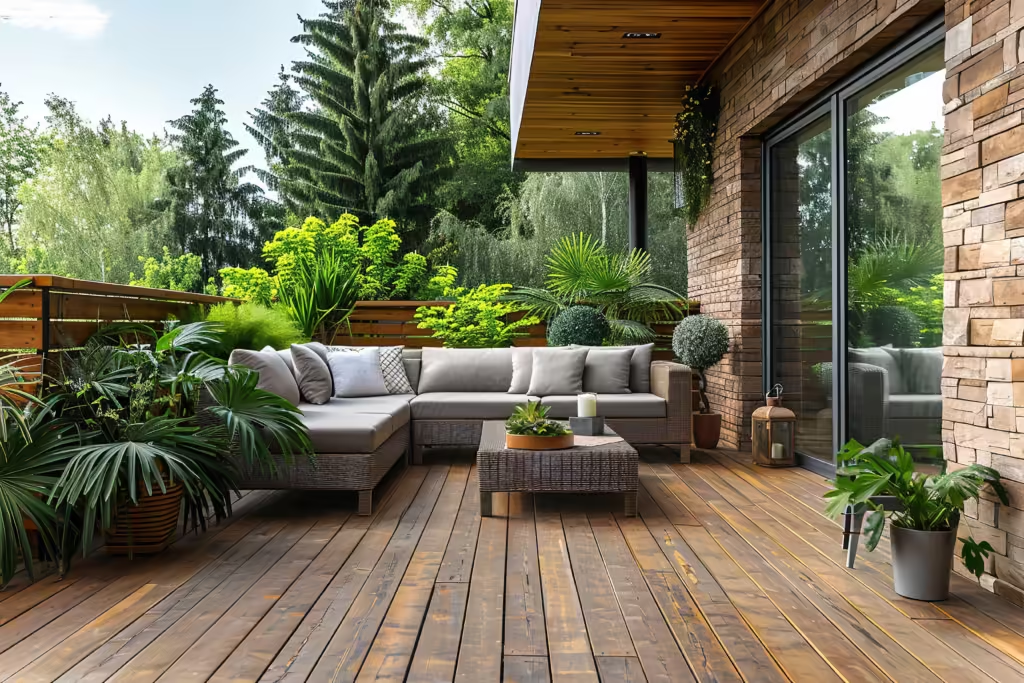
A wooden deck already has the most beautiful raw material you can work with in outdoor design. The grain, the warmth, the way it ages and tells the story of the seasons it has lived through. Most people underestimate how much styling potential exists in a deck precisely because they are focused on what to put on it rather than how to work with what it already is.
The best wooden deck styling starts with the wood itself. The finish you choose, the way you treat and maintain it, and the tones you build around it determine everything about whether the final result feels genuinely natural and beautiful or simply like an outdoor space with furniture placed on a wooden floor. When the deck finish, the furniture, the textiles, and the plants all speak the same material language, the result is a cohesive, warm, deeply appealing outdoor space that feels like it grew naturally from its surroundings rather than being assembled from a catalog.
These 14 ideas cover every approach to wooden deck styling, from the finish itself to the layers that complete the space around it.
Why the Wood Finish Is the Most Important Decision You Will Make
Every other styling decision on this list is built on top of the deck finish and every one of them works better or worse depending on how well the finish and the styling choices above it relate to each other. Getting the finish right first is not just about protecting the timber. It is about establishing the foundational tone that everything else coordinates with.
Love Chic Living Club?
Add us as one of your preferred Google sources and discover more home decor, DIY, outdoor, and lifestyle inspiration from us.
A light honey oak finish creates a warm, bright, Scandinavian-influenced base that suits natural linen cushions, light rattan furniture, and pale terracotta planters beautifully. A deep walnut stain creates a rich, sophisticated base that suits dark metal furniture, deep jewel-toned cushions, and bold architectural plants. A weathered grey patina creates an effortlessly coastal, relaxed base that suits white or navy textiles, bleached wood accents, and soft grassy plantings. A natural unfinished teak creates a complex, evolving surface that suits warm neutrals, handmade ceramics, and any material with its own natural character and variation.
Understanding which direction you want to take the deck finish before you make that choice is what connects the wood treatment decision to the overall styling vision and prevents the common outcome of a beautifully maintained deck finish that never quite harmonizes with the furniture and accessories sitting on top of it.
Understanding Wood Types and How They Affect Styling
The species of wood your deck is built from affects not only the maintenance approach but the styling direction that will feel most natural for it.
Teak is the most premium decking material and the one with the most visual character. Its tight grain, golden tone when fresh, and silver-grey patina when weathered give it a natural elegance that needs very little styling to look beautiful. Teak decks suit everything from contemporary minimalism to classic traditional styling and the material itself is doing so much aesthetic work that restraint in the styling layers above it is usually the most effective approach.
Cedar has a warm reddish-pink tone when fresh that weathers to a beautiful silver-grey similar to teak. It is lighter in weight than most tropical hardwoods, has a more pronounced grain pattern, and suits rustic, farmhouse, and naturalistic styling directions particularly well. Cedar also has a natural fragrance when freshly cut that adds a sensory dimension to the deck experience that other species do not provide.
Pressure-treated pine is the most widely used and most affordable decking material. Its greenish tone when fresh and tendency to warp and splinter without regular maintenance mean it requires more active styling attention than premium hardwoods to look its best. A quality stain in a warm wood tone does significant work to improve the appearance of pressure-treated pine decking and creates a surface that is much more attractive and easier to style around.
Composite decking in wood-grain finishes offers low maintenance and consistent appearance but lacks the character variation and authentic warmth of real wood. Styling composite decking follows the same principles as real wood but requires more attention to the layers above the deck surface since the deck itself contributes less natural character to the overall aesthetic.
The Most Important Maintenance Principle for a Beautiful Deck
A beautifully styled deck that has not been maintained looks worse than an unstyled deck that is clean and cared for. Before any styling decision, the deck surface needs to be clean, structurally sound, and appropriately finished.
Clean the deck thoroughly at the start of each outdoor season by sweeping, washing with a deck cleaner appropriate to your wood species, and rinsing thoroughly. This removes the mildew, tannin staining, and grey weathering that accumulate over winter. For hardwood decks, a light sanding after cleaning removes surface grey and restores the lighter tone beneath. For painted or stained decks, address any areas of peeling, cracking, or wear before applying a fresh maintenance coat of the same product.
Check all fasteners, boards, and structural elements for damage, rot, or loosening at the start of each season. A deck with loose or popped fasteners, soft spots in the boards, or unstable railing sections is a safety issue that takes priority over any aesthetic consideration. Address maintenance issues before styling additions.
1. Light Oak Finish
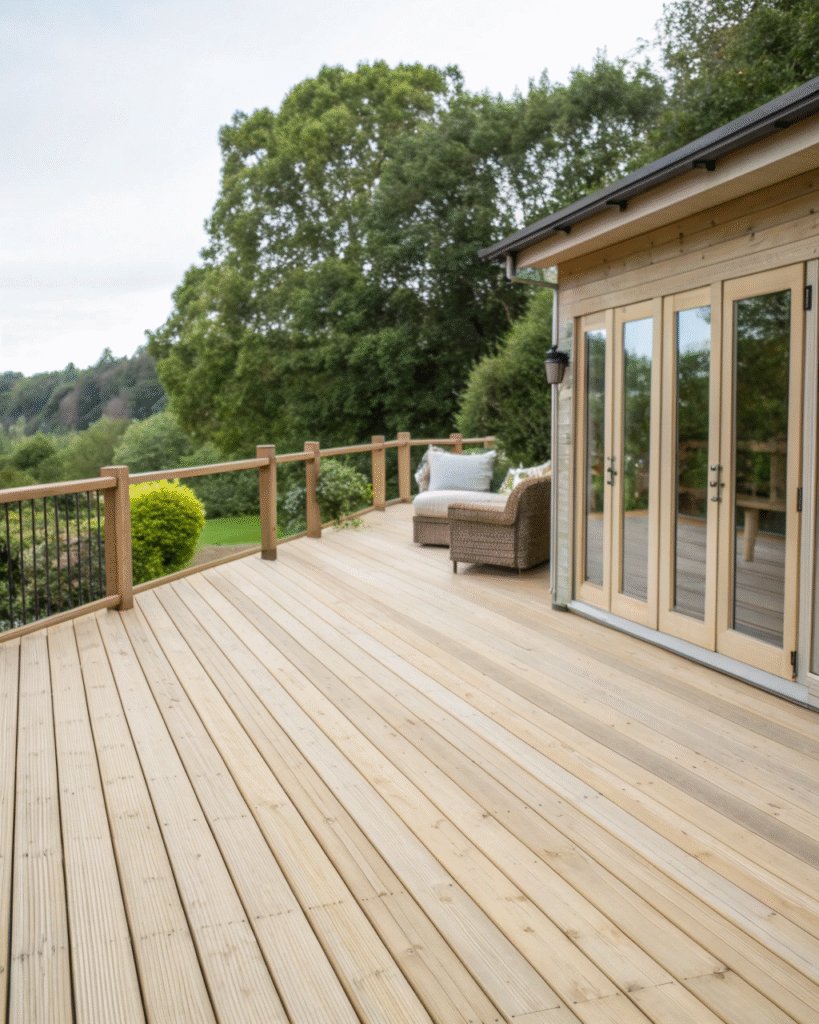
A light oak tone creates a soft, airy look that pairs beautifully with neutral decor.
Pro Tip: Seal the wood with a UV-protective coat to preserve its natural brightness.
2. Rustic Weathered Look
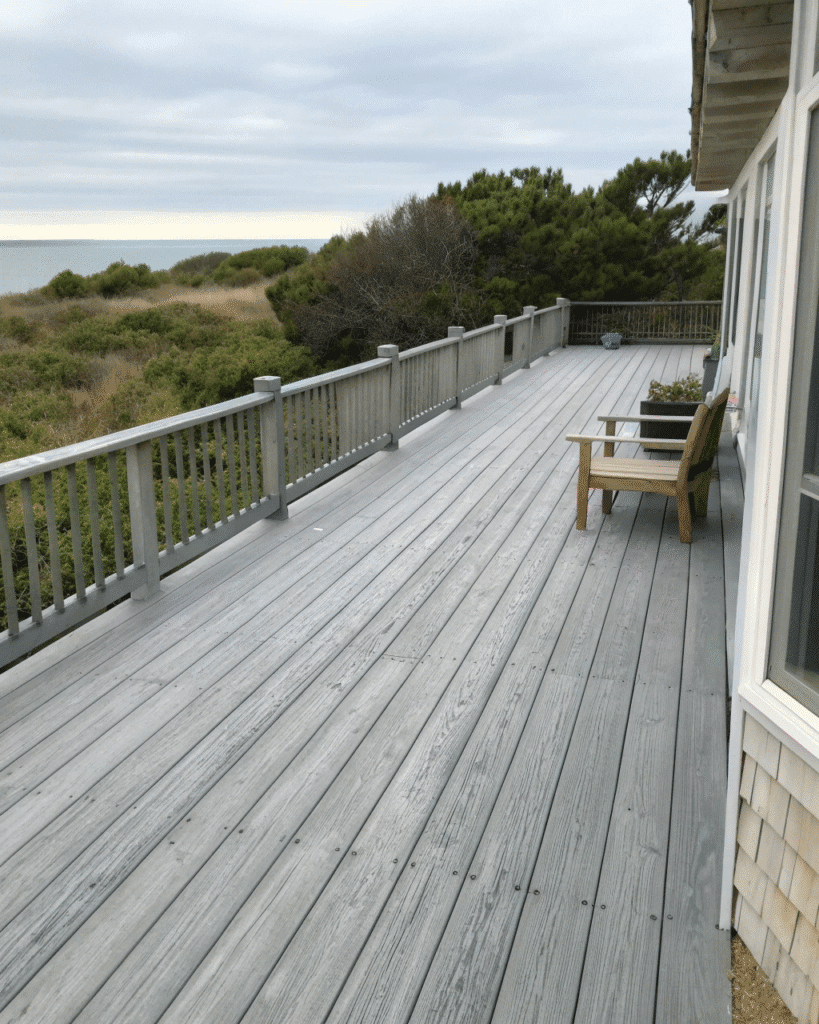
A weathered gray finish gives your deck a relaxed, coastal-inspired feel.
Pro Tip: Use a matte sealant to keep the rustic look authentic and low-maintenance.
3. Deep Walnut Stain
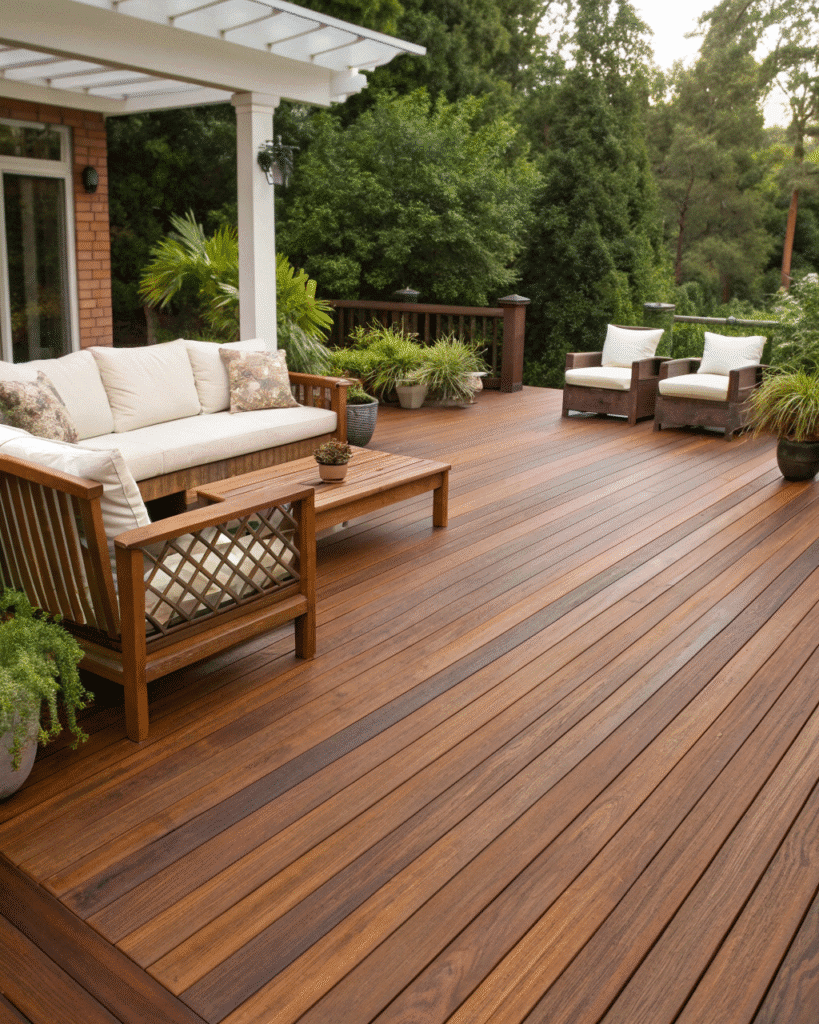
Dark walnut tones add sophistication and contrast against light furnishings.
Pro Tip: Balance the rich color with white or beige textiles for visual harmony.
You May Also Love
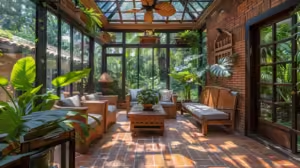
4. Natural Unfinished Wood
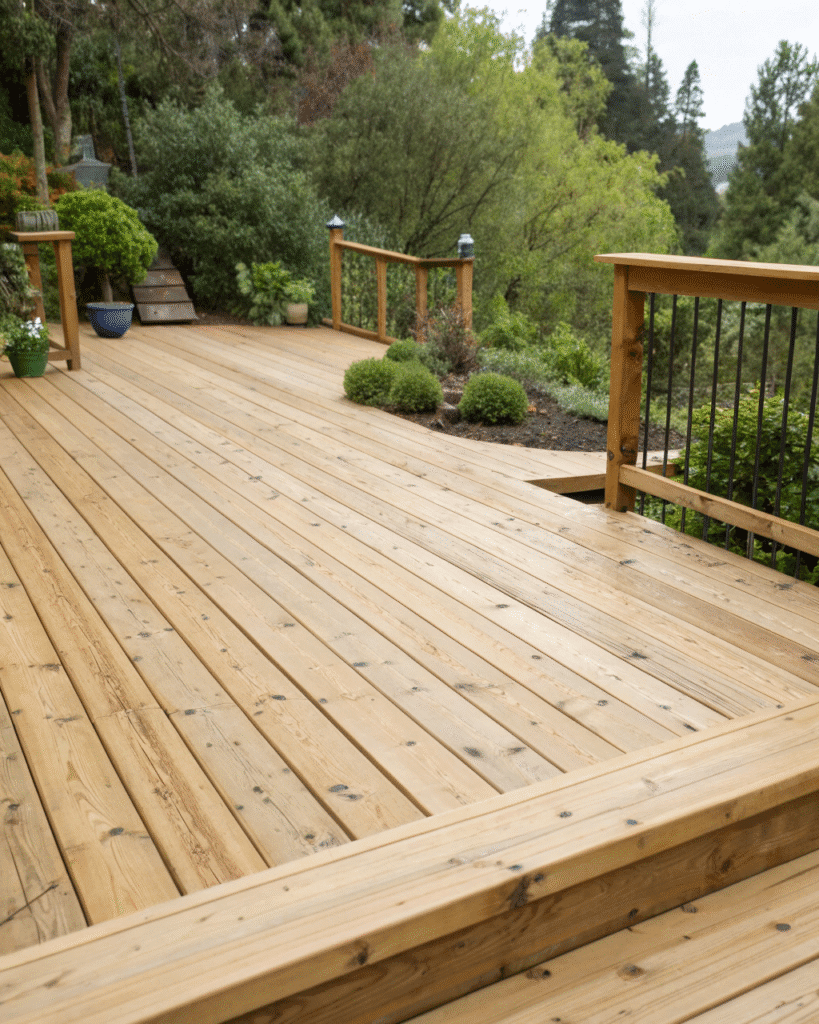
Keep your deck raw and untreated for a true organic vibe.
Pro Tip: Sand it regularly and use a clear oil coat to maintain texture and prevent cracking.
5. Two-Tone Deck Design
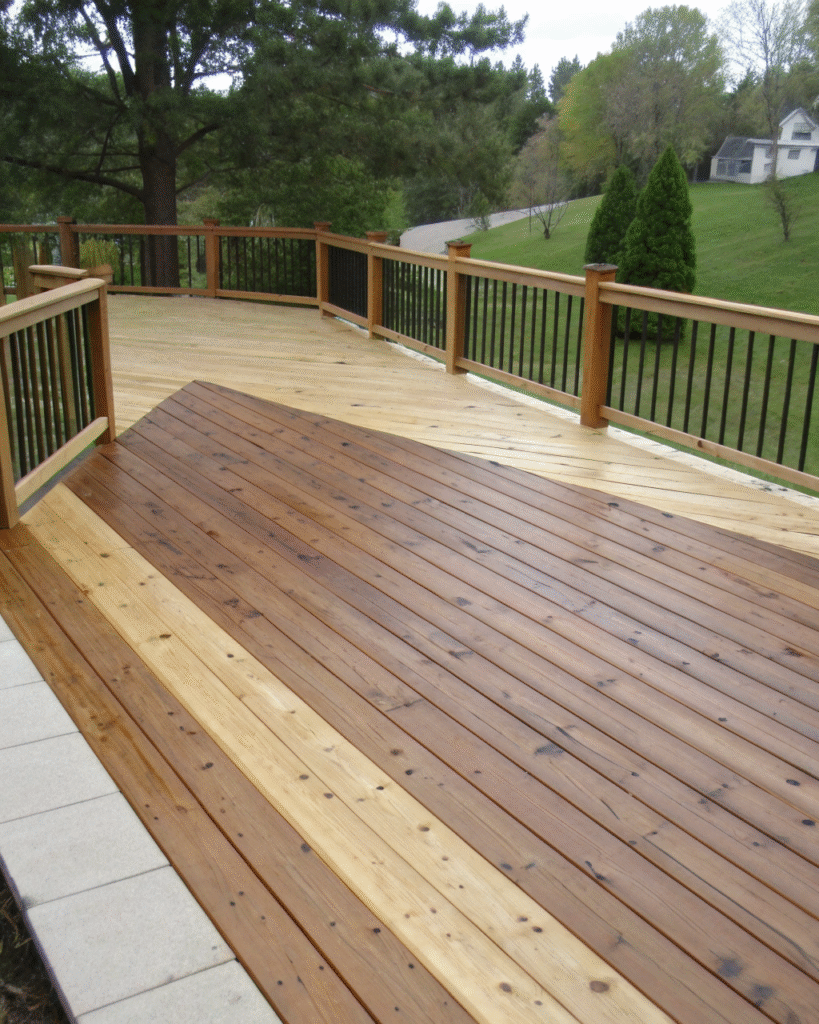
Combine light and dark wood stains for depth and visual interest.
Pro Tip: Use lighter tones for the main area and darker ones for borders or steps.
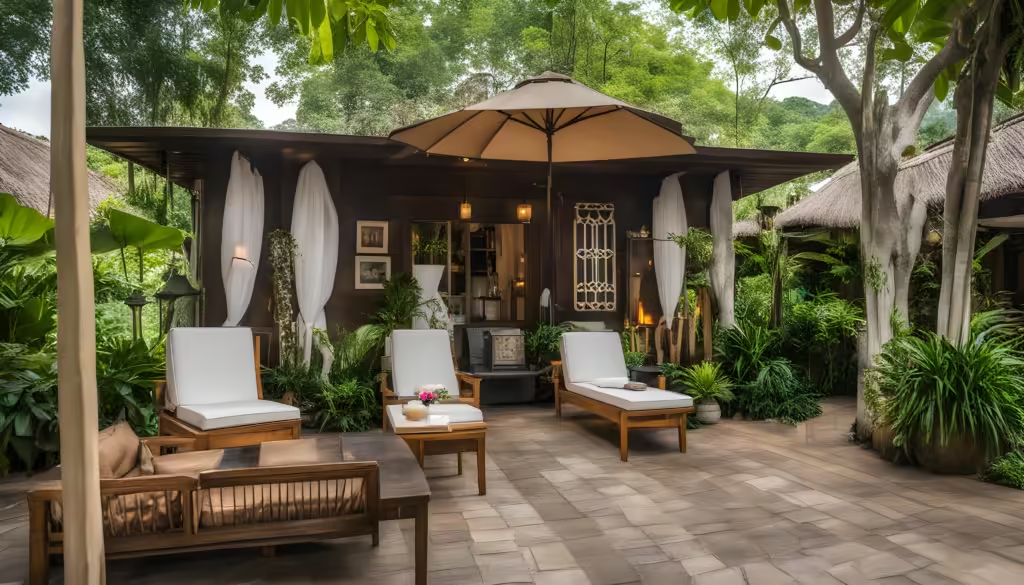
6. Bamboo Accents
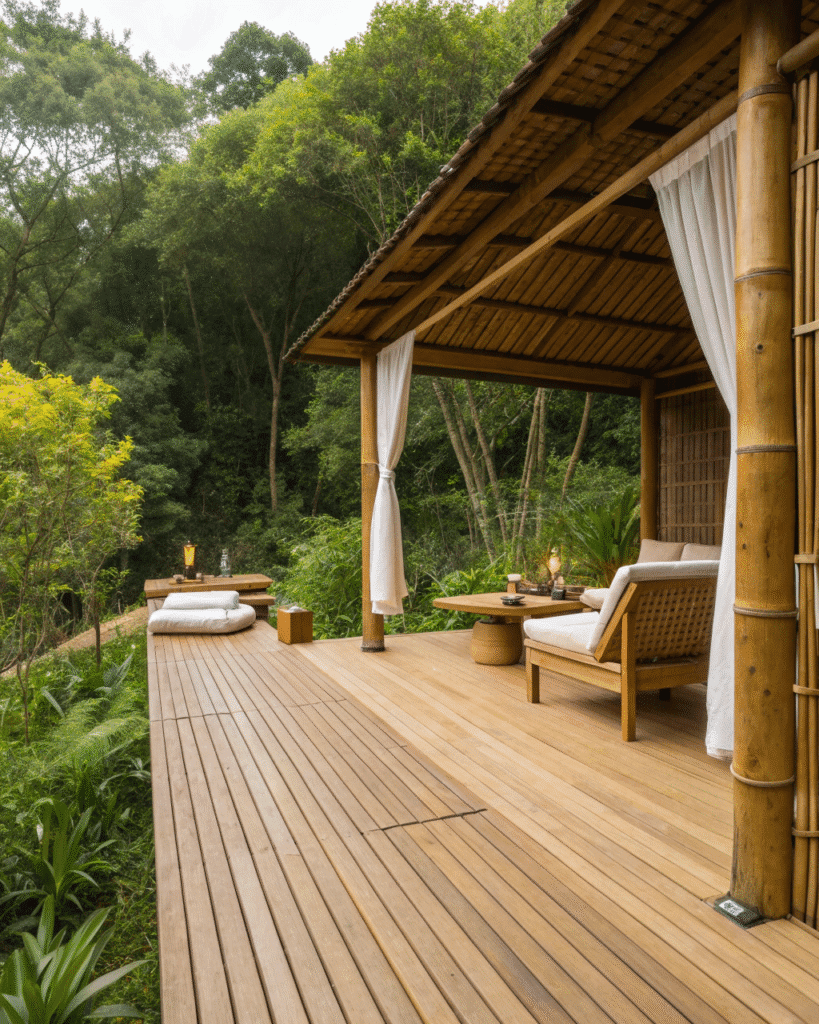
Integrate bamboo elements for a calm, spa-like outdoor atmosphere.
Pro Tip: Pair with linen cushions and simple greenery for a serene, minimal setup.
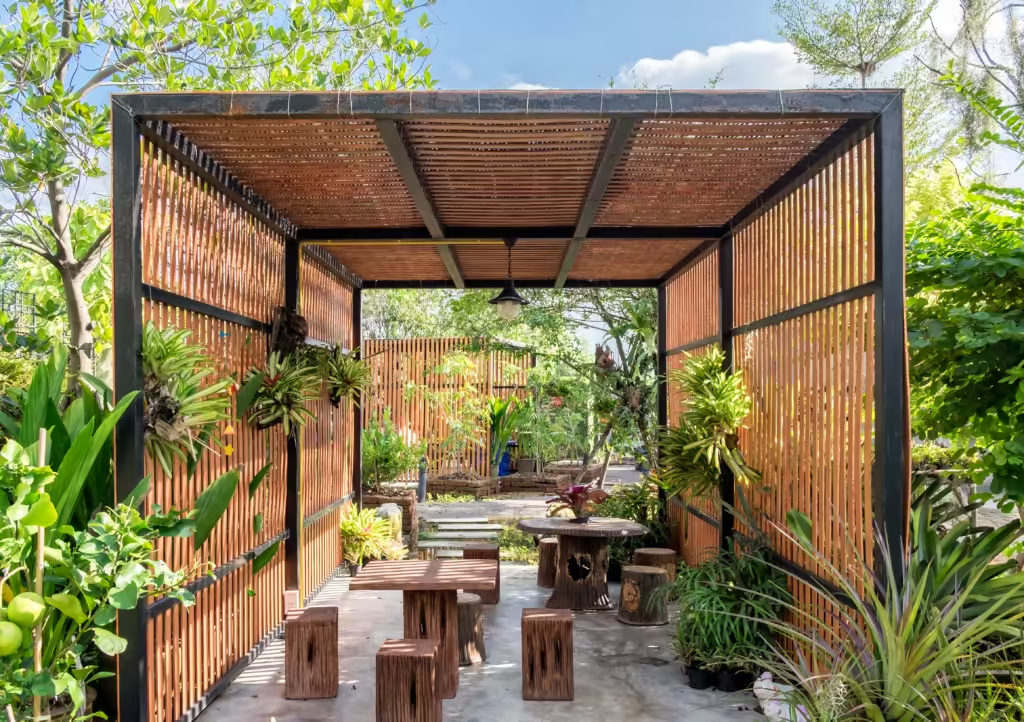
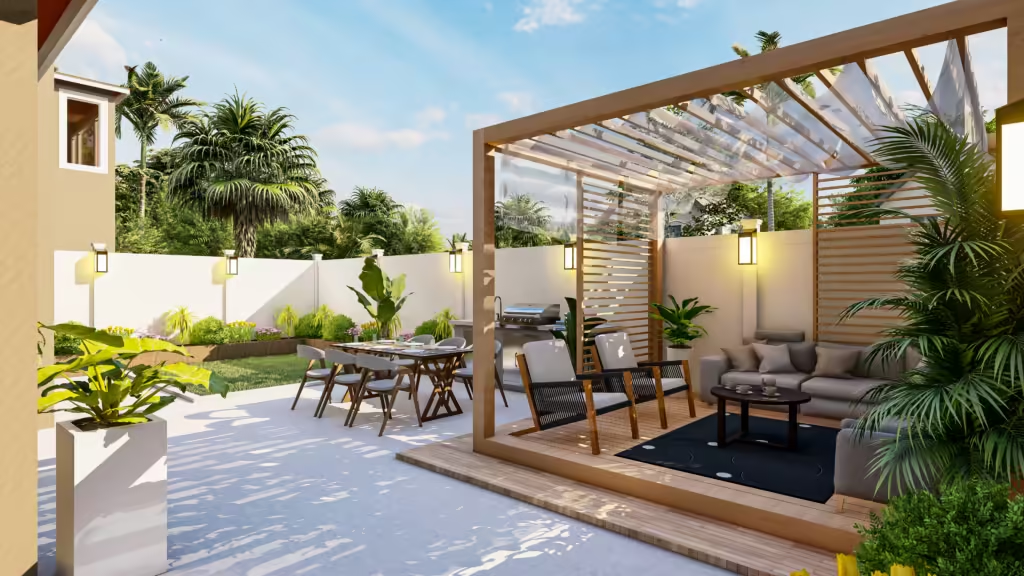
7. Wooden Pergola Frame
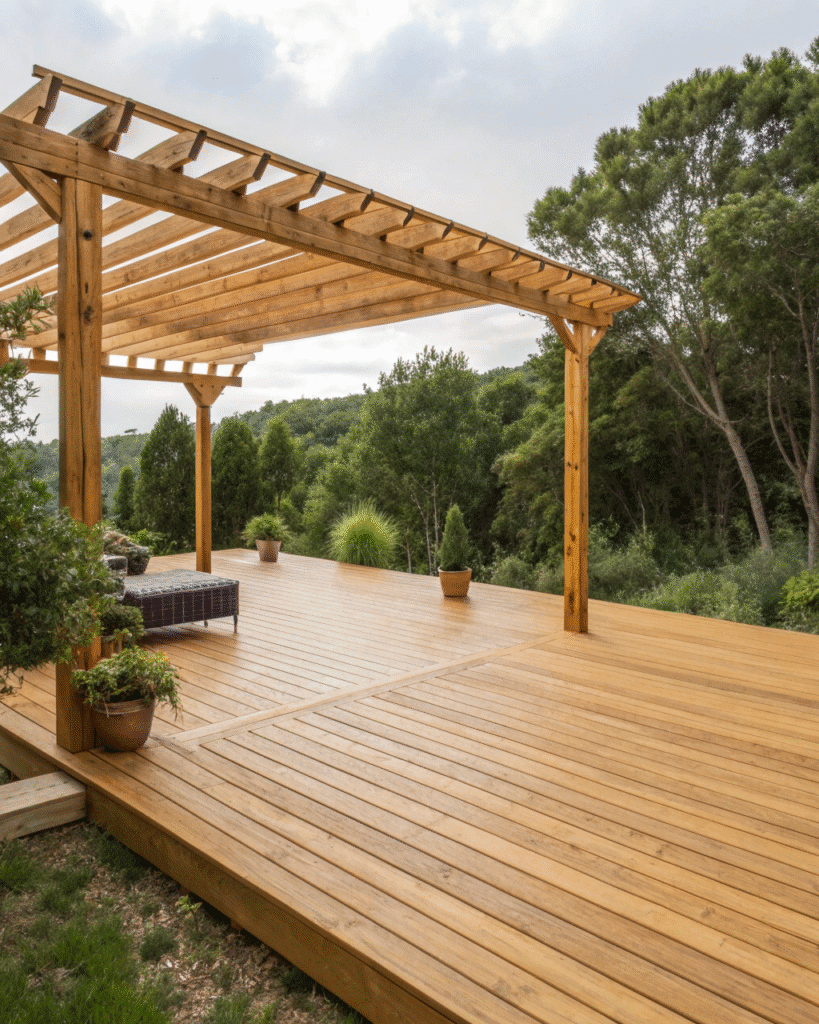
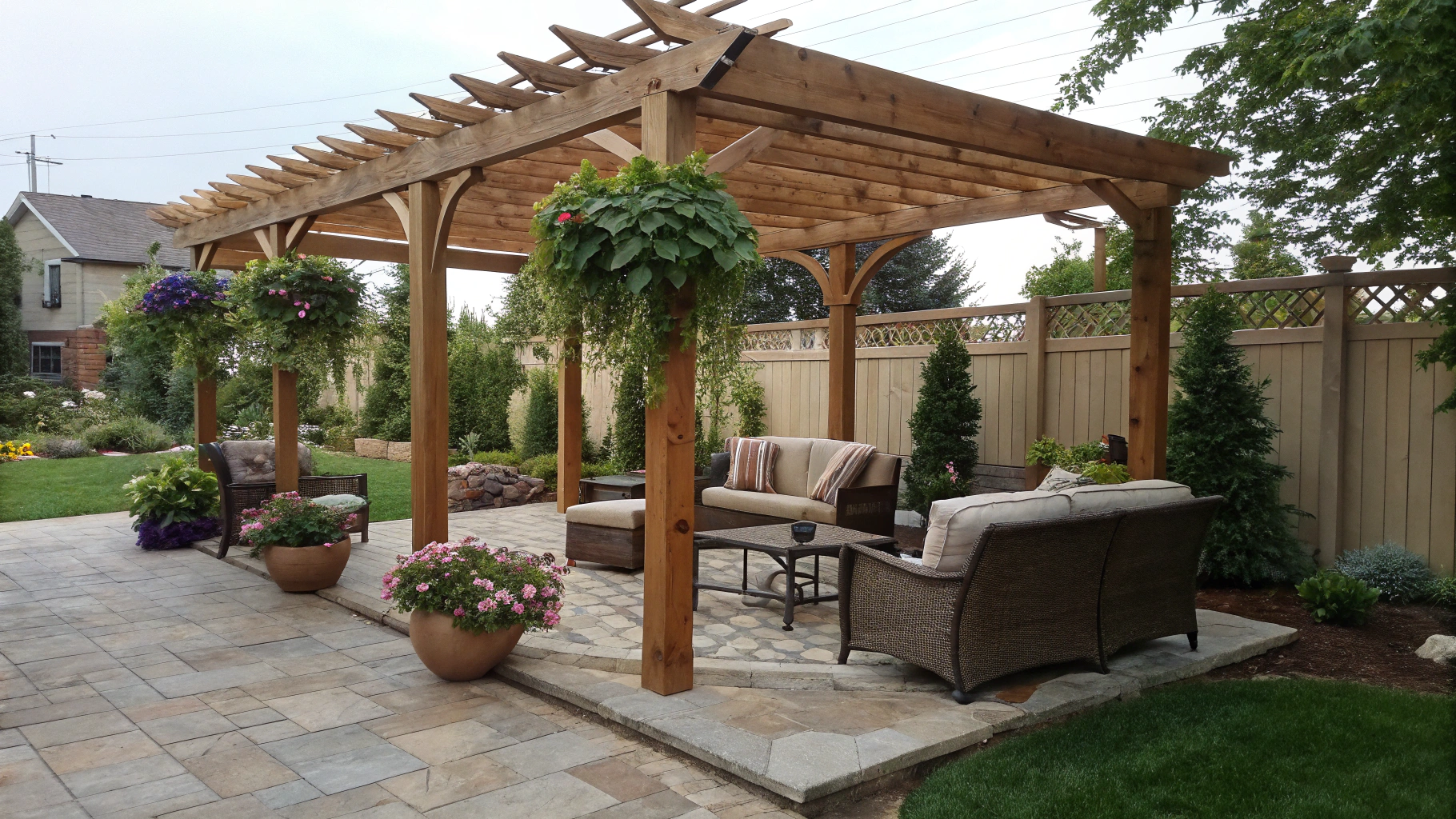
Add a wooden pergola for structure and shade while keeping a cohesive, natural look.
Pro Tip: Choose a matching wood tone for continuity and a unified aesthetic.
Don't miss: 13+ Unique Sunken Patio Ideas for Privacy →
8. Neutral Outdoor Textiles
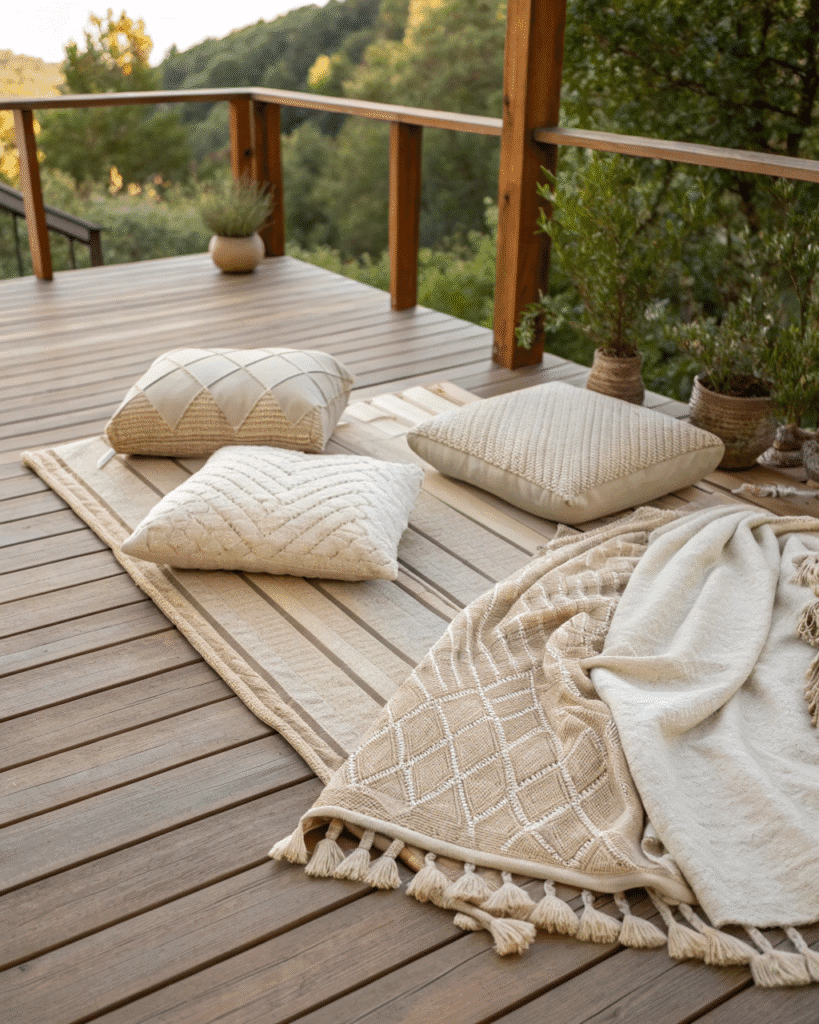
Complement the wood’s natural warmth with neutral fabrics like beige or ivory.
Pro Tip: Choose textures like canvas or linen that feel soft yet durable outdoors.
9. Built-In Wooden Seating
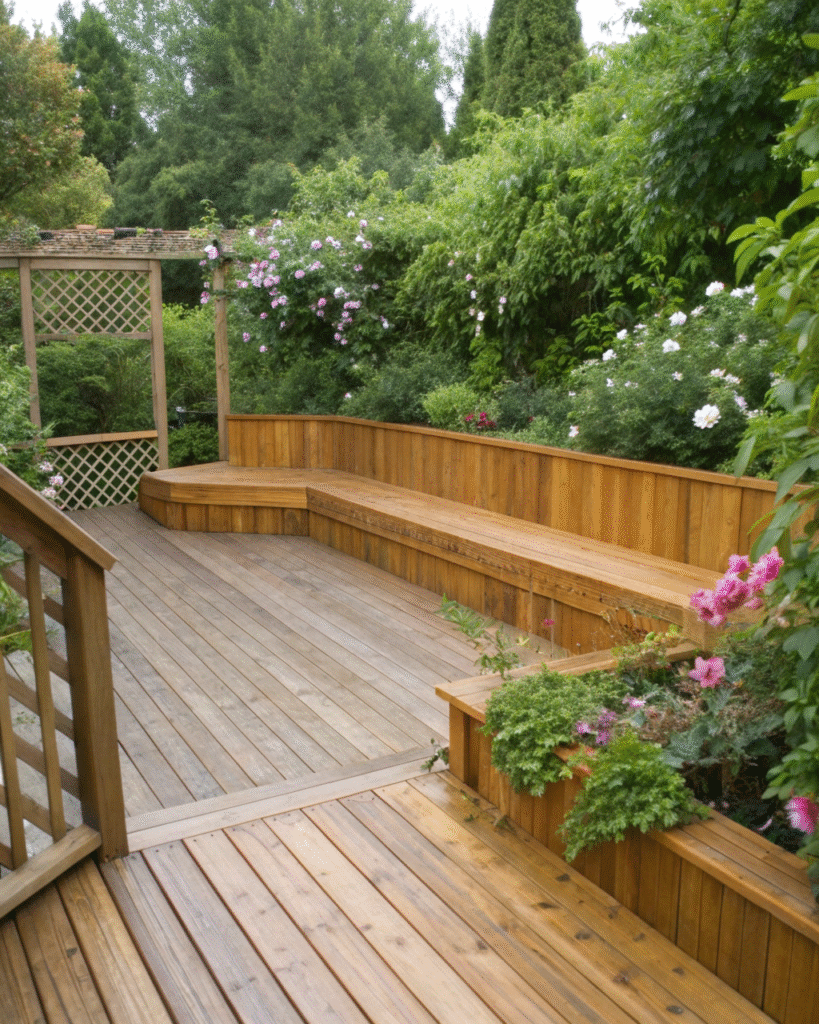
Built-in benches create a seamless design that feels polished and space-efficient.
Pro Tip: Use the same stain or finish as your deck to keep everything visually cohesive.
10. Wooden Planters
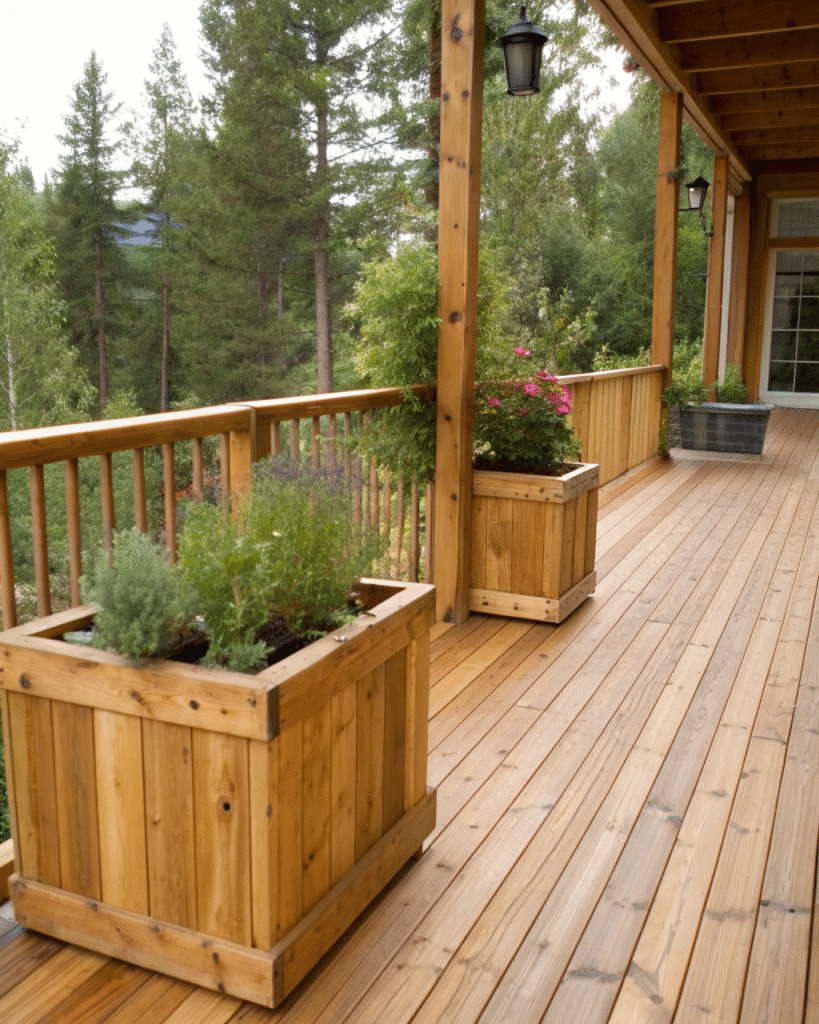
Add wooden planters for a rustic touch that blends effortlessly with your deck.
Pro Tip: Vary plant heights and colors to create depth and movement.
11. Layered Rugs and Cushions
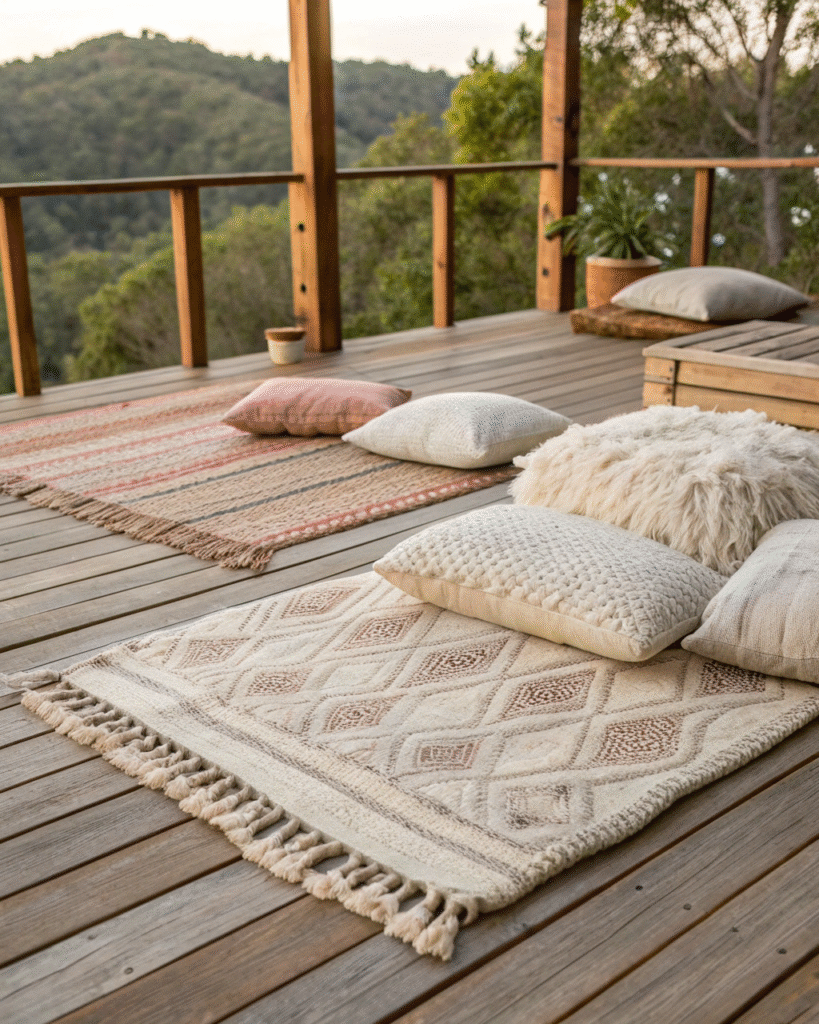
Soft rugs and cushions add warmth and coziness to wooden decks.
Pro Tip: Go for earth-toned patterns or woven textures that complement the wood grain.
Keep Exploring
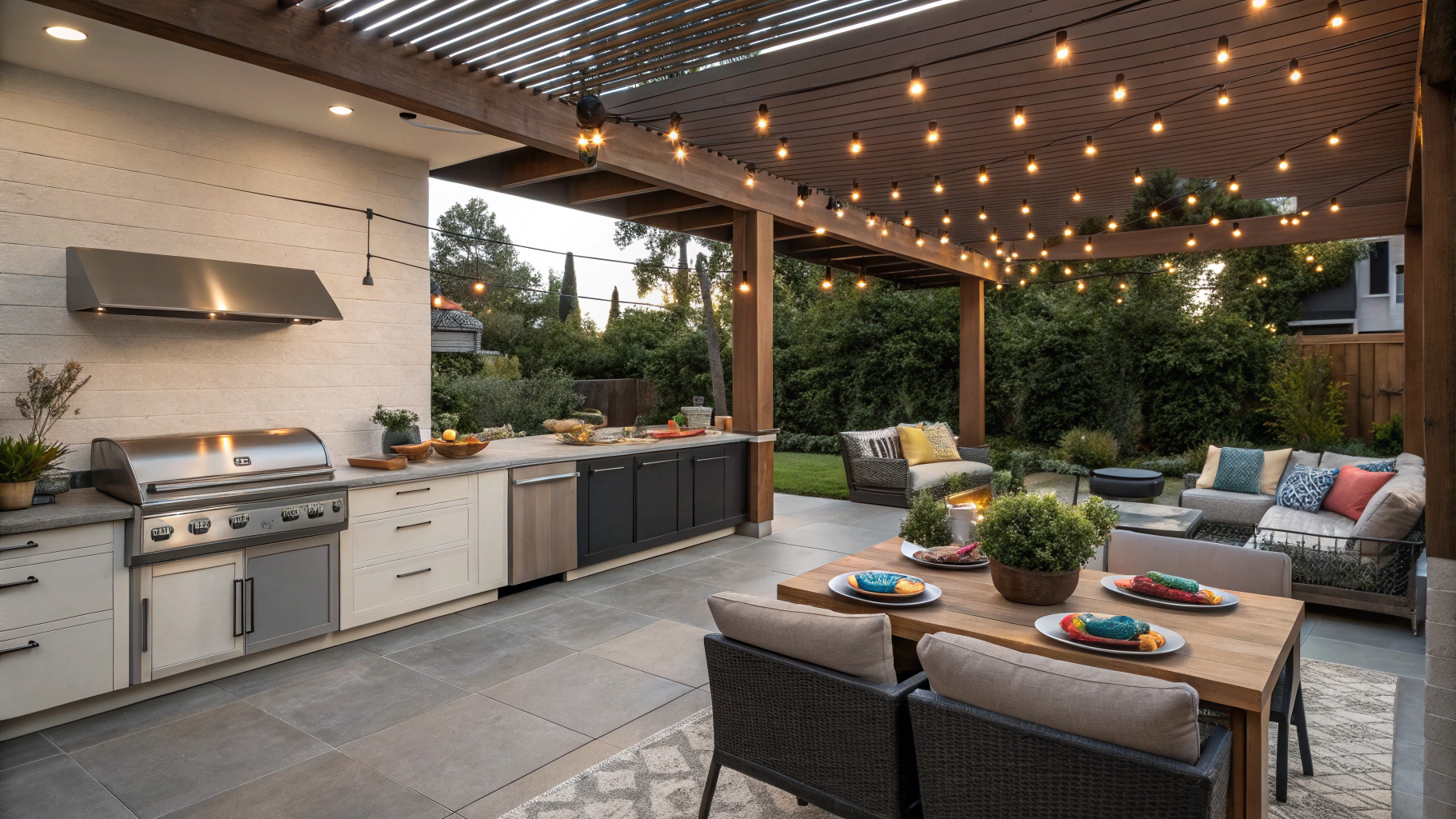
12. Lantern Lighting
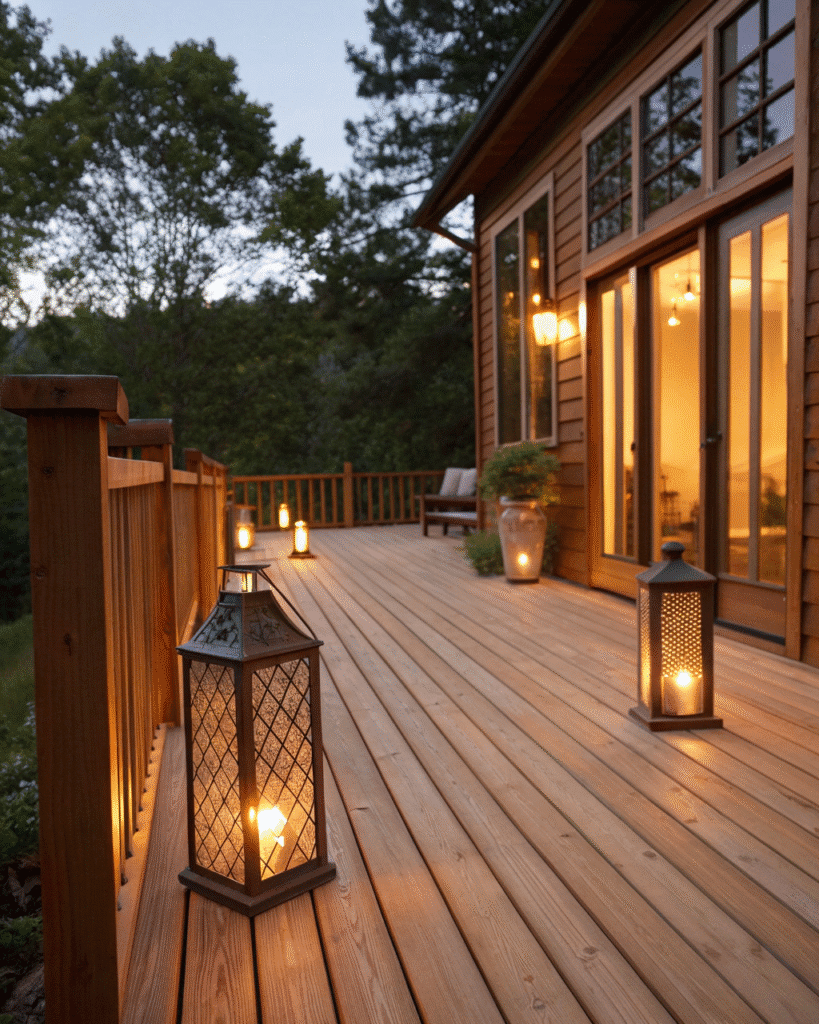
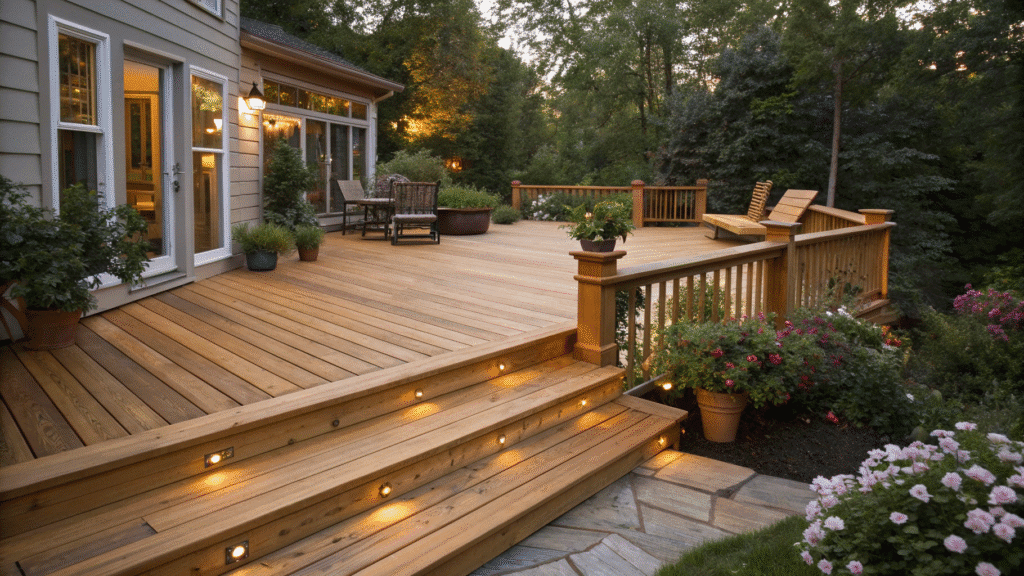
Wood and warm lighting create an inviting, golden glow during evenings.
Pro Tip: Place lanterns along pathways or corners to enhance the deck’s natural feel.
13. Reclaimed Wood Decor
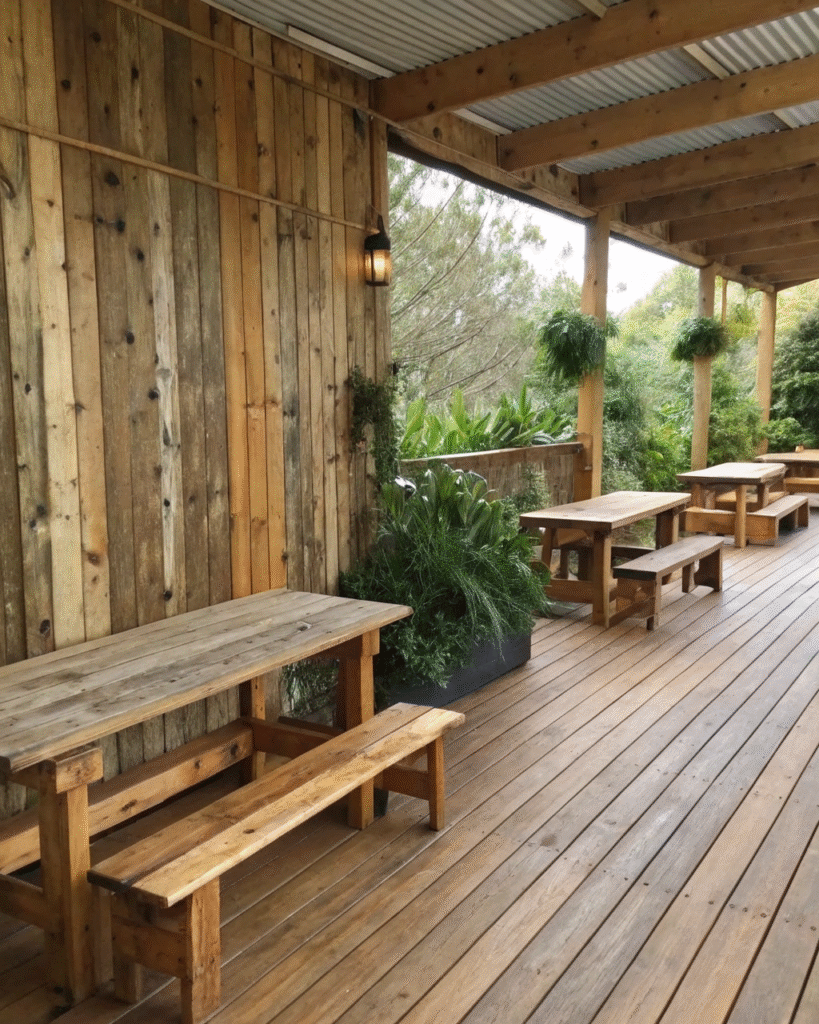
Decorate with reclaimed wood tables or wall panels for a sustainable touch.
Pro Tip: Mix rustic wood with smooth finishes for balance and modern appeal.
14. Polished Teak Finish
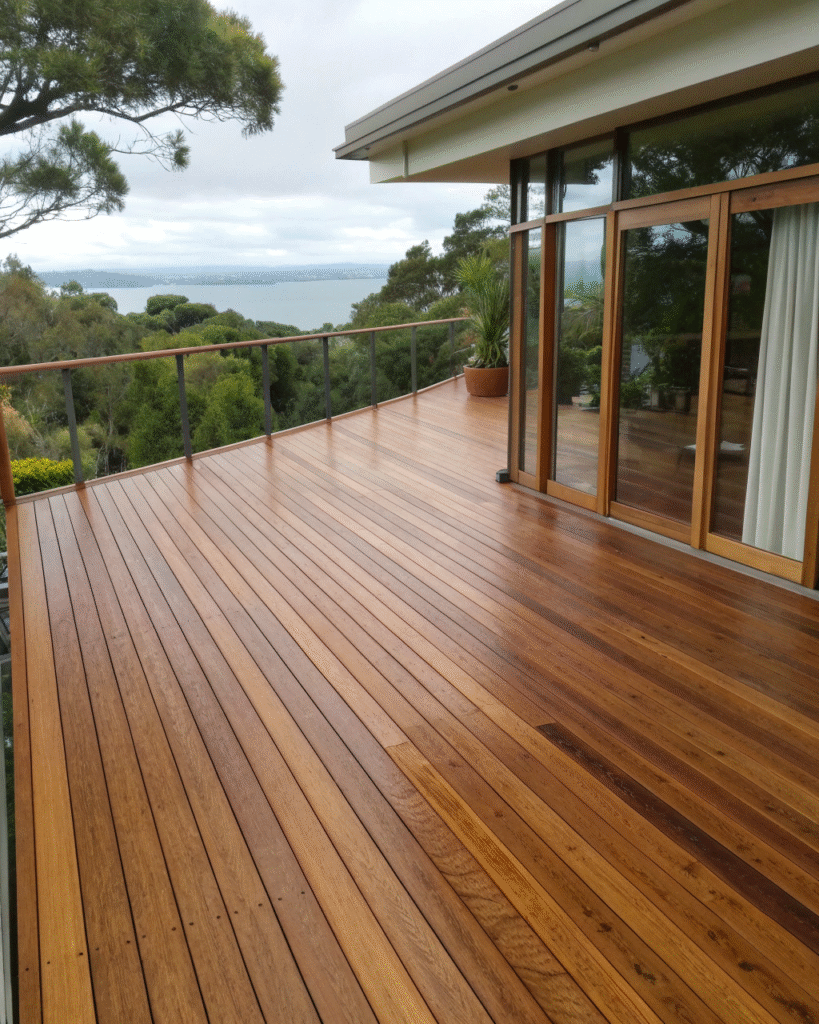
Teak gives a smooth, high-end look while remaining weather-resistant.
Pro Tip: Apply teak oil twice a year to maintain the wood’s rich tone and longevity.
Final Thoughts
A wooden deck styled with the grain rather than against it is one of the most beautiful outdoor spaces a home can have. The natural warmth of the timber, the way it responds to the seasons, the character it develops with age and weather and use. These are qualities that no synthetic material can replicate and no amount of styling can manufacture if the relationship between the wood and the layers above it is not working.
Start with the finish. Get the tone right for the timber species you have and for the overall direction you want the styling to take. Build the furniture layer around that foundation. Add textiles, lighting, and plants in materials and tones that harmonize with the wood rather than competing with it. Then step back and let the natural beauty of the material do what it has always done when it is properly cared for and thoughtfully styled. Make the space feel like somewhere genuinely worth spending time.
Frequently Asked Questions
How often should I restain or refinish my wooden deck?
The frequency depends on the timber species, the finish product, the weather exposure, and the amount of foot traffic the deck receives. As a general guide, penetrating oil finishes on hardwood decks need refreshing every one to three years. Film-forming stains and sealers on softwood decks typically need recoating every two to four years. The clearest sign that refinishing is needed is when water no longer beads on the surface and instead soaks in immediately, indicating that the protective finish has been depleted.
What is the best finish for a wooden deck in a hot sunny climate?
In a hot, high-UV climate, choose a finish with a high UV-blocking pigment content rather than a clear sealer. Clear finishes allow UV light to pass through to the timber surface which accelerates degradation. A semi-transparent stain with warm wood-tone pigments blocks UV effectively while still showing the natural grain of the timber. Apply generously to all exposed surfaces including end grain which is particularly vulnerable to moisture and UV damage in hot conditions.
How do I match furniture to a dark-stained wooden deck?
Dark-stained decks create a rich, sophisticated base that suits natural rattan, powder-coated aluminum in matte black or dark charcoal, and concrete or stone accent tables very well. Cushions in deep jewel tones, warm terracotta, dusty pink, or sage green all look beautiful against a dark deck surface. Avoid very light furniture that creates excessive contrast against a very dark deck as the visual tension between the two tones can feel jarring rather than dramatic.
Can I paint my wooden deck?
Yes, solid-color deck paint is a valid finish option, particularly for pressure-treated pine decks where the natural timber appearance is less beautiful and where a solid color can significantly improve the overall look. Solid deck paint provides the most complete UV and moisture protection of any deck finish and is available in a wide range of colors. The trade-off is that paint completely obscures the natural grain of the timber, requires repainting more frequently than penetrating oil finishes, and can peel in areas where moisture gets beneath the paint film.
What outdoor furniture looks best on a natural wood deck?
Natural materials always look best on a natural wood deck because they share the same organic, authentic quality as the timber itself. Teak furniture on a teak or cedar deck creates a beautifully cohesive all-wood environment. Rattan and wicker furniture in natural or honey tones complements warm wood deck finishes with a relaxed, organic warmth. Concrete and ceramic accent pieces add material contrast while remaining in the natural material family. Powder-coated aluminum provides a clean contemporary contrast that suits modern deck finishes without disrupting the natural material palette.