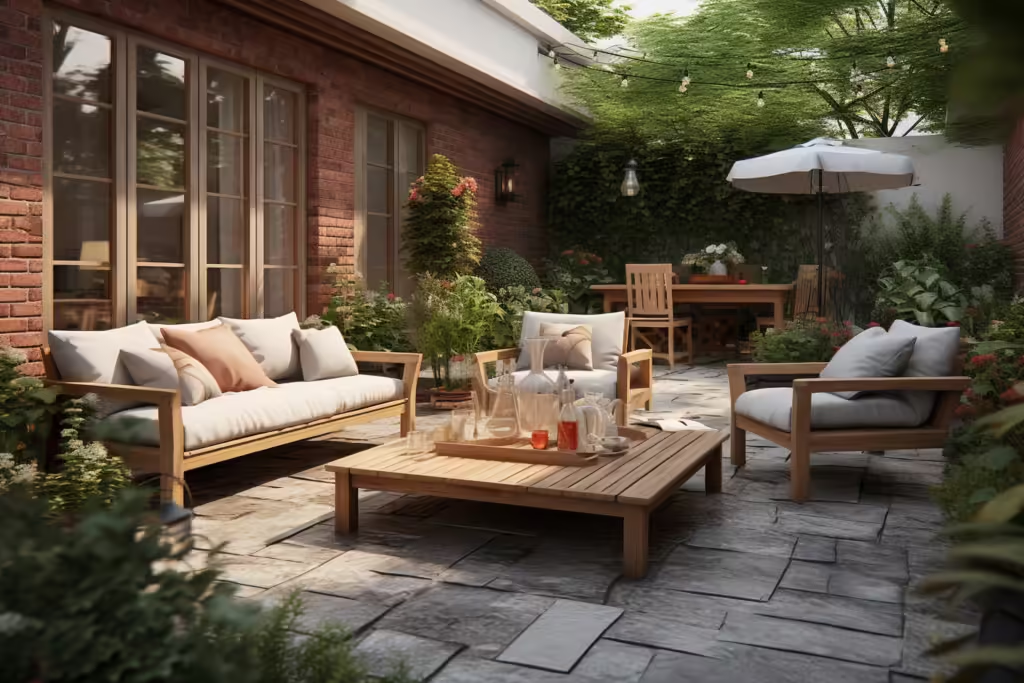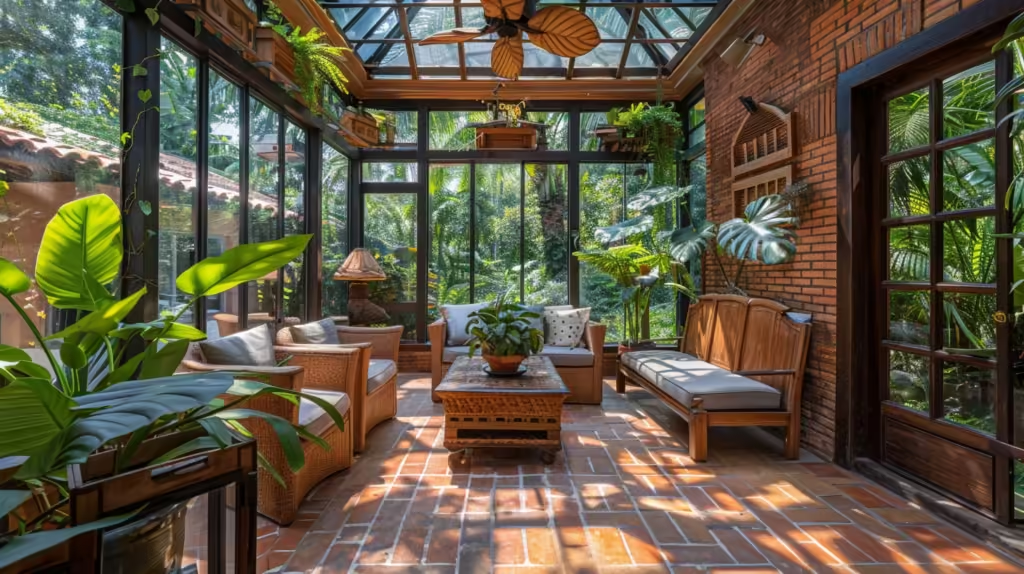
16+ Patio Covering Ideas for Shade and Shelter
An uncovered patio is a patio that only gets used on perfect days. Too hot in summer, too bright in the afternoon, too exposed when the rain arrives, and too cold the moment the sun disappears in the evening. The weather controls you rather than the other way around and the patio that looked so appealing in the spring sits empty through most of the season because the conditions are never quite right.
A good patio covering changes that entirely. It extends the usable hours of your outdoor space from a narrow window of perfect conditions to a much broader range of weather, temperature, and time of day. It creates the sense of shelter that makes an outdoor space feel genuinely habitable rather than simply accessible. And it adds an architectural quality to the patio that transforms it from an area of paving beside the house into an actual outdoor room with presence and definition.
Why a Patio Covering Is One of the Best Outdoor Investments You Can Make
The case for a patio covering is fundamentally about usability. A covered patio gets used more, gets used in more weather conditions, gets used by more people for longer periods, and delivers more value from the outdoor space investment than an uncovered one.
In the United States, studies of outdoor living habits consistently show that shade and shelter are the two most cited barriers to greater outdoor space use. People want to be outside more than they are. What stops them is discomfort from direct sun exposure, rain that arrives without warning, and the rapid temperature drop that ends outdoor evenings prematurely. A covering addresses all three barriers simultaneously.
Love Chic Living Club?
Add us as one of your preferred Google sources and discover more home decor, DIY, outdoor, and lifestyle inspiration from us.
A patio covering also does significant work for your furniture, your flooring, and any outdoor kitchen equipment or electronics you have invested in. UV exposure fades cushion fabric, dries out timber, and degrades plastics significantly faster in an uncovered outdoor setting than a covered one. A roof over your patio is essentially a maintenance and replacement cost reduction program for everything underneath it.
From a home value perspective, a well-designed permanent patio covering consistently adds measurable value to a property. An outdoor covered living space is one of the most appealing features in a home listing and photographs as an additional functional room rather than simply an outdoor area.
Permanent vs Semi-Permanent vs Portable: Choosing the Right Type
The first and most important decision about any patio covering is how permanent you want it to be. This decision affects the cost, the planning and permitting requirements, the flexibility of the solution, and the overall aesthetic impact on your home.
Permanent Coverings
Permanent patio coverings include pergolas attached to the house, solid roof extensions, glass roof structures, metal roof structures, and wooden gazebos. These are built structures that become part of the property and require proper planning and in most cases a building permit. They deliver the most complete protection, the most architectural presence, and the most significant positive impact on home value. They are also the most expensive option and the least flexible if your needs or preferences change.
You May Also Love

Semi-Permanent Coverings
Semi-permanent coverings include freestanding pergolas, shade sails, retractable awnings, and fabric canopy systems. These can be installed without the same level of structural commitment as a built-on roof extension but they are not designed to be moved seasonally. They occupy a middle ground between the full commitment of a permanent structure and the flexibility of a portable solution. They typically require some form of anchoring or wall mounting but can be removed and taken with you if you move house.
Don't miss: 17+ Patio Nook Ideas for a Cozy Corner →
Portable and Seasonal Coverings
Portable coverings include freestanding umbrella systems, pop-up canopies, and seasonal fabric panels. These offer maximum flexibility and the lowest upfront cost but also the most limited protection and the shortest lifespan. They are appropriate for renters, for patios where a permanent structure is not feasible, and as supplementary shade in areas of a patio that a main covering does not reach.
Keep Exploring
What to Know About Patio Covering Permits
One of the most frequently overlooked aspects of installing a patio covering is the question of whether a building permit is required. Getting this wrong can result in expensive forced removal, difficulty selling your home, and voided homeowner’s insurance claims related to the structure.
In most US jurisdictions, any attached patio structure that extends the roofline of the house, any freestanding structure above a certain square footage threshold, any structure with electrical connections, and any structure that adds habitable or semi-habitable outdoor space requires a building permit. The thresholds and specific requirements vary significantly between municipalities and HOA communities so checking with your local planning department before building anything permanent is essential.
Shade sails, freestanding umbrellas, and fabric canopy systems typically do not require permits in most jurisdictions. Retractable awnings attached to the house fall into a grey area that varies locally. When in doubt, a quick phone call to your local building department before you begin any installation will save significant problems later.
How to Choose the Right Patio Covering for Your Climate
The climate you live in should be the primary driver of your patio covering choice, not just the aesthetic preference for a particular style.
In hot southern climates with intense sun and periodic heavy rain, the most important covering attributes are solar heat gain reduction, rain protection, and ventilation. A solid roof with good overhangs, a shade sail with high UV blocking rating, or a fabric canopy in a breathable woven material all suit these conditions better than a glass roof which can create an intense greenhouse effect in high summer heat.
In the Pacific Northwest and other high-rainfall climates, rain protection is the primary covering requirement. A solid or semi-solid roof that sheds water effectively and stays dry in sustained rain is the only solution that makes a patio genuinely usable through the wet season. A shade sail or fabric canopy is insufficient in a climate where rain is frequent and prolonged.
In northern climates with cold winters and variable shoulder seasons, a covering that can be used year round with the addition of a patio heater, and that handles snow load if applicable, gives the most extended seasonal use. Snow load is a structural consideration that must be specifically addressed in the design of any permanent patio covering in regions that receive significant snowfall.
In mild, temperate climates with moderate sun and infrequent rain, the range of appropriate covering options is the widest. A pergola with a climbing vine, a retractable awning, or a shade sail may all provide adequate shelter for the conditions without the need for a full waterproof roof structure.
These 16 ideas cover every covering option from a simple freestanding umbrella to a full architectural roof structure, so you can find the right level of shelter for your patio, your climate, and your budget.
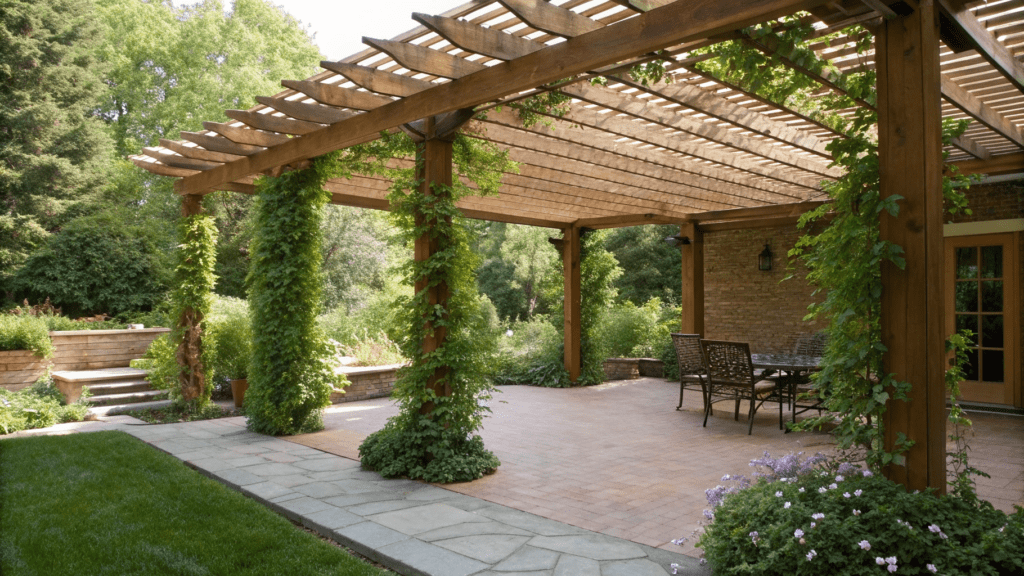
1. Classic Pergola
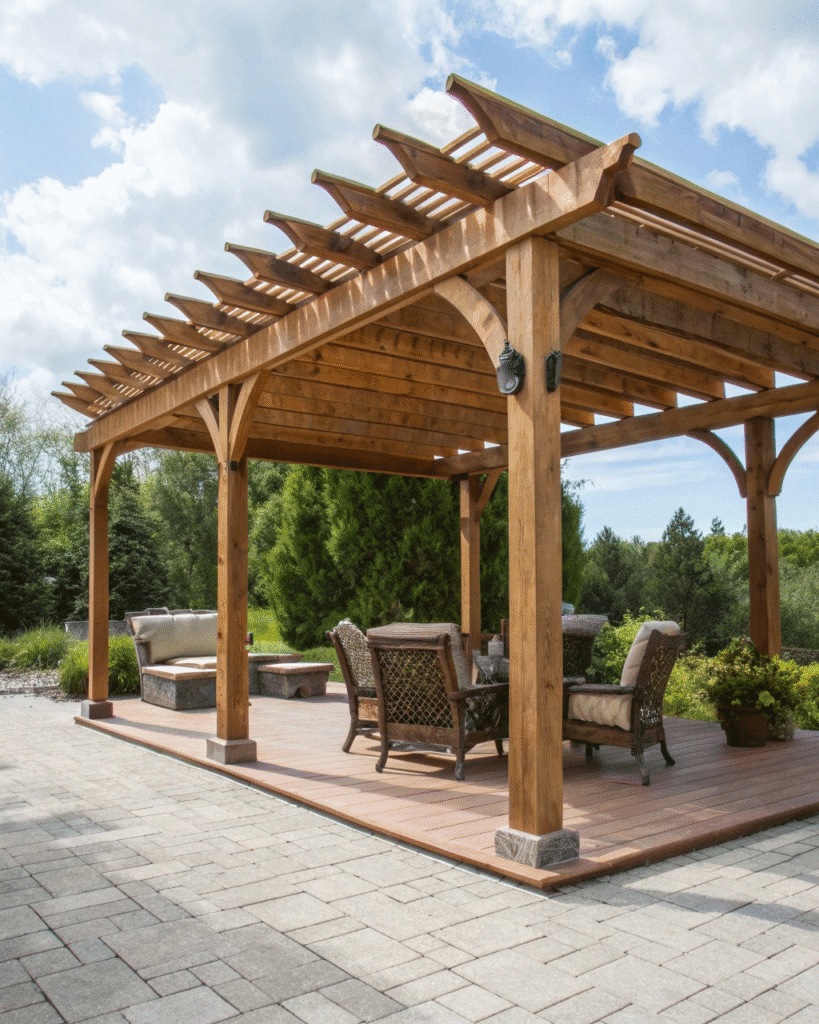
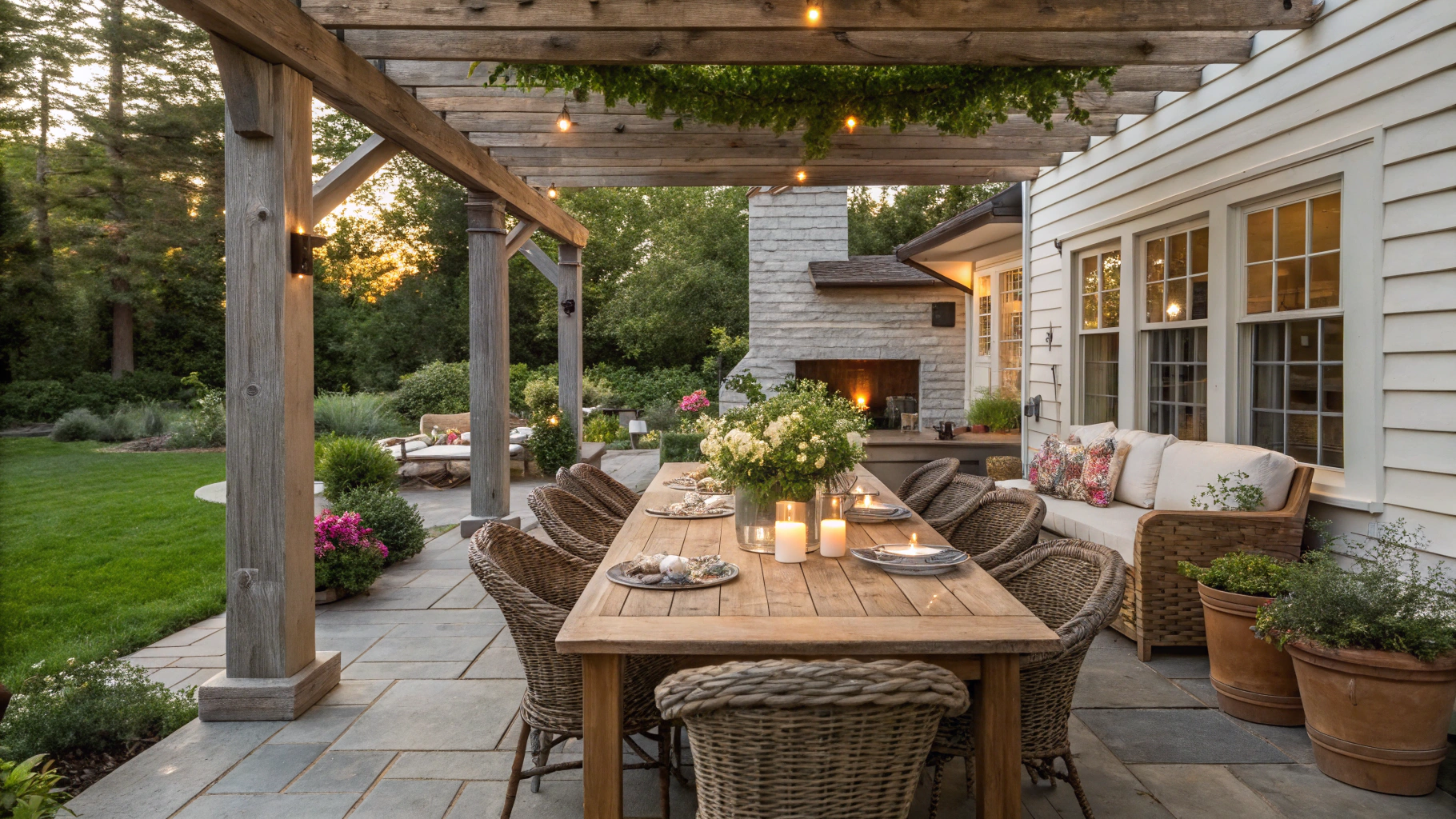
A wooden pergola adds shade while keeping your patio open and airy.
Pro Tip: Add climbing plants or fabric drapes for extra shade and softness.
2. Retractable Awning
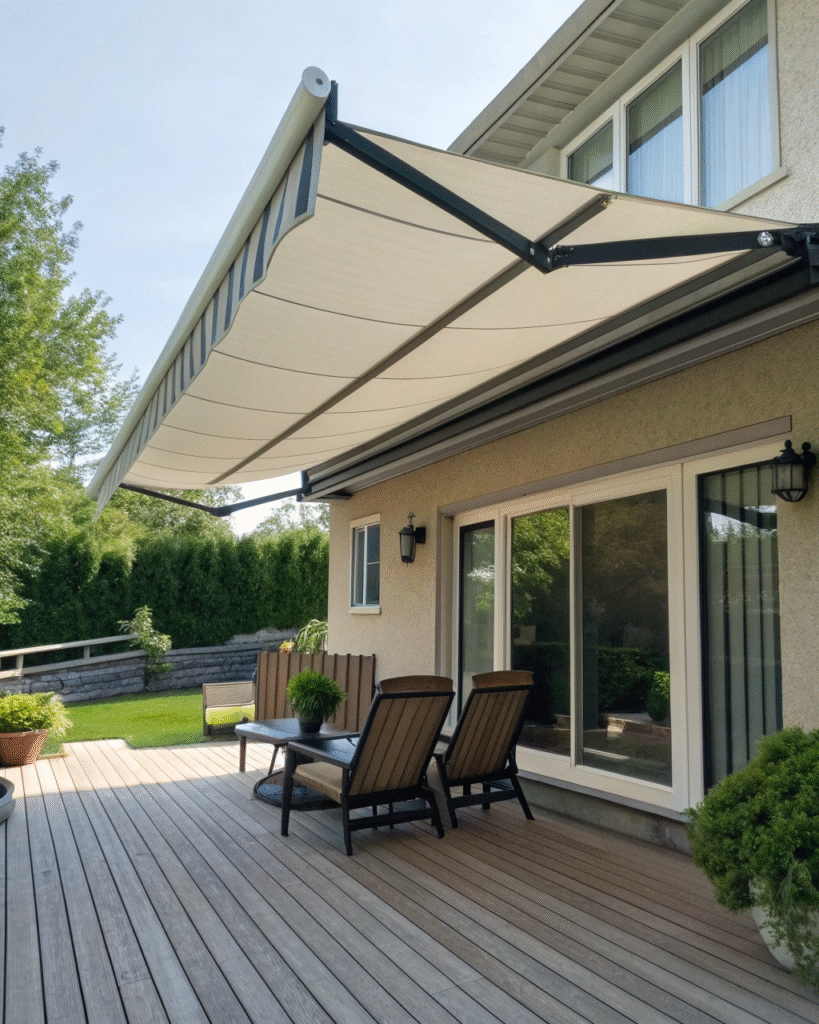
A retractable awning gives you full control over sunlight and shelter.
Pro Tip: Choose a waterproof fabric to keep your patio dry during light rain.
3. Shade Sail
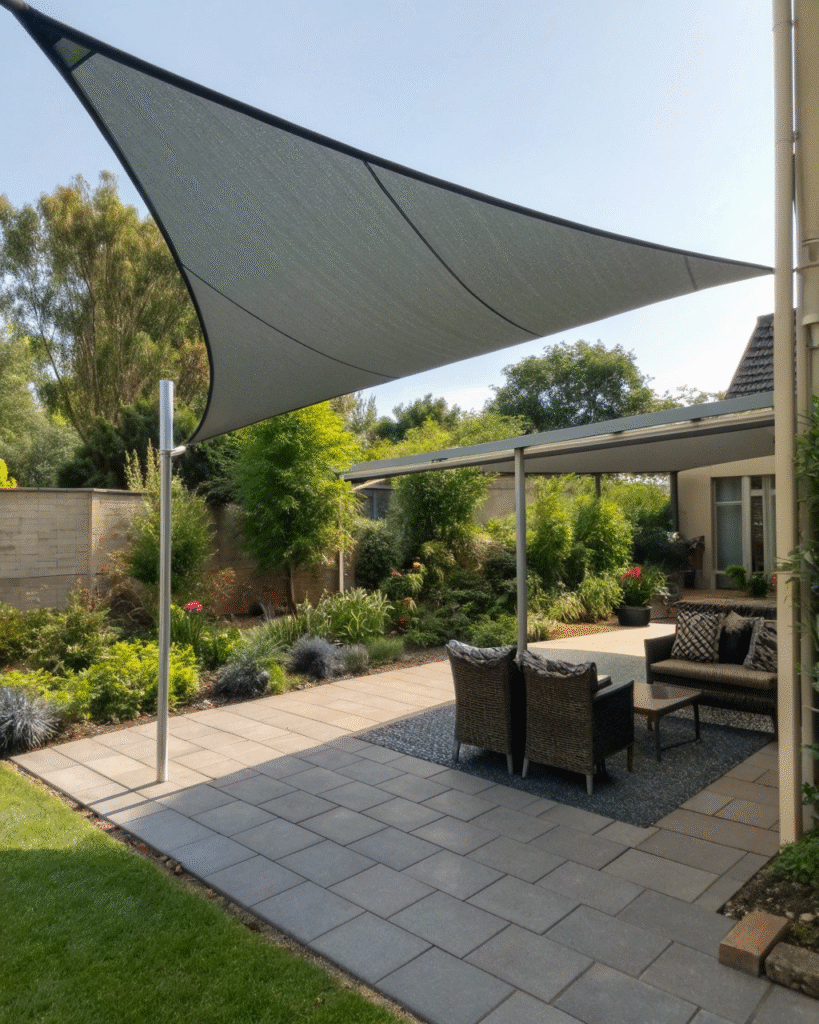
A triangular or rectangular shade sail offers modern style and easy installation.
Pro Tip: Use multiple sails in layered shapes for a creative architectural effect.
4. Glass Roof Extension
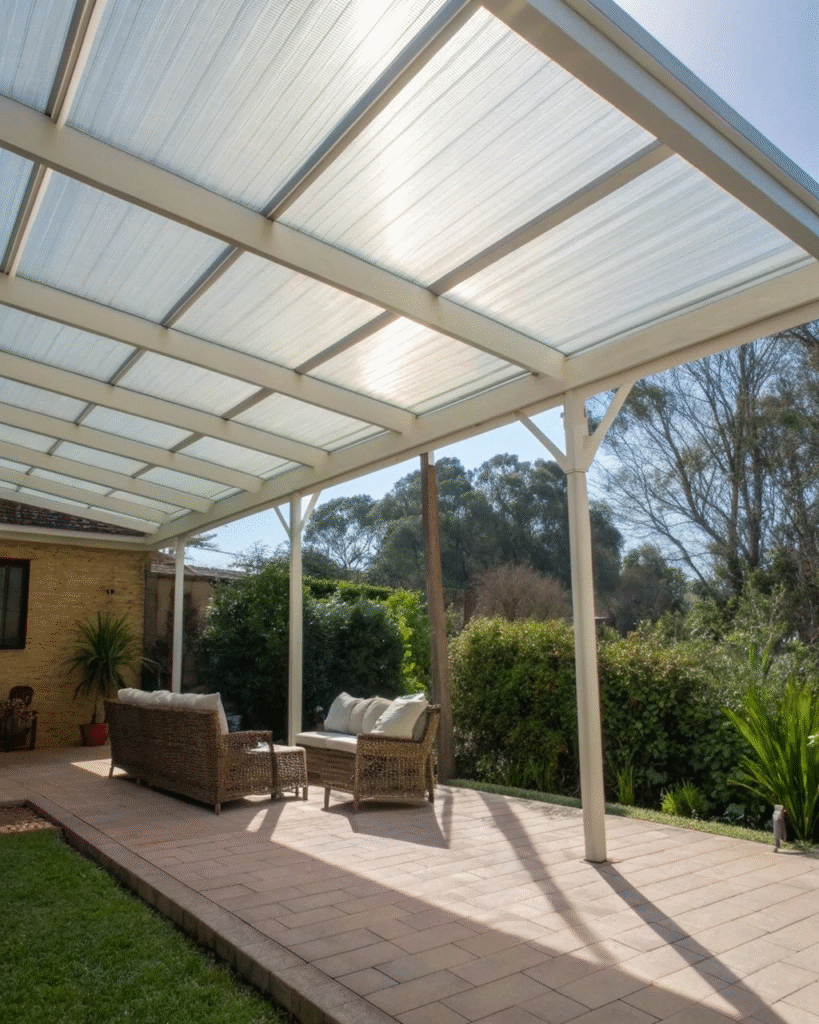
A glass roof allows natural light while protecting your patio from the elements.
Pro Tip: Add a light tint or UV coating to keep the area cool and comfortable.
5. Bamboo Canopy
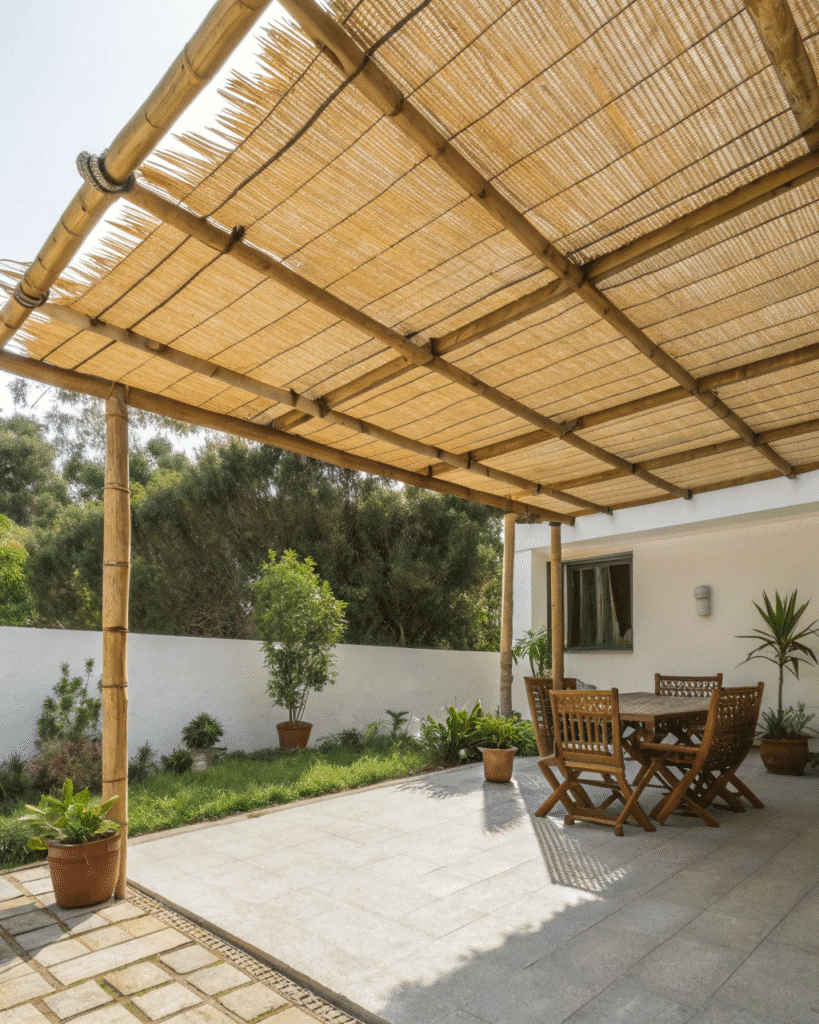
Bamboo brings warmth and natural charm to covered patios.
Pro Tip: Pair it with string lights for a soft glow in the evenings.
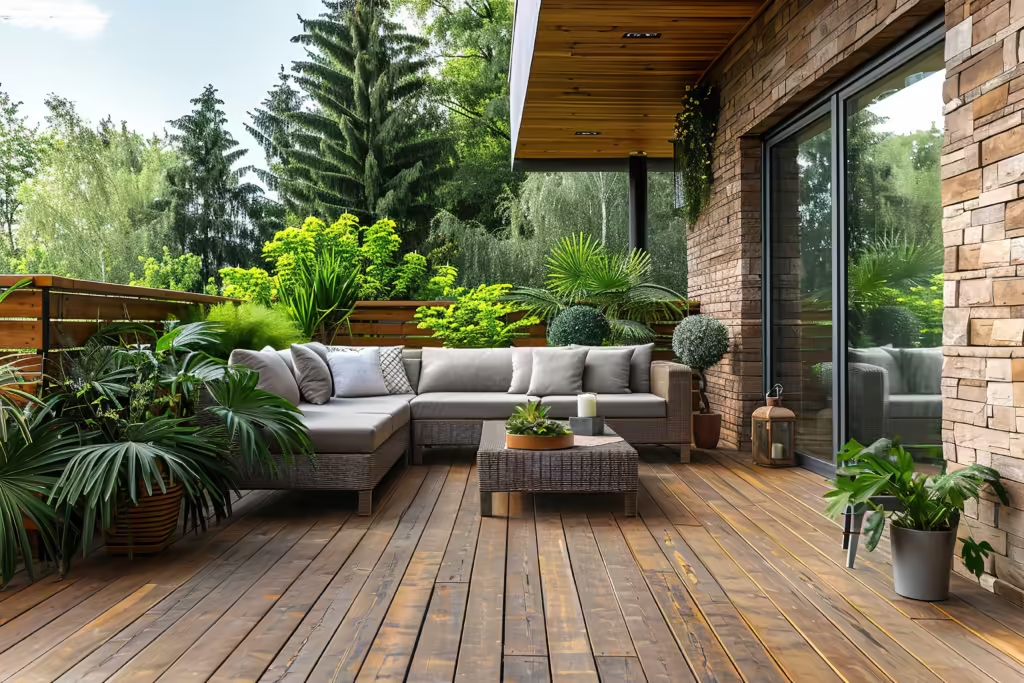
6. Metal Roof Structure
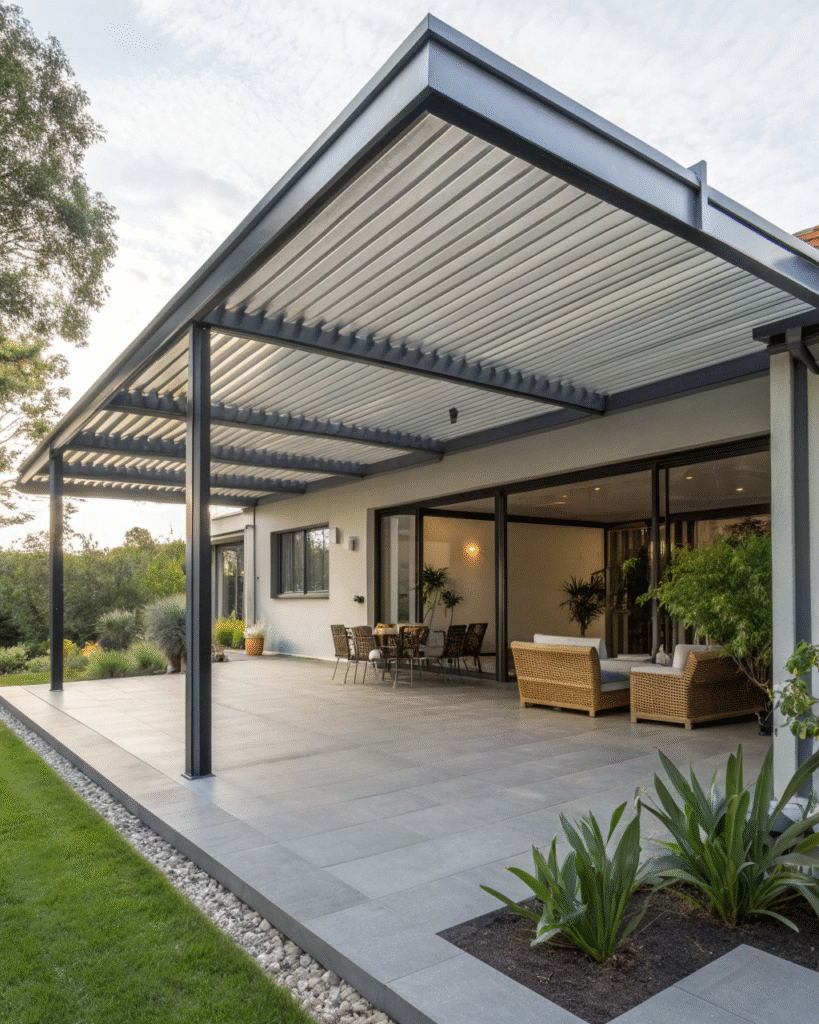
Metal coverings are strong, long-lasting, and perfect for modern homes.
Pro Tip: Add wooden accents or greenery to balance the industrial look.
7. Fabric Canopy
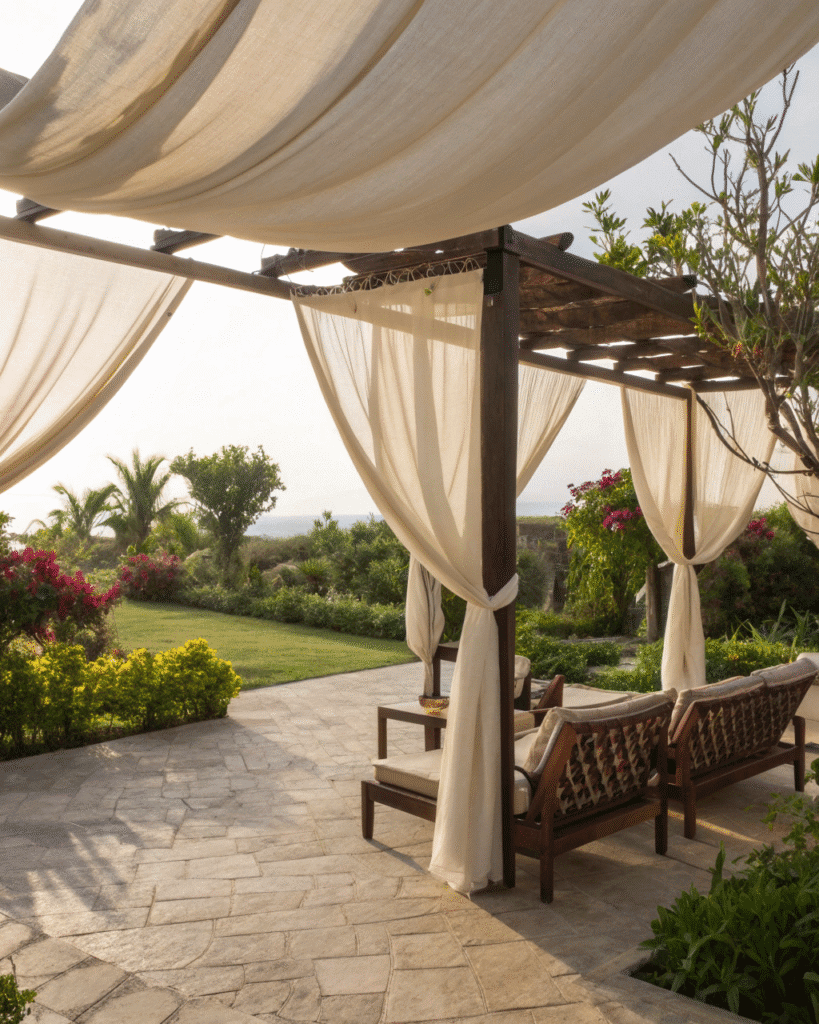
A flowing fabric canopy creates a relaxed, resort-like atmosphere.
Pro Tip: Choose weather-resistant fabrics in soft neutral tones for timeless appeal.
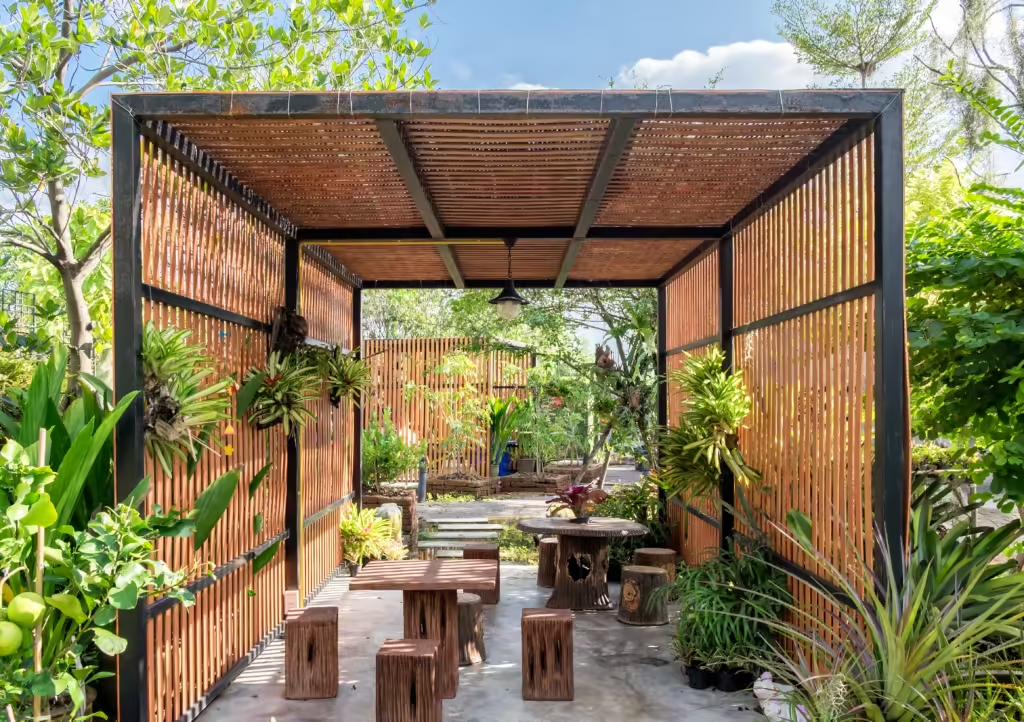
8. Wooden Slatted Roof
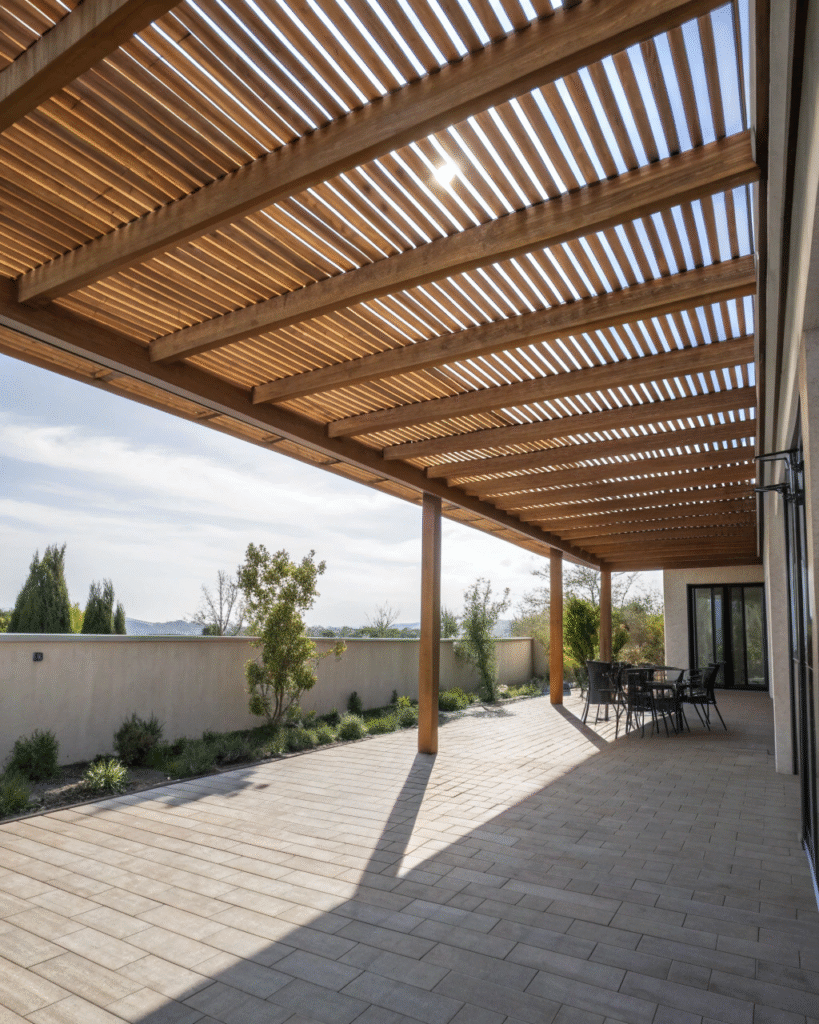
A slatted roof provides partial shade while letting light filter through beautifully.
Pro Tip: Adjust the slat spacing depending on how much shade you prefer.
9. Green Roof or Vines
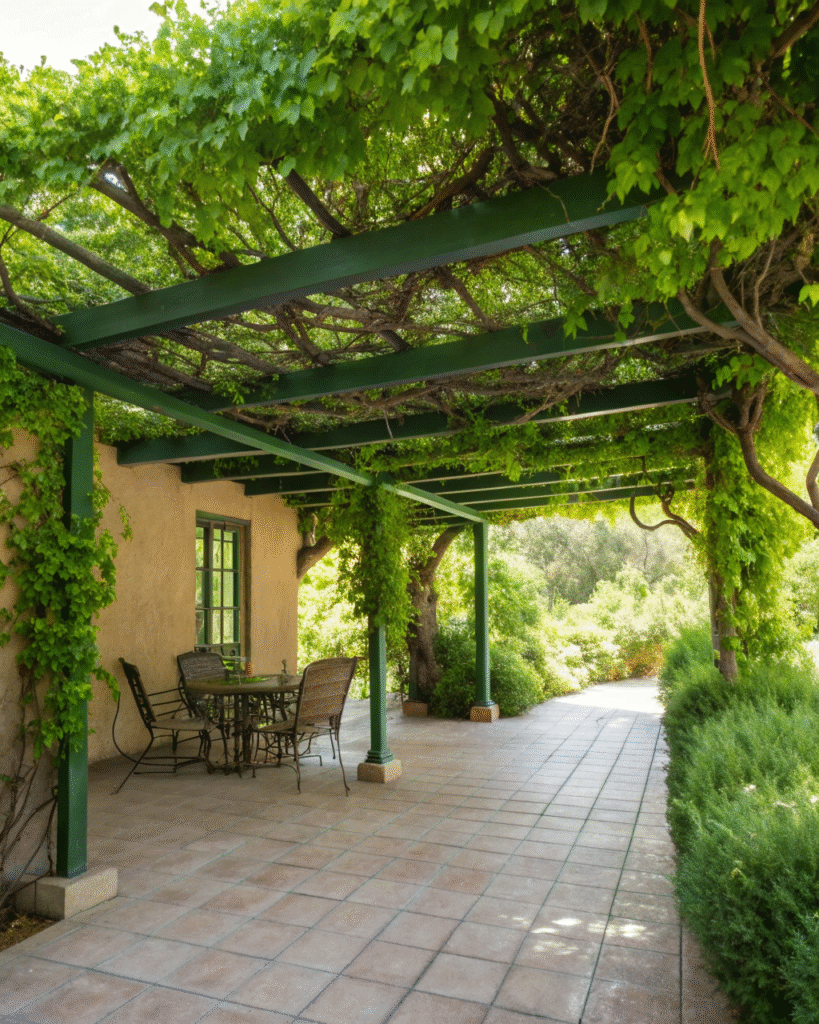
Grow climbing plants or ivy overhead for a natural living shade.
Pro Tip: Pick fast-growing plants like jasmine or wisteria for lush coverage.
10. Retractable Fabric Panels
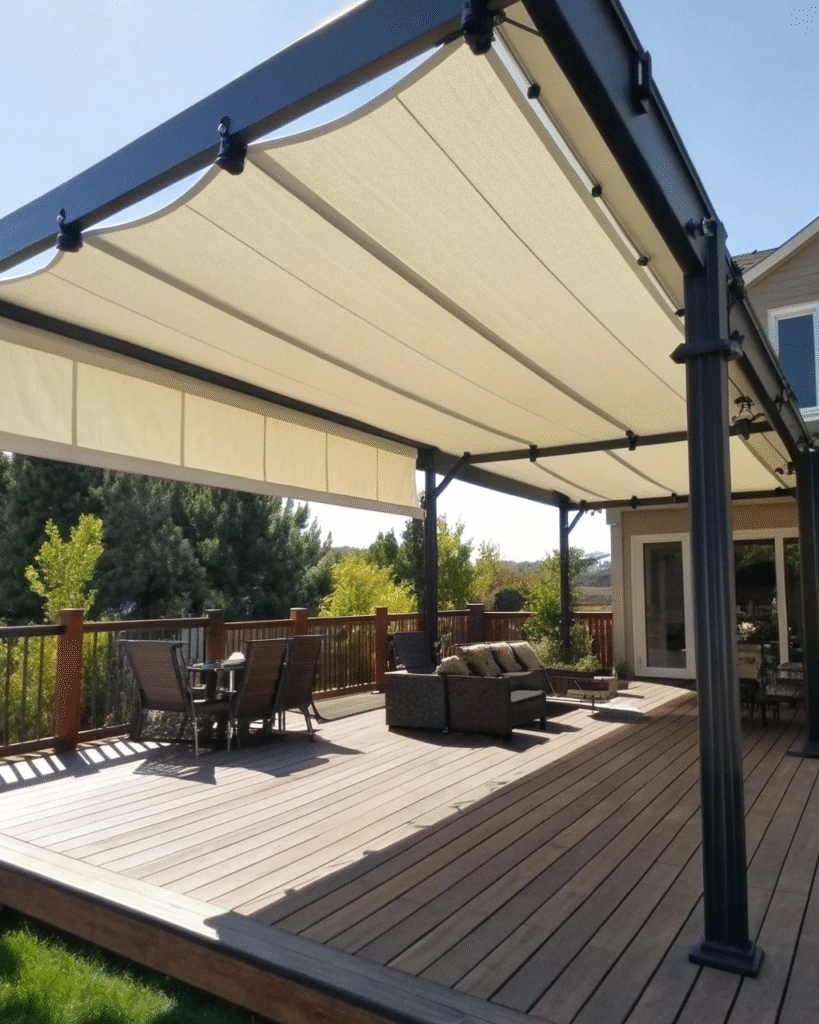
Install sliding fabric panels that can be adjusted to block sun or open up to the sky.
Pro Tip: Use light-colored panels to reflect sunlight and keep the patio cool.
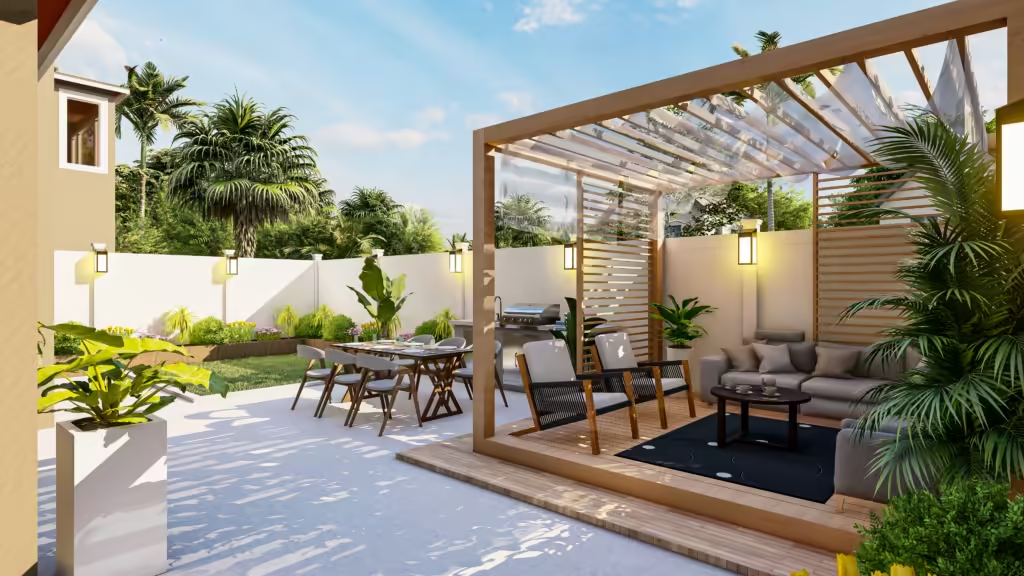
11. Polycarbonate Panels
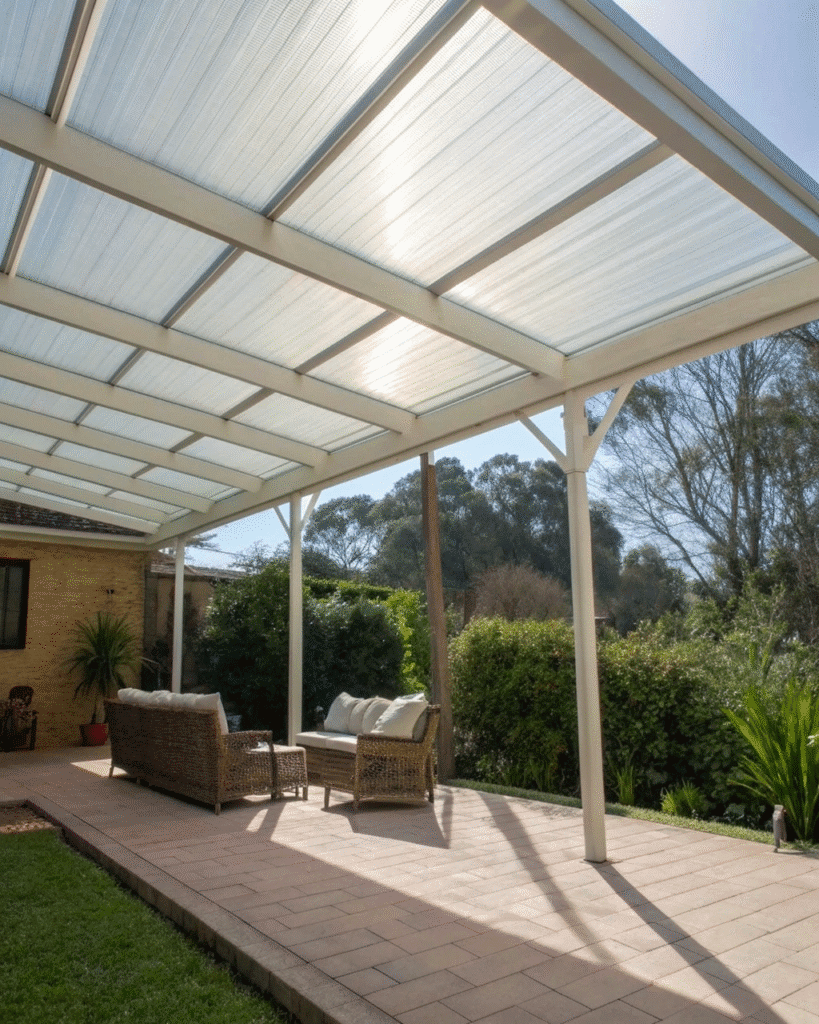
These lightweight, translucent panels offer great weather protection without blocking light.
Pro Tip: Choose UV-stabilized options to prevent yellowing over time.
12. Freestanding Umbrella
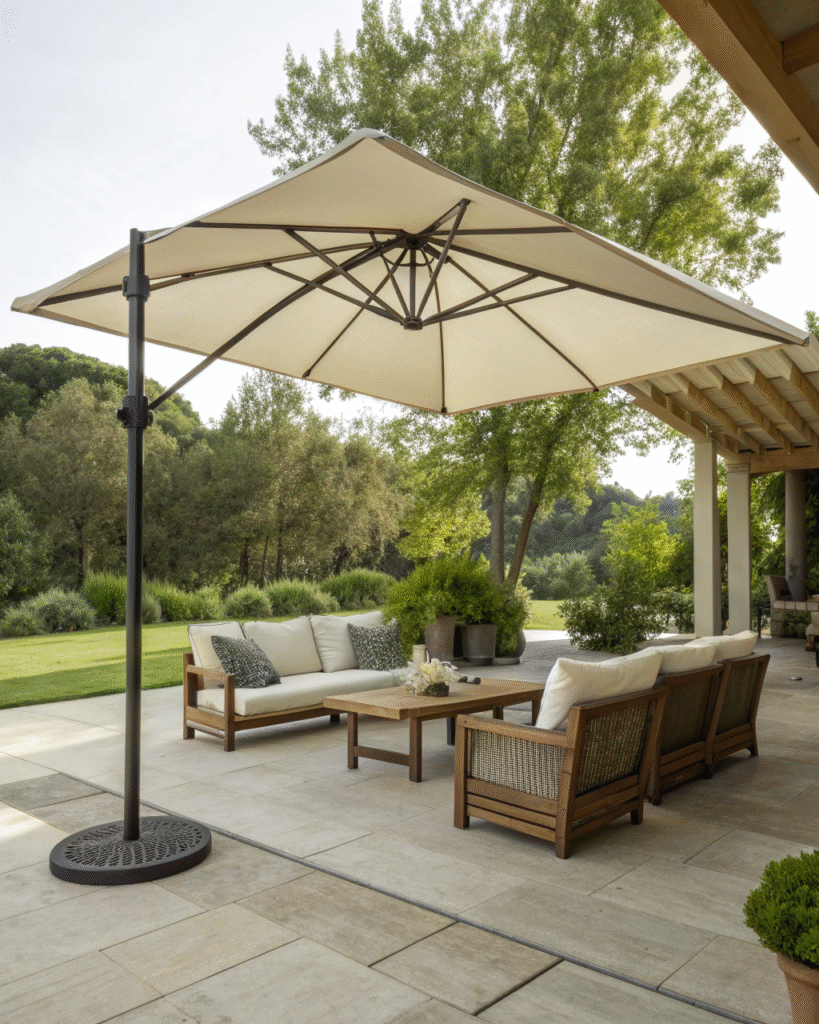
A large patio umbrella provides quick and flexible shade wherever needed.
Pro Tip: Go for a cantilever design to maximize coverage without a central pole.
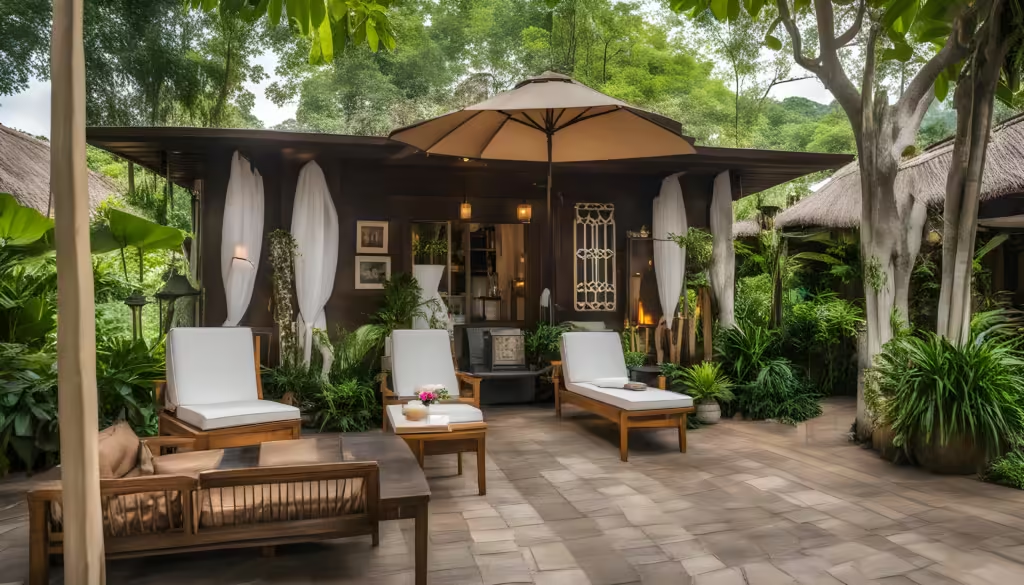
13. Wooden Gazebo
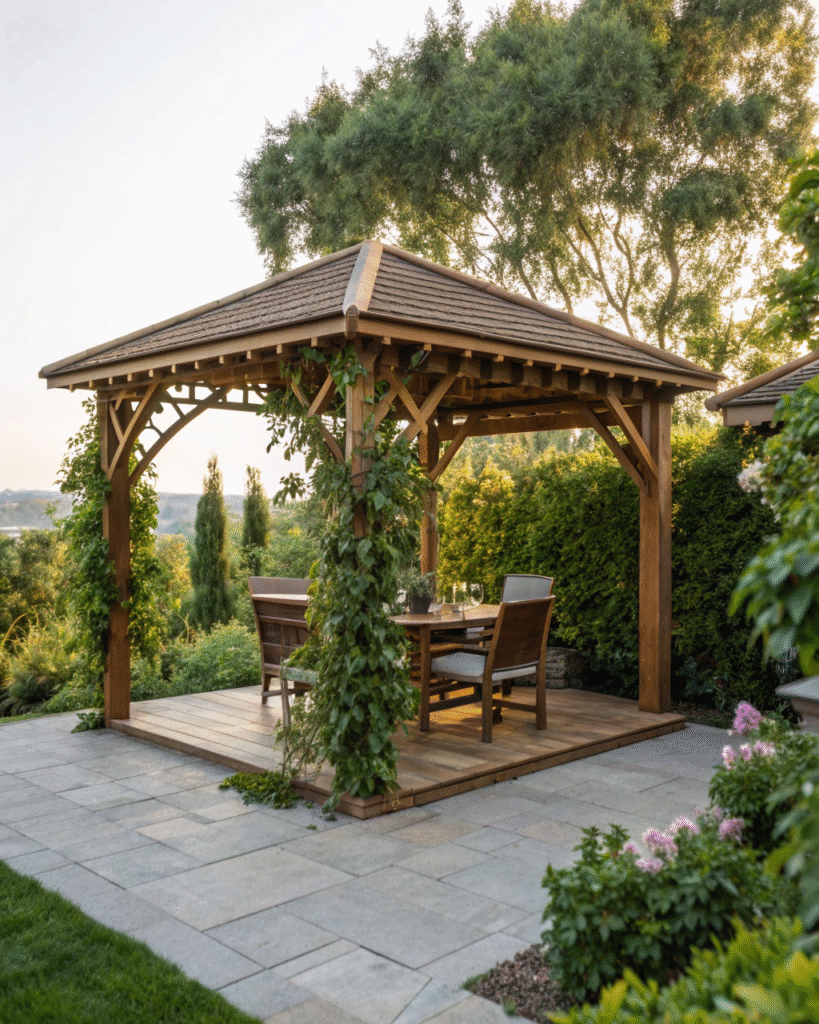
A gazebo creates a private, sheltered nook for dining or lounging.
Pro Tip: Add sheer curtains and hanging lights for a cozy, romantic vibe.
14. Corrugated Roof Covering
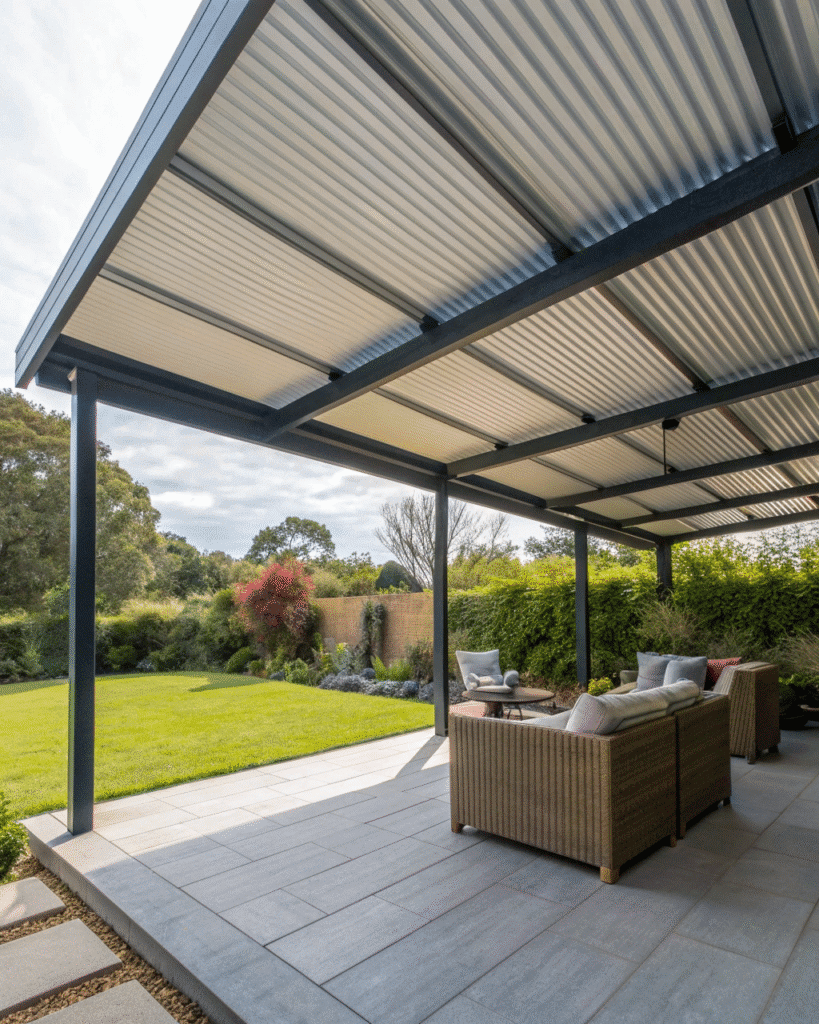
Corrugated metal or plastic sheets are budget-friendly and durable.
Pro Tip: Use in modern or rustic spaces for an industrial yet functional touch.
15. Retractable Roof System
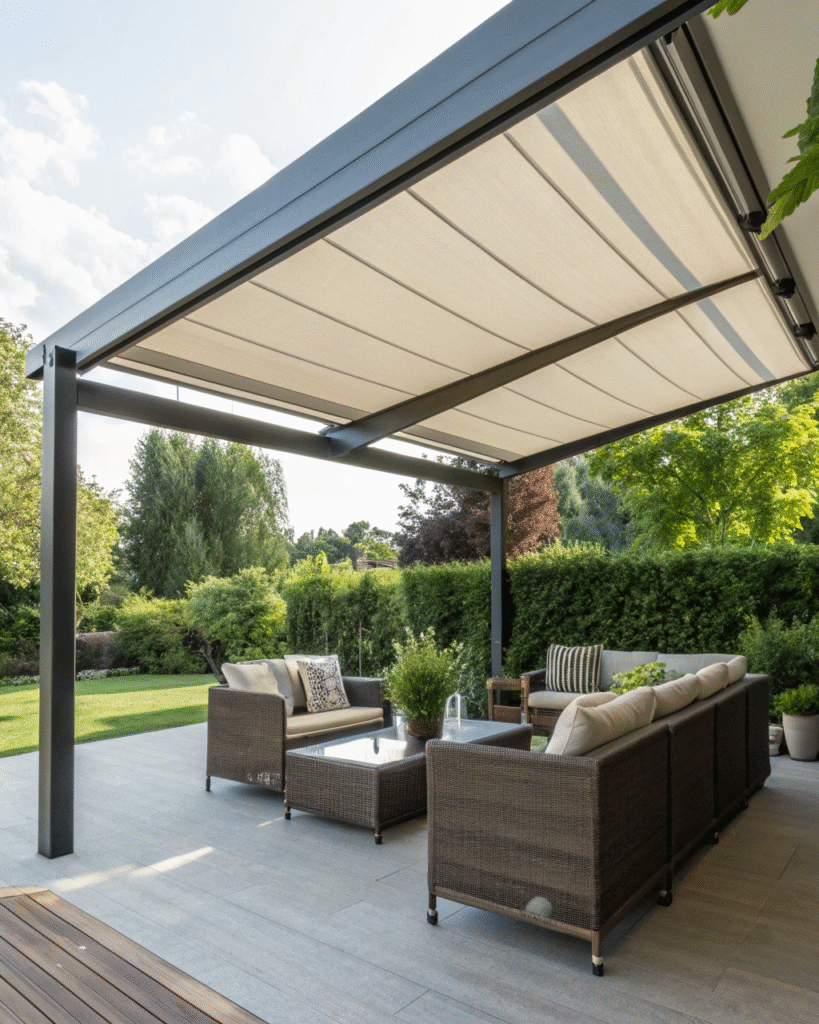
An automated retractable roof allows you to switch between open sky and shade easily.
Pro Tip: Ideal for patios used in all weather — add side curtains for full enclosure.
16. Thatched Roof
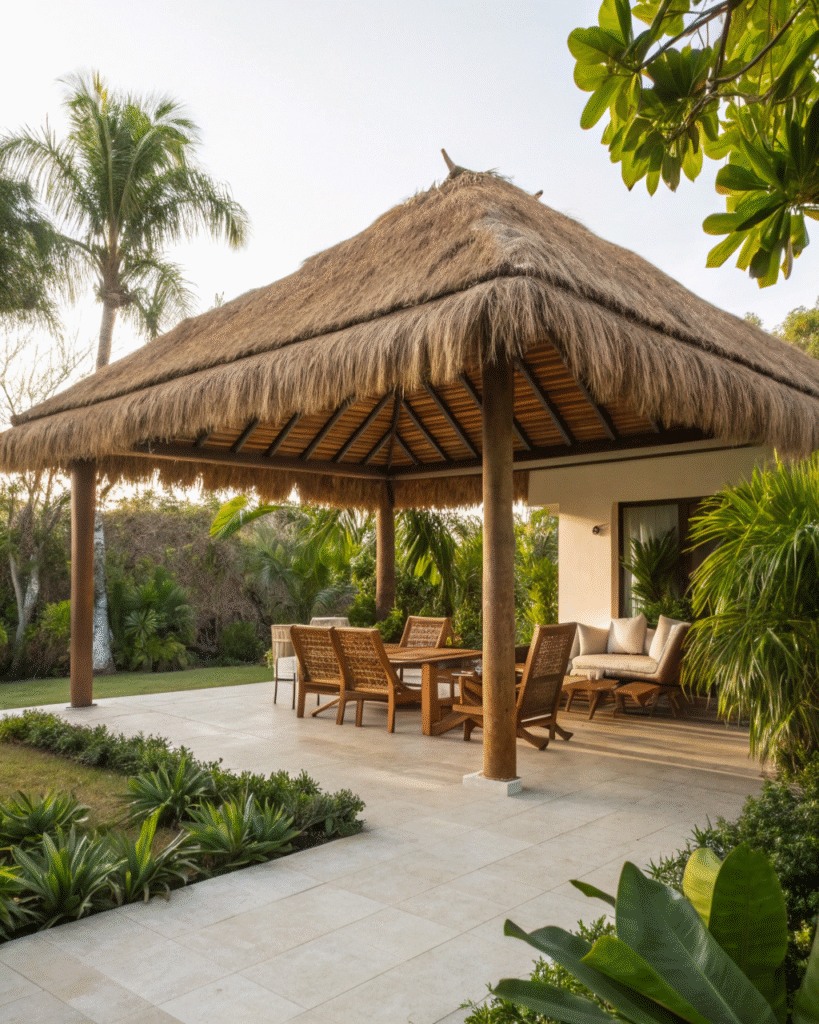
A thatched or faux-thatch roof brings a tropical, vacation-like aesthetic.
Pro Tip: Complement with bamboo furniture and natural textures for an island-inspired patio.
Final Thoughts
The right patio covering is the difference between a space you visit when conditions allow and a space you genuinely live in through the whole outdoor season. It is the single upgrade that delivers the broadest and most consistent improvement to how much your patio actually gets used.
Start by being honest about your climate, your budget, and how permanent you want the solution to be. Choose the covering that fits all three of those realities rather than the most impressive option in isolation. Install it properly with appropriate anchoring and permits where required. Then step back and experience the difference that having a proper roof over your outdoor room makes to every day you spend in it.
Frequently Asked Questions
Do I need a permit to build a patio cover?
In most US jurisdictions, any permanent structure attached to the house requires a building permit. Freestanding structures above a certain size, typically 200 square feet but varying locally, also typically require permits. Shade sails, freestanding umbrellas, and fabric canopies generally do not. Always check with your local building and planning department before beginning any permanent patio covering installation to understand exactly what is required in your specific municipality.
What is the most weather-resistant patio covering?
A solid metal or glass roof structure provides the most complete weather protection of any patio covering option, handling rain, wind, snow, and UV exposure better than any other material. Among less permanent options, a retractable louvered aluminum roof system provides the best combination of weather protection and flexibility, while high-quality solution-dyed acrylic fabric shade sails and canopies offer the best weather resistance among fabric covering options.
How much does a patio cover cost?
The cost range is enormous depending on the type and scale. A quality freestanding umbrella costs from 200 to 1500 dollars. A shade sail installation costs from 200 to 2000 dollars including hardware. A basic pergola kit costs from 1000 to 5000 dollars installed. A custom-built pergola with a solid roof costs from 5000 to 20,000 dollars. A full glass roof extension or motorized louvered roof system can cost from 15,000 to 50,000 dollars or more for a large installation. Your budget and the permanence of your situation are the primary guides to where to invest.
What patio cover provides the most shade?
A solid opaque roof structure provides the most complete shade because it blocks all direct sun rather than filtering it. Among non-solid options, shade sails with a high-density weave rated for 95 percent UV blockage come closest to full shade. A fabric canopy in an opaque woven material provides good shade. Open slatted or louvered structures provide filtered shade that varies through the day as the sun angle changes.
How do I maintain a patio covering?
Maintenance requirements vary significantly by material. Fabric coverings should be cleaned annually with a mild soap solution and checked for mildew, tears, and hardware wear. Timber structures benefit from annual checking of fasteners and an application of wood treatment or sealant. Metal structures require checking for any areas where the powder coat has chipped and touch-up treatment to prevent rust at those points. Polycarbonate panels should be cleaned with a gentle soap solution and checked for the UV-protective coating condition annually. Living vine covered structures need seasonal pruning and annual checking of the underlying frame for any signs of moisture damage.