11+ Patio Kids Play Area Ideas for Outdoor Fun
Getting kids outside is one of the best things you can do for them and one of the things that requires the most intentional setup to actually happen consistently. Left to their own devices, screens win every time. But give children an outdoor space that is genuinely set up for them, with things to do and places to be and the specific kind of freedom that only the outdoors offers, and they will choose outside over and over again.
A patio kids play area does not require a huge backyard or a significant budget. It requires thought about what your specific children actually love to do, a dedicated zone that is clearly theirs, and setups that invite the kind of imaginative, physical, sensory play that children thrive on. The best outdoor play areas are not the most expensive ones. They are the ones that match what the children who use them genuinely want to do.
Why a Dedicated Outdoor Play Area Makes Such a Difference
The difference between a patio that happens to have some toys in a corner and a patio that has a genuinely dedicated play area is significant, both for the children who use it and for the adults who share the space.
A dedicated play zone gives children a sense of ownership over part of the outdoor space that matters enormously to how they engage with it. When children have a specific area that is clearly theirs, with their things set up and ready to use, they settle into play more quickly, stay engaged longer, and develop a deeper relationship with the outdoors than they do when they are simply given permission to exist in an adult-oriented patio space.
Love Chic Living Club?
Add us as one of your preferred Google sources and discover more home decor, DIY, outdoor, and lifestyle inspiration from us.
For adults, a properly defined children’s play zone on the patio also improves the shared experience of the outdoor space significantly. Rather than toys spreading across the entire patio surface and children’s activities conflicting with adult seating and dining areas, a well-planned play zone keeps the activity contained in a way that allows both children and adults to enjoy the space simultaneously without constantly negotiating over territory.
The research on outdoor play is also unambiguous about its importance for child development. Time spent in outdoor unstructured play is associated with better physical health, stronger attention spans, reduced anxiety, more creative thinking, and better social skills than equivalent time spent indoors. Creating an outdoor play environment that genuinely attracts children is not just a parenting convenience. It is a genuine investment in their development.
How to Plan a Patio Kids Play Area That Actually Works
A few planning principles make the difference between a play area that children gravitate to consistently and one that gets abandoned after the novelty wears off.
Match the Setup to Your Children’s Actual Interests
The most common play area planning mistake is building or buying for what you think children should like rather than what your specific children actually love. Before you invest in anything, observe what your kids do when they play freely. Do they gravitate toward physical challenge and climbing? Toward creative and artistic activities? Toward imaginative play with characters and scenarios? Toward sensory experiences with water, sand, and texture? The answers should drive every decision about your play area setup.
Design for the Age Range You Have Now and the Next Few Years
Children’s play preferences change dramatically across different ages and a play setup that is perfect for a three-year-old may feel babyish to a six-year-old and irrelevant to a nine-year-old. Think about the age range you are designing for both now and in the next two to three years and choose elements that have enough developmental longevity to remain engaging as your children grow. A chalkboard wall, a sandbox, a water play area, and a climbing structure all have much longer developmental relevance than highly age-specific toys.
You May Also Love


Plan the Layout Around Visibility
Safety supervision is a constant reality of parenting young children outdoors and the layout of your play area should make it easy to keep an eye on the play zone from wherever adults naturally sit on the patio. A play area tucked around a corner, behind a screen, or at the far end of the garden from the adult seating area creates constant supervision anxiety that makes the whole outdoor experience less relaxed for everyone. Position the primary play zone where it is clearly visible from the main adult seating area without requiring constant repositioning.
Don't miss: 13+ Unique Cobblestone Patio Ideas →
Build in Storage From the Start
A play area without adequate storage becomes a chaotic mess within a week of use and a chaotic mess becomes something that adults want to clear away and children lose interest in because their things are never where they expect them to be. Planning outdoor toy storage as a core element of the play area rather than an afterthought keeps the space organized, makes toys easy for children to access independently, and makes the end-of-play tidying process significantly less fraught.
Keep Exploring
Safety Considerations for Patio Kids Play Areas
Outdoor play areas for children require some specific safety thinking that is worth addressing before any equipment is installed or any setup is finalized.
Surface safety matters enormously under and around any climbing or active play equipment. Hard concrete or stone paving is not an appropriate surface under a climbing wall, swing, or any structure that children might fall from. Impact-absorbing surfaces such as rubber play mulch, pea gravel, sand, or purpose-made interlocking foam or rubber tiles should be used under and around any active play equipment where a fall is possible. The required depth and area of impact-absorbing surface depends on the height of the equipment and the specific material used.
Anchor any freestanding play structures securely to prevent tipping. A playhouse, climbing frame, or swing set that is not properly anchored can tip over when children climb on it in unexpected ways. Follow manufacturer anchoring instructions exactly and check anchor points regularly through the play season as ground movement and weather can loosen anchors over time.
Check all play equipment regularly for splinters, sharp edges, rust, loose fasteners, and structural integrity. Outdoor equipment is subject to significant weathering and UV degradation and elements that were safe when new can develop hazardous conditions over one or two seasons. A quick monthly check of all equipment fasteners, surfaces, and structural connections prevents small maintenance issues from becoming safety problems.
Keep the play area free from hazards that children might encounter at ground level. This includes garden tools, sharp-edged pots, unsecured cables or wires, and any toxic plants that might be within reach of young children. Audit the play zone at ground level from a child’s perspective rather than from adult standing height to identify hazards that might not be obvious from above.
These 11 ideas cover every type of outdoor play from creative and artistic to physical and active, so you can build the patio play zone that your kids will actually use every single day.
1. Mini Playhouse Corner
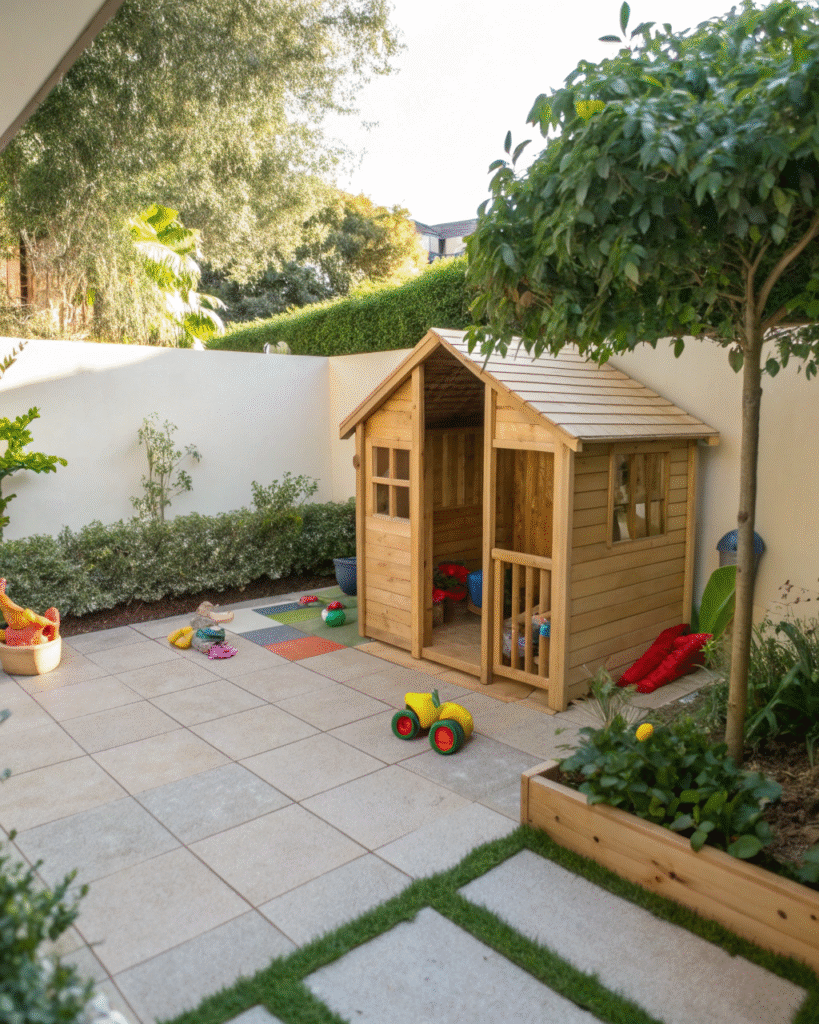
Set up a small wooden or plastic playhouse for endless pretend play.
Pro Tip: Add a doormat and mini planters to make it feel like a real little home.
2. Sandbox Station
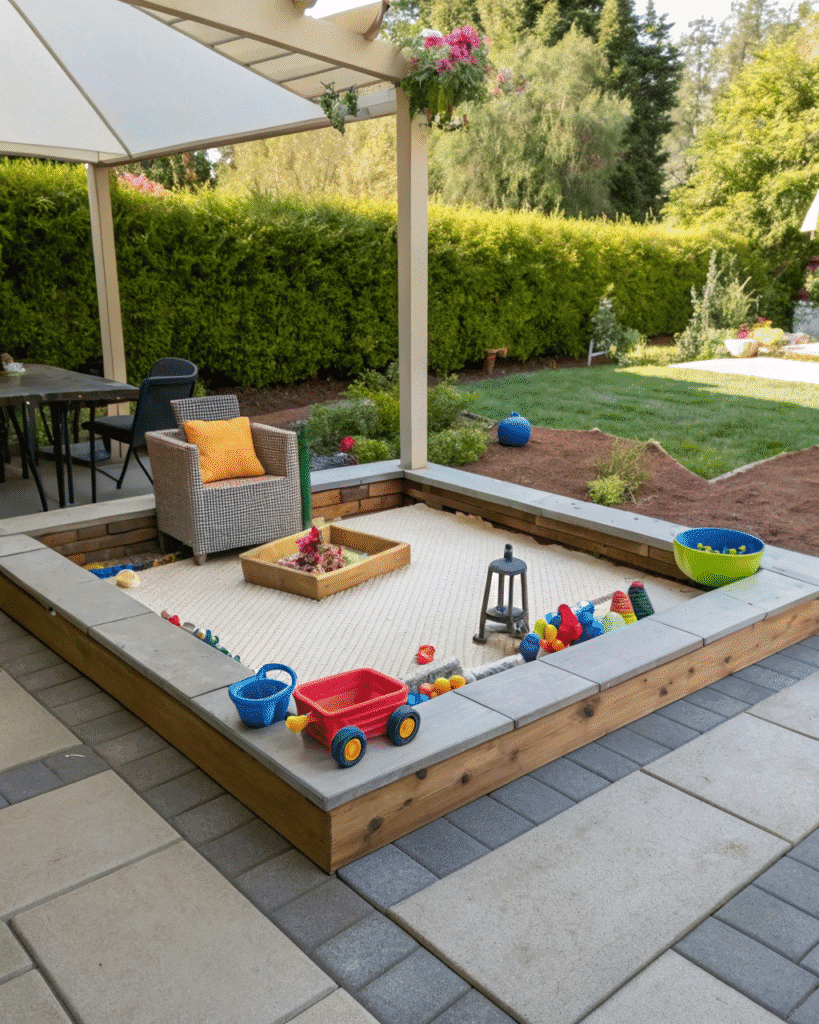
A compact sandbox offers hours of creative fun for toddlers and young kids.
Pro Tip: Use a covered box or DIY lid to keep the sand clean when not in use.
3. Chalkboard Wall
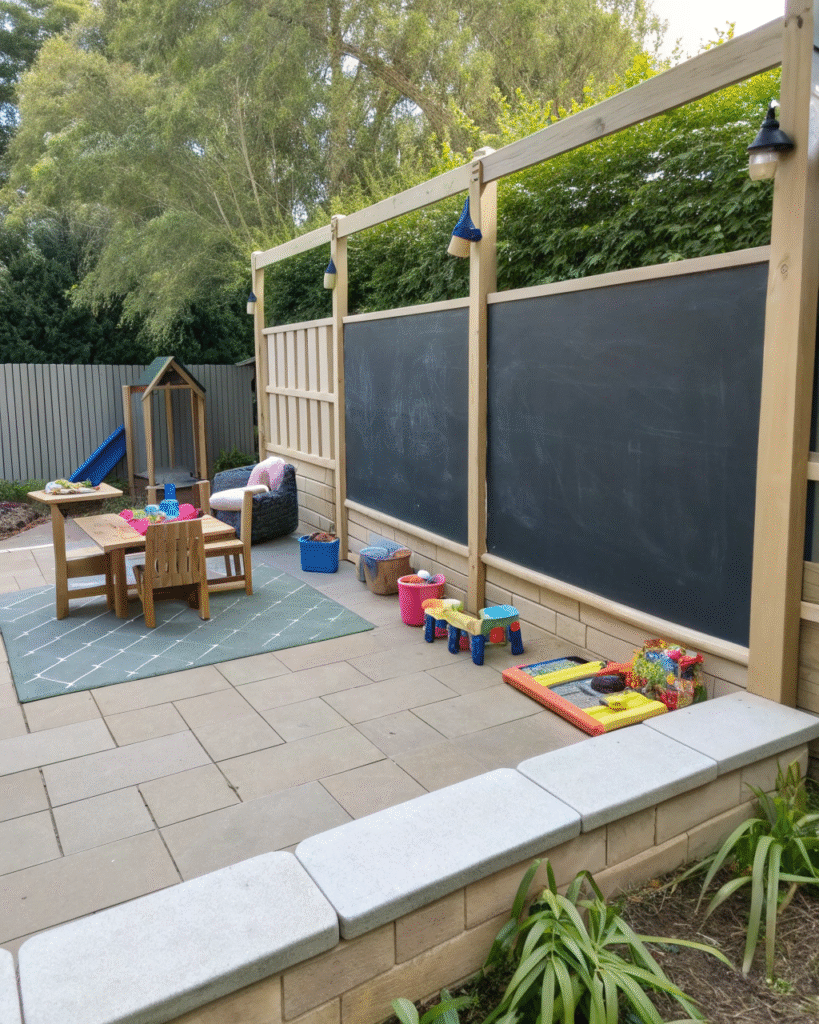
Attach a chalkboard panel to a patio wall for drawing and doodling.
Pro Tip: Keep a bucket of chalk nearby so kids can easily switch between games and art.
4. Outdoor Toy Storage Bench
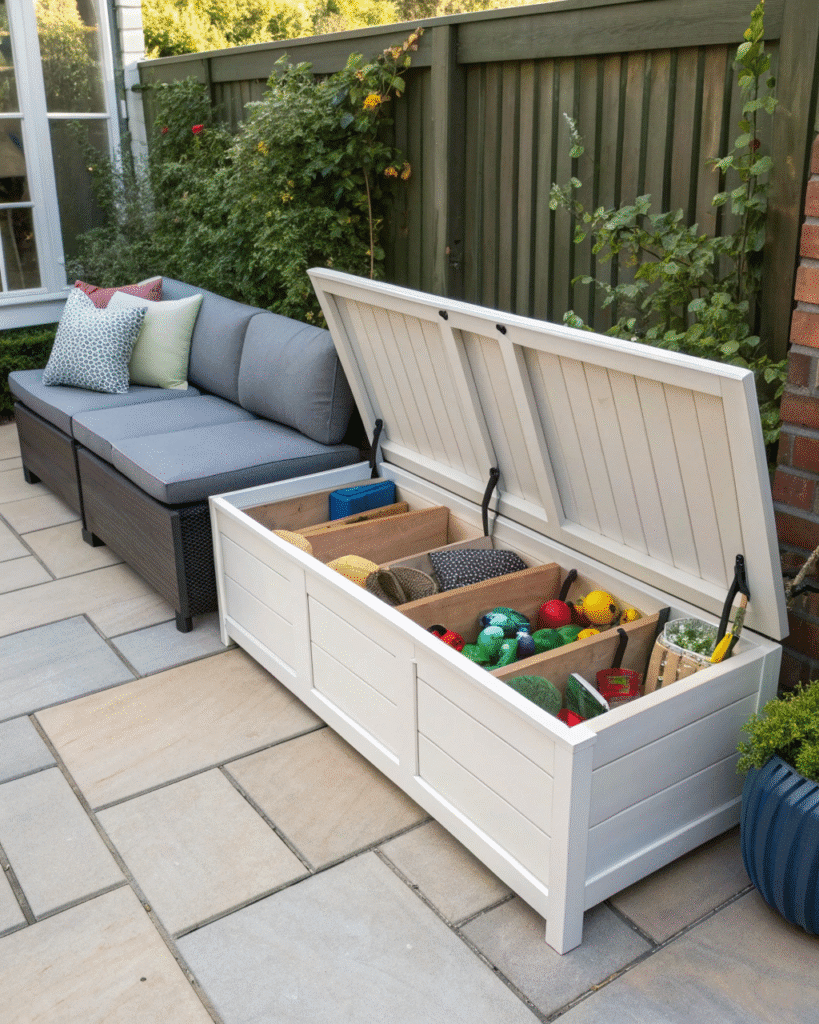
A bench with hidden storage keeps toys organized and your patio tidy.
Pro Tip: Label storage bins so kids can learn to clean up after playtime.
5. Climbing Wall or Ladder
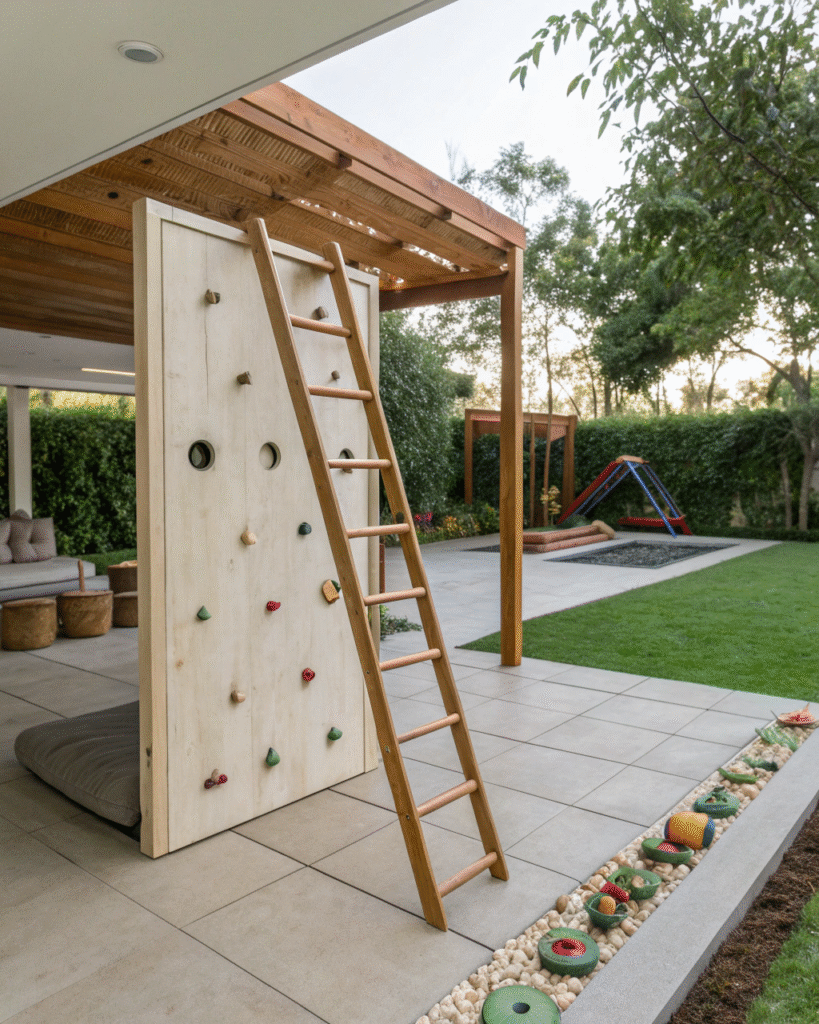
Add a small climbing wall or wooden ladder for adventure play.
Pro Tip: Keep it low to the ground and use soft mats below for safety.
6. Water Play Table
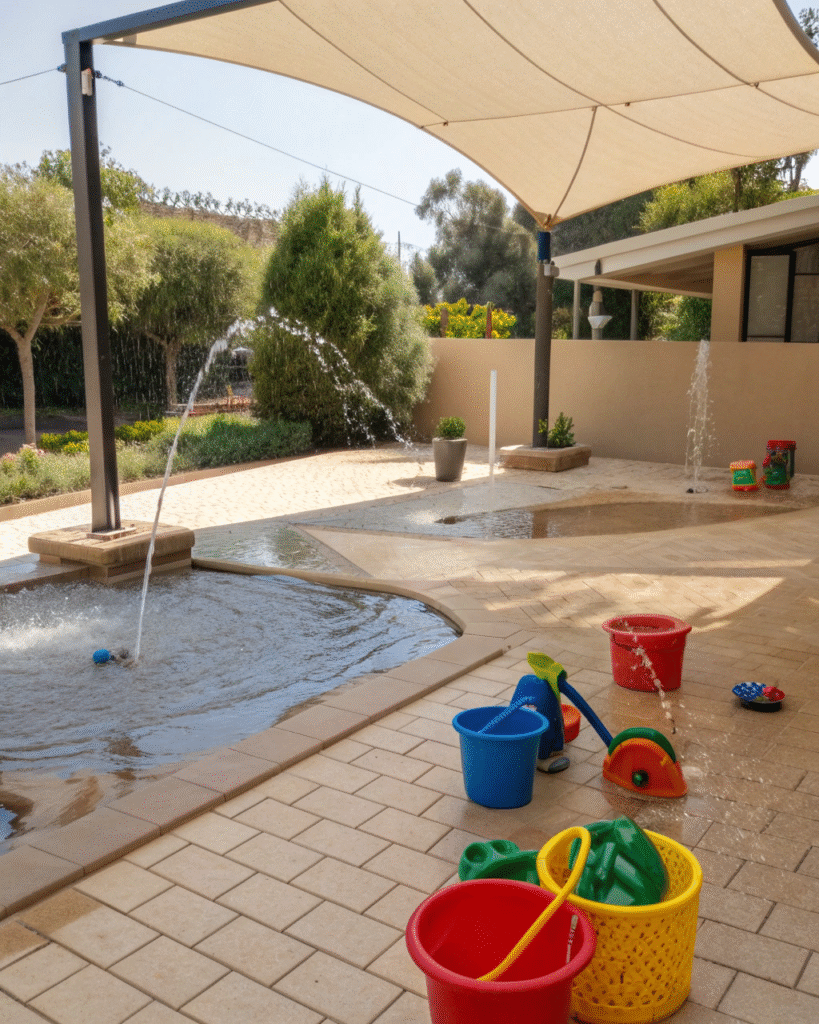
A water play station adds sensory fun and helps keep kids cool in summer.
Pro Tip: Include small cups, boats, and funnels to make playtime more interactive.
7. Outdoor Art Station
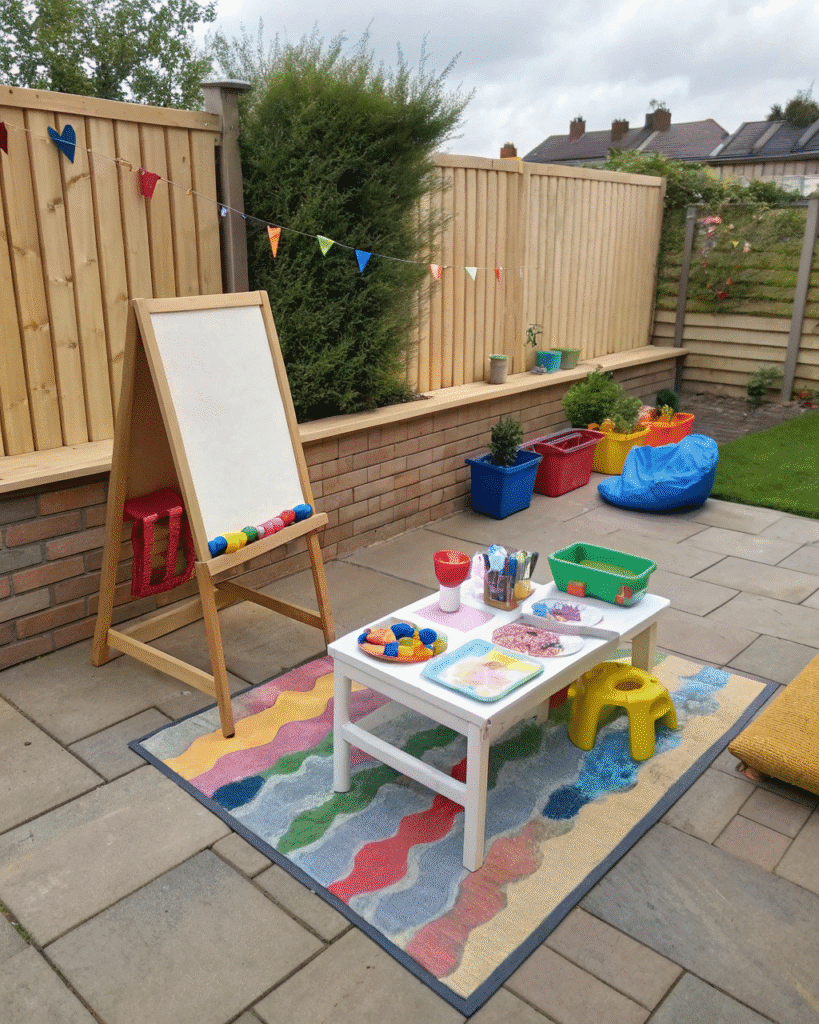
Create a small art corner with a table, easel, and washable supplies.
Pro Tip: Use waterproof containers and paint that’s easy to clean off patios.
8. Hammock or Swing Chair
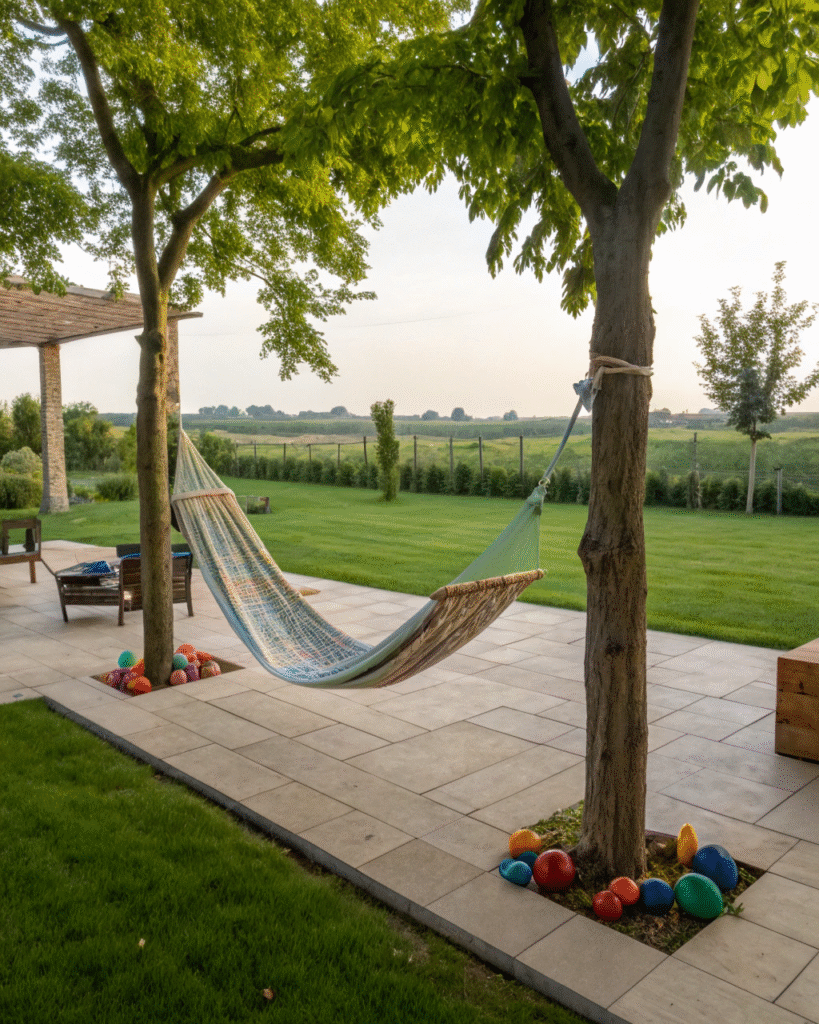
A kid-sized hammock or swing chair adds a fun and relaxing spot to rest.
Pro Tip: Make sure the frame or ropes are securely fastened for safety.
9. Mini Picnic Table
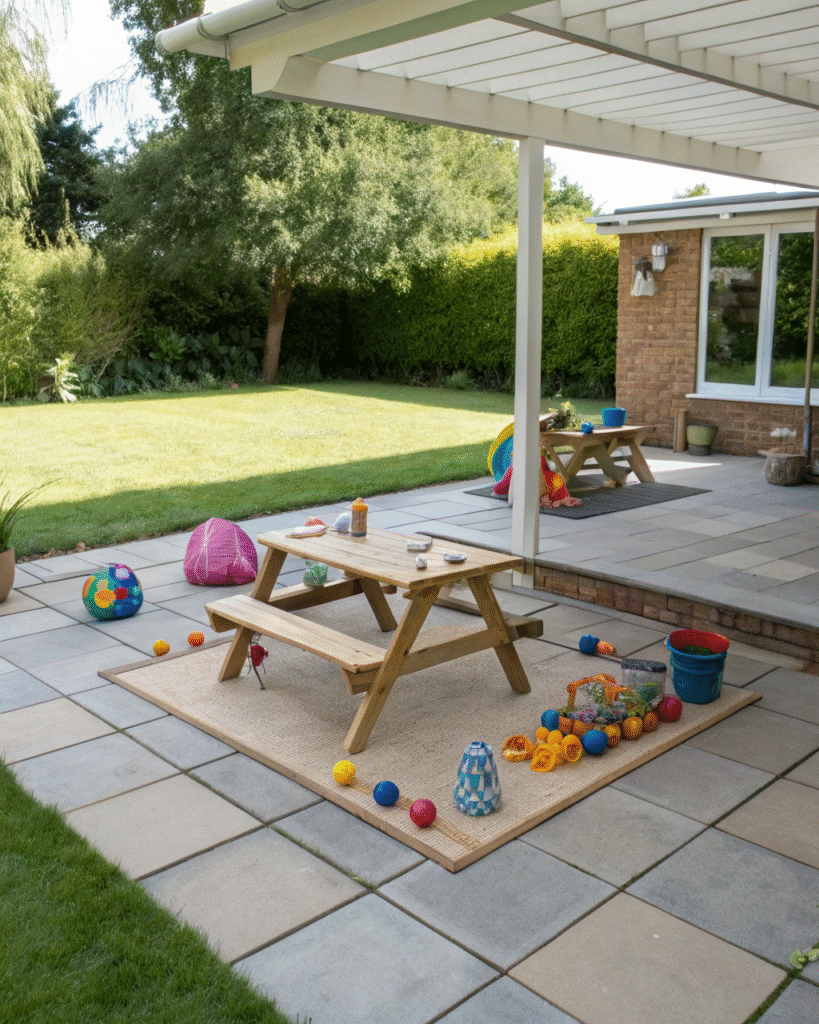
A small picnic table gives kids a space for snacks, crafts, or board games.
Pro Tip: Choose a foldable design for easy storage when not in use.
10. Play Tent or Teepee
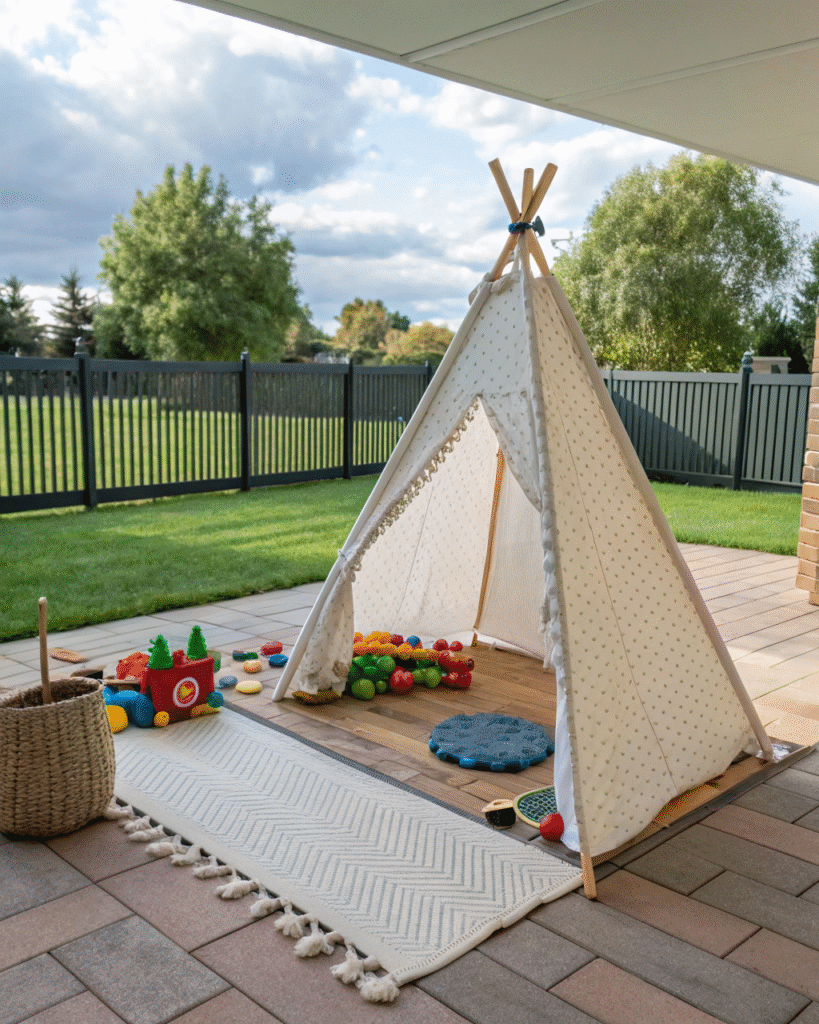
A small fabric tent creates a magical hideaway for reading or quiet play.
Pro Tip: Decorate with fairy lights or soft cushions to make it cozy and inviting.
11. Ride-On Toy Zone
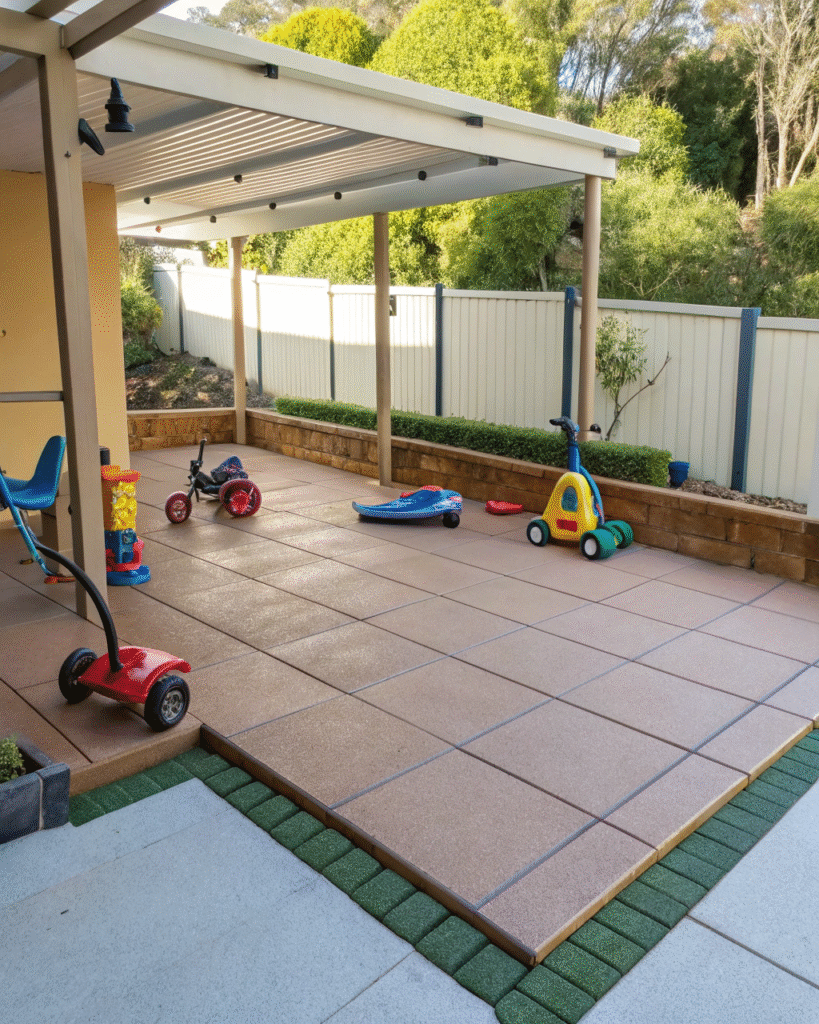
Dedicate a smooth area for scooters or small ride-on toys.
Pro Tip: Keep pathways clear and add potted plants on the sides for a fun mini track.
Final Thoughts
A patio kids play area is one of the most genuinely valuable things you can create for your family’s outdoor life. It gives children a space that is unambiguously theirs, invites the kind of physical and imaginative play that supports their development in every dimension, and creates the outdoor habit that, once established in childhood, tends to last a lifetime.
Start with the one or two elements that best match what your specific children love to do, get those right and well-used, and build from there. The goal is not a spectacular play area that looks impressive in photographs. It is an outdoor space that your children choose freely, use joyfully, and return to day after day because it genuinely gives them what they need.
Frequently Asked Questions
What is the best surface for a patio kids play area?
The best surface depends on the type of play the area is designed for. For active play and wheeled toys, smooth concrete or composite decking provides the most versatile and durable surface. For climbing equipment and structures where falls are possible, an impact-absorbing surface such as rubber play mulch, pea gravel, or interlocking rubber tiles provides the necessary cushioning. For general play areas that include a mix of activities, a combination of smooth hard surface for ride-ons and an impact-absorbing zone under any climbing equipment is the most practical approach.
How do I keep outdoor play equipment in good condition?
Clean play equipment at the start and end of each play season with a mild soap solution and rinse thoroughly. Check all fasteners, joints, and structural connections regularly and tighten or replace any that show signs of loosening or wear. Sand any rough or splintered surfaces on wooden equipment and apply a fresh coat of exterior wood treatment or paint annually. Store portable play items like sensory tables, toy storage, and art supplies under cover or inside during the off-season to extend their lifespan significantly.
How much space do I need for a patio kids play area?
A genuinely functional patio kids play area can be created in as little as eight by ten feet of dedicated space. This is enough room for a small playhouse or sandbox, a storage bench, and a couple of additional play elements. Larger spaces of course allow for more elements and more physical play, but the quality and thoughtfulness of the setup matters far more than the square footage. A small well-designed play zone consistently outperforms a large poorly organized one in terms of actual child engagement and play quality.
At what age do children stop using a patio play area?
With thoughtful design choices, a patio play area can remain genuinely engaging from toddler age through early teenage years. The key is evolving the setup as children grow rather than keeping the same baby-oriented elements in place past their developmental relevance. A chalkboard wall, a water feature, a comfortable hammock, and a creative art station remain relevant across a very wide age range. Specific items like sandboxes and mini playhouses may be outgrown by age seven or eight and can be replaced with age-appropriate elements like a more challenging climbing structure, a sports net, or a more sophisticated creative setup.
How do I encourage my children to actually use the outdoor play area?
The most effective strategies are being out there yourself, at least initially, playing alongside children rather than simply sending them outside. Children are naturally drawn to where their parents are and parental presence in the outdoor space normalizes it as a desirable place to be. Rotate toys and props regularly so the play area always has an element of novelty. Plan outdoor activities and snack times in the play zone so children associate the outdoor space with positive, enjoyable experiences. Invite friends over to play outdoors so children experience the social dimension of outdoor play that often makes it more compelling than solo screen time.