12+ Patio Decorating Ideas for a Fresh New Look
Refreshing your patio decor can completely change the way your outdoor space feels. Decorating a patio is one of the most enjoyable and immediately rewarding home projects you can take on. Unlike interior rooms, outdoor spaces respond to even small decorating changes with dramatic results, and the relatively simple canvas of a patio means that a handful of well-chosen updates can completely transform the atmosphere and character of the whole space.
How to Decorate a Patio That Actually Feels Designed
There is a meaningful difference between a patio that has been decorated and one that has been designed. A decorated patio has things added to it. A designed patio has been thought through as a whole, with every element relating to every other one. The best patio decorating achieves the latter even when working with a modest budget and existing furniture.
Start With a Clear Aesthetic Direction
Before buying or adding anything, decide what kind of atmosphere you want your patio to have. Relaxed and coastal. Lush and tropical. Clean and contemporary. Warm and Mediterranean. Rustic and natural. Romantic and bohemian. Each of these directions has its own set of materials, colors, plants, and accessories that work together naturally. Choosing a direction before you start means every purchase decision has a filter and the end result feels cohesive rather than assembled from whatever was on sale.
This does not need to be a rigid design brief. It can be as simple as collecting a handful of images from Pinterest or Instagram that appeal to you and identifying the common thread. The common thread is your aesthetic direction.
Love Chic Living Club?
Add us as one of your preferred Google sources and discover more home decor, DIY, outdoor, and lifestyle inspiration from us.
Edit Before You Add
The most common patio decorating mistake is adding more things to a space that already has too many. Before you bring in a single new cushion, plant, or accessory, edit what is already there. Remove everything that is tired, broken, faded beyond recovery, or simply out of place with the direction you are moving toward. The space you create by editing will reveal what is actually needed rather than what you think you need before you can see clearly.
A well-edited patio with fewer, better-chosen elements almost always looks more considered and more expensive than a crowded one regardless of the individual quality of the items.
Build Around a Color Palette
Choosing a color palette before decorating is one of the most powerful tools for achieving a cohesive result without a large budget. A neutral base in natural tones, cream, grey, warm white, or natural timber, with one or two accent colors introduced through cushions, planters, and accessories, is the simplest and most reliable approach. The accent colors can change seasonally to refresh the space without replacing the furniture or structural elements.
Keep the palette to a maximum of three colors. Neutral base, one primary accent, and one secondary accent used more sparingly. More colors than this on a patio makes the space feel visually busy and slightly chaotic regardless of how carefully each individual piece is chosen.
Consider the View From Inside
Your patio is something you look at from indoors far more often than you are actually sitting in it. Decorating with the view from the main indoor living area in mind is just as important as decorating for the experience of being outside. A beautiful focal point, a well-lit tree, a striking planter arrangement, or a piece of outdoor art positioned so it is visible through the main window or door adds daily visual value to the space that extends well beyond the hours you spend outside.
Patio Decorating Ideas for Different Styles
Every home style calls for a different decorating approach. Here is a guide to the decorating elements that work best for the most common outdoor aesthetics.
Coastal and Relaxed
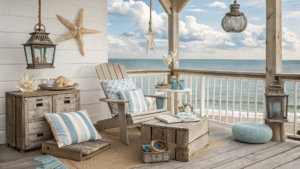
Bleached timber, natural rattan and wicker, navy and white with natural linen accents, rope details, ceramic lanterns in coastal glazes, generous planting of ornamental grasses and coastal species, and string lights that echo the warmth of a late summer evening. The coastal patio feels effortless, sun-bleached, and slightly imperfect, which is exactly the quality that is hardest to achieve through deliberate styling.
Contemporary and Minimalist
Large format porcelain or natural stone surfaces, clean-lined furniture with no decorative detail, a restrained plant palette of strongly architectural species like ornamental grasses, clipped box, or bamboo, a single statement sculptural element, and a lighting scheme that is precise and deliberate rather than abundant. The contemporary patio decorating principle is restraint. Every element earns its place and the quality of each item matters more than the quantity.
You May Also Love

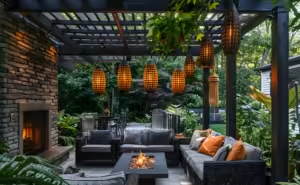
Warm Mediterranean
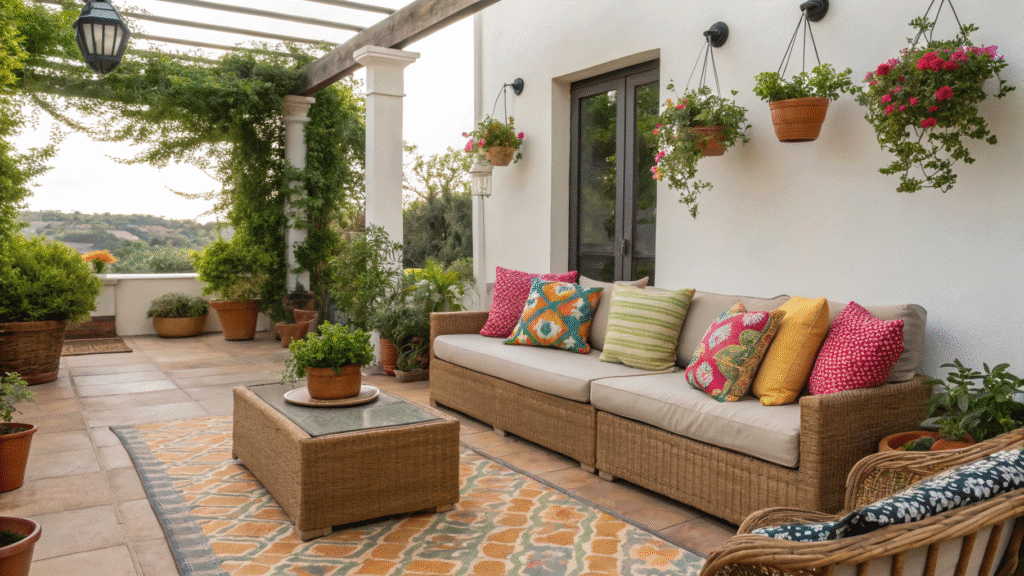
Terracotta and ceramic pots in abundance, trailing and climbing plants, lavender and rosemary in generous drifts, mosaic tile accents, wrought iron furniture with colorful cushions, lanterns in warm metal tones, and an abundance of candles and fragrant plants. The Mediterranean patio feels generous, sensory, and slightly overflowing, as if it has been accumulating beautiful things slowly over many years.
Rustic and Farmhouse
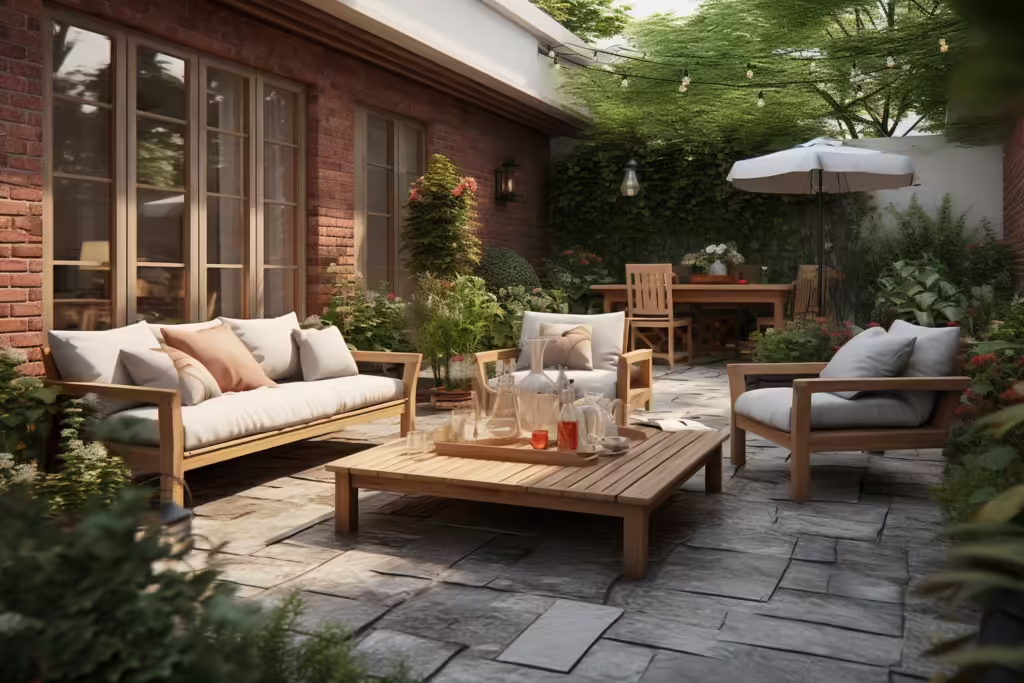
Reclaimed timber furniture, galvanised metal planters and accessories, trailing vines and climbing roses, vintage-inspired light fittings, a mix of mismatched chairs with coordinating cushions, weathered stone or brick surfaces, and natural materials in their most honest and unprocessed forms. The farmhouse patio has a quality of having evolved organically rather than been styled from a catalogue.
Bohemian and Eclectic
Layered textiles in rich colors and patterns, hanging macrame or woven wall decorations, a mix of seating types and heights, abundant plants including hanging and trailing varieties, lanterns and fairy lights in abundance, and personal objects that tell a story. The bohemian patio is the most individual and expressive of any decorating style and the most forgiving of imperfection and rule-breaking.
Patio Decorating on a Budget
Transforming a patio does not require a large budget when you know which decorating investments deliver the most visible return.
Lighting First, Always
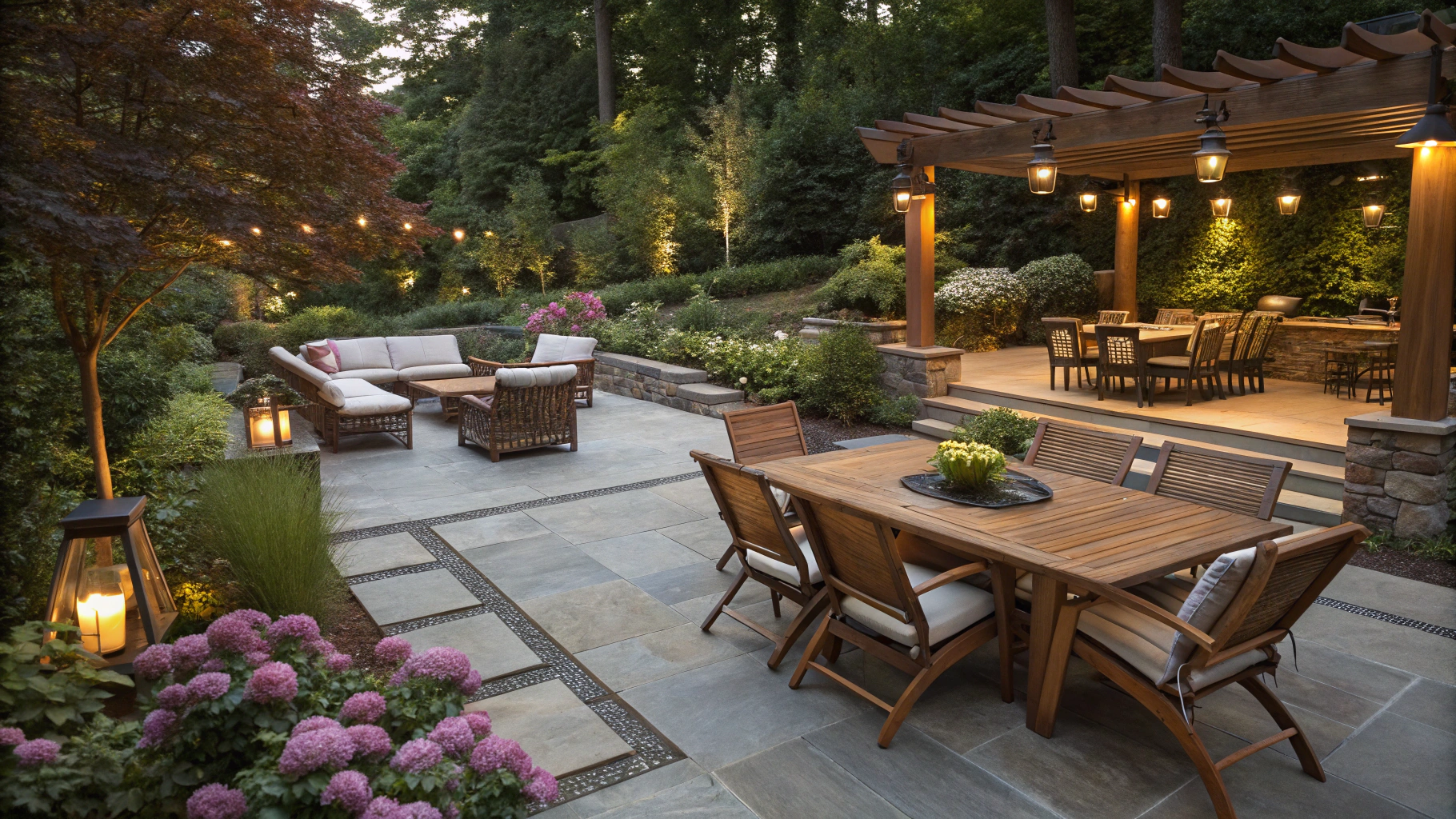
If there is one budget decorating investment that consistently delivers more impact per dollar than anything else on a patio, it is lighting. A set of warm white string lights above the seating area, a handful of lanterns at different heights, and a couple of solar path lights along the edges costs very little and transforms the atmosphere of the space completely after dark. Do lighting first before spending budget on anything else.
Don't miss: 15+ Unique Irregular Patio Ideas for Natural Look →
Paint Is the Cheapest Transformation
A tin of exterior paint for the boundary fence, a rendered wall, or the back of the house costs very little and changes the backdrop of the entire patio. Dark colors like charcoal, slate blue, and forest green create a dramatic, enclosed atmosphere that makes everything in front of it look more vivid and intentional. Light colors like white and cream make a small space feel larger and brighter. Either approach delivers a transformation that is completely disproportionate to its cost.
One Statement Plant Beats Ten Small Ones
A single large, well-chosen plant in a generous pot, an olive tree, a large ornamental grass, a statement agave, a lemon tree in a beautiful terracotta pot, has more decorating impact than ten small, forgettable plants scattered across the patio. Put the plant budget into one or two substantial statement pieces rather than spreading it thinly across many small ones.
Accessorize With What You Already Have
Before buying outdoor accessories, look at what you already have indoors that could work outside. Ceramic bowls, trays, candle holders, baskets, and decorative objects that suit an outdoor setting can be temporarily brought outside for entertaining and styling. This costs nothing and often produces the most personal and interesting results because you are working with objects that already reflect your taste.
The Decorating Elements That Make the Biggest Difference
Not all patio decorating elements deliver equal impact. Understanding which ones move the needle most helps you prioritise spending and effort.
Lighting
Already covered in the budget section but worth repeating as the overall highest-impact decorating element. A patio without good lighting looks unfinished and is abandoned after dark. A patio with well-layered lighting is somewhere you want to be all evening every evening.
Keep Exploring

Textiles
Cushions, rugs, throws, and table linens are the fastest route to a color and texture transformation on any patio. They are also the most seasonally flexible elements since they can be changed easily and affordably to reflect the season, a mood, or an evolving aesthetic direction. Quality outdoor textiles in solution-dyed acrylic fabrics last for years and reward the investment.
Planting
Plants are the decorating element that most powerfully connects a patio to its garden setting and makes it feel like it belongs in an outdoor space rather than just sitting in one. Generous planting in well-chosen containers, planting that spills over edges and fills vertical surfaces, and fragrant plants that engage the senses beyond sight, all of these make a patio feel alive in a way that furniture and accessories alone never achieve.
A Focal Point
Every well-decorated patio has a focal point, something the eye moves to first when you enter the space or look at it from inside the house. It might be a statement planter, a piece of outdoor art, a fire pit, a water feature, a striking piece of furniture, or a beautifully lit tree or wall. Identifying or creating a focal point and decorating around it gives the space a visual hierarchy that makes it feel considered and resolved.
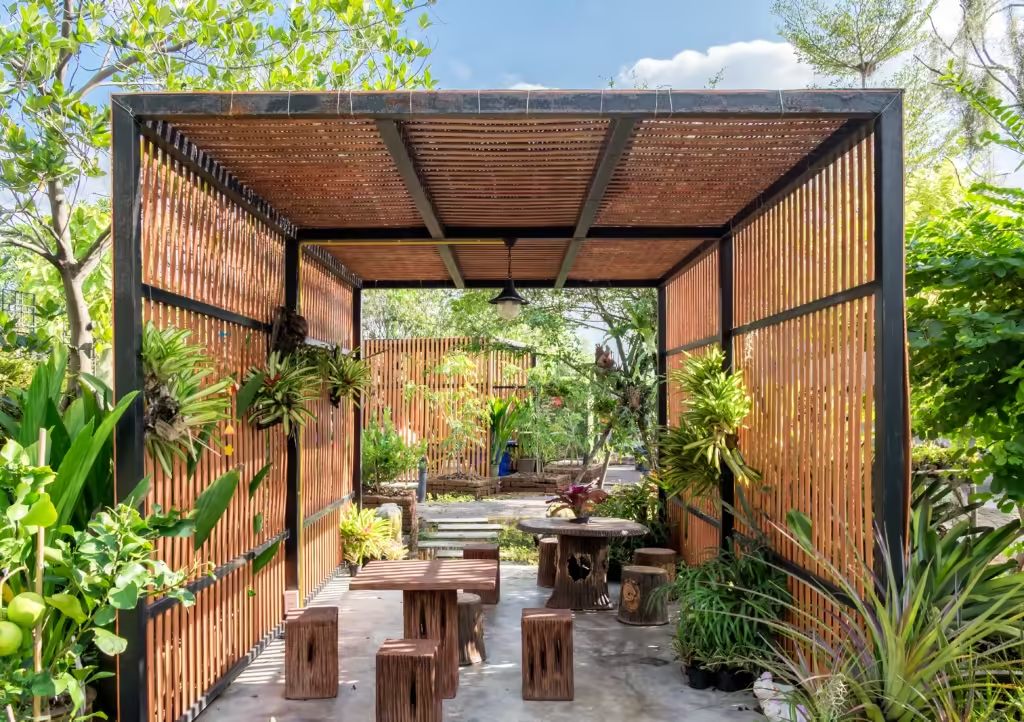
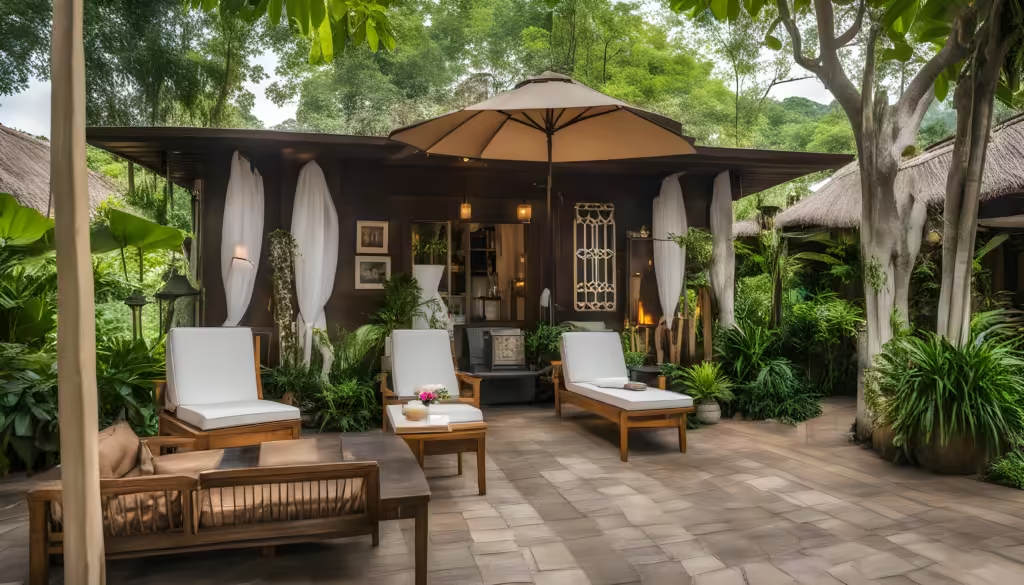
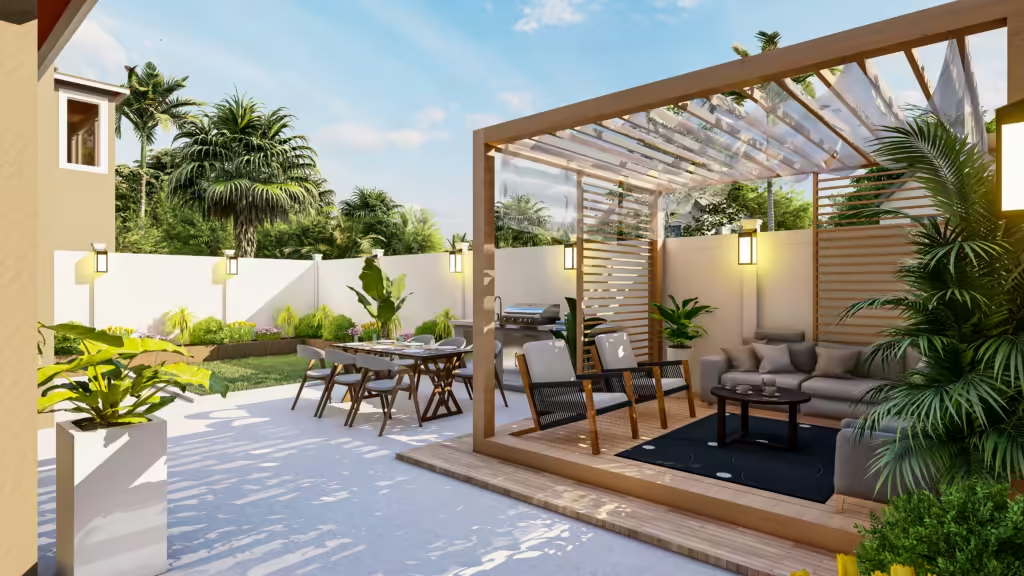
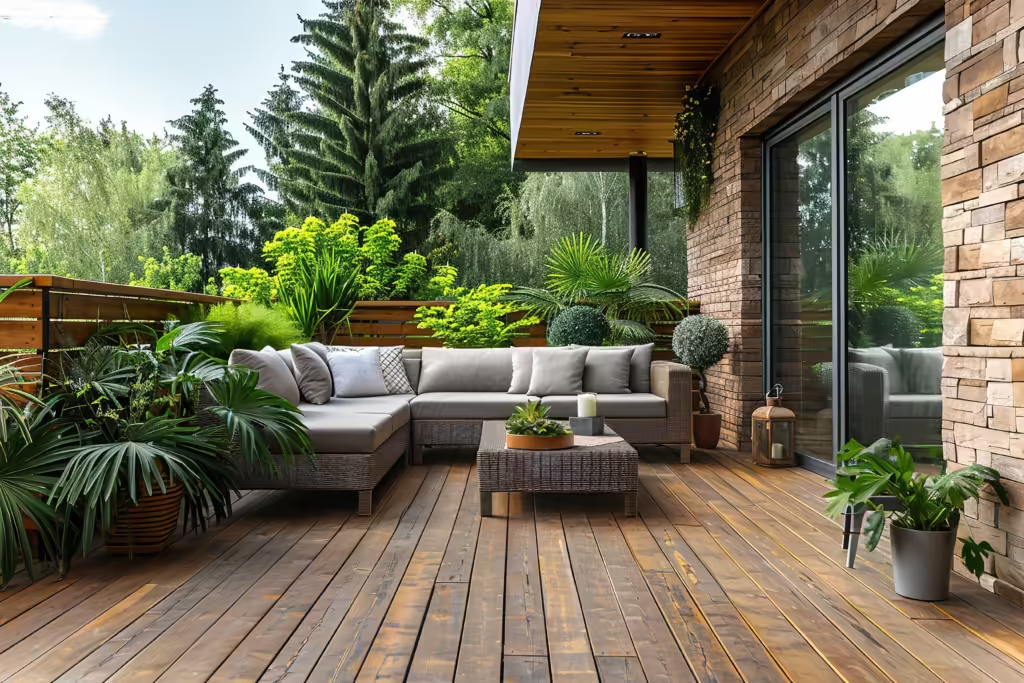
Whether you want a cozy retreat, a lively entertaining area, or a calm escape, these decorating ideas will help you create a fresh, inviting look you’ll love.
1. Add Colorful Outdoor Cushions
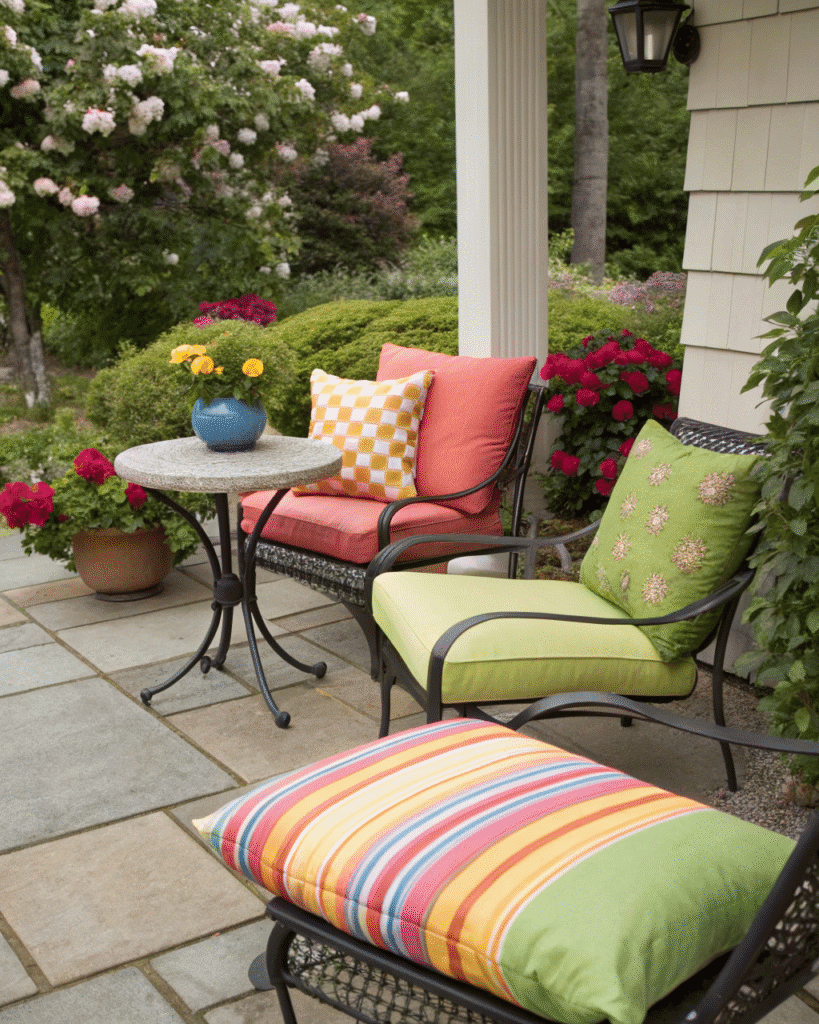
Bright cushions instantly lift the mood and make your seating more comfortable.
Pro Tip: Mix solid colors with subtle patterns to keep the look cheerful yet balanced.
2. Layer Outdoor Rugs
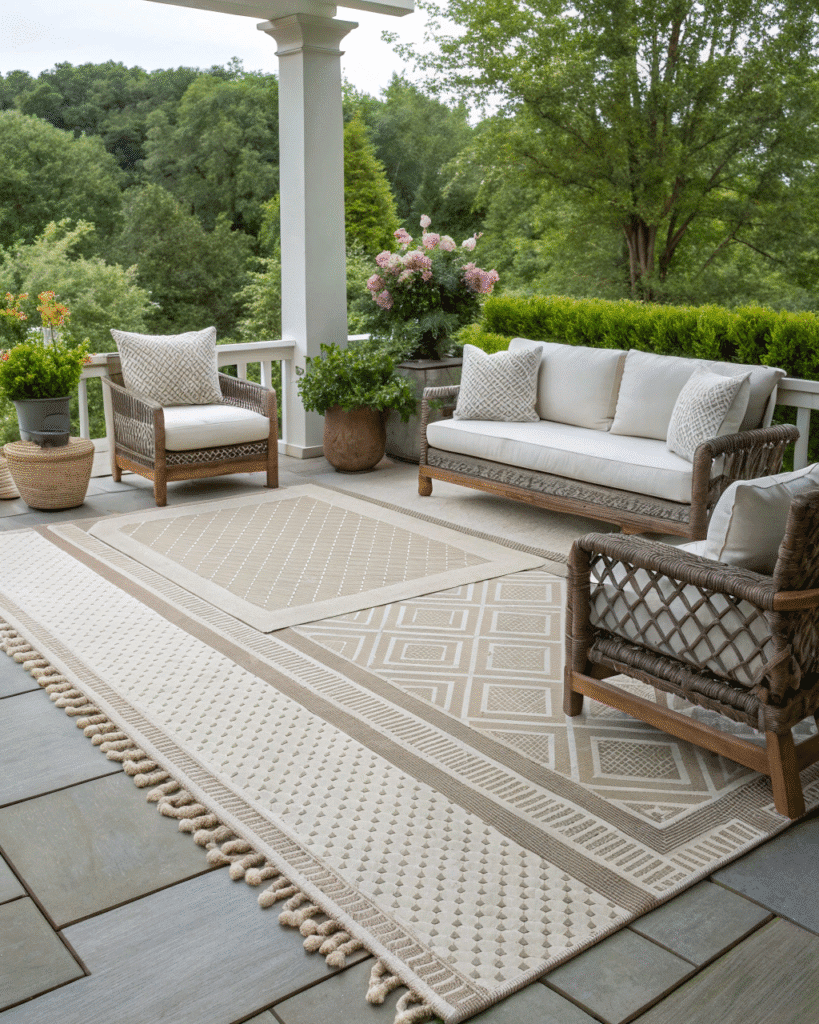
An outdoor rug defines your seating area and adds texture underfoot.
Pro Tip: Choose weatherproof materials that can handle moisture and sunlight.
3. Hang String Lights
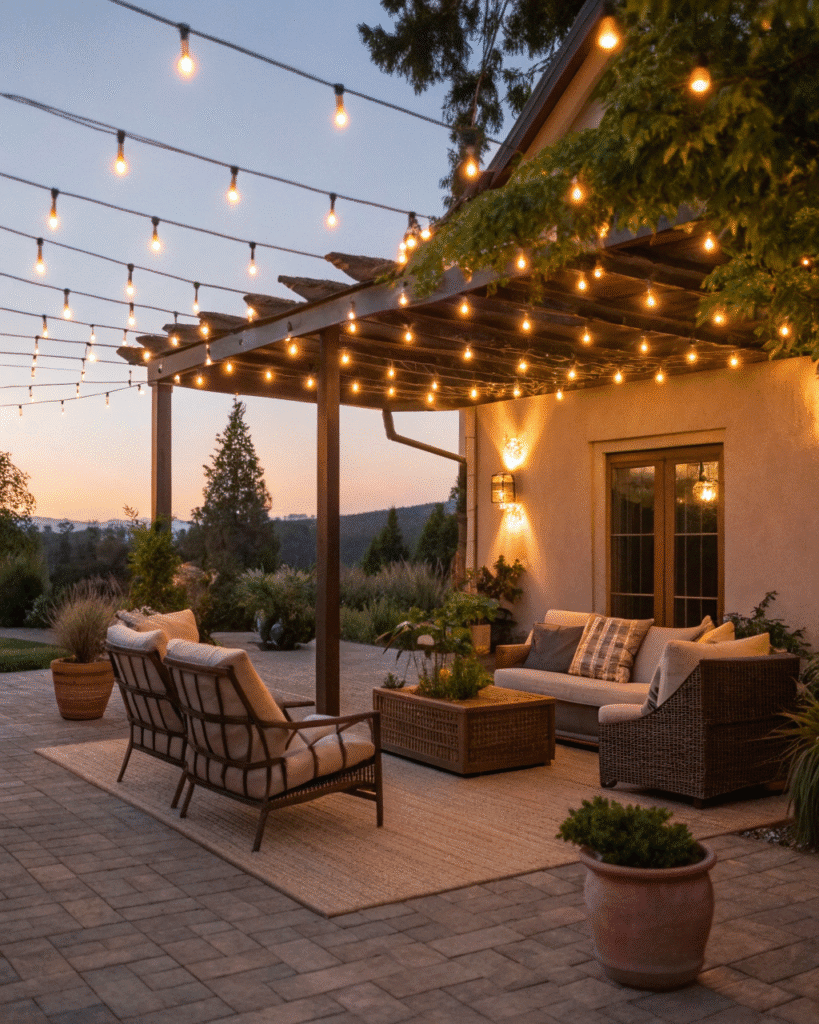
Soft, glowing lights bring warmth and charm to your patio evenings.
Pro Tip: Drape lights across pergolas or fences to create a cozy, twinkling effect.
4. Add Greenery and Planters
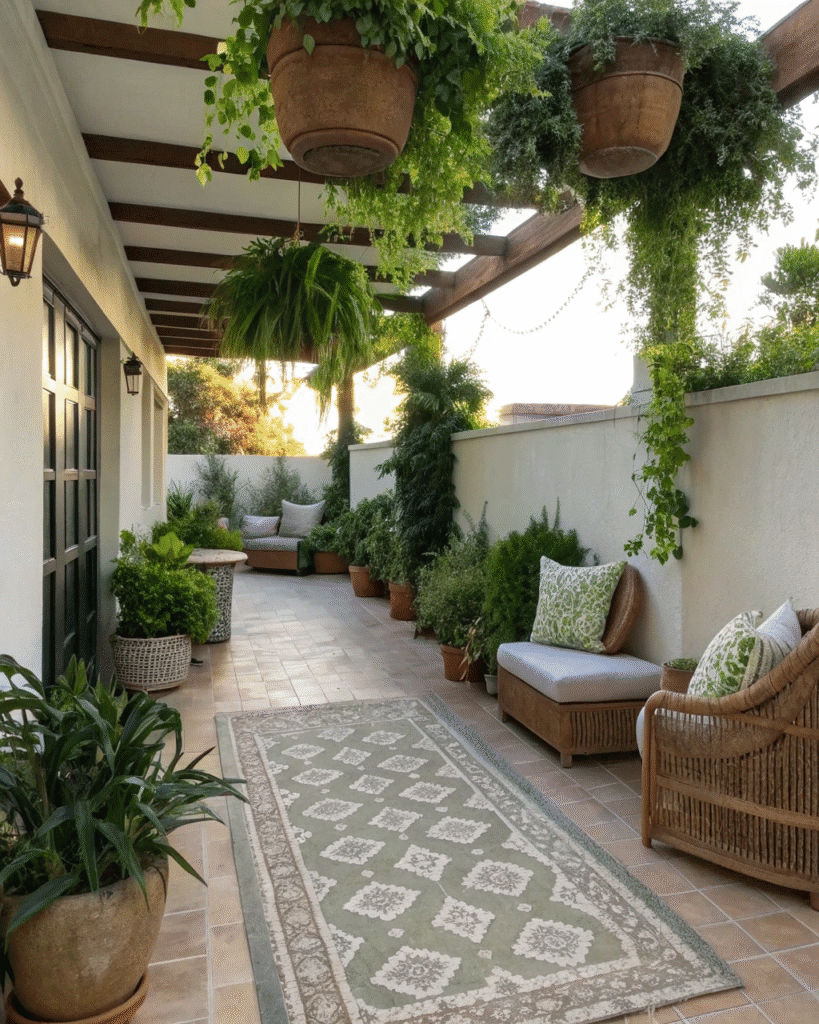
Plants make your patio feel fresh and full of life.
Pro Tip: Mix large potted plants with smaller tabletop ones for natural balance.
5. Create a Cozy Lounge Area
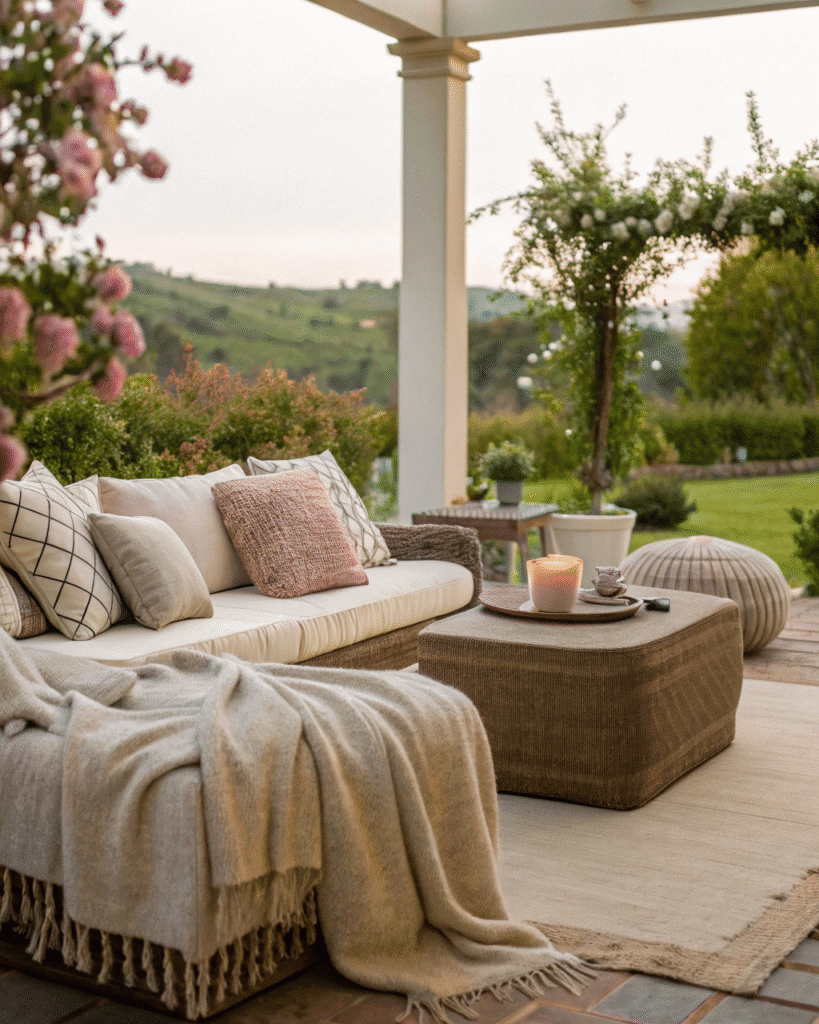
Add a low table, soft throws, and plush seating for a relaxed corner.
Pro Tip: Use neutral tones and warm lighting for a soothing atmosphere.
6. Use Lanterns and Candles
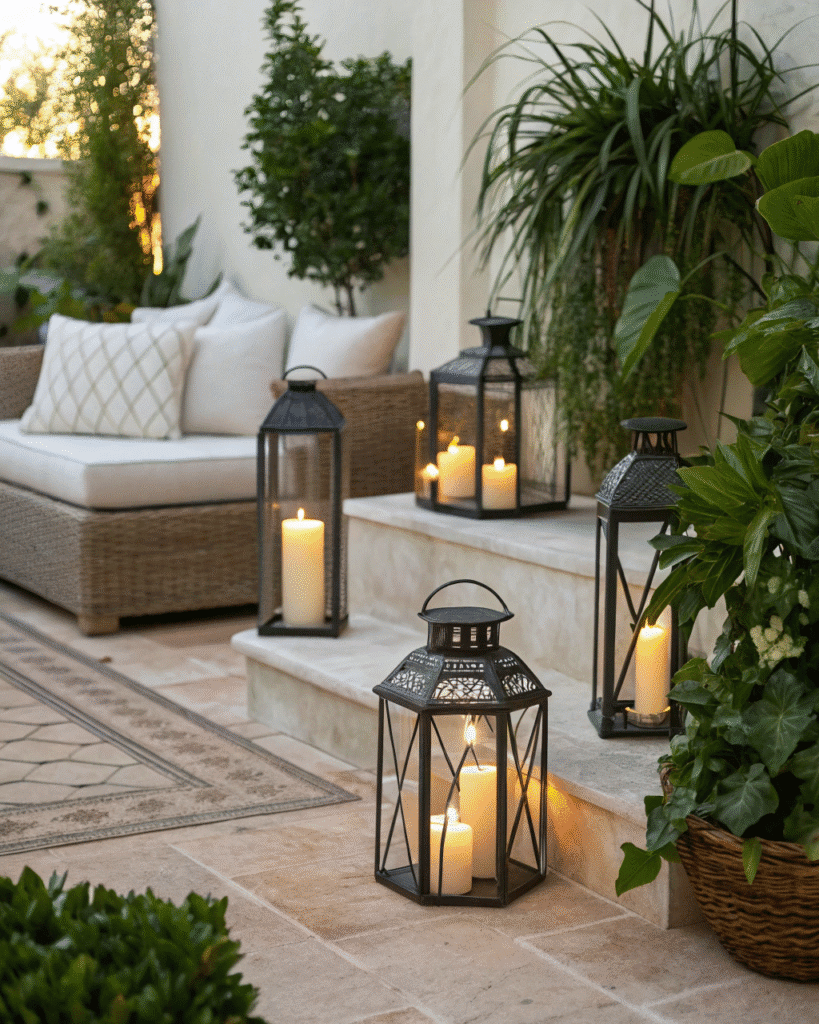
Lanterns add a decorative glow and can serve as beautiful focal points.
Pro Tip: Mix sizes and styles to create depth and visual interest.
7. Refresh Furniture with Paint
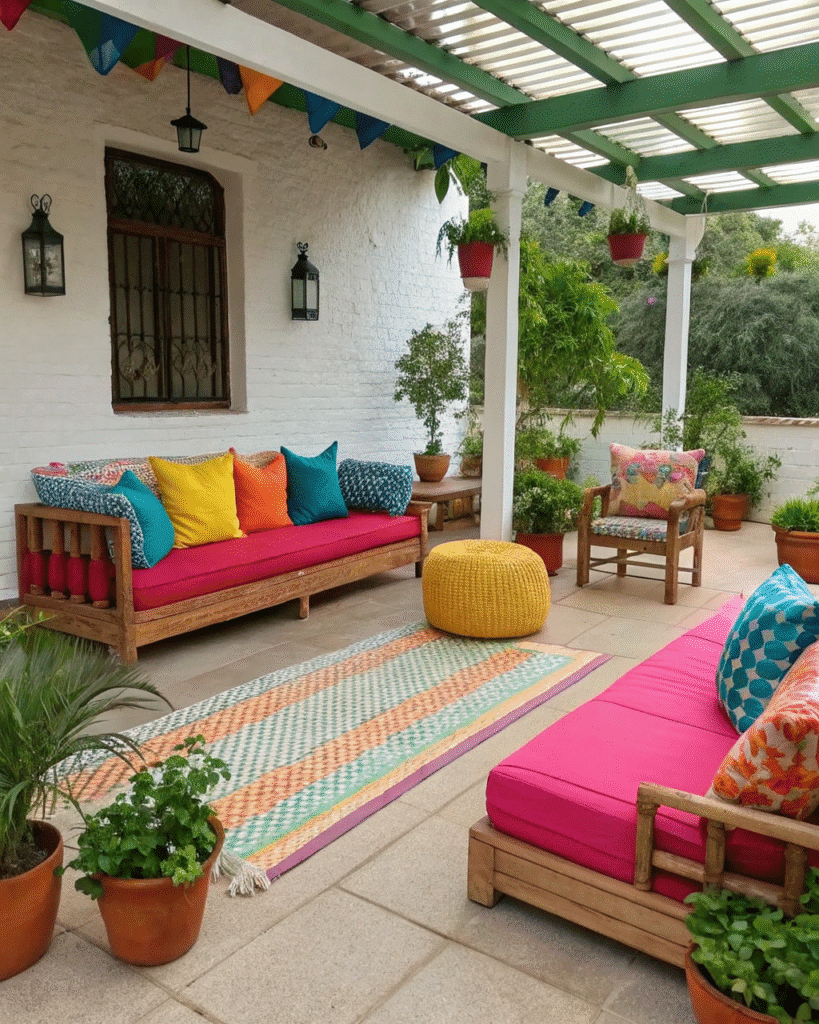
A quick coat of paint can give old furniture a brand-new look.
Pro Tip: Stick to classic outdoor colors like white, sage, or navy for timeless appeal.
8. Add Wall Art or Mirrors
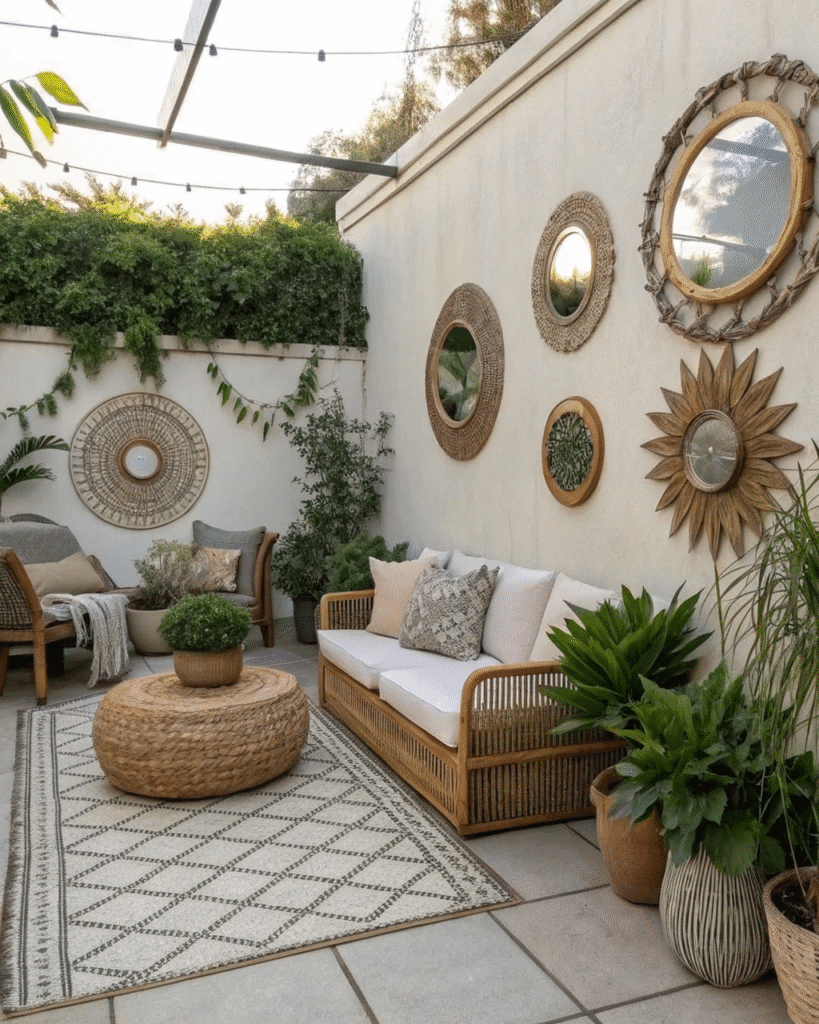
Outdoor-safe wall art or mirrors can make your patio feel larger and more styled.
Pro Tip: Choose pieces made from weather-resistant materials like metal or treated wood.
9. Incorporate Textiles
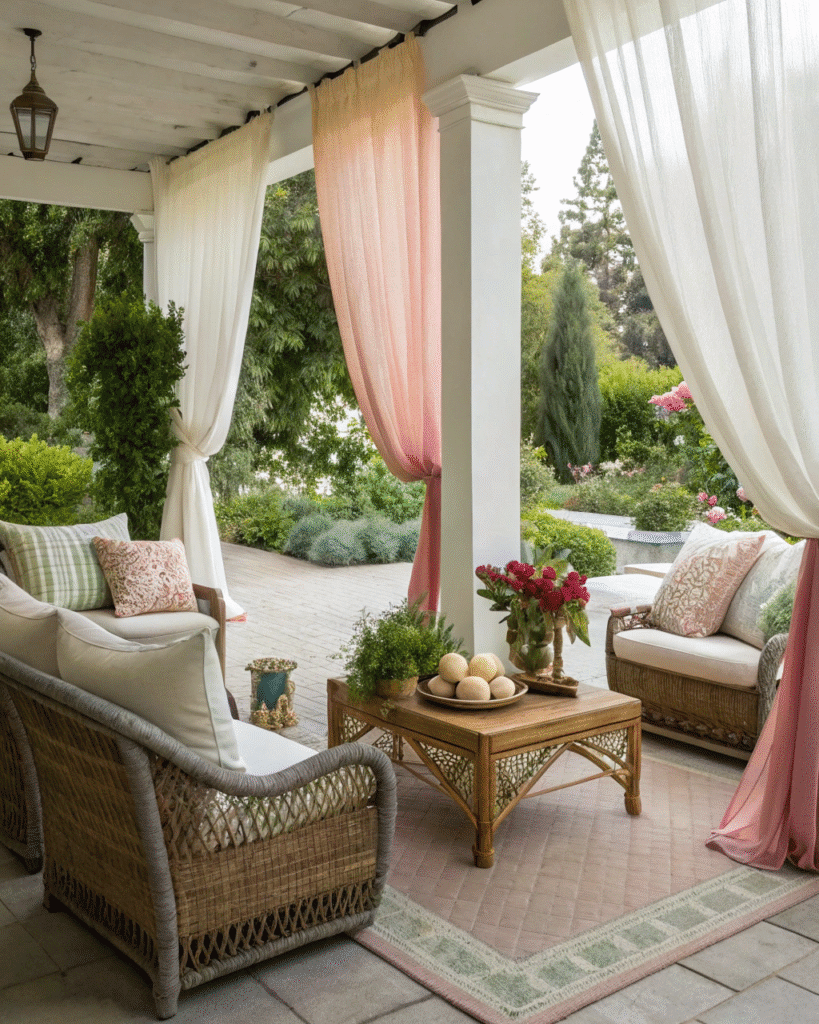
Add outdoor curtains or soft throws for comfort and color.
Pro Tip: Choose light, breathable fabrics that flow gently in the breeze.
10. Create a Mini Dining Setup
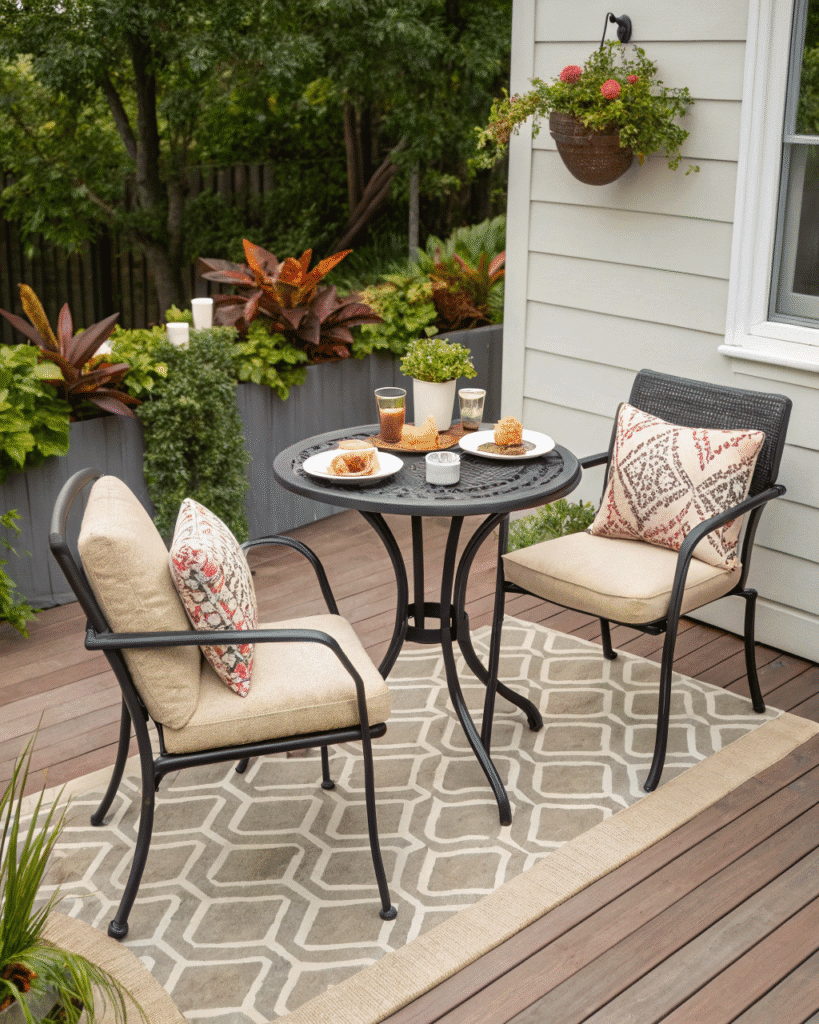
Add a small table with chairs for easy outdoor meals.
Pro Tip: Decorate with candles or a vase of flowers to keep it feeling welcoming.
11. Add a Fire Pit or Heater
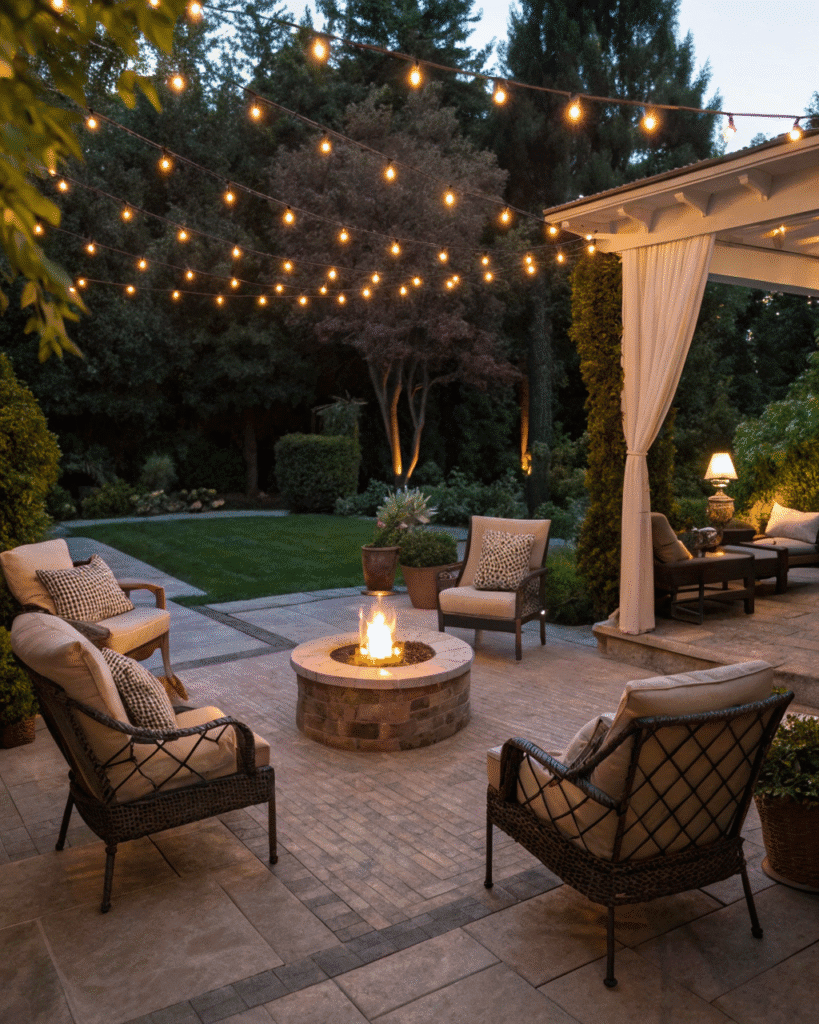
A small fire pit keeps the patio cozy for evening gatherings.
Pro Tip: Surround it with comfortable seating to make it the heart of your space.
12. Style with Natural Materials
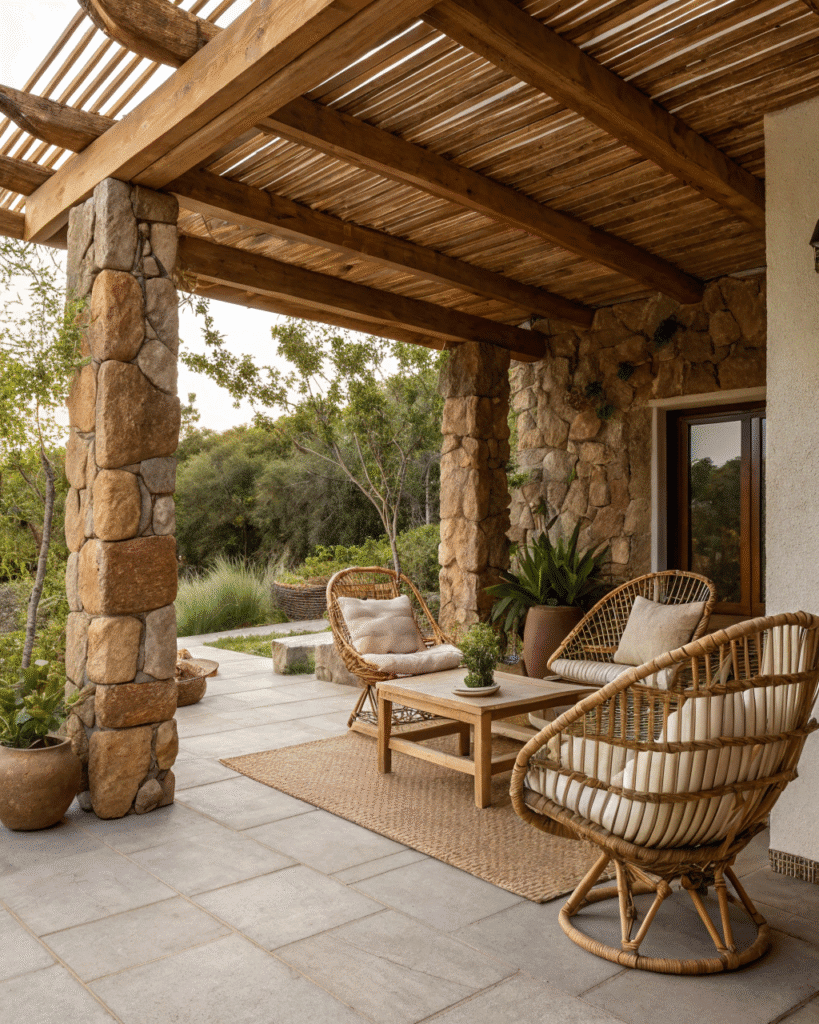
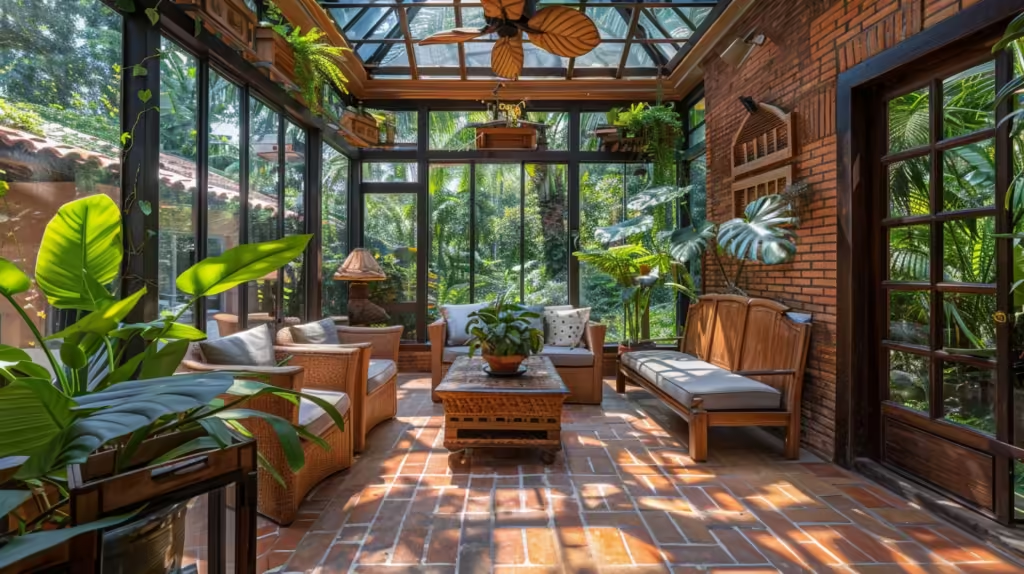
Wood, rattan, and stone elements create a relaxed, earthy vibe.
Pro Tip: Keep the palette simple with neutral shades and a few soft textures.
Final Thoughts
Decorating a patio is one of the most immediately rewarding home projects you can take on. The results are visible from the moment you make a change, the canvas is simple enough that every decision has a clear impact, and the pleasure of an outdoor space that feels genuinely yours, comfortable, beautiful, and alive with plants and light, is something you experience every single time you step outside.
Start with lighting, build around a color palette, add planting generously, edit everything else ruthlessly, and enjoy every moment of it.
FAQs
What is the most important patio decorating element?
Lighting is the single most impactful patio decorating element for the investment it requires. A well-lit patio feels inviting and atmospheric in a way that the same patio without lighting never does, regardless of how well-chosen the furniture and accessories are. Get the lighting right first and everything else on the patio looks better by association.
How do I make my patio look more expensive without spending a lot?
Edit ruthlessly, keep the color palette tight, size up on the rug, invest in one large statement plant rather than many small ones, and add layered lighting. None of these require significant spending. The expensive-looking patio is almost always the well-edited, well-lit one with a cohesive color scheme, not the one with the most things in it.
What colors work best for patio decorating?
Neutral bases in natural tones, warm whites, creams, soft greys, and natural timber finishes, work best as the foundation because they suit every garden style and every season. Accent colors in terracotta, sage green, navy, dusty blue, warm mustard, and deep burgundy all work beautifully against a neutral outdoor backdrop. Avoid very pale pastels outdoors as they tend to fade quickly and look washed out against the natural backdrop of a garden.
How do I decorate a small patio without making it feel cluttered?
Choose a maximum of three furniture pieces, keep the color palette to two or three tones, use one large rug rather than multiple small ones, invest in one or two large planters rather than many small pots, and keep accessories to a minimum. The temptation on a small patio is to fill every inch. The reality is that restraint and scale are what make a small patio feel considered and comfortable rather than cramped and overwhelming.
Can I use indoor decorating items on my patio?
Some indoor items translate well to a sheltered covered patio, particularly ceramics, glass lanterns, baskets, and items that will be brought inside when not in use or when rain threatens. Items made from natural materials that are not treated for outdoor use, standard upholstery fabrics, untreated timber, and electronics not rated for outdoor use, should not be left outside permanently. The general rule is that anything you would not want to get wet should stay inside or be protected.
How do I decorate a patio for different seasons?
The most practical approach is to have a core furniture arrangement and neutral base that stays consistent year-round, and to change out the accent textiles, plants, and accessories seasonally. Spring and summer call for brighter colors, lighter fabrics, flowering plants, and a focus on shade and cooling. Autumn and winter call for richer, warmer tones, heavier throws and cushions, lanterns and fire, and planting that provides interest in the cooler months. Seasonal accessories like outdoor cushions and throws are the most affordable way to refresh the space four times a year.