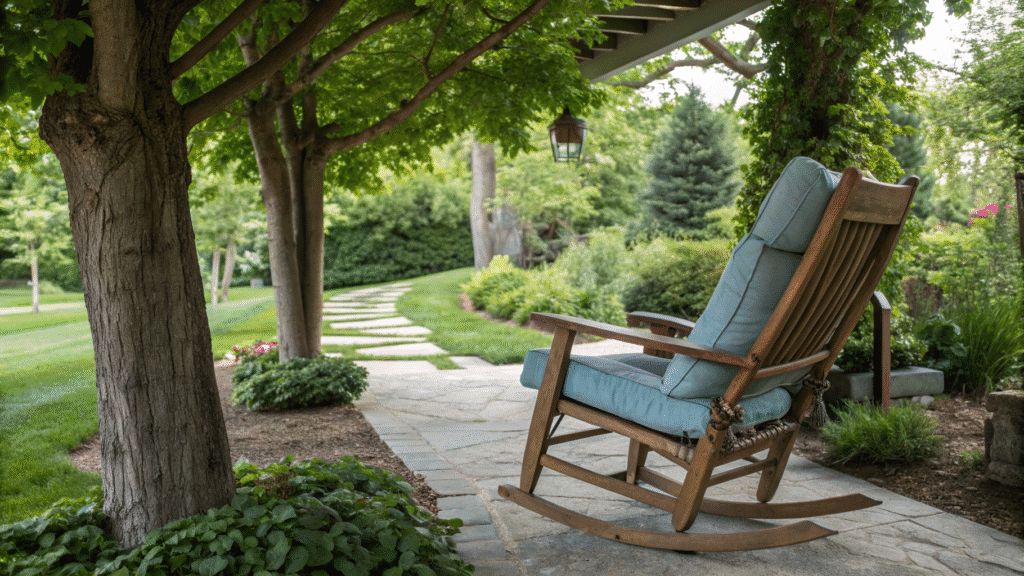
15+ Patio Rocking Chair Ideas for Relaxing Moments
There is a reason the rocking chair has been a fixture on American porches for centuries. Something about the gentle back-and-forth motion does what nothing else quite can. It slows your breathing, quiets your thoughts, and turns an ordinary afternoon into something that actually feels like rest. Not the passive rest of sitting still, but the active, rhythmic rest that the body genuinely craves after a long day.
A patio rocking chair is one of those purchases that pays for itself in quality of life within the first week. It is the chair you sink into with your morning coffee before the day starts. It is the seat you return to at the end of the evening when the light is fading and the garden is settling into quiet. It is the piece of outdoor furniture that, more than any other, makes a patio feel like it truly belongs to you.
Why a Rocking Chair Belongs on Every Patio
The rocking chair is one of the oldest and most enduring pieces of furniture in American outdoor life and its appeal has never faded because the thing it offers has never gone out of style. Rest. Genuine, unhurried, embodied rest in the open air.
What makes a rocking chair different from any other outdoor seating is the motion. Even the gentlest rocking has a measurable calming effect on the nervous system. It is the same principle behind rocking a baby to sleep, behind the comfort of a hammock, behind the appeal of a porch swing. Rhythmic movement is deeply soothing to the human body and a rocking chair delivers it in a form that is practical, upright, and suitable for everything from morning coffee to evening reading to simply watching the world go by.
Love Chic Living Club?
Add us as one of your preferred Google sources and discover more home decor, DIY, outdoor, and lifestyle inspiration from us.
A rocking chair also does something important for a patio aesthetically. It signals that this is a space for slowing down. Not a space for entertaining in a busy, active way. Not a space for outdoor dining or cooking or socializing at high energy. A patio with a rocking chair says that someone here understands the value of sitting still and that the outdoor space is as much about rest and recovery as it is about recreation.
What to Look For in an Outdoor Rocking Chair
Not every rocking chair is built equally and not every rocking chair is designed for outdoor use. Here is what to evaluate before you buy.
Material and Weather Resistance
The material of your rocking chair determines how well it holds up to the conditions on your patio and how much maintenance it will require over time. Teak is the gold standard for outdoor wood furniture including rocking chairs because of its natural oil content that makes it highly resistant to moisture, insects, and rot. Cedar and acacia are also good outdoor wood choices at a lower price point. All outdoor wood furniture benefits from occasional oiling or sealing to maintain its color and protection, though teak can be left to weather naturally to a beautiful silver-grey if preferred.
Metal rocking chairs in powder-coated steel or aluminum are extremely durable outdoors and require very little maintenance beyond occasional wiping down. Powder-coated finishes resist rust, chipping, and UV fading very well. Aluminum is the better choice in coastal environments where salt air accelerates rust on steel.
Wicker and rattan rocking chairs look beautiful outdoors but natural wicker and rattan are not fully weather-resistant and should be kept on covered patios or porches rather than fully exposed to rain and sun. Resin wicker, which is woven from synthetic polyethylene fiber over a metal frame, is a far more practical outdoor choice that looks nearly identical to natural wicker but handles moisture and UV exposure without deteriorating.
You May Also Love

Rocker Design and Stability
The curve of the rocker at the base of the chair determines the quality and feel of the rocking motion. A longer, more gradual curve produces a slower, more gentle rocking motion. A shorter, more pronounced curve produces a quicker, more active rock. For a patio rocking chair used primarily for relaxation, a longer gentler curve is almost always the more comfortable choice.
Check that the rocker bases are wide enough to prevent the chair from tipping sideways and that the contact points between the rockers and the floor are smooth and even. On wooden rockers, look for felt or rubber pads on the underside of the rocker bases to prevent scratching your deck or patio surface.
Don't miss: 15+ Small Patio Remodeling Ideas That Maximize Space →
Seat Depth and Back Angle
A comfortable outdoor rocking chair should have a seat deep enough that you can sit fully back against the chair back without your knees hanging over the edge, and a back angle reclined enough to feel supportive and relaxing without being so reclined that getting in and out requires significant effort. Test or research the seat depth and back angle carefully before buying, as a rocking chair that is uncomfortable to sit in for extended periods defeats its entire purpose.
Keep Exploring


How to Style a Patio Rocking Chair
A rocking chair on its own is a complete and self-sufficient piece of patio furniture. But a few thoughtful additions can turn a rocking chair into a proper outdoor retreat.
A small side table placed within arm’s reach of the rocker is an essential companion. It gives you somewhere to set your coffee, your book, your phone, and anything else you want within reach while you are seated. Look for a side table at a height roughly level with the arm of the chair so you do not have to reach up or down awkwardly to access it.
A cushion or seat pad dramatically improves the comfort of most wooden and metal rocking chairs and adds a layer of color or pattern that connects the chair to the broader patio design. Choose an outdoor-rated cushion in a weather-resistant fabric and make sure it attaches to the chair with ties or a non-slip backing so it does not slide out from underneath you as you rock.
A small outdoor rug placed beneath the rocker adds warmth underfoot, protects your deck surface from the repetitive contact of the rockers, and visually anchors the chair within the patio space. Make sure the rug is flat-weave and low-pile so the rockers glide smoothly across it without catching or bunching the fabric.
Indoor vs Outdoor Rocking Chairs: What Is the Difference?
This distinction matters more than many buyers realize. Indoor rocking chairs are typically finished with lacquers, stains, and upholstery materials that are not designed to handle UV exposure, rain, or the temperature swings of outdoor use. Placing an indoor rocking chair outside, even on a covered porch, will accelerate its deterioration significantly.
Outdoor rocking chairs are built and finished to handle the conditions. The wood is sealed or naturally weather-resistant. Metal frames are powder-coated against rust. Any upholstered elements use outdoor-rated fabrics that resist fading, moisture, and mildew. The joinery and hardware are chosen for durability in changing temperatures and humidity levels.
If you have a covered porch that stays genuinely dry year-round and you live in a mild climate, a high-quality indoor rocking chair can often survive in that environment for several years. But for any setup with direct weather exposure, always choose a chair specifically designed and rated for outdoor use.
These 15 ideas cover every style, every material, and every patio setup so you can find the rocking chair that fits your space and becomes the seat you never want to leave.
1. Classic Wooden Rocker
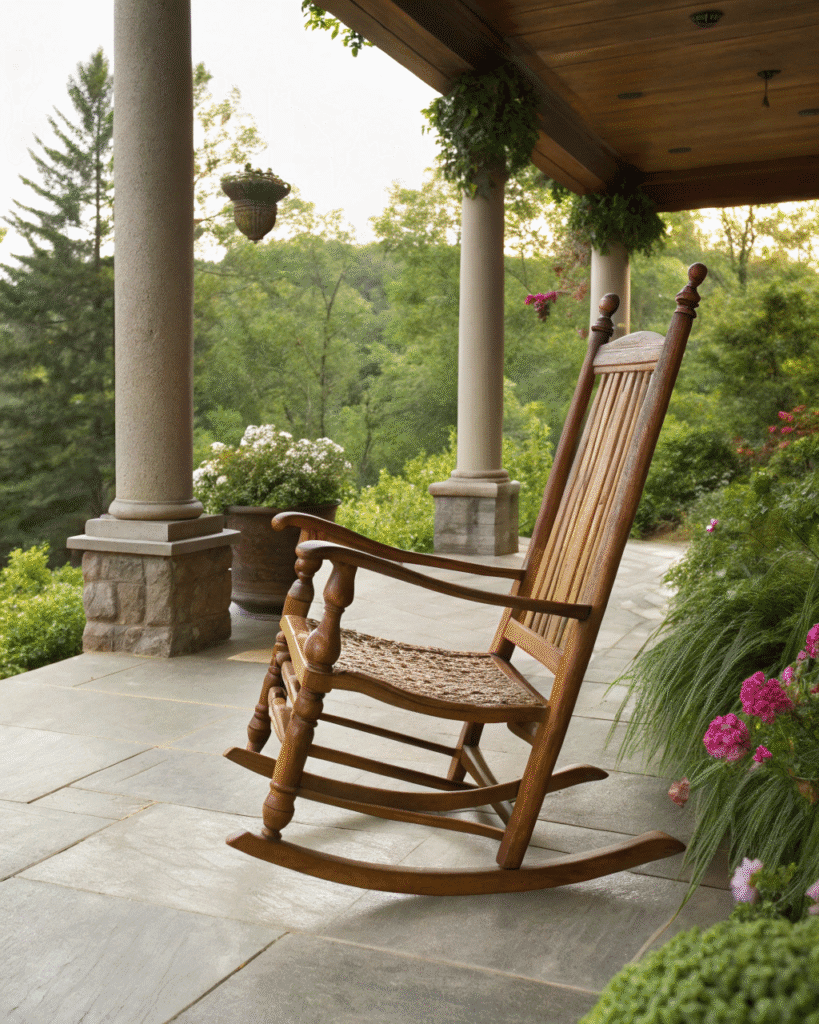
A traditional wooden rocking chair never goes out of style and feels instantly welcoming.
Pro Tip: Choose weather-treated wood like teak or acacia for long-lasting use.
2. Wicker Rocking Chair
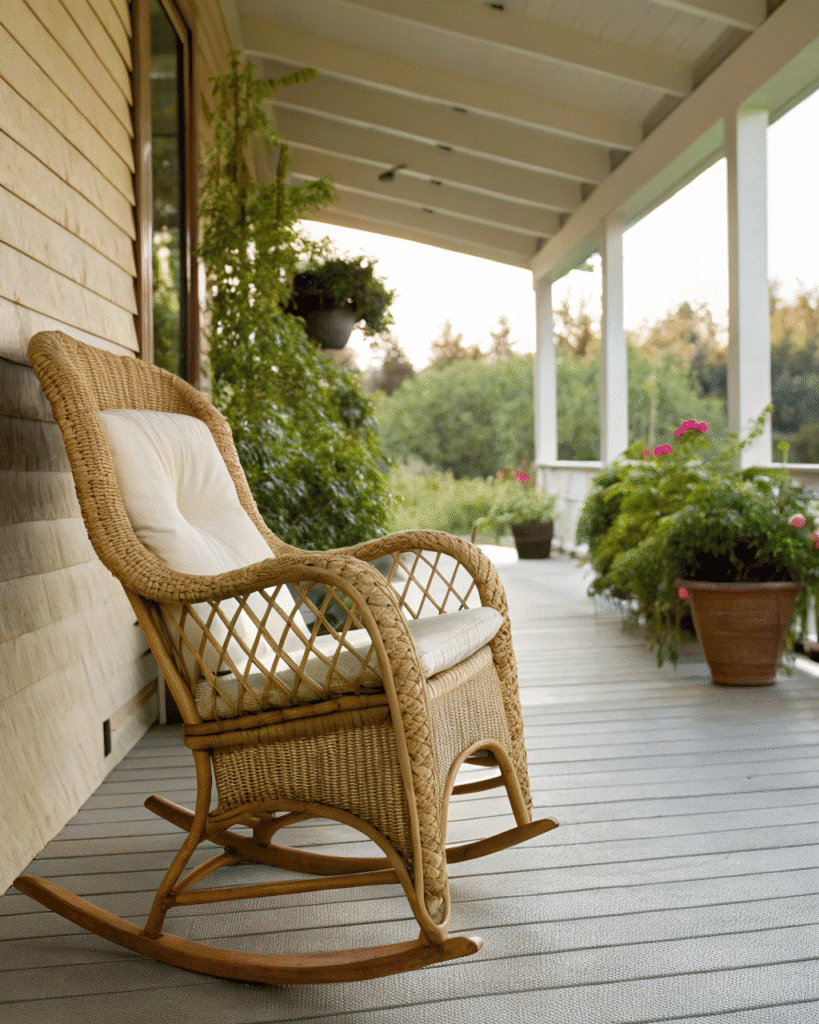
Wicker brings a soft, rustic charm that fits perfectly on covered patios.
Pro Tip: Pair with a soft cushion in earthy tones for cozy, natural comfort.
3. Modern Metal Frame Rocker
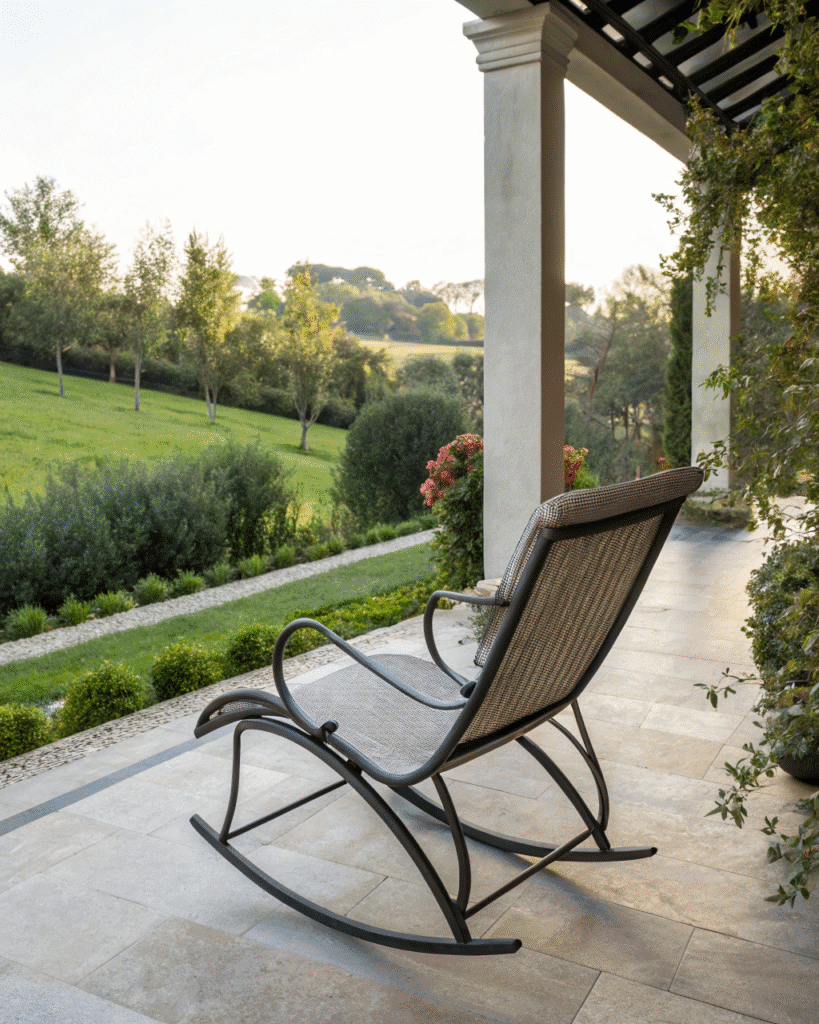
A sleek metal frame adds a touch of modern sophistication.
Pro Tip: Soften the look with neutral seat cushions or textured throws.
4. Porch-Style Rocker
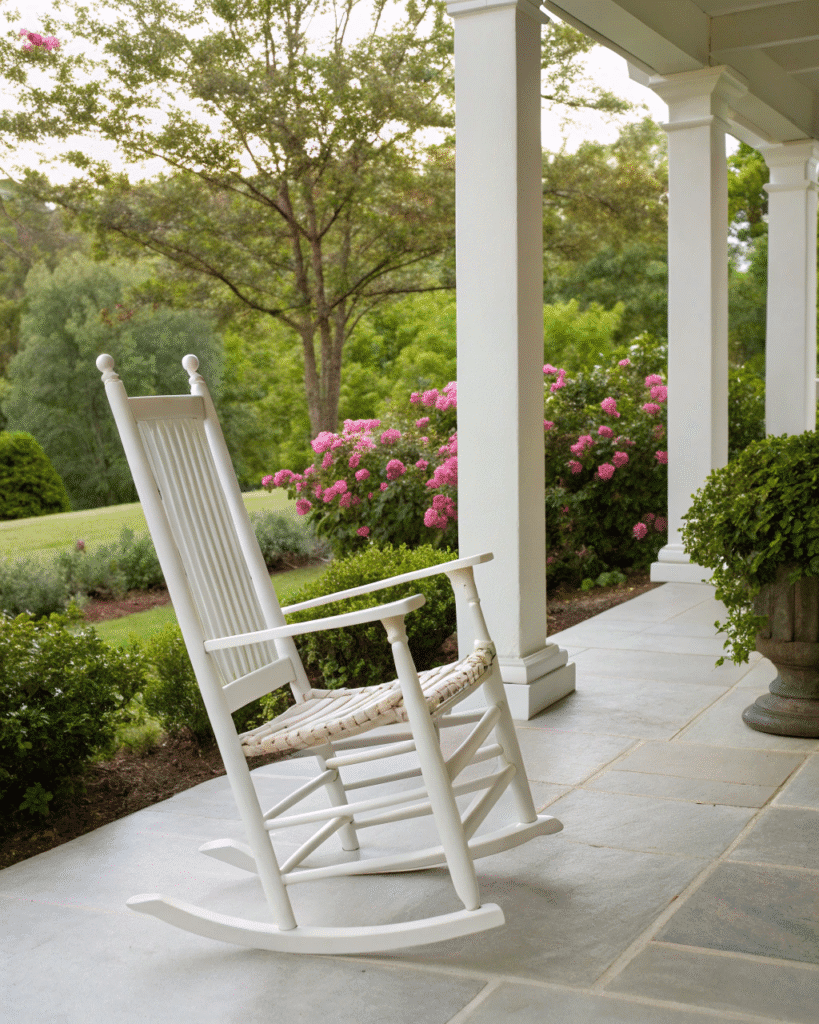
A white-painted rocker evokes classic porch vibes and Southern charm.
Pro Tip: Add striped or floral pillows for a hint of color and personality.
5. Upholstered Rocking Chair
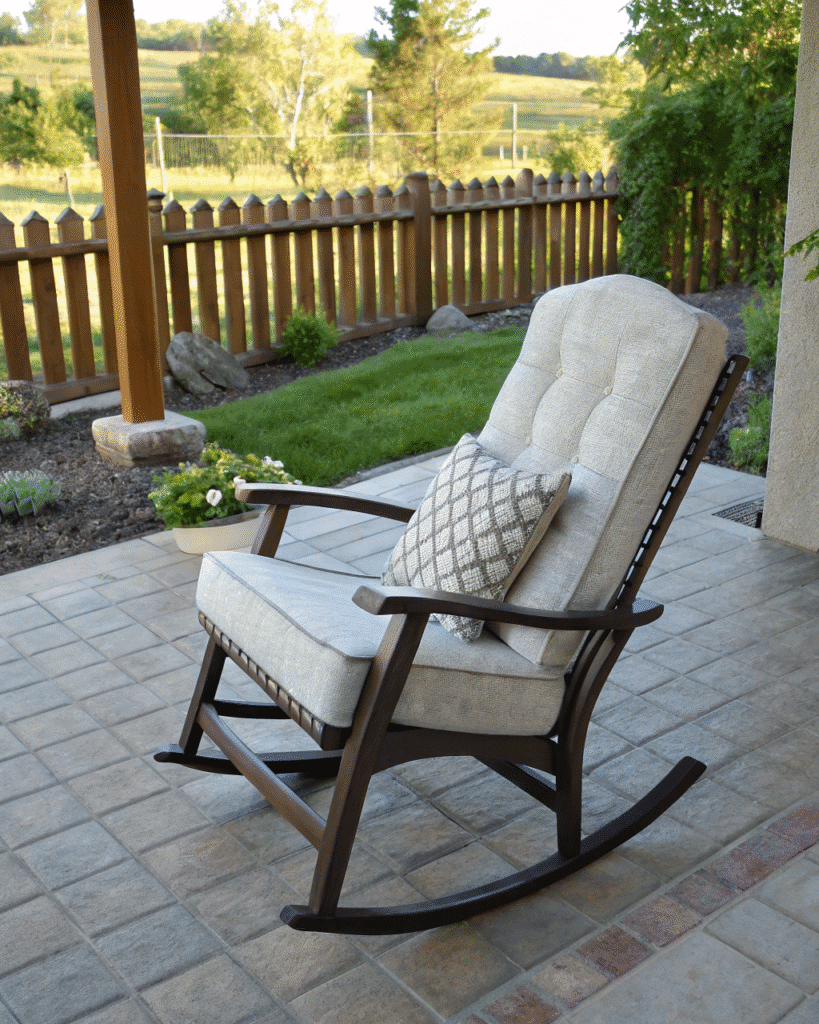
Upholstered rockers bring indoor comfort to your outdoor patio.
Pro Tip: Use outdoor-rated fabrics to resist moisture and fading.
6. Rustic Log Rocker
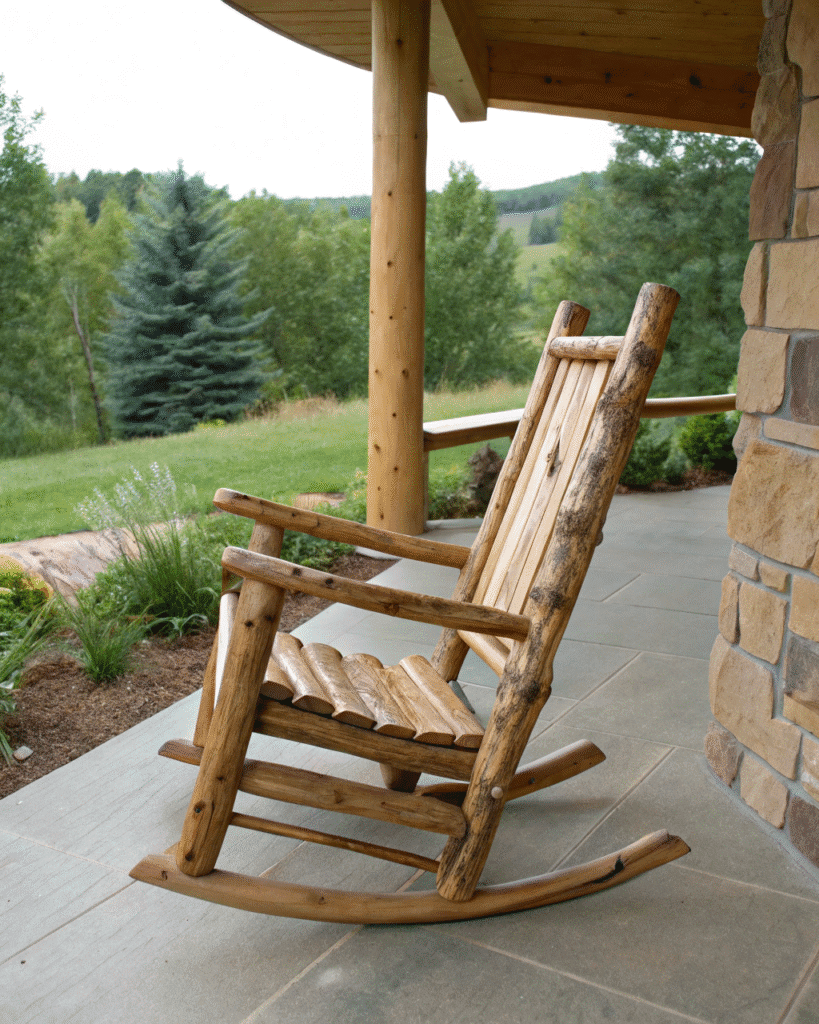
A handmade log rocker adds rugged beauty and a natural touch.
Pro Tip: Surround it with potted plants or lanterns for a cabin-style retreat.
7. Rattan Rocking Chair
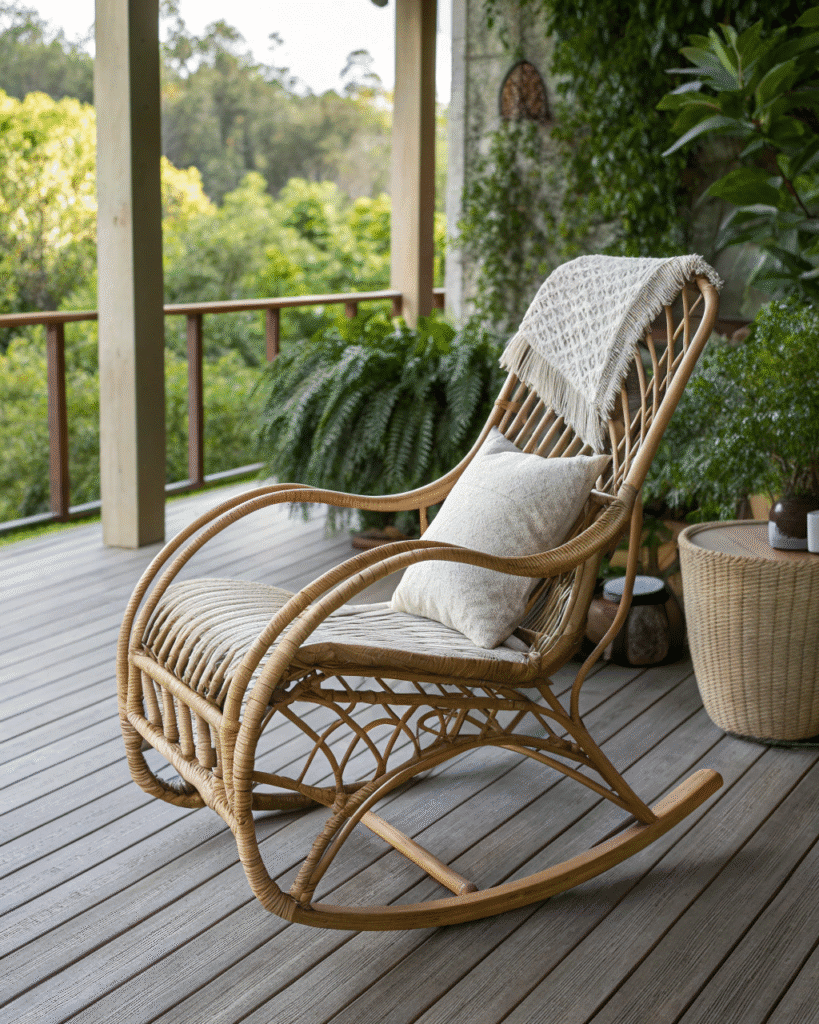
Rattan offers both texture and elegance, perfect for boho-inspired patios.
Pro Tip: Mix it with linen cushions and woven accents for a cohesive theme.
8. Folding Rocking Chair
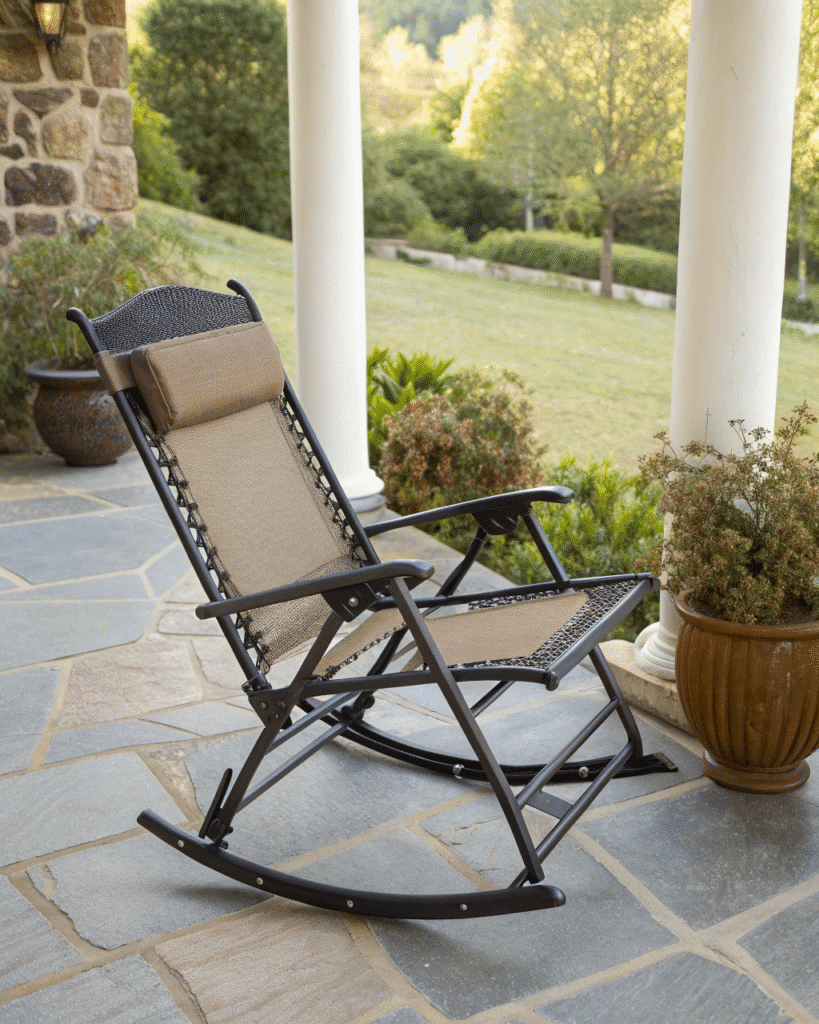
A folding rocker is practical for small patios or easy storage.
Pro Tip: Choose one with padded armrests for extra comfort.
9. Swinging Rocking Chair
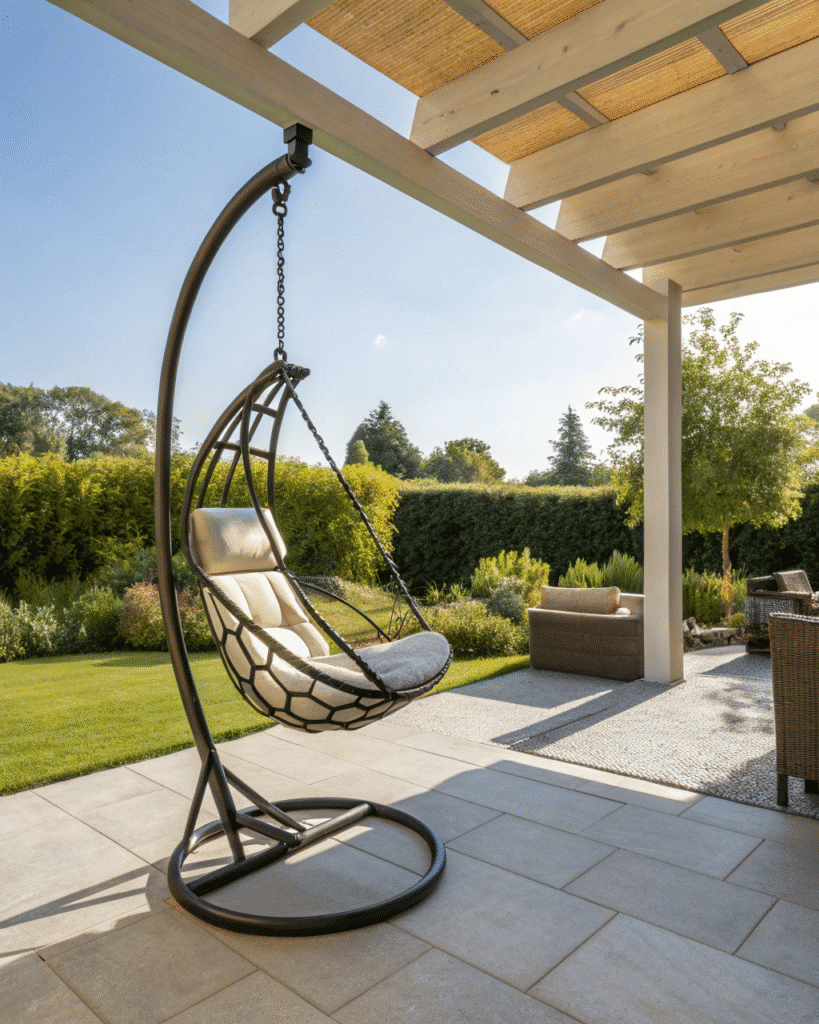
A suspended rocker adds playful movement and style to outdoor lounging.
Pro Tip: Hang it from a pergola or sturdy beam with strong weatherproof ropes.
10. Double Rocker Bench
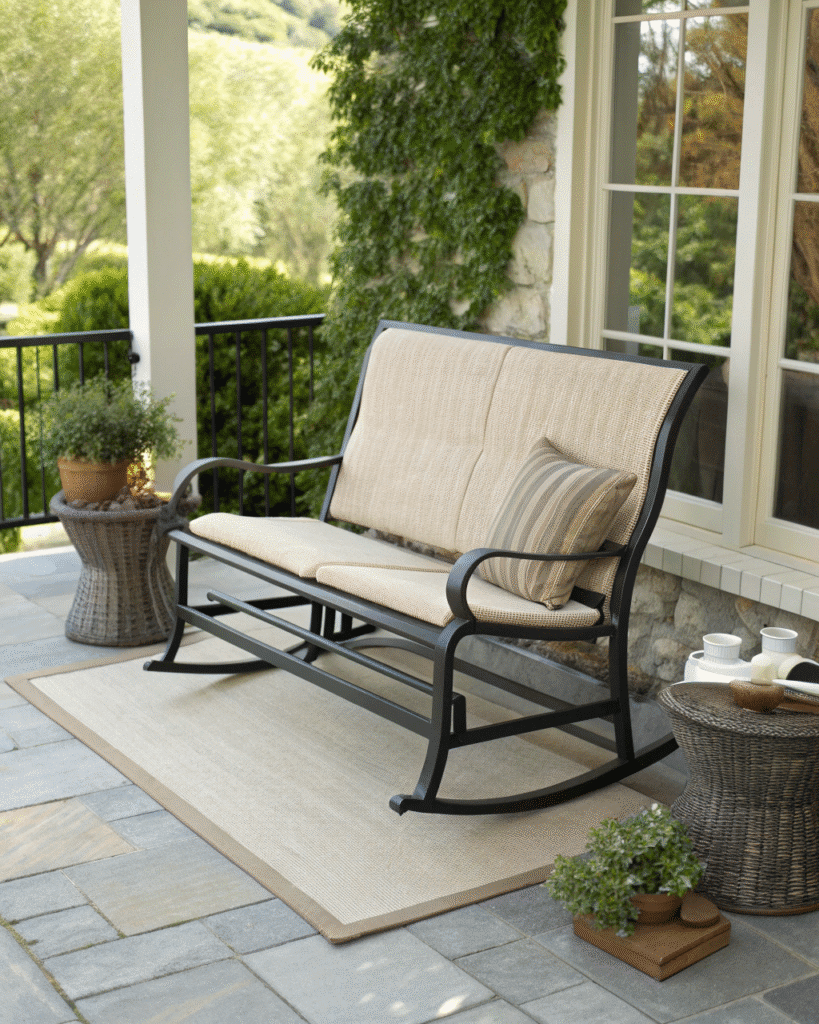
A two-seater rocking bench is perfect for relaxing with a loved one.
Pro Tip: Add a cozy throw blanket and small side table to complete the setup.
11. Minimal Scandinavian Rocker
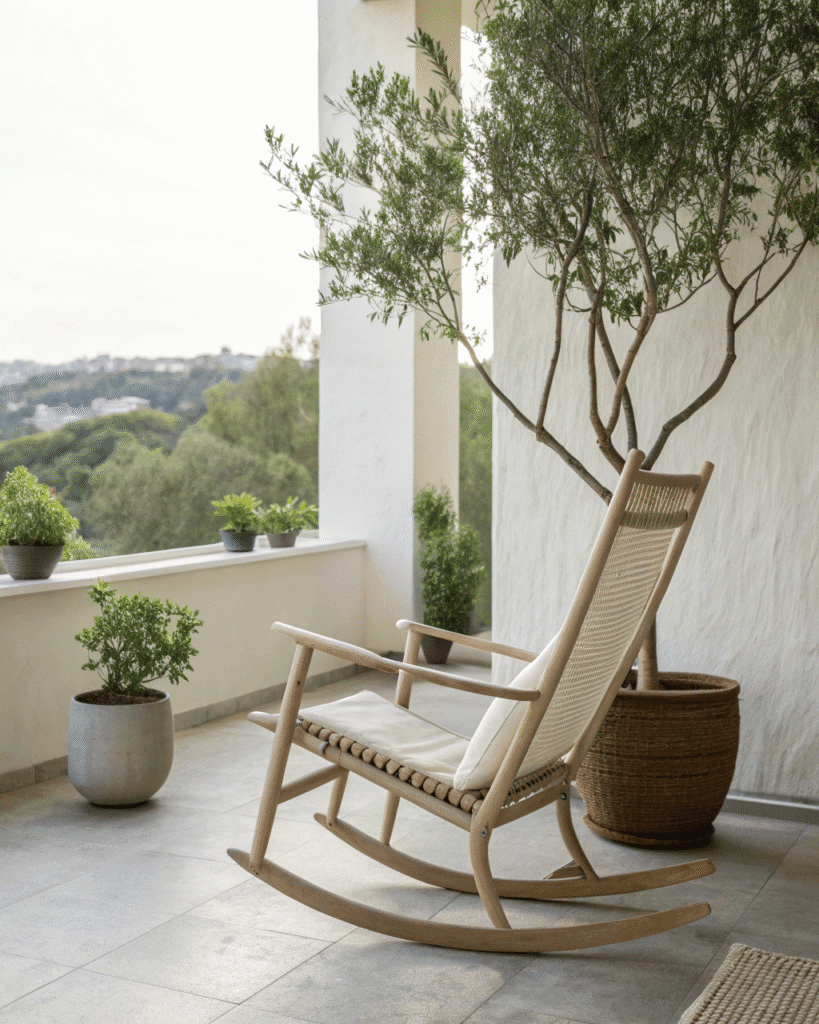
Clean lines and light tones give your patio a calm, Scandinavian feel.
Pro Tip: Keep the palette neutral and add a touch of greenery for balance.
12. Painted Accent Rocker
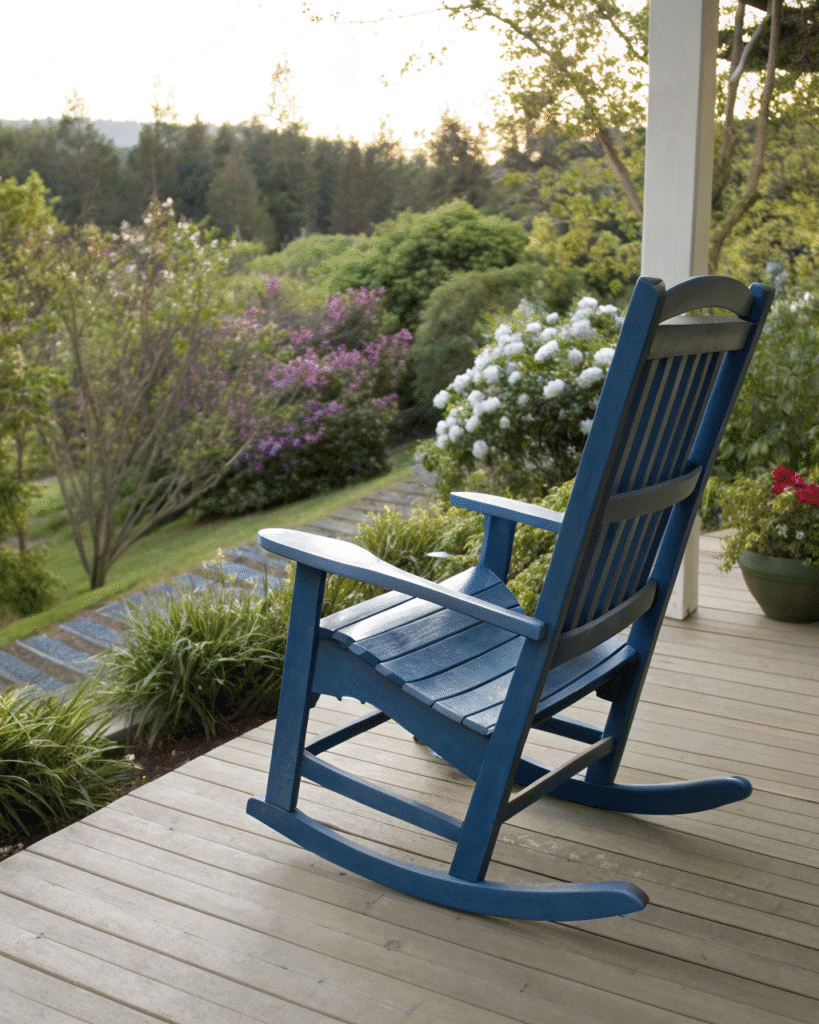
Add personality with a painted rocker in bold or pastel shades.
Pro Tip: Use outdoor-grade paint and sealant to protect against sunlight and rain.
13. Cane-Back Rocker
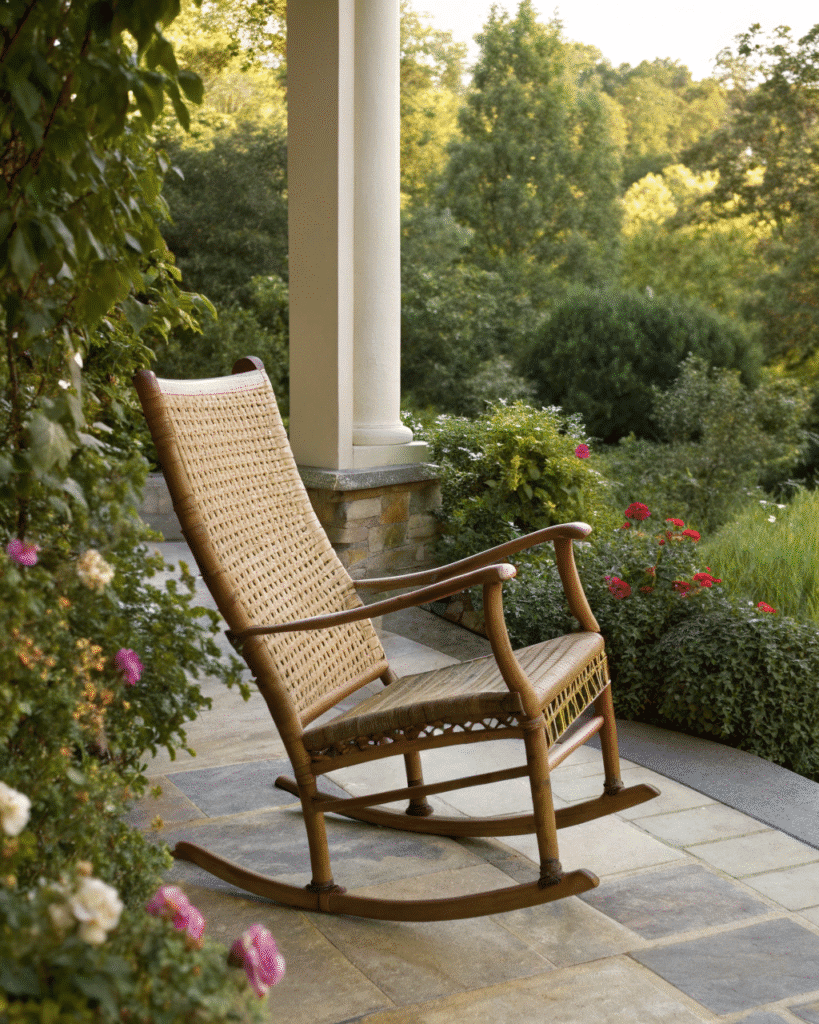
A cane-back chair brings texture and traditional charm to your outdoor space.
Pro Tip: Pair with a small rug underneath for a finished, cozy touch.
14. Modern Concrete Rocker
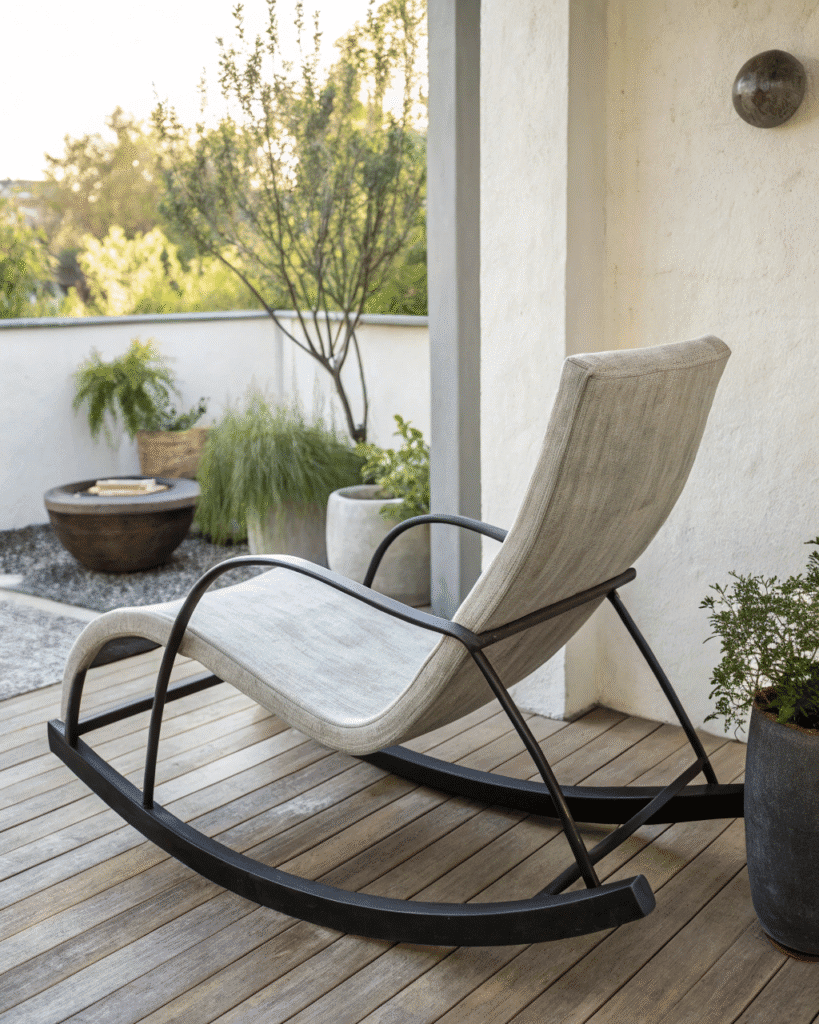
Concrete designs add a striking sculptural element to your patio.
Pro Tip: Balance the cool texture with soft fabrics or nearby plants.
15. Adirondack Rocking Chair
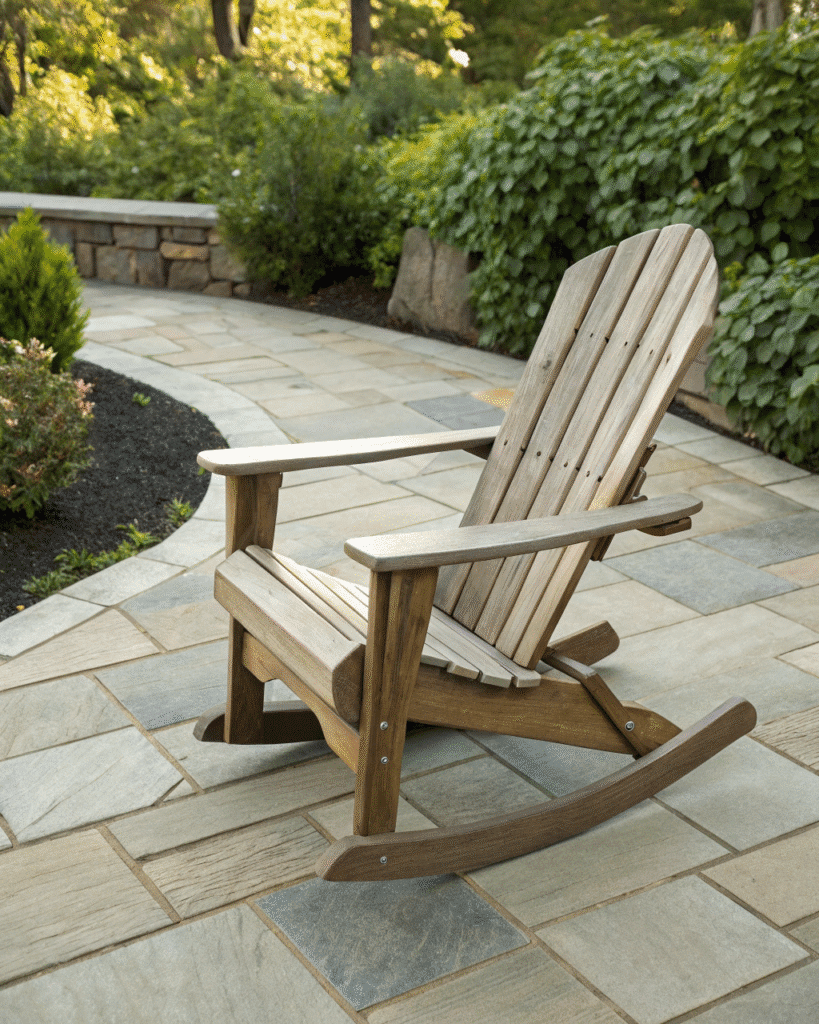
The Adirondack rocker combines casual comfort with timeless outdoor style.
Pro Tip: Paint it in muted tones like sage or gray for a relaxed, coastal vibe.
Final Thoughts
A rocking chair on your patio is more than a furniture choice. It is a decision about how you want to spend your outdoor time and what kind of pace you want your outdoor space to invite. Slow. Unhurried. Present.
Whether you choose the timeless simplicity of a classic wooden porch rocker, the design-forward lines of a Scandinavian minimal rocker, or the deep comfort of an Adirondack rocking chair, the right choice is simply the one that makes you want to sit down and stay there. Find that chair, put it somewhere with a good view, and use it as often as you possibly can.
Frequently Asked Questions
Can rocking chairs be left outside in the rain?
It depends on the material. Teak, HDPE plastic, and powder-coated metal rocking chairs can handle rain without significant damage as long as cushions are brought inside when not in use. Natural wood chairs in species other than teak should be covered or brought inside during prolonged rain. Wicker, rattan, and upholstered rockers should always be on a covered patio or porch and should not be exposed to direct rain.
How do I stop a rocking chair from scratching my deck?
Attach felt or rubber pads to the underside of the rocker bases where they contact the deck surface. These pads cushion the contact point and allow the chair to rock smoothly without grinding into the wood. Replace the pads as they wear down, which on a frequently used rocker is typically once per season.
What is the most comfortable rocking chair for long sitting?
For extended sitting, look for a rocking chair with a seat depth of at least seventeen inches, a back angle between fifteen and twenty degrees from vertical, and padded or contoured seat and back surfaces. Adirondack rockers and upholstered porch rockers are consistently rated among the most comfortable for long-duration sitting because of their generous proportions and reclined back angles.
How wide should a porch be for rocking chairs?
A rocking chair needs a minimum of about thirty inches of clear depth from the wall to the porch edge to rock freely without the back of the chair hitting the wall or the rocker tips reaching the edge of the floor. For two rocking chairs side by side, a porch width of at least eight feet is recommended to give both chairs room to rock without crowding.
Are rocking chairs good for your back?
Many physical therapists and posture specialists note that gentle rocking motion can help reduce muscle tension and promote circulation in the lower back, making a well-designed rocking chair with proper lumbar support a comfortable choice for people who experience back discomfort when sitting still for extended periods. Look for a rocker with a back that follows the natural curve of the spine rather than a completely flat back panel for the best support.