How to Decorate Your Home for Christmas
A complete guide to Christmas home decorating, from choosing your colour scheme and styling the tree to room-by-room ideas, the front door, DIY projects, table settings, and the finishing details that make a home feel genuinely magical in December.
KEY POINTS
- Christmas decorating is the most emotionally significant home project of the year, and the homes that feel most magical are almost never the ones that spent the most. They are the ones that chose a clear aesthetic and executed it consistently throughout.
- The Christmas tree, the mantel, and the front door are the three elements that set the character of the whole home’s festive decoration. Get those three right and everything else follows naturally.
- Handmade decorations, even simple ones, have a quality of warmth and personal investment that no bought ornament can match, and they accumulate into a collection that tells the story of the family over the years.
Christmas decorating is unlike any other seasonal project in the home. It carries the weight of memory, of childhood associations, of what the home is supposed to feel like at the most significant time of the year. The pressure of that expectation is what makes it both the most rewarding and the most overwhelming decorating project most people undertake. Getting it right is not primarily about spending more or doing more. It is about making clear choices, committing to a consistent aesthetic, and understanding which elements do the most work so that you can invest your time and attention where it matters.
This guide covers the full Christmas decorating process, from choosing your colour scheme and styling the tree to every room in the house, the front door, DIY projects that add genuine character, table settings for the big day, and the small details that make the whole home feel genuinely festive rather than merely seasonally accessorised.
RELATED: 14+ Charming Christmas Homemade Decoration Ideas
Choose Your Christmas Colour Scheme First
The most useful thing you can do before putting up a single decoration is decide on a colour palette and commit to it throughout the whole house. The homes that look most cohesively Christmas are the ones where every room uses a consistent set of colours rather than a different scheme in each space. It does not need to be elaborate. Two or three colours, applied consistently from the front door through every room, create a sense of considered design that feels both festive and intentional.
The classic Christmas palette of red and green is genuinely classic for good reason: it works, it photographs beautifully, and it triggers the deepest seasonal associations. But it is also the most expected, and many people prefer to work with variations on the theme. Warm gold and deep burgundy produce a luxurious, candlelit quality. Silver and white with touches of pale blue feel crisp and contemporary. Natural and neutral, cream, kraft, and greenery with minimal colour, feel calm and organic in a way that brighter palettes do not. Deep forest green as a primary rather than an accent, combined with brass and warm white, has become one of the most popular contemporary Christmas palettes precisely because it feels genuinely designed rather than generically festive.
Whatever palette you choose, apply it consistently: the tree ornaments, the mantel decorations, the wreath, the table setting, and the smaller details in each room should all share a common colour thread that holds the whole decoration together.
The Christmas Tree
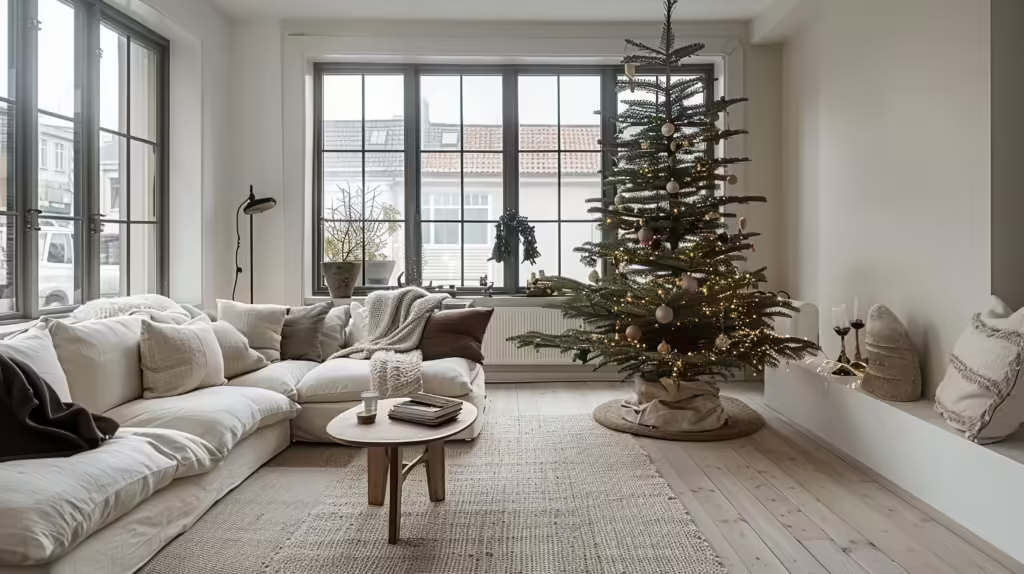
The Christmas tree is the centrepiece of the entire festive decoration, the piece that children look at first when they come downstairs on Christmas morning and the piece that sets the character for everything else in the room. Getting the tree right is worth spending the most time on.
The decision between real and artificial trees is primarily a sensory and practical one. A real tree brings scent, the specific texture of fresh needles, and the knowledge that it will look slightly different every year. An artificial tree provides consistency, convenience, and the ability to pre-light in a way that real trees cannot. Neither choice is wrong. The real tree that drops needles freely and smells of pine forests is magical in one way. The artificial tree that can be adjusted to exactly the look you want and packed away perfectly is magical in another.
Tree decoration works best when it follows a clear logic. Fill the tree in layers: lights first and deep within the branches as well as on the tips, then a garland if you use one, then large ornaments evenly distributed throughout, then medium ornaments filling the gaps, then smaller ornaments and delicate fillers in the remaining spaces, and the topper last. Step back after each layer to assess from the distance the room provides. The tendency to put too many ornaments of similar size on the outer layer and leave the inner branches empty is the most common Christmas tree mistake, and it produces a tree that looks flat rather than full.
The Mantel
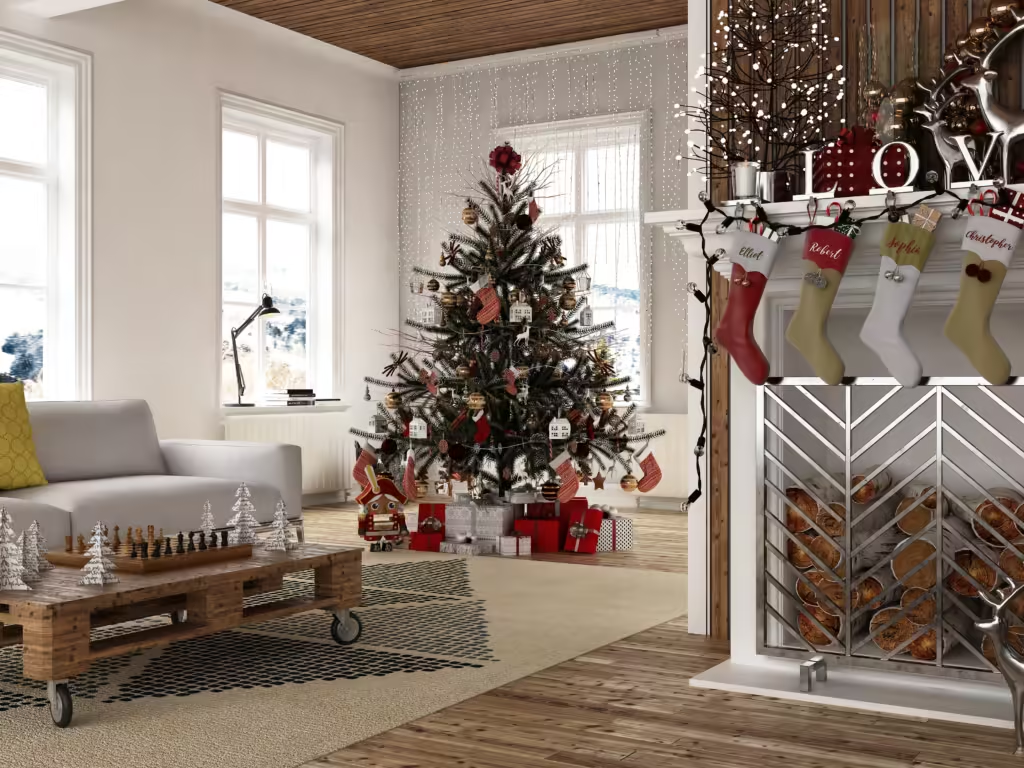
The fireplace mantel is the second most important surface in the Christmas home, and for many people it is the first thing they style when the Christmas boxes come down from the loft. The mantel carries the stockings, the garland, the candles, and often the most personal and most treasured seasonal objects in the house. Getting it right sets the atmospheric tone for the whole living space.
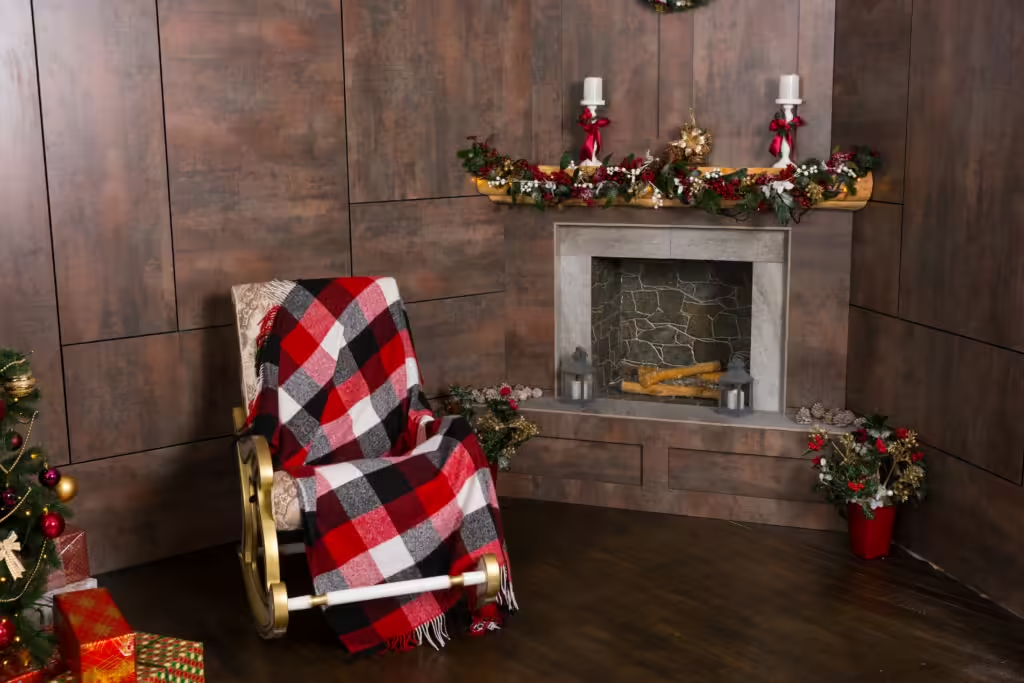
A Christmas fireplace mantel that works well almost always has three elements: a garland across the shelf edge, candles at varying heights on the surface, and one or two significant objects as focal points at the centre. The garland provides the horizontal sweep that connects the mantel to the room. The candles provide the warm, moving light that makes a mantel atmospheric rather than merely decorated. The focal objects give the eye somewhere specific to land.
The DIY Christmas garlands that look most beautiful are the ones made from real greenery: fresh pine, eucalyptus, and ivy woven together and dressed with ornaments, ribbon, and dried citrus slices create a sensory richness that artificial garlands rarely achieve. They last reliably for the season when misted with water every few days, and the scent they release in a warm room is one of the genuine pleasures of the Christmas period.
RELATED: 15+ Charming DIY Christmas Garland Ideas
The Front Door
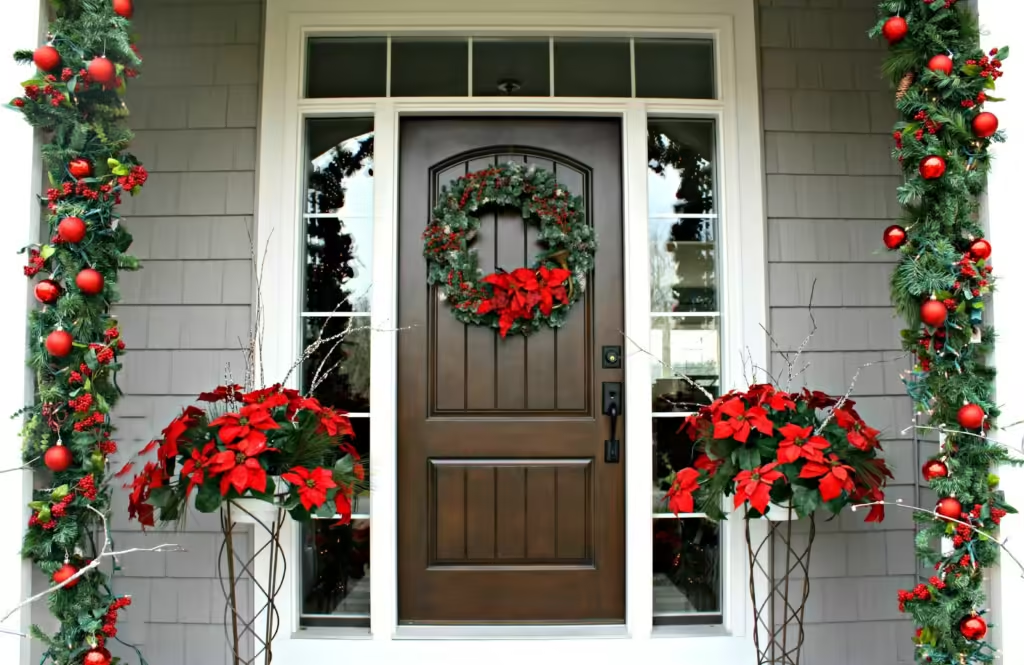
The front door is the first Christmas impression anyone receives of your home, and a well-dressed front door sets up the experience of arriving at the house in a way that nothing visible from the street quite replicates. A wreath on the door, properly scaled and in keeping with the colour palette you have chosen for the interior, signals immediately that the home is festive and welcoming.
A generously sized wreath in fresh greenery with a few well-chosen embellishments, a velvet ribbon in the right colour, a cluster of pinecones, some dried orange slices, makes a stronger impression than an elaborate wreath that has too many elements competing for attention. The same restraint principle that applies to every other surface in the Christmas home applies here too: fewer, better-chosen elements are more effective than everything available applied at once.
The outdoor lighting around the front door and porch, whether that is fairy lights wrapped around the porch columns, a string of warm white lights following the roofline, or lanterns on either side of the door with candles or LED lights inside, gives the house its evening presence during December when it is dark for most of the hours when people are coming and going.
You May Also Love


The Living Room
The living room is where Christmas decorating makes its fullest and most atmospheric statement, because it is the room where the tree lives, where the fire burns, where the stockings hang, and where the family gathers on Christmas morning. Every element of the room’s Christmas decoration should work together to create the warmest and most welcoming space possible.
Beyond the tree and the mantel, the living room’s Christmas decoration extends to the surfaces, the cushions and textiles, the lighting, and the small seasonal objects that appear throughout the room. Seasonal Christmas cushion covers in festive colours or patterns replace summer and autumn versions and shift the room’s textile palette immediately. Heavier, richer throws in deep reds or warm greens add to the cosy quality that the room should have in December. The lighting throughout the room should be warmer and dimmer than usual, with the tree lights and the fire contributing the most visible sources and the room’s overhead lights turned down or off in the evenings.
Christmas lanterns placed on side tables, on the floor beside the fireplace, or on the coffee table add the kind of warm, contained candlelight that makes a living room feel specifically magical at Christmas. The DIY Christmas lantern ideas that work most beautifully use simple glass lanterns dressed with a ribbon or a sprig of greenery and holding real or LED candles at a height that casts warm light at seated eye level.
TIP: The most transformative single change you can make to a living room at Christmas costs nothing. On Christmas Eve, turn off every light in the room except the tree lights and the fire, or candles if there is no fire. The room that has felt pleasantly festive for the whole of December will suddenly feel genuinely magical. The same room, the same decorations, the same objects, but transformed entirely by the quality of the light. This is the version of the room worth protecting each year as the one the children remember.
The Dining Room
The dining room at Christmas carries the expectation of the most significant meal of the year, and the table setting on Christmas Day is one of the most anticipated domestic rituals of the season. A genuinely beautiful Christmas table does not need to be elaborate. It needs to be considered, consistent with the palette you have been using throughout the house, and dressed with enough care that sitting down at it feels like an occasion.
A Christmas table runner in a festive fabric or a fresh garland of greenery running the length of the table gives the surface its seasonal character before any individual elements are added. The centrepiece at the table’s heart, whether a cluster of candles at varying heights, a low arrangement of fresh greenery and seasonal flowers, or a collection of ornaments in the table’s colour palette, provides the focal point from which the rest of the setting radiates.
The Christmas table setting ideas that feel most genuinely festive are the ones where every element of the place setting has been considered: the charger plate, the napkin and its fold, the glassware, and the small seasonal detail at each setting that tells guests the table was laid specifically for them. A sprig of rosemary tied with a ribbon, a place card written by hand, a small ornament at each setting: these are the details that people remember.
The Kitchen
The kitchen at Christmas is where most of the season’s scent is produced: baking, spices, mulled wine, roasting, and the general alchemy of Christmas food preparation. The decoration in this room should work with rather than against that sensory richness.
Christmas kitchen decor that works well in a room primarily defined by its function keeps the seasonal touches focused on the surfaces that are most visible rather than the ones that are most-used. A wreath of dried herbs and seasonal greenery on the kitchen wall, a bowl of clementines and cinnamon sticks on the counter, Christmas apron ideas for the cook who wants to dress the part, and the simple festive quality of a few tea towels in seasonal patterns transform the kitchen into a properly Christmas space without compromising its functionality.
Mason jar Christmas crafts find their natural home in the kitchen: a row of jars filled with seasonal ingredients, tied with a ribbon and used as candle holders or votive holders, brings handmade Christmas character to the shelves and counters in a way that feels genuinely domestic rather than decoratively imposed. A mason jar snowman on the kitchen windowsill is the kind of small, charming seasonal detail that children specifically love to see in the rooms they pass through most often.
RELATED: 20+ Charming Mason Jar Christmas Craft Ideas
Don't miss: 19+ Christmas Wall Art Ideas to Brighten Your Home →
The Bedroom
The bedroom at Christmas benefits from a lighter touch than the living room, because it is a room for rest rather than celebration, and the seasonal decoration should enhance its cosy quality rather than introducing the energy of the main party spaces.
A Christmas wreath on the bedroom door, a few seasonal touches on the dresser, and the specific luxury of fresh white bedding with a rich plaid or tartan throw at the foot of the bed creates the quality of a properly Christmas bedroom without making the room feel overstimulating. The bedside table is a particularly personal seasonal styling opportunity: a small Christmas candle, a seasonal plant like a paperwhite narcissus, or a simple decoration that reflects something the person sleeping there finds beautiful creates a private seasonal detail that belongs specifically to that room and that person.
For children’s bedrooms, Christmas handprint crafts made during the season and hung in their rooms create a personal gallery of seasonal making that connects the decoration directly to the child in a way that bought ornaments never can. The handprint wreath, the handprint reindeer, the painted handprint Christmas tree: these are the decorations that parents store carefully long after the child has grown.
DIY Christmas Projects
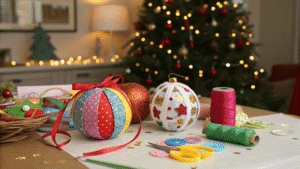
Handmade Christmas decorations are the ones that accumulate into a collection of genuine meaning over the years. The bought ornament, however beautiful, is the same ornament that many other people also bought. The handmade bauble, even if slightly imperfect, is the one that belonged specifically to this house and this family. This is what makes Christmas DIY projects so consistently worth doing, even when it would be quicker and easier to buy the equivalent.
The Christmas craft projects that produce the most impact for the least effort and skill are the ones built around simple, beautiful materials. Homemade Christmas ornaments made from air dry clay, salt dough, or DIY Christmas ornament techniques involving ribbon, beads, or paint create additions to the tree that carry personal meaning without requiring specialist skills. Christmas tree ornament DIY ideas that use consistent materials and a cohesive palette produce ornaments that look like a designed collection rather than an assortment of individual projects.
For crafts with character, decoupage Christmas ideas use the simple technique of applying paper to objects with a medium to create decorated baubles, gift boxes, and festive objects with a handmade quality that looks considerably more sophisticated than the method suggests. Christmas resin ideas for those comfortable with the material produce some of the most beautiful handmade Christmas pieces available, embedding seasonal elements in clear resin to create ornaments, coasters, and decorative objects with a quality of preserved magic.
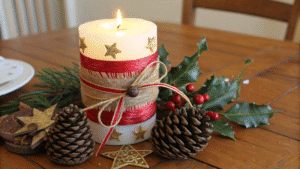
DIY Christmas candles are both a useful project and a genuinely beautiful one: pillar candles dipped or rolled in wax to apply texture, scented with seasonal fragrance, or embedded with botanicals create handmade gifts and home decorations that carry the specific warmth of something made with the recipient in mind. Fused glass Christmas creations for those with access to a kiln or fusible glass materials take handmade Christmas objects into a genuinely artisanal territory.
RELATED: 21+ Creative Christmas Craft Ideas
Keep Exploring


Christmas Eve and the Days Before
The days leading up to Christmas are as much a part of the season as the day itself, and the rituals and traditions that mark them have a particular quality of anticipation that the celebration itself, however beautiful, cannot quite replicate.
A Christmas Eve basket prepared for children, containing new pyjamas, a seasonal book, a hot chocolate kit, and perhaps a small special treat, creates a ritual that children look forward to with the same intensity as Christmas morning. The basket becomes the tradition, and the tradition becomes part of what Christmas feels like in the specific home that practices it.
Christmas party craft ideas for gatherings in the days before Christmas give the seasonal social occasions their own specific activity that becomes part of the memory of the gathering. Making Christmas baubles together, assembling gingerbread man ornaments, or decorating small gingerbread houses around the kitchen table are the kinds of activities that are more about the time together than the objects produced, and the objects produced are remembered precisely because of the time they represent.
Candy cane crafts for children and Christmas bracelet DIY ideas for older family members are the kinds of seasonal making projects that keep hands busy and produce wearable, giveable seasonal tokens during the days of the season when the anticipation is at its highest.
RELATED: 18+ Creative Christmas Eve Basket Ideas
Christmas on Any Budget
The most genuinely magical Christmas homes are not the most expensively decorated. They are the ones where someone has thought clearly about what matters, invested their time and attention where it has the most impact, and filled in the rest with handmade objects and natural materials that cost almost nothing.
The homemade Christmas decor that produces the most impactful results uses the materials most readily available: greenery gathered from the garden, pinecones collected on walks, ribbon bought in a single colour used consistently throughout, and the creative energy of making something specifically for the home rather than selecting it from a display.
Holiday craft ideas for the home on a limited budget focus on the same principle: the materials cost almost nothing and the making is the investment. A wreath of foraged evergreen branches tied with a ribbon. A garland of dried orange slices and cinnamon sticks threaded on twine. A row of glass jars with tealights and a sprig of rosemary. These are the decorations that smell of Christmas, that feel of Christmas, and that no amount of bought decoration quite replicates.
Frequently Asked Questions
When should I start decorating for Christmas?
There is no single right answer, and the tradition varies significantly between families and cultures. Many people begin in the first week of December, which gives the full month of December to enjoy the decoration without starting before the season feels ready. Some begin on the first of Advent, which falls between late November and early December. The only guidance that holds consistently is not to start so early that the decorations feel stale before Christmas arrives, and not to start so late that you miss the period of anticipation that is as much a part of the season as the day itself.
How do I make my Christmas tree look fuller?
Fill the inner branches with lights and smaller ornaments as well as the outer tips. Step back regularly and fill the visible gaps from the room’s natural viewing distance rather than from close up. Add a tree skirt or basket at the base that fills the visual space beneath the lower branches. And accept that fresh trees vary in density: a naturally thinner tree decorated thoughtfully will always look better than a full tree decorated without any compositional logic.
What is the most impactful Christmas decoration I can add?
Fairy lights around the windows, draped along a mantel, or threaded through a garland. The warm glow of fairy lights visible from inside and outside a house transforms its evening character during December more dramatically than any other single element, and the cost is minimal relative to the impact.
How do I decorate for Christmas if I have a small home?
Focus on the two most visible elements: the tree and the front door. A smaller tree in the main living area, properly decorated and beautifully lit, creates the full Christmas atmosphere of a larger tree without requiring the floor space. A well-dressed front door with a wreath and lighting announces the season to everyone who visits. Beyond those two elements, consistent small details, a seasonal candle on the dining table, a sprig of greenery on the kitchen shelf, create a sense of Christmas throughout the home without requiring dedicated space for elaborate room-by-room displays.
How do I store Christmas decorations so they are easy to use next year?
Store ornaments in individual tissue paper or purpose-made compartmented boxes to prevent breakage. Wind lights around a reel or piece of cardboard to prevent tangling. Label boxes clearly by content and by room or use, so that next year you know immediately which box contains the mantel decorations and which contains the kitchen items. The time invested in storing carefully at the end of the season pays back every subsequent year with decoration that is undamaged, accessible, and easy to put up.
Explore all seasonal decorating guides in our Seasonal and Holidays section.